The Washington Post reports: The assassination Wednesday of an Iranian nuclear scientist in northern Tehran increases the peril for an Iranian American who was sentenced to death Monday, analysts said.
Iranian officials quickly blamed the scientist’s killing on the United States, ratcheting up tensions between the two countries and making it less likely that Amir Mirzaei Hekmati, a 28-year-old former U.S. Marine arrested in August and accused of spying for the CIA, will be released anytime soon.
“Unfortunately, the greater the escalation is, the greater the likelihood that the perceived costs of executing him decline,” said Trita Parsi, president of the National Iranian American Council and author of a new book about the Obama administration’s dealings with Iran.
In recent years, there has been an increase in mysterious explosions at military and industrial sites in Iran. Three scientists involved in Iran’s nuclear program have been assassinated, and a computer virus called Stuxnet wreaked havoc on the program.
As Tehran faces tighter international sanctions, a faltering economy and continued scrutiny of its nuclear program, the country’s justice system has turned its attention to Iranian Americans.
There has been a string of arrests of dual nationals in recent years. Typically, Iran charges them with espionage and sometimes shows them on state-run television making “confessions,” under what the detainees later say was duress. Negotiations have usually led to the detainees’ release after several months, sometimes after the announcement of a lengthy prison sentence.
But even analysts who believe Hekmati is being used as a bargaining chip say they were taken aback by the swiftness and harshness of his sentence.
The U.S. government, which does not have diplomatic relations with Iran, has said that Hekmati is not a spy. The CIA has declined to comment on the case, but Art Keller, a former CIA case officer, said Hekmati does not fit the profile of an undercover agent.
“I have a hard time believing that we would send someone over under his true name with his military affiliation well known,” he said. “That’s what you have alias documents for.”
Category Archives: Israel
The smell of war

Iranian Christians pray during New Year Mass at the Vank church in the central city of Isfahan, Iran, on Sunday, January 1, 2012. (AP Photo/Vahid Salemi)
Hooman Majd writes: The ransacking of the British embassy capped an annus horribilis for the Iranian leadership. Throughout the year, the supreme leader, Ayatollah Ali Khamenei, Ahmadinejad, and every politician in between have seemingly been at odds with each other over just about every possible matter of state. The result is an uncertainty and nervousness among officials, and a kind of political paralysis in which it has become hard for people to know exactly who is in charge, or even whom to blame for policy gone bad. But it was also a terrible year for the Iranian people. They are baffled by the West’s approach to dealing with their country’s nuclear program — the stated aim is a change in policy, but the result is only general hardship. Big-city dwellers complain about rampant inflation, a strangled economy, and general inconvenience on a daily basis.
On the street, nowhere is the impact more evident than at any one of the many foreign exchange bureaus where Iranians gather to monitor the flat screens that show the almost minute-by-minute slide in the rial. Men and women gather at the kiosks to buy dollars as a hedge against crippling inflation; many think that the government will soon run out of greenbacks as international sanctions clinch Iranian banks. The country’s financial culture is cash — there are no credit cards — and the government routinely pumps hundred-dollar bills into circulation in an effort to keep the currency stable. The strategy has backfired. By the end of last year, confidence that the regime could withstand international financial pressure — particularly after the British government cut all financial ties with Tehran — had sunk to an all-time low.
By December, escalating talk of military strikes, promoted by respectable Western and Israeli politicians, analysts, and commentators — in the pages of this journal, too — raised anxieties in Tehran to a level not witnessed in many years. In years past, war over the nuclear program had always been the subject of chatter in Iran, but few took it very seriously. In fact, if war came up in ordinary conversation, it was mentioned jokingly. In December, however, my optician, an older Isfahani with a wry sense of humor who hosts a salon of sorts with locals every evening in his shop, captured the mood of the city when he said of the worry over a coming war, “You can smell it,” he said. “This time, you can smell it.”
If you live in Iran it is hard to imagine what the West, particularly the United States, is trying to accomplish. No one doubts that Israeli and Western operators are behind recent assassinations of nuclear scientists on the streets of Tehran. And the sudden frequency of “accidents” at various factories and Revolutionary Guards bases (which a majority — their government’s denial notwithstanding — also believe are the work of foreign agencies) has done nothing to change the minds of either government officials or the general public about the nuclear program.
Few in Iran believe that the nuclear program is a quest for a Shia bomb to obliterate Israel once and for all. No, the Iranian people, from my greengrocer to college students who resent their government, still consider the nuclear question in generally nationalistic terms. The particular regime in power is of passing relevance. So sanctioning Iran’s central bank and embargoing Iranian oil, tactics the White House may be using as a way to avoid having to make a decision for war, will neither change minds in Tehran nor do much of anything besides bring more pain to ordinary Iranians. And making life difficult for them has not, so far, resulted in their rising up to overthrow the autocratic regime, as some might have hoped in Washington or London.
United States condemns latest murder of an Iranian nuclear scientist

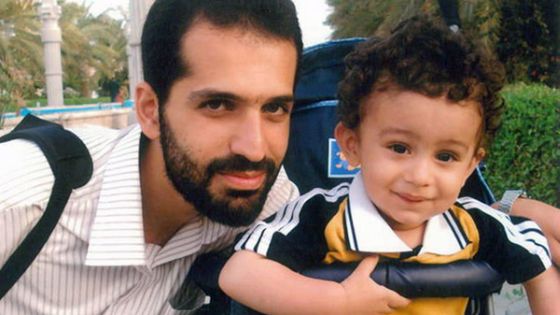
Mostafa Ahmadi Roshan with his son. Roshan is the fifth Iranian nuclear scientist whose murder is being linked to Israel.
The New York Times reports: As arguments flare in Israel and the United States about a possible military strike to set back Iran’s nuclear program, an accelerating covert campaign of assassinations, bombings, cyberattacks and defections appears intended to make that debate irrelevant, according to current and former American officials and specialists on Iran.
The campaign, which experts believe is being carried out mainly by Israel, apparently claimed its latest victim on Wednesday when a bomb killed a 32-year-old nuclear scientist in Tehran’s morning rush hour.
The scientist, Mostafa Ahmadi Roshan, was a department supervisor at the Natanz uranium enrichment plant, a participant in what Western leaders believe is Iran’s halting but determined progress toward a nuclear weapon. He was at least the fifth scientist with nuclear connections to be killed since 2007; a sixth scientist, Fereydoon Abbasi, survived a 2010 attack and was put in charge of Iran’s Atomic Energy Organization.
Iranian officials immediately blamed both Israel and the United States for the latest death, which came less than two months after a suspicious explosion at an Iranian missile base that killed a top general and 16 other people. While American officials deny a role in lethal activities, the United States is believed to engage in other covert efforts against the Iranian nuclear program.
The assassination drew an unusually strong condemnation from the White House and the State Department, which disavowed any American complicity. The statements by the United States appeared to reflect serious concern about the growing number of lethal attacks, which some experts believe could backfire by undercutting future negotiations and prompting Iran to redouble what the West suspects is a quest for a nuclear capacity.
“The United States had absolutely nothing to do with this,” said Tommy Vietor, a spokesman for the National Security Council. Secretary of State Hillary Rodham Clinton appeared to expand the denial beyond Wednesday’s killing, “categorically” denying “any United States involvement in any kind of act of violence inside Iran.”
Does Washington really prefer ‘proxies’ like Israel?
In the war of nerves between Washington and Tehran, the U.S. enjoyed a couple of moves this week that reinforced America’s preferred image as homeland of the good guys. The U.S. Navy rescued Iranian fisherman not once but twice, while Iran sentenced an American to death.
Is it likely that anyone in Washington would want to spoil this good guys/bad guys story by exploding a bomb in its midst?
An Associated Press report suggests that when it comes to Iran the U.S. now prefers to outsource the dirty work to “proxies like Israel.”
Since when did Israel serve as a proxy for the United States?
When the Obama administration meekly requested the Israelis to promise that they would not unilaterally launch an attack on Iran, the Israelis declined. That’s not how a proxy operates.
Indeed, since the threat that Iran supposedly poses is much more to Israel than the United States, it’s pretty clear that it is the U.S. that serves as a proxy for Israel — not the other way around.
With that in mind, this passage from the AP report is worth noting:
Current and former U.S. officials say Washington prefers proxies like Israel to carry out operations inside Iran, and that up until two years ago, the U.S. and Israel coordinated actions against Iran closely. But the officials say the White House halted such cooperation after Israeli Prime Minister Benjamin Netanyahu took power.
The officials, past and present, spoke on condition of anonymity to discuss sensitive strategic negotiations.
In the event that a military intervention might be needed to halt Iran’s progress toward nuclear weapons capability, they said counterterrorist officials had considered allowing Israel to use the U.S.-Afghan Shindand Airbase, in western Afghanistan, to launch an air strike against Iranian weapons facilities.
The White House won’t cooperate with Netanyahu — now there’s a story ready-made for GOP presidential candidates to jump all over.
Officials considered (note the past tense) allowing Israeli jets to operate out of Afghanistan — however implausible that might be, it’s certainly an idea the Israelis would welcome getting spread around.
Again, enter Republican candidates solemnly pledging that under their administration, Israel will have the right to use U.S. military bases in Afghanistan (or probably anywhere else on the planet for that matter).
There’s a theme here and it’s about who controls the narrative.
Perhaps the clearest indication of who is not in control of the narrative came out of the State Department this morning.
Spokesperson Victoria Nuland responded to questions:
QUESTION: You probably have seen the news that an Iranian nuclear scientist was killed. I wonder what your reaction is. Would you condemn this killing?
MS. NULAND: We’ve seen the reports of the death of the Iranian scientist as a result of an apparent bombing. We condemn any assassination or attack on an innocent person, and we express our sympathies to the family.
QUESTION: The Iranians have accused Israel and the United States of carrying out this killing. Any truth to that?
MS. NULAND: I don’t have any information to share one way or the other on that.
QUESTION: You don’t want to deny killing him?
MS. NULAND: Obviously, we – as I said, we condemn the loss of innocent life.
QUESTION: That’s not a denial as such.
MS. NULAND: I’m not prepared to speak one way or the other. I, frankly —
QUESTION: You didn’t want to deny it.
QUESTION: Would the scientist come under innocent life?
MS. NULAND: Say again?
QUESTION: Would the scientist come under your definition of innocent life?
MS. NULAND: Again, I don’t think I have anything further to say on this, that we condemn violence of any kind.
QUESTION: Don’t you think he’d be a logical target, given the pressure from Israel and the U.S. against —
MS. NULAND: I’m not going to speak to who may or may not have done this, one way or the other.
QUESTION: Why are you not willing to rule out that the United – I mean, the United States did not – they’ve alleged this. Why are you unwilling to say, “Of course we didn’t do this. We don’t —
MS. NULAND: Well, first of all, I don’t think this Department has any information further to what I’ve already said, which we condemn the loss of innocent life.
At this point a footnote has been added to the transcript: “The United States strongly condemns this act of violence and categorically denies any involvement in the killing.” No attribution is given for this sentence, though it echoes Secretary of State Hillary Rodham Clinton who told reporters today: “I want to categorically deny any United States involvement in any kind of act of violence inside Iran.”
Assuming that Clinton’s denial was not a bald-faced lie, it seems reasonable to infer that as is widely believed, this assassination (and previous ones) have been conducted under Israeli direction. Nuland’s unwillingness to say anything probably reflects a number of things:
- That administration officials do not want to create the impression that the U.S. is the junior and less informed partner in the indivisible relationship with Israel;
- that administration officials do not want to reveal any lack of enthusiasm for Israel’s covert operations in Iran;
- and that silence is sometimes the only way of fabricating the illusion of unity.
Israel on the other hand, enjoys the fact that even while its international image whithers, it has no shortage of proxies available in the U.S. to help push its own narrative on Iran — through the press and through the presidential election.

Assassination in Tehran: An act of war?
M.J. Rosenberg writes: I rarely learn anything meaningful from reading The Atlantic‘s Jeffrey Goldberg. In my opinion, his tight relationship with the Israeli government and its lobby here greatly influences his take on both foreign and domestic events. Although he occasionally deviates from the Israeli line, he not only appears very uncomfortable doing so, he tends to correct course fairly rapidly.
Nonetheless, in a Goldberg column about Iran this week, there was one paragraph that was dead-on and which he will have a hard time taking back (should he be so inclined).
Writing about a piece in the current edition of Foreign Affairs that endorses bombing Iran as a neat and cost-free way to address its nuclear program, Goldberg explains why he thinks the author, Council on Foreign Relations fellow Matthew Kroenig, is wrong. Goldberg says he now believes:
…that advocates of an attack on Iran today would be exchanging a theoretical nightmare — an Iran with nukes — for an actual nightmare, a potentially out-of-control conventional war raging across the Middle East that could cost the lives of thousands Iranians, Israelis, Gulf Arabs and even American servicemen.
Think about that for a minute. Uber-hawk Jeffrey Goldberg is saying that the threat posed by Iran is a “theoretical nightmare” while a war ostensibly to neutralize that threat would present an “actual nightmare.”
No critic of U.S. policy toward Iran could say it better or would say it differently. And why would we?
According to the International Atomic Energy Agency, Iran has not yet made the decision to go nuclear. Speaking to CBS’ Face the Nation last Sunday, Defense Secretary Leon Panetta made the same point. Iran is not working on the bomb.
We do know, as Goldberg says, that a “potentially out-of-control conventional war raging across the Middle East” could “cost the lives of thousands of Iranians, Israelis, Gulf Arabs and even American servicemen.”
And that makes the decision against war a no-brainer. As Goldberg puts it:
Now that sanctions seem to be biting — in other words, now that Iran’s leaders understand the President’s seriousness on the issue — the Iranians just might be willing to pay more attention to proposals about an alternative course.
That alternative course would be an attempt “to try one more time to reach out to the Iranian leadership in order to avoid a military confrontation over Tehran’s nuclear program.”
In short, dialogue.
The United States, to this day, has never attempted a true dialogue with the Tehran. Even under President Obama, all we have done is issue demands about its nuclear program and offer to meet to discuss precisely how they comply with those demands.
That is not dialogue and it’s not negotiation; it’s an ultimatum.
The inexorable advance towards a Greater Israel
Patrick Seale writes: This past year has dealt a heavy blow — perhaps even a terminal one — to the project, long supported by the international community, of resolving the Israeli-Palestinian conflict on the basis of two states. When the United States itself proved unable to halt Israel’s relentless land grab, it seemed that nothing and nobody could rein in Israel’s iron-willed ambition to expand its borders towards a “Greater Israel.”
What will the immediate future bring? In the continued absence of firm international intervention, the likeliest scenario is that Israel will seek to consolidate its hold over 40 percent of the West Bank, including the Jordan Valley, either by settlement expansion or outright annexation. The main centres of Arab population, such as Nablus, Jericho and Ramallah, would be fenced off, although Israel might allow them corridors to Jordan. This first stage of the project would, of course, be portrayed by Israel as a painful concession.
If Israel managed to get away with it, the next stage could be a good deal more radical, and could possibly involve the expulsion of large numbers of Palestinians, probably under the cover of war as occurred in 1948 and 1967, so as to complete the creation of a Greater Israel between the sea and the river.
After the experience of the past two years, no one should have the slightest doubt that Prime Minister Benyamin Netanyahu’s right-wing coalition is utterly determined to prevent the creation of a Palestinian state on the West Bank. Bantustans, for a while perhaps, but a Palestinian state, never! Netanyahu is known to be profoundly influenced by his father, the historian Benzion Natanyahu, now 101 years old, who was once the secretary of Ze’ev Jabotinsky – “the father of Revisionist Zionism” — and who remains a life-long passionate believer in a Greater Israel. He petitioned against the UN Partition Plan for Palestine of 29 November 1947 because he, and others like him, wanted the whole of Palestine for the Jews. That remains his dream.
In Jerusalem, women barred from addressing gynecology conference
Patrick Martin reports: The controversial exclusion of women from various settings in Israel because of pressure from ultra-Orthodox Jewish leaders reached a new level this week with a major conference on gynecological advances that is permitting only males to address the audience.
The conference on “Innovations in Gynecology/Obstetrics and Halacha [Jewish law]” is being held by the Puah Institute this Wednesday in Jerusalem. It will include such topics as “ovary implants,” “how to choose a suitable contraceptive pill” and “intimacy during rocket attacks,” in which there are many qualified female professionals, but none will be permitted to speak, at least not from the podium.
Women are allowed in the audience, in a section separate from men.
Several Israeli human rights groups have protested the men-only nature of the conference. While it is considered a private rather than a public forum, and therefore not subject to Israeli policies against discrimination, Puah receives considerable funding from the Health Ministry, these complainants point out.
Such complaints are unlikely to make much of an impression, however. The Health Minister, to whom they are addressed, is actually the Prime Minister, Benjamin Netanyahu, owing to another sop to the Ultra-Orthodox.
Israel prepares for fall of Assad, Syria refugees
Reuters reports: Israel is making preparations for the fall of Syrian President Bashar al-Assad and a flood of refugees from his minority Alawite sect into the Golan Heights, Israel’s military chief told a parliamentary committee on Tuesday.
“Assad cannot continue to hold onto power,” a committee spokesman quoted Lieutenant-General Benny Gantz as saying.
“On the day that the regime falls, it is expected to result in a blow to the Alawite sect. We are preparing to take in Alawite refugees on the Golan Heights.”
Israel should also prepare for the possibility that cornered authorities in Damascus could “as a lifesaver … act against us”, the general said.
Assad has faced 10 months of popular revolt in which more than 5,000 people have been killed, according to U.N. figures.
Israeli officials have said they do not expect his government to last more than a few months but Gantz’s remarks were the first indication that Israel is already making contingency plans for the end of the rule.
Israel prepares for nuclear-armed Iran
The Times reports: Israel has begun thinking the unthinkable: that it will have to deal with a nuclear-armed Iran within a year.
In documents seen by The Times, Israeli officials have begun preparing scenarios for the day after a nuclear weapons test.
The move is a tacit recognition that Israel is backing away from its long-held position that it would do everything in its power – including mounting a military strike – to stop Iran acquiring nuclear capabilities.
Details of the war game, which was enacted by former ambassadors, intelligence officials and ex-military chiefs, emerged as the United Nations’ nuclear watchdog confirmed yesterday that Iran has begun producing enriched uranium in an underground bunker designed to withstand airstrikes.
The International Atomic Energy Agency said that it was monitoring the work at the Fordow facility, which is concealed in a mountain near the holy city of Qom.
The simulation exercise was conducted in Tel Aviv last week by the Institute for National Security Studies (INSS), a think-tank. Its conclusions suggest that a nuclear test would radically shift the whole power balance of the Middle East.
Israeli democracy should be replaced by Jewish law, settler leader says
Haaretz reports: Israeli democracy must be dismantled and in its place a halakhic state, based on Jewish law, should be established, says settler leader Benny Katzover in an interview to a a messianic journal of Chabad.
In an interview with Beit Mashiach, the journal of the messianic faction of the Chabad Movement with ties to settlers, Katzover says that “the main role of Israeli democracy now is to disappear. Israeli democracy has finished its role, and it must disassemble and give way to Judaism. All leads toward recognition that there is no other way but to place Judaism at the center, above all else, and this is the answer to every situation.”
Earlier in the interview Katzover commented on the campaign against the exclusion of women, saying that his group had information of the pending campaign.
“Our activists are linked to all the networks of the left, and we knew they were planning an incitement campaign. This is just another wave of incitement, targeting the hilltop youth and the Haredi community. The leftist activists prepare well-timed campaigns against anything which smells of holiness, and their aim is twofold: political, to undermine the government and score points among the public, and to strike at all the fundamentals of Jewish faith.
“In Jewish faith, the Land of Israel is central… The media campaigns over insignificant issues in order to undermine Jewish identity. I think there can be cooperation between the Haredim and the religious [national] communities. Incitement against us stems from the same anti-Jewish root which seeks to uproot everything,” Katzover said in the interview.
Since 2008 Katzover has headed the Committee of Samaria Settlers, an NGO which has fought against the freeze of settlement construction and the razing of outposts. Katzover believes that Jews should stay in the territories even after they are evacuated. He is well respected among the hilltop youth because of his views. His ideological line has been gaining popularity among settlers since the evacuation of Gush Katif in the Gaza Strip.
Katzover was one of the first leaders of the settler movement, joining Gush Emunim, and then the nucleus of Elon Moreh, which was established in Samaria in 1979.
“I think that Israeli democracy, under its current structure, is in constant conflict with its Jewish identity, and in recent years, every time it bends its Jewish identity backwards. This structure of democracy has only one mission: to dismantle,” he told Haaretz.
Iran starts uranium enrichment at Fordo mountain facility, Kayhan reports
Bloomberg reports: Iran has started to enrich uranium at its Fordo production facility, the official Kayhan newspaper reported without saying where it got the information.
Iran will soon have a ceremony to open the site officially, the newspaper reported, citing the head of the Iranian Atomic Energy Organization, Fereydoun Abbasi. The Iranian nuclear chief was cited yesterday by Mehr News as saying that the underground facility “will start operating in the near future.”
The existence of the Fordo plant, built into the side of a mountain near the Muslim holy city of Qom, south of Tehran, was disclosed in September 2009, heightening concern among the U.S. and its allies who say Iran’s activities may be a cover for the development of atomic weapons. The Persian Gulf country has rejected the allegation, saying it needs nuclear technology to secure energy for its growing population.
The Associated Press reports: Defense Secretary Leon Panetta says Iran is laying the groundwork for making nuclear weapons someday, but is not yet building a bomb and called for continued diplomatic and economic pressure to persuade Tehran not to take that step.
As he has previously, Panetta cautioned against a unilateral strike by Israel against Iran’s nuclear facilities, saying the action could trigger Iranian retaliation against U.S. forces in the region.
“We have common cause here” with Israel, he said. “And the better approach is for us to work together.”
Panetta’s remarks on CBS’ Face the Nation, which were taped Friday and aired Sunday, reflect the long-held view of the Obama administration that Iran is not yet committed to building a nuclear arsenal, only to creating the industrial and scientific capacity to allow one if its leaders to decide to take that final step.
Jewish extremists engaged in 228 attacks on Israeli security forces and dozens of arson attacks on mosques in 2011
Haaretz reports: Israel Police has been unsuccessful in running its agents in the West Bank, a senior police officer said Thursday, adding that officers have been struggling to gather evidence on crimes committed by right-wing activists.
Haim Rahamim, head of the investigations and intelligence wing of the Judea and Samaria District in the West Bank, made the statement during a discussion at the Knesset’s Constitution, Law, and Justice Committee on law enforcement in the territories.
Rahamim told the committee that over the past year 228 incidents of attacks by right-wing activists on security forces were recorded – not including verbal threats – and that dozens of mosques were set alight. He added that 65 indictments were served against rightist activists on charges of assault and vandalism.
“Ten people were arrested, but they were not indicted so they were released,” said Rahamim. “We have a problem with gathering evidence due to the location of where the crimes are committed.”
MK David Rotem, the head of the Knesset committee, said during the discussion that he expects that the police and other law enforcement authorities will use the tools that the law gives them in order to fight against law-breakers, and to refrain from using administrative orders.
Earlier Thursday, the Israel Defense Forces announced the temporary expulsion of 12 right-wing extremists from the West Bank over suspicions they orchestrated and executed clandestine violent attacks against Palestinians.
News of the activists’ imminent expulsion came after Haaretz reported on Tuesday that the State Prosecutor’s Office intended to indict eight right-wing activists for allegedly tracking IDF activities in the region in the West Bank.
GOC Central Command Avi Mizrahi ordered that 12 right-wing activists be notified of their temporary expulsion from the West Bank, for periods ranging from 3 to 9 months.
The military acted on information, according to which the youths were allegedly involved in the planning, direction, and execution of secret violent attacks against Palestinians residents of the West Bank as well as against Israelis security forces.
Sources said the information indicated that the activists actions posed a real threat to human life and a disruption of public order and peace.
Holocaust scholar Yehuda Bauer talks to Al Jazeera
Israeli democracy in peril
Daniel Levy writes: Israeli democracy has come under a twin assault—the culmination of two long-term trends that appear to have reached a tipping point. And now, at the start of 2012, it is sadly unclear whether the democratic system in Israel will be robust enough to face down the threat (especially if Palestine remains under Israel’s nondemocratic tutelage).
The first part of that challenge to Israeli democracy relates to the ongoing friction between state and religion—the Jewish part of being a Jewish democratic state. Though never a majority in Israel, the orthodox and ultra-orthodox Haredim were granted a monopoly on all issues relating to personal status (marriage, divorce, burial, etc.); received exemptions from military service; and collected state funding for a separate school system and adult religious learning seminaries (such yeshivas further excused the Haredim from participation in the labor force). Over the years, high birthrates and communal cohesiveness increased Haredi clout, along with the group’s political appetite for legislating benefits for themselves and restrictions for others. The quid pro quo has seen an increasing strain placed on non-Haredi Israel, one that has too frequently spilled over into the politics of hate against the ultra-orthodox.
The Haredim still account for only about 10 percent of Israelis, but that belies the rapidly changing social demographics of the country: 25 percent of first-graders are Haredi and that ratio is increasing by 1 percent each year. There are new neighborhoods and towns (including the two fastest-growing settlements over the Green Line, Modin Illit and Beitar Illit) dedicated to Haredim. There is an assertive self-confidence, and occasional extremism, from elements of the Haredi community across a range of issues—from transportation on Sabbath to gender segregation on buses and streets in Haredi neighborhoods. The intercommunal clashes in the part-Haredi town of Bet Shemesh have dominated the headlines in Israel in recent days.
This is not the place to fully explore what is a complex issue, but suffice to say that the potential Haredi challenge to Israel democracy has no easy answer. It can, however, potentially be weathered. For the Haredim, the bottom line is more about preserving a communal way of life than about imposing a nondemocratic vision across all aspects of Israeli society.
Which brings us to the second avenue of assault on Israeli democracy—again, not of new vintage but recently turbo-charged. That is all about reconciling the democratic part of the Jewish democratic state equation. With their tradition of liberal politics and struggles for equality, most American Jews may think the seamless merging of Jewish and democratic sounds like a no-brainer. Seen in the Israeli context, however, it is a far less obvious communion. Twenty percent of Israelis are non-Jewish Palestinian Arab, an indigenous community decimated by the dispossession and displacement that accompanied the coming into being of the Jewish state. They’re often treated by officialdom as potential fifth columnists, and they face ongoing institutionalized discrimination. For many years it seemed that the formal structures of Israeli democracy (universal suffrage, an open media, a robust court system) combined with sufficiently pragmatic leadership would block an ethnocratic or theocratic manifestation of Jewish statehood from swallowing people’s key universal rights.
But something else has also been going on: Israel’s maintenance of an illegal occupation and thoroughly undemocratic system beyond the Green Line (only partially mitigated by the creation of a Palestinian Authority lacking in sovereign powers). Under any circumstances, it would be difficult for a democratic entity to run a democratic system in one space and an undemocratic one in another over a prolonged period of time. This has been the Israeli reality for 44 years and counting. The shortcuts taken by a nondemocracy in depriving people of rights (how Israel manages the Palestinians in the territories) have started to seep back over the Green Line into “Israel proper.” The inevitable moral corrosion that accompanies the maintenance of an illegal foreign occupation has blunted Israeli moral sensibilities at home. These are long-term trends.
3-year-old arrested, leftist writer interrogated — another day in the Jewish and ‘democratic’ state
Max Blumenthal writes: 3-year-old Geraldine Blingoai was born to non-Jewish migrants. That was her crime.
Yesterday, Blingoai was arrested at her birthday party by officers from the Israel Oz Unit, a division of the police created to target non-Jewish migrants and other violators of Israeli immigration policy (link is to Hebrew article; pardon any translation errors). When Ilan Gilon, a member of Knesset from the left-of-center Meretz Party, attempted to visit Blingoai at a holding facility, his assistant was arrested too.
While Blingoai and her mother await deportation to the Philippines, their friends have “gone underground,” according to the Israel daily Yedioth Aharanot.
In other news, left-wing Israeli blogger Yossi Gurvitz said in a Facebook post (also in Hebrew) that he was interrogated by Israeli police after a right-wing legal foundation complained about his writing. Gurvitz wrote:
Two weeks ago I was questioned on suspicion of incitement. This investigation was politically inspired by a complaint of a political organization, the Legal Forum for Israel, aimed at silencing me. I have not committed a crime and I am convinced that the case [will] be closed. So far, I was not able to report it and I am prevented from expanding on the subject because of police guidelines.
In 2010, I interviewed Legal Forum for the Land of Israel founder Nachi Eyal after his group attempted to pressure Israel’s Attorney General to prosecute another dissident writer, Ilana Hammerman, for bringing Palestinian girls living under occupation to play at Israeli beaches. “Israel will not allow these kinds of things to continue,” Eyal told me.
U.S. sending thousands of troops to Israel
The Associated Press reports: The Israeli military is gearing up together with U.S. forces for a major missile defense exercise, the Israeli military announced Thursday, as tension between Iran and the international community escalates.
The drill is called “Austere Challenge 12” and is designed to improve defense systems and cooperation between the U.S. and Israeli forces. It follows a 10-day Iranian naval exercise near the strategic Strait of Hormuz.
Israel’s military said the drill with the U.S. was planned long ago and is not tied to recent events.
Both Israeli and U.S. officials said the exercise would be the largest-ever joint drill by the two countries.
[…]
Martin Van Creveld, a military historian at the Hebrew University of Jerusalem, said Thursday that the drill was intended not only to practice military maneuvers but also to pressure Iran.“Defending against an attack is not something that you improvise from today to tomorrow. It’s something you have to prepare, you have to rehearse, you have to prepare for,” Van Creveld said. “This, among other things, is an exercise to show Iran, the people in Tehran, that Israel and the United States are ready to counterattack,” he said.
Just before Christmas, the Jerusalem Post reported: Last week, Lt.-Gen. Frank Gorenc, commander of the US’s Third Air Force based in Germany, visited Israel to finalize plans for the upcoming drill, expected to see the deployment of several thousand American soldiers in Israel.
The drill, which is unprecedented in its size, will include the establishment of US command posts in Israel and IDF command posts at EUCOM headquarters in Germany – with the ultimate goal of establishing joint task forces in the event of a large-scale conflict in the Middle East.
The US will also bring its THAAD (Terminal High Altitude Area Defense) and shipbased Aegis ballistic missile defense systems to Israel to simulate the interception of missile salvos against Israel.
Israel’s Infolive.tv broadcast a report on the upcoming exercise last July.
Last August the Jewish Institute for National Security Affairs (JINSA) — one of the pillars of the Israel lobby in Washington — reported:
The Israel Defense Force’s two premier training bases recently saw some 200 U.S. Marines spend a month improving their counter-terror and urban combat skills alongside Israeli troops. At nearly the same time, the U.S. Army announced that in May 2012 it intends to hold Austere Challenge, one of the largest joint exercises in the history of the two countries that will take place in Israel. Just as significant, the annual U.S.-Israel Juniper Cobra missile defense exercises will take place just before the joint IDF-U.S. Army exercise.
As part of the ongoing cooperation between IDF ground forces and the U.S. Marine Corps, a company from the U.S. Marine Corps’ Security Force Regiment, a dedicated security and anti-/counter-terrorism unit, came to Israel in July for a month of intensive training alongside IDF soldiers at IDF facilities.
This smear against Israeli human rights activists is all too familiar
Ben White writes: Last week, the president of the European Jewish Congress (EJC) launched an extraordinary attack on an Israeli human rights organisation, Adalah, comparing the NGO to the far-right French National Front and British National party.
Moshe Kantor, who heads the umbrella organisation for elected representatives of Europe’s Jewish communities, was responding to a leaked EU document that expressed concern for Israel’s treatment of Palestinian citizens (EJC declined to comment for this article). Claiming that the report had used Adalah as a source, Kantor said:
Adalah, an extremist organisation on the margins of society, openly declares a radical political agenda to change the nature of the state of Israel and has worked alongside some of the most radical elements in the region. It is like using sources from Front National to understand French society or the British National party to understand British society.
Adalah is a well-established legal rights centre in Israel that works to promote and defend the rights of Palestinian citizens (“Israeli Arabs”). It has special consultative status with the UN’s economic and social council (ECOSOC), and has received funding over the years from the likes of Oxfam, New Israel Fund and Christian Aid.
Just last month, as Adalah co-founder Hassan Jabareen received an award for his work, the NGO was described [PDF] by retired Israeli supreme court judge Ayala Procaccia as working “to advance human rights” with “outstanding intellectual power” and “high moral commitment”.
Why, then, would the EJC president compare this respected defender of minority rights to a party that Britain’s prime minister has previously described as “a bunch of fascists“?
In a disturbing parallel with the attacks on NGOs in Israel itself, the answer lies in Adalah’s record of defending Palestinian rights against human rights abuses and discrimination perpetrated by the Israeli government.
Israeli students to get $2,000 to spread state propaganda on Facebook
Ali Abunimah writes: The National Union of Israeli Students (NUIS) has become a full-time partner in the Israeli government’s efforts to spread its propaganda online and on college campuses around the world.
NUIS has launched a program to pay Israeli university students $2,000 to spread pro-Israel propaganda online for 5 hours per week from the “comfort of home.”
The union is also partnering with Israel’s Jewish Agency to send Israeli students as missionaries to spread propaganda in other countries, for which they will also receive a stipend.
This active recruitment of Israeli students is part of Israel’s orchestrated effort to suppress the Palestinian solidarity movement under the guise of combating “delegitimization” of Israel and anti-Semitism.
The involvement of the official Israeli student union as well as Haifa University, Tel Aviv University, Ben-Gurion University and Sapir College in these state propaganda programs will likely bolster Palestinian calls for the international boycott of Israeli academic institutions. [Continue reading…]