Al Jazeera reports on Israel’s propaganda campaign whose aim is to promote the message that the residents of Gaza, even while living under a severe economic blockade, “have everything they need.” As part of that effort, Israel distributed video footage of a guests enjoying fine cuisine in a gourmet restaurant in Gaza — guests including Mahmoud Abbas who hasn’t set foot in Gaza since the siege began!
At a time when Israel’s security officials should probably be focused on this week’s extensive home front security drill, it seems that that most of their attention is being paid to the flotilla of ships on its way to the Gaza Strip, laden with humanitarian supplies. Frantic consultations between officials and the prime minister’s top military chiefs of staff have taken place, an urgent meeting of a forum of senior government ministers was held, and the Ministry of Foreign Affairs has engaged in extensive activities, and an urgent press conference was held at the Erez border crossing. In particular, the Israeli government’s public relations machine has been mobilized with the intent of persuading the public that there is no need for the flotilla, due to the fact that the humanitarian situation in Gaza is fine, the Strip’s markets are abundant, and its gourmet restaurants are thriving.
Sheikh Raed Salah, from the Islamic Movement in Israel, tells Al Jazeera:
The official Arab role in this campaign is missing but that of the Arab people is not. We have campaigners coming from Kuwait, Jordan and Mauritania, Yemen and Algeria and that is a message we sent to the leaders. How beautiful it would be if you would reconcile with the stance of your people in their support of the cause of the Palestinians.
The niceties of America’s often straight-laced political discourse generally preclude the use of a phrase as provocative as this: Jewish revenge. One of the virtues of the Israeli press, however, is that it can be refreshingly blunt.
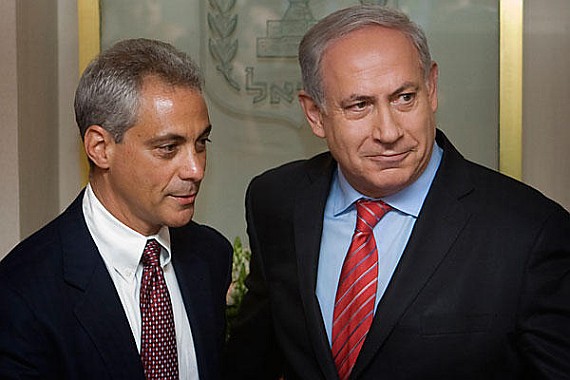
“Officials in the Democratic Party are afraid that the Jews will take revenge in the midterm elections, which is the reason for the vigorous courting of Israel,” reports Yedioth Ahronoth today. Some of the courting the paper refers to just came from White House chief of staff, Rahm Emanuel, whose recent trip to Israel was ostensibly a family affair — he was there to attend his son’s Bar Mitzvah — but it turned out that he also had important and very public business to take care of: a kiss-and-make-up session with Benjamin Netanyahu.
According to reports that reached Jerusalem, it is no coincidence that Obama and his staff have suddenly begun to speak warmly about Israel, to compliment it for the good will gestures it extended to the Palestinians and mainly to admit that they had erred by treating Israel unfairly in Obama’s first year. It appears that the Obama administration’s attack on Netanyahu after the publication of the tender to build 1,6000 new housing units in Ramat Shlomo backfired.
Information that was received by Israeli sources would seem to indicate that the principal reason for the change in approach to Israel is pressure from Democrat lawmakers who are running for election and are finding themselves hard put to enlist Jewish donors to their campaigns. There is a great deal of anger at Obama within the Jewish community and disappointment over his policy toward Israel. Officials in the Democratic Party are afraid that the Jews will take revenge in the midterm elections, which is the reason for the vigorous courting of Israel. In other words, the fear is that the Jewish vote will gravitate away from Democratic candidates to Republicans.
The report concludes by saying that the Obama administration is afraid of another clash with Netanyahu when the settlement “freeze” expires in September. “The hope is that Obama will be able to persuade Netanyahu to extend the construction freeze by means of a friendly request and thereby avoid a damaging confrontation.” Right!
The brief lull in West Bank colonization construction operations was surely timed to expire exactly when Obama could effectively be bound and gagged by the Israel lobby, right before the elections.
When ministers in the Israeli government triumphantly break ground on new settlement projects this fall, we shouldn’t expect to hear even a squeak of disapproval come out of Washington.
As the Freedom Flotilla sails towards Gaza, the Israeli propaganda machine is working at full bore. In its frenzied effort, message discipline seems to have gone out of the window.
10,000 tons of supplies being carried in the nine-ship flotilla are, the Israelis suggest, superfluous to Gaza’s needs when Israel itself is delivering 15,000 tons a week. Still, if the human rights activists insist on completing their mission, Israel’s Ministry of Foreign Affairs says it would be more “efficient” if the flotilla, instead of docking at Gaza City, docks at an Israeli port where everything can be transferred to Israeli trucks. Then everyone can say a prayer as they wait to see how much gets confiscated at the land crossing into Gaza. Why take a direct route when you can take a longer less certain indirect route?
Not surprisingly, The Freedom Flotilla organizers have declined Israel’s “offer.” Israel’s police and prisons service are now on standby, ready to deal with the potential arrest of hundreds of activists in the event that the Netanyahu government decides to block the flotilla’s passage. I imagine some kind of internment camp may need to be set up for holding and interrogating the peaceful activists prior to their deportation.
Meanwhile, Israeli officials are citing a Financial Times report that the 200 to 300 smuggling tunnels from Egypt into Gaza “have become so efficient that shops all over Gaza are bursting with goods.”
In effect, the Israelis seem to be saying that the combination of supplies that it delivers, along with those coming through tunnels, means that for all practical purposes Gaza is no longer under siege.
The siege isn’t working — don’t break the siege!
Strange message.
While Israeli officials selectively cite reporting by the Financial Times, here is part of the same report which makes it clear that under siege, Gaza’s economy has effectively been crippled — in spite of the availability of goods coming through the tunnels.
“Everything I demand, I can get,” says Abu Amar al-Kahlout, who sells household goods out of a warehouse big enough to accommodate a passenger jet.
However, Mr al-Kahlout regards his suppliers in Rafah with distaste. “The tunnel business is not real business. They [the tunnel operators] are not respectable: if they were able to cut off your skin and sell it, they would do so,” he says.
His criticism is echoed by other business leaders in Gaza, who insist that the smugglers are creating a false sense of economic improvement while damaging the territory’s battered private sector.
They concede that the tunnels are providing essential goods, yet the smugglers are also bringing in precisely the simple consumer items that could be manufactured in Gaza, especially if sanctions were eased.
“We are just replacing legitimate businessmen with illegitimate businessmen” says Amr Hammad, a Gaza-based entrepreneur and deputy head of the Palestinian Federation of Industries. Flush with cash, the tunnel operators will soon “govern the whole economy of the Gaza Strip”, Mr Hammad predicts.
For most Gazans, the period since the end of Israel’s three-week offensive in January last year has brought little improvement. According to the United Nations Relief and Works Agency, the number of “abject poor”, who depend on food aid, trebled to 300,000 – or one in five of all Gazans – in 2009.
One western official says the tunnels act like a “humanitarian safety valve”, but cautions that they offer no solution to economic decline. As Mr Hammad says: “An economy cannot just depend on tunnels.”
Over 60 percent of Gaza households are food insecure as a result of the ongoing blockade Israel imposed on the coastal enclave, leading to a collapse of its formal economy, the Association of International Development Agencies (AIDA) said Tuesday.
AIDA, which represents over 80 NGOs, called on Israel for “full and unfettered access into and out of the Gaza Strip for materials and exports necessary for the revival of the agriculture and fishing sectors.”
As Gaza’s population becomes increasingly dependent on aid, the organizations urged Israel to implement immediate measures which include the entry of agricultural input materials such as plastic irrigation piping, quality seeds/seedlings and veterinary drugs into Gaza “needed to jumpstart the agricultural sector and allow the export of produce” and the lifting of access restrictions on farming and fishing areas.
In the name of “security” — the catchall phrase used so often to justify brutality — through its siege on Gaza, Israel has engaged in a systematic campaign not merely to deprive a society of its physical needs but in order corrode, undermine and ultimately destroy the society itself.
Israel has vandalized Gaza in every possible way in a calculated effort to try and drive this society rip itself apart — to disarm Hamas by making Gaza implode. Gestures of solidarity and support for the people of Gaza from the Freedom Flotilla and elsewhere around the world are a way of saying that we can speak out even while our governments remain silent.
In the early days of the arms supply pact, Israel could argue that many Western countries, including the United States, had similar surreptitious relationships with the apartheid regime. But by 1980 Israel was the last major violator of the arms embargo. It stuck with South Africa throughout the 1980s when the regime clung to power in the face of international condemnation and intense rounds of political unrest in the black townships.
By 1987 the apartheid regime was struggling to cope with the combination of internal unrest and international condemnation to the point where even Israel was forced to take notice. A key motivator was Section 508, an amendment to the anti-apartheid sanctions bill that passed the U.S. Congress in 1986 and survived President Ronald Reagan’s veto. It required the State Department to produce an annual report on countries violating the arms embargo. The first one, issued in April 1987, reported that Israel had violated the international ban on arm sales “on a regular basis.” The report gave South Africa’s opponents within the Israeli government and their American Jewish allies ammunition to force Israel to adapt a mild set of sanctions against South Africa. I was in Jerusalem when Israel admitted publicly for the first time that it had significant military ties with South Africa and pledged not to enter into any new agreements — which meant, of course, that existing agreements would be maintained. It was, writes Polakow-Suransky, “little more than a cosmetic gesture.”
From the start, spokesmen for American Jewish organizations acted as apologists or dupes for Israel’s arms sales. Moshe Decter, a respected director of research for the American Jewish Committee, wrote in the New York Times in 1976 that Israel’s arms trade with South Africa was “dwarfed into insignificance” compared to that of other countries and said that to claim otherwise was “rank cynicism, rampant hypocrisy and anti-Semitic prejudice.” In a March 1986 debate televised on PBS, Rabbi David Saperstein, a leader of the Reform Jewish movement and outspoken opponent of apartheid, claimed Israeli involvement with South Africa was negligible. He conceded that there may have been arms sales during the rightist Likud years in power from 1977 to 1984, but stated that under Shimon Peres, who served as prime minister between 1984 and 1986, “there have been no new arms sales.” In fact, some of the biggest military contracts and cooperative ventures were signed during Peres’s watch.
The Anti-Defamation League participated in a blatant propaganda campaign against Nelson Mandela and the ANC in the mid 1980s and employed an alleged “fact-finder” named Roy Bullock to spy on the anti-apartheid campaign in the United States — a service he was simultaneously performing for the South African government. The ADL defended the white regime’s purported constitutional reforms while denouncing the ANC as “totalitarian, anti-humane, anti-democratic, anti-Israel, and anti-American.” (In fairness, the ADL later changed its tune. After his release in 1990, Mandela met in Geneva with a number of American Jewish leaders, including ADL president Abe Foxman, who emerged to call the ANC leader “a great hero of freedom.”)
Polakow-Suransky is no knee-jerk critic of Israel, and he tells his story more in sorrow than anger. He grants that the secret alliance had its uses. To the extent it enhanced Israel’s security and comfort zone, it may have helped pave the path to peace efforts. Elazar Granot, a certified dove who is a former left-wing Knesset member and ambassador to the new South Africa, says as much. “I had to take into consideration that maybe Rabin and Peres were able to go to the Oslo agreements because they believed that Israel was strong enough to defend itself,” he tells the author. “Most of the work that was done — I’m talking about the new kinds of weapons — was done in South Africa.”
Polakow-Suransky sees in the excoriation of Jimmy Carter’s 2006 book, Palestine: Peace Not Apartheid by American Jewish leaders an echo of their reflexive defense of Israel vis á vis South Africa in the 1970s and 1980s. The author himself draws uncomfortable parallels between apartheid and Israel’s occupation of the West Bank and Gaza, noting that both involved the creation of a system that stifled freedom of movement and labor, denied citizenship and produced homelessness, separation, and disenfranchisement. As the Palestinian population continues to grow and eventually becomes the majority — and Jews the minority — in the land between the Jordan River and the Mediterranean, the parallels with apartheid may become increasingly uncomfortable. Even Prime Minister Ehud Olmert agreed, observing in 2007 that if Israel failed to negotiate a two-state solution with the Palestinians, it would inevitably “face a South African-style struggle for equal voting rights.”
“The apartheid analogy may be inexact today,” Polakow-Suransky warns, “but it won’t be forever.”
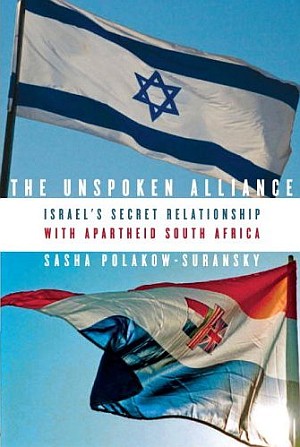
Chris McGreal, in a series of reports triggered by the publication of Sasha Polakow-Suransky’s new book, The Unspoken Alliance, writes:
For years after its birth, Israel was publicly critical of apartheid and sought to build alliances with the newly independent African states through the 1960s.
But after the 1973 Yom Kippur war, African governments increasingly came to look on the Jewish state as another colonialist power. The government in Jerusalem cast around for new allies and found one in Pretoria. For a start, South Africa was already providing the yellowcake essential for building a nuclear weapon.
By 1976, the relationship had changed so profoundly that South Africa’s prime minister, John Vorster, could not only make a visit to Jerusalem but accompany Israel’s two most important leaders, Yitzhak Rabin and Shimon Peres, to the city’s Holocaust memorial to mourn the six million Jews murdered by the Nazis.
Neither Israeli appears to have been disturbed by the fact that Vorster had been an open supporter of Hitler, a member of South Africa’s fascist and violently antisemitic Ossewabrandwag and that he was interned during the war as a Nazi sympathiser.
Rabin hailed Vorster as a force for freedom and at a banquet toasted “the ideals shared by Israel and South Africa: the hopes for justice and peaceful coexistence”.
Secret South African documents reveal that Israel offered to sell nuclear warheads to the apartheid regime, providing the first official documentary evidence of the state’s possession of nuclear weapons.
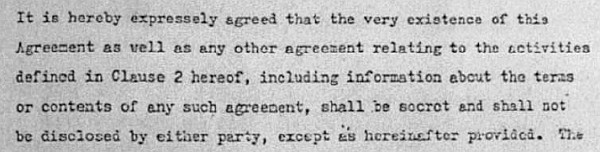
The “top secret” minutes of meetings between senior officials from the two countries in 1975 show that South Africa’s defence minister, PW Botha, asked for the warheads and Shimon Peres, then Israel’s defence minister and now its president, responded by offering them “in three sizes”. The two men also signed a broad-ranging agreement governing military ties between the two countries that included a clause declaring that “the very existence of this agreement” was to remain secret.
The documents, uncovered by an American academic, Sasha Polakow-Suransky, in research for a book on the close relationship between the two countries, provide evidence that Israel has nuclear weapons despite its policy of “ambiguity” in neither confirming nor denying their existence.
The Israeli authorities tried to stop South Africa’s post-apartheid government declassifying the documents at Polakow-Suransky’s request and the revelations will be an embarrassment, particularly as this week’s nuclear non-proliferation talks in New York focus on the Middle East.
They will also undermine Israel’s attempts to suggest that, if it has nuclear weapons, it is a “responsible” power that would not misuse them, whereas countries such as Iran cannot be trusted.
South African documents show that the apartheid-era military wanted the missiles as a deterrent and for potential strikes against neighbouring states.
The documents show both sides met on 31 March 1975. Polakow-Suransky writes in his book published in the US this week, The Unspoken Alliance: Israel’s secret alliance with apartheid South Africa. At the talks Israeli officials “formally offered to sell South Africa some of the nuclear-capable Jericho missiles in its arsenal”.
Among those attending the meeting was the South African military chief of staff, Lieutenant General RF Armstrong. He immediately drew up a memo in which he laid out the benefits of South Africa obtaining the Jericho missiles but only if they were fitted with nuclear weapons.
At the pro-Israeli Washington Institute for Near East Policy, David Schenker writes:
On Monday, Lebanese prime minister Saad Hariri will visit Washington for a meeting with President Obama. In announcing the meeting, White House press secretary Robert Gibbs called it “a symbol of the close and historic relationship between Lebanon and the United States.” Indeed, between 2005 and 2009, bilateral ties were never closer or more consequential, with the Cedar Revolution ending nearly three decades of Syrian suzerainty in the country. Over the past year, however, Hariri has had to govern in coalition with Hizballah. The Iranian-Syrian backed Shiite militia will be the elephant in the Oval Office during Monday’s meeting.
Prior to becoming prime minister, Hariri was a frequent visitor to the Bush White House as head of Lebanon’s ruling March 14 coalition. This will be his first visit as premier, his first meeting with Obama, and his first trip to the White House since last year’s seeming reversal of the Cedar Revolution. Although Syria no longer has troops stationed across the border, President Bashar al-Asad’s allies in Lebanon have retrenched in recent months and once again wield preponderant political influence. Meanwhile, the March 14 coalition has been dramatically weakened by attrition and defections at home and abroad that have led the movement to moderate its pro-Western stance and embrace — at least rhetorically — Hizballah’s “resistance” doctrine.
Syria and Lebanon have agreed they will present a united front of opposition to Israel and support for Hizbollah, when the Lebanese prime minister, Saad Hariri, travels to Washington next week.
Syria’s president, Bashar Assad, held talks with the Lebanese leader in Damascus on Tuesday. In contrast to Mr Hariri’s first prime ministerial visit to Syria in December, when he was joined by a large government delegation, this time only senior aides accompanied the two.
Bussaina Shaaban, a Syrian presidential adviser, said the meeting was designed to “co-ordinate policy” ahead of Mr Hariri’s trip to the United States, expected to take place on Monday.
There’s little question that like all other Lebanese politicians, Saad Hariri depends for his survival on a good measure of expediency and pragmatism, but even so, are we really to believe that he is tightening his bonds with the people who killed his father? Or is it time to acknowledge that whoever was benefited by the assassination of Rafic Hariri, it wasn’t Syria.
If one asks the question, “Who benefits?” the answer is clear. The destabilization of Lebanon, the mobilization of the US-backed opposition to the pro-Syrian government in Beirut, and the vilification of Damascus all serve to advance US and Israeli strategic plans long in the making.
It is not just a question of motive, however. Israel has a long history of utilizing assassination as an instrument of state policy. The Israeli regime has not infrequently carried out acts of terror and blamed them on its enemies.
And that was written before the assassinations of the Hezbollah commander Imad Mughniyah in Damascus in 2008 and of the Hamas commander Mahmoud al-Mabhouh in Dubai in January this year, both of which killings were attributed to Mossad.
Let us imagine the dream-country of most Israelis – without criticism, neither from within nor from without. It speaks in one voice and is eternally united, with devotion and cohesion; all-Jewish, that goes without saying. It stands unanimously behind its government, every government, and also, of course, behind its army, the Shin Bet security service and the Mossad espionage agency – Israel’s heroes.
There is not even a single “snitch,” no human rights organizations or peace movements, no nonprofit associations and no critical reports that are published here, or, heaven forbid, abroad. Its press never criticizes, never exposes, never investigates, publishing nothing but praise and admiration for the government and the state. It recites official statements and quotes from government and security briefings.
Every war that this dream-country wages is met immediately by nothing but cheers of approval. Any atrocity it commits in the occupied territories automatically earns across-the-board support – the most moral, the most just, the most security-oriented, in harmony. All residents must swear their allegiance, all those who wish to visit, too. Those who are faithful to Israel are welcome. All the rest must take the first plane (or truck ) out. In short, the country of one’s dreams.
But now let’s answer truthfully. Is that really the country we wound want to live in? Moreover, would the world that is always-against-us appreciate and like Israel better if that was how we looked and spoke, uniform and devoid of all self-criticism?
The benchmark upon which all psychological health and pathology can be assessed is the relationship between self and other. The breakdown of this relationship at its extreme results in psychosis: a condition in which an unbridgeable chasm has opened between the individual and the world he inhabits.
Is this where Israel is heading? A nation so deranged that the only source of comfort it finds is in a conversation that it mutters to itself? A nation that lashes out at anyone who ventures to close? A nation whose existence rests on a foundation of fear?
No one knows fascism better than Israelis. They are schooled, drilled in the history, the mechanics, the horrendous potential of fascist regimes. Israelis know fascism when they see it. In others.
They might well have expected when fascism began taking root here, it would arise at a time of a national leadership of galvanizing charisma and sweeping, powerfully orchestrated modes of action.
But that would have been much too obvious to deny. And it would take denial, inertia, selective memory, a sense that things – bad as they are – can go on like this indefinitely, for fascism to be able gain its foothold in a country founded in its very blood trail.
In fact, it has taken the most dysfunctional, the most rudderless government Israel has ever known, to make moderates uncomfortably aware of the countless but largely cosmetized ways in which the right in Israel and its supporters abroad have come to plant and nurture the seeds of fascism.
Yonatan Touval, one of the Israelis behind the Geneva Initiative, clearly articulates the degree and ways in which Israel has suffered as a result of its special relationship with the United States. His hope is that Obama might correct the imbalance in the relationship and make it one based on genuine mutual interests, yet the quirk in Touval’s analysis is his claim that Israel is a victim in a relationship thrust upon the Jewish state — that America has indulged Israel “to the point of abuse.”
“Take the money,” insisted Uncle Sam. Little Israel was powerless to refuse. And now look what this over-indulgent uncle has done to its helpless nephew.
I guess this can be seen as a version of the “friends don’t let friends…” sentiment. Even so, the fact that Israelis still feel they can push their Little Israel image seems itself to be an expression of the way Israel has been over-indulged.
Put simply, the relationship has damaged Israel by turning it into an adolescent state that doesn’t take responsibility for its own actions. And why should it take responsibility, when America’s uncritical embrace allows it to behave with the certainty that no action would ever be too costly – America would always save it from military, economic or diplomatic ruin.
To the extent, moreover, that this certainty has weakened Israel’s resolve to settle its conflict with its neighbors, the country has been further damaged by the loss of faith that the conflict could ever end. Hence the powerlessness to stop the occupation. This has had a terribly corrosive effect on Israeli life – from the high level of stress in everyday living, to the distorted allocation of national resources (Israel’s 2010 state budget allocates $14.4 billion for defense, a figure equal to 6.7 percent of the country’s GDP – the highest of any developed nation ), to the psychological adjustments that Israelis must make in the face of the deepening erosion of democratic values and growing doubts about the future prospects of the country as such.
Israelis have become accustomed to living under such anomalous conditions because, in many respects, the cushion of the special relations with the United States allows them to. But being habituated is a mixed blessing – which is also to say, a mixed curse.
Indeed, rather than habituation, Israel needs rehabilitation. And to those on the other side of the ocean who would disclaim responsibility, by placing the onus on Israel alone, we Israelis can only respond: “Where have you been all this time? It is you, America, that has turned us into what we are.”
There seems to be a near-universal consensus that sanctions won’t persuade Iran’s leaders to abandon the Islamic republic’s uranium enrichment program — but maybe that’s besides the point. Maybe by now what would be the most cynical interpretation of the Obama administration’s objectives can also be treated as the most credible view.
In this instance, what does that mean? It means that the drive to impose sanctions on Iran has less to do with Iran than it has to do with calming the fears of the Democratic Party’s wealthiest Zionist donors ahead of this fall’s midterm elections.
Unnerved by the repeated warnings that Israel faces an existential threat, these donors won’t sign their checks until they’ve heard a sufficiently soothing answer to the question: “What are you doing about Iran?”
“We’ll do whatever it takes.” “We’re pushing for tougher sanctions than the Bush administration did.” “We’re absolutely dedicated to preventing Iran acquiring a nuclear weapons capability.”
But meanwhile in Israel it turns out that preparations are being made for the unthinkable — living with a nuclear Iran.
Haaretz reporters, Amos Harel and Avi Issacharoff, just attended a simulation held at the prestigious Herzliya Interdisciplinary Center where the assumption was that the US will not give a green light for Israel to attack Iran and that sanctions will not derail Iran’s nuclear program.
The IDC simulation centered on a confrontation between Israel and Hezbollah with a hypothetically nuclear Iran in the background. Similar to other simulations taken place in the West in the last two years, the premise is that an Iranian nuclear umbrella would give more freedom to organizations such as Hezbollah and Hamas, encouraging them to provoke Israel. The Herzliya panelists reached the conclusion that Hezbollah’s possession of a “dirty” or radioactive bomb would bring about the kind of American determination that would lead to an international military task force, which would in turn disarm Hezbollah. We’ll believe it when we see it.
Indeed. If consideration of the prospect of a nuclear Iran reflects the rise of realism among Israeli strategic thinkers, the idea that the US would disarm Hezbollah suggests that realism is still struggling to gain a firm foothold.
As noteworthy as anything else that the simulation revealed was the fact that — at least in the thinking of these Israelis — in the context of the Jewish state’s fears about regional threats, the Palestinians don’t even come into consideration.
Disarming the Israeli-Palestinian landmine, a central Obama administration claim has it, would aid in cooling the region, and maybe even in curbing Iran’s nuclear ambitions. But, at least as simulation participants found out, the Palestinians have turned into a negligible entity. The most significant maneuvers were led by the United States, Israel, and the European Union, with some aid offered by the more moderate Arab states. Hamas and the Palestinian Authority were virtually out of the game.
The fate of Israel will be decided in New York — at least that’s what quite a few people in New York seem to think.
From this vantage point, the American Jewish community is the umbilical chord that keeps baby Zionism alive. And for Peter Beinart, this life-support system appears in jeopardy of raising a monster.
Among American Jews today, there are a great many Zionists, especially in the Orthodox world, people deeply devoted to the State of Israel. And there are a great many liberals, especially in the secular Jewish world, people deeply devoted to human rights for all people, Palestinians included. But the two groups are increasingly distinct. Particularly in the younger generations, fewer and fewer American Jewish liberals are Zionists; fewer and fewer American Jewish Zionists are liberal. One reason is that the leading institutions of American Jewry have refused to foster—indeed, have actively opposed—a Zionism that challenges Israel’s behavior in the West Bank and Gaza Strip and toward its own Arab citizens. For several decades, the Jewish establishment has asked American Jews to check their liberalism at Zionism’s door, and now, to their horror, they are finding that many young Jews have checked their Zionism instead.
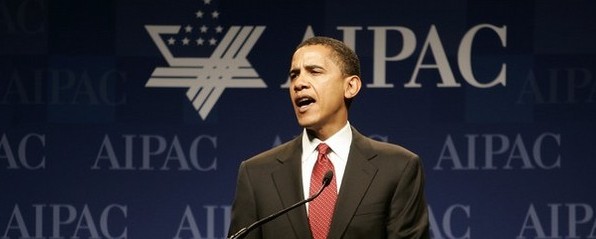
Morally, American Zionism is in a downward spiral. If the leaders of groups like AIPAC and the Conference of Presidents of Major American Jewish Organizations do not change course, they will wake up one day to find a younger, Orthodox-dominated, Zionist leadership whose naked hostility to Arabs and Palestinians scares even them, and a mass of secular American Jews who range from apathetic to appalled. Saving liberal Zionism in the United States—so that American Jews can help save liberal Zionism in Israel—is the great American Jewish challenge of our age.
Like many missions of salvation, there is a large measure of grandiosity in Beinart’s perspective.
The truth is that Israel never really needed the American Jewish community, as long as it could have the US government. One of the great successes of Israeli Zionism was to convince American Jews that Israel was an American style democracy, instead of a Eastern European ethnocracy with some of the trappings of a liberal democracy. It was founded by Russians, and for the most part, Russians and their descendants have run it. And now with the Russian aliyah, it will be even more Russian. True, Bibi has always thrown in a few Americans, Oren, Gold, etc., as this generation’s Abba Ebans. But there is nothing in common between the ethnic democracy of Israel and the liberal democracy of America. Beinart doesn’t get this; he thinks that the shift rightward is a shift away from Israeli style democracy.
Ross Douthat points out that the trend Beinart is observing has as much to do with the evaporation of the Jewishness of liberal American Jews as it has with Israel’s rightward tilt.
One reason, and perhaps the major reason, that young liberal Jews are less attached to Israel is that Israel has become less liberal. But they also may be less attached to the Jewish homeland because they themselves are simply less Jewish.
My grandmother was born in Alexandria, Egypt, then moved as a girl to Elizabethville (now Lubumbashi) Congo, now she lives in a third dying Jewish community (albeit the most beautiful in the world) in Cape Town, South Africa. So I really believe that Jews–if not perhaps American Jews—need a Jewish state to go to in time of need. Whenever I waxed too patriotic about America, my grandmother used to say, “the Jews are like rats,” we leave the sinking ship. So yes, I’m a Zionist. I’m close enough to people who still have their bags packed.
And when the sinking ship turns out to be Israel? What then?
For Beinart and his fellow liberal Zionists the one idea that is so unpalatable that it doesn’t even get discussed is that Israel’s rightward shift, far from being an aberration, is, on the contrary, the logical expression of the contradiction inherent in the idea that a state can both support a form of ethnic supremacy and at the same time practice genuine democracy.
Israel’s challenge now as from the day of its creation is whether it wants to be a Jewish state or a democracy. For 62 years it has been perfectly evident that it cannot be both.
In a world long dominated by Western powers, the global order has been one shaped by coercion. Although the twentieth century saw the end of formal colonialism — the most overt coercive system — the perpetuation of economic colonialism has meant that the United States and its allies still expect to have the final word on most issues of global importance.
It seems natural then as a new global order emerges, Western domination will not get replaced by another form of domination — the Western coercive paradigm itself will be rejected. This indeed, is the new approach to diplomacy that is being pioneered by Brazil and Turkey.
If Barack Obama really embodied a new way of thinking, we’d have reason to hope that he’d be nimble enough to adapt to the momentous period of change that is now unfolding, yet so far all the indications are that whatever his personal abilities might be, he remains firmly tethered to an arthritic diplomatic and political establishment.
The nuclear swap deal just struck by Brazil, Turkey and Iran could be grasped as an unexpected but welcome opportunity. Instead, Washington’s guarded response barely conceals the fact that it sees it own power as being usurped.
In the Financial Times, Jonathan Wheatley notes that the deal may vindicate Brazilian diplomacy and prove the skeptics wrong.
The idea that Iran would abandon its alleged nuclear weapons programme in favour of a peaceful nuclear energy programme in response to amicable talks rather than under the threat of UN-backed sanctions seemed unrealistic, even naïve. But it may well have paid off. Even a US official conceded today that the latest news was “potentially a good development.”
If so, Celso Amorim, Brazil’s foreign minister, can be forgiven some self-satisfaction. “We are holding conversations in a respectful manner and with conviction . . . Our language is not that of pressure. Our language is that of persuasion, friendship and cooperation,” he told reporters in Tehran on Monday.
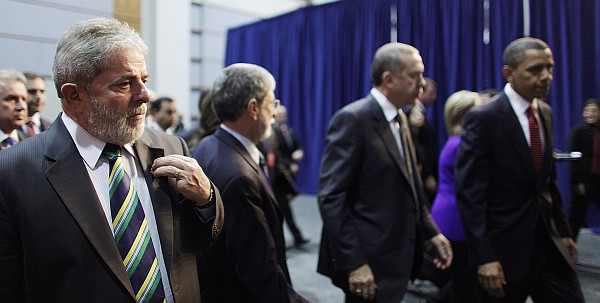
The recent visit by Luiz Inacio Lula da Silva, Brazil’s president, to Iran is part of a broad multilateral foreign policy that he believes is commensurate with his nation’s ever-growing importance in a changing world axis.
Brazil under Lula’s eight year reign has promoted trade between Israel and Latin America, while supporting talks with Hamas and Palestinian statehood. It has balked at US urges for sanctions on Iran over their nuclear programme, which Washington believes has nefarious intentions, while on Sunday it brokered an agreement in which Tehran exchanges low-enriched uranium for nuclear fuel.
Diplomatic ties have been created with more than 40 nations, including North Korea, and Brasilia maintains good relations across divides, for instance with foes Venezuela and Colombia.
Like India, Brazil is advocating for a permanent seat at the UN Security Council and wants reform of the International Monetary Fund (IMF) to better represent developing nations.
For as Lula said in an interview with Al Jazeera this week, international geopolitics is shifting and global governance needs to change with it.
The impact of the agreement on Israel — where coercion is generally regarded as the only effective tool of persuasion — was summed up by Yossi Melman:
The agreement on the transfer of Iran’s enriched uranium, achieved via Turkish-Brazilian mediation, is an important victory for Iranian diplomacy and a debacle for Israeli policy. The deal reduces the chances, which were slim to begin with, of new sanctions being imposed on Iran, and makes a military strike against Iran even less feasible.
Turkey is the deal’s big winner. Trade between Iran and Turkey already stands at $10 billion annually, so if sanctions were imposed on Tehran, Turkey would suffer a massive blow to its economy – and Prime Minister Recep Tayyip Erdogan’s party would suffer a major political setback. Alternatively, should Turkey decide not to uphold the sanctions, it might find itself in a crisis with the United States and Europe. Hence the tremendous effort Turkey made to achieve the deal, despite American warnings that Iran might be using Turkey in order to buy time.
Why did Iran choose to see Turkey as an “honest broker” and make the deal with it instead of with the permanent Security Council members? The two countries’ good relations are not free of suspicion, but both Iran and Turkey have adopted a policy of expanding their influence in the Middle East, influence of the sort that relies on cooperation rather than competition.
The closer ties between Turkey and Syria, Iran’s ally; the similar attitude that Turkey and Iran have toward Hamas; their shared interests in Iraq; and a similar view of radical Islamic terrorism all combined with Turkey’s disappointment over European views of its candidacy to join the European Union to create a confluence of interests that, for the time being, trumps their disagreements. Moreover, from an ideological standpoint, Iran prefers Turkey to the U.S.: Any concession to Washington or its Security Council partners would be perceived as a surrender.
China welcomed Iran’s new nuclear fuel-swap agreement, saying the deal supports Beijing’s long-held position that the international dispute over Iran’s nuclear ambitions can be resolved through diplomacy rather than sanctions or force.
“We hope this will help promote a peaceful settlement of the Iranian nuclear issue through dialogue and negotiation,” foreign ministry spokesman Ma Zhaoxu said Tuesday at a regular press briefing. “We believe dialogue and negotiation is the best approach to settle the Iranian nuclear issue.”
Under the deal arranged by Brazil and Turkey, Iran will ship out some of its uranium to Turkey, have it enriched and then shipped back to Iran for use in a medical research reactor. Western powers want to keep Iran from enriching uranium on its own soil, because it fears that fuel will end up being used for nuclear weapons, which Tehran denies. The latest deal is a weakened version of one that was negotiated last October but fell through after Iran’s government didn’t approve it.
For China, a deal brokered by Brazil and Turkey is in line with its broader vision of a more multipolar world order not dominated by Washington.
Julian Borger thinks that Iran might have overplayed its hand.
The initial western response to the new Turkish-Brazilian-Iranian uranium swap deal was akin to a chess player realising loss is inevitable. There was an awkward silence and quietly spreading panic as western capitals looked a few moves ahead and could not think of a way of escaping the trap they had fallen into. The deal would have to be accepted, even though it did little to slow down Iran’s nuclear drive, and the push for sanctions in New York would deflate.
And then, the Iranian foreign ministry decided to speak. The spokesman, Ramin Mehmanparast, declared: “Of course, enrichment of uranium to 20% will continue inside Iran.”
The announcement was stunning. Iran’s justification for beginning 20% enrichment in February, was that it needed the material to make medical isotopes for the Tehran research reactor, although it was unclear how the Iranians were going to fabricate the necessary rods. Under this new deal, the rods will be provided free of charge. What then would be the civilian use of Iran’s home-enriched uranium?
For those already convinced Iran is working its way to breakout nuclear weapons capacity, the point of enriching to 20% is clear. In engineering terms it is a lot more than half way to 90% weapons-grade material, and an important test of the reliability of Iran’s centrifuges in reaching that goal.
Within minutes, the western capitals, tongue-tied over their response for the first few hours, began to rally.
But if Washington hoped that there might at least be unity in the expression of Western reservations about the deal, that hope was swiftly undermined as the French President Nicholas Sarkozy said he sees this development as a “positive step.”
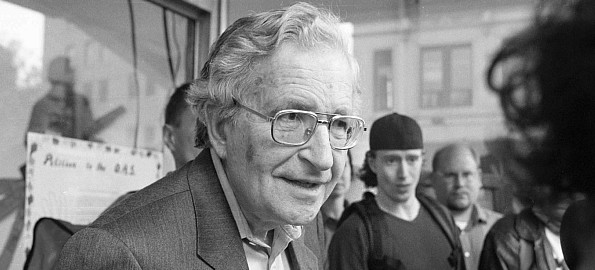
The Interior Ministry refused to let linguist Noam Chomsky into Israel and the West Bank on Sunday. Chomsky, who aligns himself with the radical left, had been scheduled to lecture at Bir Zeit University near Ramallah, and visit Bil’in and Hebron, as well as meet with Palestinian Prime Minister Salam Fayyad and various Palestinian activists.
In a telephone conversation last night from Amman, Chomsky told Haaretz that he concluded from the questions of the Israeli official that the fact that he came to lecture at a Palestinian and not an Israeli university led to the decision to deny him entry.
“I find it hard to think of a similar case, in which entry to a person is denied because he is not lecturing in Tel Aviv. Perhaps only in Stalinist regimes,” Chomsky told Haaretz.
Sabine Haddad, a spokesperson for the Interior Ministry, confirmed to Haaretz that the officials at the border were from the ministry.
“Because he entered the Palestinian Authority territory only, his entry is the responsibility of the Office of the Coordinator of Government Activities in the Territories at the Defense Ministry. There was a misunderstanding on our side, and the matter was not brought to the attention of the COGAT.”
Haddad told Haaretz that “the minute the COGAT says that they do not object, Chomsky’s entry would have been permitted.”
Chomsky, a Jewish professor of linguistics and philosophy at the Massachusetts Institute of Technology, had spent several months at Kibbutz Hazore’a during the 1950s and had considered a longer stay in Israel. He had been invited by the Department of Philosophy at Bir Zeit.
He planned to spend four days in the West Bank and give two lectures.
On Sunday, at about 1:30 P.M. he came to the Israeli side of the border with Jordan. After three hours of questioning, during which the border officer repeatedly called the Interior Ministry for instructions, Chomsky’s passport was stamped with “Denied Entry.”
With Chomsky, 81, were his daughter Aviva, and a couple of old friends of his and his late wife.
Entry was also denied to his daughter.
Their friends, one of whom is a Palestinian who grew up in Beirut, were allowed in, but they opted to return with Chomsky to Amman.
Chomsky told Haaretz that it was clear that his arrival had been known to the authorities, because the minute he entered the passport control room the official told him that he was honored to see him and that he had read his works.
The professor concluded that the officer was a student, and said he looked embarrassed at the task at hand, especially when he began reading from text the questions that had been dictated to him, and which were also told to him later by telephone.
Chomsky told Haaretz about the questions.
“The official asked me why I was lecturing only at Bir Zeit and not an Israeli university,” Chomsky recalled. “I told him that I have lectured a great deal in Israel. The official read the following statement: ‘Israel does not like what you say.'”
Chomsky replied: “Find one government in the world which does.”
“The young man asked me whether I had ever been denied entry into other countries. I told him that once, to Czechoslovakia, after the Soviet invasion in 1968,” he said, adding that he had gone to visit ousted Czechoslovak leader Alexander Dubcek, whose reforms the Soviets crushed.
In Ynet, Boaz Okon expresses his fear that Israel is moving in the direction of becoming a fascist state.
[I]n Israel our government has already started to threaten the freedom, or at least the freedom of those perceived as “others.” We are no longer interested in what “others” have to say, let alone in their right to live here normally. We want them to get out of here. We persecute “others” based on generalizations, suspicions, bias, or just because they annoy us.
The police detain protestors in east Jerusalem’s Sheikh Jarrah neighborhood on false pretenses. The custody court expels a pregnant foreign worker so she won’t give birth to a foreign child in Israel. The family court prevents babies in India from being brought into Israel based on unfounded excuses, which may serve as a veneer for the disapproval of the sexual orientation of their father.
Meanwhile, our courts issue gag orders routinely and without much thought, possibly in order to cover the shame. We even expelled clowns who wished to arrive at a festival in Ramallah because we are scared.
What we have here is a worrisome common denominator. When freedom disappears, it comes first and foremost at the expense of the weak, marginal groups, or minorities. Yet this does not end there. Now it’s also being directed towards globally recognized intellectuals.
For that reason, it would not be exaggerated to say that the decision to silence Professor Noam Chomsky is an attempt to put an end to freedom in the State of Israel. I am not referring to the foolishness inherent in providing ammunition for those who argue that Israel is fascist, but rather, to the fear that we may indeed be in the process of becoming that way.
Today Israel celebrated 62 years since its formation on 15 May 1948. For Palestinians, today marks the 62nd year since the Nakba – our national and personal catastrophe, involving the loss of our ancestral homeland and the dispersal of three-quarters of our people into exile.
To date, the Palestinian people await Israeli recognition of its responsibility in the catastrophe and agreement to resolve the conflict based on international law, including UN resolutions.
I experienced exile first-hand. On 13 May 1948 one day before Israel’s declaration of independence, my hometown of Jaffa was captured by Zionist forces. Seventy thousand Palestinian inhabitants of the city were forced to leave, most of them by sea to Gaza, Egypt, and Lebanon. We Jaffans were literally driven out to the sea. I was 10. We were never allowed to return.
The same reality befell more than 726,000 indigenous Christian and Muslim Palestinians who fled their homes or were expelled from Mandate Palestine in and around 1948; while hundreds of Palestinians were killed as they were driven out, or in their attempt to come back home. Several Israeli historians such as Benny Morris and Ilan Pappe described the catastrophe vividly and accurately.
In the wake of the expulsion, more than 418 Palestinian villages were razed to the ground. Nearly all Palestinian property, including that belonging to Palestinians who managed to stay within the areas that came under Israeli control, was confiscated by the nascent State of Israel for the exclusive benefit of Jews. In 1952, when Israel’s parliament passed its nationality law, Palestinian refugees were denied the option of citizenship in the new state. Additional measures were taken to bar our return to our country and our homes. The expulsion of Palestinians and the subsequent measures to render the displacement permanent were taken in contravention of international law.
These events, which left the majority of Palestinians stateless and dispossessed, were compounded by the Israeli military occupation of the West Bank and Gaza Strip in 1967. Hundreds of thousands of Palestinians once again fled their homes, and Israel expanded its control over the remaining 22% of our historic homeland. Today, the stranglehold over the Gaza Strip, the ongoing settlement and closure activities in the West Bank, including East Jerusalem, is leading to more Palestinian fragmentation and displacement. Indeed, the Nakba continues.
At their core, the circumstances surrounding the Palestinian struggle today do not differ from those circumstances that led to the 1948 Nakba and the colonization of Palestine. Today, on the sixty-second anniversary of the Nakba, the nature of the western-backed Zionist-Israeli colonial enterprise appears all the clearer. The indigenous Palestinian people have been denied their most fundamental and inalienable rights of self-determination, including their rights to return to the land from which they were displaced, and continue to suffer from Israel’s grave violations of basic human rights and freedoms. As Israel cruelly blockades the Palestinians of the Gaza Strip and denies 7.1 million displaced Palestinians around the globe their rights to return, restitution and compensation, the international community provides a protective shield forged through diplomatic, economic, cultural and security cooperation which perpetuate Israel’s impunity.
In a time when Israel’s true face as a regime of colonization, apartheid and military occupation has been exposed for the world to see, governments and their organizations, have chosen to look the other way. The protective shield preventing effective redress and accountability for Israel’s crimes is no more provided by western states alone, as international organizations have joined the chorus that calls for a “balanced position” and have allowed Israel’s membership and integration into global and regional, civil and official organizations. Israel thus enjoys not only the unlimited support of the United States, but also enjoys preferential status with the European Union under the 1995 Barcelona Declaration and the E.U.-Israel Association Agreement, which have entrenched European relations with Israel in political, military, financial, economic, social and cultural terms, and even in the field of humanitarian aid.
Only recently, on 10 May, no OECD member state felt obliged by international law or found the moral strength to block Israel’s accession to that club of the world’s powerful economies. Israel’s protective shield is no longer composed merely of U.S. veto powers in the Security Council of the United Nations. It has spread to other UN fora, such as the General Assembly and the Human Rights Council where global powers exert coercive pressure on member states, and even to domestic judicial systems and international courts, in order to enable Israel to escape accountability for its grave violations of international law.
It has become painfully clear that Israel and the so-called Quartet view Palestinian demands for the implementation of international law as an obstacle to the peace process, at best, and as a form of unacceptable radical extremism, at worst. This explains why the U.S. has resumed pressure on the Palestinian and Arab representatives to return to the negotiating table despite Israel’s refusal to cease construction and expansion of its settlements in the occupied Palestinian West Bank, and irrespective of the personal commitment given in this regard by President Obama. Thus, so-called proximity talks and indirect negotiations are being relaunched while Israel’s prime minister reassures his coalition government that there will be no limitation on settlement construction and expansion, the forced displacement of Palestinians from Jerusalem and the expansion of the network of apartheid roads and the Wall in the occupied West Bank.
Meanwhile, Israel continues to draft and adopt more racist legislation, including law proposals to outlaw Nakba commemoration, the 2009 Israel Lands Authority Law and a 2010 amendment of the Land Acquisition Law, which allow privatization and confiscation of more land of Palestinian refugees and citizens, as well as new military orders, such as Order No. 1650 arbitrarily defining a large portion of the Palestinian population of the occupied West Bank and foreigners as “infiltrators” subject to arrest and deportation.
In light of the above and the division and weakness which has characterized the performance of the Palestinian leadership, BADIL re-iterates the call of the National Committee for the Commemoration of the Nakba issued this 15 May:
for the Palestinian leadership to:
• Adopt a coherent strategy towards a just and permanent solution for Palestinian refugees and IDPs, based on their right to return and in accordance with international law, universal principles of justice and UN resolutions 194 (1948) and 237 (1967);
• Halt all negotiations, whether direct or indirect, until Israel completely halts settlement expansion, population transfer (“Judaization”), and construction of the Wall and other infrastructure of colonization and apartheid, such as roads and the light train connecting Jewish settlements to West Jerusalem;
• Ensure national reconciliation and unity as a matter of urgency, and rebuild the PLO as a legitimate and credible platform representing the entire Palestinian people and its political organizations;
• Support and activate popular resistance in all forms permitted under international law.
• Establish a consultative mechanism with professional civil society organizations to support the efforts of the PLO in international fora.
To the public in Palestine and abroad to:
Build and expand the civil society-led movement for boycott, divestment and sanctions (BDS) against Israel until it complies with international law and exert stronger pressure on states to implement sanctions and adopt decisions and resolutions which support the global BDS Campaign;
Redouble efforts for investigation of Israeli war crimes and crimes against humanity and prosecution and punishment of those responsible, as well as efforts to prevent Israel’s accession and integration into international and regional organizations.
The recent arrest of two respected public figures from Israel’s Palestinian Arab minority in night-time raids on their homes by the Shin Bet secret police – brought to light this week when a gag order was partially lifted – has sent shock waves through the community.
The arrests are not the first of their kind. The Shin Bet has been hounding and imprisoning politicians and intellectuals from the country’s Palestinian minority, a fifth of the population, since the birth of the Jewish state more than six decades ago. Currently, two MPs from Arab political parties, as well as the leader of the popular Islamic Movement, are facing trials.
But the detention of Amir Makhoul and Omar Sayid is seen differently — as the gathering storm clouds in a political climate already fiercely hostile to its Palestinian citizens.
Mohammed Zeidan, the head of the Human Rights Association in Nazareth, said: “We are used to our political leaders being persecuted but now the Shin Bet is turning its sights on the leaders of Palestinian civil society in Israel, and that’s a dangerous development.”
Mr Makhoul and Mr Sayid are not accused of the usual public order offenses, nor have they simply violated chauvinistic legislation that criminalizes Palestinian citizens’ visits to neighboring Arab states. Both are facing the much more serious charge of espionage, on behalf of Lebanon’s Hezbollah.
Mr Makhoul, who appears to be the chief object of the Shin Bet’s interest, is the head of Ittijah, an umbrella organization coordinating the activities of Palestinian human rights groups in Israel. More specifically, he has become the leading voice inside Israel backing the growing international campaign for boycott, sanctions, and divestment against Israel.
On Wednesday, the courts approved an extension of Mr Makhoul’s remand. He was not allowed to be present and was denied the right to a lawyer until at least next Monday, 12 days since his arrest. He is reportedly being interrogated around the clock.
This website or its third-party tools use cookies, which are necessary to its functioning. By closing this banner, you agree to the use of cookies.