Category Archives: Lands

U.S. believes hackers are shielded by Russia to hide its role in cyberintrusions

The Wall Street Journal reports: U.S. officials are increasingly confident that the hacker Guccifer 2.0 is part of a network of individuals and groups kept at arm’s length by Russia to mask its involvement in cyberintrusions such as the theft of thousands of Democratic Party documents, according to people familiar with the matter.

While the hacker denies working on behalf of the Russian government, U.S. officials and independent security experts say the syndicate is one of the most striking elements of what looks like an intensifying Russian campaign to target prominent American athletes, party officials and military leaders.

A fuller picture of the operation has come into focus in the past several weeks. U.S. officials believe that at least two hacking groups with ties to the Russian government, known as Fancy Bear and Cozy Bear, are involved in the escalating data-theft efforts, according to people briefed on the Federal Bureau of Investigation’s probe of the cyberattacks.

Following successful breaches, the stolen data are apparently transferred to three different websites for publication, these people say. The websites — WikiLeaks, DCLeaks.com and a blog run by Guccifer 2.0 — have posted batches of stolen data at least 42 times from April to last week.

WikiLeaks has published U.S. secrets for years but has recently taken an overtly adversarial tone toward Democratic presidential nominee Hillary Clinton. Cybersecurity experts believe that DCLeaks.com and Guccifer 2.0 often work together and have direct ties to Russian hackers. [Continue reading…]

Facebooktwittermail

The White House asked Congress to keep quiet on Russian hacking

BuzzFeed reports: The White House sought to muzzle two of Congress’s top intelligence officials when they decided to publicly accuse Russia of meddling in the US election last week, sources familiar with the matter told BuzzFeed News.

In a statement released Friday, Sen. Dianne Feinstein and Rep. Adam Schiff, the vice-chairmen of the Senate and House Intelligence Committees respectively, formally accused Russia of attempting to influence the US election. It was the first official, on-record confirmation from US government officials that the Kremlin is actively working to manipulate public confidence in the country’s election system.

But sources tell BuzzFeed News that the White House — which has stayed silent despite mounting pressure to call out its Moscow adversaries — tried to delay the statement’s release. The public accusation was of such concern to the administration that White House Chief of Staff Denis McDonough was personally involved in the negotiations over releasing it, according to a congressional source.

Feinstein and Schiff, both Democrats, agreed to omit part of their original statement for security reasons, according to another congressional source. That request, which stemmed from concerns over classification, came from the CIA, a congressional source added Wednesday. [Continue reading…]

Facebooktwittermail

FBI probes hacks targeting phones of Democratic Party officials

Reuters reports: The FBI is investigating suspected attempts to hack mobile phones used by Democratic Party officials as recently as the past month, four people with direct knowledge of the attack and the investigation told Reuters.

The revelation underscores the widening scope of the U.S. criminal inquiry into cyber attacks on Democratic Party organizations, including the presidential campaign of its candidate, former U.S. Secretary of State Hillary Clinton.

U.S. officials have said they believe those attacks were orchestrated by hackers backed by the Russian government, possibly to disrupt the Nov. 8 election in which Clinton faces Republican Party candidate Donald Trump. Russia has dismissed allegations it was involved in cyber attacks on the organizations.

The more recent attempted phone hacking also appears to have been conducted by Russian-backed hackers, two people with knowledge of the situation said. [Continue reading…]

Facebooktwittermail

Russia implicated in shooting down Malaysia Airlines Flight 17 over Ukraine

The New York Times reports: A Dutch-led investigation has concluded that the powerful surface-to-air missile system that was used to shoot down a Malaysia Airlines plane over Ukraine two years ago, killing all 298 on board, was trucked in from Russia at the request of Russian-backed separatists and returned to Russia the same night.

The report largely confirmed the already widely documented Russian government role not only in the deployment of the missile system, called a Buk, or SA-11, but the subsequent cover up, which continues to this day.

The report by a team of prosecutors from the Netherlands, Australia, Belgium, Malaysia and Ukraine was significant for applying standards of evidence admissible in court, while still building a case directly implicating Russia, and is likely to open a long diplomatic and legal struggle over the tragedy.

With meticulous detail, working with cellphone records, social media, witness accounts and other evidence, Dutch prosecutors traced Russia’s role in deploying the missile system into Ukraine and its attempt to cover its tracks after the disaster. The inquiry did not name individual culprits and stopped short of saying that Russian soldiers were involved. [Continue reading…]

Facebooktwittermail

Don’t defeat ISIS, yet

Ramzy Mardini writes: A military push to recapture Mosul, Iraq’s second largest city, and the rest of Nineveh Province from the Islamic State is expected soon. Unfortunately, even if the campaign is successful, the liberation of Mosul will not stabilize the country. Nor will conquest resolve the underlying conditions that originally fueled the extremist insurgency.

Instead, the legacy of the Islamic State, or ISIS, will endure. Its rise and fall have altered the country’s society and politics in irreversible ways that threaten future cycles of conflict. Throughout history, victorious wars have often forged national identities, expanded state power and helped centralize political authority. But the war against the Islamic State is having the opposite effect: fragmentation.

In parts of Iraq recaptured from the militants where I’ve traveled, signs of any central authority are nonexistent. Instead, what has emerged from the conflict is a complex patchwork of ethnic, tribal and religious militias that claim fief over particular territories. [Continue reading…]

Facebooktwittermail

The once and future Mosul

Rasha al-Aqeedi writes: On August 30, General Joe Votel of the U.S. Central Command told Middle Eastern reporters via a video call from CENTCOM Tampa that coalition-backed Iraqi forces could take Mosul back from the Islamic State before the end of the year. “[A]s the Prime Minister has said, it’s his intention to try to get through Mosul by the end of the year. My assessment over the course of my visits is that they are on track to achieve that objective…. We are at the point here where we are now really into the heart of the caliphate,” Votel said. Coalition forces have already begun “shaping operations” in the outskirts of Mosul.

The liberation of the town where I was born and raised seems to be at hand. So why do I have such mixed feelings, looking on from Dubai these days, about what is likely to happen by year’s end? Because I fear that the effort to retake the town will destroy much of it, and because I am skeptical that a post-combat governance arrangement will be easy to put together. Most of all, I fear that other Iraqis and some select group of non-Iraqis who may have a hand in trying to control Mosul in 2017 may not understand what makes the place tick. Mosul is not just any city. It has its own character, wonders, and distempers. To govern it requires first that one really know it. The details matter, but, alas, details are often ignored.

The aftershocks of the U.S.-led invasion of Iraq included not least an overthrowing of the balance — or rather imbalance — of sectarian power that had characterized the country since the onset of its modern history. A minority of Sunnis governed a plurality if not an outright majority of Shi‘a. The invasion shifted that status quo almost immediately. In late April 2003, barely a month after the statue of Saddam Hussein was famously pulled from its pedestal in Baghdad, Iraqi Shi‘a marked the pilgrimage to Karbala. More than one million devotees marched toward their spiritual sanctuary in a ritual that had been suppressed by the Ba‘ath regime for decades. They carried colorful banners that bore names sacred to all Muslims: Fatima, Ali, and Hussein. My hometown of Mosul, like most Sunni-majority cities, observed the event with a mix of confusion and apprehension: Was the new Iraq a place that celebrated and implicitly acknowledged the ascent of a set of customs and beliefs foreign to Sunnis? [Continue reading…]

Facebooktwittermail

Shimon Peres obituary: Peacemaker or war criminal?

Jonathan Cook writes: Famously in the late 1990s, [Shimon] Peres [the last major figure in Israel’s founding generation, who died today, age 93] made the mistake of asking a Labour party convention whether he was a “loser”. The delegates roared back: “Yes”.

Over two decades, Peres lost five elections in which he stood for prime minister.

Although he served in the top job on two occasions, he never won a popular mandate.

He briefly took over from Rabin after the latter was felled in 1995 by an assassin’s bullet. He was also prime minister in an unusual rotation agreement with his Likud rival Yitzhak Shamir after neither secured a parliamentary majority in the 1984 election.

Unlike Rabin and Ariel Sharon, two figures of his generation who enjoyed greater political acclaim, Peres suffered in part because he had not first made a name for himself in the Israeli army, Ezrahi observed.

He was seen as more uninspiring technocrat than earthy warrior.

Even on Israel’s left, said Roni Ben Efrat, an Israeli political analyst and editor of the website Challenge, he was viewed as an opportunist.

“His real obsession was with his own celebrity and prestige,” she said. “What he lacked was political principle. There was an air about him of plotting behind everyone’s backs. He was certainly no Nelson Mandela.”

Rabin, who tussled regularly with Peres for leadership of the Labour party, called him an “inveterate schemer”.

With Rabin’s victory in 1992, Peres was appointed number two and returned to what he did best: backroom deals, in this case a peace track in Norway that led to the signing of the Oslo Accords in 1993.

When Rabin was assassinated two years later, it was assumed that Peres would romp home in the general election a short time later, riding a wave of sympathy over Rabin’s death.

Instead he lost to Likud’s Benjamin Netanyahu, who profited from the right’s campaign to discredit the peace process and its architects as “Oslo criminals”.

Peres would see out much of his remaining time in frontline politics providing a veneer of international respectability to right-wing Sharon governments through the second Intifada as they crushed the Palestinian leadership and built a steel and concrete barrier through the West Bank. [Continue reading…]

Anshel Pfeffer writes: Perhaps the final irony of Shimon Peres’ life was that his last act in the service of peace, remains secret and undocumented. As an octogenarian president, he observed the conventions of the ceremonial office and refrained from openly intervening in politics. That didn’t stop the commanders of the army and chiefs of the intelligence services turning to him for advice when they felt their political masters were dangerously wrong. Towards the end of his seven-year term, he was the secret leader of the faction within the defence establishment that successfully worked to block the plans of Netanyahu, the prime minister and the defence minister Ehud Barak to launch a military strike against Iran’s nuclear installations, before it could build an atomic bomb.

Ultimately he had to rely on the generals and spy chiefs to avert war. He never convinced ordinary Israelis to make the same leap of faith he had. [Continue reading…]

Facebooktwittermail

Police violence: American epidemic, American consent

Charles M. Blow writes: Another set of black men killed by the police — one in Tulsa, Okla., another in Charlotte, N.C.

Another set of protests, and even some rioting.

Another television cycle in which the pornography of black death, pain and anguish are exploited for visual sensation and ratings gold.

And yes, another moment of mistakenly focusing on individual cases and individual motives and individual protests instead of recognizing that what we are witnessing in a wave of actions rippling across the country is an exhaling — a primal scream, I would venture — of cumulative cultural injury and a frantic attempt to stanch the bleeding from multiplying wounds.

We can no longer afford to buy into the delusion that this moment of turmoil is about discrete cases or their specific disposition under the law. The system of justice itself is under interrogation. The cultural mechanisms that produced that system are under interrogation. America as a whole is under interrogation. [Continue reading…]

Facebooktwittermail

U.S. was warned of attack on aid workers in Syria

Michael Weiss reports: Two days prior to devastating aerial attacks, Michael Ratney, the U.S. special envoy to Syria, was told the Assad regime was planning to hit the Aleppo facilities of the Syrian Civil Defense, a volunteer rescue group.

Raed al-Saleh, the head of the organization, which is widely known as the White Helmets, was in Manhattan last week, where he told not only Ratney, but envoys from the Netherlands, Britain, and Canada. He said intercepted communications from military officers in the Assad regime signaled imminent plans to bomb several rescue centers, according to two sources who were in the room when al-Saleh transmitting this intelligence.

“We just received a message from the spotters, just an hour ago, they detected messages from the regime radio that they will attack [Syrian Civil Defense] centers in northern Aleppo,” one of those sources jotted down during the meeting, quoting al-Saleh. “First with surface to surface to missiles and, if they miss, they will use spies on the ground to adjust coordinates and come back.”

Within 48 hours, that forecast proved all too true, as three out of four of the White Helmet’s installations — one of them a makeshift firehouse, two others ambulance depots — were pulverized in Syria’s most populous city in acts that Western officials have called the deliberate and systematic targeting of civilians and humanitarian workers. [Continue reading…]

Facebooktwittermail

Unrelenting assault on Aleppo is called worst yet in Syria’s civil war

The New York Times reports: Undeterred and infuriated by Western accusations of war crimes and barbarity in the aerial assault on Aleppo, the Syrian government and its ally Russia intensively bombed the city in northern Syria on Monday for the fourth consecutive day. Residents and rescuers there described the bombardment as among the worst yet in the five-year war.

Both the Kremlin and the Syrian government appeared to harden their position that the United States and its partners had caused the disintegration of a fleeting cease-fire last week. The Russians went as far as suggesting that the Western portrayal of them as war criminals in the Syria conflict risked a further alienation in relations.

Insurgent-held neighborhoods in eastern Aleppo were hit with dozens of air attacks in the predawn hours, killing and wounding many people, according to doctors, nurses and activists in the city. By some estimates the deaths totaled 100 or more for the fourth day. [Continue reading…]

Facebooktwittermail

U.S. condemnations of assault on Aleppo provide no relief to the Syrians getting bombed

An editorial in the Washington Post says: “What Russia is sponsoring and doing” in the Syrian city of Aleppo “is barbarism,” U.S. Ambassador to the United Nations Samantha Power said on Sunday. She’s right: For days, Russian and Syrian planes have rained bombs — including white phosphorus, cluster munitions and “bunker-busters” designed to penetrate basements — on the rebel-held side of the city. Hundreds of civilians have been killed; as many as half are children. U.N. special envoy Staffan de Mistura described “new heights of horror.” Ms. Power said that “instead of helping get lifesaving aid to civilians, Russia and [Syria] are bombing the humanitarian convoys, hospitals and first responders who are trying desperately to keep people alive.”

It goes without saying that this war-crimes-rich offensive, which Syria’s U.N. ambassador said is aimed at recapturing east Aleppo, has shredded the Obama administration’s attempt to win Russian and Syrian compliance with a cessation of hostilities. So naturally reporters asked senior officials as the attack was getting underway how the United States would respond. “I don’t think . . . this is the time to say where we will go from here,” one answered. Said another: “We’re waiting to see what the Russians come back with.”

In other words: Hem, haw.

By Monday, the administration’s response seemed clear: It will hotly condemn the assault on Aleppo, but do absolutely nothing to stop it. On the contrary, Secretary of State John F. Kerry insisted he will continue to go back to the regime of Vladi­mir Putin with diplomatic offers, hoping it will choose to stop bombing. “The United States makes absolutely no apology for going the extra mile to try and ease the suffering of the Syrian people,” he grandly declared after a meeting Thursday on Syria. By “extra mile,” he doesn’t mean actual U.S. steps to protect civilians — just more futile and debasing appeals to Moscow.

The Putin and Bashar al-Assad regimes are well aware that the only U.S. action President Obama has authorized is diplomatic, and that they are therefore under no pressure to alter their behavior.[Continue reading…]

Facebooktwittermail

Bunker-buster bomb reports may mark new stage in Russia’s Syrian assault

Patrick Wintour writes: The recent claims by the Syrian opposition and the United Nations that Russia is using bunker-buster bombs in Aleppo would, if proven, confirm that a new, more destructive phase in the Russian assault on rebel forces is under way, and that the diplomatic track is effectively closed.

The bombs – capable of destroying underground shelters and command centres – would also suggest Russia is determined to bring the months-long siege of Aleppo to a speedy end, and that they have high-grade intelligence of the whereabouts of Syrian opposition positions.

Justin Bronk, research fellow at the defence thinktank RUSI, explained that bunker-busters are a very specific kind of destructive precision weaponry. “They show up as very different-shaped craters. They go very deep and explode deep underground so they tend to leave deeper but less wide craters than other bombs.”

He added it was very unlikely Russia would use such specific bombs at random or simply to blitz a city since they are very expensive and require specific targeting intelligence to be worth using. If they hit an underground shelter the number of deaths would be huge, but it would be much lower than other generalised heavy bombs if no specific target had been located. [Continue reading…]

Facebooktwittermail

Turkey’s post-coup crackdown hits Kurds

The Wall Street Journal reports: A post-coup crackdown in Turkey has expanded into the restive Kurdish minority’s heartland, exacerbating tensions after a rare show of solidarity by Kurdish lawmakers with the democratically elected government.

Turkey’s Education Ministry suspended 11,285 teachers this month for allegedly supporting Kurdish separatists. The government also removed by decree 24 elected mayors from pro-Kurdish parties accused of aiding the outlawed Kurdistan Workers’ Party, or PKK.

President Recep Tayyip Erdogan says the moves are part of a campaign against Kurdish terror groups, billing it as the biggest operation yet against the PKK. But the fresh crackdown worries some in Turkey and its Western allies that the policies are stoking ethnic rivalries, rather than capitalizing on a brief sense of national unity to negotiate an end to the PKK’s three-decade uprising.

As F-16s attacked the national assembly during the July 15 coup attempt, Kurdish lawmakers stood there in solidarity with other lawmakers and joined an extraordinary parliament session to adopt a resolution in defense of democracy.

But even as Mr. Erdogan has warmed relations with two other opposition parties, he has ignored Kurdish overtures and the government has ruled out peace talks.

Prosecutors have pressed on with PKK-related terrorism charges against dozens of lawmakers from the pro-Kurdish People’s Democratic Party, or HDP, while Mr. Erdogan dropped some 1,500 charges against other opposition lawmakers for insulting the president.

“There is a systematic embargo against us,” said Figen Yuksekdag, co-chair of the HDP. “If the HDP is ostracized, that will raise the risk of a coup and civil war.” [Continue reading…]

Facebooktwittermail

Che Guevara era in Latin America closes as FARC signs peace deal with Colombian government

The Guardian reports: In their 52-year fight against the Colombian state, Farc rebels used assault rifles, shrapnel-filled gas canisters, homemade landmines and mortar shells.

Those weapons are now set to be silenced forever as part of a historic peace deal with the government, to be signed on Monday. Once the demobilisation of the Revolutionary Armed Forces of Colombia is complete, their arsenal will be melted down into three monuments that will mark the end of Latin America’s longest-running conflict – and decades of armed uprisings in the region.

“This is an agreement with the last of the great guerrilla movements that emerged in the context of the cold war,” said Gonzalo Sánchez, director of the National Centre of Historical Memory in Bogotá. “There might be other episodes, but strategically the armed project, the armed utopia, is closing its cycle with Farc.”

Like many other Marxist and Maoist followers of the “armed struggle”, the Farc were inspired by the audacious exploits of Fidel Castro and Che Guevara, who set out to Cuba on the rickety fishing vessel Granma with just 80 men in 1956, and went on to overthrow dictator Fulgencio Batista three years later.

It was certainly not the first armed rebellion in Latin America, which had witnessed numerous bloody independence campaigns against Spain in the 19th century and a smattering of communist militias in the 1940s. But the Cuban rebels’ success ignited a fresh blaze of revolutionary fervour across the continent that was fuelled by cold war politics, military coups, US backing for rightwing dictators and the murderous suppression of more moderate leftwing activists. [Continue reading…]


Jonathan Glennie writes: Assuming Colombia does vote for peace, there are three priorities.

First, a huge peace dividend must be felt by all sections of society. Those who have suffered under the poverty and inequality that has accompanied the prolonged civil war need to feel this most. Then there will be the “no” voters, who still need convincing that a decisive rejection of violent conflict is the best way forward for Colombia, and who could yet stand in the way of a successful peace.

Second, the already significant focus on improved governance, accountability and democratic institutions must continue. These areas have suffered greatly as people of violence have taken control of important levers of power. Only gradually, and with care, can corruption be rooted out.

Finally, a focus on security is needed. The development sector has sometimes failed to appreciate the importance of investing in policing and security interventions. However, in a post-conflict situation where people are expecting less violence but the threat of more is just around the corner, security has to be a key priority. It is incredibly difficult to get right – especially as Colombia’s security services have themselves been strongly implicated in corrupt and violent practices – but it cannot be ignored.

For these reasons and many others, the international community will be needed more than ever if Colombians vote “si”. Rather than exiting the scene as though the job were done, international agencies – both official and non-governmental – should be doubling or tripling their presence and levels of investment. The history of Colombia and of countless other conflict countries shows that a return to violence of some kind is, depressingly, a likely scenario. [Continue reading…]


Facebooktwittermail

In push on Aleppo, Syria and Russia seem ready to apply their kill-all-who-resist strategy

The New York Times reports: Make life intolerable and death likely. Open an escape route, or offer a deal to those who leave or surrender. Let people trickle out. Kill whoever stays. Repeat until a deserted cityscape is yours.

It is a strategy that both the Syrian government and its Russian allies have long embraced to subdue Syrian rebels, largely by crushing the civilian populations that support them.

But in the past few days, as hopes for a revived cease-fire have disintegrated at the United Nations, the Syrians and Russians seem to be mobilizing to apply this kill-all-who-resist strategy to the most ambitious target yet: the rebel-held sections of the divided metropolis of Aleppo.

The killing and destruction in Syria, of course, has stupefied much of the world over the past five years. But it could pale in comparison with a military assault to retake all of Aleppo, once Syria’s largest city and still home to about two million people, roughly 250,000 of them in rebel-held territory.

A takeover battle could mean “a slow, grinding, street-by-street fight, over the course of months, if not years,” the United Nations special envoy for Syria, Staffan de Mistura, warned on Sunday, speaking at an emergency Security Council session on Syria, in which outright confrontation replaced any effort to find diplomatic common ground.

East Aleppo would be by far the biggest and most fortified area that government forces had sought to retake with scorched-earth tactics of siege and bombardment — called “starve-or-submit,” after slogans scrawled outside besieged areas by pro-government militiamen. [Continue reading…]

Facebooktwittermail

Russia accused of war crimes in Syria at UN security council session

The Guardian reports: Russia has been directly and repeatedly accused of war crimes at the UN security council in an unusually blunt session, as hopes of any form of ceasefire were flattened by the scale and ferocity of the Syrian regime’s assault on eastern Aleppo.

The war crimes accusations centred on the widespread use of bunker-busting and incendiary bombs on the 275,000 civilians living in the rebel-held east of the city, weapons that Moscow’s accusers say were dropped by Russian aircraft.

“Bunker-busting bombs, more suited to destroying military installations, are now destroying homes, decimating bomb shelters, crippling, maiming, killing dozens, if not hundreds,” Matthew Rycroft, the UK ambassador to the UN, said during the emergency security council session on Syria on Sunday.

“Incendiary munitions, indiscriminate in their reach, are being dropped on to civilian areas so that, yet again, Aleppo is burning. And to cap it all, water supplies, so vital to millions, are now being targeted, depriving water to those most in need. In short, it is difficult to deny that Russia is partnering with the Syrian regime to carry out war crimes.” [Continue reading…]

Vox reports: One of the most disturbing features of the war in Syria — and there are many, many disturbing features of the war in Syria — has been the repeated attacks on medical facilities and personnel by Russian and Syrian government forces. The nonprofit advocacy group Physicians for Human Rights has called it “the worst campaign against health care anywhere in the world in recent memory.”

The latest attack came Wednesday, when four medical workers were reportedly killed and a nurse critically injured in an airstrike on a medical clinic in a village near the besieged Syrian city of Aleppo. The London-based Syrian Observatory for Human Rights claims the strike was carried out by either Syrian or Russian warplanes.

This attack follows on the heels of a massive bombing of a United Nations humanitarian aid convoy on Monday that killed one aid worker and approximately 20 civilians, and destroyed at least 18 of the 31 aid trucks. US intelligence officials believe Russian forces carried out that airstrike.

Those attacks have been the rule, not the exception. [Continue reading…]

Facebooktwittermail

How the White Helmets of Syria are being hunted in a devastated Aleppo

Jared Malsin reports: It should have been a banner month for the White Helmets. The acclaimed Syrian volunteer rescue group is the subject of a documentary that was released on Netflix on Sept. 16. The organization is up for the Nobel Peace Prize next month, and a raft of celebrities including George Clooney, Ben Affleck and Justin Timberlake petitioned the prize committee in support of the group’s nomination. On Sept. 22, the White Helmets, who are known inside Syria as the Civil Defense, won the Right Livelihood Award, also known as the “alternative Nobel,” honoring the volunteers for their bravery in rushing to the aid of Syrian civilians under relentless bombardment. The group claims to have rescued some 60,000 people since 2013.

But now, the White Helmets have become the targets of that bombing. In the besieged rebel-held section of the city of Aleppo, at least three of the group’s four operations centers were damaged by airstrikes in one night. Many of their vehicles were destroyed. A fire station was heavily damaged. Even the rescue center featured in the Netflix documentary was destroyed.

The bombing was the heaviest in months, part of of a new military offensive by the regime of President Bashar al-Assad against the rebel enclave. “Right now people are crying from under the rubble in al-Mashhad, in al-Sukari, in Ansari. We couldn’t respond because we don’t have any vehicles,” says Ammar al-Selmo, a civil defense captain, referring to three eastern Aleppo neighborhoods during a phone interview on Friday. He said two of the four civil defense centers were put out of operation. [Continue reading…]

Facebooktwittermail

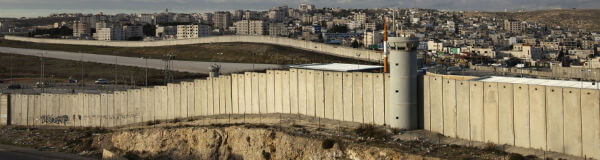
Donald Trump links his Mexico border wall plan to Israel’s ‘successful’ Apartheid wall

Israel-wall

The Guardian reports: Donald Trump attempted to draw parallels between Israel’s separation barrier and his much-touted border wall pledge on Sunday after both presidential nominees met the Israeli prime minister, Benjamin Netanyahu.

In Trump’s hour-long meeting with Netanyahu at his Trump Tower penthouse, the two reportedly discussed “at length Israel’s successful experience with a security fence that helped secure its borders”, according to the Trump campaign.

Israel’s separation barrier, which runs for 440 miles (700km) near or along the 1949 armistice lines set after Israel’s war for independence, is a fence of most of its length. In contrast, Trump has pledged to build a wall of concrete and rebar as high as 55 feet (17 metres) along the nearly 2,000 mile border between the US and Mexico.

The meeting was the first of two that Netanyahu held with presidential candidates on Sunday, the day before the first presidential debate. Contrary to custom both meetings were closed to the media, the Trump campaign has prevented reporters from any access to his meeting with Netanyahu and aides to the Israeli prime minister reportedly went on to insist Clinton’s campaign abide by the same rules Trump insisted upon.

According to a readout provided by the Republican’s campaign, the nominee signaled support for the controversial moving of the US embassy from Tel Aviv to Jerusalem, as the real estate developer “acknowledged that Jerusalem has been the eternal capital of the Jewish people for over 3,000 years, and that the United States, under a Trump administration, will finally accept the long-standing Congressional mandate to recognize Jerusalem as the undivided capital of the State of Israel”. [Continue reading…]

Facebooktwittermail