Category Archives: Lands

Saudi Arabia has declared an end to its oil war with the U.S.

Quartz reports: Two years after quietly declaring war on upstart US shale, Saudi Arabia says the need for the fighting is over. In remarks to journalists while on a US visit, Saudi Arabian energy minister Khalid Al-Falih said that the worldwide oil glut has vanished, signaling an end to Saudi Arabia’s strategy of flooding the global market with oil to try to put American drillers out of business.

The implication was that Saudi Arabia owned the victory. But a three-week-long resurgence of US oil drilling after 21 months of decline suggests that Saudi and the US fought to a draw.

Falih noted that a record volume of oil remains in storage in the US and around the world (paywall), built up during the glut, but once much of that is sold off, the kingdom can resume its traditional role managing supply and demand. [Continue reading…]

Facebooktwittermail

Israeli president says Palestinian peace deal won’t happen any time soon

The Wall Street Journal reports: Israel’s president warned that there was no prospect of a peace deal with the Palestinians in the near future and urged the European Union to show patience and put its weight behind measures to facilitate future negotiations.

In a speech to the European Parliament on Wednesday, Reuven Rivlin criticized France’s peace-conference initiative, launched earlier this month, which he said amounted to “negotiations for negotiations’ sake” and would only deepen divisions between Israelis and Palestinians.

Later in the day, Palestinian Authority President Mahmoud Abbas, who was also visiting Brussels, called the French peace push a “vital conference for our region and the whole world.”

U.S.-brokered Israeli-Palestinian negotiations fell apart in 2014 over disagreements on land swaps and prisoner exchanges. The White House has been working on options for reviving negotiations before President Barack Obama leaves office, although it isn’t clear whether the administration will launch new talks before January.

EU officials said Wednesday they were hoping that Mr. Abbas and Mr. Rivlin would meet and talk in Brussels. That would be the highest level meeting between the Israeli and Palestinian leadership since the 2014 talks. No meeting had taken place by Wednesday evening, though Israeli officials said Mr. Rivlin was ready to meet Mr. Abbas “anytime, anywhere.” [Continue reading…]

Facebooktwittermail

The growing risk of a war in space

Geoff Manaugh writes: In Ghost Fleet, a 2015 novel by security theorists Peter Singer and August Cole, the next world war begins in space.

Aboard an apparently civilian space station called the Tiangong, or “Heavenly Palace,” Chinese astronauts—taikonauts—maneuver a chemical oxygen iodine laser (COIL) into place. They aim their clandestine electromagnetic weapon at its first target, a U.S. Air Force communications satellite that helps to coordinate forces in the Pacific theater far below. The laser “fired a burst of energy that, if it were visible light instead of infrared, would have been a hundred thousand times brighter than the sun.” The beam melts through the external hull of the U.S. satellite and shuts down its sensitive inner circuitry.

From there, the taikonauts work their way through a long checklist of strategic U.S. space assets, disabling the nation’s military capabilities from above. It is a Pearl Harbor above the atmosphere, an invisible first strike.

“The emptiness of outer space might be the last place you’d expect militaries to vie over contested territory,” Lee Billings has written, “except that outer space isn’t so empty anymore.” It is not only science fiction, in other words, to suggest that the future of war could be offworld. The high ground of the global battlefield is no longer defined merely by a topographical advantage, but by strategic orbitals and potential weapons stationed in the skies above distant continents.

When China shot down one of its own weather satellites in January 2007, the event was, among other things, a clear demonstration to the United States that China could wage war beyond the Earth’s atmosphere. In the decade since, both China and the United States have continued to pursue space-based armaments and defensive systems. A November 2015 “Report to Congress,” for example, filed by the U.S.-China Economic and Security Review Commission (PDF), specifically singles out China’s “Counterspace Program” as a subject of needed study. China’s astral arsenal, the report explains, most likely includes “direct-ascent” missiles, directed-energy weapons, and also what are known as “co-orbital antisatellite systems.” [Continue reading…]

Facebooktwittermail

Populism and hatred do not erupt, they are stoked

By Stephan Lewandowsky, University of Bristol

This was once a referendum about whether or not the UK should remain in the EU. But not anymore. The referendum has effectively turned into a plebiscite about diversity and tolerance vs divisiveness and hatred: the Leave campaign in particular has largely ditched its long-demolished economic arguments and remoulded itself into an appeal to increasingly shrill and ugly emotion.

How could it have come to that? How could a campaign find so much popular traction by explicitly disavowing rational and informed deliberation?

Some commentators have responded to those questions with bewilderment and resignation, as if right-wing populism and hatred are unavoidable socio-political events, much like volcanic eruptions or earthquakes.

Far from it. Populism and hatred do not erupt, they are stoked. The “Tea Party” in the US was not a spontaneous eruption of “grassroots” opposition to Barack Obama but the result of long-standing efforts by libertarian “think tanks” and political operatives.

Likewise, the present demagoguery in the UK against the EU arises at least in part from media ignorance or hostility towards migrants, and a similar well-funded but nebulous network of organisations (often linked to human-caused climate change denial).

Populism is not an inevitable natural disaster but the result of political choices made by identifiable individuals who ultimately can be held accountable for those choices.

Continue reading

Facebooktwittermail

Brexiters mostly lost out from what Margaret Thatcher did but drew nourishment from what she said

Andrew Brown writes: In 1945, things were dreadful, but everyone knew their role and knew what their country should do. Now things are very much better, but no one knows where they belong. The post-war consensus and much of the optimism lasted until about 1973 but collapsed altogether under Margaret Thatcher. In a sense, this campaign is the last outworking of her legacy. Both sides of the argument are the children of Thatcher, who opposed the European Union rhetorically and emotionally but did as much as any political leader to knit us into the single market.

The Remainers are largely those who profited from her revolution: the rich, the skilled, and the educated, especially those who live in London and the South East portion of England. At the same time, they tend to be the people who resisted and were repelled by her message and her instinctive social nostalgia. They are, in a word, Blairites: He largely continued her policies but switched the rhetoric 180 degrees to welcome a future as quite glorious — and imaginary — as Thatcher’s vision of the past had been.

Under both Tony Blair and Thatcher, and under their successors, the rising prosperity of London and the South East has been accompanied by an astonishing loss of jobs, hope, and self-confidence in other parts of the country. There, in the traditional heartland of England, is where the Brexit movement draws its emotional strength. The Leavers are mostly those who lost out from what Mrs Thatcher did but drew nourishment by what she said. So they felt doubly betrayed in the post-Blair era, when the economics of the new order went on hurting them, and the rhetoric turned against them, too.

But the Leavers are not a homogenous group. Take away their English nationalism, and they fall into two profoundly opposed groups. By far the largest are the foot soldiers, small-c conservative and genuinely hostile to immigrants of every sort. (More than half the immigrants in this country are from outside the European Union.) The ordinary Leavers are found almost everywhere outside London, in all the places where globalization has devastated the economy and where many of the jobs that are left have gone to foreigners.

They are nourished by the extraordinary and unremitting hostility to “Migrants” in some parts of the press. The Daily Express, a traditionally patriotic tabloid now owned by the pornographer Richard Desmond, has run 37 front page splashes warning about migrants this year alone. Few were based on anything anyone else would recognize as news. The Daily Mail, its more respectable competitor, has run more than 20. Even if you never buy these papers, the front pages are displayed in every supermarket, and their effect is cumulative. My mother, who is still alive but rather confused, asked me the other day, as I drove her through the English Tourist Board poster countryside, where all the migrants were. Why couldn’t she see any since they were invading the country? [Continue reading…]

Facebooktwittermail

Brexit is a fake revolt — working-class culture is being hijacked to help the elite

Paul Mason writes: I love fake revolts of the underclass: I’m a veteran of them. At secondary school, we had a revolt in favour of the right to smoke. The football violence I witnessed in the 1970s and 80s felt like the social order turned on its head. As for the mass outpouring of solidarity with the late Princess Diana, and by implication against the entire cruel monarchic elite, in the end I chucked my bunch of flowers on the pile with the rest.

The problem is, I also know what a real revolt looks like. The miners strike; the Arab spring; the barricade fighting around Gezi Park in Istanbul in 2013. So, to people getting ready for the mother of all revolts on Thursday, I want to point out the crucial difference between a real revolt and a fake one. The elite does not usually lead the real ones. In a real revolt, the rich and powerful usually head for the hills, terrified. Nor are the Sun and the Daily Mail usually to be found egging on a real insurrection.

But, all over Britain, people have fallen for the scam. In the Brexit referendum, we’ve seen what happens when working-class culture gets hijacked – and when the party that is supposed to be defending working people just cannot find the language or the offer to separate a fake revolt from a real one. In many working-class communities, people are getting ready to vote leave not just as a way of telling the neoliberal elite to get stuffed. They also want to discomfort the metropolitan, liberal, university-educated salariat for good measure. For many people involved, it feels like their first ever effective political choice.

I want to have one last go at convincing you that leaving now, under these conditions, would be a disaster. First, let’s recognise the problem. For people in the working classes, wages are at rock bottom. Their employers treat them like dirt. Their high streets are lined with empty shops. Their grownup kids cannot afford to buy a home. Class sizes at school are too high. NHS waiting times are too long.

I’m glad it has become acceptable to say: “You are right to worry about migration.” But I wish more Labour politicians would spell out why. Working-class people, especially those on low pay in the private sector, worry that in conditions of austerity, housing shortages, wage stagnation and an unlimited supply of migrant labour from Europe has a negative effect on their living standards. For some, that is true.

They are right, too, to worry about the cultural impact. In a big, multi-ethnic city, absorbing a lot of migrants is easy. In small towns, where social capital is already meagre, the migrant population can feel unabsorbed. The structure of temporary migration from Europe means many of those who come don’t vote, or don’t have the right to – which feels unsettling if you understand that it is only by voting that the workforce ever achieved progress. It feels as if, through migration, the establishment got to create the kind of working class it always wanted: fragmented, dislocated, politically distant, weak.

But a Brexit led by Ukip and the Tory right will not make any of these things better: it will make them worse. [Continue reading…]

Facebooktwittermail

Leading Brexiters support the transfer of public money from the poor to the rich

George Monbiot writes: The common agricultural policy is a €55bn incentive to destroy wildlife habitats and cause floods downstream.

All the good things the EU has done for nature are more than counteracted by this bureaucratic idiocy. Millions of hectares of wildlife habitat in the EU are threatened by this rule; clearance has taken place already across vast areas. Why do we hear so little about it?

I spent part of this spring in Romania, in the midst of hundreds of thousands of hectares of wood pasture: a mosaic of flowering meadows, marshes and trees. I have seldom seen such a profusion of life anywhere on earth. I watched golden orioles, hoopoes, honey buzzards, red-backed and great grey shrikes, lesser spotted eagles, black storks, yellow wagtails, roe deer, wild boar and bears. Cuckoos were so common they flew around in flocks. All nine species of European woodpecker live in one small valley where I stayed; so do bee eaters, goshawks, corncrakes, quails, nightjars, tortoises, tree frogs, pine martens, wildcats, lynx and wolves.

All this is now on the brink. Across Romania, farmers are beginning to realise that they can make money simply by cleansing the land. In eastern Transylvania I saw the heartbreaking results: the mass felling of trees and destruction of wildlife, not for any productive purpose, but just to meet the European rules. It’s the same kind of vandalism, driven by diktat and blindly enforced by bureaucrats, that the Romanians suffered under their former despot, Nicolae Ceausescu. The European subsidies rules are responsible for one of the world’s great unfolding disasters, which ranks only a little way behind the fires in Indonesia and the collapse of coral reefs.

This dog that hasn’t barked exposes the real agenda of the leading Brexiters. They denounce the transfer of public money from rich to poor; they are intensely relaxed about the transfer of public money from poor to rich. It also challenges those who wish to remain.

I will vote in on Thursday, as I don’t want to surrender this country to the unmolested control of people prepared to rip up every variety of public spending and public protection except those that serve their own class. But if we are to live in Remainia, we should insist on sweeping change. Daylight robbery and mass destruction: the EU is supposed to prevent them, not deliver them. [Continue reading…]

Facebooktwittermail

Racism and paranoia are threatening to engulf stable societies. It’s time to fight back

Winnie Byanyima, executive director of Oxfam International, writes: The murder of British MP Jo Cox last week has forced the world to look at itself anew. This week, social movements will hold events to remember Jo’s life in many cities, including Ottawa. Members of parliaments in Canada and everywhere have been asked to “stand together to stem the poisonous rising tide of fear and hate that breeds division and extremism.”

We all need to hold ourselves to this same challenge. It feels like the world is entering a frightening new phase. No one is immune, anywhere.

Jo Cox dedicated her life to the struggle against injustice and intolerance. I did not know Jo myself, but so many across Oxfam did and were touched by her. So many people were inspired by her compassion, commitment and energy for change. She was clearly an incredible woman.

Jo was a passionate feminist, a woman after my own heart. While working in Oxfam she got involved in a discussion about how women can best become genuinely empowered. “Education,” said one person. No, said Jo, the answer is politics. Support women as they seek political power — the rest will follow. Everything I have ever experienced, working with women in Africa and across the world, tells me she was right. [Continue reading…]

Facebooktwittermail

Jo Cox saw Syria as Syria. She didn’t get it confused with Iraq

The Syria Campaign: Many Western politicians and observers have not bothered to listen to Syrians. They see the country solely through the prism of the illegal invasion of Iraq and the disaster that unfolded there. Whilst a passionate opponent of the 2003 Iraq war, Jo listened to Syrians and knew that Syria was a completely different situation.

[In October 2015, Jo wrote:] I opposed the war in Iraq because I believed the risk to civilian lives was too high and their protection was never the central objective, or even a high priority. I knew, as we all knew, that President Bush wasn’t motivated by protecting civilians but by weapons of mass destruction and a misguided neo-con view of the US strategic interest.

But we must remember that Syria is not Iraq.

We have to learn the lessons of Iraq, without being paralysed by it. We have to learn the lessons of Iraq without forgetting the lessons of Bosnia or Rwanda. [Continue reading…]

Facebooktwittermail

Orlando massacre was ‘revenge,’ not terrorism, says man who claims he was gunman’s lover

Univision Noticias reports: Omar Mateen, the Muslim gunman who committed the Pulse nightclub massacre in Orlando, was “100 percent” gay and bore a grudge against Latino men because he felt used by them, according to a man who says he was his lover for two months.

“I’ve cried like you have no idea. But the thing that makes me want to tell the truth is that he didn’t do it for terrorism. In my opinion he did it for revenge,” he told Univision Noticias anchor Maria Elena Salinas in an exclusive interview in English and Spanish on Tuesday.

He said Mateen was angry and upset after a man he had sex with later revealed he was infected with the HIV virus.

Asked why he decided to come forward with his story, he said: “It’s my responsibility as a citizen of the United States and a gay man.”

The man said he had approached the FBI and been interviewed three times in person by agents.

Univision was unable to independently verify his account. The FBI confirmed to Univision that it had met with him.

The man, who did not want his true identity revealed, agreed to an interview wearing a disguise and calling himself Miguel. Speaking in fluent Spanish and accented English, he said he met Mateen last year through a gay dating site and began a relationship soon after. He and Mateen were “friends with benefits,” he said. [Continue reading…]

Facebooktwittermail

Jo Cox ‘died for her views’ her widower Brendan tells BBC News


More In Common: A Worldwide Celebration of Jo Cox:
On Jo Cox’s birthday this Wednesday, show the world that we have far #MoreInCommon than that which divides us.

Across the world, we will gather together to celebrate Jo’s life; her warmth, love, energy, passion, flair, Yorkshire heritage, and her belief in the humanity of every person in every place, from Batley and Spen to Aleppo and Darayya.

Facebooktwittermail

Fallujah: The Iraq victory that could lose the war

The Daily Beast reports: The Iraqi government, which has been shaken by weekly protests that charge its senior leadership with corruption, needed to win a military victory to try to salvage its political reputation. Thus was begun the Third Battle of Fallujah.

The city that had been the symbolic capital of Sunni resistance to American occupation and Shia domination has collapsed into a network of bombed-out homes, criss-crossing sand berms, and half-finished cement structures. Thousands of bullet casings, water bottles, and other discarded items litter the landscape. The Iraqi Security Forces have turned what remains of Fallujah, the City of Mosques, into an ash heap.

Last week, although scattered resistance by fighters from the so-called Islamic State continues in parts of the city, Iraqi Prime Minister Haider al-Abadi felt confident enough to declare Fallujah liberated on June 17 after the elite U.S.-trained soldiers of the Iraqi Counterterrorism Service (ICTS) recaptured a former government headquarters in the city center. [Continue reading…]

Facebooktwittermail

Will Latin America finally rebuke Venezuela?

Christopher Sabatini writes: At least on paper, both Europe and the Americas seem equally committed to being democracies-only clubs, willing to defend and preserve the rule of law in member nations. In practice, however, it may be unfair to compare the perplexing web of regional Latin American organizations with the European Union. The juxtaposition of the EU’s recent statement of concern over the rule of law in Poland and the long-overdue response by Latin American and Caribbean governments to the decades-long political crisis festering in Venezuela is a striking case in point.

On June 1, after more than five months of discussion with the Polish government elected in October 2015, the European Commission issued an opinion expressing its concerns over the new conservative government’s packing of the country’s constitutional tribunal and changes to the public broadcasting law.

Compared to Venezuela, which has suffered from a steady two-decade-long erosion of its democratic checks and balances, Poland’s peccadilloes are pretty small stuff. Since his assumption of the presidency in 1999, former president Hugo Chávez and then his handpicked successor Nicolas Maduro (elected with a slim 1.5 percent margin in 2013 after Chávez died from cancer), have diminished democratic institutions, politicized the state, harassed and imprisoned political opponents, and closed down independent media.

There appeared a slight ray of hope in December 2015 when the unified opposition bloc — defying a biased electoral system — won what appeared to be a super majority of two-thirds of the National Assembly.

The hope, though, was short-lived. Before the new legislature could be seated, the pro-government electoral commission refused to accept the victories of the deputies from Amazonas province (three of whom were opposition and one Chavista), alleging pre-electoral violations, thus denying the opposition its super majority.

The only constitutional means of resolving the country’s deep polarization and the unpopularity of the government is a recall referendum triggered by 20 percent of voters. Earlier this year, citizens collected several million signatures requesting such a referendum. The effort, though, has been mocked by the president and vice president and the decision of whether to allow citizens to continue to collect more signatures is in the hands of the solidly pro-government electoral commission (the Comisión National Electoral — CNE).

Venezuela’s slide into authoritarianism has elicited hardly a collective peep from the region’s many multilateral organizations, almost all of them purporting to defend democracy and human rights. In fact, Latin America and the Caribbean may have the distinction of being the most heavily networked, multi-lateralized, summit-oriented region in the world. There’s the 70-year-old Organization of American States (OAS) and its inter-American system of human rights, the Southern Cone Common Market (MERCOSUR), and the more recent creations of the Union of South American Republics (UNASUR) and the Community of Latin American and Caribbean States (CELAC) — all of which count Venezuela as a member, and are supposedly committed to defending and protecting democracy and human rights. [Continue reading…]

Facebooktwittermail

Severe food insecurity widespread in Yemen

FAO-WFP reports: Vast swathes of Yemen – 19 out of 22 governorates – are facing severe food insecurity according to a new joint assessment by the UN and partners, which warns that the situation within affected areas is likely to deteriorate if conflict persists.

The latest Integrated Food Security Phase Classification (IPC) analysis confirms that over half the country’s population is living in “crisis” or “emergency” levels of food insecurity, with some governorates seeing as much as 70 percent of their population struggling to feed themselves.

At least 7 million people – a quarter of the population – are living under Emergency levels of food insecurity (Phase 4 on the five-tiered IPC scale). This reflects a 15-percent increase since June 2015. A further 7.1 million people are in a state of Crisis (Phase 3). [Continue reading…]

Facebooktwittermail

China’s plan to cut meat consumption by 50% cheered by climate campaigners

The Guardian reports: The Chinese government has outlined a plan to reduce its citizens’ meat consumption by 50%, in a move that climate campaigners hope will provide major heft in the effort to avoid runaway global warming.

New dietary guidelines drawn up by China’s health ministry recommend that the nation’s 1.3 billion population should consume between 40g to 75g of meat per person each day. The measures, released once every 10 years, are designed to improve public health but could also provide a significant cut to greenhouse gas emissions.

The Chinese Communist party has found unusual allies among Hollywood celebrities, with actor Arnold Schwarzenegger and director James Cameron involved in a series of new public information adverts encouraging Chinese people to consume less animal flesh to help the environment.

Should the new guidelines be followed, carbon dioxide equivalent emissions from China’s livestock industry would be reduced by 1bn tonnes by 2030, from a projected 1.8bn tonnes in that year.

Globally, 14.5% of planet-warming emissions emanate from the keeping and eating of cows, chickens, pigs and other animals – more than the emissions from the entire transport sector. Livestock emit methane, a highly potent greenhouse gas, while land clearing and fertilizers release large quantities of carbon. [Continue reading…]

Facebooktwittermail

Farming invented twice in Middle East, genomes study reveals

wheat

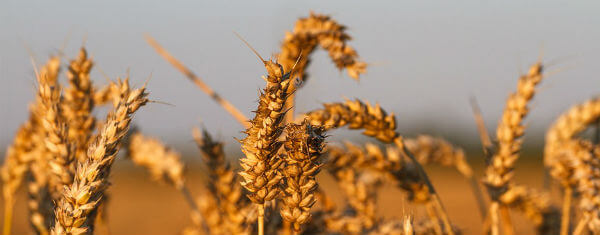
Nature reports: Two Middle Eastern populations independently developed farming and then spread the technology to Europe, Africa and Asia, according to the genomes of 44 people who lived thousands of years ago in present-day Armenia, Turkey, Israel, Jordan and Iran.

Posted on 17 June on the bioRxiv preprint server1, the research supports archaeological evidence about the multiple origins of farming, and represents the first detailed look at the ancestry of the individuals behind one of the most important periods in human history — the Neolithic revolution.

Some 11,000 years ago, humans living in the ancient Middle East region called the Fertile Crescent shifted from a nomadic existence, based on hunting game and gathering wild plants, to a more sedentary lifestyle that would later give rise to permanent settlements. Over thousands of years, these early farmers domesticated the first crops and transformed sheep, wild boars and other creatures into domestic animals.

Dozens of studies have examined the genetics of the first European farmers, who emigrated from the Middle East beginning some 8,000 years ago, but the hot climes of the Fertile Crescent had made it difficult to obtain ancient DNA from remains found there. Advances in extracting DNA from a tiny ear bone called the petrous allowed a team led by Iosif Lazaridis and David Reich, population geneticists at Harvard Medical School in Boston, Massachusetts, to analyse the genomes of the 44 Middle Eastern individuals, who lived between 14,000 and 3,500 years ago. [Continue reading…]

Facebooktwittermail

Brexit may lead to the destruction of ‘Western political civilization’ warns European Council president

The New York Times reports: The rest of the European Union nations are looking at the possibility of a British departure from the bloc with disbelief, trepidation and anguish. But they are also preparing to retaliate.

If Britons do vote in a referendum on Thursday to leave the European Union, they can expect a tough and unforgiving response, with capitals across the Continent intent on deterring other countries from following the British example, European officials and analysts said.

In other words, Britain will be made to suffer for its choice.

With other issues pressing, including Greek debt, the migrant crisis and terrorism, the largest and most powerful European nations will want clarity, and are not likely to tolerate a long period of post-referendum confusion.

“In is in — out is out,” the powerful German finance minister, Wolfgang Schäuble, told Spiegel magazine. “I hope and believe that the British will ultimately decide against Brexit. The withdrawal of Britain would be a heavy loss for Europe.”

The president of the European Council, Donald Tusk, spoke apocalyptically about a British exit, or “Brexit,” to the German tabloid Bild. He said all members of the European Union would suffer, as would the postwar structure of Europe that had kept the peace.

“Why is it so dangerous?” Mr. Tusk asked. “No one can foresee what the long-term consequences would be. As a historian, I fear that Brexit could be the beginning of the destruction of not only the E.U., but also of Western political civilization.” [Continue reading…]

Facebooktwittermail

Record 65 million displaced by global conflicts, UN says

flight-from-Aleppo

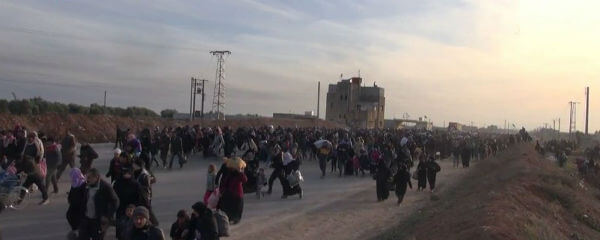
The New York Times reports: More people are on the run than ever before in recorded history, the United Nations said in a report released Monday.

They include those fleeing marauders in South Sudan, drug gangs in Central America, and the Islamic State in the Iraqi cities of Mosul and Falluja. While most are displaced within their own countries, an unprecedented number are seeking political asylum in the world’s rich countries. Nearly 100,000 are children who have attempted the journey alone.

All told, the number of people displaced by conflict is estimated to exceed 65 million, more than the population of Britain.

The new figures, part of the United Nations refugee agency’s Global Trends Report, come as hostility is surging toward migrants and refugees in the Western countries where they are seeking sanctuary and relief.

The European Union has shown signs of fracturing over how to handle the influx of people crossing the Mediterranean Sea.

The United Nations high commissioner for refugees, Filippo Grandi, expressed alarm on Sunday about what he described as a “climate of xenophobia that is very worrying in today’s Europe.” [Continue reading…]

Facebooktwittermail