Category Archives: Lands

Iranian proxies step up their role in Iraq

Phillip Smyth writes: On June 10, Iraqi president Nouri al-Maliki publicly called for the establishment of popular militias in response to the latest jihadist offensives in Mosul and other areas. Yet well before this announcement, Iran’s proxies — including Kataib Hezbollah (KH) and Asaib Ahl al-Haqq (AAH) — had already redeployed some of their forces fighting in Syria back to Iraq. Extensive evidence shows that these proxy groups have been recruiting fighters for Iraq, and that such recruits are working closely with the Iraqi army and Internal Security Forces (ISF).

Iran’s proxies have been involved in extensive recruitment efforts for months, with KH stepping up its efforts in late April to rally fighters behind the “defense of Iraq.” One result was the establishment of a new group, Saraya al-Dafa al-Shabi (the Popular Defense Companies). In May, an official KH video announced that this force was fighting alongside the ISF. In addition, AAH and another Shiite militia group, the Badr Organization, have established numerous city-based “popular committees” since April.

As early as January, fighters from AAH and the Iranian-guided Rapid Reaction Force (RRF) announced that they had sent forces back to Iraq from Syria. Subsequently, AAH claimed that its fighters were involved in this year’s fighting in Fallujah. These redeployments and recruitment efforts also entailed major restructuring of organizations in Syria. [Continue reading…]

Facebooktwittermail

Conflict shows new, closer Turk-Iraqi Kurdish ties

The Wall Street Journal reports: The military posture of northern Iraq’s semiautonomous Kurdistan Regional Government to defend itself against advancing Islamist rebels spotlights a reversal in one of the region’s most toxic relationships: Between Turkey and the Kurds.

In previous years, Kurdish assertiveness — even in neighboring Iraq — was often countered by Turkey, which for more than a quarter century was locked in a deadly conflict with Kurdish separatists in its own country before launching peace talks in 2012.

But since the U.S. invasion of Iraq more than a decade ago, Turkey has built close ties to the Kurdish government in its regional capital of Erbil, Iraq, expanding bilateral trade and coordinating vital policy issues, including the civil war in Syria.

Underscoring that trend, Turkey has kept mum on Erbil’s mobilization to defend its borders this past week by deploying its Peshmerga troops into the oil-rich Iraqi city of Kirkuk. In past decades, Turkey has fiercely objected any Kurdish advances in Kirkuk, maintaining that the city has a multi-ethnic character and a large population of Iraqi Turkmens.

Turkey is itself preoccupied with freeing about 80 hostages captured by the Islamic State of Iraq and al-Sham (ISIS) when the Sunni Muslim rebel group captured Mosul this past week.

Kurdish officials now agree that the fate of Turkey and the Kurds are entwined, and policy increasingly reflects shared economic and security interests. [Continue reading…]

Facebooktwittermail

Iran deploys Revolutionary Guards units to Iraq

The Wall Street Journal reports: The threat of Sunni extremists eclipsing the power of its Shiite-dominated Arab ally presents Iran with the biggest security and strategic challenge it has faced since the U.S.-led invasion of Iraq in 2003.

With the Islamic State of Iraq and al-Sham, an offshoot of al Qaeda, rapidly gaining territory, Iran deployed Revolutionary Guards units to Iraq, according to Iranian security officials.

Iran has invested considerable financial, political and military resources over the past decade to ensure Iraq emerged from U.S. war as a strategic partner for the Islamic Republic and a strong Shiite-led state. The so-called Shiite crescent—stretching from Iran to Iraq, Lebanon and Syria—was forged largely as a result of this effort.

Two Guards’ units, dispatched from Iran’s western border provinces on Wednesday, were tasked with protecting Baghdad and the holy Shiite cities of Karbala and Najaf, these security sources said. [Continue reading…]

Facebooktwittermail

Iraqis who fled Mosul say they prefer militants to government

From Erbil, the New York Times reports: After Islamic extremists swarmed his city this week, Saad Hussein fled here with his wife and six children. But after one night, he was on his way back home to Mosul, hearing that things were quiet there.

“What can we do?” said Mr. Hussein, at a checkpoint on the road from Erbil to Mosul. “You have to depend on your God.”

Another man stood nearby, his two small sons tugging at his belt. He had left Mosul and was waiting to enter Erbil, about 50 miles to the east. “We don’t know what will happen in the future,” said the man, Ahmed Ali, 31. “The government is not there. It’s empty.”

As many as 500,000 Iraqis fled Mosul this week after the city was besieged by the extremist group Islamic State of Iraq and Syria, many of them Sunnis who seemed less fearful of the beheadings and summary justice that the group is known for than of their own government and the barrage it might unleash in an effort to take the city back. [Continue reading…]

Facebooktwittermail

Ayatollah Sistani calls on volunteers to defend Iraq, its citizens and shrines

The Washington Post reports: Shiite clerics called on Iraqi civilians Friday to take up arms against advancing Sunni insurgents inspired by al-Qaeda, drawing the battle lines for a major sectarian confrontation in the fracturing state.

President Obama, meanwhile, said he would not exercise any military option until Iraq’s leaders show they are committed to bridging their differences with the opposition.

With heavily armed fighters from the Islamic State of Iraq and Syria (ISIS) seizing more territory overnight in a rampage that threatens to tear the country apart, Iraqi officials said tens of thousands of civilians had volunteered to fight alongside the crumbling security forces.

Shiite religious leaders, including Iraq’s top Shiite cleric, used Friday prayers to call on the faithful to take up arms against the radical Sunni Muslim insurgents. In the Shiite holy city of Karbala, a representative of Grand Ayatollah Ali Sistani urged anyone who can carry a weapon to “defend the country, the citizens and the holy sites.” [Continue reading…]

Facebooktwittermail

Iraq, ISIL and the region’s choices

Shashank Joshi and Aaron Stein write: Can ISIL defend its gains? Most likely, yes. In Mosul it seized large quantities of US-supplied military equipment, reportedly stolen over $400m in Iraqi currency from the city’s banks, and freed thousands of prisoners, many of whom are likely to join the insurgency. Its ability to hold out for over four months in the western city of Fallujah, forcing the government to resort to indiscriminate shelling in the absence of sufficient airpower, is an indication of ISIL’s defence capabilities. However, it remains unclear how much assistance ISIL has also received from outside.

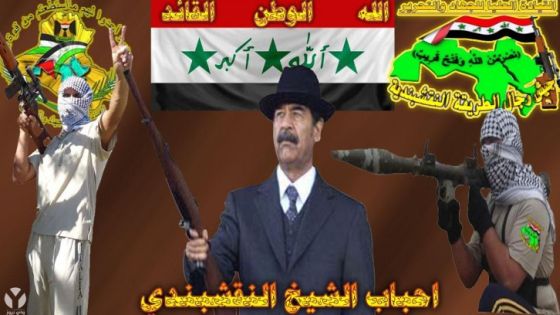
ISIL’s military offensives were almost certainly facilitated by smaller militant groups such as the Army of the Men of the Naqshbandi Order, an organisation of former Baathist Iraqi army officers. As ISIL gains strength, it may command the loyalty of more such combat-proficient groups, thereby increasing its reach; it may also find conflicts of interests with these allies of convenience, particularly if it persists in its brutal behaviour.

What is ISIL’s next step? Although it is already seeking to expand its territorial reach beyond Tikrit, its ability to capture the capital itself should not be exaggerated. Whereas the government had neglected the defence of Mosul, Baghdad is better prepared. The capital also has a much larger portion of Shia Muslims than Mosul, Kirkuk, or Tikrit, so that ISIL will lack the same degree of tacit or informal support in many areas.

The greater short-term danger is that ISIL will enter Samarra, a city housing holy Shia sites whose bombing in 2006 by ISIL’s earlier incarnation, al-Qaeda in Iraq, catalysed a nationwide civil war. For ISIL, catalysing sectarian violence by provoking Shia reprisals would not only serve its ideological objectives but also push vulnerable Iraq Sunnis into its arms. [Continue reading…]

Facebooktwittermail

The return of foreign fighters to Iraq

Aaron Y. Zelin writes: Similar to Al Qaeda in Iraq’s original practice of posting official martyrdom notices, ISIS began doing so itself earlier this year, highlighting its comfort in sharing such information. Since early March, the group has released 201 martyrdom notices on its official province-level Twitter accounts for foreign fighters killed in Iraq (most of the notices were also posted on online jihadist forums). Although some of these notices were for individuals who died as far back as September 2012, the vast majority were for deaths that occurred after April 2013.

Since this information is self-reported by ISIS, and because the group continues to release older notices, the actual number of foreigners who have died in Iraq is likely higher. Further, some notices do not name a specific country of origin, instead using phrases such as “al-Shami” (which could denote anyone in the Levant) and “al-Muhajir” (meaning simply “emigrant”). In any case, this year’s jihadist death toll is set to exceed last year’s — if the current pace continues, some 233 foreign fighters will have been killed in Iraq by the end of 2014, or two-and-a-half times more than 2013. And the pace will likely accelerate given the increased fighting.

Similar to last decade, Saudis are well represented in ISIS martyrdom notices (with 38 dead), as are Libyans (10 dead). And many of the 18 “unknown” cases are likely Syrians. The biggest change is the enormous growth in the Tunisian (57 dead) and Moroccan (27) contingents. And while the majority of fighters hail from the Arab world, the notices also name individuals from the Balkans, the Caucasus, Central Asia, the Horn of Africa, North America, and Western Europe. Among the eight Westerners represented, three were from Denmark, three from France, and one each from Canada and Norway. [Continue reading…]

Facebooktwittermail

ISIS was wreaking havoc in Mosul long before it took over

Letta Tayler at Human Rights Watch writes: One morning in January, two armed men entered the shop of a Christian metalworker, Laith Hadi Bahnam, in the Karama industrial zone of Mosul, and demanded that he repair a silencer for one of their guns. When Bahnam refused, according to two of his friends, one of the gunmen threatened, “I’m going to kill you.”

Ten days later, on January 29, the two armed men returned. As Bahnam, 56, pleaded for his life, the gunmen shot him three times in the face and chest, killing him instantly. Local authorities attributed the killing to the group calling itself the Islamic State of Iraq and al-Sham, or ISIS. But although there were many witnesses, the authorities did not investigate further and made no arrests.

This week, ISIS brazenly seized Mosul from Iraq’s U.S.-supported military, catching both Baghdad and Washington off guard. But the capture of Iraq’s second-largest city should not have come as a surprise. Long before the city’s dramatic fall, ISIS, which formed in April 2013, and its precursor, al Qaeda in Iraq, were operating openly for years in Mosul, killing civilians like Bahnam with impunity, manipulating the justice system, and even collecting so-called “jihad taxes” from local businesses. And yet Iraq’s extensive military and security apparatus did almost nothing.

I visited Iraq in May, in part to investigate recent ISIS abuses in Mosul. I met with and interviewed Mosul residents in the capital, Baghdad, and in Erbil, the capital of Iraqi Kurdistan (it was too dangerous for them to speak with me in their hometown). From their stories, I got a horrifying glimpse of what may be in store if the group achieves its goal of establishing a “caliphate” in the region. [Continue reading…]

Facebooktwittermail

Iran cares more about Baghdad than Damascus

Hayder al-Khoei, associate fellow at the London think tank Chatham House, spoke to IranWire from Baghdad.

What has been Iran’s level of threat-perception following these attacks?

It’s extremely high. They are worried that this is going to give ISIS a further stepping stone, and act as a launching pad for the rest of Iraq. [Iran] has mobilized in very high numbers Shia militia forces loyal to Iran, especially the AAH militia, the Asa’ib Ahl al-Haq. Just a few hours ago some friends confirmed that the [Islamic Revolutionary Guards Corps] General Qassem Suleimani is in Baghdad. He arrived yesterday. I think his presence in the capital is a sign of just how seriously the Iranians are taking the ISIS threat.

He was reported to have gone to the checkpoints on the outskirts of Baghdad to make sure that the Iraqi armed forces and the Shia militias that are acting as the paramilitary support units are ready, and capable of defending the city. It was also reported that he went to Balad, north of Baghdad, and Samarra, where ISIS was thwarted by the armed forces. Certainly the Iranians are taking this extremely seriously. The mobilization of the Shia militias, and Qassem Suleimani’s presence, is a very good indication of how seriously they’re taking this.

They were crucial in preventing Damascus from falling, and other Syrian cities. Baghdad is a lot closer to home for the Iranians, and they’ve told their Shia partners, ‘Iraq is our backyard.’ Certainly they’ll take much more care of Baghdad, even more so than Damascus.

What do we know about ISIS’s intentions towards the Shia shrines in Iraq?

ISIS have, and want to, attack Shia symbolic shrines, because that way they can provoke not just the Shia militias into retaliating, but ordinary Shia civilians. If that happens, it could trigger another sectarian and civil war. Even in Mosul, on their official Twitter pages, they were telling the people of Mosul they are safe under their hand, except for the Shia, so they are extremely opposed ideologically to the Shia, and see them as apostates, not Muslims.

The ISIS official spokesman, [Abu Muhammad] al-Adnani said to Maliki and the Iraqi government, we’re not going to settle our score with you in Samarra and Baghdad, we’re going to settle our score with you in [the Shia holy cities of] Najaf and Karbala.

Now of course it’s going to be much harder [for ISIS] to penetrate the cities of Najaf and Karbala, because the people there, unlike in Mosul, [support] the armed forces, and on top of that you have Shia militias who will prevent anything similar to what we saw in Falluja, Mosul and Tikrit.

In Baghdad and the south it’s a different story. There’s a lot of media hype about ISIS capabilities and ISIS gains, and I don’t want to downplay the ISIS threat, but the people in the capital and the South are going to be much more willing to defend their cities, and the armed forces along with the militias are going to be much more prepared to die. In Mosul the armed forces had no will to fight at all.

The Shia militias — Asa’ib Ahl al-Haq, Hezbollah, the Badr Brigades — these are all ideologically-driven militias, so they will fight to the death, unlike the army units in the north of the country. [Continue reading…]

Facebooktwittermail

Iraq’s government appears powerless to defend against ISIS advance

McClatchy reports: The long-predicted dissolution of a centrally controlled Iraq ruled from Baghdad appeared closer to reality on Thursday as radical Islamist fighters advanced through the country with little interference from what remained of Iraq’s disintegrating security forces.

Only militias tied to Iraq’s feuding religious and ethnic groups mounted serious resistance to the southward push by fighters of the Islamic State of Iraq and Syria, who now appear to be supported by an ad hoc coalition of Sunni Muslim tribes and militant groups opposed to the Shiite-dominated central government. With the lone exception of a helicopter assault on an insurgent position north of the central city of Tikrit, Iraqi army and security forces continued to abandon their posts whenever confronted by ISIS.

The collapse of central authority also was evident in Baghdad, where the Iraqi Parliament failed to muster a quorum to consider a request from Prime Minister Nouri al Maliki for a declaration of a state of emergency. Maliki responded in a statement read on state television by accusing Sunni political parties of conspiring to destroy the state. In recent days, Maliki, who also serves as the defense minister, has blamed the same parties for the army’s massive desertion in the face of the ISIS offensive.

“Iraq’s future at this point is being shaped by conflict rather than by a viable political system. No one really knows where it’s going,” Salman Sheikh, the director of the Brookings Doha Center in Qatar, said in a telephone interview from Beirut. “The long-term impact could be quite cataclysmic, not just for Iraq, but for the entire region.”

The prediction that Iraq would one day descend into an ungovernable space of feuding ethnic and religious groups was first made when U.S. forces toppled Saddam Hussein in 2003. Now that it seemed to be happening, many found it difficult to grasp the unfolding reality.

In Washington, President Barack Obama told reporters that the United States was considering all options to aid the Maliki government, Defense Department officials said there was no speedup in the previously set schedule for the delivery of military equipment, and Congress seemed slow to grasp that the ship had likely sailed on hopes that Maliki could somehow save the situation. [Continue reading…]

Facebooktwittermail

How the Kurds may benefit from the ISIS rampage

Foreign Policy reports: Amid the rubble left in Iraq by the rampage of Islamist insurgents, one group seems poised to benefit: the Kurds. Baghdad’s flailing response to the offensive launched by the Islamic State of Iraq and al-Sham opens the door to greater geographical reach for the Kurdish region, greater leverage over the central government, and a stronger possibility of becoming a big energy exporter in its own right.

The Islamist insurgents, known variously as ISIS and ISIL, continued their drive south toward the Iraqi capital on Thursday after having captured key northern cities, including Mosul. No less vigorous has been the Kurdish response: In sharp contrast to the Iraqi military forces, which evaporated despite outnumbering ISIS fighters, Kurdish military forces on Thursday took Kirkuk, an important city straddling the Arab and Kurdish parts of Iraq and the centerpiece of the northern oil industry. The Kurdish occupation, in a matter of hours, of a city that has been a bone of contention between Arabs and Kurds for centuries — and especially during Saddam Hussein’s rule of Iraq — underscores how dramatically the ISIS offensive is redrawing the map of Iraq.

“This may be the end of Iraq as it was. The chances that Iraq can return to the centralized state that [Prime Minister Nouri] al-Maliki was trying to restore are minimal at this point,” said Marina Ottaway, a Middle East specialist at the Wilson Center.

The contrast between robust security in Kurdish-ruled parts of the country and the security vacuum left by fleeing Iraqi troops could ultimately roll back decades of Iraqi history and put Kurdish leaders in Erbil in the catbird seat, especially when it comes to a contentious tug of war over energy resources.

“The strategic failure of Iraqi forces has really shifted the entire balance of power between the Kurdish Regional Government and Baghdad,” said Ayham Kamel, Middle East director at the Eurasia Group, a risk consultancy. “It really allows the KRG to negotiate with Baghdad on entirely different terms” when it comes to a fight over the Kurds’ right to export oil directly.

For years, Kurds in northern Iraq sought to benefit more from the region’s abundant oil and gas resources, but energy exports were centralized in Baghdad, with export revenues shared among Iraq’s regions. Kurdish leaders argued that the deal shortchanged them because they never got the 17 percent of revenues they were promised.

As a result, the Kurds decided — in the face of a barrage of threats and intimidation from Baghdad — to build their own energy-export infrastructure, enabling them to transport oil directly to nearby Turkey. That pipeline opened this year and energy firms operating in the region say that it will be fully operational later this year. Getting the export pipeline up to cruising speed is important for the Kurdish government. It needs to export about 450,000 barrels of oil a day to earn what it received from the central government. By the end of next year, the KRG hopes to be exporting as many as 1 million barrels a day. [Continue reading…]

Facebooktwittermail

Political reform in Iraq will stem the rise of Islamists

Hassan Hassan writes: Earlier this year, as the Islamic State of Iraq and the Levant (ISIL) [aka ISIS] suffered major defeats by various rebel groups in Syria, it raised a defiant slogan: “Remaining and expanding”. A few months later, the slogan does not look as detached from reality as it used to. The group, arguably the most brutal in the region, is now in control of large swathes of lands stretching from Aleppo to Raqqa to Deir Ezzor, in Syria, and from Ramadi to Fallujah and Mosul, in Iraq.

The group’s remarkable successes defy basic military instincts. Consider the type of adversaries ISIL has fought since December. It fought the Iraqi army, backed by battle-hardened Shiite militias as well as Sunni tribal forces, in Anbar. In Syria, secular, Islamist and Al Qaeda-affiliated rebels fought ISIL in Aleppo, Idlib and Deir Ezzor, with little success except in Idlib. And yet, the group is still as strong as ever.

So the pressing question is: how can this numerically small group control large areas in two countries? Three main reasons can be identified for its resilience and expansion.

The first is the inconsistency of its opponents. In Iraq, the revival of the group since it was essentially wiped out in the wake of the country’s civil war in 2006 and 2007 was made possible in large part due the imprudent policies of prime minister Nouri Al Maliki. The biased anti-terror laws as well as the tendency to employ sectarian rhetoric in military campaigns against militancy in Sunni areas, as he did in his speech in December, have estranged the Sunni population, which has played into ISIL’s hands.

These policies lead Sunnis, even while they dislike ISIL, to feel they have no stake in fighting ISIL or resisting its presence because the government is just as bad. Additionally, there is a growing sense among Shiites that they have no stake in fighting in Sunni areas and leaving their areas exposed to danger. That leaves the Iraqi government forces with little appetite to face a brutal and resilient militia. [Continue reading…]

Facebooktwittermail

ISIS rule will pain its subjects

There’s a difference between being welcomed and not being opposed.

The advance of ISIS into Mosul appears not to have met any opposition. Whether the city’s remaining residents welcome their new rulers is another matter.

In a video of the militants’ arrival, the only celebrants appear to have been the ISIS fighters themselves.

Members of the local Naqshbandi Army apparently welcomed ISIS’s arrival by putting up posters of Saddam, but they have been ordered to remove them within 24 hours.

Naqshbandi

EA Worldview has translated a code of conduct that ISIS has issued for Nineveh Province:

The document instructs fighters to respond to questions about their mission, “We are soldiers of Islam and took on our responsibility to bring back the glory of the Islamic Caliphate.”

Anyone who steals the money claimed by insurgents “from the Safavid Government” — ISIS reportedly took more than $400 million from Mosul’s banks — will have their hands cut off. Only the “Imam of Muslims” may spend the funds.

ISIS warns tribal leaders and Sheikhs not to “work with government and become traitors”. Police, soldiers, and workers for “other kafir institutions” can repent at designated locations.

Muslims are to perform prayers on time in mosques. Drugs, alcohol, and tobacco are banned, as is the carrying of guns or any flag other than that of ISIS. Women must “dress decently” and “only go out if needed”.

As “God ordered us to stay united”, shrines will be destroyed.

ISIS concludes, “You tried secular rulers (republic, Baathist, Safavids), and it pained you. Now is the time for the Islamic State.”

The creation of a state depends on more than the ability to thwart opposition.

Even though ISIS has generated support from fighters coming from many countries, its international appeal probably undermines its ability to strengthen grassroots support — as does its ruthlessness in crushing dissent.

With the hashtag #SykesPicotOver and the bulldozing of the Syrian-Iraqi border, ISIS wants to cast itself as overthrowing what remains of Western colonialism, yet ironically, the jihadists are themselves neocolonialists with an Islamist face.

Facebooktwittermail

Islamic state of who?

Andreas Krieg writes: ISIS’s (Islamic State of Iraq and Al-Sham) partial seizure of Mosul might be the most significant success for global jihadism since 9/11. Within a matter of hours ISIS has been able to demonstrate why they are such a feared and capable fighting force across the Levant. In a highly cohesive and well-coordinated operation this transnational organization of mujahedeen was able to rout Iraqi security forces from Iraq’s second biggest city, capturing arms, equipment, money and control of a vital part of Iraqi infrastructure. What has started as a local phenomenon during the Anbar Awakening in 2004 has grown into a potent contender of state authority in Lebanon, Syria and Iraq. Yet, unlike other Islamist organizations in the region, ISIS lacks one crucial ingredient of power: popular legitimacy. Bearing that in mind, what are the implications of yesterday’s operational success for the achievement of ISIS’s strategic objectives?

As an ideological offspring of Al Qaeda in Iraq (AQI), ISIS ascribes to similar transnational jihadist. However, unlike Al Qaeda as a global franchise, ISIS has a regional strategic focus: removing the artificially drawn borders of the Levant and creating a new Sharia-based transnational Islamic State. Disavowing AQ-leader Al Zawahiri’s demand not to declare political Islamist entities, ISIS’s self-declared Emir Al-Baghdadi has been on the forefront of an initiative which initially aimed at creating an Islamist State in Iraq. Later, with the Syrian Civil War unraveling, Al Baghdadi broadened his initiative to the Levant as a whole. Ironically, those jihadists sent by Assad over the border to prop up the Islamic State of Iraq in the mid-2000s, were now returning to Syria in 2011. Al Baghdadi now commanded a fighting force that was able to stage more than just sporadic terrorist attacks. Years of high-intensity war fighting and ideological indoctrination had transformed the Islamic State from a local terrorist organization into a highly capable transnationally operating militia comprised largely of foreign mujahedeen. ISIS has become the primary centre of attraction for those foreign fighters in the region who are eager to actually convert the often utopian concept of the Islamist caliphate into reality. In its areas of responsibility in Western Iraq and Northern Syria, ISIS has already started to monopolize religious, political and law-enforcement authority. The strategic vision of a de facto Islamist state has taken shape; a state based on ISIS’s interpretation of Sharia, a state centred on Al Baghdadi’s sole authority as the Emir, a state where non-allegiance with ISIS equals treason, a state where religious authority is held by ISIS, a state where all spoils and financial resources belong to ISIS’s treasury. So what does yesterday’s seizure of Mosul mean for the organization? [Continue reading…]

Facebooktwittermail

The ISIS-Baathist alliance

The New York Times reports: Sunni militants consolidated and extended their control over northern Iraq on Wednesday, seizing Tikrit, the hometown of Saddam Hussein, threatening the strategic oil refining town of Baiji and pushing south toward Baghdad, their ultimate target, Iraqi sources said.

As the dimensions of the assault began to become clear, it was evident that a number of militant groups had joined forces, including Baathist military commanders from the Hussein era, whose goal is to rout the government of Prime Minister Nuri Kamal al-Maliki. One of the Baathists, Izzat Ibrahim al-Douri, was a top military commander and a vice president in the Hussein government and one of the few prominent Baathists to evade capture by the Americans throughout the occupation.

“These groups were unified by the same goal, which is getting rid of this sectarian government, ending this corrupt army and negotiating to form the Sunni Region,” said Abu Karam, a senior Baathist leader and a former high-ranking army officer, who said planning for the offensive had begun two years ago. “The decisive battle will be in northern Baghdad. These groups will not stop in Tikrit and will keep moving toward Baghdad.”

The sudden successes of the militant forces sent hundreds of thousands of people running, some literally, from the new outbursts of violence, panicked leaders in Turkey and Syria and revived memories of bloody American struggles to wrest the same places — Mosul and Tikrit — from jihadist fighters a decade ago.

By late Wednesday, the Sunni militants, many aligned with the radical Islamic State of Iraq and Syria, were battling loyalist forces at the northern entrance to the city of Samarra, about 70 miles north of Baghdad. The city is known for a sacred Shiite shrine that was bombed in 2006, during the height of the American-led occupation, touching off a sectarian civil war between the Sunni minority and Shiite majority.

Militant commanders were reportedly threatening to destroy the shrine if its defenders refused to lay down their arms, while hundreds of Shiite fighters were said to be heading north from Baghdad to confront the attackers.

As Iraqi government forces crumbled in disarray before the assault, there was speculation that they may have been ordered by their superiors to give up without a fight. One local commander in Salahuddin Province, where Tikrit is located, said in an interview Wednesday: “We received phone calls from high-ranking commanders asking us to give up. I questioned them on this, and they said, ‘This is an order.’ ”

Residents of Tikrit reported remarkable displays of soldiers handing over their weapons and uniforms peacefully to militants who ordinarily would have been expected to kill government soldiers on the spot. [Continue reading…]

Facebooktwittermail

Will Iran intervene in Iraq?

IranWire reports: “The border patrol has increased its vigilance on the Iran-Iraq border,” said Iran’s Police Chief, Esmail Ahmadi Moghaddam. “The country’s Supreme National Security Council would consider intervening to protect Shia shrines and cities.”

Ahmadi-Moghaddam has been the only high-ranking Iranian official to comment on the advances made by the Sunni extremist group Islamic State in Iraq and Syria (ISIS). According to IranWire sources, Iranian officials have been ordered to remain quiet about the events in neighboring Iraq and ISIS victories. “Iranian officials have been told not to comment, or else,” said a wary former high-ranking Iranian diplomat to IranWire.

According to the former diplomat Iranian plans in Iraq are summarized in the wisdom of one man, “We all know that Haj Ghassem is hard at work trying to control the situation,” referring to Ghassem Suleimani, the legendary commander of the Quds Force, Iran’s Revolutionary Guards Extraterritorial Force, and perhaps the closest person to Iran’s Supreme Leader Ayatollah Ali Khamenei. “Our forces will do whatever it takes to protect the border, and the holy shrines from this bunch of thugs. And ISIS are nothing, but a group of hooligans. They know what can happen if Iran gets involved in the situation, and that is why they are in such a hurry to carry out their dirty acts.”

Iran’s designs in Iraq, and the rest of the Middle East, have been looked at with a degree of cynicism and fear. Many Arab diplomats regard Persian Iranians as untrustworthy neighbors who secretly ally themselves with anyone to protect their interests.

Last week a member of Syrian opposition accused Iran of secretly helping ISIS. According to Abdul Halim Khaddam, the former vice president to Syria’s Bashar Assad, Iran is arming ISIS in order to undermine the Syrian opposition. By strengthening ISIS, Khaddam claimed, Iran was seeking to draw Syrian public sentiment back toward Assad, recasting the battle as Bashar’s battle against extremist onslaught.

Iranian Foreign Minister Mohammad Javad Zarif categorically denied this accusation. He said Iran has been battling Salafi extremists and Al-Qaeda itself for years, and would never stoop to such measures. [Continue reading…]

Facebooktwittermail

Kurdish troops in control of Kirkuk

The New York Times reports: Kurdish officials said on Thursday that their forces had taken full control of the strategic oil city of Kirkuk in northern Iraq, after government troops abandoned their posts there and disappeared, introducing a new dimension into the swirling conflict propelled by Sunni militants pressing south toward Baghdad.

“The army disappeared,” said Najmaldin Karim, the governor of Kirkuk.
[…]
Unlike the Iraqi national army, the Kurdish forces, known as pesh merga, are disciplined and very loyal to their leaders and their cause: autonomy and eventual independence for a Kurdish state. The Kurds’ allegiance to the Shiite Arab-led Iraqi central government is limited, but neither are they known to be allied with the Sunni Arab militants. Many of the tens of thousands of Mosul residents who fled the militant takeover of the city have sought safety in Kurdish-controlled areas. [Continue reading…]

Facebooktwittermail

Egyptian activist Alaa Abd El Fattah jailed for 15 years for organising peaceful protest

The Guardian reports: The extent of Egypt’s counter-revolution has been laid bare by the jailing of one of the key figureheads of the 2011 uprising – a conviction that means Alaa Abd El Fattah has been jailed or investigated under each of the country’s five heads of state since Hosni Mubarak.

Abd El Fattah, one of the activists most associated with the 2011 uprising that briefly ended 60 years of autocratic rule, was sentenced to 15 years in jail for allegedly organising a protest – an act banned under a law implemented last November, and used to jail several revolutionary leaders.

According to Abd El Fattah’s sister, Mona Seif, also a prominent campaigner, he and another activist were sentenced in absentia after being barred from entering the courtroom then arrested and taken to prison by some of the officials who had earlier blocked his entrance. [Continue reading…]

Facebooktwittermail