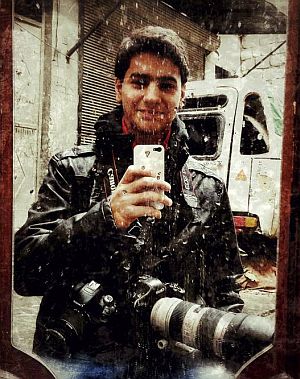
The Washington Post reports: The towering former three-star general keeps a wooden box on his desk with the photos of 257 service members who died in Iraq under his command, sorted by date. During quiet moments, usually a couple of times a week, Mark Hertling opens the lid, inscribed with the words “Make it Matter,” flips through the laminated portraits of uniformed troops and reflects on their loss.
“I try to keep track of anniversaries of the deaths and say a prayer for them and their families,” said Hertling, who now works at a hospital in Orlando. “During the holiday season, you think about the young men and women killed in 2003, 2004 and figure they would have been in their 30s now, with a couple of kids.”
The ritual was never easy. It has become increasingly painful over the past two years, as Hertling and a generation of troops and civilians indelibly shaped by harrowing tours in Iraq have watched the country unravel from afar.
The Iraq war may have never been declared lost. But the stunning surge in violence over the past year — and the return of al-Qaeda in the western province of Anbar this month — is forcing Americans who invested personally in the war’s success to grapple with haunting questions.
“Could someone smart convince me that the black flag of al-Qaeda flying over Fallujah isn’t analogous to the fall of Saigon?” former Army captain Matt Gallagher asked on Twitter. “Because. Well.” [Continue reading…]
Category Archives: Lands
The progress of inglorious revolutions
David A Bell writes: Two and a half years after it began, the revolution was widely considered a quagmire, even a disaster. Rebels had made disappointingly little headway against the forces of the hated tyrant. The capital and the country’s second major city remained under his control. Foreign powers had provided sympathy, but very little real aid. And despite promising to respect human rights, rebel forces were committing widespread abuses, including murder, torture and destruction of property. In short, the bright hopes of an earlier spring were fading fast.
This may sound like a description of Syria today, but it also describes quite well the situation of another country: the young United States in the winter of 1777–1778. George Washington had taken refuge in the miserable winter encampment of Valley Forge. Philadelphia (then the capital) and New York were both in British hands. France had not yet agreed to help the new republic militarily. And in areas under rebel control, loyalists were being persecuted—far more than most American school textbooks admit.
There is little reason to think that conditions in Syria will turn around the way they did in the United States between 1778 and 1781, when the American revolutionaries managed to eke out a military victory. But the comparison illuminates a different point. Historically, very few revolutions have been quick successes. They have been messy, bloody, long, drawn-out affairs. Victory has very rarely come without numerous setbacks, and, unfortunately, without abuses carried out by all sides. It has generally taken many years, even decades, for the real gains, if any, to become apparent. Yet today, international public opinion and international institutions usually fail to recognize this historical reality. There is an expectation that revolutions, where they occur, must lead within a very short period to the establishment of stable democracy and a full panoply of human rights, or they will be viewed as failures.
Consider, for instance, the disappointments that followed the Arab Spring and the resulting worldwide hand-wringing. Thomas Friedman, that great barometer of elite American conventional wisdom, wrote in May 2011 about the young Arabs who had begun to “rise up peacefully to gain the dignity, justice and self-rule that Bin Laden claimed could be obtained only by murderous violence.” Less than two years later, he was lamenting that “the term ‘Arab Spring’ has to be retired,” and comparing events in the region to the seventeenth century’s massively destructive Thirty Years’ War, in which areas of Central Europe lost up to a third of their populations. Many other commentators throughout the world now write off the Arab Spring as a disaster and failure, pure and simple. But arguably, not the least of the problems bedeviling the Arab revolutionaries of the last two and a half years has been the absurdly inflated expectations they have had to live up to. Put simply, they have been asked to achieve the sort of rapid and complete success that hardly any predecessors, including in the West, ever managed. [Continue reading…]
Americans’ views of other countries
PolicyMic: A new Pew Poll conducted near the end of 2013 asked Americans which countries they liked and which ones they didn’t. While the results are colored by ongoing events across the world, they also reflect Americans’ long-standing attitudes towards some of our neighbors.
At the top of America’s favorite-country list is Canada, at 81% approval, presumably because Canada is about as inoffensive and friendly a country as you can imagine. Americans also remained steadfast friends with Great Britain at 79% approval, and were big fans of Japan at 70% approval despite the two nations’ economic competition.
Other countries didn’t fare so well on the favorability index. Israel remains largely liked by Americans at 61%, but if a Gallup poll from 2012 is to be believed, that’s down from 68% in 2011 and 71% in 2012 (Gallup’s numbers seem higher than Pew’s, so the spread may be less significant). But it’s now more widely disliked than France at 26% and 24% respectively. The ratings have a partisan spin, with 74% of Republicans and just 55% of Democrats approving of Israel this year. [Continue reading…]
None of these numbers are particularly surprising, but for me the most striking one is a 52% unfavorable view of Mexico.
I’m inclined to assume that American views of Mexico and of Mexicans are firmly intertwined and thus that this unfavorable view of America’s southern neighbor is mirrored in views about Mexicans who live this side of the border.
I used to live in California and was at that time a legal alien but like the many illegal aliens in that state, I was more struck by the fact that we were being branded as aliens rather than which might be deemed legal or illegal.
Moreover, since I was not visibly alien (so long as I kept my mouth shut), the greatest insult in being branded this way was clearly being imposed on the people who were visibly indigenous to this continent.
Whether it’s in North America or the Middle East, the settlers have no right to pass judgement on who belongs on these lands.
Syria: Confusion over retreat of Islamic State of Iraq
Scott Lucas writes: More than 24 hours after the Islamic State of Iraq left Aleppo, in the face of attacks by insurgents, the situation is confused.
Is ISIS retreating across northern and eastern Syria without a fight, or is it counter-attacking, possibly with a series of bombings?
There were multiple claims throughout Thursday of ISIS making stands and even taking back pockets of territory. Others continued the assertions, made since the start of the week, of ISIS suicide bombers wreaking havoc.
Almost none of these declarations could be confirmed, however. The situation was further muddled by a leading source for mainstream media, the Syrian Observatory for Human Rights, passing off chatter on social networks as established fact.
Record-high 42% of Americans identify as independents
Gallup: Forty-two percent of Americans, on average, identified as political independents in 2013, the highest Gallup has measured since it began conducting interviews by telephone 25 years ago. Meanwhile, Republican identification fell to 25%, the lowest over that time span. At 31%, Democratic identification is unchanged from the last four years but down from 36% in 2008.
The results are based on more than 18,000 interviews with Americans from 13 separate Gallup multiple-day polls conducted in 2013.
In each of the last three years, at least 40% of Americans have identified as independents. These are also the only years in Gallup’s records that the percentage of independents has reached that level.
Americans’ increasing shift to independent status has come more at the expense of the Republican Party than the Democratic Party. Republican identification peaked at 34% in 2004, the year George W. Bush won a second term in office. Since then, it has fallen nine percentage points, with most of that decline coming during Bush’s troubled second term. When he left office, Republican identification was down to 28%. It has declined or stagnated since then, improving only slightly to 29% in 2010, the year Republicans “shellacked” Democrats in the midterm elections.
Not since 1983, when Gallup was still conducting interviews face to face, has a lower percentage of Americans, 24%, identified as Republicans than is the case now. That year, President Ronald Reagan remained unpopular as the economy struggled to emerge from recession. By the following year, amid an improving economy and re-election for the increasingly popular incumbent president, Republican identification jumped to 30%, a level generally maintained until 2007.
Democratic identification has also declined in recent years, falling five points from its recent high of 36% in 2008, the year President Barack Obama was elected. The current 31% of Americans identifying as Democrats matches the lowest annual average in the last 25 years.
What Iran wants in 2014
Hassan Rouhani writes: When I campaigned to become President of Iran, I promised to balance realism and the pursuit of the Islamic Republic’s ideals – and won Iranian voters’ support by a large margin. By virtue of the popular mandate that I received, I am committed to moderation and common sense, which is now guiding all of my government’s policies. That commitment led directly to the interim international agreement reached in November in Geneva on Iran’s nuclear program. It will continue to guide our decision-making in 2014.
Indeed, in terms of foreign policy, my government is discarding extreme approaches. We seek effective and constructive diplomatic relations and a focus on mutual confidence-building with our neighbors and other regional and international actors, thereby enabling us to orient our foreign policy toward economic development at home. To this end, we will work to eliminate tensions in our foreign relations and strengthen our ties with traditional and new partners alike. This obviously requires domestic consensus-building and transparent goal-setting – processes that are now underway.
While we will avoid confrontation and antagonism, we will also actively pursue our larger interests. But, given an increasingly interconnected and interdependent world, challenges can be addressed only through interaction and active cooperation among states. No country – including big powers – can effectively address on its own the challenges that it faces. [Continue reading…]
Hamas and Iran rebuild ties three years after falling out over Syria
The Guardian reports: A rapprochement between Hamas and Tehran is under way almost three years after a breach over the Palestinian party’s refusal to back the Syrian government in the civil war, and amid its current political isolation following the demise of the Muslim Brotherhood in Egypt.
The rebuilding of the relationship is likely to dismay Israel and the US, which had welcomed the weakened ties between Gaza’s rulers and their powerful political, financial and military sponsors.
“Relations between us are now almost back to how they were before [the crisis over Syria]. We believe we will soon be back at that point,” said Taher al-Nounou, an aide to Gaza’s prime minister, Ismail Haniyeh. Contacts between high-ranking officials from both sides had resumed, he said.
Khaled Meshaal, the head of Hamas’s political bureau, based in Qatar, has met Iranian representatives in Ankara and Doha in recent months, and may visit Tehran in the coming months.
According to Nounou, a delegation of Hamas officials based outside Gaza visited Tehran two months ago. Hamas leaders inside Gaza have been unable to leave the blockaded coastal strip since the military coup in Egypt last July.
Another senior Hamas official, Bassem Naim, confirmed the renewed contacts between his organisation and Tehran. “Ties had never been conclusively severed, but recently there have been a number of meetings that brought new blood back into our relationship with Iran,” he said. [Continue reading…]
Syrian rebels deal Qaeda-linked group a reversal
The New York Times reports: For months, the patchwork of rebel brigades spread across northern Syria watched with foreboding as a new group gradually expanded its control, filling a vacuum left by nearly three years of war.
The group, the Islamic State of Iraq and Syria, which is linked to Al Qaeda and known as ISIS, seemed less interested in fighting President Bashar al-Assad than in imposing its ultraconservative version of Islam, antigovernment activists said. It banned smoking, ousted other rebels from their bases, and detained and executed those it decided were opposed to its international jihadist project.
Last week, mounting tensions between the Islamic State of Iraq and Syria and other rebel groups exploded into clashes that have raged across northern Syria, left hundreds dead and further shattered the battle lines in a conflict that is increasingly destabilizing neighboring countries. Rebel fighters have driven the group from a number of areas in recent days, and on Wednesday they ejected it from its headquarters in the major city of Aleppo, dealing the group a sharp reversal. [Continue reading…]
Syria reports two attacks on chemical arms sites
The New York Times reports: Syria’s government said Wednesday that insurgents had assaulted two storage sites for some of the deadly chemical weapons components it has pledged to eliminate. It was the first time the Syrian authorities had reported such attacks in the three months since an international effort began to sequester and purge the country of the banned munitions.
Bassam Sabbagh, the Syrian representative to the Organization for the Prohibition of Chemical Weapons, the Hague-based group that is helping oversee the destruction of the Syrian arsenal, reported the attacks at the group’s executive council meeting, according to a European diplomat who was present. The diplomat spoke on the condition of anonymity because the meeting’s deliberations were private and the Syrian’s account was not publicly disclosed.
The attacks, if confirmed, underscore the difficulties in securing and destroying the chemical weapons in the midst of a civil war, a point that the organization’s officials have repeatedly made since an ambitious joint mission with the United Nations to eliminate them began in early October with the Syrian government’s consent.
Reuters gave a Syrian teenager a camera — within months he was dead
David Kenner reports: On Dec. 20, 2013, Molhem Barakat took his last picture of the Syrian war. He had been photographing a battle for control of Aleppo’s al-Kindi Hospital when he was killed along with his older brother Mustafa, a fighter in a local rebel brigade.
Barakat’s cameras, apparently provided to him by the news agency Reuters, were photographed covered in blood in the aftermath of the attack.
Barakat was just 18 when he died, but his images — transmitted through the Reuters photo service — gave people across the globe a glimpse into his world, and his country’s war. But while his precocious work appeared everywhere from the New York Times to Foreign Policy, his online presence served as a reminder that he was still a teenager. His last tweet brags about unlocking a new level in a computer racing game; his Facebook account is full of smiling selfies.
“I was there the moment he grabbed the first camera — I still remember it. It was a Sony HD Handycam, and he was just so good with it,” said Adnan Haddad, a Syrian activist currently in Gaziantep, Turkey, who first enlisted Barakat to work in the pro-uprising Aleppo Media Center in the winter of 2012. “He’s a big loss. He was a young guy, a smart one, a very fast learner, and losing him like this — for the sake of making a few hundred dollars — is not worth it.”
Barakat took the sort of risks that would horrify most veteran journalists. One video posted on YouTube shows him trying to aid a stricken rebel fighter (he appears 56 seconds in) as other fighters warn of a nearby tank. He ducks behind a piece of debris for cover as the tank fires, and the picture is lost in the reverberations from the explosion.
This, clearly, was no ordinary childhood.
Barakat lived in the heart of the world’s most dangerous conflict, one that has claimed the lives of at least 61 journalists and has resulted in the kidnapping of dozens more. The overwhelming majority of journalists killed have been Syrians like Barakat, the only ones remaining to cover the story after the country became too dangerous for most foreign journalists.
Barakat’s death has raised a furor among war correspondents, who have criticized Reuters for not doing enough to protect the young Syrians whom it relies on for coverage of the war zone. Barakat’s extreme youth was only one aspect of the ethical dilemma: Journalists have raised questions about his lack of protective gear, his political affiliation with a rebel brigade, and whether Reuters violated its own safety guidelines by putting him in harm’s way.
Photographer Stanislav Krupar told journalist Corey Pein, who was one of the first to raise questions about this case, that Barakat was paid as little as $100 for a set of 10 or more photographs. Barakat used this money, according to Haddad, to improve the living conditions of his mother and father, who struggled with poverty even before the uprising and whose financial situation only worsened with the war. [Continue reading…]
Egypt’s campaign to crush the culture of protest
Marc Lynch writes: "Constructing democratic institutions and political infrastructure cannot be done overnight," intones Amr Moussa, head of the drafting committee for Egypt’s new constitution. Perhaps. But you know what can be done overnight? Releasing the vast array of political prisoners being held in horrific conditions as part of a concerted effort by Egypt’s resurgent security state to criminalize dissent and silence critical voices.
For all of the nationalist and anti-American posturing in its state-backed media, Egypt’s military-backed government keenly desires international approval for its new constitution. Nothing of the sort should be granted as long as non-violent political activists like Ahmed Maher and independent journalists like Mohamed Fahmy suffer in prison. Washington, the European Union, and every self-respecting electoral observation NGO should make the release of these political prisoners an absolute condition for bestowing any recognition or legitimacy upon next week’s constitutional referendum.
The trial of three leading activists, Mohamed Adel, Ahmed Douma, and Ahmed Maher, was postponed yesterday. So was the show trial of former President Mohamed Morsi. Neither hearing was likely to produce anything resembling justice from the transparently politicized courts anyway, any more than did the trials of Alaa Abdel Fattah and Mona Seif or Maheinour al-Massry and Hassan Mustafa — or legions of less famous activists. Canadian citizenship hasn’t helped the well-respected journalist (and Foreign Policy contributor) Mohamed Fahmy against absurd charges of terrorist conspiracy. And that’s not even counting the untold number of members of the criminalized Muslim Brotherhood being held on trumped up terrorism charges — with their assets frozen, their passports confiscated, their charities
closed.Egypt’s security services were able to tap into well-cultivated mistrust of the Muslim Brotherhood at home and abroad to justify its initial crackdown. But the intense animosity between the Brotherhood and many activists shouldn’t mask the reality that the campaign against the "terrorist" Muslim Brotherhood and the campaign against other political activists and independent voices are manifestations of the same political project. Both aim at crushing the culture of protest which overthrew former President Hosni Mubarak and restoring the "normality" of a carefully managed authoritarian regime. The arrests and public defamation campaigns aimed at restoring the fear and disengagement which has always been so vital to maintaining authoritarian regimes. The architects of the coup hoped to rebuild that barrier of fear which had been so famously shattered by the January 25 uprising.
How RT helped create ‘news’ about a ‘massacre’ in Syria
This is how RT, formerly known as Russia Today, describes itself:
RT news covers the major issues of our time for viewers wishing to question more and delivers stories often missed by the mainstream media to create news with an edge.
The key word in this description is create.
As James Miller demonstrates in the following analysis, RT can certainly spin a dramatic yarn even when it has no evidence to back up its claims.
No doubt RT appeals to an audience that questions much of the information that is presented in the mainstream media. But as I’ve said before, critical attention is of limited value if it only gets cast in one direction. Too often, skepticism and gullibility come wrapped together.
James Miller writes: 80 civilians “massacred,” bodies thrown in ovens, and an international cover up of a horrific act of terrorism — these are just some of the striking claims made by the Russian network RT. On December 15th, the Russian state-owned media outlet formerly called “Russia Today” reported claims made by the Syrian and Russian governments that dozens of people had been butchered by radical Islamists in the Syrian town of Adra.
By the 17th, RT had even more alarming and detailed claims:
“People put in ovens, entire families kidnapped, Christians and Alawites executed — These horrifying reports come to RT from the town of Adra, north of the Syrian capital which has been occupied by Islamist rebel groups. At least 100 people are said to have been massacred by the rebels, but as the Syrian Army continues to liberate the city, that number is expected to rise. Our crew spoke to some of the survivors.”
This massacre in Adra, if it could be proven, could have been one of the worst massacres so far in Syria’s civil war.
According to the report, Adra’s residents were attacked by Islamist rebels, whom they have dubbed “the decapitators,” in a town that RT describes as “an industrial town” populated by workers who were trapped when a rebel surprise attack caught them, and the Syrian military, off guard.
There is only one problem — it has been more than three weeks since this report aired, and there is not a single piece of evidence that supports the claim that Islamic radicals massacred anyone in Adra. There’s not even evidence that a massacre has occurred at all. Even worse, several of RT’s key pieces of information have proven to not only be false, but to have been falsified in such a way that it appears that RT either made no attempt to verify the facts, or perhaps even helped falsify the report themselves. [Continue reading…]
Greenwald says Israel is ‘absolutely right’ to link NSA spying to Pollard case
On Monday evening Glenn Greenwald was interviewed on Israel’s Channel 10 television. The interview was conducted in English. (It is preceded by a commercial and then interrupted half-way through with another commercial.)
The NSA intercepts communications by Israeli politicians, so why should the U.S. take issue with Israel gaining access to U.S. intelligence provided to them by Jonathan Pollard?
That appears to be Greenwald’s line of reasoning.
The fact that Pollard was a U.S. citizen employed by the government; that in return for the intelligence he was providing the Israelis he expected to get paid half a million dollars; that it is widely believed that Israel used this intelligence as a bargaining chip in negotiations with the Soviet Union — are these just pesky little details that have little bearing on the principles?
What Greenwald calls ‘hypocrisy’ — for the U.S. to spy on its ‘close ally’ Israel — is in the eyes of many others, good judgement.
Officials are loath to talk publicly about it, but spying on allies is a fact of life: the United States invests billions annually to monitor the communications of its friends. Many American embassies around the world contain a clandestine intercept facility that targets diplomatic communications. The goal is not only to know the military and diplomatic plans of our friends but also to learn what intelligence they may be receiving and with whom they share information.
That doesn’t come from a report on the Snowden revelations. It comes from Seymour Hersh’s report on Pollard written for the New Yorker in 1999.
If Israel was about to launch a unilateral attack on Iran without consulting the U.S., would it be desirable for the U.S. to gain advance warning of such a plan? You bet!
And how would such intelligence be gathered? By trying to recruit Israelis willing to spy on their own government? Fat chance.
Even if they are limited, this is in fact one of the useful services of the NSA: spying on America’s most dangerous ally.
What Pollard did was provide Israel with the means to launch an attack without tipping off the NSA in advance.
Hersh reported:
Israel made dramatic use of the Pollard material on October 1, 1985, seven weeks before his arrest, when its Air Force bombed the headquarters of the Palestine Liberation Organization in Tunisia, killing at least sixty-seven people. The United States, which was surprised by the operation, eventually concluded that the Israeli planners had synergistically combined the day-to-day insights of the SIGINT Requirements List with the strategic intelligence of the FOSIF reports and other data that Pollard provided to completely outwit our government’s huge collection apparatus in the Middle East. Even Pollard himself, the senior official told me, “had no idea what he gave away.”
The moral case for ending America’s cold war with Iran
Peter Beinart writes: The debate over a final nuclear deal with Iran can be mind-numbingly technical. To what percentage will Tehran be allowed to enrich uranium? What rules will govern inspections of its nuclear sites? Which sanctions will be lifted and how?
But to a large extent, that debate misses the point. Yes, an agreement may contain Iran’s nuclear program somewhat. Yes, it could make the program more transparent. But deal or no deal, Iran will be a threshold nuclear power, able to build a nuke relatively quickly whenever it wants. (Attacking Iran, according to experts like former Shin Bet head Yuval Diskin, would only speed that process up). One day, I suspect, the people obsessing about the details of an Iranian nuclear deal will look a bit like the people who obsessed about the details of the Intermediate-Range Nuclear Forces treaty between the U.S. and U.S.S.R. in 1987. In retrospect, what mattered wasn’t the number of ballistic and cruise missiles each side dismantled. What mattered was ending the cold war.
When the cold war ended, America and the Soviet Union stopped viewing every third-world regime as a chess piece in their global struggle. They realized that by fueling civil wars in countries like Angola and Nicaragua, they were wasting money and subsidizing murder. Once the world’s superpowers scaled back their arms sales and began urging their former proxies to reach political agreements, some of the world’s most horrific wars stopped.
Obviously, U.S.-Iranian relations today differ in many ways from U.S.-Soviet relations in the late 1980s. But today, as then, the two sides are waging a cold war that is taking a horrifying toll on the people whose countries have been made battlefields. One hundred and thirty thousand Syrians have already died. More than 2 million are displaced. Many are at risk of starvation. Polio is breaking out. The best thing the United States can do for Syrians, by far, is to reach a nuclear deal that ends its cold war with Iran. [Continue reading…]
[Note: Two million “displaced” is incorrect. There are over 2.3 million Syrians as refugees who have fled the country, while another 6.5 million are internally displaced.]
Syrian rebels oust al-Qaida-affiliated jihadists from northern city of Raqqa
The Guardian reports: Syrian rebels have ousted a hardline al-Qaida group from the provincial capital of Raqqa, freeing more than 50 hostages in a fourth day of clashes across the north of the country.
The fight against the group, the Islamic State of Iraq in Syria (Isis), comes as members of the same group remain in control of much of Ramadi and Falluja, despite similar attempts to oust them by the Iraqi military.
Rebel groups in Syria have made sweeping advances against Isis since first taking on the powerful militia on Friday. Since then, many of its members have withdrawn from most of the Turkish border areas it had held for at least six months.
Others have left the group to join another al-Qaida organisation, Jabhat al-Nusra, or more mainstream opposition groups, including the remnants of the Free Syria Army and a powerful new alignment of Islamic units.
Raqaa is the only provincial capital to have fallen out of the hands of the Syrian regime. Held first by the Free Syria Army, by June last year had become a stronghold for Isis, which then imposed a ruthless interpretation of sharia law on what remained of the town’s population.
Scores of captives, among them journalists and aid workers, had been detained by Isis in government buildings. Those freed on Monday appeared to all be Syrians. It is understood that the western captives had earlier been moved to another location. [Continue reading…]
Iraqi PM urges Falluja to expel al Qaeda militants
Reuters reports: Iraq’s prime minister has urged people in the besieged city of Falluja to drive out al-Qaida-linked insurgents to pre-empt a military offensive that officials said could be launched within days.
In a statement on state television, Nouri al-Maliki, a Shia Muslim whose government has little support in Sunni-dominated Falluja, called on tribal leaders to get rid of fighters from the Islamic State of Iraq and the Levant (Isil) who last week seized key towns in the desert leading to the Syrian border.
“The prime minister appeals to the tribes and people of Falluja to expel the terrorists from the city in order to spare themselves the risk of armed clashes,” read the statement.
Tribes from Iraq’s once-dominant Sunni minority now control armed militias in the region. Maliki promised the army would not attack residential areas in Falluja as his forces prepare an offensive that has echoes of US assaults in 2004 on the city, 25 miles west of Baghdad’s main airport.
Security officials said that Maliki, who is also commander in chief of the armed forces, agreed to hold off an offensive to give tribal leaders in Falluja more time to drive out the Sunni Islamist militants on their own.
“No specific deadline was determined, but it will not be open-ended,” a special forces officer said of plans to attack. “We are not prepared to wait too long. We’re talking about a matter of days only. More time means more strength for the terrorists.”
Marina Ottaway writes: The attacks on the main police station in Fallujah on Wednesday, followed by the takeover of other police stations there and Ramadi on the following day, are part of the escalation in the Sunni-Shia sectarian conflict that has long plagued Iraq and reached its worst point in 2006-2007.
But the violence is also part of the broader malaise affecting all Iraqi provinces, including some of the major Shia ones, as Prime Minister Nouri Maliki seeks to tighten his own political control and power, and in the process to impose a highly centralised system of control, which most provinces are beginning to resent.
At present, at least one-third of Iraqi provinces are seeking to transform themselves into regions enjoying the same degree of autonomy Kurdistan has already achieved.
The confrontation in Anbar was precipitated by Mr Maliki’s decision on 30 December to dismantle with force a protest camp that had existed in Ramadi for over a year.
The camp had been set up to challenge what many Sunnis see as their systematic marginalisation by Baghdad, and the repression of prominent Sunni politicians.
The protest camp was not an al-Qaeda operation, but Mr Maliki’s move triggered a strong response by the militants of the al-Qaeda affiliated Islamic State of Iraq and the Levant (Isis). [Continue reading…]
The reconstruction of Egypt’s security state
The Associated Press reports: After a bombing hit a security headquarters in Egypt’s Nile Delta, calls flooded into a hotline run by security agencies as people reported suspected members of the Muslim Brotherhood in their neighborhoods. In the weeks that followed, hotline numbers have run in a scroll on the bottom of many TV news broadcasts.
It’s one sign of how Egypt’s National Security Agency — once widely hated as a pillar of the police state under ousted autocrat Hosni Mubarak — is reclaiming a major role amid a wave of militant violence and a wide-scale government crackdown on the Brotherhood since the July coup that removed Islamist President Mohammed Morsi.
Some activists fear that a Mubarak-style autocracy is returning under the new military-backed government, three years after the uprising that toppled Mubarak in hopes of creating a democracy. The emphasis on the hotlines, they warn, raises the likelihood that neighbor will turn against neighbor at a time when the government has accused the Brotherhood — its top political nemesis — of organizing the violence.
Officials from the agency say tips from citizens are helping it rebuild its intelligence sources. They depict the agency as deeply crippled by three years of turmoil — including, they say, security breaches during Morsi’s year in office, when the Brotherhood gained access to its files.
The hotline also aims to enlist the broader public on the agency’s side as it tries to rehabilitate its image. One agency official said the lines help change a “cultural norm” among Egyptians against cooperating with the police. [Continue reading…]
Egyptian court’s suspension of jail terms for activists seen as intimidation tactic
McClatchy reports: It was a seemingly lenient sentence for charges of burning a political party headquarters a year ago – one year in jail, suspended for the next three years – but upon hearing the verdict Sunday, supporters of the defendants were long faced and despondent. They said they interpreted the three-year suspension as an effort to prevent the activists from protesting against the government in the near future.
“If they did what they claim, why a suspended sentence?” asked Leila Soueif, the mother of two of the defendants. “Yes, it is suspended but this is a baseless case. There is no justice in our system anymore.”
The primary defendants in Sunday’s case, Alaa Abd el-Fattah and his sister Mona, had been leading figures in the 2011 protest movement that toppled President Hosni Mubarak. At one point, the government had even dropped the charges against them. But after the military retook control of the country on July 3, they were reinstated, in what activists here say has been a concerted effort to make sure political dissent is all but eliminated. [Continue reading…]

Barakat was just 18 when he died, but his images — transmitted through the Reuters photo service — gave people across the globe a glimpse into his world, and his country’s war. But while his precocious work appeared everywhere from the New York Times to Foreign Policy, his online presence served as a reminder that he was still a teenager. His