Category Archives: Lands

One in three Americans link Syria to Armageddon

end-times-syria

Americans are famous for their optimism, yet a third of Americans think that the end of the world is just around the corner. And this is the scariest part of that equation: the people who believe in Armageddon also think they are going to heaven.

In the culture of fear promoted by the national security state, the icon of ultimate menace is the terrorist who is willing to martyr himself, yet with its vast armies of End Times believers, America itself surely poses a much graver threat to the world when a large proportion of the population believe that there personal salvation is linked to global destruction.

Lifeway Research: The threat of airstrikes against Syria has more than a few Americans thinking about the end of the world.

A recent poll from Nashville-based LifeWay Research found that almost one in three Americans see Syria’s recent conflict as part of the Bible’s plan for the end times.

One in four think that a U.S. military strike in Syria could lead to Armageddon. One in five believes the world will end in their lifetime.

Those results surprised Ed Stetzer, president of LifeWay Research.

Previous U.S. military action, like the war in Afghanistan or air strikes during 1990s war in Bosnia, didn’t get the same reaction, said Stetzer. But the fact that Syria shares a border with Israel, and is specifically mentioned in the Bible, has people thinking about the end times.

“We weren’t talking about Armageddon during the air strikes on Bosnia,” he said.

Israel and the End Times

Israel plays a major role in biblical prophecy, particularly in the Christian theology known as premillennial dispensationalism.

That theology inspired the best-selling Late Great Planet Earth in the 1970s as well as the Left Behind book series. A big budget remake of Left Behind is currently in the works.

Most premillennial dispensationalists believe Christians will instantly disappear from the earth during an event called the rapture, followed by seven years of war and catastrophe. After the battle of Armageddon, Jesus will return and set up his kingdom on earth.

Stetzer said he could see why linking Bible prophecy to Syria is appealing to many Christians.

It’s not that Christians want the world to end or want to see airstrikes, which will lead to suffering, Stetzer said. But they do want Jesus to return to set things right.

“For Christians, the end of the world doesn’t mean despair,” he said. “The end is really a new beginning.”

Differing opinions

LifeWay Research asked three questions about Syria and the end of the world as part of a telephone survey of 1,001 Americans conducted September Sept. 6-10, 2013.

Thirty-two percent of those polled agree with the statement, “I believe the battles in Syria are all part of the prophecies of the Book of Revelation,” Forty-nine percent disagree.

Twenty-six percent of those surveyed agree with statement, “I believe that U.S. military intervention in Syria might lead to the Battle of Armageddon that’s spoken about in the Book of Revelation.”

Women (36 percent) are more likely than men (28 percent) to see a link between current events in Syria and the Bible.

Those in the South (40 percent) and with household incomes under $25,000 (41 percent are more likely to see Syria’s woes in the Bible. Those in the Northeast (24 percent) or with incomes over $75,000 (20 percent) are more skeptical.

The biggest difference came when people responded to the statement, “I believe the world will end in my lifetime.”

Overall, 18 percent agree while 70 percent disagree.

But 30 percent of those with under $25,000 in household income agree. By contrast, 9 percent of those in households over $75,000, agree with that statement.

Religion and age also played in a role in how people responded to the poll.

Those who attend worship once or twice a month are more likely to see a tie between Syria’s trouble and the book of Revelation (51 percent agree), as are evangelical, born again, and fundamentalist Christians (58 percent agree.)

Fewer of those who rarely (25 percent) or never attend (14 percent) agree.

Older Americans are more likely to think U.S. airstrikes could lead to the battle of Armageddon, with 34 percent of those over 65 agreeing. Only 21 percent of those 18 to 29 agree.

Younger Americans, however, are more likely to think the world would end in their lifetime. Twenty-four percent of those 18 to 29 agree, as opposed to only 15 percent of those over 65.

About a third (32%) of evangelical, born-again, fundamentalist Christians believe the world will end in their lifetime.

The Rev. Mark Hitchcock, pastor of Faith Bible Church in Edmond, Okla., believes the Bible does predict future events in the Middle East.

But Hitchcock, who teaches about Bible prophecy at Dallas Theological Seminary—an institution historically connected to dispensationalism– and authored The End: A Complete Overview of Bible Prophecy and the End of Days, doesn’t think the trouble in Syria was predicted in the Bible.

Hitchcock believes people want answers in troubled times. Economic hard times, political unrest and violence overseas have many Americans fearful, he said.

That makes them more likely to see unrest in the Middle East as a sign that God is acting in the world.

“They want to know that God is in charge,” he said. “They want to know that someone has his hands on the wheel.”

Given that Lifeway Research is a Christian organization, some readers might be skeptical about its polling methods being free from bias, but as far as I can tell from this FAQ, they use industry-standard techniques to ensure accurate polling results.

Facebooktwittermail

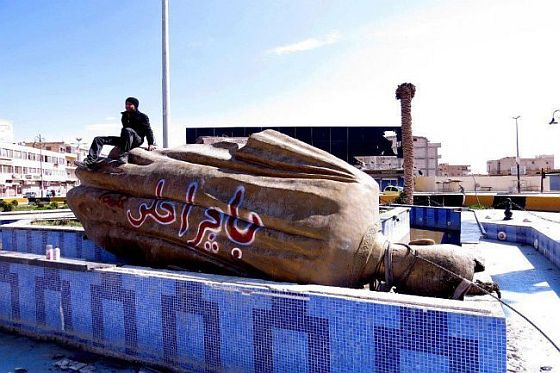
Al Raqqa: The reality of the military brigades and the administration of a liberated Syrian city

Al-Raqqa

The Syrian playwright, Mohammed Al Attar, describes the complex relationships between each of the militias and the civilian society in Al Raqqa, 100 miles east of Allepo, the first regional capital in liberated Syria to have experienced some degree of autonomy.

Even though the Assad regime has no control over the city on the ground, it persists in bombing, much of it in the form of explosive barrels, dropped randomly by helicopters. “The explosive barrel is the epitome of meaningless death in a war deliberately launched by the regime against its revolutionary subjects. In the eyes of those being bombed from the air, the missiles fired from fighter jets are a far more honourable weapon. They may be more devastating, but at least you don’t have to sit there waiting for them to drop on you, pointlessly.”

Al Raqqa defies the bombardment in a number of ways. Those who remain (and those who have returned) continue their desperate struggle for daily bread, a struggle that is no simple matter these days. There are a very few public service providers that still receive their salaries from the central government (Communications and Electricity) and others whose salaries have been either totally suspended or that have been paid just once in the last six months (Water and Health for example). These providers of vital services continue to work on a voluntary basis with support from the local council, which itself has extremely limited resources. The other problem currently facing Al Raqqa’s residents is the agricultural sector. There are a number of pressing questions surrounding the fate of limited-income farmers. How can they meet the cost of seed and fertilizer now that the admittedly limited government subsidies have been cut off? The fertilizer that is being imported from Turkey is prohibitively expensive. How will the purchase and distribution of crops be regulated? The civil authorities find themselves burdened with new and weighty responsibilities that the Syrian political opposition has completely failed to deal with. The political opposition has no presence on the ground in Al Raqqa. Effective institutions affiliated with the National Coalition or other groups are nowhere to be found. Certain of its representatives make fleeting visits, but that is all. Confronted with all manner of pressing challenges, it is the local council that shoulders the lion’s share of the burden. There are some praiseworthy initiatives, such as an effort to establish a police force, and a very limited number of these policemen have begun to enforce a traffic system, but its work is limited by the new force’s lack of training, equipment and support for its role. Indeed, it is a decisive test of the city’s ever-present armed brigades and their willingness to keep out of civil affairs. The local council has also revived the city’s municipal offices and started working on keeping the city clean.

But hope rests on the youth and the various civil society blocs they created following the liberation of the city. There are currently forty-one civil society organizations in Al Raqqa and though the scope and effectiveness of their activities varies hugely from one to another, they provide incontrovertible evidence of Syrians’ desire to restore an effective role to civil society. There are groups for rights activists, for the independent media, for teachers and students, for activists from the non-violent protest movement, for those working in development, small-scale economic projects and emergency relief. There are even groups for the theatre and the arts. Some of those who work in these groups were detained two or three times by the regime prior to liberation. It is they who give you hope. Their voices carry a weight that cannot be ignored. Moreover, these groups play a role in maintaining dynamic and flexible relations with the armed groups. These relationships are vital for keeping channels of communication open between the two sides, channels in which personal contacts are of supreme importance. All these forms of interaction are vital to the process of identifying and isolating those who communicate poorly or outright refuse all communication (ISIS [Islamic State in Iraq and Syria], for instance). These days, Al Raqqa’s residents increasingly tend to distinguish between those who bear arms to continue their struggle against the regime and those who do so to impose a dictatorship of another kind or to triumph in purely local power struggles. All these types are present in Al Raqqa today. Most of the time, public reception is the determining factor in one party gaining the ascendency over others.

Despite their weariness and the difficulties of their daily lives (all of them serious obstacles blocking the revolutionary’s movement’s return to full strength) there are clear indications that the city’s civilian population is unwilling to tolerate these new dictatorial practices. Souad, a primary school teacher, leaves home every evening to demonstrate in various locations around the city, carrying signs that reject ISIS’s behavior and demanding the release of all those they have detained. Souad often goes to stand outside their headquarters, an act of open defiance, prompting some of its members to try and dissuade her from her what she is doing.

On the evening of August 10, in response to the harassment of civilians by members of the Ahrar Al Sham Movement [one of the strongest Syrian Islamist militias and a rival of ISIS], residents gathered together spontaneously, their assembly becoming a fully-fledged demonstration against the actions of the Movement’s members. Some members of the Movement then opened fire to disperse the demonstrators, and the city seethed with rage, only for the Movement to issue a statement hours later in which they declared that the members responsible for the original grievance had been dismissed and those of them who had fled were being pursued to bring them to justice.

A few days later on August 14, when ISIS detonated its car bomb about the headquarters of the Ahfad Al Rasul Brigade in the old train station, civilians attempted to intervene to remove the wounded and allow passage to ambulances. Once more they were dispersed with gunfire from ISIS fighters.

These events take place against a backdrop of rising anger at the ongoing abductions of well-known figures in the city, to which was added the rumour that Father Paolo [a Jesuit priest] had been murdered by his abductors. The rumour was later denied, but confirming any information about the group’s prisoners remains impossible due to the inaccessibility of sources within the group itself. The most recent information concerning Father Paolo was leaked by a mujahid who had left the group and informed those close to him that he had seen Paolo alive at the Al Baath Dam (which is under ISIS’s control) before he was transported to another headquarters in the village of Al Akirshi, near Al Raqqa.

These successive events appear to be indicators of a deepening enmity between Al Raqqa’s civilians and the armed brigades, ISIS in particular. The civilians do not seem to be in a position of strength when it comes to these types of confrontations, yet at the same time they have never before been so determined and set on continuing their struggle. Every single person I met saw themselves as part of a popular and radical revolt that has not yet ended. They had removed a totalitarian and tyrannical regime from their city. Today, they see this achievement as just one step along the long and hard road to their goal: a free, just and proud nation…And they do not look like they will be giving up any time soon.

Facebooktwittermail

Israel prefers al Qaeda rather than Assad

The Jerusalem Post reports: “Bad guys” backed by Iran are worse for Israel than “bad guys” who are not supported by the Islamic Republic, Israel’s outgoing ambassador to the US Michael Oren told The Jerusalem Post in a parting interview.

Oren, in the interview that is to be published in full on Friday, traced the evolution of Israel’s message on Syria during the three weeks of the chemical weapons crisis.

“The initial message about the Syrian issue was that we always wanted [President] Bashar Assad to go, we always preferred the bad guys who weren’t backed by Iran to the bad guys who were backed by Iran,” he said.

This was the case, he said, even if the other “bad guys” were affiliated to al-Qaida.

“We understand that they are pretty bad guys,” he said, adding that this designation did not apply to everyone in the Syrian opposition. “Still, the greatest danger to Israel is by the strategic arc that extends from Tehran, to Damascus to Beirut. And we saw the Assad regime as the keystone in that arc. That is a position we had well before the outbreak of hostilities in Syria. With the outbreak of hostilities we continued to want Assad to go.”

Amid reports that Assad may be moving some of his chemical weapons arsenal out of the country, Oren reiterated Israel’s position that it will not tolerate attempts to transfer these arms – or game changing weapons – to Hezbollah.

“The chemical weapons were an American red line, it wasn’t an Israel red line,” Oren said. “Our red line was that if Iran and Syria try to convey chemical weapons or game changing weaponry to Hezbollah or other terrorist organizations, that Israel would not remain passive. We were prepared to stand by the red line, and still are.” [Continue reading…]

Facebooktwittermail

Israel has 80 nuclear warheads, can make 115 to 190 more, report says

The Los Angeles Times reports: Israel has 80 nuclear warheads and the potential to double that number, according to a new report by U.S. experts.

In the Global Nuclear Weapons Inventories, recently published in the Bulletin of the Atomic Scientists, proliferation experts Hans M. Kristensen and Robert S. Norris write that Israel stopped production of nuclear warheads in 2004.

But the country has enough fissile material for an additional 115 to 190 warheads, according to the report, meaning it could as much as double its arsenal.

Previous estimates have been higher but the new figures agree with the 2013 Stockholm International Peace Research Institute yearbook on armament and international security. The yearbook estimated 50 of Israel’s nuclear warheads were for medium-range ballistic missiles and 30 were for for bombs carried by aircraft, according to a report in the Guardian.

Although widely assumed a nuclear power, Israel has never acknowledged possessing nuclear weapons or capabilities and continues to maintain its decades-old “strategic ambiguity” policy on the matter, neither confirming nor denying foreign reports on the issue.

nuclear-inventory

Hans M. Kristensen and Robert S. Norris write: Excessive secrecy prevents the public from knowing the exact number of nuclear weapons in the world. Although the United States, Russia, Britain, and France have taken steps to increase the transparency of their nuclear stockpiles—both past and present—China, Pakistan, India, Israel, and North Korea continue to refuse to provide basic information about their arsenals. Moreover, an unfortunate new trend is emerging, in that countries that previously provided estimates of the other nations’ nuclear forces have curtailed their release of such information. Secrecy creates uncertainty, mistrust, and misunderstandings. Increased transparency would alleviate this potentially dangerous situation.

We estimate that, combined, the nine nations with nuclear weapons possess more than 10,000 nuclear warheads in their military stockpiles. In addition, several thousand US and Russian retired (but still intact) warheads are in storage, awaiting dismantlement. If the military stockpiles and the retired warheads are counted together, we estimate that the worldwide inventory includes more than 17,000 warheads. The overwhelming portion of that inventory consists of US and Russian warheads, which account for more than 90 percent of all warheads in the world.

Approximately 4,400 warheads—nearly half of all stockpiled warheads—are deployed on missiles or at bases with operational launchers. Of these, we estimate that roughly 1,800 US and Russian warheads are on high alert atop long-range ballistic missiles that are ready to launch 5 to 15 minutes after receiving an order.

Overall, today’s warhead inventories are considerably lower than the Cold War peak of more than 70,000 warheads in the mid-1980s, but the level is still high, considering that the Cold War ended more than 20 years ago. The United States and Russia continue to retain nuclear arsenals that are 10 to 20 times greater than any other state’s. If the trend over time is followed, the US and Russian arsenals (and to a lesser extent those of France and Britain) will continue to decline, but at a slower pace than during the past two decades.

As for China, Pakistan, India, Israel, and North Korea, these nations have nuclear stockpiles that are minuscule in comparison with those of Russia and the United States, but more difficult to estimate. Even so, all of these countries (with the possible exception of North Korea) have sufficient numbers of warheads and delivery systems to inflict enormous destruction over significant ranges with catastrophic humanitarian and climatic consequences in their regions and beyond.

Moreover, in contrast with the United States, Russia, France, and Great Britain, the stockpiles of China, Pakistan, India, and possibly of Israel and North Korea, are likely to increase, although at a much slower pace than prevailed during the US–Soviet arms race of the Cold War. [Continue reading…]

Facebooktwittermail

Syrian chemical attack used sarin and was worst in 25 years, declares UN

The Guardian reports: The UN has confirmed that the worst chemical weapons attack in 25 years took place in eastern Damascus last month, involving specially designed rockets that spread sarin nerve agent over rebel-held suburbs of the Syrian capital.

The report did not assign blame for the attack but the US, Britain and France said the details on the sarin, the rockets used and their trajectories all proved that Bashar al-Assad’s regime was responsible.

However, Russia argued that the western powers had “jumped to conclusions” and said claims of rebel use against their own supporters to provoke foreign intervention “should not be shrugged off”.

There was also sharp disagreement about what kind of UN resolution was needed to implement the agreement struck by the US and Russia on Saturday in Geneva on dismantling the Assad regime’s chemical weapons programme.

The differences – on whether an initial resolution should include the threat of punitive measures for Syrian non-compliance – were a reminder that the Geneva agreement could still unravel before it is put into force.

Presenting the report, the UN secretary general, Ban Ki-moon, said: “This is the most significant confirmed use of chemical weapons against civilians since Saddam Hussein used them in Halabja in 1988. The international community has pledged to prevent any such horror from recurring, yet it has happened again.”

However, Ban did not say who was responsible for the attack, noting that was not in the mandate of the UN investigation.

“It is for others to pursue this matter further to determine responsibility. We will all have our own thoughts on this,” the secretary general said.

Presenting their arguments afterwards, western diplomats said the head of the UN investigation team, Åke Sellström, a Swedish scientist, had observed that the quality of the sarin used in the attack on western and eastern Ghouta suburbs on 21 August was higher than that used in the 1995 terror attack on the Tokyo underground or Saddam Hussein’s attack on the Kurdish town of Halabja.

Sellström also said the rockets used were professionally made. His report said they were fired from the north-west, and western officials said the details of the trajectories confirmed that they came from an area held by government troops.

“All of that confirms in our view there is no remaining doubt that it was the regime that used the chemical weapons. It confirms that the regime was responsible,” Mark Lyall Grant, the British envoy to the UN, said.

His American counterpart, Samantha Power, singled out evidence in the UN report on the calibre of rocket used, saying that in “thousands of videos” from the Syrian conflict there was no indication that the rebels had such weapons. Nor was there any evidence that the rebels possessed sarin, she added. [Continue reading…]

Facebooktwittermail

Who was responsible for the August 21st attack?

Brown Moses Blog: In light of today’s report from the UN confirming the use of sarin in the August 21st attacks in Damascus, I thought I’d take a look at the open source evidence of who is responsible. I’ll be looking at evidence that’s freely available for anyone to examine, rather than what German spy boats may or may not of heard, or intelligence reports that tell us they have evidence, but don’t actually show the evidence. As always, evidence does not automatically equal proof, so it’s up to you to decide if this information proves one side or the other was responsible.

Two munitions have been linked to the attack, the M14 140mm artillery rocket, and a munition I’ve previously referred to as the UMLACA (Unidentified Munition Linked to Alleged Chemical Attacks).

The UN inspectors have now confirmed both munitions carried a chemical payload, so the question is, who used them? In the 18 months I’ve been studying the arms and munitions in the conflict I have never seen either type of munition used by the opposition. The opposition has rocket artillery, for example the 107mm Type-63 multiple rocket launcher and the Croatian 128mm RAK-12, but I’ve never seen any sign of the 140mm systems (such as the BM-14) that would be used to launch the M14 artillery rocket. [Continue reading…]

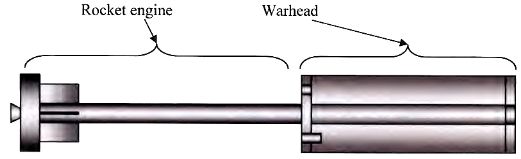
Diagram of suspected chemical weapon shown in UN report:

cw-rocket

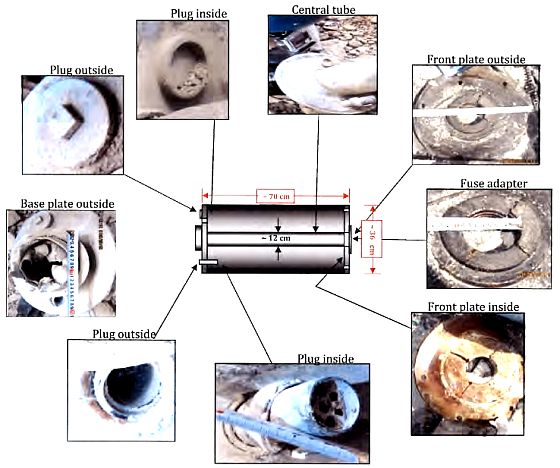
Photographs of the warhead components shown in the UN report:

cw-warhead

RUSI analysis of chemical weapons used in Syria:

Facebooktwittermail

How the U.S. went from, Assad must go, to, he can stay

The New York Times reports: Both sides in Syria’s civil war see the deal to dismantle President Bashar al-Assad’s chemical weapons stockpiles as a major turning point. It left rebels deflated and government supporters jubilant. And both sides say it means the United States knows Mr. Assad is not going anywhere anytime soon.

The agreement between the United States and Russia, Mr. Assad’s most powerful backer, ended weeks of tension over the possibility of an imminent American military strike. Plans for such a strike have been put aside while the diplomatic process surrounding the agreement plays out, engaging Mr. Assad’s government and infusing it with new confidence that could have immediate impact.

Rebels who had hoped to capitalize on a military strike to regain momentum in the fighting are now bracing for the opposite, expecting Mr. Assad to press the battle more aggressively with conventional weapons, which they bitterly note have killed scores of times as many civilians as chemical weapons have.

Rebels and analysts critical of Mr. Assad’s government say he has a well-established pattern of agreeing to diplomatic initiatives to buy time, only to go on escalating the fighting.

For example, when Mr. Assad accepted Arab League monitors in the country in late 2011 and early 2012, he also intensified his crackdown on opponents, and shortly afterward he began the large-scale bombardments of rebel-held areas, like the Baba Amr neighborhood of Homs, that have since become daily occurrences.

Kamel Wazne, a Lebanese analyst who has close contacts with senior members of Hezbollah, the Lebanese militia that has sent fighters to aid Mr. Assad’s forces, said Sunday that the deal allowed the side of the Syrian government to exhale.

“Whether the Americans like it or not,” he said, “when you negotiate the deal with the Russians as representatives of Bashar al-Assad, you acknowledged his existence and his continuation in power.”

Though American officials keep saying that their threat of military force remains, Mr. Wazne added, the Syrian government is now reassured that there will be no strikes anytime soon, and that “at least for today, life is normal in Damascus.” [Continue reading…]

Facebooktwittermail

U.N. report confirms rockets loaded with sarin in Aug. 21 attack

The New York Times reports: Rockets armed with the banned chemical nerve agent sarin were used in a mass killing near Damascus on Aug. 21, United Nations chemical weapons inspectors reported Monday in the first official confirmation by nonpartisan scientific experts that such munitions had been deployed in the Syria conflict.

Although the widely awaited report did not ascribe blame for the attack, it concluded that “chemical weapons have been used in the ongoing conflict between the parties in the Syrian Arab Republic, also against civilians, including children, on a relatively large scale.”

The inspectors, who visited the Damascus suburbs that suffered the attack and left the country with large amounts of evidence on Aug. 31, said that “In particular, the environmental, chemical and medical samples we have collected provide clear and convincing evidence that surface-to-surface rockets containing the nerve agent sarin were used.”

Secretary General Ban Ki-moon, who ordered the report, received it on Sunday and presented it to the 15-member Security Council on Monday in a closed-door session.

The 38-page report said the facts supporting that conclusion included “impacted and exploded surface-to-surface rockets, capable to carry a chemical payload, were found to contain sarin.” The facts also included sarin-contaminated areas at the sites, more than 50 interviews given by survivors and health care workers, clear signs of exposure in patients and survivors, and blood and urine samples by those patients and survivors that were “found positive for sarin and sarin signatures.” [Continue reading…]

Facebooktwittermail

Who is fighting for what in Syria?

The Daily Telegraph reports: Opposition forces battling Bashar al-Assad’s regime in Syria now number around 100,000 fighters, but after more than two years of fighting they are fragmented into as many as 1,000 bands.

The new study by IHS Jane’s, a defence consultancy, estimates there are around 10,000 jihadists – who would include foreign fighters – fighting for powerful factions linked to al-Qaeda..

Another 30,000 to 35,000 are hardline Islamists who share much of the outlook of the jihadists, but are focused purely on the Syrian war rather than a wider international struggle.

There are also at least a further 30,000 moderates belonging to groups that have an Islamic character, meaning only a small minority of the rebels are linked to secular or purely nationalist groups.

The stark assessment, to be published later this week, accords with the view of Western diplomats estimate that less than one third of the opposition forces are “palatable” to Britain, while American envoys put the figure even lower. [Continue reading…]

In a recent report for Foreign Policy, Charles Lister wrote about the confusion that arises in most Western media analysis and political discourse by the continuing insistence on a simplistic division of rebels into two camps: moderates and extremists. He wrote:

I have spoken with members of all groups mentioned in this article and as shocking as it may sound to some, the large majority of them seem, outwardly, to have what they perceive to be Syria’s best interests at the forefront of their minds, at least for now. However, the tactics and rhetoric employed by many are clearly unpalatable by most Western standards.

While it is incontrovertibly the case that jihadists (or "extremists") represent a minority of the total insurgent force, true genuine "moderates" — by Western standards of supporting the establishment of a non-religious, liberal state preferably founded on democratic principals — also do not represent a majority. The largest portion of insurgent fighters in Syria is in fact represented by "Islamists," some less socially and politically conservative than others. Crucially, this does not preclude them from being potentially valuable leaders of a future Syria or even as future friends of the West, but it is important that this crucial element of the opposition is included within the minds of today’s policymakers.

Domenico Quirico, an Italian war correspondent who was just released after being held hostage by rebels for the last five months, spoke bitterly about his experience and described Syria as “a country of evil”. But, BBC News reports:

Paradoxically, he said, “the only ones who treated us with humanity were those closest to al-Qaeda”, because they had an attitude towards prisoners – a code of conduct – that other captors lacked.

It’s ironic that the Bush-Cheney view of the world ended up being swallowed whole by so many opponents of Bush and Cheney. Progressives and Tea Party kooks seem to be of one mind in their reactions to anyone who gets labelled “extremist”.

The fact is, the opposition in Syria, is not fundamentally different from any other opposition movement. Opposition movements build their solidarity around the thing they are opposing. For instance, opponents of the war in Iraq covered the political spectrum, from far left to far right, liberal, conservative, and libertarian.

Why should a movement to topple a dictatorial regime be any different?

Facebooktwittermail

U.N. Syria war crimes team checking 14 alleged chemical attacks

Reuters reports: U.N. war crimes investigators know of 14 potential chemical attacks in Syria since they began monitoring Syrian human rights abuses in September 2011, the team’s chairman said on Monday.

“We are investigating 14 alleged cases of chemical weapons or chemical agent use. But we have not established the responsibility or the nature of the materials that were used,” Paulo Pinheiro, chairman of the U.N. Commission of Inquiry on Syria told a news conference.

“We don’t have to share where, or when, or what moment. We don’t have to elaborate more on that.”

Facebooktwittermail

Iranians dial up presence in Syria

The Wall Street Journal reports: At a base near Tehran, Iranian forces are training Shiite militiamen from across the Arab world to do battle in Syria—showing the widening role of Iran’s elite Revolutionary Guard Corps in Syria’s bloody war.

The busloads of Shiite militiamen from Iraq, Syria and other Arab states have been arriving at the Iranian base in recent weeks, under cover of darkness, for instruction in urban warfare and the teachings of Iran’s clerics, according to Iranian military figures and residents in the area. The fighters’ mission: Fortify the Syrian regime of President Bashar al-Assad against Sunni rebels, the U.S. and Israel.

Iran’s widening role in Syria has helped Mr. Assad climb back from near-defeat in less than a year. The role of Iran’s training camp for Shiite fighters hasn’t previously been disclosed.

The fighters “are told that the war in Syria is akin to [an] epic battle for Shiite Islam, and if they die they will be martyrs of the highest rank,” says an Iranian military officer briefed on the training camp, which is 15 miles outside Tehran and called Amir Al-Momenin, or Commander of the Faithful.

The training of thousands of fighters is an outgrowth of Iran’s decision last year to immerse itself in the Syrian civil war on behalf of its struggling ally, the Assad regime, in an effort to shift the balance of power in the Middle East. Syria’s bloodshed is shaping into more than a civil war: It is now a proxy war among regional powers jockeying for influence in the wake of the Arab Spring revolutions. [Continue reading…]

Facebooktwittermail

A Syrian’s cry for help

Yassin al-Haj Saleh writes: The story is simple. Here in Syria, there is a regime that has been killing its subjects with impunity for the last 30 months. The notion that there is a mysterious civil war that is inextricably linked to the nature of the Middle East and its complicated sectarian divisions is far from the truth.

The primary perpetrator of violence is the government of Bashar al-Assad, which controls public resources, the media, the army and the intelligence services. The civilians who rose up against that regime, first peacefully and then through armed resistance, constitute a broad spectrum of Syrian society.

When a government murders its own citizens and they resist, this can hardly be called a civil war. It is a barbaric campaign of the first degree.

During the revolution’s first year, Syrians demanded international protection. First we asked for no-flight zones or humanitarian corridors, and later for weapons and military aid for the Free Syrian Army, but to no avail.

Not a month went by without some American or NATO official expressing little appetite for intervention. Realizing that this attitude was not about to change, the regime escalated the violence. It attacked the rebels with everything it had: first with rifles, then with tanks, helicopters, jet fighters, missiles and toxic gases.

Meanwhile, Western powers masked their diplomatic inertia with empty rhetoric about a “political solution.” Yet they have failed to coax the regime — which has not once indicated that it is ready to abandon its “military solution” — to the negotiating table.

Inaction has been catastrophic. While the world has dithered, Syrians have experienced unprecedented violence. Around 5,000 Syrians were killed in 2011. About the same number are now being killed each month. [Continue reading…]

Facebooktwittermail

Egypt: The revolution that wasn’t

Hugh Roberts writes: Tamarrod, which means ‘disobedience, insubordination, revolt, rebellion’ (and ‘mutiny’), is the name of the group that organised first a nationwide petition against President Morsi and then the demonstrations of 30 June. It’s a new group, founded this April. The petition stated that its signatories called on the president to resign. The organisers announced their ambition to collect 15 million signatures and claim to have obtained 22 million, a figure I have never seen verified. But let us allow that they did obtain millions of signatures. To organise, let alone sign, such a petition is not an anti-democratic act: citizens have a right to call on an elected office-holder to resign, just as he or she may choose to stay in office until defeated at the polls. The petition said nothing about the army, let alone calling on it to act in the matter. The same was true of the mobilisation for the 30 June demonstrations. Several well-known groups that had played key roles in the demonstrations against Mubarak, notably the 6 April Youth Movement, the Revolutionary Socialists and the ‘We are all Khaled Saeed’ movement (formed to protest at the murder of a young man by the Alexandria police in 2010), did not hesitate to take part. They had reasons to dislike Morsi and his FJP and to want him out of office. But what happened at the demonstration itself was another matter, for many of those present did indeed call on the army to intervene. When the army deposed Morsi three days later, many of the demonstrators reacted as those on 11 February 2011 had reacted, triumphant that their point had been gained and inclined to see the army as the instrument of the people’s will. As one Tamarrod activist, quoted by the Observer on 6 July, exulted:

Sisi and the army took their cue from the people. They had many previous chances to do what they did but they didn’t take them. But once millions of people went out and started chanting for the army to step in, they took their orders from us. The army did not take over power. They were merely a partner in the democratic change we were seeking.

The element of wishful thinking, if not sheer delusion, in this is a pointer to Tamarrod’s real nature. But so is the statement of fact it contains. Why did the demand raised by Tamarrod’s petition, that Morsi step down and early presidential elections be held, mutate into the demand that the army ‘step in’? Clearly Tamarrod itself was happy with this development. Could it be that it was the Tamarrod activists themselves who, having got millions of Egyptians to sign a petition in support of one clear demand, then managed, during the demonstration itself, to convert this demand into something else? The organisers of demonstrations are usually the source of the slogans chanted by the participants and most demonstrators will happily chant the slogans they hear others chanting.

The target of 15 million signatories for the petition was clearly chosen because it exceeded the number of Egyptians – 13.23 million – who voted for Morsi in the presidential election of June 2012. It was subsequently claimed that at least 14 million marched against him on 30 June. This figure was soon overtaken by others: 17 million, 22 million. The veteran Egyptian feminist Nawal el-Saadawi even claimed that 34 million had been there, a majority of the total electorate. These figures were fairy tales, the tallest of tall stories. But the Egyptians who bombarded the world’s media with such whoppers can’t seriously be faulted for trying it on: the West made itself the gallery; they played to it. For them the stakes were immense and c’est de bonne guerre. The question we should confront is how and why our media was taken in by this nonsense and then parroted it back to us.

The numbers question was investigated by Jack Brown, an American writer who has lived in Cairo for several years and who on 11 July published a detailed article in Maghreb émergent, an indispensable source of serious coverage of North African developments, republished in English on the website International Boulevard. Brown worked out from the actual area of Tahrir Square and the streets leading to it that on the most generous estimate the demonstration can’t have exceeded 265,000 people. If we assume for the sake of argument that the other big demonstration in Cairo, in Heliopolis, added a further 211,000, that gives at most 476,000. So where did the other 12.8 million needed to exceed Morsi’s election tally come from? Cairo is home to nearly a quarter of Egypt’s total population. Vague Western media references to ‘hundreds of thousands’ marching in other cities may authorise us to push up the overall tally, but we’re still looking at maybe a million, or at the very most two million across the country as a whole, less than the 2.85 million Morsi polled in Cairo and Giza. The phantasmagorical figures quoted to the Western media may, as Brown observes, have exploited a confusion between attendance at the demonstrations and Tamarrod’s claim for the number of petition signatories. But however many millions really signed the petition, none of them signed a petition calling for the army to depose the president.

As the violence of the army’s assault on Morsi’s supporters grew and grew, some of the participants on 30 June had second thoughts. Ahmed Maher, the leader of the 6 April Youth Movement, supported the anti-Morsi campaign but later dissociated himself from the army’s actions. The Revolutionary Socialists also eventually dissociated themselves. But the Tamarrod leaders did not. They saw no significant difference between citizens calling on a president to resign and the minister of defence ordering him to be removed manu militari and they were not only delighted with the outcome but claimed the credit for it. The Tamarrod activist quoted by the Observer was called Mohamed Khamis. On 16 August, two days after the massacres at Rabaa al-Adawiya mosque and Nahda Square, in which at least 628 protesters died, the Guardian quoted him: ‘“We agree with what happened at Rabaa and at Nahda,” said Mohamed Khamis, a spokesman for the Tamarrod (Rebellion) campaign, which mobilised public opinion against the democratically elected but deeply unpopular Morsi. “We don’t like what the Brotherhood did.”’

*

The activists who set up Tamarrod were veterans of an earlier protest movement, dating from 2004 and 2005, whose official name was the Egyptian Movement for Change but which rapidly became known by its main slogan, ‘Kifaya!’ (‘Enough!’). Kifaya was not an organised presence in the demonstrations of January and February 2011: it had petered out in 2006 and been superseded by more recently formed groupings. But as I followed the drama in 2011, it became clear to me that the young revolutionaries, with the exception of the Trotskyist Revolutionary Socialists, were Kifaya’s spiritual children and were bound to lose the initiative the moment their single, purely negative demand was conceded. I was a sceptic about the ‘revolution’ from that moment onwards.

A good account of Kifaya can be found in Holger Albrecht’s timely study of the opposition movements that existed under Mubarak. Contrary to the caricatures that became de rigueur once the balloon went up, Albrecht insists that Mubarak’s was ‘a liberalised authoritarian regime that provides [sic] limited – because entirely controlled from above – though surprisingly substantial degrees of pluralism’. This is more or less the way I saw it while living there. The press in particular was generally lively, with room for a wide spectrum of opinion, including plenty of criticism of the government. But there were definite ‘red lines’ and, as Albrecht explains, what was interesting about Kifaya is that it crossed two of them: the ban on unauthorised demonstrations under the Emergency Law and the ban on explicit criticism of the president and his family. Moreover, it did so with relative impunity: most of its demonstrations, while small (two or three hundred strong) and always massively outnumbered by riot police, weren’t suppressed or broken up but, strangely, tolerated, except when activists tried to demonstrate outside Cairo. Kifaya was essentially an agitation conducted by a dissident wing of the Egyptian elite against Mubarak’s ‘monopoly of power’ and the prospect of his son succeeding him. Although, under the very sober-sounding name of the Egyptian Movement for Change, it attracted a range of reformist viewpoints and published a lengthy shopping list of democratic-sounding aims and demands, the agitation it actually conducted was entirely negative in character.

In investigating Kifaya in 2005 I found that it was dominated by secularist Arab nationalists and Nasserists. Its steering committee included two liberals and the moderate Islamist Abu ’l-Ala Madi, the founder of the Wasat (Centre) Party, as well as two communists. But its co-ordinator and most prominent figure was George Ishaq, a Copt and veteran Arab nationalist, and its other main spokesman was Abdel Halim Qandil, the editor in chief of the Nasserist paper al-Arabi. Both men were impressive in their way: Ishaq, whom I interviewed, struck me as combative and engagingly forthright, and Qandil had shown admirable powers of resistance in enduring particularly thuggish harassment by the regime. In April 2005 I visited the offices of al-Arabi and interviewed its other editor, Abdallah Senawi. In addition to telling me that ‘Kifaya is the natural offspring of al-Arabi and its slogans were first put forward by al-Arabi; most Kifaya activists are Nasserists’ – claims that may have been exaggerated but certainly weren’t unfounded – he frankly outlined the Nasserists’ true vision, which was to look to the army to resolve the ‘Mubarak question’, citing the recent military coup against President Ould Taya of Mauritania as a possible model.

In a report I wrote for the International Crisis Group in 2005, I argued that its exclusively negative message – the lack of a single positive demand or proposal – was a major reason for Kifaya’s failure to gain a wider audience. I came to the conclusion that, as Nasserists or at least Arab nationalists, their real objection to Mubarak was not his authoritarianism but his abandonment, like that of Sadat before him, of the pan-Arab vision that Nasser had proclaimed, and that they were not capable of organising a genuine democratic agitation. But it’s possible that I got cause and effect at least partly back to front and that the refusal to canvas a positive demand that might mobilise ordinary Egyptians reflected a concern to keep the challenge to the Mubaraks within the closed world of the Egyptian elite, calling outsiders to witness the limits to the Mubaraks’ dominion but not wanting to involve the public in the settling of scores that they dreamed about.

The demonstration on 25 January 2011 and the historic drama it inaugurated were made possible by the shockwave of the Tunisian revolution and the emergence since 2008 of a new generation of young middle-class activists enthused by the series of workers’ strikes that began on 6 April that year (the raison d’être of Ahmed Maher’s 6 April Youth Movement) and outraged by the thuggishness that the regime increasingly exhibited, culminating in the murder of Khaled Saeed in June 2010, which prompted Wael Ghoneim to launch his ‘We are all Khaled Saeed’ page on Facebook. But while these developments supplied what had been so evidently absent in 2004 and 2005, a substantial reservoir of politicised energies that made mass demonstrations feasible at last, the degree of politicisation was limited. The young activists knew and could agree on what they didn’t want, but that was all. Kifaya’s negative agenda was what oriented them, whether they were conscious of its pedigree or not, and it was in these circumstances that the Nasserists’ dream of the army resolving the Mubarak question came true.

We shouldn’t reduce 11 February 2011 to a coup. It wasn’t a revolution, but it wasn’t just a coup either. It was a popular rising that lost the initiative because it had no positive agenda or demand. ‘Bread, freedom, social justice’ aren’t political demands, just aspirations and slogans. A social movement might have made these slogans into demands by pressuring the government to take specific steps. But a movement that wants these desiderata provided by government and, at the same time, wants the government to clear off has a coherence problem. The only demand that mattered politically was ‘Mubarak, irhal!’ The army commanders captured the initiative by co-opting that demand to make it work for them. Almost certainly they did so because it had been their own undeclared objective for some time.

What happened on 11 February 2011 was a renewal of the Free Officers’ state. Mubarak’s fall didn’t in itself amount to a revolution because the fundamental framework of the state established by the Free Officers following their coup in 1952 was still in place, as the emergence of the Scaf as the dominant political actor should have made clear to everyone. In this respect, the outcome in Egypt fell far short of that in Tunisia. The Tunisians didn’t merely force the departure of Ben Ali, they went on immediately to abolish the ruling party, the Rassemblement constitutionnel démocratique (RCD). The RCD was the evolution of the nationalist party that, founded and led by Habib Bourguiba, had charted the course to independence. It was a genuine ruling party, the source of power and the principal instrument by which the state exercised its hegemony over society. It has had no counterpart in any other North African country. The abolition of the RCD signified the end of what French analysts called the ‘parti-état’. It meant that Tunisian society was heading into terra incognita, constitutionally and politically. But when the Egyptian demonstrators destroyed the headquarters of Mubarak’s National Democratic Party, they weren’t attacking the source of political power in the state, merely the regime’s façade. The army had been the source of political power since 1952. It had been marginalised by Mubarak and so took little part in the day to day business of government, but it hadn’t been displaced by an alternative source of power. And so the events of January and February 2011 that brought it back to centre stage were not a revolution.

The Nasserist tradition of hailing coups as revolutions was inaugurated in July 1952. Critics of the events of 3 July who have refused to endorse the ‘second revolution’ thesis have in some cases described what happened as a counter-revolution, a view with which I sympathise. Given that in June 2012 there was a real electoral contest in which people’s votes really counted, making it seem that a democratic line of development had begun, one can certainly regard 3 July as having destroyed that and therefore as being counter-revolutionary. But there is at least a germ of coherence in the claim made by General Sisi and by Tamarrod that 3 July 2013 restored the fundamental logic of 11 February 2011. We can see this once we accept, however reluctantly, that this logic was the reassertion and reclamation by the army of its historical political primacy and not a real revolution, let alone the revolutionary advent of democracy. But what, more than any other consideration, qualified the logic of the way the army surfed the wave of Tahrir Square to resolve the Mubarak question was the fact that the Muslim Brothers had been in Tahrir Square too and had earned their share of the opening that ensued. [Continue reading…]


Facebooktwittermail

Egypt: Security forces storm southern town

The Associated Press reports: Security forces backed by armored vehicles and helicopters on Monday stormed a town south of Cairo that had been held for over two months by militants loyal to the ousted Islamist president, swiftly taking control despite some resistance from gunmen.

Local activists Adel Shafiq and Ezzat Ibrahim said a joint force of army and police rolled into the town of Dalga, about 300 kilometers (190 miles) south of the Egyptian capital, before dawn on Monday. They said there were about 10 minutes of intense gunfire, followed by sporadic shots as government forces began house-to-house searches to arrest militants.

A total of 88 suspected militants were arrested out of a list of 312 who were wanted, according to security officials in Minya, the province in which Dalga is located.

Facebooktwittermail

Iraq: 53 die in a day as wave of violence continues

The Associated Press reports: A wave of car bombings and other attacks in Iraq killed at least 53 people on Sunday. The recent increase in violence, the worst since 2008, has raised fears that the country is returning to the level of killing that pushed it to the brink of civil war after the 2003 US-led invasion. More than 4,000 people have died since the start of April, including 804 just in August, according to the UN.

Sunday’s deadliest attack was in the city of Hilla, 60 miles south of Baghdad, where a car bomb near an outdoor market killed nine and wounded 15, a police officer said. A few minutes later, another car bomb went off nearby, killing six and wounding 14.

In the nearby town of Iskandariya, 30 miles south of the capital, a bomb went off in a car park, killing four and wounding nine, police said. Another car bomb went off in an industrial area of the Shia city of Kerbala, killing five and wounding 25, a police officer said. Kerbala is 50 miles south of Baghdad. In the aftermath, security officials inspected burnt-out cars in front of what appeared to be a smashed row of workshops. [Continue reading…]

Facebooktwittermail

The U.S.-Russian deal on Syria: A victory for Assad

Shadi Hamid writes: A deal with Russia on chemical weapons may be a “win” for President Obama but only in the narrowest sense. He managed to avoid a war he desperately did not want. But with the near-obsessive focus on chemical-weapons use, the core issues have been pushed to the side. These were always more or less the same — a regime bent on killing and terrorizing its own people and a brutal civil war spilling over into the rest of the region, fanning sectarian strife and destabilizing Syria’s neighbors.

For his part, Syrian President Bashar al-Assad is effectively being rewarded for the use of chemical weapons, rather than “punished” as originally planned. He has managed to remove the threat of U.S. military action while giving very little up in return. Obscured in the debate of the past few weeks is that chemical weapons were never central to the Syrian regime’s military strategy. It doesn’t need to use chemical weapons. In other words, even if the regime does comply with inspections (which could drag on for months if not years), it will have little import for the broader civil war, which Assad remains intent on winning.

If anything, Assad finds himself in a stronger position. Now, he can get away with nearly anything — as long as he sticks to using good old conventional weapons, which, unlike the chemical kind, are responsible for the vast majority of the more than 100,000 deaths so far in the civil war. Let’s say Assad intensifies the bombardment of villages and cities using aircraft and artillery. What if there are more summary executions, more indiscriminate slaughter? What we have already seen is terrible, of course, but it is not the worst Assad can do with conventional weapons.

Assad and his Russian backers played on Obama’s most evident weakness, exploiting his desire to find a way — any way — out of military action. There was a threat of military force, but it was a weak and not entirely credible one, and this has only been further confirmed by the events of the last few weeks. Assad is still in power, prosecuting his war. Before the “deal,” Assad had to at least worry about the possibility of military intervention and modulate his daily kill rate accordingly.

For this reason, the focus on chemical weapon use was, as some have put it, “obscene.” It concerned itself not with the killing itself but with the method. [Continue reading…]

Facebooktwittermail

Assad’s forces on attack after U.S.-Russia arms deal

Reuters reports: Syrian warplanes and artillery bombarded rebel suburbs of the capital on Sunday after the United States agreed to call off military action in a deal with Russia to remove President Bashar al-Assad’s chemical weapons.

President Barack Obama said he may still launch U.S. strikes if Damascus fails to follow a nine-month U.N. disarmament plan drawn up by Washington and Assad’s ally Moscow. But a reluctance among U.S. voters and Western allies to engage in a new Middle East war, and Russian opposition, has put any attacks on hold.

Syrian rebels, calling the international focus on poison gas a sideshow, dismissed talk the arms pact might herald peace talks and said Assad had stepped up an offensive with ordinary weaponry now that the threat of U.S. air strikes had receded.

Facebooktwittermail

Syrian official declares ‘victory,’ thanks Russia

CNN reports: A Syrian minister declared “victory” for his country on Sunday, thanking Russia for orchestrating a chemical weapons deal to avert U.S. military action, Russia’s state-run news agency RIA Novosti reported.

“We welcome these agreements. On the one hand, they will help Syrians come out of the crisis, and on the other hand, they prevented the war against Syria by having removed a pretext for those who wanted to unleash it,” National Reconciliation Minister Ali Haidar was quoted as saying.

He called the deal an achievement of Russian diplomacy, and “a victory for Syria won thanks to our Russian friends,” RIA Novosti reported.

Facebooktwittermail