Let us be clear. The imminent victory in Syria’s largest city of Bashar al-Assad’s government – and of its essential supporters, Russia, Iran, and Hezbollah – is built on war crimes.
For months, hundreds of thousands of people in opposition-held areas of Syria’s largest city have been besieged and bombed. Thousands have been killed. Men of fighting age seized in recent days by pro-Assad forces face conscription into the Syrian military or detention and torture. Scores of residents reportedly executed in the 24 hours before a ceasefire was announced on December 13.
Rebels and civilians will get some respite, if yesterday’s agreement for their removal from Aleppo to other areas in north-west Syria is implemented. But this is only the end of one chapter: the war goes on, as it has since the uprising against Assad in March 2011.
Opposition forces are still holding out in some areas near Damascus and in southern Syria; more importantly, they control much of Syria’s north-west, including almost all of Idlib Province and parts of Hama, Aleppo, and Homs provinces. A joint Turkish-rebel offensive has captured a significant part of northern Syria. The so-called Islamic State (IS) is far from gone: only days before Aleppo really began to give way, it recaptured large parts of the historic city of Palmyra from the Assad regime. Syria’s Kurds have their own areas, especially in the north-east of the country.
In this multi-sided conflict, will there be more Aleppos? Or will there finally be a period without quite as many war crimes and bloodshed?
Assad doesn’t have the answer, however much he claims control of his “Syrian nation”. The US has little more to contribute, now effectively sidelined after years of indecision and a misguided decision to follow Moscow’s lead. As things stand, much of the future of Syria is at the mercy of Russia and Iran.
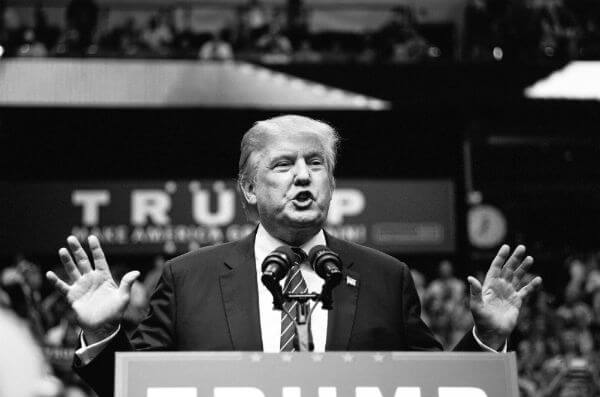
Masha Gessen writes: Over the last few days, concerns about some kind of a hidden alliance between Donald Trump and Vladimir Putin have exploded. There is the president-elect with his apparently fawning regard for the Russian leader. There are Trump’s top cabinet picks, with their unusual Russian ties: as national security advisor, Lt. General Mike Flynn, who has met Putin and done paid events for a Kremlin-sponsored TV station; and as secretary of state, ExxonMobil CEO Rex Tillerson, who has done billions of dollars of business in Russia and received an award from Putin. And then there is the revelation, from the CIA, that Russia may have actively interfered in the US election to get Trump elected.
Of course, Putin may well have reasons for wanting Trump to be president — not least Trump’s apparent skepticism toward NATO and his lack of opposition to Russia’s military interventions in Ukraine and Syria. But a more important connection between the two men may be their common approach to leadership, which will almost certainly outlast any friendship that may form between them. During his campaign, Donald Trump repeatedly expressed admiration for the way Putin governed. “The man has very strong control over his country,” Trump said at one point. “He’s been a leader far more than our president has been a leader.” That revealed a lot about Trump’s concept of the presidency—he seems to believe that effectiveness is measured by the extent to which the leader “controls” the country. But how might that play out in practice? To what extent can Putin provide insight into Trump’s understanding of power?
There is still much we don’t know about how Trump will rule. But in the month since his election, some characteristic patterns have emerged — and they bear some instructive similarities to the style Putin has practiced over many years. [Continue reading…]
The New York Times reports: The latest effort to evacuate Syrian civilians and insurgent fighters from rebel-held neighborhoods of eastern Aleppo was bogged down Thursday morning, after one person was killed and several civilians and humanitarian aid workers were wounded while being transported to Red Cross ambulances, opposition figures said.
The White Helmets, a group of volunteer emergency workers, said on Twitter that one of its members had been struck by a bullet fired by a government sniper.
Bassem Ayoub, an activist in eastern Aleppo, said that gunmen had targeted the ambulances as well as wounded people being taken to them for evacuation, and that at least six people had been shot.
Dozens of green buses were lined up at the Ramouseh crossing between eastern and western Aleppo.
Syrian state television showed Red Cross ambulances waiting to take people away, with damaged buildings in the background. White smoke could be seen rising, apparently after fighters and activists set fire to their headquarters, cars and warehouses before leaving.
Thousands of people had gathered outside a hospital in the Mashhad neighborhood, which is still controlled by rebels, hoping that an evacuation deal announced on Tuesday by Turkey, Russia and Syrian rebels would hold. But the constant threat from snipers, bombs and shelling was unsettling. [Continue reading…]
NBC News reports: U.S. intelligence officials now believe with “a high level of confidence” that Russian President Vladimir Putin became personally involved in the covert Russian campaign to interfere in the U.S. presidential election, senior U.S. intelligence officials told NBC News.
Two senior officials with direct access to the information say new intelligence shows that Putin personally directed how hacked material from Democrats was leaked and otherwise used. The intelligence came from diplomatic sources and spies working for U.S. allies, the officials said.
Putin’s objectives were multifaceted, a high-level intelligence source told NBC News. What began as a “vendetta” against Hillary Clinton morphed into an effort to show corruption in American politics and to “split off key American allies by creating the image that [other countries] couldn’t depend on the U.S. to be a credible global leader anymore,” the official said.
Ultimately, the CIA has assessed, the Russian government wanted to elect Donald Trump. The FBI and other agencies don’t fully endorse that view, but few officials would dispute that the Russian operation was intended to harm Clinton’s candidacy by leaking embarrassing emails about Democrats.
The latest intelligence said to show Putin’s involvement goes much further than the information the U.S. was relying on in October, when all 17 intelligence agencies signed onto a statement attributing the Democratic National Committee hack to Russia. [Continue reading…]
Politico reports: The White House on Wednesday suggested Donald Trump knew Russia was behind a series of hacks that interfered with the U.S. presidential election when he invited Russia to find Hillary Clinton’s missing emails.
The president-elect has continued to deny U.S. intelligence assessments that highlight Russia as the culprit behind infiltrations of Democratic institutions, including the Democratic National Committee, the Democratic Senatorial Campaign Committee and Clinton campaign chairman John Podesta’s personal email account.
But White House press secretary Josh Earnest contended Wednesday that it’s entirely feasible that Trump was well aware of Russia’s interference well before the intelligence community confirmed as much in October, a month before the election.
“There’s ample evidence that was known long before the election and in most cases long before October about the Trump campaign and Russia — everything from the Republican nominee himself calling on Russia to hack his opponent,” Earnest told reporters. “It might be an indication that he was obviously aware and concluded, based on whatever facts or sources he had available to him, that Russia was involved and their involvement was having a negative impact on his opponent’s campaign.” [Continue reading…]
The Guardian reports: Iranian leaders have claimed a military victory in Aleppo, with the Ayatollah Ali Khamenei’s chief military aide boasting that Syrian president Bashar al-Assad’s forces would have been unable to retake the besieged city without support from Tehran.
“Aleppo was liberated thanks to a coalition between Iran, Syria, Russia and Lebanon’s Hizbollah,” said Seyed Yahya Rahim-Safavi. “Iran is on one side of this coalition which is approaching victory and this has shown our strength. The new American president should take heed of the powers of Iran.”
Iran’s defence minister called his Syrian counterpart to congratulate him and Mohsen Rezaie, a former commander of Iran’s Revolutionary Guards, wrote on Instagram that Iran’s aim was to cleanse “terrorists and Takfiris [apostates]” from Syria and Iraq.
The parliamentary speaker, Ali Larijani, also congratulated Assad’s government, saying that US and British policies had hit a dead end in Syria, Iraq, Libya and Yemen. [Continue reading…]
The New York Times reports: Artillery shelling resumed early Wednesday on besieged eastern neighborhoods of the Syrian city of Aleppo, delaying a promised evacuation of thousands of civilians and medical staff members who had been expecting to leave under the aegis of a deal announced at the United Nations.
Buses that were supposed to evacuate some of the last holdouts in the heavily bombed neighborhoods left, empty, after waiting for hours, the Lebanese television station Al Manar, which is affiliated with the militant Shiite group Hezbollah reported — a sign that the evacuation process might not happen on Wednesday as planned.
The Pan-Arab television network Al Mayadeen showed buses idling at a prearranged evacuation point, waiting to take 5,000 fighters and their families to Atareb, a town west of Aleppo.
The opposition says that Iran, one of the Syrian government’s main allies, and its Shiite militia proxies were obstructing the deal; witnesses said that the militias had prevented a convoy of about 70 wounded people — mostly fighters and their relatives — from departing, despite the supposed deal announced at the United Nations. The militias, observers said, insisted that they would not allow anyone out until rebel groups had ended their siege of Fouaa and Kfarya, two encircled Shiite enclaves in Idlib Province.
Osama Abu Zayd, a legal adviser to Syrian opposition factions, told The Associated Press that the evacuation deal was being resisted by Iran’s field commander in Syria. The Syrian Observatory for Human Rights, a monitoring group, said it believed that Iran — a major ally of the Syrian government — had balked at the deal, annoyed that Russia and Turkey had not consulted it.
But the Russian Defense Ministry blamed the rebels for the impasse, saying on Wednesday that they had “resumed the hostilities” at dawn, trying to break through Syrian government positions to the northwest.
The impasse could be the sign of a stalling tactic by Syria’s president, Bashar al-Assad. His government has often skillfully played its backers — Iran, Russia and others — off one another. The disagreement could provide cover for what the Syrian government has wanted to do all along: finish off the enclave with force. As one Syrian military officer told Reuters in Aleppo recently, rebels must “surrender or die.”
Malek, an activist who has repeatedly moved around eastern Aleppo for his safety, and who asked to be identified only by his first name for fear that he would soon find himself in government territory, said he had looked forward to the evacuation, but that “nothing happened.”
Interviewed over the messaging service WhatsApp, he added, using a mournful idiom, “We didn’t taste the flavor of life.”
Troubles carrying out the accord were not surprising, as there was no international monitoring — United Nations officials said the Syrian government refused their repeated pleas to observe the process — and no mechanism to enforce the agreement. That has been a problem with other deals reached during the conflict.
Within eastern Aleppo, residents were alarmed as Russian news agencies broadcast remarks from the Russian foreign minister, Sergey V. Lavrov, who said he expected the rebels to “stop their resistance within two, three days.” Those remarks alarmed observers, as the evacuation deal says rebels already agreed to stop fighting in exchange for being allowed to leave.
“They are planning to slaughter us all,” said Monther Etaky, a civilian activist who had been hoping to evacuate.
Salem, a dentist who had kept his clinic open until last week, and who finally moved to one of the last rebel neighborhoods when his own was taken by government forces, said he could hear heavy shelling.
“We slept a quiet night, but sadly the shelling is back,” he said Wednesday morning, asking to be identified only by his first name. “Please share my message: The cease-fire collapsed. The situation is bad again.” [Continue reading…]
The Guardian reports: British MPs are deceiving themselves if they believe they do not bear some of the responsibility for the “terrible tragedy” unfolding in Syria, the former chancellor, George Osborne, said on Tuesday during an often anguished emergency debate in the House of Commons on the carnage being inflicted in eastern Aleppo. In one of his first speeches in the Commons since losing office, Osborne said there had been “multiple opportunities to intervene” in Syria as he cited parliament’s decision in 2013 not to take military action after the use of chemical weapons by Bashar al-Assad’s regime.
“Let’s be clear now: if you do not shape the world, you will be shaped by it. We are beginning to see the price of not intervening,” Osborne said.
The Commons voted by a majority of 13 in 2013 to reject military action after Labour combined with Tory rebels to deliver David Cameron his single biggest Commons rebuff. [Continue reading…]
Janine di Giovanni writes: Depending on your personal view, Aleppo has now fallen, or been retaken, or been liberated. But my interest is not with any political side. It’s with victims of state terror, and all the civilians whose lives have been shattered by a war that has been raging for more than five years. It is the most cynical conflict I have seen in 25 years of war reporting. Both the regime and opposition are guilty of war crimes, though one much more than the other.
What I’m considering now, from the comfort of my Paris home, is how a city falls. I am thinking of people cowering in basements and struggling with whether they flee from their city now, or wait. Who is coming to save them, or kill them? I know how that scenario goes. I lived through Sarajevo during the Bosnia war, and was in Grozny when it fell to (or was “liberated” by) Russian forces. I remember hiding in those basements waiting for the Russian tanks to come into the village, and wondering if I would be dead in a few hours.
I am thinking about the civilians – all of those people with whom I sat for hours while writing my book, or writing reports for the UN high commissioner for refugees – and what they are doing to survive. [Continue reading…]
The Guardian reports: Iran-backed militias are preventing civilians and opposition fighters from leaving the besieged districts of east Aleppo as Russia struggles to convince the Assad government and allied militants to abide by a ceasefire agreement.
Shelling of the besieged districts resumed on Wednesday morning despite the agreement brokered by Turkish intelligence and the Russian military on Tuesday that would have offered a respite to tens of thousands of trapped civilians.
It was unclear on Wednesday when residents would be allowed to leave east Aleppo and whether the deal would hold. Turkey’s state-run Anadolu agency quoted the head of the Turkish Red Crescent as saying nearly 1,000 people from east Aleppo were being held at an Iranian militia checkpoint.
Rebels inside east Aleppo said they would support the agreement but Iranian-backed militias on the ground, which led the assault into east Aleppo, were blocking it because the deal was reached without Assad or Iran’s involvement.
“The sectarian militias want to resume the massacre in Aleppo and the world has to act to prevent this sectarian slaughter led by Iran,” said Bassam Mustafa, a member of the political council of Noureddine Zinki, one of the main rebel groups in east Aleppo. “The opposition will continue to abide by the agreement.”
Yasser al-Youssef, a spokesman for the group, said Russia was attempting to convince the Assad government to accept the ceasefire. The Turkish foreign minister, Mevlüt Çavuşoğlu, said discussions were ongoing with Russia and Iran to continue the planned evacuations. [Continue reading…]
The Associated Press reports: Aleppo’s fall to Syrian government forces is shaping up as the first major test of President-elect Donald Trump’s desire to cooperate with Russia, whose military support has proven pivotal in Syria’s civil war. The death and destruction in the city is only renewing Democratic and Republican concern with Trump’s possible new path.
Though Trump has been vague about his plans to address this next phase in the nearly six-year-old conflict, he’s suggested closer alignment between U.S. and Russian goals could be in order. His selection Tuesday of Exxon Mobil CEO Rex Tillerson, who has extensive business dealings with Russia and ties to President Vladimir Putin, fueled further speculation that Trump will pursue a rapprochement with Moscow.
Indeed, Trump was already trying to portray Tillerson’s connections with Russia as a plus. In talking points circulated on Capitol Hill and obtained by The Associated Press, Trump’s transition team said Tillerson would “work closely” with Russia on “defeating radical Islam” but would “easily challenge Russia and other countries when necessary.”
“President Putin knows Mr. Tillerson means what he says,” the talking points say.
A warmer relationship could alter U.S. policy on nuclear weapons, sanctions, Ukraine and innumerable other issues — but none so clearly or quickly as Syria, where President Bashar Assad’s defeat of U.S.-backed rebels in Aleppo is poised to be a turning point. Assad and Russia are expected seize the moment to try to persuade the U.S. to abandon its flailing strategy of trying to prop up the rebels in their battle to oust Assad. [Continue reading…]
Reuters reports: Rebel resistance in the Syrian city of Aleppo ended on Tuesday after years of fighting and months of bitter siege and bombardment that culminated in a bloody retreat, as insurgents agreed to withdraw in a ceasefire.
The battle of Aleppo, one of the worst of a civil war that has drawn in global and regional powers, has ended with victory for Syrian President Bashar al-Assad and his military coalition of Russia, Iran and regional Shi’ite militias.
For rebels, their expected departure with light weapons starting on Wednesday morning for opposition-held regions west of the city is a crushing blow to their hopes of ousting Assad after revolting against him during the 2011 Arab uprisings.
However, the war will still be far from over, with insurgents retaining major strongholds elsewhere in Syria, and the jihadist Islamic State group holding swathes of the east and recapturing the ancient city of Palmyra this week.
“Over the last hour we have received information that the military activities in east Aleppo have stopped, it has stopped,” Russian U.N. Ambassador Vitaly Churkin told a heated U.N. Security Council meeting. “The Syrian government has established control over east Aleppo.”
Rebel officials said fighting would end on Tuesday evening and a source in the pro-Assad military alliance said the evacuation of fighters would begin at around dawn on Wednesday. A Reuters reporter in Aleppo said late on Tuesday that the booms of the bombardment could no longer be heard. [Continue reading…]
The New York Times reports: When Special Agent Adrian Hawkins of the Federal Bureau of Investigation called the Democratic National Committee in September 2015 to pass along some troubling news about its computer network, he was transferred, naturally, to the help desk.
His message was brief, if alarming. At least one computer system belonging to the D.N.C. had been compromised by hackers federal investigators had named “the Dukes,” a cyberespionage team linked to the Russian government.
The F.B.I. knew it well: The bureau had spent the last few years trying to kick the Dukes out of the unclassified email systems of the White House, the State Department and even the Joint Chiefs of Staff, one of the government’s best-protected networks.
Yared Tamene, the tech-support contractor at the D.N.C. who fielded the call, was no expert in cyberattacks. His first moves were to check Google for “the Dukes” and conduct a cursory search of the D.N.C. computer system logs to look for hints of such a cyberintrusion. By his own account, he did not look too hard even after Special Agent Hawkins called back repeatedly over the next several weeks — in part because he wasn’t certain the caller was a real F.B.I. agent and not an impostor.
“I had no way of differentiating the call I just received from a prank call,” Mr. Tamene wrote in an internal memo, obtained by The New York Times, that detailed his contact with the F.B.I.
It was the cryptic first sign of a cyberespionage and information-warfare campaign devised to disrupt the 2016 presidential election, the first such attempt by a foreign power in American history. What started as an information-gathering operation, intelligence officials believe, ultimately morphed into an effort to harm one candidate, Hillary Clinton, and tip the election to her opponent, Donald J. Trump.
Like another famous American election scandal, it started with a break-in at the D.N.C. The first time, 44 years ago at the committee’s old offices in the Watergate complex, the burglars planted listening devices and jimmied a filing cabinet. This time, the burglary was conducted from afar, directed by the Kremlin, with spear-phishing emails and zeros and ones. [Continue reading…]
Robert Cottrell writes: NATO and Russia are close to war, according to General Sir Richard Shirreff, recently NATO’s second-in-command. In 2017: War with Russia, he writes that Russia could invade the Baltic states, which are NATO members, while NATO does nothing. When crisis strikes, the British prime minister is at the pub, the Germans are paralyzed by anxiety, and the Greeks and Hungarians are in Russia’s pocket. The Americans are raring to go, but three countries have to fall before they can persuade their European partners to share their sense of urgency.
And one could almost now say that Shirreff’s alarmism has been overtaken by events, which are conspiring to demolish even the outward show of solidarity on which NATO relies for its deterrence. Britain’s vote to leave the European Union and Turkey’s post-coup crackdown call into question the strategic direction of two of NATO’s major military powers. As for Donald Trump’s argument during the presidential campaign that America’s richer allies should pay adequately for their protection, it was a fair point in principle, but a fatal thing to say in public. It made clear that America’s commitment to NATO would not be unconditional under President Trump; and if America’s commitment is not unconditional, then fairly obviously it will not extend to nuclear war. The cat is out of the bag. Seen from Moscow, the West has not been in such inviting disarray since the Suez crisis of 1956. Whatever constraints Putin may now feel upon his land-grabbing instincts, they must be entirely domestic in nature. NATO is no longer one of them.
Shirreff was Deputy Supreme Allied Commander Europe, NATO’s second-ranking military officer, from 2011 to 2014. Before that he was commander of NATO’s Allied Rapid Reaction Corps. He should know of what he speaks. He writes his book in the manner of a popular thriller, full of stock characters and military jargon. But he insists upon its truth to life. He says in his preface: “This is not fiction as such. This is fact-based prediction, very closely modelled on what I know, based on my position as a very senior military insider at the highest and best-informed level.”
2017 begins with a new Russian invasion of Ukraine. [Continue reading…]
The New York Times reports: Now that President-elect Donald J. Trump has chosen Rex W. Tillerson, the chief executive of Exxon Mobil, to be the next secretary of state, the giant oil company stands to make some major gains as well: It has billions of dollars in deals that can go forward only if the United States lifts sanctions against Russia.
As head of America’s largest oil company, Mr. Tillerson has earned a friendship award from Russia and voiced skepticism about American sanctions that have halted some of Exxon Mobil’s biggest projects in the country.
But Mr. Tillerson’s stake in Russia’s energy industry could create a very blurry line between his interests as an oilman and his role as America’s leading diplomat.
“The chances that he will view Russia with Exxon Mobil DNA are close to 100 percent,” said Robert Weissman, the president of Public Citizen, a public interest group based in Washington. [Continue reading…]
Bloomberg reports: Rex Tillerson, the Exxon Mobil Corp. chief who is President-elect Donald Trump’s leading candidate for secretary of state, visited the White House repeatedly as sanctions were imposed on Russia in 2014 to make sure his company’s competitors didn’t gain an edge in the way they were enforced.
Tillerson made at least 20 visits to the White House during President Barack Obama’s two terms, visitor logs show, including five after Obama began authorizing the 2014 sanctions in response to Russian aggression toward Ukraine. [Continue reading…]
The last hope of the besieged rebels, most of whom seem to have withdrawn in the face of certain defeat, had been to receive reinforcements or resupplies from their counterparts in the southern and western suburbs. That option has now been foreclosed upon as these routes are completely interdicted by the regime.
The triumphal takeover of the citadel of the Syrian revolution followed a day of intense bombing of houses and apartment buildings, destroying so many that it was impossible to determine the death toll. The neighborhoods of Bustan al-Qasr, al-Kallasa, al-Farod and al-Salhin in the Old City, as well as Sheikh Saed, in the southern district, are all now under regime control.
The Syrian Civil Defense, or White Helmets, an internationally renowned team of first responders, said more than 90 bodies of people presumed to be still alive are under debris and that its volunteer staff reported they could hear the voices of children trapped in the rubbles of their houses.
A member of the group in Aleppo told al-Arabiya TV on Monday night that men, women, and children were huddling and crying in the streets and at the gates of empty buildings in the few neighborhoods that remained in the hands of the opposition. He described the situation as hopeless, because precision munitions and indiscriminate barrel bombs had destroyed the city’s medical facilities, ambulances, and fuel supply. [Continue reading…]
The Washington Post reports: The United Nations warned Tuesday that dozens of people may have been executed in the Syrian city of Aleppoas pro-government troops seized what remained of the rebels’ most famous stronghold.
Rupert Colville, a spokesman for the U.N. human rights council, said his office received reports that pro-government forces had killed at least 82 civilians, entering homes and killing people “on the spot.”
Others were reportedly shot as they fled. A list of names provided to the U.N. included 11 women and 13 children, he said. [Continue reading…]
The Washington Post reports: The shaky cellphone video shows Abdulkafi al-Hamdo, a Syrian English teacher, crouching behind a stone wall, the hood of a yellow Adidas sweatshirt pulled over his dark hair. Rain beats down in the background as he speaks into the camera.
Al-Hamdo says he has spent the night in eastern Aleppo fleeing from Syrian government forces, who had all but completed their brutal siege of the city’s last rebel-held neighborhoods on Tuesday.
President Bashar al-Assad’s troops are closing in, al-Hamdo says, fighting back tears, “maybe 300 meters away.”
“No place now to go. It’s the last place,” he says in the video, posted to Twitter just before midnight Monday. “I don’t know really what to say. Words can’t go out now. I hope you can do something to stop the expected massacres.”
He continues: “No one slept this night. I just slept for an hour. My wife, my daughter, all the people who I know, they’re . . .”
The audio cuts out first. Then the video ends.
As Syrian forces stormed the last sliver of the city controlled by the opposition, Syrians such as al-Hamdo posted desperate messages to social media, some of them saying they believed they would be captured or killed by government troops. [Continue reading…]
The Washington Post reports: President-elect Donald Trump has picked as his secretary of state Rex Tillerson, the chief executive of ExxonMobil, setting up a possible confrontation with members of his own party in the Senate, Trump’s transition team announced Tuesday.
Since Tillerson’s name emerged as a candidate for the post, leading Republicans have expressed reservations about his years of work in Russia and the Middle East on behalf of the multinational petroleum company.
GOP advisers have warned that a growing number of Republican senators may be unwilling to vote to confirm Tillerson because of his ties to Russia. While Senate Democrats cannot filibuster Trump’s Cabinet picks, Republicans have only 52 votes in the Senate, leaving them in potential jeopardy if Democrats unite in opposition to Tillerson. It will take at least 50 votes to confirm a nominee, plus Vice President-elect Mile Pence casting a tiebreaking vote. [Continue reading…]
The Daily Beast reports: Donald Trump’s long-time but informal adviser Roger Stone says the Secretary of State job was dangled in front of Mitt Romney in order to “torture” him for previously opposing the president-elect.
During a Sunday appearance on InfoWars with Alex Jones, a conspiratorial media outlet that has become a mouthpiece of the next president, Stone called Romney a “choker” and said that Trump was simply toying with him.
“Donald Trump was interviewing Mitt Romney for Secretary of State in order to torture him,” Stone claimed on the program. “To toy with him. And given the history, that’s completely understandable. Mitt Romney crossed a line. He didn’t just oppose Trump, which is his democratic right, he called him a phony and a fraud. And a con man. And that’s not the kind of man you want as Secretary of State.” [Continue reading…]
This website or its third-party tools use cookies, which are necessary to its functioning. By closing this banner, you agree to the use of cookies.