Category Archives: Syria

Syrian capital sees heaviest clashes in weeks, frightened residents hide in their homes

The Associated Press reports: Syrian rebels and regime forces fought their most intense clashes in weeks inside the heavily guarded capital of Damascus on Wednesday, activists said, with the sounds of shell blasts echoing through the downtown area and keeping many children home from school while residents hid in their houses.

The opposition fighters blasted army checkpoints with rifles and anti-aircraft guns while government forces shelled the eastern and southern suburbs, trying to repel a new insurgent effort to push the civil war into the heart of the capital, the anti-regime activists said.

Although bordered by rebellious suburbs that have seen fierce fighting, widespread clashes have remained mostly on the capital’s edges, saving it from the destruction that has ravaged other major cities such as Aleppo and Homs.

The military of President Bashar has focused on securing the capital, and the dozens of rebels groups that have established footholds in Damascus suburbs have failed to form a united front, each fighting for its own area with little or no coordination with others. [Continue reading…]

Reuters adds: Syrian government jets bombarded the Damascus ring road on Thursday in a bid to halt a rebel advance which threatens President Bashar al-Assad’s hold on the capital, insurgent commanders and opposition activists said.

Warplanes fired rockets at southern parts of the route where rebels have spent the past 36 hours overrunning army positions and road blocks encircling the heart of the city, the site of key state security and intelligence installations.

Facebooktwittermail

Kuwait, ‘the back office of logistical support’ for Syria’s rebels

The National reports: Ten days before sitting down for a leisurely evening tea recently on the outskirts of Kuwait City, Jamaan Al Harbash was in Aleppo talking with rebels fighting to oust Syrian President Bashar Al Assad from power.

It was the third trip to the war zones of Syria by the former Kuwaiti MP, who no longer escapes the Syrian regime’s notice. Following a journey to the front in October, Syria’s state news agency condemned him for “attempts to spread sedition among the united Syrian people”.

The regime’s censure has not deterred Mr Harbash, who scrolls through his iPhone to show recent pictures of shattered neighbourhoods and a hospital he said was rebuilt with the help of Kuwaiti funds. Amid the scenes of war is a photo of Mr Al Harbash standing with a half dozen fighters of the rebel Free Syrian Army (FSA).

“The reason I went to Syria was to observe whether the aid we are sending is reaching the general population,” he said.

To many observers, Kuwait’s decision to host a United Nations meeting last week to raise humanitarian aid for Syrians – and its pledge of US$300 million to the effort – were the most overt steps that the country has yet taken to get involved in the crisis.

Until then, Kuwait had appeared largely absent from regional diplomacy on the crisis, while Qatar has funded and hosted the political opposition to Mr Al Assad and Saudi Arabia has reportedly sent arms to anti-regime fighters.

Yet interviews with aid organisations and officials suggest Kuwait has played a no less pivotal role than its Gulf Arab neighbours during the 22-month uprising. This country of 2.6 million people has emerged as a central fund-raising hub for direct financial support to insurgents fighting the Assad regime and for humanitarian aid to rebel-controlled areas, which are said to encompass slightly more than half of the country. [Continue reading…]

Facebooktwittermail

Syria is not Iraq

Shadi Hamid writes: More than a year ago, a real debate began over whether to intervene militarily in Syria. Here in The Atlantic, Steven Cook of the Council on Foreign Relations was one of the first to propose taking military action – or at least thinking seriously about it. When Cook wrote his article (which, in its prescience, is well worth re-reading today), around 5,000 Syrians had been killed. Today, the number is more than 10 times that, and is now over 60,000 according to some estimates. I remember, early on, wondering whether 15,000 would be a “trigger.”

But, apparently, there is no “trigger.” Military intervention in Syria cannot not happen without American support and there is nothing to suggest the United States has any interest in intervening, no matter the number of dead. The Obama administration has cited the use of chemical weapons as a “red line,” but even that red line has managed to shift back and forth several times.

Opponents of intervention have, understandably, tended to focus on the risky – and potentially prohibitively difficult – nature of military action. Yet, the very fact that some “red lines” do exist suggests that the U.S. would be willing to intervene at some point, in spite of those difficulties. The question, then, isn’t so much the difficulty of the operation as much as what is an appropriate red line.

If Bashar al-Assad proceeded to destroy an entire city, killing 100,000 people in the matter of weeks, presumably many of those opposing intervention would decide to support it. But why then and not now? Why exactly is 60,000 people not enough? Sure, the use of chemical weapons should be a red line for national security reasons, but why should strictly national security considerations be a red line, when the killing of tens of thousands isn’t? It is this latter point which sends precisely the wrong message to Arab audiences and the broader international community. Nothing fundamental has changed in U.S. policy since the Arab Spring, even though many of us said, and hoped, that new realities required a new way of doing business. As I wrote nearly a year ago,

What made Libya a “pure” intervention was that we acted not because our vital interests were threatened but in spite of the fact that they were not. For me, this was yet one more reason to laud it.

The memory of the Iraq War obviously looms large. The war, itself, was one of the greatest strategic blunders in the recent history of American foreign policy. But its legacy is proving just as damaging, leading to a series of mistakes that we are likely to regret in due time. [Continue reading…]

Facebooktwittermail

The fight for survival in Damascus

Susanne Koelbl reports: Fear protected the Assad regime, but now fear seems to have switched sides, even in the capital. It now haunts army officers when they take the bus home from work, as it does ministerial employees, businesspeople, the rich and those suspected of being loyal to the regime. They are being kidnapped by armed men and locked into basements, sometimes for weeks. The kidnappers often claim that they are rebels with the Free Syrian Army. Some of the victims are burned with lit cigarettes or are left out in the snow, dressed only in their underwear, after ransom money has been paid. It isn’t always clear whether the perpetrators are fighting for a free Syria or are just ordinary criminals.

There is a neighborhood in the western part of Damascus called Mezze 86, inhabited almost exclusively by Alawites. Mezze 86 is the home of modest regime profiteers, the home of hangers-on. Residents work for the economics ministry, the police or the army.

As civil servants, they earn between 10,000 and 30,000 Syrian pounds a month, or €100 to €300 ($135 to $400). Most built their small concrete houses 20 years ago, and posters of Bashar Assad hang on every corner. Assad, an ophthalmologist by profession who received only very superficial military training, apparently tried to look frightening when he was photographed for the posters, wearing dark sunglasses and a general’s uniform, and with a grim expression on his face.

The first car bomb exploded in Mezze 86 in early October. On Nov. 5, a large explosion ripped away an entire row of shops, killing at least 11 people and wounding dozens more.

Hassan Khudir’s little house isn’t far from the site of the bombing. A civil servant in the transportation ministry, he is wearing a corduroy jacket and tie, even at home in his small living room. But as an Alawite, he senses that his orderly old life is over. Khudir, his wife and their four children must fear the revenge of the rebels. “We will all die if there is no reconciliation,” he says.

But the rebels in Damascus are also in mortal danger, like the three young female students in the back room of a Damascus café. They are wearing white hijabs to cover their hair and neck, and they are unwilling to remove their long coats. They are traditional Muslim women, they say. They arrive with two young men.

All five work for Enab Baladi, an underground newspaper and website from the rebel stronghold Daraya, only 4 kilometers (2.5 miles) from Mezze 86. “Enab Baladi” means “grapes of my country,” a name that is meant to invoke the sweet grapes that once grew in the gardens of Daraya.

The authors of Enab Baladi have documented the destruction that has been visited on Daraya since the army identified the suburb as a terrorist stronghold in the summer. They write, photograph and shoot videos, documenting fighter jets as their drop their deadly loads over Daraya, tanks rumbling through the district and shooting indiscriminately into buildings, and how the army went from house to house on Aug. 25, 2012, dragging supporters of the rebellion and lining them up against walls. Hundreds were shot to death on that day, say the founders of Enab Baladi.

The women have brought along a shaky video as an example. The footage shows the wreckage of a house, as a voice says anxiously, “Allahu akbar, Allahu akbar.” The cameraman pushes in the door of the bombed house and steps over upturned tables and cabinets. The body of a man in his mid-40s is lying on his back on the floor, his legs pulled up at an angle. “Allahu akbar,” the cameraman says with a sob. He hurries into the bathroom, where there is another victim on the floor. The camera crew finds a total of three bodies in the house. “Allahu akbar,” they all say, sobbing.

Almost 1,400 years ago, the Prophet Mohammed is said to have used the phrase “Allahu akbar” — God is great” — to boost the morale of his soldiers. Muslim fighters use it to this day, including groups affiliated with Al-Qaida, like the Al-Nusra Front.

Enab Baladi is the voice of the survivors of Daraya. The buildings that once housed their schools, post offices and hospitals are in ruins today. But are the rebels of Daraya in fact extremists, as the general claims?

“At first we carried flowers and demonstrated for reforms,” one of the women says in response. “The government invited us to round-table talks. After that they knew who our leaders were and arrested them. We are conservative, but we don’t want a caliphate. We yearn for democracy and humanity.”

Do your allies abduct people? “Yes. We have to exchange them for our relatives and friends who are still in prison.”

Do extremists fight on your side? “How can we be choosy here? We are victims and we are dying. We are grasping at every straw.”

What should a free Syria look like if it is achieved with the help of Islamists like the Al-Nusra group? “If the regime falls, we will fight against Al-Nusra. This here is only the beginning of a long process.”

The articles on Enab Baladi are surprisingly levelheaded, even when, as happened on this day, one of the newspaper’s co-founders was killed in his car when he was hit by shrapnel. But 23 months of war have also poisoned members of the opposition. The struggle against an army that is destroying its own country, and the bitterness over the fact that the Western world has not come to their aid, has shifted internal boundaries, even among the best. “Yes, that’s what has become of us,” one of the two men, a computer science student, says with shame in his voice. [Continue reading…]

Facebooktwittermail

The illusory promise of negotiations in Syria

“Better to jaw-jaw than to war-war,” everyone likes to repeat, affirming Winston Churchill’s truism that negotiation is preferable to fighting.

But the debate should never be about whether negotiation is desirable — it always is. The question is whether negotiation is possible.

Many observers outside Syria assert that negotiation offers the only path to end the war and either say or imply that the primary obstacle to negotiation is the intransigence of Assad’s opponents.

Poor Assad, hamstrung like so many an Israeli government, simply can’t find the right partners for peace.

As for Israel itself, in the last few days it moved from anxious bystander to occasional combatant — a role ostensibly necessitated by the risk that Hezbollah’s missile arsenal, already claimed to contain tens of thousands of rockets, might be enlarged by a few dozen more with questionable specifications.

The damage done by the attack to the Assad regime appears to have been minimal. Indeed, with Saudi Arabia — no friend of Assad — piping up to condemn Israel’s “flagrant violation” of Syria’s sovereignty, the net result may be that Israel is contributing to the extension of the regime’s tenure and not hastening its downfall. Moreover, this could well describe Israel’s hopes: that they would rather see the devil they know hang on for as long as possible, than witness a new devil emerge.

Robin Yassin-Kassab writes: On January 19, the Syrian foreign minister Walid Al Moallem gave an apparently conciliatory interview to state TV. “I tell the young men who carried arms to change and reform, take part in the dialogue for a new Syria and you will be a partner in building it. Why carry arms?” In the southern and eastern suburbs of Damascus, his voice was drowned out by the continuing roar of the regime’s rocket, artillery and air strikes.

The UN and parts of the media have also called for negotiations. Until late last month, however, the Syria’s National Coalition – the widely recognised opposition umbrella group – opposed the notion absolutely. But then NC leader Moaz Al Khatib announced that he would talk directly to regime representatives (not President Bashar Al Assad himself) on condition that the regime released 160,000 detainees and renew the expired passports of exiled Syrians.

In the context of Mr Al Moallem’s media offensive (and in the absence of concerted international financial or military support for either the NC or the revolutionary militias) Mr Al Khatib’s announcement calls the regime’s bluff. It doesn’t, of course, mean that negotiations are about to be launched. For a start, the regime only intends to negotiate with, as it puts it, those “who have not betrayed Syria”. Like successive Israeli regimes, it will only talk with the “opponents” it chooses to recognise. As well as pro-regime people posing as oppositionists, this includes Haytham Manaa’s National Coordination Committee for Democratic Change, a group that has no influence whatsoever on the revolutionary fighters setting the agenda. The NC – which does have some influence on the ground, and would have far more if it were sufficiently funded – is definitely not invited.

And negotiations won’t happen, secondly, because the regime won’t release the detainees, at least not yet. If it did release all 160,000, it would indeed be a sign that it had understood that it could no longer torture, imprison and kill Syrians. It would be a reasonable starting point for negotiating the transition.

Why has the NC been so reluctant to negotiate thus far? First there is the obvious moral point, that a regime loses its legitimacy when it prosecutes war against its own people. As a criminal regime, it forfeits its right to engage in national dialogue.

The point is correct, but in the face of such vast tragedy the moral point is not sufficient. It may be a stubborn and ultimately irresponsible idealism that clings to moral principle while a land, a people and their future are burning. A much more intelligent motive for opposing negotiations is hard-nosed realism. [Continue reading…]

Facebooktwittermail

The son of a shopkeeper, now one of Syria’s leading rebel commanders

C.J. Chivers offers a profile of Abdulkader al-Saleh, a k a Hajji Marea, leader of the military wing of Al Tawhid, the largest antigovernment fighting group operating in and near Aleppo.

At the core of a simplistic narrative about Syria that has been popularized in Western antiwar circles is the idea that a legitimate protest movement got hijacked by foreign jihadists operating as mercenaries for Gulf states. Those who still hold this view will presumably dismiss Chivers’ account as propaganda. However, for anyone who thinks that reporters like this are able to shed more light on events in Syria than do people like George Galloway or anyone else promoting the “good terrorist, bad terrorist” meme, this profile is worth reading. It represents a political arc that has been replicated all over Syria as protesters picked up arms and the common cause of toppling the Assad regime united individuals and groups covering a broad political spectrum.

An enduring preoccupation of many observers — whether they be policymakers inside Washington or the politically engaged with no institutional affiliations — is the need to peg Syrians into ideological or sectarian groupings. Syrians such as Saleh, however, seem to have little interest in political labels. What concerns them much more is Washington’s hypocrisy: that stern warnings are issued to Damascus about the use of chemical weapons being unacceptable, while Assad’s continuing slaughter of ordinary Syrians every day with conventional weapons receives little comment.

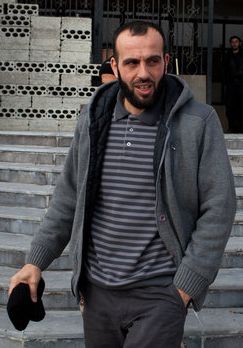
Abdulkader al-Saleh

Men like Mr. Saleh present both a challenge and an opportunity for the West as it struggles to understand what is happening in Syria and to nurture networks that might provide stability and routes for Western influence should the government fall.

Mr. Saleh’s long-term intentions are not entirely clear. He says he is focused solely on winning the war, and promotes a tolerant pluralistic vision for the future. He is also openly aligned with Al Nusra Front, a growing Islamic militia that has been blacklisted by the United States, which accuses it of embracing terrorist tactics.

Officials in Washington are aware of Mr. Saleh, and other commanders of his standing. There is no evidence that they have connections with them, or a plan for how to develop relations in a Syria that is partly under their influence.

Mr. Saleh, wounded in battle multiple times, survived an assassination attempt in the fall, adding to his legend in the Aleppo governorate, where he is the rebels’ primary military commander.

“Was it $200,000?” he asked a peer, during a recent interview in a command post hidden in an Aleppo basement, about the bounty for his head. He seemed uninterested by the answer.

“Our concern now is only in the military side and how to fight this regime and finish this,” he said.

The son of a shopkeeper in Marea, just north of Aleppo, Mr. Saleh took an indirect route to guerrilla leader. As a young man, he served two and a half years as an army conscript, working, he said, in a chemical weapons unit.

He later joined the Dawa religious movement as a missionary. He traveled abroad, including, one of his brothers said, to Jordan, Turkey and Bangladesh, where he taught and studied Islam and invited people to hear the call to faith.

Life in Syria lured him back. His hometown lies in an agricultural belt, ringed by dark-soiled fields. Mr. Saleh opened a shop on one of Marea’s main streets, from where he imported and sold seeds. He married and started a family, which grew to include five children.

Not long after the uprising began, he joined with neighbors and relatives to organize demonstrations against what he described as the government’s repression.

When the fighting began, and rebels formed underground cells to plan ambushes, make bombs and persuade government soldiers to defect, Mr. Saleh’s standing grew. People spoke of a successful commander who was honest, organized and almost serenely calm under fire.

In many quarters his identity remained unknown. “We were secretive,” he said. “The public knew there was someone named Hajji Marea who led the demonstrations. But nobody knew who he was.”

Though he stands a little more than six feet tall, Mr. Saleh is unimposing, retaining an open face and youthful lankiness. Outsiders might not even make him for a fighter. One recent day, wearing a hoodie and moving with a loping gait, he could have passed for a graduate student.

His battlefield name, Hajji Marea, roughly translated, means “the respectable man from Marea.” [Continue reading…]

Facebooktwittermail

Is Israel heading towards yet another war?

Following an Israeli strike on Syria this week, the Wall Street Journal reports: Inside Syria, rebels and members of the opposition pointed to the lack of an immediate retaliatory strike as proof that the Syrian regime is impotent against enemies even as it is quick to target its own people.

“It’s a disgrace when Israeli war planes attack Syria and your jets have no other job but to attack bakeries, mosques, universities and civilians,” Mouaz al-Khatib, head of the Western-backed Syrian opposition umbrella group known as the National Coalition, wrote Thursday on his Facebook account, addressing President Bashar al-Assad.

On Wednesday, Mr. Khatib said he was willing to start a dialogue with representatives of the Syrian regime provided it releases 160,000 opposition detainees, prompting a sharp rebuke from other members of the coalition.

Most members of the Syrian opposition consider Hezbollah and Iran accomplices in the suppression of their quest to topple Mr. Assad. On the ground Thursday, clashes raged on the outskirts of Damascus, the northern city of Aleppo and other flash points around Syria as the regime continued to use heavy artillery and aerial bombardment, according to residents and opposition activists.

Iran’s Foreign Minister Ali Akbar Salehi condemned the attack on Syria, calling it a blatant violation of sovereignty. Mr. Salehi’s deputy announced Tehran would give Syria a $200 million aid package that included funds to rebuild a damaged electrical plant and hospital, according to Iranian state media.

In an analysis, Fars News Agency, which is affiliated with Iran’s Revolutionary Guard Corps and is considered a mouthpiece for the group’s views, said Israel’s military strike had several goals, among them weakening Syria’s military and weapons stocks, demoralizing Syria’s army and preparing public opinion for foreign military intervention in Syria. The agency suggested that the best way to retaliate against Israel would be to better arm and fund Hezbollah in Lebanon.

There was little apparent anxiety in Israel a day after the attack. The prevailing view in Israel, as well as among many regional analysts, is that Syria and its allies currently have no stomach for an open conflict with the Jewish state.

“Syria is in a process of disintegration. It can’t afford to escalate with Israel, because Israel is capable of destroying a large part of the military in a short time, and it will make the job of the rebels easier,” said Shlomo Brom, a fellow at Tel Aviv University’s Institute for National Strategic Studies and a former senior military planner.

“It is difficult for Hezbollah to respond in an open way,” he continued. “They are weaker. They moved from a situation in which they were adored by the Arab states, to a situation in which they are the bad guys because they are cooperating with those who are oppressing the people,” he said, referring to Hezbollah’s ties to Mr. Assad.

But Israel shouldn’t risk a strategically costly entanglement in Syria’s civil war for a tactical goal of blocking weapons transfers, cautioned Guy Bechor, head of the Middle East department at the Herzliya Interdisciplinary Center. He said Israel should continue to watch from the sidelines, like most foreign powers, while its enemy is embroiled in a debilitating internal conflict.

“This is not our war,” he told Israel Radio. “We’ve sat on the sidelines for two years. No one else is intervening, so why are we?”

AFP adds: There was still no official Israeli comment on Syrian claims that Israeli warplanes bombed a military site near Damascus on Wednesday or on separate reports that its aircraft struck a weapons convoy along the Syria-Lebanon border.

[Israeli] Newspapers, however, seemed to have little doubt on what had happened or the likely consequences.

“Complete restraint over the long term to Israel’s actions could be considered weakness by Hezbollah, so we should expect some form of response, even if not immediately and not necessarily a broad rocket and missile attack on Israel,” defence commentator Amos Harel wrote in the left-leaning Haaretz daily.

“The Hezbollah convoy, which according to foreign reports was attacked from the air while travelling from Syria to the Bekaa Valley in Lebanon, laden with explosives, will not be the last,” Nahum Barnea wrote in Yediot Aharonot.

“It would seem, from a pessimistic view, that we are on the way to a military confrontation on at least one of the two northern fronts,” he added, referring to Israel’s borders with Syria and Lebanon.

Facebooktwittermail

Syria: how we can end the bloodshed

Jonathan Steele writes: The motives behind Israel’s attack on Syria on Wednesday are still as obscure as the nature of the target. But two things seem clear. It was related to Israel’s long war with Hezbollah in Lebanon rather than any desire to intervene in the fighting in Syria. Yet the attack was also a reminder that Syria’s turmoil is having dangerously unpredictable consequences across the region.

Finding a viable political solution is therefore all the more urgent. So it was good to hear that Moaz al-Khatib, who leads the Syrian National Coalition – the group of exiles who support armed intervention against the Syrian government and are backed by western and Gulf Arab states – now advocates talks with Basher al-Assad’s people. This is not the view of French, British and US leaders or most of Khatib’s Syrian colleagues, who talk vaguely of a political outcome but only mean Assad’s unilateral surrender.

Their unrealistic line was on display again on Monday, when France hosted the so-called Friends of Syria. Its analysis was gloomy. State institutions are collapsing, Islamist groups are gaining ground, more and more Syrians are dying, and there is no breakthrough in sight. “We cannot let a revolution that started as a peaceful and democratic protest degenerate into a conflict of militias,” said Laurent Fabius, the French foreign minister, even as he talked of more aid on the battlefield.

Several civic groups that reject the armed struggle were equally pessimistic at a meeting in Geneva. Theirs is the voice of Syria’s secular intelligentsia, who oppose foreign military intervention and favour a ceasefire and a negotiated solution on the lines that Lakhdar Brahimi, the UN/Arab League mediator, is trying to broker. Because they do not support the western line, they tend to be ignored by foreign politicians. [Continue reading…]

Facebooktwittermail

Israeli air strike in Syria

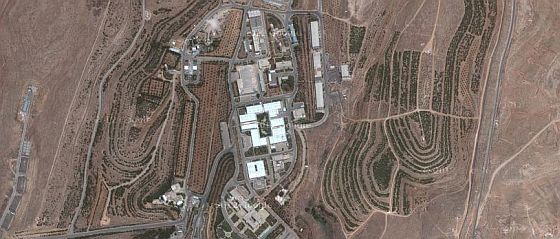
The site described by the Syrian government as a research center, north-west of Damascus, bombed by Israel Air Force fighter jets, according to Syrian TV.

The New York Times reports: Israeli warplanes carried out a strike deep inside Syrian territory on Wednesday, American officials reported, saying they believed the target was a convoy carrying sophisticated antiaircraft weaponry on the outskirts of Damascus that was intended for the Hezbollah Shiite militia in Lebanon.

The officials, who spoke on condition of anonymity, said the Israelis had notified the Americans about the attack, which the Syrian government called an act of “Israeli arrogance and aggression” that raised the risks that the two-year-old civil conflict in Syria could spread beyond the country’s borders.

In a statement, the Syrian military said a scientific research facility in the Damascus suburbs had been hit and denied that a convoy had been the target.

Israeli officials declined to comment on the airstrike. But they have been warning that they are monitoring the possible movement of weapons in the Syrian conflict, including chemical weapons, and would take action to thwart any possible transfers into Hezbollah’s possession.

It was the first time in more than five years that Israel’s air force had attacked a target in Syria, which has remained in a technical state of war with Israel although both sides have maintained an uneasy peace along their decades-old armistice line.

Hezbollah, which plays a decisive role in Lebanese politics, has long relied on Syria as both a source of weapons and a conduit for weapons flowing from Iran. Hezbollah has supported the Syrian government of President Bashar al-Assad throughout the uprising against him in part because it does not want to lose that weapons corridor, and some analysts say that Hezbollah may be trying to stock up on weapons now in case Mr. Assad falls. Other analysts say that Hezbollah would be cautious now about receiving arms from Syria because it does not want to risk drawing an Israeli attack or destabilizing its political position in Lebanon.

Hezbollah’s leader, Hassan Nasrallah, recently urged Lebanese citizens to welcome Syrian refugees regardless of their political affiliation, a move widely interpreted as aimed in part at preserving its relationship with Syria in the event of a rebel takeover, in addition to maintaining political calm in Lebanon. [Continue reading…]

Facebooktwittermail

Inside the war for Syria’s mountains

Martin Chulov reports from the Alawite heartland in the mountains of western Syria: The al-Nusra member the Guardian met had not been expecting strangers. His head swathed in a black turban, and with a Kalashnikov strapped to his chest, he walked slowly down a potholed road towards us before stopping warily several metres away. He scanned us purposefully from head to toe, inhaled deeply, then said: “What’s going on?”

The American-accented English was as much a surprise as finding him there in the first place, living in a house next door to the main rebel outpost in the region, along with 20 or so other members of the group at the vanguard of the fighting.

His opening remark was less an icebreaker, however, than the beginning of an interrogation. For 40 minutes, sometimes chilling, sometimes charming, he tried to gauge our provenance and our reason for journeying south into Jebel al-Krud, the giant plateau that soars above Latakia and Tartous to the south.

The region is steeped in Islamic history, and has a tradition of sectarian coexistence. About 800 years ago, the Islamic warrior Salah al-Din – a Kurd better known to Europeans as Saladin – used the mountains and valleys of the area to prepare to battle the Crusaders. Kurds travelled with him from what is now northern Iraq, and settled here. Christian and Alawite communities are also long established.

Our interrogator eventually offered tea. “You do not share my ideology,” he said. “But you are here on humanitarian grounds.” The concession amounted to a travel pass. “Where is your flak jacket? We have an obligation before God to do what we can to protect ourselves,” he said, pointing at the camouflage vest covering his shirt. “So should you.”

Sheer cliffs climbed vertically from the first stretch of the road south, soon giving way to plunging, emerald ravines still flush with blue floodwaters. Villages peppered the hilltops, grey blobs against an iridescent green whenever they emerged from the fog.

Around one bend, white crosses jutted starkly from the graves on a hilltop. This was the Christian village of Jdeida, on the edge of Idlib province and Jebel al-Krud. Barely a home here had escaped shell damage since it was taken by rebel groups six weeks earlier. And next to none of the locals had remained.

One family had stayed behind. “We don’t have an option,” the elderly Christian man said. “The situation is as you see it. This is the first time there hasn’t been shelling here in more than a week. We haven’t seen the sun or sat in our garden in all that time.”

The man’s wife picked an orange from the tree at the centre of the courtyard and offered it on a silver tray.

His 90-year-old mother sat on a stone wall, her left eye red with a chronic infection, her right streaming with tears. “We can’t go anywhere to get medicine,” she said between sobs. “We are not with anyone, my son. We are too old for this. Please let it end.”

Neither side seems to have any will to bring the war for the mountains to a close. [Continue reading…]

Facebooktwittermail

Syria: The creation of an unbridgeable divide

At Open Democracy, Ammar Abdulhamid writes: The transformation of the Syrian Revolution from a nonviolent and inclusive pro-democracy protest movement into a civil war, pitting majority-Sunni and majority-Alawite militias against each other in deadly daily clashes throughout the country, has been a slow and complex process driven in equal measure by domestic as well as external factors. But while much analysis has addressed the role of external factors, there are certain aspects of the domestic dynamics that remain unexamined, in particular the evolving ethos driving Sunni and Alawite fighters.

Indeed, the very nature of the ruling Assad regime that the protesters challenged contributed to the increasing sectarian character of the conflict. The Alawite community, from which the Assads hail, is a minority sect that mixes Shiite doctrine with indigenous tribal beliefs and Christian rituals, representing 10-12% of Syria’s population. The sect has long been considered heretical by the majority Sunni community, and was actively marginalized and persecuted by the Ottomans who never included the Alawites in the famous millet system that regulated the lives of all confessional minorities under their rule. Indeed, for centuries Alawites lived a very sheltered existence in the coastal mountains of northern Lebanon, Syria and southern Turkey (Hatay Province). Their access to state services, including education, was quite limited, rendering the overwhelming majority illiterate. Moreover, in time, Alawite doctrine became secretive and reserved only for male initiates, creating an additional layer of separation between Alawites and their neighbors and adding to the mutual distrust.

In that “splendid isolation,” at least, in the psychological sense, an Alawite culture that is inimical to change and deeply suspicious of otherness evolved. [Continue reading…]

Facebooktwittermail

Stories about Assad’s zombie gas

Jeffrey Lewis writes: Since the government of Syria’s Bashar al-Assad began to totter, the nonproliferation community has been waiting to see if he will unleash what is believed to be a large stockpile of chemical weapons, including VX, sarin, and mustard gas. The possibility that Assad might use chemical weapons is widely regarded as a possible trigger for U.S. intervention. In December, President Obama warned Assad of “consequences” in the event Syria used its chemical weapons. A few days earlier, Hillary Clinton warned that the United States was “certainly planning to take action” in the event of “credible evidence that the Assad regime has resorted to using chemical weapons against their own people.”

So, what makes for “credible evidence”? Enter Josh Rogin, reporter at Foreign Policy, who published a pair of stories detailing a State Department cable regarding possible chemical weapons use by Syrian forces in Homs. An administration official described the cable as having “made a compelling case that Agent 15 was used in Homs on Dec. 23.”

The implication, obviously, is that the “compelling case” is the “credible evidence” that should prompt Washington to rethink its policy limiting itself to “non-lethal” aid to Syrian opposition forces and take action. A reconsideration might be in order, though not for the reason you think.

For starters, somehow, no one has bothered to mention that Agent 15 doesn’t exist.

Yep. Agent 15 is one of the bogus bits of intelligence that helped make the case for invading Iraq. Like many good fish stories, this one has a kernel of truth. A single document found by U.N. inspectors (at the infamous Chicken Farm, if you must know) mentioned something called “Agent 15.” UNSCOM and others believed Agent 15 was a glycollate, related to laboratory experiments that Iraq admitted to with chemically similar incapacitants usually referred to as BZ or “buzz.” But Iraq never produced BZ, Agent 15, or similar incapacitants.

“Agent 15” entered our collective lexicon in 1998, however, when the British announced they had “received intelligence, believed to be reliable, which indicated that, at the time of the Gulf War, Iraq may have possessed large quantities of a chemical warfare mental incapacitant agent known as “Agent 15.” George Robertson, then defense secretary, described it as “one more filthy uncivilised weapon of war in [Saddam’s] armoury.” He warned that Agent 15 could result in: “dilated pupils, flushed faces, dry mouth, tachycardia, increase in skin and body temperature, weakness, dizziness, disorientation, visual hallucinations, confusions, loss of time sense, loss of co-ordination and stupor.” In other words, it turns you into the stars of Absolutely Fabulous. (I’ve placed a copy of the MOD report on my blog, ArmsControlWonk.com.)

Robertson refused to divulge further details, claiming that the Ministry of Defense had yet to evaluate the report. In fact, he’d done quite enough. The always restrained British press went — and I am going to use the technical term here — apeshit. (My favorite headline: “Iraqi ‘zombie gas’ arsenal revealed.”)

The claim didn’t stand up to scrutiny, even before the war. [Continue reading…]

Facebooktwittermail

Even in Assad’s coastal retreat, the war has come and the bombs are dropping

The Observer reports: Local people describe it as a distant growl, an ever-present rumble, just to the north. A reminder that war is now at their doorstep.

It has been this way for two months in Latakia. The port city had managed to ride out Syria’s civil war, seemingly content in the knowledge that whatever was happening in Hama to the south-east, or Idlib a little further north, an army stood between its gates and its foes. Not any more.

The spectre of war is now a reality here in the staunch core of the regime heartland, as much as it is in the rebellious and ravaged Sunni cities to the east. The shells that crunch most hours into the nearby countryside have not yet arrived. But the fear that pervades the communities on the fringes of Latakia is now spreading around the city known throughout the country as the government’s stronghold, and possibly its last redoubt.

“We are afraid, very, very afraid,” said Loubna, a final-year university student and resident of the city. “For so long the regime has been saying we will be safe here. That nothing will happen to us. Nothing can happen to us. But people are leaving, people are dying. Death is so near.” [Continue reading…]

Facebooktwittermail

U.N. urges Syria’s neighbours to keep open borders to refugee exodus

Reuters reports: The United Nations on Friday urged Syria’s neighbours to keep open their borders to civilians fleeing the intensifying conflict and said that the refugee exodus into Jordan was “absolutely dramatic”.

More than 30,000 Syrians have arrived in Jordan’s main Zaatri camp this year, including 4,400 on Thursday and another 2,000 overnight, it said. Most were fleeing fighting in the southern area of Deraa, food and fuel shortages and high prices.

Turkey has said that camps are filling up as soon as they are built and officials in Jordan said this week it would keep its borders open but wanted other countries to help it boost its ability to cope with the influx.

“It is just absolutely dramatic the inflow of people that continues into Jordan,” Melissa Fleming, chief spokeswoman of the U.N. High Commissioner for Refugees (UNHCR), told a news briefing in Geneva.

Jordan now hosts more than 206,000 Syrians who have registered as refugees or await processing, while the government says that more than 300,000 Syrians are actually in the country.

A further 30,000 Syrians could be preparing to head to Jordan, according to the UNHCR’s latest assessment.

Across the region, 678,540 Syrian refugees had registered or were being processed as of Tuesday, according to UNHCR figures for Jordan, Turkey, Lebanon, Iraq and North Africa.

Facebooktwittermail

The effort to quarantine the Syrian problem is prolonging the war

Robin Yassin-Kassab writes: In response to non-violent protests calling for reform, the Baathist regime in Damascus has brought Syria bloodshed, chaos, and created the conditions in which jihadism thrives. The now partially armed revolution is doing its best to roll back the bloodshed and to eliminate the regime that perpetrates it.

Yet Foreign Policy’s Marc Lynch, one of the more perceptive analysts of the Middle East, argues that after more than 60,000 lives have been lost, “the last year should be a lesson to those who called for arming the rebels.” In a previous article, Lynch noted, “Syrian armed groups are now awash with weapons.”

Anyone laboring under the delusion that pro-revolution foreign powers have flooded Syria with hi-tech weaponry should scroll through the blog of New York Times correspondent C.J. Chivers or peruse the web pages displaying improvised catapult bombs and PlayStation-controlled armored cars. These are hardly the tools of a fighting force that has been armed to the teeth.

While it’s true that some armed groups — particularly the al Qaeda-linked Jabhat al-Nusra — have sometimes found themselves in possession of plenty of weaponry, the resistance remains overwhelmingly dependent on the weapons it can buy, steal, or seize from captured checkpoints and bases.

Simply put, the assumptions of those who called for arming the rebels have not been tested because the rebels have not been armed — except in irrelevant, sporadic and, in Lynch’s words, “poorly coordinated” ways. For instance, an ammunition shortage slowed the original rebel advance in Aleppo to a destructive halt.

Yes, the Saudis and Qataris distributed some light weapons — each according to their own interests, which only compounded the disorganization of rebel forces. The United States has held them back from providing heavy weapons, which could have made a difference against tanks and aircraft. In any case, the Arab Gulf states are also manipulating the Syrian conflict for their own ends: The Saudi tactic seems to be to slowly bleed Iran in Syria in the manner of the Iran-Iraq war rather than to push for a rapid revolutionary victory. [Continue reading…]

Facebooktwittermail