Category Archives: Syria

Syria regime relentless on siege of ‘thorn in side’ Daraya

AFP reports: Under international pressure, Syria’s government has agreed to partial aid access for thousands of civilians living under regime siege but one town near Damascus remains a “thorn in its side”: Daraya.

The town was one of the first to erupt in demonstrations against the government — and one of the first to be placed under a strict regime siege in late 2012.

Despite appeals from its residents, the United Nations and rights groups, Syria’s government has steadfastly refused to allow aid convoys into the town, most recently in a dramatic 11th-hour rejection earlier this month.

Since a partial truce began in February, aid groups have made modest strides in reaching some besieged areas with assistance.

But Daraya remains without a drop of aid.

“The regime is using its ‘submit or starve’ policy to try and take back the town,” said Bissan Fakih, spokeswoman for The Syria Campaign, an advocacy group focused on the conflict.

“Daraya is on the capital’s doorstep, so the regime won’t give it up.”

The town lies a mere 15-minute drive southwest of central Damascus and is even closer to the regime’s prized Mazzeh air base, which hosts the feared air force intelligence services and their notorious prison.

A source close to the government said: “Daraya has a special place in the government’s mind.

“The state wants to take Daraya — it doesn’t want a truce there. The location is too strategic.”

Clashes on the town’s edges have intensified as pro-government news website Al-Masdar said the army would “kick off a major military operation” to capture Daraya in the coming days.

Daraya was once known for its sprawling grape vines and factories producing delicate embroidered tablecloths sold throughout the capital.

When Syria’s uprising began in 2011, the town’s protesters became renowned for handing out flowers and water to government soldiers.

But daily death tolls grew as sniper fire turned to shelling and residents began to take up arms against the regime. [Continue reading…]

Facebooktwittermail

Monitor: 60,000 dead in Syria government jails

Al Jazeera reports: More than 60,000 people have been killed through torture or died in dire humanitarian conditions inside Syrian government prisons throughout the country’s five-year uprising, according to a monitor.

The numbers were obtained from Syrian government sources, the United Kingdom-based Syrian Observatory for Human Rights said on Saturday.

“Since March 2011, at least 60,000 people lost their lives to torture or to horrible conditions, notably the lack of medication or food, in regime prisons,” said the Observatory’s Rami Abdel Rahman. [Continue reading…]

Facebooktwittermail

Local leaders warn top U.S. commander, ‘very useless’ support means fight against ISIS will drag on for decades

The Associated Press reports: On a secret trip to Syria, the new commander of U.S. forces in the Middle East said Saturday he felt a moral obligation to enter a war zone to check on his troops and make his own assessment of progress in organizing local Arab and Kurd fighters for what has been a slow campaign to push the Islamic State out of Syria.

“I have responsibility for this mission, and I have responsibility for the people that we put here,” Army Gen. Joseph Votel said in an interview as dusk fell on the remote outpost where he had arrived 11 hours earlier. “So it’s imperative for me to come and see what they’re dealing with — to share the risk they are dealing with.”

Votel, who has headed U.S. Central Command for just seven weeks, became the highest-ranking U.S. military officer known to have entered Syria since the U.S. began its campaign to counter the Islamic State in 2014. The circumstance was exceptional because the U.S. has no combat units in Syria, no diplomatic relations with Syria and for much of the past two years has enveloped much of its Syria military mission in secrecy.

Votel said he brought reporters with him because, “We don’t have anything to hide. I don’t want people guessing about what we’re doing here. The American people should have the right to see what we’re doing here.”

Syrian Arab commanders who were made available for interviews at the U.S. camp Saturday said their forces are gaining battlefield momentum but also need a lot more help. They were quick to say the U.S.-led coalition should pitch in more.

Qarhaman Hasan, the deputy commander of the Syrian Democratic Forces, said he has given the Americans a list of his most pressing needs. Atop his list: armored vehicles, heavy weapons like machine guns, as well as rocket launchers and mortars.

“We’re creating an army,” he said through an interpreter, and have had to rely on smuggling to get weapons.

“You can’t run an army on smuggling,” he said.

Tribal leaders said in interviews that they also want to see the U.S. do more, both militarily and with humanitarian aid.

“America has the capabilities,” said Sheik Abu Khalid as he puffed on a cigarette under the shade of pomegranate and pine trees.

Talal Selo, spokesman for the Syrian Democratic Forces, was especially strong in his criticism of the U.S. for providing too little assistance and for giving the SDF “very useless” support. He said that if this continued the Syrians opposing the Islamic State will have to fight for another 50 years. [Continue reading…]

Facebooktwittermail

Yazidi escapees of ISIS’s youth training camps tell their harrowing stories

The National reports: In a bustling office in the suburbs of the Kurdish city of Dohuk, 11-year-old Raed quietly begins to recount his ordeal at the hands of ISIL. It does not take long for his eyes to well up.

The diminutive, soft-spoken Yazidi boy had been earmarked as a future jihadist and potential suicide bomber by ISIL, which is grooming the next generation of fighters for its self-proclaimed caliphate in camps set up for this purpose.

Hundreds of Yazidi boys have been forced to undergo the brutal training after being taken from their parents when ISIL attacked Iraq’s northern Sinjar region in August 2014. Raed struggles to hold back his tears as the memories come flooding back.

“I forgot about some things, but other things are more difficult to forget. I can’t get them out of my head,” he says.

Raed spent eight months in a camp called Farouk near Raqqa, ISIL’S main stronghold in Syria, where about a hundred boys were subjected to a gruelling daily routine aimed at forging the model jihadi. He says roughly half of them were fellow Yazidis who had been forced to convert to Islam. The others were children of ISIL members sent there by their parents. [Continue reading…]

Facebooktwittermail

Syrian refugee wins appeal against forced return to Turkey

The Guardian reports: The EU-Turkey migration deal has been thrown further into chaos after an independent authority examining appeals claims in Greece ruled against sending a Syrian refugee back to Turkey, potentially creating a precedent for thousands of other similar cases.

In a landmark case, the appeals committee upheld the appeal of an asylum seeker who had been one of the first Syrians listed for deportation under the terms of the EU-Turkey deal.

In a document seen by the Guardian, a three-person appeals tribunal in Lesbos said Turkey would not give Syrian refugees the rights they were owed under international treaties and therefore overturned the applicant’s deportation order by a verdict of two to one. The case will now be re-assessed from scratch. [Continue reading…]

Facebooktwittermail

Following reports that Hezbollah might reduce its forces in Syria, Nasrallah promises to boost support for Assad

Middle East Eye reports: Hezbollah leader Hassan Nasrallah on Friday said his Lebanese Shia movement would boost its support for Syria’s government after one of its top commanders was killed there last week.

“We will increase and bolster our presence in Syria,” Nasrallah said in a speech during a ceremony to mark a week since Mustafa Badreddine, the head of Hezbollah’s military wing, was killed near Damascus.

“More commanders than before will go to Syria. We will be present in different ways and we will continue the fight,” he said.

Hezbollah’s intervention in Syria was considered vital in shoring up Syrian President Bashar al-Assad’s government earlier in the more than five-year war against opposition rebels backed by Gulf Arab states and Western countries.

Its fighters secured most of the Lebanese border region, cutting vital rebel supply lines, and reasserted government control in most of the southern suburbs of Damascus, including the Sayyida Zeinab Shia shrine district.

Hezbollah said last week that Badreddine had been killed by rebel artillery fire, with Nasrallah on Friday vowing to avenge his death by inflicting a “great and final defeat” on those responsible.

But the circumstances of Badreddine’s death remain unclear with earlier media reports citing Israeli security sources that he may have been killed by Syrian pro-government or Iranian forces in a dispute over Hezbollah’s role in the conflict.

According to those reports, Badreddine had been planning to withdraw many of Hezbollah’s forces back to Lebanon after suffering heavy losses, possibly a third of his fighters. The area where he was killed is technically under the control of the Syrian army and is also believed to host Iranian fighters. [Continue reading…]

Facebooktwittermail

In Sweden, Syrian refugees give new life to struggling city of Malmö

The Guardian reports: When Fisal Abo Karaa stepped off the train in Malmö’s central station this time last year, exhausted after a long journey by train and boat, he looked like any other victim of Syria’s terrible civil war.

It wasn’t until April, when Malmö’s main shopping street was filled with the sound of Syrian bagpipes, drums and dancing that he made his presence felt. The opening of Jasmin Alsham, his new restaurant, was the most visible sign yet of an unexpected injection of Syrian money hitting Sweden’s third city.

Abo Karaa and his partners have invested a rumoured five million Swedish kronor (£400,000) converting what was once a Pizza Hut into a replica Damascene house. It is one of five Syrian restaurants to have opened in less than a year. “There are people saying that the Syrians have come and want to buy up everything,” says Ibrahim, a hairdresser and member of the Nahawand shisha smoking club, a meeting place for the city’s established Arab businessmen.

“There’s many, many Syrian people who want to move money to Sweden,” says Maher Alkhatib, from Damascus, who opened a restaurant last year. “I know people in the Emirates, they are asking me, ‘Find a good project so we can invest money’.”

Abo Karaa’s family owned four factories in Homs exporting paper tissues all over the Arab world. “We have lost in Syria millions of dollars, and many assets,” his nephew Mohammed says. [Continue reading…]

Facebooktwittermail

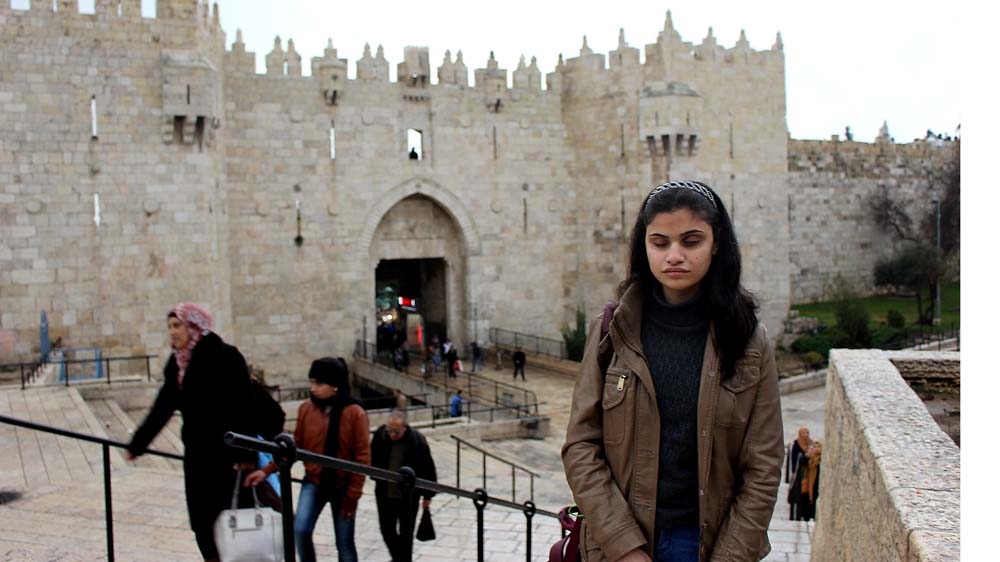
How the Syrian Revolution transformed this Palestinian activist

Budour Hassan is a law school graduate and freelance writer based in Jerusalem who contributes to Al Jazeera, Electronic Intifada, Middle East Eye, and elesewhere. She writes:

The world revolves around Palestine, or so I thought until 2011.

The Palestinian cause, I argued, was the litmus test for anyone’s commitment to freedom and justice. Palestine was the one and only compass that must guide any Arab revolution. Whether a regime is good or bad should be judged, first and foremost, based on its stance from the Palestinian cause. Every event should somehow be viewed through a Palestinian lens. The Arab people have failed us, and we inspired the entire world with our resistance.

Yes, I called myself internationalist. I claimed to stand for universal and humanist ideals. I blathered on and on about breaking borders and waging a socialist revolution.

But then came Syria, and my hypocrisy and the fragility of those ideals became exposed.

When I first heard the Syrian people in Daraa demand a regime reform on 18 March 2011, all I could think about, subconsciously, was: “If the Egyptian scenario happens in Syria, it would be a disaster for Palestine.”

I did not think about those who were killed by the regime on that day. I did not think of those arrested or tortured.

I did not think about the inevitable crackdown by the regime.

I did not greet the incredibly courageous protests in Daraa with the same elation and zeal I felt during the Tunisian, Egyptian, Bahraini, Yemeni, and Libyan uprisings.

All I could muster was a sigh of suspicion and fear.

“Assad is a tyrant and his regime is rotten,” I thought to myself, “but the subsequent results of its fall might be catastrophic for Palestine and the resistance.” That sacred axis of resistance meant to me back then much more than the Syrian lives being cut short by its defenders.

I was one of those whose hearts would pound when Hassan Nasrallah appeared on TV. I bookmarked loads of YouTube videos of his speeches and teared up while listening to songs glorifying the resistance and its victories.

And while I supported the demands of the Syrian protesters in principle, I did so with reluctance and it was a conditional support. It was not even solidarity because it was so selfish and always centered around Palestine.

I retweeted a blog post by an Egyptian activist calling on Syrians to carry Palestinian flags, in order to “debunk” regime propaganda. The Syrian people took to the streets defending the same universal ideals that I claimed to stand for, yet I was incapable of viewing their struggle outside my narrow Palestinian prism. I claimed to be internationalist while prioritizing Palestinian concerns over Syrian victims. I shamelessly took part in the Suffering Olympics and was annoyed that Syrian pain occupied more newspaper pages than Palestinian pain. I was too gullible to notice that the ordeals of both Syrians and Palestinians are just footnotes and that the breaking news would become too routine, too dull and unworthy of consumption in the space of few months.

I claimed to reject all forms of oppression while simultaneously waiting for the head of a sectarian militia to say something about Syria and to talk passionately about Palestine.

The Syrian revolution put me on trial for betraying my principles. But instead of condemning me, it taught me the lesson of my life: it was a lesson given with grace and dignity.

It was delivered with love, by the women and men dancing and singing in the streets, challenging the iron fist with creativity, refusing to give up while being chased by security forces, turning funeral processions into exuberant marches for freedom, rethinking ways to subvert regime censorship; introducing mass politics amidst unspeakable terror; and chanting for unity despite sectarian incitement; and chanting the name of Palestine in numerous protests and carrying the Palestinian flag without needing a superstar Egyptian blogger to ask them to do so.

It was a gradual learning process in which I had to grapple with my own prejudices of how a revolution should “look like,” and how we should react to a movement against a purportedly pro-Palestinian regime. I desperately tried to overlook the ugly face beneath the mask of resistance worn by Hezbollah, but the revolution tore that mask apart. And that was not the only mask torn apart, many more followed. And now the real faces of self-styled freedom fighters and salon leftists were exposed; the long-crushed Syrian voices emerged. [Continue reading…]

Facebooktwittermail

The Arab revolution of 2011 is being destroyed by a counter-revolution led by dictators and jihadists

The Irish Times reports: In late 1400 and early 1401, the Mongol conqueror Tamerlane left “pyramids of skulls, like those constructed by Islamic State today” across Syria, recalls the French Middle East expert Jean-Pierre Filiu.

Tamerlane had already destroyed Aleppo. The great Arab historian and statesman Ibn Khaldun talked to him for 35 days, in the hope of saving Damascus. “The whole time, Tamerlane knows he’s going to massacre everyone in the city,” Filiu continues. “He uses the negotiation to divide and rule, to massacre more people, faster.”

Filiu wants Staffan de Mistura, the UN special envoy for Syria, to read Ibn Khaldun, for it’s impossible not to see a parallel with the behaviour of the Syrian dictator Bashar al-Assad.

Filiu is an Arabist, historian and former diplomat who served as an adviser to a French prime minister, defence minister and interior minister. His “added value”, he says, is history. He will address members of the Institute of International and European Affairs in Dublin on The Jihadi Challenge to Europe next Monday, May 23rd, and debate The Spectre of Global Jihad with the author Shiraz Maher that evening at the International Literature Festival Dublin.

In his most recent book, From Deep State to Islamic State; The Arab Counter-Revolution and Its Jihadi Legacy, (published by Hurst in London) Filiu concludes that the Arab revolution of 2011 – a term he prefers to “Arab spring” – is being destroyed by a counter-revolution led by the remnants of dictatorships in collusion with jihadists.

Over the past century, Filiu writes, the Arabs’ right to self-determination was “denied by colonial intervention, ‘hi- jacked’ at independence by military regimes, trampled on by the double standards of the war for Kuwait and the ‘global war on terror,’ and perverted in the UN, where peoples are represented by the regimes who oppress them”.

No other people have faced “so many obstacles, enemies and horrors in the quest for basic rights”, Filiu says. [Continue reading…]

In January, Filiu spoke about the price being paid because of President Obama’s failure to uphold ethical principles.

Facebooktwittermail

U.S. warns ISIS capital: Get out now

The Daily Beast reports: The American military is warning residents of ISIS’s Syrian capital to leave the city—suggesting that an offensive on Raqqa was imminent, two Pentagon officials told the Daily Beast.

In the past day, residents of Raqqa have posted photos of the warnings on Twitter, saying they were airdropped on leaflets by the U.S.-led coalition. The defense officials were the first to confirm that the coalition had indeed issued the warnings.

“The time….has arrived. It’s time to leave Raqqa,” one of the ominous leaflets read. Images portray residents fleeing the black and white world of ISIS for the color of freedom, urging citizens to flee toward colors.


There is just one problem: There is no imminent ground or air attack, at least by the U.S.-led coalition. Rather the coalition appears to be the midst of a psychological offensive.

“It’s part of our mess-with-them campaign,” a Pentagon official explained to The Daily Beast.

The leaflets come amid what appears to be something of a panic within ISIS about how long it can maintain its grip on Raqqa. In recent weeks, there were reports that ISIS had declared a state of emergency in Raqqa. And earlier this week, the terror group’s leadership reportedly would not let fighters leave for holiday as ISIS dug trenches around Raqqa, moved headquarters underground, and put coverings over homes in an effort to deflect drone attacks. [Continue reading…]

Facebooktwittermail

Britain: Syrian airdrops begin next month if more aid blocked

USA Today reports: The United Kingdom said Tuesday the World Food Program will begin airdrops to besieged areas of Syria on June 1, if humanitarian access is not provided.

Syrian President Bashar Assad’s regime continues to remove medical aid from humanitarian convoys and to prevent convoys from reaching Syrians in need, said British Ambassador to the United States Kim Darroch. If the practice continues, the World Food Program will create an airdrop program starting June 1, Darroch said.

British Foreign Secretary Philip Hammond made the announcement after meeting with the International Syria Support Group in Vienna to discuss ways to save a shaky partial cease-fire.

The airdrops will be conducted by United Nations airplanes with security guaranteed by Russia.

Syrian government forces last week removed medical supplies from an aid convoy to the town of Moadamiya, according to the World Health Organization. Similar incidents have been reported since. [Continue reading…]

Facebooktwittermail

What’s left of the Syrian Arab Army? Not much

Tom Cooper writes: The general impression is that the Syrian Arab Army remains the largest military force involved in the Syrian Civil War, and that  —  together with the so-called National Defense Forces — — it remains the dominant military service under the control of government of Pres. Bashar Al Assad.

Media that are at least sympathetic to the Al-Assad regime remain insistent in presenting the image of the “SAA fighting on all front lines”  — only sometimes supported by the NDF and, less often, by “allies.”

The devil is in the details, as some say. Indeed, a closer examination of facts on the ground reveals an entirely different picture. The SAA and NDF are nearly extinct.

Because of draft-avoidance and defections — — and because Al Assad’s regime was skeptical of the loyalty of the majority of its military units  —  the SAA never managed to fully mobilize.

Not one of around 20 divisions it used to have has ever managed to deploy more than one-third of its nominal strength on the battlefield. The resulting 20 brigade-size task forces  — each between 2,000- and 4,000-strong  —  were then further hit by several waves of mass defections, but also extensive losses caused by the incompetence of their commanders.

Unsurprisingly, the regime was already critically short of troops by summer of 2012, when advisers from the Qods Force of Iran’s Islamic Revolutionary Guards Corps concluded that units organized along religious and political lines had proven more effective in combat than the rest of the Syrian military had.

Thus the regime’s creation, in cooperation with Iran, of the National Defense Forces. Officially, the NDF is a pro-government militia acting as a part-time volunteer reserve component of the military. Envisioned by its Iranian creators as an equivalent to the IRGC’s Basiji Corps, the NDF became an instrument of formalizing the status of hundreds of “popular committees” created by the Syrian Ba’ath Party in the 1980s.

According to Iranian claims, the NDF’s stand-up resulted in the addition of a 100,000-strong auxiliary to Syria’s force-structure. Moreover, the NDF functioned as a catalyst for the reorganization of the entire Syrian military into a hodgepodge of sectarian militias. [Continue reading…]

Facebooktwittermail

Burning Country: Syrians in Revolution and War

On April 18, the Middle East Institute (MEI) hosted novelist Robin Yassin-Kassab and human rights activist Leila Al-Shami for a discussion about their recent book, Burning Country: Syrians in Revolution and War, which tells the stories of Syrian civilians organizing, resisting, and surviving inside Syria since the 2011 uprising.

Burning Country explores the reality of life in present-day Syria, examining new grassroots revolutionary organizations, the rise of ISIS and Islamism, and the emergence of the worst refugee crisis since World War II. In this vivid account of a modern-day political and humanitarian nightmare, Yassin-Kassab and Al-Shami give voice to a Syrian people who continue to struggle for justice.

(Note: During the recording of this discussion, Leila Al-Shami remained off camera at her request.)

Facebooktwittermail

Obama ‘pleased’ with Syria policy while Kerry warns Assad about unspecified ‘Plan B’

The New York Times reports: Secretary of State John Kerry and his Russian counterpart, Sergey V. Lavrov, said on Tuesday that if President Bashar al-Assad of Syria continues to block access of humanitarian aid to besieged cities and towns, they were prepared to help the World Food Program airdrop food and emergency supplies.

The very fact that they had to threaten the airdrops — which are expensive and often inaccurate — amounted to an admission of how little progress has been made in achieving either the lasting cease-fire or the regular humanitarian relief that European and Arab nations, along with Iran, laid out as the first steps toward a broader peace agreement.

The threat to conduct airdrops came after a meeting in Vienna of the International Syria Support Group, made up of the nations that drafted a largely unimplemented plan to end the country’s civil war. They gathered at a low point: A once-promising “cessation of hostilities” has largely collapsed, an effort to start negotiations between the opposition and the government broke down, and there has been no progress toward negotiating a “political transition” that was supposed to begin on Aug. 1.

Bolstered by Russia’s intervention to help prop him up, Mr. Assad is in a stronger position than he has been in years, many experts say, and has rejected the idea that any new government would have to exclude him. He has the strong support of Iran, his longtime provider of security, though Russian officials seem less concerned about whether Mr. Assad himself remains in power or is replaced by another leader from his Alawite Shiite sect.

At a news conference on Tuesday afternoon with Mr. Lavrov, Mr. Kerry rejected a suggestion that, in dealing with Mr. Assad, he was operating without the kind of leverage he had in Vienna last year during the Iran nuclear negotiations — when American sanctions and sabotage of the Iranian program created the pressure that led to a deal.

But Mr. Kerry — who White House aides say has complained in Situation Room meetings about the lack of clout to force Mr. Assad to make good on his commitments — argued that the Syrian leader would be making a mistake to believe he would pay no price for refusing to cooperate.

“If President Assad has come to a conclusion there’s no Plan B,” he said, referring to more coercive action to force him to comply, “then he’s come to a conclusion that is totally without any foundation whatsoever and even dangerous.”

Mr. Kerry added later that Mr. Assad “should never make a miscalculation about President Obama’s determination to do what is right at any given moment of time, where he believes that he has to make that decision.” Mr. Assad, he said, has “flagrantly violated” the United Nations resolution calling for a nationwide cease-fire and allowing humanitarian assistance.

Yet in making public a case that there would be consequences for Mr. Assad’s intransigence, Mr. Kerry was touching on one of the hardest issues facing Mr. Obama and his national security team in their last eight months in office. The president has repeatedly defended his decision not to authorize a military strike against Mr. Assad after he crossed what Mr. Obama had described as a “red line” against using chemical weapons. He also rejected a no-fly zone to protect fleeing civilians and opposition forces.[Continue reading…]

The Daily Beast reports: White House spokesman Josh Earnest said Monday that President Obama was “certainly pleased” with his administration’s policy on Syria, while simultaneously acknowledging that the country now poses a “heightened risk” to America and its interests.

“We’ve seen terrible violence in Syria, it’s an awful humanitarian situation, and it’s a genuine human tragedy. And it’s a dangerous place, and it’s a place that poses a heightened risk to the United States and to our allies and interests around the world,” Earnest said.

Earnest, who was asked by Yahoo’s Olivier Knox about The Daily Beast’s reporting, argued that the president’s Syria policy had “advanced the national security interests” of the U.S., placing the blame squarely on the Assad regime.

“There’s no denying that what has happened in Syria has changed millions of lives — and not for the better. And that’s a testament to the failed political leadership of Bashar al-Assad, it’s a testament to the way the political chaos in that country has propagated so much violence,” Earnest said at Monday’s White House press briefing.

The Daily Beast reported Friday that senior White House official Ben Rhodes allegedly told Syrian-American activists that he was “not proud” of the administration’s policy on Syria. [Continue reading…]

Facebooktwittermail

The importance of bearing witness to Syria’s war

Caitlin L Chandler writes: The wound in the middle of the man’s arm is a large circle of ribbed red blood and tendon, the edges of the flesh curving up and out like petals. Metal prongs inserted into the skin on either side of the wound hold his arm in place; his chest rises and falls with each breath.

To observe surgery up close is at first disorienting and surreal, like watching a perfectly shot film in the cinema and then walking through the screen to realize there is no such thing – only machines and people creating the images that were streaming as reality before you. I do not normally see bodies in disrepair that are being painstakingly stitched back together; I feel like I’m trespassing on something sacred.

The Médecins sans Frontières (Doctors Without Borders) trauma hospital in Ramtha, Jordan, is located 3 miles (5km) from the Syrian border. From the roof of MSF’s house, where its international staff live, you can see the blue-green hills that demarcate the border, stretching between the two countries like a gentle wave. Once you could have strolled in those hills, or laid down in the grass and daydreamed.

At night on the roof the lights of nearby Irbid glitter, some of them marking the apartments where thousands of urban refugees dwell, waiting for the war to end, for resettlement or for the chance to try to make their way across the ocean to Europe. Everyone is waiting – to see whether the fragile cease-fire matters and whether the E.U. will continue to turn its back on the men, women and children drowning in its seas. In Ramtha, they are waiting for a medical outcome.

As a humanitarian affairs officer with MSF, part of my job is to understand and construct here in Jordan how MSF practices temoignage – the act of witnessing. Since MSF’s inception, witnessing has been intertwined with the organization’s medical activities, which often occur in contexts where MSF is one of the only organizations to see at first hand the effects of conflict and disaster. It is what always set MSF apart for me from other organizations; although I know witnessing can be an imperfect offering, it at least implies responsibility.

To witness the effects of war is to witness what you cannot change; it is to observe mutilated bodies and sense the dislocation that comes with forced exile. It is to reflect on what meaning you can make in life when you are here, alive, and so many others are dead. For years I did not want to do an MSF mission because I thought it was not the real world, that it would change me in ways I did not want, but now I know that was fear. On the other side of fear is the world; it is still there, whether you choose to look at it or not. [Continue reading…]

Facebooktwittermail

The map ISIS hates

sykes-picot

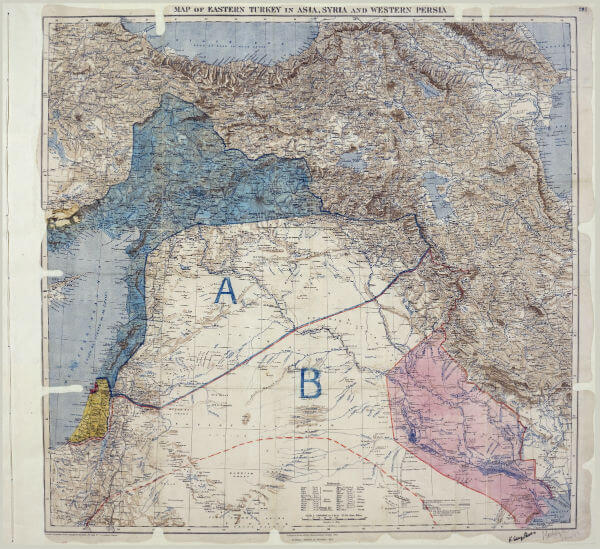
In 2014, Malise Ruthven wrote: When the jihadists of ISIS (the Islamic State of Iraq and Syria) tweeted pictures of a bulldozer crashing through the earthen barrier that forms part of the frontier between Syria and Iraq, they announced — triumphantly — that they were destroying the “Sykes-Picot” border. The reference to a 1916 Franco-British agreement about the Middle East may seem puzzling, coming from a radical group fighting a brutal ethnic and religious insurgency against Bashar al-Assad’s Syria and Nouri al-Maliki’s Iraq. But jihadist groups have long drawn on a fertile historical imagination, and old grievances about the West in particular.

This symbolic action by ISIS fighters against a century-old imperial carve-up shows the extent to which one of the most radical groups fighting in the Middle East today is nurtured by the myth of precolonial innocence, when the Ottoman Empire and Sunni Islam ruled over an unbroken realm from North Africa to the Persian Gulf and the Shias knew their place. (Indeed, the Arabic name of ISIS — al-Dawla al-Islamiya fil-Iraq wa al-Sham — refers to a historic idea of the greater Levant (al-Sham) that transcends the region’s modern, Western-imposed state borders.)

But why is Sykes-Picot so important? One reason is that it stands near the beginning of what many Arabs view as a sequence of Western betrayals spanning from the dismantling of the Ottoman Empire in World War I to the establishment of Israel in 1948 and the 2003 invasion of Iraq. The Sykes-Picot agreement — named after the British and French diplomats who signed it — was entered in secret, with Russia’s assent, in May 1916 to divide the Arab provinces of the Ottoman Empire into British and French “spheres of influence.” It designated each power’s areas of future control in the event of victory by the Triple Entente over Germany, Austria, and their Ottoman ally. Under the agreement Britain was allocated the coastal strip between the Mediterranean and the river Jordan, Transjordan and southern Iraq, with enclaves including the ports of Haifa and Acre, while France was allocated south-eastern Turkey, northern Iraq, all of Syria and Lebanon. Russia was to get Istanbul, the Dardanelles, and the Ottoman Empire’s Armenian districts.

Under the 1920 San Remo agreement, which built on Sykes-Picot, the Western powers were free to decide on state boundaries within these areas. The international frontiers — with Iraq’s framed by the merging of the three Ottoman vilayets of Mosul, Baghdad, and Basra — were consolidated by the separate mandates granted by the League of Nations to France in Lebanon and Syria, and to Britain in Palestine, Transjordan, and Iraq. The frontier between French-controlled Syria and British-controlled Iraq included the desert of Anbar province that was bulldozed by ISIS this month.

Kept hidden for more than a year, the Anglo-French pact caused a furor when it was first revealed by the Bolsheviks after the 1917 Russian Revolution — with the Syrian Congress, convened in July 1919, demanding “the full freedom and independence that had been promised to us.” Not only did the agreement map out — unbeknownst to the Arab leaders of the time — a new system of Western control of local populations. It also directly contradicted the promise that Britain’s man in Cairo, Sir Henry McMahon, had made to the ruler of Mecca, the Sharif Hussein, that he would have an Arab kingdom in the event of Ottoman defeat. In fact, that promise itself, which had been conveyed in McMahon’s correspondence with the Sharif between July 1915 and January 1916, left ambiguous the borders of the future Arab state, and was later used to deny Arab control of Palestine. McMahon had excluded from the proposed Arab kingdom “portions of Syria lying to the west of the districts of Damascus, Homs, Hama and Aleppo [that] cannot be said to be purely Arab.” This clause led to lengthy and bitter debates as to whether Palestine — which Britain meanwhile promised as a homeland for Jews under the terms of the November 1917 Balfour Declaration — could be defined as lying “west” of the vilayet, or district, of Damascus. [Continue reading…]

Facebooktwittermail

Al Qaeda leaders turns to Syria, with a plan to challenge ISIS

The New York Times reports: Al Qaeda’s top leadership in Pakistan, badly weakened after a decade of C.I.A. drone strikes, has decided that the terror group’s future lies in Syria and has secretly dispatched more than a dozen of its most seasoned veterans there, according to senior American and European intelligence and counterterrorism officials.

The movement of the senior Qaeda jihadists reflects Syria’s growing importance to the terrorist organization and most likely foreshadows an escalation of the group’s bloody rivalry with the Islamic State, Western officials say.

The operatives have been told to start the process of creating an alternate headquarters in Syria and lay the groundwork for possibly establishing an emirate through Al Qaeda’s Syrian affiliate, the Nusra Front, to compete with the Islamic State, from which Nusra broke in 2013. This would be a significant shift for Al Qaeda and its affiliate, which have resisted creating an emirate, or formal sovereign state, until they deem conditions on the ground are ready. Such an entity could also pose a heightened terrorist threat to the United States and Europe.

Qaeda operatives have moved in and out of Syria for years. Ayman al-Zawahri, the group’s supreme leader in Pakistan, dispatched senior jihadists to bolster the Nusra Front in 2013. A year later, Mr. Zawahri sent to Syria a shadowy Qaeda cell called Khorasan that American officials say has been plotting attacks against the West.

But establishing a more enduring presence in Syria would present the group with an invaluable opportunity, Western analysts said. A Syria-based Qaeda state would not only be within closer striking distance of Europe but also benefit from the recruiting and logistical support of fighters from Iraq, Turkey, Jordan and Lebanon. [Continue reading…]

Facebooktwittermail