Category Archives: Syria

Instead of honoring leader of Syria’s ‘White Helmets,’ U.S. refused his entry

The New York Times reports: The leader of a Western-backed rescue organization that searches for survivors of bombings in Syria was denied entry into the United States this week, where he was to receive an award recognizing his contributions to humanitarian relief.

Raed Saleh, the head of the Syria Civil Defense, was to accept the award from InterAction, an alliance of aid agencies, at its gala dinner Tuesday night in Washington. The dinner’s keynote speaker was Gayle Smith, the administrator of the United States Agency for International Development.

But when Mr. Saleh, who works in Syria and Turkey, arrived Monday at Washington’s Dulles International Airport on a flight from Istanbul, the authorities said he could not enter the United States. He was told his visa had been canceled.

It was unclear whether Mr. Saleh’s name might have shown up on a database, fed by a variety of intelligence and security agencies and intended to guard against the prospect of terrorism suspects slipping into the country.

The State Department declined to give specifics, but a spokesman, John Kirby, said that “the U.S. government’s system of continual vetting means that traveler records are screened against available information in real time.”

“While we can’t confirm any possible specific actions in this case, we do have the ability to immediately coordinate with our interagency partners when new information becomes available,” he added.

Mr. Saleh was put on the next flight back to Istanbul. In a telephone interview from Istanbul on Wednesday, Mr. Saleh sought to turn the focus to the experience of millions of Syrians who find the world’s borders closed to them.

“In any airport, the treatment we get as Syrians is different,” he said. “The way they look at us, we are suspected.” In his case, he pointed out, he had no intention of staying longer than 16 hours.

His group is widely known as the White Helmets for the headgear its members wear as they rush to bomb sites to rescue survivors and dig out the dead from the rubble. Government supporters have criticized the group for working in some areas held by the Nusra Front, a terrorist organization linked to Al Qaeda. But like many internal aid groups, it says it is neutral and seeks to help civilians no matter whose territory they live in.

Joshua Landis, a Syria expert at the University of Oklahoma at Norman, called the denial of entry “a scandal.”

“The White Helmets are one of the few organizations in Syria that have been above reproach,” he said. “They have tried to observe strict neutrality in order to facilitate their humanitarian work and save lives. To do this they have worked along side all sorts of militias in order to get to victims of the fighting.”

At the dinner on Tuesday night, InterAction staff members wore white helmets in solidarity — and posted a photo on Twitter.

“I really was moved by this moment,” Mr. Saleh said. “It was a stance of the unity of humanity — and I don’t mean the international community, I mean humanity.” [Continue reading…]

In February, Saleh spoke at the Conference Supporting Syria and the Region, co-hosted in London by the UN and the Governments of the United Kingdom, Kuwait, Germany and Norway.


Facebooktwittermail

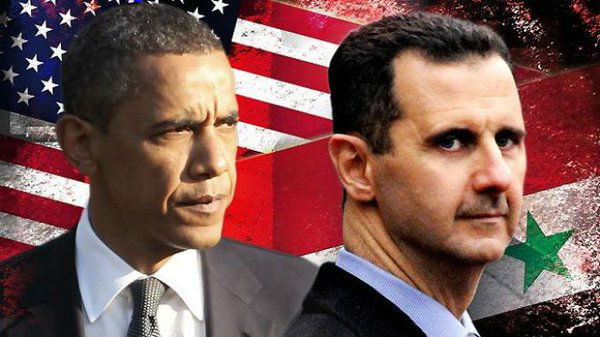
Obama’s former Middle East adviser: We should have bombed Assad

obama-assad

Jeffrey Goldberg writes: A couple of weeks ago, I was talking with Philip Gordon, who held the Middle East portfolio at the National Security Council from 2013 to 2015 (and before that, served as assistant secretary of state for European affairs) about my Atlantic article, “The Obama Doctrine.” The piece tried to explain how the president understands the world, and America’s role in it. (This week, the president is on a tour of the some of the countries he discussed in the article.)

Gordon, a loyal Obama man, is, like his ex-boss, somewhat-to-very fatalistic about the ability of the U.S. to direct the course of events in the Middle East (“realistic,” rather than “fatalistic,” is the term the president prefers). Gordon is known for, among other things, a pithy and concise formula he developed to explain why President Obama, and many of his advisers, are so hesitant to engage fully in the various catastrophes of the Middle East. In Iraq, the Gordon dictum goes, Obama learned that full-scale invasions leading to regime change don’t work; in Libya, he learned that partial interventions leading to regime collapse don’t work; and in Syria he learned that non-intervention also doesn’t work. An unspoken but obvious lesson: Once a president reaches this set of conclusions, can you blame him for wanting to pivot to Asia?

So I was a bit surprised to hear Gordon tell me that he believes, in retrospect, that President Obama should have attacked Syria in retaliation for its use of chemical weapons in 2013. A year earlier, the president drew a “red line” for the Syrian dictator, Bashar al-Assad regarding the potential use of such weapons; a year later, when Assad deployed sarin gas in the town of Ghouta, killing as many as 1,300 people, Obama set in motion a strike, but stood down at the last minute, putting the matter in the hands of Congress. In one of the interviews that informed “The Obama Doctrine,” the president told me that this moment was a source of pride for him; he resisted the pressure — and the temptation — to carry out an operation preordained by the “Washington playbook.” The “playbook,” in Obama’s mind, is in part a set of received understandings about what a president should do in the event of a rogue-state provocation. Obama argued to me that the Washington playbook is overmilitarized, and is overused.

As we know, the decision to stand down was not a popular one with America’s allies, who believed that Obama had squandered U.S. credibility. When a superpower sets a red line, the thinking goes, it must enforce the red line.

It was noteworthy that Gordon disagreed with Obama’s decision, and agreed with the criticism of U.S. allies, because he is known, in national-security circles, for being extremely wary of the consequences of deeper U.S. involvement in Syria (in this, he resembles his successor, Robert Malley, who is now Obama’s coordinator for anti-ISIS activities). I asked Gordon if he would speak to me on the record about these events, and he agreed. A full transcript of our conversation appears below, but here are some highlights: [Continue reading…]

Facebooktwittermail

Syria cease-fire crumbles as bombings kill dozens

The New York Times reports: For 38 straight days, the streets of the northwestern Syrian town of Maarat al-Noaman had been the scene of protests against the government and the Islamic extremists of the Nusra Front. On Tuesday, they became a scene of carnage, as government warplanes attacked the town’s marketplace, killing dozens of people, according to residents and rescue workers.

The attack confirmed the apparent unraveling of a fragile cease-fire agreement between Syrian government forces and some armed opposition groups. The attack in Maarat al-Noaman, and a similar one in the nearby town of Kafr Nabl, came several days after the start of a new insurgent offensive in a neighboring province, and a day after the main Syrian opposition group said it would no longer participate in diplomatic discussions in Geneva.

The opposition has accused the government of repeatedly violating the partial cease-fire, and Tuesday’s attacks were seen as a violent end to the relative respite from airstrikes that had lasted nearly two months.

Some residents in Maarat al-Noaman, 68 miles north of Homs, and in other towns in Syria that had been afforded a modicum of free space, had resumed the street protests that began the uprising against President Bashar al-Assad more than five years ago. The recent protests have signaled residents’ opposition to the government that has been bombing them and their distaste for extremists fighting among the rebel groups.

As Syrians at home have again raised their voices in protest, insurgent groups have been pressing representatives of the opposition to take a harder line in talks in Geneva, which have produced little progress. The bombings Tuesday were, for many in Syria, the last straw. [Continue reading…]

Facebooktwittermail

Russia moves artillery to northern Syria, U.S. officials say

The Wall Street Journal reports: Russia has been moving artillery units to areas of northern Syria where Assad government forces have been massing, raising U.S. concern that the two allies may be preparing for a return to full-scale fighting after a nearly two-month cease-fire with the main opposition, U.S. officials say.

The recent Russian redeployments within Syria have been accompanied by the return of some Iranian army forces to government-controlled areas close to the front lines, according to officials briefed on the intelligence. Russia, Iran and the Lebanese movement Hezbollah have been President Bashar al-Assad’s main supporters in the conflict.

U.S. concerns about the Russian buildup in northern Syria, and the negative impact it could have on the cease-fire and political negotiations in Geneva, prompted President Barack Obama’s call to Russian President Vladimir Putin on Monday, officials said.

Josh Earnest, the White House press secretary, used unusually harsh language in describing the exchange between the two leaders, calling it an “intense conversation.”

Russian officials have voiced support for the partial cease-fire and the United Nations-mediated negotiations in Geneva, both in public and in private settings, according to U.S. officials.

But both are on the verge of complete collapse. Citing widening attacks by government forces, representatives of the main opposition broke off the latest round of indirect talks on Monday. Government forces have stepped up attacks in some areas in northern and central Syria in recent days, and one opposition negotiator on Tuesday described the truce as over. [Continue reading…]

Facebooktwittermail

Syria’s humanitarian ‘White Helmets’ chief denied entry to U.S.

Devex reports: Raed Al Saleh was scheduled to receive InterAction’s 2016 Humanitarian Award in a hotel ballroom in Washington, D.C., on Tuesday evening. Instead, he’ll likely be back on the Syria-Turkey border when he’ll be delivered the award on an undetermined future date.

Saleh, a 33-year-old Syrian national and head of the Syrian Civil Defense, was denied entry to the United States upon arriving at Dulles International Airport on the evening of April 18. Saleh had come prepared with a letter from the U.S. Agency for International Development to facilitate his entry with U.S. customs and immigration, but was told by U.S. officials that his visa had been cancelled. Saleh’s visa is valid until September 2016, and he had not received any notification alerting him it had expired, according to a statement from his colleague and translator Zouheir Albounni.

The electrical supplies salesman turned humanitarian had been scheduled for months to attend InterAction’s Forum, an annual gathering of humanitarian, development and sustainability professionals, where he was being recognized for his work leading more than 2,800 intrepid volunteers as the leader of the Syrian Civil Defense.

The group of unarmed and neutral civilians, also known as the “White Helmets” due to their protective hard hats, work as firefighters, paramedics and search-and-rescue teams. They have saved more than 40,000 lives in Syria on both sides of the fight, according to Saleh. [Continue reading…]

Facebooktwittermail

U.S. feels ‘overwhelming frustration’ with Israeli government, says Biden

Reuters reports: U.S. Vice President Joe Biden on Monday acknowledged “overwhelming frustration” with the Israeli government and said the systemic expansion of Jewish settlements was moving Israel toward a dangerous “one-state reality” and in the wrong direction.

Addressing the J Street lobby group in Washington, Biden said despite disagreements with Israel over settlements or the Iran nuclear deal, the United States had an obligation to push Israel toward a two-state solution to end the conflict between Israelis and Palestinians.

“We have an overwhelming obligation, notwithstanding our sometimes overwhelming frustration with the Israeli government, to push them as hard as we can toward what they know in their gut is the only ultimate solution, a two-state solution, while at the same time be an absolute guarantor of their security,” Biden said. [Continue reading…]

The Times of Israel reports: The United States on Monday objected to Prime Minister Benjamin Netanyahu’s assertion that the Golan Heights will forever remain under Israeli control, reiterating that it does not recognize the Jewish state’s claims to the strategic plateau.

US State Department spokesman John Kirby said that the Obama administration does not consider the Golan Heights to be part of Israel.

“The US position on the issue is unchanged,” Kirby said at a daily media briefing at the State Department in Washington. “This position was maintained by both Democratic and Republican administrations. Those territories are not part of Israel and the status of those territories should be determined through negotiations.” [Continue reading…]

Facebooktwittermail

Syrian opposition postpones participation in peace talks

The Guardian reports: UN-sponsored Syrian peace talks are facing a new crisis after opposition negotiators decided to delay their participation in the formal process until officials representing President Bashar al-Assad start to discuss the creation of a transitional government in Damascus – which they have so far refused to do.

Riyad Hijab, head of the opposition higher negotiations committee (HNC), was due to announce next steps after a meeting with the UN envoy, Staffan de Mistura, which followed tense consultations in a divided rebel camp. But a scheduled evening press conference with Hijab was postponed until Tuesday.

De Mistura, clearly seeking to play down the significance of the decision, said the opposition negotiators would remain in Geneva and the talks would continue, though possibly informally and outside the UN headquarters at the Palais des Nations. But key opposition officials, sceptical about the prospects for the future, were already planning to leave town. [Continue reading…]

Facebooktwittermail

‘Desperate’ Palestinian refugees starve as battle rages in Damascus

The Guardian reports: Thousands of civilians are trapped in “desperate” humanitarian conditions in a Palestinian refugee camp in Damascus where fighting has been raging for days between Islamic State fighters and other extremists, the UN has warned.

UNRWA, the UN relief agency for Palestinian refugees, said at the weekend that up to 10,000 residents of the Yarmouk camp in the south of the Syrian capital have gone without food or water for more than a week.

“Civilians in Yarmouk are facing starvation and dehydration alongside the heightened risks of serious injury and death from the armed conflict,” said Christopher Gunness, a UNRWA spokesman. People are trapped in their homes, hunkered down to avoid being hit by bullets and shrapnel, he added.

The camp, a sprawling urban neighbourhood that was once home to 150,000 people, has been ravaged by fighting between Isis and al-Qaida’s Syrian affiliate, al-Nusra Front, while government forces regularly shell it from outside. “Whatever supplies of food and water they had have long been exhausted,” Gunness said. [Continue reading…]

Facebooktwittermail

Netanyahu vows that Israel will never give up Golan Heights

The Washington Post reports: Prime Minister Benjamin Netanyahu traveled to the occupied Golan Heights on Sunday to declare that Israel will retain full control of the mountainous plateau forever and will never return the strategic highlands to neighboring Syria.

As talks on the future of Syria are underway in Geneva, Netanyahu convened a symbolic meeting of his cabinet on a mountaintop in the Golan Heights, which Israel seized from Syria during the 1967 Six-Day War.

In a lead-up to the Geneva talks, representatives of Syrian President Bashar al-Assad signaled that they wanted the discussions to include a possible return of the region.

Netanyahu was having none of it.

“The time has come after 40 years for the international community to finally recognize that the Golan Heights will remain forever under Israeli sovereignty,” he said.

Whatever the outcome of the peace talks, he added, “the border will not change.” [Continue reading…]

Facebooktwittermail

Everything we knew about this ISIS mastermind was wrong

Michael Weiss and Hassan Hassan writes: The Pentagon calls him Haji Imam. His other nicknames include Abu Ali al-Anbari, Abu Alaa al-Afri, Hajji Iman, or simply the Hajji, the Arabic word for “pilgrim” but one that is colloquially used to refer to a revered person or gray eminence. Iraqi and American security officials were so confused by his multiple noms de guerre that they identified him as two distinct high-level leaders of the so-called Islamic State; Wikipedia even has two biographies, and two photographs for the one jihadist whose obscurity was in direct proportion to his significance. For Abd al-Rahman Mustafa al-Shakhilar al-Qaduli — that’s his legal name — is known as a man of many talents. He’d have to be to attain the rank of second-most powerful figure in ISIS, next to the caliph himself.

The U.S. military announced that al-Qaduli—who oversaw ISIS’s intelligence operations — was killed in an airstrike in Deir Ezzor, in eastern Syria, on March 25. Although his death was proclaimed at least four times before by the Iraqi government and twice by the U.S.-led coalition, this time it might be real. Several ISIS supporters eulogized him on social media, and new details about his curriculum vitae and all-important role within the organization have been disclosed, possibly because operational security is no longer a priority.

That the No. 2 man in the world’s most dangerous terror organization may be dead matters almost as much as we’ve only been able to learn about him in death. Al-Qaduli’s biography has been cloaked in rumor, myth, and misinformation — or disinformation, given that much of what had been produced on his history came from disgruntled al Qaeda sources looking to ruin his reputation following the bin Ladenist’s split from ISIS in 2014. [Continue reading…]

Facebooktwittermail

Will Jabhat Al Nusra and ISIS join forces?

Hassan Hassan writes: In a two-part interview with Al Jazeera in May, Mohammed Al Jolani of Jabhat Al Nusra revealed that Al Qaeda’s central leadership had issued instructions against using Syria as a launch pad for attacks against the West. Although the anti-ISIL air campaign frequently struck his cells in northern Syria, Al Jolani said he was still committed to the strict orders.

Almost a year after the interview, much has changed in Syria and the wider neighbourhood. The organisation’s leadership continues to be pounded by the US-led campaign, which targeted operatives most qualified to plan and launch attacks against the West, loosely dubbed by the Americans as the “Khorassan Cell”. According to Hassan Abu Haniya, an observer of Islamist groups from Jordan, the cell’s commanders in Syria have been all but decapitated after a series of high-level killings. This has caused profound anger among Jabhat Al Nusra and Al Qaeda supporters, who started to question the current live-and-let-live strategy in Syria.

The continuing attacks against both ISIL and Al Qaeda, and their affiliates across the region, have led some sympathisers to wonder why the two jihadist groups do not collaborate. In addition to encouragement by ordinary extremist supporters, prominent jihadist ideologues offered help to narrow differences between the two groups. Abu Qatada Al Filistini from Jordan, for example, called for “management of differences” among warring jihadist and Islamist groups, while Abu Muhammed Al Maqdisi, also from Jordan, recently wrote on Twitter that he was willing to revise his position towards ISIL and join it “to spite the whole world” if it stopped labelling other jihadists as apostates. [Continue reading…]

Facebooktwittermail

ISIS revenue drops nearly a third after loss of territory shrinks tax base

AFP reports: Islamic State’s revenues have dropped about 30% since mid-2015, forcing the group to introduce a range of new taxes, a research group has said.

“In mid-2015, the Islamic State’s overall monthly revenue was around $80m,” said Ludovico Carlino, senior analyst at IHS, which issues regular reports on Isis-controlled territory.

“As of March 2016, the Islamic State’s monthly revenue dropped to $56m,” Carlino said.

An IHS report also said oil production in areas controlled by Isis jihadists was 21,000 barrels a day, down from 33,000 barrels a day.

This was due largely to airstrikes by the US-led coalition and Russia, although IHS warned the decline was only an “interruption of production” because jihadists were able to repair infrastructure quickly. [Continue reading…]

Facebooktwittermail

How Iran coerced Afghan refugees to fight in Syria for Assad

BBC News reports: As the five-year conflict in Syria grinds on, BBC Persian has found evidence that Iran is sending thousands of Afghan men to fight alongside Syrian government forces.

The men, who are mainly ethnic Hazaras, are recruited from impoverished and vulnerable migrant communities in Iran, and sent to join a multi-national Shia Muslim militia – in effect a “Foreign Legion” – that Iran has mobilised to support Syrian President Bashar al-Assad.

Many have since fled the battlefield and joined the refugee trail to Europe.

In a small town in Germany, we meet “Amir”, an Afghan man in his early twenties.

He was born to refugee parents in Isfahan, Iran, and is now himself an asylum seeker in Europe.

Like most of the almost three million Afghans in Iran, he lived as a second-class citizen.

Without legal residency or identity documents, he found it hard to get an education or a job. Fear of arrest and deportation was a daily reality.

It was difficult to move around freely, get a driving license or even buy a Sim card for his mobile phone.
But one day, Amir received an offer that changed everything.

“Some Afghans, who were close to Iran’s Revolutionary Guards, approached me and my mates at the mosque,” he said.

“They suggested we go to Syria to help defend the Shia holy shrines from Daesh,” he added, using an acronym for the previous name of the jihadist group Islamic State (IS).

“They said we’d get passports and have an easy life afterwards. We’d be like Iranian citizens and could buy cars, houses…” [Continue reading…]

Facebooktwittermail

Russian forces remain heavily involved in Syria, despite appearances

The New York Times reports: Russia’s war in Syria is slowly fading from view here, even as events on the ground give every indication that Russian forces remain heavily engaged.

President Vladimir V. Putin, when he talks about it at all, tends to refer to Syria as an accomplished victory, yet hedges a bit. “We did indeed withdraw a substantial portion of our forces,” Mr. Putin said in response to a question on his live national call-in show on Thursday. “But we made sure that after our withdrawal, the Syrian Army would be in a fit state to carry out serious offensives itself, with our remaining forces’ support.”

That support, according to numerous military analysts and diplomatic sources, amounts to virtually the same level of engagement since Russia first deployed in Syria in September. The tenor has changed, however. Syria is gradually becoming another more secretive, hybrid war of the sort that fits into Mr. Putin’s comfort zone, they said.

Russia’s agenda in Syria at the moment is a tightrope act. It wants to keep enough forces engaged in Syria to ensure it can influence any political transition, so that Damascus remains a client. Yet, it does not want to become visibly mired in a messy, prolonged war, as American officials predicted it would.

“The level of Russian involvement in Syria is relatively high, and includes a wide range of assistance to the Syrian government forces,” said Mikhail Barabanov, a senior research fellow at the Center for Analysis of Strategies and Technologies.

He and others suggested that Russia was providing close air support, including attack helicopters on the battlefield; high-precision strikes with missiles like the short-range Iskander; artillery support; special forces backup; intelligence; targeting; electronic warfare and, as seen recently in Palmyra, mine clearance.

Although the bulk of the fighter jets flew home to great fanfare, they were replaced by attack helicopters that are less susceptible to the sandstorms that blow this time of year. [Continue reading…]

Facebooktwittermail

Iranian army boots on the ground in Syria

Alex Rowell writes: The first deployment of foreign regular army ground troops to the front lines of the five-year-long battle between supporters and opponents of Syrian President Bashar al-Assad came with rather less fanfare and controversy than might have been expected.

On April 4, less than two months after US Secretary of State John Kerry told Congress Iran was winding down its direct presence in Syria, Iranian Brigadier General Ali Arasteh declared the Islamic Republic was in fact sending its official armed forces, known as the Artesh, onto the Syrian battlefield for the first time, naming the 65th Airborne Special Forces Brigade in particular as one among “other units” joining the fray. The occasion marked the army’s first deployment outside Iranian territory since the 1980-88 war with Iraq.

While there have been Iranian ‘boots on the ground’ in Syria since as early as 2012, these had hitherto all belonged to the irregular Revolutionary Guard (IRGC), the parallel military organization established after the 1979 Revolution in part as an ultra-Islamist counterweight to the Artesh, viewed suspiciously at the time for its roots in the secular ancien régime. A contingent of several hundred IRGC militants fighting in Syria surged to an estimated 3,000 last October, coinciding with the Russian air campaign masterminded in the summer of 2015 by the IRGC’s external operations commander Qassem Soleimani. In strictly literal terms, what Secretary Kerry said in February was true: the IRGC itself had by then withdrawn most if not all of the reinforcements added in October. However, those withdrawals have now been offset by the dispatch of the Artesh. [Continue reading…]

Facebooktwittermail

‘Frustrated’ UN Syria envoy says wake-up call needed on aid access

Reuters reports: The U.N. envoy for Syria said on Thursday he was frustrated that there was little improvement in aid deliveries to besieged areas, saying it was a “wake-up call” that had to be heeded.

The United Nations, which is mediating peace talks in Geneva, has been banking on an improvement in the humanitarian situation across Syria after a partial truce brokered by Russia and the United States in late February.

But with the “cessation of hostilities” increasingly shaky, aid access is beginning to drop off.

“(There is) disappointment, frustration indeed, particularly in this period when we are expecting incremental improvements in reaching places which are besieged,” Staffan de Mistura told reporters after meeting envoys from countries which form part of the humanitarian taskforce.

He said the taskforce should take it as a “wake-up call to make sure we don’t just sit passively during these meetings to acknowledge the fact that there are no improvements. We need improvements.”

A document released to reporters from the U.N. Inter-Agency Humanitarian Operations showed that so far in April there had only been four aid operations and only 0.8 percent of people in besieged areas had been reached. [Continue reading…]

Facebooktwittermail

Pope Francis takes 12 refugees back to Vatican after trip to Greece

The New York Times reports: Pope Francis made an emotional visit into the heart of Europe’s migrant crisis on Saturday and took 12 Muslim refugees from Syria, including six children, with him back to Rome aboard the papal plane.

The action punctuated the pope’s pleas for sympathy to the plight of the refugees just as European attitudes are hardening against them.

Those taken to Rome were three families — two from Damascus and one from the eastern city of Deir al-Zour — whose homes had been bombed in the Syrian war, the Vatican said in a statement as the pope departed the Greek island of Lesbos.

”The pope has desired to make a gesture of welcome regarding refugees,” the statement said, adding that the Vatican would care for the three families.

The announcement capped a brief trip by the pope to Greece that again placed the plight of migrants at the center of his papacy.

“We have come to call the attention of the world to this grave humanitarian crisis and to plead for its resolution,” Francis said during a lunchtime visit to the Moria refugee camp on Lesbos, where leaders of Eastern Orthodox Christian churches joined him.

“As people of faith, we wish to join our voices to speak out on your behalf,” Francis continued. “We hope that the world will heed these scenes of tragic and indeed desperate need, and respond in a way worthy of our common humanity.”

Francis’ first papal trip in 2013 was to the Italian island of Lampedusa, to call attention to the refugees who were arriving there from Libya — or drowning before they reached shore. During his February visit to Mexico, Francis prayed beneath a large cross erected in Ciudad Juárez, just footsteps from the Mexican border with the United States, and then celebrated Mass nearby, where he spoke about immigrants. [Continue reading…]

Facebooktwittermail

Fighting surges in Syria amid apparent collapse of truce backed by U.S., Russia

The Washington Post reports: A surge in fighting across Syria on Thursday signaled the apparent collapse of a landmark cease-fire that has been under mounting stress in recent days because of intensifying assaults by government forces and rebels.

The partial truce, which took effect in late February, represented a rare moment of agreement over the Syrian conflict between its most powerful outside players: Russia and the United States.

Although Moscow backs Syrian President Bashar al-Assad and Washington supports his opposition, the powers cajoled their Syrian allies into an agreement to cease hostilities to promote peace talks in Geneva that resumed Wednesday. The burst of fighting will almost certainly complicate those talks — now in their second round — and prolong a civil war that has killed more than 250,000 people and displaced millions.

“The more breaches of the truce we see, the more it shows that Assad does not want a political solution,” said the head of the opposition delegation in Geneva, Mohammed Alloush.

The opposition insists that a political solution requires Assad’s exit from power, but the Syrian leader and his allies have firmly rejected this. [Continue reading…]

Facebooktwittermail