Category Archives: Syria

Rebuilding Kobane

Tom Anderson and Eliza Egret write: “We have cleared 1.5 million tonnes of rubble,” Abdo Rrahman Hemo (known as Heval Dostar), head of the Kobanê Reconstruction Board, tells us humbly as we sit in his office in Kobanê city in November 2015. But as we walk through the bombed streets, with collapsed buildings all around us and dust filling our lungs, it’s hard to believe that Kobanê could have been any worse. “We have estimated that 3.5 billion dollars of damage has been caused,” he continues.

It’s been one year since the US bombing of Kobanê – then partly occupied by Daesh – and most of the buildings are still in tatters. Kobanê is in Rojava (meaning ‘west’ in Kurdish), a Kurdish majority region in the north of Syria that declared autonomy from the Assad regime in 2012.

When Daesh approached, the majority of those who were not involved in defending the city left, most to neighbouring Turkey. The People’s Protection Units of the YPG and YPJ remained to defend the city, and were eventually given air support by the US. Most of the refugees have now returned, only to find a city almost entirely destroyed and littered with mines and booby traps, planted by Daesh before they were defeated. As we walk around, a family waves at us from the wreckage of their home, which no longer has three of its walls. Washing lines are hung up and clothes are dried amongst the wrecked houses as people continue their daily lives.

So why is Kobanê still in ruins one year on? Unsurprisingly, the US – whose bombs caused the majority of destruction in Kobanê – has not provided any support for the reconstruction. This is a mixed blessing, as US reconstruction efforts are aimed at creating markets for US companies and generating allies for US foreign policy. But it leaves a vacuum that grassroots solidarity movements need to fill. [Continue reading…]

Facebooktwittermail

U.S. ‘takes control’ of Rmeilan airfield in Syria

Al Jazeera reports: US troops have taken control of Rmeilan airfield in Syria’s northern province of Hasakah to support Kurdish fighters against the Islamic State of Iraq and the Levant (ISIL), a spokesperson for the Syrian Democratic Forces (SDF) told Al Jazeera.

The airfield near the city of Rmeilan, which will become the first US-controlled airbase in Syria, was previously controlled by the US-backed Kurdish People’s Protection Units (YPG).

The airfield is close to Syria’s borders with Iraq and Turkey.

“Under a deal with the YPG, the US was given control of the airport. The purpose of this deal is to back up the SDF, by providing weapons and an airbase for US warplanes,” Taj Kordsh, a media activist from the SDF told Al Jazeera on Tuesday.

“This airport was previously controlled by the YPG for over two years now. This strategic airport is close to several oil bases – one of the biggest in this area. [Continue reading…]

Facebooktwittermail

UN knew for months that Syrians were starving in Madaya under Hezbollah siege

Roy Gutman writes: Until the beginning of this month, Madaya was an obscure town in southwestern Syria, overshadowed by nearby Zabadani, where opposition rebels had fought a fierce battle against President Bashar al-Assad’s regime and more recently Hezbollah. But today, as international relief convoys arrive with food and medicine to lift a starvation siege, Madaya has become the focal point of Syrian aid workers’ anger at the United Nations, who accuse the international body of giving higher priority to its relationship with Damascus than to the fate of Madaya’s beleaguered residents.

Madaya was the worst off of all the besieged towns in Syria, relief workers say. As early as October, locals in the town had been raising alarms about the dire humanitarian situation there. At least six children and 17 adults starved to death in December, and hundreds more risked starvation.

U.N. officials knew this — but until shocking images of starving infants started circulating and news media sounded the alarm, it remained silent, reserving alarm for an unpublished internal memo.

The “Flash Update” issued on Jan. 6 by the U.N. Office for the Coordination of Humanitarian Affairs (OCHA), which negotiates aid deliveries, spoke of “desperate conditions,” including “severe malnutrition reported across the community,” and said there was an “urgent need” for humanitarian assistance. In October, community leaders reported some 1,000 cases of malnutrition in children under the age of 1, it said.

But the general public could not have known this, because OCHA classified the bulletin as “Internal, Not for Quotation.” OCHA had no immediate comment on why the update, leaked to Foreign Policy, wasn’t published.

The U.N.’s months-long silence on the starvation in Madaya is one of the reasons for the disquiet roiling the community of international and Syrian relief officials. Another is its oft-repeated claim that no one siege is that important but that all should be lifted, a goal that appears beyond reach. When Yacoub el-Hillo, the U.N.’s humanitarian coordinator for Syria, addressed reporters on Jan. 12, a day after leading the first convoy into the town, he described Madaya residents as “a people that are desperate; a people that are cold; a people that are hungry; a people that have almost lost hope” — but he blamed no one in particular for this state of affairs and made no mention of the Lebanese paramilitary group Hezbollah, which in fact is maintaining the siege against Syrian civilians in Madaya.

Instead, he swung into a familiar U.N. litany: The siege of rebel-held Madaya was just like the sieges mounted by the Islamic State or Syrian rebels against government-held regions. [Continue reading…]

Facebooktwittermail

Palestine must stand in solidarity with the Syrian people

Mariam Barghouti writes: When Syrians were chanting “revolution, revolution, Syria! Revolution of dignity and freedom” in the streets of Damascus in 2011, they undoubtedly expected suppression from the regime of Bashar al-Assad. What they probably did not foresee, however, is complacency from the international community, including from Palestinians.

But, that is what they received. The Syrian conflict has uncovered disturbing shortcomings and contradictions among those who fight in the name of Palestine.

When Palestinians are being assaulted by Israeli forces, we often cry out “Where are the Arabs! Where are you, oh Arabs?” Yet, now that it is our turn to extend solidarity, we have become as faceless as our revered Handala.

Renowned Palestinian writer and thinker Ghassan Kanafani once wrote, “[i]f we were failing in defending the cause; then we ought to change the fighters and not the cause.” By failing to stand with our Arab brethren fighting in Syria, we have betrayed Palestine and tainted the principles that gave birth to the Palestinian cause, namely dignity and justice.

As we enter the Syrian civil war’s fifth year, I say to my fellow Palestinians: it is time – albeit very late – to stand in solidarity with the Syrian people. [Continue reading…]

Facebooktwittermail

Madaya: A huge concentration camp where Hezbollah starves people to death

madaya

Azzam Tamimi writes: Lebanon’s Hezbollah was, until a few years ago, an inspiration to millions of people in the Middle East and around the world. It was a symbol of heroic resistance putting up a long fight to liberate the occupied territories of south Lebanon and continuing to stand up to Israeli aggression post-liberation.

There was a time when Hassan Nasrallah, Hezbollah’s leader, was hailed as “master of the resistance”. His pictures were posted all over Palestinian refugee camps in Lebanon and were treasured by households across the Arab world. When he gave one of his usually long speeches, people were glued to TV sets and his Almanar satellite TV channel was no less popular than Al Jazeera itself. Many Palestinians truly believed Nasrallah was such a great resistance leader and they wished they had someone like him to lead their own resistance.

Yet today Hezbollah has lost much of the popular support and sympathy it once enjoyed and its leader Nasrallah is ridiculed and condemned by many of those who previously adored him. It is fighting a completely different type of war. Acting upon instructions from its sponsors in Tehran, where a reactionary clerical regime reigns, it is fighting a war in defence of a corrupt despotic regime that reigns in Damascus.

Unlike Hezbollah, Hamas, the Palestinian Islamic Resistance Movement – which saw itself as a partner of Hezbollah in the struggle against Zionism, refused to bow to pressure from the Iranians. Although Syria was, according to Hamas leader Khaled Meshaal, the best haven Hamas ever had outside Palestine, the movement opted to sacrifice all the privileges it had there so as to avoid taking any part in oppressing the Syrian people.

Since leaving Damascus four years ago, Meshaal turned down several invitations from the Iranians to visit Tehran, whose rulers made his visit a precondition for the resumption of any financial aid. Undoubtedly, the Syrian crisis drove deep a wedge between Hamas on the one hand and Hezbollah and Iran on the other. [Continue reading…]

Facebooktwittermail

U.S. prisoner swap may help Iran arm Assad

Josh Rogin writes: In exchange for the release of four American prisoners, the Barack Obama administration agreed to free seven Iranians in U.S. custody and stop trying to arrest 14 others, two of whom the U.S. government had accused of funneling weapons to the Bashar al-Assad regime and Hezbollah in Syria.

For years, Iran’s privately-owned Mahan Air has been using its planes to bring soldiers and arms directly to the Syrian military and the Lebanese terrorist group Hezbollah by flying them from Tehran to Damascus, according to the U.S. Treasury Department. In 2013, Treasury sanctioned Mahan’s managing director, Hamid Arabnejad, for overseeing the company’s efforts to evade U.S. and international sanctions and aiding the Iranian Revolutionary Guards Corps’ elite Quds Force.

“Arabnejad has a close working relationship with IRGC-QF personnel and coordinates Mahan Air’s support and services to the paramilitary group,” the Treasury Department said. “He has also been instrumental in facilitating the shipment of illicit cargo to Syria on Mahan Air aircraft.” [Continue reading…]

Facebooktwittermail

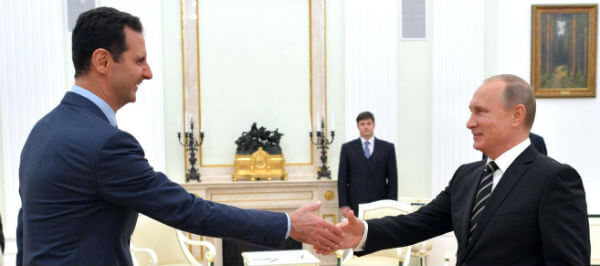
The secret pact between Russia and Syria that gives Moscow carte blanche

assad-putin

The Washington Post reports: When you are a major nuclear power and you want to make a secretive deployment to a faraway ally, what is the first thing you do? Draw up the terms, apparently, and sign a contract.

That’s what the Kremlin did with Syria in August, according to an unusual document posted this week on a Russian government website that details the terms of its aerial support for Syrian President Bashar al-Assad.

Among other revelations in the seven-page contract dated Aug. 26, 2015, the Kremlin has made an open-ended time commitment to its military deployment in Syria, and either side can terminate it with a year’s notice.

Russian military personnel and shipments can pass in and out of Syria at will and aren’t subject to controls by Syrian authorities, the document says. Syrians can’t enter Russian bases without Russia’s permission. And Russia disclaims any responsibility for damage caused by its activities inside Syria. Since Russia’s bombing campaign started at the end of September, Assad’s forces have been able to recapture some territory from rebels, and much of the humanitarian aid to the country has come to a halt. A war that already looked intractable now seems more so. [Continue reading…]

Jadaliyya has an English translation of the contract.

Facebooktwittermail

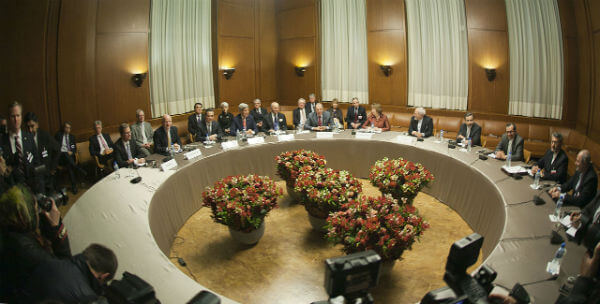
Was the Iran deal worth it?

iran-deal

Last July, after the Joint Comprehensive Plan of Action agreement on Iran’s nuclear program had been reached in Vienna, Shadi Hamid wrote: It was clear from the start of the uprising [in Syria] that Obama did, in fact, have a clear objective – minimizing U.S. involvement as much as possible. But there are other places, such as Iraq, where the Obama administration was pulled back in despite (or, more likely, because of) its best efforts. The unwillingness to rethink Syria strategy in any serious way has been reinforced by the momentum of the Iran negotiations. Why rock the boat and potentially provoke a major international incident, when progress was being made on Iran’s nuclear program? Why even take the chance with so much at stake? “Linkage,” moreover, was been built in to the policy process. As the journalist Josh Rogin noted: “All Syria proposals at State must go through the office of the undersecretary for political affairs, Wendy Sherman, who is also the administration’s lead negotiator over a nuclear deal with Iran.”

On the specifics of a deal, I tend to think, like many, that the U.S. made too many concessions, without getting enough in return. According to the New York Times, in the final days of talks, a television anchor on a hardline Iranian channel said: “The fact is, Obama needs this deal much more than we do.” She went on: “The American president needs a victory, and only a deal with Iran can give him that. They have retreated on several issues and compromised on their own red lines.” Whether or not this perception is fair, it’s a perception nonetheless, and perceptions drive behavior.

Others have noted that Iran, due to its deteriorating economy, needed a deal more than the U.S. did. This is almost certainly true. But while Iran may have needed it more, the U.S. wanted it more – or, at the very least, seemed like it did. Some of this, to be fair, was outside the U.S.’s control. The perception had already solidified throughout the region, drawing on 6 years of observing the Obama administration’s handling of various crises, most notably the backing down from stated “red lines” in Syria. Allies, such as Egypt, and enemies, such as Syria, have grown confident that we’ll blink first in a staring contest, in part because we usually do. This was why I was skeptical that any final deal could ever be the best possible deal. The administration has had tendency to misuse and/or underestimate its leverage in some of our most important bilateral relationships. As the negotiations wrapped to a close, there was no obvious way to address this. It was too late. We couldn’t change how Iran viewed the Obama administration.

There was a related asymmetry during the negotiations. As Pollack writes, “I don’t think that Iran values a nuclear deal as much as it does its positions in these various countries.” With us, it was the reverse: we cared less about Iran’s positions in various countries and more about its nuclear program. This, too, was built in to the talks.

Some are troubled that most people had strong opinions about the deal before reading the actual text of the agreement. One certainly hopes that legislators will eventually read at least some of it. But the specifics of the deal aren’t, ultimately, as important as the broader issues and implications, and those aren’t anywhere to be found in the text. Here, I tend to agree with my colleague Jeremy Shapiro who argued in April that that the devil wasn’t in the details. The details “really don’t matter.” He goes on: “At heart, this is a fight over what to do about Iran’s challenge to U.S. leadership in the Middle East and the threat that Iranian geopolitical ambitions pose to U.S. allies.”

In other words, your position on the Iran deal is likely to depend on how you view the Middle East and America’s role in it more broadly. If you see the Syrian civil war as a, or even the, core regional conflict, then you’re probably worried about the $100 billion in potential sanctions relief. Iran, even we assume it chooses butter over guns as American officials hope and uses, say, only 3 percent of that total, will have $3 billion more to prop up the Syrian regime and other regional allies and proxies. It also depends on your starting assumptions about the nature of the Iranian regime. Are Iranian leaders “rational,” and do you think it matters whether “moderates,” such as President Rouhani and Foreign Minister Zarif, are empowered over their “hardline” counterparts?

For me, at least one other issue comes into play, and it’s a factor which has pushed me to be more supportive of the Iran deal than I expected to be. It’s striking how little discussion there has been about what Iranians think and want. As small-d democrats, Americans should always at least take into account public opinion in other countries. Presumably, Iranians know their country better than American politicians do. According to opinion polls, a majority of Iranians favor a deal. We all saw the pictures of ordinary Iranians celebrating the framework agreement in April. This time around, the regime has been more careful, closing off public spaces, with hardliners warning of the dangers of Iran Deal-induced “happiness.” Importantly, as Nader Hashemi notes, “some of the most vociferous defenders of a nuclear deal with the West are Iranian civil society and human rights activists.” It makes little sense for us to say that an Iran deal will make progress on human rights less likely, when Iran’s own human rights activists seem to think the opposite. In a survey of 22 leading human rights activists, support for ongoing negotiations was “unanimous,” while over half believed that a deal would lead to a significant improvement in human rights in Iran. Of course, they could be wrong, but we shouldn’t bet on that.

To be sure, the link between a deal and the empowerment of Iranian reformers, as intuitive as it might seem, is far from guaranteed. As many have noted, conservatives may be just as likely to gain from a deal for any number of reasons. What seems inescapable, however, is that the failure of negotiations would have been a major, perhaps even decisive loss for Iran’s reformist trend. President Hassan Rouhani, who buoyed expectations with his come-from-behind election victory two years ago, has been losing popularity and goodwill. On human rights, he pledged to expand personal freedoms and broaden space for civil society. As for the economy, it can sputter along, as it has, but without sanctions relief, Rouhani’s hands are tied. His raison d’etre, then, depends on a successful deal. Without one, we would have likely had more of the same: conservatives in control and dominating the country’s politics. Now at the least there is a glimmer of possibility, even if the road toward substantive reforms remains a difficult one.

Taking these various, and very different, factors into account, the deal is, on balance, a mixed bag. I don’t think an Iran nuclear deal deserved the near-obsessive focus it received from this administration. Too much was subsumed and compromised due to the desire for a deal, an administration priority which took precedence over nearly everything else. Now that a deal has been concluded, U.S. officials may have more room to maneuver. Of course, the implementation of a deal will still require constant attention, to say nothing of the domestic fight which is still to come. But perhaps, at some point, the U.S. will be able to act and think beyond Iran’s nuclear program and re-focus attention on the broader issues and conflicts in which Iran plays a major role. The U.S. will now come under pressure to “compensate” (or overcompensate depending on your perspective). It will need to reassure skeptical Gulf allies that it will do more to counter Iran’s regional designs. I agree with Ken Pollack that the best place to do this is probably in Syria. As he writes: “In the aftermath of an Iranian nuclear deal, finally executing the Administration’s proclaimed strategy for Syria, may be the best and only way to regain control over the dangerous confrontation escalating between Iran and America’s Arab allies.”

Now that President Obama’s legacy, however controversial, is secure (both on domestic and foreign policy), he can afford to do the very things he wasn’t willing to do when Iran negotiations were the overwhelming focus. That doesn’t mean he will do them, but that’s where, I hope, the debate over a post-Iran deal Middle East can now turn.

Even after the deal was signed, Obama may have felt his hands remained tied on at least two counts: it remained to be seen whether Iran would follow through in implementing the requirements for sanctions to be lifted, and as we have now just learned, secret negotiations were still under way to secure the release of five Americans imprisoned in Iran. They have now been released and sanctions have been lifted.

One thing that no one was anticipating last July was the impact of Russia’s unforeseen intervention in Syria.

Iran’s president today tweeted:


But stock markets across the Middle East just saw “£27bn wiped off their value” in anticipation of the new wave of Iranian oil flowing into an already flooded market.

Al Jazeera reports:

With the sanctions now removed, Iran is ready to increase its crude oil exports by 500,000 barrels a day, Deputy Oil Minister Amir Hossein Zamaninia was quoted as saying by the Shana news agency on Sunday.

Iran’s return to an already glutted oil market is one of the factors contributing to a global rout in oil prices, which fell below $30 a barrel last week for the first time in 12 years. Iran is the world’s fourth largest oil producer.

The administration sold the Iran deal by claiming that no deal would make another major war inevitable. The ongoing war in Syria was left out of the equation.

The question now is whether that war is any closer to ending or whether, on the contrary, its conclusion is even further away.

I’m inclined to believe that Shadi Hamid’s assessment last July — that Obama’s objective has always been to minimize U.S. involvement in Syria as much as possible — is just as accurate today as it was then.

If Obama is preoccupied with his legacy, he should be asking himself whether his presidency will be remembered more for what he accomplished through negotiations with Iran or more for what he failed to do as the rest of the region unraveled.

Facebooktwittermail

Mini-republics: A Syrian village seeks to survive amid carnage

Christoph Reuter reports: The St. Lucie cherry trees were in bloom when the calamity began. It was not unexpected. Indeed, the men of Korin and surrounding villages had done their part to bring it about. Since winter, after two years of an almost static front line, they quickly overran several of the Syrian army’s last outposts in the Idlib Province. And soon after regime troops fled the eponymously named provincial capital at the end of March, the bombs arrived. It is a pattern that has often been seen in Syria: Soon after rebels take an army base, an airport or a city, the air force arrives to pound them from above.

For weeks, regime helicopters circled at an altitude beyond the range of rebel weapons and repeatedly dropped half-ton barrel bombs on Korin. On at least one occasion, a cylinder full of chlorine gas outfitted with detonators was dropped on the village, which is located some 40 kilometers (25 miles) south of the Turkish border. Sukhoi jets appeared between the clouds and fired rockets at those buildings that were still intact. Thirty-one people died — a number smaller than it might have been because the residents of Korin, accustomed as they are to fleeing violence, had retreated to the olive groves that surround the village when the first bombs started to fall. For a while, they lived in tiny shacks among the trees — shelters that had been built in more peaceful times.

The air strikes began to wane around the time when the olive trees bloomed. The jets were needed elsewhere; additional villages were in need of punishment. And in Korin, the villagers returned from the olive groves. Soon, around three-quarters of the erstwhile population of 11,000 were again living in the town, collecting stones and organizing cement and tarps to repair their homes. If the war weren’t still going on, one could almost have called it a peaceful summer.

It was the calm between the storms — a fragile calm, not unlike that of a tiny boat on the high seas. After all, Korin and the entire region surrounding it, with hundreds of towns and villages, have been living for almost four years in a state of anarchy.

It is almost as though someone had devised a wicked experiment to see what happens when everything that serves public order is suddenly removed. When police, courts and indeed the entire state simply disappears without a new one replacing it. And when the old state reappears periodically to spread death and destruction. It is a situation reminiscent of End Times science fiction tales in which marauding hordes find themselves in a constant battle for fuel, water and women. But what is it really like? [Continue reading…]

Facebooktwittermail

Old myths perpetuate poor analysis of Saudi Arabia

Hassan Hassan writes: Economic sanctions on Iran have been lifted. The removal of sanctions, which will release billions of dollars worth of frozen assets and bring Iran in from the cold, comes exactly two weeks after a diplomatic spat with Saudi Arabia brought the region to boiling point.

Both of these events could have profound international implications for Saudi Arabia. After the diplomatic row, the kingdom came under fierce media attack and was generally portrayed as an irresponsible regional player that deliberately provoked Iran by executing the Saudi religious cleric Nimr Al Nimr. Such depictions do not bode well for the kingdom as it prepares for the entry of a regional rival into the international arena.

Broadly speaking, much of the punditry about Saudi Arabia and the Gulf states at large tends to rely on old facts and myths – mostly dating back to the 1990s.

Perpetuating old stereotypes about Saudi Arabia’s foreign policy ignores the progress –and indeed the drastic changes – that have taken place over the past decade. More importantly, they also reduce Iran’s role in the neighbourhood to a geopolitical rivalry with its neighbours, rather than casting this role in its true light, as an aggressive sectarian agenda that claimed the lives of thousands of people and perpetuated conflict and civil strife.

To better understand Iran’s behaviour, consider the policies of the two countries since the eruption of the Arab uprisings five years ago. [Continue reading…]

Facebooktwittermail

American victim of Cologne sex attacks recounts how she was rescued by Syrian refugees

At the core of Christianity is the commandment to “love your neighbor as you love yourself,” so you’d think that in a country with so many loudly professing Christians, there really wouldn’t be any debate about whether America should welcome refugees.

Indeed, when it came to clarifying who should be described as a neighbor, Jesus chose to illustrate this teaching through a parable that cast a Samaritan — considered by most Jews at that time as an enemy — as the exemplar of the principle of universal love.

The teaching doesn’t go: love your neighbors after they’ve been vetted by the FBI, so long as you’re sure they’re Christian, and so long as you own a gun to protect yourself.

After the mass sex attacks in Cologne helped fuel a new round of anti-refugee hysteria, a Good Samaritan story has emerged in which a 27-year-old American woman recounts how she was saved that night by the intervention of strangers — a group of men who turned out to be Syrian refugees.

The New York Times reports: Caught up in a melee of drunken revelers outside the Cologne train station on New Year’s Eve, Caitlin Duncan, a neuroscience student from Seattle, was terrified. She had somehow gotten separated from her German boyfriend, who had both their cellphones and her wallet. Ms. Duncan, 27, said that she was quickly surrounded and groped by several young men: One snatched her hat from her head, another tried to kiss her face and neck.

Like many of the hundreds of women who later said they had been assaulted in the crowd, Ms. Duncan sought help from the police, but said the officers were too busy trying to clear the square. But unlike other victims, whose complaints of attacks by foreigners of North African and Arab descent have ignited new debate about Germany’s ability to absorb migrants, Ms. Duncan said she was rescued by a group of Syrian asylum seekers.

Amid the swirl of criminal chaos, it seems, there were also acts of chivalry.

As the crowd swelled and grew more unruly, Ms. Duncan said, a stranger came up and asked if she needed help. Both of them spoke broken German, so the stranger summoned a friend who spoke English. He was Hesham Ahmad Mohammad, from Aleppo, Syria, who had met up in Cologne for the holiday with six or seven other Syrian refugees scattered around Germany.

The men offered Ms. Duncan money for a taxi to her boyfriend’s parents’ home: “the only address I knew,” she said. They would happily have called her boyfriend, Sebastian Samer, but Ms. Duncan had relied on speed-dial and could not remember the number. “I know there’s a lot of 7s,” she thought, “but that’s not helping me right now.”

She persuaded the men to form a kind of cordon around her so they could move through the crowd. She described her boyfriend to them, and they eventually found him inside the station. She cried. “I was just so relieved,” she recalled later.

Mr. Ahmad Mohammad, a former primary-school teacher, said he had left Aleppo, a scene of tremendous fighting in the Syrian civil war, in 2014 for Turkey, and had arrived in Germany via the Balkans and Austria in September. He said he had left his wife and two sons in a village near the Syrian-Turkish border and was living in a small town near Cologne with two other Syrians, studying German as he awaited asylum.

He said in a telephone interview on Friday that he and his friends had also felt unsafe on New Year’s, and blamed “bad boys” who were “drinking, and I think taking marijuana or something. They lost their minds.” Now, they worry that Germans and other Europeans are drawing conclusions that will make it harder for new arrivals. [Continue reading…]

Facebooktwittermail

U.S. accepted 2,500 Syrian refugees over four years while Canada took in more in just two months

refugees1

The New York Times reports: Among the Obamas’ guests at the State of the Union address on Tuesday was Refaai Hamo, a middle-aged widower with sunken eyes, a side-swept mop of silver hair and a harrowing account of losing his wife and his daughter in an air raid over his home in Syria.

His presence in the gallery was meant to send a signal to the world that the United States — or at least this administration, in its last year in the White House — believes that people like Mr. Hamo deserve a chance to restart their lives in this country.

“The world respects us not just for our arsenal,” President Obama said in his address. “It respects us for our diversity and our openness.”

The gesture raised an obvious question: Has the United States lived up to its idea of itself as a haven for those fleeing war and persecution?

The numbers offer a partial answer, and they reflect the acute dilemmas that confront countries worldwide amid a historic global crisis.

The United Nations says that an estimated 20 million people around the world, half of them children, have fled their home countries because of conflict or persecution. The war in Syria is now the single largest source of new refugees, casting about 4.4 million Syrians out of their country since the conflict began nearly five years ago.

But unlike in 1951 — when the international refugee convention was forged in the aftermath of World War II, requiring countries to offer protection to those scattered by war and persecution — the political calculus for world leaders has sharply shifted. The costs of taking in refugees have grown and the payoffs, many feel, have diminished.

First, the numbers.

The United States has taken in around 2,500 Syrian refugees since 2012, shortly after the war began.

Canada took in more than that in the last two months of 2015 alone.

Brazil has offered what it calls “humanitarian visas” to three times as many Syrian refugees as the United States has accepted — 7,380 at last count by the United Nations refugee agency.

Switzerland has issued 4,700 special-category visas for Syrians who have family in the country. And Australia, which has come under international criticism for turning away boats of potential refugees from South and Southeast Asia, has said it will take 12,000 from Syria and Iraq.

Germany is in a category of its own, with Syrians making up the largest single group (428,500) of the 1.1 million people who were registered as refugees and asylum seekers there in 2015. [Continue reading…]

Facebooktwittermail

Fearmongering around Muslim immigrants echoes anti-Asian hysteria of past

Murtaza Hussain writes: On May 6, 1882, U.S. President Chester Arthur signed into law the Chinese Exclusion Act, the first in a series of discriminatory legal measures aimed at curbing immigration from Asia. Speaking at the time of its passage, California Sen. John F. Miller, a leading proponent of the law, declared that the Chinese were “an inferior sort of men” and that “Chinese civilization in its pure essence appears as a rival to American civilization. It is a product of a people alien in every characteristic to our people, and it has never yet produced and can never evolve any form of government other than an imperial despotism. Free government is incompatible with it, and both cannot exist together.”

There are echoes of Miller’s demagoguery, and of contemporaneous warnings about the supposed “Yellow Peril” posed by East Asians, in the warnings politicians and prominent media figures issue today about allegedly unassimilable immigrants and refugees from Muslim countries.

“The type of rhetoric we’re seeing today about Muslims is both very similar and also slightly different from that which was used to describe Asian immigrants in the past,” said University of Minnesota professor Erika Lee. A specialist in immigration studies, Lee is also author of the 2015 book The Making of Asian America, which chronicles in part the anti-Asian sentiment that new arrivals often had to contend with. “Like Muslims, Asian immigrants were characterized as a slowly creeping civilizational threat to the security and integrity of the United States, but today, with Muslims, there is also the additional allegation that they have a violent intent to overthrow the existing order.” [Continue reading…]

Facebooktwittermail

Russia accused of deliberately targeting civilians in Syria

The Guardian reports: Russia is breaching all the norms of war by deliberately targeting rescue workers, schools and hospitals in Syria, the UK foreign secretary has claimed, accusing the Russians of running return raids on targets inside Syria solely to hit civilian rescue workers.

Philip Hammond levelled his charges after meeting Syrian civil defence workers in Adana, southern Turkey. The rescue workers are being trained by the Turks to extract the injured and dying from the rubble of buildings struck by Syrian regime bombs or Russian raids.

In probably his toughest condemnation of Russian tactics since Vladimir Putin surprised the west by intervening militarily in Syria at the end of September, Hammond said: “The Russians are deliberately attacking civilians, and the evidence points to them deliberately attacking schools and hospitals and deliberately targeting rescue workers.

“If you go back for a second strike you know what you are doing.”

The west has long argued Russia is not targeting Islamic State but instead opponents of the Assad regime, but this is the furthest Hammond has gone in condemning the tactics of Russian pilots. [Continue reading…]

Facebooktwittermail

What it’s like to live in the capital of the ISIS ‘caliphate’

Marwan Hisham (the pseudonym of a Syrian resident of Raqqa) writes: The Islamic State has worked hard to isolate Raqqa from the rest of the world. A few months ago, residents were deprived of Wi-Fi signals inside their homes, as the group had the signal extenders placed on rooftops removed. On Nov. 18, satellite Internet was banned, and Internet cafes were ordered to close. If the cafe wishes to reopen, it needs to gather two recommendations from Islamic State security forces, with their emirs’ signatures. You’ll need a license from the Islamic State’s intelligence office as well.

The Islamic State always describes any hardship or new restriction as resulting from the sins of those afflicted, and the Friday sermon that followed this decision was no exception. “People disobey God, and as such God inflicts upon them suffering,” a fighter preached.

However, it’s not only the Islamic State’s god who is dissatisfied. Raqqa’s citizens not only suffer from the group’s orders, but also the international war effort against it. Air raids have become practically a daily routine. On Nov. 3, the Russians joined the party. And then the French. Airstrikes damaged the main bridge on the Euphrates used by residents to enter the city and destroyed the other minor ones. It took an hour’s drive to get to the opposite bank. The West speaks of the necessity of cutting off Islamic State “supply routes,” but these are not Islamic State bridges — they are bridges used by everyone in Raqqa.

And yet, somehow life still goes on. Muhammad, who is 31 years old and displaced from Aleppo, and his fiancee are preparing for their wedding, as if in private defiance of the incredible challenges the world has thrown at them. A cousin’s little daughter reads a 9th-grade French book, trying to understand a single word.

Yet, when the jet fighters interrupt, all eyes turn to the sky. Everything here is a target, because the Islamic State is everywhere. But once the bombs are dropped, people go back to what they were doing. It’s no longer a moment of reflection about life and death, nor a moment of curiosity about what happened: It’s something that has no ending. [Continue reading…]

In the New York Times, Hisham writes: The Islamic State gives people one choice: Escape your poverty by fighting for us. The world has to offer people living under the Islamic State better choices. Stop the Assad government from bombing markets and bridges, and its Russian allies from bombing civilian infrastructure, as happened recently when a Russian airstrike reportedly hit a water main, cutting off water for the entire city.

Most of all, don’t dismiss as terrorists the citizens of occupied cities just because they were too poor to leave when the Islamic State took over. The people under this occupation present the best hope for destroying the jihadists. Without their support, the Islamic State can hardly be defeated. [Continue reading…]

Facebooktwittermail

The Middle East is now suffering from neoconservative sins of commission and realist sins of omission

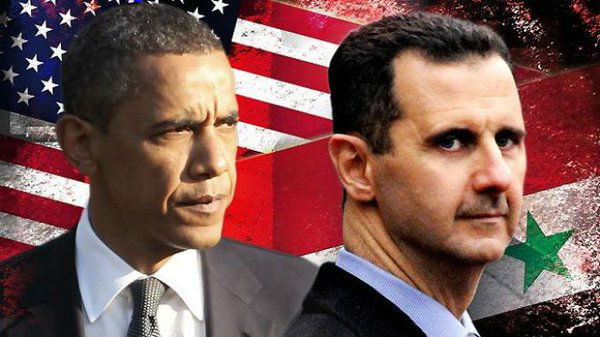
obama-assad

Muhammad Idrees Ahmad writes:  By now it is clear that US policy in Iraq and Syria is a disaster. In neither country has the situation been improved by the US military presence. In Iraq it empowers the same sectarian militias that forced alienated Sunnis into the arms of ISIS. In Syria it ignores, even accommodates, the regime whose brutality spawned the jihadi menace in the first place. In both its actions address symptoms rather than causes and alienate people without providing any commensurate security gains.

But would the situation improve if the United States were to withdraw? Ask the Yazidis of Iraq, whose tragedy would have been much larger had it not been for the timely US intervention; ask the Kurds of Syria, who would have been routed in Kobani had it not been for the sustained airstrikes that helped them repel an ISIS offensive. The Sunnis of Iraq might well ask who would protect them from the revanchist fury of the newly empowered sectarian militias, absent a US presence.

The issue then is not so much the fact of US military involvement as the nature of this involvement.

The United States bears responsibility for much of the current turmoil in the Levant. Had it not been for George W. Bush’s war and the fracturing of the Iraqi society, the region wouldn’t have turned into an incubator for jihadism. Had it not been for Barack Obama’s betrayal of the Syrian revolution — by making lofty promises and offering meager support; by following brave words with conspicuous inaction; and by demanding that Syrians submit their political aspirations to US security concerns — a quarter-million people would not have lost their lives, millions would not have been displaced, and thousands would not have drowned. The region suffers today from neoconservative sins of commission and realist sins of omission.

The United States could exit the Middle East and, in Sarah Palin’s immortal words, “let Allah sort it out.” But it would have condemned the region to perpetual war. Isolationism in the face of serious geopolitical challenges is not only an abdication of responsibility, but also a recipe for disaster. [Continue reading…]

Facebooktwittermail

In Syrian town cut off from the world, glimpses of deprivation

The New York Times reports: Nisrine kept teaching school for months as the siege tightened around the Syrian town of Madaya, but had to give up a few weeks ago when her students got too weak to walk to class. A local medic has been surviving on the rehydration salts he gives patients, while a business school graduate picks grass to make soup for his 70-year-old father, consulting shepherds about which ones their long-since-slaughtered flocks liked best.

A dozen women waited anxiously in their doorways one recent evening as an antigovernment activist named Firas trudged slowly up their street handing out small batches of smuggled bulgur wheat.

Firas, though, was in shock. He had taken a meal to the house of Suleiman Fares, 63 and bone-thin, in hopes of saving his life, only to find him already dead. Frustrated, Firas declared that far to the north, rebels allied with those in Madaya ought to resume shelling two pro-government towns — towns full of civilians who are also suffering, tit for tat, a siege from the other side.

“Better to die fighting,” he said that night in one of a series of recent telephone interviews, “than to starve.”

The people of Madaya and neighboring Zabadani have tried, since the siege by pro-government forces began in July, to keep society functioning and adjust to their surreal new set of dynamics. There is the black market across blockade lines, for instance, and the quiet or unexpected ways this type of warfare can kill: heart attacks, stillbirths, a step on a land mine while foraging for food.

And there is the relentless physical and psychological contraction of their communities, only an hour’s drive from Damascus, Syria, and two from Beirut yet suddenly sealed off from the outside world. [Continue reading…]

Facebooktwittermail

Middle East reality: An inconvenient truth for Obama

Joyce Karam writes: Characterizing events from Yemen to Syria to Libya as a “transformation that will play out for a generation, rooted in conflicts that date back millennia” is not only a reality distortion by U.S. President Barack Obama, but also a dangerous fantasy that resigns American diplomacy to dismissiveness in the Middle East.

Shrugging off the Middle East’s largest upheaval in decades as a theological rift, and shying away from major diplomatic initiatives, is a slap in the face for U.S. role and stature, restricted today to responding and containing conflicts.

Blaming the chaos of the Middle East on centuries’ old battles is a perfect cop-out strategy for Obama, avoiding his legacy from being tarnished by the fragmentation of four states, two of which were bombed by the United States (Iraq and Libya).

Except, religious scriptures from a different era are not driving the current regional rivalry, or spurring ISIS. It’s oppression, civil wars, ISIS territorial gains, and unchecked regional bickering that is fueling the hellfire.

Obama’s narrative, however, is largely aimed at absolving his administration of any wrong doing in the Middle East, and attributing current infernos to a “transformation” across a whole generation that Washington apparently has little influence over. This claim self destructs in every conflict zone in the Middle East, three of them started on Obama’s watch four years ago. [Continue reading…]

Facebooktwittermail