Category Archives: United Kingdom

Israel expresses anger at new Palestine food labels

Israel expresses anger at new Palestine food labels

Labels will soon show whether food from the West Bank, such as strawberries, dates and olives, comes from Palestinian farms or Israeli settlements, to give buyers a clearer choice.

Supermarkets and other retailers have decided to follow controversial new government guidance, despite Israel’s anger that it will provoke a boycott of its goods.

Goods will specify “produce of the West Bank (Israeli settlement produce)” or “produce of the West Bank (Palestinian produce)”. The Government has decided that produce from Israeli settlements may not be labelled “produce of Israel” because the area is not within the state’s internationally recognised boundaries.

Traders labelling goods from the occupied territories as Israeli produce also face possible enforcement action for breaching EU legislation.

The move immediately provoked a diplomatic spat with Yigal Palmor, the Israeli foreign affairs spokesman. He condemned the move, saying that it was “catering to the demands of those whose ultimate aim is the boycott of Israeli products”. He said: “It is a matter of concern.” [continued…]

Editor’s Comment — Indeed, this surely is a matter of concern to the Israeli government. I wonder how quickly British consumers will respond appropriately and stop buying stolen goods?

Jewish settlers ‘to increase by 10,000 within year’

An Israeli minister has predicted there will be 10,000 new settlers in the occupied West Bank over the next 10 months and insisted that a moratorium did not freeze but only limited construction.

“Over the next 10 months the population of 300,000 will grow by at least 10,000 residents,” said Benny Begin, a minister without portfolio from Prime Minister Benjamin Netanyahu’s Likud party, in comments broadcast on public radio on Friday.

“Properly speaking, this is not a freeze. We are not planning to freeze life but only to impose certain limits on construction” in Israeli settlements in the West Bank, Begin said on Thursday night in Tel Aviv. [continued…]

Abbas slams ‘brutal’ settlers for attack on West Bank mosque

Palestinian Authority President Mahmoud Abbas on Friday said that Israel must rein in settlers’ ‘brutal’ actions, after assailants vandalized a mosque in the West Bank village of Yasuf, torching furniture and spraying Nazi slogans in Hebrew on the premises.

“The torching of the mosque in Yasuf is a despicable crime, and the settlers are behaving with brutality,” said Abbas, who called the act a violation of religious freedom.

“The settlers’ unruly behavior must be stopped,” Abbas added after meeting on Friday with United Arab List-Ta’al chairman Ahmed Tibi in Amman.

Defense Minister Ehud Barak earlier on Friday condemned the vandalization of the West Bank mosque, allegedly at the hands of settlers protesting Israel’s temporary freeze on settlement construction. [continued…]

Palestinian leader speaks from prison

How would you resolve the conflict between Fatah and Hamas?

Marwan Barghouti: During my time in prison brothers from various parties and I were able to draft a prisoners document which became the framework for a national unity document that all 13 Palestinian parties signed on June 27, 2006. It is the first document in the history of Palestinian parties, that the PLO, Hamas, and Islamic Jihad participated in and agreed on a state with 1967 borders, and accepted the PLO and the president of the Palestinian Authority to negotiate in the name of Palestinians, and accepted the call for a national unity government. The conflict will be resolved by referring back to this document and with the signature of all [parties] on the Egyptian national reconciliation document, and by resorting to presidential and legislative elections, and by respecting the law and ending internal strife and through the reestablishment of a national unity government. [continued…]

Yossi Beilin calls for George Mitchell’s resignation

Facebooktwittermail

Iraq Inquiry bombshell: Secret letter to reveal new Blair war lies

Iraq Inquiry bombshell: Secret letter to reveal new Blair war lies

An explosive secret letter that exposes how Tony Blair lied over the legality of the Iraq War can be revealed.

The Chilcot Inquiry into the war will interrogate the former Prime Minister over the devastating ‘smoking gun’ memo, which warned him in the starkest terms the war was illegal.

The Mail on Sunday can disclose that Attorney General Lord Goldsmith wrote the letter to Mr Blair in July 2002 – a full eight months before the war – telling him that deposing Saddam Hussein was a blatant breach of international law.

It was intended to make Mr Blair call off the invasion, but he ignored it. Instead, a panicking Mr Blair issued instructions to gag Lord Goldsmith, banned him from attending Cabinet meetings and ordered a cover-up to stop the public finding out.

He even concealed the bombshell information from his own Cabinet, fearing it would spark an anti-war revolt. The only people he told were a handful of cronies who were sworn to secrecy. [continued…]

Jeremy Greenstock, UK diplomat, says US was ‘hell bent’ on Iraq invasion

The United States was “hell bent” on a 2003 military invasion of Iraq and actively undermined efforts by Britain to win international authorization for the war, a former British diplomat told an inquiry Friday.

Jeremy Greenstock, British ambassador to the United Nations from 1998 to 2003, said that President George W. Bush had no real interest in attempts to agree on a U.N. resolution to provide explicit backing for the conflict.

The ex-diplomat, who served as Britain’s envoy in Iraq after the invasion, said serious preparations for the war had begun in early 2002 and took on an unstoppable momentum. [continued…]

Why Turkey was the Iraq war’s real winner

Turkey’s economy has more than doubled in the past decade, converting the nation from a backwater to a regional powerhouse. At the same time, its financial focus has moved closer to home: Turkey now conducts more trade with Russia, Iraq, and Iran than it does with the EU. Energy politics have also favored the Turks, who find themselves astride no fewer than three competing energy supply routes to Europe—from Russia, from the Caspian, and from Iran. Years of reform and stability are paying off as well. Ankara is on the verge of a historic deal with its Kurdish minority to end an insurgency that has left 35,000 dead in the past quarter century. In turn, Turkey is making peace with neighboring countries that once supported the insurgents, such as Syria, Iran, and Armenia. The principle is simple, says a senior Erdogan aide who’s not authorized to speak on the record: “We can’t be prosperous if we live in a poor neighborhood. We can’t be secure if we live in a violent one.”

The advantages keep compounding. Thanks to judicious diplomacy and expanding business ties throughout the region, Turkey is close to realizing what Davutoglu calls his “zero-problems-with-neighbors policy.” The new stance has boosted Ankara’s influence even further; the Turks have become the trouble-ridden region’s mediators of choice, called in to help with disputes between the Palestinian factions Hamas and Fatah, between Iraq and Syria—even, before Erdogan’s outburst in Davos, between Israel and Syria. Speaking at a recent press conference in Rome, Erdogan expressed little hope that Turkey could do more for Syria and Israel. “[Prime Minister Benjamin] Netanyahu doesn’t trust us,” he said. “That’s his choice.” But others in the region still welcome Ankara’s assistance: Turkish diplomats are excellently trained in conflict resolution. [continued…]

Facebooktwittermail

UK role in torture of British citizens in Pakistan condemned

UK role in torture of British citizens in Pakistan condemned

Britain’s role in the torture of its own citizens in Pakistan is condemned today by one of the world’s leading human rights organisations as being cruel, counter-productive and in clear breach of international law.

In a damning report, published after an investigation spanning more than a year, Human Rights Watch (HRW) says the government finds itself in a “legally, morally and politically invidious position” through complicity in torture, and warns its moral legitimacy could be undermined.

The report by the New York-based NGO – entitled Cruel Britannia: British Complicity in the Torture and Ill-treatment of Terror Suspects in Pakistan – corroborates many of the findings of the Guardian’s own investigation into the mistreatment of people held during British-led counter-terrorism operations. [continued…]

Will Miliband address torture evidence?

Today sees the release by Human Rights Watch (HRW) of a searing exposé of the evidence against the British government of its complicity in the torture of people held in Pakistan suspected of terrorism. The report, Cruel Britannia, is based on evidence collected by Ali Dayan Hasan, a senior HRW researcher who interviewed not only suspects and their lawyers but also members of the Pakistani ISI agency who were involved in the torture. It corroborates and provides further detail for the investigative reporting on torture of the Guardian’s Ian Cobain, who recently won the Paul Foot award.

Human Rights Watch, a US-based organisation, has an excellent reputation for independence and fair-minded monitoring. The allegations that British security services knew about torture in Pakistan, took advantage of it and even encouraged it, must be taken very seriously.

The report analyses in some detail the “far from decisive” response of the UK government so far to these and other allegations. Foreign secretary David Miliband and others repeat a mantra that the UK government does not condone torture, but they have refused to investigate the allegations or to publish guidance to officials. Written instructions to security services interrogating suspects in Afghanistan after 9/11 disclosed earlier this year – while saying they should not be seen to “condone” torture – also made it clear that the UK government sanctions a blind eye. The instructions claimed (with dubious legality, let alone morality) that there was no obligation to intervene even when interrogators are aware of torture. [continued…]

Facebooktwittermail

Iraq report: Secret papers reveal Blair’s blunders and concealment

Iraq report: Secret papers reveal Blair’s blunders and concealment

On the eve of the Chilcot inquiry into Britain’s involvement in the 2003 invasion and its aftermath, The Sunday Telegraph has obtained hundreds of pages of secret Government reports on “lessons learnt” which shed new light on “significant shortcomings” at all levels.

They include full transcripts of extraordinarily frank classified interviews in which British Army commanders vent their frustration and anger with ministers and Whitehall officials.

The reports disclose that:

Tony Blair, the former prime minister, misled MPs and the public throughout 2002 when he claimed that Britain’s objective was “disarmament, not regime change” and that there had been no planning for military action. In fact, British military planning for a full invasion and regime change began in February 2002.

The need to conceal this from Parliament and all but “very small numbers” of officials “constrained” the planning process. The result was a “rushed”operation “lacking in coherence and resources” which caused “significant risk” to troops and “critical failure” in the post-war period.

Operations were so under-resourced that some troops went into action with only five bullets each. Others had to deploy to war on civilian airlines, taking their equipment as hand luggage. Some troops had weapons confiscated by airport security.

Commanders reported that the Army’s main radio system “tended to drop out at around noon each day because of the heat”. One described the supply chain as “absolutely appalling”, saying: “I know for a fact that there was one container full of skis in the desert.” [continued…]

Facebooktwittermail

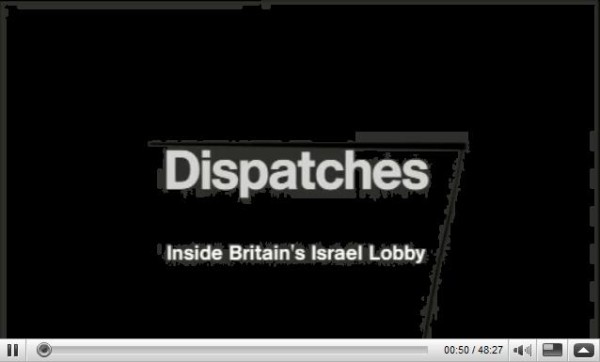
Dispatches: Inside Britain’s Israel Lobby

Dispatches: Inside Britain’s Israel Lobby


(Click on the image above to watch this 48-minute documentary — it’s essential viewing.)

Dispatches investigates one of the most powerful and influential political lobbies in Britain, which is working in support of the interests of the State of Israel.

Despite wielding great influence among the highest realms of British politics and media, little is known about the individuals and groups which collectively are known as the pro-Israel lobby.

Political commentator Peter Oborne sets out to establish who they are, how they are funded, how they work and what influence they have, from the key groups to the wealthy individuals who help bankroll the lobbying.

He investigates how accountable, transparent and open to scrutiny the lobby is, particularly in regard to its funding and financial support of MPs.

The pro-Israel lobby aims to shape the debate about Britain’s relationship with Israel and future foreign policies relating to it.

Oborne examines how the lobby operates from within parliament and the tactics it employs behind the scenes when engaging with print and broadcast media.

Editor’s Comment — It’s hard to predict when the day might come when a broadcast of this nature appears on American television, but if such a day comes, the Lobby here will suffer an irreparable damage in its foundations.

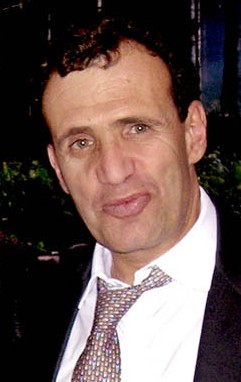
To learn more about a man who figures prominently in the Channel 4 documentary — Chaim “Poju” Zabludowicz, who sounds and looks like a Jewish mafia boss — see the article below.

How the pro-Israel lobby in Britain benefits from a generous London tycoon

Britain’s most active pro-Israeli lobbying organisation – which flies journalists to Israel on fact-finding trips and organises access to senior government figures – has received nearly £1.4m in two years from a billionaire donor whose father made a fortune manufacturing arms in Israel.

The British Israel Communication and Research Centre, known as Bicom, has been one of the most active organisations behind the scenes in the UK during the present Gaza offensive, organising briefings and interview opportunities with senior Israeli spokesmen.

Its biggest funder is Poju Zabludowicz, a London-based tycoon, who has underwritten its campaigning since 2007. The disclosure comes amid an intense struggle in Britain between lobbying organisations working for both sides in the conflict. Foreign affairs specialists say that the injection of funds has ensured that Bicom has become one of the most persistent and slickest media operations in the battle for influence over opinion formers. [continued…]

Facebooktwittermail

From Bradford to Gaza

The brothers from Bradford are ready for Gaza

On March 9, I wrote: “In Sharm el-Sheikh a week ago, world leaders delivered empty promises. Today, Viva Palestina delivered the goods!”

The first Viva Palestina convoy had just completed its arduous drive through Europe and across North Africa, traveling 5,000 miles to deliver humanitarian aid to the people of Gaza.

Before world leaders had convened in Egypt to make what were indeed empty promises — virtually none of the $4.5 billion of aid pledged in early March has subsequently reached any of its intended recipients — a bunch of ordinary working folk had gathered donations from their local communities, bought ambulances, a firetruck, other vehicles, medical equipment and urgently needed supplies and were well on their way to reaching Gaza.

At the time it looked like a terrific display of human spirit, even if it amounted to only a small fraction of the relief just one government could provide. Nine months later, after a second convoy reached Gaza in July and as a third “mega convoy” gears up for departure on December 5 [PDF], Viva Palestina has not only been an inspiring mobilization of people power — it has been of real practical effect at at time that the Blairs, Mitchells, Clintons, Milibands and Obamas of this world have shown themselves to be pathetic examples of all-words-and-no-actions.

Among the participants in the new convoy are a contingent from Bradford for whom I have a special affection.

With their keffiyehs, beards and traditional Pakistani dress, to many Americans some of these guys will look like jihadists from Waziristan, but to me they’re fellow Yorkshiremen.

As they are getting ready to go, they’ve put together a short video — after the intro titles, fast-forward to minute three (unless you have a particular interest in what ambulances look like) to hear the Bradford brothers speak for themselves:

For information on making donations to Viva Palestina go here.

To make donations to Viva Palestina USA go here.

To make donations to the Bradford convoy contact Sid 0797-066-6656 or Shaf 0796-693-0587 (when dialing from outside the UK, dial your international access code then +44, then drop the “0”, eg from the US 011 +44 797-066-6656). Sid is the tire-fitter who appears in the video above wearing an olive-green keffiyeh. See the Bradford Group’s flyer [PDF]. The Bradford group has already raised $335,000 (200,000 pounds) in donations from the local community.

For information on Viva Palestina USA go here.

Al Jazeera English recently aired a short documentary on the conditions facing the residents of the Gaza Strip. Munzer al-Dayyeh is a 40-year-old mechanic living in Gaza. And while the effects of war and ongoing siege may be good for his business, he can’t manage to secure medical treatment for his disabled children. An insight into an ordinary Gazan man struggling to make a living and to find a solution for his family in the difficulties of the Gaza Strip.

Locked in: Life in Gaza – Part 1

Locked in: Life in Gaza – Part 2

Facebooktwittermail

Rory Stewart: A new kind of Tory

Rory Stewart: A new kind of Tory

Britain doesn’t make men like Rory Stewart any more. The former diplomat has trekked 6,000 miles across Asia; at 28, wrote a best-selling book, The Places in Between, about the walk; was governor of a province in Iraq at 29; and last year, as well as becoming a Harvard professor, was hailed by Esquire magazine as one of the 75 most influential people of the 21st century. Brad Pitt has already bought the rights to his biopic. And he’s only 36.

Now the man The New York Times once described as “living one of the most remarkable lives on record” has been selected for the safe Conservative seat of Penrith and the Border (the current MP, David Maclean, is stepping down because of ill-health). News of Stewart’s selection has been universally well-received, even by commentators on the Left: a Guardian columnist, no less, said Stewart was “a guy I’d vote for, whatever his party”.

“I’m absolutely over the moon,” says Stewart of his selection. He is about to fly to Harvard and hand in his resignation before returning to start work on his campaign. He wants to buy a home in the middle of the constituency – the largest in Britain – so that he can reach anywhere within a day by foot. Indeed, he has already spent 10 days walking from his parents’ home in Crieff to Penrith to familiarise himself with the landscape. He is tickled by my suggestion that he might become known as “The Walking MP”. [continued…]

Facebooktwittermail

Airline bomb plotters case threatened by US fears

Airline bomb plotters case threatened by US fears

Several months of high-level surveillance on the key suspects in the airline bomb plot was almost foiled by the nervousness of US authorities who “lost their nerve”, according to Scotland Yard’s then head of counter-terrorism operations.

Andy Hayman, who was assistant commissioner specialist operations in the Metropolitan police in 2006, today outlined how the suspects were being filmed, their purchases and rubbish monitored and cars bugged in the lead-up to their arrests in August 2006, but said the police operation in the UK came close to being undermined by anxiousness from the US that the plotters be arrested as soon as possible.

“At the very highest level, the Americans wanted to be reassured that this was not going to slip through our hands. I was briefing the home secretary, who was briefing Tony Blair, who was briefing George Bush…” he wrote in the Times today. [continued…]

Why I suspect jittery Americans nearly ruined efforts to foil plot

For several months in 2006 the key suspects in the airline plot — some of whom were convicted yesterday — were under intensive surveillance.

We logged every item they bought, we sifted every piece of rubbish they threw away (at their homes or in litterbins). We filmed and listened to them; we broke into their homes and cars to plant bugs and searched their luggage when they passed through airports.

We had been concerned about this group since early 2006. They were linked to a suspicious bookshop in Forest Gate, East London, and knew one of the July 21 bombers. The inquiry was labelled Operation Overt.

When a key figure, Abdulla Ahmed Ali, returned from Pakistan in June 2006, we searched his luggage and resealed it without him noticing. Inside was a soft drink powder, Tang, and a large number of batteries; they were bombmaking components and their discovery led to a step change in the operation. Another man, Assad Sarwar, seemed to be taking on the role of quartermaster — buying clamps, drills, syringes, glue and latex gloves. We watched him dispose of empty hydrogen peroxide containers; the substance could be used to dye hair or, as in July 2005, as an essential explosives component.

We were on their tail when Ali bought a flat in Walthamstow for £138,000 cash and we “burgled” the property to wire it up for covert sound and cameras. We watched as they experimented with turning soft-drinks containers into bottle bombs, listened as they recorded martyrdom videos and heard them discuss “18 or 19”. Were they talking about numbers of targets, bombs or bombers? [continued…]

Facebooktwittermail

Allegations that Britain colluded in torture of terror suspects reach European court

Allegations that Britain colluded in torture of terror suspects reach European court

Amin says that he was beaten, whipped, deprived of sleep and threatened with an electric drill while being asked questions that would subsequently be put to him again during non-violent interviews by two MI5 officers. Before Amin went on trial, the judge ruled that his conditions in ISI custody had been “physically oppressive” but that he had exaggerated his mistreatment and that it fell short of torture.

Since then, Human Rights Watch (HRW), the New York-based NGO, has spoken to a number of Pakistani intelligence officers who they say corroborated the accounts of torture given by several British citizens alleging UK complicity.

In the case of Amin, according to HRW, the Pakistani sources said his account was “essentially accurate”, adding that it was a “high-pressure” case and the desire for information on the part of both British and American authorities was “insatiable”. HRW add that their sources say British intelligence officials were “perfectly aware that we were using all means possible to extract information from him and were grateful that we were doing so”. [continued…]

Facebooktwittermail

Obama faces court test over detainee

Obama faces court test over detainee

The fate of one of the youngest detainees at the Guantánamo Bay prison is emerging as a major test of whether the courts or the president has the final authority over when prisoners there are released.

After a federal judge said earlier this month that the government’s case for holding the detainee, Mohammed Jawad, was “riddled with holes,” the Obama administration conceded defeat and agreed that Mr. Jawad would no longer be considered a military detainee. But the administration said it would still hold him at the prison in Cuba for possible prosecution in the United States.

On Tuesday, Mr. Jawad’s lawyers attacked that position, arguing that the government had given up any authority to hold him. “Enough is enough,” the lawyers said in legal papers that urged the judge, Ellen Segal Huvelle, to send him back to Afghanistan, which has requested his return. [continued…]

Arrests in terror case bewilder associates

Daniel Boyd was a man of rare conviction for these parts.

Rare because he and his family were Muslims in this quiet rural subdivision where the denominations generally run from Baptist to Presbyterian. But also rare for his intensity.

“How many Christians you see standing in the yard praying five times a day?” asked Jeremy Kuhn, 20, who lives across the street. “They just believed more than anyone else.”

But to the disbelief of Mr. Kuhn, the federal authorities say Mr. Boyd and two of his sons took their convictions beyond religious faith and into terrorism. They were among seven men charged on Monday with supporting violent jihad movements in countries including Israel, Jordan, Kosovo and Pakistan. An eighth man was still being sought, said a spokeswoman for federal prosecutors in Raleigh, about 20 miles north of here.

The men are charged with stockpiling automatic weapons and traveling abroad numerous times to participate in jihadist movements. There is no indication in the indictment that they were planning attacks in the United States, though prosecutors said they had practiced military tactics this summer in a rural county close to Virginia. [continued…]

Britain’s own Guantánamo

Piece by piece, the truth is finally coming out about Britain’s own Guantánamo Bay – Diego Garcia. Today the human rights lawyers group Reprieve began a legal case on behalf of Saad Iqbal Madni, who they say was transited through the UK-controlled Indian Ocean island as part of the CIA’s secret rendition programme.

Madni, whom Reprieve says was tortured in Egypt, Afghanistan, and Guantánamo Bay after his stopover in Diego Garcia, has been released in Pakistan where – according to Clive Stafford Smith, the Reprieve director – he is “effectively crippled by his torture”.

For more than six years following the declaration of a war on terror in 2001, British and US officials adamantly rejected the existence of a rendition facility or secret CIA prison on the island, the site of a major British-American military base since the 1970s and long off-limits to civilians, reporters, and investigators. Dismissing reports about detainees on the atoll as “totally without foundation”, Britain’s then foreign secretary, Jack Straw, asserted: “United States authorities have repeatedly assured us that no detainees have at any time passed in transit through Diego Garcia or its territorial waters or have disembarked there.”

However, allegations kept accumulating. [continued…]

Facebooktwittermail

Britain’s police state

Police identify 200 children as potential terrorists

Two hundred schoolchildren in Britain, some as young as 13, have been identified as potential terrorists by a police scheme that aims to spot youngsters who are “vulnerable” to Islamic radicalisation.

The number was revealed to The Independent by Sir Norman Bettison, the chief constable of West Yorkshire Police and Britain’s most senior officer in charge of terror prevention.

He said the “Channel project” had intervened in the cases of at least 200 children who were thought to be at risk of extremism, since it began 18 months ago. The number has leapt from 10 children identified by June 2008. [continued…]

London cops reach new heights of anti-terror poster stupidity

The London police have bested their own impressive record for insane and stupid anti-terrorism posters with a new range of signs advising Londoners to go through each others’ trash-bins looking for “suspicious” chemical bottles, and to report on one another for “studying CCTV cameras.”

It’s hard to imagine a worse, more socially corrosive campaign. Telling people to rummage in one another’s trash and report on anything they don’t understand is a recipe for flooding the police with bad reports from ignorant people who end up bringing down anti-terror cops on their neighbors who keep tropical fish, paint in oils, are amateur chemists, or who just do something outside of the narrow experience of the least adventurous person on their street. Essentially, this redefines “suspicious” as anything outside of the direct experience of the most frightened, ignorant and foolish people in any neighborhood. [continued…]

Facebooktwittermail

NEWS: Iraq “still terrible”; British veterans desperate for help

A week in Iraq: ‘People say things are better, but it’s still terrible here’

Iraq is less violent than a year ago, but the country is still the most dangerous in the world. So it was no surprise to anyone in Baghdad, where people have long dreaded a renewal of al-Qa’ida’s savage bombing campaign directed at Shia civilians, that there should be suicide attacks on two bird markets, killing 92 people on Friday.

For all President George Bush’s claims of progress, cited in his final State of the Union address last week, Baghdad looks like a city out of the Middle Ages, divided into hostile townships. Districts have been turned into fortresses, encircled by walls made out of concrete slabs. Police and soldiers check all identities at the entrances and exits.

“People say things are better than they were,” says Zainab Jafar, a well-educated Shia woman, “but what they mean is that they are better than the bloodbath of 2006. The situation is still terrible.” [complete article]

They’re back from the front line – so why are these ex-soldiers still fighting their own wars?

Last year, the Royal British Legion took 1,485 calls from homeless ex-service personnel desperate for help. By law, former forces personnel should be offered accommodation as a priority, yet councils fail to honour their obligations, largely because of long waiting lists. Others are denied a chance to own a home because the heightened risk of suicide among those returning from Iraq and Afghanistan means they can’t get life insurance to guarantee a mortgage.

The stories of Brown, Hayley Murdoch, Dave Hart and Andy Julien, told here for the first time, lend weight to the consensus that the military covenant – the guarantee of a duty of care between the government and the armed forces – has faltered. Collectively, they present a tale of broken marriages, thwarted careers, psychological breakdown and isolation. Next month marks the fifth anniversary of the opening salvos of an Iraqi conflict steeped in controversy and confusion. Now it is the war in Afghanistan that is muddied in a quagmire of uncertainty. The intractability of fighting in Helmand province promises British casualties for years to come. [complete article]

See also, Iraq’s Sunni VP won’t block Baath Party law (LAT) and Former Hussein supporters live in fear in Iraq (LAT).

Facebooktwittermail

NEWS: Talking to the Taliban

Britain in secret talks with the Taliban

Agents from MI6 entered secret talks with Taliban leaders despite Gordon Brown’s pledge that Britain would not negotiate with terrorists, The Daily Telegraph can disclose.

Officers from the Secret Intelligence Service staged discussions, known as “jirgas”, with senior insurgents on several occasions over the summer.

An intelligence source said: “The SIS officers were understood to have sought peace directly with the Taliban with them coming across as some sort of armed militia. The British would also provide ‘mentoring’ for the Taliban.”

The disclosure comes only a fortnight after the Prime Minister told the House of Commons: “We will not enter into any negotiations with these people.” [complete article]

Diplomats face expulsion from Afghanistan for ‘talking to the Taleban’

The United Nations is trying to reverse a decision by the Afghan government to expel two British and Irish diplomats who have been accused of negotiating with the Taleban.

Michael Semple, acting European Union mission head, and Mervyn Patterson, a senior UN official, are due to be deported tomorrow after the President’s office deemed that “their presence was detrimental to the national security of the country”. [complete article]

Murky world of Afghan negotiations

It now seems unlikely that frantic diplomatic efforts will prevent two European representatives from being expelled from Afghanistan.

Michael Semple, the acting head of the European Union mission, and Mervyn Patterson, who is British and is the UN’s political affairs officer, were in Helmand province talking to tribal elders.

But despite one arm of the Afghan government knowing about their trip, another arm appeared not to, and they were accused by a provincial official to talking to the Taleban. [complete article]

Facebooktwittermail

NEWS: Viewing terrorism with a sense of proportion

Al-Qaeda ‘only one of many’ major security threats to UK

Britian’s outgoing intelligence chief believes there is a danger of exaggerating the threat posed by al-Qaeda at the expense of equally significant security issues, such as global warming.

Sir Richard Mottram, who has just stood down as Permanent Secretary in charge of Intelligence Security and Resilience, the body that advises the Prime Minister on the country’s response to emergencies, will use a lecture this week to call for individual citizens to play a new role in combating the risks associated with increasing globalisation.

Mottram, a career civil servant who, as chairman of the Joint Intelligence Committee, was responsible for evaluating the security threats posed to Britain, said there needed to be a ‘cultural shift’ to ensure the public played a broader role in making the country safe.

There was a danger, he said, of over-emphasising the spectre of international terrorism, which could play to al-Qaeda’s advantage and divide communities. [complete article]

Facebooktwittermail

NEWS: We will not talk to the Taliban who we won’t talk to, apart from those who we will talk to

We will not negotiate with the Taliban, insists Brown

Gordon Brown yesterday held out the hope that middle-ranking Taliban insurgents will renounce violence and join a political process of reconciliation with the Afghan leader, President Harmid Karzai.

The prime minister was setting out his long-awaited strategy for Afghanistan, including extra aid, military equipment and a drive against poppy production.

Denying that he was seeking to open direct talks with the Taliban, Brown claimed Nato was driving the insurgents and extremists out of their hiding places, preventing them from regrouping and attacking the areas around the provincial capitals where stability is taking hold. [complete article]

Facebooktwittermail

NEWS & ANALYSIS: British PM: “We have managed now to get Iraq into a far better position” (– behind us)

British pullout stokes Iraq’s southern fire

When then-US secretary of state James Baker suspended talks with the Palestinian Liberation Organization on June 20, 1990, he famously said, “Our telephone number is 202-456-1414. When you are serious about peace, call us.”

This is what British Prime Minister Gordon Brown should have said to Iraqi leaders while visiting southern Iraq last week. After all, thanks to the indifference of Prime Minister Nuri al-Maliki and a completely paralyzed central government in Baghdad, the British-controlled city of Basra has become a hotbed for militants and Islamic fundamentalists.

Instead, Brown chose to speak to his own countrymen – downplaying unquestionable failure in Iraq – saying, “Your war is over. We have managed now to get Iraq into a far better position.” Brown’s statement was far more realistic than the 2003 speech of President George W Bush, in which he said, “Major combat operations in Iraq have ended.”

Brown did not say, however, that the British had succeeded. He literally could not say that because it would have been factually incorrect – very incorrect. He also did not say, however, that they had failed. British troops will remain in Basra, he claimed, training and assisting Iraqi authorities, until the spring of 2008. Their military role is over, however, as of mid-December. [complete article]

Triple car bombs hit south Iraq

Three car bombs have exploded in the southern Iraqi city of Amara, killing at least 39 people and injuring more than 100, police say.

Two bombs exploded in a car park packed with labourers waiting to travel to work, and a third detonated as people gathered to inspect the damage. [complete article]

Iraq rejects permanent U.S. bases: adviser

Iraq will never allow the United States to have permanent military bases on its soil, the government’s national security adviser said, calling the issue a “red line” that cannot be crossed.

“We need the United States in our war against terrorism, we need them to guard our border sometimes, we need them for economic support and we need them for diplomatic and political support,” Mowaffaq al-Rubaie said.

“But I say one thing, permanent forces or bases in Iraq for any foreign forces is a red line that cannot be accepted by any nationalist Iraqi,” he told Dubai-based al Arabiya television. [complete article]

Facebooktwittermail

NEWS: New threats to civil liberties

Cellphone tracking powers on request

Federal officials are routinely asking courts to order cellphone companies to furnish real-time tracking data so they can pinpoint the whereabouts of drug traffickers, fugitives and other criminal suspects, according to judges and industry lawyers.

In some cases, judges have granted the requests without requiring the government to demonstrate that there is probable cause to believe that a crime is taking place or that the inquiry will yield evidence of a crime. Privacy advocates fear such a practice may expose average Americans to a new level of government scrutiny of their daily lives.

Such requests run counter to the Justice Department’s internal recommendation that federal prosecutors seek warrants based on probable cause to obtain precise location data in private areas. The requests and orders are sealed at the government’s request, so it is difficult to know how often the orders are issued or denied. [complete article]

UK ‘terrorist’ fights science-course ban

A British resident who is under surveillance for suspected terrorist activities is being prohibited from taking secondary-school-level [high school] science courses by the government, Nature has learned.

The man, referred to as A.E., is contesting the decision in court, in what is believed to be the first case of its kind. The preliminary hearing over whether A.E. should be allowed to take AS-level courses in human biology and chemistry took place on 16 November at London’s High Court. The UK Home Office, which has an order restricting A.E.’s actions and affiliations, argues that such coursework could be turned towards terrorism. His solicitors counter that the knowledge is public, and that the furthering of A.E.’s education poses no threat.

At the heart of the case is a simple question: should basic courses in science be treated as potential tools for terror when in the wrong hands? [complete article]

Facebooktwittermail

OPINION: America and Britain’s failure in Iraq

The enemy within

The world’s finest military launches a highly coordinated shock-and-awe attack that shows enormous initial progress. There’s talk of the victorious troops being home for Christmas. But the war unexpectedly drags on. As fighting persists into a third, and then a fourth year, voices are heard calling for negotiations, even “peace without victory.” Dismissing such peaceniks and critics as defeatists, a conservative and expansionist regime — led by a figurehead who often resorts to simplistic slogans and his Machiavellian sidekick who is considered the brains behind the throne — calls for one last surge to victory. Unbeknownst to the people on the home front, however, this duo has already prepared a seductive and self-exculpatory myth in case the surge fails.

The United States in 2007? No, Wilhelmine Germany in 1917 and 1918, as its military dictators, Field Marshal Paul von Hindenburg and his loyal second, General Erich Ludendorff, pushed Germany toward defeat and revolution in a relentless pursuit of victory in World War I. Having failed with their surge strategy on the Western Front in 1918, they nevertheless succeeded in deploying a stab-in-the-back myth, or Dolchstoßlegende, that shifted blame for defeat from themselves and Rightist politicians to Social Democrats and others allegedly responsible for losing the war by their failure to support the troops at home.

The German Army knew it was militarily defeated in 1918. But this was an inconvenient truth for Hindenburg and the Right, so they crafted a new “truth”: that the troops were “unvanquished in the field.” So powerful did these words become that they would be engraved in stone on many a German war memorial. [complete article]

Britain’s failure in Iraq

Last month’s announcement of substantial withdrawals of British troops from southern Iraq is a useful vantage point from which to review Britain’s part in the occupation. The role of the United States has been the more important, and is far better documented and understood. But Britain’s role has not been insignificant, especially for the people of southern Iraq.

In 2003, Britain promised a post-Saddam Iraq that would be “a stable, united and law-abiding state providing effective representative government to its own people.” That those ambitions have not been realised is now widely acknowledged even within the political establishment. A recent report by Michael Knights and Ed Williams described Iraq’s deep south, the area for which Britain is responsible, as “a kleptocracy” where “well armed political-criminal mafiosi have locked both the central government and the people out of power”.

Britain’s official goals have now been significantly downgraded to keeping violence at a manageable level, and leaving local administrators and security services to deal with the situation. Even this is far from being achieved, and Britain faces these problems in near isolation from the international community. British policymakers and analysts will be asking themselves what went wrong for many years to come. [complete article]

Facebooktwittermail