Category Archives: News

What is it about Molenbeek? The bit of Belgium that was a base for Paris terror attacks

By Martin Conway, University of Oxford

Just as during the German invasions of 1914 and 1940, war, it seems, is coming to France through Belgium. If one follows the logic of the statements of various French political leaders since the bloody attacks in Paris on November 13, Belgium has become the base from which Islamic State has brought the conflicts of the Middle East to the streets of Paris.

There is much about that logic that would not withstand serious analysis. France has grown many of its problems within its own suburbs. And groups committed to armed action, from the Resistance movements of World War II to the Basque nationalist groups of the 1980s and 1990s, have often found it expedient to use neighbouring territories as a base from which to launch their operations.

That said, the French authorities have a case. Molenbeek – an urban commune on the north-western edges of Brussels – is unlikely to feature any time soon on tourist-bus tours of historic Brussels.

Though it lies only a couple of kilometres from the Grand Place and the Manneken Pis, and a mere taxi ride from European Commission president Jean-Claude Juncker’s office, Molenbeek is another world. This inner-city area, now on the front pages of newspapers across Europe, is deprived of funds, social cohesion and effective government.


Continue reading

Facebooktwittermail

How did the far right gain so much ground in Germany?

By Sergi Pardos-Prado, University of Oxford

Some of the oldest and most established party systems in the world seem to be imploding. Unprecedented levels of electoral volatility, the collapse of the historical mainstream, and the emergence of new populist alternatives are part of a vertiginous process that is not always easy to comprehend.

A new wave of radical right parties is now proving capable of reshaping democracies that once seemed immune to them. The recent success of Alternative for Germany (AfD) in the regional elections is just the latest example of the establishment being shaken at the ballot box.

In the March 13 elections, AfD, a party that was only founded in 2013, won seats in eight German state parliaments. It came second, winning up to 24% of the popular vote, in states such as Saxony-Anhalt in East Germany.

What explains the success?

Research on radical right politics has focused on the socio-demographic profile of anti-immigrant voters, and on national characteristics such as the state of the economy. While illuminating, both approaches have proved insufficient.

There is a high degree of certainty about the sociological profile of the anti-immigrant voter. They tend to be working class, low educated, unemployed, male, nationalistic, and somewhat authoritarian.

But all established European democracies have significant portions of the electorate sharing these characteristics. So this approach can’t explain why radical parties have emerged in France and the Netherlands, for instance, but not in Spain or Portugal.

Continue reading

Facebooktwittermail

Refugees lament as deal with Turkey closes door to Europe

The New York Times reports: Smoking cigarettes and huddling against the midnight chill, a group of Syrian men sat outside a mosque waiting for a smuggler’s call. It was their last chance, they said, to reach Europe.

It was late Friday, hours after they watched news reports from cafes and hotel lobbies that the Europe Union and Turkey had struck a deal that would send refugees from war-torn countries back to Turkey, from the shores of Greece. Time was running short: Officials said the deal would take effect Sunday.

“One hour ago,” said Milad Ameen, 19, when asked when he decided to set off for Europe. He had a life jacket, an inner tube and small bag containing his passport and school certificates he hoped would help him land a job in Europe.

As the men waited, they lamented a deal that they believe shuts the door on the last way out of their misery. “It’s for Turkey’s good, but not for the good of the Syrian people,” Mr. Ameen said.

A man standing next to him, who gave only his first name, Raafat, said he was from Aleppo, Syria. Raafat said he was demoralized that Europe no longer seemed to welcome Syrians. When he heard news of the pending deal, he rushed from Istanbul, where he had worked in a textile factory, to this coastal city. “We aren’t going to Europe to destroy Europe,” he said, explaining that he wished to assimilate and learn the language in whichever country would take him. “We are going in peace. [Continue reading…]

Facebooktwittermail

‘This is a new Syria, not a new Kurdistan’

Wladimir van Wilgenburg writes: They have been locked out of Syrian peace talks, and by extension a future Syrian government, despite controlling much of northern Syria, being the only force to successfully oppose the Islamic State and having the favour of both the United States and Russia.

On Thursday the Syrian Kurds decided on their answer to this outsider status: the formation of a new Federation of Northern Syria that would take in Kurdish-majority areas of Jazeera, Kobane and Afrin, knowns as Rojava, plus Arab towns currently under Kurdish control.

Syria’s government, opposition and regional powers have rejected the new system, saying the Kurds have no right to carve up Syria for their own purposes.

But Salih Muslim Mohammed, the co-leader of the Democratic Union Party (PYD), the largest Kurdish party in Syria, said the federation should not be seen as an autonomous Kurdistan region, but rather a blueprint for a future decentralised and democratic country, where everyone is represented in government.

“There is no autonomous Kurdish region, so there is no question of recognising it or not,” he said. “It is part of a democratic Syria, and it might expand all over Syria. We want to decentralise Syria, in which everyone has their rights.

“The name is not important, we call it a democratic Syrian federalism,” he told Middle East Eye. [Continue reading…]

Facebooktwittermail

Turkey: Where press freedoms are on the decline and authoritarianism is on the rise

Hasnain Kazim, who has reported for Der Spiegel from Istanbul for the last three years and has now been forced to leave, writes: On our last day in Turkey, my family and I are not in the mood to go, but we have to leave the country. After several torturous months of uncertainty and concern, we have no other option. We fear for our safety.

The bags are packed. The furniture, books, clothing, everything is gone. My son has been taken out of kindergarten; it was a painful farewell for him too. Before we drive to the airport, I write down a list of telephone numbers for my wife: colleagues, diplomats, friends in Istanbul. These are in case I am detained at the airport and my family has to continue their journey without me.

Since the beginning of the year, the Turkish government has declined to grant me accreditation as a foreign correspondent, thereby denying me the ability to work. As a German journalist living in Turkey, I need a residency permit — and this permit is linked to my press accreditation.

Accreditations are normally approved at the turn of the year, but this year all German journalists have had to wait unusually long. Prime Minister Ahmet Davutolu repeatedly assured Chancellor Merkel at the beginning of the year that all German correspondents would receive their papers. The German side relayed this message to us on multiple occasions.

I never received any notification at all. Officially, my request hasn’t been declined, it is being “examined.” But neither the Turkish nor the German authorities believed that my accreditation would still be granted.

Even worse, I received warnings. Turkish state prosecutors, who are critical of the government and its interference in the judiciary, told me that, if I were to stay in the country, I could conceivably be charged under some pretense. Perhaps for “supporting a terrorist organization” or for “insulting the president.” These are common accusations in Turkey against journalists who are too critical of those in power. Thus far, only domestic journalists have faced them. [Continue reading…]

Facebooktwittermail

Nostalgia for the Saddam era is thwarting a truly united Iraq

Rasha Al Aqeedi writes: Yearning for Saddam’s Iraq, in many cases, has little to do with Saddam or his style of ruling.

As Nada, a Twitter personality with a significant following among frustrated Sunnis, put it: “Many love Iraq and are heart-broken to witness its deterioration, which they feel happened after the invasion and the emergence of failing leaders.”

Dina Al Azawi, a writer now living in the United States but who has a large Facebook following in Iraq, lost her brother and cousin in the violence that engulfed the country in 2004.

“Under Saddam, our foreign policy was balanced, and the world respected us,” she wrote. “Iraq was not a proxy for a foreign agenda. Yes, we were independent and sovereign. It was a tyranny, but it was a state. Iraq does not even resemble a state today. It is not about who rules, it is about how we were ruled.”

She is one of many Iraqi Sunnis who compare life before and after the 2003 fall of Saddam, often concluding that tyrannical rule is better than the chaos of today’s Iraq.

More than two million Sunnis in Iraq are displaced. The government has accomplished little in the way of reconciliation and thousands of Sunnis remain in prisons without trial. Meanwhile, no charges have been laid over the horrific massacre of Hawija in 2013 when government security forces fired at peaceful unarmed protesters, killing 54 and injuring hundreds. More recently, news of Shia militias’ continuing torture of Sunnis has been confirmed. Nostalgia for better days is predictable.

Ihsan Nouri, a political writer, said he understood what was driving this: “They had the best posts in the governments and military. They lived in the posh areas of Baghdad and they were respected wherever they went; just their last name is enough to get them out of any fix. Most of those people were Sunnis.” [Continue reading…]

Facebooktwittermail

‘A tipping point’: Record number of Americans see global warming as threat

The Guardian reports: A record number of Americans believe global warming will pose a threat to their way of life, new polling data shows, amid strengthening public acceptance that rising temperatures are being driven by human activity.

“I think a shift in public opinion and consciousness has been underway for several years now,” Michael Mann, a prominent climate scientist at Pennsylvania State University, told the Guardian.

A spokesman for 350 Action, the political arm of climate activist group 350.org, said meanwhile that politicians who cast doubt on climate science would soon have to take such polling into account. Republicans, he said, “are going to be screwed if they don’t change their tune”.

Polling firm Gallup, which has been tracking public sentiment on the topic annually since 1997, found that 41% of US adults feel warming will pose a “serious threat” to them during their lifetimes. This is the highest level recorded by Gallup, a 4% increase on 2015. [Continue reading…]

Facebooktwittermail

If Merrick Garland serves on the Supreme Court it could be good for the environment

coal-power

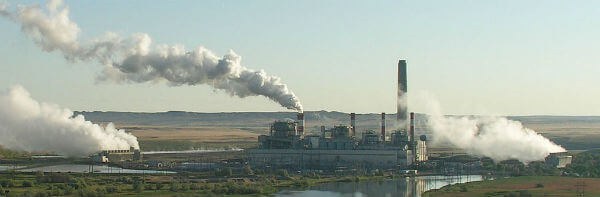
Mother Jones reports: Merrick Garland has spent the last decade in the weeds of some of the most contentious clean air cases in history — and he’s consistently come out on the side of the environment and against big polluters.

Garland, the DC Circuit Court chief judge who is President Barack Obama’s pick to replace Antonin Scalia on the Supreme Court, faces a steep climb to confirmation in the face of fierce opposition from Senate Republicans.

But if Garland makes it to the Supreme Court, the battle over Obama’s flagship climate regulations will likely be one of his first big cases. That policy, known as the Clean Power Plan, aims to slash the nation’s carbon footprint by restricting greenhouse gas emissions from power plants. The Environmental Protection Agency built the plan on a provision of the Clean Air Act that allows it to set emissions standards for existing “stationary” sources (i.e., power plants, rather than, say, cars) and then leave it up to each state to choose how to reach that standard. The rule was immediately challenged by two dozen coal-reliant states, which have argued that it oversteps EPA’s legal authority because it applies to the whole electricity system rather than to individual power plants. Shortly before Scalia’s death, the Supreme Court voted 5-4 to put the plan on hold while Garland’s current colleagues in the DC circuit court weigh its legality.

The climate regulations will likely wind up in front of SCOTUS sometime next year. So, Garland’s record on cases involving the Clean Air Act—which many legal experts see as the world’s single most powerful piece of environmental law—is a helpful guide for how he might rule. Garland once described the Clean Air Act as “this nation’s primary means of protecting the safety of the air breathed by hundreds of millions of people.” [Continue reading…]

Facebooktwittermail

Six ways Twitter has changed the world

By Sharon Coen, University of Salford; Aleksej Heinze, University of Salford; Deborah Chambers, Newcastle University; Kirsty Fairclough-Isaacs, University of Salford; Philip James, Newcastle University, and Richard Jones, University of Huddersfield

After 10 years of documenting the world in 140 characters, Twitter now has more than 300m active users. This might be far fewer than Facebook’s 1.5 billion, but Twitter arguably has a disproportionate influence on the world, partly because it attracts a significant number of politicians, journalists, and celebrities. Our expert panel explain how their field has been changed by the little blue bird.


Politics

Sharon Coen, senior lecturer in media psychology, University of Salford

Twitter has obviously been used to raise awareness of political topics, spread political messages and coordinate collective action. This has often come through specific campaigns such as #blacklivesmatter (protesting violence against black people) and #JezWeCan (promoting the candidacy of British Labour Party leader Jeremy Corbyn).

But Twitter is also used to gauge public opinion, often producing a false sense of consensus or of how many people feel strongly about a topic (so-called Twitter storms). This is because users tend to connect with people who hold similar views to their own and are less likely to come across different issues and opinions. On top of this, by giving politicians personalised profiles similar to those of other famous people, Twitter has helped turn them into celebrities rather than public servants.

Continue reading

Facebooktwittermail

The next disaster: ISIS expands as Libya descends into chaos

Christoph Reuter reports: The brass band starts playing. The musicians march along the Corniche, their blue uniforms starched and instruments polished and shining. The foreign minister has arranged for the celebration of several grand openings. Shops and cafés have opened their doors and red-black-green flags have been strung up all over, marking the fifth anniversary of the revolution.

Nothing in the capital city of Tripoli hints that Libya is in the throes of a civil war.

Still, an advance car equipped with a signal jammer that is supposed to block the detonation of any remote controlled explosives drives ahead of the foreign minister’s motorcade. And there are only a few consuls from neighboring countries walking along with the parade. After a brief address, the foreign minister plants an olive tree and then inaugurates a new low-rise government building. As he does so, secret service operatives dressed in civilian clothing go after a cameraman from the US TV station HBO. His offense is having filmed one of their white automobiles parked on the side of the road, though around three-quarters of all cars in Libya are white. They jerk the camera away from him amid the loud protestations of his crew. The band continues playing and then cake is served.

The scene is reminiscent of an operetta. Ali Abu Zakouk is the foreign minister of a government that is not recognized internationally. Politicians in Tripoli act as though they are running a state — but it is one that has in fact already broken into three pieces and is now on the verge of coming undone completely. The militaries of two Libyan governments are threatening each other, an array of militias and clans are involved as well, and the population is divided. Meanwhile, amidst this chaos, Islamic State (IS) is expanding. [Continue reading…]

Facebooktwittermail

Syria shows that Russia built an effective military. Now how will Putin use it?

The Washington Post reports: As Russia turned the Syrian conflict into an exhibition ground for its newly robust military over the past six months, its neighbors were watching with rapt interest.

This, after all, was a sterling opportunity to assess Russia’s new battlefield capabilities, in the form of ship-based cruise missiles, improved logistics and elite units. And on display, too, were Russia’s weaknesses.

“It is like a game of football,” said Janis Berzins, the managing director at the Center for Security and Strategic Research of the National Defense Academy of Latvia, a NATO member nation that borders Russia. “If you’re playing against Germany, then you go watch Germany play, right? It’s the natural thing to do.”

No one expects Russia and NATO to engage in a conventional war anytime soon. But with limited, consequential interventions in two conflicts, Ukraine and Syria, in the past two years, President Vladimir Putin had shown the Russian military’s growing proficiency as well as his appetite to use force to achieve his greater geopolitical goals. [Continue reading…]

Facebooktwittermail

Citing atrocities, John Kerry calls ISIS actions genocide

The New York Times reports: Secretary of State John Kerry declared on Thursday that the Islamic State is committing genocide against Christians, Yazidis and Shiite Muslims who have fallen under its control in Syria and Iraq.

The militants, who have also targeted Kurds and other Sunni Muslims, have tried to slaughter whole communities, enslaved captive women and girls for sex, and sought to erase thousands of years of cultural heritage by destroying churches, monasteries and ancient monuments, Mr. Kerry said.

The Islamic State’s “entire worldview is based on eliminating those who do not subscribe to its perverse ideology,” he said.

The statement by Mr. Kerry, made in response to a deadline set last year by Congress for the Obama administration to determine whether the targeting of minority religious and ethnic groups by the Islamic State could be defined as genocide, is unlikely to change American policy. The United States is already leading a coalition that is fighting the militants, and American aircraft have been bombing Islamic State leaders and fighters, its oil-smuggling operations and even warehouses where the group has stockpiled millions of dollars in cash. [Continue reading…]

Facebooktwittermail

Putin calls Syria operation a success and says it will lead to peace

The New York Times reports: President Vladimir V. Putin of Russia said on Thursday that his country’s more than five-month military operation in Syria had been a success, with the upper hand on the battlefield returned to the Syrian government and with President Bashar al-Assad ready to make the compromises necessary for a peaceful settlement.

As the Russian leader spoke, Kurdish leaders in northern Syria were putting the final touches on a plan that would unite territories controlled by Kurdish forces within an autonomus entity within a federated Syria.

The new entity is to be called the Democratic Federation of Rojava-North Syria, Kurdish leaders said at a news conference later in the day, and its structure and bylaws are to be hashed out by an executive council with 31 members, half of them female.

Anticipating criticism, a spokeswoman for the group, Hediye Yusif, said this was not intended as a first move toward the partition of the country. “We are against the division of Syria,” she said. “Federalism doesn’t mean partition. It’s the opposite; we see it as a positive step towards a democratic Syria for all.”

In Mr. Putin’s first extensive remarks on Syria since he ordered the bulk of Russian forces to return home on Monday night, he said that the Russian military would remain engaged in what he called the fight against terrorism, but added that it could return if needed.

“If necessary, literally within a few hours, Russia can build its contingent in the region to a size proportionate to the situation developing there,” Mr. Putin said.

Russian forces remain engaged in efforts to take back the ancient Syrian city of Palmyra, Mr. Putin said, adding that he expected it to be liberated soon. The city was captured from government forces last May by the Islamic State, which has destroyed temples, triumphal arches and other landmarks. [Continue reading…]

Facebooktwittermail

In Syria, peaceful protesters demonstrate again Assad and Jabhat al-Nusra

The Associated Press reports: With Syria’s shaky cease-fire holding, peaceful protesters have yet again taken to the streets in opposition-held areas of the country. But this time, in addition to President Bashar Assad’s government, they have another despised authority they seek to topple — al-Qaida’s affiliate in the country, the oppressive Nusra Front.

The developments have raised questions as to whether the al-Qaida branch can be sidelined — or in fact even completely eradicated — from any future scenarios for Syria.

In the northwestern province of Idlib, protesters recently set fire to an office belonging to the Nusra Front after major fighting in the area saw the al-Qaida-linked militants crush a division of the U.S.-backed rebel Free Syrian Army, which has become popular with residents in the town of Maaret al-Numan and elsewhere across the province.

The nearly three-week truce — which excludes the Nusra Front and its rival, the Islamic State group, both designated by the United Nations as terrorist organizations — and the peace talks currently underway in Geneva between the Syrian government and Western-backed rebels have increased pressure on the Nusra Front.

According to Charles Lister, a Middle East Institute fellow who has written a book on jihadist dynamics in the Syria conflict, the truce “was a test of exactly how much” the Nusra Front would succeed in casting itself as a political force and a heavyweight in the conflict.

Apparently, not much. [Continue reading…]

Facebooktwittermail

More than 44,000 refugees are already trapped in Greece, a number rising each day

The New York Times reports: Taha al-Ahmad’s family is sleeping in mud. His youngest daughter, age 1, lies beneath wet blankets, coughing inside their soggy tent. It has rained for days. Portable toilets are overflowing. Men burn firewood to stay warm. A drone circles overhead. Television trucks beam images of misery to the world.

It is primeval, and surreal, this squalid, improvised border camp of 12,000 refugees, a padlocked waiting room for entering the rest of Europe. Mr. Ahmad, barely two weeks out of Syria, does not understand why his family cannot cross the Macedonian border — roughly a football field away — and continue toward Germany. Hundreds of thousands of migrants passed through last year, but now Macedonia is closed. Europe’s door is slamming shut.

“I am in a very high degree of miserable,” Mr. Ahmad told me, speaking in a singsong English he learned in Syria, as our shoes sank into the muck.

“I ask my friends in Germany and Turkey: ‘What is happening? Tell us,’” he said. “We don’t know what is happening outside.”

To Mr. Ahmad, “outside” is the world of politics and policy beyond the wretchedness of the Idomeni camp. In Idomeni, refugees exist in a decrepit suspended animation. Disease spreads. Grandmothers sleep beside train tracks. Outside, specifically in Brussels, the leaders of the European Union, under public pressure to stop the migrant flow, will begin discussing the fate of refugees on Thursday, and a disputed plan to deport them to Turkey. [Continue reading…]

Facebooktwittermail

Ted Cruz’s new national security advisers include ‘one of America’s most notorious Islamophobes’

Huffington Post reports: A big part of Sen. Ted Cruz’s appeal is that he’s not Donald Trump, the openly bigoted billionaire currently leading the Republican Party’s presidential race.

But the notion that a Cruz presidency would be more palatable to those concerned about Trump’s anti-Muslim stance came into doubt on Thursday, when Cruz unveiled his own team of national security advisers. It includes Frank Gaffney, a man described by the Southern Poverty Law Center as “one of America’s most notorious Islamophobes.”

Gaffney, who served in the Reagan-era Defense Department, now heads the Center for Security Policy. It’s a think tank of sorts well known for promoting conspiratorial theories about the Muslim Brotherhood infiltrating the U.S. government at high levels and the Sharia system replacing American democracy. [Continue reading…]

Facebooktwittermail

Yemen conflict: Saudi Arabia to ‘scale back’ military operations

BBC News reports: Saudi Arabia has said its military coalition will scale back operations against rebels in Yemen.

The US-backed coalition of mostly Arab states began air strikes a year ago in support of Yemen’s internationally recognised government.

A Saudi military spokesman said that the coalition would continue to provide air support to Yemeni forces.

The announcement came as the death toll from a strike on a market this week doubled to more than 100. [Continue reading…]

Facebooktwittermail

Global risks: Trump presidency as dangerous as jihadi terrorism, says The Economist

trump-bw

Politico reports: A Donald Trump presidency poses a top-10 risk event that could disrupt the world economy, lead to political chaos in the U.S. and heighten security risks for the United States, according to the Economist Intelligence Unit.

Electing Trump could also start a trade war, hurt trade with Mexico and be a godsend to terrorist recruiters in the Middle East, according to the latest EIU forecasts.

The well-respected global economic and geopolitical analysis firm put a possible Trump presidency in its top 10 global risks this month, released Wednesday. Other risks include a sharp slowdown in the Chinese economy, a fracture of the Eurozone, and Britain’s possible departure from the European Union. [Continue reading…]

Facebooktwittermail