The Arab Spring has become overshadowed by the Syrian nightmare

Marc Lynch writes: When Bashar al-Assad gave his first major speech in response to the outbreak of protests in Syria in late March 2011, the Arab Twitterati’s response was an amused, “one down, two speeches to go.” That was the script followed by Tunisia’s Zine el-Abidine Ben Ali and Egypt’s Hosni Mubarak: The president flounders about with a series of unsatisfying reform offers in the face of massive, cascading popular mobilization, and then, after the magical third speech, disappears forever. If Assad opted instead to unleash military force against his people, then Syria would presumably switch over to the Libya script — a U.N.-authorized, NATO-led military intervention.

It’s been a long time since anyone invoked the magical third speech. Two years, more than 70,000 dead, and millions of refugees later, it’s painful to remember that easy joking about the inevitability of change. It reminds me of the famous preface to the third and final edition of Malcolm Kerr’s The Arab Cold War: “[S]ince June 1967 Arab politics have ceased to be fun. In the good old days … it was like watching Princeton play Columbia in football on a muddy afternoon,” Kerr wrote. “The June war was like a disastrous game against Notre Dame … leaving several players crippled for life and the others so embittered that they took to fighting viciously among themselves.”

Washington today is consumed by another round of its endless debate about whether to intervene in Syria, this time in response to the regime’s alleged use of chemical weapons. I have little to add to the thousands of essays already published on this, beyond what I’ve already argued. I might add that defending American “credibility” is always a bad reason to go to war. The reputation costs of not enforcing a red line are minimal, and will evaporate within a news cycle; military intervention in Syria will be the news cycle for the next few years. The United States should act in Syria in the way that it believes will best serve American interests and most effectively respond to Syria’s horrific violence, not because it feels it must enforce an ill-advised red line. [Continue reading…]

Facebooktwittermail

Chris Hedges interviews Julian Assange

Chris Hedges writes: A tiny tip of the vast subterranean network of governmental and intelligence agencies from around the world dedicated to destroying WikiLeaks and arresting its founder, Julian Assange, appears outside the red-brick building on Hans Crescent Street that houses the Ecuadorean Embassy. Assange, the world’s best-known political refugee, has been in the embassy since he was offered sanctuary there last June. British police in black Kevlar vests are perched night and day on the steps leading up to the building, and others wait in the lobby directly in front of the embassy door. An officer stands on the corner of a side street facing the iconic department store Harrods, half a block away on Brompton Road. Another officer peers out the window of a neighboring building a few feet from Assange’s bedroom at the back of the embassy. Police sit round-the-clock in a communications van topped with an array of antennas that presumably captures all electronic forms of communication from Assange’s ground-floor suite.

The Metropolitan Police Service (MPS), or Scotland Yard, said the estimated cost of surrounding the Ecuadorean Embassy from June 19, 2012, when Assange entered the building, until Jan. 31, 2013, is the equivalent of $4.5 million.

Britain has rejected an Ecuadorean request that Assange be granted safe passage to an airport. He is in limbo. It is, he said, like living in a “space station.”

“The status quo, for them, is a loss,” Assange said of the U.S.-led campaign against him as we sat in his small workroom, cluttered with cables and computer equipment. He had a full head of gray hair and gray stubble on his face and was wearing a traditional white embroidered Ecuadorean shirt. “The Pentagon threatened WikiLeaks and me personally, threatened us before the whole world, demanded that we destroy everything we had published, demanded we cease ‘soliciting’ new information from U.S. government whistle-blowers, demanded, in other words, the total annihilation of a publisher. It stated that if we did not self-destruct in this way that we would be ‘compelled’ to do so.”

“But they have failed,” he went on. “They set the rules about what a win was. They lost in every battle they defined. Their loss is total. We’ve won the big stuff. The loss of face is hard to overstate. The Pentagon reissued its threats on Sept. 28 last year. This time we laughed. Threats inflate quickly. Now the Pentagon, the White House and the State Department intend to show the world what vindictive losers they are through the persecution of Bradley Manning, myself and the organization more generally.”

Assange, Manning and WikiLeaks, by making public in 2010 half a million internal documents from the Pentagon and the State Department, along with the 2007 video of U.S. helicopter pilots nonchalantly gunning down Iraqi civilians, including children, and two Reuters journalists, effectively exposed the empire’s hypocrisy, indiscriminate violence and its use of torture, lies, bribery and crude tactics of intimidation. WikiLeaks shone a spotlight into the inner workings of empire—the most important role of a press—and for this it has become empire’s prey. Those around the globe with the computer skills to search out the secrets of empire are now those whom empire fears most. If we lose this battle, if these rebels are defeated, it means the dark night of corporate totalitarianism. If we win, if the corporate state is unmasked, it can be destroyed. [Continue reading…]

Facebooktwittermail

Moore’s law and the origin of life

I recently offered some commentary on a scientific paper, “Life before Earth,” written by a couple of geneticists, Alexei Sharov of the National Institute on Aging in Baltimore, and Richard Gordon of the Gulf Specimen Marine Laboratory in Florida, who suggest that the rate at which evolution advances necessitates that life must be much older than the Earth and may trace back to within the first 2 billion years of the universe’s existence.

Sharov and Gordon base their analysis on the claim that genetic complexity advances exponentially and they draw a comparison with Moore’s law which, though not actually a law, describes the fact that roughly every two years semiconductor manufacturers are able to double the number of transistors that can be crammed onto a microprocessor. Sharov and Gordon say that genetic complexity doubles every 376 million years.

The idea that life began long before the existence of our planet is certainly a view well outside orthodox views of evolution. And science is inherently conservative in its approach to radical new ideas. So, the fact that Sharov and Gordon’s paper has either been ignored or dismissed does not in and of itself indicate it is worthless.

However, I’m not a geneticist, so I’m not in a position to provide any critical analysis on what they wrote. Massimo Pigliucci, on the other hand, is a rare combination: he’s both a geneticist and a philosopher. So, unlike some other scientists, he doesn’t contemptuously dismiss the paper, but he does have the wherewithal to pick it apart.

Pigliucci writes:

[T]he first highly questionable statement … is that “the core of the macroevolutionary process … is the increase of functional complexity of organisms.” No, it isn’t. Stephen Gould long ago persuasively argued that there is no necessary direction of increased complexity throughout evolution. The only reason why complexity historically follows simplicity is because life had to start simple, so it only had “more complex” as a direction of (stochastic, not directed) movement. It’s a so-called “left wall” effect: if you start walking (randomly, even) from near a wall, the place you end up is away from the wall. And of course, as Gould again pointed out, life on earth was (relatively) simple and bacterial for a long, long time — and none the worse for it either. Moreover, the most complex organism on earth — us — though very successful in certain respects, is actually a member of a very small and often struggling group of large brained social animals. Measured by criteria such as biomass, bacteria still beat the crap out of us “superior” beings.

But the real problems begin for the Sharov and Gordon paper when they finally get to the business at hand: correlating genomic complexity with time of origin of the respective organisms, and then extrapolating back in time. [As a commenter on my Twitter stream pointed out, they could just as “reasonably” have extrapolated into the far future, arriving at the conclusion that the entire universe will eventually be made of DNA…]

The authors realize that simple genome length won’t cut it, because what matters is functional complexity, and there are some portions of the genomes of various organisms that are redundant and possibly without function. Nonetheless, they end up plotting the log-10 of genome size against time, which is how they arrive at the figure of 9.7 billion years ago for the origin of life. As PZ Myers quickly pointed out, however, even if we accept the procedure at face value, they simply cherry picked the data: plenty of organisms that don’t show up on the graph (plants and fungi, for instance) would completely scramble the results. Make no mistake about it: this is a fatal blow to the entire enterprise, and one that the authors ought to have thought about well before posting the paper. [Continue reading…]

Facebooktwittermail

Inside the White House debate over Syria

Dexter Filkins writes: Just after midnight on April 25th, a Syrian medical technician who calls himself Majid Daraya was sitting at home, in the city of Daraya, five miles from the outskirts of Damascus, when he heard an explosion. He ran outside, and, on the southern horizon, he saw a blue haze. “I’ve never seen a blue explosion before,” he remembers thinking. Seconds later came another blast, and another blue haze. Majid, who used a pseudonym to protect his identity, told me that his city had become a violent and unpredictable place; for five months, it had been the scene of heavy combat between forces loyal to the regime of Bashar al-Assad and the rebels who have been fighting for more than two years to drive him from power.

Within a few minutes, Majid said, his eyes began to burn, and he felt sick to his stomach. He decided to walk to the local hospital, where, as an anesthesia specialist, he spent most of his daytime hours. When he arrived, dozens of people were streaming in, choking, vomiting, crying, saliva bubbling out of their mouths. About a hundred and thirty people were treated for similar symptoms; ten of them, Majid said, were in “dangerous” condition, though none died. The victims were suffering from chemical poisoning, but there wasn’t much that the doctors could do except try to alleviate the symptoms. “We don’t have medicine to cure that kind of poisoning,” Majid said, in a telephone interview. (We had been introduced by the Syrian Support Group, a pro-opposition organization in Washington, D.C.) “The people were terrified, because no one could help them.”

On the way home, Majid saw birds and other animals—goats, chickens, stray dogs—writhing on the ground. Others were dead. “All these birds and chickens were dead around us,” he told me. “I can’t describe the fear that people felt.” A statement by the rebel-led city council said that the regime had used sarin and possibly chlorine gas. The council members held the Syrian government responsible and called on the international community to “find out the truth about the killing machine.” Majid directed me to a macabre gallery of photographs and videos, posted online by opposition leaders in Daraya. “It was poison gas,’’ he said. “It affected the birds and the animals and the humans in the same terrible way.”

Since March, there have been reports of at least four similar attacks, including one in Ateibeh, a contested area near Damascus, and one in Khan al-Assal, a town outside Aleppo. The reports indicated that the attack in Khan al-Assal had killed twenty-two people and injured forty-eight, and that the one in Ateibeh had contaminated as many as twenty-five people. Majid’s account could not be independently confirmed. An American intelligence official told me that he had learned of the purported attack, and others, by monitoring rebel Web sites. Like the other attacks, the one in Daraya was shrouded in ambiguity. What was the gas that Majid described? Was it a substance banned by international treaty, like sarin or VX? Or was it something less virulent? Had the attack been ordered by Assad, or had it been carried out by a Syrian military unit operating on its own authority? (Although the regime has accused rebels of such attacks, American officials believe that they don’t have chemical weapons.) And, if the incidents reported by Majid and other Syrians did amount to a use of chemical weapons, what could be done to prevent the next one?

On several occasions, President Obama has declared that if the regime used chemical weapons, or even prepared to use them, it would be crossing a “red line.’’ But the Administration has taken care not to make the line too sharp, referring not just to chemical weapons but to “a whole bunch” of chemical weapons, used in a “systematic” way. And though Obama has said that such attacks would be a “game changer,” he has stopped short of saying that they would be cause for military force.

Joseph Holliday, a former Army intelligence officer who has studied the conflict for the Institute for the Study of War, in Washington, suggested that the regime was attempting to use the weapons in a way that would frighten the rebels but wouldn’t cross the red line. “Assad has been extremely calculating with the use of force, increasing the levels of violence gradually, so as not to set off alarm bells,” he said. “First it was artillery. Then it was bombing. Then it was Scuds. A year ago, he wasn’t killing a hundred people a day. He’s introducing chemical weapons gradually, so we get used to them.” The attacks in March and April took place in areas that were either contested or held by the regime, and they killed relatively few people, at a time when, elsewhere in the country, a hundred people were dying every day. “If it’s not a big attack, it’s not easy to determine whether chemical weapons have been used,” a Senate aide told me. “The cloud disperses—there’s no mushroom cloud. Maybe Assad bombards the area afterward to cover up the evidence.” Indeed, some experts said that the regime was using the attacks specifically to gauge the resolve of Obama and the West. “Assad appears to be testing the tactical value of his chemical arsenal,” Gary Samore, who until February was President Obama’s chief adviser on weapons of mass destruction, said. “But he’s testing the political limits, too.”

Senior Israeli officials and Republicans in Washington, as well as British and French intelligence officials, have argued forcefully that the regime used chemical weapons. The Administration’s response has been characterized by caution, indecision, and reluctance to speak publicly about the subject. Officials said in late April that they believed chemical weapons had been used at least twice, but that they could not definitely tie the attacks to Assad. The White House said that it was not entirely clear who was in control of the weapons, leaving open the possibility that the attacks were accidental or unauthorized. “Given the stakes involved, and what we have learned from our recent experience, intelligence assessments alone are not sufficient,” the White House wrote in a letter to congressional leaders. Instead, the Administration would rely on the United Nations, which planned to send in experts to test soil and take samples from victims. Assad refused to allow the experts into the country.

A White House aide told me, “There is no question in our minds that the regime would be willing to use these weapons, is able to use these weapons, and is increasingly likely to use these weapons as things continue to go badly for them.” But, at a recent meeting at the State Department, according to a person who attended, “No one wanted to say that Assad had crossed the line, because no one wants to deal with it.” [Continue reading…]

Facebooktwittermail

UN commission downplays claim Syria rebels used sarin

BBC News reports: The UN Commission of Inquiry on Syria has sought to distance itself from comments made by one of its members that there was evidence of the nerve gas sarin being used by rebels.

Carla Del Ponte said testimony from victims and doctors had given rise to “strong, concrete suspicions but not yet incontrovertible proof”.

But the commission stressed that it had not reached any “conclusive findings”.

The commission’s press release says:

The United Nations Independent International Commission of Inquiry on the Syrian Arab Republic wishes to clarify that it has not reached conclusive findings as to the use of chemical weapons in Syria by any parties to the conflict. As a result, the Commission is not in a position to further comment on the allegations at this time.

The Chair of the Commission of Inquiry, Paulo Sergio Pinheiro, reminds all parties to the conflict that the use of chemical weapons is prohibited in all circumstances under customary international humanitarian law.

In line with its mandate, the Commission is currently investigating all allegations of violations of international law in the Syrian Arab Republic and will issue its findings to the Human Rights Council on 3 June 2013, as mandated by resolution 22/24.

Facebooktwittermail

How did ‘national interest’ become a politically neutral term?

Daniel Larison writes:

Bill Keller confirms that he has not really learned any of the lessons of the Iraq war:

Of course, there are important lessons to be drawn from our sad experience in Iraq: Be clear about America’s national interest. Be skeptical of the intelligence. Be careful whom you trust. Consider the limits of military power. Never go into a crisis, especially one in the Middle East, expecting a cakewalk.

But in Syria, I fear prudence has become fatalism, and our caution has been the father of missed opportunities, diminished credibility and enlarged tragedy.

If we applied Keller’s Iraq lessons to the Syrian case, it would warn us away from military action or any deeper involvement in the conflict. Wading into a new conflict in Syria or anywhere else would be detrimental to U.S. national interests. The U.S. has nothing at stake in the Syrian conflict. Keller claims that “we have a genuine, imperiled national interest, not just a fabricated one,” and he is referring to the danger of a failed state serving as a haven for terrorists, but all of the proposed options for intervention involve hastening the failure of the Syrian state and aiding in the empowerment of jihadist groups. If the U.S. has an interest in preventing state failure in Syria, that is a reason to avoid intensifying and prolonging the conflict by backing the opposition.

Keller and Larison seem to agree that with Syria (and presumably in all international affairs) America should be guided by the same principle: the service of U.S. national interest. They disagree on the method for accomplishing that aim.

Rhetorically, ‘national interest’ is treated like an impregnable fortress inside which reside patriotic, honorable Americans of all political stripes unified in their dedication to the protection of the nation — except they don’t happen to agree on what constitutes this incontestable good, the national interest.

If there is in fact no agreement about what serves the national interest, then why do so many so solemnly declare that such-and-such cannot be, or must be, in the national interest?

No doubt when the CEOs of all the major banks were assembled by Treasury Secretary Hank Paulson in 2008, at the height of the financial crisis, there was a clear consensus around that table that it was neither in the national interest nor their personal interest that any of the banks should fail. Plenty of other Americans begged to differ, but they weren’t the ones who got to define the national interest at that moment.

Still, the example does serve to illustrate that national interest is a form of self interest — supposedly the collective self interest of all Americans.

Which begs a question: is there something unique about Americans such that the service of their needs would demand disregarding the needs of others, or conversely, that the service of the needs of others would necessarily result in a loss for Americans?

But here’s a novel idea: what if the question about America’s role in Syria was framed in the following way — that the central question became: what will serve the interests of the Syrian people?

If America was to serve a greater good, there would surely be some reward this side of heaven. Likewise, if American action (or inaction) is generally seen as having caused more harm, then there will be a price.

So the questions then becomes much more humble and realistic and less focused on American identity, interests, or strategic objectives: Can America firstly act in a way that avoids creating more harm — can it avoid prolonging the war in Syria? — and secondly, does it have the capacity to play a constructive role in bringing about a positive outcome?

The issue is far more complex than suggested by the crude reduction, for or against intervention.

As a precursor to answering those questions it would be useful to be clear about ways in which much of the debate is currently skewed.

Neither Iraq nor Libya provides a lens for looking at Syria — even while each should offer lessons learned.

Whatever is done in the name of combating terrorism is almost certainly ill-conceived.

Counter-terrorism afflicts the world much more pervasively and destructively than terrorism.

The value of a human life is not defined by nationality, race, religion, gender, or sexual orientation.

National interest is a mirage. How can the common good be circumscribed by the artifice of national boundaries?

If our concern is not first and foremost with human interest then is not the alternative simply another name for self interest?

Facebooktwittermail

UN has testimony that Syrian rebels used sarin gas, says investigator — updated

Update: See Louis Proyect’s comment below. Carla Del Ponte has herself been a target of an earlier investigation over her handling of witnesses during Balkan war crimes cases. “During her eight years as chief prosecutor,” she was “a combative and divisive figure,” Ian Traynor wrote in 2010.

Sir Geoffrey Nice, who was a deputy prosecutor at the trial of Slobodan Milosevic in the Hague, says: “Given her behaviour in the Haradinaj case, her colleagues should be very cautious when considering any of her contributions in the investigation [in Syria].”

Reuters reports: U.N. human rights investigators have gathered testimony from casualties of Syria’s civil war and medical staff indicating that rebel forces have used the nerve agent sarin, one of the lead investigators said on Sunday.

The United Nations independent commission of inquiry on Syria has not yet seen evidence of government forces having used chemical weapons, which are banned under international law, said commission member Carla Del Ponte.

“Our investigators have been in neighbouring countries interviewing victims, doctors and field hospitals and, according to their report of last week which I have seen, there are strong, concrete suspicions but not yet incontrovertible proof of the use of sarin gas, from the way the victims were treated,” Del Ponte said in an interview with Swiss-Italian television.

“This was use on the part of the opposition, the rebels, not by the government authorities,” she added, speaking in Italian.

Del Ponte, a former Swiss attorney-general who also served as prosecutor of the International Criminal Tribunal for the former Yugoslavia, gave no details as to when or where sarin may have been used.

Facebooktwittermail

No early warning for U.S. on Israeli strikes in Syria

Reuters reports: The United States was not given any warning before air strikes in Syria against what Western and Israeli officials say were weapons headed for Hezbollah militants, a U.S. intelligence official said on Sunday.

Without confirming that Israel was behind the attacks, the intelligence official said that the United States was essentially told of the air raids “after the fact” and was notified as the bombs went off.
[…]
While the air raids raised fears that America’s main ally in the Middle East could be sucked into the Syrian conflict, Israel typically does not feel it has to ask for a green light from Washington for such attacks.

Officials have indicated in the past that Israel sees a need only to inform the United States once such a mission is under way.

Facebooktwittermail

Major Syrian salafi faction criticizes Jabhat al-Nosra

At Syria Comment, Aron Lund writes: The Islamic Ahrar al-Sham Movement, which is the leading faction of the Syrian Islamic Front (SIF) and probably the biggest salafi group in Syria, has issued a statement about Jabhat al-Nosra’s recent declaration of allegiance to al-Qaida’s Ayman al-Zawahiri. The Ahrar al-Sham statement is available in Arabic on Aaron Zelin’s Jihadology, always the go-to place for source material on jihadi groups.

The background is as follows. In early April, Zawahiri issued a statement in support of the revolution in Syria and called for an Islamic state there. This was followed by a message from the emir of the Islamic State of Iraq (ISI, i.e. al-Qaida in Iraq), Abu Bakr al-Baghdadi, who finally acknowledged the long-known fact that Jabhat al-Nosra was an ISI offshoot and that they would henceforth work under a common name and flag as “the Islamic State of Iraq and Syria”. The day after, Jabhat al-Nosra’s leader Abu Mohammed al-Joulani issued a surprisingly sharp rejoinder. He admitted that Jabhat al-Nosra had indeed been supported by the ISI from the very beginning, and was thankful for it, but he also said he hadn’t been consulted on Abu Bakr’s announcement and denied that the groups would merge. On the other hand, Abu Mohammed took the occasion to formally “renew” his pledge of allegiance to Ayman al-Zawahiri, the top emir of al-Qaida.

This procedure, “al-bayaa” in Arabic, is not mere rhetoric; rather it is loaded with religious and political significance for hardcore Islamists like these. It essentially means that Abu Mohammed, and by extention Jabhat al-Nosra, promises to follow every order from Zawahiri as long as this does not contravene sharia law. It is a step in the same process that al-Qaida in Iraq went through, when Abu Moussaab al-Zarqawi first declared his allegiance to Osama bin Laden. His group, al-Tawhid wal-Jihad, was then renamed al-Qaida in Mesopotamia, after Bin Laden responded by formally blessing their union, to signify that it was now a bona fide al-Qaida wing (it then folded into the ISI in 2006, but that’s another matter). Later, the GSPC of Algeria and Shabab al-Mujahedin of Somalia went through the same steps to become formal al-Qaida branches, and now Jabhat al-Nosra is doing it.

The new Ahrar al-Sham statement, signed May 4, 2013, criticizes both Abu Mohammed el-Joulani and Abu Bakr al-Baghdadi. According to Ahrar al-Sham, their statements were divisive, lacking in realism and “put the interest of the group before the interest of the Umma”, i.e. the Islamic nation as a whole.

Ahrar al-Sham warns that Jabhat al-Nosra’s open affiliation to al-Qaida will help the regime and that it will “regionalize” the crisis by bringing other parties into the conflict, presumably in reference to US and European hostility to al-Qaida.

While frank and critical, the Ahrar al-Sham statement is not really hostile to Jabhat al-Nosra or al-Qaida. Rather it is written in the tone of honest advise for an ally who has committed a damaging mistake. [Continue reading…]

Facebooktwittermail

The truth is that after Israel’s air strikes on Syria, we are involved

Robert Fisk asks: If the Syrian air force can use their MiGs so devastatingly – and at such civilian cost – against their enemies inside Syria, why couldn’t they have sent their jets to protect Damascus and attack the Israeli aircraft? Isn’t the Syrian air force supposed to be guarding Syria from Israel? Or are the MiGs just not technically able to take on Israel’s state-of-the-art (American) hardware? Or would that just be a step too far?

Much more important, however, is the salient fact that Israel has now intervened in the Syrian war. It may say it was only aiming at weapons destined for the Hezbollah – but these were weapons also being used against rebel forces in Syria. By diminishing the regime’s supply of these weapons, it is therefore helping the rebels overthrow Bashar al-Assad. And since Israel regards itself as a Western nation – best friend and best US military ally in the Middle East, etc, etc – this means that “we” are now involved in the war, directly and from the air.

The Los Angeles Times reports: Recent Israeli strikes inside Syria may have exposed weaknesses in the regime’s air defenses and could embolden the U.S. and its allies to take more steps to aid rebels fighting the regime there, said lawmakers on Sunday.

“The Russian-supplied air defense systems are not as good as said,” Sen. Patrick J. Leahy (D-Vt.) said on NBC’s “Meet the Press.” Leahy, who heads the appropriations subcommittee on foreign operations, said the Israeli defense forces were using American-made F-16 Fighting Falcon jets to launch the missiles against Syrian targets.

“Keep in mind the Israelis are using weapons supplied by us,” Leahy said. “They have enormous prowess with those weapons.”

The New York Times reports: Syrian state television said the explosions confirmed government contentions that the rebels are part of an American-Israeli conspiracy to topple Mr. Assad for his support of Palestinians and his opposition to Western policies in the Middle East.

While being seen as allies of Israel could tarnish the rebels in Syrian eyes, the opposition could point to the strikes as proof of their government’s hypocrisy. A frequent refrain among fighters and activists has been that although the government’s security forces and military failed to prevent the Israeli strikes — and for that matter have not clashed with Israel since 1973 — they have killed tens of thousands of Syrians and jailed many more in order to hold onto power.

Some rebels say openly that they consider Mr. Assad a higher priority target than Israel, while making clear that they do not embrace Israel. The main exile Syrian opposition coalition walked that line carefully in a statement issued after the bombings, blaming the government for allowing attacks by “external occupying forces.”

“The regime has used its forces to suppress the popular demands of the people for change, weakening Syrian defense, and thus allowing external occupying forces to hit Syrian locations,” the statement said. “Israel’s actions, including its pre-emptive attacks to weaken Syrian defenses, demonstrate a fear of losing the years of peace that the Assad regime provided for Israel.”

Facebooktwittermail

Could Israel’s latest strikes on Syria trigger a regional war?

Jonathan Marcus writes: Back in January of this year, Israel struck a weapons convoy that intelligence sources suggest was carrying SA-17 advanced surface-to-air missiles that were to be transferred from Syria to Lebanese militant group Hezbollah.

That strike was a warning, an effort to dissuade the regime of President Bashar al-Assad from contemplating any similar transfers to his allies in Lebanon.

These latest strikes suggest that this hoped-for deterrent effect has not been achieved. They demonstrate the Israeli Air Force’s ability to hit targets well inside Syria, but they could be the first of many – a regular pattern of attacks that at any moment could risk provoking Syria, along with Hezbollah, into a regional war. The nightmare of a major spill-over of the Syria crisis would have become a reality.

So what is Israel’s concern? While a good share of Israel’s and indeed Washington’s attention is taken up by fears about Syria’s chemical arsenal falling into the wrong hands, these latest air strikes underscore Israel’s equal worry about sophisticated conventional weapons being passed to Hezbollah. This includes sophisticated anti-aircraft missiles, anti-shipping missiles, or accurate long-range ground-to-ground missiles. Such concerns are longstanding. [Continue reading…]

Facebooktwittermail

Israel strikes Syria again, rocking Damascus

Reuters reports: Israel carried out its second air strike in days on Syria early on Sunday, a Western intelligence source said, in an attack that shook Damascus with a series of powerful blasts and drove columns of fire into the night sky.

Israel declined comment but Syria accused the Jewish state of striking a military facility just north of the capital – one which its jets had first targeted three months ago. Iran, a key ally of Syrian President Bashar al-Assad and an arch-enemy for Israel, urged states in the region to resist the Israeli attack.

People living near the Jamraya base spoke of explosions over several hours in various places near Damascus, including a town housing senior officials: “Night turned into day,” one man said.

The Western intelligence source told Reuters the operation hit Iranian-supplied missiles headed for Lebanon’s Hezbollah, a similar target to the two previous strikes this year, which have been defended as justifiable by Israel’s ally the United States:

“In last night’s attack, as in the previous one, what was attacked were stores of Fateh-110 missiles that were in transit from Iran to Hezbollah,” the intelligence source said.

Facebooktwittermail

Syria: massacres of Sunni families reported in Assad’s heartland

In this week alone, based on the numbers of casualties being compiled by the Local Coordination Committees in Syria, 1,075 people have been killed. The worst atrocities are alleged to have taken place in Banias and Bayda.

The Observer reports: The pictures appear to tell a familiar story. In one a pile of bodies lies on a street corner, shot down, apparently where they were gathered. Among them is a girl in a red blouse, perhaps five years old, spreadeagled among a dozen other family members, some covered in sheets. A baby’s legs are visible and a crumpled man has apparently been shot through the spine.

According to Syrian opposition activists, these killings happened in the coastal city of Banias, a Sunni family gunned down in the midst of the Alawite heartland, the Shia minority sect largely loyal to the regime of President Bashar al-Assad. Although the pictures could not immediately be verified, video and other pictures appeared to confirm reports of whole families being killed in two massacres by a pro-government militia in the past two days, prompting thousands to attempt to flee the area. In a statement, the US State Department said it was “appalled” by the latest reports.

According to reports, the first incident is alleged to have taken place in the village of Bayda on Thursday, while overnight fresh killings were reported by activists inside Banias itself, blamed on gangs of pro-regime loyalists. Images claimed to have been taken in Bayda on Thursday showed the bodies of several men, some apparently blindfolded, lying in the street.

Confirming violence in the area, Syrian state television said it had fought back against “terrorist groups” to restore security and showed what it said was a large cache of weapons seized during the fighting. A video posted online by activists appeared to show what was said to be the bodies of 20 people in the town, all from the same family, killings blamed on the National Defence Forces, a new paramilitary group made up mostly of fighters from minorities that back Assad.

Along with the cities of Tartus and Latakia, Banias – which has seen relatively little violence – is at the centre of the Alawite “heartland”, referring to the minority Shia sect of which Assad and many of his closest supporters are members. Some analysts have speculated that, in the event of the breakup of Syria, the Assad regime and Alawites might attempt to set up their own mini-state in this coastal strip.

According to some sources, Sunni families were being blocked from fleeing south to the town of Tartus at government checkpoints. [Continue reading…]

Facebooktwittermail

Where people go to save their souls

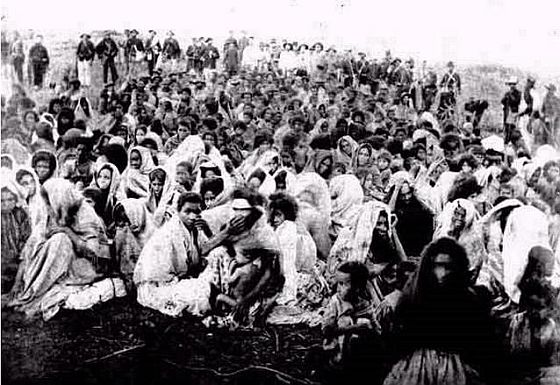
Jacob Mikanowski writes: Canudos, the holy city. From the hills it had looked like a mirage. Fifty-two hundred mud huts and a handful of white-washed churches spread along a bend in the Vasa-Barris, where a few years before there had been only a ruined farmhouse and an old well. The walls of the houses were the same shade as the parched earth on which they stood, so you could barely see the town until you were already in it. For the last ten months of the city’s life, it been bombarded by a full division of the Brazilian Army. Thousands of its defenders — the half-cowboy, half-bandit jagunços — were dead. They had been shelled by artillery from the mountains and gunned down by machine guns on the plains. When the fighting moved into the city itself, they fought house to house and door to door, using piles of corpses as barricades. Their leader was dead. Dysentery claimed him in the night. Hundreds had died in the weeks since. The end was at hand. On October 5, 1897 the Army made its final assault on the town. They found four combatants left in the trenches: two adults, an old man, and a child. They died where they stood. Canudos was no more.

Euclides da Cunha, an engineer and journalist embedded with the troops, nicknamed Canudos the “mud-walled Jerusalem,” but to the people who lived there, it was Belo Monte, the beautiful hill. When the soldiers of the Brazilian Republic finally took the city, they burnt every house, one by one, and pulled down all the spires. Then they cut the throats of all the male prisoners, including the children, and sold the women and girls to the brothels on the coast.

Finally, they dug up the body of Antonio Conselheiro, Antonio the Counselor, maybe to make sure the Messiah of the Brazilian backlands was dead. They cut off his head and sent it to Salvador, where it was met by a jubilant crowd. Doctors studied the skull for abnormalities, after which it was placed in a museum.

The photograph above shows prisoners from Canudos. It might be the first photograph of refugees, ever. It was taken just before the end of the siege by Flavio de Barros, a journalist embedded with the Brazilian Army. Barros’ equipment wasn’t very good. His pictures are scratched, damaged, and blown out by the force of the tropical sun. In this photo, the blurriness comes from the slow exposure time. Inadvertently, he caught the adults’ restlessness, the fidgeting of the children. We can’t know for sure if they are aware of what’s coming, but it’s a safe bet that they’re afraid.

The apocalypse they had been promised was different. It was supposed to be an end to poverty, an end to hunger, an end to drought, an end to property and rank. They were going to inherit the earth. For a time, it had even felt as if they had.

Canudos came into being because of a dream. It was a dream of utopia and a dream of escape. It was an ancient dream: the earthly Jerusalem, the heavenly city. And in the 1890s, it was shared by the dispossessed and marginalized the world over: by the inhabitants of Canudos in the drought-raved backlands of Brazil, by the anti-foreign Boxers in northern China, by the half-ecstatic, half-despairing practitioners of the Ghost Dance in the American West. All of them, in their separate ways, were searching for space and the means to remake the world over in their image. [Continue reading…]

Facebooktwittermail

The potential of psychedelics for treating PTSD

Wired: For Rick Doblin, being invited to the Pentagon was an emotional experience. Growing up in the 60s, Doblin embraced the counterculture and protested the Vietnam war and the military-industrial complex behind it.

Yesterday he was at the Pentagon trying to persuade military medical officials to permit a clinical trial that would test MDMA, the active ingredient in the party drug Ecstasy, in conjunction with psychotherapy, in active duty soldiers with post-traumatic stress disorder.

“There’s been this history of conflict between psychedelics and the military, and we’re trying to say that’s not the only vision,” Doblin said. “There’s a way for us to come together.”

Doblin is the founder and director of the non-profit Multidisciplinary Association for Psychedelic Studies (MAPS), which is trying to get drugs like psilocybin, LSD, and MDMA approved for medical use. MAPS has already sponsored small clinical trials of MDMA-assisted psychotherapy for PTSD, first in survivors of sexual abuse and assault, and now in military veterans, police, and firefighters.

Doblin spoke with Wired about his military mission and what it says about shifting attitudes towards psychedelic drugs. [Continue reading…]

Facebooktwittermail

Where do old cellphones go to die?

Leyla Acaroglu writes: Americans replace their cellphones every 22 months, junking some 150 million old phones in 2010 alone. Ever wondered what happens to all these old phones? The answer isn’t pretty.

In far-flung, mostly impoverished places like Agbogbloshie, Ghana; Delhi, India; and Guiyu, China, children pile e-waste into giant mountains and burn it so they can extract the metals — copper wires, gold and silver threads — inside, which they sell to recycling merchants for only a few dollars. In India, young boys smash computer batteries with mallets to recover cadmium, toxic flecks of which cover their hands and feet as they work. Women spend their days bent over baths of hot lead, “cooking” circuit boards so they can remove slivers of gold inside. Greenpeace, the Basel Action Network and others have posted YouTube videos of young children inhaling the smoke that rises from burned phone casings as they identify and separate different kinds of plastics for recyclers. It is hard to imagine that good health is a by-product of their unregulated industry.

Indeed, most scientists agree that exposure poses serious health risks, especially to pregnant women and children. The World Health Organization reports that even a low level of exposure to lead, cadmium and mercury (all of which can be found in old phones) can cause irreversible neurological damage and threaten the development of a child.

The growing toxic nightmare that is e-waste is not confined to third world outposts. It also poses health problems in the United States where, for several years, the Federal Bureau of Prisons has kept inmates busy processing e-waste. There are concrete steps the government, manufacturers and consumers could take to better dispose of electronic trash and to help prevent the pileup of more e-waste and the hazards e-waste processing poses.

The United States, for example, remains the only industrialized country that has not ratified the Basel Convention, an international treaty that makes it illegal to export or traffic in toxic e-waste. Fully implementing the treaty would be a step toward joining global efforts to contain toxic waste troubles. [Continue reading…]

Facebooktwittermail