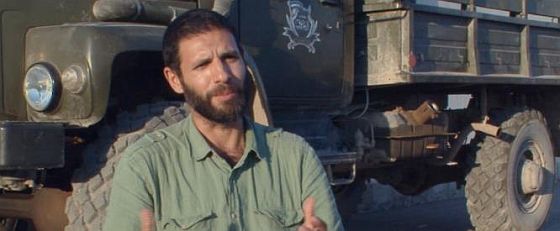
Ben Zygier was not suited to work for the Mossad

Amir Oren writes: Ben Zygier found the perfect cover for a Mossad agent: claiming to be a Mossad agent. Who would believe someone who bragged about his work for the Mossad actually worked for the Mossad? The guy would have to be a liar or a blabbermouth, two character traits that at first glance would disqualify someone from intelligence work. He must certainly be unemployed, a sanitation worker or, the lowest of the low, a journalist – anything but an actual Mossad agent.

That, among other things, is what went through the head of one of Zygier’s acquaintances from the short time he lived on Kibbutz Gazit in the north. Zygier and his friend, a demobilized soldier from Sayeret Matkal, the general staff’s elite special-operations force, once bumped into each other at the airport. In response to a not particularly prying question about what he had been up to, Zygier bragged about his secret institutional association. Perhaps Zygier had assumed his kibbutznik friend’s belonging to an army intelligence unit made him a partner to Zygier’s own secret. But the friend felt uncomfortable with the information and shared his surprise with others.

Another former kibbutznik who is from Kibbutz Ma’agan Michael and today lives in Kiryat Tivon, had his own hard-to-explain experience with Zygier. The friend studied with Zygier in Melbourne while his own parents were posted to Australia. When Zygier immigrated to Israel and was drafted into the Israel Defense Forces, he and the friend renewed their acquaintance. Zygier told him that his job in the military included providing security to Shin Bet security service personnel operating in South Lebanon. Last week, the friend recalled that in 1997, “Ben left the army and told me that he had been compelled to kill a boy and girl while providing security for an operation in Lebanon. He told me he was hospitalized for a month with shell shock. Afterward he went back to Australia and several years later returned to Israel. I don’t know whether it was something he made up or not. It astounds me if that could really happen. If so, how did they recruit him into the Mossad?” Continue reading

Facebooktwittermail

The Zygier Affair: how spies and fools work hand-in-hand

Journalists tend to be circumspect in telling stories where the facts are still emerging, but as a blogger I don’t suffer the same constraints. Enough information about the Zygier affair appears already sufficiently well-established to construct a strong narrative unlikely to be upturned even as new facts emerge.

Although in earlier attempts to do this I’ve focused on a possible Dubai connection, I now believe that Zygier was probably not a member of the Mossad team that assassinated Hamas commander Mohammed Mabhouh in Dubai on January 19, 2010. Zygier’s connection to that killing consisted most likely in the information he possessed about Mossad’s illegal use of foreign passports.
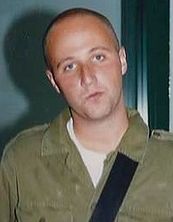
Multiple sources indicate that Ben Zygier was not cut out to be a spy:

Haaretz has learned that Zygier told at least two of his friends in Australia that he had been recruited by the Mossad.

An Israeli official familiar with the affair said Zygier had boasted on several occasions to friends and strangers about working for the Mossad. One of those occasions was when Zygier visited Australia in 2009. “He talked too much,” the source said.

So why would someone like this be recruited to Mossad in the first place? One would expect that its background checks would be among the most stringent.

Perhaps it was because he was viewed more than anything else as a useful source of foreign passports — a commodity of greater value to Mossad than any other intelligence agency.

But wasn’t the means by which Zygier obtained passports — taking advantage of Australia’s liberal policy which allows their citizens to change their name once a year — very likely to backfire?

This brazen operation through which Zygier obtained multiple Australian passports might have seemed easy to justify both in his mind and in the minds of his Mossad supervisors. No laws were being broken to obtain the passports and as the son of Geoffrey Zygier — a prominent member of Australia’s Jewish community — Zygier probably enjoyed a certain sense of impunity. The Israelis may have felt that if Zygier came under suspicion, the Australians could be persuaded to back off since in Australia, just as in the U.S., officials and politicians are always reluctant to provoke the ire of their own domestic Israel lobby.

If this was the calculation it was clearly a gross miscalculation.

Once the Australian Security Intelligence Organisation (ASIO) were on to Zygier and had well-founded suspicions about what he had been doing, their primary goal would have been to make it clear to Mossad that Australia would not tolerate the continued illegal use of its passports by Mossad agents. Such use not only places ordinary Australians in jeopardy but also Australia’s own intelligence operatives who, unlike Mossad agents, don’t need foreign passports to travel — that is, they didn’t until Mossad succeeded in turning an Australian passport into an object of suspicion.

(I imagine that inside Mossad, the prevailing attitude is that the use of foreign passports is simply a matter of necessity for an intelligence agency protecting a country whose citizens have pariah status across the region. “We have no choice,” as Shimon Peres would say.)

So, in 2009, Zygier found himself being squeezed by two intelligence agencies: one eager for him to speak; the other insisting that he remain silent.

The tipping point came within days of the Mabhouh assassination as the faces of Mossad agents appeared on news reports around the world and their use of foreign passports, including Australian ones, became public knowledge.

In February 2010, The Age revealed that for at least six months prior to the Dubai killing, ASIO had been investigating at least three dual Australian-Israeli citizens who were suspected of using Australian cover to spy for Israel. We now know that one of the suspects was Zygier.

Prior to Dubai, the Australians might have been content to use their knowledge of what Zygier and the other dual citizens were doing simply to force Mossad to cut it out. They just wanted the Israelis to stop using Australian passports. After all, ASIO is an intelligence, not a law enforcement agency.

In late 2009, the Australians pumped up the pressure by feeding the former Fairfax correspondent Jason Koutsoukis with information about the case so that he could challenge Zygier directly about his involvement in Mossad.

After the Dubai assassination, Australia’s acting ambassador in Tel Aviv, Nicoli Maning-Campbell, conveyed her government’s concerns to officials in Israel and within days, Israel faced diplomatic blowback as Australia abstained in a U.N. vote calling for a war crimes investigation of Israel’s assault on Gaza in 2009.

If for several months Mossad had felt they could rely on Zygier’s silence, time ran out in February 2010 and they concluded their only recourse would be to throw him in jail. Given the timing, it looks like he was being incarcerated not because of what he had done but because of what Mossad feared he might reveal about the inner workings of their passport abuse program.

Avigdor Feldman, an attorney who was hired by Zygier’s family to advise him on making a plea bargain, says that shortly before his death in December 2010, the detainee had been warned that “he could very likely expect to be sentenced to an extremely lengthy prison term and to be shunned by his family,” yet Zygier maintained his innocence.

Mossad couldn’t rely on Zygier’s silence outside jail and then found he was likely to speak out while under trial. At this point the man eager to prove his innocence, supposedly killed himself. Dead men don’t talk.

Facebooktwittermail

Did Mossad kill one of its agents to keep him silent?

McClatchy reports: In the space of three days, a two-year-old mystery about an unidentified prisoner who hanged himself in a high-security Israeli prison has become a scandal for Israel’s vaunted Mossad spy agency. Many here are predicting that it will cost some top officials their jobs.

The Israeli government now acknowledges that Prisoner X was an Australian citizen named Ben Zygier who was held in solitary confinement for eight months in this country’s notorious Ayalon prison before he hanged himself. But the details of Zygier’s life as a Mossad agent are still emerging, and with each new fact, analysts find a pattern of a spy agency that let down its guard and then perhaps went to extremes to cover up its responsibility.

“This is not an affair, it’s a catastrophe,” Uri Misgav wrote in the Israeli daily newspaper Haaretz. “The real issue is the state’s spiriting away an Israeli-Australian citizen, who worked for it, and locking him up hermetically until he died in strange, suspicious circumstances.” [Continue reading…]

Facebooktwittermail

Israel agreed to pay Zygier’s family millions

Haaretz reports: Israel recently signed an agreement to pay several million shekels in compensation to the family of Ben Zygier − “Prisoner X” who committed suicide in Ayalon Prison in December 2010 − a source familiar with the affair said Thursday. It also emerged on Thursday that Zygier was negotiating a plea bargain before he died in jail.

The source said the compensation agreement was signed about six weeks ago at the end of an inquiry into the cause of the prisoner’s death.

After Zygier was found dead in his isolated, maximum-security cell in the prison, Rishon Letzion Magistrate’s Court President Daphna Blatman Kedrai held an inquiry into the circumstances of his death. The inquiry, held behind closed doors, continued for more than a year and a half.

At the end of the inquiry the judge ruled Zygier killed himself, but did not refer to the possibility of negligence on the prison wardens’ part, and passed the matter to the State Prosecutor’s Office.

Attorneys Roy Blecher, Moshe Mazor and Boaz Benzur, who represented Zygier and his family from the moment he was arrested in February 2010, filed for compensation during the inquiry. The negotiations continued for more than a year and ended after it was concluded Zygier had committed suicide.

Two days before his death, Zygier met attorney Avigdor Feldman in prison, Feldman said on Thursday. Feldman wasn’t part of Zygier’s defense team, but said he was hired by Zygier’s family to advise him about a plea bargain the State Prosecutor had formulated.

Feldman told Army Radio that Ben Zygier appeared “rational, focused and to the point” when he met him, two days before his death.

Zygier was inclined to reject the plea deal and go to trial to prove his innocence, Feldman said.

He said Zygier was under heavy pressure and threats from his interrogators.

“He was told he was likely to be sentenced to an extremely long prison term and would be shunned by his family and the Jewish community. That affects a person’s soul,” he said.

However, Feldman said he did not sense Zygier was in a suicidal mood. “He sounded rational and focused and spoke to the point. He did not display any special feeling of self-pity,” he said.

Zygier appeared anxious about the trial, Feldman said. “Don’t get the impression this was a relaxed cafe conversation,” he said. “Clearly he was under pressure; clearly he was very concerned about the trial.”

Two days after the meeting a security services liaison called to tell him of his client’s suicide, he said.

Feldman told Army Radio he was aware Zygier was being held under a false name. “I saw this as something inappropriate but I did not take legal measures, assuming he was in the good hands of his lawyers,” he said.

Feldman criticized the security services’ failure to protect his client. “Those responsible for him should have taken better steps to watch over him, especially because he was far from the public eye. The end of the affair is something that needs to be investigated,” he said.

According to Australian media reports, Zygier was apparently not a spy or a traitor, but a young man who lacked discretion, was boastful and talked too much. It also appears from those reports that Zygier did not give information to an enemy state, nor did he intentionally breach state security.

This seems to be corroborated by the plea bargain the state offered him, instead of insisting he go to trial where he could get a harsher verdict.

However, due to Zygier’s problematic conduct, both journalists and one friendly state intelligence agency − the Australian Security Service − discovered his real name and the nature of his activity.

The result, according to the Australian media, was the exposure of part of the Mossad’s secret activity against Iran.

Haaretz has learned that Zygier told at least two of his friends in Australia that he had been recruited by the Mossad.

An Israeli official familiar with the affair said Zygier had boasted on several occasions to friends and strangers about working for the Mossad. One of those occasions was when Zygier visited Australia in 2009. “He talked too much,” the source said.

The things Zygier said were apparently picked up not only by Australian journalists but by the Australian Security Service.

Reports in the Australian media Thursday increased the suspicion that Zygier had collaborated with the Australian security service, possibly as a result of extortion.

The Australian media group Fairfax Media on Thursday cited Australian security officials as saying Zygier was in touch with the Australian security service before his arrest at the end of February 2010.

They said Zygier was about to give information to Australian intelligence or to journalists about the Mossad’s activities in the country, including the use it made with Australian passports.

Facebooktwittermail

Israeli officials say Australian intelligence knew all about Ben Zygier case

The Australian reports: Australia has not made a single request for information about the Ben Zygier case since news of the alleged spy’s incarceration and death in an Israeli prison broke publicly this week.

Amid a storm of speculation about the reason for the suspected Mossad agent’s jailing, including the claim he may have been about to divulge information about Australian passport fraud, a senior Israeli official said Canberra was unlikely to make a request because the Gillard government already had detailed knowledge of the case.

“Every day that goes by you see how deeply involved they were,” the official told The Weekend Australian.

“They interrogated him, they suspected him, they knew many things.

“It is clear they were in the know long before he died.

“Then when the coffin was returned to Australia, they knew he was not some backpacker who got lost trekking.”

Reports this week have said the 34-year-old father of two from Melbourne was under investigation by the Australian Security Intelligence Organisation, along with other Israeli-Australian dual citizens, in relation to possible misuse of Australian passports.

Israel’s Channel 10 said that, in 2009, Australian intelligence officers interrogated Zygier about trips he took to Iran, Lebanon and Syria. The report alleged the case was leaked to an Australian reporter who phoned Zygier and questioned him about his alleged links to the Mossad.

The reporter, Jason Koutsoukis, told Israel’s Channel 2 TV that Zygier strongly denied the allegations. Zygier was arrested shortly after they spoke.

Australian intelligence authorities were made aware of his arrest by the Israelis just days after the Dubai government released information showing that fraudulent Australian passports had been used by Mossad agents in the execution of Hamas leader Mahmoud al-Mabhouh on January 20, 2010.

Report have suggested Zygier may have been about to divulge details of his dealings in Australian passports to either Australian intelligence authorities or the media. Zygier, who also used the names Ben Alon and Ben Allen, was suspected of returning to Australia from Israel and changing his name and passport.

Zygier was caught between two intelligence services, Israeli sources said. Mossad believed he was on the “verge” of passing information to the Australians. [Continue reading…]

Facebooktwittermail

The return of Muqtada al-Sadr

Eli Sugarman and Omar Al-Nidawi write: Iraq’s nascent democracy faces a new dilemma: whether or not to embrace the political comeback of a former militia leader. Muqtada al-Sadr, the firebrand Shia cleric, has launched a public relations campaign, rebranding himself as a voice of sectarian harmony. Should Iraqis welcome Sadr with open arms, or be wary of his new persona?

Sadr first made a name for himself as an erratic demagogue who stoked sectarian fighting and helped bring Iraq’s young democracy to its knees. From 2003 to 2008, Sadr’s Mahdi Army took up arms against successive Iraqi governments and committed widespread atrocities against the country’s Sunni minority, in addition to targeting U.S. installations and personnel until American forces left Iraq at the end of 2011.

Then, last spring, he abruptly changed course, and he has spent the past year reforming his image and serving as a voice of moderation in Iraq. Sadr now openly decries violence, advocates the peaceful resolution of Iraq’s political disputes, and prays with religious leaders from other faiths and sects.

On the one hand, Sadr’s new tune could reflect his genuine maturation and a newfound desire to play a positive role in Iraq’s dysfunctional political system; on the other hand, it could be just a new tactic to expand his influence and power. Either way, the more Sadr can convince Iraqis — disenfranchised Shia, Kurds, and Sunnis alike — that he is a reliable and moderate partner, the more power he will accrue at the expense of Prime Minister Nouri al-Maliki, also a Shiite. Iraq’s Sunni Arabs and Kurds face a tough choice, because working with Sadr could lead to two very different outcomes. Joining him to challenge Maliki could perhaps promote a more inclusive political process, but it could also re-empower the rule of sectarian militias. The key for Iraqis is to vet the new Sadr carefully and insist that he backs his sweetened rhetoric with concrete actions. [Continue reading…]

Facebooktwittermail

It’s all about what you don’t know

In an era of Big Data, the prevailing myth is that what is known has become vast, while what is unknown lies on an ever-narrowing margin.

We live in a known world in which a few pockets of the unknown remain, but it’s just a matter of time before science succeeds in wrapping up its investigations. Every question will have been answered and for any individual, the only constraints on knowledge will be determined by the capacities of their own mind.

Thank Google, among others, for fabricating this fantasy image of the world.

As a measure of how little we know, try to remember precisely what you were thinking, precisely an hour ago.

No one can do that. No one’s memory operates with that precision and there are no means to record the stream of thought other than through memory.

So think about that: there are over 7 billion people on the planet most of whom currently attach a certain amount of importance to what is going on inside their own minds and yet all of whom know amazingly little about their own recent and distant experiences. Sure, we can piece together small fragments — enough to construct a narrative about who we are and what we have done — but the bulk of our experiences, once past, are gone for good. They have merged into the limitless void of the unknown and the unknowable.

We imagine that as we proceed through life, we are engaged in a process of perpetual aggregation, yet what we carry with us is utterly dwarfed by what we leave behind and is lost forever.

Facebooktwittermail

Meteorite fragments rain down on Siberia

The New York Times reports: Bright objects, apparently debris from a meteor, streaked through the sky in western Siberia early on Friday, accompanied by a boom that damaged buildings across a vast territory. Russia’s Interior Ministry said more than 1,000 people were hurt, 200 of them children, mostly from shards of glass that shattered when the meteor entered the atmosphere.

Many of the injuries were suffered by residents of the city of Chelyabinsk, about 950 miles east of Moscow, in a region where many factories for defense, including nuclear weapons production, are situated. But there was no indication of damage that resulted in any radiation leaks, officials said.

Russian experts believe the blast was caused by a 10-ton meteor known as a bolide, which created a powerful shock wave when it reached the Earth’s atmosphere, the Russian Academy of Sciences said in a statement. Scientists believe the bolide exploded and evaporated at a height of around 20 to 30 miles above the Earth’s surface, but that small meteorite fragments may have reached the ground, the statement said.

The governor of the Chelyabinsk district reported that material from the sky had fallen into a lake on the outskirts of a city about 50 miles west of Chelyabinsk. Officials told Russian news agencies they had sent police officers A small asteroid, known as 2012 DA14, was expected to pass close to Earth later on Friday, NASA reported on its Web site. Aleksandr Y. Dudorov, a physicist at Chelyabinsk State University, said it was possible that the meteorite may have been flying alongside the asteroid.

“What we witnessed today may have been the precursor of that asteroid,” said Mr. Dudorov in a telephone interview.

Others, however disputed that view, saying there was almost certainly no connection. Alan Fitzsimmons, an astronomer at the Astrophysics Research Centre at Queen’s University Belfast, told the BBC that the 2012 Da14 was approaching earth from the south, while the meteor struck the earth’s atmosphere in the northern hemisphere, indicating the objects were traveling in different directions. “This is literally a cosmic coincidence, although a spectacular one,” he said.

Facebooktwittermail

How many self-immolating Tibetans does it take to make a difference?

Ishaan Tharoor reports: On Wednesday morning in Kathmandu, the capital of Nepal, a Tibetan monk drenched in gasoline appeared in front of a Buddhist stupa popular among Tibetans and set himself aflame. At the time of writing, the young man, thought to be in his early 20s, is in critical condition. According to some reports, his fiery protest marks a grim milestone: it’s the 100th such self-immolation by a Tibetan to happen since 2009 (others suggest it’s the 99th or the 101st).

Whatever the ghastly metric, the act has become the signature tactic in recent years of Tibetans voicing their frustrations with Chinese rule. It carries a haunting moral cry no suicide bomber can match. When one downtrodden Tunisian set himself alight in December 2010, the spark of his despair and anger kindled uprisings that swept across the Arab world. Yet, 100 Tibetan self-immolations — and many deaths — later, little has changed.

Part of the problem is where these protests occur. The overwhelming majority takes place within the borders of China, either in Tibet proper or in Tibetan areas of neighboring Sichuan, Gansu and Qinghai provinces. Media access is heavily controlled and much of what we know comes from advocacy groups based outside. A white paper titled “Why Tibet Is Burning,” released last month by an institute affiliated with the Tibetan government-in-exile in Dharamsala, India, identifies by name 98 Tibetans who carried out self-immolations in China since February 2009. Many of those choosing to set themselves on fire are young teenagers and 20-somethings. They are farmers and aspiring clerics, nomads and students. In a foreword to the study, Lobsang Sangay, the democratically elected Prime Minister of Tibet’s exiles, urges Tibetans to “not to resort to drastic actions, including self-immolations, because life is precious.” But the study goes on to point the finger at Beijing:

The reason [for all the self-immolations] lies in China’s massive policy failure in Tibet over the course of more than 60 years of its rule. The revolution that is brewing in Tibet is driven by political repression, cultural assimilation, social discrimination, economic marginalization and environmental destruction.

China, of course, doesn’t see it this way. The likelihood of a Tibetan revolution — or even the rioting of not so long ago — is dwarfed by the specter of a Beijing crackdown. Authorities have already started detaining and jailing Tibetans they claim are “inciting” self-immolations; one such swoop earlier this month in the rugged province of Qinghai netted 70 suspects. Quoted by Chinese state media, a local official echoed China’s longstanding critique of any Tibetan dissent: “The Dalai Lama clique masterminded and incited the self-immolations. Personal information, such as photos of the victims, were sent overseas to promote the self-immolations.”

The Dalai Lama, the increasingly withdrawn spiritual leader of Tibetans-in-exile, has long promoted a “middle way” of dialogue and nonviolent resistance, and has also urged against Tibetans carrying out self-immolations. According to a BBC report last year, the steady toll of self-immolations was being interpreted by some angry Tibetans overseas as a sign that the Dalai Lama’s timid, largely failed policies of engagement ought to be given up. “Violence could now be the only option,” said one influential Tibetan activist to the BBC. [Continue reading…]

Facebooktwittermail

Why the Pentagon hates Obama’s drone war

Micah Zenko writes: General Stanley McChrystal is speaking out against the Obama administration’s use of drone strikes, echoing previous warnings and clashing with the White House’s carefully cultivated narrative:

To the Daily Telegraph:

It’s very tempting for any country to have a clean, antiseptic approach, that you can use technology, but it’s not something that I think is going to be an effective strategy, unless it is part of a wider commitment.

To Reuters:

They are hated on a visceral level, even by people who’ve never seen one or seen the effects of one.

To journalist Trudy Rubin:

[Drones are] a very limited approach that gives the illusion you are making progress because you are doing something.

And to television anchor Candy Crowley:

It can lower the threshold for decision making to take action that at the receiving end, feels very different at the receiving end.

McChrystal offers a unique perspective on the debate surrounding drone strikes. Serving as the commander of Joint Special Operations Command (JSOC) from 2003 to 2008, he restructured the secretive unit to capture or kill hundreds of suspected militants and terrorists in Iraq, Afghanistan, and elsewhere. During this time, he had the authority to deploy U.S. forces into Pakistan — without prior approval from the White House — in order to capture or kill Osama bin Laden. As commander of the international and U.S. forces in Afghanistan from June 2009 to July 2010, he significantly tightened the rules of engagement for airstrikes in populated areas, noting, “Air power contains the seeds of our own destruction.” (Full disclosure: McChrystal served on the advisory committee of my recent report on U.S. drone strikes, although that does not mean he agreed with my findings or recommendations.)

Although his candor is rare in his field, many of McChrystal’s concerns are increasingly shared by active-duty and retired military officials with whom I’ve spoken. The vast majority of these officers, who held a wide range of positions while in uniform, are deeply troubled by the Obama administration’s ongoing drone wars for five reasons. [Continue reading…]

Facebooktwittermail

How Israel leans towards fascism

In The Guardian, Aluf Benn, the editor-in-chief of Haaretz, explains how censorship works in Israel. Interestingly he points out that “censorship has its advantages. Your military and intelligence sources are more open to give you secret information, trusting the censor to play bad cop.”

But the reason censorship operates effectively is because most Israelis do not question its value.

The success of censorship relies not on coercion and legal enforcement, but on public support. The military and intelligence community enjoy sacred status in Israeli society, and “national security” resonates much better than “civil liberties”. Many journalists accept censorship willingly as their national contribution, don’t argue with it, and criticise their peers who break with the official line. They are even proud of knowing the story and withholding it from their audience.

Israel is small and vulnerable and is situated in a dangerous neighborhood, so its national security needs trump all others — or so the narrative goes. Israel is a victim of circumstances.

But think about the mindset this engenders and it is one that is actually anathema to most Americans — a mindset of unquestioning trust in the state.

American mistrust of government can often veer towards the opposite extreme, yet there is such a thing as healthy suspicion of government power.

“National security” — wherever it is invoked — is an issue that almost always serves as a justification for secrecy. It delegitimizes citizenship and infantilizes the people.

For their own good, the people must not know what the government is doing. And when the people acquiesce, they are no longer being served by a representative government. They have instead turned themselves into the foundation of a totalitarian state.

“As long as ‘state security’ is sacred in the public mind, we will have censorship,” writes Benn. And as long as Israel functions as a security state, it cannot claim to be a democracy.

Facebooktwittermail

Zygier told Australian friends he was a Mossad agent

Haaretz reports: Australian Ben Zygier – better known as “Prisoner X” who apparently committed suicide in December 2010 in Yigal Amir’s purpose-built, suicide-proof cell – confided to at least two friends that he had been recruited by Mossad, Haaretz can reveal.

One of his friends from Melbourne, who spoke on Thursday on strict condition of anonymity, said that he had met Zygier in a bar in Tel Aviv about a decade ago.

“He told me he’d just been recruited,” he said. “I was in shock. It’s the sort of thing people usually joke about but I had no reason to doubt him at all.

“Usually that sort of information would be a conversation starter. But I didn’t ask anything and he didn’t elaborate. I later found out I wasn’t the only one he told.”

The source named another of Zygier’s close friends from Hashomer Hatzair youth movement who he had also shared his state secret with.

Asked if Zygier ordinarily talked himself up, he said: “Not at all. He was very serious and very quiet.

“I don’t see Ben as someone who would have been a double agent. He was a proud Zionist.”

Most of more than a dozen of Zygier’s friends and acquaintances contacted by Haaretz declined to speak publicly as the wall of silence continued to cloak the story.

His family also declined to speak to media and the elected leadership of Australian Jewry closed its shutters this week, with some apparently fearing that the Jews in general, and Zionists in particular, may become targets if it emerges that Zygier abused his Australian passport to spy for Israel.

One of Zygier’s close friends initially declined to speak, but when asked why so many friends feared paying tribute to their 34-year-old mate from Melbourne, he said: “The silence is because people don’t know. I don’t know anything. I don’t want to know anything.

“A family that’s already suffered is suffering another tragedy. I lost a very good friend and my friend’s family lost a son,” said the friend, who spent a year in Israel with Zygier in 1994.

What could he possibly have done to prompt Israeli agents to seize him and lock him away in solitary confinement in a maximum-security cell?

“There’s only one guy who has the answers and he can’t take calls,” he said.

Another friend said the whole issue was bizarre. “People are very uncertain about what it’s all about," she said. "The biggest question seems to be – was it suicide or murder?”

Facebooktwittermail

Zygier, treason, and the 2010 Mabhouh assassination in Dubai

A Kuwaiti newspaper, Al-Jarida, reports today that according to Western sources, Ben Zygier aka ‘Prisoner X’ (who is claimed to have committed suicide in a high security Israeli prisoner in 2010) belonged to “band 131,” the Mossad team that assassinated Hamas commander Mohammed Mabhouh in Dubai on January 19, 2010.

Zygier is alleged to have provided Dubai authorities with detailed information about members of the Mossad team and in return for doing so was provided protection.

The same sources claimed that Zygier was later tracked down by Israel, kidnapped, and imprisoned on charges of treason.

The secrecy surrounding the Zygier case inevitably provides fertile ground for abundant speculation. For instance, Dimi Reider has an interesting theory about how Zygier could have exposed an Israeli false flag operation. But absent any additional evidence, I’d say that currently the Dubai theory ranks as somewhat more plausible.

Of course it leaves plenty of unanswered questions, but it’s not too difficult to fill in the blanks.

Let’s start with one feature of the Dubai investigation that was particularly striking at the time: the Dubai police were spectacularly efficient in identifying the Mossad agents.

The conventional wisdom among reporters and analysts covering the story was that this speedy detective work could largely be credited to state-of-the-art surveillance systems and software for tracking communications and financial transactions. It wasn’t so much a story about the brilliance of Dubai’s sleuths but more about the Western technology at their disposal. Maybe.

On the other hand, if as Dubai’s detectives examined the video evidence, they also had Zygier at their side identifying faces and naming names, that would certainly have expedited the process.

Why would Zygier have been so helpful? We can only guess, but it might have gone something like this: Dubai got a lucky break — they arrested him as he tried to flee.

However confident a Mossad agent might be when traveling across the Middle East with an Australian passport and a non-Jewish name, that confidence would likely swiftly evaporate if such an agent found himself detained by authorities who suspected he was in Mossad. In a country where torture has on occasions been administered directly by its rulers, it’s quite likely that an Israeli such as Zygier might have chosen to talk rather than risk being abused by a cattle prod.

Moreover, in the opinion of some of those who knew him, Zygier was not cut out for the job.

One Hashomer friend who was on Kibbutz Gazit with Zygier in 1994 said that Zygier “never struck me as someone who was stable.”

“I could never imagine someone like that being good for Mossad,” said the acquaintance, who like most acquaintances interviewed about Zygier did not want to be identified. “Also, Ben talked too much.”

So, if he did spill the beans, then end up getting hauled back to Israel in secret, it seems quite possible that he would have then been charged with treason, a charge that Israeli Army Radio now reports that he faced.

Did the severe conditions in which Zygier was imprisoned, along with the humiliation of the circumstances that landed him there, lead him to commit suicide?

One of his Israeli lawyers who met him just days before his death says he gave no indication he was going to commit suicide.

“When I saw him, there was nothing to indicate he was going to commit suicide,” said Avigdor Feldman, a top human rights lawyer.

In an interview with Israel’s army radio, Mr Feldman said he had met Prisoner X to offer him advice ahead of his trial.

“His family asked that I meet him to advise him. The trial hadn’t properly started yet,” he said, indicating the prisoner had already been indicted and that talks were under way with senior prosecutors to reach a plea bargain.

“He asked for advice and I sat and listened to him. Not that I’m a psychologist, but he appeared rational, focused, he spoke clearly about the issue and didn’t exude any sense of self-pity.”

A day or two later, Mr Feldman’s liaison at the prison rang him to say the prisoner had died.

The lawyer admitted he was surprised “that a man who was being held in a cell like that, a cell which was being monitored and checked 24-hours a day, could manage to commit suicide by hanging himself.”

Mr Feldman, who said he knew the prisoner’s real name and had access to the file on his arrest but was unable to give any details for legal reasons, said it was clear the detainee was facing a very long jail term.

“I understood that he was told he was likely to face the longest possible jail term and that he was likely to be ostracised by his family,” he said.

A life sentence, perhaps in isolation, and being disowned by his family — Zygier might not have appeared suicidal but he certainly had reason to despair.

Facebooktwittermail

Zygier ‘planned to expose deadly use of passports’

Brisbane Times reports: Security officials suspect that Ben Zygier, the alleged spy who died in a secret Israeli prison in 2010, may have been about to disclose information about Israeli intelligence operations, including the use of fraudulent Australian passports, either to the Australian government or to the media before he was arrested.

Mr Zygier “may well have been about to blow the whistle, but he never got the chance”, an Australian security official told Fairfax Media.

Sources in Canberra are insistent that the Australian Security Intelligence Organisation (ASIO) was not informed by its Israeli counterparts of the precise nature of the espionage allegations against Mr Zygier. However, it is understood that the Melbourne law graduate had been in contact with Australian intelligence officers.
Ayalon prison … Zygier committed suicide in the high-security Israeli jail in 2010 after being held for months in great secrecy.

Israeli intelligence informed ASIO of the arrest and detention of Mr Zygier just eight days after authorities in Dubai had revealed that suspected Israeli agents had used fraudulent Australian passports in the assassination of a Palestinian militant.

The consequent crisis in Australian-Israeli intelligence relations provided the context in which the Australian diplomats did not seek consular access to Mr Zygier, who was regarded by Australian security officials as a potential whistleblower on Israeli intelligence operations.

The Foreign Affairs Minister, Bob Carr, on Thursday revealed that the government learnt of Mr Zygier’s detention through “intelligence channels” on February 24, 2010. He told a Senate estimates hearing that Israel had “detained a dual Australian-Israeli citizen – and they provided the name of the citizen – in relation to serious offences under Israeli national security legislation”. [Continue reading…]

Facebooktwittermail

Welcome to the Malware-Industrial Complex

MIT Technology Review reports: Every summer, computer security experts get together in Las Vegas for Black Hat and DEFCON, conferences that have earned notoriety for presentations demonstrating critical security holes discovered in widely used software. But while the conferences continue to draw big crowds, regular attendees say the bugs unveiled haven’t been quite so dramatic in recent years.

One reason is that a freshly discovered weakness in a popular piece of software, known in the trade as a “zero-day” vulnerability because the software makers have had no time to develop a fix, can be cashed in for much more than a reputation boost and some free drinks at the bar. Information about such flaws can command prices in the hundreds of thousands of dollars from defense contractors, security agencies and governments.

This trade in zero-day exploits is poorly documented, but it is perhaps the most visible part of a new industry that in the years to come is likely to swallow growing portions of the U.S. national defense budget, reshape international relations, and perhaps make the Web less safe for everyone.

Zero-day exploits are valuable because they can be used to sneak software onto a computer system without detection by conventional computer security measures, such as antivirus packages or firewalls. Criminals might do that to intercept credit card numbers. An intelligence agency or military force might steal diplomatic communications or even shut down a power plant.

It became clear that this type of assault would define a new era in warfare in 2010, when security researchers discovered a piece of malicious software, or malware, known as Stuxnet. Now widely believed to have been a project of U.S. and Israeli intelligence (U.S. officials have yet to publicly acknowledge a role but have done so anonymously to the New York Times and NPR), Stuxnet was carefully designed to infect multiple systems needed to access and control industrial equipment used in Iran’s nuclear program. The payload was clearly the work of a group with access to government-scale resources and intelligence, but it was made possible by four zero-day exploits for Windows that allowed it to silently infect target computers. That so many precious zero-days were used at once was just one of Stuxnet’s many striking features.

Since then, more Stuxnet-like malware has been uncovered, and it’s involved even more complex techniques (see “The Antivirus Era Is Over”). It is likely that even more have been deployed but escaped public notice. Meanwhile, governments and companies in the United States and around the world have begun paying more and more for the exploits needed to make such weapons work, says Christopher Soghoian, a principal technologist at the American Civil Liberties Union.

“On the one hand the government is freaking out about cyber-security, and on the other the U.S. is participating in a global market in vulnerabilities and pushing up the prices,” says Soghoian, who says he has spoken with people involved in the trade and that prices range from the thousands to the hundreds of thousands. Even civilian law-enforcement agencies pay for zero-days, Soghoian says, in order to sneak spy software onto suspects’ computers or mobile phones. [Continue reading…]

Facebooktwittermail

How an Australian reporter homed in on Mossad agent Ben Zygier

The Guardian reports: For Jason Koutsoukis, the Australian journalist who first investigated allegations that Ben Zygier was a Mossad agent, the claims initially sounded “outlandish”.

In 2009, while living in Jerusalem and filing stories to the Australian Fairfax group, Koutsoukis was contacted by an anonymous source with connections to the intelligence world.

The story that the source told over a series of conversations was indeed extraordinary.

The source named three Australians with joint Israeli citizenship whom, he said, were working for a front company set up by Mossad in Europe selling electronic equipment to Iran and elsewhere.

“I was tipped off in October 2009,” Koutsoukis told the Guardian on Wednesday, recalling the events that would lead to his calling Zygier at his home in Jerusalem and accusing him of being an Israeli spy.

“The story was that Mossad was recruiting Australians to spy for them using a front company in Europe. It all seemed too good to be true.

“But what I was told seemed to check out. The company did exist. I also managed to establish that Zygier and another of the individuals had worked for it. I wasn’t able to confirm the third name.

“I was told too that the Australian authorities were closing in on Zygier and that he might even be arrested.

“There was other stuff about Zygier. In Australia you can change your name once a year. He’d done it four times I think, but they were beginning to get suspicious. I also found out that he had applied for a work visa for Italy in Melbourne.”

The repeated changes of name would have allowed Zygier to create new identities and multiple passports. [Continue reading…]

The Sydney Morning Herald adds: It is understood the ASIO [Australia’s domestic intelligence agency] investigation into Mr Zygier and the two other men began at least six months before the January 10, 2010, assassination of Hamas commander Mahmoud al-Mabhouh, widely believed to have been carried out by Mossad using passports obtained from Australia and Europe.

Three of those suspected of taking part in the assassination were travelling on Australian passports, using the names of dual Australian-Israeli citizens, authorities in Dubai confirmed.

There is no suggestion that the three Australian names linked to Mabhouh’s assassination are connected to Mr Zygier or the other men being investigated by ASIO.

Facebooktwittermail

How to form a battalion in Syria

I like to refer to Ghaith Abdul-Ahad as the intrepid Ghaith Abdul-Ahad — he goes places few other reporters would dare tread. But his courage is really just an ancillary to his greater quality as a journalist: his truthfulness. Add to that his fine prose and the result is a George Orwell of Middle East reporting.

His latest piece begins:

In the cramped living room of a run-down flat near the Aleppo frontline, two Syrian rebels sat opposite each other. The one on the left was stout, broad-shouldered, with a neat beard that looked as though it had been outlined in sharp pencil around his throat and cheeks. His shirt and trousers were immaculately pressed and he wore brand-new military webbing – the expensive Turkish kind, not the Syrian knock-off. The rebel sitting opposite him was younger, gaunt and tired-looking. His hands were filthy and his trousers caked in mud and diesel.

The flat had once belonged to an old lady. Traces of a domestic life that had long ceased to exist were scattered around the room and mingled with the possessions of the new occupiers. A mother of pearl ashtray sat next to a pile of walkie-talkies. Small china figurines stood on top of the TV next to a box of cartridges. Guns and ammunition lay on the rickety wooden chairs and a calendar showing faded landscapes hung on the wall. In the bedroom next door clothes were piled on the bed next to crates of ammunition. The stout rebel was shifty, on edge and keen to finish what he came to say and leave quickly. The other looked like a man waiting for a disaster to unfold.

But like a couple trying to conduct the business of their divorce with civility they spent a long time on pleasantries: each asked the other about his village and praised the courage and strength of his people. Outside a machine gun fired relentlessly down the street, interrupted only by the occasional thud of a mortar shell.

‘I am taking my cousins away from the front,’ the stout man finally said.

‘Why?’ the young rebel whined, as if one of the mortar shells had smacked him in the head. ‘Did we do anything wrong? Didn’t we feed them properly? Didn’t they get their daily rations? Whatever ammunition we get we divide equally: tell me what we did wrong.’

‘No, no, nothing wrong – but you seem not to have any work here.’

‘But this is an important defensive position,’ the young rebel pleaded. ‘All of Aleppo depends on this hill. If you go, two frontline posts will be left empty. They’ll be able to skirt around us.’

‘I’m sure you’ll take care of it. Allah bless your men, they’re very good.’

‘Where will you go?’

‘A very good man, a seeker of good deeds – he is from our town but he lives in the Gulf – told me he would fund my new battalion. He says he will pay for our ammunition and we get to keep all the spoils of the fighting. We just have to supply him with videos.’

‘But why would he do that? What’s he getting in return?’

‘He wants to appease God, and he wants us to give him videos of all our operations. That’s all – just YouTube videos.’

‘So he can get more money.’

‘Well, that’s up to him.’

They spent some more time on pleasantries but the divorce was done. The stout man walked out. Waiting for him in the cold were half a dozen men, young, earnest, country boys with four guns between them. Their cigarettes glowed in the dark as they walked behind their cousin, their new commander, in his pressed trousers and shirt, who promised them better food, plentiful ammunition and victory. So a new battalion is formed, one more among the many hundreds of other battalions fighting a war of insurgency and revolution against the regime of Bashar al-Assad.

*

We in the Middle East have always had a strong appetite for factionalism. Some attribute it to individualism, others blame the nature of our political development or our tribalism. Some even blame the weather. We call it tasharthum and we loathe it: we hold it as the main reason for all our losses and defeats, from al-Andalus to Palestine. Yet we love it and bask in it and excel at it, and if there is one thing we appreciate it is a faction that splinters into smaller factions. Yet even by the measure of previous civil wars in the Middle East, the Syrians seem to have reached new heights. After all, the Palestinians in their heyday had only a dozen or so factions, and the Lebanese, God bless them, pretending it was ideology that divided them, never exceeded thirty different factions.

In Istanbul I asked a Syrian journalist and activist why there were so many battalions. He laughed and said, ‘Because we are Syrians,’ and went on to tell me a story I have heard many times before. ‘When the Syrian president, head of the military junta at the time, signed the unification agreement with Nasser, basically handing the country to the Egyptians and stripping himself of his presidential title, he passed the document to Nasser and said I give up my role as president but I hand you a country of four million presidents.’

For decades, the dictatorship in Syria worked to stamp the people into submission: every pulpit, every media outlet, every schoolbook sent out the same message, that people should be subservient to the ruler. In Syria (as in a different way in Iraq, Egypt and the rest), those in authority – from the president to the policeman, from the top party apparatchik to the lowliest government functionary – exercised power over every aspect of people’s lives. You spent your life trying to avoid being humiliated – let alone detained and tortured or disappeared – by those in authority while somehow also sucking up to them, bribing them, begging them to give you what you needed: a telephone line, a passport, a university place for your son. So when these systems of control collapsed, something exploded inside people, a sense of individualism long suppressed. Why would I succumb to your authority as a commander when I can be my own commander and fight my own insurgency? Many of the battalions dotted across the Syrian countryside consist only of a man with a connection to a financier, along with a few of his cousins and clansmen. They become itinerant fighting groups, moving from one battle to another, desperate for more funds and a fight and all the spoils that follow. [Continue reading…]

Facebooktwittermail