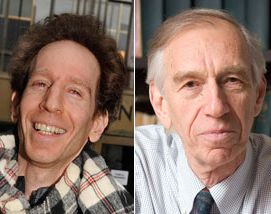
It might not be Saturday Night Live, but when the well-known and popular host of an HBO talk show, Bill Maher, can say, “the Israelis are controlling our government,” and win a round of applause, it’s clear that truth-telling on the dysfunctional relationship between Israel and the United States is going mainstream. Maher wasn’t taking a wild shot in the dark. He knew his comment would be well received.
For others who still hold back, it’s not that they are unaware about what kinds of views would resonate with ordinary left-leaning younger Americans. It’s a question of whether media figures in the spotlight are willing to catch negative attention in corporate board rooms. Unlike the networks, HBO isn’t beholden to advertisers, so that obviously gives Maher some extra latitude.
The responses of Maher’s panelists were telling. The Daily Caller‘s Jamie Weinstein, clearly aware that he faced an unfriendly audience, seemed to have put himself in a curious position. He was faulting Hagel for saying that the State Department is Israeli-controlled — by implication, other branches of government (e.g. Congress) could more reasonably be described that way. The Democratic Donna Brazile assumed responsibility for changing the subject, while Jon Meacham turned his back on Maher to make it clear there was no way he would get drawn into a discussion on Israel.
Long before the term cyborg had been coined, Henry David Thoreau — who saw few if any advances in our inexorable movement away from our natural condition — declared: “men have become the tool of their tools.”
Creating the means for someone with total color blindness to be able to hear color, seems like an amazing idea, but we glimpse the dystopian potential of such technology when the beneficiary says the sounds coming from the strident colors of cleaning products displayed on the aisle of a supermarket are more enjoyable than the sound-color of the ocean.
Singularity Hub: What would your world be like if you couldn’t see color? For artist Neil Harbisson, a rare condition known as achromatopsia that made him completely color blind rendered that question meaningless. Not being able to see color at all meant that there was no blue in the sky or green in grass, and these descriptions were merely something to be taken on faith or memorized to get the correct answers in school.
But Neil’s life would change drastically when he met computer scientist Adam Montandon and with help from a few others, they developed the eyeborg, an electronic eye that transforms colors into sounds. Colors became meaningful for Neil in an experiential way, but one that was fundamentally different than how others described them.
This augmentation device wasn’t like a set of headphones that he could put on when he wanted to “listen” to the world around him, but became a permanent part of who he was. Though he had to memorize how the sounds corresponded to certain colors, in time the sounds became part of his perception and the way he “sees” the world. He even started to expand the range of what he could “see”, so that wavelengths of light outside of the visible range could be perceived.
In other words, he became cybernetic…
Neil boldly paints a picture of what the future holds where augmentation devices will alter how we experience the world. Whether for corrective or elective motives, people will someday adopt these technologies routinely, perhaps choosing artificial synesthesia as a means of seeing the world in a broader or deeper way.
In color theory, color is described in terms of three attributes: hue, saturation, and value. Hue is what we generally refer to with color terms — red, green, purple etc. Saturation is the intensity of a color — pale yellow, for instance, has less saturation than lemon yellow. And value refers to the lightness or darkness of a color. In moonlight, all we can perceive is color value, without any ability to register hues or saturation.
When color is understood in these terms, achromatopsia does not have to be viewed as a lack of color vision since, at least in some cases, it can actually lead to the experience of a refinement of sight.
As much as Neil Harbisson might feel that technology has enhanced his perception of the world, I find it depressing that anyone would fail to see that in order to value this kind of nominal extension of the senses requires first that we underestimate the subtlety of human perception.
In An Anthropologist On Mars, Oliver Sacks describes the experience of Jonathan I., a 65-year old artist who suddenly lost his color vision as a result of concussion sustained in a car accident.
As an artist, the loss was devastating.
He knew the colors of everything, with an extraordinary exactness (he could give not only the names but the numbers of colors as these were listed in a Pantone chart of hues he had used for many years). He could identify the green of van Gogh’s billiard table in this way unhesitatingly. He knew all the colors in his favorite paintings, but could no longer see them, either when he looked or in his mind’s eye…
As the months went by, he particularly missed the brilliant colors of spring — he had always loved flowers, but now he could only distinguish them by shape or smell. The blue jays were brilliant no longer, — their blue, curiously, was now seen as pale grey. He could no longer see the clouds in the sky, their whiteness, or off-whiteness as he saw them, being scarcely distinguishable from the azure, which seemed bleached to a pale grey…
His initial sense of helplessness started to give way to a sense of resolution — he would paint in black and white, if he could not paint in color; he would try to live in a black-and-white world as fully as he could. This resolution was strengthened by a singular experience, about five weeks after his accident, as he was driving to the studio one morning. He saw the sunrise over the highway, the blazing reds all turned into black: “The sun rose like a bomb, like some enormous nuclear explosion”, he said later. “Had anyone ever seen a sunrise in this way before?”
Inspired by the sunrise, he started painting again—he started, indeed, with a black-and-white painting that he called Nuclear Sunrise, and then went on to the abstracts he favored, but now painting in black and white only. The fear of blindness continued to haunt him but, creatively transmuted, shaped the first “real” paintings he did after his color experiments. Black-and-white paintings he now found he could do, and do very well. He found his only solace working in the studio, and he worked fifteen, even eighteen, hours a day. This meant for him a kind of artistic survival: “I felt if I couldn’t go on painting”, he said later, “I wouldn’t want to go on at all.”…
Color perception had been an essential part not only of Mr. I.’s visual sense, but his aesthetic sense, his sensibility, his creative identity, an essential part of the way he constructed his world — and now color was gone, not only in perception, but in imagination and memory as well. The resonances of this were very deep. At first he was intensely, furiously conscious of what he had lost (though “conscious”, so to speak, in the manner of an amnesiac). He would glare at an orange in a state of rage, trying to force it to resume its true color. He would sit for hours before his (to him) dark grey lawn, trying to see it, to imagine it, to remember it, as green. He found himself now not only in an impoverished world, but in an alien, incoherent, and almost nightmarish one. He expressed this soon after his injury, better than he could in words, in some of his early, desperate paintings.
But then, with the “apocalyptic” sunrise, and his painting of this, came the first hint of a change, an impulse to construct the world anew, to construct his own sensibility and identity anew. Some of this was conscious and deliberate: retraining his eyes (and hands) to operate, as he had in his first days as an artist. But much occurred below this level, at a level of neural processing not directly accessible to consciousness or control. In this sense, he started to be redefined by what had happened to him — redefined physiologically, psychologically, aesthetically — and with this there came a transformation of values, so that the total otherness, the alienness of his V1 world, which at first had such a quality of horror and nightmare, came to take on, for him, a strange fascination and beauty…
At once forgetting and turning away from color, turning away from the chromatic orientation and habits and strategies of his previous life, Mr. I., in the second year after his injury, found that he saw best in subdued light or twilight, and not in the full glare of day. Very bright light tended to dazzle and temporarily blind him — another sign of damage to his visual systems—but he found the night and nightlife peculiarly congenial, for they seemed to be “designed”, as he once said, “in terms of black and white.”
He started becoming a “night person”, in his own words, and took to exploring other cities, other places, but only at night. He would drive, at random, to Boston or Baltimore, or to small towns and villages, arriving at dusk, and then wandering about the streets for half the night, occasionally talking to a fellow walker, occasionally going into little diners: “Everything in diners is different at night, at least if it has windows. The darkness comes into the place, and no amount of light can change it. They are transformed into night places. I love the nighttime”, Mr. I. said. “Gradually I am becoming a night person. It’s a different world: there’s a lot of space — you’re not hemmed in by streets, by people — It’s a whole new world.”…
Most interesting of all, the sense of profound loss, and the sense of unpleasantness and abnormality, so severe in the first months following his head injury, seemed to disappear, or even reverse. Although Mr. I. does not deny his loss, and at some level still mourns it, he has come to feel that his vision has become “highly refined”, “privileged”, that he sees a world of pure form, uncluttered by color. Subtle textures and patterns, normally obscured for the rest of us because of their embedding in color, now stand out for him…
He feels he has been given “a whole new world”, which the rest of us, distracted by color, are insensitive to. He no longer thinks of color, pines for it, grieves its loss. He has almost come to see his achromatopsia as a strange gift, one that has ushered him into a new state of sensibility and being.
Perhaps the greatest ability we are endowed with by nature resides in none of our individual senses but in our surprising powers of adaptation.
In the current technology-worshiping milieu we are indeed becoming the tools of our tools, but in a more literal sense than Thoreau might have imagined. Unwitting slaves, chained to machines — through devices that supposedly form indispensable connections to the world we are gradually becoming disconnected from what it means to be human.
The Independent reports: Tesco workers are being made to wear electronic armbands that managers can use to grade how hard they are working. [British-based Tesco is the world’s second-largest retailer after Walmart.]
A former staff member has claimed employees are given marks based on how efficiently they work in a bid to improve productivity and can be called in front of management if they take unscheduled toilet breaks.
The armbands are worn by warehouse staff and forklift drivers, who use them to scan the stock they collect from supermarket distribution points and send it out for delivery. Tesco said the armbands are used to improve efficiency and save its staff from having to carry around pens and paper to keep track of deliveries. But the device is also being used to keep an eye on employees’ work rates, the ex-staff member said.
The former employee said the device provided an order to collect from the warehouse and a set amount of time to complete it. If workers met that target, they were awarded a 100 per cent score, but that would rise to 200 per cent if they worked twice as quickly. The score would fall if they did not meet the target.
If, however, workers did not log a break when they went to the toilet, the score would be “surprisingly lower”, according to the former staff member, who did not want to be named but worked in an Irish branch of Tesco. He said that some would be called before management if they were not deemed to be working hard enough. “The guys who made the scores were sweating buckets and throwing stuff around the place,” he said. He said the devices put staff under huge pressure and many of his colleagues using them in Ireland were eastern Europeans, with limited English.
Following Bulgaria’s announcement that suspects involved in the Burgas bombing which killed five Israeli tourists last July, have been linked to Hezbollah, Tom Donilon, national security adviser to President Obama, has written an op-ed for the New York Times. Predictably, he calls on the EU to add the Lebanese organization to its terrorist list. No doubt this will help the White House score points with Israel and also win favor with Iran hawks. However, a larger story is being obscured.
Let’s assume that the bombers were indeed linked to Hezbollah. That doesn’t necessarily make this a Hezbollah operation or an operation serving Hezbollah’s interests. A more likely scenario is that the attack was conducted on behalf of Iran in retaliation for a string of terrorist attacks launched by Israel against civilian targets in Iran.
If the EU goes ahead and lists Hezbollah as a terrorist organization and they want to be even-handed, they should also list Mossad — especially at a time when there is rather compelling evidence that Mossad is even willing to murder Israelis.
Shateri was a senior officer in the IRGC’s elite Quds force — the international arm of the Revolutionary Guards — and reportedly “the highest ranking Iranian Revolutionary Guard Corps officer to be killed outside Iran.”
Iran’s official Press TV described him as leading “the Iranian-financed reconstruction projects in the south of Lebanon” — where Shi’ites form a majority of the population — for the last seven years.
The U.S. Treasury Department sanctioned “Khosnevis” and others for supporting Hezbollah, describing Khosnevis as a provider of technical support of “the terrorist group’s private communications network” and Iranian President Mahmoud. [Continue reading…]
Australia’s ABC News reports: Suspected Mossad agent Ben Zygier was arrested by his own spymasters after they believed he told Australia’s domestic intelligence agency about every aspect of his work with the Israelis, sources say.
The ABC’s Foreign Correspondent program understands that Zygier met with ASIO officers in Australia and gave comprehensive detail about a number of Mossad operations, including plans for a top-secret mission in Italy that had been years in the making.
It is unknown who initiated the contact.
Sources have told the ABC that on one of four trips back to Australia in the years before his death in 2010, Mr Zygier – who also used the surnames Alon, Allen and Burrowes – applied for a work visa to Italy.
Last week, Foreign Correspondent revealed Mr Zygier was secretly jailed in Israel’s Ayalon prison, where it is claimed he committed suicide after 10 months in prison.
His incarceration was a state secret in Israel; the security services going to extraordinary lengths to conceal his plight.
The ABC now understands Mr Zygier was one of three Australian Jews who changed their names several times, taking out new passports for travel in the Middle East and Europe in their work for Mossad.
Foreign Correspondent has been told Mr Zygier set up a communications company in Europe for Mossad, a venture that employed the two other Australian dual citizens.
The company exported electronic components to Arab countries as well as Iran.
Joseph Stiglitz writes: President Obama’s second Inaugural Address used soaring language to reaffirm America’s commitment to the dream of equality of opportunity: “We are true to our creed when a little girl born into the bleakest poverty knows that she has the same chance to succeed as anybody else, because she is an American; she is free, and she is equal, not just in the eyes of God but also in our own.”
The gap between aspiration and reality could hardly be wider. Today, the United States has less equality of opportunity than almost any other advanced industrial country. Study after study has exposed the myth that America is a land of opportunity. This is especially tragic: While Americans may differ on the desirability of equality of outcomes, there is near-universal consensus that inequality of opportunity is indefensible. The Pew Research Center has found that some 90 percent of Americans believe that the government should do everything it can to ensure equality of opportunity.
Perhaps a hundred years ago, America might have rightly claimed to have been the land of opportunity, or at least a land where there was more opportunity than elsewhere. But not for at least a quarter of a century. Horatio Alger-style rags-to-riches stories were not a deliberate hoax, but given how they’ve lulled us into a sense of complacency, they might as well have been.
It’s not that social mobility is impossible, but that the upwardly mobile American is becoming a statistical oddity. According to research from the Brookings Institution, only 58 percent of Americans born into the bottom fifth of income earners move out of that category, and just 6 percent born into the bottom fifth move into the top. Economic mobility in the United States is lower than in most of Europe and lower than in all of Scandinavia. [Continue reading…]
Matt Taibbi writes: The deal was announced quietly, just before the holidays, almost like the government was hoping people were too busy hanging stockings by the fireplace to notice. Flooring politicians, lawyers and investigators all over the world, the U.S. Justice Department granted a total walk to executives of the British-based bank HSBC for the largest drug-and-terrorism money-laundering case ever. Yes, they issued a fine – $1.9 billion, or about five weeks’ profit – but they didn’t extract so much as one dollar or one day in jail from any individual, despite a decade of stupefying abuses.
People may have outrage fatigue about Wall Street, and more stories about billionaire greedheads getting away with more stealing often cease to amaze. But the HSBC case went miles beyond the usual paper-pushing, keypad-punching sort-of crime, committed by geeks in ties, normally associated with Wall Street. In this case, the bank literally got away with murder – well, aiding and abetting it, anyway.
For at least half a decade, the storied British colonial banking power helped to wash hundreds of millions of dollars for drug mobs, including Mexico’s Sinaloa drug cartel, suspected in tens of thousands of murders just in the past 10 years – people so totally evil, jokes former New York Attorney General Eliot Spitzer, that “they make the guys on Wall Street look good.” The bank also moved money for organizations linked to Al Qaeda and Hezbollah, and for Russian gangsters; helped countries like Iran, the Sudan and North Korea evade sanctions; and, in between helping murderers and terrorists and rogue states, aided countless common tax cheats in hiding their cash. [Continue reading…]
When online communication first took shape, it often involved exchanges between individuals who had professional reasons to want to conceal their identities. Software engineers, who tend to be libertarian by nature, wanted to be able to engage in freewheeling discussions with like-minded cyber-adventurers without being constrained too much by overbearing managers or corporate dictates. Free speech and anonymity seemed to dovetail together.
But when the use of anonymity or fictitious identities is regarded as a right, all too often this ends up turning into a license for irresponsibility. The liberating effect of not having to be held accountable for ones own communication, breeds a fake boldness: the willingness to say things one would otherwise not dare say; the courage to “speak out” on the condition that one can do so while remaining in hiding.
The New York Times reports: There is a saying about academia that the disputes are so vicious because the stakes are so low. In the case of Raphael Haim Golb, a son of a Dead Sea Scrolls scholar, the last few years have provided ample support for the first half of the saying. But the second half is less accurate.
Raphael and Norman Golb
In his cluttered fifth-floor walk-up apartment in Greenwich Village, Mr. Golb, 53, is waiting to begin serving a six-month sentence for waging an Internet campaign against his father’s academic rivals, including sending e-mails under a rival professor’s name. The younger Mr. Golb, who has a Ph.D. from Harvard and a law degree from New York University, is six feet tall, 120 pounds; digressive, tightly wound, bookish; a gadfly, an irritant, an obsessive. If you saw him on the street, you might worry about his safety.
Between 2006 and 2009, he created more than 80 online aliases to advance his father’s views about the Dead Sea Scrolls against what he saw as a concerted effort to exclude them. Along the way, according to a jury and a panel of appellate court judges, he crossed from engaging in academic debate to committing a crime.
What he accomplished through this manner of intellectual warfare is, like the Dead Sea Scrolls themselves, a topic on which opinion is passionately diverse, with no shortage of bad blood.
“This has nothing to do with scholarly debate,” said Lawrence H. Schiffman, vice provost of Yeshiva University and a widely published authority on the Dead Sea Scrolls, who became the prime target of Mr. Golb’s online activities. “It has to do with criminal activity.
“Fraud, impersonation and harassment are criminal matters,” he continued. “This was actually designed to literally end my career.” [Continue reading…]
University of Melbourne: Our love of music and appreciation of musical harmony is learnt and not based on natural ability – a new study by University of Melbourne researchers has found.
Associate Professor Neil McLachlan from the Melbourne School of Psychological Sciences said previous theories about how we appreciate music were based on the physical properties of sound, the ear itself and an innate ability to hear harmony.
“Our study shows that musical harmony can be learnt and it is a matter of training the brain to hear the sounds,” Associate Professor McLachlan said.
“So if you thought that the music of some exotic culture (or Jazz) sounded like the wailing of cats, it’s simply because you haven’t learnt to listen by their rules.”
The researchers used 66 volunteers with a range of musical training and tested their ability to hear combinations of notes to determine if they found the combinations familiar or pleasing.
“What we found was that people needed to be familiar with sounds created by combinations of notes before they could hear the individual notes. If they couldn’t find the notes they found the sound dissonant or unpleasant,” he said.
“This finding overturns centuries of theories that physical properties of the ear determine what we find appealing.”
Coauthor on the study Associate Professor Sarah Wilson also from the Melbourne School of Psychological Sciences said the study found that trained musicians were much more sensitive to dissonance than non-musicians.
“When they couldn’t find the note, the musicians reported that the sounds were unpleasant, whereas non-musicians were much less sensitive,” Assoc. Prof Wilson said.
“This highlights the importance of training the brain to like particular variations of combinations of sounds like those found in jazz or rock.”
Depending on their training, a strange chord or a gong sound was accurately pitched and pleasant to some musicians, but impossible to pitch and very unpleasant to others.
France 24 reports: The second anniversary of Bahrain’s popular uprising was marked by renewed violence, resulting in the death of a 16-year old boy. In the video, filmed right after the teenager’s death, a desperate protester can be seen risking his life to stand up to the police.
The victim’s name was Hussein al-Jaziri. According to opposition websites, the teenager was killed by fragmentary bullets. Overwhelmed by this death, which he had just witnessed, a protester walked up to police and screamed at them. The policemen tried to intimidate him, but seemed thrown off balance by the protester’s daring.
This footage exemplifies the standstill at which the Bahraini opposition finds itself, faced with unyielding government repression. Since the start of the uprising, the confirmed death toll has risen to 82 protesters, including nine children.
“You criminals! You murderers! You hope to escape God’s wrath? God will avenge us! Go on, shoot me! Shoot me if you dare, I won’t leave!”
Nasser Weddady writes: When northern Mali fell to terrorists and foreign militants last April, a debate began over the causes of the country’s chaotic collapse. Many argued that it was a direct byproduct of NATO’s 2011 intervention in Libya, which sent thousands of well-armed men across the Sahara to Mali. Others pointed to Mali’s internal corruption and ethnic divisions. But little was said about the most important factor: Europeans have knowingly bankrolled Islamist radicals with ransom payments since at least 2003.
Sixteen years before the 9/11 attacks, the United States sold Iran weapons indirectly in the hopes of freeing American hostages held by Iran’s proxy, Hezbollah. The Iran-contra debacle taught America, among other things, that paying ransom money only emboldens terrorist groups and their backers. Yet when confronted with the same challenge, European leaders have failed to heed that lesson, and have filled the coffers of terrorist groups for at least a decade.
The so-called global war on terror has been hobbled by these payoffs. The same nations that until very recently had troops in Afghanistan fighting terrorism have been turning over cash to terrorists in Africa.
Over the past decade, Britain, Germany, Italy, Spain, France, Austria, Sweden and the Netherlands have paid more than $130 million to terrorist groups, mostly through mediators, to free European hostages.
European leaders were understandably desperate to save the lives of their citizens. But their efforts have backfired because the paying of ransoms has merely turned their citizens into a lucrative commodity for cash-hungry jihadis. Groups like Al Qaeda in the Islamic Maghreb and the Movement for Unity and Jihad in West Africa have grown accustomed to ransom payments and reacted by seeking to capture as many Europeans — from aid workers to volunteers to tourists — as they could. In contrast, terrorists know that America won’t negotiate with hostage-takers and is much more likely to use force to free its citizens.
It’s easier to identify the problem than it is to prescribe a viable solution. Weddady says: “The only thing that Mr. Belmokhtar and his ilk should expect from the international community is overwhelming force of the sort Algeria demonstrated during the hostage crisis last month.”
That reminds me of this joke: What’s worse than being taken hostage by al Qaeda? Getting rescued by the Algerians.
As the repercussions of the Zygier Affair continue to reverberate through Israel’s political establishment, the need for a suitable scapegoat rises. According to a report in Haaretz, describes the Prison Service as “one of the most organized among Israel’s security organizations, but it is also the weakest.” say they suspect other parties involved in the so-called “Prisoner X” affair who have more political leverage will do everything in their power to place the blame on the Prison Service.
At present, many sources in the Prison Service say they suspect other parties involved in the so-called “Prisoner X” affair who have more political leverage will do everything in their power to place the blame on the Prison Service.
Certain individuals, they say, will try to divert the attention to the question of how Zygier managed to commit suicide in an observation cell.
Protocol requires every person who arrives at the Prison Service to appear on their first day before a committee of doctors, psychologists and other professionals who evaluate the likelihood that they will attempt to harm themselves or others. In Ben Zygier’s case, no such risk assessment is known to have taken place. The decision to skip this meeting was apparently made by someone other the Prison Service.
Furthermore, despite the fact that Zygier was held in an observation cell monitored by security cameras, it is evident that he was not monitored as closely as other prisoners.
Prison Service employees were kept in the dark about his identity and forbidden from engaging in conversation with him. They were permitted to check only if he was present. Only a few Prison Service employees even knew which government body was responsible for his arrest.
One of the major questions that has yet to be asked and which is likely to reduce at least some of the blame being leveled against the Prison Service is whether the Mossad instructed the Prison Service not to turn on security cameras in the cell. Prison guards did not consistently monitor video of Zygier, as they did for Yigal Amir, the assassin of Prime Minister Yitzhak Rabin, when he was kept in the same cell.
The Prison Service has not commented on whether it was ordered to turn off the cameras in Zygier’s cell in order to prevent him from conveying messages to the prison guards or to explain why he had been arrested.
Even on the day Zygier was found dead by guards, none of them entered the cell when the medical team arrived. The guards who were on duty that day waited in a relatively distant wing of the prison and refused to enter even when they were asked by the medical team to help.
Medical staff who arrived at the cell were surprised to discover that the prisoner had only one identifying detail listed: his name, Ben Alon. In any incidence of death, the Prison Service is required to provide details regarding the deceased, including identification number, age and emergency contacts. One medic attempted to inquire about the lack of information and claimed that the body could not be evacuated without additional identifying details, but he was asked to proceed without them. Medics and Prison Service officials were further surprised when during the evacuation they learned that Ben Alon’s name had been changed to Zygier.
Should a thorough investigation be held into the Ben Zygier affair and the circumstances of his suicide, it appears that the Prison Service would benefit from the results being publicized widely.
This website or its third-party tools use cookies, which are necessary to its functioning. By closing this banner, you agree to the use of cookies.