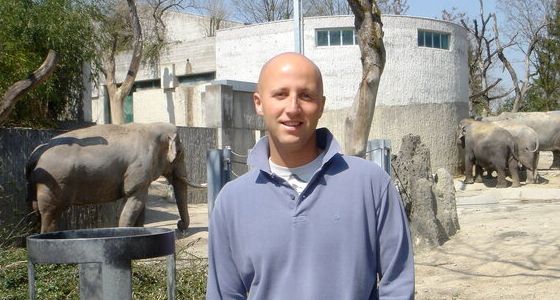
Ben Zygier aka ‘Prisoner X’ was under investigation by Australian intelligence agency for possible involvement in the Mabhouh assassination

Ben Zygier aka 'Prisoner X'

As Australia’s ABC News revealed in a Foreign Correspondent report, a prisoner being held in absolute secrecy in Israel’s Ayalon Prison — he was dubbed ‘Prisoner X’ — was a duel national Israeli-Australian Mossad agent named Ben Zygier — aka Ben Alon or Ben Allen.

After a few months of total isolation in 2010 and while under suicide watch, Zygier, who was married to an Israeli woman and had two young children, is alleged to have killed himself.

In 2010, following the assassination of the Hamas commander Mahmoud Al-Mabhouh on January 19, Mossad’s use of foreign passports came under investigation by several countries with citizens whose identities had been stolen and then used by Israeli agents entering and fleeing Dubai before and after the murder.

Australia’s The Age, now reveals that Zygier was under investigation by the Australian Security Intelligence Organisation (ASIO) at that time, for possible links to Mossad.

Yesterday, Australia’s foreign minister Bob Carr said: “I’m not reluctant to seek an explanation from the Israeli government about what happened to Mr Allen [Zygier] and about what their view of it is.
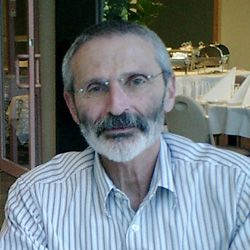
Geoffrey Zygier

“The difficulty is I’m advised we’ve had no contact with his family [and] there’s been no request for consular assistance during the period it’s alleged he was in prison.”

Zygier’s father, Geoffrey Zygier, executive director for B’nai B’rith Anti-Defamation Commission, is a very prominent member of Australia’s Jewish community and its Israel lobby. He is Australia’s equivalent of Abe Foxman, national director of the Anti-Defamation League.

In February 2010, when it became known that some of the agents involved in Mabhouh’s killing had been using Australian passports, then-prime minister Kevin Rudd expressed his alarm:

“We are going to get to the bottom of this,” Mr Rudd told ABC radio.

“This is a matter of the deepest concern to Australia.”

Mr Rudd said the integrity of the Australian passport system, used by millions of Australian travellers each year, had been compromised by this incident.

“What we have to establish first and foremost is was there a state involved in the use or forgery of these passports and the conduct of an assassination,” he told 3AW radio.

“It doesn’t matter which state it is. Any state that chooses to do this in relation to Australian passports frankly is treating the Australian people, the Australian Government and the Australian nation with contempt.

“We will not let the matter lie.”

ABC News now reports:

Australia’s domestic intelligence agency ASIO has long scrutinised Australian Jews suspected of working for Mossad.

The agency believes Mossad recruits change their names from European and Jewish names to “Anglo” names.

They then take out new passports and travel to the Arab world and Iran, to destinations Israeli passport holders cannot venture.

Warren Reed, a former intelligence operative for Australia’s overseas spy agency ASIS, told Foreign Correspondent that Australians were ideal recruits for Mossad.

“Australians abroad are generally seen to be fairly innocent,” he said.

“It’s a clean country – it has a good image like New Zealand.

“There aren’t many countries like that, so our nationality and anything connected with it can be very useful in intelligence work.”

The Department of Foreign Affairs has confirmed that Zygier also carried an Australian passport bearing the name Ben Allen.

Over two years after Ben Zygier’s death, his family has a right to avoid contact with the media, yet Geoffrey Zygier’s prominent position raises all sorts of questions about his silence. Is he trying to protect his family, Australia’s Jewish community or the Israeli government? He must have read about the conditions in which his son was imprisoned and surely have been greatly troubled.

This is how the story originally broke on June 13, 2010, in a brief report in Israel’s Hebrew daily Yedioth Ahronoth — a report quickly censored, but Didi Remez provided a translation:

Nobody knows who Mr. X. is. Ynet has learned that a man has been imprisoned for some time in wing 15 of Ayalon Prison but nobody knows who he is and what charges he is being jailed for. Nobody talks to him, nobody sees him, nobody visits him, nobody knows he is in jail. “He was placed in full and complete separation from the outside world,” said an Israel Prison Service official.

To enter the wing where the detainee is being held, you have to pass the jailers on the southern side of the prison and go through double iron doors. Unlike regular separation wings, where prisoners can talk loudly between the cells or see the goings-on in the corridors with mirrors, wing 15 has only one cell without neighboring cells and without a corridor, so that whoever is jailed in it is completely isolated from any living being.

“I don’t know any other prisoner or IPS detainee held in such severe conditions of separation and isolation,” said a Prison Service official. “There is confidentiality surrounding the detainee in wing 15 in every respect, including his identity and the crimes he committed. I doubt even the jailers in charge of him know who he is. There is too much confidentiality surrounding him. It is scary that in 2010 a man is imprisoned in Israel without us even knowing who he is.”

The official said, “it is simply a person without a name and without an identity who was placed in complete and absolute isolation from the outside world. We don’t know if he gets visits, if he gets the rights that every detainee deserves by law and if anybody even knows he is in jail.” The IPS declined to divulge who the person jailed there is. Its spokesman, Lt. Col. Yaron Zamir, said: “The IPS does not provide information about locations and names out of security considerations.”

Mr. X. is being kept in the wing originally built in order to jail Prime Minister Rabin’s assassin, Yigal Amir. Amir was jailed in the same cell under heavy security, with security cameras in the cell until December 2006, when he was moved to the separate wing at Rimonim prison in the Sharon district. The cell in wing 15 is relatively large and, in the case of Amir, his family met him in the cell so that he would not have to be taken out during visits.

Here again is the ABC News report which was first broadcast yesterday:

Whatever offense Zygier may or may not have been guilty of, the circumstances of his death while under such close surveillance raise an obvious question: did he commit suicide or was he murdered?

As Nitzan Horowitz, a member of the Knesset says: “It is intolerable to any reasonable person that in a democratic country, the authorities should be able to arrest people in complete secrecy and ‘disappear’ them from the public eye without the public knowing the arrest was even made.”

Intolerable in a democractic country, indeed — but in this instance Israel has been operating as a police state.


Facebooktwittermail

The evolutionary roots of emotion

Stephen T Asma visited the slopes of the Mount Bisoke volcano in the Congo, where gorilla families roam, and the Serengeti, where he witnessed crocodiles preying on wildebeest. He wanted to better understand the existential fears that shaped the lives of our early ancestors.

After you spend time with wild animals in the primal ecosystem where our big brains first grew, you have to chuckle a bit at the reigning view of the mind as a computer. Most cognitive scientists, from the logician Alan Turing to the psychologist James Lloyd McClelland, have been narrowly focused on linguistic thought, ignoring the whole embodied organism. They see the mind as a Boolean algebra binary system of 1 or 0, ‘on’ or ‘off’. This has been methodologically useful, and certainly productive for the artifical intelligence we use in our digital technology, but it merely mimics the biological mind. Computer ‘intelligence’ might be impressive, but it is an impersonation of biological intelligence. The ‘wet’ biological mind is embodied in the squishy, organic machinery of our emotional systems — where action-patterns are triggered when chemical cascades cross volumetric tipping points.

Neuroscience has begun to correct the computational model by showing how our rational, linguistic mind depends on the ancient limbic brain, where emotions hold sway and social skills dominate. In fact, the cognitive mind works only when emotions preferentially tilt our deliberations. The neuroscientist Antonio Damasio worked with patients who had damage in the communication system between the cognitive and emotional brain. The subjects could compute all the informational aspects of a decision in detail, but they couldn’t actually commit to anything. Without clear limbic values (that is, feelings), Damasio’s patients couldn’t decide their own social calendars, prioritise jobs at work, or even make decisions in their own best interest. Our rational mind is truly embodied, and without this emotional embodiment we have no preferences. In order for our minds to go beyond syntax to semantics, we need feelings. And our ancestral minds were rich in feelings before they were adept in computations.

Recognizing the primacy of feeling in human evolutionary development and that the limbic system evolved long before the arrival of hominids, it would seem hard to dispute that other animals also have feelings. Even so, science has been slow to embrace this idea. Asma attributes this to the lingering effects of behaviorism, but I would trace it back to the Bible.

The Enlightenment might have elevated reason high above religious dogma, yet it expanded rather than closed the apparent separation between Man and Nature and in so doing, perpetuated rather than rejected the Biblical ideology that promotes belief in the uniqueness of human beings. Even if, thanks to Darwin, we could see ourselves as primates, our defining attribute — language — set us apart from all other species.

Even now, we view feelings as a higher faculty and on that basis speculate about how far back they go.

Did emotions really begin to appear with the birth of mammals? Presumably dinosaurs would have had fear and aggression; these useful affects might be distributed throughout the vertebrate clade. But did they ‘care’ about their young, like mammals do? Did they bond? No one really knows for sure. Scientists try to solve some of these deep-time questions by looking at contemporary reptile brains and behaviors. Most reptiles don’t require parenting: just overproduce your eggs, fertilise, and walk away. Reptiles never evolved care because they didn’t need it. But they did need ‘fight or flight’ and of course they have it: it’s located in the lower, older part of the brain, unlike mammalian care, which is in the higher limbic.

The problem with thinking about feeling in this way is that it turns particular feelings into kinds of species, some, all or none of which, might be found to inhabit a particular creature. It doesn’t strip feeling down to its core.

Feeling is the motor of life that makes us advance and recoil and what we can observe as physical motion in others we experience as attraction and aversion in ourselves. These are visceral reactions out of which complex feelings emerge and onto which we can impute all sorts of qualities, yet under each particular human feeling, such as hope or despair, there is some kind of movement with a physical expression. The movement might only take place on the face or through breath or muscle tension, but in some way the body moves.

Looking then at feeling as this lifelong motion driving us down certain pathways and away from others, this seems to be an attribute of all creatures down to the tiniest microbe.

Facebooktwittermail

Israel’s ‘Prisoner X’: An Australian suspected of Mossad links who the Israeli government ‘disappeared’

Australia’s ABC News reports: Evidence has been unearthed that strongly suggests Israel’s infamous Prisoner X, who was jailed under extraordinary circumstances in 2010, was an Australian national from Melbourne.

Investigations by the ABC’s Foreign Correspondent program have revealed Ben Zygier, who used the name Ben Alon in Israel, was found hanged in a high-security cell at a prison near Tel Aviv in late 2010.

His body was flown to Melbourne for burial a week later.

The death goes part of the way to explain the existence in Israel of a so-called Prisoner X, widely speculated in local and international media as an inmate whose presence has been acknowledged by neither the jail system nor the government.

The case is regarded as one of the most sensitive secrets of Israel’s intelligence community, with the government going to extraordinary lengths to stifle media coverage and gag attempts by human rights organisations to expose the situation.

The Prisoner X cell is a jail within a jail at Ayalon Prison in the city of Ramla. It was built for the assassin of Israeli prime minister Yitzhak Rabin.

The ABC understands Mr Zygier became its occupant in early 2010. His incarceration was so secret that it is claimed not even guards knew his identity.

Israeli media at the time reported that this Prisoner X received no visitors and lived hermetically sealed from the outside world.

When an Israeli news website reported that the prisoner died in his cell in December 2010, Israeli authorities removed its web pages.

An Israeli court order prohibiting any publication or public discussion of the matter is still in force; Israel’s internal security service, Shin Bet, has effectively blocked any coverage of the matter. [Continue reading…]

As the former Australian intelligence officer interviewed above indicates, it would be virtually impossible for someone detained as Zygier was, to commit suicide. And assuming that he had committed what the Israeli government regarded as an act of treachery, it’s frankly hard to imagine that he was recruited by another intelligence agency — with the possible exception of Australia’s. What seems more likely is that what for Israel represented a betrayal, may for Zygier have involved a crisis of conscience. But as a Mossad agent, he knew too much for Israel to take the risk of witnessing him speak out. First he disappeared, then he was permanently silenced.

Facebooktwittermail

Living under occupation: ‘I have no memory of a time without struggle’

Emad Burnat is a Palestinian farmer and director of the Oscar-nominated documentary 5 Broken Cameras. His film is raising the profile of the Palestinian non-violent resistance movement. Most Americans still know nothing about the occupation, but with testimony such as Burnat’s now appearing on mainstream outlets like CNN, awareness is starting to grow.

I come from Palestine. I have lived my entire life under military occupation, and I have no memory of a time without struggle.

I have seen my neighbors beaten, blindfolded, and kidnapped. I have seen children snatched from their mothers in the dead of night. I have seen my brother shot and friend murdered.

I can’t tell you how this holy land felt before the armored jeeps’ rumble. I can’t trace a path from here — from where the Wall surrounds me — to the sea.

But for as long as I can remember, I could not forget. Forget the checkpoints, the harassment, the detentions. Forget that I am not free.

Like all prisoners, my memories are what sustain me. But what I need now are new memories. Happy memories.

That’s why I started filming.

I wanted to make memories of my son, Gibreel. I wanted to capture his smile, to chronicle his life in close-up. I wanted to crop out the occupation, the violence, the hopelessness.

You know the scenes. Maybe you, too, have captured your loved ones’ firsts: the first words, the first steps, the first glimpse of that way he angles his head and grins. Just like his mother.

Soraya’s gentle voice is in so many scenes of our son’s early life. But as I continued filming, Gibreel taught me that there are other sounds more urgent in his world.

His first words were “army” and “wall.” His first steps were in the shadow of groaning bulldozers and screeching cranes. Not the kind children play with. The kind that build the colonies that are stealing our land. [Continue reading…]

Facebooktwittermail

Facebook diplomacy in Syria

Syria Deeply: Many Syrians have been tethered to Facebook for almost two years to check on the state of the conflict in their country, scouring through feeds for the latest images and videos of protests and war crimes. But a new kind of message was tucked into these streams over the past two weeks which added a novel function for the platform: diplomacy.

Moaz Al Khatib, the president of the National Coalition (NC), the largest opposition umbrella group in Syria, surprised many observers and even coalition members when he posted on his Facebook page a proposal to sit with representatives from the Assad regime. The preconditions for such talks were the release of 160,000 prisoners held by the government and the renewal of passports for Syrians in exile.

This initiative gave some potency to the exiled opponents of the Assad regime who have struggled to build an international consensus to end the conflict in Syria due to the sharp division in the U.N. Security Council. Almost two months had passed since more than 100 countries recognized the NC as the legitimate representative of Syrians, but the coalition wasn’t able to attract the funds needed to govern rebel controlled territories or provide advanced weapons to fighters.

As the prospect of a longer and more destructive war set in, Al Khatib used his social media platform to directly address Syrians who have grown weary of the conflict, circumventing the nascent groupings in the coalition that might have debated the proposal for weeks or months. Many activists and rebels disagreed with Al Khatib’s vision, and debates were held inside Syria to discuss the issue, but eventually an uneasy consensus was reached to allow the moderate Sunni cleric to proceed. [Continue reading…]

Facebooktwittermail

The mission to kill Osama bin Laden

Esquire has a first-hand account given by an unnamed U.S. Navy SEAL (referred to as “the Shooter”) who killed Osama bin Laden.

Obama administration officials have claimed that bin Laden would have been captured if that was possible. This account suggests otherwise.

Given that bin Laden was shot while standing inside a pitch-black room — the Shooter could see him through his nightscopes; given that the SEAL was struck by how skinny bin Laden appeared — an indication that he was not wearing a suicide vest; and given that he was visibly confused as he groped around in the darkness, there seems little reason to believe that capturing bin Laden would have been unfeasible.

If President Obama knew that the death of the al Qaeda leader would provide a political reward of inestimable value, he also knew that the detention and trial of bin Laden could easily become a massive liability to his presidency.

Where would bin Laden be detained? Where could he be put on trial? Would there be any risk of failing to convict him on the most serious charges? If tried, convicted, and executed, would the lengthy process end up elevating his status as a martyr?

Even if Obama didn’t issue an order to kill, no one seems to have been in any doubt that this was the goal of the mission. Indeed, has not kill, don’t capture become the signature of a president who banned torture and promised to shut down Guantanamo?

The goal was to execute bin Laden and capitalize on a broadly felt desire for vengeance.

If he had still actually posed a real threat to America, he would also have been a source of invaluable intelligence. The White House’s calculation, however, seems to have been that bin Laden’s dead body was worth far more than any information he could share.

There was bin Laden standing there. He had his hands on a woman’s shoulders, pushing her ahead, not exactly toward me but by me, in the direction of the hallway commotion. It was his youngest wife, Amal.

The SEALs had nightscopes, but it was coal-black for bin Laden and the other residents. He can hear but he can’t see.

He looked confused. And way taller than I was expecting. He had a cap on and didn’t appear to be hit [by shots fired in his direction earlier]. I can’t tell you 100 percent, but he was standing and moving. He was holding her in front of him. Maybe as a shield, I don’t know.

For me, it was a snapshot of a target ID, definitely him. Even in our kill houses where we train, there are targets with his face on them. This was repetition and muscle memory. That’s him, boom, done.

I thought in that first instant how skinny he was, how tall and how short his beard was, all at once. He was wearing one of those white hats, but he had, like, an almost shaved head. Like a crew cut. I remember all that registering. I was amazed how tall he was, taller than all of us, and it didn’t seem like he would be, because all those guys were always smaller than you think.

I’m just looking at him from right here [he moves his hand out from his face about ten inches]. He’s got a gun on a shelf right there, the short AK he’s famous for. And he’s moving forward. I don’t know if she’s got a vest and she’s being pushed to martyr them both. He’s got a gun within reach. He’s a threat. I need to get a head shot so he won’t have a chance to clack himself off [blow himself up].

In that second, I shot him, two times in the forehead. Bap! Bap! The second time as he’s going down. He crumpled onto the floor in front of his bed and I hit him again, Bap! same place. That time I used my EOTech red-dot holo sight. He was dead. Not moving. His tongue was out. I watched him take his last breaths, just a reflex breath.

And I remember as I watched him breathe out the last part of air, I thought: Is this the best thing I’ve ever done, or the worst thing I’ve ever done? This is real and that’s him. Holy shit.

Everybody wanted him dead, but nobody wanted to say, Hey, you’re going to kill this guy. It was just sort of understood that’s what we wanted to do.

Facebooktwittermail

Solar radiation management — a cheap, easy fix for climate change the could wreck the planet

Climate change has resulted from unplanned geoengineering — for most of the last two centuries, we have been pumping vast quantities of greenhouse gases into the atmosphere without pausing to consider the results. So geoengineering that would involve seeding the upper atmosphere with solar-reflecting sulfate aerosols might look like a technological fix for a technological problem.

Climate change, however, is not just a technical problem. It is a planetary crisis with a human cause. While the direct cause is human behavior, this behavior has psychological and philosophical roots. It is the expression of a worldview in which humanity has set itself apart from nature. It is the expression of a value system that respects the accumulation of wealth more than the cultivation of wisdom. It is the expression of lifestyles in which people have become increasingly dependent upon objects rather than themselves and each other.

“Solar radiation management” (SRM) far from offering a solution to climate change, seems much more like another expression of the mindset that brought us to this perilous juncture.

MIT Technology Review: Critics of SRM — and even its advocates — note that the technology has numerous limitations, and that no one is entirely sure what the consequences would be. Sulfate aerosols reflect sunlight in the upper atmosphere, thus directly cooling the planet. But greenhouse gases operate very differently, trapping long-wave infrared radiation escaping from Earth’s surface and thus warming it. While sulfates would be likely to offset warming, it’s not clear exactly how they would counteract some of the other effects of greenhouse gases, particularly changes in precipitation patterns. And SRM would do nothing to reduce the acidification of the oceans caused by rising levels of carbon dioxide in the atmosphere.

“The term ‘solar radiation management’ is positively Orwellian,” says ­Raymond Pierre­humbert, a geophysicist at the University of Chicago. “It’s meant to give you a feeling that we really understand what we would be doing. It’s a way to increase comfort levels with this crazy idea. What we’re really talking about is hacking the planet in a case where we don’t really know what it is going to do.” In delivering the prestigious Tyndall Lecture at the annual American Geophysical Union meeting last December, he said the idea of putting sulfate aerosols in the stratosphere was “barking mad.”

Pierre­humbert also rejects the value of doing field experiments. “The whole idea of geoengineering is so crazy and would lead to such bad consequences, it really is pretty pointless. We already know enough about sulfate albedo engineering to know it would put the world in a really precarious state. Field experiments are really a dangerous step on the way to deployment, and I have a lot of doubts what would actually be learned.”

The fundamental problem with albedo engineering, says Pierrehumbert, is that once we start using it, we’ll need to continue indefinitely. Since it only offsets warming, once the process stops, temperature changes caused by greenhouse gases will manifest themselves suddenly and dramatically. “If you stop — or if you have to stop — then you’re toast,” he says. Even using it as a temporary Band-Aid doesn’t make sense, he argues: “Once you get to the point in terms of climate changes that you feel you have to use it, then you have to use [SRM] forever.” He believes that this makes the idea a “complete nonstarter.”

Besides, Pierrehumbert says, our climate models “are nowhere near advanced enough for us to begin thinking of actually engineering the planet.” In particular, computer models don’t accurately predict specific regional precipitation patterns. And, he says, it’s not possible to use existing models to know how geoengineering might affect, say, India’s monsoons or precipitation in such drought-prone areas as northern Africa. “Our ability to actually say what the regional climate patterns will be in a geoengineered world is very limited,” he says.

Alan Robock, meanwhile, has a long list of questions concerning SRM, at the top of which is: can it even be done? Robock, an expert on how volcanoes affect climate and a professor of environmental sciences at Rutgers University, cautions that while the Pinatubo eruption confirmed the cooling effect of sulfate aerosols, it injected a massive amount of sulfur dioxide into the stratosphere over a few days. Solar geoengineering would use far less sulfur but disperse it continuously over an extended period. That could be a critical difference. The optimal way to achieve SRM is with sulfur particles only about half a micrometer in diameter. Sunlight reflects off the surface of the particles, and smaller particles have more surface area than larger ones, making them far more efficient at blocking the sun. Robock worries that as sulfur is continuously injected and concentrations build up, the small particles will clump together into large ones, necessitating far more sulfur than some current proposals assume.

These details of aerosol chemistry could help determine the viability of SRM. “David [Keith] thinks it is going to be easy and cheap, and I don’t agree,” says Robock. He estimates that several million tons of sulfur would have to be injected into the atmosphere annually to offset doubled levels of carbon dioxide, but if the particles clump together, “it could be many times that.”

Research so far shows that producing a cloud in the stratosphere — Robock’s preferred description of SRM — “could cool the climate,” he says. “But you would have a very different planet, and other things could be worse.” He points out, for example, that in the aftermath of Mount Pinatubo, rainfall decreased significantly in some parts of the world. Robock supports more modeling on solar geoengineering, but “right now, I don’t see a path in which it would be used,” he says. “I don’t see how the benefits outweigh the negatives.”

Facebooktwittermail

The Guantanamo prosecutor who decided that being a Christian trumped being an American

Lieutenant Colonel Stuart Couch, a military prosecutor at Guantanamo, truly believed that Mohamedou Ould Slahi was guilty, but he also believed Slahi’s interrogators should face prosecution for torture.

Jess Bravin writes: It would be months before Stu Couch got a fuller picture of the Slahi interrogation. But as he began to piece together the facts, he became increasingly alarmed. Each detail suggested a sustained, systematic regime of physical and psychological coercion that undermined the reliability of everything Slahi said. The trial could end up being more about what the government did to Slahi than what he did for al Qaeda.

Couch was convinced that Slahi had spent years organizing the Qaeda network in Europe, culminating with recruitment of the Hamburg cell that supplied hijackers for 9/11. If any detainee deserved the death penalty, it was Slahi.

Yet Couch hesitated. He ruminated for weeks. Was the United States justified in beating Slahi, in subjecting him to isolation, sensory deprivation, temperature extremes, and sexual humiliation? Was it justified in constructing elaborate scenarios that literally put the fear of death in him, convincing him that he was about to be killed?

One threat, Couch believed, was the worst of all: To have his mother raped.

“Military guys are real big about their mommas,” Couch said. And few more than Stu Couch. “Other than my wife, my mom is my best friend,” he said. “That’s just who I am.”

Couch wondered if he could prosecute Slahi at all.

He would lie awake for hours almost every night. During the 10-hour workdays at commissions, dark circles under Couch’s eyes exaggerated his hangdog look.

One Sunday, as usual, Couch drove his family to church. He was distracted as the service unfolded, possessed by the Slahi case. He mechanically obeyed when the minister called on worshippers to stand.

“Will you seek and serve Christ in all persons, loving your neighbor as yourself ?”

“I will, with God’s help,” came the echo. All persons. That included Osama bin Laden. And Mohamedou Ould Slahi.

“Will you strive for justice and peace among all people, and respect the dignity of every human being?” Every human being.

He was surrounded by people, but suddenly Couch felt very, very small. It was as if he stood alone in a dark, cavernous hall, a bright, single shaft of light illuminating him, unseen persons, or powers, awaiting his answer.

“I will,” he said. “With God’s help.”

After the service, he told his wife, Kim, of the threat to rape the prisoner’s mother. It was the linchpin to the prisoner’s cooperation, the foundation of the entire case.

He told Kim he would have to drop a case. A 9/11 case. “I hate to say it,” he said, “but being a Christian is gonna trump being an American.”

Facebooktwittermail

Israel needs to be threatened by international sanctions

In Haaretz, Yitzhak Laor writes: It’s doubtful if there was such foolishness in global politics since World War II as the settlement enterprise. The fact that the Israeli political leadership has engaged in it since 1967 makes the pill all the more bitter.

The sparse population in the West Bank, relative to the crowdedness of central Israel, created for Israel interests to suppress from the beginning any Palestinian efforts to organize. Moshe Dayan was considered an enlightened occupier thanks to the permission he gave Palestinians to work in Israel, for dirt cheap, and to import money from Jordan through the open bridges policy. As a colonialist, he was a cruel and short-tempered ruler. Only Ariel Sharon competed with him in historical blindness.

The army rushed to refer to the territories by their biblical names Judea, Samaria and Gaza. They called residents of the territories “locals,” as if to say they lacked any other connection to land, people, and history. They were quickly treated as a danger during the process of parceling out their privately held land, a process in which an entire people was humiliated for decades. Hundreds of thousands were imprisoned, masses of them methodically tortured, tried in kangaroo courts, put under curfew in honor of our holidays, and had their land expropriated. An entire nation was subjected to hunger, siege, humiliation of parents in front of their children, killing without distinction, as well as – how could it be otherwise? – being preached to about the injustice of resistance. Israel created with its own hands the security threat and through that threat the right controls us. Continue reading

Facebooktwittermail

Saddam and the U.S. failed, so why should Maliki think he can control Iraq by force?

Patrick Cockburn writes: The civil war in Syria is destabilising Iraq as it changes the balance of power between the country’s communities. The Sunni minority in Iraq, which two years ago appeared defeated, has long been embittered and angry at discrimination against it by a hostile state. Today, it is emboldened by the uprising of the Syrian Sunni, as well as a growing sense that the political tide in the Middle East is turning against the Shia and in favour of the Sunni.

Could a variant of the Syrian revolt spread to the western Anbar Province and Sunni areas of Iraq north of Baghdad? The answer, crucial to the future of Iraq, depends on how the Prime Minister, Nouri al-Maliki, responds to the seven-week-long protests in Anbar and the Sunni heartlands. His problem is similar to that which, two years ago faced rulers in Tunisia, Egypt, Libya, Yemen and Syria. They had to choose between ceding some power and relying on repression.

Most Arab rulers chose wrongly, treating protests as if they were a plot or not so broadly based that they could not be crushed by traditional methods of repression. The situation in Iraq is not quite the same, since Maliki owes his position to victory in real elections, though this success was not total and depended overwhelmingly on Shia votes. He has nevertheless ruled as if he had the mandate to monopolise power.

Maliki has been ambivalent about the protests since they started in December last year. On occasion, he has denounced them as a plot by ex-Baathists or other enemies of the state acting as proxies for hostile foreign powers. At others, he has offered concessions, but nowhere near enough to quell the protests. His strategy is probably to play for time, an approach that has served him well in the past. [Continue reading…]

Facebooktwittermail

Egypt’s Shura Council members blame women for getting raped

Egypt’s Daily News reports: The Shura Council Human Rights Committee addressed on Monday the recent wave of sexual harassment proliferating during mass protests, calling for specifying places of protest for females.

“Women should not mingle with men during protests,” said Reda Al-Hefnawy, Freedom and Justice Party (FJP) member. “How can the Ministry of Interior be tasked with protecting a lady who stands among a group of men?”

Adel Afifi, a prominent board member of the Salafi Party Al-Asala, blamed women for the sexual harassment phenomenon. “A woman who joins protests among thugs and street inhabitants should protect herself before asking the Ministry of Interior to offer her protection,” Afifi said, adding that police officers are incapable of protecting themselves.

Salafi Al-Nour Party member Salah Abdel Salam also believed women were responsible for sexual harassment. “The woman bears the offence when she chooses to protest in places filled with thugs,” Abdel Salam said. He added that, nevertheless, the phenomenon needs to be addressed.

“Women sometimes cause rape upon themselves through putting themselves in a position which makes them subject to rape,” Afifi said.

Facebooktwittermail

Heavily armed Mali rebels spreading across Africa

Toronto’s Globe and Mail reports: When the 13-vehicle convoy of Malian rebels crashed through the Libyan frontier, armed with anti-aircraft guns and other heavy weapons, the Libyan border guards were soon overwhelmed.

They managed to arrest five of the insurgents, but dozens escaped and headed north into the lawless desert of southern Libya, where they quickly melted into the dusty terrain.

This account of a border clash late last week, reported by a Tuareg activist in southern Libya with sources at the remote border posts, is part of the growing evidence that the retreating Islamist radicals of northern Mali are now migrating across a vast region of the Sahara, taking advantage of porous borders and finding shelter in a widening swath of dysfunctional states.

France’s relentless campaign of air strikes and ground assaults in Mali has forced the Islamists to retreat northward into the desert. But the latest evidence of their new strongholds – from mountain caves in northern Mali to desert sanctuaries as far away as Libya and Sudan – suggests that the insurgents are regrouping in safe havens as they bide their time for a future counterattack when targets are softer.

It also suggests that the weak states of North Africa are becoming a valuable corridor for the Islamist fighters, allowing them to recuperate and rebuild in places French warplanes cannot reach. [Continue reading…]

Facebooktwittermail

Saturday Night Live on the Hagel hearings

The Israel lobby made sure that this Saturday Night Live sketch on the Chuck Hagel hearings was dropped from the show…

Well, maybe the lobby didn’t need to intervene. More likely, the show’s writers had to reconcile themselves to the fact that their audience doesn’t pay too much attention to what happens in the U.S. Senate. It’s hard to satirize a particular form of behavior — in this case, shameless displays of slavish adoration of Israel — if the people who need to get the joke are ignorant about the thing being mocked. Still, thanks to SNL for giving it a shot.

Facebooktwittermail

So-called due process for so-called Americans

Amy Davidson writes: “One of the problems is, once the drone program is so public, and one American is caught up, people don’t know much about this one ‘American citizen’ — so called,” said Senator Dianne Feinstein, in her questioning of John Brennan, President Obama’s nominee for C.I.A. director, on Thursday. (John Cassidy has more on the hearing.) She was referring to Anwar al-Awlaki, who was killed by a drone strike in Yemen, in 2011, and was a “so-called” American because he was an American, born in New Mexico. “They don’t know what he’s been doing,” Feinstein continued. “They don’t know the incitement he has stirred up. I wonder if you could tell us a little bit about Mr. Awlaki and what he’s been doing.”

Brennan demurred at first, since the question was about an “operation.” Feinstein jumped in:

See, that’s the problem. When people hear “American,” they think someone who’s upstanding. And this man was not upstanding by a long shot.

BRENNAN: Yes.

FEINSTEIN: And maybe you cannot discuss it here, but I’ve read enough to know that he was a real problem.

Brennan agreed, saying that al-Awlaki “was intimately involved in activities that were designed to kill innocent men, women, and children, mostly Americans. He was not just a propagandist.” (He neglected to mention that al-Awlaki’s American teen-age son was also killed, in a separate strike.) Feinstein then led him through a number of incidents; in some cases, Brennan agreed that al-Awlaki was an organizer, and in others he spoke obliquely about “inspiring” and “inciting individuals.” Feinstein summed up the exchange with what may have been the most disturbing line in the three-hour hearing, worse, even, than the waterboarding joke that Senator Burr told a few minutes later:

“And, so, Mr. Awlaki is not an American citizen by where anyone in America would be proud.”

“Proud,” “upstanding,” “so-called American” — is this the basis on which the Senate is judging fundamental questions of American rights and due process?

It’s natural and appropriate the Americans should be concerned that the U.S. president has decided that he can at his discretion deprive U.S. citizens of their right to due process, but in considering the assassination of Anwar al Awlaki, we should not be alarmed merely because he was an American. Much more significant, it seems to me, is why he was killed.

At the time of his death, U.S. officials described Awlaki as an operational leader of al Qaeda, yet have never supported this claim with any evidence. Lack of evidence presumably explains why he was never indicted and never placed on the FBI’s Most Wanted list.

What Awlaki was guilty of was being a charismatic preacher, capable of exerting great influence and quite possibly inspiring others to engage in acts of terrorism. In 2010, the Wall Street Journal reported:

A businessman in [Yemen’s capital,] San’a said he met the cleric two years ago, while Mr. Awlaki was hunting for real estate in the capital. The businessman said he was immediately struck by the charisma of the cleric. “It was like talking to [Bill] Clinton,” he said. “You felt like he understood everything about you.”

Awlaki represented a national security nightmare: a Bin Laden with an American accent. He was feared much less for what he had done than for what he might become.

The idea that he was killed because he posed some kind of imminent threat is an idea that can only be accepted on blind faith. What the preponderance of evidence shows is that this was a political assassination.

When the U.S. government starts executing people for political crimes, the nationality of those being killed should really be the least among our concerns.

Khalid Sheikh Mohammed, the alleged architect of the 9/11 attacks was arrested rather than being summarily executed. No doubt at the time he was regarded as being much more valuable alive than dead. The same can’t be said of Awlaki. Indeed, the difficulties the Obama administration might have faced imprisoning him and attempting to put him on trial, strongly suggest that he was killed as a matter of convenience. He was a problem that needed to be removed — snuffed out — and the choice to do that, turned the position of the president into that of a mobster.

Facebooktwittermail

How we made killing easy

David Cole writes: On Monday, NBC published a leaked Justice Department “white paper” laying out the Obama administration’s case for when the president, or indeed any “informed, high-level official” of the federal government, can authorize the secret killing of a US citizen without charges, a hearing, or a trial. The paper, which appears to summarize a still-classified internal memorandum drafted by the Justice Department’s Office of Legal Counsel to authorize the targeted killing in September 2011 of US citizen Anwar al-Awlaki, provides more detail than has yet been made public about the administration’s controversial drone program.

Consistent with the positions taken in public speeches by former State Department Legal Advisor Harold Koh, Attorney General Eric Holder, and White House counterterrorism advisor and CIA director-nominee John Brennan, the sixteen-page white paper argues that killing a US citizen with a drone and without trial is legal under domestic and international law, even if the individual is far from any battlefield, not a member of al-Qaeda, and not engaged in planning an imminent attack on the United States. To date, much of the concern about the administration’s drone program has stemmed from its largely secret character; unfortunately, the more we learn, the greater those concerns become.

It is unclear why this document had to be leaked in order to enter the public domain. It is not marked classified, and appears to be designed for public consumption — why else would a separate white paper need to be drawn up to describe legal reasoning already contained in a classified OLC memorandum? It may well have been drafted to see whether the contours of the OLC memorandum could be made public without disclosing any classified or sensitive information. But if that’s the case, why didn’t the Obama administration release the paper as an official public act? In opposing a Freedom of Information Act suit filed by the ACLU, the administration is fighting tooth and nail to keep everything about the drone program secret, but this paper suggests that much more could be disclosed — for example, the procedures and standards employed for placing someone on the “kill list,” and the general bases for and results of actual strikes — without the sky falling. If this administration is truly committed to transparency, memos like this should not have to be obtained by the media through back channels.

The white paper addresses the legality of killing a US citizen “who is a senior operational leader of al-Qaeda or an associated force.” Such a person may be killed, the document concludes, if an “informed, high-level official” finds (1) that he poses “an imminent threat of violent attack against the United States;” (2) that his capture is not feasible; and (3) the operation is conducted consistent with law-of-war principles, such as the need to minimize collateral damage. However, the paper offers no guidance as to what level of proof is necessary: does the official have to be satisfied beyond a reasonable doubt, by a preponderance of the evidence, or is reasonable suspicion sufficient? We are not told.

Nor does the paper describe what procedural safeguards are to be employed. It only tells us what is not required: having a court determine whether the criteria are in fact met. The paper asserts that this assessment is best left entirely to the executive because it involves foreign affairs and military tactics, and maintains that judicial review would impermissibly require a court to “supervise inherently predictive judgments by the President and his national security advisors.” But courts review executive predictive judgments every time they rule on a government request for a search or wiretap warrant, including those sought for national security purposes under the Foreign Intelligence Surveillance Act. If courts routinely issue warrants for arrests and searches, why are they somehow unable to issue warrants for drone strikes?

From news reports, we know that the targeted killing program involves elaborate preparation and review of “kill lists,” debated in weekly conference calls in which as many as one hundred people take part. The US citizen and radical Islamist Anwar al-Awlaki was reportedly on such a list for more than a year before he was killed. With that kind of time frame, there is no logistical reason why independent judicial review could not have taken place. [Continue reading…]

Facebooktwittermail

How Jabhat al-Nusra is taking over Syria’s revolution

The Telegraph reports: Aleppo has been plunged into despair. Riven with war, life in Syria’s most populous city has become a dog-eat-dog existence: a battle for survival in a place where the strong devour the weak.

Its luxuriant history is lost beneath uncollected litter on its pavements and streets. Feral children play beside buildings shattered by shelling and air strikes. There is no electricity, no heating; gunmen prowl the streets as night falls. Some are rebels searching for government loyalists; others are criminals looking to kidnap for ransom. Looting is rife.

It is here, behind the front lines of the war against Bashar al-Assad that a new struggle is emerging. It is a clash of ideologies: a competition where rebel brigades vie to determine the shape of post-Assad Syria.

And in recent weeks it is Jabhat al-Nusra, a radical jihadist group blacklisted by the US as terrorists and a group that wants Syria to be an uncompromising Islamic state governed by sharia, that is holding sway.

The group is well funded – probably through established global jihadist networks – in comparison to moderates. Meanwhile pro-democracy rebel group commanders say money from foreign governments has all but dried up because of fears over radical Islamists.

The effect is changing the face of the Syrian revolution.

The Nusra Front is known for some of the bravest fighters on the front lines. But the fundamentalist movement is now focusing on highly effective humanitarian programs that are quickly winning the loyalty of Aleppo’s residents.

Imbued with discipline borne of religious dogmatism it is catering to basic needs in a city that lacks everything from working factories to courts.

Chief among hardships was the languishing supply of bread. It is a staple in Syria – without it tens of thousands of the poor would starve.

When rebel fighters seized control of the grain stores around the city, the supply of flour all but ceased. Locals accused rebels of the Free Syrian Army (FSA) of raiding the stores and stealing the grain to sell. Spontaneous pro-government protests erupted outside bakeries where families queued for bread, sometimes for days.

One started within seconds of the Daily Telegraph’s arrival at a bread queue: “Allah, Syria, Bashar! Everyone here loves Bashar al-Assad!” they screamed.

Then, in the past weeks, Jabhat al-Nusra – which is outside the FSA – pushed other rebel groups out of the stores and established a system to distribute bread throughout rebel areas.

In a small office attached to a bakery in the Miesseh district of Aleppo, Abu Yayha studied a map pinned on the wall. Numbers were scrawled in pencil against streets.

“We counted the population of every street to assess the need for the area,” explained Mr Yahya. “We provide 23,593 bags of bread every two days for this area. This is just in one district. We are calculating the population in other districts and doing the same there.

“In shops the cost is now 125 Syrian pounds (£1.12) for one pack. Here we sell it at 50 Syrian pounds (45p) for two bags. We distribute some for free for those who cannot pay.” [Continue reading…]

Facebooktwittermail