Nothing’s free

On the internet, “free” means someone else paid.

We live in economically challenging times and if like me you live close to or the wrong side of the poverty line, then I’m happy I can provide this service without charge. But if you can afford to eat in restaurants, take vacations, or buy the latest electronic gadgets, then please consider supporting this site.

You see the ads in the right sidebar? The revenue they bring in wouldn’t even pay for my breakfast. But consider this: if I was earning a very modest wage for the time I’ve devoted to running this site, I’d now be a quarter of a million dollars better off. Am I crazy? Maybe, but dangerous times push people in unusual directions. My choice when I started doing this in 2002 was to step out of the defense intelligence industry and put my time to better use.

War in Context, from its inception, has been an effort to apply critical intelligence in an arena where political judgment has repeatedly been twisted by blind emotions. It presupposes that a world out of balance will inevitably be a world in conflict.

If you value my work and can afford to help keep this operation going, please click the button below to make a secure payment through Paypal. Thank you for your support, Paul Woodward.

Facebooktwittermail

When police go military

The New York Times reports: Riot police officers tear-gassing protesters at the Occupy movement in Oakland. The surprising nighttime invasion of Zuccotti Park in Lower Manhattan, carried out with D-Day-like secrecy by officers deploying klieg lights and a military-style sound machine. And campus police officers in helmets and face shields dousing demonstrators at the University of California, Davis with pepper spray.

Is this the militarization of the American police?

Police forces undeniably share a soldier’s ethos, no matter the size of the city, town or jurisdiction: officers carry deadly weapons and wear uniforms with patches denoting rank. They salute one another and pay homage to a “Yes, sir,” “No, sir,” hierarchical culture.

But beyond such symbolic and formal similarities, American law and tradition have tried to draw a clear line between police and military forces. To cast the roles of the two too closely, those in and out of law enforcement say, is to mistake the mission of each. Soldiers, after all, go to war to destroy, and kill the enemy. The police, who are supposed to maintain the peace, “are the citizens, and the citizens are the police,” according to Chief Walter A. McNeil of Quincy, Fla., the president of the International Association of Chiefs of Police, citing the words of Sir Robert Peel, the father of modern-day policing.

Yet lately images from Occupy protests streamed on the Internet — often in real time — show just how readily police officers can adopt military-style tactics and equipment, and come off more like soldiers as they face down citizens. Some say this adds up to the emergence of a new, more militaristic breed of civilian police officer. Others disagree.

What seems clear is that the terrorist attacks of Sept. 11, and the federal Homeland Security dollars that flowed to police forces in response to them, have further encouraged police forces to embrace paramilitary tactics like those that first emerged in the decades-long “war on drugs.”

Both wars — first on drugs, then terror — have lent police forces across the country justification to acquire the latest technology, equipment and tactical training for newly created specialized units.

Facebooktwittermail

A CEO’s moral stand

D. Michael Lindsay writes: It seems that every week we hear of a C.E.O. who earned millions from a golden parachute after demonstrating poor business judgment or cutting thousands of jobs with no financial downside for executives. These stories feed the fires of the Occupy movement growing all over the world.

But on Tuesday, we heard something different. American Airlines, once the largest airline in the United States, declared bankruptcy. This is not surprising news for the beleaguered airline industry; what is different is what is emerging from the wreckage. Gerard J. Arpey, American’s chief executive officer and chairman, resigned and stepped away with no severance package and nearly worthless stock holdings. He split with his employer of 30 years out of a belief that bankruptcy was morally wrong, and that he could not, in good conscience, lead an organization that followed this familiar path.

Things have been tough for the so-called legacy carriers since the Airline Deregulation Act of 1978, as they have been pulled in opposing directions by customer demands for lower fares and labor demands for higher wages. The events of 9/11 further shook up the industry, closely followed by the oil crisis and the recent recession.

Since Congress deregulated the industry, it has been common for airlines to claim bankruptcy and regroup under the temporary shelter provided by Chapter 11. Continental filed in 1983 and 1990, United in 2002, US Airways in 2002 and 2004, and Delta and Northwest in 2005. In each situation, bankruptcy gave the airlines the chance to cancel their debt, get rid of responsibility for employee pensions and renegotiate more favorable contracts with labor unions.

For a long time, Mr. Arpey voiced his opposition to bankruptcy, but the airline struggled because of it. “Our bankrupt colleagues all made net profits, good net profits last year, and we didn’t,” Mr. Arpey told me a few months ago. “And you can mathematically pinpoint that to termination of pensions, termination of retiree medical benefits, changes of work rules, changes in the labor contracts. That puts a lot of pressure on our company, not to be ignored.”

Over the last eight years, I have interviewed hundreds of senior executives for a major academic study on leadership, including six airline C.E.O.’s. Mr. Arpey stood out among the 550 people I talked with not because he believed that business had a moral dimension, but because of his firm conviction that the C.E.O. must carefully attend to those considerations, even if doing so blunts financial success or negates organizational expediency. For him, it is an obligation that goes with the corner office.

Facebooktwittermail

Syria: 34 bodies dumped in public square in Homs

The Daily Telegraph reports: A human rights group monitoring events in Syria claims it had evidence of the worst massacre yet by the regime of President Bashir al-Assad.

The Syrian Observatory for Human Rights, which has chronicled deaths on both sides during the nine month-long uprising, said a witness had seen the bodies of 34 people dumped in a public square in the restive city of Homs.

It said the 34 had all been seized from anti-Assad neighbourhoods in the city by the shabiha – unofficial militias loyal to and armed by the regime.

The bodies had been left in the pro-regime district of Al-Zahra, it said.

More than 4,000 people have been killed in the uprising, with an increasing number of regime soldiers being killed by armed insurgents as the country drifts towards civil war.

Facebooktwittermail

American Jews shocked as essence of Zionism is exposed

Israeli journalist Yossi Gurvitz exposes a face of Zionism most American Jews would rather not see and puts into context the controversial Israeli government ad campaign appealing to Israelis to return home from the U.S.:

The main concept of Zionism is that Jewish life, outside of their national homeland, is the life of an invalid. They cannot be truly Jewish life since they lack the national element of Judaism. Jews can only be fully Jews when they live in Israel. An early Zionist writer, Yehuda Pinsker, compared the lives of diaspora Jews to that of the undead, and went further on to say anti-Semitism is a natural response to the unnatural existence of deracinated Diaspora Jews.

Accordingly, Zionism views Jewish life abroad with disdain. This is reflected in the language: A Jew who immigrates to Israel is called an “oleh,” literally someone who transcends; One who emigrates from Israel is called a “yored,” literally someone going down. Hence, the need for an a ministry who will cater to the needs of Jews who “make aliyah” – The Ministry of Aliyah Absorption. Incidentally, it is extremely difficult for a non-Jew to immigrate to Israel.

Israeli Jews, particularly the hardcore Zionists, view Diaspora Jews with thinly veiled contempt, which erupts to the surface from time to time – such as when former President Weizman called upon American Jews to leave the US and come to Israel, and so fulfill their destiny, or when the author A.B. Yohoshua told American Jews in 2006 that “Outside of Israel, Judaism cannot exist. You are dealing with a Judaism of plug and play… You switch identities as you change your jackets… If China becomes stronger than the US, you would all move to China.” This is not particularly new: The Palestine/Israel branch of the historic Zionist movement always considered Zionists living in Israel to be superior to Jews living in the Diaspora, and considered Diaspora Jews not as independent human beings but rather as Zionist building blocks. Nowhere was this more evident that in Ben Gurion’s famous saying, that if he had to choose between a million Jewish children being saved by being sent to Britain or just half of them saved, but sent to Palestine, he would choose the latter. For hardcore Zionists, Diaspora Jews are failures; They can only be redeemed by joining our armed ghetto.

Therefore, the very idea of an Israeli Jew leaving the country and joining the Diaspora is disgusting to Israeli Zionists, particularly the older ones. Former PM Rabin called them “a residue of cowards.” For most Zionists, the idea of an Israeli Jew losing himself and his hard-won identity in the Diaspora, basically spitting on all that Zionism fought for, is loathsome. Hence the ads: They are trying to save Israeli Jews from sinking to the level of “regular Jews,” or, God forbid, “assimilating” with the gentiles.

Facebooktwittermail

‘Israel could lose American Jewry’

The Israeli press is sloppy in all sorts of ways. The headline above comes a Ynet article by Yitzhak Benhorin in Washington. It could be a direct quote from The Atlantic‘s Jeffrey Goldberg and much of the content of the article could be drawn from recent conversation with Goldberg — the article doesn’t make this clear.

Benhorin bases much of his report on recent posts by Goldberg on the controversial Israeli government campaign appealing to Israelis to return home from the US, but some of the statements attributed to the influential columnist do not seem to be taken from his blog, specifically the following:

Goldberg believes that American Jews are trying to understand Israeli far more than Israelis try to understand them. He states that the average American Jew reads that women in Jerusalem sit on the back of the bus and thinks to himself that he has no connection whatsoever with this country.

He adds that young Israelis from Tel Aviv probably feel the same when they read that the right wing is making alliances with Evangelical Christians.

Goldberg notes that it is obvious that there is a rift, when 80% of American Jews are culturally politically and religion-wise like 25% of Israelis, Jews in Washington can identify with what’s happening in Tel Aviv but not Jerusalem or the settlements.

He adds that there is a large gap between most Jews in the US and most Jews in Israel; Jews in the US are becoming more universal in their outlook while Israeli Jews are becoming more and more tribal in theirs. If the trend continues, he says, American Jews will see Israel as a far off foreign country.

Goldberg also warned of the growing gulf between American Jews and their Israeli counterparts over issues related to democratic values. He said that the things happening in Israel today are like a mystery to the American Jews who scratch their heads and ask themselves what in the world is going on in Israel.

Goldberg also spoke of the recent right-wing legislation, the exclusion of women from the public domain and the harm to freedom of expression. He noted that as American Jews, they were taught that Israel is the only democracy in the Middle East and that sadly, the recent legislation causes concerns – should Israel lose its democratic values, it will lose American Jewry.

Facebooktwittermail

The $7.77 trillion bailout

I posted this before, but it’s worth posting again.

Bloomberg Markets Magazine: The Federal Reserve and the big banks fought for more than two years to keep details of the largest bailout in U.S. history a secret. Now, the rest of the world can see what it was missing.

The Fed didn’t tell anyone which banks were in trouble so deep they required a combined $1.2 trillion on Dec. 5, 2008, their single neediest day. Bankers didn’t mention that they took tens of billions of dollars in emergency loans at the same time they were assuring investors their firms were healthy. And no one calculated until now that banks reaped an estimated $13 billion of income by taking advantage of the Fed’s below-market rates, Bloomberg Markets magazine reports in its January issue.

Saved by the bailout, bankers lobbied against government regulations, a job made easier by the Fed, which never disclosed the details of the rescue to lawmakers even as Congress doled out more money and debated new rules aimed at preventing the next collapse.

A fresh narrative of the financial crisis of 2007 to 2009 emerges from 29,000 pages of Fed documents obtained under the Freedom of Information Act and central bank records of more than 21,000 transactions. While Fed officials say that almost all of the loans were repaid and there have been no losses, details suggest taxpayers paid a price beyond dollars as the secret funding helped preserve a broken status quo and enabled the biggest banks to grow even bigger.

“When you see the dollars the banks got, it’s hard to make the case these were successful institutions,” says Sherrod Brown, a Democratic Senator from Ohio who in 2010 introduced an unsuccessful bill to limit bank size. “This is an issue that can unite the Tea Party and Occupy Wall Street. There are lawmakers in both parties who would change their votes now.”

The size of the bailout came to light after Bloomberg LP, the parent of Bloomberg News, won a court case against the Fed and a group of the biggest U.S. banks called Clearing House Association LLC to force lending details into the open.

The Fed, headed by Chairman Ben S. Bernanke, argued that revealing borrower details would create a stigma — investors and counterparties would shun firms that used the central bank as lender of last resort — and that needy institutions would be reluctant to borrow in the next crisis. Clearing House Association fought Bloomberg’s lawsuit up to the U.S. Supreme Court, which declined to hear the banks’ appeal in March 2011.

The amount of money the central bank parceled out was surprising even to Gary H. Stern, president of the Federal Reserve Bank of Minneapolis from 1985 to 2009, who says he “wasn’t aware of the magnitude.” It dwarfed the Treasury Department’s better-known $700 billion Troubled Asset Relief Program, or TARP. Add up guarantees and lending limits, and the Fed had committed $7.77 trillion as of March 2009 to rescuing the financial system, more than half the value of everything produced in the U.S. that year. [Continue reading…]

Facebooktwittermail

Iran captures ‘lost’ U.S. spy drone — the first remote hijacking?

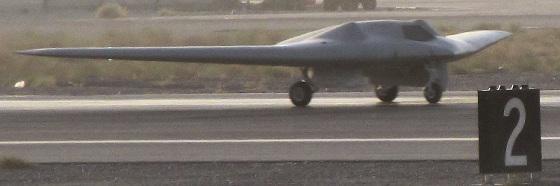
Lockheed Martin RQ-170 Sentinel spy drone

The Los Angeles Times reports:

A drone that Iranian officials claimed to have shot down may be an unarmed U.S. reconnaissance aircraft that went missing over western Afghanistan late last week, according to U.S.-led forces in that country.

“The operators of the UAV [unmanned aerial vehicle] lost control of the aircraft and had been working to determine its status,” NATO’s International Security Assistance Force in Afghanistan said in a statement.

Iranian media reported Sunday that the country’s armed forces had shot down a U.S. drone that they said violated Iranian airspace along the eastern border. Iran borders Afghanistan and Pakistan in the east.

An Iranian military official quoted by the official Islamic Republic News Agency said the aircraft suffered minor damage and was in the possession of the armed forces. He identified the aircraft as an “RQ170” type drone and said Iranian forces were “fully ready to counter any aggression.”

When the existence of the RQ-170 first entered the public domain after it was photographed in Afghanistan, it quickly got dubbed the “Beast of Kandahar.”

As a highly classified stealth aircraft the question was: why would the US be flying a drone designed to evade radar when the Taliban have no radar? Speculation suggested that its areas of operation were more likely over Pakistan and perhaps spying on nuclear facilities in Iran.

In May this year the Washington Post reported that this aircraft had indeed been used to “fly dozens of secret missions deep into Pakistani airspace and monitor the compound where Osama bin Laden was killed.”

So how did the operators manage to lose such valuable piece of equipment last week? Someone fell asleep at the wheel? Very unlikely during such a critical intelligence operation. A technical malfunction? Maybe, but in such an event it would seem more likely that the aircraft would have crashed and been destroyed.

Another possibility is that “lost control” is another way of saying hijacked. In other words, U.S. remote pilots lost control as Iranians took control.

There maybe a connection with another drone story — this one about a drone that Israel lost.

Late last month, Richard Silverstein “revealed” that an Israeli drone brought down over Southern Lebanon by Hezbollah had been booby-trapped and later unwittingly taken to a weapons depot where it was remotely detonated. It was a story so implausible that it seemed like Israeli intelligence could only feed it to a scoop-hungry blogger since most journalists simply wouldn’t take it seriously.

If the story was indeed an Israeli fabrication then it was probably concocted in order to cover up a much more important story: that Hezbollah has managed to refine its tools of electronic warfare to a point that puts in jeopardy all of Israel’s drone missions over Lebanon.

If that was the case this would have serious consequences since it is widely assumed that in the event of an Israeli attack on Iran’s nuclear facilities, reprisal attacks on Israel from Lebanon would swiftly follow. In such a situation, Israel could not afford to have lost one of its most valuable intelligence gathering tools — the means on which it might depend to prevent missile strikes on Tel Aviv.

In other words, if Israel’s ability to defend itself from attacks from Lebanon has been significantly degraded, it might need to be a bit more cautious about threatening to attack Iran.

Israel is flying less sophisticated drones than the RQ-170, but even so, whatever skills Hezbollah has been acquiring in its counter-drone operations it has very likely been sharing with Iran’s Revolutionary Guard.

Might this provide part of the explanation about how the U.S. lost and Iran found a drone that supposedly went “missing”?


Facebooktwittermail

Why Afghans have come to hate Americans

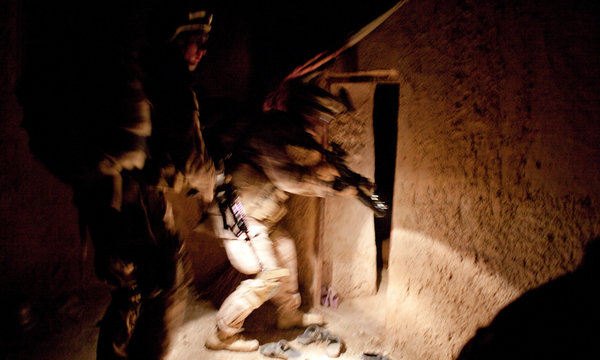
U.S. and Afghan government officials are struggling to reach a strategic long-term agreement — the sticking point is Afghan opposition to night raids which have surged under the Obama administration and now happen as often as 40 times a night.

NATO officials say they have modified how night raids are conducted in response to the Afghan government’s concerns.

“Ninety-five percent of all night operations at this stage are already partnered,” said Brig. Gen. Carsten Jacobson, the NATO spokesman in Afghanistan. “So basically the recommendation of the traditional loya jirga is already put into action.”

“It is in our combined interest that as soon as possible, Afghanization is accomplished,” he added, referring to an Afghan takeover of security responsibility.

Mr. Faizi was unimpressed by that argument. “According to reports from our officials in different provinces, the Afghan security forces are leaving with the American forces to go conduct night operations without being informed directly where they are going, which house they are searching and who is the target,” he said.

While General Jacobson said night raids averaged 10 a night now, a recent study of night raids by the Open Society Foundations, financed by George Soros, estimated that 19 a night were taking place during the first three months of 2011.

The American military is so enamored of the tactic that some generals have said that without night raids, the United States may as well go home.

General Jacobson said that 85 percent of night raids took place without a single shot fired, and that over all such operations accounted for less than one percent of all civilian casualties.

Statistics might calm the doubts of feeble-minded U.S. senators, but they will have little to no impact on the perceptions of Afghans whose homes are being violated. To live in a country where there is an ever-present risk of foreign soldiers breaking into your house in the middle of the night is to live in a state of oppression. This is the nature of occupation.

[Aimal Faizi, the spokesman for President Hamid Karzai,] said the raids were the biggest complaints that Mr. Karzai heard when visitors from the provinces met with him.

“If one of the messages of the United States is to win the hearts and minds of the Afghan people, then these night raids are totally against this,” he said. “People are becoming more and more against the international presence in Afghanistan.”

On the frontlines of southern Helmand Province, the governor of Sangin district, Mohammad Sharif, is a critic of the practice, even though his district has been the center of some of the toughest fighting of the war, with among the highest casualty rates for NATO forces. He said the Special Operations forces that carried out the raids often got the wrong people, including many pro-government people. “People are not happy, and they feel bad toward Americans,” he said.

A high-ranking official in Helmand Province saw the matter differently, although he did not want to be quoted by name endorsing night raids because of their unpopularity. “So many Taliban commanders have been killed or detained in night raids, and if it wasn’t for them, we would not have the peace we now have,” he said. “Taliban commanders are like snakes: it’s hard to catch them, and night raids are their charmers.”

He also noted that trying to arrest a Taliban commander during the day would inevitably mean a battle, which might well cause casualties among bystanders.

Mr. Faizi said the president was concerned that in many cases, Afghan families were forced to give food and shelter to insurgents, and then later were blamed for doing so and arrested. “We think that all these night raids, they bring the conflict directly to the homes of the Afghan people,” he said. “It has to be the opposite, the fight has to be fought somewhere else.”

Facebooktwittermail

Afghanistan — touch down in flight

This film is best viewed on full screen. Hit the play button and then the full-screen button on the right (between “HD” and “Vimeo”).

Afghanistan – touch down in flight from Augustin Pictures on Vimeo.

© by Lukas and Salome Augustin
All rights reserved. Published here with the filmmaker’s permission. “Feel free to watch it on Vimeo, to share on Facebook, Twitter etc. but please ask for embed permission and please don’t upload the video on Youtube or any other site. Thank you!”

Everyone lives at the center of the world.

But in a world where power and resources are so unevenly distributed, it’s easy for those of us who live in the domineering West, to place everyone and everywhere else out on the periphery.

As Americans who have for so long looked at the rest of the world through the prism of war, we rarely appreciate the people and places obscured by our imperial footprint.

Afghanistan is a country that most Americans knew nothing about before 2001 and ten years later it remains largely unknown as a country — it has become this generation’s Vietnam: a country reduced to the name of an American war.

Lukas and Salome Augustin are two young German photographers and filmmakers who have put together a stunning short portrait of the people of Afghanistan. Here we see the faces at the crossroads of Asia — a place that demographically truly is the center of the world, located as it is, in closest proximity to the whole of humanity [PDF]. And instead of images of violence and oppression, we see people peacefully attending to their lives and we see the beauty which is only revealed to those who slow down enough to appreciate it.

Facebooktwittermail

The Israelification of law enforcement in the United States

Max Blumenthal writes: In October, the Alameda County Sheriff’s Department turned parts of the campus of the University of California in Berkeley into an urban battlefield. The occasion was Urban Shield 2011, an annual SWAT team exposition organized to promote “mutual response,” collaboration and competition between heavily militarized police strike forces representing law enforcement departments across the United States and foreign nations.

At the time, the Alameda County Sheriff’s Department was preparing for an imminent confrontation with the nascent “Occupy” movement that had set up camp in downtown Oakland, and would demonstrate the brunt of its repressive capacity against the demonstrators a month later when it attacked the encampment with teargas and rubber bullet rounds, leaving an Iraq war veteran in critical condition and dozens injured. According to Police Magazine, a law enforcement trade publication, “Law enforcement agencies responding to…Occupy protesters in northern California credit Urban Shield for their effective teamwork.”

Training alongside the American police departments at Urban Shield was the Yamam, an Israeli Border Police unit that claims to specialize in “counter-terror” operations but is better known for its extra-judicial assassinations of Palestinian militant leaders and long record of repression and abuses in the occupied West Bank and Gaza Strip. Urban Shield also featured a unit from the military of Bahrain, which had just crushed a largely non-violent democratic uprising by opening fire on protest camps and arresting wounded demonstrators when they attempted to enter hospitals. While the involvement of Bahraini soldiers in the drills was a novel phenomenon, the presence of quasi-military Israeli police – whose participation in Urban Shield was not reported anywhere in US media – reflected a disturbing but all-too-common feature of the post-9/11 American security landscape.

The Israelification of America’s security apparatus, recently unleashed in full force against the Occupy Wall Street Movement, has taken place at every level of law enforcement, and in areas that have yet to be exposed. The phenomenon has been documented in bits and pieces, through occasional news reports that typically highlight Israel’s national security prowess without examining the problematic nature of working with a country accused of grave human rights abuses. But it has never been the subject of a national discussion. And collaboration between American and Israeli cops is just the tip of the iceberg.

Having been schooled in Israeli tactics perfected during a 63 year experience of controlling, dispossessing, and occupying an indigenous population, local police forces have adapted them to monitor Muslim and immigrant neighborhoods in US cities. Meanwhile, former Israeli military officers have been hired to spearhead security operations at American airports and suburban shopping malls, leading to a wave of disturbing incidents of racial profiling, intimidation, and FBI interrogations of innocent, unsuspecting people. The New York Police Department’s disclosure that it deployed “counter-terror” measures against Occupy protesters encamped in downtown Manhattan’s Zuccotti Park is just the latest example of the so-called War on Terror creeping into every day life. Revelations like these have raised serious questions about the extent to which Israeli-inspired tactics are being used to suppress the Occupy movement.

The process of Israelification began in the immediate wake of 9/11, when national panic led federal and municipal law enforcement officials to beseech Israeli security honchos for advice and training. America’s Israel lobby exploited the climate of hysteria, providing thousands of top cops with all-expenses paid trips to Israel and stateside training sessions with Israeli military and intelligence officials. By now, police chiefs of major American cities who have not been on junkets to Israel are the exception. [Continue reading…]

Facebooktwittermail

The we-are-at-war! mentality

Glenn Greenwald writes: Two significant events happened on Thursday: (1) the Democratic-led Senate rejuvenated and expanded the War on Terror by, among other things, passing a law authorizing military detention on U.S. soil and expanding the formal scope of the War; and (2) Obama lawyers, for the first time, publicly justified the President’s asserted (and seized) power to target U.S. citizens for assassination without any transparency or due process. I wrote extensively about the first episode on Thursday, and now have a question for those supporting the assassination theories just offered by the President’s lawyers.

To pose that question, I’d like to harken back for a moment to the controversy over the Guantanamo detention system. Democrats universally purported to be appalled that the Bush administration was indefinitely imprisoning people without any charges or due process. Barack Obama, as a Senator from Illinois, denounced “the Bush Administration’s attempt to create a legal black hole at Guantanamo” — i.e., that people would be put in cages, possibly forever,with no charges. But Bush lawyers offered a theory for why due-process-free imprisonment was justifiable. The theory had these four fairly simple premises:

(1) Terrorism is not primarily a criminal offense. It is an act of war. Thus: We Are At War With The Terrorists.

(2) Those who try to harm the U.S. as part of this War are combatants and Terrorists — not criminals — and are thus entitled to no due process or any other rights to which accused criminals are entitled. It is the U.S. military (led by the Commander-in-Chief) — not courts — which decides who is and is not a combatant and Terrorist.

(3) Whether someone is a combatant or Terrorist is decided by only one thing: the President’s unilateral decree. Once the President decrees someone a combatant or Terrorist — including one of his own citizens — that person by definition becomes one, and he can then be treated as such without any further judicial process or Constitutional protection. Once that presidential accusatory decree issues, protections of the Constitution and law disappear. In sum, presidential accusations that someone is a Terrorist are the same as proof and a verdict of guilt.

(4) Unlike virtually every other war ever fought, the “battlefield” of this War is not found where opposing forces are shooting at each other, but is rather defined as: wherever an accused Terrorist is found anywhere in the world. Thus, the President’s battlefield powers — which are limitless: unilateral targeting for death, indefinite imprisonment without charges, spying on communications without any oversight – are not confined to any geographical location, but instead can be applied everywhere. Wherever an accused combatant or Terrorist physically exists — sleeping in a bed, riding in a car with his children, thousands of miles away from any actual shooting — is the “battlefield.”

Those were the once-controversial theoretical premises offered repeatedly by Bush lawyers and other defenders to justify the Guantanamo detention system. More generally, these theories were (and remain) the heart and soul of the neocon view of the War on Terror. Once you accept those four premises, there is no coherent way to oppose Guantanamo. So here is my question:

At this point, do Obama defenders reject any of these four premises? I mean this literally: I cannot count how many times I have heard exactly this same theory offered by Obama supporters justifying his assassination powers (the President is entitled to target citizens for death because we are at War, and once you take up arms against the U.S. (meaning: once the President accuses you of doing so) you have no due process rights). Indeed, there simply is no possible way to defend the assassination powers claimed by Obama without embracing each of these theories. And therefore, here is what Obama lawyers said on Thursday:

U.S. citizens are legitimate military targets when they take up arms with al-Qaida, top national security lawyers in the Obama administration said Thursday. The lawyers were asked at a national security conference about the CIA killing of Anwar al-Awlaki, a U.S. citizen and leading al-Qaida figure. . . .

The government lawyers, CIA counsel Stephen Preston and Pentagon counsel Jeh Johnson, did not directly address the al-Awlaki case. But they said U.S. citizens do not have immunity when they are at war with the United States.

Johnson said only the executive branch, not the courts, is equipped to make military battlefield targeting decisions about who qualifies as an enemy.

When Obama lawyers refer to “U.S. citizens who take up arms with al-Qaida,” what they mean is this: those whom the President accuses (in secret, with no due process or evidence presented) of having taken up arms with al-Qaida. When they refer to “battlefield targeting decisions,” they do not mean a place where there is active fighting, but rather: anywhere in the world an accused Terrorist is found (leaving no doubt about that, Johnson decreed that the limits of “battlefield v. non battlefield is a distinction that is growing stale“). In other words: the whole world is the battlefield, a claim Obama officials have long embraced, and someone is a Terrorist the minute the President declares him to be one: the President is the sole judge, the sole jury, and now even the sole executioner.

So my question to defenders of Obama’s assassination powers is this: which of those four core Bush/Cheney War on Terror premises do you reject, if any?

Facebooktwittermail

The new cyber-industrial complex spying on us

Pratap Chatterjee writes: We live digital lives now, flitting from Facebook to YouTube, checking our iPhones and BlackBerries, and chatting with our loved ones on Skype. Very few of us worry too much about tweeting our personal opinions on politics or chatting with a new social network “friend” on the other side of the world, whom we barely know and often forget in a matter of a few hours or days.

Yet all these interactions have become fodder for a new industry that secretly vacuums up the data and preserves it forever on high-end servers that hold many petabytes (a million gigabytes) of information. This industry offers new tools to search that data and reconstruct our past, and even our real-time movements via our mobile phones, in a way that could well come back to haunt us.

WikiLeaks has just released the Spy Files – a trove of almost 300 documents from these companies that shine a light into this industry. At the Bureau of Investigative Journalism, where I work, we trawled through these documents, and tracked down yet more material which our research team – Matthew Wrigley, David Pegg, Christian Jensen and Jamie Thunder – used to create an online database that will soon cover over 160 companies in some 25 countries.

Facebooktwittermail