Yemenis say they have bigger problems than al Qaeda

The New York Times reports:

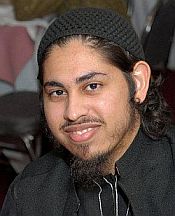
On the streets of Sana, the nation’s conflict-stricken capital, the news of the death of Anwar al-Awlaki, the Yemeni-American propagandist for Al Qaeda who inspired jihadists around the world, was largely overshadowed by the continuing domestic turmoil here.

Many Yemenis had not even heard that Mr. Awlaki had been killed, even by Friday night. And most had only a faint sense of why the United States considered him a highly significant target. If anything, Yemenis thought his death would only increase their woes.

“I don’t know why he was important, except that he was a terrorist,” said Belal Masood, who works in a restaurant in Sana’s old city. “But maybe this will create a problem for us Yemenis, because when you strike Al Qaeda they normally strike back larger. Really, we wish they could have killed him in another country.”

Another man, Walid Seneb, who was sitting on a street curb with three friends on Friday night, said, “We don’t like these terrorists who make problems for us. Mr. Seneb was the only one of the four men who had heard of the cleric’s death.

“But right now there are worse problems,” he said. “Our national crisis is the biggest problem. There is no water, electricity, everything from the government stopped.”

After eight months of antigovernment protests that began during the Arab spring, Yemen’s government has been torn apart. The armed forces are divided between those loyal to President Ali Abdullah Saleh and those who follow a rebel military commander. Conflict between the two sides turned into urban warfare in Sana two weeks ago, with over 100 people being killed. With fears that a large-scale civil war may break out and a debilitating economic crisis , Yemenis are sufficiently absorbed with their own problems that they do not have much time or attention to devote to the death of a man who was most known for reaching out to the English-speaking world of Muslim extremists.

Facebooktwittermail

U.S. Congress inflicting ‘collective punishment’ on Palestinians

The Independent reports:

The Palestinian leadership yesterday accused the US Congress of inflicting “collective punishment” upon its people by holding up almost $200m in aid earmarked for the West Bank and Gaza by the Obama administration.

The freeze on funds earlier allocated for the financial year which ends today is the first concrete Congressional reprisal against Palestinian President Mahmoud Abbas to come to light since he angered US legislators by pursuing his application for full UN membership last week.

The unpublicised block has been in force since August and was imposed in response to the then planned UN recognition bid and to earlier – so far fruitless – efforts to effect reconciliation between Mr Abbas’s own Fatah faction and Hamas.

USAID has been unable to allocate the funds, designated for a wide range of humanitarian, educational and state capacity building projects, pending negotiations between the US government and Congressional leaders aimed at lifting the freeze. Ghassan Khatib, chief spokesman for the Palestinian Authority, said yesterday: “This is not constructive at all. Such moves are unjustified. These are mainly humanitarian and development projects-it is another kind of collective punishment which is going to harm the needs of the public without making any positive contribution.”

Facebooktwittermail

How did Obama decide to execute Samir Khan?

The fact that President Obama decided to target the US citizen Anwar Awlaki for extra-judicial execution, is a subject of considerable controversy. What is arguably even more questionable is the killing of Awlaki’s American companion at the time of the Hellfire missile strike in Yemen yesterday: Samir Khan.

Khan, who grew up in New York and North Carolina, had been the subject of a criminal investigation, yet the FBI could not find sufficient evidence to indict him. Neither had he been included on Obama’s list of people who he claims the right to execute, but he got killed anyway.

CNN says intelligence professionals “see Khan’s death as a ‘two-fer,’ with al-Awlaki being the primary target.”

If there is any kind of official explanation about what happened — not that we’re likely to hear one from a president who clearly values secrecy more than accountability — how might it go?

Khan’s presence alongside Awlaki was a happy coincidence? His shredded body was a welcome piece of collateral damage?

Or, Obama’s authorization was sought and Khan’s was a kind of two-for-the-price-of-one impulse killing.

What can reasonably be inferred is that careful consideration had already been given to whether Khan could be legitimately targeted and the conclusion was that he could not — hence, even though he had long been known to be in Yemen and been responsible for producing al Qaeda’s English-language Inspire magazine, he had not been added to Obama’s target list.

In response to the killing of Awlaki, ACLU Deputy Legal Director Jameel Jaffer said yesterday:

The targeted killing program violates both U.S. and international law. As we’ve seen today, this is a program under which American citizens far from any battlefield can be executed by their own government without judicial process, and on the basis of standards and evidence that are kept secret not just from the public but from the courts. The government’s authority to use lethal force against its own citizens should be limited to circumstances in which the threat to life is concrete, specific, and imminent. It is a mistake to invest the President — any President — with the unreviewable power to kill any American whom he deems to present a threat to the country.

The execution of Samir Khan would seem to indicate that Obama took a step even further: he claims the right to kill any American — even those whom he does not deem to present a threat to the country!

Facebooktwittermail

The U.S. is the main obstacle to Middle East peace

Henry Siegman writes:

Over the past few days, much has been written about the Palestinian bid for UN recognition of its statehood and Washington’s opposition to it. But the real importance of last week’s events at the UN does not lie with the US response itself, but with the effect that response has had on the international community. For now, the Palestinian bid must be reviewed by a special UN committee, a process that will take weeks or months, thus postponing any immediate reckoning with the veto threatened by the Obama Administration. But for the first time, there is a broad recognition of the emptiness of the American claim that the US is uniquely qualified to bring the Israel-Palestine conflict to an end, and awareness that it may instead be the main obstacle to peace.

This recognition marks a dramatic shift from only two years ago. In his speech in Cairo in June 2009, Obama seemed to announce a new American commitment to fairness, international law, and a two-state solution when he proclaimed that:

the Palestinian people—Muslims and Christians—have suffered in pursuit of a homeland. For more than 60 years they’ve endured the pain of dislocation. Many wait in refugee camps in the West Bank, Gaza, and neighboring lands for a life of peace and security that they have never been able to lead. They endure the daily humiliations—large and small—that come with occupation. So let there be no doubt: The situation for the Palestinian people is intolerable. And America will not turn our backs on the legitimate Palestinian aspiration for dignity, opportunity, and a state of their own.

In his speech at the UN General Assembly last week, however, Obama reserved his compassion for those responsible for the Palestinians’ misery. “Let’s be honest,” he said. “Israel is surrounded by neighbors that have waged repeated wars against it,” and Israeli citizens have been killed by suicide bombers on their buses. “These are facts, they can not be denied,” he said. As noted by The New York Times’s Ethan Bronner, the speech could have been written by an Israeli government official: “It said nothing about Israeli settlements, the 1967 lines, occupation, or Palestinian suffering, focusing instead on Israeli defense needs.”

Moreover, Obama’s depiction of today’s Israel was neither honest nor factual. Far from waging repeated wars on Israel, a decade ago its neighbors offered to establish full normal relations, including diplomatic recognition, trade and security—an offer Israel has to this day spurned and rejected. The earlier Arab hostility to Israel which Obama invoked is as relevant to Netanyahu’s policies as the Soviet Union’s hostility to America is to Obama’s policies.

Facebooktwittermail

Why the future of Palestine looks more promising than the future of Israel

Mary Dejevsky writes:

The Israel of the next 30 years is likely to be more divided, less productive, more inward-looking and more hawkish than it is today – but without the financial means and unquestioning sense of duty that inspired young people to defend their homeland by force of arms.

Recent mass protests against inequality and the cost of middle-class living also suggest that the social solidarity that has prevailed hitherto could break down. In such circumstances, it must be asked how much longer Israel can maintain the unity it has always presented against what it terms the “existential threat”.

An Israel whose borders are leaky, which is surrounded by states that are at once chaotic and assertive, and whose citizens are less able or willing than they were to fight, could face real serious questions about its viability. The choice then might be between a fortress state, explicitly protected by nuclear weapons, and a state so weak that association, or federation, with the burgeoning independent Palestine would become plausible: the so-called one-state solution by other means.

In either event, those with other options – the younger, more educated, more cosmopolitan sections of the population – might well seek their future elsewhere, leaving the homeland of their ancestors’ dreams a husk of its former self.

Facebooktwittermail

Does Obama believe he has the right to kill anyone, anywhere, anytime?

This is a great day for America,” says a senior Obama administration official, but not such a great day for the people of Yemen.

Fayza Sulieman, a protest leader fighting for democracy in Yemen told The Guardian:

We always question the timing of these announcements from our government, [Yemen’s recently returned President] Saleh is on the backfoot and on the verge of stepping down and suddenly Anwar Awlaki is killed. We all know that Saleh’s ‘fight’ against Al-Qaida is the only thread of support keeping him in office. We pray that this news does not distract the world from our struggle against this tyrannical regime.

Mary Ellen O’Connell, vice chair of the prestigious American Society of International Law, as well as a professor at the University of Notre Dame, tells Danger Room why President Obama had no legal authority to order the assassination of Awlaki.

“The United States is not involved in any armed conflict in Yemen,” O’Connell tells Danger Room, “so to use military force to carry out these killings violates international law.”

O’Connell’s argument turns on the question of whether the U.S. is legally at war in Yemen. And for the administration, that’s a dicey proposition. The Obama administration relies on the vague Authorization to Use Military Force, passed in the days after 9/11, to justify its Shadow Wars against terrorists. Under its broad definition, the Authorization’s writ makes Planet Earth a battlefield, legally speaking.

But the Authorization authorizes war against “nations, organizations, or persons [the president] determines planned, authorized, committed, or aided the terrorist attacks that occurred on September 11, 2001.” It’s a stretch to apply that to al-Qaida’s Yemen affiliate, which didn’t exist on 9/11. But when House Republicans tried to re-up the Authorization to explicitly bless the new contours of the war against al-Qaida, the Obama administration balked, fearing the GOP was actually tying its hands on the separate question of terrorist detentions.

“It is only during the intense fighting of an armed conflict that international law permits the taking of human life on a basis other than the immediate need to save life,” O’Connell continues. “In armed conflict, a privileged belligerent may use lethal force on the basis of reasonable necessity. Outside armed conflict, the relevant standard is absolute necessity.”

So did al-Awlaki represent an “absolute” danger to the United States? President Obama, in acknowledging Awlaki’s death on Friday morning, didn’t present any evidence that he did.

As NPR reported, at a moment when few politicians are willing to question anything that is done in the name of national security, GOP presidential candidate Ron Paul had some tough words for Obama

“I don’t think that’s a good way to deal with our problems,” Paul told reporters. “Al-Awlaki was born here; he is an American citizen. He was never tried or charged for any crimes. No one knows if he killed anybody. We know he might have been associated with the underwear bomber. But if the American people accept this blindly and casually that we now have an accepted practice of the president assassinating people who he thinks are bad guys, I think it’s sad.

“I think what would people have said about Timothy McVeigh? We didn’t assassinate him, who we were pretty certain that he had done it. Went and put through the courts then executed him. To start assassinating American citizens without charges, we should think very seriously about this.”

And if Obama thinks his much trumpeted overseas successes are going to help him get re-elected, as MSNBC points out, the failing economy is really the only issue that preoccupies American voters.

No president since George H.W. Bush has had more foreign-policy successes happen under his watch than President Obama. The death of bin Laden. The dismantling of al Qaeda. The ouster of Khaddafy. And the end of combat operations in Iraq. Yet when you look at polls and Obama’s approval rating, he’s getting almost no credit from the American public, a la Bush 41.

When you ask the public about Obama and foreign policy, he gets good marks. But it’s not front of voters’ minds. In a bad economy, as Bush 41 learned, what happens overseas doesn’t matter.

Facebooktwittermail

Judge, jury, and executioner: Obama gets Awlaki. Can the president kill his way to re-election?

Spencer Ackerman reports:

An American citizen responsible for taking al-Qaida’s message viral has been killed in Yemen, according to the Yemeni government. As a target, the Obama administration considered him second only to Osama bin Laden. But don’t expect al-Qaida’s surging Yemeni cell to grow much weaker as a result.

Anwar al-Awlaki, a New Mexico-born extremist, was reportedly killed while traveling in southern Yemen, his base of operations for years. The Yemeni government made the announcement of Awlaki’s death on Friday, but left out the circumstances — notably, who killed Awlaki.

Agence France Presse reports that “tribal sources” said Awlaki was killed “in air strike that hit two vehicles in Marib province.” If true, that means the U.S. killed Awlaki. Not only does Yemen lack the capability for a precision air strike, but joint CIA and U.S. Special Operations Forces teams have stepped up both intelligence and strike operations in the past year, including armed drone flights. Indeed, Rep. Peter King, the chairman of the House homeland-security committee, jumped the gun by praising President Obama and U.S. intelligence for Awlaki’s death.

It would also mean that the Obama administration assassinated an American citizen without due process of law. Ever since evidence emerged in late 2009 that Awlaki communicated with both Fort Hood shooter Maj. Nidal Malik Hasan and would-be Christmas bomber Umar Farouk Abdulmutallab, the U.S. has launched numerous air strikes in the hope of killing him. A bevy of U.S. counterterrorism officials have testified that Awlaki plays an “operational” role in al-Qaida in the Arabian Peninsula. None have offered any evidence for that conclusion.

In 2008 Obama was able to inspire a grassroots campaign, mobilizing young people across America with the bland and non-committal slogan: “Change We Can Believe In.” Now we have an even less meaningful “Obama for America” in 2012. Maybe it should be: “Obama — the lean, mean, killing machine,” or “Obama: on target for 2012.”

There’s no way he can get re-elected on the strength of the economy, so maybe it will come down to this: being able to kill the right people at the right time.

David Axelrod is probably gathering reports right now on whether Obama’s latest assassination is really going to be a vote winner. There might not be the same expression of jubilation that accompanied Osama bin Laden’s killing, so maybe this will have to be decided by focus groups.

This is a great day for America,” a senior administration official says. That’s what they think in the White House. And then there are those of us left to wonder whether by the end of his first term, we’ll end up sick and bemused, having concluded: Obama turned out to be worse than Bush.

Glenn Greenwald writes:

It was first reported in January of last year that the Obama administration had compiled a hit list of American citizens whom the President had ordered assassinated without any due process, and one of those Americans was Anwar al-Awlaki.  No effort was made to indict him for any crimes (despite a report last October that the Obama administration was “considering” indicting him).  Despite substantial doubt among Yemen experts about whether he even has any operational role in Al Qaeda, no evidence (as opposed to unverified government accusations) was presented of his guilt.  When Awlaki’s father sought a court order barring Obama from killing his son, the DOJ argued, among other things, that such decisions were “state secrets” and thus beyond the scrutiny of the courts.  He was simply ordered killed by the President: his judge, jury and executioner.  When Awlaki’s inclusion on President Obama’s hit list was confirmed, The New York Times noted that “it is extremely rare, if not unprecedented, for an American to be approved for targeted killing.”

After several unsuccessful efforts to assassinate its own citizen, the U.S. succeeded today (and it was the U.S.).  It almost certainly was able to find and kill Awlaki with the help of its long-time close friend President Saleh, who took a little time off from murdering his own citizens to help the U.S. murder its.  The U.S. thus transformed someone who was, at best, a marginal figure into a martyr, and again showed its true face to the world.  The government and media search for The Next bin Laden has undoubtedly already commenced.

Facebooktwittermail

Obama: A disaster for civil liberties

Jonathan Turley writes:

With the 2012 presidential election before us, the country is again caught up in debating national security issues, our ongoing wars and the threat of terrorism. There is one related subject, however, that is rarely mentioned: civil liberties.

Protecting individual rights and liberties — apart from the right to be tax-free — seems barely relevant to candidates or voters. One man is primarily responsible for the disappearance of civil liberties from the national debate, and he is Barack Obama. While many are reluctant to admit it, Obama has proved a disaster not just for specific civil liberties but the civil liberties cause in the United States.

Civil libertarians have long had a dysfunctional relationship with the Democratic Party, which treats them as a captive voting bloc with nowhere else to turn in elections. Not even this history, however, prepared civil libertarians for Obama. After the George W. Bush years, they were ready to fight to regain ground lost after Sept. 11. Historically, this country has tended to correct periods of heightened police powers with a pendulum swing back toward greater individual rights. Many were questioning the extreme measures taken by the Bush administration, especially after the disclosure of abuses and illegalities. Candidate Obama capitalized on this swing and portrayed himself as the champion of civil liberties.

However, President Obama not only retained the controversial Bush policies, he expanded on them. The earliest, and most startling, move came quickly. Soon after his election, various military and political figures reported that Obama reportedly promised Bush officials in private that no one would be investigated or prosecuted for torture. In his first year, Obama made good on that promise, announcing that no CIA employee would be prosecuted for torture. Later, his administration refused to prosecute any of the Bush officials responsible for ordering or justifying the program and embraced the “just following orders” defense for other officials, the very defense rejected by the United States at the Nuremberg trials after World War II.

Obama failed to close Guantanamo Bay as promised. He continued warrantless surveillance and military tribunals that denied defendants basic rights. He asserted the right to kill U.S. citizens he views as terrorists. His administration has fought to block dozens of public-interest lawsuits challenging privacy violations and presidential abuses.

But perhaps the biggest blow to civil liberties is what he has done to the movement itself. It has quieted to a whisper, muted by the power of Obama’s personality and his symbolic importance as the first black president as well as the liberal who replaced Bush. Indeed, only a few days after he took office, the Nobel committee awarded him the Nobel Peace Prize without his having a single accomplishment to his credit beyond being elected. Many Democrats were, and remain, enraptured.

It’s almost a classic case of the Stockholm syndrome, in which a hostage bonds with his captor despite the obvious threat to his existence. Even though many Democrats admit in private that they are shocked by Obama’s position on civil liberties, they are incapable of opposing him. Some insist that they are simply motivated by realism: A Republican would be worse. However, realism alone cannot explain the utter absence of a push for an alternative Democratic candidate or organized opposition to Obama’s policies on civil liberties in Congress during his term. It looks more like a cult of personality. Obama’s policies have become secondary to his persona.

Facebooktwittermail

Palestinian statehood bid kicked into committee by UN security council

The Guardian reports:

The UN security council has moved the issue of recognising a Palestinian state to a committee which could take weeks to reach a decision.

The move came as US and European efforts to launch fresh peace talks – and avoid a diplomatic confrontation after Washington said it will veto the statehood bid – were undermined by Israel’s “provocative” announcement that it will build more than 1,000 more homes in a major Jewish settlement.

The Palestinian ambassador to the UN, Riyad Mansour, said the security council should approve the statehood request because much of the world already recognises Palestine as a country.

“We hope that the security council will shoulder its responsibility and address this application with a positive attitude, especially since we have 139 countries that have recognised the state of Palestine so far, meaning more than two-thirds majority,” Mansour said. “We are ready to govern ourselves.”

Facebooktwittermail

Palestinians could pursue war crimes charges without full statehood: ICC prosecutor

The Toronto Star reports:

In the fierce debate over the Palestinian bid for UN membership, one unseen presence has cast a long shadow.

It’s that of Luis Moreno-Ocampo, the prosecutor of the International Criminal Court — the body Israel has long feared would take up Palestinian allegations of war crimes if its statehood bid is successful.

A few blocks away from the UN this week, the man at the centre of the controversy said if Palestine becomes a member state, or a lower-ranked non-member observer state, it could be eligible to pursue claims against Israel.

“If the General Assembly says they are an observer state, in accordance with the all-state formula, this should allow them . . . to be part of the International Criminal Court,” he told the Star.

Facebooktwittermail

Tony Blair’s job in jeopardy as Palestinians accuse him of bias

The Daily Telegraph reports:

Tony Blair’s future as Middle East peace envoy was in jeopardy after the Palestinian Authority said it was set to sever all contact with him because of his “bias” towards Israel.

The senior echelons of the Palestine Liberation Organisation are expected to meet in the coming days to discuss a proposal to declare Mr Blair persona non grata, officials said.

Predicting unanimous support for the motion from the entire Palestinian leadership, they said the intention was to isolate the former prime minister to such an extent that his position would become untenable.

Mr Blair has been viewed with an element of distrust by some Palestinians ever since his appointment as the envoy of the Quartet on the Middle East – the mediating body comprising the United States, the EU, the UN and Russia – on the day he left Downing Street in June 2007.

But antagonism has mounted over allegations that he lobbied European powers to vote against a Palestinian bid for statehood submitted to the United Nations in New York last week. “We have been extremely unhappy and dissatisfied with Mr Blair’s performance since he became envoy, but particularly in the past few weeks,” a senior Palestinian official said.

However, The Independent reports:

The Palestinian Authority has denied it plans to make a formal request to remove Tony Blair from his position as a Middle East envoy.

The former Prime Minister has held the position of special envoy for the Quartet, made up of the US, Russia, the EU and UN, for four years. However, some Palestinians believe he is biased towards the Israelis.

A spokesman for the PA said while there was great unhappiness with Mr Blair’s role as envoy, his removal was not a priority. He added there were no plans to formally ask for Mr Blair to be replaced. The Security Council is currently considering the request by the Palestinians for statehood, although the US has said it will use its position as a permanent member of the council to veto the bid. Mr Blair has said he was not against the Palestinians’ UN status being upgraded, possibly to non-member state. But he said such a move should be made alongside a return to negotiations.

Facebooktwittermail

Rebelling against the globalization of corruption

The New York Times reports:

Hundreds of thousands of disillusioned Indians cheer a rural activist on a hunger strike. Israel reels before the largest street demonstrations in its history. Enraged young people in Spain and Greece take over public squares across their countries.

Their complaints range from corruption to lack of affordable housing and joblessness, common grievances the world over. But from South Asia to the heartland of Europe and now even to Wall Street, these protesters share something else: wariness, even contempt, toward traditional politicians and the democratic political process they preside over.

They are taking to the streets, in part, because they have little faith in the ballot box.

“Our parents are grateful because they’re voting,” said Marta Solanas, 27, referring to older Spaniards’ decades spent under the Franco dictatorship. “We’re the first generation to say that voting is worthless.”

Economics have been one driving force, with growing income inequality, high unemployment and recession-driven cuts in social spending breeding widespread malaise. Alienation runs especially deep in Europe, with boycotts and strikes that, in London and Athens, erupted into violence.

But even in India and Israel, where growth remains robust, protesters say they so distrust their country’s political class and its pandering to established interest groups that they feel only an assault on the system itself can bring about real change.

Young Israeli organizers repeatedly turned out gigantic crowds insisting that their political leaders, regardless of party, had been so thoroughly captured by security concerns, ultra-Orthodox groups and other special interests that they could no longer respond to the country’s middle class.

In the world’s largest democracy, Anna Hazare, an activist, starved himself publicly for 12 days until the Indian Parliament capitulated to some of his central demands on a proposed anticorruption measure to hold public officials accountable. “We elect the people’s representatives so they can solve our problems,” said Sarita Singh, 25, among the thousands who gathered each day at Ramlila Maidan, where monsoon rains turned the grounds to mud but protesters waved Indian flags and sang patriotic songs.

“But that is not actually happening. Corruption is ruling our country.”

Increasingly, citizens of all ages, but particularly the young, are rejecting conventional structures like parties and trade unions in favor of a less hierarchical, more participatory system modeled in many ways on the culture of the Web.

In that sense, the protest movements in democracies are not altogether unlike those that have rocked authoritarian governments this year, toppling longtime leaders in Tunisia, Egypt and Libya.

Facebooktwittermail

America faces a jobs depression

Robert Reich writes:

The Reverend Al Sharpton and various labor unions announced Wednesday a March for Jobs. But I’m afraid we’ll need more than marches to get jobs back.

Since the start of the Great Recession at the end of 2007, the potential labor force of the United States – that is, working-age people who want jobs – has grown by over 7 million. But since then, the number of Americans who actually have jobs has shrunk by more than 300,000.

In other words, we’re in a deep hole – and the hole is deepening. In August, the United States created no jobs at all. Zero.

America’s ongoing jobs depression – which is what it deserves to be called – is the worst economic calamity to hit this nation since the Great Depression. It’s also terrible news for President Obama, whose chances for re-election now depend almost entirely on the Republican party putting up someone so vacuous and extremist that the nation rallies to Obama regardless.

Facebooktwittermail

Discrimination against Palestinian citizens of Israel

The Institute for Middle East Understanding lists the forms of institutionalized discrimination that target non-Jewish citizens of Israel.

  • There are more than 30 laws that discriminate against Palestinian citizens of Israel. directly or indirectly, based solely on their ethnicity, rendering them second or third class citizens in their own homeland.
  • 93% of the land in Israel is owned either by the state or by quasi-governmental agencies, such as the Jewish National Fund, that discriminate against non-Jews. Palestinian citizens of Israel face significant legal obstacles in gaining access to this land for agriculture, residence, or commercial development.
  • More than seventy Palestinian villages and communities in Israel, some of which pre-date the establishment of the state, are unrecognized by the government, receive no services, and are not even listed on official maps. Many other towns with a majority Palestinian population lack basic services and receive significantly less government funding than do majority-Jewish towns.
  • Since Israel’s founding in 1948, more than 600 Jewish municipalities have been established, while not a single new Arab town or community has been recognized by the state.
  • Israeli government resources are disproportionately directed to Jews and not to Arabs, one factor in causing the Palestinians of Israel to suffer the lowest living standards in Israeli society by all socio-economic indicators.
  • Government funding for Arab schools is far below that of Jewish schools. According to data published in 2004, the government provides three times as much funding to Jewish students than it does to Arab students.
  • According to the 2009 US State Department International Religious Freedom Report, “Many of the national and municipal policies in Jerusalem were designed to limit or diminish the non-Jewish population of Jerusalem.”
  • The Nationality and Entry into Israel Law prevents Palestinians from the occupied territories who are married to Palestinian citizens of Israel from gaining residency or citizenship status. The law forces thousands of Palestinian citizens of Israel to either leave Israel or live apart from their families.
  • In October 2010, the Knesset approved a bill allowing smaller Israeli towns to reject residents who do not suit "the community’s fundamental outlook", based on sex, religion, and socioeconomic status. Critics slammed the move as an attempt to allow Jewish towns to keep Arabs and other non-Jews out.
  • The so-called "Nakba Bill" bans state funding for groups that commemorate the tragedy that befell Palestinians during Israel’s creation in 1948, when approx. 725,000 Palestinian Arabs were ethnically cleansed to make way for a Jewish majority state.
  • The British Mandate-era Land (Acquisition for Public Purposes) Ordinance law allows the Finance Minster to confiscate land for "public purposes.” The state has used this law extensively, in conjunction with other laws such as the Land Acquisition Law and the Absentees’ Property Law, to confiscate Palestinian land in Israel. A new amendment, which was adopted in February 2010, confirms state ownership of land confiscated under this law, even where it has not been used to serve the original confiscation purpose. The amendment was designed to prevent Arab citizens from submitting lawsuits to reclaim confiscated land.
  • Over the entirety of its 63-year existence, there has been a period of only about one year (1966-1967) that Israel did not rule over large numbers of Palestinians to whom it granted no political rights.
  • Former Israeli prime ministers Ehud Barak and Ehud Olmert have both warned that a continuation of the occupation will lead to Israel becoming an "apartheid" state. Barak stated: "As long as in this territory west of the Jordan river there is only one political entity called Israel it is going to be either non-Jewish, or non-democratic… If this bloc of millions of Palestinians cannot vote, that will be an apartheid state."
  • Archbishop Desmond Tutu and Nelson Mandela, heroes of the struggle against apartheid in South Africa, have both compared Israel’s treatment of Palestinians to apartheid.
  • Today, there is a virtual caste system within the territories that Israel controls between the Jordan River and Mediterranean Sea, with Israeli Jews at the top and Muslim and Christian Palestinians in the occupied territories at the bottom. In between are Palestinians with Israeli citizenship and Palestinian residents of occupied East Jerusalem.
Facebooktwittermail

Why fewer young American Jews share their parents’ view of Israel

Dana Goldstein writes:

“I’m trembling,” my mother says, when I tell her I’m working on an article about how younger and older American Jews are reacting differently to the Palestinians’ bid for statehood at the United Nations. I understand the frustrations of the Palestinians dealing with ongoing settlements construction and sympathize with their decision to approach the U.N., but my mom supports President Obama’s promise to wield the U.S. veto, sharing his view that a two-state solution can be achieved only through negotiations with Israel.

“This is so emotional,” she says as we cautiously discuss our difference of opinion. “It makes me feel absolutely terrible when you stridently voice criticisms of Israel.”

A lump of guilt and sadness rises in my throat. I’ve written harshly of Israel’s invasion of Lebanon in 2006 and its assault on Gaza in 2009, and on civil rights issues in Israel. But speaking my mind on these topics — a very Jewish thing to do — has never been easy. During my childhood in the New York suburbs, support for Israel was as fundamental a family tradition as voting Democratic or lighting the Shabbos candles on Friday night.

My mom has a masters degree in Jewish history and is the program director of a large synagogue. Her youthful Israel experiences, volunteering on a kibbutz and meeting descendants of great-grandmother’s siblings, were part of my own mythology. Raised within the Conservative movement, I learned at Hebrew school that Israel was the “land of milk and honey” where Holocaust survivors had irrigated the deserts and made flowers bloom.

What I didn’t hear much about was the lives of Palestinians. It was only after I went to college, met Muslim friends, and enrolled in a Middle Eastern history and politics course that I was challenged to reconcile my liberal, humanist worldview with the fact that the Jewish state of which I was so proud was occupying the land of 4.4 million stateless Palestinians, many of them refugees displaced by Israel’s creation.

Facebooktwittermail

Our man in Kandahar

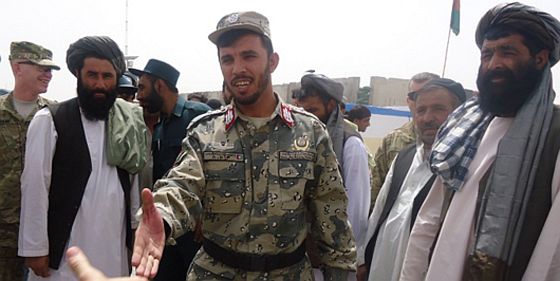
Afghan General Abdul Raziq

Matthieu Aikins writes:

Shyly, at times smiling with weak adolescent bravado, the two young men recounted to me how they were beaten and tortured. It was July, and we were sitting at a table in the cavernous restaurant where they both work, in the stupefying summer heat. They slouched forward with their arms on their knees, frequently glancing down toward their open sandals, at toes where livid burns from the electrical wires were still visible.

I will call them Najib and Ahmad, though their names, like others in this article, have been changed to protect their safety. Both 23 years old, they looked like gangly young men who should be playing basketball on the street outside their house, or perhaps video games inside. But here in Kandahar City, the linchpin of the U.S. military’s campaign against the Taliban in southern Afghanistan, they had found themselves the victims of America’s Afghan allies.

One afternoon in June, two younger boys who worked at the restaurant, ages 12 and 14, had been stopped by the Afghan National Police while carrying home leftovers from an afternoon wedding. The boys, who were each paid about $60 a month, explained that they always took home leftover meals for their families. But this time they were arrested and accused of bringing food to insurgent fighters hiding outside the city.

Around 11 o’clock that night, police showed up at the restaurant and arrested Najib and Ahmad as well, accusing them of having sent the younger boys out to feed the Taliban. They were taken to police headquarters, where they were handed over to men wearing the mottled gray-green uniforms of the Border Police.

“They said, ‘We are going to beat you,’” Ahmad recalled.

The Border Police were a new sight in the city: rough-looking types with wraparound shades and bandoliers of grenades, who could be seen lounging at checkpoints throughout the city and guarding installations such as the governor’s palace. Though restricted by Afghan law to operate only in international airports or within 50 kilometers of the border, they’d entered the city on May 29 when their boss, Brigadier General Abdul Raziq, was appointed acting chief of police in Kandahar province, following the assassination of his predecessor. Raziq was well known as a warlord and suspected drug trafficker who had waged a brutal campaign against the Taliban. He was also a close ally of both President Hamid Karzai and the U.S. military.

Inside the station, the policemen tied a scarf to Najib’s handcuffs and hung him from the ceiling until he felt as if his arms were being pulled from their sockets. Then two men—one in uniform and holding a black metal baton, the other in plain clothes and wielding a length of cable—began beating him across his hips and thighs. A third man, also in plain clothes, questioned Najib: “What was the name of the commander you were bringing food to? How often do you bring food to the enemy?” Sobbing, Najib pleaded his innocence. In a nearby room, Ahmad could hear his friend’s screams, though he was spared for the time being.

When the beating was over, Najib and Ahmad were taken outside and thrown into the back of an armored Humvee, where they lay all night with their wrists still tightly cuffed, suffocating in the stiflingly hot, enclosed interior.

Early the next morning, they were taken to the governor’s palace, a long, low white compound fronted by a series of arches, jointly guarded by American soldiers and Border Police, where U.S. and Afghan officials meet on a daily basis. The police brought them around the back, to a filthy room that smelled of human waste, where they were shackled to the wall next to two other prisoners. Then, one at a time, they were taken to a second room, empty except for a gas-powered generator.

Najib went first. He was forced to lie on his back, and wires leading to the generator were attached to toes on both his feet. A group of Border Police crowded around him, jeering and spitting snuff on his face. “Tell us the truth,” they commanded. Then they switched on the power. “It felt,” Najib told me, “like my whole body was filled with moving knives.”

After he passed out from the pain, it was Ahmad’s turn to be tortured. When the two awoke from the ordeal, they were placed in separate rooms. In the evening, they were taken to police headquarters to see Abdul Raziq himself.

Raziq is just 33 years old, slender and boyish-looking, with a square jaw and a widow’s peak that tufts up beneath the embroidered pillbox cap he favors when he’s not in uniform. Uneducated but clever and charismatic, he is, despite his youth, one of the most powerful warlords in southern Afghanistan. He controls a militia of several thousand men, as well as the lucrative drug-smuggling routes that pass through his territory, which includes a key trading town called Spin Boldak, near the border with Pakistan.

That June evening, Najib and Ahmad were seated facing Raziq, who asked them to explain why they had been arrested. They told him about the younger boys who would take leftover food home to their families, and whether it was because they had not confessed, or because their stories had checked out, Raziq ordered them released.

Najib and Ahmad complained to me of suffering nerve damage in their wrists from being cuffed for two days, and both said they’d had problems with their kidneys since the electrocutions: Ahmad, who had the more-severe burns, urinated blood for three days afterward. I examined the wounds on Ahmad’s and Najib’s toes—distinct circular burn marks that were still raw and unhealed—and I spoke with a number of their co-workers, who corroborated their claims. I was also given photos of their injuries taken immediately after they were released, and was told their story independently by a source inside the Kandahar police department unhappy with the abuses taking place under Raziq. “That’s what happened to them, when they were innocent,” this official said. “Think of what they do to the guilty.”

What happened to Ahmad and Najib is not an isolated incident, but part of a larger pattern of abuse that has occurred wherever Raziq has been in power, first in his outpost of Spin Boldak and now in Kandahar City. Raziq has long been publicly suspected of drug trafficking and corruption; allegations that he and his men have been involved in extrajudicial killings, torture, and illegal imprisonment have been trickling out for years. Raziq categorically denies all such charges, telling The Atlantic, “When someone works well, then he finds a lot of enemies who try to ruin his name.”

Last fall, Raziq and his militia were given a starring role in the U.S.-led military offensive into Taliban-controlled areas west of Kandahar City, a campaign that boosted his prestige immensely. Mentored by an American Special Forces team, Raziq’s fighters won public praise from U.S. officers for their combat prowess. After the offensive, Raziq was promoted to brigadier general—a rank requiring a direct order from President Karzai—in a January ceremony at the governor’s mansion. As Ben Moeling, who was until July the State Department’s senior official in Kandahar province, explained to me at the time, the promotion was “an explicit recognition of his importance.”

Facebooktwittermail