Iraqi PM Nouri al-Maliki accused of sinister purge to become dictator

Iraqi PM Nouri al-Maliki accused of sinister purge to become dictator

The Iraqi opposition accused Nouri al-Maliki, the Prime Minister, yesterday of purging the American-trained security apparatus so that he could attain quasi-dictatorial powers.

Mr al-Maliki, who is facing a tough election battle, has dismissed three high-profile members of the Ministry of Interior, which oversees the fight against insurgent groups. He has also forced the resignation of the head of the intelligence service and replaced several police and army commanders in the last few weeks. The moves provoked outrage among political opponents, who worry about the rise of a new police state and accuse the Prime Minister of using the aftermath of last month’s massive bomb attack in Baghdad to make a power grab. The sacked officials are expected to be replaced by al-Maliki loyalists.

Maysoon Al-Damluji, a liberal MP, said: “We mustn’t forget what we went through under Saddam. Power should not be in the hands of a few. What we see now is the preparation once again for something sinister.” Mr al-Maliki says he is trying to improve the security services, but has not explained why he sacked the officials, who include Mohammed Shahwani, the head of Iraqi intelligence for five years, and Major General Abdul-Kareem Khalaf, the operations commander of the interior ministry. [continued…]

Facebooktwittermail

For Iran’s spies, a putsch

For Iran’s spies, a putsch

The political situation in Iran remains murky, to put it mildly, in the aftermath of June’s turbulent election. But some clues can be found in the recent purge of the country’s intelligence service.

The turmoil suggests that President Mahmoud Ahmadinejad is pushing to tighten his control of the regime, even at the cost of alienating some powerful fellow conservatives. But the decisive voice remains the country’s supreme leader, Ayatollah Ali Khamenei. His legitimacy has taken a hit — and he’s riding a tiger in trying to control Ahmadinejad — but he’s still No. 1.

The head of the Ministry of Intelligence and Security, a ferocious cleric named Gholam-Hossein Mohseni-Ejei who is nicknamed “the viper” by some Iranians, was dismissed in late July. Four top deputies in the ministry were also sacked in what one U.S. analyst likened to a Stalinist purge. In the process, Ahmadinejad made some potentially dangerous enemies.

The intelligence putsch showed Ahmadinejad “moving to control” the government, says Mark Fowler, a former CIA officer who now runs the “Persia House” consulting service for Booz Allen Hamilton. He says of the ousted intelligence officers: “These are not wallflowers. These are tough guys. They have buddies who are spread throughout the system. They could cause some problems” for Ahmadinejad. [continued…]

A green day for Iran

International Jerusalem Day (Rooze jahaniye Qods) is observed in Iran on the last Friday of the holy month of Ramadan. This year it falls on 18 September. Jerusalem Day was designated by the late Ayatollah Khomeini as a day of support for Palestinians and opposition against Israel. It is a day when the government issues permits for hundreds of thousands of Iranians to pour on to the streets and demonstrate.

Some attend due to genuine support for Palestinians. Others take part because of government pressure. This is especially true of civil servants. Some fear that failure to attend could damage their job security and prospects. When it comes to the number of demonstrators, there is no limit on how many people can come out to the streets. In fact, as far as the government is concerned, the more the merrier.

This is in direct contrast to demonstrations held by reformists. The Ahmadinejad administration, using violence and intimidation, has done its utmost to limit such protests, if not eradicate them entirely. This has forced many of Iran’s demonstrators to come up with new ways of voicing their opposition, using seemingly legal means. One popular method is going on top of their roofs to shout “Allahu akbar” (God is greatest). This is not against the law. In fact, this is one of the methods of protest used by those who took part in the 1979 revolution. [continued…]

Facebooktwittermail

Afghan reporter recalled as a man of many abilities

Afghan reporter recalled as a man of many abilities

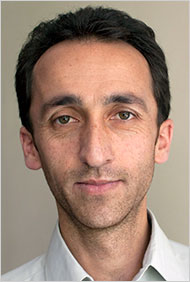
The death of [Sultan M] Munadi illustrated two grim truths of the war in Afghanistan: vastly more Afghans than foreigners have died battling the Taliban, and foreign journalists are only as good as the Afghan reporters who work with them.

Mr. Munadi, 34, the father of two boys, worked as an office manager and reporter in the Kabul bureau. He and other Afghan reporters who work with foreign journalists are vastly more than interpreters.

“The story calls him an ‘interpreter,’ which misleads the reader about what these great people do for us,” Barry Bearak, a Times correspondent who worked with Mr. Munadi in 2001 and 2002, said, referring to an article about Mr. Munadi’s death.

“They serve as our walking history books, political analysts,” he added, “managers of logistics, taking equal the risks without equal the glory or pay.”

Those who worked with him said his country’s turmoil did not dampen his spirit or limit his determination. During Taliban rule, he worked with the International Red Cross in his native Panjshir Valley, a mountainous area north of Kabul that was never ruled by the Taliban, even when they dominated the country from 1996 to 2001. [continued…]

The reporter’s account: 4 days with the Taliban

I lay on the ground, gave my name and newspaper and pointed to where Sultan was lying behind me, telling them I thought he had been shot.

The body was lying motionless in the ditch where I had seen him go down. I hoped he had dropped and was lying still. I knew it wasn’t the case. They told me they had his picture and would look for him, then dragged me away past the house across a rutted field and toward the helicopter landing zone.

It was over. Sultan was dead. He had died trying to help me, right up to the very last seconds of his life. [continued…]

Negotiators shocked by special forces rescue raid on Taleban

Hostage negotiators expressed shock and anger at Gordon Brown’s decision to approve a commando raid to free a kidnapped British journalist, saying that they were within days of securing his release through peaceful means.

Stephen Farrell — who was in Afghanistan for The New York Times — was not harmed in the raid but his Afghan translator, Sultan Munadi, and a British soldier from the Special Forces Support Group were killed. The men were being held at a house in Kharudi in northern Afghanistan. Just after midnight on Tuesday US helicopters dropped British special forces and Afghan troops in the village. Taleban militants fled the house and a fierce battle ensued. At least one civilian and scores of militants were killed. [continued…]

Facebooktwittermail

NATO nations ask U.N. for new Afghan ‘timelines’

NATO nations ask U.N. for new Afghan ‘timelines’

The Spanish defense minister, Carme Chacón, said Wednesday that five years would be a “reasonable” timeframe for NATO forces to withdraw from Afghanistan, just as major European powers officially called on the United Nations to convene an international conference before the end of the year to set new “benchmarks and timelines.”

Mrs. Chacón also said she would request 220 more troops for Spain’s Afghanistan contingent, bringing the permanent deployment there to about 1,000. With the additional troops, Spain’s contribution would still fall behind those of 10 other NATO members, led by the United States, Britain, France and Germany. Spain’s government is expected to approve the request Friday at a cabinet meeting.

Prime Minister José Luis Rodríguez Zapatero had already said in July that troop levels would probably increase. [continued…]

Afghan election watchdog discards tainted votes

The U.N.-funded elections watchdog in Afghanistan has begun to throw out fraudulent ballots from the country’s presidential balloting, a day after a tally including contested votes put President Hamid Karzai over the 50% he needs to avoid a second round.

The Electoral Complaints Commission, a United Nations-sponsored body responsible for investigating allegations of fraud and misconduct, has been looking into more than 600 serious accusations, Commissioner Grant Kippen said. The accusations include instances of ballot stuffing and voter intimidation. In some cases, the commission has disqualified results from entire polling stations. [continued…]

Facebooktwittermail

September 9: The shot that was not heard round the world

September 9: The shot that was not heard round the world

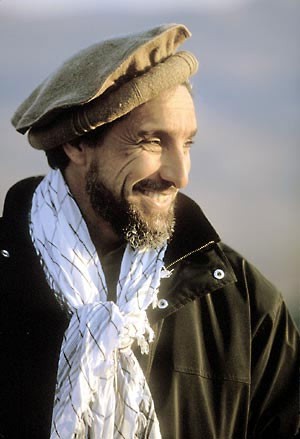
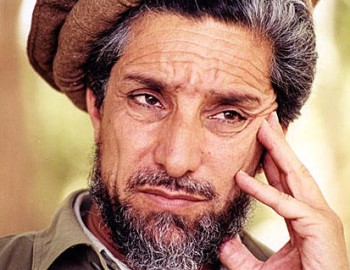
As the war in Afghanistan enters its ninth year, in the minds of most Americans the attacks of September 11, 2001 remain the signal event that shaped everything that has followed. Yet had we been paying more attention, we would have known that September 9, 2001, the day that Ahmed Shah Massoud was assassinated, was no less significant.

On that day, Afghanistan lost a leader of global stature — a man who truly was irreplaceable. Now, as much as ever, as the Taliban is resurgent and American and its allies attempt to prop up a deeply corrupt government in Kabul, the memory of Massoud is a symbol of the Afghan people’s so many shattered hopes.

A year after Massoud’s death, John Burns wrote in the New York Times:

As Americans prepare to mark the Sept. 11 anniversary, with many still struggling to come to terms with the cataclysm of that day, Afghans are passing through their own harrowing remembrance, of an attack that was overshadowed for the rest of the world by what happened two days later in the United States. Only four men died on Sept. 9 — the 49-year-old Mr. Massoud, an aide and the assassins — but there has been little healing of the wounds the killers inflicted on the hearts and the hopes of millions of his countrymen.

Ask Afghans who knew Mr. Massoud what it was about him that inspires such grief, and they struggle. Like [Fahim] Dashti [who was with Massoud at the time of his assassination], they talk of his skills as the guerrilla commander who astonished Soviet generals he outfought during the occupation of the 1980’s, or of his years holding out against the Taliban, when almost all other guerrilla leaders had joined the Taliban or fled abroad.

They speak of Mr. Massoud’s directness, his lack of pretense or false piety, his modesty, the look of somber intensity that rarely left his face. But usually, they give up, as people do when they try to define charisma. Mr. Dashti, the editor, resorted, in the end, to the simplest words. “We loved him,” he said. “We loved him more than we loved our own mothers and fathers. He embodied everything we loved about Afghanistan.”

In 1998, in a letter to the American people, Massoud wrote:

Let me correct a few fallacies that are propagated by Taliban backers and their lobbies around the world. This situation over the short and long-run, even in case of total control by the Taliban, will not be to anyone’s interest. It will not result in stability, peace and prosperity in the region. The people of Afghanistan will not accept such a repressive regime. Regional countries will never feel secure and safe. Resistance will not end in Afghanistan, but will take on a new national dimension, encompassing all Afghan ethnic and social strata.

The goal is clear. Afghans want to regain their right to self-determination through a democratic or traditional mechanism acceptable to our people. No one group, faction or individual has the right to dictate or impose its will by force or proxy on others. But first, the obstacles have to be overcome, the war has to end, just peace established and a transitional administration set up to move us toward a representative government.

We are willing to move toward this noble goal. We consider this as part of our duty to defend humanity against the scourge of intolerance, violence and fanaticism. But the international community and the democracies of the world should not waste any valuable time, and instead play their critical role to assist in any way possible the valiant people of Afghanistan overcome the obstacles that exist on the path to freedom, peace, stability and prosperity.

Pepe Escobar recounts:

During the 1990s, and especially during the time of the Taliban rule, which began in 1996, Washington never knew exactly how to deal with Massoud. But after the attacks on the US embassies in Kenya and Tanzania in 1998, Central Intelligence Agency (CIA) agents sought a meeting with Massoud in Dushanbe. The CIA wanted information on how to get to bin Laden. Massoud carefully considered all the angles, but ultimately he could not but criticize American shortsightedness. For the Bill Clinton administration, the ultimate aim was to get bin Laden and destroy al-Qaeda. For Massoud, the main point was to destroy the Taliban. He repeatedly stressed at the time that “without the Taliban, Osama can’t do anything”.

Massoud, indeed, had agents and intelligence in the heart of Taliban country. The best example is how his Panjshiris planted a powerful truck bomb just outside Mullah Omar’s compound in central Kandahar, in 1999. The explosion left a huge crater and killed 10 people, including three of Mullah Omar’s bodyguards. Omar escaped, almost by a miracle, but if the Northern Alliance could get close to the Taliban, they could not penetrate al-Qaeda’s ultra-hardcore security to try to find and menace bin Laden. And as much as the Northern Alliance could penetrate the Taliban, security chief Arif – now head of intelligence of Hamid Karzai’s government – says that “Osama was actively trying to recruit spies inside the Panjshir Valley”. But once again, no one investigated the “Moroccans”.

In his interview with Asia Times Online, the second-to-last in his lifetime, Massoud repeatedly portrayed al-Qaeda, the Taliban and Pakistan as a sort of “triangle of evil”. He criticized the US for basically following a Pakistani plan: try to “reform” the Taliban and concentrate on seducing Taliban “moderates” (a contradiction in terms). There were never any moderates within the Taliban. Mullah Omar was totally under the spell of bin Laden. American diplomats with knowledge of Central Asia were warning about the “Arabization” of Afghanistan. But no one in Washington was listening. The US only got the message after September 11 – and after Massoud’s death.

In the first months of 2001, Massoud calculated that he had to involve himself in a complex gamble: change his image from warrior to statesman. He addressed the European parliament in Strasbourg, France, in April 2001. This was his first official trip to the West. He tried hard to attract Western support for the resistance against the Taliban. But still no one was listening. In Strasbourg, Massoud delivered a stunning message that nobody took seriously at the time: “If President Bush doesn’t help us, then these terrorists will damage the United States and Europe very soon – and it will be too late.”

Afghanistan Revealed a documentary broadcast by National Geographic in October 2001, presents a portrait of Massoud and his struggle to save Afghanistan.

Facebooktwittermail

UN: Gaza in worst condition since 1967

UN: Gaza in worst condition since 1967

A UN report published Tuesday says poverty in the Gaza Strip has deteriorated to levels unseen since 1967.

The UN trade and development agency says 90% of Gaza’s residents are currently beneath the poverty line and rates the damages caused by the IDF’s Operation Cast Lead at $4 billion, a sum it claims is three times larger than the Strip’s annual market performance.

The agency claims the operation halted all trade in the Gaza Strip, creating a defecit of around $88 million. This, in addition to material damages and loss of finances due to the siege and trade limitations later imposed on the Strip, make up the final sum.

The agency’s report claims the Strip has not been in such dire straits since 1967, and that the government has become the residents’ main force of employment. [continued…]

Not one penny has reached Gaza

It has been six months since the international community pledged nearly US$5 billion (Dh18bn) in aid to the Palestinian people, chiefly for the reconstruction of the Gaza Strip after Israel’s devastating offensive there this year.

None of this aid has reached Gaza and no reconstruction has started.

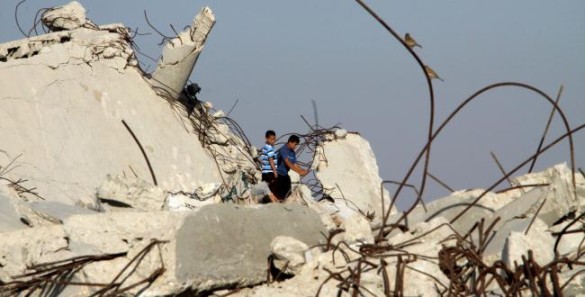
Although Israel is slowly easing its restrictions on the flow of basic humanitarian goods to Gaza, including food and medicine, construction materials remain prohibited from entering, institutions and homes still lie in rubble, and critically needed projects to repair and upgrade Gaza’s power plant and tottering sewage network lie dormant. [continued…]

Facebooktwittermail

Israeli settlement expansion may bring one-state solution closer

Israeli settlement expansion may bring one-state solution closer

As Israel announced plans to expand settlements in the West Bank in anticipation of a settlement “freeze”, the former US president, Jimmy Carter, who recently returned from a trip to the Holy Land, suggested that the implementation of a two-state solution is becoming increasingly unlikely.

“A more likely alternative to the present debacle is one state, which is obviously the goal of Israeli leaders who insist on colonising the West Bank and East Jerusalem. A majority of the Palestinian leaders with whom we met are seriously considering acceptance of one state, between the Jordan River and the Mediterranean Sea. By renouncing the dream of an independent Palestine, they would become fellow citizens with their Jewish neighbours and then demand equal rights within a democracy. In this nonviolent civil rights struggle, their examples would be Mahatma Gandhi, Martin Luther King Jr and Nelson Mandela.”

Mr Carter belongs to a group of veteran world leaders, known as the Elders, who recently visited Israel and the West Bank. Another member of the group, former Irish president and UN Human Rights Commissioner Mary Robinson told The Jerusalem Post last month that if Israel does not freeze settlement construction, a two-state solution may no longer be possible. [continued…]

Facebooktwittermail

Airline bomb plotters case threatened by US fears

Airline bomb plotters case threatened by US fears

Several months of high-level surveillance on the key suspects in the airline bomb plot was almost foiled by the nervousness of US authorities who “lost their nerve”, according to Scotland Yard’s then head of counter-terrorism operations.

Andy Hayman, who was assistant commissioner specialist operations in the Metropolitan police in 2006, today outlined how the suspects were being filmed, their purchases and rubbish monitored and cars bugged in the lead-up to their arrests in August 2006, but said the police operation in the UK came close to being undermined by anxiousness from the US that the plotters be arrested as soon as possible.

“At the very highest level, the Americans wanted to be reassured that this was not going to slip through our hands. I was briefing the home secretary, who was briefing Tony Blair, who was briefing George Bush…” he wrote in the Times today. [continued…]

Why I suspect jittery Americans nearly ruined efforts to foil plot

For several months in 2006 the key suspects in the airline plot — some of whom were convicted yesterday — were under intensive surveillance.

We logged every item they bought, we sifted every piece of rubbish they threw away (at their homes or in litterbins). We filmed and listened to them; we broke into their homes and cars to plant bugs and searched their luggage when they passed through airports.

We had been concerned about this group since early 2006. They were linked to a suspicious bookshop in Forest Gate, East London, and knew one of the July 21 bombers. The inquiry was labelled Operation Overt.

When a key figure, Abdulla Ahmed Ali, returned from Pakistan in June 2006, we searched his luggage and resealed it without him noticing. Inside was a soft drink powder, Tang, and a large number of batteries; they were bombmaking components and their discovery led to a step change in the operation. Another man, Assad Sarwar, seemed to be taking on the role of quartermaster — buying clamps, drills, syringes, glue and latex gloves. We watched him dispose of empty hydrogen peroxide containers; the substance could be used to dye hair or, as in July 2005, as an essential explosives component.

We were on their tail when Ali bought a flat in Walthamstow for £138,000 cash and we “burgled” the property to wire it up for covert sound and cameras. We watched as they experimented with turning soft-drinks containers into bottle bombs, listened as they recorded martyrdom videos and heard them discuss “18 or 19”. Were they talking about numbers of targets, bombs or bombers? [continued…]

Facebooktwittermail

U.S. tried to soften treaty on detainees

U.S. tried to soften treaty on detainees

From 2003 to 2006, the Bush administration quietly tried to relax the draft language of a treaty meant to bar and punish “enforced disappearances” so that those overseeing the CIA’s secret prison system would not be criminally prosecuted under its provisions, according to former officials and hundreds of pages of documents recently declassified by the State Department.

The aim of the global treaty, long supported by the United States, was to end official kidnappings, detentions and killings like those that plagued Latin America in the 1970s and 1980s, and that allegedly still occur in Russia, China, Iran, Colombia, Sri Lanka and elsewhere. But the documents suggest that initial U.S. support for the negotiations collided head-on with the then-undisclosed goal of seizing suspected terrorists anywhere in the world for questioning by CIA interrogators or indefinite detention by the U.S. military at foreign sites.

Instead of embracing a far-reaching ban on arrests, detentions and abductions of people without disclosing their fate or whereabouts or ensuring “the protection of the law,” the United States pressed in 2004 for a more limited prohibition on intentionally placing detainees outside legal protections for “a prolonged period of time.” At the time, the CIA was secretly holding about a dozen prisoners. [continued…]

The complicit general

With regard to the interrogation of detainees after September 11, it is well established that the path to torture was based on three key decisions. First, on February 7, 2002, President Bush decided that none of the detainees held at Guantánamo would have any legal rights under the Geneva Conventions. Second, starting in July 2002 the administration decided to authorize the use of waterboarding and other “enhanced interrogation techniques” against certain detainees held by the CIA, and obtained legal approval from the Department of Justice, in the form of two now notorious memos signed by Jay Bybee and largely written by John Yoo, with input from Dick Cheney’s legal counsel, David Addington.[1] Third, on December 2, 2002, came Secretary Rumsfeld’s memo approving the use of fifteen techniques on prisoners held by the military at Guantánamo, causing the military to adopt some of the interrogation practices used by the CIA. Each decision was significant. The cumulative effect was devastating, opening the path to the abuses at Abu Ghraib and elsewhere. [continued…]

Facebooktwittermail

Measuring success in Afghanistan

Measuring success in Afghanistan

Here may be the single strangest fact of our American world: that at least three administrations — Ronald Reagan’s, George W. Bush’s, and now Barack Obama’s — drew the U.S. “defense” perimeter at the Hindu Kush; that is, in the rugged, mountainous lands of Afghanistan. Put another way, while Americans argue feverishly and angrily over what kind of money, if any, to put into health care, or decaying infrastructure, or other key places of need, until recently just about no one in the mainstream raised a peep about the fact that, for nearly eight years (not to say much of the last three decades), we’ve been pouring billions of dollars, American military know-how, and American lives into a black hole in Afghanistan that is, at least in significant part, of our own creation.

Imagine for a moment, as you read this post, what might have happened if Americans had decided to sink the same sort of money — $228 billion and rising fast — the same “civilian surges,” the same planning, thought, and effort (but not the same staggering ineffectiveness) into reclaiming New Orleans or Detroit, or into planning an American future here at home. Imagine, for a moment, when you read about the multi-millions going into further construction at Bagram Air Base, or to the mercenary company that provides “Lord of the Flies” hire-a-gun guards for American diplomats in massive super-embassies, or about the half-a-billion dollars sunk into a corrupt and fraudulent Afghan election, what a similar investment in our own country might have meant.

Ask yourself: Wouldn’t the U.S. have been safer and more secure if all the money, effort, and planning had gone towards “nation-building” in America? Or do you really think we’re safer now, with an official unemployment rate of 9.7%, an underemployment rate of 16.8%, and a record 25.5% teen unemployment rate, with soaring health-care costs, with vast infrastructural weaknesses and failures, and in debt up to our eyeballs, while tens of thousands of troops and massive infusions of cash are mustered ostensibly to fight a terrorist outfit that may number in the low hundreds or at most thousands, that, by all accounts, isn’t now even based in Afghanistan, and that has shown itself perfectly capable of settling into broken states like Somalia or well functioning cities like Hamburg. [continued…]

Evidence of ballot fraud for Karzai forces U.S. into action

Evidence of electoral fraud on behalf of incumbent Afghan President Hamid Karzai has become so overwhelming, some U.S. and Western officials say, that they are scrambling to avoid a potential political crisis if he claims victory.

Afghanistan’s election commission decided Monday that it will release a complete preliminary tally from the Aug. 20 presidential election, including votes tainted by fraud charges but not disqualified, a commission official said. Western officials now say they believe almost one of every six of Afghanistan’s more than 25,000 polling stations is tainted by fraud, most of it on behalf of Mr. Karzai.

Including those votes, the preliminary tally is expected to show Mr. Karzai with more than 50% of the vote — enough to avoid a runoff election, Afghan and Western officials say. [continued…]

Facebooktwittermail

Ahmadinejad invites six powers to Tehran

Ahmadinejad invites six powers to Tehran

Iranian President Mahmoud Ahmadinejad on Monday invited representatives from a group of six world powers, including the United States, to Tehran, but he said negotiations over his country’s right to a nuclear program would be off the table.

Discussion on the nuclear issue, he told reporters at a news conference, is “finished.”

“We will never negotiate on the Iranian nation’s obvious rights,” he said, adding that Iran would not halt its uranium enrichment efforts. Ahmadinejad said Iran had prepared a proposal for breaking the deadlock on its nuclear program, and he asked diplomats to come to Tehran to pick it up. [continued…]

Ahmadinejad levels new broadside at opponents

Three months after Iranian President Mahmoud Ahmadinejad derided his opponents as “dirt and dust,” sending hundreds of thousands of angry protesters into the streets, he risked enraging them again Monday by likening them to “pollutants” staining “the gown of the revolution.”

The comment, during prepared remarks at a news conference, drew an immediate rebuke from a conservative clerical association in the holy city of Qom, which urged the president and his staff to “concentrate their minds seriously on economic woes and social challenges and avoid uttering unnecessary and provocative remarks.”

But along with Ahmadinejad’s defiant and boastful tone on the sensitive nuclear issue, Monday’s statement also suggested that three months of the worst domestic unrest in the Islamic Republic’s history had not caused the president to change his ways. [continued…]

Khamenei tells Ahmadinejad to listen to criticism

Iran’s supreme leader Ayatollah Ali Khamenei told President Mahmoud Ahmadinejad to listen to “benevolent criticism” as the hardliner began another term in office amid opposition claims his re-election was fraudulent.

“There is internal criticism backed by foreign media with the aim of sabotage but there is also benevolent criticism which may not come from supporters of the government but they contain good comments,” Khamenei said in a meeting with Ahmadinejad and his cabinet, state television reported.

He called on the government to have its “ears open to criticism.”

Also on Monday a leading Iranian conservative clerical group told Ahmadinejad to avoid “provocative” comments, in a first such message to the hardliner whose disputed re-election has bitterly divided the political elite. [continued…]

Facebooktwittermail

Israel gets tough on intermarriage

Israel gets tough on intermarriage

The Israeli government has launched a television and internet advertising campaign urging Israelis to inform on Jewish friends and relatives abroad who may be in danger of marrying non-Jews.

The advertisements, employing what the Israeli media described as “scare tactics”, are designed to stop assimilation through intermarriage among young diaspora Jews by encouraging them to move to Israel.

The campaign, which cost US$800,000 (Dh2.9 million), was created in response to reports that half of all Jews outside Israel marry non-Jews. It is just one of several initiatives by the Israeli state and private organisations to try to increase the size of Israel’s Jewish population. [continued…]

‘Missing Jews’ video shows Israeli chutzpah towards Diaspora Jewry

An Israel outreach program has pulled from its Web site a campaign video meant to scare the Israeli public about the inevitable ‘de-Judaization’ that occurs to good Jewish stock in the Diaspora.

The Masa organization last week released a video, which shows eery headshots of young, smiling youths with painfully Jewish names. Each of these faces gaze at the camera from atop flyers that read ‘Missing’ and ‘Lost’ in English, Russian, and Spanish.

Though the organization could not be reached for comment Tuesday, the video no longer appears on Masa’s Web site, YouTube or Facebook pages.

The unexpected viral reaction it has stirred among Diaspora Jews both still abroad and in Israel may have something to do with its sudden removal. Continue reading

Facebooktwittermail

Despite slump, U.S. role as top arms supplier grows

Despite slump, U.S. role as top arms supplier grows

Despite a recession that knocked down global arms sales last year, the United States expanded its role as the world’s leading weapons supplier, increasing its share to more than two-thirds of all foreign armaments deals, according to a new Congressional study.

The United States signed weapons agreements valued at $37.8 billion in 2008, or 68.4 percent of all business in the global arms bazaar, up significantly from American sales of $25.4 billion the year before.

Italy was a distant second, with $3.7 billion in worldwide weapons sales in 2008, while Russia was third with $3.5 billion in arms sales last year — down considerably from the $10.8 billion in weapons deals signed by Moscow in 2007. [continued…]

Facebooktwittermail

Should Obama go ‘all in’ on Afghanistan?

Should Obama go ‘all in’ on Afghanistan?

Obama does not act impulsively. Before betting his remaining chips on Afghanistan, he will no doubt deliberate carefully. He will consult. He will sift through all the evidence. Yet before hitting the “start over” button on Afghanistan, he would do well to consider the following: Sometimes the essence of leadership is not to render the right decision but to pose the right question.

As difficult as it is to do so at a time when war has become a seemingly perpetual condition, when it comes to Afghanistan, the really urgent need is to recast the debate. Official Washington obsesses over the question: How do we win? Yet perhaps a different question merits presidential consideration: What alternatives other than open-ended war might enable the United States to achieve its limited interests in Afghanistan?

At this pivotal moment in his presidency, if Obama is going to demonstrate his ability to lead, he will direct his subordinates to identify those alternatives. [continued…]

Editor’s Comment — For Obama to pose the right question he would need to have not already given the wrong answer. Having emphatically called this a “war of necessity” makes it incredibly difficult to climb out of the rhetorical hole he has dug himself into, for it there are alternatives there can be no necessity.

Facebooktwittermail

The path to peace is hard to find on Obama’s ‘roadmapolis’

The path to peace is hard to find on Obama’s ‘roadmapolis’

President Bush’s “road map” first emerged as the US began preparing to invade Iraq. Key Arab regimes had long made clear to Washington that the price of even tacit support for the war was American willingness to address a conflict that generated immense hostility towards the US on the Arab street. The “road map” read like a crack of the whip, outlining a timetable that promised a provisional Palestinian state by the end of 2003 and a resolution of all final status issues by the beginning of 2005. But the Bush administration gave the Israelis and Palestinians no reason to take it seriously; its purely symbolic purpose was plain to see.

The Bush administration made a second high-profile stab at the peace process in the form of the Annapolis Conference held in November 2007, which drew in not only the Israelis and Palestinians, but also a range of Arab states – in what it portrayed as a symbolic affirmation of the administration’s policy of building an alliance of Arab moderates with the US and Israel against the region’s radicals, namely Hamas, Hizbollah, Syria and Iran. Again, there was little reason for the Israelis or Palestinians to take the process seriously. Annapolis simply invited them to talk among themselves about what a peace agreement could look like. The conversation went nowhere, of course, but the fact that it was happening at all was the point for the Bush administration, whose new priority had become rallying Arab support against Iran and its allies.

So what does any of this have to with the US president Barack Obama’s own efforts to jump start the peace process? After all, Mr Obama made it a priority from the get-go of his presidency and can hardly be accused of going through the motions in order to mollify the Arabs to win their support on other issues. Or can he? [continued…]

Facebooktwittermail

The Afghanistan abyss

The Afghanistan abyss

President Obama has already dispatched an additional 21,000 American troops to Afghanistan and soon will decide whether to send thousands more. That would be a fateful decision for his presidency, and a group of former intelligence officials and other experts is now reluctantly going public to warn that more troops would be a historic mistake.

The group’s concern — dead right, in my view — is that sending more American troops into ethnic Pashtun areas in the Afghan south may only galvanize local people to back the Taliban in repelling the infidels.

“Our policy makers do not understand that the very presence of our forces in the Pashtun areas is the problem,” the group said in a statement to me. “The more troops we put in, the greater the opposition. We do not mitigate the opposition by increasing troop levels, but rather we increase the opposition and prove to the Pashtuns that the Taliban are correct.

“The basic ignorance by our leadership is going to cause the deaths of many fine American troops with no positive outcome,” the statement said. [continued…]

Can victory for President Karzai be taken as legitimate?

Western diplomats have been afraid of this predicament ever since the poll results began to come in, with an apparent lead for President Karzai accompanied by a torrent of allegations of fraud. Mr Karzai is now within a whisker of the 50 per cent that would allow him to him claim victory and prevent a run-off vote. But the huge number of serious allegations of fraud — in the thousands, but with at least 600 material to the outcome of the election — mean that it is hard to take his victory as legitimate.

That, certainly, is the view of Abdullah Abdullah, his main rival, and Abdullah supporters. They are threatening to challenge the result through legal appeals and through violence if necessary. The studied position of British and US officials for the past week — that it is for Afghans to decide whether or not the polls produce a credible and legitimate result — is about to shatter. If substantial numbers of Afghans decide that the vote was rigged, what do other governments do then? They have had no answer, hoping not to be in that position. They had better find one now. [continued…]

Fake Afghan poll sites favored Karzai, officials assert

Afghans loyal to President Hamid Karzai set up hundreds of fictitious polling sites where no one voted but where hundreds of thousands of ballots were still recorded toward the president’s re-election, according to senior Western and Afghan officials here.

The fake sites, as many as 800, existed only on paper, said a senior Western diplomat in Afghanistan, who spoke on the condition of anonymity because of the political delicacy of the vote. Local workers reported that hundreds, and in some cases thousands, of votes for Mr. Karzai in the election last month came from each of those places. That pattern was confirmed by another Western official based in Afghanistan.

“We think that about 15 percent of the polling sites never opened on Election Day,” the senior Western diplomat said. “But they still managed to report thousands of ballots for Karzai.”

Besides creating the fake sites, Mr. Karzai’s supporters also took over approximately 800 legitimate polling centers and used them to fraudulently report tens of thousands of additional ballots for Mr. Karzai, the officials said. [continued…]

Sole informant guided decision on Afghan strike

To the German commander, it seemed to be a fortuitous target: More than 100 Taliban insurgents were gathering around two hijacked fuel tankers that had become stuck in the mud near this small farming village.

The grainy live video transmitted from an American F-15E fighter jet circling overhead, which was projected on a screen in a German tactical operations center four miles north of here, showed numerous black dots around the trucks — each of them a thermal image of a human but without enough detail to confirm whether they were carrying weapons. An Afghan informant was on the phone with an intelligence officer at the center, however, insisting that everybody at the site was an insurgent, according to an account that German officers here provided to NATO officials.

Based largely on that informant’s assessment, the commander ordered a 500-pound, satellite-guided bomb to be dropped on each truck early Friday. The vehicles exploded in a fireball that lit up the night sky for miles, incinerating many of those standing nearby.

A NATO fact-finding team estimated Saturday that about 125 people were killed in the bombing, at least two dozen of whom — but perhaps many more — were not insurgents. To the team, which is trying to sort out this complicated incident, mindful that the fallout could further sap public support in Afghanistan for NATO’s security mission here, the target appeared to be far less clear-cut than it had to the Germans.

One survivor, convalescing from abdominal wounds at a hospital in the nearby city of Kunduz, said he went to the site because he thought he could get free fuel. Another patient, a 10-year-old boy with shrapnel in his left leg, said he went to gawk, against his father’s advice. In Kabul, the Afghan capital, relatives of two severely burned survivors being treated at an intensive-care unit said Taliban fighters forced dozens of villagers to assist in moving the bogged-down tankers.

“They came to everyone’s house asking for help,” said Mirajuddin, a shopkeeper who lost six of his cousins in the bombing — none of whom, he said, was an insurgent. “They started beating people and pointing guns. They said, ‘Bring your tractors and help us.’ What could we do?” [continued…]

Editor’s Comment — The striking gap in this account is the absence of testimony from the pilots who released the 500-pound bombs. It’s as though they were merely small cogs in a military machine within which they had little control. Yet we do learn one thing: one of the F-15 pilots recommended dropping 2000-pound bombs. Based on the thermal images he could see, there was little he could discern about the individuals gathered around the fuel trucks yet in his mind the best thing to do would be to kill the maximum number of people in the area.

As the story has been told, the fuel was being dispersed because the trucks couldn’t reach their intended destination. What seems more likely? That the insurgents hoped to later re-collect hundreds of gallons of kerosene stowed away in kitchen jugs, or that the stolen fuel was destined to be used cooking beans over hand-pumped kerosene burners?

“Who goes out at 2 in the morning for fuel? These were bad people, and this was a good operation,” a key local official told the Post.

In the clear mountain air of Afghanistan, the full-moon late last week would have provided surprisingly good light – certainly good enough to make the prospect of some free fuel appealing to more than just the bad people.

Europeans seek to shift security role to Afghan government

The leaders of France, Germany and Britain called Sunday night for an international conference to work out a plan to shift responsibility for security in Afghanistan to the Afghan government.

The call by the three governments, the largest contributors of troops to the war in Afghanistan after the United States, came as mounting military casualties and doubts about the mission there have fueled growing public opposition to the war in Europe.

In Washington, a State Department spokeswoman, Megan Mattson, said the department had no immediate comment on the proposed conference. [continued…]

Facebooktwittermail

China oil deal is new source of strife among Iraqis

China oil deal is new source of strife among Iraqis

When China’s biggest oil company signed the first post-invasion oil field development contract in Iraq last year, the deal was seen as a test of Iraq’s willingness to open an industry that had previously prohibited foreign investment.

One year later, the China National Petroleum Corporation has struck oil at the Ahdab field in Wasit Province, southeast of Baghdad. And while the relationship between the company and the Iraqi government has gone smoothly, the presence of a foreign company with vast resources drilling for oil in this poor, rural corner of Iraq has awakened a wave of discontent here.

“We get nothing directly from the Chinese company, and we are suffering,” said Mahmoud Abdul Ridha, head of the Wasit provincial council, whose budget has been cut in half by Baghdad in the past year because of lower international oil prices. “There is an unemployment crisis. We need roads, schools, water treatment plants. We need everything.”

The result has been a local-rights movement — extraordinary in a country where political dissent has historically carried the risk of death — that in the past few months has begun demanding that at least $1 of each barrel of oil produced at the Ahdab field be used to improve access to clean water, health services, schools, paved roads and other needs in the province, which is among Iraq’s poorest. [continued…]

Facebooktwittermail

Iran canceling major Ramadan events in wake of election protests

Iran canceling major Ramadan events in wake of election protests

Iranian officials have canceled or downgraded major Shiite religious events during the Muslim holy month of Ramadan, suggesting fear that the opposition might use them to stage protests.

A typically massive evening celebration scheduled for next weekend at the South Tehran mausoleum of the Islamic republic’s founder, Ayatollah Ruhollah Khomeini, was canceled “due to problems,” the site’s public relations department said in a statement.

A traditional speech by Iran’s supreme leader, Ayatollah Ali Khamenei, marking the end of Ramadan, meanwhile, was changed from a large venue to one that is much smaller, the Ettemaad newspaper, which is critical of the government, reported Sunday. [continued…]

Iran’s Mousavi urges continued civil disobedience

Iran’s leading opposition figure Saturday called on his supporters to continue acts of peaceful civil disobedience, in his first major statement in weeks.

Mir-Hossein Mousavi also demanded that authorities launch an independent inquiry of the disputed presidential election and punish anyone who abused protesters or detainees during the unrest that followed.

“We shouldn’t leave any stone unturned and live to up to our commitments in our struggle against cheaters and liars,” he said in a statement on his website, kaleme.com. “In pursuing our cause, we should brave all accusations, and we shouldn’t duck any act of courage or daring.” [continued…]

Ex-president denounces Iran’s government

Mohammad Khatami, Iran’s former president, made a fiery speech Sunday against the government, accusing its leaders of trying to smear their enemies and purge them from public life with “fascist and totalitarian methods.”

The speech by Mr. Khatami, a leading reformist, came a day after his ally, the losing presidential candidate Mir Hussein Moussavi, called on supporters to deepen their protest movement, in his first major statement in weeks.

Together, the two statements, posted on the Internet by opposition Web sites, made clear that opposition leaders — much like their hard-line foes — are girding supporters for a long-term battle to be waged as much through ideas and quiet social organizing as through the public protests that followed Iran’s disputed presidential election on June 12. [continued…]

Iran announces plan to purge universities of Western influences

A hard-line deputy of Iran’s supreme leader announced steps Sunday to purge Iranian universities of Western influences even as the government faced accusations of “fascism and totalitarianism” leveled by the country’s former president.

Hamid Reza Ayatollahi, head of a government body that oversees universities, announced a plan to revise humanities curricula to bring them more in line with Islamic principles.

“Many of the syllabuses taught to students majoring in humanities are not in line with Iranian and Islamic culture and therefore their revision is a must,” Ayatollahi said in a statement published by Iranian news agencies. [continued…]

Facebooktwittermail