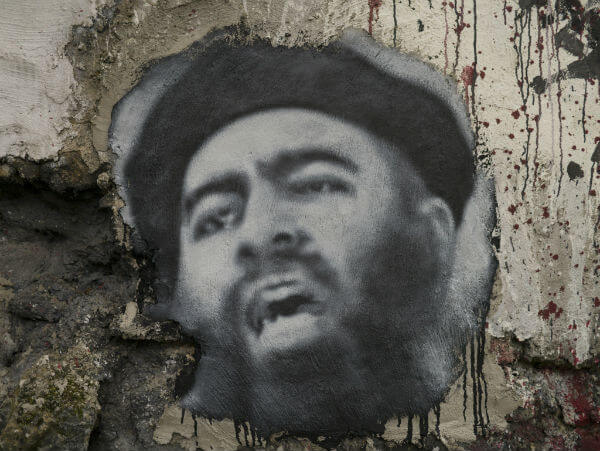
Adam Taylor writes: There may be no more globally divisive question over the past few years than whether the Islamic State is representative of the world’s global Muslim population or not. Speaking in Rome on Tuesday, U.S. Secretary of State John F. Kerry waded into this controversial debate yet again – and took a remarkably strong position for a Western leader.
“Daesh is in fact nothing more than a mixture of killers, of kidnappers, of criminals, of thugs, of adventurers, of smugglers and thieves,” Kerry said. “And they are also above all apostates, people who have hijacked a great religion and lie about its real meaning and lie about its purpose and deceive people in order to fight for their purposes.”
The use of the word “apostates” – a term to describe someone who renounces or abandons their religion – has raised eyebrows among observers. The description has been commonly used by extremist groups: The Islamic State has justified its attacks on Muslims with rhetoric that suggests these Muslims were apostates, which they view as a crime punishable by death.
On Twitter, Nasser Weddady, a popular online activist who grew up in Syria, mocked Kerry for his comment. Wedaddy and others also jokingly suggested that Kerry was a “takfiri,” a word used to describe a Sunni Muslim who accuses others of apostasy. [Continue reading…]
Pentagon won’t say how many troops are fighting ISIS
The Daily Beast reports: In the war against the self-proclaimed Islamic State, there are two ways to count the number of U.S. boots on the ground. There’s the one that officials admit to. Then there’s the ground truth.
Officially, there are now 3,650 U.S. troops in Iraq, there primarily to help train the Iraqi national army.
But in reality, there are already about 4,450 U.S. troops in Iraq, plus another nearly 7,000 contractors supporting the American government’s operations. That includes almost 1,100 U.S. citizens working as military contractors, according to the latest Defense Department statistics. [Continue reading…]
Pankaj Mishra on Arundhati Roy: Hindu nationalists have many ways to silence writers
Pankaj Mishra writes: he governments of Egypt and Turkey are brazenly leading a multi-pronged assault on writers, artists and intellectuals. Turkish president Recep Tayyip Erdoğan last month denounced his critics among Turkish academics as treasonous fifth columnists of foreign powers; many of them have been subsequently dismissed and suspended. Both Turkey and Egypt have imprisoned journalists, provoking international protests. But the suppression of intellectual and creative freedoms is assuming much cannier forms in India, a country with formal and apparently free democratic institutions.
Controlled by upper-caste Hindu nationalists, Indian universities have been purging “anti-nationals” from both syllabuses and campuses for some months now. In a shocking turn of events last month, Rohith Vemula, a PhD student in Hyderabad, killed himself. Accused of “anti-national” political opinions, the impoverished research scholar, who belonged to one of India’s traditionally and cruelly disadvantaged castes, was suspended, and, after his fellowship was cancelled, expelled from student housing. Letters from Modi’s government in Delhi to university authorities revealed that the latter were under relentless pressure to move against “extremist and anti-national politics” on campus. Vemula’s heartbreaking suicide note attests to the near-total isolation and despair of a gifted writer and thinker.
The extended family of upper-caste nationalists plainly aim at total domination of the public sphere. But they don’t only use the bullying power of the leviathan state – one quickly identified by local and foreign critics – to grind down their apparent enemies. They pursue them through police cases and legal petitions by private individuals – a number of criminal complaints have been filed against writers and artists in India. They create a climate of impunity, in which emboldened mobs ransack newspapers offices, art galleries and cinemas. [Continue reading…]
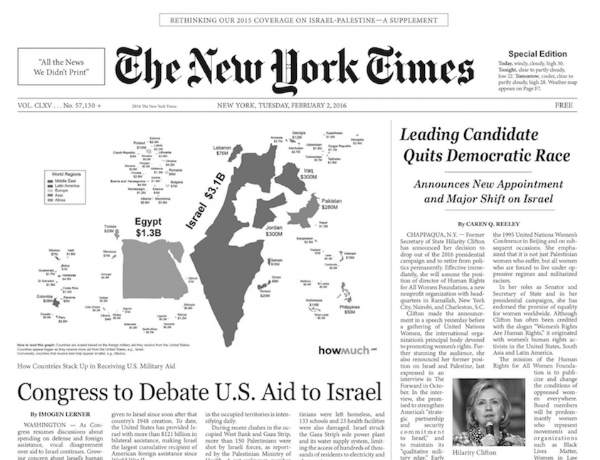
‘All the News We Didn’t Print’: Anonymous group distributes parody New York Times — updated
Update from Salon: Jewish Voice for Peace — New York and Jews Say No! informed Salon that they had organized the protest. The former is the local chapter of Jewish Voice for Peace, or JVP, an American human rights and social justice organization that challenges the Israeli government’s continued violence against and oppression of the indigenous Palestinian people. Jews Say No! is a New York City-based peace group that, like JVP, protests Israel’s illegal 48-year occupation of the Palestinian territories and periodic heavy bombing of Gaza.

Haaretz reports: An unidentified group claiming that the New York Times is guilty of bias against the Palestinians and in favor of Israel distributed a fake version of the daily newspaper with parodied content more to the group’s liking in Manhattan on Tuesday.
The mock newspaper, which is also available online and has its own Twitter account, is represented as an effort at reconsidering the Times’ coverage of Israel and the Palestinians over the past year. Presented in a design strikingly similar to the Times itself, the online version of the “supplement” is labeled “Rethinking Our 2015 Coverage on Israel-Palestine.” [Continue reading…]
To call this a “fake” edition is to imply it was intended to deceive readers into thinking it was the real thing. I doubt that was the intention of the producers; neither is it likely that many recipients of a free copy of the print edition failed to notice that stories such as Hillary Clinton’s departure from the presidential race were fictitious — especially since they actually referred to her as “Hilarity Clifton.”
If this is a piece of activism, why the anonymity? And why spend this amount of money on a stunt that will garner public attention for less than 48 hours?
Since The Yes Men did something very similar in 2008, some observers suggest they might be behind the current undertaking. Just as likely, they merely provided a model for imitation.
If triggering editorial reform in the newspaper was actually the goal, I would have thought a steady stream of genuine letters to the paper’s public editor, Margaret Sullivan, might actually be more productive — even if they never yielded a news event.
Moreover, to characterize this stunt as “pro-Palestinian” sounds dubious. Among the range of issues confronting Palestinians, biased reporting in the New York Times probably doesn’t rank among their most pressing concerns.
Google thinks it can combat terrorism with advertising
The Telegraph reports: Jihadi sympathisers who type extremism-related words into Google will be shown anti-radicalisation links instead, under a pilot scheme announced by the internet giant.
The new technology means people at risk of radicalisation will be presented with internet links which are the exact opposite of what they were searching for.
Dr Anthony House, a senior Google executive, revealed the pilot scheme in evidence to MPs scrutinising the role of internet companies in combating extremism.
“We are working on counter-narratives around the world. This year one of the things we’re looking at is we are running two pilot programmes,” said Dr House.
“One is to make sure these types of views are more discoverable.
“The other is to make sure when people put potentially damaging search terms into our search engine they also find these counter narratives.”
A Google spokeswoman said the pilot project referred to by Dr House would bring up counter-narrative messages in “AdWords” – the sponsored links which are returned at the top of a Google search – and not the search results themselves.
Dr House said later: “We offer Google AdWords Grants to NGOs so that meaningful counter-speech ads can be surfaced in response to search queries like ‘join Isis’.” [Continue reading…]
Let’s disregard the fact that would-be jihadists are just as likely as anyone else to use ad-blocking software. What are we to imagine the click-through rate will be for, let’s say, a Human Rights Watch ad that appears on a search page delivered on a query about the ISIS magazine, Dabiq?
Is Dr House serious? This sounds, more than anything, like a PR exercise for Google — a way of saying: we’re playing out part in combating terrorism.
Clearly, Google, like every other internet company, wants to be seen as being opposed to terrorism; not as a facilitator of terrorism through the creation of communications platforms — even though in reality these have become a vital tools in 21st century terrorism.
Terrorists are often credited with being able to stay one step ahead of their adversaries — as though this is an indication of their cunning. Unfortunately, more often it seems to be an indication that counter-terrorism is another name for easy money.
Anything can get funded on the smallest prospect it might be effective. Those who carry the burden that they must be seen to be doing something, can duly claim they are meeting their responsibilities as they approve almost anything.
Aside from the question of efficacy when it comes to Google’s strategy for presenting counter-narratives, just as importantly, we need to question the search engine’s ability to decipher the motives of its users, i.e it’s ability to accurately identify “dangerous searches.” After all, a query that indicates the malevolent intentions of one user, might from another user be an indication that they are a journalist or an academic. Search terms indicate what is sought but not necessarily why it is being sought.
Beyond that is the broader issue of the political and social manipulation that internet companies are engaged in when the services they provide are designed to modify the behavior of their users.
As Henry David Thoreau wrote, “Men have become the tools of their tools,” but it’s hard to grasp the degree to which, during the intervening 150 years, this has become so much more true.
Google might not have high expectations about its ability to limit the growth of ISIS through the use of adwords, yet it certainly has a huge interest in every branch of research through which it can refine the effectiveness of its primary revenue source by shaping our interests and desires.

Google: Big bets on future tech are sign of an empire bidding for immortality
By Robert MacIntosh, Heriot Watt University
We have got used to Google as a massive global success story. But sometimes the detail is more interesting than the top line. On February 1 an announcement by the firm’s holding company Alphabet gave investors their first real insight into the relative performances of its different parts. And it revealed a lot about a section of the operation of which we previously knew very little – the large number of investments into technologies that are some distance from the core businesses.
We now know that these “moonshots”, as they have come to be known, produced an operating loss of $3.6bn (£2.5bn) in 2015. They lost $1.9bn in 2014 and $527m in 2013. You may have heard about the wearable technology or the driverless cars, but it goes much further than that. There is fibre-optic broadband, Indian railway wifi, thermostats, IP video cameras and solar-powered drones. Then there is Google’s X-lab. Initially shrouded in secrecy, it is now known to be working on everything from contact lenses for diabetics that can monitor glucose levels in tears, to nano-particles that will be able to predict disease.
The revelation about the losses didn’t stop Alphabet from replacing Apple as the most valuable company on the planet the day after the announcement. So what can we infer from its seemingly voracious appetite for newness?
Imaginary conversations with imaginary atheists can reduce mistrust of real atheists
Pacific Standard reports: They’re feared and often loathed, viewed as non-conformists who pose a threat to our nation’s moral compass. But if more were open about their inclinations, and engaged in congenial conversation with members of the mistrusting majority, that prejudice might start melting away.
It happened with gays and lesbians. Perhaps it’s time for atheists to give it a try.
That’s one implication of newly published research, which reports simply imagining a positive interaction with an atheist is enough to increase willingness to engage and cooperate with them. [Continue reading…]
Music: Milton Nascimento — ‘One Coin (Tostao)’
The U.S. is killing more civilians in Iraq and Syria than it acknowledges
Paul Wood and Richard Hall report: Al Gharra is a mud-brick village built on hard, flat Syrian desert and populated by the descendants of Bedouin. It is a desolate place. Everything is dun colored: the bare, single-story houses and the stony desert they stand on. There is not much farming — it is too dry — just a few patches of cotton and tobacco.
Before the war, villagers got a little money from the government to look after the national park on Mount Abdul-Aziz, a barren rock that rises 3,000 feet behind the village and stretches miles into the distance. Mount Abdul-Aziz is named after a lieutenant of the 12th-Century Muslim warrior Saladin, who built a fort to dominate the plain below. There is a military base there today too, which changes hands according to the fortunes of Syria’s civil war. In 2011, the regime of Bashar al-Assad held the base; next it was the rebels of the Free Syrian Army; then the so-called “Islamic State” (IS); and finally the Kurds, who advanced and took the mountain last May under the cover of American warplanes.
Abdul-Aziz al Hassan is from al Gharra, his first name the same as the mountain’s. He left the village while the Islamic State was in charge, but it is because of a bomb from an American plane that he cannot go back. What happened to his family is the story of just one bomb of the 35,000 dropped so far during 10,000 missions flown in the US-led air war against the Islamic State. [Continue reading…]
From Iraq, general rebukes Ted Cruz’s plan to ‘carpet-bomb’ ISIS
The Washington Post reports: The top U.S. general in Iraq on Monday addressed recent political rhetoric in the presidential campaign that the United States should “carpet-bomb” the Islamic State, saying that the Pentagon is bound by the laws of armed conflict and does nt indiscriminately bomb civilian areas.
“We’re the United States of America, and we have a set of guiding principles and those affect the way we as professional soldiers, airmen, sailors, Marines, conduct ourselves on the battlefield,” MacFarland said. “So indiscriminate bombing, where we don’t care if we’re killing innocents or combatants, is just inconsistent with our values. And it’s what the Russians have been accused of doing in parts of northwest Syria. Right now we have the moral high ground, and I think that’s where we need to stay.”
The comments came in response to a question from CNN’s Barbara Starr during a Pentagon news conference. The general was asked why the military isn’t engaged in “so-called carpet-bombing,” a phrase that has been used often by presidential candidate Sen. Ted Cruz (R.-Tex.). [Continue reading…]
The U.S. botched the Syria talks before they even began

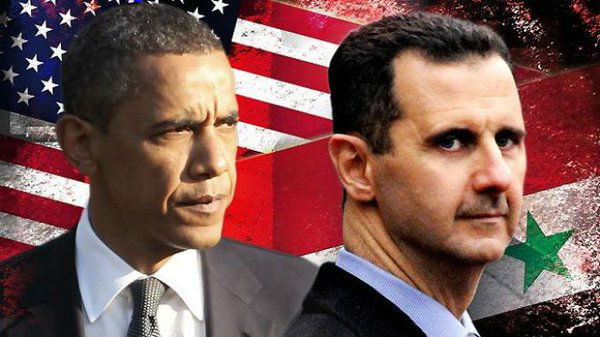
Steven Heydemann writes: When the latest negotiations to end Syria’s long, bloody conflict began on Friday, Jan. 29 — the first round of U.N.-sponsored talks in two years — one party was conspicuous by its absence. As diplomats and representatives of the Assad regime gathered in Geneva, the High Negotiations Committee (HNC), the main opposition umbrella group, refused to attend unless airstrikes and city sieges stopped — conditions that were not met. Over the weekend, the HNC traveled to Geneva, but the status of the talks remained uncertain. Even as this standoff all but derailed the meeting, however, the Obama administration has been steadfast in its determination that the Geneva talks proceed. Expressing cautious optimism in the months leading up to the meeting, U.S. Secretary of State John Kerry described the talks as the best chance to “chart a course out of hell.”
Success in Geneva is unlikely, however — but not because of opposition intransigence. Rather, the Obama administration itself has increased the odds of failure. Its recent tilt toward Russia’s position on the fate of Syrian President Bashar al-Assad — accepting that he might have a role in a future political transition — has undermined prospects for success, damaged U.S. credibility with the opposition, and further eroded America’s leverage in the Middle East. This shift in U.S. policy has almost certainly made a negotiated settlement in Geneva less likely. Even worse, it could well spur the continued escalation of the Syrian conflict.
It is not too late for the administration to change course, but the odds that it will do so are slim. President Barack Obama has verged on the self-righteous in defending his approach to the brutal war that has battered Syria for nearly five years, destabilized the Middle East, and driven waves of refugees into Europe. He has made clear that he remains determined to take only those measures necessary to “contain” the conflict, but nothing more. Even though the evidence that no aspect of the Syrian conflict has been contained is overwhelming, Obama has continually brushed aside criticism that he has not been sufficiently assertive, characterizing the options he’s been offered as “mumbo jumbo.” Senior White House officials have complained that proposals to expand U.S. involvement recommend a course of action but do not take into account what happens next.
If we take the U.S. president’s claims about the rigor of his policy process seriously, what are we to make of the pivot, led by Kerry, to align with Russia in rejecting regime change — a goal the administration once embraced? Or of the administration’s flip-flop in accepting the possibility that Assad, who is complicit in war crimes and crimes against humanity, and is currently starving besieged civilians in Madaya, might remain in power in Syria indefinitely? These concessions to Russia violate a core Obama principle: “Don’t do stupid shit.” Moreover, they reflect the administration’s own failure to think through what happens next, or how shifts in policy would help the United States to achieve its objectives. [Continue reading…]
Fight ISIS with democracy

Rached Ghannouchi, co-founder and president of Tunisia’s Muslim democrats party, Ennahdha, writes: As more countries confront the question of how to counter terrorist groups like ISIS, it is clear that a short-term, reductionist approach focused largely on military force has proven ineffective. Efforts to dislodge the so-called Islamic State through bombing, and to keep it at bay by strengthening and equipping security forces in the places it operates, have so far had limited success despite their enormous financial costs.
This is because, although such efforts are critical, they are not sufficient. The rise of ISIS, and its ability to recruit from a region that just five years ago was swept by democratic hopes and aspirations, requires a global response that is informed by where the group came from. For such a response to work, I believe it must reflect five principles. These are based on Tunisia’s experience as the most successful democratic transition to emerge from the Arab uprisings, as well as my personal intellectual and political work in Tunisia and the Arab world over five decades.
First, there is no universal approach to tackling ISIS. Rather, the group can only be defeated through a variety of locally designed and targeted responses. Extremist groups like ISIS use technology and social networks to cross boundaries and attract recruits globally—but their discourse is linked to local grievances wherever they operate. [Continue reading…]
How Saudi Arabia’s grip on oil prices could bring Russia to its knees
By James Henderson, University of Oxford
When Saudi Arabia led an OPEC decision to end a restraint put on oil production in November 2014, it marked the beginning of a new era in oil economics. It has given us a tumbling oil price, prompted huge losses and job cuts at oil firms like BP and might yet give us economic and political drama in the heart of Moscow. To understand why, it’s worth drilling down to the start of the whole process, and the costs of getting oil out of the ground in the first place.
Historically, the OPEC cartel of oil-producing nations has been able to manage oil prices because of the lack of flexibility in global supply. The whole business of setting up wells, operating pipelines and building rigs entails large and long-term investments which makes producers slow to respond to price movements. And a small cut in OPEC supply can have a significant impact on the global oil price.
The advent of the US shale oil boom changed this dynamic. The industry has lower fixed costs but higher variable costs and is more like an industrial process than a major one-off investment. That makes it more responsive to price movements and more flexible in adjusting short-term output.
Overall though, shale is a relatively high cost source of oil, especially compared to Middle East production. As a result, when US shale threatened OPEC’s market share, the cartel allowed a position of global oversupply to develop. It was a simple trick: make oil prices fall to make shale unprofitable.
U.S. fortifying Europe’s east to deter Putin
The New York Times reports: President Obama plans to substantially increase the deployment of heavy weapons, armored vehicles and other equipment to NATO countries in Central and Eastern Europe, a move that administration officials said was aimed at deterring Russia from further aggression in the region.
The White House plans to pay for the additional weapons and equipment with a budget request of more than $3.4 billion for military spending in Europe in 2017, several officials said Monday, more than quadrupling the current budget of $789 million. The weapons and equipment will be used by American and NATO forces, ensuring that the alliance can maintain a full armored combat brigade in the region at all times.
Though Russia’s military activity has quieted in eastern Ukraine in recent months, Moscow continues to maintain a presence there, working with pro-Russian local forces. Administration officials said the additional NATO forces were calculated to send a signal to President Vladimir V. Putin that the West remained deeply suspicious of his motives in the region.
“This is not a response to something that happened last Tuesday,” a senior administration official said. “This is a longer-term response to a changed security environment in Europe. This reflects a new situation, where Russia has become a more difficult actor.” [Continue reading…]
Iran still ranks as one of the most repressive states in the world
In an editorial, The Guardian says: The government was probably looking for a public relations bonus in the west when it recently released a number of journalists, but the statistics tell another story: in 2015 Iran executed at least 830 people, including juveniles, many for non-violent crimes. The security services continue to harass and detain activists, writers and journalists. The methods used by the regime to crush the pro-democracy Green movement in 2009 are still very much in use today.
Nor has Iran become in any way more “moderate” in its behaviour in the Middle East. In Syria, Iran’s militias and Republican Guards are direct participants in the war crimes that the Assad regime inflicts on its own population. Iran’s close ally Hezbollah played a key role in the siege of Madaya, where children died of hunger as a result, and it is part of similar operations elsewhere.
It is to be hoped that a sustained implementation of the nuclear agreement will improve international security. But to draw from that the notion that Iran must now be spared any reproach would be foolish. Iran’s hardliners sought economic relief through the nuclear deal because they desperately want to keep their hold on power, not because they want to pursue a more democratic path at home or more rational policies abroad. Diplomacy is important, but it must not come at the expense of clearsightedness, nor should it be accompanied by the kind of simplistic analysis that puts the sole onus on Saudi Arabia rather than on Iran as far as human rights are concerned. The records of both countries are equally dismal. [Continue reading…]
Trapped by ISIS, Iraqis in Fallujah say they are going hungry, too
The Washington Post reports: As Iraqi security forces choke off Islamic State fighters in the militant-held city of Fallujah, civilians inside say they are trapped and struggling to survive.
The military siege, which has tightened in the past two months, is preventing food and medical supplies from reaching the city 40 miles west of Baghdad, while the Islamic State won’t let families leave.
The United Nations says it is “deeply worried” about the deteriorating humanitarian situation and unverified reports of deaths from a lack of food and basic medicine.
Between 30,000 and 60,000 people are estimated to remain in the city, which has been under Islamic State control for more than two years. Their worsening plight comes amid an international outcry over starvation in the besieged Syrian town of Madaya — a disaster residents and officials from Fallujah say they fear could also unfold there if civilians aren’t evacuated. [Continue reading…]
The rise of the paramilitary Popular Mobilization Forces in Iraq
Renad Mansour writes: Many of Iraq’s Shia are taking up arms to fight the self-proclaimed Islamic State. However, rather than enlisting with the Iraqi military via the Ministry of Defense (MOD), they are opting to join paramilitary groups under the umbrella of the Popular Mobilization Forces (PMF or al-Hashd al-Shaabi in Arabic), which has become the single largest ground force combating Islamic State fighters in Iraq. Despite Human Rights Watch’s accusation that some groups under the umbrella, such as the Badr Brigades, League of the Righteous (Asaib ahl al-Haq), and Imam Ali Battalions are carrying out widespread and systematic human rights violations, the PMF has maintained its popularity and legitimacy among the Shia base. A recently published poll showed that 99 percent of Iraqi Shia support the PMF in its fight against the Islamic State.
As a consequence, the number of recruits rushing to enlist with the PMF is substantial. According to various claims from well-informed sources in Baghdad, more than 75 percent of men ages 18 to30 residing in the Shia provinces have signed up. Although most of these recruits are reservists who will not fight, the mere volume is indicative of the PMF’s support in that region.
The sheer extent of such numbers would typically indicate some form of conscription. However, there is no such formal mandatory recruitment in place. The PMF is merely guided by Ayatollah Sistani’s al-wajib al-kifai fatwa, which itself very carefully restricts recruitment to only as many as needed to combat the threat posed by the Islamic State. Yet, a PMF administrator in Najaf told the author that more than enough recruits have joined. They are having no trouble attracting members who come from a diverse set of social classes and geographic regions. According to him, the only distinguishable group that is not joining is university students. [Continue reading…]
Syrian refugee children subjected to forced labor and early marriage in Lebanon
Nick Grono writes: I met six-year-old Mustafa in the safe zone of one of the many tented settlements for Syrian refugees in Lebanon’s Bekaa valley. These areas offer schooling, including art and music classes, for Syrian children. They provide a respite from the brutal realities of life as a refugee, which can involve back-breaking labour for children as young as six, and marriage for girls at the age of 13.
Mustafa told us that, after leaving class at midday, he would spend the afternoon carting bricks to earn a pittance for his family. One of his classmates, a seven-year-old girl, said she picks potatoes every afternoon – tough, physical work that involves constant bending while carrying a heavy load.
Officially, Lebanon is home to almost 1.2 million refugees, but unofficial estimates put it at more than 1.5 million. Given that its prewar population was just over 4 million, this is an overwhelming burden, one with which any government would struggle to cope.
Syrian refugees in Lebanon are highly vulnerable to exploitation. Most have little or no money, yet they have to pay landlords for the patches of land on which they erect their tents, and to supplement the meagre aid handouts they may be fortunate enough to receive. But the Lebanese government – keen to stop Syrians settling permanently in Lebanon – is preventing refugees from working or even residing legally in the country. It is refusing to issue work permits except in exceptional circumstances. And it is now very difficult for Syrians to obtain residency permits – a key obstacle being a $200 (£140) annual fee per adult refugee – meaning most are breaking the law simply by staying in the country (pdf).
This creates conditions ripe for abusive employers to exploit vulnerable refugees. Because they don’t have the necessary papers, refugees live in fear of coming into contact with the authorities, particularly at the many checkpoints throughout the country. As children are less likely to be stopped at checkpoints, they are forced to work in the fields or in nearby towns. Unscrupulous employers prefer them because they are more compliant, and more unwilling to complain about physical abuse. For this laborious and often hazardous work, they are paid a few dollars at most, a portion of which is often retained by the Syrian settlement leader. [Continue reading…]