Suspects arrested after plotting New Year’s Eve attacks in Ankara and Brussels

The New York Times reports: Two Islamic State militants who were plotting a suicide attack on the Turkish capital, Ankara, on New Year’s Eve have been detained, Turkish officials said on Wednesday.

The two men were held after an early morning counterterrorism operation at a house in the Yakupabdal neighborhood of Ankara, according to the semiofficial Anadolu News Agency. Their identities and nationalities were not disclosed, but the Turkish news media reported that the men were of Turkish origin and had traveled to Syria.

They were planning attacks on the central Kizilay Square in Ankara, where large crowds gather annually to usher in the new year, a senior government official said. [Continue reading…]

CNN reports: Belgian authorities have arrested two people on suspicion of being involved in a plot to attack “emblematic sites” in Belgium’s capital during New Year’s celebrations, the country’s federal prosecutor’s office said Tuesday.

The men are members of a Muslim biker gang called the Kamikaze Riders and are suspected to have discussed attacking Brussels’ Grand Place square and other places where crowds gather as well as police and military facilities, a senior Belgian counterterrorism official told CNN on condition of anonymity. [Continue reading…]


Facebooktwittermail

The new face of racism in Germany

Anna Sauerbrey writes: Germany is not lacking in right-wing sentiment these days, but most people are careful about how they deploy their anti-immigrant rhetoric. And then there’s Björn Höcke.

Last month Mr. Höcke, a leading figure of the right-wing populist party Alternative für Deutschland, gave an openly racist speech on the “differing reproductive strategies” of Africans and Europeans. It was not the first time he had drawn on National Socialist themes, but this time he caused uproar, even in his own party, which has asked him to resign his membership.

Whatever happens to Mr. Höcke, though, his willingness to use overtly racist language has revived an age-old fear in Germany. He is, by all accounts, a typical German, an upright middle-class citizen — what we call a “Biedermann.” They are the core of our national self-perception. If they turn to the dark side, what does that say about Germany?

For years, racism and hate in Germany mostly came with clear social markers. In the minds of most, racists wore their heads shaved, feet heavily booted and arms rune-tattooed. They lived on the fringes of society, often in public housing, and made their living illicitly.

Not so Mr. Höcke. As a young man, he was a member of “Junge Union,” the youth organization of Chancellor Angela Merkel’s center-right Christian Democrats. He’s a high school history teacher on leave and a married father of four. He lives in the countryside and is invariably well dressed, though never in a showy way.

Is this the new face of hate in Germany? [Continue reading…]

Facebooktwittermail

How Sunni-Shia sectarianism is poisoning Yemen

Farea al-Muslimi writes: In a recent interview with Al Jazeera, Hamoud al-Mikhlafi, leader of a Taiz-based group fighting against Houthi militias and forces loyal to Yemen’s former president Ali Abdullah Saleh, described his opponents as “Persians” in reference to their Shia religious affiliation and support from Iran. In fact, both Saleh and the leaders of the Houthi militia belong to the Zaydi school of Islam, an indigenous Yemeni branch of Shia Islam that is distinct from the Twelver Shiism practiced in Iran. But Mikhlafi’s assertion fits with a growing sectarian polarization in Yemen that relies on language borrowed from the Sunni-Shia conflicts in Iraq, Syria, and Lebanon sponsored by Saudi Arabia and Iran, rather than drawing on Yemeni religious culture.

This is a rapidly growing phenomenon. Even Yemeni President Abd Rabbu Mansour Hadi has on occasion described the Houthis, who expelled him from Yemen in March 2015, as “Twelver Shia.” “And two years prior, the anti-Houthi tribal leader Hussein al-Ahmar called himself “the powerful lion of the Sunnis,” thus portraying himself as a defender of Yemen’s Sunni majorityagainst the other sect. [Continue reading…]

Saeed Al-Batati writes: Three years after they were kicked out of several cities in south Yemen, al-Qaeda in the Arabian Peninsula (AQAP) has come back and overrun two cities in the province of Abyan, local government officials and residents told Middle East Eye. But people who lived through al-Qaeda’s reign of Abyan in 2011 now talk about new “tolerant and friendly” militants.

In Zinjibar, the capital of Abyan province, a government official who spoke on condition of anonymity because of security concerns, said that early this month al-Qaeda militants quietly stormed military camps and police stations in the city without even drawing the attention of students in schools or public servants in their offices.

“Zinjibar is quiet. People are busy with their daily life,” the government officials said.

Many provinces in southern Yemen have been in a state of anarchy since the Saudi-backed forces supporting President Abd Rabbuh Mansour Hadi and local tribesmen drove out rebel Houthis. Then separatists and Islamists aligned with the Saudi-backed forces failed to fill the vacuum left by Yemeni soldiers who headed north to fight the Houthis. So al-Qaeda came in and took the place of the former government-run security agencies. [Continue reading…]

Facebooktwittermail

Will we ever understand the beginning of the universe?

blakes-rock2

Ross Andersen writes: One crisp day last March, Harvard professor John Kovac walked out of his office and into a taxicab that whisked him across town, to a building on the edge of the MIT campus. People were paying attention to Kovac’s comings and goings that week. He was the subject of a fast-spreading rumour. Kovac is an experimental cosmologist midway through the prime of a charmed career. He did his doctoral work at the University of Chicago and a postdoc at Caltech before landing a professorship at Harvard. He is a blue chip. And since 2009, he has been principal investigator of BICEP2, an ingenious scientific experiment at the South Pole.

Kovac had come to MIT to visit Alan Guth, a world-renowned theoretical cosmologist, who made his name more than 30 years ago when he devised the theory of inflation. Guth told Kovac to take the back steps up to his office, to avoid being seen. If Guth’s colleagues caught a glimpse of the two men talking, the whispers swirling around Kovac would have swelled to a roar.

The science of cosmology has achieved wonders in recent centuries. It has enlarged the world we can see and think about by ontological orders of magnitude. Cosmology wrenched the Earth from the centre of the Universe, and heaved it, like a discus, into its whirling orbit around one unremarkable star among the billions that speed around the black-hole centre of our galaxy, a galaxy that floats in deep space with billions of others, all of them colliding and combining, before they fly apart from each other for all eternity. Art, literature, religion and philosophy ignore cosmology at their peril.

But cosmology’s hot streak has stalled. Cosmologists have looked deep into time, almost all the way back to the Big Bang itself, but they don’t know what came before it. They don’t know whether the Big Bang was the beginning, or merely one of many beginnings. Something entirely unimaginable might have preceded it. Cosmologists don’t know if the world we see around us is spatially infinite, or if there are other kinds of worlds beyond our horizon, or in other dimensions. And then the big mystery, the one that keeps the priests and the physicists up at night: no cosmologist has a clue why there is something rather than nothing. [Continue reading…]

Facebooktwittermail

War by other means in the shadow of globalization

destruction

Peter Pomerantsev writes: perhaps this year’s most spectacular propagandists are those of ISIS, with its aggressive use of social media to recruit new combatants and slick, gruesome execution videos to provoke and frighten opponents. Though ISIS has killed roughly seven times fewer people in Syria than the Assad regime, the group has used social media (some 46,000 accounts on Twitter alone) to make itself look even more menacing than it is. Every social-media user who retweets or posts ISIS material, whether in support or censure, ultimately helps strengthen ISIS’s narrative of history-making stature and millenarian significance. The Islamic State’s terrorist attacks in Paris left 130 people dead in a spate of horrific violence, but the operation was executed in a manner that made it seem as if the organization had killed orders of magnitude more.

There is, of course, nothing new about using information as a vital instrument of war. But in the past information tended to be a handmaiden to action. Now the informational element appears to be as important as, if not more important than, the physical dimension. Take Russia’s air strikes in Syria. The Kremlin’s official rationale for the military campaign was to combat the Islamic State. But very few of its operations have actually been aimed at ISIS, with many more directed at U.S.-supported rebels fighting Syrian President, and Russian client, Bashar al-Assad. The Kremlin clearly has more in mind than defeating ISIS militarily. Russia has entered the Syrian stage in such a way as to surprise the West and ensure it will play a starring role in any narrative going forward — whether that narrative involves keeping Assad in power or a “global fight against terror.” The Russian military might be small compared to America’s, and the Russian economy may be a mess, but Vladimir Putin has cleverly undermined America’s reputation as a “global policeman” and boosted his stature as the man who is restoring Russia as a Great Global Power.

This is not “soft power” in the classic sense of projecting a positive national image through culture and public relations, but rather a case of using strategic narrative to keep your opponent intimidated, confused, and dismayed — of exploiting ubiquitous information to appear bigger, scarier, and more indispensable than reality would suggest. Russia’s bombing raids in Syria also have the positive side effects (for Moscow) of distracting from the conflict in Ukraine and helping maintain a steady torrent of refugees to Europe, which in turn strengthens right-wing parties in countries such as France and Hungary that peddle anti-refugee fears, are supported by the Kremlin, and advocate dropping Western sanctions against Russia. What matters in the information age is not so much “military escalation dominance” — the Cold War doctrine emphasizing the ability to introduce more arms than the enemy into a conflict. Rather, it’s “narrative escalation dominance” — being able to introduce more startling storylines than your opponent. [Continue reading…]

Facebooktwittermail

Kurdish leaders call for autonomy; Erdogan accuses them of treason

Reuters reports: Kurdish groups meeting in southeastern Turkey called for self-rule on Sunday amid heavy fighting in the region as the army pushed ahead with a security operation in which it says more than 200 Kurdish militants have been killed.

The Democratic People’s Congress (DTK), made up of Kurdish non-governmental organizations, made the call after a two-day meeting in Diyarbakir.

“The rightful resistance mounted by our people against the policies that degrade the Kurdish problem, is essentially a demand and struggle for local self-governance and local democracy,” said the final resolution of the meeting, titled “declaration of political resolution regarding self-rule”.

The declaration called for the formation of autonomous regions including several neighboring provinces of Diyarbakir to take account of cultural, economic and geographic affinities. [Continue reading…]

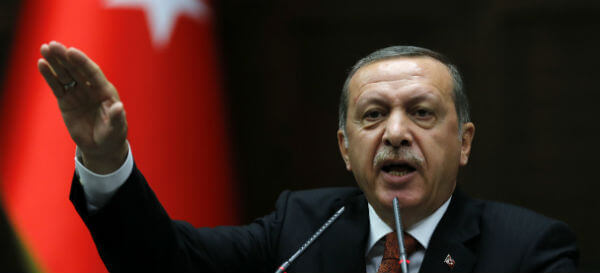
Al Jazeera reports: Turkey’s President Tayyip Erdogan said autonomy demands from a Kurdish leader were a “clear provocation” and his political party will be “taught a lesson”.

A Turkish prosecutor opened an investigation into Peoples’ Democratic Party (HDP) chief Selahattin Demirtas after he made recent calls for greater Kurdish self-governance in the country’s southeast.

Erdogan’s remarks targeting Demirtas on Tuesday could further widen the gulf between the government and the Kurdish opposition as violence increases in the region.

“A certain leader … talked nonsense and what he did is a clear provocation and treason,” Erdogan told reporters in Istanbul before departing on a trip to Saudi Arabia, adding the HDP would be “taught a lesson by our citizens and the law”. [Continue reading…]

Facebooktwittermail

I revealed the truth about President Erdogan and Syria. For that, he had me jailed

erdogan

Can Dündar writes: In Turkey, a debate as old as government itself is on the agenda again. This time, it is the Turkish government’s secret arms transfer to Syria that has revitalised the subject.

Early in 2014, a truck understood to belong to the Turkish intelligence service (MIT) was stopped near the Syrian border. The gendarmerie and the intelligence officials in control of the convoy pulled guns on each other. This was the moment the two blocks vying to rule the state came face to face. The truck was searched. Beneath the camouflage composed of medicines boxes, weapons and ammunition were found. The truck was held for a while, but following the intervention of government officials a safe passage into Syria was granted.

The government immediately discharged the prosecutor and gendarmerie who stopped the convoy and had them arrested. It was declared that the trucks contained humanitarian aid. This incident, which fuelled allegations that President Recep Tayyip Erdoğan’s government was intervening in the Syrian civil war, was rapidly covered up.

In May 2015, however, Cumhuriyet Daily, the newspaper I serve as the editor-in-chief, acquired the footage of this incident. It was clearly visible that the truck was loaded with arms. It was thus documented that the intelligence service was illegally carrying arms into the civil war raging in a neighbouring country. This was big news. We published details of the operation with photos, and uploaded the video to our website. [Continue reading…]

Facebooktwittermail

Strike that killed Syrian rebel chief complicates peace talks push, says U.S.

Reuters reports: Russian air strikes like the one that killed a top Syrian rebel leader last week send the wrong message to groups engaged in a political dialogue to end the conflict and complicate efforts to begin negotiations, the U.S. State Department said on Monday.

Syrian rebel chief Zahran Alloush, the leader of Jaysh al Islam who commanded thousands of fighters in the Damascus suburbs, was killed on Friday in an air strike that rebel sources said was carried out by Russian warplanes.

Jaysh al Islam was a participant in the Riyadh conference where Syrian opposition groups agreed on common aims for proposed political negotiations to end the country’s civil war and chose a former Syrian prime minister to represent them in the dialogue.

State Department spokesman Mark Toner said the United States did not provide support to Alloush’s group and had concerns about its “behavior on the battlefield,” but noted that Jaysh al Islam had fought Islamic State rebels and was participating in the political dialogue to end Syria’s civil war. [Continue reading…]

Facebooktwittermail

Out of touch: U.S. diplomacy shackled by security concerns

Peter Schwartzstein writes: The U.S. embassy in Cairo is a forbidding-looking fortress. Its imposing concrete blast walls are visible for miles, and cast an ugly shadow over a cluster of surrounding villas. Flanked on all sides by edgy soldiers in body armor and camouflage uniforms, the atmosphere can scarcely be called welcoming.

For diplomatic personnel posted across the Middle East, the security protocols are often no less daunting. Many are shuttled from their offices to their homes in armored vans with tinted windows. When the U.S. ambassador to Cairo’s car emerges onto one of the capital’s main drags, city police block lanes and back up traffic as they hustle to facilitate the convoy’s passage.

Given recent events, the U.S. instinct to wrap its foreign representatives in cotton wool is somewhat understandable. The mission in Cairo — considered relatively safe by regional standards — was attacked by a mob and the site of the stabbing of a U.S. citizen in the last four years alone. The list of assaults on State Department posts around the world runs long and lethal.

But to those who puzzle over Washington’s erratic foreign policy in these parts, this safety-centric tack has much to answer for. [Continue reading…]

Facebooktwittermail

State Dept ‘pivotal foreign policy moments of 2015’: Bringing peace to Syria?

The Christmas Eve post on the U.S. State Department’s official blog, DipNote, includes this improbable accomplishment: “Bringing Peace, Security to Syria.”

Is this supposed to be an expression of the Christmas spirit — peace on Earth and all that?

Facebooktwittermail

How Iraqis learned to fear and hate Americans in Ramadi eleven years ago

The Economist reported on December 29, 2004: There is only one traffic law in Ramadi these days: when Americans approach, Iraqis scatter. Horns blaring, brakes screaming, the midday traffic skids to the side of the road as a line of Humvee jeeps ferrying American marines rolls the wrong way up the main street. Every vehicle, that is, except one beat-up old taxi. Its elderly driver, flapping his outstretched hand, seems, amazingly, to be trying to turn the convoy back. Gun turrets swivel and lock on to him, as a hefty marine sergeant leaps into the road, levels an assault rifle at his turbanned head, and screams: “Back this bitch up, motherfucker!”

The old man should have read the bilingual notices that American soldiers tack to their rear bumpers in Iraq: “Keep 50m or deadly force will be applied”. In Ramadi, the capital of central Anbar province, where 17 suicide-bombs struck American forces during the month-long Muslim fast of Ramadan in the autumn, the marines are jumpy. Sometimes, they say, they fire on vehicles encroaching within 30 metres, sometimes they fire at 20 metres: “If anyone gets too close to us we fucking waste them,” says a bullish lieutenant. “It’s kind of a shame, because it means we’ve killed a lot of innocent people.”

And not all of them were in cars. Since discovering that roadside bombs, known as Improvised Explosive Devices (IEDs), can be triggered by mobile telephones, marines say they shoot at any Iraqi they see handling a phone near a bomb-blast. Bystanders to an insurgent ambush are also liable to be killed. Sometimes, the marines say they hide near the body of a dead insurgent and kill whoever comes to collect it. According to the marine lieutenant: “It gets to a point where you can’t wait to see guys with guns, so you start shooting everybody…It gets to a point where you don’t mind the bad stuff you do.”

Since September 1st, when the battalion’s 800 men were deployed to Ramadi, they have killed 400-500 people, according to one of their senior officers. A more precise estimate is impossible, because the marines rarely see their attackers. When fired upon, they retaliate by blitzing whichever buildings they think the fire is coming from: charred shells now line Ramadi’s main streets. “Sometimes it works in the insurgents’ favour,” admits Rick Sims, a chief warrant officer. “Because by the time we’ve shot up the neighbourhood, then the guys have torn up a few houses, they’re four blocks away, and we just end up pissing off the locals.” [Continue reading…]

Facebooktwittermail

Saudi Grand Mufti calls ISIS ‘part of the Israeli army’

Bruce Riedel writes: The most senior cleric in Saudi Arabia has called for greater Islamic cooperation against the Islamic State, while also labeling ISIS a “part of the Israeli army.” The revealing interview this week with Grand Mufti of Saudi Arabia Sheikh Abdulaziz Al Sheikh provides important insight into the Wahhabi establishment, which is the core partner of the House of Saud.

The Mufti praised the creation of an Islamic military alliance to fight terrorism, promising the alliance will defeat the Islamic State, which he labeled a heretical and un-Islamic movement. The new alliance is the brainchild of Deputy Crown Prince and Defense Minister Prince Muhammed bin Salman, the king’s favorite son.

The 72-year old cleric was asked about comments made by Abu Bakr al-Baghdadi, the self proclaimed caliph of the Islamic State, that the new alliance is not serious because it is not “killing Jews and liberating Palestine.” Al-Baghadi called the new Saudi-led alliance a pawn of the United States and Israel, promising that the “tanks of the mujahideen are moving closer to Israel day after day.”

Al Sheikh dismissed al-Baghdadi’s threat to Israel, calling it “simply a lie.” He added: “Actually Da’esh [another term for the Islamic State] is part of the Israeli soldiers,” therefore asserting a supposed relationship between the Israeli army and the Islamic State. [Continue reading…]

I imagine that among those observers who are already convinced that ISIS was created by the Saudis, the idea that it’s an Israeli creation must be equally appealing — and the Grand Mufti the least credible source for this ‘revelation.’ There are just too many conspiracy theories to choose from!

Facebooktwittermail

This Syrian filmmaker was assassinated in broad daylight after receiving death threats

Naji-al-Jerf

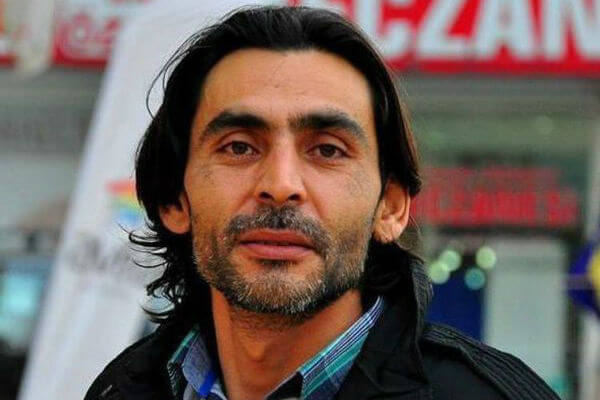
Borzou Daragahi reports: If all had gone according to plan, Syrian filmmaker and activist Naji al-Jerf, his wife, and their two daughters would be in the relative safety of France right now, 2,000 miles from Turkey’s troubled southeast.

But on Sunday, the violence increasingly spilling over from Syria into Turkey caught up with Jerf when he was gunned down in broad daylight by a masked assassin. He was 37.

Amid wailing and stunned friends and colleagues, he was buried in a hilltop cemetery plot Monday afternoon. “Congratulations, congratulations!” his anguished wife, Bushra Kashmar, cried as she gripped his coffin. “Now you will have the freedom that you wanted,” she said, wrapped in the flag of Syria’s revolution. “Now you will have the peace that you wanted.”

A foe of both ISIS and the Syrian regime, the independent filmmaker and native of Salamia, a town near the city of Hama, was among the peaceful democracy activists who spearheaded the 2011 uprising against Bashar al-Assad. They are now being subsumed by the ensuing violence and sidelined by a war that has become a regional conflagration with no end in sight. [Continue reading…]

Facebooktwittermail

Brazil rebuffs West Bank settler nominated as Israeli ambassador

Middle East Eye reports: Brazil has apparently rebuffed Israel’s nomination of a settler as its next ambassador in a move Israel says will damage diplomatic relations between the two countries.

Dani Dayan, a 60-year-old who lives in the West Bank settlement of Ma’ale Shomron, was nominated in August as Israel’s new ambassador to Brasilia.

However Brazil has yet to endorse the Argentina-born diplomat’s appointment, following lobbying in Brazil against his nomination and protests to President Dilma Rousseff about Dayan.

Ambassadorial appointments must be endorsed by the host nation – a process known as an agrément. However, if no endorsement is forthcoming within two months, it is understood that the choice has not been accepted.

Dayan was a senior member of the Yesha Council, an umbrella organisation of Jewish settlements in the West Bank, and Brazilian activists are worried that approving his selection would be seen as supporting Israel’s settlements, which are illegal under international law. [Continue reading…]

Facebooktwittermail

Qatari royals rush to Switzerland in nine planes after emir breaks leg

AFP reports: Unidentified individuals travelling in as many as nine planes belonging to Qatar’s royal family made an emergency trip to Switzerland over the weekend for medical reasons, according to a Swiss official.

A spokesman for Switzerland’s federal office of civil aviation confirmed local media reports that multiple aircraft made unscheduled landings at the Zurich-Kloten airport overnight from 25 to 26 December and that the planes were part of the Qatari royal fleet.

He gave no details as to who was on board or who any of the potential patients may have been.

“The emergency landing clearance was given by the Swiss air force,” he told AFP, explaining that the civil aviation office was closed during the hours in question.

Qatari authorities later said that the country’s former ruler, Sheikh Hamad bin Khalifa Al Thani, had been flown to Switzerland over the weekend for surgery after breaking a leg. [Continue reading…]

Facebooktwittermail

Anti-Muslim hate crimes on the rise in the U.S.

Southern Poverty Law Center reports: The year 2015 is drawing to a close with a continuing wave of firebombings and apparent hate crimes at mosques in various U.S. cities, including Christmas-weekend arson attacks in California and Texas.

There were no injuries in either of the two latest fire-bombings.

But at Houston’s Saavoy Masjid, a mosque operated by the Islamic Society of Greater Houston, damage was described as “significant.” A fire started at “multiple locations” around 2:45 p.m. on Christmas Day, just an hour after hundreds of people had been in the building for Friday prayers, authorities said.

The following day, someone threw a Molotov cocktail at a doorway of the Tracy Islamic Center in Tracy, Calif., east of Oakland, causing minor damage. [Continue reading…]

Facebooktwittermail

New York’s forgotten mosque

Wilson Fache writes: New York City is well known for its numerous ethnic quarters, like the tourist-packed Little Italy or the oddly authentic Chinatown. Far less well known however is a small neighbourhood that locals used to call “Little Syria”.

From the 19th to the first half of the 20th century, that enclave was the economic and cultural centre of the Arab diaspora in the US; that is before it was demolished in order to build a tunnel and then later, in the sixties, the World Trade Centre.

These few blocks were home to a large number of immigrants mainly coming from what was then known as “Greater Syria” (Bilad al-Sham), a region ruled by the Ottoman Empire that nowadays includes Syria as well as Lebanon, Jordan, Israel, the occupied Palestinian territories and a part of southern Turkey.

Civic associations like the Washington Street Historical Society have been advocating for years to raise awareness about the largely unknown quarter and preserve the few buildings that are left, such as St. George’s Syrian Catholic Church, which is located on Washington street.

For many years is was assumed that the neighbourhood was only ever inhabited by Christians. Since there was no record of a place of worship dedicated to another faith, it was assumed there had never been one. Then a few months ago, a professor at the University of Colorado Denver doing research on early Islam in the US came across an article entitled “Mohammedans now have a place of worship here”. [Continue reading…]

Facebooktwittermail