ISIS suspected of using chemical weapons in Syria and Iraq

Reuters reports: Chemical weapons experts have determined that mustard gas was used in a Syrian town where Islamic State insurgents were battling another group, according to a report by an international watchdog seen by Reuters.

A confidential Oct. 29 report by the Organisation for the Prohibition of Chemical Weapons (OPCW), a summary of which was shown to Reuters, concluded “with the utmost confidence that at least two people were exposed to sulphur mustard” in the town of Marea, north of Aleppo, on Aug. 21.

“It is very likely that the effects of sulphur mustard resulted in the death of a baby,” it said.

The findings provide the first official confirmation of use of sulphur mustard, commonly known as mustard gas, in Syria since it agreed to destroy its chemical weapons stockpile, which included sulphur mustard.

The report did not mention Islamic State, as the fact-finding mission was not mandated to assign blame, but diplomatic sources said the chemical had been used in the clashes between Islamic State and another rebel group taking place in the town at the time.

“It raises the major question of where the sulphur mustard came from,” one source said. “Either they (IS) gained the ability to make it themselves, or it may have come from an undeclared stockpile overtaken by IS. Both are worrying options.”

Syria is supposed to have completely surrendered the toxic chemicals 18 months ago. Their use violates U.N. Security Council resolutions and the 1997 Chemical Weapons Convention.

The findings were part of three reports released to members of the OPCW last week. They add to a growing body of evidence that the Islamic State group has obtained, and is using, chemical weapons in both Iraq and Syria. [Continue reading…]


Facebooktwittermail

In last interview, Iranian Revolutionary Guard Corps commander described role in Syria

Pandagulu draws out some of the salient points from the last interview given by Iranian Revolutionary Guard Corps(IRGC) top commander, Hossein Hamadani, before his recent death in Syria:

[T]he Supreme Leader told us that Syria is like a patient that is not aware of his ailment. Therefore, he doesn’t want to go to Doctor, but you need to take him anyway. When he goes to Doctor he will tell you that he doesn’t want any medication. You need to prescribe and get the medication for him. He won’t take the medication, but you need to make him take it, Hamadani asserted. “That was the recipe for us to stay,” he added.

Accoding to Hamadani, the opening for Iran in Syria came when the opponents reached to the close vicinity of Assad’s palace. “Everyone fled, even the Russians,” Hamadani claimed, adding that Iranians were the only one that stayed. They came to believe that we would stay next to them “up to the last moment.” As a result, they started to trust us, the IRGC commander said.

Facebooktwittermail

ISIS has a new favorite social media network: Telegram

The Fiscal Times reports: Terror Jihadi groups like ISIS and al-Qaeda are now shifting much of their social media propaganda, recruiting and fund transferring from mainstream social media sites like Twitter to a service called Telegram, according to a new report by the Terrorism Research and Analysis Consortium (TRAC).

ISIS and other militant groups have been jumping from one social media service to another in their attempts to avoid anti-terrorism programs by governments and corporations. They appear to have settled on Telegram. “The Jihadis’ struggle to keep up with the relentless suspensions and removal of jihadi social media content may have finally run its course,” says Veryan Khan, the Editorial Director at TRAC. “The new frontier of jihadi communication is taking place on a recently launched tool, in a messaging platform that has revolutionized the social media sphere.”

Telegram was launched in August 2013 by the two Russian brothers, Nicolay and Pavel Durov, as a free encrypted instant messaging service. While reports of terror groups using Telegram surfaced months ago, a new feature called “Channels” was launched in September to let users broadcast to other members of the service. It quickly turned Telegram into the favorite social media hub of ISIS and other terror groups.

“It is this new feature that has been enthusiastically embraced by many militant groups, becoming an underground railroad for distributing and archiving jihadi propaganda materials,” the TRAC report says.

As of Nov. 2, TRAC has recorded more than 200 major jihadi channels. Half of them belong to ISIS. Other major players in the jihadi world, from al Qaeda in the Arabian Peninsula to Jabhat al-Nusra to Ansar al-Sharia in Libya to Jaysh al-Islam, are increasingly creating their own channels. The rate of membership growth for the channels has been staggering, quickly climbing to about 150,000 total members, the report concludes.

“The sheer scale and momentum of the Telegram migration is hard to fathom,” says Brian Watts, an author of the TRAC report. “The force of the numbers using Telegram channels is staggering, watching hundreds of new members in an hours’ time; thousands coming on in over a few days is commonplace for many channels.” [Continue reading…]

Facebooktwittermail

UAE threatened UK: Crack down on Muslim Brotherhood or lose arms deals

The Guardian reports: The United Arab Emirates threatened to block billion-pound arms deals with the UK, stop inward investment and cut intelligence cooperation if David Cameron did not act against the Muslim Brotherhood, the Guardian has learned.

Internal UAE government documents seen by the Guardian show that the crown prince of Abu Dhabi was briefed to complain to the prime minister about the Muslim Brotherhood in June 2012, when one of its leading members, Mohamed Morsi, became Egyptian president.

In the briefing notes it was suggested that the crown prince demand Cameron rein in BBC coverage.

In return, Cameron was to be offered lucrative arms and oil deals for British business which would have generated billions of pounds for the jet divisions of BAE Systems and allowed BP to bid to drill for hydrocarbons in the Gulf.

A second set of papers from 2014 reveal that the UK’s ambassador to the UAE was warned by Khaldoon al-Mubarak – best known in Britain as chairman of Manchester City football club but also the right-hand man of the crown prince – that the UAE was still unhappy and that a “red flag” had been raised about the British government’s indifference to the Brotherhood’s operation.

The warning delivered to Dominic Jermey said the trust between the two nations “has been challenged due to the UK position towards the Muslim Brotherhood” because “our ally is not seeing it as we do: an existential threat not just to the UAE but to the region”. [Continue reading…]

Facebooktwittermail

India’s war on Greenpeace

The New York Times reports: Greenpeace India said in a statement on Friday that its permit to operate in India had been revoked on the grounds that it had falsified financial documents, the latest in a series of government actions taken against the environmental organization.

The move against the group is one of many “clumsy tactics to suppress free speech and dissenting voices” by the government, Vinuta Gopal, the interim executive director of Greenpeace India, said in the statement.

The organization will fight the authorities’ cancellation of the permit in court, she said in a telephone interview. [Continue reading…]

Samanth Subramanian wrote in August: After deciding not to sleep at all before her 6.50am flight out of Delhi, Priya Pillai felt slow and drowsy as she handed her passport over the immigration counter. It was a few hours past midnight on 11 January 2015; Pillai, a campaigner with Greenpeace India, knew that two full weeks of work awaited her in London. At check-in, she had secured an aisle seat, which made her happy. Now, as the official scanned her passport, Pillai sent idle texts to a colleague in Boston and pondered a plan to visit a friend in the north of England for the weekend.

Behind the counter, the official reached for a square of paper and began taking notes. His name was VK Ojha, Pillai remembers, and he looked fresh and alert. He had a neat moustache and wore a white shirt and navy blue trousers. Minutes went by, and Ojha scribbled on.

“Is there a problem?” Pillai asked.

“Yes, ma’am. Please wait here.”

Ojha vanished. From the next counter, a curious official asked for Pillai’s name and, after typing it into his computer, said: “Greenpeace?” Pillai nodded. When Ojha returned, he led Pillai to an office run by the immigration authority. There, he asked Pillai for her passport and told her – most politely, Pillai remembers – that she couldn’t leave the country.

Pillai is a voluble person, and she spent the next four hours demanding explanations from immigration officials. She got none. When an Air India employee came by, he was asked to take Pillai’s luggage off the plane, which terrified her. She thought: “They’ll put drugs in my bags, and they’ll say: ‘This is why we’re arresting you.’”

Pillai was sure that the state was not beyond framing her. Since 2010, she had been part of a Greenpeace group that was protesting the government’s decision to commission new coal mines in the woods of Mahan in central India. She was travelling to London, in fact, to talk to an informal group of British MPs about Mahan and about Essar Energy, an Indian power and fossil fuel giant incorporated in the UK in 2009 and listed briefly on the London Stock Exchange. Essar Energy was one of two companies licensed to mine in Mahan; Greenpeace argued that the filthy process of mining coal would pulverise acres of forest and displace thousands who lived in the area.

The government took a dim view of these protests. Some of Pillai’s colleagues had been arrested in Mahan on flimsy charges that never stuck. Police and intelligence agencies monitored the activists closely; Pillai was sure they were aware of her London trip. “I know my phone has been tapped for years,” she said. “I’ve had experiences [such as] getting on to a train from Delhi to go to Mahan, and even the people there don’t know I’m coming, but the police or the local intelligence people there will call these people in Mahan and say: ‘Priya’s coming, right?’ I’ve had bureaucrats tell me: ‘You should be careful. You’re under surveillance.’” [Continue reading…]

Facebooktwittermail

What the Koran really says about women

Carla Power writes: When I told a Muslim friend of mine that I was to be studying the Koran with a sheikh [Sheikh Mohammad Akram Nadwi], she had one request. “Ask him,”she said, “why Muslim men treat women so badly.”

When I did, he said it was because men weren’t reading the Koran properly.

All too often, people read the Koran selectively, the Sheikh explained, taking phrases out of context.

“People just use it for whatever point they want to make,” he shrugged. “They come to it with their own ideas and look for verses that confirm what they want to hear.”

In 1998, I went to Afghanistan to report on life for women under the Taliban. During their five-year reign in Kabul, the Taliban’s major policy initiative was to ban anything that they deemed to be un-Islamic, including kites, nail polish, and the public display of women’s faces.

The most devastating of the Taliban edicts, however, was the ban on women’s education.

At one point during my trip I asked the father of a ten-year-old girl whether she ever went out. His answer: “For what?”

In the years that the Taliban were busy keeping women at home and uneducated, Akram was uncovering a radically different version of Islamic tradition. Its luminaries included women like Ummal-Darda, a seventh-century jurist and scholar who taught jurisprudence in the mosques of Damascus and Jerusalem.

Her students were men, women, and even the caliph. Another woman in Akram’s research discoveries: the fourteenth- century Syrian scholar Fatimah al- Bataihiyyah, who taught both men and women in the Prophet’s mosque in Medina, drawing students from as far away as Fez.

It had begun by accident, he explained. Reading classical texts on hadith (the words and deeds of the Prophet Muhammad), he kept running across women’s names as authorities. He decided to do a biographical dictionary—a well-established genre in Muslim scholarly culture—that included all the women experts of hadith.

“A short book, then?” I teased.

“That’s what I thought, too,” said Akram. “I was expecting to find maybe twenty or thirty women. I was planning to publish a pamphlet. But it seems there are more.”

“Really?” I said. “Well, like how many more?”

“Thousands.”

Thousands?

Akram’s work, al-Muhaddithat: The Women Scholars in Islam, stands as a riposte to the notion, peddled from Kabul to Mecca, that Islamic knowledge is men’s work and always has been. “I do not know of another religious tradition in which women were so central, so present, so active in its formative history,” Akram wrote. [Continue reading…]

Facebooktwittermail

Obama administration concedes that Mideast peace is beyond reach on his watch

The Washington Post reports: President Obama has concluded that a peace deal between Israel and the Palestinians is beyond reach during his presidency and will press Israeli Prime Minister Benjamin Netanyahu to take steps to preserve the mere possibility of a two-state solution, senior administration officials said Thursday.

The issue has taken on greater importance with the recent wave of stabbings carried out by Palestinians against Israelis, senior administration members said during a conference call with reporters about Netanyahu’s visit next week.

They said that the administration has become “realistic” that there might not even be negotiations between Israeli and Palestinian officials before Obama leaves office. In September, Palestinian Authority President Mahmoud Abbas said his government would no longer consider itself bound by the Oslo peace agreements in effect for two decades, charging that Israel had failed to live up to its obligations. [Continue reading…]

Facebooktwittermail

Israel’s descent into jingoistic ‘orgies of feeling’

Neve Gordon writes:  I first understood that something had changed when I received a message to one of my WhatsApp groups saying “Gordon’s girlfriend.” This was followed by the snuff video of police officers shooting Asraa Zidan Tawfik Abed, a 30-year-old Palestinian mother from Nazareth. In the video, Asraa is surrounded by Israeli soldiers who are all aiming automatic rifles at her while she sobs and cries out. She clearly poses no threat whatsoever to those around her, and yet suddenly a police officer nonchalantly walks toward her, aims, and shoots, three times. Asraa falls to the ground, while someone in the crowd shouts, “Daughter of a whore!”

The video went viral, and, like so many Jewish Israeli viewers, the person who sent it to my WhatsApp group obviously found the violence amusing. I watched the disturbing footage several times before answering, “This is what woman hunting looks like.”

Two weeks later, an Israeli state prosecutor admitted that Asraa had had no intention of stabbing anyone, but he also added that the policeman who had gunned her down would not be charged. The message to the security forces was unequivocal: Shoot, no questions asked.

The snuff video of Fadi Alon from Jerusalem was even more horrific, and not only because Fadi was murdered by a police officer as he was trying to flee an angry mob, while Asraa was only wounded, but because the mob surrounding Fadi was caught on film taunting the police officers. They are heard demanding an extrajudicial execution while accusing the security forces of being spineless. Watching the police succumb to the mob, I understood for the first time what it must have meant to be in the Roman Colosseum in the midst of the madding crowd.

And, yet, the current situation in Israel is very different. Unlike ancient Rome, in Israel events are framed by a melodramatic political script that thrives on what Elisabeth Anker, following Nietzsche, calls orgies of feeling. [Continue reading…]

Facebooktwittermail

Israeli border officer threatens Palestinians: ‘We will gas you all until you die’

Muftah reports: An Israeli border officer threatened to “gas you all until you die,” while speaking to the residents of Aida refugee camp in Bethlehem. While the mentality behind the officer’s threat is nothing new to Palestinians, the candor with which he spoke is.

In a one minute video recorded by a camp resident on Thursday, October 29, the officer used the loud speaker on an Israeli jeep crawling down a street in the camp and announced in Arabic: “People of Aida refugee camp, we are the occupation forces. You throw stones, and we will hit you with gas until you all die. The children, the youth, the old people – you will all die. We won’t leave any of you alive.”

“We have arrested one of you,” the officer continued, referring to a twenty-five-year old Palestinian man who was arrested earlier that day. “He is with us now. We took him from his home, and we will slaughter and kill him while you watch if you keep throwing stones. Go home or we will gas you all until you die. Your families, your children, everyone – we will kill you.” [Continue reading…]

Facebooktwittermail

Exxon Mobil under investigation on lying to the public and investors about climate change

In September, Climate Change News reported: At a meeting in Exxon Corporation’s headquarters, a senior company scientist named James F. Black addressed an audience of powerful oilmen. Speaking without a text as he flipped through detailed slides, Black delivered a sobering message: carbon dioxide from the world’s use of fossil fuels would warm the planet and could eventually endanger humanity.

“In the first place, there is general scientific agreement that the most likely manner in which mankind is influencing the global climate is through carbon dioxide release from the burning of fossil fuels,” Black told Exxon’s Management Committee, according to a written version he recorded later.

It was July 1977 when Exxon’s leaders received this blunt assessment, well before most of the world had heard of the looming climate crisis.

A year later, Black, a top technical expert in Exxon’s Research & Engineering division, took an updated version of his presentation to a broader audience. He warned Exxon scientists and managers that independent researchers estimated a doubling of the carbon dioxide (CO2) concentration in the atmosphere would increase average global temperatures by 2 to 3 degrees Celsius (4 to 5 degrees Fahrenheit), and as much as 10 degrees Celsius (18 degrees Fahrenheit) at the poles. Rainfall might get heavier in some regions, and other places might turn to desert.

“Some countries would benefit but others would have their agricultural output reduced or destroyed,” Black said, in the written summary of his 1978 talk.

His presentations reflected uncertainty running through scientific circles about the details of climate change, such as the role the oceans played in absorbing emissions. Still, Black estimated quick action was needed. “Present thinking,” he wrote in the 1978 summary, “holds that man has a time window of five to ten years before the need for hard decisions regarding changes in energy strategies might become critical.”

Exxon responded swiftly. Within months the company launched its own extraordinary research into carbon dioxide from fossil fuels and its impact on the earth. Exxon’s ambitious program included both empirical CO2 sampling and rigorous climate modeling. It assembled a brain trust that would spend more than a decade deepening the company’s understanding of an environmental problem that posed an existential threat to the oil business.

Then, toward the end of the 1980s, Exxon curtailed its carbon dioxide research. In the decades that followed, Exxon worked instead at the forefront of climate denial. [Continue reading…]

In October, the Los Angeles Times reported: Back in 1990, as the debate over climate change was heating up, a dissident shareholder petitioned the board of Exxon, one of the world’s largest oil companies, imploring it to develop a plan to reduce carbon dioxide emissions from its production plants and facilities.

The board’s response: Exxon had studied the science of global warming and concluded it was too murky to warrant action. The company’s “examination of the issue supports the conclusions that the facts today and the projection of future effects are very unclear.”

Yet in the far northern regions of Canada’s Arctic frontier, researchers and engineers at Exxon and Imperial Oil were quietly incorporating climate change projections into the company’s planning and closely studying how to adapt the company’s Arctic operations to a warming planet.

Ken Croasdale, senior ice researcher for Exxon’s Canadian subsidiary, was leading a Calgary-based team of researchers and engineers that was trying to determine how global warming could affect Exxon’s Arctic operations and its bottom line. [Continue reading…]

The New York Times now reports: The New York attorney general has begun a sweeping investigation of Exxon Mobil to determine whether the company lied to the public about the risks of climate change or to investors about how those risks might hurt the oil business.

According to people with knowledge of the investigation, Attorney General Eric T. Schneiderman issued a subpoena Wednesday evening to Exxon Mobil, demanding extensive financial records, emails and other documents.

The investigation focuses on whether statements the company made to investors about climate risks as recently as this year were consistent with the company’s own long-running scientific research.

The sources said the scrutiny would include a period of at least a decade when Exxon Mobil funded outside groups that sought to undermine climate science, even as its in-house scientists were outlining the potential consequences — and uncertainties — to company executives. [Continue reading…]

Facebooktwittermail

Enforced disappearances: The Syrian government’s organized attack in which more than 58,000 civilians have gone missing

Amnesty International: The vast scale and chillingly orchestrated nature of tens of thousands of enforced disappearances by the Syrian government over the past four years is exposed in a new report by Amnesty International published today.

Between prison and the grave: Enforced disappearances in Syria reveals that the state is profiting from widespread and systematic enforced disappearances amounting to crimes against humanity, through an insidious black market in which family members desperate to find out the fates of their disappeared relatives are ruthlessly exploited for cash.

“This report describes in heart-breaking detail the devastation and trauma of the families of the tens of thousands of people who have vanished without trace in Syria, and their cruel exploitation for financial gain.”

The scale of the disappearances is harrowing. The Syrian Network for Human Rights has documented at least 65,000 disappearances since 2011 – 58,000 of them civilians. Those taken are usually held in overcrowded detention cells in appalling conditions and cut off from the outside world. Many die as a result of rampant disease, torture and extrajudicial execution. [Continue reading…]

Facebooktwittermail

Syrian activists, working against insurmountable odds, struggle to build a new society

Robin Yassin-Kassab writes: Samar Yazbek’s shocking, searing, and beautiful new book, The Crossing: My Journey to the Shattered Heart of Syria, describes three visits to Idlib province in northern Syria, an area liberated from the Assad dictatorship “on the ground but betrayed by the sky.”

In the face of regime repression, Syria’s non-violent protests of 2011 had transformed into an armed uprising in 2012. By August of that year, when the author — exiled Syrian novelist and journalist Samar Yazbek — made her first trip, Bashar al-Assad’s forces had been driven from the rural border zones. From a distance, however, via warplanes and long-range artillery, they implemented a policy of scorched earth and collective punishment.

So Yazbek finds her homeland changed to a landscape of burnt fields and cratered marketplaces, with boys picking through collapsed homes in search of things to sell and displaced families sheltering in tombs and caves. Death is ever-present. Gardens and courtyards have become cemeteries. Yazbek never shies away from the horror but builds something worthwhile from it, a record and a reflection, for death is ultimately “the impetus of writing and its source.”

Known today only for war, Syria is heir to an ancient civilization. Idlib province houses the remains of Ebla, a 5,000-year-old city, and is dotted with half-intact Byzantine towns and churches. The war’s “ruthless sabotage of history” has damaged these priceless sites. In Maarat al-Numan the statue of 9th-century poet Abu Alaa al-Maari, a native of the town highly respected in his own time despite his unusual atheism, has been decapitated by armed Islamists. And the wonderful mosaic museum at the same location has been bombed by the regime and looted by various militias.

But amid these ruins Yazbek encounters a people giving voice to their aspirations after half a century of enforced silence. In revolutionary towns the walls are “turned into open books and transient art exhibits.” Activists organize “graffiti workshops, cultural newspapers, magazines for children, training workshops, privately-run community schools.” In the context of state collapse these projects are born of necessity, but they also reflect the kind of society the revolutionaries hoped to build — inclusive, democratic, forward-looking — one which they are in fact trying to build, even as extremists fashion their own, much darker versions.

Through self-organized committees and councils, Yazbek is told, “each region now has its own administration, and every village looks after itself.” This — Syrians’ willed self-determination, Syrian creativity amid destruction — is the positive story so often missed in the news cycle, and it represents a hope for the future, faint though it is. The activists know they are working against insurmountable odds, but continue anyway. They document atrocities and reach out to international media, an endeavor that has so far failed to bear tangible fruit. When they can, they laugh — it’s “as though they inhaled laughter like an antidote to death.” [Continue reading…]

Facebooktwittermail

Afghan refugees in Iran being sent to fight and die for Assad in Syria

The Guardian reports: Iran is recruiting Afghan refugees to fight in Syria, promising a monthly salary and residence permits in exchange for what it claims to be a sacred endeavour to save Shia shrines in Damascus.

The Fatemioun military division of Afghan refugees living in Iran and Syria is now the second largest foreign military contingent fighting in support of Bashar al-Assad, the Syrian president, after the Lebanese militia Hezbollah.

Iranian state-affiliated agencies reported in May that at least 200 Fatemioun members had been killed in Syria since the beginning of the war. How many more have died since is not clear.

Iran has always claimed it is participating in an advisory capacity in Syria, dispatching senior commanders to plan and oversee operations, but the Afghan involvement shows it is using other methods.

Recruitment is taking place on a daily basis in Mashhad and Qom, two Iranian cities with the largest population of Afghan refugees. Mashhad, the second most populous city in Iran, is only three hours’ drive from the country’s border with Afghanistan.

Iran is also accepting Afghans below the age of 18 provided they have written permission from their parents, the Guardian has learned. At least one 16-year-old Iran-based Afghan refugee was killed in Syria earlier this autumn. The rising number of funerals in Iran is a tangible sign revealing a greater involvement in the Syrian conflict in the wake of the Russian airstrikes. [Continue reading…]

Facebooktwittermail

Refugees: ‘No one puts children in a boat unless the water is safer than the land’

The New York Times reports: The rubber dinghy rolled perilously on the waves and twisted sideways, nearly flipping, as more than three dozen passengers wrapped in orange life vests screamed, wept and cried frantically to God and the volunteers waiting on the rocky beach.

Khalid Ahmed, 35, slipped over the side into the numbing waist-high water, struggled to shore and fell to his knees, bowing toward the eastern horizon and praying while tears poured into his salt-stiff beard.

“I know it is almost winter,” he said. “We knew the seas would be rough. But please, you must believe me, whatever will happen to us, it will be better than what we left behind.”

The great flood of humanity pouring out of Turkey from Syria, Afghanistan, Iraq and other roiling nations shows little sign of stopping, despite the plummeting temperatures, the increasingly turbulent seas and the rising number of drownings along the coast.

If anything, there has been a greater gush of people in recent weeks, driven by increased fighting in their homelands — including the arrival of Russian airstrikes in Syria — and the gnawing fear that the path into the heart of Europe will snap shut as bickering governments tighten their borders.

“Coming in the winter like this is unprecedented,” said Alessandra Morelli, the director of emergency operations in Greece for the United Nations High Commissioner for Refugees. “But it makes sense if you understand the logic of ‘now or never.’ That is the logic that has taken hold among these people. They believe this opportunity will not come again, so they must risk it, despite the dangers.”

The surge means that countries throughout the Balkans and Central Europe already under intense logistical and political strain will not find relief — especially Germany, the destination of choice for many of the refugees.

Hopes that weather and diplomacy would ease the emergency are unfounded so far, putting more pressure on financially strapped and emotionally overwhelmed governments to quickly find more winterized shelter.

The influx also underscores the European Union’s failure to reach a unified solution to the crisis, leaving places like this, on the Greek island of Lesbos in the northern Aegean Sea off the coast of Turkey, struggling to deal with huge numbers of desperate people and raising questions about what will happen not just this winter, but in the spring and beyond. [Continue reading…]

Facebooktwittermail

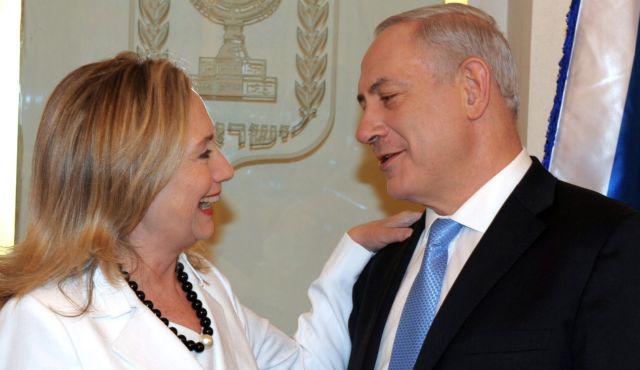
Hillary’s unbreakable bond with Bibi and her commitment to fight for Israel

Hillary Clinton writes: I will do everything I can to enhance our strategic partnership and strengthen America’s security commitment to Israel, ensuring that it always has the qualitative military edge to defend itself. That includes immediately dispatching a delegation of the Joint Chiefs of Staff to meet with senior Israeli commanders. I would also invite the Israeli prime minister to the White House in my first month in office.

The dangers facing both our nations in the Middle East require bold and united responses. We must remain committed to preventing Iran from ever acquiring a nuclear weapon, and to vigorously enforcing the new nuclear agreement. I would move to step up our partnership to confront Iran and its proxies across the region, and make sure dangerous Russian and Iranian weapons don’t end up in Hezbollah’s hands or threaten Israel. I also will combat growing efforts to isolate Israel internationally and to undermine its future as a Jewish state, including the Boycott, Divestment and Sanctions movement. I’ve spoken out against BDS in the United States and at the U.N., and will continue to do so.

For me, fighting for Israel isn’t just about policy — it’s a personal commitment to the friendship between our peoples and our vision for peace and security. [Continue reading…]

Facebooktwittermail

Diaspora Jews value communities’ unity more than connection to Israel, poll indicates

Ynet reports: The world’s Jews feel secure in their countries, including in Europe: In a survey conducted among Jewish community leaders in different places around the world, 77 percent reported that their members do not feel threatened in their places of residence, including 56 percent of European Jews.

Only 21 percent said their community members felt unsafe – about half of them due to the growth in anti-Semitism, and others because of the anger towards Israel, local criminal crime, the economic situation, the immigration problem in Europe, etc.

Ahead of the 9th World Conference of Jewish Community Centers (JCC Global), which is being held in Jerusalem this week, JCC leaders were asked whether the current situation in Israel affected them. The findings were surprising: Forty-six percent said the community’s sense of security was unaffected by the current round of conflict between Israel and the Palestinians, while 35% said they felt less secure. Ten percent even reported a higher sense of personal safety recently.

The interviewees were also asked to rank the Diaspora Jewry’s challenges. They revealed that the communities’ unity is more important to them than the connection with Israel, preventing assimilation and fighting anti-Semitism. [Continue reading…]

Facebooktwittermail

ISIS suspected of bombing Russian jet, but little evidence cited in support of this claim

The Daily Beast reports: Wittingly or unwittingly, British authorities have triggered a sudden blizzard of assertions that the Russian Airbus A321 that crashed in Egypt was brought down by a bomb on board. Until 10 Downing Street, apparently acting on their own initiative, decided to send their own aviation security experts to the airport at Egypt’s Sharm el-Sheikh to “assess” the level of security, British and American intelligence agencies were limiting the chance of a bomb being the cause to a “possibility.”

The Brits have provoked, within hours, a chorus of endorsements that terrorism was involved, but without any single piece of definitive evidence to prove it.

Stopping prudently just short of such evidential confidence, 10 Downing Street said “we cannot say categorically why the Russian jet crashed. But as more information has come to light we have become concerned that the plane may well have been brought down by an explosive device.”

Reports by CNN, NBC News, and the Associated Press originally cited a single, anonymous U.S. intelligence official who said that ISIS was involved.

Multiple U.S. officials told The Daily Beast that it was too soon to say definitively that a bomb aboard the airplane was responsible for the crash. But none of them would rule out that possibility, either, and acknowledged that a bomb is one scenario that intelligence agencies have been considering since the day of the crash.

“Intelligence officials are starting to lean that way,” a U.S. official told The Daily Beast of the bomb scenario.

Notably, the intelligence so far that tends to support the theory of a bomb has been technical in nature, including intercepted communications from within terrorist groups and indications from satellites of some intense heat signature at the time of the crash — possibly from an explosion. [Continue reading…]

The Independent reports: An “engine explosion” is thought to be the most likely cause of the Russian plane crash in Sinai on Saturday which killed 224 people, according to Egyptian and Russian media reports.

Investigators have been carrying out preliminary analyses of the Metrojet Airbus 321’s two “black box” flight recorders since Tuesday morning, though damage to the equipment has slowed their progress.

But while an initial assessment of the evidence on the cockpit voice recorder seemed to show noises “uncharacteristic of a standard flights” just before the plane disappeared off radar screens, a first look at the other recorder has thrown up an explosion of the engine as the main lead.

That’s according to a source close to the investigation, the Egyptian Al-Masry al-Youm newspaper reported. The source also said that the possibility of a catastrophic blast on the engine was first thrown up by an analysis of debris at the crash site. [Continue reading…]

Facebooktwittermail