William Astore: Drafted by the national security state

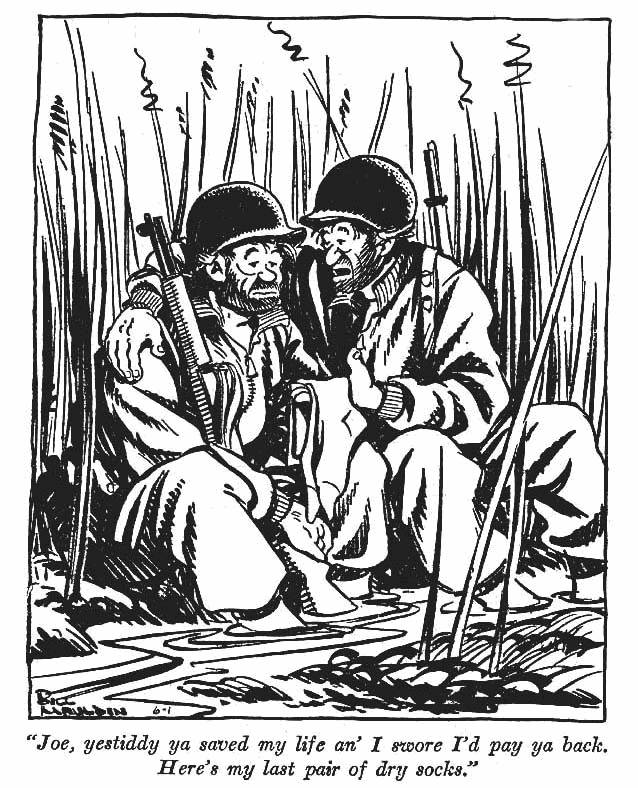
On the 70th anniversary of the D-Day landings, Brian Williams led off NBC Nightly News this way: “On our broadcast tonight, the salute to the warriors who stormed the beaches here in Normandy…”  It’s such a commonplace of our American world, that word “warriors” for those in the U.S. military or, as is said time and again, our “wounded warriors” for those hurt in one of our many wars.  This time, however, because it was applied to the vets of World War II, my father’s war, it stopped me in my tracks.  For just a moment, I couldn’t help imagining what my father would have said, had anyone called him — or any of the air commandos in Burma for whom he was “operations officer” — a warrior.  Though he’s been dead now for three decades, I don’t have a moment’s doubt that he would have thought it ridiculous.  In World War I, America’s soldiers had been known as “doughboys.”  In World War II, they were regularly (and proudly) called “dogfaces” or G.I. (for “government issue”) Joes, and their citizen-soldier likenesses were reflected in the tough but bedraggled figures of Willy and Joe, Bill Mauldin’s much beloved wartime cartoon foot soldiers on the long slog to Berlin.

And that was fitting for a civilian military, a draft military.  It was down to earth.  It was how you described people who had left civilian life with every intention of returning to it as soon as humanly possible, who thought the military a grim necessity of a terrible moment in history and that war, a terrible but necessary way to go.  In those days, warriors would have been an alien term, the sort you associated with, say, Prussians.

My father volunteered just after the attack on Pearl Harbor and wasn’t demobilized until the war ended, but — I remember it well in the years after — while he took pride in his service, he maintained a typical and healthy American dislike (to put it politely) for what he called “the regular army” and George Washington would have called a “standing army.”  He would have been amazed by the present American way of war and the propaganda universe we now live in when it comes to praising and elevating the U.S. military above the rest of society.  He would have found it inconceivable that a president’s wife would go on a popular TV show — I’m talking about Michelle Obama on “Nashville” — and mix it up with fictional characters to laud for the umpteenth time America’s warriors and their service to the nation.

In Vietnam, of course, the term still wasn’t warrior, it was “grunt.”  The elevation of the American soldier to the heavens of praise and bombast came significantly after the end of the citizen army, particularly with what retired Air Force Lieutenant Colonel and TomDispatch regular William Astore calls the new Fortress America mindset of the post-9/11 years and the ever more militarized world of constant war that went with it.

If only I could have picked up the phone, called my father, and heard the choice words he would have had for his newly elevated status as an American “warrior,” seven decades after Normandy.  But not being able to, on that D-Day anniversary I did the next best thing and called a 90-year-old friend, who was on a ship off one of those blood-soaked beaches as the invasion began.  Thinking back those 70 years with a certain pride, he remembered that the thing the foot soldiers of World War II resented most was saluting or saying “sir” to officers.  No warriors they — and no love for an eternal wartime either.  Put another way, the farther we’ve come from our last great military victory, symbolized by the events of June 6, 1944, the more elevated the language for describing, or perhaps whitewashing, a new American way of war that, for pure failure, may have few matches. Tom Engelhardt

Uncle Sam doesn’t want you — he already has you
The militarized realities of fortress America
By William J. Astore

I spent four college years in the Reserve Officers’ Training Corps (ROTC) and then served 20 years in the U.S. Air Force.  In the military, especially in basic training, you have no privacy.  The government owns you.  You’re “government issue,” just another G.I., a number on a dogtag that has your blood type and religion in case you need a transfusion or last rites.  You get used to it.  That sacrifice of individual privacy and personal autonomy is the price you pay for joining the military.  Heck, I got a good career and a pension out of it, so don’t cry for me, America.

But this country has changed a lot since I joined ROTC in 1981, was fingerprinted, typed for blood, and otherwise poked and prodded. (I needed a medical waiver for myopia.)  Nowadays, in Fortress America, every one of us is, in some sense, government issue in a surveillance state gone mad.


Continue reading

Facebooktwittermail

Political reform in Iraq will stem the rise of Islamists

Hassan Hassan writes: Earlier this year, as the Islamic State of Iraq and the Levant (ISIL) [aka ISIS] suffered major defeats by various rebel groups in Syria, it raised a defiant slogan: “Remaining and expanding”. A few months later, the slogan does not look as detached from reality as it used to. The group, arguably the most brutal in the region, is now in control of large swathes of lands stretching from Aleppo to Raqqa to Deir Ezzor, in Syria, and from Ramadi to Fallujah and Mosul, in Iraq.

The group’s remarkable successes defy basic military instincts. Consider the type of adversaries ISIL has fought since December. It fought the Iraqi army, backed by battle-hardened Shiite militias as well as Sunni tribal forces, in Anbar. In Syria, secular, Islamist and Al Qaeda-affiliated rebels fought ISIL in Aleppo, Idlib and Deir Ezzor, with little success except in Idlib. And yet, the group is still as strong as ever.

So the pressing question is: how can this numerically small group control large areas in two countries? Three main reasons can be identified for its resilience and expansion.

The first is the inconsistency of its opponents. In Iraq, the revival of the group since it was essentially wiped out in the wake of the country’s civil war in 2006 and 2007 was made possible in large part due the imprudent policies of prime minister Nouri Al Maliki. The biased anti-terror laws as well as the tendency to employ sectarian rhetoric in military campaigns against militancy in Sunni areas, as he did in his speech in December, have estranged the Sunni population, which has played into ISIL’s hands.

These policies lead Sunnis, even while they dislike ISIL, to feel they have no stake in fighting ISIL or resisting its presence because the government is just as bad. Additionally, there is a growing sense among Shiites that they have no stake in fighting in Sunni areas and leaving their areas exposed to danger. That leaves the Iraqi government forces with little appetite to face a brutal and resilient militia. [Continue reading…]

Facebooktwittermail

ISIS rule will pain its subjects

There’s a difference between being welcomed and not being opposed.

The advance of ISIS into Mosul appears not to have met any opposition. Whether the city’s remaining residents welcome their new rulers is another matter.

In a video of the militants’ arrival, the only celebrants appear to have been the ISIS fighters themselves.

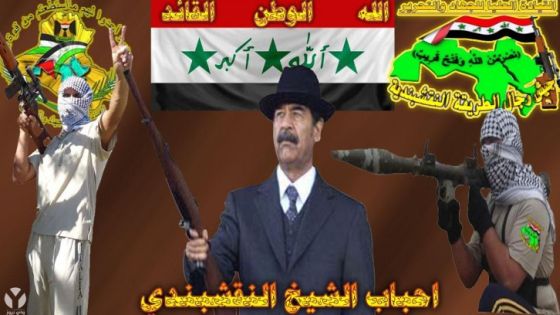
Members of the local Naqshbandi Army apparently welcomed ISIS’s arrival by putting up posters of Saddam, but they have been ordered to remove them within 24 hours.

Naqshbandi

EA Worldview has translated a code of conduct that ISIS has issued for Nineveh Province:

The document instructs fighters to respond to questions about their mission, “We are soldiers of Islam and took on our responsibility to bring back the glory of the Islamic Caliphate.”

Anyone who steals the money claimed by insurgents “from the Safavid Government” — ISIS reportedly took more than $400 million from Mosul’s banks — will have their hands cut off. Only the “Imam of Muslims” may spend the funds.

ISIS warns tribal leaders and Sheikhs not to “work with government and become traitors”. Police, soldiers, and workers for “other kafir institutions” can repent at designated locations.

Muslims are to perform prayers on time in mosques. Drugs, alcohol, and tobacco are banned, as is the carrying of guns or any flag other than that of ISIS. Women must “dress decently” and “only go out if needed”.

As “God ordered us to stay united”, shrines will be destroyed.

ISIS concludes, “You tried secular rulers (republic, Baathist, Safavids), and it pained you. Now is the time for the Islamic State.”

The creation of a state depends on more than the ability to thwart opposition.

Even though ISIS has generated support from fighters coming from many countries, its international appeal probably undermines its ability to strengthen grassroots support — as does its ruthlessness in crushing dissent.

With the hashtag #SykesPicotOver and the bulldozing of the Syrian-Iraqi border, ISIS wants to cast itself as overthrowing what remains of Western colonialism, yet ironically, the jihadists are themselves neocolonialists with an Islamist face.

Facebooktwittermail

Islamic state of who?

Andreas Krieg writes: ISIS’s (Islamic State of Iraq and Al-Sham) partial seizure of Mosul might be the most significant success for global jihadism since 9/11. Within a matter of hours ISIS has been able to demonstrate why they are such a feared and capable fighting force across the Levant. In a highly cohesive and well-coordinated operation this transnational organization of mujahedeen was able to rout Iraqi security forces from Iraq’s second biggest city, capturing arms, equipment, money and control of a vital part of Iraqi infrastructure. What has started as a local phenomenon during the Anbar Awakening in 2004 has grown into a potent contender of state authority in Lebanon, Syria and Iraq. Yet, unlike other Islamist organizations in the region, ISIS lacks one crucial ingredient of power: popular legitimacy. Bearing that in mind, what are the implications of yesterday’s operational success for the achievement of ISIS’s strategic objectives?

As an ideological offspring of Al Qaeda in Iraq (AQI), ISIS ascribes to similar transnational jihadist. However, unlike Al Qaeda as a global franchise, ISIS has a regional strategic focus: removing the artificially drawn borders of the Levant and creating a new Sharia-based transnational Islamic State. Disavowing AQ-leader Al Zawahiri’s demand not to declare political Islamist entities, ISIS’s self-declared Emir Al-Baghdadi has been on the forefront of an initiative which initially aimed at creating an Islamist State in Iraq. Later, with the Syrian Civil War unraveling, Al Baghdadi broadened his initiative to the Levant as a whole. Ironically, those jihadists sent by Assad over the border to prop up the Islamic State of Iraq in the mid-2000s, were now returning to Syria in 2011. Al Baghdadi now commanded a fighting force that was able to stage more than just sporadic terrorist attacks. Years of high-intensity war fighting and ideological indoctrination had transformed the Islamic State from a local terrorist organization into a highly capable transnationally operating militia comprised largely of foreign mujahedeen. ISIS has become the primary centre of attraction for those foreign fighters in the region who are eager to actually convert the often utopian concept of the Islamist caliphate into reality. In its areas of responsibility in Western Iraq and Northern Syria, ISIS has already started to monopolize religious, political and law-enforcement authority. The strategic vision of a de facto Islamist state has taken shape; a state based on ISIS’s interpretation of Sharia, a state centred on Al Baghdadi’s sole authority as the Emir, a state where non-allegiance with ISIS equals treason, a state where religious authority is held by ISIS, a state where all spoils and financial resources belong to ISIS’s treasury. So what does yesterday’s seizure of Mosul mean for the organization? [Continue reading…]

Facebooktwittermail

The ISIS-Baathist alliance

The New York Times reports: Sunni militants consolidated and extended their control over northern Iraq on Wednesday, seizing Tikrit, the hometown of Saddam Hussein, threatening the strategic oil refining town of Baiji and pushing south toward Baghdad, their ultimate target, Iraqi sources said.

As the dimensions of the assault began to become clear, it was evident that a number of militant groups had joined forces, including Baathist military commanders from the Hussein era, whose goal is to rout the government of Prime Minister Nuri Kamal al-Maliki. One of the Baathists, Izzat Ibrahim al-Douri, was a top military commander and a vice president in the Hussein government and one of the few prominent Baathists to evade capture by the Americans throughout the occupation.

“These groups were unified by the same goal, which is getting rid of this sectarian government, ending this corrupt army and negotiating to form the Sunni Region,” said Abu Karam, a senior Baathist leader and a former high-ranking army officer, who said planning for the offensive had begun two years ago. “The decisive battle will be in northern Baghdad. These groups will not stop in Tikrit and will keep moving toward Baghdad.”

The sudden successes of the militant forces sent hundreds of thousands of people running, some literally, from the new outbursts of violence, panicked leaders in Turkey and Syria and revived memories of bloody American struggles to wrest the same places — Mosul and Tikrit — from jihadist fighters a decade ago.

By late Wednesday, the Sunni militants, many aligned with the radical Islamic State of Iraq and Syria, were battling loyalist forces at the northern entrance to the city of Samarra, about 70 miles north of Baghdad. The city is known for a sacred Shiite shrine that was bombed in 2006, during the height of the American-led occupation, touching off a sectarian civil war between the Sunni minority and Shiite majority.

Militant commanders were reportedly threatening to destroy the shrine if its defenders refused to lay down their arms, while hundreds of Shiite fighters were said to be heading north from Baghdad to confront the attackers.

As Iraqi government forces crumbled in disarray before the assault, there was speculation that they may have been ordered by their superiors to give up without a fight. One local commander in Salahuddin Province, where Tikrit is located, said in an interview Wednesday: “We received phone calls from high-ranking commanders asking us to give up. I questioned them on this, and they said, ‘This is an order.’ ”

Residents of Tikrit reported remarkable displays of soldiers handing over their weapons and uniforms peacefully to militants who ordinarily would have been expected to kill government soldiers on the spot. [Continue reading…]

Facebooktwittermail

Will Iran intervene in Iraq?

IranWire reports: “The border patrol has increased its vigilance on the Iran-Iraq border,” said Iran’s Police Chief, Esmail Ahmadi Moghaddam. “The country’s Supreme National Security Council would consider intervening to protect Shia shrines and cities.”

Ahmadi-Moghaddam has been the only high-ranking Iranian official to comment on the advances made by the Sunni extremist group Islamic State in Iraq and Syria (ISIS). According to IranWire sources, Iranian officials have been ordered to remain quiet about the events in neighboring Iraq and ISIS victories. “Iranian officials have been told not to comment, or else,” said a wary former high-ranking Iranian diplomat to IranWire.

According to the former diplomat Iranian plans in Iraq are summarized in the wisdom of one man, “We all know that Haj Ghassem is hard at work trying to control the situation,” referring to Ghassem Suleimani, the legendary commander of the Quds Force, Iran’s Revolutionary Guards Extraterritorial Force, and perhaps the closest person to Iran’s Supreme Leader Ayatollah Ali Khamenei. “Our forces will do whatever it takes to protect the border, and the holy shrines from this bunch of thugs. And ISIS are nothing, but a group of hooligans. They know what can happen if Iran gets involved in the situation, and that is why they are in such a hurry to carry out their dirty acts.”

Iran’s designs in Iraq, and the rest of the Middle East, have been looked at with a degree of cynicism and fear. Many Arab diplomats regard Persian Iranians as untrustworthy neighbors who secretly ally themselves with anyone to protect their interests.

Last week a member of Syrian opposition accused Iran of secretly helping ISIS. According to Abdul Halim Khaddam, the former vice president to Syria’s Bashar Assad, Iran is arming ISIS in order to undermine the Syrian opposition. By strengthening ISIS, Khaddam claimed, Iran was seeking to draw Syrian public sentiment back toward Assad, recasting the battle as Bashar’s battle against extremist onslaught.

Iranian Foreign Minister Mohammad Javad Zarif categorically denied this accusation. He said Iran has been battling Salafi extremists and Al-Qaeda itself for years, and would never stoop to such measures. [Continue reading…]

Facebooktwittermail

Kurdish troops in control of Kirkuk

The New York Times reports: Kurdish officials said on Thursday that their forces had taken full control of the strategic oil city of Kirkuk in northern Iraq, after government troops abandoned their posts there and disappeared, introducing a new dimension into the swirling conflict propelled by Sunni militants pressing south toward Baghdad.

“The army disappeared,” said Najmaldin Karim, the governor of Kirkuk.
[…]
Unlike the Iraqi national army, the Kurdish forces, known as pesh merga, are disciplined and very loyal to their leaders and their cause: autonomy and eventual independence for a Kurdish state. The Kurds’ allegiance to the Shiite Arab-led Iraqi central government is limited, but neither are they known to be allied with the Sunni Arab militants. Many of the tens of thousands of Mosul residents who fled the militant takeover of the city have sought safety in Kurdish-controlled areas. [Continue reading…]

Facebooktwittermail

Egyptian activist Alaa Abd El Fattah jailed for 15 years for organising peaceful protest

The Guardian reports: The extent of Egypt’s counter-revolution has been laid bare by the jailing of one of the key figureheads of the 2011 uprising – a conviction that means Alaa Abd El Fattah has been jailed or investigated under each of the country’s five heads of state since Hosni Mubarak.

Abd El Fattah, one of the activists most associated with the 2011 uprising that briefly ended 60 years of autocratic rule, was sentenced to 15 years in jail for allegedly organising a protest – an act banned under a law implemented last November, and used to jail several revolutionary leaders.

According to Abd El Fattah’s sister, Mona Seif, also a prominent campaigner, he and another activist were sentenced in absentia after being barred from entering the courtroom then arrested and taken to prison by some of the officials who had earlier blocked his entrance. [Continue reading…]

Facebooktwittermail

The rapid advance of ISIS across Iraq

At Blogs of War, John Little describes: the massive upsurge in ISIS’s strength and capabilities. The group now:

I could go on. Bad news is flooding in around the clock. This is a tremendously worrying destabilization that will create an environment in which only really terrible things happen. Jessica Lewis and Ahmed Ali of ISW have given some thought to where all of this is heading and paint a pretty dire picture:

Iraq’s security forces will not be able to retake all of the ground they have lost. They may not even be able to hold what they still have. The best-case scenario is a stalemate in which Iraqis manage to contain the ISIS state and army for now. The more likely case is the creation of another Syrian-style conflict pitting ISIS with increasing international support against desperate and increasingly brutal Iraqi Shi’a militias and ISF elements. The two civil wars, which have now completely merged, will continue to expand, destabilizing an already unstable Middle East and inviting further intervention by the Sunni Arab states and Iran. In the very worst case, the fall of Mosul could be a step down the path to outright regional war.

If there is any hope at all, and I am not sure that there is, it might be in that ISIS has overextended itself and the terrible performance by Iraqi forces has made them appear far more formidable than they actually are. [Continue reading…]

Bloomberg reports: As his army flees from an al-Qaeda splinter group, Iraqi Prime Minister Nouri al-Maliki is rallying Shiite militias to defend his government, raising the specter of civil war in OPEC’s second-biggest oil producer.

In a televised news conference yesterday Maliki urged citizens to take up arms after the Islamic State of Iraq and Levant group seized control of the northern city of Mosul, stealing weapons and helicopters from police and army bases as Iraqi government forces fled. He vowed to build an army of volunteers to “pull the thorns out by ourselves.”

By countering Sunni militants with elements of his own Shiite support, Maliki risks reigniting the sectarian conflict that flared after the 2003 U.S. invasion that led to the ouster of Saddam Hussein. At its worst, in 2006 and 2007, thousands of civilians were losing their lives every month.

“The unleashing of the Shia militias was a driver of the civil war,” said Julien Barnes-Dacey, a senior Middle East and North African analyst at the European Council on Foreign Relations, in a telephone interview. “The question is, will Maliki try to maintain order over these militias or will the level of conflict spiral into something deeper?” [Continue reading…]

Fred Kaplan writes: The collapse of Mosul, Iraq’s second-largest city, has little to do with the withdrawal of American troops and everything to do with the political failure of Prime Minister Nouri al-Maliki.

As the U.S. pullout began under the terms of a treaty signed in 2008 by then-President George W. Bush, Maliki, the leader of a Shiite political party, promised to run a more inclusive government — to bring more Sunnis into the ministries, to bring more Sunnis from the Sons of Iraq militia into the national army, to settle property disputes in Kirkuk, to negotiate a formula on sharing oil revenue with Sunni districts, and much more.

Maliki has since backpedaled on all of these commitments and has pursued policies designed to strengthen Shiites and marginalize Sunnis. That has led to the resurgence of sectarian violence in the past few years. The Sunnis, finding themselves excluded from the political process, have taken up arms as the route to power. In the process, they have formed alliances with Sunni jihadist groups — such as the Islamic State of Iraq and Syria, or ISIS, which has seized not just Mosul but much of northern Iraq — on the principle that the enemy of their enemy is their friend. [Continue reading…]

Much as many Americans inside and outside government may now be inclined to view the advance of ISIS as Iraq’s problem, it shouldn’t be forgotten that the jihadist group’s leader, Abu Bakr al-Baghdadi, was held in American custody until his release in 2009.

abu_duaThe FBI “most wanted” mugshot shows a tough, swarthy figure, his hair in a jailbird crew-cut. The $10 million price on his head, meanwhile, suggests that whoever released him from US custody four years ago may now be regretting it.

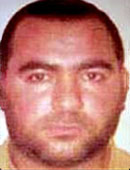
Taken during his years as a detainee at the US-run Camp Bucca in southern Iraq, this is the only known photograph of Abu Bakr al-Baghdadi, the new leader of al-Qaeda in Iraq and Syria. But while he may lack the photogenic qualities of his hero, Osama bin Laden, he is fast becoming the new poster-boy for the global jihadist movement.

For anyone who has any doubts about the brutality of ISIS, then if you can stomach it, watch some of “The Clanging of the Swords.” This recently released movie could be described as Tarantino-style jihad — repulsive to most people, but presumably appealing to young men who want to kill in the name of Islam.

Facebooktwittermail

Syrian Islamist factions and Kurds in new push against ISIS

The Associated Press reports: A rebel coalition in Syria dominated by Islamic factions announced a new push to dislodge fighters from a rival, al-Qaida-inspired group from the northern province of Aleppo, activists said Wednesday.

The announcement, reported by the Britain-based Syrian Observatory for Human Rights, came as the al-Qaida-inspired Islamic State in Iraq and the Levant overran much of neighboring Iraq’s second-largest city, Mosul.

Details of the extent of the new offensive were not immediately known. But one of the groups in the coalition, the Islamic Front, claimed that its fighters recently captured four villages from the Islamic State and killed 17 of its fighters.

The infighting is part of broader rebel-on-rebel clashes that have raged across opposition-held northern Syria since early January.

The new coalition, called the “Operations Room for the People of the Levant” also includes Kurdish groups in Syria, which traditionally have focused on defending their own ethnic areas from other rebel groups, said Rami Abdurrahman of the Observatory.

The new offensive appears to have begun late Monday, said an Aleppo-based activist who uses the name Abu al-Hassan, when two chief towns controlled by the Islamic State, Manbij and al-Bab, came under attack.

The al-Qaida-linked Nusra Front and the Islamic Front attacked the town of al-Bab from the northwest, while Kurdish fighters attacked from the east, he said. [Continue reading…]

Facebooktwittermail

How American history judges Bowe Bergdahl

Mark Perry writes: When the movie “Patton” was released in 1970, in the midst of one of our most divisive wars, it thrilled American theatergoers. The account of our nation’s finest tank commander won seven academy awards, including best picture.

The movie opens with a reprise of George Patton’s legendary speech to the U.S. Third Army just before D-Day, in 1944. In his address, the full-throated Patton extolled the virtues of American manhood and the sanguine character of combat. His words brought howls of appreciation in 1944 — and have ever since.

“Men,” Patton said, “all this stuff you hear about America not wanting to fight, wanting to stay out of the war, is a lot of bullshit. Americans love to fight. All real Americans love the sting and clash of battle.”

Was Patton right? Do we Americans love “the sting and clash of battle”?

The controversy over President Barack Obama’s swap of five Guantanamo detainees for Sgt. Bowe Bergdahl, held in Afghanistan as a Taliban prisoner since June 2009, places Patton’s claims in a new light, just as Bergdahl’s return has spurred questions about whether he is a hero, or should be put on trial for deserting his post. Claims that the search for Bergdahl might have resulted in as many as six U.S. combat deaths have deepened the controversy. And Bergdahl’s return has aroused impassioned criticism of Obama from his partisan opponents.

The Bergdahl controversy masks the difficulty all militaries have in defining when a soldier has deserted, or “just wandered off” — which might have been the case with Bergdahl. For the U.S. military, the key is intent: A soldier is listed as a deserter when he intends to separate himself from his unit permanently, and forever shirk his service. In wartime, as Article 85 of the Uniform Code of Military Justice makes clear, desertion is punishable by death.

You would think that this punishment, when added to the opprobrium that a deserter suffers from his family and fellow soldiers, would dampen the rate at which men (or women) in uniform leave their posts. But an examination of American military history shows that that’s not true.

Desertion rates in George Washington’s Continental Army peaked in the early years of the Revolutionary War (when desertion rates averaged an astonishing 20 to 25 percent of all men under arms), but fell off when his army became more professional. This didn’t keep Washington from lamenting his losses. The situation was so bad, he said, that the mountainous areas between New Hampshire and Vermont were “populated by hundreds of Deserters from this Army.”

Desertion rates during the Civil War were not as high, with the Union Army suffering a 9 to 12 percent desertion rate. Of the approximately 42,000 Union soldiers court-martialed during the war, just over 14,000 were for desertion, with 147 executions for the offense. The desertion rate among Confederate units was much worse. In the wake of the Gettysburg defeat, Robert E. Lee struggled to keep his army together, with desertion rates peaking at between 20 to 25 percent. In all, more soldiers (North and South) were executed during the Civil War (some 500 in all) than in all our other conflicts combined — two-thirds of them for desertion.

With the Civil War as its model, the Army created a Morale Division after the U.S. entered World War One. The unit’s commander later noted that explaining to recruits why they were fighting kept them on duty. A 1918 memo noted that many U.S. recruits “seemed unclear about the purpose of the war.” The division’s work had an effect: 5,584 men were charged with desertion during the conflict (the lowest rate of any U.S. war), and 2,657 were convicted — with no executions.

Explaining a war’s purpose is a significant factor in the Bergdahl case. His unit was isolated for long periods of time and fighting a conflict that was fast becoming an afterthought for the American people. In truth, most Americans didn’t even know that Bergdahl was being held by the Taliban until his release, a chilling commentary on America’s focus on the war. [Continue reading…]

Facebooktwittermail

Poll: Palestinians prefer suing Israel at the ICC rather than starting third intifada

The Jerusalem Post reports: Palestinians want to bring Israel before the International Criminal Court more than they want to fight them in the streets in an armed third intifada, according to a poll conducted by Khalil Shikaki of the Palestinian Center for Policy and Survey Research.

Palestinians continue to support a two-state solution and do not believe that the newly unified Fatah-Hamas government is an obstacle to renewed negotiations, according to Shikaki’s data, which he presented at the 2014 Herzliya Conference on Tuesday.

Israelis also believe it is possible to negotiate with the new Palestinian government, according to pollster Mina Tzemach, who spoke on the same panel as Shikaki. [Continue reading…]

Facebooktwittermail

Why is Obama’s DOJ prosecuting a torture victim?

Josh Ruebner writes: Rasmea Odeh was brutally tortured into confessing a crime she did not commit. After 10 years of imprisonment, Odeh was exiled from her homeland, eventually immigrating to the United States from Jordan in 1994 as a legal resident and later becoming a naturalized citizen. For the past decade, she has gained the admiration and adulation of the Chicago community she selflessly serves, working as the associate director of the Arab American Action Network to defend civil liberties and promote immigrant rights. Last year, the Chicago Cultural Alliance bestowed on her its Outstanding Community Leader Award in recognition of her devoting “over 40 years of her life to the empowerment of Arab women.”

People such as Odeh, who demonstrate such a tremendous spirit of resiliency, capacity to overcome hardship and dedication to community empowerment, are often lauded by presidents during State of the Union addresses. Perhaps if Odeh was tortured, imprisoned and exiled by a regime the United States deemed hostile, then President Obama would be saluting her from the House gallery as an exemplar of humanity while members of Congress feted her with a standing ovation. But, because Odeh is Palestinian and her oppressor is Israel, she faces quite a different reception from the U.S. government: The Obama administration shamefully has filed immigration-related charges against Odeh that could result in her being stripped of her U.S. citizenship and deported from this country.

Last October, Department of Homeland Security agents arrested Odeh at her home after the Department of Justice dusted off her 10-year-old naturalization application to charge her with “unlawful procurement of naturalization” for allegedly omitting mention of her time in Israeli prison. The spuriousness of this charge is evident by the fact that Odeh has been quite frank in her public retelling of the torture she faced during her time in Israeli prisons. [Continue reading…]

Facebooktwittermail

Netanyahu’s staggering defeat

Dimi Reider writes: Reuven Rivlin’s victory in the presidential elections on Tuesday was a resounding one, but nowhere near as resonant as Benjamin Netanyahu’s defeat – a domestic political defeat to match his 2013 failure to stop Iran-U.S. rapprochement, which yanked the rug out from under his foreign policy.

Rivlin and Netanyahu weren’t running against each other. Quite the contrary, Rivlin was the candidate of Netanyahu’s own party, Likud, adored by the party’s rank-and-file and Israelis in the street alike. With a bit of self-discipline and an exercise of that most elusive quality of leadership – humility – Netanyahu could have transformed today’s event into a sweeping victory for his party, for the nationalist camp and for himself personally. Worst come to worst, he could have even written it off as a pointless formality, playing on the public’s weariness of the largely ceremonial presidential role. Instead, Netanyahu made it into a personal crusade, raising the stakes of the presidential race immensely and amplifying his defeat to match. He is perceived as having ignored, deceived and ultimately betrayed his own party – and all to lose the race. This doesn’t mean Netanyahu will be going anywhere tomorrow, but it does mean that the historical fourth term he covets is becoming increasingly unlikely, and that like many a Prime Minister to have served three terms, the final blow might well come from his own home party. [Continue reading…]

Facebooktwittermail

Israel has Egypt over a barrel

David Hearst writes: It took the CIA 60 years to admit its involvement in the overthrow of Mohammad Mossadeq, Iran’s first democratically elected prime minister. The circumstances around the overthrow of Egypt’s first democratically elected president, Mohamed Morsi, may not take as long to come to light, regardless of whom is behind it.

Mossadeq sealed his fate when he renationalized Iran’s oil production, which had been under the control of the Anglo-Persian Oil Company, later to become BP. Morsi’s enemy was gas, and he proved to be a major obstacle to a lucrative deal with Israel – which nobody will be surprised to learn – is about to take place now he has been removed.

Clayton Swisher of Al Jazeera’s investigative unit has spent five months delving into the corrupt sale of Egyptian gas to Israel. His report Egypt’s Lost Power to be broadcast on Monday night reveals that Egypt has lost a staggering amount of money -$11bn , with debts and legal liabilities of another $20bn – selling gas at rock bottom prices to Israel, Spain and Jordan. [Continue reading…]

(Interactive: Egypt’s Lost Power)

Facebooktwittermail

Mass sexual assaults continue as Egyptians celebrate Sisi’s rise to the presidency

The New York Times reports: A video showing a mass sexual assault on a nearly naked woman in the midst of inaugural celebrations for Egypt’s new president is testing his pledge to curb an epidemic of such attacks, with captured scenes of a police officer with a gun in his hand struggling against a crowd of men to extricate the victim.

At first a black shirt covered just her shoulders, her backside purple and black with bruises. Moments later, she is seen stripped completely, as her limp and reddened body is carried into a waiting vehicle.

Captured in a blurry two-minute video taken in Tahrir Square on Sunday and circulated via YouTube on Monday, the attack is forcing the new president, Abdel Fattah el-Sisi, to confront a phenomenon many here said resulted from the collapse of the police force during the uprising against Hosni Mubarak in 2011: the recurring mass sexual assaults that have taken place amid the crowds that have gathered in Tahrir Square ever since. [Continue reading…]

Facebooktwittermail

The betrayal of Karachi

Rafia Zakaria writes: Karachi has been smoldering for more than a week. On June 8 it burst into flames when the Pakistani Taliban laid siege to the city’s main airport, Jinnah International, killing at least 36 people. The firefight between the attackers and security forces was broadcast live on television, delivering images of carrier planes in flames and the sounds of gunfire and explosions. The megacity, with a population of 23.5 million, has been in a standstill since June 3, after the London arrest on money-laundering charges of Altaf Hussain, a prominent Pakistani politician and chief of the opposition Muttahida Qaumi Movement (MQM). All transportation, businesses, schools and offices remain closed. Leery of violence from MQM activists protesting Hussain’s arrest, the city’s residents have been effectively confined to their homes. When he was released on bail last week, it seemed as though calm would finally return to Karachi.

The escalation of violence exposed the city’s vulnerabilities, including its lack of political leadership and deteriorating security infrastructure. The local law enforcement responding to the airport attack did not even have bulletproof vests and other requisite equipment to engage the assailants. Worse, it’s unclear who was in charge of the operation at the airport until the military took over.

On June 9 the Pakistani Taliban claimed responsibility for the attack and promised more to come. In a similar ambush on June 10, unidentified gunmen attacked a security post at Jinnah, briefly engaging local police in gunfire. That the Taliban were able to take over the city’s only gateway to the rest of the world with little resistance underscores the MQM’s weakness and Karachi’s susceptibility to extremism. After controlling the city for more than two decades, the MQM is in total disarray — unable to advocate for Karachi’s security needs at the federal level or defend it from militants, including the Taliban. [Continue reading…]

Facebooktwittermail