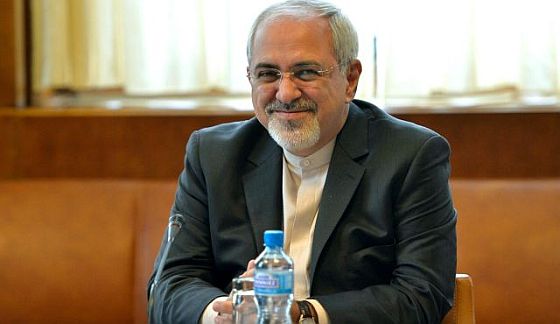
After rapid release of hot air, Israeli leaders may soon run out of cliches

spent-force

The New York Times reports: Israeli leaders denounced the agreement reached Sunday in Geneva, saying they were not bound by it and reiterating the principle that Israel would be ready to defend itself without assistance against any threat.

After weeks of intense lobbying against any deal between the world powers and Iran that does not ensure the dismantling of Iran’s nuclear program, Prime Minister Benjamin Netanyahu of Israel called the agreement “a historic mistake,” saying in remarks that were broadcast from the start of his weekly cabinet meeting, “Today the world has become a much more dangerous place because the most dangerous regime in the world has taken a significant step toward attaining the most dangerous weapon in the world.”

Mr. Netanyahu excoriated the world’s leading powers for agreeing to Iranian uranium enrichment for the first time and for relenting on sanctions “in exchange for cosmetic Iranian concessions that can be canceled in weeks.”

“Israel is not bound by this agreement,” he said. “As prime minister of Israel, I would like to make it clear: Israel will not allow Iran to develop a military nuclear capability.”

The foreign minister of Israel, Avidgor Lieberman, told Israel Radio that “Israel will have to make a reassessment” and that “all the options are on the table.”

“We are talking about the greatest diplomatic achievement for the Iranians,” he said. “We have to take our decision in a cleareyed, independent manner, and we have to be serious enough to be responsible for our fate. Responsibility for the fate of the Jewish people and for the state of Israel lies with the Israeli government alone.” [Continue reading…]

Yada, yada, yada. What options on which table?

Jeffrey Goldberg is in no doubt that Israel no longer has any military options:

[Obama] boxed-in Israeli Prime Minister Benjamin Netanyahu so comprehensively that it’s unimaginable Israel will strike Iran in the foreseeable future. Netanyahu had his best chance to attack in 2010 and 2011, and he missed it. He came close but was swayed by Obama’s demand that he keep his planes parked. It would be a foolhardy act — one that could turn Israel into a true pariah state, and bring about the collapse of sanctions and possible war in the Middle East — if Israel were to attack Iran now, in the middle of negotiations.

Facebooktwittermail

Secret U.S.-Iran talks set stage for nuke deal

The Associated Press reports: The United States and Iran secretly engaged in a series of high-level, face-to-face talks over the past year, in a high-stakes diplomatic gamble by the Obama administration that paved the way for the historic deal sealed early Sunday in Geneva aimed at slowing Tehran’s nuclear program, The Associated Press has learned.

The discussions were kept hidden even from America’s closest friends, including its negotiating partners and Israel, until two months ago, and that may explain how the nuclear accord appeared to come together so quickly after years of stalemate and fierce hostility between Iran and the West.

But the secrecy of the talks may also explain some of the tensions between the U.S. and France, which earlier this month balked at a proposed deal, and with Israel, which is furious about the agreement and has angrily denounced the diplomatic outreach to Tehran. [Continue reading…]

Haaretz reports: Israel found out about the existence of secret talks between the United States and Iran months before they were officially informed of the negotiations by the U.S. government, a senior Israeli official told Haaretz. The Israeli government learned of the secret negotiations sometime near the beginning of the summer through intelligence it managed to obtain.

Managed to obtain how? Through surveillance on U.S. diplomatic communications? Or, more likely, through leaks from an Israel-friendly Washington insider.

Facebooktwittermail

Obama has leeway on Iran, despite U.S. lawmakers’ concerns

Reuters reports: Republican and Democratic U.S. senators on Sunday voiced skepticism about an interim nuclear deal reached with Iran but Congress looked likely to give President Barack Obama room to see if the agreement works.

The deal does not need to be ratified by Congress and Obama is using his executive power to temporarily suspend some existing U.S. sanctions on Iran.

Senators have been discussing for months imposing even tighter sanctions, which could anger Tehran and put Sunday’s deal reached in Geneva in jeopardy.

But influential Democrats – who control the Senate – made clear that any new sanctions against Iran would include a six-month window before they took effect.

That would allow time to see if Iran is sticking by the pact, worked out between Tehran, the United States and other world powers.

“It is a choice between a pause or imminent war. I choose a verifiable pause,” Senator Bill Nelson, a Democrat from Florida said.

Influential Democratic Senator Robert Menendez, who is known as a hawk on Iran, said forthcoming legislation would “provide for a six-month window to reach a final agreement before imposing new sanctions on Iran.” [Continue reading…]

Facebooktwittermail

Arab states show cautious optimism on nuclear deal

The Wall Street Journal reports: Saudi Arabia maintained a pointed silence Sunday on the new nuclear pact between world powers and Saudi Arabia’s top rival, Iran, while other Gulf and Arab states gave a cautious welcome to a deal hoped to ease tensions in a region bloodied by proxy battles between Shiite Iran and Sunni Arab states.

Saudi political commentators voiced persistent fears that Iran would now see itself as freed to advance on other, non-nuclear fronts against its Middle East rivals.

By early Monday in the Middle East, most of the region’s Muslim powers — Turkey, Egypt, and at least four of the six wealthy Arab Gulf countries — had issued statements expressing support for the deal. The United Arab Emirates., a commerce-minded nation that traditionally has thrived on doing business with both Iran and Arab states, welcomed the deal as one it hoped would protect the region “from the tension and danger of nuclear proliferation,” the emirates’ council of ministers said.

Saudi Arabia, the most powerful of the Arab states and the most intensely suspicious rival of Shiite Iran, made no public comment on the pact Sunday, and its foreign ministry didn’t return requests for comment. [Continue reading…]

Facebooktwittermail

A nuclear deal to which no one can reasonably object

Fred Kaplan writes: The Iranian nuclear deal struck Saturday night is a triumph. It contains nothing that any American, Israeli, or Arab skeptic could reasonably protest. Had George W. Bush negotiated this deal, Republicans would be hailing his diplomatic prowess, and rightly so.

A few weeks ago, a “senior administration official” outlined the agreement that President Obama hoped to achieve in Geneva. Some reporters who heard the briefing (including me) thought that the terms were way too one-sided, that the Iranians would never accept them. Here’s the thing: The deal just signed by Iran and the P5+1 nations (the United States, Britain, France, Russia, and China plus Germany) is precisely the hoped-for deal laid out at that briefing.

It is an interim agreement, not a treaty (which means, among other things, that it doesn’t require Senate ratification). It is meant as a first step toward a comprehensive treaty to be negotiated in the next six months. More than that, it expires in six months. In other words, if Iran and the other powers can’t agree on a follow-on accord in six months, nobody is stuck with a deal that was never meant to be permanent. There is no opportunity for traps and trickery.

Meanwhile, Iran has to do the following things: halt the enrichment of all uranium above 5 percent and freeze the stockpile of uranium enriched to 3.5 percent; neutralize its stockpile of uranium that’s been enriched to 20 percent (either by diluting it to 5 percent purity or converting it to a form that cannot be used to make a weapon); stop producing, installing, or modernizing centrifuges; stop constructing more enrichment facilities; halt all activities at the Arak nuclear reactor (which has the potential to produce nuclear weapons made of plutonium); permit much wider and more intrusive measures of verification by the International Atomic Energy Agency, including daily inspections of all facilities.

Without going into a lot of technical detail (which can be read here), the point is this: The agreement makes it impossible for the Iranians to make any further progress toward making a nuclear weapon in the next six months—and, if the talks break down after that, and the Iranians decide at that point to start building a nuclear arsenal, it will take them much longer to do so. [Continue reading…]

Facebooktwittermail

A path towards peace with Iran — Netanyahu’s worst nightmare

Haaretz reports: Prime Minister Benjamin Netanyahu said Sunday that the interim agreement reached hours prior between Iran and six world powers in Geneva over the prior’s nuclear program endangered Israel, calling the deal a “historic mistake.”

“What was achieved last night in Geneva is not a historic agreement; it is a historic mistake,” he said. “Today the world has become a much more dangerous place because the most dangerous regime in the world has taken a significant step toward attaining the most dangerous weapon in the world.”

“This agreement and what it means endanger many countries including, of course, Israel,” he said. “Israel is not bound by this agreement. The Iranian regime is committed to the destruction of Israel and Israel has the right and the obligation to defend itself, by itself, against any threat. As Prime Minister of Israel, I would like to make it clear: Israel will not allow Iran to develop a military nuclear capability.”

In his last-minute shuttle diplomacy, Benjamin Netanyahu made his entreaties to all the world powers begging them not to make a “bad deal” with Iran. He was politely received and then duly ignored.

Well, ignored might be an overstatement since for the last decade Israel has been instrumental in pushing Iran to the top of the international agenda when, absent that pressure, the world could have been attending to much more urgent and truly global issues.

At a time when the diplomatic momentum was clearly not moving in Netanyahu’s favor, one might ask: why did he not back down from his maximalist demand on zero enrichment and find a way of offering qualified support for this emerging nuclear accord? Why hold on to a set of conditions that Iran would find impossible to accept?

The reason is that Netanyahu’s goal has never been for the nuclear issue to be resolved. It’s political value resides wholly in this remaining an unresolved issue and in Israel’s ability to cast Iran as a perpetual threat. For Netanyahu, any deal is a bad deal because absent an Iranian threat, Israel will find itself under increasing pressure to address the Palestinian issue.

If, as now seems genuinely possible, a permanent nuclear accord is reached with Iran, this will diminish the risk of a major regional war. The risk of a local war — most likely with Lebanon — will, however, increase for as long as Israel is governed by warmongers who prefer to drum up external threats rather than attempt to get their own house in order.

Facebooktwittermail

Geneva deal seals Netanyahu’s legacy: An ineffectual leader

Amir Oren writes: Netanyahu is a serial failure. Mitt Romney was not elected president. Congress did not stand behind Israel and against Obama. The agreement with Iran will be carried out, over Netanyahu’s objections, because that is what the superpowers want. John Kerry, encouraged by the diplomatic success that began with Syria’s chemical disarmament, will not let go regarding the Israeli-Palestinian talks. The Likud leadership anticipates a diplomatic and political crisis next spring, with a divided party that will try to tie Netanyahu’s hands. If he wants to run again, as his ministers believe he does, he will have to become even more extreme and speed toward Obama on a collision course.

This morning, in Switzerland, Netanyahu had his toy gun taken away. In Basel, Herzl founded the state of the Jews, and in Geneva, Obama ended Netanyahu’s era. He can no longer claim truly that he wants to govern the Israelis. The prime minister of Israel cannot be merely some diplomatic version of PR expert Rani Rahav who rails — as Rahav does about Shelly Yacimovich — that the deal with Iran is “bad, bad, bad.”

Netanyahu continuing as prime minister is a waste of time, energy, money and attention. In a new reality, Israel needs new leadership.

Facebooktwittermail

Iran’s nuclear deal-maker keeps Twitter and the ayatollah happy

Mohammad-Javad-Zarif

The Guardian reports: “It takes two to tango,” said Iran’s foreign minister, Mohammad Javad Zarif, in an interview in September when asked how optimistic he was about a possible nuclear deal with the west.

In the early hours of Sunday, as Zarif and his six western counterparts prepared to leave Geneva’s Intercontinental hotel on a five-minute journey to Palais des Nations for a historic Kodak moment, the Iranian foreign minister was sure the other side had said yes to his invitation. The 53-year-old veteran Iranian diplomat was depicted tango dancing in the arms of Uncle Sam in a sketch by prominent cartoonist Touka Neyestani, published by Iranwire.

Before leaving the hotel, Zarif took a few moments to go up to his room on the 14th floor and complete one more task: update Twitter and Facebook. “We have reached an agreement,” he tweeted at 3.03am local time.

With that simple message, the 53-year-old veteran diplomat showed that President Hassan Rouhani’s best decision upon assuming office was to appoint him as the man in charge of reviving Tehran’s diplomacy, which was badly damaged under Mahmoud Ahmadinejad.

Now, exactly 100 days after he was officially appointed as foreign minister, Zarif has become immensely popular at home, with Iranians sympathetic to the opposition and supporters of the regime largely united in their admiration for his diplomatic work in a short time. [Continue reading…]

Facebooktwittermail

Full text of the interim nuclear agreement with Iran

Preamble: The goal for these negotiations is to reach a mutually-agreed long-term comprehensive solution that would ensure Iran’s nuclear programme will be exclusively peaceful. Iran reaffirms that under no circumstances will Iran ever seek or develop any nuclear weapons. This comprehensive solution would build on these initial measures and result in a final step for a period to be agreed upon and the resolution of concerns. This comprehensive solution would enable Iran to fully enjoy its right to nuclear energy for peaceful purposes under the relevant articles of the NPT in conformity with its obligations therein. This comprehensive solution would involve a mutually defined enrichment programme with practical limits and transparency measures to ensure the peaceful nature of the programme. This comprehensive solution would constitute an integrated whole where nothing is agreed until everything is agreed. This comprehensive solution would involve a reciprocal, step-by-step process, and would produce the comprehensive lifting of all UN Security Council sanctions, as well as multilateral and national sanctions related to Iran’s nuclear programme.

There would be additional steps in between the initial measures and the final step, including, among other things, addressing the UN Security Council resolutions, with a view toward bringing to a satisfactory conclusion the UN Security Council’s consideration of this matter. The E3+3 and Iran will be responsible for conclusion and implementation of mutual near-term measures and the comprehensive solution in good faith. A Joint Commission of E3/EU+3 and Iran will be established to monitor the implementation of the near-term measures and address issues that may arise, with the IAEA responsible for verification of nuclear-related measures. The Joint Commission will work with the IAEA to facilitate resolution of past and present issues of concern. [Continue reading…]

Facebooktwittermail

With Iran deal sealed, don’t expect Israel to send out the air force

In Haaretz, Amos Harel writes: The Israeli government has lost this battle, as it believed it would once Hassan Rohani was elected Iranian president in June. It didn’t convince the superpowers to stand firm and make the Iranians crawl toward a more demanding agreement.

Despite the criticism expected to follow, it seems Israel will have to swallow hard and accept the deal, as problematic as it is. Later on it will focus on the sanctions front. Prime Minister Benjamin Netanyahu may resume putting pressure on his friends in the U.S. Congress to try to block the administration and tighten the sanctions that are still in Congress’ purview.

Meanwhile, Israeli intelligence will try to reveal Iranian deception that would let Netanyahu keep telling the world “I told you so.” Israel has already warned that Iran could go the way of North Korea and reach the bomb despite the global diplomatic effort. But an Israeli military option isn’t in play, at least not at this stage. As long as there is such sweeping international support for the interim agreement, bombing Iran’s nuclear facilities would be political suicide.

Meanwhile, Reuters reports: Israeli stock prices rose to another record high on Sunday, ignoring local politicians’ comments that a deal to curb Iran’s nuclear programme was a mistake.

Facebooktwittermail

New U.S. sanctions would spell ‘end of deal’ to limit nuclear program

NBC News reports: Iran will not honor the nuclear agreement it just signed with the United States and other world powers if Congress imposes new sanctions, Iran’s foreign minister told NBC News after the deal was announced.

“If there are new sanctions, then there is no deal. It’s very clear. End of the deal. Because of the inability of one party to maintain their side of the bargain,” Foreign Minister Javad Zarif said during an exclusive interview with NBC News.

After four days of marathon bargaining, on Sunday the United States and its allies agreed to offer Iran “modest relief” from harsh economic sanctions and access to a portion of the revenue that the country has been denied through these sanctions. In exchange, Iran will give inspectors broader access to nuclear sites and allow spontaneous inspections.

If NBC News actually read the text of the agreement, they would not be reporting “Iran’s foreign minister told NBC News.” They would have seen it in black and white:

The U.S. Administration, acting consistent with the respective roles of the President and the Congress, will refrain from imposing new nuclear-related sanctions.

Can the crazy people on Capitol Hill exercise some restraint over the coming months? We’ll see.

Facebooktwittermail

How Iran and world powers finally got to yes on a nuclear deal

Barbara Slavin reports: Bargaining into the early hours of Sunday morning in Geneva, the representatives of the world’s major powers and Iran reached a milestone on what remains a long road to resolving the decade-old nuclear crisis, and potentially also marking a turning point in three decades of hostility between Tehran and Washington.

Under the deal hammered out between Iran and the U.S., France, Britain, Germany, China and Russia, Tehran agreed to what President Barack Obama called “substantial limitations” on its nuclear program in return for “modest relief” of sanctions that have harshly impacted the Iranian economy. The agreement covers a six-month period, during which the parties hope to establish momentum for a more far-reaching deal.

While skeptics on all sides are expected to try and pick apart the agreement, few can doubt its historical significance. Had the parties failed again this weekend – only two weeks after Secretary of State John Kerry and his counterparts last rushed to Geneva but came up short – it would have been extremely difficult to maintain the momentum of negotiations in the face of mounting pressure from more hawkish voices on all sides. President Obama’s efforts to restrain Congress from an escalation of U.S. sanctions in order to give diplomacy a chance would have been dealt a severe blow. While some in Congress will almost certainly still try to pass further sanctions, the deal reached in Geneva will have helped the White House make its case.

Indeed, Obama, speaking from the Oval Office late Saturday in Washington, said “now is not the time to move forward on new sanctions” and the agreement promises no new nuclear-related sanctions for six months if Iran abides by its commitments. [Continue reading…]

Facebooktwittermail

Egypt passes law restricting public protests

Al Jazeera reports: Egypt’s interim president, Adly Mansour, has signed a restrictive new “protest law” that would require Egyptians to seek approval days in advance before organising demonstrations.

The law will take effect later this week once the final text is published in the official state register. It gives police wide latitude to use force against demonstrators, which could give the government a pretext for a widespread crackdown.

The law has gone through numerous revisions, but rights groups say the latest version requires protesters to seek approval from police three days in advance, and allows the interior ministry to block rallies that could “pose a serious threat to security or peace”.

Election campaign events are subject to a 24-hour notification period in some drafts, and “processions” of more than 10 people are only allowed for “non-political” purposes. Violators could face fines of up to $4,360.

“They could have stuck to earlier versions, where if the interior ministry wants to ban a protest, the onus is on them to go to court and seek a ban,” said Heba Morayef, the Egypt director for Human Rights Watch. “Instead they’ve done the opposite. The end result is that we could see an increase in violent crackdowns on peaceful protests.” [Continue reading…]

Facebooktwittermail

Iran, six world powers clinch breakthrough nuclear deal

The New York Times reports: The foreign policy chief of the European Union and Iranian officials announced a landmark accord Sunday morning that would temporarily freeze Tehran’s nuclear program and lay the foundation for a more sweeping accord.

After marathon talks that finally ended early Sunday morning, the United States and five other world powers reached an agreement with Iran to halt much of Iran’s nuclear program, and some elements would even be rolled back. It was the first time in nearly a decade, American officials said, that steps were taken to halt much of Iran’s nuclear program and roll some elements of it back.

The freeze would last six months, with the aim of giving international negotiators time to pursue the far more challenging task of drafting a comprehensive accord that would ratchet back much of Iran’s nuclear program and ensure that it could be used only for peaceful purposes.

“We have reached agreement,” Catherine Ashton, the European Union’s chief foreign policy official, posted on Twitter on Sunday morning.

According to the accord, Iran would agree to stop enriching uranium beyond 5 percent. To make good on that pledge, Iran would dismantle the links between networks of centrifuges.

All of Iran’s stockpile of uranium that has been enriched to 20 percent, a short hop to weapons-grade fuel, would be diluted or converted into oxide so that it could not be readily used for military purposes.

No new centrifuges, neither old models nor newer more efficient ones, could be installed. Centrifuges that have been installed but which are not currently operating — Iran has more than 8,000 such centrifuges — could not be started up. No new enrichment facilities could be established. [Continue reading…]

Facebooktwittermail

As Syrian chemical attack loomed, missteps doomed civilians

The Wall Street Journal reports: As Syrian troops battled rebel forces in the Damascus suburbs Aug. 18, U.S. eavesdropping equipment began picking up ominous signals.

A special Syrian unit that handles chemical weapons was ordered closer to the front lines, officials briefed on the intelligence say, and started mixing poisons. For two days, warning signs mounted until coded messages went out for the elite team to bring in the “big ones” and put on gas masks.

U.S. intelligence agencies didn’t translate the intercepts into English right away, so White House officials didn’t know what the Syrian regime was planning until the assault began. Just before 2:30 a.m. on Aug. 21, the first salvo of poison-filled rockets streaked through the clear night sky and crashed into rebel strongholds.

Sarin gas, which kills almost instantly by attacking the nervous system, spread across sleeping farms. Pushed down by falling temperatures, the poison settled in low-lying areas and penetrated homes.

Men, women and children began coughing and gagging, with little more than wet handkerchiefs and T-shirts to hold over their mouths. Neighborhood doctors quickly ran out of antitoxins, and, in a desperate effort to wash away the poison, flooded clinic floors and dragged unconscious victims through the water. More than 1,400 people died, according to U.S. estimates, making it the worst chemical-weapons strike in a quarter century.

A final report is due soon from the United Nations. The Wall Street Journal has pieced together a reconstruction of that fateful day from battlefield reports and dozens of interviews with eyewitnesses, rebels, medics, activists and Western intelligence officials. It reveals both the horror of the attack and the months of miscalculations by the Syrian regime, opposition groups and U.S. government that left them all unprepared for what happened.

U.S. and Israeli communications intercepts reveal chaos inside the Syrian regime that night. When the reports of mass casualties filtered back from the field, according to the officials briefed on the intelligence, panicked Syrian commanders shot messages to the front line: Stop using the chemicals!

Calls came in to the presidential palace from Syrian allies Russia and Iran, as well as from Hezbollah, the Lebanese militant group whose fighters were inadvertently caught up in the gassing, according to previously undisclosed intelligence gathered by U.S., European and Middle Eastern spy agencies. The callers told the Syrians that the attack was a blunder that could have profound international repercussions, U.S. officials say.

The Obama administration had been closely monitoring Syria’s chemical-weapons stockpile since the conflict began in 2011, and had watched the regime carry out about a dozen small-scale chemical attacks before the big one, U.S. officials say. Even if they had translated the intercepts before the Aug. 21 strike, these officials say, they likely wouldn’t have acted because there were no indications it would be out of the ordinary.

Top policy makers had little appetite for getting more deeply involved in the conflict, and questions loomed large about the legality of providing support to the rebels and the best strategy for managing the chemical-weapons threat, these officials say. Rebel leaders and their allies in the U.S. government say the White House failed to act on requests for gas masks, antidote injectors and other protective gear until it was too late.

All told, the events of Aug. 21 changed the Middle East and U.S. policy in ways likely to reverberate for years. It prompted the U.S. to consider and then pull back from military action. The eventual deal to avert a strike, in which Syria agreed to destroy its chemical-weapons stockpiles, elevated Russia, for now, to a leadership position in the region.

President Bashar al-Assad has tightened his hold on power. His regime has denied using chemical weapons, blaming the attacks on the rebels. In exchange for giving up his chemical arsenal, he avoided an American military intervention and likely will get even more support from Russia and Iran. Mr. Assad has pressed ahead with his offensive using conventional arms. U.S. intercepts show a Russian official later boasting to a Syrian counterpart about how easy it had been to get the U.S. to back off strike plans, officials briefed on the intelligence say.

Syrian opposition leaders made their first formal appeal to the U.S. for protection from chemical weapons back in June 2012. At a meeting in Washington, opposition representatives handed administration officials a request for various nonlethal supplies, including 2,500 gas masks, say people who attended.

Samantha Power, then the White House’s top human-rights official and now U.S. ambassador to the United Nations, was receptive, these people say. But other White House advisers, they say, questioned whether the masks would make much of a difference. Some worried that if Islamic extremists in the opposition got their hands on them they might try to seize poison gas from the regime. Administrative lawyers worried about potentially running afoul of domestic and international law.

“It was never ‘no.'” says one opposition representative about what would become a series of requests. “But it would never happen.”

A senior administration official says, “Decisions that were made on assistance to the opposition were made in consultation with them as to what their priorities were.”

That July, American and Israeli spy agencies for the first time intercepted fragmentary intelligence about regime forces using chemical weapons on a small scale. The evidence wasn’t conclusive—there were no physical traces—but some top military officials say they found it persuasive and wanted to make it clear right away to Syria the U.S. wouldn’t tolerate even small attacks.

Then-White House Deputy National Security Adviser Denis McDonough and other officials told their agency counterparts that the top-secret information shouldn’t be made public, but congressional committees were briefed, according to officials. Mr. McDonough also decided to restrict the distribution of such “raw” intelligence inside the government because of its sensitivity, these people say. White House officials didn’t want to set off a chain reaction that would restrict their ability to decide how active a role to play, senior U.S. officials say.

The following month, on Aug. 20, President Barack Obama said the regime would cross the U.S.’s “red line” if it started moving or using “a whole bunch of chemical weapons.”

Last December, the U.S. intercepted an unusually complete communication in which Syrian officials spoke about a potentially larger-scale chemical attack involving aircraft. The White House sent private messages to the Russian government, which in turn asked Iran to lean on the Syrians to scrap the plan, according to current and former U.S. officials involved in the matter. Iran did just that, the officials say. A spokesperson for Iran’s U.N. mission said Iran had made it clear it opposed the use of chemical weapons. [Continue reading…]

Facebooktwittermail

Destruction of Syria’s chemical weapons may be outsourced to private contractors

The Associated Press reports: The global chemical weapons watchdog is inviting private companies to bid to get involved in destroying Syria’s stockpile of toxic agents and precursor chemicals.

The Organization for the Prohibition of Chemical Weapons is posting a request for “expressions of interest” from companies who want a role in “the treatment and disposal of hazardous and non-hazardous organic and inorganic chemicals.”

Facebooktwittermail

NSA report outlined goals for more power

James Risen and Laura Poitras report: Officials at the National Security Agency, intent on maintaining its dominance in intelligence collection, pledged last year to push to expand its surveillance powers, according to a top-secret strategy document.

In a February 2012 paper laying out the four-year strategy for the N.S.A.’s signals intelligence operations, which include the agency’s eavesdropping and communications data collection around the world, agency officials set an objective to “aggressively pursue legal authorities and a policy framework mapped more fully to the information age.”

Written as an agency mission statement with broad goals, the five-page document said that existing American laws were not adequate to meet the needs of the N.S.A. to conduct broad surveillance in what it cited as “the golden age of Sigint,” or signals intelligence. “The interpretation and guidelines for applying our authorities, and in some cases the authorities themselves, have not kept pace with the complexity of the technology and target environments, or the operational expectations levied on N.S.A.’s mission,” the document concluded.

Using sweeping language, the paper also outlined some of the agency’s other ambitions. They included defeating the cybersecurity practices of adversaries in order to acquire the data the agency needs from “anyone, anytime, anywhere.” The agency also said it would try to decrypt or bypass codes that keep communications secret by influencing “the global commercial encryption market through commercial relationships,” human spies and intelligence partners in other countries. It also talked of the need to “revolutionize” analysis of its vast collections of data to “radically increase operational impact.”

The strategy document, provided by the former N.S.A. contractor Edward J. Snowden, was written at a time when the agency was at the peak of its powers and the scope of its surveillance operations was still secret. Since then, Mr. Snowden’s revelations have changed the political landscape. [Continue reading…]

Facebooktwittermail