Author Archives: News Sources

Netanyahu’s war against Obama

Max Blumenthal writes:

The US presidential election campaign that kicked off January 3 with the Iowa caucuses was the subject of a curious article attacking President Barack Obama in the mass circulation Israeli daily newspaper, Israel Hayom.

“US President Barack Obama is ‘naïve’ and needs to face up to the threat presented by the rise of the Muslim Brotherhood across the Middle East, Israel’s National Security Council concluded during a strategic discussion several days ago,” Israel Hayom reported.

The Israeli National Security Council consists of Benjamin “Bibi” Netanyahu’s closest advisers. And Israel Hayom is not just another right-leaning Israeli tabloid. Referred to by Israelis as the “Bibiton,” or Bibi’s mouthpiece, the paper is an instrument that gives him extraordinary political leverage. The obviously planted article in Israel Hayom rang like a bell sounding the start of Netanyahu’s own campaign in helping the Republican Party oust Obama from the White House.

Israel Hayom’s genesis demonstrates the depth of Netanyahu’s connections in Republican circles. It was created by one of Netanyahu’s top financial supporters, a Las Vegas-based casino tycoon named Sheldon Adelson, who is also a major donor to the conservative wing of the Republican Party. Adelson’s closest relationship is with former Speaker of the House Newt Gingrich, a longtime ally of Netanyahu who has been running a rancorous campaign for the Republican presidential nomination.

Netanyahu’s less than subtle intervention has become an open issue in Israeli politics. Opposition leader Tzipi Livni of the Kadima Party has criticized Netanyahu for damaging the US-Israeli relationship. “Netanyahu spoke about consensus,” Livni said in May, “and if there is a consensus in Israel, it’s that the relationship with the US is essential to Israel, and a prime minister that harms the relationship with the US over something unsubstantial is harming Israel’s security and deterrence.”

But Livni’s warning has been ignored. Rather than hesitating, the prime minister and his inner circle are moving full steam ahead in their political shadow campaign whose ultimate goal is to remove Obama. Bibi’s war against Obama is unprecedented. While Israeli prime ministers have tried to help incumbent presidents, none have ever waged a full-scale campaign to overthrow them. [Continue reading…]
Facebooktwittermail

The Imran Khan phenomenon

Arif Rafiq writes: In 1992, with his cricket career at its twilight, an aging Imran Khan boldly pledged that the Pakistani national team would win the World Cup for the first time. In March of that year, before a packed stadium in Melbourne, Pakistan defeated former colonial master England, taking the cup and shocking the world of cricket. Khan returned home with a trophy in his hands, enshrined forever as a national hero.

These days, Khan leads another group of underdogs: a political party known as the Pakistan Tehreek-e Insaf (PTI). Last September, Khan made a familiarly bold prediction: PTI, which has only won a single National Assembly seat in its 15-year history, will sweep the next general elections. PTI, Khan says without a semblance of doubt, will rid Pakistan of corruption, endemic poverty, and violence — and eventually bring the country to what he sees as its rightful place on the world stage.

Since his retirement from cricket, Khan has been devoted to social work and politics. Inspired by his mother’s death, he founded the world-class Shaukat Khanum Memorial Cancer Hospital and Research Center, trusted and respected by Pakistanis of all stripes. Khan’s political career, however, has been another story. PTI, despite the initial hype and fanfare, never really took off. Its founding members left the scene early on, and Khan was regularly outsmarted by wilier politicos.

A solitary Khan would regularly lambast the political class on Pakistan’s many talk shows. Critics dismissed him as the darling of the country’s television anchors and the electorally irrelevant “burger-baby” and “mummy-daddy” types (i.e. coddled, Westernized, rootless, upper-middle class youth). Political satire shows lampooned him as a raving, repetitive political loser.

In 2005, Sheikh Rashid Ahmad, then a backer of military ruler Pervez Musharraf, mocked Khan and patronizingly offered to help him win a seat “anywhere he wants.” Fast forward six years ahead, and Sheikh Rashid, seated next to Khan on live television, was ingratiatingly referring to the ex-cricketer as a “brother” and meekly asking him for help in winning a few seats in the next elections.

Once an electoral non-entity, Khan’s PTI could potentially win dozens of National Assembly seats in the next polls — hence the Pauline conversion of opportunists like Sheikh Rashid. Already, PTI has upended the détente between the two major political powers — the Pakistan Peoples Party (PPP) and the Pakistan Muslim League-Nawaz (PML-N) — and put both on the defensive. PTI might become the country’s third-largest party, giving it the power to determine who heads Pakistan’s next coalition government. Khan, no longer a political joke, is a potential kingmaker positioned to prove the doubters wrong once again.

Facebooktwittermail

‘Memogate’ scandal deepens as American accuser threatens to tell all

The Guardian reports: The controversial American businessman at the centre of the “Memogate” scandal threatening to bring down the government of Pakistan has told the Guardian he plans to fly into the country to tell what he describes as the “unaltered truth” before the courts.

The allegations made by Mansoor Ijaz reach all the way up to President Asif Zardari, and could end up with treason charges against the country’s former US ambassador, Husain Haqqani, or even the president himself. But critics say that the charges are a fantastical and thinly-veiled attempt by the military to hound the government from power, aided by the hostile courts that have taken up the case with alacrity.

Ijaz claims that in May, just after Osama bin Laden was found in Pakistan, Haqqani, whom he described as a friend, dictated to him an explosive memo that he was to deliver to the US military leadership. Haqqani allegedly told Ijaz that he was acting on the instructions of “the boss”, whom Ijaz took to mean Zardari.

The anonymous missive pleaded for American help against the Pakistan army, offering to rein in the military and in particular its Inter-Services Intelligence spy agency, which has ties to the Taliban and other jihadist groups.

Ijaz later revealed the existence of the document in a newspaper column, igniting the firestorm that has been raging in Pakistani politics.

“The memo issue has brought the schism between the military and the civilians out into the open,” said Arif Nizami, editor of Pakistan Today.

“You could say what we’re seeing is a slow and gradual coup taking place, eating into the moral authority of the civilian government.”

Facebooktwittermail

Nuclear scientists are not terrorists

In an op-ed for the New Scientist, Debora MacKenzie writes: Attempts to derail a country’s nuclear programme by killing its scientists “are products of desperation”, says [William] Tobey [of the Belfer Center for Science and International Affairs at Harvard University] – citing a US effort to kill legendary physicist Werner Heisenberg during the second world war, abandoned at the last minute only when the would-be assassin decided Heisenberg was not involved in a Nazi nuclear effort after all.

“Nuclear scientists are not terrorists,” says Tobey in the BAS this week. Killing them at best delays bomb development, by removing key people and perhaps deterring young scientists from careers in nuclear science. But it will not stop bomb development.

These slim advantages are far outweighed, Tobey says, by the downsides: possible retaliation, reduced chances for diplomacy, tighter security around nuclear installations and a pretext for Iran to hamper IAEA monitoring.

Iran has already accused the IAEA of abetting the assassinations by publicising confidential Iranian lists of key nuclear scientists and engineers.

The IAEA needs such information, as talks with nuclear personnel are considered essential for verifying safeguards against diverting uranium to bombs, says Tobey. Making this process harder only makes sense if the people behind the assassinations think it is too late for safeguards and that slowing bomb R&D by killing scientists is therefore more expedient.

The Israeli columnist Ron Ben-Yishai writes: The most curious question in the face of these incidents is why Iran, which does not shy away from threatening the world with closure of the Hormuz Straits, has failed to retaliate for the painful blows to its nuclear and missile program? After all, the Revolutionary Guards have a special arm, Quds, whose aim (among others) is to carry out terror attacks and secret assassinations against enemies of the regime overseas.

Moreover, if the Iranians do not wish to directly target Western or Israeli interests, they can prompt their agents, that is, Hezbollah, Islamic Jihad and other groups, to do the job. In the past, Iran did not shy away from carrying out terror attacks in Europe (in Paris and Berlin) and in South America (in Buenos Aires,) so why is it showing restraint now?

The reason is apparently Iran’s fear of Western retaliation. Any terror attack against Israel or another Western target – whether it is carried out directly by the Quds force or by Hezbollah – may prompt a Western response. Under such circumstances, Israel or a Western coalition (or both) will have an excellent pretext to strike and destroy Iran’s nuclear and missile sites.

This sounds like a confirmation that Israel is indeed wanting to provoke Iran in order to start a war.

But here’s the paradox: if Iran is intent on developing nuclear weapons then it has ever incentive to continue keeping its powder dry. Why should it jeopardize its nuclear program by succumbing to provocation?

On the other hand if Israel’s covert war does indeed succeed in triggering a full-scale war, this may be an indication that Iran never intended to go further than develop a nuclear break-out capacity.

At the same time, the idea that Iran can only strike back through some form of violence, ignores the economic and psychological levers that it can pull much more easily.

The question may not be how much provocation Iran can withstand but rather how high can the price for oil rise before the global economy buckles?

Facebooktwittermail

Killing of Iranian scientist imperils former Marine

The Washington Post reports: The assassination Wednesday of an Iranian nuclear scientist in northern Tehran increases the peril for an Iranian American who was sentenced to death Monday, analysts said.

Iranian officials quickly blamed the scientist’s killing on the United States, ratcheting up tensions between the two countries and making it less likely that Amir Mirzaei Hekmati, a 28-year-old former U.S. Marine arrested in August and accused of spying for the CIA, will be released anytime soon.

“Unfortunately, the greater the escalation is, the greater the likelihood that the perceived costs of executing him decline,” said Trita Parsi, president of the National Iranian American Council and author of a new book about the Obama administration’s dealings with Iran.

In recent years, there has been an increase in mysterious explosions at military and industrial sites in Iran. Three scientists involved in Iran’s nuclear program have been assassinated, and a computer virus called Stuxnet wreaked havoc on the program.

As Tehran faces tighter international sanctions, a faltering economy and continued scrutiny of its nuclear program, the country’s justice system has turned its attention to Iranian Americans.

There has been a string of arrests of dual nationals in recent years. Typically, Iran charges them with espionage and sometimes shows them on state-run television making “confessions,” under what the detainees later say was duress. Negotiations have usually led to the detainees’ release after several months, sometimes after the announcement of a lengthy prison sentence.

But even analysts who believe Hekmati is being used as a bargaining chip say they were taken aback by the swiftness and harshness of his sentence.

The U.S. government, which does not have diplomatic relations with Iran, has said that Hekmati is not a spy. The CIA has declined to comment on the case, but Art Keller, a former CIA case officer, said Hekmati does not fit the profile of an undercover agent.

“I have a hard time believing that we would send someone over under his true name with his military affiliation well known,” he said. “That’s what you have alias documents for.”

Facebooktwittermail

The smell of war

Iranian Christians pray during New Year Mass at the Vank church in the central city of Isfahan, Iran, on Sunday, January 1, 2012. (AP Photo/Vahid Salemi)

Hooman Majd writes: The ransacking of the British embassy capped an annus horribilis for the Iranian leadership. Throughout the year, the supreme leader, Ayatollah Ali Khamenei, Ahmadinejad, and every politician in between have seemingly been at odds with each other over just about every possible matter of state. The result is an uncertainty and nervousness among officials, and a kind of political paralysis in which it has become hard for people to know exactly who is in charge, or even whom to blame for policy gone bad. But it was also a terrible year for the Iranian people. They are baffled by the West’s approach to dealing with their country’s nuclear program — the stated aim is a change in policy, but the result is only general hardship. Big-city dwellers complain about rampant inflation, a strangled economy, and general inconvenience on a daily basis.

On the street, nowhere is the impact more evident than at any one of the many foreign exchange bureaus where Iranians gather to monitor the flat screens that show the almost minute-by-minute slide in the rial. Men and women gather at the kiosks to buy dollars as a hedge against crippling inflation; many think that the government will soon run out of greenbacks as international sanctions clinch Iranian banks. The country’s financial culture is cash — there are no credit cards — and the government routinely pumps hundred-dollar bills into circulation in an effort to keep the currency stable. The strategy has backfired. By the end of last year, confidence that the regime could withstand international financial pressure — particularly after the British government cut all financial ties with Tehran — had sunk to an all-time low.

By December, escalating talk of military strikes, promoted by respectable Western and Israeli politicians, analysts, and commentators — in the pages of this journal, too — raised anxieties in Tehran to a level not witnessed in many years. In years past, war over the nuclear program had always been the subject of chatter in Iran, but few took it very seriously. In fact, if war came up in ordinary conversation, it was mentioned jokingly. In December, however, my optician, an older Isfahani with a wry sense of humor who hosts a salon of sorts with locals every evening in his shop, captured the mood of the city when he said of the worry over a coming war, “You can smell it,” he said. “This time, you can smell it.”

If you live in Iran it is hard to imagine what the West, particularly the United States, is trying to accomplish. No one doubts that Israeli and Western operators are behind recent assassinations of nuclear scientists on the streets of Tehran. And the sudden frequency of “accidents” at various factories and Revolutionary Guards bases (which a majority — their government’s denial notwithstanding — also believe are the work of foreign agencies) has done nothing to change the minds of either government officials or the general public about the nuclear program.

Few in Iran believe that the nuclear program is a quest for a Shia bomb to obliterate Israel once and for all. No, the Iranian people, from my greengrocer to college students who resent their government, still consider the nuclear question in generally nationalistic terms. The particular regime in power is of passing relevance. So sanctioning Iran’s central bank and embargoing Iranian oil, tactics the White House may be using as a way to avoid having to make a decision for war, will neither change minds in Tehran nor do much of anything besides bring more pain to ordinary Iranians. And making life difficult for them has not, so far, resulted in their rising up to overthrow the autocratic regime, as some might have hoped in Washington or London.

Facebooktwittermail

United States condemns latest murder of an Iranian nuclear scientist

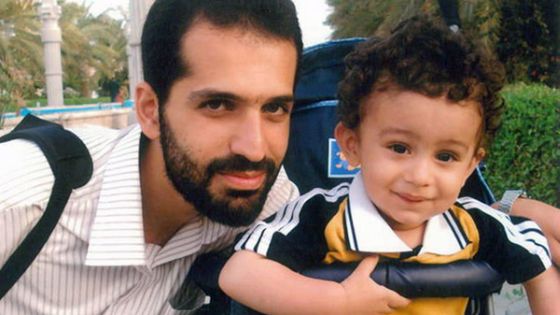
Mostafa Ahmadi Roshan with his son. Roshan is the fifth Iranian nuclear scientist whose murder is being linked to Israel.

The New York Times reports: As arguments flare in Israel and the United States about a possible military strike to set back Iran’s nuclear program, an accelerating covert campaign of assassinations, bombings, cyberattacks and defections appears intended to make that debate irrelevant, according to current and former American officials and specialists on Iran.

The campaign, which experts believe is being carried out mainly by Israel, apparently claimed its latest victim on Wednesday when a bomb killed a 32-year-old nuclear scientist in Tehran’s morning rush hour.

The scientist, Mostafa Ahmadi Roshan, was a department supervisor at the Natanz uranium enrichment plant, a participant in what Western leaders believe is Iran’s halting but determined progress toward a nuclear weapon. He was at least the fifth scientist with nuclear connections to be killed since 2007; a sixth scientist, Fereydoon Abbasi, survived a 2010 attack and was put in charge of Iran’s Atomic Energy Organization.

Iranian officials immediately blamed both Israel and the United States for the latest death, which came less than two months after a suspicious explosion at an Iranian missile base that killed a top general and 16 other people. While American officials deny a role in lethal activities, the United States is believed to engage in other covert efforts against the Iranian nuclear program.

The assassination drew an unusually strong condemnation from the White House and the State Department, which disavowed any American complicity. The statements by the United States appeared to reflect serious concern about the growing number of lethal attacks, which some experts believe could backfire by undercutting future negotiations and prompting Iran to redouble what the West suspects is a quest for a nuclear capacity.

“The United States had absolutely nothing to do with this,” said Tommy Vietor, a spokesman for the National Security Council. Secretary of State Hillary Rodham Clinton appeared to expand the denial beyond Wednesday’s killing, “categorically” denying “any United States involvement in any kind of act of violence inside Iran.”

Facebooktwittermail

Assassination in Tehran: An act of war?

M.J. Rosenberg writes: I rarely learn anything meaningful from reading The Atlantic‘s Jeffrey Goldberg. In my opinion, his tight relationship with the Israeli government and its lobby here greatly influences his take on both foreign and domestic events. Although he occasionally deviates from the Israeli line, he not only appears very uncomfortable doing so, he tends to correct course fairly rapidly.

Nonetheless, in a Goldberg column about Iran this week, there was one paragraph that was dead-on and which he will have a hard time taking back (should he be so inclined).

Writing about a piece in the current edition of Foreign Affairs that endorses bombing Iran as a neat and cost-free way to address its nuclear program, Goldberg explains why he thinks the author, Council on Foreign Relations fellow Matthew Kroenig, is wrong. Goldberg says he now believes:

…that advocates of an attack on Iran today would be exchanging a theoretical nightmare — an Iran with nukes — for an actual nightmare, a potentially out-of-control conventional war raging across the Middle East that could cost the lives of thousands Iranians, Israelis, Gulf Arabs and even American servicemen.

Think about that for a minute. Uber-hawk Jeffrey Goldberg is saying that the threat posed by Iran is a “theoretical nightmare” while a war ostensibly to neutralize that threat would present an “actual nightmare.”

No critic of U.S. policy toward Iran could say it better or would say it differently. And why would we?

According to the International Atomic Energy Agency, Iran has not yet made the decision to go nuclear. Speaking to CBS’ Face the Nation last Sunday, Defense Secretary Leon Panetta made the same point. Iran is not working on the bomb.

We do know, as Goldberg says, that a “potentially out-of-control conventional war raging across the Middle East” could “cost the lives of thousands of Iranians, Israelis, Gulf Arabs and even American servicemen.”

And that makes the decision against war a no-brainer. As Goldberg puts it:

Now that sanctions seem to be biting — in other words, now that Iran’s leaders understand the President’s seriousness on the issue — the Iranians just might be willing to pay more attention to proposals about an alternative course.

That alternative course would be an attempt “to try one more time to reach out to the Iranian leadership in order to avoid a military confrontation over Tehran’s nuclear program.”

In short, dialogue.

The United States, to this day, has never attempted a true dialogue with the Tehran. Even under President Obama, all we have done is issue demands about its nuclear program and offer to meet to discuss precisely how they comply with those demands.

That is not dialogue and it’s not negotiation; it’s an ultimatum.

Facebooktwittermail

The inexorable advance towards a Greater Israel

Patrick Seale writes: This past year has dealt a heavy blow — perhaps even a terminal one — to the project, long supported by the international community, of resolving the Israeli-Palestinian conflict on the basis of two states. When the United States itself proved unable to halt Israel’s relentless land grab, it seemed that nothing and nobody could rein in Israel’s iron-willed ambition to expand its borders towards a “Greater Israel.”

What will the immediate future bring? In the continued absence of firm international intervention, the likeliest scenario is that Israel will seek to consolidate its hold over 40 percent of the West Bank, including the Jordan Valley, either by settlement expansion or outright annexation. The main centres of Arab population, such as Nablus, Jericho and Ramallah, would be fenced off, although Israel might allow them corridors to Jordan. This first stage of the project would, of course, be portrayed by Israel as a painful concession.

If Israel managed to get away with it, the next stage could be a good deal more radical, and could possibly involve the expulsion of large numbers of Palestinians, probably under the cover of war as occurred in 1948 and 1967, so as to complete the creation of a Greater Israel between the sea and the river.

After the experience of the past two years, no one should have the slightest doubt that Prime Minister Benyamin Netanyahu’s right-wing coalition is utterly determined to prevent the creation of a Palestinian state on the West Bank. Bantustans, for a while perhaps, but a Palestinian state, never! Netanyahu is known to be profoundly influenced by his father, the historian Benzion Natanyahu, now 101 years old, who was once the secretary of Ze’ev Jabotinsky – “the father of Revisionist Zionism” — and who remains a life-long passionate believer in a Greater Israel. He petitioned against the UN Partition Plan for Palestine of 29 November 1947 because he, and others like him, wanted the whole of Palestine for the Jews. That remains his dream.

Facebooktwittermail

The phony war over which U.S. party loves Israel most

Josh Ruebner writes: “No Aid to Israel?” wonders a recent Facebook ad sponsored by US President Barack Obama’s re-election campaign. “Mitt Romney, Rick Perry, and Newt Gingrich say they would start foreign aid to Israel at zero. Reject their extreme plan now!” the ad implores, directing people to sign a petition to that effect on my.barackobama.com (“Stand against “zeroing out aid to Israel””).

After signing the petition, the caption underneath a beaming photo of the president declares that “Any plan to cut foreign aid to zero across the board is dangerous and ignorant. It’s up to us to get the word out about it. Donate now to help us spread the facts about the Romney-Perry-Gingrich plan to wipe out foreign aid to allies like Israel.”

As Salon writer Justin Elliott correctly notes, “the Obama ads are incredibly dishonest. First of all, the Republican candidates were talking about setting foreign aid at zero each year as a starting point in discussions about how much to give, not setting it at zero as a matter of policy” (“Obama’s dishonest Israel ads, Salon, 12 December 2011).

However, the Obama campaign is far from unique in employing a breathtakingly simplistic strategy of artifice and vituperation (both against opposing candidates and against Palestinians) to bolster their pro-Israel street cred in a transparent ploy to attract campaign donations and votes. US support for Israel, once a carefully nurtured bipartisan consensus, is fast degenerating in the context of the 2012 presidential election into a mud-slinging partisan contest as to which party, in the words of Mitt Romney, who leveled the accusation against Obama, is more guilty of having “thrown Israel under the bus” (“Mitt Romney accuses Obama of “throwing Israel under the bus”,” CBS News, 19 May 2011).

Facebooktwittermail

In Jerusalem, women barred from addressing gynecology conference

Patrick Martin reports: The controversial exclusion of women from various settings in Israel because of pressure from ultra-Orthodox Jewish leaders reached a new level this week with a major conference on gynecological advances that is permitting only males to address the audience.

The conference on “Innovations in Gynecology/Obstetrics and Halacha [Jewish law]” is being held by the Puah Institute this Wednesday in Jerusalem. It will include such topics as “ovary implants,” “how to choose a suitable contraceptive pill” and “intimacy during rocket attacks,” in which there are many qualified female professionals, but none will be permitted to speak, at least not from the podium.

Women are allowed in the audience, in a section separate from men.

Several Israeli human rights groups have protested the men-only nature of the conference. While it is considered a private rather than a public forum, and therefore not subject to Israeli policies against discrimination, Puah receives considerable funding from the Health Ministry, these complainants point out.

Such complaints are unlikely to make much of an impression, however. The Health Minister, to whom they are addressed, is actually the Prime Minister, Benjamin Netanyahu, owing to another sop to the Ultra-Orthodox.

Facebooktwittermail

Doomsday Clock ticks one minute closer to midnight

The Guardian reports: The world tiptoed closer to the apocalypse on Tuesday as scientists moved the Doomsday Clock one minute closer to the zero hour.

The symbolic clock now stands at five minutes to midnight, the scientists said, because of a collective failure to stop the spread of nuclear weapons, act on climate change, or find safe and sustainable sources of energy – as exemplified by the Fukushima nuclear disaster.

The rare bright points the scientists noted were the Arab spring and movement in Russia for greater democracy.

The clock, maintained by the Bulletin of Atomic Scientists, has been gauging our proximity to global disaster since 1947, using the potent image of a clock counting down the minutes to destruction. Until Tuesday afternoon, the clock had been set at six minutes to midnight.

“It is five minutes to midnight,” the scientists said. “Two years ago it appeared that world leaders might address the truly global threats we face. In many cases, that trend has not continued or been reversed.”

Facebooktwittermail

On the 10th anniversary of the first detainees to Guantánamo, Amnesty International charges detention facility is ‘leaving toxic legacy’

The failure of the U.S. government to close the detention facility at Guantánamo Bay is leaving a toxic legacy for human rights, Amnesty International said on the 10th anniversary of the first detainees being transferred to this notorious U.S. prison.

In a report published ahead of the anniversary, Guantánamo: A Decade of Damage to Human Rights, Amnesty International highlights the unlawful treatment of Guantánamo detainees and outlines the reasons why the detention center continues to represent an attack on human rights.

“Guantánamo has infected everything it has touched,” said Tom Parker, Amnesty International USA policy director for (counter) terrorism and human rights. “We mark this dismal anniversary knowing with a heavy heart that despite President Obama’s election promise to close the facility it will begin its tenth year of operation more deeply entrenched in U.S. life than ever.”

Despite the president’s pledge to close the Guantánamo detention facility by January 22, 2010, 171 men were being held there in mid-December 2011. At least 12 of those transferred to Guantánamo on January 11, 2002 were still held there. One of them is serving a life sentence after being convicted by a military commission in 2008. None of the other 11 has been charged.

The Obama administration – indeed large parts of all three branches of the federal government – has adopted the global “war” framework devised under the former George W. Bush administration. The administration asserted in January 2010 that four dozen of the Guantánamo detainees could neither be prosecuted nor released, but should remain in indefinite military detention without charge or criminal trial under the United States unilateral interpretation of the law of war.

“Until the United States addresses these detentions as a human rights issue, the legacy of Guantánamo will live on whether or not the detention facility there is closed down,” said Rob Freer, Amnesty International United States researcher.

The Guantánamo detention facility, which is located on the U.S. naval base in Cuba, became a symbol of torture and other ill-treatment after it was opened four months after the 9/11 attacks.

Among the detainees still held there today include individuals who were subjected by the United States to torture and enforced disappearance prior to being transferred to Guantánamo. There has been little or no accountability for these crimes under international law committed in a program of secret detention operated under presidential authority. The U.S. government has systematically blocked attempts by former detainees to seek redress for such violations.

In 10 years, only one of the 779 detainees held at the base has been transferred to the United States for prosecution in an ordinary federal court. Others have faced unfair trials by military commission. The administration is currently intending to seek the death penalty against six of the detainees at such trials.

The Obama administration has blamed its failure to close the Guantánamo detention facility on Congress, which has indeed failed to ensure U.S. government compliance with international human rights principles in this context.

To mark this historic anniversary, Amnesty International members and other activists will host events around the world, calling for the end of the detention facility. In Washington, DC, a broad coalition of activists will hold a rally at the White House and a demonstration representing detainees still held at the detention center; in Canada, activists will create a temporary art installation near the U.S. Consulate in Toronto and host a ten-hour musical event in Montreal; “happy birthday” cards will be delivered the U.S. embassy in the Netherlands and a giant detainee visual will be delivered to the U.S. embassy in Spain; activists will create a flashmob in France; and in Stockholm, Sweden, activists will enter a prison cell to sign a petition to President Obama as images are projected onto a nearby billboard.

Amnesty International is a Nobel Peace Prize-winning grassroots activist organization with more than 3 million supporters, activists and volunteers in more than 150 countries campaigning for human rights worldwide. The organization investigates and exposes abuses, educates and mobilizes the public, and works to protect people wherever justice, freedom, truth and dignity are denied.

Facebooktwittermail

Schools in the Texas police state

Chris McGreal reports: The charge on the police docket was “disrupting class”. But that’s not how 12-year-old Sarah Bustamantes saw her arrest for spraying two bursts of perfume on her neck in class because other children were bullying her with taunts of “you smell”.

“I’m weird. Other kids don’t like me,” said Sarah, who has been diagnosed with attention-deficit and bipolar disorders and who is conscious of being overweight. “They were saying a lot of rude things to me. Just picking on me. So I sprayed myself with perfume. Then they said: ‘Put that away, that’s the most terrible smell I’ve ever smelled.’ Then the teacher called the police.”

The policeman didn’t have far to come. He patrols the corridors of Sarah’s school, Fulmore Middle in Austin, Texas. Like hundreds of schools in the state, and across large parts of the rest of the US, Fulmore Middle has its own police force with officers in uniform who carry guns to keep order in the canteens, playgrounds and lessons. Sarah was taken from class, charged with a criminal misdemeanour and ordered to appear in court.

Each day, hundreds of schoolchildren appear before courts in Texas charged with offences such as swearing, misbehaving on the school bus or getting in to a punch-up in the playground. Children have been arrested for possessing cigarettes, wearing “inappropriate” clothes and being late for school.

In 2010, the police gave close to 300,000 “Class C misdemeanour” tickets to children as young as six in Texas for offences in and out of school, which result in fines, community service and even prison time. What was once handled with a telling-off by the teacher or a call to parents can now result in arrest and a record that may cost a young person a place in college or a job years later.

Facebooktwittermail