For years, they have been one of the most formidable lobbying forces in town: the elite band of former members of Congress, former diplomats and power brokers who have helped Middle Eastern nations navigate diplomatic waters here on delicate issues like arms deals, terrorism, oil and trade restrictions.
Just last year, three of the biggest names in the lobbying club — Tony Podesta, Robert L. Livingston and Toby Moffett — pulled off a coup for one of their clients, Egypt. They met with dozens of lawmakers and helped stall a Senate bill that called on Egypt to curtail human rights abuses. Ultimately, those abuses helped bring the government down.
Mr. Moffett, a former congressman from Connecticut, told his old colleagues that the bill “would be viewed as an insult” by an important ally. “We were just saying to them, ‘Don’t do this now to our friends in Egypt,’ ” he recounted.
Now the Washington lobbyists for Arab nations find themselves in a precarious spot, as they try to stay a step ahead of the fast-changing events without being seen as aiding despots and dictators. In Libya, Saudi Arabia, Bahrain, Yemen, Egypt and other countries in the region, leaders have relied increasingly on Washington’s top lobbyists and lawyers, paying them tens of millions of dollars. Some consultants are tacking toward a more progressive stance in light of pro-democracy protests, while others are dropping their clients altogether because of the tumult.
In Tunisia, where the earliest revolts energized the regional upheaval in January, the Washington Media Group, a public relations and communications firm, ended its $420,000 image-building contract with Tunis on Jan. 6, soon after reports emerged of violent government crackdowns on demonstrators.
“We basically decided on principle that we couldn’t work for a country that was using snipers on rooftops to pick off its citizens,” said Gregory L. Vistica, the firm’s president, who first announced the decision on Facebook.
In the 1990s, one could only whisper Hosni Mubarak’s name. Political talk or jokes were avoided in phone calls. This year, millions of Egyptians fought for 18 days against their ageing tyrant, braving the police troops firing teargas, rubber bullets and live ammunition. People in Egypt have lost their fear, but it did not happen overnight. The Egyptian revolution, rather than coming out of the blue on 25 January 2011, is a result of a process that has been brewing over the previous decade – a chain reaction to the autumn 2000 protests in solidarity with the Palestinian intifada.
Mubarak’s iron-fist rule and the outbreak of the dirty war between the regime and Islamist militants in the 1990s meant the death of street dissent. Public gatherings and street protests were banned and if they did take place, confronted by force. Live ammunition was used on strikers. Trade unions were put under government control.
Only after the Palestinian intifada broke out in September 2000 did tens of thousands of Egyptians take to the streets in protest – probably for the first time since 1977. Although those demonstrations were in solidarity with the Palestinians, they soon gained an anti-regime dimension, and police showed up to quell the peaceful protests. The president, however, remained a taboo subject, and I rarely heard anti-Mubarak chants.
I recall the first time I heard protesters en masse chanting against the president in April 2002, during the pro-Palestinian riots around Cairo University. Battling the notorious central security forces, protesters were chanting in Arabic: “Hosni Mubarak is just like [Ariel] Sharon.” [Continue reading…]
UN urges mass Libyan evacuation
The UN has called for a mass humanitarian evacuation of people fleeing Libya for Tunisia, saying the border situation is at “crisis point”.
General Secretary Ban Ki-moon said thousands of lives were at stake. Some 75,000 people have fled to Tunisia since the unrest began and 40,000 more are waiting to cross, the UN says. (BBC)
Panic on borders as chaos engulfs Libya
The Libyans watched from an open window of the immigration post, leaning out to see the 20,000 fleeing Egyptian, Bangladeshi, Chinese and Iranian workers heaped up against the border wall. They seemed quite unconcerned, shirt-sleeves rolled up, moving to a window closer to this crowd. Already up to 75,000 have struggled into Tunisia, but yesterday the crossing system collapsed as thousands of men, almost all Arabs desperate to escape Muammar Gaddafi’s state, fought with local Tunisians who – under the eyes of the army – attacked them with stakes and iron bars.
Many of the soldiers hurled plastic water bottles and biscuits into the masses of refugees who began to jump the border wall in their desperation, heaving family members and baggage through breaks in the cement. Clichés run out when faced with such chaos and unnecessary suffering. “Insupportable” was the word that came to mind yesterday. Most of these 20,000 had gone without food, water or sleep for four days. How is it possible that people should suffer so greatly at a mere border post? (Robert Fisk)
Libyan rebels, invoking U.N., may ask West for airstrikes
In a sign of mounting frustration among rebel leaders at Colonel Muammar el-Qaddafi’s diminished but unyielding grip on power, the revolutionary council here is debating whether to ask for Western airstrikes on some of the regime’s most important military assets under a United Nations banner, according to four people with knowledge of the council’s deliberations.
By invoking the United Nations, the council, made up lawyers, academics, judges and other prominent figures, is seeking to draw a distinction between the airstrikes and foreign intervention, which the rebels say they emphatically oppose.
“He destroyed the army. We have two or three planes,” said Abdel-Hafidh Ghoga, the council’s spokesman, speaking of the rebels’ military disadvantage. He refused to comment on the council’s deliberations or any imminent announcement, but said: “If it is with the United Nations, it is not a foreign intervention.”
But that distinction is lost on many people, and any call for foreign military help carries great risks. The anti-government protesters in Libya, like their counterparts in Tunisia and Egypt, have drawn broad popular support — and great pride — from their status as homegrown movements that toppled autocrats without outside help. An intervention, even one with the imprimatur of the United Nations, could play into the hands of Colonel Qaddafi, who has called the uprising a foreign plot by Western powers seeking to occupy Libya.
“If he falls with no intervention, I’d be happy,” said one senior council official. “But if he’s going to commit a massacre, my priority is to save my people.”
There was no indication that the United Nations Security Council members would approve such a request, or that Libyans seeking to topple Colonel Qaddafi would welcome it. Russia has dismissed talk of a no-fly zone to curb Colonel Qaddafi’s still-active air force, and China has traditionally voted against foreign intervention. (New York Times)
Musa Kusa, Libya’s ‘envoy of death,’ escapes UN sanctions list
Musa Kusa, the Libyan foreign minister who became known as “the envoy of death,” is not on the United Nations sanctions list, a notable omission that has lit up the exile tweetersphere.
Kusa earned the grisly moniker years ago for his role in assassinating and kidnapping opposition figures abroad. After the Sept. 11, 2001 terrorist attacks Kusa, Gadaffi’s intelligence chief at the time, was directed to cooperate with the CIA on terrorism. The U.S.-educated Kusa reprised the role when the strongman decided to dismantle his weapons of mass destruction programs in exchange for lifting sanctions against the country for its role in the 1989 downing of PanAm Flight 103.
Western diplomats and White House officials described the Libyan sanction list as “dynamic,” meaning Kusa could be included on it at a later date. (Jeff Stein)
Clinton: Libya no-fly zone under active consideration
Secretary of State Hillary Clinton said on Tuesday that the administration is actively considering implementing a no-fly zone over Libya and gave a full-throated defense of robust State Department funding.
Clinton testified on Tuesday morning before the House Foreign Affairs Committee led by Chairwoman Ileana Ros-Lehtinen (R-FL), who has been critical of the administration’s response to the unfolding events in the Arab world and has pledged to slash the State Department and foreign aid budgets this year. (Foreign Policy)
Cameron backtracks on Libya no-fly zone plan as US distances itself
Britain has backtracked from its belligerent military stance over Libya after the Obama administration publicly distanced itself from David Cameron’s suggestion that Nato should establish a no-fly zone over the country and that rebel forces should be armed.
As senior British military sources expressed concern that Downing Street appeared to be overlooking the dangers of being sucked into a long and potentially dangerous operation, the prime minister said Britain would go no further than contacting the rebel forces at this stage.
The marked change of tone by the prime minister, who told MPs on Monday that Britain did not “in any way rule out the use of military assets”, came as the British-educated son of Muammar Gaddafi mocked Cameron for trying to act as a hero. Saif al-Islam told Sky News: “Everybody wants to be a hero, to be important in history.” (The Guardian)
Ali Abunimah tweets: With the parlous state of the RAF I doubt the UK could impose a no-fly zone over the UK, let alone Libya.
In the age of Arab revolutions, will Saudis dare to honor Facebook calls for anti-government demonstrations on March 11? Will they protest at one of Jeddah’s main roundabouts? Or will they start in Qatif, the eastern region where a substantial Shiite majority has had more experience in real protest? Will Riyadh remain cocooned in its cloak of pomp and power, hidden from public gaze in its mighty sand castles?
Saudi Arabia is ripe for change. Despite its image as a fabulously wealthy realm with a quiescent, apolitical population, it has similar economic, demographic, social, and political conditions as those prevailing in its neighboring Arab countries. There is no reason to believe Saudis are immune to the protest fever sweeping the region.
Saudi Arabia is indeed wealthy, but most of its young population cannot find jobs in either the public or private sector. The expansion of its $430 billion economy has benefited a substantial section of the entrepreneurial elite — particularly those well connected with the ruling family — but has failed to produce jobs for thousands of college graduates every year. This same elite has resisted employing expensive Saudis and contributed to the rise in local unemployment by hiring foreign labor. Rising oil prices since 2003 and the expansion of state investment in education, infrastructure, and welfare, meanwhile, have produced an explosive economy of desires.
Like their neighbors, Saudis want jobs, houses, and education, but they also desire something else. Since the overthrow of Saddam Hussein’s regime in Iraq in 2003, they have expressed their political demands in their own way, through petitions that circulated and were signed by hundreds of activists and professionals, men and women, Sunnis, Shiites, and Ismailis. Reformers petitioned King Abdullah to establish an elected consultative assembly to replace the 120-member appointed Consultative Council Saudis inherited from King Fahd. Political organizers were jailed and some banned from travel to this day. The “Riyadh spring” that many reformers anticipated upon King Abdullah’s accession in 2005 was put on hold while torrential rain swept away decaying infrastructure and people in major cities. Rising unemployment pushed the youth toward antisocial behavior, marriages collapsed, the number of bachelors soared, and the number of people under the poverty line increased in one of the wealthiest states of the Arab world. Today, nearly 40 percent of Saudis ages 20 to 24 are unemployed.
Meanwhile, scandal after scandal exposed the level of corruption and nepotism in state institutions. Princes promised to establish investigative committees, yet culprits were left unpunished. Criticism of the king and top ruling princes remained taboo, and few crossed the red line surrounding the substantial sacrosanct clique that monopolizes government posts from defense to sports. The number of political prisoners and prisoners of conscience swelled Saudi prisons. Under the pretext of the war on terror, the Saudi regime enjoyed a free hand. The interior minister, Prince Nayef, and his son and deputy, Prince Mohammed, rounded up peaceful activists, bloggers, lawyers, and academics and jailed them for extended periods. Saudis watched in silence while the outside world either remained oblivious to abuses of human rights or turned a blind eye in the interests of oil, arms, and investment.
The only way to get to Baghdad’s Tahrir Square — yes, it has one too — on Feb. 25 was to walk. It was a treat to stride down roads usually solid with traffic, but the silent city also felt ominous. Prime Minister Nouri al-Maliki had warned that the long-planned “Day of Rage” protests would be infiltrated by al Qaeda and remnants of Saddam Hussein’s Baathist regime, and imposed a ban on all vehicles within city limits to reduce the risk of car bombs. Religious leaders warned people to stay away, while security officials made doom-laden predictions of violence. Most people were too scared to venture outside.
The hush throughout Baghdad made the clamor in Tahrir Square seem all the louder. Thousands of demonstrators had walked for miles to gather there, not even bothering to go to Friday prayers first. They were mostly men — some university graduates, others day laborers, but all with the same grievances. We have no electricity and no water, scant job opportunities, and our politicians are liars and thieves, they said. They flung themselves against the blast walls blocking the entrance to the Green Zone, a symbol of the distant and unaccountable elite that they were raging against.
The protesters’ banners were homemade and simple in their demands. “The government in the Green Zone is afraid of the people,” said one. “Yes to democracy and public services,” another proclaimed.
Settar al-Sammarai, a soldier with six children who had been retired on a pension of $200 a month when Saddam Hussein’s army was disbanded, said, “I would like my voice to be heard by the government — I would like to be heard condemning the robbery of public funds.”
The Baghdad protests highlight the same frustrations that led Tunisians and Egyptians to topple their autocrats. A generation of Iraqis has grown up with even less control over their lives than youth elsewhere in the Arab world. They went from brutality and scarcity under Saddam Hussein to a U.S.-led liberation they never asked for. Foreign troops patrolled their streets, searched their houses at night, yelled at them in a language they didn’t understand, and, as the WikiLeaked war logs show, killed without good reason. The ensuing chaos placed them at the mercy of Iraq’s fearsome militias. And now, they’re living under a prime minister who is undermining some of the crucial checks and balances that are meant to make the Iraqi government accountable to its people.
In an assessment of the winners and losers emerging from the Arab democratic revolution, Fawaz A Gerges writes:
Regionally, Israel is the biggest loser. It has put all its eggs into the basket of Arab dictators and autocrats, like Egypt’s deposed Hosni Mubarak. Israel fought tooth and nail to support Mr Mubarak, who played a key role in tightening the siege of Gaza and the noose around Hamas’s neck.
Time and again, the Israeli political class has proven to be its own worst enemy. Israel lost Iran 40 years ago because it put all its eggs in the Shah’s basket. It has just lost Turkey over the killing of nine activists on board a Gaza-bound Turkish aid ship.
And now Israel is likely to lose Egypt, a critical and pivotal neighbour whose Camp David peace agreement in the late 1970s consolidated Israel’s superiority in the region and undermined the official Arab state system.
Regardless of what governments emerge out of the rubble of political authoritarianism in the Arab world, they will have assertive foreign policies that challenge Israel’s hegemony and further colonisation of Palestinian lands.
Meanwhile, the leadership of the Palestinian Authority President Mahmoud Abbas, has lost all credibility in the eyes of the people there. The leaked negotiation documents obtained by al-Jazeera – offering wide-ranging concessions to the Israeli side – were the final nail in the PA’s coffin.
Resistance-based movements like Hamas and Hezbollah have gained more popularity at the expense of Abbas’s Palestinian Authority; they will emerge as major winners of the social turmoil unless Israel takes concrete steps to sign a peace settlement and withdraw from occupied Arab territories.
President Obama has reportedly told White House aides that he wants a “new Middle East policy” — one that urges beleaguered allies threatened by popular rebellions to “enact reforms that would satisfy the popular craving for change while preserving valuable partnerships on crucial U.S. interests, from soil security to counter-terrorism and containing Iran.”
But there’s not much “new” there, to be frank: The Obama Administration, like the Bush Administration before it, has consistently urged Arab allies to make reforms, while prioritizing U.S. regional concerns such as oil, counterterrorism, confronting Iran and protecting Israel. What is new, of course, is the fear that Washington’s influence in the Middle East, which had already been waning steadily in recent years, is tied almost exclusively to regimes that are looking a lot more like relics of the past than stewards of the future.
And there may be no easy way for the U.S. to switch horses carrying its baggage of priorities, or even to shape any emerging democratic order to meet its own strategic requirements. Indeed, the reason Washington is so wedded to autocratic regimes of dwindling legitimacy and authority in the Arab world is the fact that not all U.S. priorities are shared by the Arab public.
No country pumping oil is going to resist the urge to sell it on world markets, so a regime change won’t likely endanger energy supplies. And countries that face a problem of extremist terrorism directed at their own populations will likely cooperate on that front – while the logic of deterrence and consequences can persuade others to prevent their territory being used to stage terror attacks on third countries.
But the idea that the newly empowered Arab public is going to produce governments that will march in lockstep with the U.S. on issues such as Iran and Israel is simply fanciful.
It was undoubtedly a mischievous rumour, but William Hague accepted it without demur: Hugo Chávez had offered asylum to Colonel Gaddafi. It was vigorously denied by the Venezuelan government, and as yet it seems to be founded on nothing but a rightwing sleight of hand that elides Chávez and Gaddafi into a single, caricatured military dictator. But Chávez was elected, and re-elected, to the presidency of his country, unlike Gaddafi, and he has not tortured and murdered thousands of his political opponents as Gaddafi has – on the contrary his detractors continue to vilify him daily in the media with impunity.
Yet the response to the Libyan events from Latin America’s radicals has been perplexing and disturbing. Chávez himself has praised Gaddafi and echoed directly the views on the Libyan revolution offered by Fidel Castro. Castro has counselled caution and patience, warning that since the US media are consistently reporting the insurrection and denouncing Gaddafi’s brutal repression it must clearly be suspect. Daniel Ortega, the president of Nicaragua, rushed to present himself to the press as a fervent supporter of the Libyan leader in his sterling defence of his nation.
It is worth remembering that the Sandinista National Liberation Front, of which Ortega was and remains a leader, took power on the basis of a mass rising of the Nicaraguan people against a dictatorship at least as vicious as Gaddafi’s. In the final month of the Sandinista Revolution, from June to July 1979, the Somoza dictatorship (a dynasty actively sustained by Washington for more than 40 years) used napalm against the country’s impoverished population. Chávez freely acknowledges that the Bolivarian movement, which gave its name to the new Venezuelan Republic, was born in the great urban insurrection of February 1989, the “Caracazo” in which the poor barrios of the cities, and principally of Caracas, emptied into the city centres in three Days of Rage after President Carlos Andres Perez broke his promise not to implement neo-liberal economic measures. There were several thousand victims of the repression of the movement. The same people mobilised to defeat an attempted coup against Chávez in 2002 and saved the Bolivarian revolution.
These two very different leaders cannot support an oppressive regime that now faces a mass democratic movement from below. For despite attempts to deny and silence the movement, tyrants have been toppled across the Middle East – not by the mass use of Twitter alone, of course, but through strikes, mass protests, and face-to-face battles with a repressive machinery in which people have been willing to put their lives on the line in the struggle for freedom. There is still much ground to be covered before that is achieved, but there have been glimpses of a very different world in the course of these struggles.
Last week, legislators in Tennessee introduced a radical bill that would make “material support” for Islamic law punishable by 15 years in prison. The proposal marks a dramatic new step in the conservative campaign against Muslim-Americans. If passed, critics say even seemingly benign activities like re-painting the exterior of a mosque or bringing food to a potluck could be classified as a felony.
The Tennessee bill, SB 1028, didn’t come out of nowhere. Though it’s the first of its kind, the bill is part of a wave of related measures that would ban state courts from enforcing Sharia law. (A court might refer to Sharia law in child custody or prisoner rights cases.) Since early 2010, such legislation has been considered in at least 15 states. And while fears of an impending caliphate are myriad on the far-right, the surge of legislation across the country is largely due to the work of one man: David Yerushalmi, an Arizona-based white supremacist who has previously called for a “war against Islam” and tried to criminalize adherence to the Muslim faith.
Yerushalmi, a lawyer, is the founder of the Society of Americans for National Existence (SANE), which has been called a “hate group” by the Council on American-Islamic Relations (CAIR). His draft legislation served as the foundation for the Tennessee bill, and at least half a dozen other anti-Islam measures—including two bills that were signed into law last year in Louisiana and Tennessee.
We are witnessing, along with the rest of the Saudi population, the receding of Saudi Arabia’s prominent regional role; the deterioration of the government apparatus and administrative competence; the prevalence of corruption and nepotism; the exacerbation of factionalism; and the widening gap between state and society, particularly among the new generation of youth in the country. This threatens to lead to catastrophic results for the country and the people, which we will never accept for our nation and its children.
Resolving these conditions requires a serious review and an immediate announcement that both government and society will together adopt a comprehensive reform project that focuses on structural shortcomings in our political system, and that leads our country towards a constitutional monarchy.
The people’s consent is the basis for the legitimacy of authority, and the only guarantee for unity, stability, and the efficiency of public administration, as well as the protection of the country from foreign intervention. This requires a reformulation of the state-society relationship, whereby the people will be a source of authority, and a full partner in deciding public policies through their elected representatives in the Shura (Consultative) Council, and whereby the purpose of the state is to serve society, secure its interests, improve its standard of living, and ensure the dignity of its members, their pride, and the future of their children.
We therefore look forward to a royal declaration that clearly demonstrates the state’s commitment to becoming a “Constitutional Monarchy,” and that puts in place a timeline that delineates the beginning, implementation, and finalizing of the desires reforms. The royal declaration should also confirm the adoption of the major reform goals, namely: the rule of law, full equality between members of the population, the legal guarantee of individual and civil freedoms, popular participation in decision-making, even development, the eradication of poverty, and the optimal use of public resources.
[D]emocracy – the real, unfettered, flawed but brilliant version which we in the West have so far lovingly (and rightly) cultivated for ourselves – is not going, in the Arab world, to rest happy with Israel’s pernicious treatment of Palestinians and its land theft in the West Bank. Now no longer the “only democracy in the Middle East”, Israel argued desperately – in company with Saudi Arabia, for heaven’s sake – that it was necessary to maintain Mubarak’s tyranny. It pressed the Muslim Brotherhood button in Washington and built up the usual Israeli lobby fear quotient to push Obama and La Clinton off the rails yet again. Faced with pro-democracy protesters in the lands of oppression, they duly went on backing the oppressors until it was too late. I love “orderly transition”. The “order” bit says it all. Only Israeli journalist Gideon Levy got it right. “We should be saying ‘Mabrouk Misr!’,” he said. Congratulations, Egypt!
Yet in Bahrain, I had a depressing experience. King Hamad and Crown Prince Salman have been bowing to their 70 per cent (80 per cent?) Shia population, opening prison doors, promising constitutional reforms. So I asked a government official in Manama if this was really possible. Why not have an elected prime minister instead of a member of the Khalifa royal family? He clucked his tongue. “Impossible,” he said. “The GCC would never permit this.” For GCC – the Gulf Co-operation Council – read Saudi Arabia. And here, I am afraid, our tale grows darker.
We pay too little attention to this autocratic band of robber princes; we think they are archaic, illiterate in modern politics, wealthy (yes, “beyond the dreams of Croesus”, etc), and we laughed when King Abdullah offered to make up any fall in bailouts from Washington to the Mubarak regime, and we laugh now when the old king promises $36bn to his citizens to keep their mouths shut. But this is no laughing matter. The Arab revolt which finally threw the Ottomans out of the Arab world started in the deserts of Arabia, its tribesmen trusting Lawrence and McMahon and the rest of our gang. And from Arabia came Wahabism, the deep and inebriating potion – white foam on the top of the black stuff – whose ghastly simplicity appealed to every would-be Islamist and suicide bomber in the Sunni Muslim world. The Saudis fostered Osama bin Laden and al-Qa’ida and the Taliban. Let us not even mention that they provided most of the 9/11 bombers. And the Saudis will now believe they are the only Muslims still in arms against the brightening world. I have an unhappy suspicion that the destiny of this pageant of Middle East history unfolding before us will be decided in the kingdom of oil, holy places and corruption. Watch out.
Saudi activists push for political reform
Democracy activists in Saudi Arabia say the government is closely monitoring social media to nip in the bud any protests inspired by uprisings that swept Arab countries, toppling leaders in Egypt and Tunisia.
Activists have set up Facebook pages calling for protests on March 11 and 20, with more than 17,000 supporters combined, but police managed to stifle two attempts to hold protests in the Red Sea city of Jeddah last month, highlighting the difficulties of such mobilization in the conservative kingdom.
In one case, between 30 and 50 people were detained by police when they gathered on the street, witnesses said. In the second, security forces flooded the location of a protest advertised on Facebook, scaring off protesters.
“They are watching closely what people are saying on Facebook and Twitter,” said Saudi blogger Ahmed al-Omran. “Obviously they are anxious as they are surrounded with unrest and want to make sure we don’t catch the bug.” (Reuters)
Protests at Bahrain’s parliament
Bahrainis campaigning for democratic reforms in the Gulf Arab state staged a protest outside parliament, demanding that all its members resign over recent protester deaths.
“We came to this parliament to say that you represent the people and you represent us – take an honourable position over the killings by the army,” said Mirza al-Shihabi, one of around 500 protesters outside the building in central Manama on Monday. (Al Jazeera)
Looting reported amid Oman protests
Residents in the northeastern Omani city of Sohar have reportedly looted a supermarket damaged in protests, as demonstrations over economic woes carried on into a third day.
Security forces sealed off main roads to the city on Monday and hundreds of protesters reportedly stormed a police station, while protests spread throughout the city.
Sohar, a city about 200km northwest of the capital of Muscat, was the scene of protests over the weekend, as demonstrators demanded higher salaries, jobs for the unemployed and the removal of some government ministers. (Al Jazeera)
Another Tunisia minister quits
Mohamed Afif Chelbi, Tunisia’s industry and technology minister, has resigned from the government, the official TAP news agency has reported.
Chelbi, who resigned on Monday, was one of only two remaining ministers who had previously served in the cabinet under ousted President Zine al-Abidine Ben Ali.
His departure leaves Mohamed Nouri Jouini, the minister for international co-operation, as the only survivor in the cabinet from the Ben Ali era. (Al Jazeera)
In ‘Free Libya’: Hey, who, exactly, is in charge here?
It’s easy to find the headquarters of the Libyan opposition in Benghazi, the country’s second city and the hotbed of the uprising against the regime of Muammar Gaddafi. Just head down to the Corniche, the city’s Mediterranean waterfront, and follow the cheering crowds hanging Gaddafi in effigy to the city’s district courthouse, where the revolution began on Feb. 17 as a protest by the city’s lawyers and judges. But once inside the now battle-scarred and graffitied building, it’s hard to figure out who, exactly, is in charge.
Scores of newly minted revolutionary officials — middle-aged volunteers from the city’s professional and business classes — have many meetings but appear to make few decisions. They hold press conferences in what used to be a courtroom, while about a dozen opposition spokesmen roam the halls trying to be helpful but often offering conflicting information. Trucks full of eggs and baby formula arrive at the courthouse doors without an apparent system for delivering them to the needy and without clear reports of shortages. And though spirits are high, especially among the young volunteers sporting Che Guevara–style berets, the institutional vibe is more like that of a steering committee of a future liberal-arts college than of a guerrilla movement gearing up for a long fight. “The problem is that we don’t have anyone with any political experience whatsoever,” says Iman Bugahaighis, a professor of dentistry now acting as an unofficial spokesperson. “We didn’t have any institutions other than regime. That was part of Gaddafi’s plan: to make everyone loyal only to him.” (Time)
Rebels claim to have shot down jet
Rebels claimed to have downed a military aircraft as they fought a government bids to take back Libya’s third city, Misrata, and the strategic oil refinery town of Zawieh.
Libyan forces have been launched fresh offensives again Zawieh, 30 miles from Tripoli, and Misrata, 125 miles to the east. Rebels said some 2,000 troops loyal to the regime had surrounded Zawieh, but that they had succeeded in holding on to the town centres.
“An aircraft was shot down this morning while it was firing on the local radio station,” a witness, who was identified only as Mohamed, said by telephone from Misrata. (Telegraph)
Libya’s terra incognita
For four decades, Libya has been largely terra incognita, a place where the outsized personality of its quixotic leader and a byzantine bureaucracy obscured an informal network of constantly shifting power brokers. Even before the current unrest, working with these figures was uncertain at best — “like throwing darts at balloons in a dark room,” as one senior Western diplomat put it to me in 2009.
In the near future, even with Qaddafi gone, the country may face a continued contest between the forces of a free Libya and the regime’s die-hard elements. In particular, Qaddafi’s sons — Saif al-Islam, Khamis, Al-Saadi, and Mutassim — and their affiliated militias may not go quietly into the night; the struggle to root them out may be violent and protracted (think, for example, of Saddam Hussein’s sons, Uday and Qusay). Saif al-Islam, who was known for years in the West as Libya’s supposed champion of reform, revealed his true character as a reactionary much like his father by promising a “bloodbath” in a televised speech last week. On the ground, many of the attacks against demonstrators and their suspected sympathizers are being ordered by Captain Khamis al-Qaddafi, who heads the 32nd Brigade, the regime’s best-trained and best-equipped force. As the current unrest unfolded, Al-Saadi’s star was on the rise: as a brigadier in the special forces, he was dispatched to placate and then suppress the brewing revolt in Benghazi on February 16. Lastly, Mutassim, Libya’s National Security Council adviser, reportedly sought in 2008 to establish his own militia to keep up with his brothers and has strong ties to a number of hard-liners. (Foreign Affairs)
International pressure on Qaddafi intensifies
An international campaign to force Col. Muammar el-Qaddafi out of office gathered pace on Monday as the European Union adopted an arms embargo and other sanctions, the opposition showed increasing signs of organization in the east, and Secretary of State Hillary Rodham Clinton bluntly told the Libyan leader to surrender power “now, without further violence or delay.”
With the rebel and loyalist forces locked in an increasingly tense stand-off on the ground, the prime ministers of France and Britain echoed Mrs. Clinton’s call for Colonel Qaddafi to go, Germany proposed a 60-day ban on financial transactions, and a spokeswoman for Catherine Ashton, the European Union’s foreign policy chief, said that contacts were being established with the opposition.
Italy’s foreign minister on Sunday suspended a nonaggression treaty with Libya on the grounds that the Libyan state “no longer exists,” while Mrs. Clinton said the United States was reaching out to the rebels to “offer any kind of assistance.” (New York Times)
Exile an option for Gaddafi, White House says
Going into exile would be one option for Libyan leader Muammar Gaddafi in meeting international demands that he leave power, White House spokesman Jay Carney said on Monday.
Carney, asked by reporters whether the United States would help facilitate exile for Gaddafi, said this was a bit of speculation that he would not discuss. (Reuters)
U.S. and allies weigh Libya no-fly zone
Obama administration officials held talks on Sunday with European and other allied governments as they readied plans for the possible imposition of a no-fly zone over Libya to prevent further killings of civilians by forces loyal to Col. Muammar el-Qaddafi.
Further increasing international pressure on Colonel Qaddafi, the Libyan leader, Italy suspended a 2008 treaty with Libya that includes a nonaggression clause, a move that could allow it to take part in future peacekeeping operations in Libya or enable the use of its military bases in any possible intervention. (New York Times)
France begins ‘massive’ aid effort for Libyan opposition
France says it is flying medical aid to the eastern Libyan city of Benghazi in what it calls the start of a “massive” operation to support opposition forces trying to topple Libyan leader Moammar Gadhafi.
French Prime Minister Francois Fillon said two planes were due to leave for Benghazi Monday, carrying doctors, nurses, medicine and medical equipment for the Libyan people in what he described as “liberated” areas. (VOA)
Pakistan’s Express Tribune, which is affiliated with the New York Times, reports:
As American newspapers lifted a self-imposed gag on the CIA links of Raymond Davis, in place on the request of the US administration, The Express Tribune has now learnt that the alleged killer of two Pakistanis had close links with the Tehreek-e-Taliban Pakistan (TTP).
The New York Times reported on Monday that Davis “was part of a covert, CIA-led team of operatives conducting surveillance on militant groups deep inside the country, according to American government officials.”
This contradicts the US claim that Davis was a member of the ‘technical and administrative staff’ of its diplomatic mission in Pakistan.
Davis was arrested on January 27 after allegedly shooting dead two young motorcyclists at a crowded bus stop in Lahore. American officials say that the arrest came after a ‘botched robbery attempt’.
“The Lahore killings were a blessing in disguise for our security agencies who suspected that Davis was masterminding terrorist activities in Lahore and other parts of Punjab,” a senior official in the Punjab police claimed.
“His close ties with the TTP were revealed during the investigations,” he added. “Davis was instrumental in recruiting young people from Punjab for the Taliban to fuel the bloody insurgency.” Call records of the cellphones recovered from Davis have established his links with 33 Pakistanis, including 27 militants from the TTP and Lashkar-e-Jhangvi sectarian outfit, sources said.
Davis was also said to be working on a plan to give credence to the American notion that Pakistan’s nuclear weapons are not safe. For this purpose, he was setting up a group of the Taliban which would do his bidding.
In this city 30 miles west of Tripoli, hundreds of people rejoiced in a central square on Sunday, waving the red, black and green flag that has come to signify a free Libya and shouting the chants that foretold the downfall of governments in Tunisia and Egypt: “The people want to bring down the regime.”
Rebels, in control of the city, had reinforced its boundaries with informal barricades, and military units that had defected stood guard with rifles, six tanks and anti-aircraft guns mounted on the backs of trucks. In the central square here, a mosque was riddled with enormous holes, evidence of the government’s failed attempt to take back this city on Thursday. Nearby lay seven freshly dug graves belonging to protesters who had fallen in that siege, witnesses said.
“We are really suffering for 42 years, and people are asking here for the same things as other people of the world — they want the real democracy,” said Ahmed El-Hadi Remeh, an engineer standing in the square. He and other residents told how they had used stones to repel the government’s forces.
Proving how close opposition control has come to the capital, where Col. Muammar el-Qaddafi maintains tight control, the confidence of the demonstrators in Zawiya was remarkable, all the more so because it was witnessed as part of the official tour for international journalists that Colonel Qaddafi’s government organized. The public relations effort, apparently intended to show a stable Libya to the outside world, appeared to backfire, as a tour of Tripoli had on Saturday.
Instead, the tour, whose minders were forced to wait at the city’s outskirts, showed a nation where the uprising had reached the capital’s doorstep, underscoring a growing impression that the ring of rebel control around Tripoli was tightening. But in a sign that the fight was far from over, armed government forces were seen massing around the city.
Two prominent U.S. Senators said Washington should recognize and arm a provisional government in rebel-held areas of eastern Libya and impose a no-fly zone over the area — enforced by U.S. warplanes — to stop attacks by the regime. U.S. Secretary of State Hillary Rodham Clinton echoed President Barack Obama’s demand for Gadhafi to relinquish power.
“We want him to leave,” she told reporters traveling with her Sunday to a U.N. meeting on Libya planned for Monday. “We want him to end his regime and call off the mercenaries and forces loyal to him. How he manages that is up to him.”
Gadhafi’s son, Seif al-Islam, claimed again that the country was calm and denied the regime used force or airstrikes against its own people. But human rights groups and European officials have put the death toll since unrest began in Libya nearly two weeks ago at hundreds, or perhaps thousands, though it has been virtually impossible to verify the numbers.
The U.N. Security Council moved as a powerful bloc Saturday to try to halt Libyan leader Moammar Gadhafi’s deadly crackdown on protesters, slapping sanctions on him, his children and top associates.
Voting 15-0 after daylong discussions interrupted with breaks to consult with capitals back home, the council imposed an arms embargo and urged U.N. member countries to freeze the assets of Gadhafi, four of his sons and a daughter. The council also backed a travel ban on the Gadhafi family and close associates, including leaders of the revolutionary committees accused of much of the violence against opponents.
Council members additionally agreed to refer the Gadhafi regime’s deadly crackdown on people protesting his rule to a permanent war crimes tribunal for an investigation of possible crimes against humanity.
Carne Ross, a former British diplomat at the UN, comments:
[T]here are some strking things about this resolution:
Clear and early referral to the ICC (paras 4-8), including a demand that the ICC prosecutor brief the Council in two months’ time: this is remarkable. This is I think (and Barbara Plett thinks too) the first time the Council has voted unanimously for ICC referral. This resolution has also taken place very early in a conflict, only days after it began. In other words, the Council is moving in welcome fashion towards the preventive signalling required under the Responsibility to Protect doctrine (see my blog comment below). It is reacting almost as fast as news breaks of killing.
The second remarkable thing is that the Libya situation is clearly internal. The Council may have denoted it as a “threat to international peace and security” in the preambular paragraphs (though I think this reference has been watered down in negotiation) and by putting the res under Chapter VII of the Charter, but to any outside observer it’s pretty clear that the conflict is confined within Libya’s borders, so far. There is a clear and unambiguous reference to Responsibility to Protect in the preambular paras. This is in my memory the first time that the Council has acted so quickly and so decisively on an internal situation. I am very surprised that the Chinese, Indians etc went along with such clear language. International public opinion seems to be moving them. This is an important precedent too.
Thirdly, on a more political note, this resolution is putting the Libyan regime in the freezer – big time. The assets freeze, travel ban etc apply to named members of the regime. These measures will be legally obligatory for all member states to impose – the resolution is under Chapter VII of the charter. And the measures will be in place indefinitely. These sanctions are not time-limited and will require a further positive vote of the Council to be lifted. In other words, all P5 will have to agree, plus 9 non-permanents. Moreover, the criteria for sanctions lift are left very unclear. What this means in practice is the total international isolation of members of the Gadhaffi regime indefinitely.
Britain said on Sunday it had revoked Muammar Gaddafi’s diplomatic immunity, putting pressure on the Libyan leader to step down after his government’s bloody crackdown on a revolt against his rule.
Officials said the move, which backs up U.N. Security Council sanctions agreed on Saturday, was an unprecedented step by Britain against a serving head of state.
“It is time for Colonel Gaddafi to go,” Foreign Secretary William Hague told the BBC, in the strongest language Britain’s nine-month-old coalition has used so far about the crisis.
The diplomatic immunity of Gaddafi’s sons, family and household had also been revoked, Hague said.
Hague said Gaddafi appeared to have stocks of mustard gas, a potentially deadly chemical weapon, that had not been destroyed under a 2003 agreement to dismantle weapons of mass destruction (WMD).
“Some of those stocks do appear to exist although we are not sure what condition they are in,” Hague said.
Separately, Peter Mandelson, a close confidant of former British Prime Minister Tony Blair, said that Blair had been in contact with Gaddafi in the last few days.
According to Whitehall sources, Mr Blair made an initial call to the Libyan President, who has ordered helicopter gunships to fire on protesters he described as “rats” and “cockroaches”. The Middle East envoy urged him to cease the attacks. The sources suggested that, after consultations with the British Foreign Office, Mr Blair was told that the UK Government would prefer the Libyan President to step down, and so he agreed to phone him again and transmit that message. There was no comment from Mr Blair’s office yesterday. Government sources could not say last night whether ministers knew in advance about the initial phone call.
The first oblique hint that Mr Blair might be in active contact with the Libyan regime came in a routine briefing on Friday in which US State Department spokesman P J Crowley said the former PM was among the international figures that Secretary of State Hillary Clinton had spoken to during the day. Asked why Mrs Clinton called Mr Blair and if it was because of “his dealings with Gaddafi over the Lockerbie bomber”, the spokesman said of Mr Blair: “He has very important and valuable contacts inside of Libya.”
Mercenaries captured in Libya are facing an uncertain future, writes Nick Meo in Al-Bayda.
Crowded into an empty classroom which was stinking of unwashed bodies and reeking of fear, Colonel Muammar Gaddafi’s defeated mercenary killers awaited their fate.
A week earlier the men – Libyan loyalists of the dictator and black African recruits – had been landed at airports throughout eastern Libya and sent out into the streets to shoot protesters in a murderous rampage. They killed dozens before they were overwhelmed by anti-Gaddafi militias.
The survivors were exhausted, filthy, far from home, and fearful of execution, even though they had been assured of good treatment. Fifty of them lay on mattresses on the floor in one classroom alone, with nearly 100 more in the same school building which was being used as a temporary prison. Most looked dazed. Some were virtually children.
“A man at the bus station in Sabha offered me a job and said I would get a free flight to Tripoli,” said Mohammed, a boy of about 16 who said he had arrived looking for work in the southern Libyan town only two weeks ago from Chad, where he had earned a living as a shepherd.
The wretchedness of the law in the face of Rabbi Dov Lior has many meanings, and Lior’s refusal to be interrogated over his support for “The King’s Torah – The Laws for Killing Gentiles” – only marginally gets at the heart of the matter.
Thirty years ago, the terrorist organization known as the “Jewish Underground” was set up with the purpose of killing Arabs. The group’s head of operations, Menachem Livni – who was convicted on multiple counts of murder before being pardoned by the regime – testified at the time that the living spirit, the initiator, the religious instructor and the coordinator of the murders was Lior.
This was true for the murders the underground carried out, and was also true for the pressure he put on the murderers to blow up buses and their passengers. The law states that someone who dispatches murders should receive multiple life sentences, along with additional time for organizing the crime. But thanks to instruction from higher up, Lior was never imprisoned, put to trial and or even properly interrogated.
And so he continued: Baruch Goldstein, who murdered 29 Muslims at prayer in Hebron in 1994, saw Lior as his rabbi and counselor. After the Tomb of the Patriarchs massacre, Lior declared that “Baruch Goldstein was holier than the saints of the Holocaust.” The living spirit behind the religious edicts against Prime Minister Yitzhak Rabin, which lead to his 1995 assassination, was also, according to testimonies, Lior. Rabin’s assassin frequented Hebron, where he used to see Lior.
Rabbi Lior is not in prison. He currently serves as a municipal rabbi, the head of a Jewish court and the dean of a large IDF yeshiva. He also heads the Judea and Samaria rabbis committee. Thousands adhere to his commands, hundreds of thousands are taught his ideology, tens of thousands of shekels are paid to him by the Israeli taxpayer every month.
This utter aberration is no accident. The regime chose Lior. Tel Aviv is a dream world. The actual reality that has been instilled in Israel is Lior. Under King Lior, Israel has built a world where the Jews are citizens and the Arabs are not, both in the occupied territories and in Jerusalem; where a Jewish man is a citizen and his Arab neighbor is not. Most Jewish first-graders attend ultra-Orthodox and religious schools. The majority of them are educated along the lines of “The King’s Torah.” A Jew is human. A non-Jew is non-human. “Thou shalt not kill” does not apply to non-Jews. And this is not delivered in the form of incitement, but as a simple statement of a fact. As simple as calling a chair a chair.
There are no ifs, ands or buts about it. Either you’re with Lior or you’re against him. The rabbis who chose him are Lior. The education minister – who visited the Tomb of the Patriarchs hand in hand with the convicted terrorist Livni, whom he seeks to put in charge of educating the children who will be brought to Hebron – is Lior. The prime minister, who enslaves Israel to the racist world of the settlements, is Lior.
This website or its third-party tools use cookies, which are necessary to its functioning. By closing this banner, you agree to the use of cookies.






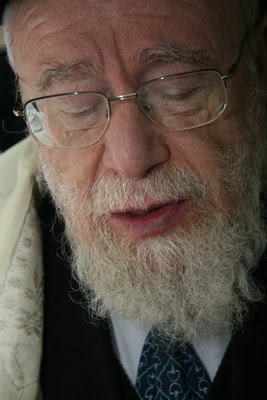 The wretchedness of the law in the face of Rabbi Dov Lior has many meanings, and Lior’s refusal to be interrogated over his support for “The King’s Torah – The Laws for Killing Gentiles” – only marginally gets at the heart of the matter.