Author Archives: News Sources

Terrorism trial divides Somalis in Minneapolis

The New York Times reports: The day after his oldest son was convicted of conspiring to join and kill for the Islamic State in Syria, Abdihamid Yusuf just wanted to go home and rest. But bills were stacking up, so on Saturday morning he and his wife visited the jail and then reopened Hooyo’s Kitchen, the small Somali restaurant where they serve plates of chicken, rice and bananas.

“We try to survive,” Mr. Yusuf said.

The trial of his son and two other young Somali-American men splintered families and opinions here in the country’s largest Somali community. Former friends testified against one another, describing how they had watched propaganda videos, bought fake passports and plotted their paths to Syria. Family members squabbled in the halls of the courthouse. Some said they had been threatened or shunned.

When the jury came back on Friday afternoon, Mr. Yusuf did not even get word in time to reach the courtroom to see his 22-year-old son, Mohamed Farah, and the two other defendants, Guled Omar, 21, and Abdirahman Daud, 22, declared guilty. A total of nine men — including another of Mr. Yusuf’s sons, Adnan — have been convicted in the case.

Federal prosecutors say the case shined a light on the persistent problem of terrorist recruiting here. Law enforcement authorities have said that more than 20 young men from Minnesota have left to join the Shabab militant group in Somalia and that more than 15 have tried or succeeded in leaving to join the Islamic State.

But it also opened wounds among families, and at the end of the trial, some in the community praised justice served, while others pointed to what they called another injustice. [Continue reading…]

The New York Times reports: The F.B.I. has significantly increased its use of stings in terrorism cases, employing agents and informants to pose as jihadists, bomb makers, gun dealers or online “friends” in hundreds of investigations into Americans suspected of supporting the Islamic State, records and interviews show.

Undercover operations, once seen as a last resort, are now used in about two of every three prosecutions involving people suspected of supporting the Islamic State, a sharp rise in the span of just two years, according to a New York Times analysis. Charges have been brought against nearly 90 Americans believed to be linked to the group.

The increase in the number of these secret operations, which put operatives in the middle of purported plots, has come with little public or congressional scrutiny, and the stings rely on F.B.I. guidelines that predate the rise of the Islamic State.

While F.B.I. officials say they are careful to avoid illegally entrapping suspects, their undercover operatives are far from bystanders. In recent investigations from Florida to California, agents have helped people suspected of being extremists acquire weapons, scope out bombing targets and find the best routes to Syria to join the Islamic State, records show.

Officials said in interviews that because social media had given extremists a cloak of anonymity, these undercover stings — online and in person — had become increasingly vital to gathering evidence and deterring possible attacks in the United States.

“We’re not going to wait for the person to mobilize on his own time line,” said Michael B. Steinbach, who leads the F.B.I.’s national security branch. He added that the F.B.I. could not afford to “just sit and wait knowing the individual is actively plotting.”

Counterterrorism officials said the Islamic State had inspired loyalists to strike quickly, even within days or weeks of their radicalization. Unlike wiretaps or searches, undercover operations do not require a judge to sign a warrant. They are overseen by F.B.I. supervisors and Justice Department prosecutors, and so can usually be started more quickly.

But defense lawyers, Muslim leaders and civil liberties advocates say that F.B.I. operatives coax suspects into saying and doing things that they might not otherwise do — the essence of entrapment. [Continue reading…]


Facebooktwittermail

Israeli minister wants to annex half of West Bank and kick out the Palestinians

The Washington Post reports: A top Israeli minister said he wants the government to take complete control of more than half of the West Bank and remove the Palestinian residents of the territory.

While traveling with Prime Minister Benjamin Netanyahu on a state visit to Russia on Tuesday, Agriculture Minister Uri Ariel told the Times of Israel that the world should forget about a Palestinian state.

“We have to aspire to the annexation of Area C; these are areas where there are no Arabs at all,” Ariel said. “We would remove a few thousand, who do not constitute a significant numerical factor.”

According to the Oslo Accords, the West Bank is divided into three areas. Area C comprises more than 60 percent of the West Bank and is under complete Israeli military control, both for security and civil affairs. [Continue reading…]

Facebooktwittermail

Guantánamo lawyers deny colluding with judge in key 9/11 case

The Guardian reports: The military lawyers prosecuting the self-proclaimed architect of the 9/11 attacks have struck back against accusations that they colluded with a military judge to destroy evidence relevant to Khalid Sheikh Mohammed’s defense.

In the latest sign that the US’s premier military commission at Guantánamo Bay is becoming what one observer likened to a “schoolyard brawl”, the prosecutors said Mohammed’s attorneys had cynically pursued a “scorched-earth litigation strategy” that involves “batter[ing] the reputation” of the army colonel presiding over the case.

In a 24 May military commissions filing recently unsealed to the public, the prosecution accuses Mohammed’s defense team of bad faith and shoddy lawyering and says the true goal of its counterparts was to destroy the credibility of the controversial military trial system.

Yet in the filing, the chief commissions prosecutor, Brigadier General Mark Martins, and his team elide the central charge in the controversy: the destruction of evidence in a death penalty case.

Last month, Mohammed’s attorneys leveled the extraordinary allegation that military judge and army colonel James Pohl had secretly issued an order permitting the government to destroy evidence that he had earlier publicly agreed to preserve. While extensive classification rules render central facts in the case difficult to conclusively determine, other rulings suggest the evidence in question concerns Mohammed’s torture by the CIA at secret prisons. [Continue reading…]

Facebooktwittermail

Bernie Sanders’ choice: What to do when winter is coming?

David Corn writes: In the HBO series Game of Thrones, one overwhelming theme has dominated the six seasons: humans should not get lost in bickering for power when an existential threat looms. All the various clans — the Lannisters, the Starks, the Targaryens, the Boltons, the Tyrells, the Baratheons, and others — waste blood and treasure vying for control of this throne or that castle, while a zombie army with the capacity to eradicate humanity is slowly advancing from the north. Oh fools, you mortals be. And as the political primary season draws to an end, Democrats are in a position similar to that of the assorted houses of Westeros. An existential threat is on the horizon: Donald Trump. He’s a narcissistic bigot who in power could be a profound danger. He seems to lack a basic understanding of the nuclear arsenal of which he would be in charge. He claims climate change is a hoax. He has vowed to play chicken with the debt ceiling. It is not hard to envision him triggering (or ignoring) crises that would threaten the survival of the United States or other parts of the globe. If he accepted budgets from the Republican-controlled Congress, millions of low- and middle-income Americans would lose assistance. And his Supreme Court appointments could well restrict reproductive rights, bolster corporate interests, and approve further erosions of voting rights. Make America great again? No, with Trump, winter is coming.

Given this harsh reality, Sen. Bernie Sanders, the socialist independent turned Democrat who has run a stupendous campaign that has promoted progressive causes and inspired millions, has a stark choice. To continue his crusade to win the Democratic Party’s crown or to drop his claim and join forces with a rival to form a common front against the Night’s King (that is, Trump). And he ought to reach a decision soon. [Continue reading…]

Facebooktwittermail

Why the world is drawing battle lines against American tech imperialism

Farhad Manjoo writes: Imagine you are a French lawmaker. For decades, you have protected your nation’s cultural output with the diligence of a gardener tending a fragile patch against invasive killer weeds.

You have imposed quotas on the French film industry, required radio stations to play more French music than anyone seems to want to listen to, and you have worked methodically to exempt your actions from international free-trade rules.

And now, out of nowhere, come a handful of American technology companies to wash away all your cultural defenses. Suddenly just about everything that a French citizen buys, reads, watches or listens to flows in some way or another through these behemoths.

There is Facebook co-opting your news media. Amazon is dominating book sales, while YouTube and Netflix are taking over television and movies. And the smartphone, arguably the most important platform for entertainment in this era, is controlled almost entirely by Apple and Google.

This backdrop of social anxiety explains why Europe is on the march against American tech giants. European governments have been at the forefront of an effort to limit the reach of tech companies, most often through privacy regulations and antitrust investigations. Now the European Commission is considering rules that would require streaming companies like Netflix to carry and even pay for local content in the markets they serve.

The European efforts are just a taste of a coming global freak-out over the power of the American tech industry. Over the next few years, we are bound to see increasing friction between the tiny group of tech companies that rule much of the industry and the governments that rule the lands those companies are trying to invade. [Continue reading…]

Facebooktwittermail

Global violence worsens, driven by Middle East conflicts

Reuters reports: The world has become increasingly violent with deaths from conflict at a 25-year high, terrorist attacks at an all-time high and more people displaced than at any time since World War Two, the 2016 Global Peace Index showed on Wednesday.

The annual index, which measures 23 indicators including incidents of violent crime, countries’ levels of militarisation and weapons imports, said intensifying conflicts in the Middle East were mostly to blame.

But beyond the Middle East, the world was actually becoming more peaceful, researchers behind the index said.

“Quite often, in the mayhem which is happening in the Middle East currently, we lose sight of the other positive trends,” said Steve Killelea, founder of the Institute for Economics and Peace (IEP), which produces the index.

“If we look in the last year, if we took out the Middle East … the world would have become more peaceful,” Killelea told the Thomson Reuters Foundation. [Continue reading…]

Facebooktwittermail

Defiant Bashar al-Assad vows to retake ‘every inch’ of Syria

The New York Times reports: Syria’s president promised to retake “every inch” of the country from his foes on Tuesday in a defiant speech that appeared to reject the humanitarian relief effort and peaceful transition of power that the United States, Russia and more than a dozen other nations have pressed for since last fall.

The speech by President Bashar al-Assad was his first major address since the effort to mediate an end to the civil war broke down in Geneva in April. It reflected his sense that Russian intervention in the war has bolstered his position — and his ability to remain in power for the foreseeable future — as the war enters its sixth year.

Mr. Assad’s defiance was notable partly because of efforts in recent months by Secretary of State John Kerry and other leaders of a 17-nation collaboration, known as the International Syria Support Group, to set a series of deadlines and limits that Syria could not violate.

Every one of the directives has been broken. A cease-fire devised in Munich in February collapsed. Mr. Kerry’s demand at that time — that humanitarian access had to begin within weeks — was briefly observed in a few towns before access was again largely blocked. [Continue reading…]

Facebooktwittermail

Syrian advance raises fear of race for Raqqa

Financial Times reports: An advance by Syrian troops into Raqqa province has raised the prospect of a race to the Isis stronghold between the US-backed opposition and regime forces supported by Moscow.

Supported by Russian air power, Syrian government troops have moved to within 65km to the south-west of the city after clashes with Isis fighters that began over the weekend, according to the UK-based Syrian Observatory for Human Rights.

The fighting comes two weeks after US-backed opposition forces, known as the Syrian Democratic Forces (SDF), began an offensive north of Raqqa, the de facto capital of Isis in Syria, which has also been the centre of its self-styled caliphate since 2014.

Isis now finds itself battling on four different fronts at once: to the north and south-west of Raqqa; around Manbij near the Turkish border with Syria; and in Fallujah in Iraq, where government forces and allied militia are attempting to retake the city. [Continue reading…]

Facebooktwittermail

Will Fallujah put an end to ISIS in Iraq?

Al Jazeera reports: As the Iraqi army, backed by a coalition of militias and forces, makes slow advances toward Fallujah, one of the most circulating theories suggests that if the Islamic State group (Daesh) (ISIL, also known as ISIS) loses Fallujah to the army, then it is finished off in Iraq.

Al Jazeera talks to Iraqi scholar, Zaid al-Ali, author of the book The Struggle for Iraq’s Future, on why the battle for Fallujah matters in the larger context of the war on Daesh in Iraq, the human rights abuses committed by the militias accompanying the Iraq army and best approach to end Daesh’s rule of terror in the country. [Continue reading…]

Facebooktwittermail

The dangerous new age of global autarky

British Conservative MP and Brexit supporter, Boris Johnson

British Conservative MP and Brexit supporter, Boris Johnson

Catherine Rampell writes: The age of autarky is again upon us.

Britain, in two weeks, will vote on whether to leave the European Union, that great postwar project to promote both peace and prosperity.

No matter that economists have almost uniformly warned that a possible “Brexit” would devastate the British economy, with an estimated cost of approximately $6,000 per British household. Disregard news that markets are already freaking out about the consequences for the pound and the overall financial sector; that high-skilled talent has become skittish about moving to the British isles, whose relationship to the E.U. in a post-Brexit world is as yet unknown; and that foreign clients have begun suspending or delaying contracts with British companies.

Who cares that these small islands, so dependent on the continent for both what they consume and where they send their exports, are putting so much economic activity at risk?

Many Brits want to withdraw, to show they’re separate and politically self-determined and not really into all this expensive pan-ethnic, pan-European unity rubbish. So withdraw they might. Recent polls show the “leave” and “stay” contingents about evenly split.

Financially self-defeating as it may seem, the British are hardly alone in their flirtation with economic, political and cultural separatism. [Continue reading…]

Facebooktwittermail

The next Balkan wars

Timothy Less writes: After some years of peace, the western Balkans are again descending into instability. Across the region, people are taking to the streets, demanding the resignation of governments. Thousands are fleeing abroad in search of jobs and opportunities. A violent strand of Wahhabism is taking hold among the region’s Muslim population. Perhaps most worryingly of all, the threat of disintegration is returning, as malcontent minorities try to divide their states.

Bosnia has long been the most dysfunctional state in the region, wasted by civil war in the 1990s and afflicted by ethnic divisions ever since. The Serbs and Croats have never abandoned their goal of separation. Milorad Dodik, the president of Republika Srpska (Bosnia’s Serbian “entity”), is being squeezed by political rivals at home and investigated by police in Sarajevo for alleged money laundering. To shore up his position, he has threatened a referendum on independence for Republika Srpska, scheduled for 2018.

Not far behind is Kosovo, an impoverished plateau in the Šar Mountains. It is unrecognised by half of the world, run by a corrupt elite and saddled with an embittered Serb minority. After years of resistance, Kosovo’s Serbs have recently extracted the right to territorial autonomy from the country’s notional EU supervisors. This has provoked a ferocious backlash from Albanian nationalists, who have attacked the parliament and held a series of violent street demonstrations. [Continue reading…]

Facebooktwittermail

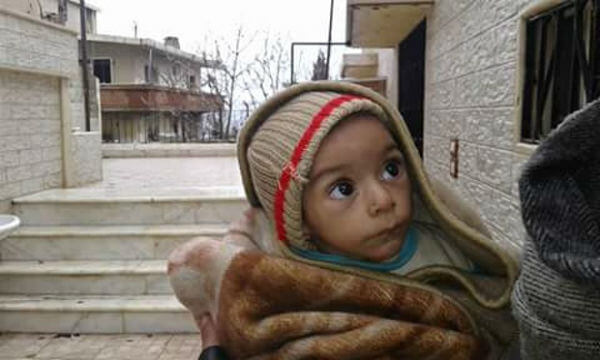
Empty stomachs, empty words: Syria’s children starve as America looks on

starving-child-madaya

In an editorial, the Washington Post says: It’s been nearly six months since the U.N. Security Council passed a resolution demanding an end to the bombing and shelling of civilian areas in Syria and calling for immediate humanitarian access to besieged areas. It’s been four months since Secretary of State John F. Kerry described the sieges as a “castastrophe” of a dimension unseen since World War II and said that “all parties to the conflict have a duty to facilitate humanitarian access to Syrians in desperate need.”

Three weeks ago, a diplomatic conference on Syria joined by Mr. Kerry issued a statement saying it “insisted on concrete steps to enable the provision of urgent humanitarian deliveries,” and warning that if none were taken, it would support airdrops to besieged towns beginning on June 1.

By Monday, there still had been no food deliveries to Darayya in the Damascus suburbs, the al-Waer district of Homs or several other of the 19 besieged areas, with a population of more than 500,000, identified by the United Nations. Nor had there been airdrops. None have been organized, and U.N. officials say none are likely in the coming days. Another deadline has been blown, another red line crossed — and children in the besieged towns are still starving. [Continue reading…]

Facebooktwittermail

Iraqis who flee fighting in Falluja find hardship and hunger

The New York Times reports: Out of security concerns, the Baghdad government, which is Shiite-led, has long restricted the movement of people between the capital and Sunni-dominated Anbar, almost as if the two areas were separate countries. For some agencies, it can be difficult and time-consuming to receive permission from the Iraqi government to travel across the bridge and deliver aid.

In some instances, aid agencies have turned to a powerful Shiite militia, Kataib Hezbollah, which is controlled by Iran and in charge of an important checkpoint in Anbar, to get aid to the displaced.

Also, as the offensive for Falluja unfolded, the Iraqi authorities were eager to facilitate access for journalists to the front lines, but have not allowed them to travel to areas to see displaced civilians.

It was only because of an invitation to join a local aid agency’s convoy on Sunday that a reporting team from The New York Times was able to visit the camps for civilians fleeing the violence around Falluja.

The government-controlled areas of western Anbar Province, a Sunni-dominated region that has been a heartland for the Islamic State, have become vast wastelands of human suffering.

Bare-bones tent cities are sprouting up all over, providing little more than basic shelter and some, but not nearly enough, food, water and medicine. The heat is terrible, always well above 100 Fahrenheit during the day, and most tents do not have fans or the electricity to run them.

When Iraqi forces reached his town of Saqlawiya, north of Falluja, last week, Hatem Shukur waved a white flag to catch their attention. In an interview, he said he and his family had been given cold water, watermelon, apples and bananas — delights after months of being under siege.

“But now we are facing another problem,” Mr. Shukur, 58, said. “Can you imagine your family living here in this heat?”

He waved his arm around the space where he and his family live, a small square of concrete floor, a metal frame and plastic sheeting for walls. On the floor, lying on a blanket, was his 8-month-old granddaughter, Rawan, flies buzzing around her as she slept.

Aid workers expressed frustration at their inability to meet the basic needs of civilians caught up in the war — there is not even enough fresh drinking water in the camps, officials said. There is always this question: Why is there always so much more money for military operations than for water and food for the civilians uprooted by them? [Continue reading…]

Facebooktwittermail

ISIS members from the West seek help getting home

The Wall Street Journal reports: Westerners who joined Islamic State once enjoyed not only power and social status but also free food, housing and even cars. But that gave way to cowering in basements during air raids, dwindling food stocks and scant medical care, according to Syrians who have fled and diplomats who debriefed defectors.

“Father, help me,” a teenager from Europe said about six months ago in a text message to her father. “I want to get out. But I now have a small child.”

The father, who declined to be identified, said he had previously made several attempts to persuade his daughter to return from Raqqa after she left to join Islamic State in late 2013.

Speaking by phone and Facebook messenger from his home in Scandinavia, the father said he asked his government for help but that there is little authorities can do. She would first have to get to Turkey, according to government officials of her home country who corroborated the father’s story.

She remains in Raqqa, too scared to flee for fear of being caught, according to her father. [Continue reading…]

Facebooktwittermail

UN includes — then removes — Saudi coalition from list of child violators in Yemen

At Human Rights Watch, Kristine Beckerle writes: Every year, the United Nations secretary-general releases a “list of shame” of government forces and armed groups that have committed grave violations against children during armed conflict. This year, the Saudi-led coalition fighting in Yemen was listed for the first time, identified as being responsible for killing and maiming children in Yemen and for attacks on schools and hospitals.

There was a six-fold increase in the killing and maiming of children in Yemen during 2015, with at least 785 children killed and 1,168 injured, according to the secretary-general’s report. The Saudi-led coalition was responsible for 60 percent of these child deaths and injuries.

The UN recorded 101 attacks on schools and hospitals in Yemen, double the number of attacks recorded in 2014. The Saudi-led coalition was responsible for nearly half of these attacks. Almost all caused the partial or complete destruction of facilities. [Continue reading…]

The Associated Press reports: Following a vehement protest from Saudi Arabia, Secretary-General Ban Ki-moon on Monday removed the Saudi-led coalition fighting Shiite rebels in Yemen from a list of government forces that committed grave violations against children last year, pending a joint review of cases.

Saudi Arabia’s U.N. Ambassador Abdallah Al-Mouallimi insisted “the removal is unconditional and irreversible,” explaining that the government has no problem with a review and is confident it will conclude that the coalition was “wrongly placed on the list.”

Earlier, he asked for an immediate correction saying Saudi Arabia’s inclusion on the list was based on “inaccurate and incomplete” information. [Continue reading…]

Facebooktwittermail

Mocking Putin got me sent to Twitter gulag

@DarthPutinKGB writes: I run the @DarthPutinKGB “parody” account. The inverted commas are over the word parody for a reason. An account parodying any part of the Kremlin will, by definition, sound almost identical to a verified Kremlin account. From passing homophobic laws while posing for homoerotic photo shoots, to putting dead people on trial for crimes they got murdered for exposing, to denying and then later admitting the presence of their armed forces in numerous conflicts, when it comes to the Kremlin, it can be hard to tell reality from parody.

The account portrays Putin as a maniacal, sinister villain bent on world domination who thinks nothing of murdering those who irritate him while he drops vodka (and real) bombs. He also thinks he is God’s gift to women but is in fact that drunk you can find in any bar on a Friday night who makes women’s skin crawl as he desperately tries to get laid.

Darth Putin is also a pathological liar who would deny it snows in Russia with a straight face if he needed to. Beneath it all, deep down he knows he’s just an emperor currently in the late stages of a massive wardrobe malfunction that he prays no one will eventually notice. Maybe this is why some struggle to tell if it’s parody or not. [Continue reading…]

Facebooktwittermail

New York State to boycott business with groups that back boycott of Israel

The New York Times reports: Gov. Andrew M. Cuomo of New York ordered agencies under his control on Sunday to divest themselves of companies and organizations aligned with a Palestinian-backed boycott movement against Israel.

Wading into a delicate international issue, Mr. Cuomo set executive-branch and other state entities in opposition to the Boycott, Divestment and Sanctions movement, or B.D.S., which has grown in popularity in some quarters of the United States and elsewhere, alarming Jewish leaders who fear its toll on Israel’s international image and economy.

Mr. Cuomo made his announcement in a speech at the Harvard Club in Manhattan to an audience including local Jewish leaders and lawmakers, describing the B.D.S. movement as an “economic attack” on Israel.

“We cannot allow that to happen,” the governor said, adding that, “If you boycott against Israel, New York will boycott you.”

Alphonso David, the counsel to the governor, said that the executive order was specifically aimed at the B.D.S. movement launched in 2005, but that it would apply to any boycott targeting Israel. [Continue reading…]

Facebooktwittermail

FBI wants access to Internet browser history without a warrant in terrorism and spy cases

The Washington Post reports: The Obama administration is seeking to amend surveillance law to give the FBI explicit authority to access a person’s Internet browser history and other electronic data without a warrant in terrorism and spy cases.

The administration made a similar effort six years ago but dropped it after concerns were raised by privacy advocates and the tech industry.

FBI Director James B. Comey has characterized the legislation as a fix to “a typo” in the Electronic Communications Privacy Act, which he says has led some tech firms to refuse to provide data that Congress intended them to provide.

But tech firms and privacy advocates say the bureau is seeking an expansion of surveillance powers that infringes on Americans’ privacy. [Continue reading…]

Facebooktwittermail