Author Archives: News Sources

Apple and FBI look to Congress to settle battle over iPhone encryption

The Guardian reports: The war of words between Apple and US law enforcement escalated again on Monday as their fight over personal versus national security prepared to move beyond the courthouse and into the halls of Congress.

In testimony released ahead of a hotly anticipated congressional hearing, Apple’s chief attorney argued that helping unlock an iPhone used by a terrorist in San Bernardino will ultimately create more crime. New York’s chief prosecutor said the company’s devices were beyond the law and urged Congress to pass new legislation keeping encryption keys to user data in the hands of the tech giants.

Both sides have called on Congress to settle the dispute, although lawmakers and the Obama administration have thus far balked at either setting encryption standards by legislation or permanently ceding the territory to mathematicians. Technologists and privacy advocates spent much of 2015 in a highly visible public push to prevent Congress from mandating so-called backdoors into company-held data. [Continue reading…]

Facebooktwittermail

Mapped: Russian airstrikes in Syria post-cease-fire

The Washington Post reports: Russian airstrikes continued in Syria despite a shaky truce between factions fighting on the ground, according to a report published Monday. Though said to be hitting terrorist factions, some strikes have reportedly struck U.S.-backed opposition groups.

The report, written by the Institute for the Study of War, compiles data based on open-source data including “local Syrian activist networks, Syrian state-run media, and statements by Russian and Western officials.”

According to the report, there was a lull in strikes Saturday — the day the cessation of hostilities was supposed to go into affect — but they began again in earnest Sunday. In the hours leading up to the pause, reports on the ground indicated that there were more than 100 airstrikes in northern Aleppo as Russian and Syrian government forces attempted to consolidate last-minute gains. [Continue reading…]

Facebooktwittermail

Syrian opposition says government wrecking truce deal

Reuters reports: A senior official from Syria’s main opposition group said on Monday that a fragile international attempt to halt nearly five years of fighting was in danger of collapse because of attacks by government forces.

The cessation of hostilities drawn up by Washington and Moscow faced “complete nullification” because Syrian government attacks were violating the agreement, the official of the Saudi-backed opposition High Negotiations Committee (HNC) said.

France said there were reports of attacks on opposition forces in breach of the deal, which came into force on Saturday, and countries backing the Syrian peace process met to try to clarify the situation. [Continue reading…]

Facebooktwittermail

ISIS kills eight Dutch members for ‘desertion’

AFP reports: The Islamic State has killed eight Dutch members whom it accused of trying to desert, activists have said.

“Daesh [Isis] executed eight Dutch fighters on Friday in Maadan, Raqqa province, after accusing them of attempting desertion and mutiny,” said Abu Mohammad, a member of the citizen journalist group Raqqa is Being Slaughtered Silently (RBSS), via Twitter on Monday.

RBSS has been documenting the group’s abuses in its de facto capital in northern Syria since April 2014. The Twitter group said tension between 75 Dutch jihadis – some of them of Moroccan origin – and Isis intelligence operatives from Iraq hadreached a new height over the past month.

Three other Dutch jihadis were arrested by Iraqi Isis members who accused them of wanting to flee, and one of the detainees was beaten to death during the interrogation, according to RBSS. [Continue reading…]

Facebooktwittermail

Hamas said to have tortured and executed one of its commanders

The New York Times reports: The death of Mahmoud Ishtiwi had all the trappings of a telenovela: sex, torture and embezzlement in Gaza’s most venerated and secretive institution, the armed wing of Hamas.

Mr. Ishtiwi, 34, was a commander from a storied family of Hamas loyalists who, during the 2014 war with Israel, was responsible for 1,000 fighters and a network of attack tunnels. Last month, his former comrades executed him with three bullets to the chest.

Adding a layer of scandal to the story, he was accused of moral turpitude, by which Hamas meant homosexuality. And there were whispers that he had carved the word “zulum” — wronged — into his body in a desperate kind of last testament.

His death has become the talk of the town in the conservative quarters of Gaza, the Palestinian coastal territory, endlessly discussed in living rooms, at checkpoints and in cabs. But to astute Gaza observers, this was more substantive than a soap opera.

Mr. Ishtiwi, who is survived by two wives and three children, was not the first member of Hamas’s armed wing, the Izzedine al-Qassam Brigades, to be killed by his own. What was unprecedented was the way his relatives spoke out publicly about it. [Continue reading…]

Facebooktwittermail

Italian student killed in Egypt was tortured for days

Reuters reports: An Egyptian forensics official has told the public prosecutor’s office the autopsy he conducted on an Italian student showed he was interrogated for up to seven days before he was killed, two prosecution sources said.

The findings are the strongest indication yet that Giulio Regeni was killed by Egyptian security services because they point to interrogation methods such as burning with cigarettes in intervals over several days, which human rights groups say are the hallmark of the security services.

In the past, the Interior Ministry has rejected accusations about human rights abuses. [Continue reading…]

Facebooktwittermail

How much change do Iranians really want?

Hooman Majd writes: Wash, rinse, repeat. If you’re a politician in Iran running for election or re-election, your best bet is to have the endorsement of Khatami. Mohammad Khatami, that is. In another era, Khatami was twice elected president, but today he is banned from leaving the country and his name and face are banned from the domestic media. No matter, his hands suffice these days: Election posters for the Reform and moderate list of candidates running for parliament last week showed only them, recognizable from the ring on his finger. People knew what that meant. Simultaneously, a reminder that he was backing the candidates and a “bilakh” (the finger) by the Reformists to those who insist he is so dangerous that his very features must remain hidden from the public.

Iranians are good at giving the finger: They collectively raised it almost three years ago, too. The same Khatami, only days before the 2013 presidential election — enough time for a message to register, but not enough time for hard-liners to counter it — endorsed the lesser-known Hassan Rouhani and urged the electorate to make their voices heard. They followed, if only to give the finger to those, inside and outside Iran, who claim Iranian elections don’t matter. This time, he endorsed a long list of candidates — whose names would have to be handwritten on ballots by voters — via video on the popular messaging app Telegram. To be safe, the video was also uploaded to YouTube, which is censored in Iran but available to those who want to access it via VPN. Wash, rinse, repeat.

There was always something unclean (haram) about certain members of parliament. Members who Iranians and outsiders alike call hard-liners, some who even threatened Rouhani’s Cabinet members — not with censure for making a nuclear deal with the West, but with death, buried in concrete, as one member of parliament, perhaps channeling Tony Soprano, suggested, and not in jest. As of this writing and where the vote count stands, parliament appears to have been washed and rinsed of that particular stain. Representing Tehran province, which has 30 seats in the parliament, the hard-liners have all but disappeared. There will be quite a few left in the body, of course, but they are somewhat defanged, if not fully declawed. And as with any bad stain, repeated washing and rinsing will eventually fade even the most stubborn. That is what voters seem to want, judging by how they also approached voting for the other state body — the Assembly of Experts. [Continue reading…]

Facebooktwittermail

‘We know what the U.S. can do with bombs,’ a Libyan student said. ‘What else can you do?’

In a 12,000-word two-part report for the New York Times on the U.S. intervention in Libya and Hillary Clinton’s role in it, Jo Becker and Scott Shane write: President Obama has called failing to do more in Libya his biggest foreign policy lesson. And Gérard Araud, the French ambassador to the United Nations during the revolution, is deeply troubled by the aftermath of the 2011 intervention: the Islamic State only “300 miles from Europe,” a refugee crisis that “is a human tragedy as well as a political one” and the destabilization of much of West Africa.

“You have to make a moral choice: a blood bath in Benghazi and keeping Qaddafi in power, or what is happening now,” Mr. Araud said. “It is a tough question, because now Western national interests are very much impacted by what is happening in Libya.”

It was late afternoon on March 15, 2011, and Mr. Araud had just left the office when his phone rang. It was his American counterpart, Susan E. Rice, with a pointed message.

France and Britain were pushing hard for a Security Council vote on a resolution supporting a no-fly zone in Libya to prevent Colonel Qaddafi from slaughtering his opponents. Ms. Rice was calling to push back, in characteristically salty language. Continue reading

Facebooktwittermail

If you want a revolution, you have to vote for it

Derek Thompson writes: Because Generation Y is the largest generation in American history, it’s a big deal if it remains one of the most liberal generations ever. But there’s a huge, inescapable problem with the viability of Millennial politics today: Young people just don’t vote. Between 1964 and 2012, youth voter turnout in presidential elections has fallen below 50 percent, and Baby Boomers now outvote their children’s generation by a stunning 30 percentage points. Millennials might make a lot of noise between presidential elections, but in November, politicians remember what young people are: All throat and no vote.

The liberal revolution would require more than quadrennial thrills. It would require a sustained focus on filling congressional and Senate seats with liberals so that a left-leaning president can sign bills approved by left-leaning majorities. Instead, this generation hasn’t shown that it can sustain interest in politics through non-presidential elections. Voting among people under 30 in non-presidential elections is hovering around its lowest rate in the last half-century.

A lasting revolution would require even more than that. At a time when the federal government is dragging its feet on every issue, the most significant policy decisions often come at the local and state level. But Republicans control more than half of state legislatures and governor’s mansions, in part because Millennials simply don’t show up to vote. One study found that the median age of voters in mayoral elections is 60.You cannot create a national movement around critical local policies, like higher minimum wages, if city hall is elected exclusively by voters born before Dwight Eisenhower’s reelection. [Continue reading…]

Facebooktwittermail

Russia says federal model is possible for Syria in future

Reuters reports: Syria could become a federal state if that model works in the country, Russian Deputy Foreign Minister Sergei Ryabkov told a news briefing on Monday.

A fragile cessation of hostilities, drawn up jointly by the United States and Russia, has led to a dramatic reduction of violence in Syria over the weekend, though rebels are accusing the government of numerous violations including air strikes.

The United Nations’ Syria mediator, Staffan de Mistura, has said he intends to reconvene peace talks between the Syrian government and opposition on March 7, provided the halt in fighting largely holds and allows for greater delivery of humanitarian relief.

“If as a result of talks, consultations and discussions on Syria’s future state order … they come to an opinion that namely this (federal) model will work to serve the task of preserving Syria as a united, secular, independent and sovereign nation, then who will object to this?” Ryabkov said. [Continue reading…]

Facebooktwittermail

In the fight against ISIS, the effectiveness of the YPG gets overstated

Hassan Hassan writes: A week after ISIL was reportedly expelled from its last stronghold in Hasaka, it launched an assault in Tal Abyad in northern Raqqa in the early hours of Saturday.

The militant group clashed with Kurdish militias affiliated to the People’s Protection Units (YPG), who drove ISIL from this border city in June last year. The attack on Saturday was ISIL’s second infiltration of the city since its defeat there.

During the clashes, ISIL fighters reportedly stormed the house of a tribal sheikh from Deir Ezzor living in Tal Abyad and beheaded him. Khaled Dahham Al Bashir – from the Baggara tribal confederation, one of the largest in Syria – was said to have been working with the YPG as part of the tribal component in the Syrian Democratic Forces, and was therefore an obvious target for ISIL. The ISIL assault on several different locations seemed carefully planned with specific targets.

Of particular significance was the fact that the YPG had to immediately call in US air strikes to repel the attack. The episode reveals a fault line in the way that the United States, the main backer of the YPG, fights ISIL in Syria.

The YPG’s victories against ISIL – in Kobani, Tal Abyad and southern Hasaka – were made possible largely because of intensive US firepower. According to military sources, the YPG lacks the capacity to defeat ISIL without close US air support. One source said that American air strikes account for “more than 90 per cent” of the ISIL defeats in those battles.

This is important if one contrasts the YPG with other forces in northern Syria that have defeated ISIL or repulsed its assaults for more than two years without any air support. Those forces would typically be fighting on two fronts at the same time. Rebel forces in Idlib, for instance, have kept the province free from ISIL despite repeated attempts to infiltrate it since 2014 – including at the peak of ISIL’s strength and morale after it defeated the Iraqi army in Mosul. [Continue reading…]

Facebooktwittermail

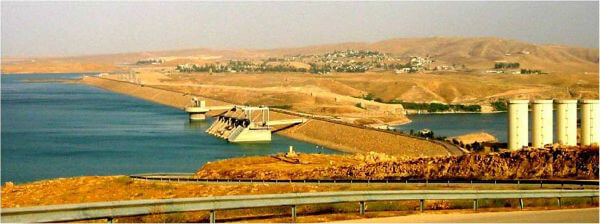
Iraq issues warning of ‘catastrophic’ Mosul dam collapse

Mosul_Dam

Middle East Eye reports: Authorities in Iraq have issued a contingency plan for the possible collapse of the Mosul dam amid fears that the lives of almost 1.5 million people along the Tigris river could be at risk from catastrophic flooding.

The statement is the first public acknowledgment by the Iraqi government of the danger posed by the dam, which is in a poor state of repair after years of neglect and its brief capture by Islamic State (IS) fighters in 2014.

The government earlier this month awarded a contract to Italian engineering firm TREVI to undertake emergency repairs on the 3.4km dam, which is the fourth largest in the Middle East and lies 40km north of Mosul, Iraq’s second city which is currently controlled by IS.

Many other Iraqi cities including Baghdad, the capital, Shirqat, Baiji, Tikrit, Samarra, Balad and Dujail could be flooded if the dam breaks down, Iraqi and US officials warned.

“The collapse of the dam is very unlikely, especially with the technical and administrative precautions taken by the authorities, but the serious consequences if it did happen necessitate the alert,” Iraqi Prime Minister Haider al-Abadi’s office said in a statement on Sunday.

“We have developed a package of precautionary recommendations, in order to avoid any potential risk, God forbid. They [the recommendations] have to be taken into consideration by all people.”

The US embassy in Baghdad on Sunday also issued an alert to US citizens warning them of the dangers of a possible collapse. [Continue reading…]

Facebooktwittermail

Hezbollah is learning Russian

Alexander Corbeil writes: Hezbollah has suffered several setbacks since it began its involvement in the Syrian war — over 1,300 of its fighters have been killed and thousands injured, it has had to cut back on social services it provides to its constituency and had to resort to recruiting teenagers for the fight in Syria. However, the Syrian civil war, especially the recent Russian involvement is also helping enhance the group’s fighting capabilities which is likely to have significant political and security implications in Lebanon and beyond.

Hezbollah has proven to be a forward-thinking and malleable fighting force. In 2012, when the group began to engage more robustly in Syria, it quickly learned that its defensive tactics were not applicable to the fight. Instead of a modern Israeli army, Hezbollah faced an insurgency. These rebel groups applied similar tactics to Hezbollah’s against regime soldiers and further benefited from local knowledge of the terrain in areas crucial to Bashar al-Assad’s survival. For instance, during the capture of Qusayr in 2013 Hezbollah reportedly lost around one-tenth of its fighters, with estimates ranging from 70 to 120 dead and 200 wounded, up to two dozen of whom were killed in a rebel ambush on the first day of that offensive; what Hezbollah leaders thought would be a quick victory instead turned into a drawn-out fight. Fast-forwarding to 2016, Hezbollah has refined its offensive capabilities and—under the cover of a new powerful ally, Russia—continued to help the Syrian regime take back crucial territory with lower casualty rates. [Continue reading…]

Facebooktwittermail

The mysterious fate of the dissident Italian priest snatched by ISIS

Michael Weiss writes: The last time Hind Aboud Kabawat saw her mentor Father Paolo Dall’Oglio alive, she felt her heart “squeeze in pain.”

The Italian priest who had for 30 years made his home and clerical reputation in Syria was depositing her at Ataturk International Airport, in Istanbul, when he forgot the spiritual form their physical leave-taking always took: prayer. Father Paolo would place his crucifix on Kabawat’s head and chin, and then they would ask the divine to guide them in their daily struggles. Perhaps he was in haste to get her onto her return flight to her hometown of Toronto, but the rite this time slipped his mind. So Kabawat, an Orthodox Christian, reminded the gray-bearded Jesuit and hero of the Syrian people of the valedictory benediction. Father Paolo lovingly obliged. That was three years ago.

The priest was snatched by ISIS not long thereafter while walking through the streets of the caliphate’s capital of Raqqa. He had smuggled himself back into Syria after being kicked out by Bashar al-Assad, Kabawat says, to try and negotiate the release of captive journalists, and was convinced he could reason with the jihadists.

Kabawat is a natural-born worrier, and Father Paolo used to call her “Martha,” after the sister described in the Gospel of Luke as “cumbered about many things” whom Jesus visits at her home. Unlike her attentive sibling Mary, Martha neglects the savior’s counsel. But now the roles were somewhat reversed, and the emissary of Christ was the one who wouldn’t listen.

One needn’t have been especially preoccupied or put-upon to fear an audience with ISIS. “This was 2013—we didn’t really know who they were. But still I told him, ‘Don’t do it face to face.’ He said, ‘No, no, no. If, after three days, you don’t hear from me, then something bad will have happened.’”

Something bad did.

The echo here with the resurrection may have been intentional, though it’s hard to associate Father Paolo with the megalomania of one comparing himself to his avowed role model. On this score, Kabawat is definitive: “He was always telling me, ‘Hind, we can’t be sitting and lecturing others. We need to go to the people. Because this is freedom and democracy, from the people to the people. This is exactly what Jesus wants and what Jesus did. He did not sit in his home.’” [Continue reading…]

Facebooktwittermail

Iran reformists cheer election gains, conservatives play down shift

Reuters reports: President Hassan Rouhani and his allies won big gains in elections that could deepen Iran’s engagement with the world after his government ended years of sanctions by agreeing to curb its nuclear program.

The outcome in the results for Tehran on Monday was a blow to the conservative Islamic establishment, although it retains decisive power due to Iran’s unwieldy dual system of clerical and republican rule.

Most of the lawmakers who failed to win re-election to the new parliament strongly opposed the nuclear deal, including Mehdi Kouchakzadeh, who called Foreign Minister Mohammad Javad Zarif a traitor, and Rouhollah Hosseinian, who threatened to bury the negotiators under cement for agreeing to concessions to world powers.

“This election can be a turning point in the history of the Islamic Republic,” said an editorial in reformist newspaper Mardomsalari, whose managing editor, Mostafa Kavakebian, won a parliamentary seat in Tehran.

“The biggest achievement of this election is the return of reformists to the ruling system … so they won’t be called seditionists or infiltrators anymore,” he said, referring to hardliners who accused reformists of links to the West.

Rouhani and allied centrists and moderates won 15 out of the 16 Tehran seats in the 88-member Assembly of Experts, which is tasked with choosing the country’s next supreme leader, final election results for Tehran showed. Some of the 15 elected in Tehran were in both conservative and reformist electoral lists. [Continue reading…]

Barbara Slavin writes: When given the chance, Iranians have generally voted for reformists or pragmatists, from Mohammad Khatami for President in 1997 and 2001, to Rouhani in 2013. The exception was Mahmoud Ahmadinejad, a populist hardliner who defeated a former President, Hashemi Rafsanjani, in 2005 and won again in 2009 in elections marred by fraud. Reformists swept parliamentary elections in 2000 but were disqualified en masse by the Guardian Council in 2004, 2008, and 2012.

The Guardian Council also ruthlessly pruned the candidate roster this year, removing nearly half of the more than 12,000 people who sought seats in the 290-member parliament, including almost all declared reformists. But a surviving reformist leader, a Stanford University-educated engineer and former Khatami Vice President, Mohammad Reza Aref, cobbled together candidates most supportive of Rouhani and the nuclear deal. Bolstered by a social media campaign that included a video of Khatami urging people to vote, this “List of Hope” swept all thirty seats allotted to the capital, Tehran. Among those defeated was the top hardline candidate, Gholam-Ali Haddad-Adel, a former Speaker of parliament whose daughter is married to Khamenei’s son, Mojtaba.

In polling for the eighty-eight-member Assembly of Experts, Rafsanjani, a former Chairman of the body, led the field for sixteen seats in Tehran. Among those who failed to make the cut was Mohammad Taqi Mesbah-Yazdi, who is known as “Ayatollah Crocodile” for his anti-democratic views, and Mohammad Yazdi, the incumbent chair of the Assembly.

While the final tallies depend on runoff elections in some constituencies, the gains for more pragmatic figures, particularly in parliament, should make it easier for Rouhani to implement economic reforms and to appoint and retain qualified cabinet ministers.

As the scope of the mandate became clear, Rouhani told the official Islamic Republic News Agency on February 27: “It’s time to open a new chapter in Iran’s economic development based on domestic abilities and international opportunities…The people showed their power once again and gave more credibility and strength to their elected government.” [Continue reading…]

Facebooktwittermail

Berlin’s museum tours in Arabic forge a bridge to refugees

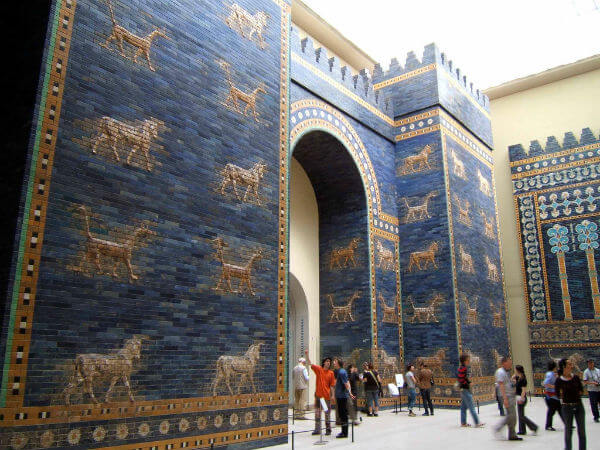
Ishtar_Gate_at_Berlin_Museum

The New York Times reports: The Pergamon Museum is home to the famous Ishtar Gate, a monument of blue and white tile decorated with golden lions and daisies that was once the entrance to ancient Babylon. When Kamal Alramadhani, a 25-year-old Iraqi economics student, saw it for the first time this month, “I got goose bumps,” he said, pointing to his arm.

“It’s from Iraq,” he added quietly, through an Arabic translator. “My country.” A native of Mosul, Mr. Alramadhani studied economics at the University of Baghdad and came to Germany in October, part of a wave of asylum seekers that is stirring opposition here but also leading the government to look for ways to help the migrants adjust.

That afternoon, Mr. Alramadhani and about 30 others — some of them teenagers who had walked much of the way from Syria — were visiting the museum for the first time, on a free Arabic-language tour. It is part of a new and growing state-financed program to introduce the refugees to Germany’s cultural heritage — even, of course, when some of that heritage comes from the Middle East.

The visits can be fraught. “Sometimes people say: ‘The Germans have all our heritage! They stole it!’” said Zoya Masoud, 27, who led the Arabic-language tour that afternoon at the Museum of Islamic Art, which is part of the Pergamon Museum and filled with treasures from empires past. Often, the visitors say the art is probably better off in Berlin because so much in Syria has been destroyed by the war and the Islamic State, Ms. Masoud said.

Other times, the tours bring up raw memories for visitors who have arrived in the last three months. At a painted marble wall niche from a house in Damascus that dates to the 15th and 16th century and was inhabited by Samaritans, a Christian minority, “some people want to cry,” Ms. Masoud said. “When they see the colors and the shapes, they get chills.”

Ms. Masoud is not a refugee — she grew up in Damascus, a child of Syrian and Lebanese parents, and moved to Europe to study in 2010, before Syria fell into civil war. She is one of 19 guides — 18 from Syria and one from Iraq — who are part of a program, called Multaka, or “meeting point” in Arabic, which began in December and is aimed at training refugees to become museum guides. [Continue reading…]

Facebooktwittermail

Report spells out dangers of killer robots

The New York Times reports: A new report written by a former Pentagon official who helped establish United States policy on autonomous weapons argues that such weapons could be uncontrollable in real-world environments where they are subject to design failure as well as hacking, spoofing and manipulation by adversaries.

In recent years, low-cost sensors and new artificial intelligence technologies have made it increasingly practical to design weapons systems that make killing decisions without human intervention. The specter of so-called killer robots has touched off an international protest movement and a debate within the United Nations about limiting the development and deployment of such systems.

The new report was written by Paul Scharre, who directs a program on the future of warfare at the Center for a New American Security, a policy research group in Washington, D.C. From 2008 to 2013, Mr. Scharre worked in the office of the Secretary of Defense, where he helped establish United States policy on unmanned and autonomous weapons. He was one of the authors of a 2012 Defense Department directive that set military policy on the use of such systems. [Continue reading…]

Facebooktwittermail

Tech companies are eating journalists’ lunch. Shouldn’t they at least pay for it?

Richard Jones, University of Huddersfield

Journalism is in an existential crisis: revenue to news organisations has fallen off a cliff over the past two decades and no clear business model is emerging to sustain news in the digital era.

In the latest in our series on business models for the news media, Richard Jones asks whether tech companies that benefit from journalism should pay a levy to help sustain it.

Twitter was once described as the most significant innovation in journalism since the telephone. More than three quarters of journalists in the UK use it to gather stories, promote their own work and keep up with what’s going on.

But Twitter is in trouble. User growth slows every quarter, and is flat in the US. Squished between Facebook, Google and Apple, and under pressure to do more to tackle abuse, Twitter has lost some of its sparkle, not least to Facebook-owned Instagram and WhatsApp.

Now back at the helm of the company he co-founded, Jack Dorsey recently signalled that Twitter’s most famous feature – the 140-character limit – might soon be lifted.

Continue reading

Facebooktwittermail