Author Archives: News Sources

The U.S. botched the Syria talks before they even began

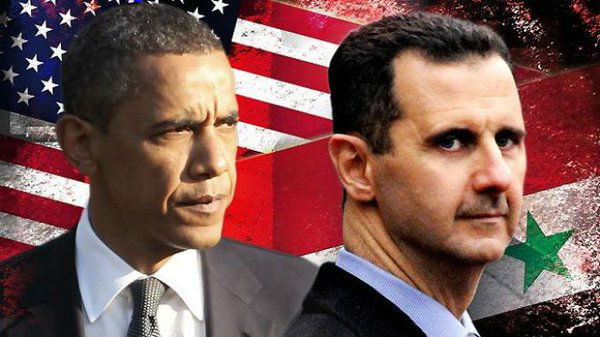
obama-assad

Steven Heydemann writes: When the latest negotiations to end Syria’s long, bloody conflict began on Friday, Jan. 29 — the first round of U.N.-sponsored talks in two years — one party was conspicuous by its absence. As diplomats and representatives of the Assad regime gathered in Geneva, the High Negotiations Committee (HNC), the main opposition umbrella group, refused to attend unless airstrikes and city sieges stopped — conditions that were not met. Over the weekend, the HNC traveled to Geneva, but the status of the talks remained uncertain. Even as this standoff all but derailed the meeting, however, the Obama administration has been steadfast in its determination that the Geneva talks proceed. Expressing cautious optimism in the months leading up to the meeting, U.S. Secretary of State John Kerry described the talks as the best chance to “chart a course out of hell.”

Success in Geneva is unlikely, however — but not because of opposition intransigence. Rather, the Obama administration itself has increased the odds of failure. Its recent tilt toward Russia’s position on the fate of Syrian President Bashar al-Assad — accepting that he might have a role in a future political transition — has undermined prospects for success, damaged U.S. credibility with the opposition, and further eroded America’s leverage in the Middle East. This shift in U.S. policy has almost certainly made a negotiated settlement in Geneva less likely. Even worse, it could well spur the continued escalation of the Syrian conflict.

It is not too late for the administration to change course, but the odds that it will do so are slim. President Barack Obama has verged on the self-righteous in defending his approach to the brutal war that has battered Syria for nearly five years, destabilized the Middle East, and driven waves of refugees into Europe. He has made clear that he remains determined to take only those measures necessary to “contain” the conflict, but nothing more. Even though the evidence that no aspect of the Syrian conflict has been contained is overwhelming, Obama has continually brushed aside criticism that he has not been sufficiently assertive, characterizing the options he’s been offered as “mumbo jumbo.” Senior White House officials have complained that proposals to expand U.S. involvement recommend a course of action but do not take into account what happens next.

If we take the U.S. president’s claims about the rigor of his policy process seriously, what are we to make of the pivot, led by Kerry, to align with Russia in rejecting regime change — a goal the administration once embraced? Or of the administration’s flip-flop in accepting the possibility that Assad, who is complicit in war crimes and crimes against humanity, and is currently starving besieged civilians in Madaya, might remain in power in Syria indefinitely? These concessions to Russia violate a core Obama principle: “Don’t do stupid shit.” Moreover, they reflect the administration’s own failure to think through what happens next, or how shifts in policy would help the United States to achieve its objectives. [Continue reading…]


Facebooktwittermail

Fight ISIS with democracy

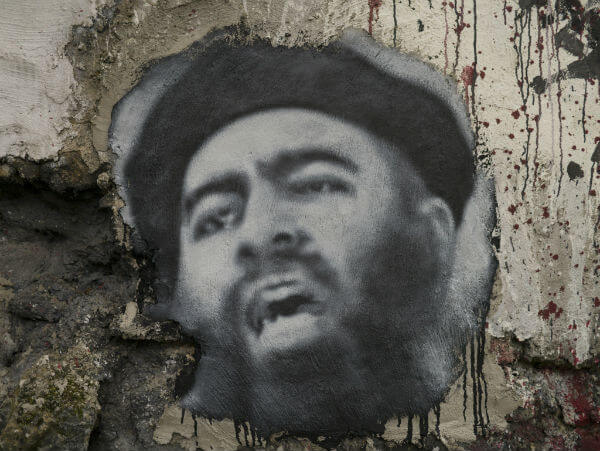
Baghdadi

Rached Ghannouchi, co-founder and president of Tunisia’s Muslim democrats party, Ennahdha, writes: As more countries confront the question of how to counter terrorist groups like ISIS, it is clear that a short-term, reductionist approach focused largely on military force has proven ineffective. Efforts to dislodge the so-called Islamic State through bombing, and to keep it at bay by strengthening and equipping security forces in the places it operates, have so far had limited success despite their enormous financial costs.

This is because, although such efforts are critical, they are not sufficient. The rise of ISIS, and its ability to recruit from a region that just five years ago was swept by democratic hopes and aspirations, requires a global response that is informed by where the group came from. For such a response to work, I believe it must reflect five principles. These are based on Tunisia’s experience as the most successful democratic transition to emerge from the Arab uprisings, as well as my personal intellectual and political work in Tunisia and the Arab world over five decades.

First, there is no universal approach to tackling ISIS. Rather, the group can only be defeated through a variety of locally designed and targeted responses. Extremist groups like ISIS use technology and social networks to cross boundaries and attract recruits globally—but their discourse is linked to local grievances wherever they operate. [Continue reading…]

Facebooktwittermail

How Saudi Arabia’s grip on oil prices could bring Russia to its knees

By James Henderson, University of Oxford

When Saudi Arabia led an OPEC decision to end a restraint put on oil production in November 2014, it marked the beginning of a new era in oil economics. It has given us a tumbling oil price, prompted huge losses and job cuts at oil firms like BP and might yet give us economic and political drama in the heart of Moscow. To understand why, it’s worth drilling down to the start of the whole process, and the costs of getting oil out of the ground in the first place.

Historically, the OPEC cartel of oil-producing nations has been able to manage oil prices because of the lack of flexibility in global supply. The whole business of setting up wells, operating pipelines and building rigs entails large and long-term investments which makes producers slow to respond to price movements. And a small cut in OPEC supply can have a significant impact on the global oil price.

The advent of the US shale oil boom changed this dynamic. The industry has lower fixed costs but higher variable costs and is more like an industrial process than a major one-off investment. That makes it more responsive to price movements and more flexible in adjusting short-term output.

Overall though, shale is a relatively high cost source of oil, especially compared to Middle East production. As a result, when US shale threatened OPEC’s market share, the cartel allowed a position of global oversupply to develop. It was a simple trick: make oil prices fall to make shale unprofitable.

Continue reading

Facebooktwittermail

U.S. fortifying Europe’s east to deter Putin

The New York Times reports: President Obama plans to substantially increase the deployment of heavy weapons, armored vehicles and other equipment to NATO countries in Central and Eastern Europe, a move that administration officials said was aimed at deterring Russia from further aggression in the region.

The White House plans to pay for the additional weapons and equipment with a budget request of more than $3.4 billion for military spending in Europe in 2017, several officials said Monday, more than quadrupling the current budget of $789 million. The weapons and equipment will be used by American and NATO forces, ensuring that the alliance can maintain a full armored combat brigade in the region at all times.

Though Russia’s military activity has quieted in eastern Ukraine in recent months, Moscow continues to maintain a presence there, working with pro-Russian local forces. Administration officials said the additional NATO forces were calculated to send a signal to President Vladimir V. Putin that the West remained deeply suspicious of his motives in the region.

“This is not a response to something that happened last Tuesday,” a senior administration official said. “This is a longer-term response to a changed security environment in Europe. This reflects a new situation, where Russia has become a more difficult actor.” [Continue reading…]

Facebooktwittermail

Iran still ranks as one of the most repressive states in the world

In an editorial, The Guardian says: The government was probably looking for a public relations bonus in the west when it recently released a number of journalists, but the statistics tell another story: in 2015 Iran executed at least 830 people, including juveniles, many for non-violent crimes. The security services continue to harass and detain activists, writers and journalists. The methods used by the regime to crush the pro-democracy Green movement in 2009 are still very much in use today.

Nor has Iran become in any way more “moderate” in its behaviour in the Middle East. In Syria, Iran’s militias and Republican Guards are direct participants in the war crimes that the Assad regime inflicts on its own population. Iran’s close ally Hezbollah played a key role in the siege of Madaya, where children died of hunger as a result, and it is part of similar operations elsewhere.

It is to be hoped that a sustained implementation of the nuclear agreement will improve international security. But to draw from that the notion that Iran must now be spared any reproach would be foolish. Iran’s hardliners sought economic relief through the nuclear deal because they desperately want to keep their hold on power, not because they want to pursue a more democratic path at home or more rational policies abroad. Diplomacy is important, but it must not come at the expense of clearsightedness, nor should it be accompanied by the kind of simplistic analysis that puts the sole onus on Saudi Arabia rather than on Iran as far as human rights are concerned. The records of both countries are equally dismal. [Continue reading…]

Facebooktwittermail

Trapped by ISIS, Iraqis in Fallujah say they are going hungry, too

The Washington Post reports: As Iraqi security forces choke off Islamic State fighters in the militant-held city of Fallujah, civilians inside say they are trapped and struggling to survive.

The military siege, which has tightened in the past two months, is preventing food and medical supplies from reaching the city 40 miles west of Baghdad, while the Islamic State won’t let families leave.

The United Nations says it is “deeply worried” about the deteriorating humanitarian situation and unverified reports of deaths from a lack of food and basic medicine.

Between 30,000 and 60,000 people are estimated to remain in the city, which has been under Islamic State control for more than two years. Their worsening plight comes amid an international outcry over starvation in the besieged Syrian town of Madaya — a disaster residents and officials from Fallujah say they fear could also unfold there if civilians aren’t evacuated. [Continue reading…]

Facebooktwittermail

The rise of the paramilitary Popular Mobilization Forces in Iraq

Renad Mansour writes: Many of Iraq’s Shia are taking up arms to fight the self-proclaimed Islamic State. However, rather than enlisting with the Iraqi military via the Ministry of Defense (MOD), they are opting to join paramilitary groups under the umbrella of the Popular Mobilization Forces (PMF or al-Hashd al-Shaabi in Arabic), which has become the single largest ground force combating Islamic State fighters in Iraq. Despite Human Rights Watch’s accusation that some groups under the umbrella, such as the Badr Brigades, League of the Righteous (Asaib ahl al-Haq), and Imam Ali Battalions are carrying out widespread and systematic human rights violations, the PMF has maintained its popularity and legitimacy among the Shia base. A recently published poll showed that 99 percent of Iraqi Shia support the PMF in its fight against the Islamic State.

As a consequence, the number of recruits rushing to enlist with the PMF is substantial. According to various claims from well-informed sources in Baghdad, more than 75 percent of men ages 18 to30 residing in the Shia provinces have signed up. Although most of these recruits are reservists who will not fight, the mere volume is indicative of the PMF’s support in that region.

The sheer extent of such numbers would typically indicate some form of conscription. However, there is no such formal mandatory recruitment in place. The PMF is merely guided by Ayatollah Sistani’s al-wajib al-kifai fatwa, which itself very carefully restricts recruitment to only as many as needed to combat the threat posed by the Islamic State. Yet, a PMF administrator in Najaf told the author that more than enough recruits have joined. They are having no trouble attracting members who come from a diverse set of social classes and geographic regions. According to him, the only distinguishable group that is not joining is university students. [Continue reading…]

Facebooktwittermail

Syrian refugee children subjected to forced labor and early marriage in Lebanon

Nick Grono writes: I met six-year-old Mustafa in the safe zone of one of the many tented settlements for Syrian refugees in Lebanon’s Bekaa valley. These areas offer schooling, including art and music classes, for Syrian children. They provide a respite from the brutal realities of life as a refugee, which can involve back-breaking labour for children as young as six, and marriage for girls at the age of 13.

Mustafa told us that, after leaving class at midday, he would spend the afternoon carting bricks to earn a pittance for his family. One of his classmates, a seven-year-old girl, said she picks potatoes every afternoon – tough, physical work that involves constant bending while carrying a heavy load.

Officially, Lebanon is home to almost 1.2 million refugees, but unofficial estimates put it at more than 1.5 million. Given that its prewar population was just over 4 million, this is an overwhelming burden, one with which any government would struggle to cope.

Syrian refugees in Lebanon are highly vulnerable to exploitation. Most have little or no money, yet they have to pay landlords for the patches of land on which they erect their tents, and to supplement the meagre aid handouts they may be fortunate enough to receive. But the Lebanese government – keen to stop Syrians settling permanently in Lebanon – is preventing refugees from working or even residing legally in the country. It is refusing to issue work permits except in exceptional circumstances. And it is now very difficult for Syrians to obtain residency permits – a key obstacle being a $200 (£140) annual fee per adult refugee – meaning most are breaking the law simply by staying in the country (pdf).

This creates conditions ripe for abusive employers to exploit vulnerable refugees. Because they don’t have the necessary papers, refugees live in fear of coming into contact with the authorities, particularly at the many checkpoints throughout the country. As children are less likely to be stopped at checkpoints, they are forced to work in the fields or in nearby towns. Unscrupulous employers prefer them because they are more compliant, and more unwilling to complain about physical abuse. For this laborious and often hazardous work, they are paid a few dollars at most, a portion of which is often retained by the Syrian settlement leader. [Continue reading…]

Facebooktwittermail

Saudi Arabia: Palestinian poet sentenced to eight years in prison and 800 lashes for apostasy

The Guardian reports: A Saudi court has overturned the death sentence on a Palestinian poet accused of renouncing Islam, instead imposing an eight year prison term and 800 lashes.

The decision by a panel of judges came after Ashraf Fayadh’s lawyer argued that his conviction of apostasy was seriously flawed as he was denied a fair trial. In a briefing on the verdict, Fayadh’s lawyer said the new judgement revoked the death sentence but upheld that the poet was guilty of apostasy.

A memo written by the lawyer, posted by Abdulrahman al-Lahem on Twitter, describes the details of Fayadh’s new punishment. He is sentenced to eight years in prison and 800 lashes, with 50 lashes carried out on 16 occasions, and must also publicly renounce his poetry on Saudi state media.

Al-Lahem welcomed the overturning of the death sentence but reaffirmed Fayadh’s innocence and announced they would launch an appeal and ask for bail.

Adam Coogle, Middle East researcher at Human Rights Watch, said: “Instead of beheading Ashraf Fayadh, a Saudi court has ordered a lengthy imprisonment and flogging. No one should face arrest for peacefully expressing opinions, much less corporal punishment and prison. Saudi justice officials must urgently intervene to vacate this unjust sentence.” [Continue reading…]

Facebooktwittermail

Ambulances halted as Turkey besieges Kurdish town

Al Jazeera reports: At least 10 civilians injured in clashes have died in southeastern Turkey over the past two weeks because ambulances could not reach them to take them to hospitals.

The people have either bled to death on the street or in homes, or were admitted to hospitals only after it was too late – and residents fear there will be more deaths in the coming days.

The deaths have occurred since the Turkish government began enforcing a round-the-clock, open-ended curfew on Cizre, a majority-Kurdish town with a population of 120,000. Some have risked going outside to buy daily necessities, while carrying a white flag to show they are not a threat; others have remained holed-up indoors.

The Turkish government says the curfew, which has been in effect since December 14, is necessary in its fight against the Kurdistan Workers’ Party (PKK), an armed group that the Turkish government labels as “terrorists”. Human rights organisations Amnesty International and Human Rights Watch have accused Turkish security forces of using disproportionate violence in clashes with armed, PKK-affiliated young people in Cizre, noting that dozens of civilians have died as a result. [Continue reading…]

Facebooktwittermail

How the Telegram messaging app is changing Iranian media

Saeid Jafari reports: “A grandson of the late founder of the Islamic Republic of Iran has been disqualified from running for the Assembly of Experts”; “The Joint Comprehensive Plan of Action has reached a deadlock”; “The bodybuilding champion of Iran and the world has been killed in a street fight”; and “Following in the footsteps of Djibouti and Sudan, Tunisia has also severed its ties with Iran.”

These are some of the stories that have been widely circulated among Iranians in recent weeks — but they weren’t reported by any of the licensed Iranian media outlets. Thanks to the power of social media, where ordinary Iranians can produce and broadcast their own news, many of these stories find their way into people’s homes. The same, unfortunately, also goes for mere rumors.

First it was Facebook, and then the smartphone messaging apps Viber and Line. Now, however, the hottest communication tool among Iranians is Telegram. It has more advanced features than its predecessors, and enjoys a high level of influence in Iranian society. Information and Communications Technology Minister Mahmoud Vaezi said there are roughly 13 million to 14 million Telegram users in Iran. More recent surveys, however, put this figure at over 20 million. The simplicity and ease associated with using Telegram has prompted users to see themselves as a rival of licensed media outlets. In fact, many governmental organizations are now using Telegram to create a bridge to communicate with their audiences. [Continue reading…]

Facebooktwittermail

Mali’s irrepressible musical spirit resounds after jihadi-imposed silence

The Guardian reports: n the courtyard of a colonial villa in Bamako, four young men crouch around a tiny camping stove. The Malian tradition of simmering tea for hours is as old as the ancient trade routes crossing the Sahara desert. There is even a saying behind the practice, says Aliou Touré, a singer in the Mali band Songhoy Blues.

“Here in Mali we say that the first cup is bitter like life, the second is sweet like love and the third is soft like the breath of a dying man,” he says.

Songhoy Blues are one of the latest musical acts to emerge from the west African country that has produced artists such as Salif Keita and Toumani Diabaté – both multiple Grammy winners – Tinariwen, Ali Farka Touré, Bassekou Kouyaté, and Rokia Traoré.

The band is one of a dozen acts at this week’s Bamako acoustic festival, the first major music festival in the capital since 2012, when Islamist extremists seized northern Mali and imposed their hardline interpretation of sharia law that, among other things, banned music. [Continue reading…]

Facebooktwittermail

The staggering economic cost of air pollution

The Washington Post reports: Air pollution caused by energy production in the U.S. caused at least $131 billion in damages in the year 2011 alone, a new analysis concludes — but while the number sounds grim, it’s also a sign of improvement. In 2002, the damages totaled as high as $175 billion, and the decline in the past decade highlights the success of more stringent emissions regulations on the energy sector while also pointing out the need to continue cracking down.

“The bulk of the cost of emissions is the result of health impacts — so morbidity and particularly mortality,” said the paper’s lead author, Paulina Jaramillo, an assistant professor of engineering and public policy at Carnegie Mellon University. Using models, researchers can place a monetary value on the health effects caused by air pollution and come up with a “social cost” of the offending emissions — in other words, the monetary damages associated with emitting an additional ton (or other unit) of a given type of pollutant. This social cost can then be used to calculate the total monetary damages produced by a certain amount of emissions in a given time period.

The new analysis, just published in the journal Energy Policy, did just that. Using an up-to-date model and a set of data acquired from the Environmental Protection Agency on emissions from the energy sector, the researchers set about estimating the monetary damages caused by air pollution from energy production between 2002 and 2011. [Continue reading…]

Facebooktwittermail

How China’s downturn threatens one of the world’s greatest success stories

poverty

The Washington Post reports: Over the last 25 years, a period of remarkable economic growth spanning from China to South America spurred one of the world’s greatest — and oft-overlooked — modern achievements: a dramatic reduction in the number of extreme poor. More than one billion were pulled out of the most destitute conditions, and the pace of improvement inspired such optimism that two years ago the United Nations vowed to eliminate extreme poverty entirely by 2030.

But now, China’s downturn — and the related prospect of weaker growth across the world — is threatening to stall that progress, signaling a new era of dimmer prospects for the poorest of the poor. That is just one of the emerging challenges from a slowdown that has crippled some nations’ currencies and wiped hundreds of billions from stock markets globally.

Economists caution that the rise or fall of poverty in the coming years depends on a number of hard-to-predict factors, including technology, disease, corruption, war, and climate change. But they also say with growing confidence that the job of fighting poverty is getting harder, particularly in Africa, a continent that is home to half the world’s extreme poor and depends disproportionately on Chinese demand for raw materials. [Continue reading…]

Facebooktwittermail

Trump is starting to spend money like a real candidate

Vanity Fair reports: as he funnels more of his own money into the campaign [$10.8 million in the last quarter], combined with his first attempts at running T.V. ads, it appears that Trump has begun shifting into a more focused, serious phase of his campaign.

If he wins the Republican nomination, however, Trump can expect an even steeper uphill climb to rival the finances of either Hillary Clinton or Bernie Sanders. According to Sunday’s F.E.C. disclosures, Clinton raised $33.1 million in the fourth quarter and spent $33 during that time period, though only $5.7 million came from small donors. Sanders raised $33 million in the last quarter as well — nearly all from small donors — and put up an impressive $20 million in January alone. [Continue reading…]

Facebooktwittermail

Fear and paranoia lead Finns to form vigilante groups that ‘protect women’ from asylum seekers

The Washington Post reports: On a frigid night in this industrial city, three local men pulled up to a curb in a beat-up van sporting the stars and bars of the American Confederacy (because, they said, they just liked the look of it). Soon, they joined a dozen other beefy vigilantes gathering on a sidewalk for their first patrol to keep “our women” safe.

These are the Soldiers of Odin, a new far-right citizens group sprouting chapters across Finland. Its members are multiplying as this northern nation becomes a case study in the fear and suspicion gripping Europe after multiple sexual assaults allegedly committed by asylum seekers and others on New Year’s Eve.

Those incidents, in cities across central and northern Europe, included hundreds of complaints of sexual harassment in Cologne, Germany, as well as 15 alleged sex-related crimes in the Finnish capital, Helsinki. They have quickly altered the debate over a record wave of asylum seekers arriving in Europe from the Middle East, Africa and Asia. Fresh barriers to new migrants are going up from Sweden to Greece. [Continue reading…]

Facebooktwittermail

Britain is distracted while Europe faces an existential crisis

By Clara Sandelind, University of Huddersfield

Europe is undergoing an existential crisis. Whatever the eurozone hasn’t already managed to break is well on the way to being destroyed by the refugee crisis.

The Schengen agreement of open borders has more or less vanished, at least for now. The Dublin regulation, aimed at supporting asylum seekers, is hardly being upheld. The burden-sharing schemes that were agreed last year to distribute refugees more evenly over Europe are failing to come to fruition.

Donald Tusk, president of the European Council, warned earlier this year that the EU has two months to get the refugee crisis under control, or the whole EU project will be in question.

Continue reading

Facebooktwittermail

The latest video from ISIS was its most menacing warning to Britain yet

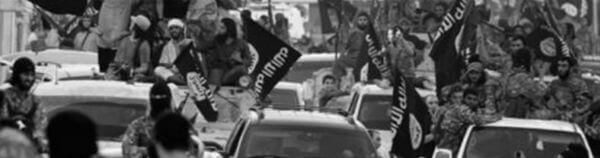
Raqqa2

Shiraz Maher writes: It was the final part of the latest Islamic State video that will have caught the ­attention of the Security Service. After a 15-minute film celebrating the Paris attacks in November, viewers see David Cameron giving a press conference in Downing Street with a message from Islamic State flashing across the screen.

“Whoever stands in the ranks of kufr [the infidels],” it reads, “will be a target for our swords and will fall in humiliation.”

Various London landmarks – Big Ben, Buckingham Palace, Tower Bridge, Trafalgar Square – then appear in rapid succession before the video comes to an abrupt stop. A terrorism analyst sent me a message shortly after the video was released on Sunday. “I would consider it a warning,” he noted. “That wasn’t [there] because they didn’t know how to fill the last segment.” This is not the first time IS has appeared to threaten Britain, but it is the most pointed and menacing warning yet.

I messaged a British member of IS, who is originally from Buckinghamshire, to ask his view. Was it intended to be warning? “Yep,” came the reply. “Do they [the British government] expect us to sit back and do nothing? Idiots.”

The fighter was referring to parliament’s decision to extend British air strikes to IS targets inside Syria, and to those people who counselled against such action his comments may seem to offer vindication. Yet the facts aren’t so straightforward.

Last July I spoke with another British IS fighter, Abu Rahin Aziz, to get his thoughts on the tenth anniversary of the 7/7 London terrorist bombings. He was bullish, warning of more attacks, and then he explained in careful detail some of the philosophical reasons Britain remains a target for the group. [Continue reading…]

Facebooktwittermail