Andrej Nikolaidis writes: Jorge Luis Borges once said that a true gentleman is interested in lost causes only. If you’re looking for a decent contemporary lost cause, you will surely find it in Ukraine, since if it comes to war, no matter who wins, most of the ordinary people will be losers.
We, the citizens of Bosnia, can tell you a thing or two about being losers. It was April 1992, during the start of Sarajevo’s siege. I was a long-haired teenager, dressed in blue jeans and a shirt with the famous black and white “Unknown Pleasures” print. From the window of my suburban flat, I was watching the Yugoslav People Army’s cannons, located in the Lukavica army camp, firing projectiles on Sarajevo. That army was controlled by Slobodan Milošević, the president of Serbia.
The National Radio was broadcasting Bosnian president Alija Izetbegović‘s discussion with Yugoslav army general Milutin Kukanjac. Izetbegovic asked the army to stop the bombing. Kukanjac claimed that not a single shot was fired from his army positions. I remember like it was yesterday that my glass of milk was jumping on the table to the rhythm of cannonballs “not fired” on Sarajevo.
When common people find themselves in the middle of a geopolitical storm – as the citizens of Ukraine do now, or my family back then in Bosnia – the dilemma “is this glass half empty or half full?” is irrelevant: soon, it will be broken.
The people in Bosnia were so full of optimism during the first days, even months, of war. Neighbours were saying that the west would never allow it to happen because “we are Europe”. My aunt went to Belgrade, but refused to take her money from a Sarajevo bank. It will be over in a week; we’ll be back soon, she said. President Izetbegovic, in his TV address to the people, said: “Sleep peacefully: there will be no war.”
Well, we woke up after a four-year nightmare.
Now, the events in Ukraine seem to us Bosnians like a terrifying deja vu. The parallels between Ukraine now and Bosnia in 1992 are obvious. The Russian army acted aggressively towards Ukraine, as Milošević’s army did in Bosnia. Putin had strong support in parts of Ukraine, as Milošević had in large parts of Bosnia and Herzegovina. Now Kiev has the support of the EU and the US, as Sarajevo did. We even had Bono and Pavarotti singing about Miss Sarajevo. Yet all the musical telegrams of support from the free world didn’t stop the ethnic cleansing in eastern Bosnia, close to the Serbian border. [Continue reading…]
Author Archives: News Sources
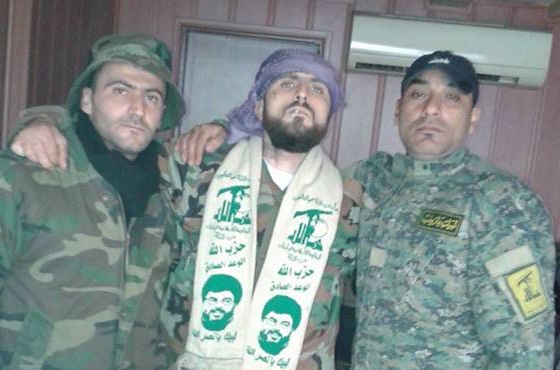
American gangsters fighting for Assad

The Washington Post reports: Two Los Angeles gang members appear to have joined the flow of foreigners flocking to fight in Syria – in this instance, on the side of President Bashar al-Assad. In a video posted online, the two men boast that they are on the front lines and fire their guns in the direction of what they call “the enemigos.”
One of the men identifies himself as Creeper from the Sur-13 or Surenos, a loose affiliation of southern California gangs linked to the Mexican mafia. He rolls up his sleeves to show his gang tattoos and greets fellow gang members Capone-E and Crazy Loco.
The other says he is called Wino, and belongs to a gang called Westside Armenian Power. Members of the Armenian Christian minority in Syria are known to be staunch supporters of Assad.
The video was posted on YouTube yesterday by MEMRI after being posted on Facebook on December 6. MEMRI is a pro-Israeli propaganda outfit based in Washington DC. However, based on the content of the Facebook page of Westside Armenian Power member, “Wino Ayee Peeyakan,” there seems little reason to doubt that he has indeed hooked up with Hezbollah fighters and has spent time in Syria.

In March, 2011, the FBI reported:
The Southern California crime ring called Armenian Power may look like a traditional street gang — members identify themselves with tattoos and gang clothing — but the group is really an international organized crime enterprise whose illegal activities allegedly range from bank fraud and identity theft to violent extortion and kidnapping.
Operation Power Outage — a nearly three-year investigation conducted by our Eurasian Organized Crime Task Force in Los Angeles — culminated last week with the arrests of 83 Armenian Power members on a variety of federal and state charges that include racketeering, drug trafficking, smuggling cell phones into prisons, and theft from the elderly. All told, the group allegedly bilked victims out of at least $10 million.
In one scheme, Armenian Power — known as AP — caused more than $2 million in losses when members secretly installed “skimming” devices in cash register credit card swipe machines at Southern California 99 Cents Only stores to steal customer account information. Then they used the skimmed information to create counterfeit debit and credit cards to empty accounts.
“There is no crime too big or too small for this group,” said Special Agent Louis Perez, who supervises the Eurasian Organized Crime Task Force that built the case against AP.
“This is not just a group of thugs committing crimes in their neighborhood,” added Perez. “AP is sophisticated, and they have international ties. That’s what sets them apart from traditional gangs.”
Perez is quick to point out, though, that despite their white-collar crimes, “these are dangerous people. Just because they make money through fraud, these guys are not accountants. They use violence to get what they want,” he said, explaining that one AP extortion trademark is to shoot people in the legs “to send a message.”
AP membership — thought to number about 200 — consists mainly of individuals whose heritage goes back to Armenia and other Eastern Bloc countries. While the group got its start as a street gang in East Hollywood in the 1980s, AP is now less concerned with controlling neighborhood turf as it expands its criminal activities with other organized crime groups.
For example, AP is closely allied with the Mexican Mafia, a prison gang that controls much of the narcotics distribution and other criminal activity within California’s correctional facilities. AP’s leadership also maintains ties to Armenia and Russia and deals directly with top organized crime figures in those countries — even to the point of using respected organized crime mediators — known as “thieves-in-law” — to settle disputes.
The crisis in Crimea could lead the World into a second Cold War
Dmitri Trenin writes: In Moscow, there is a growing fatigue with the west, with the EU and the United States. Their role in Ukraine is believed to be particularly obnoxious: imposing on Ukraine a choice between the EU and Russia that it could not afford; supporting the opposition against an elected government; turning a blind eye to right-wing radical descendants of wartime Nazi collaborators; siding with the opposition to pressure the government into submission; finally, condoning an unconstitutional regime change. The Kremlin is yet again convinced of the truth of the famous maxim of Alexander III, that Russia has only two friends in the world, its army and its navy. Both now defend its interests in Crimea.
The Crimea crisis will not pass soon. Kiev is unlikely to agree to Crimea’s secession, even if backed by clear popular will: this would be discounted because of the “foreign occupation” of the peninsula. The crisis is also expanding to include other players, notably the United States. So far, there has been no military confrontation between Russian and Ukrainian forces, but if they clash, this will not be a repeat of the five-day war in the South Caucasus, as in 2008. The conflict will be longer and bloodier, with security in Europe put at its highest risk in a quarter century.
Even if there is no war, the Crimea crisis is likely to alter fundamentally relations between Russia and the west and lead to changes in the global power balance, with Russia now in open competition with the United States and the European Union in the new eastern Europe. If this happens, a second round of the cold war may ensue as a punishment for leaving many issues unsolved – such as Ukraine’s internal cohesion, the special position of Crimea, or the situation of Russian ethnics in the newly independent states; but, above all, leaving unresolved Russia’s integration within the Euro-Atlantic community. Russia will no doubt pay a high price for its apparent decision to “defend its own” and “put things right”, but others will have to pay their share, too.
Disappointed Syrians warn Ukrainians not to seek U.S. help
Mike Giglio reports: Some Syrians have a simple message for Ukrainians waiting for a response from the U.S. and the West as the crisis in Crimea unfolds: Don’t get your hopes up.
The Syrian uprising grinds into its third year this month, and many in the opposition see a long string of broken promises from an international community that voiced support for their fight to overthrow their Russia-backed president, Bashar al-Assad.
With Russia now sending its forces to the Ukrainian region of Crimea, and with worries that it might invade the mainland, western leaders have been swift with recriminations. President Barack Obama warned Russia on Friday that there would be “costs” for its aggression.
But Syrian rebels and activists reiterated one piece of advice for the Ukrainians whose protest movement toppled the country’s president, a Russian ally, last week. “Make sure that you achieve whatever you’re aiming for with your own hands,” Abdullah Ismail, a rebel coordinator based on the Turkish border, told BuzzFeed. “That’s the only way to avoid relying on promises.”
“Ukrainians must believe only in themselves,” said Barzan Iso, a Syrian-Kurdish journalist and activist.
In interviews, each of the Syrians was quick to point out the sea of differences between the two countries and between their two revolutions. Their advice was meant not to draw a comparison, but to help those Ukrainians against Russian intervention better understand their enemy — and, even more so, their supposed allies in the west. [Continue reading…]
Ukraine: what will happen now?
Ian Traynor writes: In his 14 years in power grieving the loss of the Soviet empire, Vladimir Putin has launched three wars against Russia’s neighbours and territories formerly under the Kremlin’s domination. As a newly appointed prime minister in 1999, before becoming president on New Year’s Day 2000, he began with a war in Chechnya, brutally suppressing an armed insurrection against Moscow’s rule in the north Caucasus and razing the provincial capital, Grozny.
In 2008, the former KGB officer ordered a blitzkrieg against Georgia, partitioning the country in five days. He remains in control of 20% of Russia’s Black Sea neighbour: the territories of South Ossetia and Abkhazia. The Russian military also controls a slice of Moldova known as Transnistria in a frozen conflict dating from the collapse of the Soviet Union.
In the Crimea and Ukraine, however, in the event of full-scale war, Putin has opted for a game-changer with the potential to be Europe’s worst security nightmare since the revolutions of 1989 and the bloodiest since Slobodan Milosevic’s attempts to wrest control of former Yugoslavia resulted in four lost wars, more than 100,000 dead, and spawned seven new countries in the Balkans. Ukraine is a pivotal country on the EU’s eastern and Russia’s south-western borders. Territorially it is bigger than France. Its population is greater than those of Poland or Spain at 46 million. It has a proper military and is well armed. Ukraine was the Soviet Union’s arms manufacturing base; it remains in the top league of global arms exporters.
Ukraine’s military machine is no match for Russia’s. It has around 130,000 troops compared to around 850,000 in Russia. Its forces in Crimea are no match for the 15,000-plus men serving with the Russian Black Sea fleet in Sevastopol. Russia has more men in its western military division than there are in the entire Ukrainian armed forces. Ratios of fighter aircraft, attack helicopters, special forces units and Black Sea warships are similarly one-sided.
But Ukraine’s forces could inflict a lot of damage if forced to defend their country. With this in mind, three broad scenarios suggest themselves: [Continue reading…]
Russia takes control over Crimea
The Wall Street Journal reports: Ukrainian Prime Minister Arseniy Yatsenyuk said Sunday that his country was “on the brink of disaster” and personally blamed Russian President Vladimir Putin for bringing the two nations to the verge of war.
With more than 6,000 airborne and naval forces, Russia has taken complete operational control over the Crimean peninsula in Ukraine and appears to be preparing to occupy the territory, a senior Obama administration official said Sunday.
“Russian forces now have complete operational control of the Crimean peninsula, some 6,000-plus airborne and naval forces, with considerable materiel,” the official said in a briefing for reporters. “There is no question that they are in an occupation position in Crimea, that they are flying in reinforcements, and they are settling in.” [Continue reading…]
Baltic states at risk if West doesn’t act says Estonian lawmaker
The Wall Street Journal reports: An Estonian member of European Parliament said on Sunday the three Baltic states may be vulnerable if the international community doesn’t put adequate pressure on Russian President Vladimir Putin to remove troops from the Crimean peninsula.
“This is a critical point in European history,” Tunne Kelam said during an interview on the sidelines of a peaceful protest against Russia here. “If [the West] submits to this situation and accepts the occupation of Crimea or East Ukraine, anything could happen. This is a definite danger also for the Baltic states.”
The three Baltic nations—Estonia, Lithuania and Latvia—were part of the former Soviet Union and have moved toward the European Community since gaining independence. All three are members of the European Union and Estonia and Latvia are participating in the bloc’s common currency.
Mr. Kelam said that in recent years Russia has been practicing tactical military maneuvers and the “intent of these has been to practice invading neighboring countries to protect fellow Russians.” [Continue reading…]
Rouhani tells Iran generals to cut hostile rhetoric
Reuters reports: President Hassan Rouhani urged Iran’s military leaders on Saturday to let diplomacy prevail in dealing with potential foreign threats, in a clear reference to efforts to end the nuclear dispute and decades of hostile relations with the West.
“It is very important to formulate one’s sentences and speeches in a way that is not construed as threat, intention to strike a blow,” Rouhani said in a meeting with Iran’s top military echelon.
“We must be very careful in our calculations. Launching missiles and staging military exercises to scare off the other side is not good deterrence, although a necessity in its proper place,” the official IRNA news agency quoted him as saying.
“A misfire could burst into flames and wreak havoc to everything.” [Continue reading…]
Ukraine crisis: Why it matters to the world economy
CNN reports: While the world watches the escalating crisis in Ukraine, investors and world leaders are considering how the instability could roil the global economy.
The political turmoil is rooted in the country’s strategic economic position. It is an important conduit between Russia and major European markets, as well as a significant exporter of grain.
But in the post-Soviet era, it’s a weakened economy. Now, the government is in need of an economic rescue — and torn between whether Russia or the Western economies (including the European Union) is the savior it needs.
Here are five reasons the world’s largest economies are watching what happens in Ukraine. [Continue reading…]
Shifting energy trends blunt Russia’s natural-gas weapon
The Washington Post reports: While Russia flexes its military might at its Black Sea naval base in Crimea, Moscow has another weapon that it has wielded against Ukraine in the past: natural gas supplies.
Russia provides more than half of Ukraine’s natural-gas needs and since 2006 has twice curtailed supplies in disputes over politics, price and late payments. Those supply cuts rattled countries across Europe that depend on the Russian pipelines that run through Ukraine.
But changes in the global trade in natural gas have blunted Moscow’s weapon, forcing the Russian pipeline monopoly Gazprom to cut prices worldwide and giving Ukraine slightly more bargaining power.
The boom in U.S. shale gas has left gas-exporting countries shopping for other customers. Europe, as it adds terminals to handle liquefied natural gas, will be able to offset its own declining production with supplies from countries such as Qatar. And in 2012, Norway’s Statoil sold more gas to other European nations than Russia’s Gazprom.
“Since the Russian supply cuts in 2006 and 2009, the tables have totally turned,” said Anders Aslund, a fellow at the Peterson Institute of International Economics who has advised Russia, Ukraine and Kyrgyzstan. Aslund said Ukraine once rivaled Germany as Gazprom’s biggest customer. Now, he said, “Gazprom’s challenge is to stay in the Ukrainian market.”
In December, Gazprom said it would discount the price paid by Ukraine, cutting it from about $11.50 per thousand cubic feet to $8.10. But that only brought Ukraine’s prices roughly in line with those being paid in other parts of Europe. Gazprom said it would review the price every quarter, meaning a new reset is possible at the end of March.
As clunky Soviet-era factories and mines have become more efficient or gone out of business, Ukraine’s domestic gas consumption has dropped nearly 40 percent over the past five years, cutting its imports from Russia in half, according to a report by Sberbank Investment Research. [Continue reading…]
Ukrainian activists work to counter Russian narrative on social networks
Robert Mackey reports: Faced with what they call misleading reports on Russian state television that ethnic-nationalist violence is sweeping Ukraine, Internet-savvy Ukrainian activists drew attention on Sunday to video and images posted online that showed street protests in support of the new government in Kiev, and acts of violence instigated by men waving the Russian flag.
Video uploaded to the Euromaidan protest movement’s YouTube channel showed demonstrators in the eastern city of Dnipropetrovsk singing Ukraine’s national anthem on Sunday, one day after the Russian flag was raised there by ethnic Russians.
The activists also shared photographs on Twitter of young men volunteering to defend Ukraine against the threatened Russian invasion in the same city, and a rally in support of the interim government in Zaporizhzhya and Odessa, where pro-Russia demonstrators had also gathered the day before. [Continue reading…]
Russia has always thought of Eastern Ukraine as Russian land
Oleg Kashin writes: Russia and Ukraine split up 23 years ago. A whole generation has grown up in each country since then. Ukrainian children have studied the poetry of the nationalist Taras Shevchenko and they have internalized a heroic narrative about a country that has spent centuries fighting for its freedom. Russian children have spent summer holidays in Crimea and have grown up with a sense that today’s Russian-Ukrainian borders are merely temporary and notional. The Russian public views the Ukrainian state with a sense of irony and even contempt. This attitude is often unfair, but it is see Ukraine as a culturally heterogeneous patchwork. Travelling from a place like Lviv or Lutsk to a place like Kharkiv or Odessa, it is often hard to believe that these cities are part of the same country: Post-Soviet Ukraine is like Austria-Hungary—an empire made up of incongruous parts. In the mind of the Russian public, the justification for a possible Russian invasion of Ukraine settled into place many years ago: Russia has been unable to shake off the view that eastern Ukraine is Russian territory.
Clearly, this sentiment could have remained dormant for many decades. But Viktor Yanukovych’s rule in Kiev crumbled at the very point that President Vladimir Putin decided that he is at the pinnacle of his power. He vanquished his opposition, he hosted an Olympics, he triumphed in Syria, and he even kept Edward Snowden out of American custody. The 61-year-old Putin had achieved so many of his dream; the only thing he had yet to do was to become what the tsarist history books called a “gatherer of Russian lands.” The perfect opportunity presented itself, one that Putin couldn’t resist. And risks don’t really enter into his calculus anymore.
So if one is to make comparisons, then it shouldn’t be with 1968 Czechoslovakia, but with Serbia in 1914. Back then, the Russian tsar felt that he was the protector of all the Slavic people of Europe and entered into World War I, which ended with the collapse of his empire. Can Putin see that historical parallel now? I doubt it. In the 15 years of his rule, he has grown used to the fact that irrespective of their rhetoric, Western countries have generally approved of the Russian authorities. Putin genuinely believes that his “western partners” are cynics and hypocrites. Playing the role of “bad guy,” he believes, actually insulates him from far graver risks. This formula may sound paradoxical, but it has worked.
Who are the Crimean Tatars, and why are they important?
Oxana Shevel writes: [E]ven if diplomacy fails and the Russian military seizes Crimean territory with the intention of controlling it permanently, it will be much harder for Russia to establish control of Crimea than it was in South Ossetia, Abkhazia and Transnistria. The main reason for this is the Crimean Tatars. The Tatars — a Muslim group that was deported en masse from Crimea by Stalin in 1944 and that for decades has waged a peaceful struggle for the right to return — have been coming back in droves since 1989. According to the latest Ukrainian census, from 2001, 243,433 Crimean Tatars account for 12.1 percent of the Crimean population of 2,033,700. They represent a highly mobilized and unified constituency that has consistently been pro-Ukrainian and opposed to pro-Russian separatism on the peninsula. Going back to the 1991 independence referendum, the narrow vote in favor of Ukrainian state independence in Crimea may have been thanks to the vote of the Crimean Tatars. Since then, the Crimean Tatars and their representative organ, the Mejlis, have cooperated with the pro-Ukrainian political parties. Leaders of the Mejlis such as Mustafa Dzhemilev and Refat Chubarov have been members of the Ukrainian parliament elected on the party list of Ukrainian nationalist parties such as Rukh in the 1990s and later from Our Ukraine party. On Feb. 26, the day before the Crimean parliament was taken over by the armed men, Crimean Tatars held a large rally near the parliament that was larger than a simultaneous pro-Russian rally. There has been no comparable local mobilized group opposed to Russian takeover in any other of the breakaway regions.
Although the group has been a staunch ally of the Ukrainian government against pro-Russian separatism on the peninsula, the Ukrainian central authorities, while benefiting from this support, have also been suspicious of the Crimean Tatars, who consider Crimea their historical homeland and have advocated measures such as changing the status of Crimean autonomy to make it the national-territorial autonomy of the Crimean Tatars as opposed to simply territorial (and de facto ethnic Russian autonomy given that ethnic Russians constitute more than 50 percent of the population in Crimea). The law on the status of the Crimean Tatars as indigenous peoples of Ukraine that the Tatar leaders have been pushing for many years remains unadopted.
Whatever the Tatar grievances against the Ukrainian state may be, when faced with the choice of being under either Russian or Ukrainian control, the Crimean Tatar leadership has consistently and unequivocally chosen Ukraine. [Continue reading…]
Victories for Putin will help Assad
Aaron David Miller writes: As go Putin’s fortunes, so go those of Syrian President Bashar al-Assad. However the crisis turns out, with one possible exception, the Syrian regime is likely to benefit. And that exception is the highly unlikely contingency that Putin is so weakened from a botched policy in Ukraine or an uncharacteristically bold response from the United States and the West that he is permanently damaged and diminished, or removed from power. Not likely.
The possibility that events in Ukraine will leave Putin victorious will only buck up al-Assad further and demonstrate that Russian street cred is rising. After all, in September, Putin masterfully intervened and used diplomacy to stay a U.S. military response against al-Assad’s use of chemical weapons against civilians.
Now Putin appears to be standing up to the international community and ready to use force to protect Russia’s interests in Ukraine. He’s clearly not prepared to do that for Syria. But victories for Russia, particularly in the face of the West’s empty rhetoric and red lines, can only reinforce al-Assad’s conviction that he’s betting on the right ally.
The West’s puny response to Ukraine crisis will not deter Putin
Simon Tisdall writes: Barack Obama has sternly warned Vladimir Putin there will be “costs” for Russia if it continues or expands its military intervention in Ukraine. But the American president did not specify what these costs might be, and this toothlessness, in a nutshell, is the dilemma now facing the US and its allies. Putin does not fear the west. On the contrary, he is once again forcefully demonstrating his deep contempt.
The idea that the US, Britain or France – the only western countries with sizeable, readily deployable, experienced combat forces – might respond militarily to Russia’s invasion of Crimea cannot be taken seriously. Putin surely calculates there will be no such challenge, as he did, correctly, in Georgia in 2008, and thus moves his troops and tanks in Crimea – and possibly eastern Ukraine – with impunity. Obama, whose presidency has been dedicated to ending wars, not starting them, has shown he has no appetite for new armed confrontations, in Syria or elsewhere.
Even if Obama did want to pursue a military option, he would be hard put to make it credible. US forces in western Europe have been cut back repeatedly. The US sixth fleet, headquartered in Naples, is a considerable weapon. But to make any sort of impact in Ukraine, it would have to deploy into the Black Sea via the Dardanelles and the Bosphorus, a move that Turkey would find highly objectionable, and which Russia would regard as a direct threat. [Continue reading…]
Russians free to protest for, but not against, invasion of Ukraine
The Associated Press reports: Thousands are marching in a pro-invasion rally in downtown Moscow one day after Russia’s parliament gave President Vladimir Putin a green light to use military force in Ukraine.
At least 10,000 people bearing Russian flags marched freely through Moscow on Sunday, while dozens of people demonstrating on Red Square against an invasion of Ukraine were quickly detained by Russian riot police.
The Associated Press witnessed over 50 detentions and spotted at least five police vans, which carry between 15 and 20 protesters, driving away from the square.
U.S. intelligence not sharp enough to spot Russian invasion of Ukraine
The Daily Beast reports: On Thursday night, the best assessment from the U.S. intelligence community — and for that matter most experts observing events in Ukraine — was that Vladimir Putin’s military would not invade Ukraine. Less than 24 hours later, however, there are reports from the ground of Russian troops pushing into the Ukrainian province of Crimea; the newly-installed Crimean prime minister has appealed to Putin to help him secure the country; Putin, in turn, is officially asking for parliament’s permission to send Russian forces into Ukraine. It’s not a full-blown invasion—at least, not yet. But it’s not the picture U.S. analysts were painting just a day before, either.
There was good reason to think Putin wouldn’t do it. Russia’s Foreign Minister, Sergei Lavrov told Secretary of State John Kerry that Russia respected the territorial integrity of the Ukraine. U.S. intelligence assessments concluded that the 150,000-man Russian military exercises announced by Putin on Wednesday were not preparations for an invasion of Ukraine because no medical units accompanied the troops. And Russian and U.S. diplomats were still working on Iran and Syrian diplomacy. All of this followed a successful Winter Olympic games for Putin’s Russia.
Yet private security contractors, working for the Russian military, seized control of two airports in Crimea on Friday. And Ukrainian border officials said that Russian cargo planes had landed inside the province, and that 10 military helicopters flew into Ukrainian airspace.
U.S. officials familiar with the intelligence on the fast moving situation in Ukraine tell The Daily Beast that analytic products from the intelligence community this week did not discount the prospect of Russian provocations and even light incursions in the Russian majority province of Crimea, the home of Russia’s fleet in the Black Sea.
Nonetheless, until Friday, no one anticipated a Russian invasion of Ukrainian territory. [Continue reading…]
Why has Russia moved so fast?
John Lough writes: Moscow’s readiness to escalate the crisis in Ukraine reflects panic at what it undoubtedly sees as a potentially dramatic loss of influence in the country as a result of the “Maidan” revolution. It has calculated that the risks of not intervening in Ukraine are greater than those of intervening, even though those risks include the danger of provoking widespread violent conflict and a serious breakdown in relations with the West.
Regardless, Russia’s earlier strategy is in shreds. It bet heavily on the survival of Ukrainian President Viktor Yanukovych, in effect offering him late last year a $15 billion bailout package and other sweeteners in return for not signing an association agreement with the European Union.
Russia looked to have outmaneuvered the European Union and to have kept Ukraine firmly in its sphere of influence. After all, the association agreement with the EU, if implemented, would have laid the foundations for anchoring Ukraine in the west.
Since then, however, Moscow has been stunned by the speed at which Yanukovych’s rule collapsed. It blames the West for fomenting the revolution and seems to believe that it needs to counter an unprecedented surge of Western influence in Ukraine and prevent the consolidation of the revolution.
By signaling its readiness to support the secession of Crimea, Moscow is opening the door to further unraveling of Ukraine by encouraging supporters of closer ties with Russia in Ukraine’s eastern regions to call for Russian protection and not to recognize the authority of the interim government in Kiev. All this could easily make it impossible to hold the presidential election scheduled for May 25 in those parts of the country that identify strongly with Russia.
The scenario of Ukraine’s partition has moved significantly closer.