Author Archives: Attention to the Unseen

Random acts of secret generosity

Kate Murphy writes: If you place an order at the Chick-fil-A drive-through off Highway 46 in New Braunfels, Tex., it’s not unusual for the driver of the car in front of you to pay for your meal in the time it took you to holler into the intercom and pull around for pickup.

“The people ahead of you paid it forward,” the cashier will chirp as she passes your food through the window.

Confused, you look ahead at the car — it could be a mud-splashed monster truck, Mercedes or minivan — which at this point is turning onto the highway. The cashier giggles, you take your food and unless your heart is irreparably rotted from cynicism and snark, you feel touched.

You could chalk it up to Southern hospitality or small town charm. But it’s just as likely the preceding car will pick up your tab at a Dunkin’ Donuts drive-through in Detroit or a McDonald’s drive-through in Fargo, N.D. Drive-through generosity is happening across America and parts of Canada, sometimes resulting in unbroken chains of hundreds of cars paying in turn for the person behind them.

This is taking place at a time when the nation’s legislators can’t speak a civil word unless reading from Dr. Seuss. “We really don’t know why it’s happening but if I had to guess, I’d say there is just a lot of stuff going on in the country that people find discouraging,” said Mark Moraitakis, director of hospitality at Chick-fil-A, which is based in Atlanta. “Paying it forward is a way to counteract that.” [Continue reading…]

Facebooktwittermail

Skull of Homo erectus throws story of human evolution into disarray

The Guardian reports: The spectacular fossilised skull of an ancient human ancestor that died nearly two million years ago in central Asia has forced scientists to rethink the story of early human evolution.

Anthropologists unearthed the skull at a site in Dmanisi, a small town in southern Georgia, where other remains of human ancestors, simple stone tools and long-extinct animals have been dated to 1.8m years old.

Experts believe the skull is one of the most important fossil finds to date, but it has proved as controversial as it is stunning. Analysis of the skull and other remains at Dmanisi suggests that scientists have been too ready to name separate species of human ancestors in Africa. Many of those species may now have to be wiped from the textbooks.

The latest fossil is the only intact skull ever found of a human ancestor that lived in the early Pleistocene, when our predecessors first walked out of Africa. The skull adds to a haul of bones recovered from Dmanisi that belong to five individuals, most likely an elderly male, two other adult males, a young female and a juvenile of unknown sex.

The site was a busy watering hole that human ancestors shared with giant extinct cheetahs, sabre-toothed cats and other beasts. The remains of the individuals were found in collapsed dens where carnivores had apparently dragged the carcasses to eat. They are thought to have died within a few hundred years of one another.

“Nobody has ever seen such a well-preserved skull from this period,” said Christoph Zollikofer, a professor at Zurich University’s Anthropological Institute, who worked on the remains. “This is the first complete skull of an adult early Homo. They simply did not exist before,” he said. Homo is the genus of great apes that emerged around 2.4m years ago and includes modern humans.

Other researchers said the fossil was an extraordinary discovery. “The significance is difficult to overstate. It is stunning in its completeness. This is going to be one of the real classics in paleoanthropology,” said Tim White, an expert on human evolution at the University of California, Berkeley. [Continue reading…]

Facebooktwittermail

Henry Gustave Molaison — the man who forgot everything

Steven Shapin writes: In the movie “Groundhog Day,” the TV weatherman Phil Connors finds himself living the same day again and again. This has its advantages, as he has hundreds of chances to get things right. He can learn to speak French, to sculpt ice, to play jazz piano, and to become the kind of person with whom his beautiful colleague Rita might fall in love. But it’s a torment, too. An awful solitude flows from the fact that he’s the only one in Punxsutawney, Pennsylvania, who knows that something has gone terribly wrong with time. Nobody else seems to have any memory of all the previous iterations of the day. What is a new day for Rita is another of the same for Phil. Their realities are different—what passes between them in Phil’s world leaves no trace in hers—as are their senses of selfhood: Phil knows Rita as she cannot know him, because he knows her day after day after day, while she knows him only today. Time, reality, and identity are each curated by memory, but Phil’s and Rita’s memories work differently. From Phil’s point of view, she, and everyone else in Punxsutawney, is suffering from amnesia.

Amnesia comes in distinct varieties. In “retrograde amnesia,” a movie staple, victims are unable to retrieve some or all of their past knowledge — Who am I? Why does this woman say that she’s my wife? — but they can accumulate memories for everything that they experience after the onset of the condition. In the less cinematically attractive “anterograde amnesia,” memory of the past is more or less intact, but those who suffer from it can’t lay down new memories; every person encountered every day is met for the first time. In extremely unfortunate cases, retrograde and anterograde amnesia can occur in the same individual, who is then said to suffer from “transient global amnesia,” a condition that is, thankfully, temporary. Amnesias vary in their duration, scope, and originating events: brain injury, stroke, tumors, epilepsy, electroconvulsive therapy, and psychological trauma are common causes, while drug and alcohol use, malnutrition, and chemotherapy may play a part.

There isn’t a lot that modern medicine can do for amnesiacs. If cerebral bleeding or clots are involved, these may be treated, and occupational and cognitive therapy can help in some cases. Usually, either the condition goes away or amnesiacs learn to live with it as best they can — unless the notion of learning is itself compromised, along with what it means to have a life. Then, a few select amnesiacs disappear from systems of medical treatment and reappear as star players in neuroscience and cognitive psychology.

No star ever shone more brightly in these areas than Henry Gustave Molaison, a patient who, for more than half a century, until his death, in 2008, was known only as H.M., and who is now the subject of a book, “Permanent Present Tense” (Basic), by Suzanne Corkin, the neuroscientist most intimately involved in his case. [Continue reading…]

Facebooktwittermail

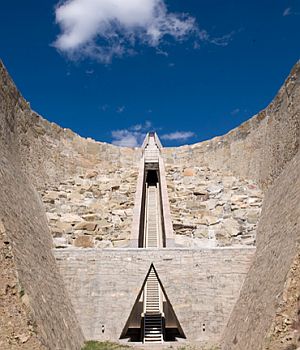
Star Axis, a masterpiece forty years in the making

star-axis

Ross Andersen writes: On a hot afternoon in late June, I pulled to the side of a two-lane desert highway in eastern New Mexico, next to a specific mile marker. An hour earlier, a woman had told me to wait for her there at three o’clock, ‘sharp’. I edged as far off the shoulder as I could, to avoid being seen by passing traffic, and parked facing the wilderness. A sprawling, high desert plateau was set out before me, its terrain a maze of raised mesas, sandstone survivors of differential erosion. Beyond the plateau, the landscape stretched for miles, before dissolving into a thin strip of desert shimmer. The blurry line marked the boundary between the land and one of the biggest, bluest skies I’d ever seen.

I had just switched off the ignition when I spotted a station wagon roaring toward me from the plateau, towing a dust cloud that looked like a miniature sandstorm. Its driver was Jill O’Bryan, the wife and gatekeeper of Charles Ross, the renowned sculptor. Ross got his start in the Bay Area art world of the mid‑1960s, before moving to New York, where he helped found one of SoHo’s first artist co-ops. In the early 1970s, he began spending a lot of time here in the New Mexico desert. He had acquired a remote patch of land, a mesa he was slowly transforming into a massive work of land art, a naked-eye observatory called Star Axis. Ross rarely gives interviews about Star Axis, but when he does he describes it as a ‘perceptual instrument’. He says it is meant to offer an ‘intimate experience’ of how ‘the Earth’s environment extends into the space of the stars’. He has been working on it for more than 40 years, but still isn’t finished.

I knew Star Axis was out there on the plateau somewhere, but I didn’t know where. Its location is a closely guarded secret. Ross intends to keep it that way until construction is complete, but now that he’s finally in the homestretch he has started letting in a trickle of visitors. I knew, going in, that a few Hollywood celebrities had been out to Star Axis, and that Ross had personally showed it to Stewart Brand. After a few months of emails, and some pleading on my part, he had agreed to let me stay overnight in it.

star-axis-daytimeOnce O’Bryan was satisfied that I was who I said I was, she told me to follow her, away from the highway and into the desert. I hopped back into my car, and we caravanned down a dirt road, bouncing and churning up dust until, 30 minutes in, O’Bryan suddenly slowed and stuck her arm out her driver’s side window. She pointed toward a peculiar looking mesa in the distance, one that stood higher than the others around it. Notched into the centre of its roof was a granite pyramid, a structure whose symbolic power is as old as history.

Twenty minutes later, O’Bryan and I were parked on top of the mesa, right at the foot of the pyramid and she was giving me instructions. ‘Don’t take pictures,’ she said, ‘and please be vague about the location in your story.’ She also told me not to use headlights on the mesa top at night, lest their glow tip off unwanted visitors. There are artistic reasons for these cloak-and-dagger rituals. Like any ambitious artist, Ross wants to polish and perfect his opus before unveiling it. But there are practical reasons, too. For while Star Axis itself is nearly built, its safety features are not, and at night the pitch black of this place can disorient you, sending you stumbling into one of its chasms. There is even an internet rumour — Ross wouldn’t confirm it — that the actress Charlize Theron nearly fell to her death here. [Continue reading…]

Facebooktwittermail

Slavoj Žižek: ‘Most of the idiots I know are academics’

Luke Massey writes: Slavoj Žižek is brimming with thought. Each idea sprays out of the controversial Slovenian philosopher and cultural theorist in a jet of words. He is like a water balloon, perforated in so many areas that its content gushes out in all directions.

The result is that, as an interviewer, trying to give direction to the tide is a joyfully hopeless enterprise. Perhaps more significantly, the same seems to be true for Žižek himself.

We meet in a room with one glass wall – an apt setting for a discussion of freedom, ideology, surveillance and ‘80s dystopias on film. Picturehouse HQ is playing host to our discussion, on the launch of Žižek’s new film The Pervert’s Guide to Ideology.

Before I even ask my first question, Slavoj is off: he tells me that I’m better than some interviewers he’s met. The fact that I’ve barely spoken yet doesn’t seem a barrier to that. [Continue reading…]

Facebooktwittermail

Can we get our heads around consciousness?

Michael Hanlon writes: The question of how the brain produces the feeling of subjective experience, the so-called ‘hard problem’, is a conundrum so intractable that one scientist I know refuses even to discuss it at the dinner table. Another, the British psychologist Stuart Sutherland, declared in 1989 that ‘nothing worth reading has been written on it’. For long periods, it is as if science gives up on the subject in disgust. But the hard problem is back in the news, and a growing number of scientists believe that they have consciousness, if not licked, then at least in their sights.

A triple barrage of neuroscientific, computational and evolutionary artillery promises to reduce the hard problem to a pile of rubble. Today’s consciousness jockeys talk of p‑zombies and Global Workspace Theory, mirror neurones, ego tunnels, and attention schemata. They bow before that deus ex machina of brain science, the functional magnetic resonance imaging (fMRI) machine. Their work is frequently very impressive and it explains a lot. All the same, it is reasonable to doubt whether it can ever hope to land a blow on the hard problem.

For example, fMRI scanners have shown how people’s brains ‘light up’ when they read certain words or see certain pictures. Scientists in California and elsewhere have used clever algorithms to interpret these brain patterns and recover information about the original stimulus — even to the point of being able to reconstruct pictures that the test subject was looking at. This ‘electronic telepathy’ has been hailed as the ultimate death of privacy (which it might be) and as a window on the conscious mind (which it is not).

The problem is that, even if we know what someone is thinking about, or what they are likely to do, we still don’t know what it’s like to be that person. Hemodynamic changes in your prefrontal cortex might tell me that you are looking at a painting of sunflowers, but then, if I thwacked your shin with a hammer, your screams would tell me you were in pain. Neither lets me know what pain or sunflowers feel like for you, or how those feelings come about. In fact, they don’t even tell us whether you really have feelings at all. One can imagine a creature behaving exactly like a human — walking, talking, running away from danger, mating and telling jokes — with absolutely no internal mental life. Such a creature would be, in the philosophical jargon, a zombie. (Zombies, in their various incarnations, feature a great deal in consciousness arguments.)

Why might an animal need to have experiences (‘qualia’, as they are called by some) rather than merely responses? In this magazine, the American psychologist David Barash summarised some of the current theories. One possibility, he says, is that consciousness evolved to let us to overcome the ‘tyranny of pain’. Primitive organisms might be slaves to their immediate wants, but humans have the capacity to reflect on the significance of their sensations, and therefore to make their decisions with a degree of circumspection. This is all very well, except that there is presumably no pain in the non-conscious world to start with, so it is hard to see how the need to avoid it could have propelled consciousness into existence.

Despite such obstacles, the idea is taking root that consciousness isn’t really mysterious at all; complicated, yes, and far from fully understood, but in the end just another biological process that, with a bit more prodding and poking, will soon go the way of DNA, evolution, the circulation of blood, and the biochemistry of photosynthesis. [Continue reading…]

Facebooktwittermail

The more power individuals acquire, the less human they become

Daniel Goleman writes: Turning a blind eye. Giving someone the cold shoulder. Looking down on people. Seeing right through them.

These metaphors for condescending or dismissive behavior are more than just descriptive. They suggest, to a surprisingly accurate extent, the social distance between those with greater power and those with less — a distance that goes beyond the realm of interpersonal interactions and may exacerbate the soaring inequality in the United States.

A growing body of recent research shows that people with the most social power pay scant attention to those with little such power. This tuning out has been observed, for instance, with strangers in a mere five-minute get-acquainted session, where the more powerful person shows fewer signals of paying attention, like nodding or laughing. Higher-status people are also more likely to express disregard, through facial expressions, and are more likely to take over the conversation and interrupt or look past the other speaker.

Bringing the micropolitics of interpersonal attention to the understanding of social power, researchers are suggesting, has implications for public policy.

Of course, in any society, social power is relative; any of us may be higher or lower in a given interaction, and the research shows the effect still prevails. Though the more powerful pay less attention to us than we do to them, in other situations we are relatively higher on the totem pole of status — and we, too, tend to pay less attention to those a rung or two down.

A prerequisite to empathy is simply paying attention to the person in pain. In 2008, social psychologists from the University of Amsterdam and the University of California, Berkeley, studied pairs of strangers telling one another about difficulties they had been through, like a divorce or death of a loved one. The researchers found that the differential expressed itself in the playing down of suffering. The more powerful were less compassionate toward the hardships described by the less powerful. [Continue reading…]

Facebooktwittermail