Author Archives: Attention to the Unseen

We’re only beginning to understand how our brains make maps

The Atlantic: About 40 years ago, researchers first began to suspect that we have neurons in our brains called “place cells.” They’re responsible for helping us (rats and humans alike) find our way in the world, navigating the environment with some internal sense of where we are, how far we’ve come, and how to find our way back home. All of this sounds like the work of maps. But our brains do impressively sophisticated mapping work, too, and in ways we never actively notice.

Every time you walk out your front door and past the mailbox, for instance, a neuron in your hippocampus fires as you move through that exact location – next to the mailbox – with a real-world precision down to as little as 30 centimeters. When you come home from work and pass the same spot at night, the neuron fires again, just as it will the next morning. “Each neuron cares for one place,” says Mayank Mehta, a neurophysicist at UCLA. “And it doesn’t care for any other place in the world.”

This is why these neurons are called “place cells.” And, in constantly shuffling patterns, they generate our cognitive maps of the world. Exactly how they do this, though, has remained a bit of an enigma. The latest research from Mehta and his colleagues, published this month in the online edition of the journal Science, provides more clues. It now appears as if all of the sensory cues around us – the smell of a pizzeria, the feel of a sidewalk, the sound of a passing bus – are much more integral to how our brains map our movement through space than scientists previously believed. [Continue reading…]


Facebooktwittermail

The secret lives (and deaths) of neurons

UNC School of Medicine: As the human body fine-tunes its neurological wiring, nerve cells often must fix a faulty connection by amputating an axon — the “business end” of the neuron that sends electrical impulses to tissues or other neurons. It is a dance with death, however, because the molecular poison the neuron deploys to sever an axon could, if uncontained, kill the entire cell.

Researchers from the University of North Carolina School of Medicine have uncovered some surprising insights about the process of axon amputation, or “pruning,” in a study published May 21 in the journal Nature Communications. Axon pruning has mystified scientists curious to know how a neuron can unleash a self -destruct mechanism within its axon, but keep it from spreading to the rest of the cell. The researchers’ findings could offer clues about the processes underlying some neurological disorders.

“Aberrant axon pruning is thought to underlie some of the causes for neurodevelopmental disorders, such as schizophrenia and autism,” said Mohanish Deshmukh, PhD, professor of cell biology and physiology at UNC and the study’s senior author. “This study sheds light on some of the mechanisms by which neurons are able to regulate axon pruning.”

Axon pruning is part of normal development and plays a key role in learning and memory. Another important process, apoptosis — the purposeful death of an entire cell — is also crucial because it allows the body to cull broken or incorrectly placed neurons. But both processes have been linked with disease when improperly regulated. [Continue reading…]

Facebooktwittermail

Australia’s Aboriginals

Before visiting Matamata, a lost-in-the-bush village of 25 or so people in Australia’s Northern Territory, Michael Finkel needed permission from the village’s matriarch, Phyllis Batumbil. She agreed and asked him to bring dinner for everyone:

I unloaded two duffels of personal effects and a dozen bags of groceries. Dinner for 25, I mentioned, is quite a load. Batumbil nodded. Take a look at all that food, she said. Could you imagine catching that much in one day using only a spear? And then again the next day and the day after that? I said it would be just about impossible. Aboriginal people, she said, have been doing it every day for at least 50,000 years.

For 49,800 of those years they had the continent to themselves. There were once about 250 distinct Aboriginal languages, hundreds more dialects, and many more clans and subgroups. But there is deep spiritual and cultural overlap among them, and indigenous Australians I spoke with said it was not insulting to combine everyone together under the general title of Aboriginal. They call themselves Aboriginals. They lived for a couple of thousand generations in small, nomadic bands, as befits a hunter-gatherer existence, moving in their own rhythms about the vast expanse of Australia. Then on April 29, 1770, British explorer James Cook landed his ship, the Endeavour, on the southeastern shore. The next two centuries were a horror show of cultural obliteration — massacres, disease, alcoholism, forced integration, surrender.

More than a half million Aboriginals currently live in Australia, less than 3 percent of the population. Few have learned to perform an Aboriginal dance or hunt with a spear. Many anthropologists credit Aboriginals with possessing the world’s longest enduring religion as well as the longest continuing art forms — the cross-hatched and dot-patterned painting styles once inscribed in caves and rock shelters. They are one of the most durable societies the planet has ever known. But the traditional Aboriginal way of life is now, by any real measure, almost extinct.

Almost. There remain a few places. Foremost is a region known as Arnhem Land, where Matamata is located, along with a couple dozen other communities, all connected by rough dirt roads passable only in dry weather. [Continue reading…]

Facebooktwittermail

Bach to the blues, our emotions match music to colors

>UC Berkeley: Whether we’re listening to Bach or the blues, our brains are wired to make music-color connections depending on how the melodies make us feel, according to new research from the University of California, Berkeley. For instance, Mozart’s jaunty Flute Concerto No. 1 in G major is most often associated with bright yellow and orange, whereas his dour Requiem in D minor is more likely to be linked to dark, bluish gray.

Moreover, people in both the United States and Mexico linked the same pieces of classical orchestral music with the same colors. This suggests that humans share a common emotional palette – when it comes to music and color – that appears to be intuitive and can cross cultural barriers, UC Berkeley researchers said.

“The results were remarkably strong and consistent across individuals and cultures and clearly pointed to the powerful role that emotions play in how the human brain maps from hearing music to seeing colors,” said UC Berkeley vision scientist Stephen Palmer, lead author of a paper published this week in the journal Proceedings of the National Academy of Sciences. [Continue reading…]

Facebooktwittermail

Pain can be contagious

Monash University: The pain sensations of others can be felt by some people, just by witnessing their agony, according to new research.

A Monash University study into the phenomenon known as somatic contagion found almost one in three people could feel pain when they see others experience pain. It identified two groups of people that were prone to this response – those who acquire it following trauma, injury such as amputation or chronic pain, and those with the condition present at birth, known as the congenital variant.

Presenting her findings at the Australian and New Zealand College of Anaesthetists’ annual scientific meeting in Melbourne earlier this week, Dr Melita Giummarra, from the School of Psychology and Psychiatry, said in some cases people suffered severe painful sensations in response to another person’s pain.

“My research is now beginning to differentiate between at least these two unique profiles of somatic contagion,” Dr Giummarra said.

“While the congenital variant appears to involve a blurring of the boundary between self and other, with heightened empathy, acquired somatic contagion involves reduced empathic concern for others, but increased personal distress.

“This suggests that the pain triggered corresponds to a focus on their own pain experience rather than that of others.”

Most people experience emotional discomfort when they witness pain in another person and neuroimaging studies have shown that this is linked to activation in the parts of the brain that are also involved in the personal experience of pain.

Dr Giummarra said for some people the pain they ‘absorb’ mirrors the location and site of the pain in another they are witnessing and is generally localised.

“We know that the same regions of the brain are activated for these groups of people as when they experience their own pain. First in emotional regions but then there is also sensory activation. It is a vicarious – it literally triggers their pain, Dr Giummarra said”

Dr Giummarra has developed a new tool to characterise the reactions people have to pain in others that is also sensitive to somatic contagion – the Empathy for Pain Scale.

Facebooktwittermail

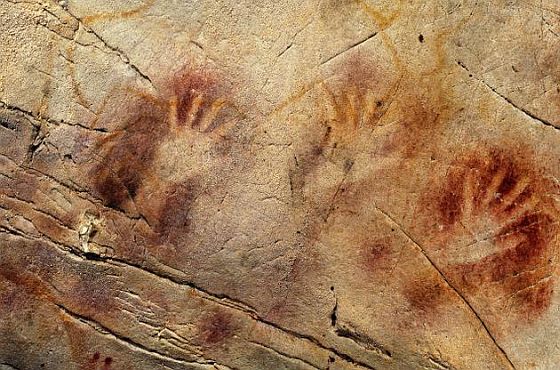
Were Neanderthals the mental equals of modern humans?

Red disks next to stenciled hand-prints in El Castillo cave, Spain -- one at least 40,800 years old -- might be the creation of Neanderthals.

Tim Appenzeller writes: [D]id the Neanderthals, once caricatured as brute cavemen, have minds like our own, capable of abstract thinking, symbolism and even art? It is one of the most haunting questions about the people who once shared a continent with us, then mysteriously vanished.

An early date for the paintings [found in El Castillo cave, Spain] would also be a vindication for the slight, dark-haired man watching as Pike works [taking samples of calcite accretions formed on the surface of the paintings]: João Zilhão, who has emerged as the leading advocate for Neanderthals, relentlessly pressing the case that these ice-age Europeans were our cognitive equals. Zilhão, an archaeologist at the Catalan Institution for Research and Advanced Studies at the University of Barcelona in Spain, believes that other signs of sophisticated Neanderthal culture have already proved his point. But he is willing to debate on his opponents’ terms. “To my mind, we don’t need that evidence,” he says of the paintings. “But I guess for many of my colleagues this would be the smoking gun.”

The front line in the Neanderthal wars runs through another cave: Grotte du Renne, 1,000 kilometres away in central France. As early as the 1950s, excavations there unearthed a collection of puzzling artefacts. Among them were bone awls, distinctive stone blades and palaeolithic baubles — the teeth of animals such as foxes or marmots, grooved or pierced so that they could be worn on a string. They were buried beneath artefacts typical of the first modern humans in Europe, suggesting that these objects were older. A startling possibility loomed: that artefacts of this style, collectively known as the Châtelperronian industry, were made by Neanderthals. [Continue reading…]

Facebooktwittermail

The community within

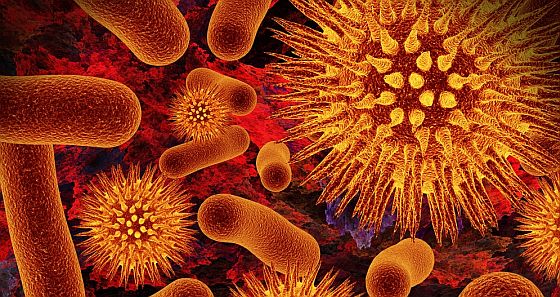
Michael Pollan writes: I can tell you the exact date that I began to think of myself in the first-person plural — as a superorganism, that is, rather than a plain old individual human being. It happened on March 7. That’s when I opened my e-mail to find a huge, processor-choking file of charts and raw data from a laboratory located at the BioFrontiers Institute at the University of Colorado, Boulder. As part of a new citizen-science initiative called the American Gut project, the lab sequenced my microbiome — that is, the genes not of “me,” exactly, but of the several hundred microbial species with whom I share this body. These bacteria, which number around 100 trillion, are living (and dying) right now on the surface of my skin, on my tongue and deep in the coils of my intestines, where the largest contingent of them will be found, a pound or two of microbes together forming a vast, largely uncharted interior wilderness that scientists are just beginning to map.

I clicked open a file called Taxa Tables, and a colorful bar chart popped up on my screen. Each bar represented a sample taken (with a swab) from my skin, mouth and feces. For purposes of comparison, these were juxtaposed with bars representing the microbiomes of about 100 “average” Americans previously sequenced.

Here were the names of the hundreds of bacterial species that call me home. In sheer numbers, these microbes and their genes dwarf us. It turns out that we are only 10 percent human: for every human cell that is intrinsic to our body, there are about 10 resident microbes — including commensals (generally harmless freeloaders) and mutualists (favor traders) and, in only a tiny number of cases, pathogens. To the extent that we are bearers of genetic information, more than 99 percent of it is microbial. And it appears increasingly likely that this “second genome,” as it is sometimes called, exerts an influence on our health as great and possibly even greater than the genes we inherit from our parents. But while your inherited genes are more or less fixed, it may be possible to reshape, even cultivate, your second genome. [Continue reading…]

Facebooktwittermail

New study examines how individuality develops

EurekAlert! reports: The adult brain continues to grow with the challenges that it faces; its changes are linked to the development of personality and behavior. But what is the link between individual experience and brain structure? Why do identical twins not resemble each other perfectly even when they grew up together? To shed light on these questions, the scientists observed forty genetically identical mice that were kept in an enclosure offering a large variety of activity and exploration options.

“The animals were not only genetically identical, they were also living in the same environment,” explains principal investigator Gerd Kempermann, Professor for Genomics of Regeneration, CRTD, and Site Speaker of the DZNE in Dresden. “However, this environment was so rich that each mouse gathered its own individual experiences in it. Over time, the animals therefore increasingly differed in their realm of experience and behavior.”

Each of the mice was equipped with a special micro-chip emitting electromagnetic signals. This allowed the scientists to construct the mice’s movement profiles and to quantify their exploratory behavior. The result: Despite a common environment and identical genes the mice showed highly individualized behavioral patterns. They reacted to their environment differently. In the course of the three-month experiment these differences increased in size.

“Though the animals shared the same life space, they increasingly differed in their activity levels. These differences were associated with differences in the generation of new neurons in the hippocampus, a region of the brain that supports learning and memory,” says Kempermann. “Animals that explored the environment to a greater degree also grew more new neurons than animals that were more passive.”

Adult neurogenesis, that is, the generation of new neurons in the hippocampus, allows the brain to react to new information flexibly. With this study, the authors show for the first time that personal experiences and ensuing behavior contribute to the “individualization of the brain.” The individualization they observed cannot be reduced to differences in environment or genetic makeup.

“Adult neurogenesis also occurs in the hippocampus of humans,” says Kempermann. “Hence we assume that we have tracked down a neurobiological foundation for individuality that also applies to humans.” [Continue reading…]

Facebooktwittermail