Author Archives: Paul Woodward

Israel’s slide towards fascism

In a 2003 issue of Free Inquiry, Laurence W. Britt innumerated the characteristics of fascism:

1. Powerful and continuing expressions of nationalism.
2. Disdain for the importance of human rights.
3. Identification of enemies/scapegoats as a unifying cause.
4. The supremacy of the military/avid militarism.
5. Rampant sexism.
6. A controlled mass media.
7. Obsession with national security.
8. Religion and ruling elite tied together.
9. Power of corporations protected.
10. Power of labor suppressed or eliminated.
11. Disdain and suppression of intellectuals and the arts.
12. Obsession with crime and punishment.
13. Rampant cronyism and corruption.
14. Fraudulent elections.

To this list I would add an overarching trend: an unremitting narrowing of the political space through which dissent is marginalized and then criminalized.

Israel might not yet exhibit all the attributes of a fascist state, but it is certainly on a fascist trajectory.

On Sunday, the human rights activist, former Israeli air force pilot and conscientious objector Yonatan Shapira, was summoned to a meeting with an agent from the Shabak (formally known as “Shin Beit”, Israel’s internal security service).

This is how the secret police operate: place a firm hand on the shoulder of the political dissident and attempt to steer him in the right direction. Show him the boundaries of what the authorities will tolerate and offer subtle or not so subtle warnings about the consequences of actions deemed a threat to national security. The preservation of peace, protection of the state and the duties of the patriotic citizen — these are the terms within which authoritarian rule couches the application of its power.

Noam Sheizaf provides a translation of Yonatan’s description of his interview:

Yesterday Rona from the Shabak called me and asked me to come talk to meet her in the police station on Dizengof st. (Tel Aviv). She refused to tell me what was it about, but made it clear I wasn’t going to be arrested, and that this is just an acquaintance or “a friendly talk”…

At five o’clock I got to the Dizengof police station and was sent to the second floor of the rear building, where a guy who presented himself as Rona’s security guard waited for me. I was taken to a room and subjected to a pretty intimate search to make sure I didn’t install any recording device on my testicles. After I was found clean I was let into Rona’s room. She was a nice looking girl, apparently from a Yemeni origin, in her early thirties.

Rona told me that I she knew I was active in the BDS (movement) and (calling for) an economical boycott of Israel, and she wanted to know what else do I do as part of these activities. I told her that everything (that I do) is well known and published in the internet and the media, and that I have nothing to add, and that I wasn’t going to talk to her.

Rona emphasized that there is a Knesset bill that might soon make my activities illegal. She went on and tried to get me into a political debate, asking if I know that the BDS is in fact a Palestinian organization.

Rona raised the issue of the graffiti in Warsaw and asked it was my own idea or another part of the BDS. She asked if I understood that I crossed a line and hurt many people’s feeling. Obviously the Shabak feeling’s (were hurt) as well… I offered her again to listen to interviews and read article on the issue. She said she did listen and read, but she wanted to know more. I told her I would be happy to give a public lecture to anyone who wants to hear, but not (talk about it) in a Shabak interrogation.

Apart from the BDS issue she asked me if I knew that the demonstrations in Bil’in and Ni’ilin are illegal, and that the entire area is closed for Israelis and internationals each Friday from 8.00 am to 8.00 pm. She went into length explaining how the soldiers feel in these demonstrations and that it irritates them when I talk to them and when I answer them.

Rona said she was there herself and that stones were thrown at her, and that it was really unpleasant. She said that the fact that Israelis are present there makes the Palestinians more violent, and that I have to think how the poor soldiers feel, and that all she is trying to do is for the good of the country and out of her will to defend the people living here.

I answered that all I do is out of a will to defend the people living here as well, and I asked where did she get all the information on my activities and whether they are listening to my phone. She said that she can’t answer this, but that generally speaking the Shabak has more important things to do, so I asked her whet I was doing here and why was I invited to a kind political interrogation if they have more important things to do.

I asked again if they are listening to my phone calls and Rona said she can’t answer that.

She asked me not to publish the content of our conversation because she wasn’t the type who wants publicity… I answered that as a person committed to a non-violent struggle against the occupation I would talk and publish anything I can, including the content of this conversation and future ones, if these will be such.

I documented the entire conversation on a piece of paper until Rona started discussing this paper and what I was writing down. Eventually she confiscated the dangerous piece of paper, claiming that I was not allowed to have any recording device in, and that what I was doing was illegal.

Luckily I remembered most of the conversation and Rona hasn’t confiscated my memory yet. Maybe (it will happen) in our next meeting.

That’s it. There might have been more details but from what I get these were the main issues. I understood that what they were after was our involvement in the BDS, and that they might even be preparing files for the moment the new law is passed.

Yonatan.

Noam Sheizaf says: “Yonatan could be right in assuming the police or the Shabak is putting together files on Israelis involved in the BDS. One of the many anti-democratic aspects of the new Knesset bill is that it will be possible to enforce it on past actions as well.”

Pulse included a public statement subsequently issued by Yonatan:

Even though this isn’t the best way to start or finish your day, my conversation with Rona from the Shabak was like a nature walk in summer-camp, when you compare it to what Palestinian citizens of Israel and residents of the Occupied Territories are going through. Amir Makhoul, Resident of Heifa is still caged without us knowing what the Shabak allegations against him are. Samieh Jabarin, resident of Jaffa, was under house arrest for long months, and of course, thousands of Palestinians in the [Occupied] Territories that Rona and her friends were- and will be- less “friendly” and polite to. This includes torture and bodily injuries and murder that will never be published and will forever stay buried in the Shabak basements and in the memories of those who survived.

On Sunday, I’ve experienced the tip of the tip of the iceberg of the processing of that which is called the only democracy in the Middle East. Today it happens to Israelis that express solidarity with the nonviolent Palestinian struggle, and tomorrow the circle will widen and widen. Until it will reach those who feel that they’re actually OK and that there’s no chance that Rona will call them, too.


Facebooktwittermail

IHH — The Foundation for Human Rights and Freedoms and Humanitarian Relief

At Huffington Post, Iara Lee from Cultures of Resistance, writes:

In the immediate aftermath of the massacre aboard the Mavi Marmara on May 31st, 2010, while journalists and activists were detained and isolated from the world, the Israeli government was quick to unleash their own version of events. Like the physical assault on the boat, the Israeli media assault was also reckless, clumsy, malicious, and dangerous. They were cynical enough to understand that first impressions in the mainstream American media are what count, and with this in mind they began to frantically hurl the word “terrorist” in reference to both the victims of their attack, as well as one of the main organizers of the Gaza Freedom Flotilla, the Turkish NGO IHH. It is a curious thing that few people asked the Israeli government why they would release “terrorists” that they had in their custody, and even fewer asked for (or received) solid evidence to support this claim. Despite the fact that several courageous journalists both in the US and abroad thoroughly debunked the Israeli account of what happened (this includes deliberately doctored footage along with the libelous accusations of links to terrorism), the damage was done.

Before speakers from the Mavi Marmara were scheduled to speak in New York about what happened on May 31st, local politicians began to put forth the rhetoric of their Israeli handlers, using slanderous language to demonize the victims of Israel’s illegal act of war. And most recently, 87 US senators have urged President Obama to launch an investigation of whether or not IHH should be added to the US list of foreign terrorist organizations.

I am a firm believer that actions speak louder than words, and in this spirit I thought it might help to take a closer look at IHH, and judge this group based on their actions, rather than empty words.

IHH began in 1992 as a humanitarian mission to offer relief to victims injured and displaced during the Bosnian war. They have held Special Consultative Status with the United Nations Economic and Social Council since 2004, and since becoming a fully-registered NGO in 1995, IHH — The Foundation for Human Rights and Freedoms and Humanitarian Relief — has accumulated more than 60,000 volunteers for their grassroots humanitarian efforts in 120 countries all over the world. Since May 31st, the number of volunteers has skyrocketed.

After the attack on the Mavi Marmara, I had an opportunity to ask the vice president of IHH, Huseyin Oruc, about accusations of IHH terror links. While he was not interested in dignifying such claims, he was very emphatic about the transparency of IHH’s work over the years, and hoped people would look at their large-scale sanitation and medical missions around the African continent — including 40,000 cataract surgeries in Sudan alone, clean water projects in Ethiopia- and IHH’s extensive work dealing with orphans in Iraq, Afghanistan, Pakistan, Bangladesh, and Gaza. While they are an Islamic organization, Oruc told me that IHH refuses to differentiate who receives attention based on religion, race, or political affiliation, and has noted their various projects in South America where Muslim populations are slight.

Their modus operandi is simple and direct. Given the neutrality of their humanitarian mission, IHH has been able to access some of the most inaccessible and dangerous regions of the world to help those most in need. Like most NGOs, this means they must coordinate with local governments in order to reach these populations. So while they must communicate with the Hamas government of Gaza to help civilians there, they must likewise do so with Fatah in the West Bank, Al Shabab in Somalia, the military junta in Myanmar and so on. Oruc was adamant that this did not mean IHH endorses any of those governments, and said that anyone who cared to investigate their work would find nothing other than great successes in helping ordinary people in situations of war, poverty, and natural disasters in places such as Haiti, Indonesia, and even the US in the aftermath of Hurricane Katrina. He also told me people were free to investigate their funding, most of which comes from lower and middle class donors, while the rest is raised through food fairs, auctions for Turkish artifacts, and other cultural events. By its own mandate, IHH is not beholden to any government or business interests.

We must remember that an attack on IHH is an attack on all humanitarian groups around the world. Given that IHH is among the most courageous humanitarian NGOs in the world — risking their lives to work in places like Somalia, cleaning up American messes in Iraq and Afghanistan — our politicians should perhaps be thanking them, rather than trying to tarnish their stellar reputation. Thankfully, IHH’s track record speaks for itself, as do the actions of their accusers — a comparison which does not calculate favorably for the Israeli government when asking just who, exactly, the terrorists are.

Facebooktwittermail

Dynamic generals

(Updated below)

In the second article on its series on Top Secret America, the Washington Post looks at “National Security Inc” where the boundaries of government have dissolved in a defense-intelligence-corporate world.

To illustrate the way this world operates in the post-9/11 era, Dana Priest and William Arkin focus on one of the lead corporations: General Dynamics.

The evolution of General Dynamics was based on one simple strategy: Follow the money.

The company embraced the emerging intelligence-driven style of warfare. It developed small-target identification systems and equipment that could intercept an insurgent’s cellphone and laptop communications. It found ways to sort the billions of data points collected by intelligence agencies into piles of information that a single person could analyze.

It also began gobbling up smaller companies that could help it dominate the new intelligence landscape, just as its competitors were doing. Between 2001 and 2010, the company acquired 11 firms specializing in satellites, signals and geospatial intelligence, surveillance, reconnaissance, technology integration and imagery.

On Sept. 11, 2001, General Dynamics was working with nine intelligence organizations. Now it has contracts with all 16. Its employees fill the halls of the NSA and DHS. The corporation was paid hundreds of millions of dollars to set up and manage DHS’s new offices in 2003, including its National Operations Center, Office of Intelligence and Analysis and Office of Security. Its employees do everything from deciding which threats to investigate to answering phones.

General Dynamics’ bottom line reflects its successful transformation. It also reflects how much the U.S. government – the firm’s largest customer by far – has paid the company beyond what it costs to do the work, which is, after all, the goal of every profit-making corporation.

The company reported $31.9 billion in revenue in 2009, up from $10.4 billion in 2000. Its workforce has more than doubled in that time, from 43,300 to 91,700 employees, according to the company.

Revenue from General Dynamics’ intelligence- and information-related divisions, where the majority of its top-secret work is done, climbed to $10 billion in the second quarter of 2009, up from $2.4 billion in 2000, accounting for 34 percent of its overall revenue last year.

The company’s profitability is on display in its Falls Church headquarters. There’s a soaring, art-filled lobby, bistro meals served on china enameled with the General Dynamics logo and an auditorium with seven rows of white leather-upholstered seats, each with its own microphone and laptop docking station.

General Dynamics now has operations in every corner of the intelligence world. It helps counterintelligence operators and trains new analysts. It has a $600 million Air Force contract to intercept communications. It makes $1 billion a year keeping hackers out of U.S. computer networks and encrypting military communications. It even conducts information operations, the murky military art of trying to persuade foreigners to align their views with U.S. interests.

“The American intelligence community is an important market for our company,” said General Dynamics spokesman Kendell Pease. “Over time, we have tailored our organization to deliver affordable, best-of-breed products and services to meet those agencies’ unique requirements.”

In September 2009, General Dynamics won a $10 million contract from the U.S. Special Operations Command’s psychological operations unit to create Web sites to influence foreigners’ views of U.S. policy. To do that, the company hired writers, editors and designers to produce a set of daily news sites tailored to five regions of the world. They appear as regular news Web sites, with names such as “SETimes.com: The News and Views of Southeast Europe.” The first indication that they are run on behalf of the military comes at the bottom of the home page with the word “Disclaimer.” Only by clicking on that do you learn that “the Southeast European Times (SET) is a Web site sponsored by the United States European Command.”

What all of these contracts add up to: This year, General Dynamics’ overall revenue was $7.8 billion in the first quarter, Jay L. Johnson, the company’s chief executive and president, said at an earnings conference call in April. “We’ve hit the deck running in the first quarter,” he said, “and we’re on our way to another successful year.”

But here’s what’s remarkable about this description of General Dynamics: no mention of the way in which this company exemplifies in its governance the revolving door through which retired military officers and government officials cash in on their years of “public service.”

Nothing lubricates the wheels of defense commerce better than to have General Dynamics’ boardroom filled with retired generals and admirals:

  • Jay L. Johnson, Chairman and Chief Executive Officer — Retired Admiral, U.S. Navy. Chief of Naval Operations from 1996 to 2000.
  • George A. Joulwan, Director and Chairman, Compensation Committee — Retired General, U.S. Army. Supreme Allied Commander, Europe, from 1993 to 1997. Commander-in-Chief, Southern Command from 1990 to 1993.
  • Paul G. Kaminski, Director and Chairman, Finance and Benefit Plans Committee — Under Secretary of U.S. Department of Defense for Acquisition and Technology from 1994 to 1997.
  • John M. Keane, Director — Retired General, U.S. Army. Vice Chief of Staff of the Army from 1999 to 2003.
  • Lester L. Lyles, Director — Retired General, U.S. Air Force. Commander of the Air Force Materiel Command from 2000 to 2003. Vice Chief of Staff of the Air Force from 1999 to 2000.
  • Robert Walmsley, Director — Retired Vice Admiral, Royal Navy. Chief of Defence Procurement for the United Kingdom Ministry of Defence from 1996 to 2003.
  • The Washington Post article ends with the suggestion that government officials can be enticed with baubles as modest as a free pen, but the key nodes in the corrupt government-corporate nexus are clearly at the highest levels where tax dollars get siphoned into private bank accounts by retired generals and former government officials who smugly regard the practice as the way Washington works.

    Indeed it is — and it is the way capitalism corrupts democracy.

    Update: A reader has drawn my attention to the significance of the Crown family (which has been a strong financial supporter of Barack Obama since the 2003), Henry Crown being a Chicago financier and one of the richest, but least known, men in the US who acquired General Dynamics in 1959. Crown’s grandson, James S Crown, is currently Lead Director and Chairman of GD and also a director of J.P. Morgan Chase & Co. and Sara Lee Corporation.

    Through the Crown family, GD has strong ties to the Israeli defense industry.

    An article that appeared in Electronic Intifada in 2005 noted:

    A 2003 press release of the General Dynamics Ordnance and Tactical Systems business unit in St. Petersburg, Florida also noted that it had formed “a strategic alliance with Aeronautics Defense Systems, Ltd.,” an Israeli firm based in Yavne. Aeronautics Defense Systems Ltd. is the firm that developed the Unmanned Multi-Application System (UMASa) aerial surveillance tool which the Israeli military uses to “provide a real-time ‘bird’s eye view’ of the surveillance area to combatant commanders and airborne command posts.” According to Israeli Deputy Prime Minister Ehud Olmert, the agreement between General Dynamics and Aeronautics Defense Systems to bring together “both companies’ state-of-the art technologies in defense and homeland security” was “additional proof of the technological and commercial benefits that alliances between industries from the U.S. and Israel can produce.”

    From its investments in Pentagon war contractors like General Dynamics and U.S. real estate, the Crown family has accumulated a family fortune of $3.6 billion, according to a recent Forbes magazine estimate. A portion of the Crown family’s surplus wealth was apparently recently shifted to Brandeis University in Massachusetts in order to establish the “Crown Center for Middle East Studies.”

    According to the February 27, 2005 issue of the Jerusalem Post, “the center’s major funder, the Crown family of Chicago, is well-known for its support of sectarian Jewish causes, including the Ida Crown Jewish Academy, an orthodox day school in Chicago.” In addition to being a member of the General Dynamics corporate board, for instance, Lester Crown is a member of the board of The Jerusalem Foundation Inc. and a a member of Tel Aviv University’s Board of Governors. Lester Crown has also been actively involved with the American Jewish Committee and is a member of the advisory board of Medis Technologies, a joint venture business partner of Israel Aircraft Industries Ltd.

    In January 2008, during the presidential election, Lester Crown (father of James Crown) wrote a “Dear friends” letter to a large number of Jewish voters, titled “Barack Obama on Israel as a Jewish State.”

    “While my involvement in politics is motivated by a variety of issues, there is one issue that is fundamental: My deep commitment to Israel and to a strong U.S.-Israel relationship that strengthens both Israel’s security and its efforts to seek peace,” Crown wrote. “I am writing to share with you my confidence that Senator Barack Obama’s stellar record on Israel gives me great comfort that, as President, he will be the friend to Israel that we all want to see in the White House – stalwart in his defense of Israel’s security, and committed to helping Israel achieve peace with its neighbors.”

    Crown’s confidence in the reliability of his investment in Obama appears to have been well-founded.

    Professor John Mearsheimer from the University of Chicago, includes Crown among what he calls “new Afrikaners, who will support Israel even if it is an apartheid state. These are individuals who will back Israel no matter what it does, because they have blind loyalty to the Jewish state.”

    Facebooktwittermail

    George Mitchell — fake peace envoy

    “Senator Mitchell will … work to support the objectives that the President and I believe are critical and pressing in Gaza, to develop a program for humanitarian aid and eventual reconstruction,” said Secretary of State Hillary Clinton on January 22, 2009, the day George Mitchell was named Special Envoy for Middle East Peace.

    Since then a stream of political leaders have visited Gaza including: Senator John Kerry, chair of the Foreign Relations Committee, US Congress members Brian Baird and Keith Ellison, the European Union’s high representative for foreign affairs and security policy, Catherine Ashton, the Quartet’s Middle East envoy, Tony Blair, UN Secretary-General Ban Ki-moon, Secretary-General of the Arab League Amer Mousa, and a European Parliamentary Delegation comprised of 55 MEPs and MPs.

    So far, the closest Mitchell has come to Gaza is to visit the Kerem Shalom crossing where he participated in an Israeli PR stunt at the end of June.

    When he left the Senate, Mitchell said he hoped to become baseball commissioner — he’d turned down an offer from President Clinton to become a Supreme Court justice. He went on to become Chairman of the Walt Disney Company.

    After a year and a half as so-called Middle East peace envoy, Mitchell has accomplished less than nothing. He should do himself and the region a favor: salvage a bit of dignity and quit.

    This weekend, Chris Patten, the British Conservative politician and former European Commissioner, became the latest high profile figure to do what George Mitchell can’t bring himself to do: visit Gaza.

    On a visit to Gaza over the weekend, former EU commissioner, Chris Patten, has called for an end to the blockade of the Strip and for a reassessment of the ‘ridiculous’ policy of isolating Hamas.

    At a press conference in the territory on Monday, he called for channels of dialogue with Hamas to be re-opened and stated that the siege of Gaza did not result in a moderate position but in an increase of tensions.

    Patten called for the necessity of ending the illegal Israeli settlement expansion in the West Bank and pressed hard for an end the siege of the Gaza Strip, and the application of UN Resolution 1860. His visit coincides with the second visit of the High Representative for Common Foreign and Security Affairs in the European Union, Catherine Ashton, to Gaza who also called on Israel not just to allow more goods into the sector but to fully open Gaza’s borders.

    Patten said that as the biggest supporter of the Palestinian people and Israel’s largest economic partner, the EU should play a greater role in the Middle East.

    He stated that many of the health problems suffered by residents of the sector were caused by the embargo, which prohibits the entry of medical supplies and prevents patients with certain conditions from travelling to receive medical treatment. Patten visited the director of operations for UNRWA in Gaza, John Ging, as well as several medical sector projects and was briefed on health conditions in the sector.

    This is Patten’s third visit to Gaza. [Middle East Monitor]

    Facebooktwittermail

    America’s national security protection racket

    Every year, the images of a national security state careening out of control, as depicted in Terry Gilliam’s 1985 movie Brazil, become eerily more realistic. In his Ministry of Information, the underlings sneak their entertainment when the overseer steps out of sight, but at the National Counterterrorism Center (a “dumping ground for bad analysts“), entertainment (otherwise known as cable news) is on constant big-screen display.

    The Washington Post‘s investigation into “Top Secret America” reveals two sadly predictable tendencies:

    1. That the default position inside the US government remains: any problem can be solved if enough money is thrown at it, and
    2. the primary responsibility of an investigative reporter dealing with a story like this is supposedly to focus on whether taxpayers’ money is being well-spent and making us safer.

    The first feature article in the series says:

    At least 20 percent of the government organizations that exist to fend off terrorist threats were established or refashioned in the wake of 9/11. Many that existed before the attacks grew to historic proportions as the Bush administration and Congress gave agencies more money than they were capable of responsibly spending.

    The Pentagon’s Defense Intelligence Agency, for example, has gone from 7,500 employees in 2002 to 16,500 today. The budget of the National Security Agency, which conducts electronic eavesdropping, doubled. Thirty-five FBI Joint Terrorism Task Forces became 106. It was phenomenal growth that began almost as soon as the Sept. 11 attacks ended.

    Nine days after the attacks, Congress committed $40 billion beyond what was in the federal budget to fortify domestic defenses and to launch a global offensive against al-Qaeda. It followed that up with an additional $36.5 billion in 2002 and $44 billion in 2003. That was only a beginning.

    With the quick infusion of money, military and intelligence agencies multiplied. Twenty-four organizations were created by the end of 2001, including the Office of Homeland Security and the Foreign Terrorist Asset Tracking Task Force. In 2002, 37 more were created to track weapons of mass destruction, collect threat tips and coordinate the new focus on counterterrorism. That was followed the next year by 36 new organizations; and 26 after that; and 31 more; and 32 more; and 20 or more each in 2007, 2008 and 2009.

    In all, at least 263 organizations have been created or reorganized as a response to 9/11. Each has required more people, and those people have required more administrative and logistic support: phone operators, secretaries, librarians, architects, carpenters, construction workers, air-conditioning mechanics and, because of where they work, even janitors with top-secret clearances.

    The report continues:

    Not far from the Dulles Toll Road, the CIA has expanded into two buildings that will increase the agency’s office space by one-third. To the south, Springfield is becoming home to the new $1.8 billion National Geospatial-Intelligence Agency headquarters, which will be the fourth-largest federal building in the area and home to 8,500 employees. Economic stimulus money is paying hundreds of millions of dollars for this kind of federal construction across the region.

    It’s not only the number of buildings that suggests the size and cost of this expansion, it’s also what is inside: banks of television monitors. “Escort-required” badges. X-ray machines and lockers to store cellphones and pagers. Keypad door locks that open special rooms encased in metal or permanent dry wall, impenetrable to eavesdropping tools and protected by alarms and a security force capable of responding within 15 minutes. Every one of these buildings has at least one of these rooms, known as a SCIF, for sensitive compartmented information facility. Some are as small as a closet; others are four times the size of a football field.

    SCIF size has become a measure of status in Top Secret America, or at least in the Washington region of it. “In D.C., everyone talks SCIF, SCIF, SCIF,” said Bruce Paquin, who moved to Florida from the Washington region several years ago to start a SCIF construction business. “They’ve got the penis envy thing going. You can’t be a big boy unless you’re a three-letter agency and you have a big SCIF.”

    SCIFs are not the only must-have items people pay attention to. Command centers, internal television networks, video walls, armored SUVs and personal security guards have also become the bling of national security.

    “You can’t find a four-star general without a security detail,” said one three-star general now posted in Washington after years abroad. “Fear has caused everyone to have stuff. Then comes, ‘If he has one, then I have to have one.’ It’s become a status symbol.”

    Among the most important people inside the SCIFs are the low-paid employees carrying their lunches to work to save money. They are the analysts, the 20- and 30-year-olds making $41,000 to $65,000 a year, whose job is at the core of everything Top Secret America tries to do.

    At its best, analysis melds cultural understanding with snippets of conversations, coded dialogue, anonymous tips, even scraps of trash, turning them into clues that lead to individuals and groups trying to harm the United States.

    Their work is greatly enhanced by computers that sort through and categorize data. But in the end, analysis requires human judgment, and half the analysts are relatively inexperienced, having been hired in the past several years, said a senior ODNI official. Contract analysts are often straight out of college and trained at corporate headquarters.

    Nine years after the 9/11 attacks, the United States has a bloated national security structure of questionable effectiveness, at fantastic cost, and with very little accountability. Yet the analysis implies that if the system was more efficient and could indeed deliver as promised by making America safer, then this would indeed be a good thing.

    But do we need to be safer or simply less afraid?

    The explosion in the growth of the national security economy occurred right at the moment that the technology industry was desperate for support. The internet bubble had burst, an IPO no longer offered a path to quick fortunes for companies that had yet to develop an effective business model, so if the stock market was no longer willing to throw mountains of cash at speculative technological innovation, in the post 9/11 economy, the US government quickly became the investor of choice — at least for companies that could make a halfway plausible claim that their niche expertise might in some way enhance US national security.

    If greed was the engine of economic growth of the 90s, fear has demonstrated its economic value for most of the last decade. But what neither greed nor fear do is to improve the quality of life. That only happens when we look at the ways our lives are impoverished and address those needs.

    The need to feel safer is a need that has in large part been manufactured by those eager to capitalize on the economic value of fear.

    Just suppose that after 9/11 George Bush’s response had been this: clean up the mess in New York and Washington, improve security on airlines so no one could hijack a plane with a pocket knife, and then be done with it. Would we not now be living in a much better world?

    Perhaps we should be less afraid of those who might attack us than those who are in the business of protecting us. Top secret America looks like the biggest protection racket ever created.

    Facebooktwittermail

    Qualitative Military Edge — another name for Israeli brutality backed by the US

    On October 15, 2008, just three weeks before the US presidential election, George Bush signed into law the Naval Vessel Transfer Act which had been sponsored by one of Israel’s most loyal supporters in the US Congress, Rep. Howard Berman.

    The new law, which from its title might have been assumed to relate primarily to the sale of ships from the US Navy to foreign governments, actually had a much more important purpose: to place every American president under a legal obligation to ensure that Israel maintains its military dominance over the Middle East.

    What had previously been a matter of foreign policy, suddenly became law — law written to meet the interests of a foreign government.

    Israel’s regional hegemony is legally enshrined in the concept of Israel’s “Qualitative Military Edge” (QME). The US Government must now guarantee that “the sale or export of the defense articles or defense services will not adversely affect Israel’s qualitative military edge over military threats to Israel.”

    The law states:

    [T]he term ‘qualitative military edge’ means the ability to counter and defeat any credible conventional military threat from any individual state or possible coalition of states or from non-state actors, while sustaining minimal damages and casualties, through the use of superior military means, possessed in sufficient quantity, including weapons, command, control, communication, intelligence, surveillance, and reconnaissance capabilities that in their technical characteristics are superior in capability to those of such other individual or possible coalition of states or non-state actors. [Emphasis mine.]

    Andrew J Shapiro is the Assistant Secretary of State for Political-Military Affairs. One of his primary responsibilities is to ensure that Israel maintains its qualitative military edge. Does he serve the US government or the Israeli government? It’s far from clear.

    This is how he presented the United States’ obligation to serve Israel’s interests in a speech he delivered at the Brookings Institute in Washington on Friday:

    For decades, the cornerstone of our security commitment to Israel has been an assurance that the United States would help Israel uphold its qualitative military edge — a commitment that was written into law in 2008. Israel’s QME is its ability to counter and defeat credible military threats from any individual state, coalition of states, or non-state actor, while sustaining minimal damages or casualties. The Obama Administration has demonstrated its commitment to Israel’s QME by not only sustaining and building upon practices established by prior administrations, but also undertaking new initiatives to make our security relationship more intimate than ever before.

    Each and every security assistance request from the Israeli Government is evaluated in light of our policy to uphold Israel’s Qualitative Military Edge. At the same time, QME considerations extend to our decisions on defense cooperation with all other governments in the region. This means that as a matter of policy, we will not proceed with any release of military equipment or services that may pose a risk to allies or contribute to regional insecurity in the Middle East.

    The primary tool that the United States uses to ensure Israel’s qualitative military edge is security assistance. For some three decades, Israel has been the leading beneficiary of U.S. security assistance through the Foreign Military Financing program, or FMF. Currently, Israel receives almost $3 billion per year in U.S. funding for training and equipment under FMF. The total FMF account is $5 billion annually and is distributed among some 70 countries. So it is a testament to our special security relationship that each year Israel accounts for just over 50 percent of U.S. security assistance funding distributed through FMF.

    The Obama Administration is proud to carry on the legacy of robust U.S. security assistance for Israel. Indeed, we are carrying this legacy to new heights at a time when Israel needs our support to address the multifaceted threats it faces.

    For Fiscal Year 2010, the Administration requested $2.775 billion in security assistance funding specifically for Israel, the largest such request in U.S. history. Congress fully funded our request for FY 2010, and we have requested even more — $3.0 billion — for FY 2011. These requests fulfill the Administration’s commitment to implementing the 2007 memorandum of understanding with Israel to provide $30 billion in security assistance over 10 years.

    This commitment directly supports Israel’s security, as it allows Israel to purchase the sophisticated defense equipment it needs to protect itself, deter aggressors, and maintain its qualitative military edge. Today, I can assure you that — even in challenging budgetary times — this Administration will continue to honor this 10-year, $30 billion commitment in future fiscal years. [Emphasis mine.]

    Code Pink’s Medea Benjamin challenged Shapiro during Q&A:

    [I]t pains me to hear you sound more like an agent of the Israeli government than a U.S. representative because as you travel around the world you see that this “special relationship” really endangers us, makes us more hated around the world. So I wonder if you would be willing to step in other shoes and go to Gaza, see the results of the Israeli invasion there, see the destruction, talk to people in Gaza, talk to the elected government, which is Hamas. You don’t have to like them to talk to them. I also wonder if you’ve spent any time with people in the West Bank and East Jerusalem to see what it feels like for Palestinians, the daily humiliations they suffer.

    And I also wonder, given the financial crisis here at home and the great needs of impoverished nations around the world, couldn’t you think of a better use of $3 billion than giving it to a wealthy country like Israel that is abusing the human rights of Palestinians on a daily basis?

    Benjamin drew a round of applause — Shapiro declined to respond directly to her challenge.

    As Shapiro noted, the concept of Israel’s QME has been in use for decades, but it was only when the Bush administration let Israel draft American law, that QME turned into a license to use force with impunity.

    In January 2008, William Wunderle, a U.S. Army lieutenant colonel, and Andre Briere, a U.S. Air Force lieutenant colonel, wrote in a paper for The Washington Institute for Near East Policy:

    The US commitment to maintain Israel’s qualitative military edge (QME) is a long-standing tradition that every president since Lyndon Johnson has maintained and reiterated. The basic principle behind this commitment is simple: Israel is a bastion of liberal representative government in the Middle East, and, as such, its continued survival is a vital national interest of the United States. To ensure this longtime ally’s continued existence in a sea of nations that reflexively call for its destruction, Israel must be able to defend itself militarily and deter potential aggression. In this effort, Israel will always be militarily outnumbered with regard to the artillery, tanks, and combat aircraft that can be deployed by a coalition of Arab states. Israel’s continued survival can be ensured only if it is able to maintain qualitative military superiority, relying on superior weaponry, tactics, training, leadership, and other factors of military effectiveness to deter or defeat its numerically superior adversaries in the Middle East.

    In other words, the US policy advocated that Israel should be able to counter a quantitative disadvantage with a qualitative advantage. It said nothing about supporting Israel’s use of that advantage at minimal cost. The expression after all was qualitative military edge — not supremacy.

    These analysts noted however that:

    Israel defines QME as “the ability to sustain credible military advantage that provides deterrence and, if need be, the ability to rapidly achieve superiority on the battlefield against any foreseeable combination of forces with minimal damage and casualties.”

    The Israeli phrasing went straight into US law which says that Israel must maintain the ability to use military force “while sustaining minimal damages and casualties.”

    Let’s put that in context. The law was signed just two years after Israel had visibly lost its qualitative military edge in Lebanon in 2006 when it faced Hezbollah, and less than three months before it used the assault on Gaza to once again demonstrate its ability to wreak massive destruction while sustaining minimal damages and casualties.

    The war on Gaza, which President-elect Obama watched in silence, showed not merely the brutality that Israel is willing to use under America’s political protection, but the extent to which Israel’s military agenda is empowered through its ability to control the United States Government.

    The war on Gaza was QME in action.

    Facebooktwittermail

    Netanyahu: America is easy to push around


    Note: Click “CC” button to view English subtitles.

    In 2001, while he believed he was speaking in private, Netanyahu revealed his contempt for the United States (“something that can easily be moved”) and took pride in having halted the peace process (“I actually stopped the Oslo Accord”).

    The then-former Israeli prime minister was visiting a Jewish settlement in the West Bank to pay his condolences to the family of a man shot by a Palestinian. Three minutes into the conversation, Netanyahu requested that the video camera be switched off so that he could speak ‘freely’ but in mid-conversation, the camera resumed operation.

    Dena Shunra, a Hebrew-English translator living and working in the United States, provided a translation of the conversation which was broadcast on Israel’s Channel 10. The following transcript published by Mondoweiss, runs from 3.15 to about minute 8.

    Netanyahu: Are you starting to understand what the slogan “Judea and Samaria are right here”?
    What does Arafat want? He wants one big settlement. It’s called “Tel Aviv”.

    Woman: Yes, that’s what my daughter in law, who comes from England, that what she says: “Tel Aviv is a settlement too.”

    Netanyahu: As far as they’re concerned, I think, our territorial waters are also their?
    -?
    [inaudible]

    Netanyahu: The fact is that they want us in the sea, yes, but over there in the sea [points aside]. The Arabs are currently focusing a war of terror and they think it will break us. The main thing, first of all, is to hit them. Not just one hit, so many painful its that the price will be to heavy to be borne. The price is not too heavy to be borne, now. A broad attack on the Palestinian Authority. To bring them to the point of being afraid that everything is collapsing.

    Woman: They’re not afraid, they’re making fun of us. They shoot into our settlement and make fun of us.

    Netanyahu: Fear that everything is collapsing. That’s what leads them to… [makes a hand motion]

    Woman: wait a moment, but then the world will say “how come you’re conquering again?”

    Netanyahu: the world won’t say a thing. The world will say we’re defending.

    Woman: Aren’t you afraid of the world, Bibi?

    Netanyahu: Especially today, with America. I know what America is. America is something that can easily be moved. Moved to the right correction.

    Child: They say they’re for us, but, it’s like…

    Netanyahu: They won’t get in our way. They won’t get in our way.

    Child: On the other hand, if we do some something, then they…

    Netanyahu: So let’s say they say something. So they said it! They said it! 80% of the Americans support us. It’s absurd. We have that kind of support and we say “what will we do with the…” look. That administration was extremely pro-Palestinian. I wasn’t afraid to maneuver there. I was not afraid to clash with Clinton. I was not afraid to clash with the United Nations. I was paying the price anyway, I preferred to receive the value. Value for the price.

    Child: But never mind that we gave them things, and we can’t take them back. Because they won’t give them back to us.

    Netanyahu (holds his and to stop him from speaking): first of all, first of all Oslo is a system – you’re right. A, I don’t know what can be taken and can’t be taken.

    Woman: he has political opinions, believe me.

    Netanyahu: He’s right.

    Woman: He said such things to Arik Sharon that I told him: that’s not – that’ not a child’s opinion. The Oslo Accords are a disaster.

    Netanyahu: Yes. You know that and I knew that.

    Woman: Fine, so I thought that…

    Netanyahu: The people [nation] has to know.

    Woman: Right. But I thought that the prime minister did know, and that he’d do everything so that, somehow, not to do critical things, like handing over Hebron, that…

    Netanyahu: What were the Oslo Accords? The Oslo Accords, which the Knesset signed, I was asked, before the elections: “Will you act according to them?” and I answered: “yes, subject to mutuality and limiting the retreats.” “But how do you intend to limit the retreats?” “I’ll give such interpretation to the Accords that will make it possible for me to stop this galloping to the ’67 [armistice] lines. How did we do it?

    Narrator: The Oslo Accords stated at the time that Israel would gradually hand over territories to the Palestinians in three different pulses, unless the territories in question had settlements or military sites. This is where Netanyahu found a loophole.

    Netanyahu: No one said what defined military sites. Defined military sites, I said, were security zones. As far as I’m concerned, the Jordan Valley is a defined military site.

    Woman: Right [laughs]. The Beit She’an settlements. The Beit She’an Valley.

    Netanyahu: How can you tell. How can you tell? But then the question came up of just who would define what Defined Military Sites were. I received a letter – to my and to Arafat, at the same time – which said that Israel, and only Israel, would be the one to define what those are, the location of those military sites and their size. Now, they did not want to give me that letter, so I did not give the Hebron Agreement. I stopped the government meeting, I said: “I’m not signing.” Only when the letter came, in the course of the meeting, to my and to Arafat, only then did I sign the Hebron Agreement. Or rather, ratify it, it had already been signed. Why does this matter? Because at that moment I actually stopped the Oslo Accord.

    Woman: And despite that, one of our own peope, excuse me, who knew it was a swindle, and that we were going to commit suicide with the Oslo Accord, gives them – for example – Hebron. I never understood that.

    Netanyahu: Indeed, Hebron hurts. It hurts. It’s the thing that hurts. One of the famous rabbis, whom I very much respect, a rabbi of Eretz Yisrael, he said to me: “What would your father say?” I went to my father. Do you know a little about my father’s position?

    Woman: Yes.

    Netanyahu: My father is…

    Child: No. [laughs]

    Woman: He’ll read in a little while.

    Netanyahu: He’s not exactly a lily-white dove, as they say. So my father heard the question and said: “Tell the rabbi that your grandfather, Rabbi Natan Milikowski, was a smart Jew. Tell him it would be better to give two percent than to give a hundred percent. And that’s the choice here. You gave two percent and in that way you stopped the withdrawal. Instead of a hundred percent.” The trick is not to be there and break down. The trick is to be there and pay a minimal price.

    Woman: May you say that as prime minister.

    Netanyahu: In my estimate that will happen.

    Facebooktwittermail

    The boycott Israel movement

    Shir Hever, an economist from the Alternative Information Center, talks to the RealNews Network‘s senior editor, Paul Jay, on the growing and increasingly effective boycott movement.

    Shir Hever: Basically, it’s a movement that comes from people who support it not because they love Palestinians. It’s not because they feel a special affinity with the Palestinian people in particular — although that also exists of course — but mostly because these people feel that there is a connection between what happens in Palestine, what happens in the Middle East, and their own lives. Because… Israel is a kind of factory for repression and mechanisms of repression that are being sold to other countries in the world, and mechanisms that are used against Palestinians are often replicated and used against citizens of other countries by their governments because they have already been tested on Palestinians as kind of guinea pigs, if you want. And so the boycott movement is also a way for people to voice their dissatisfaction with their governments. Why are their governments enabling Israel, allowing Israel, to continue to violate international law, to develop and create weapons of mass destruction illegally, to deny Palestinians citizenship and democracy and to incarcerate a million and a half people in the Gaza Strip in conditions of utter poverty where their only means of sustenance is aid from the international community? Why should the international community allow this?…

    Paul Jay: So far, the boycott movement, what effect is it having on the Israeli economy?

    Hever: The effect is hidden by the Israeli various bureaus of statistics and the manufacturers association for example. There was one survey for example that showed 21% of Israeli exporters reported on average 10% loss of income because of the boycott which was related specifically to the attack on Gaza in 2008-2009. But this report was censored. This report was removed from… was never published, was only leaked to the media once and it’s impossible to get it because the manufacturers association know if that information reaches people who support the boycott movement, that will empower them and give them more confidence to continue their efforts.

    This interview is the final part in a three-part interview. Parts one and two are also well worth watching.

    Facebooktwittermail

    How Netanyahu wrecked the peace process

    When Barack Obama said last week, “I believe Prime Minister Netanyahu wants peace,” the president either revealed himself to be a much bigger fool than he is generally regarded, or, thought he must be addressing fools if he imagined his declaration would be taken seriously, or and most likely, assumed everyone reporting his words would know they were horse shit yet no one would be so rude as to point out the fact.

    When Netanyahu in 2001 said, “America is a thing you can move very easily,” he was speaking the plain truth that every Israeli leader knows and every American president is ashamed to admit.

    Liel Leibovitz at Tablet Magazine reports:

    A newly revealed tape of Netanyahu in 2001, being interviewed while he thinks the cameras are off, shows him in a radically different light [from the way he recently presented himself at the White House]. In it, Netanyahu dismisses American foreign policy as easy to maneuver, boasts of having derailed the Oslo accords with political trickery, and suggests that the only way to deal with the Palestinians is to “beat them up, not once but repeatedly, beat them up so it hurts so badly, until it’s unbearable” (all translations are mine).

    According to Haaretz’s Gideon Levy, the video should be “Banned for viewing by children so as not to corrupt them, and distributed around the country and the world so that everyone will know who leads the government of Israel.”

    Netanyahu is speaking to a small group of terror victims in the West Bank settlement of Ofra two years after stepping down as prime minister in 1999. He appears laid-back. After claiming that the only way to deal with the Palestinian Authority was a large-scale attack, Netanyahu was asked by one of the participants whether or not the United States would let such an attack come to fruition.

    “I know what America is,” Netanyahu replied. “America is a thing you can move very easily, move it in the right direction. They won’t get in their way.” He then called former president Bill Clinton “radically pro-Palestinian,” and went on to belittle the Oslo peace accords as vulnerable to manipulation. Since the accords state that Israel would be allowed to hang on to pre-defined military zones in the West Bank, Netanyahu told his hosts that he could torpedo the accords by defining vast swaths of land as just that.

    “They asked me before the election if I’d honor [the Oslo accords],” Netanyahu said. “I said I would, but … I’m going to interpret the accords in such a way that would allow me to put an end to this galloping forward to the ’67 borders. How did we do it? Nobody said what defined military zones were. Defined military zones are security zones; as far as I’m concerned, the entire Jordan Valley is a defined military zone. Go argue.”

    Facebooktwittermail

    A one-state solution from the Israeli right

    Who are the enemies of peace in the Middle East? No list can be comprehensive, but a shortlist should include a few individuals who present themselves as messengers of peace: Barack Obama, George Mitchell, J Street’s Jeremy Ben-Ami, Tony Blair…

    In a word, the proponents of the two-state solution have become the enemies of peace.

    A young Israeli leader says:

    The assumption of the left is that once it hides behind the international border, everything will be permitted. But it’s clear already now that not everything is permitted and that the principle of proportionality is shackling Israel in Gaza — so what will happen in Judea and Samaria [the West Bank]? In fact, it goes even deeper. There is a moral failure here. After all, the left has long since stopped talking about peace and is resorting to a terminology of separation and segregation. They are also convinced that the confrontation will continue even afterward. The result is a solution that perpetuates the conflict and turns us from occupiers into perpetrators of massacres, to put it bluntly. It’s the left that made us a crueler nation and also put our security at risk.

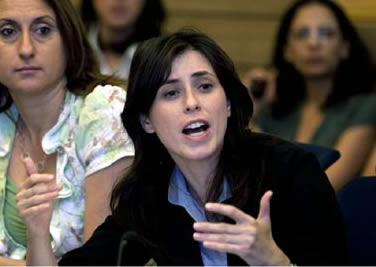
    This is Tzipi Hotovely from Likud, the youngest member of the Knesset and a proponent of some radical rethinking on the Israeli-Palestinian conflict. “The taboo that forbids talk about any option other than the two-state solution is almost anti-democratic. It’s like brain-gagging,” says Hotovely.
    The one-state solution generally associated with the Israeli right and the settler movement does not usually go by that name. Eretz Yisrael, or Greater Israel, comes in various sizes but to its proponents it is seen as land on which Jews belong and to which Palestinians can be allowed to make no claim. But as Noam Sheizaf describes in this week’s Haaretz magazine cover story, a new trend is emerging on the right presenting a one-state solution that would offer Palestinians equal rights and full citizenship in an expanded Israeli state that includes the whole of the West Bank.

    A number of figures on the right are presenting their own versions of this vision and so far they have not formed a political camp, yet many of their observations are based on a political realism that cannot be found among liberal Zionists. Indeed, they expose the fact that the advocates of a two-state solution are not merely victims of wishful thinking; they now bear the primary responsibility for the perpetuation of the conflict.

    A one-state solution promoted by diehard Zionists might sound too toxic an idea for any Palestinian to entertain seriously, yet who can currently question the assertion that the prospects for the creation of a sovereign Palestinian state have never looked so bleak?

    Perhaps more to the point, it needs to be remembered that the creation of a Palestinian state is and always has been a false promise if regarded as an ultimate goal and not simply a means to an end.

    The goal of every legitimate political struggle is the creation of a fair society. Each struggle focuses on the most glaring forms of injustice — discrimination based on class, ethnicity, gender, sexual orientation, nationality, or faith. But as these struggles coalesce around the specific forms of inequality they seek to redress, they often lose sight of their overarching purpose by allowing political means to be turned into political goals. Rather than diluting the power of political elites, one elite ends up making way for another. The fact that a new elite might have closer ties to a wider population will allow it to operate in a more sympathetic context, but sooner or later the core political problem will reemerge: that any majority cannot indefinitely tolerate being governed by a minority whose primary loyalty is to its own narrow interests.

    The one-state rightwing Zionists — at least as they are presented in this Haaretz article — are unequivocal in asserting that they refuse to abandon the requirement that Israel remains a Jewish state. What they fail to explain is how in practice Jews and non-Jews would have equal rights if, for instance, Jews retained the privilege enshrined in the Law of Return.

    Moshe Arens says: “first of all, we need to take care of the Israeli Arabs who are citizens. That is also essential if we are thinking of giving citizenship to Palestinians from Judea and Samaria [the West Bank]. Only if they see that the Arabs have it good in Israel will they think it might be good for them, too.”

    OK. But this begs the question: why is it that 62 years after its creation, Israel has not bridged the gap between its nature as a Jewish state and its claim to be a democratic state? Does its failure to take care of its non-Jewish citizens not expose the inherent contradiction in trying to merge the state’s Jewish and democratic identities?

    A single state as envisioned by figures on the Israeli right may be more viable than the two-state solution, but eventually it will have to shed the shackles to which Zionism has always been bound: the idea that there can ever be any legitimacy to any form of ethnic or religious supremacy.

    Facebooktwittermail

    One state/two states: rethinking Israel and Palestine

    As liberal Zionists and their allies repeatedly — if unpersuasively — proclaim that the implementation of a two-state solution is now a matter of urgency, the explicit urgency is that this is the only way of ensuring that Israel will thwart the “demographic threat” of Jews becoming a minority in the country they insist they must run. At the same time, the creation of a Palestinian state is presented as the means to fulfill the national aspirations of the Palestinian people.

    What never gets stated in this narrative is that the two-state solution would be the ultimate concession for Palestinians as it cements the loss of a land which was once their own.

    Danny Rubenstein writes at Dissent:

    Against the background of Barack Obama’s attempt to defend the idea of “two states for two peoples” in Israel/Palestine, consider a recent talk given by the Palestinian Sufian Abu-Zayda. Abu-Zayda is fifty years old. He was born in the Jabalya refugee camp in northern Gaza, the largest of the Palestinian camps, and he is considered the Palestinian spokesman most fluent in Hebrew, which he learned during the fourteen years that he spent in an Israeli prison on charges of participating in terrorist activities. After his release in 1993, he was one of the senior Fatah leaders in Gaza and was appointed to various positions in the Palestinian government. Among other activities he has been active in the Israeli-Palestinian Geneva Initiative, in which moderates from both sides argue that it is possible to find a just two-state solution.

    It was quite surprising, therefore, that Abu-Zayda, in his talk to an Israeli audience, announced that he had changed his mind. Like other Palestinians who spoke to the Israeli media over the last months, he was responding to Prime Minister Benjamin Netanyahu’s speech at Bar Ilan University—itself a response of sorts to President Obama’s June 2009 speech at the University of Cairo. With some drama, Netanyahu had agreed that a Palestinian state should be established in territory of the Land of Israel to the west of the Jordan River. This was a significant change for Netanyahu, whose roots are in the nationalist movement that has given up its earlier slogan—“There are two banks to the Jordan, this one is ours, and so is that one”—but that still demands Israeli rule in the “Greater” Land of Israel west of the Jordan. Commentators talked of a “fissure” on the Israeli Right; it was widely believed that as long as Ben Zion Netanyahu is still alive, his son wouldn’t dare rebel against the nationalist traditions of the family.

    But what might have seemed unbelievable a short time ago has become a reality. Netanyahu, at the head of the nationalist, right-wing government with members like Benny Begin (son of Menachem Begin) who have consistently rejected all concessions, has accepted the idea of a Palestinian state.

    In his talk at Tel Aviv University, Abu-Zayda responded to what the prime minister had said: “Many thanks to Benjamin Netanyahu. After twenty years of the peace process [since the Madrid Conference in 1991], and after the mutual recognition of Israel and the PLO [in the Oslo Accords], he finally agrees to a Palestinian state.” There was irony in his voice as he continued, “Do you think you are doing us a favor when you agree to two states? No favor at all. From my side, from the Palestinians’ side—let there be one state, not two…. I was introduced to you as Sufian Abu-Zayda from the Jabalya camp, but I’m not from Jabalya. I might have been born there, but my family had been exiled in 1948 from a village named “Breer,” where Kibbutz Bror Hayill now stands, near the Gaza border. If there will be one state, I’ll be happy to rent or buy a house near the kibbutz and live there.” And then Abu-Zayda said in a loud voice, “You are doing yourselves a favor by establishing two states, not us.”

    Facebooktwittermail

    Why Israel is so unpopular

    Larry Derfner writes in the Jerusalem Post:

    All the Islamic countries are afraid of Israel, and for good reason — because this country is much stronger than all of them put together. We do things to the Palestinians, to Syria, to Lebanon and, reportedly, to Iran that we would never let anyone do to us in a million years — and they can’t stop us. They are extremely reluctant to even try; our military power deters them.

    So what more do we want from our enemies before we’ll stop screwing with them? Love? Recognition of the justice of the Zionist cause? An admission that they were wrong all these years and we were right?

    If that’s what we’re waiting for, we came to the wrong neighborhood. If we’re going to go on intercepting ships until their sponsors accept our right to keep Gaza under lock and key, we’re going to be engaged in gunboat diplomacy for a long time. If we think we can rule the West Bank Palestinians until they give up even nonviolent resistance, fly spy planes over Lebanon until Hizbullah agrees that we have the right to bear arms but it doesn’t, and bomb enemy nuclear sites until the whole Middle East acknowledges Israel as its sole, rightful nuclear power, then our future here is untenable.

    Maybe the United States and Russia can hold sway over their regions, maybe they can have spheres of influence, but a little Jewish state surrounded by 57 Muslim states cannot. Neither our enemies nor our friends will allow us to be a mini-empire, a hegemon, for long. That’s a recipe for escalating, never-ending conflict.

    The new cry of gevalt around here is that Israel’s legitimacy is under worldwide attack — but the truth is that the West has accepted the legitimacy of the Jewish state since 1947, and nothing’s changed. As for the Muslim world, it never has and never will accept the legitimacy of the Jewish state — but it has accepted the hard fact of it since the Six Day War.

    Between Israel’s legitimacy in the West and deterrent power in the Middle East, we have what we need to survive as a Jewish state within our rightful, democratic borders. But we can’t survive as the neighborhood bully.

    Facebooktwittermail

    Does the CIA know how to invest wisely?

    “You don’t give something for nothing,” a CIA official told the Washington Post while trying to justify the $5 million payment made to Shahram Amiri, an Iranian nuclear scientist whose American dream turned out to be so short-lived it raised questions about whether his original defection was genuine. He arrived back in Tehran on Thursday, receiving a hero’s welcome.

    Whether the agency received an adequate return on its investment in Amiri is difficult to assess. The size of the payment might offer some measure of the value of the information he shared. But it could also reflect a level of eagerness within the U.S. intelligence community for meaningful information on Iran.

    Eagerness for success is what led seven Americans to their deaths at the end of last year as they were lured into a trap by a Jordanian doctor named Humam Khalil Abu-Malal al-Balawi when he blew himself up in the CIA base in Khost.

    The case of Amiri might not have done as much damage to the Agency, but the assumption that everyone has their price — what amounts to an article of faith in a land where wealth has been deified — is a naive American perspective that repeatedly results in a distorted view of the world.

    As for whether Amiri really was, as ABC News reported, one of the CIA’s “most valued former spies,” I have a hard time believing that a prize nuclear scientist would not already have a PhD. (The desire to acquire a doctorate was supposedly one of his reasons for coming to the US.) More likely, Amiri was a “prize catch” simply because he was willing to accept the prize.

    Facebooktwittermail

    Afghanistan: an Indo-Pak proxy war in which Nato is really a bit player

    Pakistan retains Afghanistan within its sphere of influence, India retains Kashmir, while al Qaeda loses its foothold in the region — this is the potential resolution to a war over which the US and its allies now have little control, writes William Dalrymple.

    Internally, the war is viewed primarily as a Pashtun rebellion against a Tajik, Uzbek and Hazara-dominated regime, which has only a fig leaf of Pashtun window-dressing in the person of Karzai. For although Karzai is a Pashtun, under his watch Nato installed the Northern Alliance in Kabul and drove out of power Afghanistan’s Pashtun majority.

    In this way we unwittingly took sides in the Afghan civil war that began in the 1970s – siding with the north against the south, the town against the country, secularism against Islam, and the Tajiks against the Pashtuns. We installed a government and trained up an army that in many ways discriminated against the Pashtun majority, and whose top-down constitution allowed for little federalism or regional representation. No matter how much western liberals may dislike the Taliban, they are in many ways the authentic voice of rural Pashtun conservatism, whose wishes are ignored by the government in Kabul and who are largely excluded from power.

    Externally the war has now turned, like Kashmir, into an Indo-Pak proxy war in which Nato is really a bit player. Under Karzai, India has established increasing political and economic influence in Afghanistan, opened four regional consulates and provided reconstruction assistance amounting to about $662m. The Pakistani military establishment, already terrified of India turning into a new economic superpower, has always believed it would be suicide to accept an Indian presence in what they regard as their strategic Afghan backyard, and is completely paranoid about the still small Indian presence, rather as the British used to feel about Russians in Afghanistan in the days of the Great Game.

    According to Indian diplomatic sources there are still less than 3,600 Indians in Afghanistan, almost all of them businessmen and contract workers; there are only 10 Indian diplomatic officers as opposed to nearly 150 in the UK embassy. Yet The horror of being squeezed in an Indian nutcracker has led the ISI to risk its internal security and coherence – as well as Pakistan’s relationship with its main strategic ally, the US – in order to keep the Taliban in play and its leadership under watch and ISI patronage in Quetta. Indeed the degree to which the ISI has been controlling the Afghan Taliban has only just emerged. A report by Matt Waldman of the Carr Centre for Human Rights at Harvard, based on interviews with 10 former Taliban commanders, documented how the ISI “orchestrates, sustains and strongly influences” the Taliban, and that the ISI are even “represented as participants or observers on the Taliban supreme leadership council, the Quetta Shura”.

    Karzai’s new deal with the Pakistanis, and his obvious intention to try to reach some accommodation with the Haqqani wing of the Taliban through Pakistan’s mediation, therefore represents a major strategic victory for the Pakistani military and a serious diplomatic defeat for India – though it remains to be seen if the ISI really can deliver the Taliban, who today were proclaiming their unwillingness to negotiate with Karzai. It also remains to be seen whether the Pakistani military can defend their own country from the jihadi Frankenstein’s monster they have created.

    This dangerous new situation does offer some opportunities. Until now India, relishing its ever-growing international status, has understandably and angrily resisted any linkage between an Afghan settlement and Indo-Pak peace, which would involve finding a final agreement on Kashmir. Yet the linkage is already there, and there are many clear benefits for India if it is prepared to accept ground realities and negotiate.

    The stage is now open for a deal whereby India could agree to minimise its presence in Afghanistan – which it could accept as Pakistan’s sphere of influence – in return for Pakistan withdrawing its longstanding sponsorship of the Kashmir jihad, which it could accept as India’s domain. To satisfy Nato, an undertaking by Pakistan to drive al-Qaida from the region would also need to be included.

    At least, this might be the shape of a deal unless Gen David Petraeus and Senator Carl Levin have their way.

    The New York Times reports:

    The new American military commander in Afghanistan, Gen. David H. Petraeus, is pushing to have top leaders of a feared insurgent group designated as terrorists, a move that could complicate an eventual Afghan political settlement with the Taliban and aggravate political tensions in the region.

    General Petraeus introduced the idea of blacklisting the group, known as the Haqqani network, late last week in discussions with President Obama’s senior advisers on Pakistan and Afghanistan, according to several administration officials, who said it was being seriously considered.

    Such a move could risk antagonizing Pakistan, a critical partner in the war effort, but one that is closely tied to the Haqqani network. It could also frustrate the Afghan president, Hamid Karzai, who is pressing to reconcile with all the insurgent groups as a way to end the nine-year-old war and consolidate his own grip on power.

    Facebooktwittermail

    Remote-controlled killing

    It takes just a week to train young Israeli women in the latest form of remote killing. Haaretz reports: “When the training program for the operators was being developed, the IDF wanted to learn from the experience of another country’s army, but couldn’t find a force doing anything similar.”

    Jonathan Cook writes:

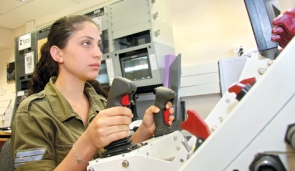
    It is called Spot and Shoot. Operators sit in front of a TV monitor from which they can control the action with a PlayStation-style joystick.

    The aim: to kill terrorists.

    Played by: young women serving in the Israeli army.

    Spot and Shoot, as it is called by the Israeli military, may look like a video game but the figures on the screen are real people — Palestinians in Gaza — who can be killed with the press of a button on the joystick.

    The female soldiers, located far away in an operations room, are responsible for aiming and firing remote-controlled machine-guns mounted on watch-towers every few hundred metres along an electronic fence that surrounds Gaza.

    The system is one of the latest “remote killing” devices developed by Israel’s Rafael armaments company, the former weapons research division of the Israeli army and now a separate governmental firm.

    According to Giora Katz, Rafael’s vice-president, remote-controlled military hardware such as Spot and Shoot is the face of the future. He expects that within a decade at least a third of the machines used by the Israeli army to control land, air and sea will be unmanned.

    The demand for such devices, the Israeli army admits, has been partly fuelled by a combination of declining recruitment levels and a population less ready to risk death in combat.

    Oren Berebbi, head of its technology branch, recently told an American newspaper: “We’re trying to get to unmanned vehicles everywhere on the battlefield … We can do more and more missions without putting a soldier at risk.”

    Rapid progress with the technology has raised alarm at the United Nations. Philip Alston, its special rapporteur on extrajudicial executions, warned last month of the danger that a “PlayStation mentality to killing” could quickly emerge.

    According to analysts, however, Israel is unlikely to turn its back on hardware that it has been at the forefront of developing – using the occupied Palestinian territories, and especially Gaza, as testing laboratories.

    Remotely controlled weapons systems are in high demand from repressive regimes and the burgeoning homeland security industries around the globe.

    Facebooktwittermail

    An Iranian nuclear espionage mystery

    ABC News reports:

    The CIA has lost one of its most valued former spies.

    Iranian nuclear scientist Shahram Amiri, who defected to the US, is now on his way back home to Tehran after a very messy and public re-defection. ABC News obtained exclusive photos of Amiri leaving Washington’s Dulles International Airport late Tuesday night on a commercial flight to Doha, Qatar, en route to Iran.

    Amiri was escorted directly to the jetway entrance by a security officer. He was flanked by what appeared to be a U.S. official and a representative from the Pakistani Embassy in Washington. He boarded the Qatar Airways flight ahead of the other passengers, and spoke only to his companions. After more than a year in the US, Amiri claimed he had never really defected. In a series of videos released on the internet, he insisted that he had been kidnapped, drugged and tortured by the CIA. The US flatly denies that it ever held Amiri against his will.

    The Washington Post columnist and unofficial spokesman for the CIA, David Ignatius, attributes Amiri’s departure to a change of heart.

    The CIA has struggled for decades with how to handle defectors better so that they are happy in a strange new land. The agency periodically tries to improve its tradecraft in working with these skittish guests. But defectors are trouble. They are like small boats in a heavy sea, not sure which way is home.

    But Ignatius concedes that it is hard to understand why the Iranian scientist would have defected while leaving his wife and child behind. That detail, along with the deaths of Ardeshire Hassanpour and Masoud Alimohammadi, might seem to reinforce the claim that Amiri was in fact abducted and that all three cases be seen in the context of a US-backed, Israeli-led covert war targeting Iran’s nuclear programme.

    What seems more likely however, is that the Iranians took the CIA for a ride — that Amiri’s “defection” took place so the Iran could glean more about the extent of American knowledge about its nuclear program and that the information he gathered was worth more valuable than the information he gave away.

    Facebooktwittermail

    Defending the unbreakable bond between Israel and Pennsylvania

    When voters in Pennsylvania head to the polls this November to elect a new senator, Bill Kristol and his newly launched outfit want to make sure that the issue uppermost in the voters’ considerations is how great a friend of Israel their next senator will be — this is the first assignment adopted by the Emergency Committee for Israel (“we’re the pro-Israel wing of the pro-Israel community,” says Kristol) which is running this ad on Fox News and CNN:

    This ad follows in the footsteps of an ad run earlier this year (before Congressman Joe Sestak won the Democratic primary) which says “keeping Israel safe helps keep America safe.”

    For people like Bill Kristol and the rest of the gang that makes up the Israel lobby, keeping Israel safe keeps America safe, is a strong expression of the unbreakable bond that Israel’s Democratic and Republican subordinates all like to celebrate. Yet for others — and this may turn out to include a plurality of Pennsylvania voters — this is a message that has more than a hint of a mafia protection racket threat. If you want to sleep comfortably in Philadelphia or Pittsburgh, you’d better take care of Israel. It’s quite a sinister message.

    Meanwhile, as Kristol’s emergency committee works to shore up the unbreakable bond between Pennsylvania and Israel, it seems like another bond — one they might have imagined would need no defense — is showing signs of disrepair.

    In a report on discrimination against Palestinians in Jerusalem, Fox News veered dangerously off message. (H/t Matt Duss at Think Progress.)

    When Joe Sestak won the Democratic primary in May, Jon Delano, political director of KDKA-TV in Pittsburgh, noted: “Sestak has done this all on his own. He has had no support from the Washington crowd. None whatsoever. This is a victory that he can savor all by himself.”

    As the mid-term elections approach, the Israel lobby imagines it can leverage disenchantment with Obama in support of its cause, yet to the extent that the election is a contest between Washington insiders and outsiders, the lobby, as a pillar of the Washington establishment, will find itself on the wrong side of the divide.

    Facebooktwittermail

    The terrorist delisting program

    How to reduce the terrorist threat: use the label “terrorist” less often.

    A week ago Newsweek reported:

    Even as they denounce reports of covert talks from news sources such as the New York Times and Al-Jazeera, high-ranking insurgents have begun very cautiously admitting for the first time that peace negotiations are not totally out of the question. “The Taliban will decide about an option other than war when the time comes that would favor such a decision,” says one senior Taliban provincial governor.

    Washington is eager to make that happen — perhaps more eager than most Americans realize. “There was a major policy shift that went completely unreported in the last three months,” a senior administration official tells Newsweek, asking not to be named speaking on sensitive issues. “We’re going to support Afghan-led reconciliation [with the Taliban].” U.S. officials have quietly dropped the Bush administration’s resistance to talks with senior Taliban and are doing whatever they can to help Karzai open talks with the insurgents, although they still say any Taliban willing to negotiate must renounce violence, reject Al Qaeda, and accept the Afghan Constitution. (Some observers predict that those preconditions may eventually be fudged into goals.) One particular focus is the “1267 list,” which was established in 1999 by the U.N.’s Al-Qaida and Taliban Sanctions Committee. It takes its name from U.N. Security Council Resolution 1267. “There are 137 Taliban on the list,” says the senior administration official. “It’s a list of people who cannot travel, cannot have funds…We’re taking a very hard look at the 1267 list right now, looking at it on a case-by-case basis. We’ve been doing it for months.”

    The Washington Post today reports:

    Afghan President Hamid Karzai plans to seek the removal of up to 50 former Taliban officials from a U.N. terrorism blacklist — more than a quarter of those on the list — in a gesture intended to advance political reconciliation talks with insurgents, according to a senior Afghan official.

    The Afghan government has sought for years to delist former Taliban figures who it says have cut ties with the Islamist movement. But the campaign to cull names from the list, which imposes a travel ban and other restrictions on 137 individuals tied to the Taliban, has taken on renewed urgency in recent weeks as Karzai has begun to press for a political settlement to Afghanistan’s nearly nine-year-old conflict.

    Facebooktwittermail