Author Archives: Paul Woodward

The student who lost an eye protesting in Israel — but none of her vision

“I guess I can be grateful to the IDF for giving me the chance to see the world in a new way.”

This is Emily Henochowicz’s wry observation after having been hit in the face by a tear gas cannister fired by a soldier in the Israeli Defense Forces in Jerusalem on May 31. The impact destroyed her left eye.

The 21-year old art student from Maryland evinces no bitterness but has mixed emotions:

“I’m happy all these things are happening, that people are listening to me and looking at my work [ — the New York–based Center for Constitutional Rights is considering hosting a show of her art work],” she says. But she knows the attention is because of who she is. “I have just the right ethnicity and nationality for this to be a bigger case,” she says. If the person hit “were Palestinian,” she adds, “it is very unlikely they would get the same response. It’s just the way the world works.”

The Village Voice describes what happened after the young American was shot.

Stuart Henochowiz raced to Jerusalem, and for the week his daughter was in the hospital — the canister had also broken several bones in her skull and knocked out a tooth — he slept in a chair at the foot of her bed. The situation was worrisome enough even without all the guns nearby. “Emily was in one room with another patient, and next door was one of the prisoners from the flotilla,” he recalls. “There were four soldiers there with their submachine guns in front of that room. While I was in the darkened room with Emily, this soldier comes in with a nurse, dangling his submachine gun.” Dr. Henochowicz says he knew that the soldier was just following orders, but “the thought of her facing a submachine gun at night, after everything she’d been through — I didn’t appreciate the lack of tact.”

Adding to the situation were comments from one doctor and nurses who spoke, he says, “with racism that was straight out of the 1930s.”

“There was one doctor who was explaining Emily’s CT scan,” Dr. Henochowicz recalls, “and what they’d done with the surgery, and then he asked me, in Hebrew, ‘Are you Jewish? Because, then, how could your daughter be involved in such an activity?’ ”

Several nurses, he says, tried to explain Middle East politics in terms they thought he would relate to. “You have your blacks — and we have our Palestinians,” he says they told him. He adds, “They thought I should think of Palestinians in the same way. And I told them, ‘We don’t really think that way in the States anymore! We have a black president.’ And I told them I voted for him and gave money to his campaign, and they replied, ‘You mean, Hussein Obama?’ ”

At least, he says, “they come honestly by their racism. It’s right there. They don’t sugar-coat it. They just come out and say it.” And despite everything, the hospital was used to dealing with acts of war and terrorism and gave his daughter decent medical care.

But Stuart Henochowicz says he’s outraged by what he calls “a basic lack of decency” from the Israeli government. He says he knows that “Israel takes a very hard line,” and so he thinks the military’s stance is that “her face got in the way of the canister.” But, he adds, “these people are fathers. Couldn’t they even bother to ask, ‘Gosh, how is she doing?’ No one from the Israeli government would even talk to me. No one. Why is that? You might not agree with me, or with Emily, but why didn’t they even call me?”

Facebooktwittermail

Good guests don’t overstay their welcome

“Be a good guest. Treat the Afghan people and their property with respect,” Gen David Petreaus advises his forces in a new counterinsurgency manifesto.

Maybe during his tenure in Tampa, Florida, Petreaus used to shop regularly at Target and thus has a more elastic definition of the word “guest”, but the way I understand the term, good guests always defer to the wishes of their hosts. Good guests don’t invite themselves into anyone’s home and they don’t overstay their welcome.

Petreaus says: “Live with the people: Position joint bases and combat posts as close to those we’re seeking to secure as is feasible.”

Now when Hezbollah does this in Southern Lebanon where it is the indigenous military force, it gets accused of using the local population as human shields. US and NATO forces in Afghanistan who “live with the people” — they’re just getting cozy with their hosts.

Facebooktwittermail

Israel’s latest act of ethnic cleansing

Electronic Intifada reports:

Early morning on 27 July, Israeli bulldozers, flanked by helicopters and throngs of police, demolished the entire Bedouin village of al-Araqib in the northern Negev desert. Despite their land rights cases still pending in the court system, hundreds of al-Araqib villagers were instantly made homeless a month after Israeli police posted demolition orders.

Eyewitness reports say the police were accompanied by several busloads of right-wing Israeli civilians who cheered during the demolitions.

The Electronic Intifada spoke with Dr. Yeela Ranaan of the Regional Council for Unrecognized Villages (RCUV) in the Negev, who was in al-Araqib all day long during the demolitions.

“Approximately 1,500 Israeli police came at 5:30 in the morning and evacuated everyone from their beds,” Ranaan said. “They brought tear gas and water cannons, but didn’t use them. There was a handful of Israeli peace activists who had come the night before to stay with the villagers, and the police beat them up and detained them. Once they evacuated everyone in the village, they started to demolish it. It took three hours to flatten the village. For the people of al-Araqib, it was a nightmare to see their village destroyed.”

Since the establishment of the State of Israel in 1948, al-Araqib villagers have been fighting for recognition in the courts. Ranaan told The Electronic Intifada that in the early 1950s, after they were forcefully expelled from their land by Israeli forces, villagers were fined for “trespassing” in their own homes by the Israeli government. Israel has refused to acknowledge al-Araqib villagers’ land deeds and receipts of land taxes paid to the Ottoman authorities well before Israel’s establishment.

“As we speak, the fate of al-Araqib hasn’t been decided in a court,” Ranaan said. “Despite this, Israel came and demolished the homes. Israel is not just changing the facts on the ground, it’s erasing them.”

Facebooktwittermail

Turkey’s diplomatic persistence with Iran may pay off

The Wall Street Journal reports:

Iran has pledged to stop enriching uranium to the higher grade needed for a medical research reactor if world powers agree to a fuel-swap deal it outlined earlier this year with Turkey and Brazil, Turkish Foreign Minister Ahmet Davutoglu said Wednesday.

The offer marks the latest in an international tug-of-war over the nuclear ambitions of Iran, which denies international allegations that it is pursuing nuclear weaponry. U.S. and European diplomats say Iran’s offer suggests it has felt the pinch of a rash of economic sanctions imposed on Tehran since June.

The United Nations imposed sanctions in part because Iran insisted it would continue enriching nuclear fuel to 20%, a level Tehran said was necessary to fuel a medical-research reactor and that the U.S. and others feared was a step toward creating nuclear weapons.

Mr. Davutoglu said Iranian foreign minister Manouchehr Mottaki offered to change Tehran’s position on continuing enrichment when the two men met in Istanbul on Sunday. Mr. Mottaki had said “there will be no need for Iran to continue 20% enrichment if the Tehran Agreement was realized and the country gets the fuel it needs,” Mr. Davutoglu told a joint press conference with German Foreign Minister Guido Westerwelle on Wednesday.

The Obama administration is said to be “studying” the discussions. I would hope that behind the scenes they are sending unambiguous positive signals to Turkey. The issue of continued enrichment was the supposedly the reason for earlier rejecting the Turkish-Brazilian brokered deal with Iran. If Turkey can now deliver on the administration’s key demands, we will get to find out whether Washington is operating in good faith. Let’s see.

Facebooktwittermail

War against Iran more likely — thanks to Wikileaks

If the release of the Pentagon Papers epitomized the value of government leaks as a means of speaking truth to power, Wikileaks at this point can claim no such distinction.

As if to underline the extent to which the Afghan war logs are making the fog of war more, not less, dense, Katrina vanden Heuvel says: “more than a few commentators — including Daniel Ellsberg himself — have called [the war logs] a 21st-century Pentagon Papers.”

She may understandably have been misled by a headline in The Guardian that read: “Daniel Ellsberg describes Afghan war logs as on a par with ‘Pentagon Papers’.” However, “These documents are not the Pentagon Papers — we still await their equivalent for Afghanistan,” is what Ellsberg unambiguously told the Financial Times.

While Wikileak’s founder, Julian Assange, is no doubt sincere in his hope that these intelligence revelations will expose the futility of war, the fact is, because intelligence is not intelligent it can very easily be used to serve a host of diverging political agendas.

If opponents of the war in Afghanistan now feel better armed, so do proponents of an expanding war in Pakistan. Likewise, those pushing for military action against Iran will welcome a new supply of ammunition served by Wikileaks.

Yesterday, the Wall Street Journal reported:

Cooperation among Iran, al Qaeda and other Sunni extremist groups is more extensive than previously known to the public, according to details buried in the tens of thousands of military intelligence documents released by an independent group Sunday.

U.S. officials and Middle East analysts said some of the most explosive information contained in the WikiLeaks documents detail Iran’s alleged ties to the Taliban and al Qaeda, and the facilitating role Tehran may have played in providing arms from sources as varied as North Korea and Algeria.

The officials have for years received reports of Iran smuggling arms to the Taliban. The WikiLeaks documents, however, appear to give new evidence of direct contacts between Iranian officials and the Taliban’s and al Qaeda’s senior leadership. It also outlines Iran’s alleged role in brokering arms deals between North Korea and Pakistan-based militants, particularly militant leader Gulbuddin Hekmatyar and al Qaeda.

Here we see one of the most bizarre twists in the story: US government sources now using the leaked documents to buttress the current anti-Iran narrative and in the process acting as though the intelligence reports are providing information that hadn’t been accessible inside government until they were leaked!

At the very same time, the State Department’s leading expert on Iran, John Limbert — a genuine source of intelligence and “the most qualified person on the Iran team at State in the three decades I have lived in the United States,” according to Haleh Esfandiari, head of the Middle East program at the Woodrow Wilson International Center for Scholars — is about to resign.

At Foreign Policy, Barbara Slavin writes:

[I]t’s hard not to view Limbert’s departure as a turning point and yet another missed opportunity in U.S.-Iran relations. A number of players with more skeptical views about the prospect of rapprochement with Tehran — such as White House aide Dennis Ross and nonproliferation experts like Robert Einhorn and Gary Samore — appear to be driving U.S. policy now, and the president himself blames the Iranian government for failing to respond to his outreach.

What could please the attack-Iran lobby more than to see the departure of the most skilled American proponent of engagement and at the same time to be served a prize piece of propaganda by an outfit aligned with the anti-war movement?!

Facebooktwittermail

Afghan war logs in search of good journalism

“[T]he task of good journalism is to turn this raw material — who, when, where, how, how many — into something that emotionally engages people who can apply levers on decision-making,” said Wikileaks founder Julian Assange at a press conference in London on Monday.

And there’s the rub, since the war logs offer a resource from which an almost unlimited number of stories can be gleaned and to which a disproportionate amount of credibility will be attached for no other reason than that they are based on leaked intelligence reports.

Consider, for instance, one of the latest reports from Danger Room with the headline “WikiLeak: U.S. Battling Militants from Turkey, Its NATO Ally.”

Oh my god, it’s the Turks again! No wonder Israel was alarmed by the approach of the Turk-laden Mavi Marmara.

Spencer Ackerman has been studying reports indicating that Turkish fighters, supported by the al-Qaeda-aligned Haqqani network, may have operated out of militant safe havens in Pakistan.

U.S. troops at the Bermel base, part of Task Force Eagle — a team of five infantry companies and a cavalry troop operating in the area — began to notice in early May 2007 that Turkish fighters south of the base were scoping out how Pashtun insurgents conducted attacks against U.S. Army Blackhawk helicopters. On May 19, they struck, sending a 107-millimeter rocket into the base. No one was harmed, and an official assessment noted that the incident was amateurish: “fighters were having a difficult time coordinating and carrying out relatively routine actions leading up to an attack.”

But a military record that day noted something had changed. “Todays [sic] single rocket was the first involvement of Turkish fighters in directly attacking [coalition forces],” it reads, and went on to suspect that the incident was a test run for something more serious down the line.

That report proved to be prescient.

Thus unfolds a tale of a Turkish threat, looming from Pakistan but rooted in a Salafist-Wahhabist movement rising in Turkey — at least, that’s the impression you get from Ackerman’s only source of expert analysis.

“It’s a story that hasn’t been mainstreamed, this Turkish involvement in jihad,” says Bryan Glyn Williams, an associate professor of history at the University of Massachusetts-Dartmouth who’s studied Islamic militancy in Turkey, including Turkish extremist infiltration into Afghanistan. “There is a growing Salafist-Wahhabist movement in Turkey, a lot more extreme than the [ruling Isalmic-based] AK Party.”

Given that the AK Party isn’t extreme at all, that’s a strange contrast to draw.

How reliable a source is Williams? It’s hard to say, but he must have scored points at the CIA last month when he released a study claiming that drone strikes in Pakistan have been far more accurate than previously reported. He says that for every 22 militants killed, there was one civilian casualty. Contrast that with a report in Pakistan’s leading newspaper Dawn last year, which said for “each Al Qaeda and Taliban terrorist killed by US drones, 140 innocent Pakistanis also had to die. Over 90 per cent of those killed in the deadly missile strikes were civilians, claim authorities.”

How did Williams come up with such radically different numbers? The only dead he counted were those whose names were recorded — and note, the brief news reports on the results of drone attacks are not filled with copious detail.

Just in case anyone might think that the Turkish threat to Task Force Eagle in 2007 saw the end of Turkish militant infiltration to Afghanistan, Ackerman warns:

A different report from November 2009 details U.S. forces finding a trove of Turkish cash in a militant compound. (The amount of money isn’t detailed.)

That doesn’t surprise the University of Massachusetts’ Williams. He’s been going to Turkey since the 1990s and has been disturbed to see growing anti-Americanism and sympathy for terrorists on websites like Cihaderi, a phenomenon he says has grown by inches since the 1990s, when Turks went to fight on behalf of Islamic militants in Bosnia and Chechnya. Now, it’s being channeled through Deobandi mosques in tribal Pakistan, where radicalized Turks go as an entrance point “to take shots at Americans and even fellow Turks” fighting for the International Security Assistance Force in Afghanistan.

How significant is all of this? Who’s to say. If a contingent of 20 or 30 Turks have been fighting alongside the Taliban, might we not ask: so what?

Meanwhile, at The Guardian, Simon Tisdall digs out a story much more prosaic yet a narrative that conveys far more about the war:

Winning hearts and minds in Afghanistan can be uphill work, as US soldiers attached to Task Force Catamount discovered when they visited the remote village of Mamadi in Paktika province, near the Pakistan border.

“It seems to always be this way when we go there. No one wants anything to do with us,” the mission report’s author complained sadly. Nor does the Mamadi patrol’s experience appear to be untypical.

The report, circulated by US military intelligence in April 2007, is one of numerous accounts of attempted bridge-building contained in the classified war logs and examined by The Guardian. The material offers an unprecedented insight into the gaping cultural and societal gulfs encountered by US troops trying to win grassroots support for the west’s vision of a peaceful, developing, united Afghanistan.

The purpose of the Mamadi visit, reassuringly termed a “non-combat event”, was to meet local leaders and distribute food and other assistance. But things started badly when a Humvee broke down, the road turned muddy and the weather deteriorated. To be safe, half the patrol of 29 US servicemen plus Afghan army personnel stayed with the Humvee. The rest went on to Mamadi.

Their reception there is distinctly unenthusiastic. The children mostly stay indoors. The village elder is described as “a very disgruntled man” who does not want American handouts. “He personally blamed George Bush for his AK-47 being taken from him. He doesn’t want us to give stuff to his village because of fear from the enemy punishing him. He did say he would take the money, though,” the report said.

A talk with a 30-year-old male villager with black hair and “skinny” build is similarly uninspiring. “Not very outgoing, [he] sits on the edge of the conversation and just listens to what is going on.” It transpires that the man’s silence may be connected to his prior detention for “involvement with IEDs”. He was sacked by the Afghan army for the same offence.

After a curtailed stay, the patrol hands out 30 sweaters, 30 backpacks, 10 bags of beans and 10 bags of rice then departs. Back at base, the anonymous author reaches a surprising conclusion: “The mission in Mamadi was success.” But this seems to be largely because they fixed the Humvee. “The village of Mamadi is definitely anti-coalition. They want nothing to do with US or ANA [Afghan national army] forces. Nothing further to report.”

Facebooktwittermail

Ellsberg: ‘These documents are not the Pentagon Papers’

In an interview with Der Spiegel, Wikileaks founder Julian Assange when asked why he published the Afghan war logs, said:

These files are the most comprehensive description of a war to be published during the course of a war — in other words, at a time when they still have a chance of doing some good. They cover more than 90,000 different incidents, together with precise geographical locations. They cover the small and the large. A single body of information, they eclipse all that has been previously said about Afghanistan. They will change our perspective on not only the war in Afghanistan, but on all modern wars.

Those are very grand claims which appear to be based more than anything on the sheer quantity of information that has been released. Even so, Assange is probably over-estimating the capacity of the American public to become deeply politically engaged on an issue with which most people lack personal involvement.

Comparisons are being made between the war logs and the release of the Pentagon Papers which were leaked to the New York Times by Daniel Ellsberg in 1971, yet the content of the documents and the contexts in which they appeared are vastly different. The Pentagon Papers revealed a massive level of deception through which US governments had led, by that point, 54,000 Americans to their deaths in Vietnam.

“These documents are not the Pentagon Papers — we still await their equivalent for Afghanistan,” Ellsberg told the Financial Times. “But they do add to the strong doubts that most of us have about a war that has cost us more than $300bn so far in which the Taliban only appears to get stronger with each passing year. They reinforce the question: What is the point of this war?”

Ellsberg told the Wall Street Journal he had mixed feelings about the release of so many documents:

“To put out such a large amount of material is of some risk if you haven’t read it all,” said Ellsberg, reached in Mexico where he was attending a screening of “The Most Dangerous Man in America,” a documentary about his Pentagon Papers ordeal.

Because the leaker was taking a risk in releasing the material, Ellsberg concluded it was released quickly and not likely carefully vetted…

Ellsberg said he had studied every word of the Pentagon Papers and carefully weighed whether their release would harm anyone.

“I had read all of it and made a judgment of the 7,000 papers and concluded they deserved to be out and would not harm any Americans,” he said.

However, Ellsberg said, such a volume of material can be noteworthy for what it lacks: in this case, a justification for the U.S. continuing to wage war in Afghanistan.

Facebooktwittermail

Bush’s negligence doesn’t absolve Obama of his responsibilities

True to form, the administration’s response to the biggest intelligence leak ever has been tactical and clichéd.

“The United States strongly condemns the disclosure of classified information by individuals and organizations which could put the lives of Americans and our partners at risk, and threaten our national security,” National Security Adviser Gen. James Jones said in a statement released by the White House.

Senate Foreign Relations Committee Chairman John Kerry had a somewhat more serious response, The Hill reported:

“However illegally these documents came to light, they raise serious questions about the reality of America’s policy toward Pakistan and Afghanistan,” Kerry said. “Those policies are at a critical stage and these documents may very well underscore the stakes and make the calibrations needed to get the policy right more urgent.”

But how long can this critical stage last?

In The Guardian, Simon Tisdall observes:

That the Afghan campaign lacks a clear strategy, has been politically misdirected and militarily under-resourced, and is essentially unwinnable as presently conceived is something the British public, like its counterparts in the US and western Europe, has increasingly suspected. Opinion polls in most Nato countries show strengthening opposition to the western alliance’s longest ever war.

The war logs, an official accounting of murderous missions, tragic incompetence and abject failure from 2004-2009, put factual flesh on the bare bones of these negative perceptions. Their publication may further undermine public support just as the campaign supposedly reaches a “critical” juncture following June’s record casualties and the sacking of General Stanley McChrystal.

The White House’s defence — that this serial bungling occurred on George Bush’s watch — appears problematic. Since Barack Obama concluded a policy review last December and decided on a “surge” of 30,000 additional troops, overall levels of violence have risen further while confusion about counterinsurgency strategy and the exit timetable has deepened.

“Obama has had several opportunities to reassess US goals and interests and in each instance he has chosen to escalate,” said Richard Haass, a former senior Bush administration official and president of the council on foreign relations. “Today the counterinsurgency strategy that demanded all those troops is clearly not working.” Afghanistan was now Obama’s war, Haass said, and he was losing it. “It’s time to scale down our ambitions and reduce and redirect what we do.”

When it comes to understanding this war, subjective impressions sometimes tell us as much as any of the raw facts. It’s even possible that a poem — and one written hundreds of miles away from the battlefield in another country — might provide us with as much insight as do reams of intelligence reports.

Megan Stack covered the war in Afghanistan for the Los Angeles Times and in her new book, Every Man in This Village Is a Liar, chronicles her experiences as a war correspondent.

In an interview on NPR this morning, Stack described the way a government-backed anti-terrorism program in Yemen failed to resonate with the experience of ordinary Yemenis — people whose sentiment is no doubt shared by much of the population in Afghanistan.

On one of her last evenings in Yemen, Stack traveled to a remote village to meet a poet who was known for his anti-terrorism poems and had been hired by the government to travel around the countryside, reciting his poetry and encouraging people to write their own anti-terrorist verses.

But what Stack heard the villagers recite that night was quite a bit different:

The more we try to be Muslim, the more American they try to make us.
Our literary teaching and great heritage have been invaded by the West.
They drove us crazy talking about the freedom of women.
They want to drive her to evil.
They ask the woman to remove the hijab and replace it with trousers, to show their bodies.
Now people who do their village rituals are accused of being extremists.
Even the music is now brought in instead of listening to good, traditional music.
Now people are kissing each other on television.

Cultural imperialism results in no casualty reports, no visible scars, but the destructive effect of America’s wars should not simply be measured in the amount of blood shed.

Facebooktwittermail

The Afghanistan war logs

The White House’s response to Wikileaks’ release of 92,000 classified military documents covering operations in Afghanistan from 2004 until 2009 has been to say the accounts are unreliable, irrelevant and cover a period preceding the announcement of President Obama’s new strategy. White House spokesman Tommy Vietor, drew reporters’ attention to a report in The Guardian which said:

A retired senior American officer said ground-level reports were considered to be a mixture of “rumours, bullshit and second-hand information” and were weeded out as they passed up the chain of command. “As someone who had to sift through thousands of these reports, I can say that the chances of finding any real information are pretty slim,” said the officer, who has years of experience in the region.

But if the White House truly shared this retired officer’s opinion, why push the line that everything here precedes the new strategy and say: “[s]ome of the disconcerting things reported are exactly why the President ordered a three month policy review and a change in strategy”?

The White House is clearly scrambling desperately to get its story straight.

In an interview with The Guardian, Wikileaks founder, Julian Assange, puts this major leak into perspective:

The nearest analog is The Pentagon Papers, which was released in the early ’70s. That exposed how the United States was prosecuting the war in Vietnam. That was some 10,000 pages, and some of those pages were accepted and put into the New York Times and other US newspapers. It wasn’t for several years that a book was published — 5,000 of those pages by Beacon Press.

This situation is different in that it’s not just more material and being pushed to a bigger audience and much sooner — if you like, everyone has the book, the whole lot at once — but rather that people can give back. So people who around the world are reading this are able to comment on it and put it in context and understand the full situation. That is not something that has previously occurred and that is something that can only be brought about as a result of the internet.

The Guardian describes how the Pentagon tracked down the source of the leaks.

On 21 May, a Californian computer hacker called Adrian Lamo was contacted by somebody with the online name Bradass87 who started to swap instant messages with him. He was immediately extraordinarily open: “hi… how are you?… im an army intelligence analyst, deployed to eastern bagdad … if you had unprecedented access to classified networks, 14 hours a day, 7 days a week for 8+ months, what would you do?”

For five days, Bradass87 opened his heart to Lamo. He described how his job gave him access to two secret networks: the Secret Internet Protocol Router Network, SIPRNET, which carries US diplomatic and military intelligence classified “secret”; and the Joint Worldwide Intelligence Communications System which uses a different security system to carry similar material classified up to “top secret”. He said this had allowed him to see “incredible things, awful things … that belong in the public domain and not on some server stored in a dark room in Washington DC … almost criminal political backdealings … the non-PR version of world events and crises.”

Bradass87 suggested that “someone I know intimately” had been downloading and compressing and encrypting all this data and uploading it to someone he identified as Julian Assange. At times, he claimed he himself had leaked the material, suggesting that he had taken in blank CDs, labelled as Lady Gaga’s music, slotted them into his high-security laptop and lip-synched to nonexistent music to cover his downloading: “i want people to see the truth,” he said.

He dwelled on the abundance of the disclosure: “its open diplomacy … its Climategate with a global scope and breathtaking depth … its beautiful and horrifying … It’s public data, it belongs in the public domain.” At one point, Bradass87 caught himself and said: “i can’t believe what im confessing to you.” It was too late. Unknown to him, two days into their exchange, on 23 May, Lamo had contacted the US military. On 25 May he met officers from the Pentagon’s criminal investigations department in a Starbucks and gave them a printout of Bradass87’s online chat.

On 26 May, at US Forward Operating Base Hammer, 25 miles outside Baghdad, a 22-year-old intelligence analyst named Bradley Manning was arrested, shipped across the border to Kuwait and locked up in a military prison.

Gathered from 92,201 records of individual events or intelligence reports, The Guardian presents a selection of 300 of the key ones.

Piecing together details from the reports, The Guardian describes the operations of an undisclosed “black” unit of special forces, Task Force 373, whose mission was to hunt down targets for death or detention without trial.

On the night of Monday 11 June 2007, the leaked logs reveal, the taskforce set out with Afghan special forces to capture or kill a Taliban commander named Qarl Ur-Rahman in a valley near Jalalabad. As they approached the target in the darkness, somebody shone a torch on them. A firefight developed, and the taskforce called in an AC-130 gunship, which strafed the area with cannon fire: “The original mission was aborted and TF 373 broke contact and returned to base. Follow-up Report: 7 x ANP KIA, 4 x WIA.” In plain language: they discovered that the people they had been shooting in the dark were Afghan police officers, seven of whom were now dead and four wounded.

The coalition put out a press release which referred to the firefight and the air support and then failed entirely to record that they had just killed or wounded 11 police officers. But, evidently fearing that the truth might leak, it added: “There was nothing during the firefight to indicate the opposing force was friendly. The individuals who fired on coalition forces were not in uniform.” The involvement of TF 373 was not mentioned, and the story didn’t get out.

However, the incident immediately rebounded into the fragile links which other elements of the coalition had been trying to build with local communities. An internal report shows that the next day Lieutenant Colonel Gordon Phillips, commander of the Provincial Reconstruction Team, took senior officers to meet the provincial governor, Gul Agha Sherzai, who accepted that this was “an unfortunate incident that occurred among friends”. They agreed to pay compensation to the bereaved families, and Phillips “reiterated our support to prevent these types of events from occurring again”.

Yet, later that week, on Sunday 17 June, as Sherzai hosted a “shura” council at which he attempted to reassure tribal leaders about the safety of coalition operations, TF 373 launched another mission, hundreds of miles south in Paktika province. The target was a notorious Libyan fighter, Abu Laith al-Libi. The unit was armed with a new weapon, known as Himars – High Mobility Artillery Rocket System – a pod of six missiles on the back of a small truck.

The plan was to launch five rockets at targets in the village of Nangar Khel where TF 373 believed Libi was hiding and then to send in ground troops. The result was that they failed to find Libi but killed six Taliban fighters and then, when they approached the rubble of a madrasa, they found “initial assessment of 7 x NC KIA” which translates as seven non-combatants killed in action. All of them were children. One of them was still alive in the rubble: “The Med TM immediately cleared debris from the mouth and performed CPR.” After 20 minutes, the child died.

The coalition made a press statement which owned up to the death of the children and claimed that troops “had surveillance on the compound all day and saw no indications there were children inside the building”. That claim is consistent with the leaked log. A press release also claimed that Taliban fighters, who undoubtedly were in the compound, had used the children as a shield.

The log refers to an unnamed “elder” who is said to have “stated that the children were held against their will” but, against that, there is no suggestion that there were any Taliban in the madrasa where the children died.

The rest of the press release was certainly misleading. It suggested that coalition forces had attacked the compound because of “nefarious activity” there, when the reality was that they had gone there to kill or capture Libi.

A New York Times report focuses on revelations in the documents about collaboration between Pakistan’s intelligence services and the Taliban “in secret strategy sessions to organize networks of militant groups that fight against American soldiers in Afghanistan, and even hatch plots to assassinate Afghan leaders.”

Facebooktwittermail

Facebook prohibits the word “Palestinian”

The folks at Palestinian Refugee ResearchNet thought they’d create a Facebook page only to discover: Facebook blocks the term “Palestinian”! (H/t Jillian C York.)

Are Palestinians the only group so blocked from making pages? Well, not really… after a little fiddling around, I discovered that al-Qaida Refugee ResearchNet and Nazi Refugee ResearchNet are filtered too.

It does seem a bit odd, however, that a population of up to 12 million people, receiving more than a billion dollars in international aid, recognized by the UN, and enjoying a degree of formal diplomatic recognition from the United States — is placed in the same filtered category as Nazis and al-Qaida.

I’ve sent an email to Facebook customer service—we’ll see what they say.

Just to be sure, I tried myself to create a “Palestinian sports” page — not allowed.

Facebooktwittermail

Jacob Weisberg throws his weight behind the boycott

“Don’t boycott Israel,” says the headline in Newsweek.

Jacob Weisberg, editor-in-chief at Slate and author of the piece calls a boycott a “repellent idea” with consequences that are “intrinsically vile.” But pointing out the “sheeplike, liberal opinion” of celebrities like Meg Ryan is unlikely to break up the flock. Indeed, Weisberg must vastly overestimate his own degree of influence in Hollywood if he imagines that his protestations will have more effect than do celebrities influence each other.

His appeal is perhaps not an effort to shepherd celebrity opinion but a reflex expression of alarm as he witnesses the boycott movement rapidly acquiring critical mass. Support from politically uninformed but socially influential celebrities is important because it signals the point at which the Palestinian cause rises above its regional, ethnic, religious and historical boundaries, and is being adopted as a humanitarian cause.

Weisberg, in a chaotic effort to marshall his arguments claims:

The stronger case against a cultural boycott of Israel is based on consistency, proportionality, and history. That supporters of this boycott seldom focus on China or Syria or Zimbabwe — or other genuinely illegitimate regimes that systematically violate human rights — underscores their bad faith.

The bad faith that proponents of an Israel boycott are supposedly exhibiting is that they are singling Israel out; that Israel as a target of a boycott is a target of victimization. Any fair-minded person would see how much Israel, China, Syria and Zimbabwe have in common and treat them similarly… Oh, but maybe that isn’t exactly what Weisberg’s trying to say.

As a good liberal, Weisberg isn’t eager to play the anti-Semitic card and he doesn’t see an anti-Semitic trend in Hollywood, but he goes ahead and makes the accusation anyway by saying that the boycott movement “is hard to disassociate from anti-Semitism — even if Ryan and Costello intend nothing of the kind.”

There is an issue here that I suspect touches a raw nerve for Weisberg and many others and it’s not thinly disguised anti-Semiticism; it’s the power of social exclusion.

The boycott — at least a particularly ugly form of boycott — is the Israel lobby’s favorite weapon. Attacks on critics of Israel are invariably ad hominem attacks — the campaign against Judge Richard Goldstone being among the most vociferous of such denunciations. This isn’t about vigorous opposition to ideas; it’s about the effort to destroy people — their reputations, their careers, and their social standing.

Weisberg sees the same spirit in the boycott movement:

What they’re saying is, “We consider your country so intrinsically reprehensible that we are going to treat all of your citizens as pariahs.”

The subtext: It’s not about what we do; it’s about who we are.

This is how Israel washes away its sins — and it’s a way of refusing to face the charge upon which the boycott movement rests: that Israel continues to deny the Palestinians their fundamental rights for freedom, equality and self-determination. If this denial of human rights leads to Israel’s increasing isolation, this is a path that Israelis have chosen. Israel is not a victim of an unjust world or an ill-conceived boycott movement.

Facebooktwittermail

The democratic state solution

One-state solution? Two-state solution? Isn’t it time for a democratic state solution?

In response to an article in Haaretz on proposals for a one-state solution coming from the Israeli right, Uri Avnery warns that the “attractive leftist vision of the one-state solution may grow up into a rightist monster.”

Avnery writes:

The regime described here is not an apartheid state, but something much worse: a Jewish state in which the Jewish majority will decide if at all, and when, to confer citizenship on some of the Arabs. The words that come up again and again – “perhaps within a generation” – are by nature very imprecise, and not by accident.

But most important: there is a thunderous silence about the mother of all questions: what will happen when the Palestinians become the majority in the One State? That is not a question of “if”, but of “when”: there is not the slightest doubt that this will happen, not “within a generation”, but long before.

This thunderous silence speaks for itself. People who do not know Israel may believe that the rightists are ready to accept such a situation. Only a very naive person can expect a repetition of what happened in South Africa, when the whites (a small minority) handed power over to the blacks (the large majority) without bloodshed.

We said above that it is impossible to “turn the triangle into a circle”. But the truth is that there is one way: ethnic cleansing. The Jewish state can fill all the space between the sea and the Jordan and still be democratic – if there are no Palestinians there.

Ethnic cleansing can be carried out dramatically (as in this country in 1948 and in Kosovo in 1998) or in a quiet and systematic way, by dozens of sophisticated methods, as is happening now in East Jerusalem. But there cannot be the slightest doubt that this is the final stage of the one-state vision of the rightists.

Let’s grant Avnery all his assumptions about the real intentions of these one-state rightists, and let’s on that basis say that their disingenuous vision underlines the necessity for a swiftly implemented two-state solution.

And let’s go one step further and anticipate that a contiguous, viable, sovereign Palestinian state is created and operates peacefully alongside the neighboring Jewish state of Israel.

Israel still has a problem. It has a sizable and growing Palestinian minority. Unless Avnery and other two-state proponents imagine that the vast majority of Palestinian Israelis would decide to move to a newly-created Palestinian state, Israel will still have to address the problem of reconciling its Jewish and democratic identities.

If Israel fails to address that issue, then neither one state nor two states presents a solution. The issue in either context remains: is a Jewish population willing to place a higher value on democracy than it does on Jewish rule?

Facebooktwittermail

Avrum Burg: Israeli democracy has lost its internal substance

Avrum Burg, former MK from the Labor Party, Speaker of the Knesset, and head of the Jewish Agency, has a new political vision:

The time has come for an Israeli party, a Jewish-Arab party, that will carry the banner of total commitment to equality, without a trace of discrimination and racism. It will be without Meretz’s complications and Hadash’s emotional baggage. A party that will sail far beyond the paradigms of classic Zionism, which to this day ignores the place of Israel’s Arabs. A party that will demand full equality for all Israel’s citizens, the kind of equality we demand for the Jews in the Diaspora wherever they live.

The party Israel Equality (Shivyon Yisrael ) – with the acronym Shai in Hebrew, gift – will fight for a state that will be a total democracy; everything else will be either personal or on the community level. The party will wrestle with the sanctimonious internal contradiction of “a Jewish and democratic state,” which means a great deal of democracy for the Jews and too much Jewish nationalism for the Arabs. It will be the party of those who are committed to the supreme universal and Israeli cultural values of human dignity, the search for peace and a desire for freedom, justice and equality.

Those who vote for it and its candidates will accept the definition of Israel as “a state whose regime is democratic and egalitarian, and which belongs to all its citizens and communities. The state in which the Jewish people have chosen to renew their sovereignty and where they realize their right to self-determination.” The practical expression of this commitment will be a supreme effort to change the social balance of power, which is unjust, to give equal opportunities to the entire population in Israel, regardless of national background, ethnic origin, race, sex or sexual preference.

Is this a step in the right direction? Sort of. But it’s a bit like a guy who shouts: “I have a big announcement: I’m going to get married!” Then, when asked who the bride-to-be is, he sheepishly responds: “Oh, we haven’t met yet — but we will.”

If this is going to be a state in which the Jewish people have chosen to renew their sovereignty and where they realize their right to self-determination, will it also be a state in which the Palestinian people have chosen to renew their sovereignty and where they realize their right to self-determination?

Burg says his new party “will wrestle with the sanctimonious internal contradiction of ‘a Jewish and democratic state’,” but if Israel has been wrestling with this contradiction throughout its existence, isn’t there a need to resolve the contradiction and not merely carry on wrestling with it?

Burg says: “The greatest internal threat to Israel’s existence is the erosion of Israeli democracy, which has already lost its internal substance — the values of freedom and total commitment to all its citizens.”

He got that right. And instead of presenting the promise of change through the creation of a party that so far lacks a visible foundation, maybe Burg’s energies would be better employed delivering his message that Israeli democracy is collapsing to Americans who imagine otherwise.

Facebooktwittermail

The American way of war; how Bush’s wars became Obama’s

On September 11, 2001, America froze in shock and the shock was followed by a mix of fear, anger and bewilderment.

Yet for some, the first response was also the enduring response: a knowing dread that what followed would be far worse than what just happened; that America’s reaction would be wildly disproportionate and vastly more destructive than the events of that day.

Some of us had the luxury of holding that dispassionate wide-angle perspective from the comfort of distance — I lived on the West Coast at that time. But there were others who saw what was coming even while still breathing the dust from the collapsed Twin Towers. Tom Engelhardt was such an observer and has been chronicling the 9/11 fallout ever since.

Dan Froomkin reviews a distillation of those observations captured in Tom’s new book, The American Way of War; How Bush’s Wars Became Obama’s.

Neither Iraq nor Afghanistan could possibly be mistaken for successes, and yet the neocons have succeeded in creating a political climate in which, as Engelhardt explains, war and security are somehow seen as being synonymous. As a result, any alternative to war has become tantamount to diminishing our security — and is therefore politically untenable. Alternatives to war get no serious hearing in modern Washington. And while the mainstream media apparently doesn’t find this the least bit strange, Engelhardt does.

He asks good questions about it. “What does it mean,” he writes, “when the most military-obsessed administration in our history, which, year after year, submitted ever more bloated Pentagon budgets to Congress, is succeeded by one headed by a president who ran, at least partially, on an antiwar platform, and who then submitted an even larger Pentagon budget?”

Indeed, it would appear that unless things change dramatically, we are condemned to enduring war, in the form of a Global War on Terror (GWOT) that never ends. At least now you know why.

Engelhardt devotes some time to chronicling the nation’s massive, insatiable war machine — and our country’s role as arms supplier to the world. (When’s the last time you saw anything in the news about that?)

He exposes what he calls the “garrisoning of the planet” by literally countless U.S. military bases around the globe — bases that drain our treasury while angering our allies and energizing our enemies.

“Basing is generally considered here either a topic not worth writing about or an arcane policy matter best left to the inside pages for the policy wonks and news junkies,” Engelhardt writes. “This is in part because we Americans — and by extension our journalists — don’t imagine us as garrisoning or occupying the world; and certainly not as having anything faintly approaching a military empire.”

He chronicles the extraordinary barbarity of the air war and the “collateral damage” it wreaks; an enterprise now made even more soulless as death is unleashed from drones operated by pilots hundreds or thousands of miles away.

Rather than look away as most of us do, Engelhardt faces right up to the greatest, most horrible irony of the post 9/11 period: that we did to ourselves “what al-Qaeda’s crew never could have done. Blinding ourselves via the GWOT, we released American hubris and fear upon the world, in the process making almost every situation we touched progressively worse for this country.”

Facebooktwittermail

Top secret America?

Too secret for the Washington Post to reveal what it is?

It’s out there — but you won’t find out much about it at the Washington Post!

Memos being leaked from government agencies imploring lips to remain sealed; several days of media buzz in anticipation of a blockbuster investigative series…

One of Hollywood’s hottest publicists must surely have been contracted to push the Washington Post‘s sensational Top Secret America.

And what did we get when the bombshell exploded? Investigative reporting fit for the pages of Cosmopolitan. God help American journalism.

It’s big. It’s really, really big.

This is the big story about the uncontrolled growth of America’s post-9/11 national security industry — indeed an important story, but couldn’t two years of investigation have yielded more substance?

Consider this nugget from Wednesday’s feature on “The secrets next door“:

“In the Washington area, there are 4,000 corporate offices that handle classified information, 25 percent more than last year…”

Twenty-five percent growth in the first year of the Obama administration — that’s a big deal! It must tell us a lot about this administration’s national security philosophy. Or maybe not — maybe all the growth was all in the pipeline and the administration hasn’t figured out how to rein it in.

This is just one of the many statistics that Priest and Arkin toss out and then do nothing to explore. And in this instance it appears to be a purely anecdotal “statistic.” It comes from the supervisor of an industrial security specialist. Justin Walsh spends most of his time up a ladder and this is what Justin’s boss said.

But if the feature articles in the series are a bit lacking in substance, maybe the hard facts are stuffed into the databases the Post has compiled. That’s where we’ll get revelations on a company like Autonomy where the infamous neoconservative warmonger Richard Perle has served as a non-executive director since 2000.

The Post reveals the company has just one government client. Strange?

As far back as 2002, Autonomy was reporting it had “demonstrated its dominance of the Intelligence market by achieving the key infrastructure wins in the arenas of Homeland security and Intelligence systems for over 30 intelligence related and classified organizations in the U.S.” (That comes from the company’s 2002 fourth quarter financial report.) Subsequent company reports indicate that business with the intelligence community has continued to expand for the global leader in creating software for processing unstructured information — one of the core needs in most intelligence analysis. But Top Secret America has nothing to report on this.

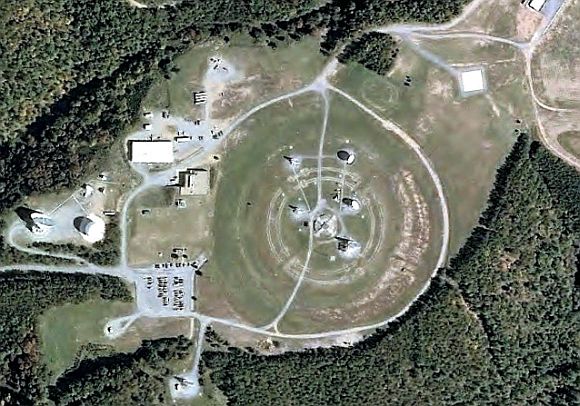
OK. The private sector is a labyrinth. How about US government operations? This is where one might hope to learn more about the super secret electronic eavesdropping facility at Sugar Grove.

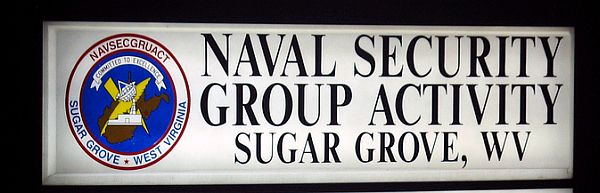
Sugar Grove, nestled in the mountains of West Virginia, is the location of an NSA facility which forms part of ECHELON, a global system of communications surveillance. More information can be found at the Navy Information Operations Command for the base — that is, if you have no qualms about agreeing to a Department of Defense consent agreement that says the US Government will thereafter have the right to seize your computer at any time! I’m not kidding.

And what do we learn about Sugar Grove in Top Secret America? Virtually nothing. It’s a red dot on the map (see the image at the top of this article).

But here’s the worst thing about Top Secret America: it is journalism that instead of providing in-depth exposure to a major political story will more likely have the effect of inoculating the issue.

While this country needs a wake-up call to the fact that its government is still locked in a Bush era fixation on national security, instead we are being cautioned that the crux of the issue primarily one of size. The national security industry in the US has grown out of control — oh yeah, I saw that report in the Washington Post. Big government. What’s new?

Sugar Grove, West Virginia - part of top secret America too secret for Top Secret America

Facebooktwittermail

The Post covers spy town

At the Atlantic, the independent investigative reporter, Tim Shorrock, slams the Washington Post‘s Top Secret America series:

Priest and Arkin offer an incredibly simplistic explanation for how the contracting bandwagon took off under President Bush, who they say manipulated “the federal budget process” to make it easier for agencies to hire contractors. Is that why Blackwater suddenly appeared on the scene in Afghanistan days after 9/11, signed up by counterterrorism official named Cofer Black who later joined the company? Is that how CACI International, a favorite of Donald Rumsfeld’s Pentagon, got the interrogation work at Abu Ghraib prison through an “IT” contract outsourced to the Interior Department? The Post also completely ignored the huge growth of contracting during the Clinton administration, which “reinvented” government by downsizing and outsourcing the federal workforce — including spies and surveillance teams in places like Bosnia. Many of the companies that are big wheels today got some of their first contracts during the late 1990s.

Worse, there is virtually nothing in the series about the deeper political questions raised by privatization, including the obvious issue of the revolving door. Unbelievably, Priest and Arkin don’t even mention that President Bush’s DNI, Mike McConnell, and President Obama’s counter-terrorism adviser, John Brennan, were both prominent contractors before taking their jobs. Why is that relevant? Well, McConnell came directly from Booz Allen Hamilton, one of the IC’s top contractors and an adviser to the NSA (and he’s back at Booz now). Brennan was an executive at The Analysis Corporation, which built a key terrorist database for the National Counterterrorism Center (which Brennan used to run).

There was not even a hint that Lt. Gen. James Clapper (ret.), who appeared before the Senate for his DNI confirmation hearing on the second day of the series, once had close ties to major contractors. Clapper once directed the National Geospatial-Intelligence Agency, which has extensive contracts with a satellite firm contracted by the government. Nor was there mention of the Intelligence and National Security Alliance, the largest association for NSA and CIA contractors, for which McConnell, Brennan, and Clapper have all served as chairman. That’s not part of the story? Could Clapper’s experience have influenced his strong defense of contractors during his testimony? Or would mentioning such ties hurt the Post’s access to the ODNI and the White House?

Despite Arkin’s much-vaunted reputation in collecting data, not even the charts are very good. The Post’s enormous database of contractors will be a useful tool for researchers and journalists, and certainly reveals the incredible scope of the industry (nothing new there though). But it does little to inform the public about what private corporations such as Lockheed Martin, SAIC, and Northrop Grumman actually do for the CIA and the dozens of intelligence units within the Pentagon. That’s partly because — as the authors admit in a note to readers — they removed certain “data points” at the suggestion of intelligence officials.

Therefore, you can look up a company like Booz Allen and see which agencies it holds contracts with and what kind of counter-terrorism, intelligence, or homeland security work it does; but you can’t learn what special tasks it carries out for specific agencies. Now some may applaud the Post for the omission, but I just see a failure to disclose.

Facebooktwittermail

Israel: a strategic asset or liability?

On Tuesday, July 20, The Nixon Center hosted a luncheon discussion on “Israel: Strategic Asset or Liability?” in which Ambassador Chas Freeman, Jr., (US ambassador to Saudi Arabia for the George H.W. Bush administration from 1989 to 1992) delivered the following remarks:

Is Israel a strategic asset or liability for the United States? Interesting question. We must thank the Nixon Center for asking it. In my view, there are many reasons for Americans to wish the Jewish state well. Under current circumstances, strategic advantage for the United States is not one of them. If we were to reverse the question, however, and to ask whether the United States is a strategic asset or liability for Israel, there would be no doubt about the answer.

American taxpayers fund between 20 and 25 percent of Israel’s defense budget (depending on how you calculate this). Twenty-six percent of the $3 billion in military aid we grant to the Jewish state each year is spent in Israel on Israeli defense products. Uniquely, Israeli companies are treated like American companies for purposes of U.S. defense procurement. Thanks to congressional earmarks, we also often pay half the costs of special Israeli research and development projects, even when — as in the case of defense against very short-range unguided missiles — the technology being developed is essentially irrelevant to our own military requirements. In short, in many ways, American taxpayers fund jobs in Israel’s military industries that could have gone to our own workers and companies. Meanwhile, Israel gets pretty much whatever it wants in terms of our top-of-the-line weapons systems, and we pick up the tab.

Identifiable U.S. government subsidies to Israel total over $140 billion since 1949. This makes Israel by far the largest recipient of American giveaways since World War II. The total would be much higher if aid to Egypt, Jordan, Lebanon, and support for Palestinians in refugee camps and the occupied territories were included. These programs have complex purposes but are justified in large measure in terms of their contribution to the security of the Jewish state.

Per capita income in Israel is now about $37,000 — on a par with the UK. Israel is nonetheless the largest recipient of U.S. foreign assistance, accounting for well over a fifth of it. Annual U.S. government transfers run at well over $500 per Israeli, not counting the costs of tax breaks for private donations and loans that aren’t available to any other foreign country.

These military and economic benefits are not the end of the story. The American government also works hard to shield Israel from the international political and legal consequences of its policies and actions in the occupied territories, against its neighbors, or — most recently — on the high seas. The nearly 40 vetoes the United States has cast to protect Israel in the UN Security Council are the tip of iceberg. We have blocked a vastly larger number of potentially damaging reactions to Israeli behavior by the international community. The political costs to the United States internationally of having to spend our political capital in this way are huge.

Where Israel has no diplomatic relations, U.S. diplomats routinely make its case for it. As I know from personal experience (having been thanked by the then Government of Israel for my successful efforts on Israel’s behalf in Africa), the U.S. government has been a consistent promoter and often the funder of various forms of Israeli programs of cooperation with other countries. It matters also that America — along with a very few other countries — has remained morally committed to the Jewish experiment with a state in the Middle East. Many more Jews live in America than in Israel. Resolute American support should be an important offset to the disquiet about current trends that has led over 20 percent of Israelis to emigrate, many of them to the United States, where Jews enjoy unprecedented security and prosperity.

Clearly, Israel gets a great deal from us. Yet it’s pretty much taboo in the United States to ask what’s in it for Americans. I can’t imagine why. Still, the question I’ve been asked to address today is just that: what’s in it — and not in it — for us to do all these things for Israel.

We need to begin by recognizing that our relationship with Israel has never been driven by strategic reasoning. It began with President Truman overruling his strategic and military advisers in deference to personal sentiment and political expediency. We had an arms embargo on Israel until Lyndon Johnson dropped it in 1964 in explicit return for Jewish financial support for his campaign against Barry Goldwater. In 1973, for reasons peculiar to the Cold War, we had to come to the rescue of Israel as it battled Egypt. The resulting Arab oil embargo cost us dearly. And then there’s all the time we’ve put into the perpetually ineffectual and now long defunct “peace process.”

Still the US-Israel relationship has had strategic consequences. There is no reason to doubt the consistent testimony of the architects of major acts of anti-American terrorism about what motivates them to attack us. In the words of Khalid Sheikh Mohammed, who is credited with masterminding the 9/11 attacks, their purpose was to focus “the American people … on the atrocities that America is committing by supporting Israel against the Palestinian people….” As Osama Bin Laden, purporting to speak for the world’s Muslims, has said again and again: “we have … stated many times, for more than two-and-a-half-decades, that the cause of our disagreement with you is your support to your Israeli allies who occupy our land of Palestine….” Some substantial portion of the many lives and the trillions of dollars we have so far expended in our escalating conflict with the Islamic world must be apportioned to the costs of our relationship with Israel.

It’s useful to recall what we generally expect allies and strategic partners to do for us. In Europe, Asia, and elsewhere in the Middle East, they provide bases and support the projection of American power beyond their borders. They join us on the battlefield in places like Kuwait and Afghanistan or underwrite the costs of our military operations. They help recruit others to our coalitions. They coordinate their foreign aid with ours. Many defray the costs of our use of their facilities with “host nation support” that reduces the costs of our military operations from and through their territory. They store weapons for our troops’, rather than their own troops’ use. They pay cash for the weapons we transfer to them.

Israel does none of these things and shows no interest in doing them. Perhaps it can’t. It is so estranged from everyone else in the Middle East that no neighboring country will accept flight plans that originate in or transit it. Israel is therefore useless in terms of support for American power projection. It has no allies other than us. It has developed no friends. Israeli participation in our military operations would preclude the cooperation of many others. Meanwhile, Israel has become accustomed to living on the American military dole. The notion that Israeli taxpayers might help defray the expense of U.S. military or foreign assistance operations, even those undertaken at Israel’s behest, would be greeted with astonishment in Israel and incredulity on Capitol Hill.

Military aid to Israel is sometimes justified by the notion of Israel as a test bed for new weapons systems and operational concepts. But no one can identify a program of military R&D in Israel that was initially proposed by our men and women in uniform. All originated with Israel or members of Congress acting on its behalf. Moreover, what Israel makes it sells not just to the United States but to China, India, and other major arms markets. It feels no obligation to take U.S. interests into account when it transfers weapons and technology to third countries and does so only under duress.

Meanwhile, it’s been decades since Israel’s air force faced another in the air. It has come to specialize in bombing civilian infrastructure and militias with no air defenses. There is not much for the U.S. Air Force to learn from that. Similarly, the Israeli navy confronts no real naval threat. Its experience in interdicting infiltrators, fishermen, and humanitarian aid flotillas is not a model for the U.S. Navy to study. Israel’s army, however, has had lessons to impart. Now in its fifth decade of occupation duty, it has developed techniques of pacification, interrogation, assassination, and drone attack that inspired U.S. operations in Fallujah, Abu Ghraib, Somalia, Yemen, and Waziristan. Recently, Israel has begun to deploy various forms of remote-controlled robotic guns. These enable operatives at far-away video screens summarily to execute anyone they view as suspicious. Such risk-free means of culling hostile populations could conceivably come in handy in some future American military operation, but I hope not. I have a lot of trouble squaring the philosophy they embody with the values Americans traditionally aspired to exemplify.

It is sometimes said that, to its credit, Israel does not ask the United States to fight its battles for it; it just wants the money and weapons to fight them on its own. Leave aside the question of whether Israel’s battles are or should also be America’s. It is no longer true that Israel does not ask us to fight for it. The fact that prominent American apologists for Israel were the most energetic promoters of the U.S. invasion of Iraq does not, of course, prove that Israel was the instigator of that grievous misadventure. But the very same people are now urging an American military assault on Iran explicitly to protect Israel and to preserve its nuclear monopoly in the Middle East. Their advocacy is fully coordinated with the Government of Israel. No one in the region wants a nuclear-armed Iran, but Israel is the only country pressing Americans to go to war over this.

Finally, the need to protect Israel from mounting international indignation about its behavior continues to do grave damage to our global and regional standing. It has severely impaired our ties with the world’s 1.6 billion Muslims. These costs to our international influence, credibility, and leadership are, I think, far more serious than the economic and other burdens of the relationship.

Against this background, it’s remarkable that something as fatuous as the notion of Israel as a strategic asset could have become the unchallengeable conventional wisdom in the United States. Perhaps it’s just that as someone once said: “people … will more easily fall victim to a big lie than a small one.” Be that as it may, the United States and Israel have a lot invested in our relationship. Basing our cooperation on a thesis and narratives that will not withstand scrutiny is dangerous. It is especially risky in the context of current fiscal pressures in the United States. These seem certain soon to force major revisions of both current levels of American defense spending and global strategy, in the Middle East as well as elsewhere. They also place federally-funded programs in Israel in direct competition with similar programs here at home. To flourish over the long term, Israel’s relations with the United States need to be grounded in reality, not myth, and in peace, not war.


Facebooktwittermail