Author Archives: Paul Woodward

Being anti-Israel and anti-Zionist is the “new anti-Semitism”

Being anti-Israel and anti-Zionist is the “new anti-Semitism”

A Jewish woman, deriding protesters at a UK rally on Sunday in support of charging former Israeli Foreign Minister Tzipi Livni with war crimes, declared loudly into a TV camera that being anti-Israel and anti-Zionist is the “new anti-Semitism.”

Such licentious language. Meant primarily, I might add, to inflame passions and mislead public opinion by invoking a word – anti-Semitism – that we have been well-conditioned to condemn above all other forms of racism or prejudice.

I am sorry the woman fears anti-Semitism, pogroms and hatred around every corner. It’s not my problem, frankly. Let her get therapy. Does that sound harsh? Sorry, again. But I for one get pretty irritated hearing false cries of anti-Semitism against anyone who criticizes Israel, its human rights crimes, its crazy settler movement, its unique brand of crypto-racism against non-Jews living within the state and its occupied territories. [continued…]

Facebooktwittermail

Eikenberry assures Afghans U.S. will stay beyond 2011

Eikenberry assures Afghans U.S. will stay beyond 2011

U.S. Ambassador to Afghanistan Karl Eikenberry Thursday further signaled that a strong American military presence will remain in Afghanistan long after July 2011, when President Obama plans to end his troop surge.

Speaking at the Afghan Ministry of Foreign Relations before a group of diplomats, non-governmental organizations and Afghan citizens, Eikenberry drove home the Obama administration’s sometimes contradictory message.

To the Afghan government: act with urgency. To the Afghan people: We will not abandon you.

“After eight years of assistance to Afghanistan, many Americans and many members of Congress are impatient to see results,” he said, while assuring that “our military commitment will not end or decline even as our combat forces [withdraw].” [continued…]

U.S. drone strikes kill 16 in Pakistani region thought to be al-Qaeda home base

An unusually large barrage of missiles fired by remotely piloted U.S. aircraft killed 16 people in the tribal area of North Waziristan on Thursday, a possible indication that the United States plans to escalate such attacks after Pakistan declined to step up its operations there.

The attacks came in a week in which top U.S. military officials visited Islamabad and asked Pakistani authorities to do more to go after insurgent groups that are based in North Waziristan but are focused on killing U.S. troops across the border in Afghanistan.

Pakistani officials say that their military is stretched thin by an operation in South Waziristan and that now is not the time to expand the campaign into the adjacent territory. American officials have countered that if Pakistan does not go after the groups, the United States will. [continued…]

Facebooktwittermail

Onward, Christian Zionists

Onward, Christian Zionists

Christian Zionists believe that in order to fulfill Biblical prophecy, Israel must conquer most of the Middle East. They are a growing force in American politics with ties to many powerful pro-Israel groups in Washington. Once considered a marginal doctrine among evangelicals, the dispensationalist theology of Christian Zionism includes a belief in the rapture, when the faithful are to be lifted up to Heaven while the rest of humanity—including most of the Jews—will perish.

Facebooktwittermail

The inertia option

The inertia option

I hope Iran policy makers in Washington and Europe are reading histories of that world-changing year, 1989. I hope so because the time has come to do nothing in Iran.

As Timothy Garton Ash has written of the year Europe was freed, “For the decisive nine months, from the beginning of Poland’s roundtable talks in February to the fall of the Wall in November, the United States’ contribution lay mainly in what it did not do.”

That inaction reflected the first President Bush’s caution and calculations. Its effect was to deprive hardliners in Moscow of an American scapegoat for Eastern European agitation and allow revolutionary events to run their course.

The main difference between Moscow 1989 and Tehran 2009 is that the Islamic Republic is still ready to open fire. The main similarities are obvious: tired ideologies; regimes and societies marching in opposite directions; and spreading dissent both within the power apparatus and among the opposition. [continued…]

Facebooktwittermail

Muslims say FBI tactics sow anger and fear

Muslims say FBI tactics sow anger and fear

The anxiety and anger have been building all year. In March, a national coalition of Islamic organizations warned that it would cease cooperating with the F.B.I. unless the agency stopped infiltrating mosques and using “agents provocateurs to trap unsuspecting Muslim youth.”

In September, a cleric in Bay Ridge, Brooklyn, sued the government, claiming that the F.B.I. had threatened to scuttle his application for a green card unless he agreed to spy on relatives overseas — echoing similar claims made in recent court cases in California, Florida and Massachusetts.

And last month, after an imam in Queens was charged with aiding what the authorities called a bomb-making plot, a group of South Asian Muslims there began compiling a database of complaints about their brushes with counterterrorism investigators.

Since the terror attacks of 2001, the F.B.I. and Muslim and Arab-American leaders across the country have worked to build a relationship of trust, sharing information both to fight terrorism and to protect the interests of mosques and communities.

But those relations have reached a low point in recent months, many Muslim leaders say. Several high-profile cases in which informers have infiltrated mosques and helped promote plots, they say, have sown a corrosive fear among their people that F.B.I. informers are everywhere, listening. [continued…]

Facebooktwittermail

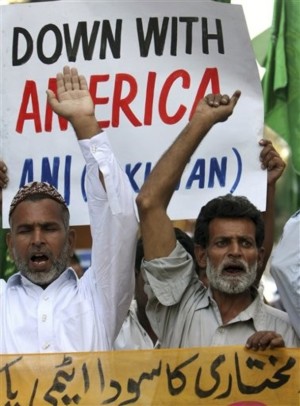
Pakistan angered by American arrogance

Pakistan angered by American arrogance

Parts of the Pakistani military and intelligence services are mounting what American officials here describe as a campaign to harass American diplomats, fraying relations at a critical moment when the Obama administration is demanding more help to fight the Taliban and Al Qaeda.

The campaign includes the refusal to extend or approve visas for more than 100 American officials and the frequent searches of American diplomatic vehicles in major cities, said an American official briefed on the cases.

The problems affected military attachés, C.I.A. officers, development experts, junior level diplomats and others, a senior American diplomat said. As a result, some American aid programs to Pakistan, which President Obama has called a critical ally, are “grinding to a halt,” the diplomat said.

American helicopters used by Pakistan to fight militants can no longer be serviced because visas for 14 American mechanics have not been approved, the diplomat said. Reimbursements to Pakistan of nearly $1 billion a year for counterterrorism have been suspended because the last of the American Embassy’s five accountants left the country this week after his visa expired.

“There’s an incredible disconnect between what they want of us and the fact we can’t get the visas,” the diplomat said.

Pakistani officials acknowledged the situation but said the menacing atmosphere resulted from American arrogance and provocations, like taking photographs in sensitive areas, and a lack of understanding of how divided Pakistanis were about the alliance with the United States. [continued…]

Facebooktwittermail

Afghans fleeing Taliban are flooding Tajikistan

Afghans fleeing Taliban are flooding Tajikistan

The night his 11-year-old son escaped from kidnappers, Abdul Aziz bundled a few belongings into a car and drove his family 18 miles north across the Afghan border into Tajikistan. “It is too frightening to live in Afghanistan anymore,” he said, standing in the bare, unlit room he now rents outside Dushanbe, the Tajik capital. “We are never going back.”

A growing number of refugees are fleeing escalating violence and lawlessness in Afghanistan for safety in Tajikistan, the most visible sign yet that the fallout from the Taliban insurgency is threatening to undermine Central Asia’s security, too.

The U.N. High Commissioner for Refugees says that more than 3,600 Afghans have fled to Tajikistan since January 2008.

Until recently, Tajikistan, Central Asia’s poorest country, attracted little international attention. A violent, six-year civil war after the Soviet Union’s demise stymied development. Unlike its post-Soviet peers, Tajikistan has insufficient oil resources to attract major investors. Its economy is kept afloat by aluminum and cotton exports and remittances from migrants working abroad that account for about 40 percent of its gross domestic product.

But as the Taliban has advanced north this year into the previously peaceful Afghan province of Kunduz, Tajikistan has become the front line between the insurgency and Central Asia. [continued…]

U.S. steps up special operations mission in Afghanistan

The U.S. military command has quietly shifted and intensified the mission of clandestine special operations forces in Afghanistan, senior officials said, targeting key figures within the Taliban, rather than almost exclusively hunting Al Qaeda leaders.

As a result of orders from Army Gen. Stanley A. McChrystal, the top U.S. and allied commander in Afghanistan, the special operations teams are focusing more on killing militants, capturing them or, whenever possible, persuading them to turn against the Taliban-led insurgency.

The number of raids carried out by such units as the Army’s Delta Force and Navy’s SEAL Team Six in Afghanistan has more than quadrupled in recent months. The teams carried out 90 raids in November, U.S. officials said, compared with 20 in May. U.S. special operations forces primarily conduct missions in eastern and southern Afghanistan.

The numbers reflect the evolving strategy and increased pressure on U.S. military leaders to show swift results against the Taliban.

The move marks the first major change in mission for the nation’s most elite military units since they were sent to Afghanistan after the Sept. 11 attacks. It comes as the Taliban has tightened its grip on key parts of Afghanistan, where only a few dozen Al Qaeda operatives are thought to remain.

The shift could be controversial among some administration officials and lawmakers who want the U.S. military to focus primarily on the long-term fight against terrorism and on eradicating Al Qaeda. Senior military leaders, however, believe that rolling back Taliban gains has become the overriding short-term priority. [continued…]

U.N. officials say Galbraith plotted to replace Karzai

As widespread fraud in the Afghanistan presidential election was becoming clear three months ago, the No. 2 United Nations official in the country, the American Peter W. Galbraith, proposed enlisting the White House in a plan to replace the Afghan president, Hamid Karzai, according to two senior United Nations officials.

Mr. Karzai, the officials said, became incensed when he learned of the plan and was told it had been put forth by Mr. Galbraith, who had been installed in his position with the strong backing of Richard C. Holbrooke, the top American envoy to Afghanistan. Mr. Holbrooke had himself clashed with the Afghan president over the election.

Mr. Galbraith abruptly left the country in early September and was fired weeks later. Mr. Galbraith has said that he believes that he was forced out because he was feuding with his boss, the Norwegian Kai Eide, the top United Nations official in Kabul, over how to respond to what he termed wholesale fraud in the Afghan presidential election. He accused Mr. Eide of concealing the degree of fraud benefiting Mr. Karzai.

Mr. Galbraith said in an interview that he discussed but never actively promoted the idea of persuading Mr. Karzai to leave office. [continued…]

US silent about Taliban guarantee offer on al-Qaeda

The Barack Obama administration is refusing to acknowledge an offer by the leadership of the Taliban in early December to give “legal guarantees” that it will not allow Afghanistan to be used for attacks on other countries.

The administration’s silence on the offer, despite a public statement by Secretary of State Hillary Clinton expressing skepticism about any Taliban offer to separate itself from al-Qaeda, effectively leaves the door open to negotiating a deal with the Taliban based on such a proposal.

The Taliban, however, has chosen to interpret the Obama administration’s position as one of rejection of its offer.

The Taliban offer, included in a statement dated Dec. 4 and e-mailed to news organizations the following day, said the organization has “no agenda of meddling in the internal affairs of other countries and is ready to give legal guarantees if foreign forces withdraw from Afghanistan.” [continued…]

The price of pushing our troops too far

Quietly, almost imperceptibly, our Army is hollowing out. Such is the predictable result of eight years of ceaseless deployments in support of ill-advised wars. Remarkably, the Army has, so far, managed to maintain its combat effectiveness, in part by its recourse to a “Stop Loss” policy — essentially a backdoor draft (only recently curtailed by Secretary of Defense Robert Gates) that involuntarily extended the enlistments of 60,000 troops. It has also relied heavily on the use and reuse of the Reserves and the National Guard. Governor Ed Rendell of Pennsylvania noted last month on Meet the Press that “our troops are tired and worn out. [With respect to the] Pennsylvania National Guard, most of our guardsmen have been to either Iraq [or] Afghanistan, over 85 percent, and many of them have gone three or four times and they’re wasted.”

Signs of severe strain, of being “wasted,” are often not visible to the American public. Nevertheless, they are ominous and growing. Suicides have hit record highs in the Army. Cases of Post-Traumatic Stress Disorder (PTSD) and depression, having reached an alarming 300,000 in 2008, according to Invisible Wounds of War, a RAND study, continue to escalate, constituting a mental health crisis for the Army. Traumatic brain injuries from IEDs and other explosive shocks in our war zones, difficult to diagnose and even more difficult to treat, may already exceed 300,000, another health crisis exacerbated by a lack of treatment available to veterans. Divorce rates among active duty troops continue to climb. An epidemic of domestic violence and crime has been linked to returning veterans and to the difficulty of readjusting to “normal” life after months, or years, in combat zones. These are just five of the better documented signs of an Army that’s struggling to cope with wars of unprecedented length and still uncertain outcomes. [continued…]

Congress investigating charges of ‘protection racket’ by Afghanistan contractors

A House oversight subcommittee said Wednesday that it has begun a wide-ranging investigation into allegations that private security companies hired to protect Defense Department convoys in Afghanistan are paying off warlords and the Taliban to ensure safe passage.

“If shown to be true, it would mean that the United States is unintentionally engaged in a vast protection racket and, as such, may be indirectly funding the very insurgents we are trying to fight,” said Rep. John F. Tierney (D-Mass.), chairman of the House oversight subcommittee on national security and foreign affairs.

Two weeks ago, Secretary of State Hillary Rodham Clinton described the same situation before a Senate committee while discussing the truck convoys that bring supplies into landlocked Afghanistan. “You offload a ship in Karachi [Pakistan]. And by the time whatever it is — you know, muffins for our soldiers’ breakfast or anti-IED equipment — gets to where we’re headed, it goes through a lot of hands,” she said. “And one of the major sources of funding for the Taliban is the protection money.”

A preliminary inquiry by Tierney’s investigators determined that the allegations warranted a full-scale inquiry, focused initially on eight trucking companies that share a $2.2 billion Defense Department contract to carry goods and material from main supply points inside Afghanistan — primarily Bagram air base — to more than 100 forward operating bases and other military facilities in the country. The eight companies have completed 40,000 missions since May, carrying food, water, fuel, equipment and ammunition, according to Tierney. [continued…]

Facebooktwittermail

Israeli women’s group tells Livni to turn herself in

Israeli women’s group tells Livni to turn herself in

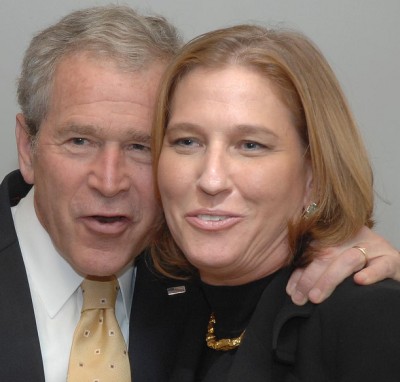
The Women’s Coalition for Peace sent a letter on Wednesday to Israel’s former Foreign Minister, Tzipi Livni, calling on her to cooperate with international investigations into her role in the assault on Gaza last winter, after a British court issued an warrant for her arrest on Monday.

The Israeli organization wrote in the letter, which was attached to a translated copy of the Goldstone report on alleged war crimes in Gaza, “We are convinced that if you refer to the report you will understand why British citizens and organizations have turned to the courts with a request to issue a warrant for your arrest.”

The letter added that the Goldstone report directly refers to remarks by senior political figures in Israel which encouraged indiscriminate attacks on civilians, in contradiction of international law.

It is in this context that Livni was quoted as saying, on 13 January 2009, “We have proven to Hamas that the equation has been altered. Israel is a state that, when its citizens are shot at, will respond insanely. And that’s a good thing.” [continued…]

Most Israeli ministers would face arrest in UK

Kadima Party leader Tzipi Livni is not the only one, or even one of a select few, who face the near-certainty of arrest should they make the mistake of visiting England.

According to former Foreign Ministry legal adviser
Allan Baker, two of every three ministers in the cabinet would also likely be arrested and detained in a British jail if they did the same.

Britain is one of several west European countries that have passed laws granting it international jurisdiction – that is, the right to try anyone suspected of violating various provisions of international law, no matter where the alleged crimes were committed or the citizenship of the suspect.

Israel first tasted the sting of international jurisdiction in 2001, when a warrant was issued in Belgium for the arrest of former Prime Minister Ariel Sharon, former army Chief-of-Staff Raphael Eitan and former head of IDF Northern Command, Amos Yaron, for their alleged roles in the 1982 Sabra and Shatila massacres in Beirut by Christian militiamen. The charges were eventually dropped, and Belgium changed its law to make it more difficult to apply universal jurisdiction.

But the threat remains in other countries. In 2005, former head of IDF Southern Command Doron Almog narrowly escaped arrest when he was advised to remain on board the plane that had brought him to London and immediately return to Israel. [continued…]

Israeli officials at risk for civil lawsuits in US

Four American Jewish groups are urging the US Supreme Court to reverse a lower court decision that could lead to Israeli officials being slammed with civil lawsuits in the United States.

Coinciding with a British judge’s decision to sign an arrest warrant for Kadima leader Tzipi Livni for alleged “war crimes” during Operation Cast Lead, the brief seeks to overturn a Fourth Circuit decision to strip foreign government officials from immunity in American civil lawsuits.

Written by Washington attorney Nathan Lewin on behalf of the Zionist Organization of America, the American Association of Jewish Lawyers and Jurists, Agudath Israel of America and the Union of Orthodox Jewish Congregations of America, the “friend of court” brief warns against a “torrent of unfounded lawsuits against Israeli government officials” in the absence of absolute immunity. [continued…]

Livni has no right to claim immunity from prosecution

It is not at all surprising that the Israeli government is outraged at the attempt – initially successful – to obtain an arrest warrant in Britain against their former foreign minister Tzipi Livni. But their characterisation of it as a “diplomatic offence” is wide of the mark. Those who come to Britain are subject to its laws.

It is necessary to step back from the particular case and look at the broader picture. War crimes and crimes against humanity are international crimes transcending national boundaries. Universal jurisdiction to put those accused of them on trial is a logical development of that recognition. Such crimes are unlikely to be redressed in the country where the perpetrators hold political power. If they are not, they can only be adjudicated in courts of another state, or in an international court or tribunal.

Since the Second World War there has been a steady expansion of legal mechanisms designed to ensure that there is no hiding place for the perpetrators of international crimes. Complying with UN treaties such as the Geneva Conventions, many countries, including the UK, give their courts jurisdiction to try specific crimes committed outside their own territory. [continued…]

Facebooktwittermail

Insurgents in Iraq hack U.S. drones

Insurgents in Iraq hack U.S. drones

Militants in Iraq have used $26 off-the-shelf software to intercept live video feeds from U.S. Predator drones, potentially providing them with information they need to evade or monitor U.S. military operations.

Senior defense and intelligence officials said Iranian-backed insurgents intercepted the video feeds by taking advantage of an unprotected communications link in some of the remotely flown planes’ systems. Shiite fighters in Iraq used software programs such as SkyGrabber — available for as little as $25.95 on the Internet — to regularly capture drone video feeds, according to a person familiar with reports on the matter.

U.S. officials say there is no evidence that militants were able to take control of the drones or otherwise interfere with their flights. Still, the intercepts could give America’s enemies battlefield advantages by removing the element of surprise from certain missions and making it easier for insurgents to determine which roads and buildings are under U.S. surveillance. [continued…]

Facebooktwittermail

U.S. imprisoned Iranian engineer secretly for two years before sentencing

U.S. imprisoned Iranian engineer secretly for two years before sentencing

In a case drawing criticism from outside lawyers, an Iranian engineer sentenced to prison Monday for violating arms control laws was lured to the nation of Georgia by American authorities for a fake arms deal, arrested, extradited to the U.S., and held in prison for two years — including months in solitary confinement before his guilty plea last year — all totally in secret, according to the Justice Department and media reports.

Export control lawyers told Politico’s Laura Rozen the politically-charged case of Amir Hossein Ardebili — which was under seal until this month — is troubling for two reasons: first, he was an Iranian who never left Iran, nonetheless lured out of the country and targeted by U.S. law enforcement; and, second, that he was sentenced after two years of secret imprisonment.

The Justice Department says the case was kept under seal for so long to protect ongoing investigations based on information obtained in the Ardebili probe. [continued…]

Facebooktwittermail

Documents show DHS improperly spied on National of Islam in 2007

Documents show DHS improperly spied on National of Islam in 2007

The Department of Homeland Security improperly gathered intelligence on the Nation of Islam for eight months in 2007 when the leader of the black Muslim group, Louis Farrakhan, was in poor health and appeared to be yielding power, according to government documents released Wednesday.

The intelligence gathering violated domestic spying rules because analysts took longer than 180 days to determine whether the U.S-based group or its American members posed a terrorist threat. Analysts also disseminated their report too broadly, according to documents obtained under the Freedom of Information Act (FOIA) by the Electronic Frontier Foundation, a civil liberties group.

The disclosure was included in hundreds of heavily redacted pages released by the Justice Department as part of long-standing FOIA lawsuits about the government’s policies on terrorist surveillance, detention and treatment since the Sept. 11, 2001, attacks. It marks the latest case of inappropriate domestic spying under rules that were expanded after the terror attacks to give intelligence agencies more latitude. [continued…]

Facebooktwittermail

When will it be our time?

When will it be our time?

I have lived my entire adult life under occupation, with Israelis holding ultimate control over my movement and daily life.
When young Israeli police officers force me to sit on the cold ground and soldiers beat me during a peaceful protest, I smolder. No human being should be compelled to sit on the ground while exercising rights taken for granted throughout the West.

It is with deepening concern that I recognize the Obama administration is not yet capable of standing up to Israel and the pro-Israel lobby. Our dream of freedom is being crushed under the weight of immovable and constantly expanding Israeli settlements.

Days ago, the State Department spokesman, Ian Kelly, managed only to term such illegal building “dismaying.” The Israeli foreign minister, Avigdor Lieberman, stands up and walks out on the U.S. envoy, George Mitchell, every time the American envoy mentions East Jerusalem.

And Javier Solana, just prior to completing his stint as European Union foreign policy chief, claimed Palestinian moves toward statehood “have to be done with time, with calm, in an appropriate moment.” He adds: “I don’t think today is the moment to talk about that.”

When, precisely, is a good time for Palestinian freedom? I call on Mr. Solana’s replacement, Catherine Ashton, to take concrete actions to press for Palestinian freedom rather than postpone it.

If Israel insists on hewing to antiquated notions of determining the date of another people’s freedom then it is incumbent on Palestinians to organize ourselves and highlight the moral repugnance of such an outlook.

Through decades of occupation and dispossession, 90 percent of the Palestinian struggle has been nonviolent, with the vast majority of Palestinians supporting this method of struggle. Today, growing numbers of Palestinians are participating in organized nonviolent resistance.

In the face of European and American inaction, it is crucial that we continue to revive our culture of collective activism by vigorously and nonviolently resisting Israel’s domination over us. [continued…]

Facebooktwittermail

Blaming the Goldstone Report

Blaming the Goldstone Report

A brief news item in the Jewish Telegraphic Agency (JTA) a few days ago made depressing reading. It was entitled: “State Department blames Goldstone for stalled peace talks.”

“Wow!” I thought to myself, has it really come down to this? The United States and Israel, who do not hesitate to toot their horn about their democratic credentials, now blame the stalled Arab-Israeli peace-making process on the publication of the report on the potential war crimes of the Gaza war issued in September by the UN Human Rights Council enquiry commission headed by Judge Richard Goldstone?

It is hard to think of a more distorted and backwards brand of political morality than this American-Israeli view of the Goldstone report, which most of the world sees as a historic breakthrough in the elusive quest to apply international norms of accountability to the savagery that has come to define Arab-Israeli warfare. [continued…]

Facebooktwittermail

British court issued Gaza arrest warrant for former Israeli minister Tzipi Livni

British court issued Gaza arrest warrant for former Israeli minister Tzipi Livni

A British court issued an arrest warrant for Israel’s former foreign minister over war crimes allegedly committed in Gaza this year – only to withdraw it when it was discovered that she was not in the UK, it emerged today.

Tzipi Livni, a member of the war cabinet during Operation Cast Lead, had been due to address a meeting in London on Sunday but cancelled her attendance in advance. The Guardian has established that Westminster magistrates’ court issued the warrant at the request of lawyers acting for some of the Palestinian victims of the fighting but it was later dropped.

The warrant marks the first time an Israeli minister or former minister has faced arrest in the UK and is evidence of a growing effort to pursue war crimes allegations under “universal jurisidiction”. Israel rejects these efforts as politically motivated, saying it acted in self-defence against Hamas rocket attacks from Gaza. [continued…]

U.S. tax dollars fund rabbi who excused killing gentile babies

The White House condemns the torching of a mosque, yet respectable Americans contribute to a yeshiva whose rabbi said it’s okay to kill gentile babies. It is no surprise that the American administration tacitly, if unenthusiastically, accepted the excuse that the map of national priority zones the cabinet approved on Sunday does not violate the decision to freeze construction in the settlements.

How can President Barack Obama object to furthering education in a settlement like Yitzhar, located in the heart of the West Bank? After all, his own tax revenues contribute to the flourishing of the Od Yosef Chai Shechem yeshiva, the settlement’s crowning glory.

This is the same yeshiva whose rabbi said it is permissible to kill gentile babies because of “the future danger that will arise if they are allowed to grow into evil people like their parents.” In his latest book, the head of the yeshiva, Yitzhak Shapira, who bears the honorable title of rabbi, even permits killing anyone “who, through his remarks and so forth, weakens our kingdom” (Obama, beware!). [continued…]

How Israel’s system of Jewish apartheid operates in Jerusalem

Green Zone from Nimrod Zin on Vimeo.

Green Zone – is a 20 minute long documentary, exploring Israel’s discriminatory policies in occupied East Jerusalem. Since 1967 urban planning has been used by the Israeli establishment as a tool to contain the growth of the Palestinian population in the mixed city. The impact of these policies has been catastrophic for many Palestinian residents, resulting in an average of 100 house demolitions every year. The film incorporates interviews with Israeli and Palestinian residents, architects, journalists and politicians, in an attempt to present this complex situation, which has significant ramifications to the whole peace process.

Lawless settlers are an inseparable part of Israel

The dogs of Shiloh run about, excited. Barking loudly, they try to chase after the long convoy of security vehicles passing the doghouses. But they aren’t going anywhere: They’re collared to long iron chains.

No sight could better illustrate the futile journey of the inspectors and police officers through the West Bank this week.

They’re here to deliver the building freeze orders, to people who rip them up in front of the cameras. This week, they traveled from one settlement to the next, and we followed, an odd convoy of armored vehicles from the Civil Administration, the Yasam special police forces and the Border Police, two cars full of journalists and one car driven by a settler activist reporting to his friends from the field and giving advance notice.

Some settlements the convoy passed quickly, without stopping, which raised even more speculation about the objective of this shadowy trip. At other settlements, its way was blocked. When the convoy parked at one West Bank junction, a few Palestinian passersby from a nearby village stared. They had no idea where it was headed; it seemed like the members of the secured convoy weren’t so sure either. [continued…]

Far-right yeshiva head: My duty is to tell troops to refuse orders

The head rabbi of a far-right West Bank yeshiva declared Monday after his school was ousted from the Israel Defense Forces hesder program that he encouraged his students to refuse settlement evacuation orders because he had an obligation to “speak his inner truth.”

Rabbi Eliezer Melamed, whose Har Bracha Yeshiva’s status was revoked late Sunday, wrote in an article published on Arutz 7 that he had skipped a critical hearing on the matter with Defense Minister Ehud Barak because he would not give in to “governmental pressure.”

“Although I knew by the Defense Minister’s rudeness that this could cause the end of the arrangement with Yeshiva Har Bracha,” wrote Melamed. “And despite all of the harsh significance that it entailed, I was obligated to stick to my independent principles and not give in.” [continued…]

Israel votes new funding for settlements

Israeli Prime Minister Benjamin Netanyahu’s cabinet voted more funding for Jewish settlements on Sunday as violence over a temporary settlement building freeze in enclaves in the occupied West Bank increased.

Defense Minister Ehud Barak voted against the plan, saying it would reward settlers living in parts of the West Bank where Palestinians have lately come under attack, such as a village where parts of a mosque was torched at the weekend.

Netanyahu condemned the burning of carpets and copies of the Koran at Yasuf village near Nablus, where graffiti scrawled in Hebrew called the act “a price tag.” It was similar to a slogan left by suspected settlers after other acts of vandalism. [continued…]

Life behind The Wall

Facebooktwittermail

Obama refuses to rule out drone attacks in Quetta

Obama refuses to rule out drone attacks in Quetta

President Barack Obama has warned that the United States would launch strikes inside Pakistan if it had actionable intelligence about the presence of top Al Qaeda and Taliban leaders in a particular area.

His statement – included in the transcript of an interview released on Monday – contradicts earlier US media reports that President Obama opposed drone attacks at suspected Taliban targets in and around Quetta.

Mr Obama made the statement when he was reminded that for almost a year officials in his administration had been saying that the Taliban leadership was now somewhere in Quetta and yet he was reluctant to call in drones to target those leaders. [continued…]

Supplying troops in Afghanistan with fuel is challenge for U.S.

President Obama’s decision to send more troops to Afghanistan will magnify one of the Pentagon’s biggest challenges: getting aviation and diesel fuel to U.S. air and ground forces there.

As the number of U.S. and coalition troops grows, the military is planning for thousands of additional tanker truck deliveries a month, big new storage facilities and dozens of contractors to navigate the landlocked country’s terrain, politics and perilous supply routes. And though Obama has vowed to start bringing U.S. forces home in 18 months, some of the fuel storage facilities will not be completed until then, according to the contract specifications issued by the Pentagon’s logistics planners.

“Getting into Afghanistan, which we need to do as quickly as we can possibly do it, is very difficult because . . . next to Antarctica, Afghanistan is probably the most incommodious place, from a logistics point of view, to be trying to fight a war,” Ashton Carter, the undersecretary of defense for acquisition, technology and logistics, said recently. “It’s landlocked and rugged, and the road network is much, much thinner than in Iraq. Fewer airports, different geography.”

Navy Vice Adm. Alan S. Thompson, who directs the Defense Logistics Agency, earlier this year called support for operations in landlocked Afghanistan “the most difficult logistics assignment we have faced since World War II.”

The military’s fuel needs are prodigious. According to the Government Accountability Office, about 300,000 gallons of jet fuel are delivered to Afghanistan each day, in addition to diesel, motor and aircraft gasoline. A typical Marine corps combat brigade requires almost 500,000 gallons of fuel per day, according to a recent study by Deloitte Analysis, a research group. Each of the more than 100 forward operating bases in Afghanistan requires a daily minimum of 300 gallons of diesel fuel, the study said. [continued…]

Facebooktwittermail

Evidence of Iran’s nuclear arms expertise mounts

Evidence of Iran’s nuclear arms expertise mounts

Long denied access to foreign technology because of sanctions, Iran has nevertheless learned how to make virtually every bolt and switch in a nuclear weapon, according to assessments by U.N. nuclear officials in internal documents, as well as Western and Middle Eastern intelligence analysts and weapons experts.

Iran’s growing technical prowess has been highlighted by a secret memo, leaked to a British newspaper over the weekend, that purportedly shows Iranian scientists conducting tests on a neutron initiator, one of the final technical hurdles in making a nuclear warhead, weapons analysts said Monday.

There was no way to establish the authenticity or original source of the document, which is being assessed by officials at Western intelligence agencies and the U.N. nuclear watchdog. Even so, former intelligence officials and arms-control experts said that if it is a genuine Iranian government document, it is a worrisome indication of an ongoing, clandestine effort to acquire nuclear weapons capability. Iran has steadfastly denied seeking nuclear arms. [continued…]

Israeli MI chief: Iran has enough nuclear material for bomb

Military Intelligence Chief Amos Yadlin said Tuesday that Iran has over the last year accumulated enough materials to create a nuclear bomb and warned: “The technological clock has almost finished winding.”

Speaking at The Institute for National Security Studies, Yadlin said that Iran had embarked on a “measured and sophisticated strategy for a solid nuclear infrastructure, by spreading out in facilities both overt and covert, while simultaneously developing a military capability that would allow a breakthrough when it so decides.”

According to Yadlin, there are three clocks now ticking with regard to Iran’s contentious nuclear program — those of technology, diplomacy, and of the stability of the Islamic regime. [continued…]

Iran intends to go forward with espionage trial of 3 Americans

Three Americans who were accused of espionage after entering Iran illegally during a hiking trip will be put on trial, Iran’s foreign minister said Monday, raising the stakes in a case likely to exacerbate tensions with the United States.

The announcement comes after Iran last week demanded the release of 11 Iranians who it says are being held by the United States — a possible signal that Tehran wants to use the Americans as bargaining chips. The development also coincides with an international stalemate over Tehran’s nuclear program. The Obama administration has warned Iran that it faces tougher sanctions over its uranium-enrichment activities unless it accepts a proposed deal by Dec. 31.

Foreign Minister Manouchehr Mottaki did not say when the trial would begin or specify the charges, saying only that the Americans had “entered Iran illegally, with suspicious objectives.” [continued…]

Ayatollah Rafsanjani? Not anymore, it appears

“Fararu,” an Iranian news website, has posted a directive that is said to be from the deputy news director of Iran’s official news agency IRNA.

The directive reportedly calls on the agency’s news sections to refer to Iran’s former President Akbar Hashemi Rafsanjani, an ayatollah and a rival of Iran’s current president, Mahmud Ahmadinejad, as hojatoleslam, which is a lower religious title.

The directive also notes that Rafsanjani’s job title is the head of Iran’s Expediency Council and says the move is aimed at unifying the reporting of Rafsanjani’s titles by the new agency. (Rafsanjani also heads the Assembly of Experts, which is in charge of selecting and dismissing Iran’s supreme leader.)

But some analysts believe the IRNA directive is part of a government campaign against Rafsanjani. Rafsanjani has backed the opposition, criticized the crackdown against opposition members, and said publicly that the Islamic republic is facing a crisis. [continued…]

Facebooktwittermail

Are crippling droughts the next great threat to Iraq?

The dust bowl of Babylon

From his mud brick home on the edge of the Garden of Eden, Awda Khasaf has twice seen his country’s lifeblood seep away. The waters that once spread from his doorstep across a 20% slab of Iraq known as the Marshlands first disappeared in 1991, when Saddam Hussein diverted them east to punish the rebellious Marsh Arabs. The wetlands have been crucial to Iraq since the earliest days of civilization — sustaining the lives of up to half a million people who live in and around the area, while providing water for almost two million more.

The waters vanished after the First Gulf War due to a dictator’s wrath; over the next 16 years, they ebbed and flowed, but slowly started to return to their pre-Saddam levels. By 2007, with no more sabotage and average rains, almost 70% of the lost water had been recovered. Now it’s gone again. This time because of a crisis far more endemic: a devastating drought and the water policies of neighboring Turkey, Iran, and Syria. These three nations have effectively stopped most of the headwaters of the three rivers — the Tigris, Euphrates, and Karoon — that feed these marshes.

“Once in a generation was bad enough,” says Awda, a tribal head and local sheikh in the al-Akeryah Marshlands, who also advises the Nasiriyah governorate on water issues. “Twice could well be God’s vengeance.”

In a land where fundamental interpretations of monotheistic scripts often determine the tone of public discourse, particular attention is now being paid to the biblical Book of Revelation, in which the Euphrates River drying up was prophesized as a harbinger for the end of the world. It is not doomsday yet in Iraq, but the water shortage here has not been worse for at least the last two centuries — and possibly for several millennia more. Government estimates suggest close to two million Iraqis face severe drinking water shortages and extremely limited hydropower-generated electricity in a part of the country where most households get by on no more than eight hours of supplied power per day, in the best of times. [continued…]

U.S. firms lag in bids for Iraqi oil

Chinese, Russian and European companies won the right this weekend to develop major oil fields in Iraq, while U.S. firms made a paltry showing at auctions that represent the first major incursion of foreign oil companies into Iraq in four decades.

The companies that secured 10 contracts in auctions held over the weekend and in June stand to profit handsomely, but they are taking a significant gamble.

Iraq has the third-largest proven crude reserves in the world, but the country remains perilous; it suffers from chronic corruption and acrimonious politics that have prevented the passing of new laws to regulate the sector.

Of the seven U.S. companies that registered for the auctions, only one emerged as the leading partner in a consortium that won a contract. Another U.S. company has a minority stake in a contract. [continued…]

Facebooktwittermail

Relations with Turkey kindle hopes in Syria

Relations with Turkey kindle hopes in Syria

Ever since Syria and Turkey lifted their visa restrictions in September, Turkish visitors have poured into this picturesque northern city. Hawkers in Aleppo’s ancient souk now call out to shoppers in Turkish, and cross-border commerce has soared. The two countries have embarked on a very public honeymoon, with their leaders talking about each other like long-lost friends.

But this reconciliation is about far more than trade, or the collapse of old Turkish-Arab enmities. At a time of economic and political uncertainty here, the new warmth with Turkey has stirred hopes about Syria’s future direction, in areas that include religion, oil and gas, and peace with Israel.

For some here, the new closeness with secular, moderate Turkey represents a move away from Syria’s controversial alliance with Iran. For others, it suggests an embrace of Turkey’s more open, cosmopolitan society. And for many — including Syria’s president, Bashar al-Assad — it conjures different dreams of a revitalized regional economy, less vulnerable to Western sanctions or pressure.

“It’s much more than an economic relationship,” said Samir al-Taqi, director of the Orient Center for International Studies in Damascus. “It’s about regathering the region, and a feeling that the West is much weaker, less liable to do anything here. I think Syria has lots of ambitions to redefine its geopolitical position.” [continued…]

Facebooktwittermail