Author Archives: Paul Woodward

US forces mounted secret Pakistan raids in hunt for al-Qaida

US forces mounted secret Pakistan raids in hunt for al-Qaida

American special forces have conducted multiple clandestine raids into Pakistan’s tribal areas as part of a secret war in the border region where Washington is pressing to expand its drone assassination programme.

A former Nato officer said the incursions, only one of which has been previously reported, occurred between 2003 and 2008, involved helicopter-borne elite soldiers stealing across the border at night, and were never declared to the Pakistani government.

“The Pakistanis were kept entirely in the dark about it. It was one of those things we wouldn’t confirm officially with them,” said the source, who had detailed knowledge of the operations. [continued…]

Welcome to Pashtunistan: the aim of America’s secret war?

Few people by now can be unaware of Blackwater, later known as Blackwater Worldwide and now as Xe. The private security agency formed in 1997 and based in North Carolina is owned by Erik Prince, a former member of the US Navy Seal special forces, and has long-standing links with both the CIA and the FBI.

Its presence in Pakistan has been an open secret for some years. The investigative journalist and writer Jeremy Scahill, an authority on Blackwater and author of the bestselling Blackwater: the Rise of the World’s Most Powerful Mercenary Army, revealed last month that it has been there since 2006. He says Blackwater is being employed for covert ops, essentially intended to target high-value al Qa’eda leaders, including Osama bin Laden, but it has also assisted in providing information for drone attacks and has kidnapped suspects and transported them covertly to the US for interrogation.

In other words, it is an American agency with a licence to kill or kidnap, thus exonerating official American agencies that might one day be held accountable. (Although personally I doubt if the CIA will ever be held accountable. I continue to aver that it is the only real rogue intelligence agency in the world. Mossad might enjoy liberty of action for any operation, but it cannot undertake one without the approval of the Israeli prime minister: no such restriction applies to the CIA.) [continued…]

Facebooktwittermail

Gaza’s civilians still unable to rebuild one year after ‘Operation Cast Lead’

Gaza’s civilians still unable to rebuild one year after ‘Operation Cast Lead’

The international community has betrayed the people of Gaza by failing to back their words with effective action to secure the ending of the Israeli blockade which is preventing reconstruction and recovery, say a group of 16 leading humanitarian and human rights groups in a new report released today (22 December) ahead of the anniversary of the start of Israel’s military offensive in Gaza (27 December-18 January).

The Israeli authorities have allowed only 41 truckloads of all construction materials into Gaza since the end of the offensive in mid-January, warn the groups, which include Amnesty International, CAFOD, Christian Aid, Medical Aid for Palestinians, Mercy Corps and Oxfam International. The task of rebuilding and repairing thousands of homes alone will require thousands of truckloads of building materials, they add.

Little of the extensive damage the offensive caused to homes, civilian infrastructure, public services, farms and businesses has been repaired because the civilian population, and the UN and aid agencies who help them, are prohibited from importing materials like cement and glass in all but a handful of cases, says the report. [continued…]

Doctor admits Israeli pathologists harvested organs without consent

Israel has admitted pathologists harvested organs from dead Palestinians, and others, without the consent of their families – a practice it said ended in the 1990s – it emerged at the weekend.

The admission, by the former head of the country’s forensic institute, followed a furious row prompted by a Swedish newspaper reporting that Israel was killing Palestinians in order to use their organs – a charge that Israel denied and called “antisemitic”.

The revelation, in a television documentary, is likely to generate anger in the Arab and Muslim world and reinforce sinister stereotypes of Israel and its attitude to Palestinians. Iran’s state-run Press TV tonight reported the story, illustrated with photographs of dead or badly injured Palestinians. [continued…]

Challenge to the Jewish Taliban

A struggle for the character of the Western Wall, this city’s iconic Jewish holy site and central place of worship, is under way, and it is being fought with prayer shawls and Torah scrolls.

On Friday, sheets of rain obscured the Old City’s ancient domes. But by 7 a.m. about 150 Jewish women had gathered at the Western Wall to pray and to challenge the constraints imposed on them by traditional Jewish Orthodoxy and a ruling by the Israeli Supreme Court.

Under their coats many of the women, supporters of a group of religious activists called Women of the Wall, wore a tallit, or fringed prayer shawl, a ritual garment traditionally worn only by men. Some wore their prayer shawls openly, an illegal act in this particular setting that can incur a fine or several months in jail. [continued…]

MK Tibi: Israel is democratic for Jews, but Jewish for Arabs

he Knesset Law and Constitution Committee conducted a heated debate Tuesday on two parallel law proposals that would enable certain communities in Israel to handpick their residents.

The proposals come amid controversy over a number of Jewish communities in the north who have refused entry to Arabs wishing to reside there.

The laws proposed by MKs Israel Hasson and Shai Hermesh (Kadima) and the committee’s chairman MK David Rotem (Yisrael Beiteinu) circumvent the High Court decision that the reception committees are illegal.

MK Ahmed Tibi condemned the bills, which passed a preliminary vote a few weeks ago, claiming they would only allow systemic racism to take hold.

“This law is like pissing in mid-air,” said Tibi. “Racism is starting to be legislated in the statute book. There is an influx of racist law proposals; you aren’t even ashamed of yourselves.”

“This country is Jewish and democratic: Democratic towards Jews, and Jewish toward Arabs,” Tibi said, adding that that if Israel’s declaration of independence was to be voted on in the Knesset today, it would not pass.

The proposals were actually meant to enable communal settlements, like moshavim, to disqualify candidates on grounds of economic status or incompatibility with the settlement’s lifestyle. The debate quickly developed, however, to the fact that the committees would be able to prevent Arab landowners from building on community land.

Facebooktwittermail

Lebanon drama adds act with leader’s trip to Syria

Lebanon drama adds act with leader’s trip to Syria

In any other part of the world, a new prime minister’s visit to a neighboring country would be a fairly routine event. But Prime Minister Saad Hariri’s trip to Syria over the weekend has been treated here as a kind of Lebanese national drama, the subject of almost endless commentary in newspapers and television shows.

It is not that anything really happened. Mr. Hariri and President Bashar al-Assad of Syria exchanged some thoroughly forgettable diplomatic banter and posed for photographs.

Instead, the trip epitomized a national story with anguished, almost operatic dimensions: a young leader forced to shake hands with the man who he believes killed his father. And it served as a reminder of this region’s deep attachment to political symbolism.

For many Lebanese, the visit was a measure of Syria’s renewed influence over Lebanon after years of bitterness and struggle since the Syrian military’s withdrawal in 2005. That withdrawal came after Mr. Hariri’s father, former Prime Minister Rafik Hariri, was killed in a car bombing that many here believe to have been ordered by Syria.

The withdrawal was a blow to Syrian prestige, and afterward Saad Hariri seemed to have the entire Western world at his back as he built a movement for greater Lebanese independence and pushed for an international tribunal to try his father’s killers.

But since then, the United States and the West have chosen to engage with Syria, not isolate it. And Saudi Arabia, which has long backed Mr. Hariri and competed with Syria for influence here, reconciled with the Syrians earlier this year, leaving them a freer hand to guide politics in Lebanon as they once did. [continued…]

Facebooktwittermail

The legacy of the people’s ayatollah: Montazeri

The ayatollah’s inspiration

“If you’re going to ask me questions about my regrets, plan to spend the next month or so in my house!” Those were the words with which Ayatollah Hussein Ali Montazeri greeted me when I interviewed him at his home in the holy city of Qum four years ago. He was then 83 years old and could look back on a life in which he’d served as a founding father of the Islamic Republic only to become its most vocal critic. More recently, especially in the last seven months of protest and crackdowns following the disputed June 12 reelection of President Mahmoud Ahmadinejad, Montazeri has emerged as the authoritative voice of religious opposition to a supposedly religious regime. He has been lionized as an idealist speaking truth to those in a power structure riddled with cynical and corrupt ideologues. For many Iranians, Montazeri became more than a hero, more than an ayatollah; he was truly, as Shiites say, a source of emulation.

On Sunday, Iranian state news agencies announced that Montazeri had died at 87 of natural causes, and at first they didn’t even want to call him an ayatollah. The paranoid regime in Tehran did its best to discourage people from attending his funeral on Monday. All major newspapers received a letter from Iran’s Ministry of Culture and Islamic Guidance about how to play down Montazeri’s death. The ministry even sent some agents to the printers to make sure that newspapers listened to its orders, according to one newspaper editor. They ordered the telecommunications company to slow the speed of Internet connections, and they shut down mobile phones in Qum for several hours, eyewitnesses said.

Iran’s Ministry of Intelligence warned political activists not to attend the burial service next to Qum’s Masuma shrine. The police and the Revolutionary Guards arrested others before they reached the city. Two Iranian journalists reported that security forces with riot shields and truncheons ringed Montazeri’s house, and the streets were full of police in uniform and in plain clothes carrying walkie-talkies and stun guns. The Basij militia connected to Iran’s increasingly powerful Revolutionary Guards corps attacked buses full of mourners, and the regime’s partisans and thugs filled the main mosque in Qum rather than let a memorial service be held there. But according to eyewitnesses, hundreds of thousands of people came to the city anyway. [continued…]

Cleric’s death, torture case jolt Iran

Iran’s opposition seized upon the death of one of the Islamic republic’s founding fathers — a revered ayatollah who was also a fierce critic of the nation’s leadership — to take to the streets in mourning.

Tens of thousands of Iranian mourners–many chanting protest slogans–joined the funeral procession Monday for Grand Ayatollah Hossein Ali Montazeri, who had described government crackdowns as the work of power-hungry despots.

Iranian authorities have barred foreign media from covering the processions in the holy city of Qom for Ayatollah Montazeri, who died Sunday at age 87. But witnesses said many mourners shouted protest cries including “Death to the Dictator” in displays of anger against Iran’s ruling establishment.

There were no immediate reports of serious clashes from the witnesses, who spoke on condition of anonymity because of fears of arrest by Iranian authorities. Some opposition Web sites noted scuffles and violence, but the reports couldn’t immediately be confirmed.

On Monday, access to the Internet in Iran was slow, and cellular telephone service was unreliable. The government has periodically restricted communications in an attempt to prevent protesters from organizing.

The death of Ayatollah Montazeri, who passed away in his sleep, was only one of two surprises to shake Iran over the weekend.

Hours earlier, on Saturday, military prosecutors alleged that prison guards tortured to death at least three student protesters in July, contradicting months of denials by top leaders. The reversal is one of the biggest blows to Tehran’s credibility since government protests first erupted six months ago.

Either development, by itself, would provide a rallying point for the opposition, which claims last summer’s presidential election was a fraud and is demanding a political overhaul. Together, they represent the widening array of challenges facing the Iranian regime. [continued…]

The remarkable life of Iran’s bravest cleric

Born in 1922 to a poor but pious family, he studied not only with Ayatollah Khomeini but with Grand Ayatollah Borujerdi, easily the most esteemed Shiite leader of his time. In Shiite clerical hierarchy, the stature of your teachers is a significant measure of your own stature. Montazeri’s pedagogical pedigree was singular for it combined the unmatched erudition of Boroujerdi with the political bravura of Khomeini. Moreover, Montazeri had been relentless in fighting on the side of his mentor throughout the ’60s and ’70s when Khomeini lived in exile. After the victory of the revolution, he had emerged clearly as the second most powerful man in Iran. The 1986 decision to name him the successor to Khomeini codified in law what was already evident in practice.

Tensions between Khomeini and Montazeri began when someone on Montazeri’s staff leaked the story of secret deals between Iran and the United States–what turned out to be the Iran-Contra Affair. Khomeini executed the staffer, despite protestations from Montazeri. A few months later, as the nation learned of Khomeini’s ill health, Montazeri learned of mass executions in prisons on the order of Khomeini. Prisoners serving time on earlier charges were to be retried–in procedures often lasting no more than a few minutes–and executed if found to be still opposed to the regime. Instead of keeping a pragmatic silence and awaiting Khomeini’s death, as many of his advisors recommended, Montazeri wrote a harshly worded letter to Khomeini condemning the orders, saying that this is not the kind of revolution they had fought for together.

This time, the price for protesting murder and moral perfidy was the direct wrath of Khomeini. Montazeri was not only stripped of all his power, but ridiculed in the press by many, including Khomeini’s son, as an imbecile–a country bumpkin at best, unwittingly used and abused by “enemies of Islam.” The media began a vicious campaign of character assassination against Montazeri, the man Khomeini had not long before called “the essence of my life” and a “pillar of Islam.” [continued…]

Iran-Iraq standoff over oil field ends

Iraq said Sunday that Iranian soldiers who had been occupying part of a disputed Iraqi oil field had withdrawn, ending a three-day standoff that had strained relations between the countries.

But Labeed Abawi, Iraq’s deputy foreign affairs minister, said some Iranian troops remained in Iraq late Sunday. “They withdrew from the field, but they are not completely out of Iraqi territory,” he said.

Mr. Abawi said representatives of the two countries planned to meet soon to try to agree on the precise border in the vicinity of the Fakka field in Maysan Province in southeastern Iraq.

Iran’s state news media said Sunday that the Iranian troops had returned to their border post, but that the soldiers had never crossed into Iraq.

Iraq claims that it dug oil wells on the Fakka field during the 1970s before the Iran-Iraq war. But Iran says the area near the well that its soldiers had occupied — known as Well No. 4 — is on the Iranian side of the border.

At least four other oil fields in Iraq are within several hundred yards of the Iranian border or straddle the line.

Border disputes between the countries, which set off the 1980-88 Iran-Iraq war, have become more common in recent months as Iraq has moved to sell development rights to fields near the Iranian border, including Fakka. [continued…]

Facebooktwittermail

Hamas using English law to demand arrest of Israeli leaders for war crimes

Hamas using English law to demand arrest of Israeli leaders for war crimes

The Islamist group Hamas is masterminding efforts to have senior Israeli leaders arrested for alleged war crimes when they visit European countries including Britain, a top Hamas official involved in the effort has told The Times.

The claim comes amid continuing diplomatic fallout after a British arrest warrant was issued last week against Tzipi Livni, who served as Foreign Minister during Israel’s Gaza offensive last winter. The warrant was withdrawn when it became clear that Ms Livni, now leader of the opposition, was not in the country. Its existence apparently prompted her to cancel a trip to attend a meeting in London.

President Peres described the incident as “one of the greatest political mistakes” that Britain could have made and calling for the law to be changed. “Everything is based on … a hostile majority public opinion,” he said last week. “The British promised they would fix this and it is time that they do so.” [continued…]

The democratic value of universal accountability

In important global dynamic today bridges the worlds of politics, morality and violence. Societies are grappling with the challenge of how to hold accountable the political leaders who are accused of various degrees of criminal behavior, including war crimes, torture — even genocide or crimes against humanity. The most outrageous cases are tried in special international tribunals or at the International Criminal Court. Other cases reflect more contested situations and raise critical issues of the universality of ethics and law.

Two cases last week in the United States and Israel are interesting in this respect, because these two countries remind us twice a week — and more often in war time and on patriotic national holidays — that they are democracies whose values should be spread around the world. Well, the world at the receiving end of their moral munificence frequently asks an important question to which it has yet to receive a clear answer:

Are the United States and Israel subject to the same standards of accountability for their behavior as everyone else in the world, or do they operate at a higher plane of impunity when it comes to using violence to kill, torture, and invade or occupy other peoples? [continued…]

Facebooktwittermail

Settler activist: ‘We are preparing a series of surprises’ for the army

Settler activist: ‘We are preparing a series of surprises’ for the army

ight-wing activists began preparing on Sunday for a fight against the planned demolition of structures built in contravention of the 10-month freeze on construction in West Bank settlements.

The demolition plans were described in an internal Israel Defense Forces memo detailing the intelligence-gathering methods to be used to detect freeze violations. The memo was leaked to the press on Sunday.

One of the issues that most concerns right-wing activists is the IDF’s plan to jam cell-phone signals, so as to prevent settlers from telling other protesters where to demonstrate against implementation of the freeze. Activists have begun consulting with experts on how to overcome the signal jamming.

The memo shows the IDF is focusing on how to deal with problems it has faced in the past, a right-wing activist said on Sunday.

“The army is preparing for yesterday’s war, but we won’t fight it on its turf,” he said. “We are preparing a series of surprises and events that it won’t be prepared for.” Continue reading

Facebooktwittermail

Likud MK: Annex West Bank, consider citizenship for Palestinians

Likud MK: Annex West Bank, consider citizenship for Palestinians

Knesset Member Tzipi Hotovely, one of the leading dissenting voices in the Likud faction opposing the policy adopted by Prime Minister Benjamin Netanyahu, said Sunday that the territories should be annexed to Israel.
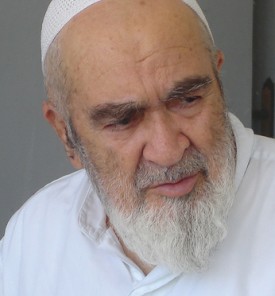
“Israeli law should be applied on the Judea and Samaria region,” Hotovely said during a conference in the Interdisciplinary Center in Herzliya and stated she did not rule out granting citizenship to Palestinians.

The MK explained that “Judea and Samaria are a part of the land of Israel,” and blamed the Palestinians for the failure of the political process. “We strongly wish to get a divorce, but the other side doesn’t want to separate.”

Hotovely told Ynet later in the evening, “It’s unthinkable that Jews in Judea and Samaria would live under occupation and under a military regime. The distorted policy, which states that every construction permit must be approved by the defense minister harms the most basic rights.

“It’s time to lift the question mark over Judea and Samaria and view the people living there as citizens with an equal status. Thinking ahead, strategically, we should consider granting gradual citizenship to Palestinians based on loyalty tests.” [continued…]

Editor’s Comment — Tzipi Hotovely, at 31 the youngest member of the Knesset, is younger than the occupation. Small wonder that she regards Israel’s control of the West Bank as irreversible. Her proposal to consider granting Palestinians citizenship if they pass a “loyalty test” obviously bears no relationship to the one-state solution that many anti-Zionists favor. Indeed, the Jewish claim to Greater Israel she is expressing has embedded in it a hubris that goes beyond that of the average Zionist — she seems to be implying that Jews could still exercise control over a Jewish state even if they were in a minority. Old hands in the conflict will no doubt dismiss her views as naive, but I have to wonder whether or not she is simply saying what a majority of her generation of Jewish Israelis already think.

Israel continues its assault on Palestinian nonviolent leaders

Israel’s campaign against Palestinian nonviolent grassroots activists is continuing. The latest leader to be arrested is Jamal Juma’. Juma’ has been the coordinator of the Palestinian Grassroots Anti-Apartheid Wall Campaign since 2002. His arrests follows those of Mohammad Othman, who had been promoting BDS in Europe, and Abdallah Abu Rahmah a leader of the weekly nonviolent protests against the wall in Bil’in. [continued…]

Facebooktwittermail

Somalia is greatest victim of President Bush’s War on Terror

Somalia is greatest victim of President Bush’s War on Terror

AQfghanistan and Iraq have monopolised the headlines but Somalia is arguably an even greater victim of George W. Bush’s ill-conceived and lamentably executed War on Terror. America’s interventions have proved so catastrophic that its best hope of salvaging something from the wreckage is a president it chased from power three years ago, who controls a few square miles of a country three times the size of Britain.

It has delivered a people that practised a moderate form of Islam into the hands of religious extremists. Its efforts to combat terrorism have turned Somalia into a launchpad for global jihad. Somalia is now the ultimate failed state whose mayhem threatens to destabilise the region and whose pirates maraud the vital shipping lanes off its shores. Its people endure Africa’s worst humanitarian crisis.

During the Cold War, the US pumped arms into Somalia to counter Soviet support for neighbouring Ethiopia. In 1991 clan warlords ousted the dictator Siad Barre and turned that arsenal on each other. In 1992 President Bush Snr sent in the Marines to help its suffering people — a venture that ended in the Black Hawk Down debacle, a humiliating US withdrawal and a dozen more years of anarchy as the feuding warlords ran amok. [continued…]

Facebooktwittermail

How ‘Iran’s stooge’ turned out to have a mind of his own

How ‘Iran’s stooge’ turned out to have a mind of his own

Is it time for the Gulf countries, especially Saudi Arabia, to drop their caution towards the Iraqi prime minister Nouri al Maliki and his cabinet, and embrace a neighbour currently emerging from years of tyranny followed by civil strife?

Gulf reservations are understandable. Mr al Maliki was a member of the United Iraqi Alliance (UIA) parliamentary bloc, the predecessor of the Iraqi National Alliance (INA), a coalition of Shiite, mainly Islamist, parties. Fearing Iranian dominance over Iraq, Saudi Arabia distanced itself from him.

By the time of the parliamentary elections in December 2005, the UIA consisted mainly of the Supreme Council for the Islamic Revolution in Iraq (ISCI), Mr al Maliki’s Dawa party, its splinter group Dawa Iraq Organisation, and the Fadhilah party. Other groups known for their close ties with Iran, such as Moqtada al Sadr’s candidates and Ahmed Chalabi’s Iraq National Congress (INC), ran independently. [continued…]

Facebooktwittermail

Death of Iran’s top dissident cleric prompts protests

Death of Iran’s top dissident cleric prompts protests

Iran’s top dissident cleric, Grand Ayatollah Hossein Ali Montazeri, 87 years old, died in his sleep on Saturday night, his family said, drawing supporters to the holy city of Qom on Sunday to pay their respects.
The impromptu mourning — with reformist supporters reportedly streaming in from Tehran and further afield — threatens to set the stage for another confrontation between opposition protesters and government forces. Antiregime demonstrators have used government-sanctioned holidays and Islamic holy days to rally publicly against President Mahmoud Ahmadinejad, who won contested presidential elections in June.

Spontaneous protests erupted across several cities in Iran and at university campuses, according to video circulating on the Internet Sunday afternoon. In one clip in Najaf-Adad, Mr. Montezeri’s home town, crowds chanted, “Our green Montazeri, congratulations on your freedom,” and “Montazeri, your path will continue.” [continued…]

The doctor who defied Tehran

At the height of Iran’s bloody civil unrest this year, a young doctor named Ramin Pourandarjani defied his superiors. He refused to sign death certificates at a Tehran prison that he said were falsified to cover up murder.

He testified to a parliamentary committee that jailers were torturing and raping protesters, his family says. He told friends and family he feared for his life.

And on Nov. 10, the 26-year-old doctor was found dead in the military clinic where he lived and worked. [continued…]

Facebooktwittermail

Iran claims an oil field it seized

Iran claims an oil field it seized

The Iranian government said Saturday that an oil field that its troops occupied a day earlier was on its side of the border with Iraq, despite Iraqi claims to the contrary.

A group of about 11 Iranian soldiers seized a portion of the remote Fakka oil field in Maysan Province in southeastern Iraq early Friday, according to Iraq.

Government officials in Baghdad said they had summoned the Iranian ambassador to protest the military action, but diplomatic efforts had so far failed to resolve the dispute. [continued…]

Iraqi troops in standoff with Iran near oil well

Iraq deployed security forces Saturday near a remote oil well seized by Iran, officials said, and its government pressed Tehran to withdraw its forces from the area along their disputed southern border.

U.S. officials applauded Iraq for standing its ground against Iran — an uneasy ally that analysts said was aiming to remind its neighbor of its economic and political pull in its takeover of the oil well Thursday. The site is located in one of the largest oil fields in Iraq and has about 1.5 billion barrels in reserves.

The standoff was a dramatic display of the occasionally tense relations between the two oil-rich nations that fought an eight-year war in the 1980s but now share common ground in Shiite-led governments. [continued…]

Facebooktwittermail

U.S. companies shut out as Iraq auctions its oil fields

U.S. companies shut out as Iraq auctions its oil fields

Those who claim that the U.S. invaded Iraq in 2003 to get control of the country’s giant oil reserves will be left scratching their heads by the results of last weekend’s auction of Iraqi oil contracts: Not a single U.S. company secured a deal in the auction of contracts that will shape the Iraqi oil industry for the next couple of decades. Two of the most lucrative of the multi-billion-dollar oil contracts went to two countries which bitterly opposed the U.S. invasion — Russia and China — while even Total Oil of France, which led the charge to deny international approval for the war at the U.N. Security Council in 2003, won a bigger stake than the Americans in the most recent auction. “[The distribution of oil contracts] certainly answers the theory that the war was for the benefit of big U.S. oil interests,” says Alex Munton, Middle East oil analyst for the energy consultancy Wood Mackenzie, whose clients include major U.S. companies. “That has not been demonstrated by what has happened this week.”

In one of the biggest auctions held anywhere in the 150-year history of the oil industry, executives from across the world flew into Baghdad on Dec. 11 for a two-day, red-carpet ceremony at the Oil Ministry, broadcast live in Iraq. With U.S. military helicopters hovering overhead to help ward off a possible insurgent attack, Oil Minister Hussein Al-Shahrastani unsealed envelopes from each company, stating how much oil it would produce, and what it was willing to accept in payment from Iraq’s government. Rather than giving foreign oil companies control over Iraqi reserves, as the U.S. had hoped to do with the Oil Law it failed to get the Iraqi parliament to pass, the oil companies were awarded service contracts lasting 20 years for seven of the 10 oil fields on offer — the oil will remain the property of the Iraqi state, and the foreign companies will pump it for a fixed price per barrel. [continued…]

Channeling Sunni rage into Iraqi political clout

Sheik Abdul-Rahman Munshid al-Assi has been making up for the time he lost in an American prison, aggressively diving into Iraqi politics after being held nearly a year on charges of aiding the insurgency.

After his release last year, he formed the Arab Political Council to represent Sunni Arabs in Kirkuk. He recruited Sunni candidates to run in the coming national elections. He is forging a political bloc with Arab nationalists, other tribal leaders and former members of Saddam Hussein’s outlawed Baath Party as a counterweight to Kurds in the province.

At first glance, the fact that a vehement opponent of the Shiite-led government in Baghdad and Kurdish leaders next door is embracing democratic politics may seem to be a purely positive sign. After all, much of the American security effort of the past few years has been to channel Sunnis into just such a course.

But for Sheik Abdul-Rahman the political action is far from a concession. Rather, it is an attempt to tap into the simmering rage he says is still rampant among Sunni Arabs in Iraq. And he and many of his peers are far from becoming fully reformed democrats: he has yet to renounce the insurgency, though he denies directly supporting it, and warns that more violence could come. [continued…]

Facebooktwittermail

Viva Palestina convoy arriving in Turkey

Viva Palestina convoy arriving in Turkey

The Gaza I know

For most Americans, the Gaza Strip is, at best, unknown territory. At worst, it is a hostile land whose “terrorist infrastructure” must be dismantled, no matter what the cost to its million and a half residents.

The Gaza I have been visiting for the past twenty-one years bears little relation to the dehumanizing imagery to which it has been reduced by the mainstream media. The Gaza I know is home to friends and strangers who are as welcoming and humane as they are resilient and determined to achieve their freedom. They have maintained their humanity despite enduring a brutal forty-two-year-old Israeli occupation that has cost them the destruction of their homes, land, economy and future and the loss of more than 4,000 lives since the dawn of the twenty-first century.

For the past two and a half years, this spit of sand–just twenty-five miles long and a few miles wide–has been virtually a closed prison. Since June 2007 Israel’s blockade has prevented the entry of all but a handful of basic items, and the exit of patients who urgently need medical treatment and students with scholarships to study abroad. Then, a year ago, came the “shock and awe” of Israel’s “Operation Cast Lead,” intended as a knockout blow not just to the crude rockets fired from Gaza but to its life-sustaining infrastructure and the will of its people to resist. [continued…]

One Palestinian family’s story illustrates the absurdity, and intention, of Israeli policy

I am a Palestinian refugee, from the village of Fallujah which lies between Gaza, Hebron and Asqalan. I’ve never been allowed to visit Fallujah; my grandparents were exiled from there in 1949 (a year after the founding of Israel) and took refuge in the Gaza Strip. My father and I were both born in the Khan Younis refugee camp-he a few years before Gaza was occupied by Israel, and I in 1988, a month after the outbreak of the first intifada. My dad married a woman from the West Bank-they had met and fallen in love while they were both studying at Birzeit University, and when I was two years old we emigrated to the UK where he received his Phd.

Fourteen years later, in 2004, we all returned to Palestine to live in Ramallah. Now British citizens, my parents were determined that my three siblings and I would forge a stronger connection to our homeland than we ever could living abroad. At first, the transition was made easier by the fact that our foreign passports gave us the freedom of movement that was denied to other Palestinians in the West Bank and Gaza. For me, this reality was shattered when in late 2005 I attempted to cross the River Jordan from the West Bank to visit my aunt in Amman. The Israeli border agents told me that I could not pass, because I had an Israeli issued Gaza ID. Under Israeli military rules, this meant that I could not ‘legally’ be present in the West Bank because the Israeli occupation had mandated that Palestinians from Gaza could not enter the West Bank, and Palestinians from the West Bank could not enter Gaza. This policy had been in force since the early 1990’s, but was applied with increasing severity after the outbreak of the second intifada.

I lived the next four years under constant fear of arrest by the Israeli military, because that would have resulted in almost certain deportation to Gaza, and isolation from my family. For those four years, I never left the confines of Ramallah, so as to avoid the Israeli checkpoints on every one of the town’s entrances-but even this couldn’t give me a sense of security because I had to commute daily to Birzeit University, on a route frequently patrolled by Israeli forces from the nearby settlement of Bet El. [continued…]

Steps to create an Israel-Palestine

In recent years the idea of a one-state solution has been anathema to Israelis and their supporters worldwide. This has been fueled by the fear of the “demographic threat” posed by the high Palestinian birthrate. Indeed, many Israeli supporters of a two-state solution came to that position out of fear of this demographic threat rather than sympathy with Palestinian national aspirations.

At the root of their fear was the belief that despite Israel’s best efforts to push Palestinians from land and property and to import Jewish settlers in their stead, the Arab population would keep climbing. And that, when the Arabs reached the 51% mark, the state of Israel would collapse, its Jewish character would disappear and its population would dwindle into obscurity.

Yet that scenario is not necessarily the inevitable result of either demography or democracy. Religious and ethnic minorities have successfully thrived in many countries and managed to retain their distinctive culture and identity, and succeeded in being effective and sometimes even dominant influences in those countries. Those who believe in coexistence must begin to seriously think of the legal and constitutional mechanisms needed to safeguard the rights of a Jewish minority in Israel-Palestine. [continued…]

Facebooktwittermail

In Iran, nuclear issue is also a medical one

In Iran, nuclear issue is also a medical one

Ruhollah Solook, a retired electrician living in Santa Monica, Calif., was in a desperate bind. He urgently needed a kidney transplant, as well as a series of radiation therapy diagnoses and treatments. The nuclear medicine was available in the United States, but the kidney was not.

Solook, 78, an Iranian Jew who emigrated decades ago, never expected to find both in his native country. But there he was this month, recovering in an isolated room in Tehran’s oldest hospital with a new kidney donated by a friend.

“They have saved my life here,” he said. “Now I hope they can cure me.”

In Iran, an estimated 850,000 kidney, heart and cancer patients are facing a race against time. Although these patients are in need of post-surgery treatment with nuclear medicine, doctors and nuclear scientists here say domestic production will dry up when a research reactor in Tehran runs out of fuel, perhaps as soon as this spring. [continued…]

Deep South calls in Iran to cure its health blues

As Marie Pryor shuffles along a Mississippi roadside collecting discarded drink cans to sell for a few cents, her breath comes in short puffs caused by a congenital heart defect. The same condition caused her granddaughter’s death earlier this year.

The last place on earth she would look for help is Iran, a country widely regarded in America as the enemy. The US and Iran have not had diplomatic relations for 30 years and the two governments trade daily insults over Iran’s nuclear programme. Last week Tehran charged three American hikers with espionage after they apparently strayed across the border.

But with Congress acrimoniously debating the reform of healthcare, it is to Iran that one of America’s poorest communities is turning to try to resolve its own health crisis.

A US doctor and a development consultant visited Iran in May to study a primary healthcare system that has cut infant mortality by more than two-thirds since the Islamic revolution in 1979.

Then, in October, five top Iranian doctors, including a senior official at the health ministry in Tehran, were quietly brought to Mississippi to advise on how the system could be implemented there. [continued…]

Facebooktwittermail

Stunning statistics about the war every American should know

Stunning statistics about the war every American should know

A hearing in Sen. Claire McCaskill’s Contract Oversight subcommittee on contracting in Afghanistan has highlighted some important statistics that provide a window into the extent to which the Obama administration has picked up the Bush-era war privatization baton and sprinted with it. Overall, contractors now comprise a whopping 69% of the Department of Defense’s total workforce, “the highest ratio of contractors to military personnel in US history.” That’s not in one war zone — that’s the Pentagon in its entirety.

In Afghanistan, the Obama administration blows the Bush administration out of the privatized water. According to a memo [PDF] released by McCaskill’s staff, “From June 2009 to September 2009, there was a 40% increase in Defense Department contractors in Afghanistan. During the same period, the number of armed private security contractors working for the Defense Department in Afghanistan doubled, increasing from approximately 5,000 to more than 10,000. [continued…]

Facebooktwittermail

Police expect Mumbai-style terror attack on City of London

Police expect Mumbai-style terror attack on City of London

Scotland Yard has warned businesses in London to expect a Mumbai-style attack on the capital.

In a briefing in the City of London 12 days ago, a senior detective from SO15, the Metropolitan police counter-terrorism command, said: “Mumbai is coming to London.”

The detective said companies should anticipate a shooting and hostage-taking raid “involving a small number of gunmen with handguns and improvised explosive devices”.

The warning — the bluntest issued by police — has underlined an assessment that a terrorist cell may be preparing an attack on London early next year. [continued…]

Facebooktwittermail

U.S.-Israeli arms cooperation quietly growing

U.S.-Israeli arms cooperation quietly growing

Leaders in Washington and Jerusalem have publicly locked horns over the issue of West Bank settlements. And Israeli public opinion has largely viewed America’s new administration as unfriendly. But behind the scenes, strategic security relations between the two countries are flourishing.

Israeli officials have been singing the praises of President Obama for his willingness to address their defense concerns and for actions taken by his administration to bolster Israel’s qualitative military edge — an edge eroded, according to Israel, during the final year of the George W. Bush presidency.

Among the new initiatives taken by the administration, the Forward has learned, are adjustments in a massive arms deal the Bush administration made with Arab Gulf states in response to Israeli concerns. There have also been upgrades in U.S.-Israeli military cooperation on missile defense. And a deal is expected next year that will see one of the United States’ most advanced fighter jets go to Israel with some of America’s most sensitive new technology.

Amid the cacophony of U.S.-Israel clashes on the diplomatic front, public attention given to this intensified strategic cooperation has been scant. But in a rare public comment in October, Israeli Ambassador Michael Oren praised the Obama administration’s response to complaints about lost ground during the close of the Bush years as “warm and immediate.” [continued…]

CIA working with Palestinian security agents

Palestinian security agents who have been detaining and allegedly torturing supporters of the Islamist organisation Hamas in the West Bank have been working closely with the CIA, the Guardian has learned.

Less than a year after Barack Obama signed an executive order that prohibited torture and provided for the lawful interrogation of detainees in US custody, evidence is emerging the CIA is co-operating with security agents whose continuing use of torture has been widely documented by human rights groups.

The relationship between the CIA and the two Palestinian agencies involved – Preventive Security Organisation (PSO) and General Intelligence Service (GI) – is said by some western diplomats and other officials in the region to be so close that the American agency appears to be supervising the Palestinians’ work.

One senior western official said: “The [Central Intelligence] Agency consider them as their property, those two Palestinian services.” A diplomatic source added that US influence over the agencies was so great they could be considered “an advanced arm of the war on terror”. [continued…]

Obama told China: I can’t stop Israel strike on Iran indefinitely

President Barack Obama has warned his Chinese counterpart that the United States would not be able to keep Israel from attacking Iranian nuclear installations for much longer, senior officials in Jerusalem told Haaretz.

They said Obama warned President Hu Jintao during the American’s visit to Beijing a month ago as part of the U.S. attempt to convince the Chinese to support strict sanctions on Tehran if it does not accept Western proposals for its nuclear program.

The Israeli officials, who asked to remain anonymous due to the sensitivity of the matter, said the United States had informed Israel on Obama’s meetings in Beijing on Iran. They said Obama made it clear to Hu that at some point the United States would no longer be able to prevent Israel from acting as it saw fit in response to the perceived Iranian threat. Continue reading

Facebooktwittermail

EU: East Jerusalem is occupied territory

Statement by EU High Representative Ashton at the EU Parliament debate on the Middle East Peace Process

You have invited me here today to talk about our political work but also about the situation in East Jerusalem. This is an area of deep concern for us. East Jerusalem is occupied territory, together with the rest of the West Bank. The EU is opposed to the demolition of Palestinian homes, the eviction of Palestinian families, the construction of Israeli settlements and the route of the “separation barrier”. The EU is addressing these issues at political level, through diplomatic channels and in our public statements. We are also addressing the situation through practical assistance aimed at supporting the Palestinian population in East Jerusalem. For example, there is a lack of 1200 classrooms for the Palestinian children in the city, so we are helping to reinforce education facilities. In addition we enable Palestinian hospitals in East Jerusalem to remain viable and we do a lot of work with Palestinian young people in the city, who suffer from high rates of unemployment and psychological problems. To date in East Jerusalem the EU is implementing activities costing EUR 4.6 million.

Another aspect of concern for us is of course the situation in Gaza. The EU has consistently called for the flow of aid, trade and persons. We are deeply concerned about the daily living conditions of the Gazan people: since the January conflict donors have not been able to do reconstruction work and serious issues persist like the lack of clean drinking water. Israel should re-open the crossings without delay, which would allow a revival of private sector and a reduction of Gaza’s aid dependency. [continued…]

Israel: EU official’s ‘occupation’ remark casts pall on ties

Government officials in Jerusalem harshly criticized the new European Union High Representative for Foreign Affairs and Security Policy, Catherine Ashton, for her scathing remarks about the “Israeli occupation” in her maiden speech.

Ashton on Tuesday leveled scathing criticism at Israeli policy in her first speech as the European Union’s first high representative for foreign affairs and security policy.

The government officials in Jerusalem said they were surprised, dissatisfied and concerned that such a senior figure had expressed criticism before visiting Israel and learning the facts.

They said the remarks cast a pall over relations with the European Union, and that they were particularly angry that she had not welcomed the settlement construction freeze, as had her European colleagues. Continue reading

Facebooktwittermail