Iran’s revolution has now run through a full cycle. A gruesomely captivating video of a young woman — laid out on a Tehran street after apparently being shot, blood pouring from her mouth and then across her face — swept Twitter, Facebook and other websites this weekend. The woman rapidly became a symbol of Iran’s escalating crisis, from a political confrontation to far more ominous physical clashes. Some sites refer to her as “Neda,” Farsi for the voice or the call. Tributes that incorporate startlingly upclose footage of her dying have started to spring up on YouTube.
Although it is not yet clear who shot “Neda” (a soldier? pro-government militant? an accidental misfiring?), her death may have changed everything. For the cycles of mourning in Shiite Islam actually provide a schedule for political combat — a way to generate or revive momentum. Shiite Muslims mourn their dead on the third, seventh and 40th days after a death, and these commemorations are a pivotal part of Iran’s rich history. During the revolution, the pattern of confrontations between the shah’s security forces and the revolutionaries often played out in 40-day cycles. [continued…]
* The photograph above, circulating on Twitter, is said to be Neda’s passport photograph.
Editor’s Comment — It seems tragically fitting that images of a dying young women will become the icon of what in so many ways is a women’s revolution.
Grand Ayatollah Hossein Ali Montazeri, the most important living cleric in Iran, and one of the most outspoken foes of the conservatives and hard-liners, has issued a statement about the attacks of the security forces on the demonstrators and the resulting casualties.
In the name of God
We all come from Him and will go back to Him
The great and dignified Iranian nation:
With much sorrow I was informed that, during peaceful rallies to defend their lawful rights, the great Iranian people have been attacked [by the security forces], beaten, and bloodied, and killed. While expressing my condolences for this painful event and the losses, and feeling the pain of the nation, I declare Wednesday [June 24], Thursday and Friday days of national mourning. I express my strongest support for the Muslim nation [of Iran] in their defense of their rights in the framework of the Constitution that recognizes republicanism [direct and free elections, and respect for the votes] as one of the pillars of the [political] establishment, and declare that any action that would harm the republicanism of the system is not permitted [is against religion]. Every one of our religious brothers and sisters must help the nation in defending its lawful rights. Based on this principle, any resistance in this direction [against people who are defending their right], particularly use of violence, beating, and killing of [the people of] the nation is acting against the Islamic principle that the nation must decide its own fate and path and, therefore, I declare it to be religiously haraam [the worst sin].
Iran’s Parliament (Majlis) Speaker Ali Larijani suggests that some of the members in the Guardian Council have sided with a certain candidate in the June 12 presidential election.
Speaking live on the Islamic Republic of Iran Broadcasting (IRIB) Channel 2 on Saturday, the speaker said that “a majority of people are of the opinion that the actual election results are different than what was officially announced.”
“The opinion of this majority should be respected and a line should be drawn between them and rioters and miscreants,” he was quoted as saying by Khabaronline — a website affiliated with him. [continued…]
Editor’s Comment — Is Larijani trying to split the protest movement or save it? He’s certainly making a direct challenge to Khamenei’s endorsement of the election result.
If a mass protest devolves into a succession of running street fights, it seems likely that eventually the security forces will win. New tactics are called for.
The Islamic Republic, by contrast, was born in a people’s revolution and built on faith in a religion that is deeply held by most Iranians. The state’s ideology is not the hollow construct of political elites, as communism was by the time it collapsed in much of Eastern Europe. Rather, Iranian Islamism was forged over decades, in long struggle with the despotic regime of Mohammad Reza Shah, and from the potent raw materials of Iranian nationalism and Islam. Although the country’s constituency for democracy is vast and growing, the regime has a constituency, too, and it is passionately loyal and heavily armed.
The purpose of the Revolutionary Guard and Basij is the defense of the Islamic Revolution and the Supreme Leader. Rarely have the true believers in the militias been forced to consider the possibility that these two functions might come into conflict. Such a moment may have arrived. It is one thing to unleash brutal force on crowds that insult the Leader or Islam. That was how the members of the Revolutionary Guards and Basij could defend their assault on demonstrators at Tehran University in 1999. But now, in the name of Ahmadinejad’s controversial presidency, they are being asked to violently disperse fellow Iranians who are chanting religious slogans, carrying Korans, and calling for the lawful counting of their votes. Whether or not the rumors of splits at the top of the Revolutionary Guards’ hierarchy are true, the rank and file is not necessarily monolithic. [continued…]
The global community has been galvanized by the tweets, Facebook logins, cellphone pictures and reports from Iran. Now comes this video of a young a woman shot in Tehran by Basiji police force, which I came across after seeing “neda” and “#neda” on Twitter, where the words kept showing up in in the Tehran and Iran threads. “Neda” means “call” or “proclamation” in Farsi, an odd and chilling coincidence. [continued…]
Editor’s Comment — The Basijis’ tactics at this point appear brutal and calculated. There will be no Tiananmen-style mass slaughter. Instead, snipers will pick easy targets in order to send a message. Then at night when YouTube loses much of its force, the Basijis go on the rampage, destroying property and terrorizing neighborhoods.
Ian’s Parliament Speaker Ali Larijani urges ‘politicians and candidates’ to separate themselves from rioters and seek legal channels to prove their claims.
“The issue can not be taken forward by shouting fraud, stirring the mood, and dragging the issue to the streets,” Larijani said in a Saturday televised interview.
“We must separate those who have burnt people’s shops in the streets and harmed the police and Basij (volunteer militias) forces, who are the guardians of the country, from the critics of the election results,” he added. [continued…]
At least 10 people were killed and more than 100 injured during yesterday’s protests in Tehran, state-run television said today.
The news came as Iran braced itself for the possibility of further post-election confrontations. Unconfirmed reports suggested the death toll could be much higher.
State television said the deaths happened during clashes between police and “terrorist groups”. [continued…]
We have this daily cry now from the roofs of Allahu Akhbar – God is Great – it’s an opposition protest and night after night it seems to get louder and longer.
Tonight was the loudest and longest I’ve heard, and that really symbolises and shows you the mood of the opposition here.
Whatever happens, whatever the government is putting up against them, they seem more and more determined to press on. [continued…]
Iranian security forces have arrested five close relatives of Iran’s Expediency Council head Ayatollah Akbar Hashemi-Rafsanjani, including his daughter Faezeh Hashemi.
Last night, five members of the former president’s family were arrested, Iran Newspaper on Network reported.
The five include Faezeh Hashemi and her daughter, as well as Hossein Mar’ashi’s wife, daughter, and sister-in-law — Mar’ashi is a cousin to Hashemi-Rafsanjani’s wife. [continued…]
The Islamic Republic of Iran now ranks alongside China as the world’s biggest prison for journalists. The crackdown has been intensified yet again following Supreme Leader Ali Khamenei’s endorsement of the result of the 12 June presidential election and the opposition’s decision to call another demonstration on 20 June.
Iran now has a total of 33 journalists and cyber-dissidents in its jails, while journalists who could not be located at their homes have been summoned by telephone by Tehran prosecutor general Said Mortazavi. [continued…]
Working from the province by province breakdowns of the 2009 and 2005 results, released by the Iranian Ministry of Interior, and from the 2006 census as published by the official Statistical Centre of Iran, this paper offers some observations about the official data and the debates surrounding the 2009 Iranian Presidential Election. [continued…]
President Obama ratcheted up his language against Iran’s leadership on Saturday, in a statement that invoked the American civil rights movement as an analogy for what was unfolding on the streets of Tehran.
“Martin Luther King once said, ‘The arc of the moral universe is long, but it bends toward justice,’ ” Mr. Obama said in a statement released after security forces in the Iranian capital clashed repeatedly with protesters. “I believe that. The international community believes that. And right now, we are bearing witness to the Iranian people’s belief in that truth, and we will continue to bear witness.”
Mr. Obama’s remarks came after intense debate and multiple meetings all day Saturday at the White House, administration officials said, and reflected growing concern within the administration that the violence in Iran could continue to escalate. [continued…]
Yesterday and today, there has been a great deal of Twitter traffic about embassies that were taking in injured protesters. The Canadians were under attack on Twitter for not taking in protesters until it was reported, again on Twitter, that the Canadians were looking for doctors to be able and help.
A high quality map of Tehran-based foreign embassies taking in those who needed help was distributed. I posted the link on my blog here at The Washington Note.
And then a counter campaign also appeared warning those injured to stay away from Embassies because the basij were waiting for them at the embassy entrances.
I now must publicly question the entire exchange over twitter. I did get my link to the embassy roster and map — not from twitter — but from a friend who is an Iranian diplomat that has been stationed in an Asian country. I don’t think he maliciously sent be bad information, but I do think he may have recycled other material that was being pushed out through the new media. [continued…]
In a statement issued on Saturday the Assembly of Experts expressed its “strong support” for the Supreme Leader’s statements on the presidential elections on Friday.
The 86-member assembly stated in the statement that it is hoped that the nation would realize the current condition and by sticking to the Leader’s guidelines preserve their patience and manifest their unity.
The Qom Seminary Teachers Society also issued a statement on Saturday declaring strong support for the guidelines of the Supreme Leader. [continued…]
Editor’s Comment – updated — Readers at Huffington Post point out that this statement only bears one signature: that of Mohammad Yazdi, a rival of Rafsanjani. Whether or not statements from the assembly generally have multiple signatures I have no idea.
If, as has been suggested by various commentators, former President Rafsanjani has in recent days been lobbying the body that he chairs to mount some form of opposition to Khamenei (the Assembly of Experts has the authority to replace the Supreme Leader), then that effort appears to have failed. A key unanswered question remains: where does Rafsanjani stand? He has yet to break his silence or reveal his location.
The Los Angeles Times provides some additional perspective on Rafsanjani from Iran scholar Mohsen Milani:
Some Western commentators have made much of the apparent divisions among Iran’s ruling clerics. Milani is more cautious, saying Khamenei signaled in his Friday sermon that he might be willing to bring prominent moderate and former president Ayatollah Hashemi Rafsanjani back into the fold.
“In the past, I have seen how cracks have been created and then repaired,” Milani says. “What I am watching for is whether there is a permanent division between Rafsanjani and Khamenei . . . I am not convinced there is.”
Asked whether the opposition movement would persist without its current figureheads, he says, “I believe this is one of the reasons that Rafsanjani has not made up his mind. He knows on the one hand that Ahmadinejad is determined to undermine him. Ahmadinejad has made that very clear. On the other hand, the strategic decision that Rafsanjani has to make is if he does not join the Islamic regime that is in power today, then his fate is locked with the fate of the (opposition) movement . . . He is waiting I think to see where is the center of gravity in these unfolding events, and then he will decide where to go.”
From niacINsight:
Iranian state media reportedly lying about what Obama is saying:
This morning a friend of NIAC who gets Iranian Satellite TV here said that state-run media showed President Obama speaking about Iran this morning. However, instead of translating what he actually said, the translator reportedly quoted Obama as saying he “supports the protesters against the government and they should keep protesting.
Assuming this report is correct, it shows the Iranian government is eager to portray Obama as a partisan supporting the demonstrators.
Editor’s Comment — Obama’s rationale for maintaining a carefully studied neutrality is becoming weaker by the minute. Everything he says the United States would be accused of if it did anything that can be interpreted as meddling, it is being accused of in any case. The political and diplomatic nuances of Obama’s carefully parsed statements are not merely getting lost in translation — they’re being resisted by a propaganda campaign that suffers from no factual constraints. Those Iranians willing to belief what their intelligence ministry is telling them, are being led to understand that John McCain and George Soros are the masterminds behind a regime-change operation run from inside the White House!
I have been given the responsibility of telling the world what is happening in Iran. The office of Mir Hossein Mousavi, who the Iranian people truly want as their leader, has asked me to do so. They have asked me to tell how Mousavi’s headquarters was wrecked by plainclothes police officers. To tell how the commanders of the revolutionary guard ordered him to stay silent. To urge people to take to the streets because Mousavi could not do so directly.
The people in the streets don’t want a recount of last week’s vote. They want it annulled. This is a crucial moment in our history. Since the 1979 revolution Iran has had 80% dictatorship and 20% democracy. We have dictatorship because one person is in charge, the supreme leader – first Khomeini, now Khamenei. He controls the army and the clergy, the justice system and the media, as well as our oil money.
There are some examples of democracy – reformers elected to parliament, and the very fact that a person like Mousavi could stand for election. But, since the day of the election, this element of democracy has vanished. Ayatollah Ali Khamenei announced that Mahmoud Ahmadinejad had won, and that whoever opposed this will be suppressed – a position he affirmed speaking today in Tehran. People wanted to have demonstrations within the law, but the authorities would not let them. This is the first time we have seen millions on the streets without the permission of the supreme leader.
Now they are gathering to mourn those who have died. The people of Iran have a culture that elevates martyrdom. In the period running up to the revolution, when people were killed at demonstrations, others would gather again in the days following the death. This cycle carried on for six months, and culminated in the revolution. Today they are gathering in Tehran for those who were shot on Tuesday, and if there are more killings, this will continue. [continued…]
“Tomorrow is a big day, maybe I’ll get killed tomorrow!” wrote an Iranian blogger (translation provided by niacINsight)
“I will participate in the demonstrations tomorrow. Maybe they will turn violent. Maybe I will be one of the people who is going to get killed. I’m listening to all my favorite music. I even want to dance to a few songs. I always wanted to have very narrow eyebrows. Yes, maybe I will go to the salon before I go tomorrow! There are a few great movie scenes that I also have to see. I should drop by the library, too. It’s worth to read the poems of Forough and Shamloo again. All family pictures have to be reviewed, too. I have to call my friends as well to say goodbye. All I have are two bookshelves which I told my family who should receive them. I’m two units away from getting my bachelors degree but who cares about that. My mind is very chaotic. I wrote these random sentences for the next generation so they know we were not just emotional and under peer pressure. So they know that we did everything we could to create a better future for them. So they know that our ancestors surrendered to Arabs and Mongols but did not surrender to despotism. This note is dedicated to tomorrow’s children…”
The woman speaking in the video says (translation provided by niacINsight): Tomorrow Saturday is very important; Day of destiny.
Tonight the screams of “God is great” [Allah-o Akbar]
is louder than on any other night.
Where is this place?
Where is this place that all paths are closed? All doors are shut?
Where is this place that no one helps us?
Where is this place that we shout out our words with only silence?
Where is this place?
Where is this place that its people’s only call is to God?
Where is this place that its cry of Allah-o Akbar [“God is Great”]
Grows louder and louder every minute?
Every day I wait to see if at night
The cries of “God is Great” grows louder or not.
I tremble as I hear them getting louder and louder.
I do not know if God trembles too or not.
Where is this place that we the innocents are stuck in [imprisoned]?
Where is this place that no one can help us?
where is this place that we are only shouting out our words with silence?
Where is this place that the youth are killed and people stand in the street and pray?
They stand in the blood and pray.
Where is this place that people are called [vagrants] trouble makers?
Where is this place?
Do you want me to tell you?
It is Iran.
It is my home land and your home land.
It is Iran.
No one gets a front-row seat in a revolution. It’s not a spectacle. You’re either out in the open, risking your life; lying low (or on the run), trying to save your life; or far enough away that the shouts, screams and gunshot, amount to no more than a faint murmur.
Except for now — wherever we are we have been sucked in by an illusion of proximity.
In a maelstrom of YouTube images and Tweets we march along with fearless demonstrators — without taking a step. We hear the gunfire, see the bloodshed and the baton blows — without suffering a scratch or breaking a sweat.
Are we simply revolutionary voyeurs?
To a degree yes, but underneath this fascination there is a deeper and more significant envy, shame and admiration.
Still, the images coming out of Iran have been confusing when refracted through multiple distorting political prisms.
Seen through a post-Bush, pro-diplomacy prism of pragmatic realism, Iran’s post-election turmoil has overturned a strategic chessboard upon which for several months all the pieces had been carefully placed and cautiously moved. The unexpected disarray has provoked a mix of paralysis and denial in which there is the expectation that after a week or two, things should return to “normal.”
As hundreds of thousands of Iranians protested the election results, Flynt Leverett and Hillary Mann Leverett, champions of the new realism that now shapes Washington’s approach to foreign policy, coldly suggested: “It is time for the Obama administration to get serious about pursuing [a genuine rapprochement] — with an Iranian administration headed by the reelected President Mahmoud Ahmadinejad.”
Dismissing claims that the election had been stolen, they said: “compared with the U.S. presidential election in Florida in 2000, the flaws in Iran’s electoral process seem less significant.” (The Iranians protest too much and we protest too little?)
Seen through a neoconservative, pro-Israel prism the uprising prompts acute ambivalence. The illegitimacy of Iranian state power is on full display yet the Islamic republic is almost certain to remain in tact. An Iran that can thoroughly be vilified is deemed preferable to one that acquires a moderate measure of moderation. As Daniel Pipes frankly put it: “while my heart goes out to the many Iranians who desperately want the vile Ahmadinejad out of power, my head tells me it’s best that he remain in office.”
And seen through an anti-imperialist prism, Iran looks like Lebanon’s 2005 Cedar Revolution writ large. Tehran’s “western-backed” revolutionary chic are a Trojan horse through which the West hopes to reassert its regional hegemony. As Seumas Milne warns: “the neutralisation of Iran as an independent regional power would be a huge prize for the US – defanging recalcitrants from Baghdad to Beirut – and a route out of the strategic impasse created by the invasion of Iraq.”
From each of these political angles the human story gets lost.
When unarmed women show their defiance towards baton-wielding militiamen we are witnessing a timeless battle. On one side are individuals risking their lives because they see their own fate as indivisible from that of others. On the other side are individuals who see their own interests as indivisible from those of the state and who have thereby abandoned loyalty to the dictates of their own conscience.
We see how high human beings — individually and collectively — can rise and in the very same moment how low they can fall.
We are moved and unsettled. Moved to see the boldness that frail individuals can muster. Unsettled to be reminded of the petty fearfulness that marks the distance between our own cosseted American lives and those lives now courageously at risk all across Iran.
Iranians knew that Friday Prayer in Tehran on June 19 would be a turning point. For those tuning in to watch, its significance could be approached visually, like the old May Day parades in Moscow under the Soviet Union. You scan the faces of the people present to see who is there and who is not, attaching meaning to attendance. Among those there to hear the pronouncements of the Supreme Leader, Ayatullah Ali Khamenei, were most of the top leadership, including powerful personalities like Ali Larijani, the Speaker of parliament, and one of his predecessors, Gholam-Ali Hadad Adel (who also happens to be related to Khamenei through the marriage of their children). The President, Mahmoud Ahmadinejad, was there too, as was one of his election rivals, Mohsen Rezaei. But dramatically absent were two other candidates for the presidency: Mir-Hossein Mousavi and Mehdi Karroubi. Also invisible was Ahmadinejad’s true nemesis: Ayatullah Hashemi Rafsanjani.
But Kremlinology was dispensed with once the Supreme Leader began speaking — and the country began to parse his words. He spoke of how “the enemy” had been plotting to declare the elections fraudulent even before the vote took place. He spoke of the illegality of street protests. The recent election, he said, was the most significant in the history of Iran apart from the vote in 1979 that created the Islamic republic. Iranians, he said, should remember that their country represents a third way, the best way, between dictatorships and the false democracies that populate the rest of the world.
Khamenei dismissed accusations that the election was stolen. He said cheating occurs by way of small numbers, a vote here or there, a few thousand or ten thousand. He indicated that an 11 million margin could not be manufactured. Still, he said, the Guardian Council, which must certify the results, would recount ballots with representatives of all candidates present. In the meantime, he declared that the way of the law, rahe qanun, had to be respected and the violence in the streets brought to an end. He condemned the violent excesses of both the Basij, the volunteer paramilitary that supports Ahamdinejad, and the green-garbed backers of Mousavi. [continued…]
The daytime protests across the Islamic republic have been largely peaceful. But Iranians shudder at the violence unleashed in their cities at night, with the shadowy vigilantes known as Basijis beating, looting and sometimes gunning down protesters they tracked during the day.
The vigilantes plan to take their fight into the daylight on Friday, with the public relations department of Ansar Hezbollah, the most public face of the Basij, announcing that they planned a public demonstration to expose the “seditious conspiracy” being carried out by “agitating hooligans.”
“We invite the vigilant people who are always in the arena to make their loud objections heard in response to the babbling of this tribe,” said the announcement, carried on the Web site Parsine.
The announcement could be the first indication that the government was taking its gloves off, Iranian analysts noted, because up to this point the Basijis, usually deployed as the shock troops to end any public protests, have been working in stealth. [continued…]
… in conversations with friends and relatives in Tehran this week, I’ve heard the opposite of what I had expected: a resounding belief that this time the United States should keep out. One of my cousins, a woman in her mid-30s who has been attending the daily protests along with the rest of her family, viewed the situation pragmatically. “The U.S. shouldn’t interfere, because a loud condemnation isn’t going to affect Iranian domestic politics one way or the other. If the supreme leader decides to crackdown on the protests and Ahmadinejad stays in power, then negotiations with the United States might improve our lives.”
I heard these sentiments, remarkably thoughtful for such a passionate moment, echoed from many quarters. President Barack Obama’s outreach to Iran, and his offer of a mutually respectful dialogue, has raised the possibility of better relations for the first time in years, and many Iranians worry that a false step might jeopardize that prospect altogether. A friend of mine who studies public relations in Tehran noted that other American allies in the Gulf, Arab dictatorships with no pretence of democracy, are thriving economically. “In the end, a dictatorship that doesn’t face U.S. sanctions is better off than one that does,” she said. “Now that after 30 years it seems that we have a chance to negotiate with America, it would be a shame if we lost the chance.”
Other friends I spoke with cited various reasons why the United States should maintain its discrete posture. “If Obama’s position until now has been to respect Iran, then he really has no choice but to watch first how things unfold. Mousavi hasn’t produced any facts yet, no one has produced evidence of fraud,” said my friend Ali, a 40-year-old photographer. “That’s what is needed before Obama takes a major stand.” [continued…]
(Part one of this interview with Pepe Escobar can be seen here.)
The march in teeming South Tehran, the poorest part of the capital, was intended to show a broad base of support for the opposition, which Ahmadinejad and his backers have denounced as reflecting the interests of more affluent Iranians in North Tehran. Witnesses said the marchers included people from all walks of life, from impoverished laborers to well-off businessmen. [continued…]
Editor’s Comment — While the Washington Post went with the headline “Thousands rally in Tehran in protest of election results,” The Guardian‘s correspondent, Saeed Kamali Dehghan, reckoned there might have been as many as one million people there.
“The government of Iranian President Mahmoud Ahmadinejad says ‘the enemies of the nation’ are fomenting post-election riots across the country.
“Our enemies and their media have hired some opportunist and mischievous elements and have misused the simple-mindedness of some people to cause unrest,” the government said in a Thursday statement.
It further accused the Western foreign media of ‘spreading lies and rumors’ to create doubts over the health of Friday’s presidential election.
As Robert Tait reports, Ahmadinejad’s simple-minded opponents are apparently quite adept in throwing back his insults.
Mahmoud Ahmadinejad’s taste for contemptuous putdowns has rebounded against him and energised his opponents after he dismissed those protesting against his re-election as “dirt and dust”.
The description has entered the folklore of street demonstrations against the official outcome of last Friday’s poll and inspired at least two pithy slogans throwing the president’s words back in his face.
“Dirt and dust is you, it is you who are the enemy of Iran,” one chant goes.
Another frequently heard slogan is: “We are not dirt and dust, we are Iran’s nation.”
Among those outside Iran who still express skepticism that the opposition to Ahmadinejad’s government stretches far beyond North Tehran, it’s noteworthy to see the size of the protest in Esfahan (200 miles south of Tehran) on Wednesday.
Given the turmoil unfolding around him, the soothing call for peace and harmony seemed to belong to an alien planet. But if Iran’s supreme leader, Ayatollah Ali Khamenei, sensed anything untoward in his words, he didn’t show it.
“Everybody should be patient,” he told a televised gathering yesterday evening convened to discuss last week’s disputed presidential election. “Tolerance is very difficult, whether for he who has won, or the one who is defeated. Increase the capacity for defeat in yourself.” [continued…]
A former Iranian deputy prime minister who headed a group supporting increased freedom and democracy was pulled from his hospital bed and arrested Wednesday in Tehran, his granddaughter told CNN.
Ibrahim Yazdi, who is about 76 years old, is secretary-general of the Freedom Movement of Iran, said Atefeh Yazdi of Harrisburg, Pennsylvania. He has suffered from prostate cancer, and his condition must be closely monitored, she said. [continued…]
Iran’s Interior Ministry ordered a probe into an attack late Sunday night on Tehran University students in a dormitory reported to have left several students dead and many more injured or arrested. Students say it was carried out by Islamic militia and police. Iran’s English-language Press TV said the ministry urged Tehran’s governor’s office to identify those involved. Iran’s influential speaker of parliament, Ali Larijani, condemned the attack.
Students’ Web sites reported mass resignations by Tehran University professors outraged over the incident. One medical student said he and his roommate blocked their door with furniture and hid in the closet when they heard the militia’s motorcycles approaching. He heard the militia breaking down doors, and then screams of anguish as students were dragged from their beds and beaten violently.
When he came out after the militia had left, friends and classmates lay unconscious in dorm rooms and hallways, many with chest wounds from being stabbed or bloody faces from blows to their heads, he said. The staff of the hospital where the wounded students were taken, Hazrat Rasoul Hospital, was so shocked that they went on strike for two hours, standing silently outside the gate in their white medical uniforms. [continued…]
His followers have begun calling him “the Gandhi of Iran.” His image is carried aloft in the vast opposition demonstrations that have shaken Iran in recent days, his name chanted in rhyming verses that invoke Islam’s most sacred martyrs.
Mir Hussein Moussavi has become the public face of the movement, the man the protesters consider the true winner of the disputed presidential election.
But he is in some ways an accidental leader, a moderate figure anointed at the last minute to represent a popular upwelling against the presidency of Mahmoud Ahmadinejad. He is far from being a liberal in the Western sense, and it is not yet clear how far he will be willing to go in defending the broad democratic hopes he has come to embody. [continued…]
Editor’s Comment — The problem with casting Mousavi as an insider is that insiders are invariably loyal to their own interests. The key line in this article comes from a relative who says: “Mr. Moussavi says he has taken a path that has no return and he is ready to make sacrifices.”
Turnouts of more than 100% were recorded in at least 30 Iranian towns in last week’s disputed presidential election, opposition sources have claimed.
In the most specific allegations of rigging yet to emerge, the centrist Ayandeh website – which stayed neutral during the campaign – reported that 26 provinces across the country showed participation figures so high they were either hitherto unheard of in democratic elections or in excess of the number of registered electors.
Taft, a town in the central province of Yazd, had a turnout of 141%, the site said, quoting an unnamed “political expert”. Kouhrang, in Chahar Mahaal Bakhtiari province, recorded a 132% turnout while Chadegan, in Isfahan province, had 120%. [continued…]
In the June 15, 2009 issue of Washington Post, Ken Ballen and Patrick Doherty wrote that “The election results in Iran may reflect the will of the Iranian people. Many experts are claiming that the margin of victory of incumbent President Mahmoud Ahmadinejad was the result of fraud or manipulation, but our nationwide public opinion survey of Iranians three weeks before the vote showed Ahmadinejad leading by a more than 2 to 1 margin — greater than his actual apparent margin of victory in Friday’s election.”
However, scrutiny of the data posted at Terror Free Tomorrow (www.terrorfreetomorrow.org) fails to support Ballen and Doherty’s interpretations. Their findings, from a telephone survey conducted four weeks before the election, are based on the responses of only 57.8% of the 1,731 people who were successfully contacted by telephone from outside of Iran. Among these, 34% said they would vote for Mahmoud Ahmadinejad, 14% for Mir Hussein Mousavi, 2% for Mehdi Karoubi, 1% for Mohsen Rezaie, and 27% did not know. (These figures add up only to 78% in the Ballen report.) In other words, of 1,731 people contacted, well over half either refused to participate (42.2%) or did not indicate a preferred candidate (15.6%) While we cannot guess at the political preferences of this nonresponding/ noncommitting group, we do know from these data that just 19.7% of all those contacted indicated they planned to vote for Ahmadinejad. This polling figure is very low for an incumbent – particularly for a self-described populist candidate – and cannot be responsibly interpreted as representing a clear harbinger of election victory. [continued…]
I just heard a CNN reporter in Tehran say that Ahmadinejad’s support base was rural. Is it possible that rural Iran, where less than 35 percent of the country’s population lives, provided Ahmadinejad the 63 percent of the vote he claims to have won? That would contradict my own research in Iran’s villages over the past 30 years, including just recently. I do not carry out research in Iran’s cities, as do foreign reporters who otherwise live in the metropolises of Europe and North America, and so I wonder how they can make such bold assertions about the allegedly extensive rural support for Ahmadinejad.
Take Bagh-e Iman, for example. It is a village of 850 households in the Zagros Mountains near the southwestern Iranian city of Shiraz. According to longtime, close friends who live there, the village is seething with moral outrage because at least two-thirds of all people over 18 years of age believe that the recent presidential election was stolen by President Mahmoud Ahmadinejad.
When news spread on Saturday (June 13) morning that Ahmadinejad had won more than 60 percent of the vote cast the day before, the residents were in shock. The week before the vote had witnessed the most intense campaigning in the village’s history, and it became evident that support for Mir-Hossein Mousavi’s candidacy was overwhelming. Supporters of Ahmadinejad were even booed and mocked when they attempted rallies and had to endure scolding lectures from relatives at family gatherings. “No one would dare vote for that hypocrite,” insisted Mrs. Ehsani, an elected member of the village council. [continued…]
Mossad chief Meir Dagan on Tuesday told the Knesset Foreign Affairs and Defense Committee that the riots in Iran over the election results will die out in a few days rather than escalate into a revolution.
“The reality in Iran is not going to change because of the elections. The world and we already know [Iranian President Mahmoud] Ahmadinejad. If the reformist candidate [Mir Hossein] Mousavi had won, Israel would have had a more serious problem because it would need to explain to the world the danger of the Iranian threat, since Mousavi is perceived internationally arena as a moderate element … It is important to remember that he is the one who began Iran’s nuclear program when he was prime minister.”
According to Dagan, “Election fraud in Iran is no different than what happens in liberal states during elections. The struggle over the election results in Iran is internal and is unconnected to its strategic aspirations, including its nuclear program.” [continued…]
The prize for this week’s most stupid remark has to go to the officials, officers and experts who described Iranian President Mahmoud Ahmadinejad as the candidate Israel prefers to win the election in Iran, and were even happy he did. It is hard to think of a more blatant manifestation of the narrow horizons of Israeli strategic thinking.
The claim of pro-Ahmadinejad Israelis goes like this: The president in Iran is a puppet of the real powers – the religious leaders, led by Ayatollah Khamenei. Iran’s nuclear plans have advanced and will continue no matter who is president and what that person’s positions are. Therefore, it is better for us that Iran’s most prominent spokesperson to be a Holocaust-denier who threatens to destroy Israel; that way it will be easier to garner support from around the world for pressure on Iran. [continued…]
As he surveys the aftermath of the rioting in Tehran, Ayatollah Ali Khamenei will be assessing the crisis he faces. Referring the complaints from defeated presidential candidates for a ten-day enquiry — just 48 hours after detecting a divine hand in the result — may stymie protests and gain time.
But the deeper challenge facing Iran’s supreme leader is to assuage or break up a coalition against Mr Ahmadinejad that has taken shape since the first year of his presidency. The events of the past week have widened the division between the president and his opponents, making it harder for Ayatollah Khamenei to defuse the situation through finding common ground.
The anti-Ahmadinejad coalition began in 2006 as a group of reformists and pragmatic conservatives alarmed at the new president’s foreign policy pronouncements, which they felt imperiled Iran’s international position. The group was also concerned at the president’s reflationary economics — and the harm inflicted on businesses by tougher western sanctions they blamed in part on Mr Ahmadinejad’s bellicose approach.
The three co-ordinators of this group were Akbar Hashemi Rafsanjani, the revolutionary veteran who holds important state positions, Mohammad Khatami, the former reformist president, and Mehdi Karrubi, the former parliamentary speaker. [continued…]
The rigged presidential election in Iran — a coup d’etat, according to Mohsen Makhmalbaf, a spokesman for the main reformist challenger Mir Hossein Mousavi and other analysts — has prompted protests both inside and outside Iran. There is, however, little understanding about the ideology and motivation behind the operation.
The coup leaders represent the second generation of Iran’s revolutionaries. They tend to be in their early to mid-fifties, so they were young at the time of the Iranian revolution of 1978-1979. They all supported the Revolution, and most of them joined Iran’s Revolutionary Guards (IRGC) almost immediately after the Revolution that toppled Shah Mohammad Reza Pahlavi’s regime in February 1979. They fervently supported the young revolutionary government, and then fought two fierce wars in the 1980s under the command of their clerical masters — Ayatollah Ruhollah Khomeini, and Hojjatol-eslams Ali Khamenei (the present Supreme Leader) and Ali Akbar Hashemi Rafsanjani (the former President), and others. [Hojjatol-eslam is a clerical ranking lower than an ayatollah.]
The young revolutionaries fought against far better financed Iraqi forces for eight years, expelled them from all of the Iranian territory occupied by Saddam Hussein’s forces, and ended the war in a stalemate, which was a great achievement for Iran considering its international isolation while Iraq was supported by the West and the Soviet Union. [continued…]
Mousavi calls day of mourning for Iran dead By Dominic Evans and Fredrik Dahl, Reuters, June 17, 2009 Defeated presidential candidate Mirhossein Mousavi urged supporters to stage protests or gather in mosques to mourn those killed after disputed elections that set off Iran’s worst unrest since the 1979 Islamic Revolution.
Hardline President Mahmoud Ahmadinejad’s victory against the reformist Mousavi sparked demonstrations and bloody street battles in Tehran which killed at least seven people on Monday while other protests flared up in cities across Iran.
“A number of our countrymen were wounded or martyred,” Mousavi said in a statement on his website posted on Wednesday.
“I ask the people to express their solidarity with the families … by coming together in mosques or taking part in peaceful demonstrations,” said Mousavi, adding that he would also take part in the day of mourning planned for Thursday. [continued…]
Editor’s Comment — By once again rallying his supporters both in defiance of the government and in the name of mourning those who have been killed, Mousavi is rekindling the spirit on the 1979 revolution. Through 1978, demonstrations following a 40-day mourning cycle — each time mourners gathered, more would be killed — became the engine of the revolution. Mousavi is not going to be constrained by the 40-day tradition, but he is tapping into mourning as perhaps the most potent and unifying sentiment among Shiites.
At this point, it appears that the rubicon has been crossed — Iran is in a revolutionary situation. For many analysts, this is something they appear to have a hard time grasping. After all, Mousavi, Rafsanjani, and Katami are mainstays of the regime. Their intentions have merely been to usher in reform or simply a reapportioning of power — not stir up another revolution.
But although this might not be a revolution in a traditional sense, since it follows no ideological blueprint and lacks a revolutionary leadership, if events continue along their current trajectory (which at this point bears every mark of being unstoppable) then the reformists will find themselves accidental revolutionaries.
As Joe Cirincione succinctly put it, when describing how in the space of three days he’s cast aside the realist perspective: “This is no longer Khamanei’s Iran.”
Each time a demonstration gets banned and the ban doesn’t hold, Iranians and the world witness the fact that the regime is no longer in control. Ironically, the thuggish behavior of the Basij, although it is widely regarded as demonstrating the ruthlessness of Iran’s leaders, is actually less extreme than we could expect in response to similar expressions of defiance elsewhere in the region. In Egypt or Syria, the demonstrations would have been crushed well before they had a chance to reach a critical mass.
The fate of Iran rested last night in a grubby north Tehran highway interchange called Vanak Square where – after days of violence – supporters of the official President Mahmoud Ahmadinejad at last confronted the screaming, angry Iranians who have decided that Mirhossein Mousavi should be the president of their country. Unbelievably – and I am a witness because I stood beside them – just 400 Iranian special forces police were keeping these two armies apart. There were stones and tear gas but for the first time in this epic crisis the cops promised to protect both sides.
“Please, please, keep the Basiji from us,” one middle-aged lady pleaded with a special forces officer in flak jacket and helmet as the Islamic Republic’s thug-like militia appeared in their camouflage trousers and purity-white shirts only a few metres away. The cop smiled at her. “With God’s help,” he said. Two other policemen were lifted shoulder-high. “Tashakor, tashakor,” – “thank you, thank you” – the crowd roared at them.
This was phenomenal. The armed special forces of the Islamic Republic, hitherto always allies of the Basiji, were prepared for once, it seemed, to protect all Iranians, not just Ahmadinejad’s henchmen. The precedent for this sudden neutrality is known to everyone – it was when the Shah’s army refused to fire on the millions of demonstrators demanding his overthrow in 1979. [continued…]
Supporters of Iranian President Mahmoud Ahmadinejad and his main rival in the disputed presidential election, Mir Hossein Mousavi, massed in competing rallies Tuesday as the country’s most senior Islamic cleric threw his weight behind opposition charges that Ahmadinejad’s re-election was rigged.
“No one in their right mind can believe” the official results from Friday’s contest, Grand Ayatollah Hossein Ali Montazeri said of the landslide victory claimed by Ahmadinejad. Montazeri accused the regime of handling Mousavi’s charges of fraud and the massive protests of his backers “in the worst way possible.”
“A government not respecting people’s vote has no religious or political legitimacy,” he declared in comments on his official Web site. “I ask the police and army personals (personnel) not to ‘sell their religion,’ and beware that receiving orders will not excuse them before God.” [continued…]
(I checked with a Farsi-speaking friend about the lyrics in this song — they have nothing to do with Mousavi or the election. Still, I like the spirit!)
In the wake of the election debacle, questions are being raised [regarding the military and Khamenei] about who controls whom. But over the years, Ayatollah Khamenei gradually surmounted expectations that he would be eclipsed.
“He is a weak leader, who is extremely smart in allying himself, or in maneuvering between centers of power,” said one expert at New York University, declining to use his name because he travels to Iran frequently. “Because of the factionalism of the state, he seems to be the most powerful person.”
But many analysts say the differences between factions have never been quite so pronounced nor public as in the past few days. Former President Ali Akbar Hashemi Rafsanjani, once a close Khamenei ally who helped him become supreme leader, sent an open letter to him in the days before the election warning that any fraud would backfire, Mr. Milani noted. If he allowed the military to ignore the public will and to destroy senior revolutionary veterans, the decision would haunt him, Mr. Rafsanjani warned: “Tomorrow it is going to be you.”
Everyone speaking of Ayatollah Khamenei tends to use the word “cautious,” a man who never gambles. But he now faces a nearly impossible choice. If he lets the demonstrations swell, it could well change the system of clerical rule. If he uses violence to stamp them out, the myth of a popular mandate for the Islamic revolution will die. [continued…]
If the regime had hoped to quell Iran’s powerful democratic stirring with a massive show of force since last Friday’s vote, it failed to do so.
For the first time, in that crowd, it seemed to me that the forces of change, the deeper Iran of civility and courage that I first encountered several months ago, might prevail. Seldom has silence been more eloquent or potent.
Sunday had been a different story, full of violence and confrontation. Out in the streets, a doctor, Mahdi Alizadeh, had stopped to tell me about the bravery of President Ahmadinejad, his glorious electoral victory, and how Iran was “the most democratic country in the world,” when a woman named Yassamin approached and demanded: “If your side won, why are you doing this?”
“This” meant the beatings. She said she had just seen women and children being struck by the baton-wielding police. I had, too. The image of a slender woman outside Tehran University, her face contorted in pain, clutching her upper arm where the blow fell, had lodged in my mind. There’s nothing more repugnant than seeing women being hit by big men armed with clubs and the license of the state. [continued…]
Gary Sick on his blog said that the remark he wanted to add at the end of this interview was that “the situation is certainly not a revolution at this point, but the main players are faced with the decision of whether to push things to the brink, realizing that it could run out of control and perhaps bring down the entire system of Islamic government. In the past, opposition forces have recoiled at that prospect and retreated. It is very likely they will do so again, but they are perhaps closer to the line today than they have been in the entire 30 years of the post-revolutionary experience.”
Dennis Ross, the Obama Administration’s special adviser on Iran, will be leaving his post at the State Department to become a senior adviser at the National Security Council (NSC) with an expanded portfolio, Administration officials told Time.
The new White House position puts him closer to the center of foreign policy power, placing him in the top ranks of Obama’s in-house aides, said an Administration official. “He is closer to being able to provide advice to the President.” But Ross’s exact duties remain unclear. [continued…]
Editor’s Comment — Sounds like Ross just got “promoted” to something like “minister without portfolio” – lots of scope with no authority.
Only one in five Israeli Jews believes a nuclear-armed Iran would try to destroy Israel and most see life continuing as normal should their arch-foe get the bomb, an opinion poll published on Sunday found.
The survey, commissioned by a Tel Aviv University think tank, appeared to challenge the argument of successive Israeli governments that Iran must be denied the means to make atomic weapons lest it threaten the existence of the Jewish state.
Asked how a nuclear-armed Iran would affect their lives, 80 percent of respondents said they expected no change. Eleven percent said they would consider emigrating and 9 percent said they would consider relocating inside Israel. [continued…]
It is 1979 in Tehran all over again. From Saturday to Sunday, the deafening sound deep in the night across Tehran’s rooftops was a roaring, ubiquitous “Allah-u Akbar” (God is great). Then, in 1979, to hail the Islamic revolution; now, in 2009, to signify what appears to be the hijacking of the Islamic revolution. Then, the revolution was not televised; it was via (Ruhollah Khomeini) radio. Now, it is being broadcast all across the world.
Let’s cut to the chase: what Iranian presidential candidate Mir Hossein Mousavi qualified as “this dangerous charade” and Supreme Leader Ayatollah Ali Khamenei “the sweetness of the election”, or better yet, a “divine assessment”, has all the non-divine markings of intervention by the Iranian Republican Guards Corps (IRGC). This follows President Mahmud Ahmadinejad officially gaining 64% of the vote in defeating Mousavi in what in the days before Friday’s vote had widely been called as a very close race.
Scores of protesters equating Ahmadinejad with Augusto Pinochet in 1973’s Chile might not be that far off the mark. Call it the ultra-right wing, military dictatorship of the mullahtariat.
This is emerging as a no-holds-barred civil war at the very top of the Islamic Republic. The undisputed elite is now supposed to be embodied by the Ahmadinejad faction, the IRGC, the intelligence apparatus, the Ministry of the Interior, the Basij volunteer militias, and most of all the Supreme Leader himself. [continued…]
The turmoil following Iran’s disputed presidential election intensified today, after the country’s supreme leader, Ayatollah Ali Khamenei, ordered an investigation into claims of vote rigging and an opposition protest rally was cancelled amid fears protestors would be fired upon.
The government declared on Friday that the incumbent president, Mahmoud Ahmadinejad, had won in a landslide victory, a claim disputed by his rivals headed by the moderate Mir Hossein Mousavi, whose supporters took to the streets and clashed with police.
Iran’s leaders spent the weekend urging people to accept the result but today Khamenei ordered an investigation into claims of vote-rigging and fraud.
Iranian state television said Khamenei had told the guardian council, the clerical body that oversees elections, to examine Mousavi’s claims of widespread vote rigging in Friday’s poll.
The guardian council was reported to have said it would take no more than 10 days to hand down its ruling, following complaints from Mousavi and another candidate, Mohsen Rezai. [continued…]
Editor’s Comment — Some of the headlines are describing this as a “stunning reversal”. It could be. It could mean there’s a counter-coup in the making. Much more likely though is that Khamenei is following the well-practiced tradition employed by democratic governments around the world: use an inquiry to deflect pressure from the opposition. Once the critics have lost their political momentum, the inquiry can then absolve the government. Ten days should probably be long enough for all the protests to fizzle out.
I AM UNDER EXTREME PRESSURE TO ACCEPT THE RESULTS OF THE SHAM ELECTION. THEY HAVE CUT ME OFF FROM ANY COMMUNICATION WITH PEOPLE AND AM UNDER SURVEILLANCE. I ASK THE PEOPLE TO STAY IN THE STREETS BUT AVOID VIOLENCE
The election results in Iran may reflect the will of the Iranian people. Many experts are claiming that the margin of victory of incumbent President Mahmoud Ahmadinejad was the result of fraud or manipulation, but our nationwide public opinion survey of Iranians three weeks before the vote showed Ahmadinejad leading by a more than 2 to 1 margin — greater than his actual apparent margin of victory in Friday’s election. [continued…]
Editor’s Comment — A lot happened in the three weeks between this poll and the election. Mass rallies for Mousavi, the makings of a color revolution and the impact of the internet might not have tipped the balance but it’s hard to over-estimate how much the population could have been swayed by witnessing Ahmadinejad get trashed in live televised debates. That was the point at which the Revolutionary Guard stepped in and warned that a “velvet revolution” would get “nipped in the bud.”
Trained as a graphic artist, Anousheh makes an unlikely political activist. She lives with her parents. She stayed home on election day, unlike her brother and parents, who voted for moderate candidate Mir-Hossein Mousavi, who has accused Ahmadinejad of vote fraud. But she believes Mousavi should have won.
“I don’t accept any of them,” Anousheh, who asked that her last name not be published, says in steady voice. “None of them can do anything.”
She’s driven, she says, not by politics but by a heartfelt sense of the injustice of it all, and a strong commitment to her country, her city and her neighborhood, called Jordan, among the Iranian capital’s most urbane districts.
Jordan was a target of the Islamic revolutionaries who took control of Iran in the late 1970s, a symbol of all that was decadent about the toppled regime of Shah Mohammed Reza Pahlavi. Authorities re-designated Jordan Boulevard, named after American educator Samuel Jordan, who established a high school here, Africa Boulevard in a showy sign of solidarity with the Third World, and a slap to the district’s cosmopolitan pretensions.
Analysts sometimes describe a great rift in Iran between rich and poor, between the pious downtrodden masses and the wealthy Westernized elite. But many say Iran’s divide is more about culture than class, more about cool than cash.
Plenty of the bazaar merchants who bankrolled the ayatollahs and became fundamentalist pillars of the Islamic Republic were rich, and many of the young working stiffs in menial jobs in wholesale districts listen to made-in-L.A. Persian pop music and sip homemade vodka with their friends on weekends.
And among the so-called north Tehran elite are many of modest means: government employees or teachers who treasure the arts, travel abroad and, above all, believe in a good education for their children.
The revolutionaries were resentful of the north Tehranis not so much for their money but for their schooling and worldliness, for what they viewed as a pretension that they could meld East and West instead of just being content with Iran’s traditions.
The late intellectual Ali Shariati, who once inspired Iranian revolutionaries, came up with a term for it: gharb-zadeghi, meaning struck or poisoned by the West. [continued…]
“On the rooftops in Tehran, people sounding out into the night ‘God is Great,’ the same chant that sparked the revolution in 1979, only now with a decidedly different subtext.” — National Iranian American Council blog
Note: This video was made three days before the election.
The defeated Iranian presidential candidate Mir Hossein Mousavi today launched a formal appeal against the election result as his supporters took to the streets of the capital again, raising the prospect of more violent clashes.
Mousavi, who claimed his defeat by the hardliner Mahmoud Ahmadinejad was manipulated, said in a statement on his website that he had appealed to the ruling guardian council to overturn the result, and urged his supporters to continue protests “in a peaceful and legal way”.
“We have asked officials to let us hold a nationwide rally to let people display their rejection of the election process and its results,” said Mousavi…
Mousavi’s newspaper, Kalemeh Sabz, or the Green Word, did not appear on news stands today. An editor speaking anonymously said authorities had been upset with Mousavi’s statements. The paper’s website reported that more than 10m votes in Friday’s election were missing national identification numbers similar to US social security numbers, which made the votes “untraceable”. [continued…]
Editor’s Comment — Tehranbureau (an expat Iranian site that appears to be struggling to handle the traffic right now) says that Mousavi has called on all Reformist supporters to take part in a peaceful march and mass demonstration in 20 cities across Iran on Monday and for a general strike on Tuesday.
My contact predicted serious violence at the highest levels. He said that Ahmadinejad is now genuinely scared of Iranian society and of Mousavi and Rafsanjani. The level of tension between them has gone beyond civil limits — and my contact said that Ahmadinejad will try to have them imprisoned and killed.
Likewise, he said, Rafsanjani, Khatami, and Mousavi know this — and thus are using all of the instruments at their control within Iran’s government apparatus to fight back — but given Khamenei’s embrace of Ahmadinejad’s actions in the election and victory, there is no recourse but to try and remove Khamenei. Some suggest that Rafsanjani will count votes to see if there is a way to formally dislodge Khamenei — but this source I met said that all of these political giants have resources at their disposal to “do away with” those that get in the way.
He predicted that the so-called reformist camp — who are not exactly humanists in the Western liberal sense — may try and animate efforts to decapitate the regime and “do away with” Ahmadinejad and even the Supreme Leader himself.
I am not convinced that this source “knows” these things will definitely happen but am convinced of his credentials and impressed with the seriousness of the discussion we had and his own concern that there may be political killing sprees ahead.
This is not a vision he advocates — but one he fears. [continued…]
I’ve also argued that, although repressive, the Islamic Republic offers significant margins of freedom by regional standards. I erred in underestimating the brutality and cynicism of a regime that understands the uses of ruthlessness.
“Here is my country,” a young woman said to me, voice breaking. “This is a coup. I could have worked in Europe but I came back for my people.” And she, too, sobbed.
“Don’t cry, be brave,” a man admonished her.
He was from the Interior Ministry. He showed his ID card. He said he’d worked there 30 years. He said he hadn’t been allowed in; nor had most other employees. He said the votes never got counted. He said numbers just got affixed to each candidate.
He said he’d demanded of the police why “victory” required such oppression. He said he’d fought in the 1980-88 Iraq war, his brother was a martyr, and now his youth seemed wasted and the nation’s sacrifice in vain. [continued…]
Clearly, the anti-Ahmadinejad camp has been taken by surprise and is scrambling for a plan. Increasingly, given their failure to get Khamenei to intervene, their only option seems to be to directly challenge — or threaten to challenge — the supreme leader.
Here’s where the powerful chairman of the Assembly of Experts, Mousavi supporter Akbar Hashemi Rafsanjani, comes in. Only this assembly has the formal authority to call for Khamenei’s dismissal, and it is now widely assumed that Rafsanjani is quietly assessing whether he has the votes to do so or not.
It may be that the first steps toward challenging Khamenei have already been taken. After all, Mousavi went over the supreme leader’s head with an open letter to the clergy in Qom. Rafsanjani clearly failed to win Khamenei’s support in a reported meeting between the two men Friday, but the influential Ali Akbar Mohtashamipour, who heads the vote-monitoring committee for Mousavi and fellow candidate Mehdi Karroubi, has officially requested that the Guardian Council cancel the election and schedule a new vote with proper monitoring.
The implications for Washington’s agenda, meanwhile, could be extensive. Although the United States is pursuing diplomacy with Iran in its own self-interest, electoral fraud (or the perception of fraud) complicates this strategy. And if political paralysis reigns in Iran, valuable time to address the nuclear issue through diplomacy will be lost. The White House’s posture thus far is a constructive one — while it cannot remain indifferent to irregularities in the elections, it must be careful never to get ahead of the Iranian people and the anti-Ahmadinejad candidates. [continued…]
Back on the streets, there were now worse scenes. The cops had dismounted from their bikes and were breaking up paving stones to hurl at the protesters, many of them now riding their own motorbikes between the rows of police. I saw one immensely tall man – dressed Batman-style in black rubber arm protectors and shin pads, smashing up paving stones with his baton, breaking them with his boots and chucking them pell mell at the Mousavi men. A middle-aged woman walked up to him – the women were braver in confronting the police than the men yesterday – and shouted an obvious question: “Why are you breaking up the pavements of our city?” The policeman raised his baton to strike the woman but an officer ran across the road and stood between them. “You must never hit a woman,” he said. Praise where praise is due, even in a riot.
But the policemen went on breaking up stones, a crazy reverse version of France in May 1968. Then it was the young men who wanted revolution who threw stones. In Tehran – fearful of a green Mousavi revolution – it was the police who threw stones.
An interval here for lunch with a true and faithful friend of the Islamic Republic, a man I have known for many years who has risked his life and been imprisoned for Iran and who has never lied to me. We dined in an all-Iranian-food restaurant, along with his wife. He has often criticised the regime. A man unafraid. But I must repeat what he said. “The election figures are correct, Robert. Whatever you saw in Tehran, in the cities and in thousands of towns outside, they voted overwhelmingly for Ahmadinejad. Tabriz voted 80 per cent for Ahmadinejad. It was he who opened university courses there for the Azeri people to learn and win degrees in Azeri. In Mashad, the second city of Iran, there was a huge majority for Ahmadinejad after the imam of the great mosque attacked Rafsanjani of the Expediency Council who had started to ally himself with Mousavi. They knew what that meant: they had to vote for Ahmadinejad.”
My guest and I drank dookh, the cool Iranian drinking yoghurt so popular here. The streets of Tehran were a thousand miles away. “You know why so many poorer women voted for Ahmadinejad? There are three million of them who make carpets in their homes. They had no insurance. When Ahmadinejad realised this, he immediately brought in a law to give them full insurance. Ahmadinejad’s supporters were very shrewd. They got the people out in huge numbers to vote – and then presented this into their vote for Ahmadinejad.” [continued…]
Editor’s Comment — “The outcome of the June 12 elections in Iran show the immense popularity of Iran’s policy,” read a statement by Hamas spokesman Fawzi Barhoum. “Ahmadinejad’s victory proves his success in sponsoring and maintaining the people’s interests and hopes and protecting them from the global threats,” he added.
I don’t know exactly when that statement was released, but it might have been prudent to have waited 24 or 48 hours. Right now, Hamas (and Hezbollah) look like they are positioning themselves glaringly on the wrong side of history.
And in Tehran, though one might have expected a brutal and effective clampdown on protests, it has certainly been brutal but not clearly effective. In these protests on Valiasr street today, the marchers are on the advance and the Basij seem to be on the retreat.
And in this video the Basij end up getting caught and rescued by bystanders. How long will it be before battons and tear gas get replaced with live fire? How many of its citizens can the security forces kill before governance becomes untenable?
Iran’s political coup By Gary Sick, June 13, 2009 If the reports coming out of Tehran about an electoral coup are sustained, then Iran has entered an entirely new phase of its post-revolution history. One characteristic that has always distinguished Iran from the crude dictators in much of the rest of the Middle East was its respect for the voice of the people, even when that voice was saying things that much of the leadership did not want to hear.
In 1997, Iran’s hard line leadership was stunned by the landslide election of Mohammed Khatami, a reformer who promised to bring rule of law and a more human face to the harsh visage of the Iranian revolution. It took the authorities almost a year to recover their composure and to reassert their control through naked force and cynical manipulation of the constitution and legal system. The authorities did not, however, falsify the election results and even permitted a resounding reelection four years later. Instead, they preferred to prevent the president from implementing his reform program.
In 2005, when it appeared that no hard line conservative might survive the first round of the presidential election, there were credible reports of ballot manipulation to insure that Mr Ahmadinejad could run (and win) against former president Rafsanjani in the second round. The lesson seemed to be that the authorities might shift the results in a close election but they would not reverse a landslide vote.
The current election appears to repudiate both of those rules. The authorities were faced with a credible challenger, Mir Hossein Mousavi, who had the potential to challenge the existing power structure on certain key issues. He ran a surprisingly effective campaign, and his “green wave” began to be seen as more than a wave. In fact, many began calling it a Green Revolution. For a regime that has been terrified about the possibility of a “velvet revolution,” this may have been too much. [continued…]
Political coup By Muhammad Sahimi, Tehran Bureau, June 13, 2009
In an interview, Mr. Mohsen Makhbalbaf, the distinguish movie director and spokesman for Mr. Mir Hossein Mousavi, has declared that there has been a coup in Iran whereby the elections have been rigged, and people’s vote have been altered on a vast scale, in order to declare President Mahmoud Ahmadinejad the “victor.”
According to Mr. Makhbalbaf, in the early hours after voting had ended, the Interior Ministry had called Mr. Mousavi’s campaign headquarters to inform them that Mr. Mousavi would be the winner and, therefore, Mr. Mousavi must prepare a victory statement. Mr. Mousavi was, however, asked by the Ministry not to boast too much, in order not to upset Mr. Ahmadinejad’s supporters. Many of the president’s supporters are among the ranks of the Basij militia, and thus armed.
According to Mr. Makhbalbaf, the Supreme Leader, Ayatollah Ali Khamenei, was also informed of the developments. He also recommended a “good management” of the victory statement, meaning not boasting greatly about the victory, because that would be in Iran’s national interests and stability.
At the same time, the reformist newspapers were also informed that they can prepare their Saturday edition to declare Mr. Mousavi the winner, but were not allowed to use the word pirouzi (victory) in their articles, in order not to upset Mr. Ahmadinejad’s supporters. One reformist newspaper prepared its front page with the title, “People took back the flag of their country [from Mr. Ahmadinejad].” [continued…]
The most obvious winner is Israel’s right-wing Likud government, led by Prime Minister Benjamin Netanyahu and Foreign Minister Avigdor Lieberman. There was never the slightest indication that a Mousavi victory would lead Iran to dial back its program for enriching uranium and, potentially, building nuclear weapons. And Israelis see that program as a threat to their existence, no matter who is president of Iran. But Mousavi’s touchy-feely image as a moderate reformist would have clouded the issue, obscuring the potential dangers as the Israelis see them, and making it harder, politically, for Netanyahu to keep open the option of a military attack to set back the nuclear program.
When it looked like Mousavi might win, the American Israel Public Affairs Committee (AIPAC ) started sending out e-mails to American journalists and opinion makers insisting that Mousavi was a very bad guy, too. Specifically, they said Mousavi was responsible for the secret deal with the underground network of Pakistani scientist A.Q. Khan that laid the foundations for Iran’s nuclear program. But now AIPAC doesn’t have to worry. Ahmadinejad’s solid reputation as a Jew-baiting Holocaust denier will make it easier for Netanyahu to frustrate American attempts at dialogue with Tehran. And for the same reason, in political terms, Iran under Ahmadinejad is a perfect target should Netanyahu decide war is his best or only option. [continued…]
Iran’s Interior Ministry has declared President Mahmoud Ahmadinejad the winner of yesterday’s election. This has been rejected by all the three opponents of Mr. Ahmadinejad, Messrs Mir Hossein Mousavi, Mahdi Karroubi, and Mohsen Rezaaee.
The best evidence for the validity of the arguments of the three opponents of the President for rejecting the results declared by the Interior Ministry is the data the Ministry itself has issued. In the chart below, compiled based on the data released by the Ministry and announced by Iran’s national television, a perfect linear relation between the votes received by the President and Mir Hossein Mousavi has been maintained, and the President’s vote is always half of the President’s. The vertical axis (y) shows Mr. Mousavi’s votes, and the horizontal (x) the President’s. R^2 shows the correlation coefficient: the closer it is to 1.0, the more perfect is the fit, and it is 0.9995, as close to 1.0 as possible for any type of data. [continued…]
Israel’s leaders and the hawks within the Obama administration will have breathed a sigh of relief as the returns from Iran’s presidential election pointed to a decisive win for Mahmoud Ahmadinejad. They had feared that a win by his chief rival, the more pragmatic Mir-Hossein Mousavi, would have made it more difficult to rally international support for sanctions against Iran – after all, it’s a lot easier to brand a country as a rising menace when its president is a sabre-rattling provocateur than when he is a soft-spoken, reasonable conciliator. An editorial in the Israeli paper Yediot Ahronot on election day put it bluntly: “Mousavi is bad for Israel.”
The election turned largely on domestic issues, primarily the economy. Mr Mousavi ran against Mr Ahmadinejad’s mismanagement; Mr Ahmadinejad portrayed himself as a friend of the poor fighting an entrenched, self-serving political elite. A victory for the challenger would certainly have changed the climate in which negotiations with the West are handled, and eased the path of diplomacy. It would not, however, have altered the basic shape of the stalemate. Both candidates were committed to continuing Iran’s nuclear programme, which they insist is purely for peaceful purposes.
The Obama administration’s planned outreach is directed more at the Supreme Leader, Ayatollah Ali Khamenei, than at the president. And it is accompanied by US efforts to ratchet up sanctions, because the administration’s Iran policy chief, Dennis Ross, believes that diplomacy must be backed by intensified threats if it is to succeed. That position would not have changed even if Mr Mousavi had won. [continued…]
The Obama administration is determined to press on with efforts to engage the Iranian government, senior officials said Saturday, despite misgivings about irregularities in the re-election of President Mahmoud Ahmadinejad.
The White House’s cautious reaction reflected the combustible scene in Tehran, where riot police officers were cracking down on angry opposition supporters, and the likelihood that the administration would be forced to pursue its diplomatic initiative with a familiar and implacable foe, one who now also has a legitimacy problem.
“We, like the rest of the world, are waiting and watching to see what the Iranian people decide,” Secretary of State Hillary Rodham Clinton said during a visit to Niagara Falls, Ontario, on Saturday. “We obviously hope the outcome reflects the genuine will and desire of the Iranian people.” [continued…]
Iran’s rancorous presidential election took a completely unexpected turn. All indications were that Mr. Mir Hossein Mousavi would win in a landslide, including the following: Fierce competition between the reformist and conservative camps, accusations of corruption and nepotism, disputed statistics cited by President Mahmoud Ahamadinejad on the state of Iran’s economy, and being called a liar for it by Mousavi, the main reformist candidate who also strongly criticized Iran’s foreign policy and international standing under Mr. Ahmadinejad.
In the last week of the campaign nearly 40 independent polls had all reached the same conclusion: that Mr. Mousavi’s vote would be at least twice that of Mr. Ahmadinejad. The best evidence supporting the polls was huge rallies held around the nation in which tens of thousands of people participated in support of Mr. Mousavi. But, the rallies had also frightened the hard-liners who have been terrified by the prospect of a “velvet revolution.” Indeed, Brigadier General Yadollah Javani, the political director of Iran’s Revolutionary Guards (IRI), which is the backbone of the armed forces, had warned on Wednesday that the Guards consider the rallies and their symbolic color, green, as part of a plan for a colorful revolution, and will not allow that to happen. [continued…]
To get some perspective on the crisis, today I went to see Ibrahim Yazdi, a leading Iranian dissident and Iran’s foreign minister in the early days of Islamic republic. Here is the text of the interview:
What is your reaction to the results of the election?
Many of us believe that the election was rigged. Not only Mousavi. We don’t have any doubt. And as far as we are concerned, it is not legitimate.
There were many, many irregularities. They did not permit the candidates to supervise the election or the counting of the ballots at the polling places. The minister of the interior announced that he would oversee the final count in his office, at the ministry, with only two aides present.
In previous elections, they announced the results in each district, so people could follow up and make a judgment about the validity of the figures. In 2005, there were problems: in one district there were about 100,000 eligible voters, and they announced a total vote of 150,000. This time they didn’t even release information about each particular district. [continued…]
On June 5, when several hundred Israelis marched from Tel Aviv’s Yitzhak Rabin Square to the Israeli Defense Ministry to protest the anniversary of the Six Day War, I was able to meet some of the country’s most vociferous cheerleaders of Barack Obama. In complete contrast to the characters who appeared in my video report, “Feeling the Hate in Jerusalem,” those I interviewed at the demonstration (organized by the Israeli left-wing party Hadash) were invigorated by Obama’s speech in Cairo, and excited by the prospect of an American president who would pressure Israel into making meaningful concessions towards peace. As one demonstrator remarked to me, “[Obama] must save us from ourselves.”
Whether the two-state solution Obama proposes is possible is another story. Israelis view Obama’s policies towards Israel with extreme negativity, and consider him biased towards the Palestinians, though they simultaneously believe Benjamin “Yahoo” Netanyahu should bend to Washington’s will.
“You see how few we are,” said a demonstrator holding a sign reading “Obama, Yes-U-Can.” “This is about all the Israelis who really oppose the Occupation — it’s very small. Most of the Israelis don’t care about the Occupation and what goes on in the Occupied Territories and about the suffering of the Palestinians. I think it must come from the — the pressure must come from the outside… From here, there’s not enough.” [continued…]
Editor’s Comment — The Dahaf poll that Max links to here needs to be carefully parsed. First comes the progressive headline: majority of Israelis support Obama’s demand for a settlement freeze. 56% say Netanyahu should acquiesce to Obama’s demands. The problem is, 54% support “natural growth” in settlements. The headline should really be: Israelis think they can have their cake and eat it. They think they can make Obama happy and allow the settlements to grow. They can carry on with business as usual — a settlement freeze that’s melting at the edges.
There should be something instructive for America’s “pro-Israel, pro-peace movement” about witnessing the realism of peace protesters in Tel Aviv. The protesters have no illusions about the sentiment of most Israelis. They don’t pretend they’re speaking for a silent majority. Their blunt message is that Israel can’t save itself. They know that if there remains any possibility that a two-state solution will get implemented, it’s not going to happen by gently coaxing Israel in the right direction. If it’s going to happen, there’s going to be a lot of kicking and screaming and maybe even worse violence.
When an Israeli cabinet minister proposes that his country impose sanctions on the United States, his government is clearly in a state of distress. Pressure from the Obama Administration to freeze Israeli settlement construction and move toward a two-state peace with the Palestinians has reportedly spurred Minister-without-Portfolio Yossi Peled (who belongs to Prime Minister Benjamin Netanyahu’s own Likud party) to recommended that Israel shop outside the U.S. for aircraft and military hardware, sell sensitive technology to clients disapproved of by Washington, and invite America’s rivals to play a greater role in the Middle East. And if that sounds like chutzpah given the continued U.S. direct aid to Israel — $2.5 billion in military aid this year alone — two Israeli newspapers reported Wednesday that Peled had even proposed that Israel use its influence with some Democratic donors in the U.S. as leverage against Obama’s positions. [continued…]
Gen. Stanley McChrystal, in his first interview since being named the U.S. commander in Afghanistan, said his front-row seat for the wars there and in Iraq has altered the view of combat he has held since training as a Green Beret to kill enemies quickly and stealthily.
After watching the U.S. try and fail for years to put down insurgencies in both countries, Gen. McChrystal said he believes that to win in Afghanistan, “You’re going to have to convince people, not kill them.
“Since 9/11, I have watched as America tried to first put out this fire with a hammer, and it doesn’t work,” he said last week at his home at Fort McNair in Washington. “Decapitation strategies don’t work.” [continued…]
One of the most senior Democrats in Washington has dismissed a key element in the west’s long standing strategy on Iran’s nuclear programme as “ridiculous”. His comments throw open the debate about how far the US and its partners should go in seeking a compromise with Tehran after on Friday’s presidential election.
John Kerry, chairman of the Senate foreign relations committee and the Democrats’ 2004 presidential nominee, told the Financial Times in an interview that Iran had a right to uranium enrichment – a process that can produce both nuclear fuel and weapons grade material.
The US and the world’s other big powers have repeatedly demanded that Tehran suspend enrichment – a policy pioneered by the former Bush administration that has since been given the force of international law by successive United Nations Security Council resolutions. [continued…]
American officials say they are seeing the first evidence that dozens of fighters with Al Qaeda, and a small handful of the terrorist group’s leaders, are moving to Somalia and Yemen from their principal haven in Pakistan’s tribal areas. In communications that are being watched carefully at the Pentagon, the White House and the Central Intelligence Agency, the terrorist groups in all three locations are now communicating more frequently, and apparently trying to coordinate their actions, the officials said.
Some aides to President Obama attribute the moves to pressure from intensified drone attacks against Qaeda operatives in Pakistan, after years of unsuccessful American efforts to dislodge the terrorist group from their haven there.
But there are other possible explanations. Chief among them is the growth of the jihadist campaigns in both Somalia and Yemen, which may now have some of the same appeal for militants that Iraq did after the American military invasion there in 2003. [continued…]
A former Pentagon analyst who pled guilty to passing secret information to two former AIPAC staffers had his sentence drastically reduced.
Larry Franklin was sentenced to probation and 10 months of “community confinement,” or a halfway house, along with 100 hours of community service. In 2005, he had received a sentence of 12 and 1/2 years in prison but was free pending his cooperation with prosecutors in the case against the two formers AIPAC staffers, Steve Rosen and Keith Weissman.
The charges against those two men for passing classified information were dropped by federal prosecutors last month who said that restrictions the judge had placed on the case made the government unlikely to prevail. [continued…]
The new American commander in Afghanistan has been given carte blanche to handpick a dream team of subordinates, including many Special Operations veterans, as he moves to carry out an ambitious new strategy that envisions stepped-up attacks on Taliban fighters and narcotics networks.
The extraordinary leeway granted the commander, Gen. Stanley A. McChrystal, underscores a view within the administration that the war in Afghanistan has for too long been given low priority and needs to be the focus of a sustained, high-level effort.
General McChrystal is assembling a corps of 400 officers and soldiers who will rotate between the United States and Afghanistan for a minimum of three years. That kind of commitment to one theater of combat is unknown in the military today outside Special Operations, but reflects an approach being imported by General McChrystal, who spent five years in charge of secret commando teams in Iraq and Afghanistan. [continued…]
Editor’s Comment — When Gen McChrystal told senators last week that “the measure of effectiveness will not be the number of enemy killed. It will be the number of Afghans shielded from violence,” these were lines surely delivered in the spirit that he would simply tell his audience exactly what it wanted to hear. It was a salable statement happy to be bought by the Senate and the New York Times. And if any skeptics remained before his confirmation vote passed, it turned out that they could easily be steamrolled by the melodramatic claim that the general was “literally waiting by an airplane” ready to head off on his mission.
That a general of whom it is said that “his nature isn’t to be second fiddle to anyone” now appears to have been granted unprecedented power, is disturbing in and of itself. But that that power is likely to be exercised in secrecy should be of even greater concern.
The mystique of secrecy may come to shroud all public inquiry about Afghanistan and Pakistan. There are questions to be answered, however.
One is framed on page 380 of Bob Woodward’s book The War Within, in which the author describes a top-secret operation in 2006 that targeted and killed insurgents with such effectiveness that it gave “orgasms” to Derek Harvey, a top aide to Gen. David Petraeus and longtime tracker of Iraqi dissidents. The secret program was led by McChrystal, then a lieutenant general, using signals intercepts, informants and other tools of what McChrystal calls “collaborative warfare” through Special Access Programs (SAPS) and Special Compartmented Information (SCI.) McChrystal, according to the New York Times, conducted and commanded most of his secret missions at night. These missions were consistent with the proposals of Petraeus’s top counterinsurgency adviser at the time, David Kilcullen, to revive the discredited Phoenix Program used in South Vietnam.
This expanding secret war is crucial to understand for three reasons. First, according to Woodward’s claim, it was “more important than the surge” in reducing insurgent violence in Iraq. Second, the Special Ops units served as judge, jury and executioner in hundreds of extrajudicial killings. The targeted victims were from broad categories such as “the Sunni insurgency” and “renegade Shiite militias” or other “extremists.” Third, and most important, the operation was kept secret from the American public, media and perhaps even the US Congress.
They’re calling it the “green tsunami,” a transformative wave unfurling down the broad avenues of the Iranian capital. Call it what you will, but the city is agog at the campaign of Mir Hussein Moussavi, the reformist candidate seeking to unseat President Mahmoud Ahmadinejad in the 10th post-revolution election.
Iran, its internal fissures exposed as never before, is teetering again on the brink of change. For months now, I’ve been urging another look at Iran, beyond dangerous demonization of it as a totalitarian state. Seldom has the country looked less like one than in these giddy June days.
I wandered in a sea of green ribbons, hats, banners and bandannas to a rally at which Ahmadinejad was mocked as “a midget” and Moussavi’s wife, Zahra Rahnavard, sporting a floral hijab that taunted grey-black officialdom, warned the president that: “If there is vote rigging, Iran will rise up.” [continued…]
In a makeshift campaign war room in north Tehran, two dozen young women clad in head scarves and black chadors are logging election data into desktop computers 24 hours a day, while men rush around them carrying voter surveys and district maps.
This nerve center in the campaign to unseat Mahmoud Ahmadinejad, Iran’s hard-line president, is not run by any of the three candidates who are challenging him in a hotly contested election on Friday.
Instead, it is part of a bitter behind-the-scenes rivalry that has helped define the campaign, pitting Mr. Ahmadinejad against the man he beat in the last election, Ali Akbar Hashemi Rafsanjani, a two-term former president and one of Iran’s richest and most powerful men. [continued…]
For years, AIPAC (The American Israel Public Affairs Committee) has helped to stonewall the Middle East peace process by building a solid wall around the Israeli government, protecting it from criticism in the US. Senators and representatives have feared the wrath of AIPAC come Election Day, even in states and districts where the Jewish vote is negligible. Whatever they may have thought privately about Israel’s policies toward the Palestinians, they’ve remained silent.
I got a first-hand glimpse of the process shortly after last year’s election, when I talked to an aide of a newly elected House member. The new member, who represents a district with hardly any organized Jewish community, knew very little about the Middle East when the campaign began. The representative had been “educated” on the issue, the aide told me, by a handful of wealthy Democrats – none from the member’s district, all generous contributors to the campaign, and all staunch supporters of the AIPAC line. That’s how it works, all over the country.
Or at least that’s how it used to work. Now, for the first time, there are signs of a crack in AIPAC’s vaunted political edifice. The wedge issue is the Obama administration’s public demand that Israel stop all new construction in its West Bank settlements, including what the Israelis call expansion to accommodate “natural growth.” [continued…]
Israeli Prime Minister Benjamin Netanyahu will attempt to narrow a growing divide with the Obama administration when he delivers a major policy speech in the coming days, his aides say _ perhaps even endorsing the concept of a Palestinian state at the risk of alienating his hawkish coalition.
In one curious twist, Netanyahu’s message _ and his room to maneuver _ could be at least partially linked to the outcome of Friday’s election in Iran.
Painted into a corner by his right-wing coalition and an American president bent on progress toward peace, Netanyahu is facing a moment of truth when he will have to decide between the two. For now, it seems his all-important American allies will be the focus of his efforts, though it’s unclear if he will go far enough for Washington. [continued…]
The Arab world translates Obama’s Cairo speech as a change in American policy, and so does Hamas.
Hamas Political Bureau Director Khaled Mashal: “Hamas will not be an obstacle to a peace agreement in the 1967 borders, Hamas will be a positive element helping to reach a solution that is fair to the Palestinians and will enable them to realize their rights.”
In response, high-ranking Hamas figure Salah Bardawil told Makor Rishon-Hatzofe, “Mashal disclosed the first details of Hamas’s new policy, as a factor that will act in the framework of a Palestinian government, after there is Palestinian unity, and in the framework of the Mecca agreement.” [continued…]
Over the past month, a rumor made its way around journalistic circles here in Beirut: last Sunday’s parliamentary vote in Lebanon would be former President Jimmy Carter’s last stint as an election observer. It sounded plausible enough—after all, Carter is getting on in years and, through his organization, the Carter Center, he has participated in dozens of elections around the world.
And yet, last night, at a farewell reception for the Center’s observers at the Hotel InterContinental Phoenicia, Carter was looking enthused and animated, a glass of white wine in his hand, as he greeted friends and fellow observers. The rumor of his retirement from retirement, he said with a grin, was bunk.
“I hope it’s not the last one. I’m eighty-four-years-old, and I may be coming to my, you know…” he said. “But I hope I can have another one in Palestine in January. And I’ll be going to Bolivia in December.” [continued…]
George Mitchell is due to arrive in Syria on Friday for what promises to be a crucial visit. Syria wants a place in any emerging Obama peace plan for the region. Washington would be short sighted not to include Damascus. The Lebanon has been a leading factor in Syria’s isolation and Washington’s dominant concern in the Levant for five years very much to Syria’s detriment. Because of the election results, Lebanon can now take a back seat to other regional considerations.
The Lebanon elections produced results confirming the political status quo among Lebanon’s competing factions. The Doha, power-sharing agreement that resolved the Lebanon question last year – or something closely approximating it – is likely to be reformulated for the new government. All sides seem to be in agreement about the general outlines of a new government, eliminating the temptation on the part of all sides, including the US and Syria to renegotiate the regional balance of power. Lebanon has effectively been placed in deep freeze.
Obama has yet to speak the word Syria. He has spoken clearly and emphatically about the Palestinian track in resolving the Arab-Israeli conflict, but not about the Syrian track. [continued…]
To the prisoners at Guantánamo, Mohammed Ahmed Abdullah Saleh was simply known as Wadhah al-Abyani (Wadhah meaning ”one who clarifies” and Abyan the place where he came from in Yemen). Last week, it was announced that he had apparently committed suicide in his cell. After almost eight years in U.S. custody, Wadhah came home to his native Yemen in a coffin. He was no more than a few months older than I. He was born in 1978. Coincidentally, he was numbered 078 by the U.S. military.
At 5’10” in height, his weakened body weighed no more than 104 pounds the last time I saw him. Wadhah had, like many prisoners still held in Guantánamo, been on a hunger strike before I left, protesting the conditions, abuses and absence of justice we were all subjected to.
We were force-fed together, transported to the chair willing or unwilling, strapped to it according to the doctors orders. A sympathetic-looking nurse would ask which nostril we would like to have the tube inserted in. While the 25-inch of hard tube is forced through your nostril down to your stomach, your eyes swell with tears and run down your cheeks. It’s always comforting to hear the nurse say, ”Oh don’t worry. It’s OK, that happens to everyone,” as she wipes off your tears for you. And as the tube goes through the throat, you get the sensation of choking. Coughing is a norm but some start vomiting blood. With the years of hunger-striking, very few can keep what’s being pumped into them down. [continued…]
Three weeks after Benjamin Netanyahu returned from his visit to Barack Obama, there is no longer any doubt that the prime minister has failed in his most important mission – to build a bond of trust with the U.S. president. The signs are clear: Israel and the United States are trading messages through speeches and headlines instead of through discrete consultations. Netanyahu is convinced that Obama is seeking a confrontation with Israel, while the president and Secretary of State Hillary Clinton are publicly demanding that the prime minister change his political stripes, just as his predecessors Menachem Begin, Ariel Sharon and Ehud Olmert did.
A photo released by the White House, which shows Obama talking on the phone with Netanyahu on Monday, speaks volumes: The president is seen with his legs up on the table, his face stern and his fist clenched, as though he were dictating to Netanyahu: “Listen up and write ‘Palestinian state’ a hundred times. That’s right, Palestine, with a P.” As an enthusiast of Muslim culture, Obama surely knows there is no greater insult in the Middle East than pointing the soles of one’s shoes at another person. Indeed, photos of other presidential phone calls depict Obama leaning on his desk, with his feet on the floor. [continued…]
Editor’s Comment — Oy vey! So the Muslim-loving US president is out to insult Israel’s prime minister!
Obama’s feet are actually pointing towards White House photographer Pete Souza, not Netanyahu. Somehow, however finely tuned the president’s multicultural sensibilities might be, I doubt that while based in Washington DC he feels obliged to follow Middle Eastern etiquette — especially when speaking on the phone to a thoroughly Westernized Benjamin Netanyahu.
No doubt the White House intended to send a message here, but rather than it being a calculated insult, I’d venture to say it was this: we haven’t forgotten the impression you made on Bill Clinton. Just in case you’re in any doubt: we’re the superpower.
President Obama’s push for peace in the Middle East has provoked the ire of right-wing Israelis, who have launched a campaign against his initiative with the slogan “No you can’t”.
The words are a play on the “Yes we can” campaign that propelled Mr Obama into the White House.
As George Mitchell, the US President’s special envoy to the Middle East, arrived in Jerusalem yesterday he was confronted by a growing campaign against Mr Obama’s push for a halt to the construction of Jewish settlements in the West Bank. One poster depicted Mr Obama in a Palestinian keffiyeh headscarf; others made sure his full name — Barack Hussein Obama — was highlighted. One activist condemned Mr Obama as America’s most anti-Semitic president. [continued…]
Hamas political chief Khaled Meshal said Tuesday that United States President Barack Obama’s pressure on Israel to freeze construction in West Bank settlements was an essential step toward restarting peace efforts.
The militant group – which is eager to win international acceptance of its rule in Gaza though it is shunned by the U.S. and others as a terrorist organization – has tried to sound more pragmatic since Israel’s Gaza offensive early this year.
Meshal’s endorsement of Obama’s push also included an appeal for the international community to consider Hamas a positive element in the search for Middle East peace.
“There is a new language from President Obama, but we expect real pressure on Israelis,” Meshal said. “There are demands Israel stop the settlements but this is not the price we are after … although it’s an essential step.” [continued…]
Editor’s Comment — Funny how if Hamas shows signs of moderation, reporters insinuate they’re faking it: Hamas isn’t being pragmatic; it wants to sound more pragmatic.
Imagine if Meshaal’s statement was defiant. Would AP be reporting that Hamas is trying to sound defiant?
Here’s the rule: treat every hostile statement as literal and charged with dire implications. Treat every positive statement as a ruse — an attempt to deceive a naive audience.
“I’m just a reporter,” says the wily journalist as he twists another story. Right!
Egyptian efforts to heal a rift between rival Palestinian factions are being hampered by West Bank raids launched by Fatah against Hamas targets, Hamas leader Khaled Meshal said on Tuesday.
Damascus-based Meshal spoke on his first visit to Cairo for many months after Egyptian officials met leaders from Palestinian President Mahmoud Abbas’ Fatah movement, which launched the raids last week. Nine people were killed in ensuing violence in the West Bank city of Qalqilya.
The raids, whose casualties included members of both factions, had stoked fears of a wider showdown and highlighted tensions within Palestinian society over Abbas’ efforts to rein in militants under a long-stalled U.S.-backed peace “road map.” [continued…]
The United States has won an agreement to transfer up to 17 Chinese Muslims from the prison camp at Guantánamo Bay, Cuba, to Palau, a sparsely populated archipelago in the North Pacific, according to a statement released by Palau to The Associated Press on Wednesday.
The president of Palau, Johnson Toribiong, said his government had “agreed to accommodate the United States of America’s request” to “temporarily resettle” the detainees, members of the Uighur ethnic group, “subject to periodic review.” Palau, the president said, would be “honored and proud” to take them in a “humanitarian gesture.”
The agreement opens the door to the largest single transfer of Guantánamo prisoners and is the first major deal on detainees since President Obama pledged soon after taking office in January to close the prison within a year. [continued…]
Editor’s Comment — So, while 306 million Americans tremble at the thought that a few men who didn’t even garner the label “enemy combatant” might be too dangerous to allow into the US, the fearless Palauans –all 21,000 of them — are willing to take the risk.
Metropolitan Police officers subjected suspects to waterboarding, according to allegations at the centre of a major anti-corruption inquiry, The Times has learnt.
The torture claims are part of a wide-ranging investigation which also includes accusations that officers fabricated evidence and stole suspects’ property. It has already led to the abandonment of a drug trial and the suspension of several police officers.
However, senior policing officials are most alarmed by the claim that officers in Enfield, North London, used the controversial CIA interrogation technique to simulate drowning. Scotland Yard is appointing a new borough commander in Enfield in a move that is being seen as an attempt by Sir Paul Stephenson, the Met Commissioner, to enforce a regime of “intrusive supervision”. [continued…]
It’s looking more and more like Barack Obama’s pledge to usher in a new era of openness in government may well go unfulfilled.
Yesterday, administration lawyers cited national security concerns to argue that Bush-era documents detailing the videotaped interrogations of detainees should not be released. And in the wake of that news, open-government advocates are reluctantly acknowledging that, despite Obama’s campaign promises, his approach to secrecy on issues of national security will likely not depart significantly from that of George Bush. [continued…]
Was it coincidence that Barack Obama scheduled his speech to Muslims last week on the eve of two closely fought regional elections – in Lebanon last Sunday and Iran this Friday? Now the “pro-western” coalition has won a narrow victory in Lebanon, some of the US president’s supporters are suggesting his timing was indeed calculated.
If so, it was disingenuous. Under Lebanon’s complex constitution the seats reserved for Sunnis and Shias were fixed, and Sunday’s result turned on the way Christians rather than Muslims voted. A majority showed their disappointment and anger with the senior Christian politician, General Michel Aoun, who aligned himself with the Shias. After the usual weeks of negotiation Lebanon is likely to continue with a national unity government, and the real task for Obama is not to discourage the victorious Sunni-Druze-Christian alliance from inviting the Shias, and in particular Hezbollah, into their cabinet. [continued…]
Every four years, in what has become a ritual of the country’s election season, Iran’s public broadcaster allots a half-hour of primetime to each of the country’s presidential candidates, to use as they see fit. Anticipation was highest for reformist candidate Mir Hossein Mousavi’s film. Not only had Mousavi earned the devotion of much of the country’s youth and its urban middle and upper classes, but it was widely considered a coup that his campaign had signed one of Iran’s most beloved directors, Majid Majidi, to direct his campaign documentary. The film — inspiring set pieces from around the country and selections from the candidate’s life devoted to service, all deftly woven with religious undertones and nationalist music — didn’t disappoint.
There were also plenty of visual reminders that Mousavi has become a vessel for the hopes of the country’s fervent population of university students — the film didn’t lack for shots of chicly-dressed, flatteringly lit young people. But as Ali, a student at University of Tehran who supports Mousavi, put it, “You get the feeling that the filmmaker was more impressive than the star.” Ali shook his head contemplating all the mistakes his preferred candidate had made in the single half-hour of footage. Recounting a scene in the film where a young man together with his toddler boards Mousavi’s campaign bus to complain about the country’s lack of equality, Ali shrieked in despair: “Why didn’t he kiss that baby?” [continued…]
Some 40,000 civilians remain in Pakistan’s troubled Swat region where they lack access to electricity and water amid a military assault against the Taliban, the Red Cross said on Tuesday.
“Every time we entered a village, hundreds of people asked for help,” said Michael von Bergen, an International Committee of the Red Cross representative who was part of a convoy delivering aid in the region last weekend.
“Those who did not leave are now desperate. They need food, clean water and working medical facilities,” he added in a statement. [continued…]
This website or its third-party tools use cookies, which are necessary to its functioning. By closing this banner, you agree to the use of cookies.

 ran’s revolution has now run through a full cycle. A gruesomely captivating video of a young woman — laid out on a Tehran street after apparently being shot, blood pouring from her mouth and then across her face — swept Twitter, Facebook and other websites this weekend. The woman rapidly became a symbol of Iran’s escalating crisis, from a political confrontation to far more ominous physical clashes. Some sites refer to her as “Neda,” Farsi for the voice or the call. Tributes that incorporate startlingly upclose footage of her dying have started to spring up on YouTube.



 o one gets a front-row seat in a revolution. It’s not a spectacle. You’re either out in the open, risking your life; lying low (or on the run), trying to save your life; or far enough away that the shouts, screams and gunshot, amount to no more than a faint murmur.
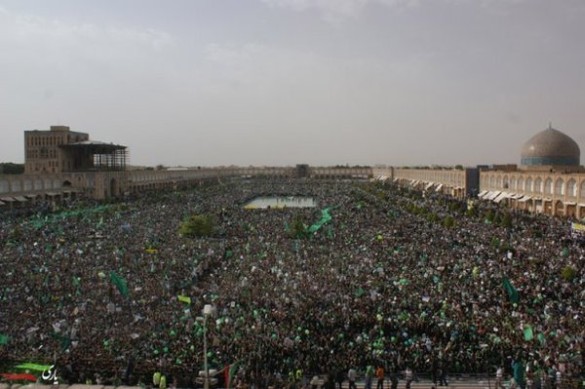

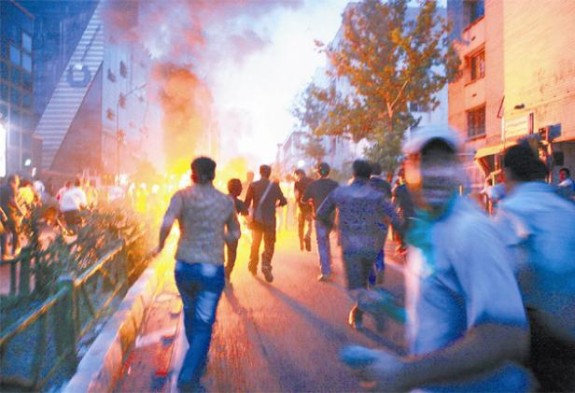

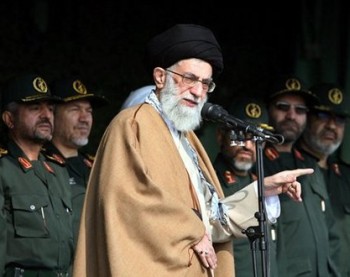 “He is a weak leader, who is extremely smart in allying himself, or in maneuvering between centers of power,” said one expert at New York University, declining to use his name because he travels to Iran frequently. “Because of the factionalism of the state, he seems to be the most powerful person.”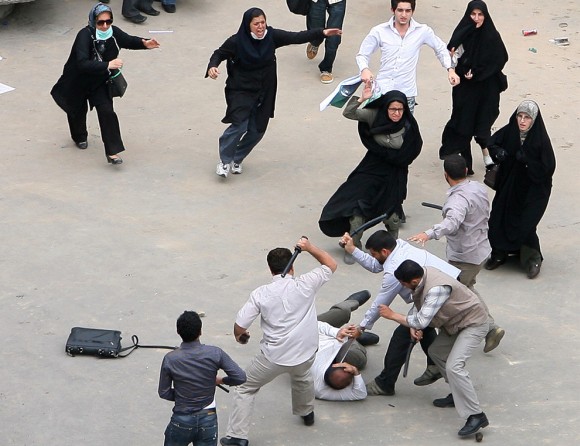

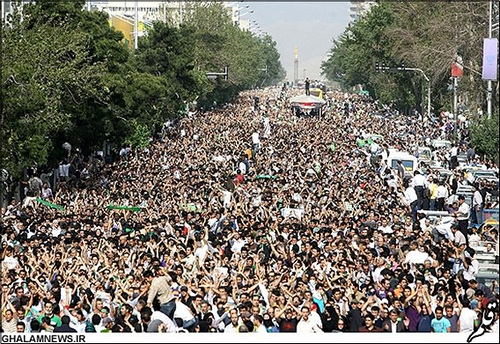

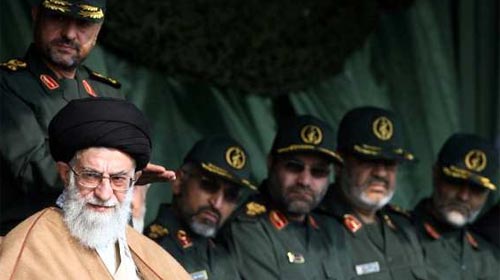

 he new American commander in Afghanistan has been given carte blanche to handpick a dream team of subordinates, including many Special Operations veterans, as he moves to carry out an ambitious new strategy that envisions stepped-up attacks on Taliban fighters and narcotics networks.
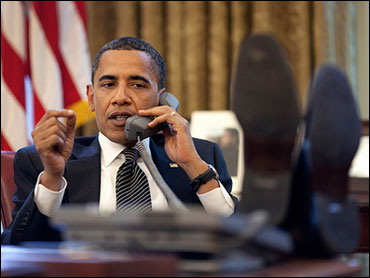 A photo released by the White House, which shows Obama talking on the phone with Netanyahu on Monday, speaks volumes: The president is seen with his legs up on the table, his face stern and his fist clenched, as though he were dictating to Netanyahu: “Listen up and write ‘Palestinian state’ a hundred times. That’s right, Palestine, with a P.” As an enthusiast of Muslim culture, Obama surely knows there is no greater insult in the Middle East than pointing the soles of one’s shoes at another person. Indeed, photos of other presidential phone calls depict Obama leaning on his desk, with his feet on the floor. [