Author Archives: Paul Woodward

NEWS: Armenian voters show their clout. To what end?

Armenian-American clout buys genocide breakthrough

At 93, Armenian American filmmaker Michael Hagopian may finally see his community’s clout pay off if the U.S. Congress recognizes the 1915 massacre of Armenians by Ottoman Turks as genocide.

“U.S. representatives in Congress and state governments now realize the Armenian community has a lot of political power and they can make contributions to political causes and various parties,” said Hagopian, best known for his film “The Forgotten Genocide”.

This week, the House of Representatives Foreign Relations Committee approved a resolution branding the massacre of an estimated 1.5 million Armenians from 1915 to 1923 as genocide, brushing aside President George W. Bush’s warnings that it would harm relations with Turkey, a key ally. [complete article]

Facebooktwittermail

ANALYSIS: The impossible opening between Kabul and the Taliban

Afghanistan: necessity and impossibility

According to sources inside Afghanistan, Taliban leader ‘Mullah’ Mohammed Omar sent a secret envoy to President Hamid Karzai earlier this year to discuss his possible entrance into the Afghan government. This remarkable move culminated in Karzai’s recent offer of talks with the elusive cleric, followed by a Taliban announcement that the group would consider speaking with Kabul.

The moment is ripe for negotiations; diplomacy promises benefits to both Kabul and the Taliban’s political leadership. Unfortunately, this window of opportunity will most likely be squandered. For talks to succeed, Mullah Omar must play a central role in discussions between the Taliban and the Karzai government. But it is his centrality to any peace deal that sets a number of key external and internal actors against talking with the Taliban, making negotiations impossible. [complete article]

Facebooktwittermail

OPINION: Evangelicals explore the dark side

Guess who came to the evangelicals’ dinner

In the wildly popular “Left Behind” series of evangelical Christian novels, the Antichrist takes the form of the secretary general of the United Nations, sets up an abortion-promoting world government and becomes the Global Community Supreme Potentate.

Last night, the National Association of Evangelicals met for dinner at the Sheraton in Crystal City. The keynote speaker? Why, the Antichrist himself.

Actually, the NAE, the umbrella group for the nation’s evangelical denominations, brought in the real U.N. secretary general, Ban Ki-moon of South Korea, not his fictional satanic equivalent, Nicolae Carpathia of Romania. But for the Rev. Richard Cizik, the NAE official who invited Ban, it was just about as daring. Evangelical Christians regard the United Nations’ blue helmets with about as much enthusiasm as Satan’s red horns. [complete article]

Facebooktwittermail

NEWS & EDITOR’S COMMENT: Time for Israel to cut the crap

Syria tells journalists Israeli raid did not occur

Israel has been unusually quiet about the attack on Sept. 6 and has effectively imposed a news blackout about it. Benjamin Netanyahu, the Israeli opposition leader, on Sept. 19 became the first public figure in Israel to acknowledge that an attack had even taken place. Some Israeli officials have said, though not publicly, that the raid hit a nuclear-related facility that North Korea was helping to equip, but they have not specified where.

On Monday, journalists toured the agricultural center at the government’s invitation to prove, Mr. Mehdi said, that no nuclear weapons program or Israeli attacks occurred there. “The allegations are completely groundless, and I don’t really understand where all this W.M.D. talk came from,” Mr. Mehdi said, referring to weapons of mass destruction.

“There was no raid here — we heard nothing,” he added. [complete article]

Editor’s Comment — It’s much harder to prove that something didn’t happen than that it did but Syria has shown where the bombs didn’t fall. The onus is now on Israel. Stop playing games. Release the IAF in-flight videos so that we can see the time, the coordinates, the targets, and the explosions. If no such evidence is forthcoming, then the Syrians should be believed. And in that event, the press needs to engage in some serious self-examination. Why is it still so willing to allow itself to be the delivery system for imaginary weapons of mass destruction?

Facebooktwittermail

FEATURE: Bush administration strengths the regime they oppose

Meddling aggressively in Iran

Covert action to undermine the Tehran regime has already been under way intermittently for the past decade. Until now, however, the CIA has operated without a finding (authorisation for covert action) by using proxies. Pakistan and Israel, for example, provide weapons and money to insurgent groups in southeast and northwest Iran, where the Baluch and Kurdish ethnic minorities, both Sunni Muslim, have long fought against the repression of Shia-dominated Persian regimes.

The presidential finding [in April] was necessary to permit accelerated non-lethal activities by US agencies. Besides expanded propaganda broadcasts, a media disinformation campaign and the use of US and European-based Iranian exiles to promote political dissent, the programme focuses on economic warfare, especially currency rate manipulation and the disruption of Iran’s international banking and trade.

Although the finding was nominally secret, it did not stay secret for long after it was reported to the House and Senate Intelligence Committees, as required by law.

On a recent visit to Tehran, everyone was talking about it, and both conservatives and reformers agreed that it came at an unusually damaging moment of genuine opportunity for cooperation with the United States in Iraq and Afghanistan. Senior officials in the foreign ministry, the National Security Council, the office of President Mahmoud Ahmadinejad, and pro-government think tanks all said that stability in Iraq and Afghanistan is in Iran’s interest. Cooperation with the US is possible, they said, but only in return for a gradual accommodation between Washington and Tehran, starting with a complete cessation of covert and overt regime change policies.

“The United States is like a fox caught in a trap in Iraq,” said Amir Mohiebian, editor of the conservative daily Reselaat. “Why should we free the fox so he can eat us? Of course, if the US changes its policy, there is scope for cooperation.” [complete article]

Facebooktwittermail

NEWS: Democracy cannot be imported

Cut Iran democracy funding, groups tell U.S.

More than two dozen Iranian American and human rights groups have launched an appeal to Congress to reduce or eliminate new financial support of up to $75 million aimed at promoting democracy inside Iran.

The U.S. program, launched in 2006, backfired in its first year, undermining democracy efforts in Iran and leading to wider repression against activists as foreign agents or traitors, the groups said. Among those detained were four Iranian Americans, all charged with “crimes against national security” linked to the U.S. program. A second year of funding will further endanger democracy efforts, the groups added.

“Iranian reformers believe democracy cannot be imported and must be based on indigenous institutions and values. Intended beneficiaries of the funding — human rights advocates, civil society activists and others — uniformly denounce the program,” according to an open letter organized by the National Iranian American Council, the American Conservative Defense Alliance and the Center for Arms Control and Non-Proliferation. The letter was signed by 23 other liberal and conservative pro-democracy groups. [complete article]

Facebooktwittermail

NEWS, OPINION & EDITOR’S COMMENT: Beware the principles of Congress

Worried Iraqi officials urge calm as Turkish-Kurdish conflict escalates

Turkish armed forces’ escalation of bombing and shelling in northern Iraq, along with threats of a broad ground incursion across the border, has alarmed and surprised Iraqi officials, who say the problems Turkey faces from rebel groups can be solved peacefully through diplomacy.

Turkey’s prime minister, Recep Tayyip Erdogan, said officials in his government are preparing to get parliamentary approval for a cross-border military operation aimed at disrupting the Kurdistan Workers’ Party, or PKK, a guerrilla group that operates on both sides of the border. [complete article]

Righteousness before realism

Imperial delusions die hard – and once again the US Congress is trying to legislate for the world. As most Turks see it, this week’s committee vote in the House of Representatives accusing Turkey of genocide against the Armenians in 1915-17 is an insulting, gratuitous interference in their sovereign affairs. As the 27 Democrats and Republicans who backed the bill see it, it is a matter of putting the world to rights, according to America’s lights.

Congress has a long history of extraterritorial meddling. It regularly slaps unilateral sanctions on “rogue” governments, and orders foreign businesses and individuals to obey its strictures, regardless of nationality. Its attempts to direct US foreign policy are resisted by the executive branch to varying degrees. On Cuba, Venezuela, Iran and Israel, White House and legislature mostly agree. On Turkey, like Iraq, they are at noisy loggerheads.

“We oppose the bill. We think it is a bad idea that will do nothing to improve Turkish-Armenian relations. It will not do anything to advance American interests,” Daniel Fried, assistant secretary for Eurasian affairs, told Turkish television this week. President Bush, the secretary of state, Condoleezza Rice, and defence secretary, Robert Gates, all chimed in. They even mobilised all former living US secretaries of state in joint opposition, but to no avail. It was a measure of the lame-duck president’s chronic weakness. [complete article]

Editor’s Comment — It’s often said that politics is all about timing. Some members of Congress might think this is a perfect time to win a few Armenian-American votes. But really, in 2007 the United States Congress decides it’s time to recognize the Armenian genocide from 1915-17?

Turkey has just recalled its ambassador in protest, a billion dollars worth of Boeing defense contracts now hang in the balance, and while the US asks Turkey not to invade Iraq who in Ankara is now likely to listen?

Facebooktwittermail

NEWS & EDITOR’S COMMENT: Accounting for Blackwater

Blackwater case highlights legal uncertainties

Roughly 100,000 American contractors are working in Iraq, but there has yet to be a prosecution for a single incident of violence, according to Scott Horton, a specialist in the law of armed conflict who teaches at Columbia University.

“Imagine a town of 100,000 people, and there hasn’t been a prosecution in three years,” Mr. Horton said. “How do you justify the fact that you aren’t addressing this?”

One remedy is not being discussed: the State Department can waive immunity for contractors and let the case be tried in the Iraqi courts under Order 17, which is the section of the Transitional Administrative Law approved in 2004 that gives contractors immunity.

L. Paul Bremer III, who supervised the drafting of the immunity order as administrator of the United States occupation authority, said: “The immunity is not absolute. The order requires contractors to respect all Iraqi laws, so it’s not a blanket immunity.” [complete article]

See also, State Dept. may phase out Blackwater (AP).

Editor’s Comment — While the moral, legal, and political dimensions of the Blackwater story have been given most attention, the other part to which there are merely allusions is Blackwater as an expression of American culture. Yet the fantasies being lived out by that these “GI Joe-looking guys” — “They think they’re bloody Rambo!” — are not simply products of youthful imagination. Blackwater’s Iraqi rampage has been inspired as much, if not more, by Hollywood as by 9/11 and a Pentagon addicted to outsourcing.

Facebooktwittermail

ANALYSIS: What can we still achieve in Iraq?

Reconcilliation’s off the table, but there are other decent ways out

One of the more disturbing articles, in a spate of almost nothing but disturbing articles, about Iraq lately is Joshua Partlow’s front-page dispatch in the Oct. 8 Washington Post, reporting the widespread view among Baghdad politicians that “reconciliation”—the prospect of a unified national government—is an illusory goal.

“Iraqi leaders argue that sectarian animosity is entrenched in the structure of their government,” Partlow writes. (Italics added.) He quotes Deputy Prime Minister Barham Salih as saying, “I don’t think there is something called ‘reconciliation,’ and there will be no reconciliation. To me, it’s a very inaccurate term. This is a struggle about power.”

Two inferences can be drawn from this story, each dismaying, the two together more dismaying still.

First, the “surge,” at least as originally designed, seems hopeless. The idea of the surge, recall, was to provide enough security in Baghdad to give Iraq’s political leaders the “breathing space” to reconcile their differences. Yet if there simply is no way for the leaders to settle their disputes—if sectarian animosity is not merely rife but “entrenched in the structure of their government”—then the surge has no strategic purpose. (It may reduce civilian casualties, and that’s a notable accomplishment; but unless it makes Iraqis feel secure, and unless that facilitates political order, it’s like plugging a few leaks in a wall riddled with holes. It’s not a sustainable mission.)

However, the Post story also casts doubt on the proposition, advanced by many critics of the war, that if the United States merely sets a timetable for withdrawal, Iraq’s political leaders would realize that they had to get their act together. The Post story suggests there is no act. [complete article]

Facebooktwittermail

NEWS: Tribesman in Waziristan bury the dead

Tribesmen urge Pakistan to halt air raids

Tribesmen appealed to the Pakistani military on Wednesday to cease air raids in the tribal regions near Afghanistan so they could bury some 60 people killed in heavy fighting with militants over the last few days.

The military was also counting its losses, and one security official, who asked not to be named, said that more than 60 members of the security forces had been killed in the four days of fighting. Scores of people have fled the area and taken refuge with the wounded outside the region.

The fighting has been the fiercest in the tribal areas in several years and has been concentrated in the area of Mir Ali in the tribal region of North Waziristan, which the Taliban and Al Qaeda have long used as a base. It seems to have halted after heavy casualties on both sides and among the civilian population. [complete article]

Facebooktwittermail

ANALYSIS: Selling death and destruction

Arms sales: How the U.S. is not winning friends

The United States sells death and destruction as a fundamental instrument of its foreign policy. It sees arms sales as a way of making and keeping strategic friends and tying countries more directly to US military planning and operations.

At its simplest, as Lt Gen Jeffrey B Kohler, director of the Defense Security Cooperation Agency, told the New York Times in 2006, the United States likes arms deals because “it gives us access and influence and builds friendships”. South Asia has been an important arena for this effort, and it teaches some lessons the United States should not ignore.

A recent Congressional Research Service report on international arms sales records that last year the United States delivered nearly $8 billion worth of weapons to Third World countries. This was about 40% of all such arms transfers. The US also signed agreements to sell over $10 billion worth of weapons, one-third of all arms deals with Third World countries. [complete article]

Facebooktwittermail

NEWS: “Jimmy” Mubarak ready to become next pharaoh

In Egypt, a son is readied for succession

In Egypt, “we didn’t choose Sadat, we didn’t choose Mubarak, and we’re not choosing the next one,” Zakaria Nahla, a 52-year-old salesman of cheap furniture, said in a Cairo market crowded with beeping scooters and veiled women picking through racks of clothes.

Asked if they expected to have any say about Mubarak’s succession, a group of men with their arms full of round loaves of bread answered in unison, “No, no, no.” One underscored the point by wagging a finger and shaking his head.

“We take it as a given” that it will be Gamal Mubarak, said Sayida Amin, 46, a nanny who works for a family in one of Cairo’s wealthier districts. “People don’t know who he is. We only know he’s the president’s son, and he’s imposed on us.” [complete article]

Facebooktwittermail

ANALYSIS & EDITOR’S COMMENT: Iran – Israel’s enemy of convenience

Iran, the inflatable bogey

If Iran is, as Netanyahu and his allies in the U.S. suggest, irrationally aggressive, prone to a suicidal desire for apocalyptic confrontation, then both diplomacy and deterrence and containment are ruled out as policy options for Washington. The “Mad Mullahs,” as the neocons call them, are not capable of traditional balance of power realism. In the arguments of Netanyahu and such fellow travelers as Norman Podhortez and Newt Gingrich, to imagine that war against the regime in Tehran is avoidable is to be as naïve as Chamberlain was in 1938.
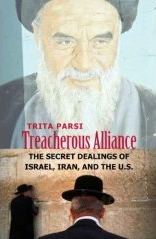
treaterousalliance.jpgHowever, as I discovered in the course of researching my book Treacherous Alliance – the Secret Dealings of Israel, Iran and the United States, not only does Netanyahu’s characterization of Iran have little relationship to reality; Netanyahu himself knows this better than most. Outside of the realm of cynical posturing by politicians, most Israeli strategists recognize that Iran represents a strategic challenge to the favorable balance of power enjoyed by Israel and the U.S. in the Middle East over the past 15 years, but it is no existential threat to the Israel, the U.S. or the Arab regimes.

And that was the view embraced by the Likud leader himself during his last term as prime minister of Israel. In the course of dozens of interviews with key players in the Israeli strategic establishment, a fascinating picture emerged of Netanyahu strongly pushing back against the orthodoxy of his Labor Party predecessors, Yitzhak Rabin and Shimon Peres, which treated Iran as one of Israel’s primary enemies. Not only that, he initiated an extensive discreet program of reaching out to the Islamic Republic. [complete article]

Editor’s Comment — Without wanting to understate Israel’s capacity for irrational behavior, it’s worth asking whether for the Israeli right there is one issue to which all others are subordinate. I would say that there is and that it is the consolidation of the territorial expansion that Israel has been engaged in for the last 40 years through building settlements in the West Bank. Even today, The Guardian reports on yet more seizure of Palestinian land that will allow a huge expansion of settlements. The greatest threat to this ongoing expansionist enterprise would come from the revival of the long-stalled peace process. The relentless construction of settlements, the construction of an apartheid road system separating Israeli and Palestinian traffic, and the construction of the so-called security barrier — these are all ways of making it clear, declarations to the contrary notwithstanding, that Israel has no intention of withdrawing to the 1967 borders.

And how does Iran fit into this equation? It presents a useful diversion through which in the shadow of a supposed existential threat, the development of the West Bank can continue all the way to the end of a window of opportunity — otherwise known as the Bush administration.

While Netanyahu’s neoconservative supporters in Washington can’t wait to see the bombs rain down on Iran, my suspicion (and it’s nothing more than that) is that Bibi will play the 1938 rhetoric for all it’s worth even while the prospect of a nuclear-armed Iran doesn’t cause him to loose a wink of sleep. Indeed, a silver-lining for Israel from a nuclear Iran is that that would provide the Jewish state with the perfect opportunity to come out of its own nuclear closet. It could claim that it was remaining true to its assertion that it would not have been the first state to “introduce” nuclear weapons to the region even if it was the first to deploy them — it simply didn’t make a fanfair about the fact; there was no declaration, no introduction. And with the balance of power having shifted towards Iran, the Israel lobby in Washington would have an easy time sustaining the United States’ financial commitment to Israel’s defense into perpetuity.

Having said that, a line that’s almost as popular as Netanyahu’s “1938”, is John McCain’s, “There is only one thing worse than the United States exercising a military option, that is a nuclear armed Iran.” The question thus remains, does the US and/or Israel truly believe that in such an attack the benefits outweigh the risks?

If Israel’s recent incursion into Syrian airspace was really as momentous an event as all the neocon chest-thumping would suggest, how come we still don’t know what happened? What might have been seen as a muscle-flexing exercise directed at Iran, at this point looks more like a very cautious dip of one toe in some icy water. While its success as a PR exercise is beyond question, its military significance remains in doubt.

And while the Iran-baiting rhetoric coming from American officials in Iraq has been escalating for months and months, it remains possible that the threshold will never be crossed from words to war. Everyone is playing an extremely dangerous game, yet the contest between those competing for the title, “master of destiny,” is a struggle between men, not one of whom has a clear view of the future.

Facebooktwittermail

NEWS & EDITOR’S COMMENT: The longer this goes on, the less we know

An Israeli strike on Syria kindles debate in the U.S

It has long been known that North Korean scientists have aided Damascus in developing sophisticated ballistic missile technology, and there appears to be little debate that North Koreans frequently visited a site in the Syrian desert that Israeli jets attacked Sept. 6. Where officials disagree is whether the accumulated evidence points to a Syrian nuclear program that poses a significant threat to the Middle East.

Mr. Cheney and his allies have expressed unease at the decision last week by President Bush and Ms. Rice to proceed with an agreement to supply North Korea with economic aid in return for the North’s disabling its nuclear reactor. Those officials argued that the Israeli intelligence demonstrates that North Korea cannot be trusted. They also argue that the United States should be prepared to scuttle the agreement unless North Korea admits to its dealing with the Syrians.

During a breakfast meeting on Oct. 2 at the White House, Ms. Rice and her chief North Korea negotiator, Christopher R. Hill, made the case to President Bush that the United States faced a choice: to continue with the nuclear pact with North Korea as a way to bring the secretive country back into the diplomatic fold and give it the incentive to stop proliferating nuclear material; or to return to the administration’s previous strategy of isolation, which detractors say left North Korea to its own devices and led it to test a nuclear device last October.

Mr. Cheney and Stephen J. Hadley, the national security adviser, also attended the meeting, administration officials said.

The Israeli strike occurred at a particularly delicate time for American diplomatic efforts. In addition to the North Korean nuclear negotiations, the White House is also trying to engineer a regional Middle East peace conference that would work toward a comprehensive peace accord between Arabs and Israelis.

The current and former American officials said Israel presented the United States with intelligence over the summer about what it described as nuclear activity in Syria. Officials have said Israel told the White House shortly in advance of the September raid that it was prepared to carry it out, but it is not clear whether the White House took a position then about whether the attack was justified. [complete article]

Editor’s Comment — Never has a story been told at such length while revealing so little.

Ever since this story broke, among the neocons, the engine that has kept it running is this bizarre proposition: the unprecedented Israeli veil of secrecy concerning the nature of its target is what “proves” that the target was so significant. But on the contrary, what the secrecy has done is create on open field for speculation ranging from this being a “dry run” in preparation for an attack on Iran (though since that would have undermined the element of surprise, a bit of Iran-directed saber rattling is more plausible); a demonstration of Israel’s ability to disable Syria’s air defenses (though it’s hard to understand why, if they could do this, Israel would want to publicize the fact and thereby give their adversaries a heads-up); and of course, an attack on a “nuclear facility.” And whereas last month it was being reported that Israeli commandos had gathered “samples” at the site providing forensic evidence of the connection to North Korea (North Korean mud off a North Korean boot?), we’re now told that “officials disagree … whether the accumulated evidence points to a Syrian nuclear program that poses a significant threat to the Middle East.” Strip away New York Times waffle, and that can be read as, there is no clear evidence that there is anything qualified to be called a Syrian nuclear program.

When it comes to the known facts, at this point we don’t actually know for a fact that Israel did anything more than penetrate Syrian air space. One of the few journalists who has actually attempted to report this story by visiting the location of the “strike” was told by locals that they heard sonic booms but no explosions.

How many more weeks do we have to wait before the neocon rumor mill runs out of steam and we can conclude what could have been assumed well before now: the reason the veil of secrecy has been held down so tight is because there’s nothing behind it!

As for my own theory about what happened, it is this: Israel’s new defense minister and would-be future prime minister, Ehud Barak, wanted to demonstrate that he’s a man of action who can restore Israel’s military pride after last year’s disastrous performance in Lebanon. The “strike” was a fake act of war in which the IAF gambled that Syria would not rise to the bait. The absolute secrecy was intended to hide this risky charade. Instead it provided an open season for neocon rumormongering about North Korea, Iran, the State Department and any other conceivable target of opportunity.

Facebooktwittermail

NEWS: Israel in new land grab before U.S. ‘peace’ summit

Israeli army orders confiscation of Palestinian land in West Bank

The Israeli army has ordered the seizure of Palestinian land surrounding four West Bank villages apparently in order to hugely expand settlements around Jerusalem, it emerged yesterday.

The confiscation happened as Israeli and Palestinian negotiators met to prepare the ground for a meeting hosted by President George Bush in the United States aimed at reviving a diplomatic solution to the conflict.

However, critics said the confiscation of land suggested that Israel was imposing its own solution on the Palestinians through building roads, barriers and settlements that would render a Palestinian state unviable. [complete article]

Facebooktwittermail

NEWS & ANALYSIS: War in Waziristan

Political paralysis lets Pakistan militants thrive

Three days of fierce fighting have convulsed Pakistan’s tribal areas and exposed what tribal elders, politicians and local officials concede is the government’s lingering paralysis in dealing with the threat from Al Qaeda and Taliban militants spilling out of the region.

The fighting, the heaviest in more than four years, has left at least 45 Pakistani soldiers dead as pro-Taliban militants and foreign fighters mount a vengeful campaign on all law enforcement in the area.

The clashes come on top of months of deteriorating security after the militants tore up peace agreements with the government in July. Since then, more than 250 members of the security forces have been killed in sustained attacks, the highest losses since the 1970s.

The upheaval underscores complaints by a range of officials that the government has been so absorbed in securing the re-election of Gen. Pervez Musharraf as president that it allowed the security threat to go unchecked. [complete article]

From Washington to war in Waziristan

While last week’s political machinations were under way in Pakistan, the US was providing intelligence to Islamabad about a massive regrouping of the Taliban in the Pakistani tribal areas in preparation for a big campaign against NATO forces in southeast Afghanistan. The US feared that a disruption of the political dialogue would mean a hiatus in Pakistan’s political transition, and delay military operations against the thousands of Taliban and al-Qaeda forces gathering in North Waziristan before launching attacks on the Afghan provinces of Khost, Paktia, Paktika, Gardez and Ghazni, and then Kabul with unending waves of suicide missions. If the Taliban were allowed to hatch their plans unmolested during a political vacuum in Islamabad, Washington believed the Taliban would seize the upper hand in Afghanistan.

That was the situation when a representative of the US spoke to Bhutto and noted her minimum demand for a political deal: “At least a signed letter by General Pervez Musharraf which would document his promises against my demands.” US Secretary of State Condoleezza Rice then spoke to Musharraf by telephone, and immediately thereafter, Musharraf’s legal team promulgated the National Reconciliation Ordinance.

In Pakistan, certain circles are immune from ordinary legal recourse. Corruption in the military, for example, can only be probed and punished by the military. Under the new reconciliation ordinance, politicians and parliamentarians can now only be questioned by parliamentary committees and not through ordinary laws, and all past corruption cases against those who have held political positions in the past have been withdrawn. Some analysts have criticized the ordinance as permitting the rise of the rule of political mafias in Pakistan. [complete article]

See also, 10,000 flee Pakistan border battle (AP).

Facebooktwittermail

VIDEO: On the racetrack to Armageddon with Pastor Hagee

Christians United for Israel

BILL MOYERS JOURNAL reports on the politically powerful group Christians United for Israel, whose leader, Pastor John Hagee, advocates for a preemptive strike against Iran. [watch video]

Editor’s Comment — Fascinating report. But the one piece of this story that gets left out is the likelihood that CUFI — along with other right wing Christian groups — look increasingly likely to destroy the organization they most empowered: the GOP.

Facebooktwittermail

NEWS: Supreme Court stands up for torture (so long as it’s secret)

Secrecy defense prevails in torture case

In a victory for the Bush administration and its use of the “state secrets” defense, the Supreme Court refused Tuesday to hear a lawsuit from a German car salesman who said he was wrongly abducted, imprisoned and tortured by the CIA in a case of mistaken identity.

The court’s action, taken without comment, was a setback for civil libertarians who had hoped to win limits on the secrecy rule, a legacy of the Cold War.

Since the Sept. 11, 2001, attacks, the so-called state secrecy privilege has been invoked regularly to bar judges or juries from hearing claims of those who say they were beaten, abused or spied upon by the government during its war on terrorism. Administration lawyers have argued successfully that hearing such claims in open court would reveal national security secrets. [complete article]

Facebooktwittermail

