Author Archives: Paul Woodward

NEWS: The Iraqi power struggle

Top Iraqis pull back from key U.S. goal

For much of this year, the U.S. military strategy in Iraq has sought to reduce violence so that politicians could bring about national reconciliation, but several top Iraqi leaders say they have lost faith in that broad goal.

Iraqi leaders argue that sectarian animosity is entrenched in the structure of their government. Instead of reconciliation, they now stress alternative and perhaps more attainable goals: streamlining the government bureaucracy, placing experienced technocrats in positions of authority and improving the dismal record of providing basic services.

“I don’t think there is something called reconciliation, and there will be no reconciliation as such,” said Deputy Prime Minister Barham Salih, a Kurd. “To me, it is a very inaccurate term. This is a struggle about power.” [complete article]

Facebooktwittermail

OPINION: An Iraqi show of unity

A different strategy actual Iraqis support

Sept. 30 saw a rare display of Iraqi-American unity in Baghdad: The U.S. embassy as well as scores of Iraqi politicians joined forces in condemning a U.S. Senate resolution to impose a federal state structure on all parts of Iraq.

In general, there was agreement that the proposal which had been introduced by Sen. Joseph Biden constituted gross interference in Iraqi internal affairs. Iraq already has a specific and very elaborate procedure for deciding the federalism issue, but both the timeline (nothing will start until April 1, 2008) as well as the size and number of the future federal entities (to be decided by popular referendums on the basis of grass-roots initiatives) are clearly at variance with the Senate’s proposal of an “international conference” intended to accelerate and simplify matters.

For once, it seemed as if the Bush administration and the Iraqis were united in stressing the virtues of a unified Iraq capable of recovering from sectarian distrust.

There was one anomaly in this picture of Iraqi-American unity of purpose: The main forces that pulled together to condemn the Senate’s decision were mostly from parties that are being largely ignored by the Bush administration. They included Sadrists, the Fadila party, independents and Daawa members of the United Iraqi Alliance, the Tawafuq bloc, and secular groups like Iraqiyya and National Dialogue Front. All in all, they made up a strong Shiite-Sunni alliance accounting for more than a simple majority in Iraq’s parliament.

By way of contrast, all of Washington’s principal allies in Iraq were absent. The Kurds enthusiastically welcomed the Senate decision, and the Islamic Supreme Council of Iraq wavered in its response, probably understanding some obvious parallels between the Senate proposal and their own scheme for a Shiite region, but also sensing a public opinion blowing in a different direction. [complete article]

Facebooktwittermail

NEWS: Troops withdrawals from Iraq

UK says to reduce Iraq force to 2,500 from spring

Britain will reduce its force in Iraq — now numbering more than 5,000 — to 2,500 troops from spring next year, Prime Minister Gordon Brown said on Monday.

Brown also promised a resettlement package for some Iraqis who had worked with British forces for more than a year to move within Iraq or apply to come to Britain. [complete article]

100,000 U.S. troops could leave soon: Iraq president

At least 100,000 U.S. troops could return home from Iraq by the end of 2008, Iraqi President Jalal Talabani said in an interview aired on Sunday although he proposed that several American military bases stay in Iraq.

Speaking on CNN television, Talabani envisioned faster U.S. troop reductions than U.S. commanders have discussed in public. But he stressed that the pace of withdrawal was up to those commanders and did not explain why he foresaw a faster pullout. [complete article]

Facebooktwittermail

ANALYSIS: Secularism and Islamism

ANALYSIS:
Secularism and Islamism in the Arab world

Secularism in the political leadership in the Arab world has had a very short life-span if put into historical context. It became a dominant political current for a few decades in the latter half of the twentieth century, and today is seeing a near complete collapse in political movements struggling for independence and development in the region. Different Islamic leaders have been the main political inspiration for Arabs in their liberation movements. Salahuddin al-Ayoub, more popularly known as Saladin, who liberated Jerusalem from the Crusaders in the twelfth century is probably the Islamic leader most widely known outside of the region. Saladin’s legacy remains a profound source of inspiration for Arabs, especially so for radical Islamists who not only see the parallels with today’s military invasions and occupations, but directly employ this history in their political agitation in their fight against what they consider as the modern-day Crusaders. More recently, Political Islam was at the forefront of the fight against colonialism in the twentieth century. There are examples of movements and leaders from every Arab country, but some of the more well-known include Sheikh Izz al-Din Qassam, after who Hamas have named their armed wing. Sheikh Al-Qassam was killed by the British colonialists in Palestine in an armed confrontation; his death sparked what some call the First Palestinian Intifada from 1936 to ‘39. In Iraq Shia Islamists united with their Sunni counterparts against the British colonialists in 1920, a popular uprising from which one of biggest present-day Iraqi Islamist insurgent groups, the ‘Brigades of the 1920 Revolution,’ takes their name. Shia Islamism in Iraq can also be linked to the emergence of the Lebanese Hezbollah. Shia Islamist scholars such as Fadlallah, a prominent radical Shia scholar based in Lebanon who has close ties to Hezbollah, were immigrants to Lebanon from the religious centres of Iraq and Iran. On a theoretical level it has been the ideas of Muhammad Abdu and Al-Afghani in the nineteenth century, and further back to Ibn-Tammiyah from the fourteenth century who have been some of the most important contributors to Islamist ideology. [complete article]

Facebooktwittermail

NEWS: War on terrorism boosts al Qaeda

Report says war on terror is fueling al Qaeda

Six years after the September 11 attacks in the United States, the “war on terror” is failing and instead fueling an increase in support for extremist Islamist movements, a British think-tank said on Monday.

A report by the Oxford Research Group (ORG) said a “fundamental re-think is required” if the global terrorist network is to be rendered ineffective.

“If the al Qaeda movement is to be countered, then the roots of its support must be understood and systematically undercut,” said Paul Rogers, the report’s author and professor of global peace studies at Bradford University in northern England. [complete article]

Facebooktwittermail

NEWS: The opium or the people?

Afghans pressed by U.S. on plan to spray poppies

American officials thought they had the Karzai administration’s support late last year to begin a small-scale pilot program for ground spraying in several provinces. But that plan was derailed in January after an American-educated deputy minister of public health presented health and environmental concerns about glyphosate at a meeting of the Karzai cabinet, Afghan and American officials said.

Since then, Mr. Karzai has said he opposes spraying of any kind.

“President Karzai has categorically rejected that spraying will happen,” Farooq Wardak, Afghanistan’s minister of state for parliamentary affairs, said in a recent interview. “The collateral damage of that will be huge.”

Yet in the weeks since the latest United Nations drug report, the Bush administration’s lobbying appears to have made new headway. It has already won the backing of several members of Mr. Karzai’s government and the spray advocates here are now trying to swing other key Afghan officials and Mr. Karzai himself, one high-level Afghan official said.

“We are working to convince the key ministers and President Karzai to accept this strategy,” said the official, who supports spraying but asked not to be identified because of the issue’s political delicacy. “We want to convince them to show some power. The government has to show its power in the remote provinces.” [complete article]

Editor’s Comment — So a show of power — destroying farmers’ crops and livelihood — is going to win over the populations in the remote provinces is it?

Facebooktwittermail

FEATURE & EDITOR’S COMMENT: A romantic’s anguish

Kanan Makiya – regrets only?

Kanan Makiya spent years in exile advocating the overthrow of Saddam Hussein. The war he supported brought about an Iraq he never imagined.
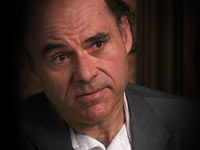
makiya.jpgWhere did it go wrong? Makiya asks himself. Or, more precisely, where did he go wrong? It’s the second question that Makiya is finding the most troubling, for it concerns a lifetime of believing, as he puts it, that hope can triumph over experience. “I want to look into myself, look at myself, delve into the assumptions I had before the war,” he told me.

Makiya’s life is no longer what it was. In 2003, on returning to Iraq, he reunited with his sweetheart from high-school days, married and took her back to Cambridge. He also found out he has chronic lymphocytic leukemia, the same disease that killed Edward Said, the Palestinian-born Columbia University professor and Makiya’s intellectual nemesis.

On Iraq, he says, there certainly were clues before the war began — for instance, that meeting in the Oval Office with President Bush and Condoleezza Rice, two months before the war. Sitting across his wide desk from Makiya, President Bush declared that the United States was launching not one campaign but two, the first to topple Hussein and the second to rebuild Iraq. Makiya recalls: “Bush turned to Rice, who was seated on the other side of the room, and he said to her, Our preparations for rebuilding Iraq are well advanced, right? And Rice looked down. She could not look him in the eye. And she said, Yes, Mr. President. She looked at the floor.”

That the Americans committed error after error in Iraq, Makiya takes as a given: their biggest mistake, he maintains, was the decision to occupy Iraq and govern the country themselves, rather than allowing the Iraqis to take over. “I did not want to see the United States micromanage Iraqi affairs because, I feared, that is where things might go wrong,” he said. Makiya now believes, though he did not at the time, that the Iraqi Army should have been held together, that the bad people could have been culled and the rest of it left intact. “We had this phobia of the army, that it would be used domestically, that it would mount coups, that it would get involved in domestic politics,” he told me. “That was a mistake.”

Editor’s Comment — Dexter Filkins provides a conclusion that, as yet, Makiya is reluctant to articulate: “You exposed a terrible dictatorship, and for the noblest of motives you signed on to an invasion that ended in catastrophe. You misjudged your native country, and your adopted one too.”

Makiya’s misjudgment of America is no more clearly evident than in his hope that having toppled Saddam, the US would then defer to Iraqis in the reconstruction of their own country. Such a hope could only be entertained by those who chose to ignore the overarching motive of the Bush administration: that toppling of Saddam would repudiate the challenge posed by 9/11 by demonstrating to the world America’s supreme military might. In other words, what Makiya chose to ignore was that George Bush and Dick Cheney didn’t give a fuck about Iraq, per se.

Yet this particular error of judgment — one among many that have spawned no end of if-onlys, dreamed of as precursors to a happy ending — seems to be a way of glossing over the most fundamental error: the presumption that a bunch of exiles living comfortable lives in the West, had either the right or ability to assume an instrumental role in determining the fate of a remembered nation that animated their thoughts but that only from a distance shaped their lives.

In Makiya’s view, the one person who could have stopped [the leader of the Supreme Council for the Islamic Revolution in Iraq, Abdul Aziz al-]Hakim and his like-minded cohorts — the one person who could have slowed Iraq’s gallop toward civil war — was Ahmad Chalabi. If Iraq was going to turn out like South Africa, Makiya reasoned, then it would need its Mandela — someone who could rise above revenge and parochial interests and steer the country toward a united future. Makiya said he believed that Chalabi could have been Iraq’s Mandela.

Editor’s Comment — The difference between Nelson Mandela and Ahmad Chalabi is the difference between a cell in Robben Island maximum security prison and an apartment in London’s Mayfair. It’s the difference between being willing to sacrifice ones own life for what one believes in, versus the willingness to sacrifice the lives of others. Kanan Makiya will likely wrestle with his doubts and his anguish for the rest of his life, but he chooses to do so in the comfort of his Victorian home in Cambridge, Massachusetts, rather than the turmoil of Iraq. That speaks louder than any of his words.

Facebooktwittermail

OPINION & EDITOR’S COMMENT: Human values transcend American values

On torture and American values

Lawmakers, who for too long have been bullied and intimidated by the White House, should rewrite the Detainee Treatment Act and the Military Commissions Act to conform with actual American laws and values.

For the rest of the nation, there is an immediate question: Is this really who we are?

Is this the country whose president declared, “Mr. Gorbachev, tear down this wall,” and then managed the collapse of Communism with minimum bloodshed and maximum dignity in the twilight of the 20th century? Or is this a nation that tortures human beings and then concocts legal sophistries to confuse the world and avoid accountability before American voters? [complete article]

Editor’s Comment — In its effort to affect a populist stance, the New York Times asks whether it is truly American to engage in torture. This is part of the never-ending narcissistic contest over who gets to write the dominant narrative in the American mythology. Outside that contest, the question is easy to answer. If Americans are doing it and they are following the directions of the US government, then yes, torture is as American as a B-2 bomber.

America will not reclaim the moral high ground it has reserved for itself by declaring, “We won’t torture you because we’re American.” It should be, “We won’t torture you because you’re a human being.” Of course, that’s a difficult declaration to make when so many Americans have come to regard “the enemy” as less than human.

Facebooktwittermail

OPINION: The administration that harbors murderers

Licensed to kill

The Bush Justice Department does have an essential law enforcement mission, though sometimes it seems to behave much more like a criminal syndicate. It warmly embraces the crime of torture as a tool for collecting human intelligencenotwithstanding both its manifest illegality and immorality and the uniform view of intelligence professionals that torture consistently produces corrupted, inherently unreliable information. In so doing of course it is engaged in a fairly primitive game of self-protection. It can’t acknowledge the fundamental criminality of its conduct, so it turns the Justice Department into its consigliere. Three different lawyers in the office of legal counsel have rendered formal opinions giving a stamp of approval to a universal crime. Indeed, this sort of legal dexterity now seems to be accepted as a rite of passage for “movement” lawyers—a fact which is very revealing of the new character of the “movement.” It has nothing to do with ideals, and everything to do with personal fidelity. In each of these cases, the opinion boils down to the fundamental principle of the authoritarian state, namely: if the Leader authorizes it, then it must be okay. [complete article]

Facebooktwittermail

NEWS: The campaign against Iran – support from outside; dissent within

The man who stands between US and new war

Robert Gates, the US defence secretary, has taken charge of the forces in the American government opposed to a US military attack on Iran, writes Tim Shipman.

Pentagon and State Department officials say Mr Gates has set himself up as chief rival to Dick Cheney in a bid to thwart the vice?president’s desire to bomb the Islamic state.

Those familiar with internal battles in the Bush administration say Mr Gates has eclipsed Condoleezza Rice, the secretary of state, as the chief opponent of air strikes and is the main reason President George W.Bush has yet to resort to military action.

Pentagon sources say Mr Gates is waging a subtle campaign to undermine the Cheney camp by encouraging the army’s senior officers to speak frankly about the overstretch of forces, and the difficulty of fighting another war. [complete article]

Britain ‘on board’ for US strikes on Iran

British defence officials have held talks with their Pentagon counterparts about how they could help out if America chose to bomb Iran.

Washington sources say that America has shelved plans for an all-out assault, drawn up to destroy the Iranian nuclear facilities and take out the Islamist regime.

The Sunday Telegraph has learned that President Bush’s White House national security council is discussing instead a plan to launch pinpoint attacks on bases operated by the Iranian Revolutionary Guard Quds force, blamed for training Iraqi militants.

Pentagon officials have revealed that President Bush won an understanding with Gordon Brown in July that Britain would support air strikes if they could be justified as a counter-terrorist operation. [complete article]

Facebooktwittermail

OPINION: Banning the bomb

A nuclear-free world

Should the United States aim to achieve a world free of all nuclear weapons? In one sense, the question is trivial – nuclear disarmament has been a stated aim of the United States since the dawn of the nuclear age. And the United States also committed to working toward this end when it signed the nuclear Non-Proliferation Treaty in 1968.

But in another sense, the question is fundamental. Although successive administrations (at least until the current one) have mouthed the words affirming this objective, few have actually made this commitment an organizing principle of their nuclear weapons policies. That may be about to change. Earlier this week, Senator Barack Obama pledged that as president he would say: “America seeks a world in which there are no nuclear weapons.” Former senator John Edwards has also pledged to lead an international effort to eliminate nuclear weapons, as has New Mexico Governor Bill Richardson.

And it isn’t just presidential candidates who are talking about a nuclear-free world. So are former statesmen like Henry Kissinger, George Shultz, Bill Perry, and Sam Nunn. Writing in The Wall Street Journal last January, they urged that the United States set the goal of a world free of nuclear weapons, and proposed specific actions to that end. [complete article]

Facebooktwittermail

NEWS & EDITOR’S COMMENT: When anthropologist becomes counter-insurgency technician

Army enlists anthropology in war zones

In this isolated Taliban stronghold in eastern Afghanistan, American paratroopers are fielding what they consider a crucial new weapon in counterinsurgency operations here: a soft-spoken civilian anthropologist named Tracy.

Tracy, who asked that her surname not be used for security reasons, is a member of the first Human Terrain Team, an experimental Pentagon program that assigns anthropologists and other social scientists to American combat units in Afghanistan and Iraq. Her team’s ability to understand subtle points of tribal relations — in one case spotting a land dispute that allowed the Taliban to bully parts of a major tribe — has won the praise of officers who say they are seeing concrete results.

Col. Martin Schweitzer, commander of the 82nd Airborne Division unit working with the anthropologists here, said that the unit’s combat operations had been reduced by 60 percent since the scientists arrived in February, and that the soldiers were now able to focus more on improving security, health care and education for the population. [complete article]

Editor’s Comment — Anthropologists can now save lives and help win the war on terrorism. “We’re not focused on the enemy. We’re focused on bringing governance down to the people,” says Col. Martin Schweitzer, commander of the 82nd Airborne Division. The Pentagon has turned into the Peace Corps! Right.

Not surprisingly, when it’s for internal consumption the story becomes a little different. In a presentation at the Pentagon earlier this year, an official reported that mapping the human terrain “enables the entire Kill Chain for the GWOT [Global War on Terrorism].” And as it applies to the US air force, here’s how the “kill chain” is described:

Because enemies have learned to limit the amount of time they and their weapons are in sight and thus vulnerable, these mobile targets require a different approach. The Air Force must compress its six-stage target cycle of Find, Fix, Track, Target, Engage, and Assess, also known as F2T2EA, or, more simply, the “kill chain.”

Concerned anthropologists such a Roberto Gonzalez are asking, “Where is the line that separates the professional anthropologist from the counter-insurgency technician?” By the Pentagon’s own admission there appears to be none. Instead of being deployed in Afghanistan and Iraq, perhaps anthropologists could do more useful work inside the Pentagon itself.

Facebooktwittermail

NEWS: Syria’s complex role in Iraq

Suicide bombers head to Iraq from Damascus

Abu Ziad’s is no ordinary business. He takes eager volunteers, inveigles them into Iraq for a fee and delivers them to insurgents who consign them to a bloody death with clinical efficiency.

His network includes the imams who drum up the volunteers and forgers who create new identities for their journey across the 390-mile border with Iraq.

Then there are the officials he bribes to turn a blind eye, and insurgent groups ranging from the pan-Arab, fundamentalist Al-Qaeda in Iraq to the Iraqi nationalist 1920 Revolution Brigade, started by former members of Saddam’s armed forces.

Abu Ziad appears to receive no help from the Syrian authorities, which have been accused by some in the West of aiding the flow of terrorists into Iraq. On the contrary, he seems to live in fear of discovery by Syria’s security apparatus. [complete article]

Syria is said to be strengthening ties to opponents of Iraq’s government

Western diplomats and political commentators differed on the extent of influence Damascus could ultimately wield over the opposition groups. But they agreed that Syria had been using them to show the United States and Iran, often described as the big brother in its longstanding alliance with Damascus, that it had the capacity to play a major role in Iraq’s future.

“Iran is the big player in Iraq,” said Mr. Hamidi, of Al Hayat, “but it lacks influence on the Baathists and the Sunnis.”

That would seem to create a natural opening for Syria, a predominantly Sunni country governed by its own version of the Baath Party. But its relations with the Iraqi Baathists have long been strained. Syria backed Iran in its war with Iraq in the 1980s and supported the United States against Mr. Hussein during the Persian Gulf war of 1991.

So Syria is walking a fine line, forging an “enemy of my enemy” relationship with the Iraqi Baathists and insurgents while still maintaining an alliance with Tehran. It is a risky strategy that carries the added danger of possibly incurring the wrath of Al Qaeda. [complete article]

Facebooktwittermail

NEWS: Can Lebanon avoid civil war?

Christian split in Lebanon raises specter of civil war

With the Islamist group Hezbollah having brought Lebanese politics to a standstill, the country’s once-dominant Christian community feels under siege and has begun re-establishing militias, training in the hills and stockpiling weapons.

Many Lebanese say another civil war – like the 15-year one that started in 1975 – is imminent and that the most dangerous flash points are within the divided Christian community.

Christian youth are signing up for militant factions in the greatest numbers since the end of the civil war, spray painting nationalist symbols on walls and tattooing them on their skin, and proclaiming their willingness to fight in a new civil war – in particular, against fellow Christians.

“When the war begins, I’ll be the first one in it,” said Fadil Abbas, 30, flexing his biceps in Shadow Tattoo as an artist etched a cross onto his shoulder. “I want everyone to know I am a Christian and I am ready to fight.”

The struggle is over who gets to be the next president, a post reserved for a Christian under Lebanon’s Constitution, and which must be filled by the end of November. But the larger question – one that is prompting rival Christian factions to threaten war – is whether Lebanese Christians must accept their minority status and get along with the Muslim majority (the choice of the popular Michel Aoun) or whether Christians should insist on special privileges no matter what their share of the population (the position of veteran civil war factions like the Phalange and the Lebanese Forces). [complete article]

Nasrallah calls on Saudi Arabia to boycott the upcoming Middle East conference

Nasrallah gave the March 14 group 3 options:

1. Accept the Berri initiative where the opposition would accept a consensus president in return for dropping its demand for a unity government.
2. Amending the constitution one time only for a direct “one man one vote” for the president and drop the debate of “half+1” vs. “two thirds” (of votes in the parliament). This would sideline all the sectarian Zaiims and give power to the people.
3. Hire 5 scientific polling companies to survey the Lebanese public on all presidential nominees and accept the findings in the parliament as the next president of Lebanon. [complete article]

Facebooktwittermail

OPINION: Mistaken ideas always end in someone else’s blood shed

From military disaster to moral high ground

The “liberal hawks” are back. These, of course, are the politicians and pundits who threw in their lot with George W. Bush in 2003: voting and writing for a “preventive war” — a war of choice that would avenge 9/11, clean up Iraq, stifle Islamic terrorism, spread shock, awe and democracy across the Middle East and re-affirm the credentials of a benevolently interventionist America. For a while afterward, the president’s liberal enablers fell silent, temporarily abashed by their complicity in the worst foreign policy error in American history. But gradually they are returning. And they are in a decidedly self-righteous mood. [complete article]

Facebooktwittermail

OPINION: Upholding the Constitution

How Congress forgot its own strength

Senators Jim Webb of Virginia and Hillary Clinton of New York are right to demand that the president go before Congress to ask for a “declaration of war” before proceeding with an attack against Iran or any other nation. But there is no need for this demand to be put into law, as the two Democrats and their colleagues are seeking to do, any more than there is need for legislation to guarantee our right of free speech or anything else protected by the Constitution. [complete article]

Facebooktwittermail

NEWS: War in Afghanistan – no end in sight

British troops face decades in Afghanistan

British troops face a 30-year “marathon mission” against the Taliban in Afghanistan, the commander of UK troops in Helmand has warned.

Brigadier John Lorimer revealed the challenge facing personnel as he disclosed that the Taliban are beginning to change their tactics and have started to recruit fighters from foreign countries in increasing -numbers. [complete article]

6 years later, U.S. expands Afghan base

“The Bush administration did not see Afghanistan as a long-term commitment, and its leaders deceived themselves into thinking they had won an irreversible victory. They did not consider Afghanistan important and always intended to focus on Iraq,” he said.

“Now the U.S. and international community have fallen way behind, and the Taliban are winning strategically, even if we defeat them in every tactical engagement,” he added. [complete article]

Facebooktwittermail

ANALYSIS: Myanmar and the military

More than just a fighting force, Myanmar’s military is the nation’s driving force

“Crushing all enemies, on land, underground and at sea, all enemies, we will crush them totally, until they are uprooted, decimated.”

This, poetically put on Armed Forces Day in March 2006, is the Burmese Army’s view of itself: the backbone and protector of a nation besieged by enemies from within and outside its borders.

At 400,000 strong, it is one of the largest and most battle-tested armies in Southeast Asia, still fighting a half-century war with ethnic insurgencies.

But it is much more than a fighting force. A large part of its energies go into a bigger task: running Myanmar. [complete article]

Facebooktwittermail
