Author Archives: Paul Woodward

Israel considers sponsoring terrorists to ‘punish’ Turkey

Ynet reports:

The [Israel] Foreign Ministry has now decided to proceed with the formulation of a diplomatic and security “toolbox” to be used against the Turks. The first move would be to issue a travel warning urging all Israeli military veterans to refrain from traveling to Turkey. The advisory will be especially harsh as it will also urge Israelis to refrain from boarding connections in Turkey.

Another planned Israeli move is the facilitation of cooperation with Turkey’s historic rivals, the Armenians. During Lieberman’s visit to the United States this month, the foreign minister is expected to meet with leaders of the Armenian lobby and propose anti-Turkish cooperation in Congress.

The implication of this move could be Israeli assistance in promoting international recognition of the Armenian holocaust, a measure that would gravely harm Turkey. Israel may also back Armenia in its dispute vis-à-vis Turkey over control of Mount Ararat.

Lieberman is also planning to set meetings with the heads of Kurdish rebel group PKK in Europe in order to “cooperate with them and boost them in every possible area.” In these meetings, the Kurds may ask Israel for military aid in the form of training and arms supplies, a move that would constitute a major anti-Turkish position should it materialize.

The PKK is a “U.S. Government Designated Foreign Terrorist Organizations” in the State Department’s current list of foreign terrorist organizations. In the event that Israel starts providing the PKK with weapons, Israel itself will need to be considered for inclusion in the State Department’s list of State Sponsors of Terrorism. Were it to be listed, this would mean that it would be illegal for the United States to continue providing military aid and economic assistance to Israel.

Facebooktwittermail

Endless war served by endless distraction

Glenn Greenwald writes:

The Washington Post woke up a few days ago and realized that despite everything that has happened since 9/11 — no successful Terrorist attacks on the Homeland in 10 years, a country mired in debt and imposing “austerity” on ordinary Americans, and the election of a wonderfully sophisticated, urbane, progressive multinationalist from the storied anti-war Democratic Party — we are still smack in the middle of “the American era of endless war” with no end in sight.  Citing the Pentagon’s most recent assessment of global threats, the Post notes that in contrast to prior decades — when “the military and the American public viewed war as an aberration and peace as the norm” (a dubious perception) — it is now clear, pursuant to official doctrine, that “America’s wars are unending and any talk of peace is quixotic or naive,” all as part of “America’s embrace of endless war in the 10 years since Sept. 11, 2001.” 

We are now enduring a parade of wistful, contemplative, self-regarding pundit-meditations on The Meaning of 9/11 Ten Years Later or, far worse, self-righteous moralizing screeds about the nature of “evil” from war zealots with oceans of blood on their unrepentant hands (if I could impose one media rule, it would be that following every column or TV segment featuring American political commentators dramatically unloading their Where-I-Was-on-9/11-and-how-I-felt tales, there would be similar recollections offered from parents in the Muslim world talking about how their children died from the pre-9/11 acts of the U.S. and its client states or from post-9/11 American bombs, drones, checkpoint shootings and night raids:  just for the sake of “balance,” which media outlets claim to crave).  Notwithstanding this somber, collective 9/11 anniversary ritual descending upon us, the reality is that the nation’s political and media elite learned no lessons from that attack. 

The mere utterance of the word Terrorism (which now means little more than: violence or extremism by Muslims in opposition to American or Israeli actions and interests) is — at least for America’s political and media class — as potent in justifying wars, civil liberties assaults, and massive military spending as it was in the immediate aftermath of 9/11.  And worship of the American military and all that it does — and a corresponding taboo on speaking ill of it except for tactical critiques (it would be better if they purchased this other weapon system or fought this war a bit differently) — is the closest thing America has to a national religion.

But it’s not merely the existence of ongoing Endless War that is so destructive — both to the nation perpetrating it on the world and to its victims.  Far worse is what is being done to prosecute that war, the transformation of government institutions and their relationship to the citizenry to sustain it, and, most enduringly of all, the mentality that it has spawned and entrenched.

In his conclusion, Greenwald says, “Renouncing the duty of holding accountable political leaders who exercise vast power makes one directly responsible for the abuses they commit.” But what is that facilitates this form of political indifference among most Americans?

First and foremost it springs from a profound and pervasive sense of impotence. Few people believe they have any real capacity to effect political change. So why take much interest in the contours of a political landscape over which one apparently exerts no influence?

Second, we witness that those who wield great power generally do so with impunity. However great their blunders, they never seem to pay any price. It’s easy enough to say that we should hold them accountable, but how exactly is this demand to be meaningfully expressed?

Third, the experience of powerlessness and the indifference this engenders feeds the desire for sensations which even if they are meaningless restore some feeling of our own existence. We both lose and find ourselves in endless distraction.

America’s endless wars continue not because we believe in them but because they have become nothing more than white noise in the background of the well-anesthetized American way of life.

Facebooktwittermail

How not to become a whistle-blower

The New York Times reports:

When Shamai K. Leibowitz, an F.B.I. translator, was sentenced to 20 months in prison last year for leaking classified information to a blogger, prosecutors revealed little about the case. They identified the blogger in court papers only as “Recipient A.” After Mr. Leibowitz pleaded guilty, even the judge said he did not know exactly what Mr. Leibowitz had disclosed.

“All I know is that it’s a serious case,” Judge Alexander Williams Jr., of United States District Court in Maryland, said at the sentencing in May 2010. “I don’t know what was divulged other than some documents, and how it compromised things, I have no idea.”

Now the reason for the extraordinary secrecy surrounding the Obama administration’s first prosecution for leaking information to the news media seems clear: Mr. Leibowitz, a contract Hebrew translator, passed on secret transcripts of conversations caught on F.B.I. wiretaps of the Israeli Embassy in Washington. Those overheard by the eavesdroppers included American supporters of Israel and at least one member of Congress, according to the blogger, Richard Silverstein.

In his first interview about the case, Mr. Silverstein offered a rare glimpse of American spying on a close ally.

He said he had burned the secret documents in his Seattle backyard after Mr. Leibowitz came under investigation in mid-2009, but he recalled that there were about 200 pages of verbatim records of telephone calls and what seemed to be embassy conversations. He said that in one transcript, Israeli officials discussed their worry that their exchanges might be monitored.

Those same officials are probably now chuckling as they read this story.

A story that could have shed much needed on light on the extent of the Israeli government’s influence in Congress is instead now a story about the FBI tied up with a blogging melodrama. Moreover, the ability for the FBI to continue conducting this kind of surveillance may well have been impaired.

Predictably, there are commentators who see this as an opportunity to attack the FBI and defend Israel.

Jacob Heilbrunn writes:

Should the FBI, then, be spying on embassy conversations? Much of it is probably a waste of time and resources, which includes having to punish Leibowitz for transgressing the law. Israeli prime minister Benjamin Netanyahu himself has made no secret of his desire to take out Iran’s facilities. What Israeli leader wouldn’t want to do so—if the costs didn’t exceed the benefits? It doesn’t require monitoring the phones of the Israeli embassy to figure that out.

Oh. And we can take it as a given that such a cost-benefit analysis conducted by Israel would reach a conclusion that also served US interests?

The reason the US government sees the need to closely monitor the clandestine activities of Israel inside the United States is precisely because the interests of the two governments do not perfectly overlap.

As for Shamai K. Leibowitz — who Heilbrunn refers to as a “self-appointed whistle-blower” (is there any other kind?) — I have my doubts whether he really was a whistle-blower of any kind.

Anyone who has sensitive information that they believe as a matter of conscience needs to get into the public domain should choose their outlet carefully. A leak that goes up in smoke creates more mystery than revelation.

Did Leibowitz like the idea of becoming a whistle-blower but then had second thoughts when he realized he could end up in jail? Or was he one blogger sharing some hot information with another blogger without thinking carefully about where this might lead?

Facebooktwittermail

Israel’s ability to kill Americans with impunity

Roger Cohen writes:

Here’s what the United Nations report on Israel’s raid last year on the Turkish-flagged Mavi Marmara had to say about the killing of a 19-year-old U.S. citizen on board:

“At least one of those killed, Furkan Dogan, was shot at extremely close range. Mr. Dogan sustained wounds to the face, back of the skull, back and left leg. That suggests he may already have been lying wounded when the fatal shot was delivered, as suggested by witness accounts to that effect.”

The four-member panel, led by Sir Geoffrey Palmer, a former prime minister of New Zealand, appears with these words to raise the possibility of an execution or something close.

Dogan, born in upstate New York, was an aspiring doctor. Little interested in politics, he’d won a lottery to travel on the Gaza-bound vessel. The report says of him and the other eight people killed that, “No evidence has been provided to establish that any of the deceased were armed with lethal weapons.”

I met Dogan’s father, Ahmet, a professor at Erciyes University in Kayseri, last year in Ankara: His grief was as deep as his dismay at U.S. evasiveness. It’s hard to imagine any other circumstances in which the slaying in international waters, at point-blank range, of a U.S. citizen by forces of a foreign power would prompt such a singular American silence.

Unless, that is, one considers the case of the USS Liberty, the American ship that was attacked by Israeli forces in international waters in 1967 during the Six-Day War, resulting in the deaths of 34 crew members and the injury of 170.

Two squadrons of US Navy fighter-bombers were sent to repel the unprovoked Israeli attack and could have reached the Liberty in time to prevent a torpedo attack that killed 26 Americans, but the operation was aborted. As far as the White House was concerned, it was more important to avoid embarrassing Israel than it was to protect American lives.

After newly declassified government documents were released in 2007, the Chicago Tribune reported:

J.Q. “Tony” Hart, then a chief petty officer assigned to a U.S. Navy relay station in Morocco that handled communications between Washington and the 6th Fleet, remembered listening as Defense Secretary Robert McNamara, in Washington, ordered Rear Adm. Lawrence Geis, commander of the America’s carrier battle group, to bring the jets home.

When Geis protested that the Liberty was under attack and needed help, Hart said, McNamara retorted that “President [Lyndon] Johnson is not going to go to war or embarrass an American ally over a few sailors.”

McNamara, who is now 91, told the Tribune he has “absolutely no recollection of what I did that day,” except that “I have a memory that I didn’t know at the time what was going on.”

The Johnson administration did not publicly dispute Israel’s claim that the attack had been nothing more than a disastrous mistake. But internal White House documents obtained from the Lyndon B. Johnson Presidential Library show that the Israelis’ explanation of how the mistake had occurred was not believed.

Except for McNamara, most senior administration officials from Secretary of State Dean Rusk on down privately agreed with Johnson’s intelligence adviser, Clark Clifford, who was quoted in minutes of a National Security Council staff meeting as saying it was “inconceivable” that the attack had been a case of mistaken identity.

The attack “couldn’t be anything else but deliberate,” the NSA’s director, Lt. Gen. Marshall Carter, later told Congress.
[…]
For all its apparent complexity, the attack on the Liberty can be reduced to a single question: Was the ship flying the American flag at the time of the attack, and was that flag visible from the air?

The survivors interviewed by the Tribune uniformly agree that the Liberty was flying the Stars and Stripes before, during and after the attack, except for a brief period in which one flag that had been shot down was replaced with another, larger flag — the ship’s “holiday colors” — that measured 13 feet long.

Concludes one of the declassified NSA documents: “Every official interview of numerous Liberty crewmen gave consistent evidence that indeed the Liberty was flying an American flag — and, further, the weather conditions were ideal to ensure its easy observance and identification.”

Facebooktwittermail

Can Israel adapt to democracy?

While Israel’s ability to develop internally as a democracy is shackled by the undemocratic nature of Zionism, it’s hardly surprising that the growth of democracy outside Israel — notably in Turkey and Egypt — presents a conundrum for the Jewish state: how can harmonious relations be maintained with historically friendly governments without also attempting to cultivate friendly relations with the people that those governments represent?

Democracy is a simple idea: people matter. And if Israel doesn’t get this, it doesn’t get democracy.

İhsan Dağı writes:

Public opinion has had an increasing impact on Turkey’s foreign policy-making in recent years. Democratization and a growing participation in civil society, due to economic development and the EU accession process, have empowered public opinion to assert itself on the matter of foreign affairs, which was not the case a decade ago. Thus Turkey’s relationship with Israel was questioned whenever Israel engaged in violent policies in the region, like the war in Lebanon and the attacks on Gaza. Public reaction to Israeli aggression in the region is bound to be taken into consideration by a government that is accountable to its people.

Especially after the killing of eight Turks and one Turkish-American aboard the Mavi Marmara by Israeli soldiers, public opinion is ever more important. It will be very difficult to win the people over to a rapprochement with Israel, without at least an official apology and compensation.

It is therefore a mistake to assume that the Erdoğan government is the source of the problem, and to claim that Turkish-Israeli relations would return to normal under a non-AK Party government. To refute this I will say two things: First, the AK Party government is only responding to the public mood and demands. Second, the AK Party is very unlikely to disappear from the political scene in Turkey. That is to say that both the current public mood and the AK Party’s rule appear as though they will be around for a while. So instead of sitting and waiting in vain for them to disappear, Israel and its friends should try to not lose Turkey’s support permanently.

My advice to the Israeli government is that it should get used to living and working with the AK Party government, and to try to understand the “new Turkey” because even in a future post-AK Party period things will never be the same as in days past.

Facebooktwittermail

The CIA’s ties to the Gaddafi regime

The Wall Street Journal reports:

The Central Intelligence Agency and Libyan intelligence services developed such a tight relationship during the George W. Bush administration that the U.S. shipped terror suspects to Libya for interrogation and suggested the questions they should be asked, according to documents found in Libya’s External Security agency headquarters.
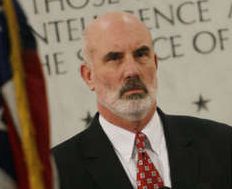
The relationship was close enough that the CIA moved to establish “a permanent presence” in Libya in 2004, according to a note from Stephen Kappes, at the time the No. 2 in the CIA’s clandestine service, to Libya’s then-intelligence chief, Moussa Koussa.

The memo began “Dear Musa,” and was signed by hand, “Steve.” Mr. Kappes was a critical player in the secret negotiations that led to Libyan leader Col. Moammar Gadhafi’s 2003 decision to give up his nuclear program. Through a spokeswoman, Mr. Kappes, who has retired from the agency, declined to comment.

A U.S. official said Libya had showed progress at the time. “Let’s keep in mind the context here: By 2004, the U.S. had successfully convinced the Libyan government to renounce its nuclear-weapons program and to help stop terrorists who were actively targeting Americans in the U.S. and abroad,” the official said.

The files documenting the renewal of ties between the CIA and Libyan intelligence were reviewed and copied by researchers from Human Rights Watch during a tour of Libya’s External Security agency headquarters in downtown Tripoli. Emergencies Director Peter Bouckaert said he was touring the building on Friday as part of the group’s effort to help the Libyan transitional authority secure sensitive documents left by the Gadhafi regime, which collapsed in August after a five-month rebellion.

Mr. Bouckaert said he discovered the files inside the complex in a room that guards described as the former office of Mr. Koussa, who became foreign minister in 2009. Mr. Bouckaert photographed the documents, leaving the originals in their place, and gave copies to The Wall Street Journal.

Human Rights Watch has been critical of the U.S. policy of sending terror suspects to third countries for interrogation, a practice known as rendition. The practice dates at least to 1995, when Egypt began aiding the U.S. with rendition.

U.S. officials say they obtained assurances from the recipient countries that the rendered detainees would be treated humanely. “There are lots of countries willing to take terrorists off the street who want to kill Americans,” the U.S. official said. “That doesn’t mean U.S. concerns about human rights are ignored in the process.”

In an April 15, 2004 letter to Libyan intelligence, the CIA proposed the rendition of another man, saying, “We respectfully request an expression of interest from your service regarding taking custody.”

Citing “recently developed agreements,” the CIA asked the Libyans to “agree to take our requirements for debriefings of [the suspect], as well as a guarantee that [his] human rights will be protected.”

The files also show the close relationship that some British intelligence officials had with Mr. Koussa.

Mr. Koussa, who defected from Col. Gadhafi’s government in March, was credited with helping negotiate Libya’s rapprochement with the international community and bartering an end to sanctions in return for Libya renouncing its weapons-of-mass-destruction program.

Yet he was also one of the stalwarts of the Gadhafi regime and headed the foreign intelligence service during a time when many Western officials believed Col. Gadhafi was funding and supporting international terrorist groups. In 1980, he was expelled from his diplomatic post in the U.K. after calling in a newspaper interview for the killing of Libyan dissidents in Great Britain. Libya later claimed he had been misquoted.

By the early years of the George W. Bush administration, however, as seen in the 2004 memo, Mr. Kappes was writing to Mr. Koussa: “Libya’s cooperation on WMD and other issues, as well as our nascent intelligence cooperation mean that now is the right moment to move ahead.”

The intelligence services had discussed the move for “quite some time” Mr. Kappes wrote.

The files provide an extraordinary window into the highly secretive and controversial practice of rendition, whereby the agency would send detainees to other countries for interrogation, including ones known for harsh treatment of detainees. The program was ramped up for terror detainees after the Sept. 11 attacks.

When taking over the CIA at the outset of the Obama administration, then-director Leon Panetta said the agency would continue to use rendition, but would seek assurances that the detainee wouldn’t be tortured—which has been the standing U.S. policy. Mr. Panetta left the CIA two months ago to lead the Pentagon.

“We are eager to work with you in the questioning of the terrorist we recently rendered to your country,” Mr. Kappes wrote in the memo, adding that he would like to send two more officers to Libya to question a suspect directly.

A lengthy profile of Kappes appeared in Washingtonian Magazine last year written by Jeff Stein, the SpyTalk columnist for the Washington Post. Stein’s account describes Kappes as resolutely loyal, dedicated, well-liked, politically skilled, and incompetent. Under his watch, the CIA was implicated in fraud, rape, and homicide.

Jeffrey Castelli, a friend of Kappes, had a pivotal role in propagating myths about Saddam Hussein’s WMD program. Castelli passed along the bogus intelligence that allowed President Bush, in his 2003 State of the Union speech to claim that Saddam had attempted to buy yellow cake uranium from Niger.

Castelli then oversaw the kidnapping of Abu Omar off a Milan street, which led to him and 24 other CIA agents being indicted by Italian magistrates.

In spite of this track record, “in 2008, Kappes picked Castelli to run the CIA’s New York station, one of the agency’s most prestigious appointments. Shock turned into protest, according to CIA insiders, forcing Kappes to drop the idea. Castelli soon retired.”

Kappes’s rise to behind-the-scenes stardom in the intelligence community is a lesson in how to maneuver in Washington: It’s one thing to be successful in the field; it’s more valuable to convince Congress you’re effective. “Kappes runs better ops on the Hill and with the White House than he ran human sources in the field,” a CIA veteran says in what turns out to be a consistent refrain.

“He’s the Teflon Don,” says a veteran of the CIA’s Operations Directorate, renamed the National Clandestine Service in 2005. “Nothing bad ever sticks to him.”

Over more than 20 years with the CIA, Kappes’s career has taken him through most of the world’s cold- and hot-war battlefields from India and Pakistan to Germany and Russia. But the journey of Kappes from secret agent to CIA superstar began in Libya.

In March 2003, leader Muammar Qaddafi signaled that he was ready to jump-start his on-again, off-again campaign to end his long diplomatic and commercial isolation, get off Washington’s list of terrorist states, and get back into the oil business with the West. Two years earlier, he’d dispatched one of his top operatives, Michigan State–educated Mousa Kousa, to a clandestine meeting in London with top CIA and British intelligence officials. Kousa carried with him the names of some of Osama bin Laden’s closest associates, including Ibn al-Sheikh al-Libi, a Libyan who would soon be the first major catch in the CIA’s pursuit of al-Qaeda. But with Qaddafi dragging his feet on final payouts over Libya’s 1988 downing of PanAm Flight 103 over Lockerbie, Scotland, negotiations stalled.

Then, with American and British troops massing to invade Iraq, Qaddafi decided it was time to talk again—in secret.

President George W. Bush and CIA chief George Tenet, desperate for intelligence on al-Qaeda, decided the time was ripe, too. But they wanted something big in return, a “deliverable,” as Bush put it: Qaddafi’s public renunciation of his nuclear, chemical, and biological weapons programs.

For the secret mission to Tripoli to work out the deal, they chose Steve Kappes.

By 2003, Kappes was deeply schooled in the dark arts. He had been station chief in Kuwait and Moscow. At a CIA station in Frankfurt, he had run highly sensitive operations targeting Iran’s nuclear-weapons program, and he had served in Pakistan, which sheltered its own nuclear-bomb effort. For the past year, as associate deputy director for operations, he had supervised some of the CIA’s most secret programs, from “extraordinary renditions”—kidnapping terrorist suspects abroad—to the agency’s secret foreign prisons to waterboarding and other “enhanced interrogation techniques.”

Then came Libya.

“Clearly, Kappes was a man who could keep a secret, and Bush gave him one: No one at State or Defense, not even Rumsfeld or Powell, should know about this major initiative,” Ron Suskind wrote in the Washington Monthly. Suskind’s account of the clandestine affair was one of a flurry of flattering articles about Kappes that began surfacing in the spring of 2006 as pressure was building to bring Kappes back to Langley.

The Libyan mission was a “lengthy dialogue, a delicate and subtle dance,” wrote Newsweek’s Mark Hosenball, quoting an anonymous former agency official. “And Steve handled it very well.”

Qaddafi did renounce his weapons-of-mass-destruction programs, allowing the Bush administration to claim that regime change in Iraq was already paying dividends elsewhere. After the Lockerbie claims were finally settled, diplomatic recognition came. The oil companies moved into Libya.

Washington, the story went, had eliminated a potential threat and gained an ally in the “war on terror.”

But on closer examination, some thought Qaddafi got the better end of it: His nuclear effort had never really gotten off the ground, intelligence sources say, despite the acquisition of millions of dollars of black-market equipment and supplies from Pakistani rogue nuclear scientist A.Q. Khan.

Qaddafi liked to buy stuff that was way beyond his scientists’ ken to assemble, a former top CIA official says.

Nor were Qaddafi’s other WMD programs much to write home about, according to the Monterey Institute’s Jonathan Tucker, one of the foremost WMD experts.

Libya’s chemical-warfare capability was “quite limited,” Tucker says. “Although Libya wanted to expand its chemical arsenal to include nerve agents, it did not have the materials, equipment, or know-how needed to do so. The nuclear program, however embryonic, was perceived as being of greater potential value, but after the interdiction of [A.Q. Khan’s] centrifuges en route to Libya, Qaddafi began to view his WMD programs as a security risk rather than an asset.”

Kappes has a reputation for micromanagement, right down to his recent insistence on selecting applicants for a two-person station. Therefore, says a former high-level official, Kappes had to know—and approve of—virtually everything that went on in the counterterrorism program after 9/11.

“All decision making in the Directorate of Operations flowed through the ADDO,” or assistant deputy director of operations, the position Kappes held when the war on terror ramped up in 2002–04, says a former top official during that era. “And he was specifically in a position of decision making and influence and persuasion. . . . So any decision or voice he gave to a particular point of view would have been, and was, given great consideration.”

“So if he was opposed to [waterboarding] and made his position known,” the former official adds, “that would have carried great weight. After all, not only was he ADDO, but don’t forget that at the same time he was carrying water for the White House on the Libya stuff and had a personal relationship, he claimed, with the President. So if he was able to do what he did on Libya, he should have been able to persuade the same decision makers with respect to enhanced interrogation techniques if he actually was opposed to them.”

It’s not likely Kappes was opposed to such programs, says a retired station chief who knows Kappes well: “He’s very jingoistic, very much a believer in American exceptionalism and the leading place the United States has in the world.”

Says John Sifton, a private investigator and attorney in New York who has carried out extensive research on the CIA’s secret programs for law firms and human-rights groups: “It strains credulity for him to say, ‘I didn’t know, I wasn’t involved.’ His denials would be like the Yankees pitching coach saying he didn’t know the playoffs rotation.”

“He became ADDO in the fall of 2002,” Sifton said, “just as the CIA was expanding its program for secret prisons and harsh interrogations and as it continued its renditions program with zeal.”

In at least one case, Kappes didn’t stay far away, sources say. According to an internal investigation, he helped tailor the agency’s paper trail regarding the death of a detainee at a secret CIA interrogation facility in Afghanistan, known internally as the Salt Pit.

The detainee froze to death after being doused with water, stripped naked, and left alone overnight, according to reports in the Washington Post and Los Angeles Times. He was secretly buried and his death kept “off-the-books,” the Post said.

According to two former officials who read a CIA inspector general’s report on the incident, Kappes coached the base chief—whose identity is being withheld at the request of the CIA—on how to respond to the agency’s investigators. They would report it as an accident.

“The ADDO’s direction to the field officer anticipated that something worse had occurred and so gave him directions on how to report the situation in his cable,” one of the former officials says.

“The ADDO basically told the officer, ‘Don’t put something in the report that can’t be proved or that you are going to have trouble explaining.’ In essence, the officer was told: Be careful what you put in your cable because the investigators are coming out there and they will pick your cable apart, and any discrepancies will be difficult to explain.”

As a result, the former official says, the Salt Pit officer’s cable was “minimalist in its reporting” on what happened to the prisoner. “It seems to me the ADDO should have been telling him, ‘Report the truth, don’t hold anything back, there’s an investigative team coming out, be honest and forthright. But that was not the message that was given to the chief of base by the ADDO.”

Facebooktwittermail

Do the Gaddafis hope to take refuge in Israel?

As Hosni Mubarak approaches the end of his life inside a prison cell in Egypt, he might be having second thoughts about his decision to turn down an offer of asylum that came from Israel a few months ago.

The idea that Israel has some affection for Arab tyrants might have something to do with a story about the Gaddafis that now emerges from an interesting source.

The Associated Press reports:

An Austrian politician says one of Muammar Gadhafi’s sons told him Libya was ready to sign a peace treaty with Israel once the fighting in his country ended.

David Lasar also said Thursday that Seif al-Islam, Gadhafi’s longtime heir apparent, also told him he was ready to act as a middleman to secure the release of an Israel soldier held for more than four years by Hamas, the Palestinian faction controlling Gaza.

Lasar, a Vienna municipal political with the rightist Freedom Party, was in Libya last month on a trip coordinated between his party and Ayoub Kara, an Israeli deputy minister.

Lasar is Jewish, while Kara is a Druze, and both occasionally assume positions and take on missions that are unusual for their government or party.

In July, Der Spiegel reported on the growing ties between the far right in Israel and the far right in Europe — in spite of the latter’s long history of antisemitism.

The partners that the European right-wing has sought out in Israel are, perhaps not surprisingly, well to the right of center. Kara himself, a member of the minority Druze religious community who enjoys close ties with Netanyahu, opposed the Israeli withdrawal from the Gaza Strip and is a loyal supporter of Jewish settlements in the West Bank. Gershon Mesika, a settler leader in the West Bank, received the populist delegation in December. Hillel Weiss and David Ha’ivri, both proponents of “neo-Zionism,” a movement which holds the belief that it is impossible to live in peace with Arabs, traveled to Germany last April for a conference hosted by the small, German right-wing populist movement Pro-NRW.

Their hope is that a pan-European platform will begin to emerge that values Israel as an important bastion in resisting the advancing tide of Islam. And they think, with the populist right making electoral gains across Europe in recent years, the smart bet is on Strache and Co [that being Heinz-Christian Strache and his Freedom Party of Austria (FPÖ)].

“The reasonable right parties have their roots at home. The Germans in Germany, the Swedes in Sweden and so on,” says David Lasar, a member of the Vienna city government for the FPÖ. “I think that Israel is also a country that says this is our homeland and we can’t open the borders and let everyone in as happened in Europe. That is a reason that Israel today has more trust in the right-wing parties in Europe than in the left-wing parties.”

Lasar himself is Jewish and is one of the key players in ongoing efforts to tighten relations between Israel and the Europeans. And his view on Israel is one which would seem to be at odds with his party’s past positions on the Middle East. Whereas Lasar is skeptical of peace negotiations which would require Israel to give up East Jerusalem or to withdraw from the settlements, the FPÖ has traditionally been allied with Arab leaders such as Moammar Gadhafi and remained skeptical of America’s hard-line position on Iran.

That, though, Strache made clear, is changing. “There are areas where we Europeans cannot sleep, where we can’t remain silent,” says Strache. “Israel is in danger of being destroyed. Were that to happen, it would also result in Europe losing its foundation for existence.”

So how do the Gaddafis fit into this picture?

The FPÖ, one of several right-wing populist parties gaining in popularity across Europe, is viewed with distaste by many for its strident opposition to Austria’s Muslim immigrant population. The party is also deeply skeptical of the European Union and efforts to prop up the common currency. Many see the FPÖ and its right-wing allies across the Continent as being too close to the extreme right wing for comfort.

But it is also no secret that Strache’s party has long had close ties to the Gadhafi clan. Former FPÖ leader Jörg Haider became friendly with Gadhafi’s second-oldest son, Saif al-Islam Gadhafi, when the Libyan was studying in Vienna in the 1990s. Haider visited Tripoli for the first time in 1999 and returned several times thereafter, getting to know Moammar Gadhafi in the process.

Following an internal party spat, Haider split off from the FPÖ in 2005 and founded the Alliance for the Future of Austria (BZÖ). And in 2008, the right-wing leader died in a car accident.

The two parties rejoined forces soon thereafter and the FPÖ, Strache said, has maintained relations with the Gadhafi clan.

So why is this story coming out now about Saif al-Islam claiming Libya was ready to sign a peace treaty with Israel and also negotiate the release of Gilad Shalit? None of the Gaddafi family seems well-placed right now for taking major initiatives in international diplomacy.

On the other hand, if they don’t want to suffer the same fate as Mubarak, maybe the possibility of asylum in Israel looks quite attractive to the Gaddafis, so it wouldn’t be a bad time to burnish their image as Zionist-friendly peacemakers.

Facebooktwittermail

How Israel got away with murder on the Mavi Marmara

The long-delayed and long-awaited UN report [PDF] on the Mavi Marmara massacre has finally been released by the New York Times.

I guess the newspaper feels a responsibility that it should spin this as much in Israel’s favor as possible before the report get’s officially released.

“Report Finds Naval Blockade by Israel Legal but Faults Raid,” says the headline. The siege is OK. Executing unarmed activists is not OK.

“Israel considers the report to be a rare vindication for it in the United Nations,” we are told.

There are a few unpleasant pesky detail however. Go all the way down to paragraph seventeen of the Times article and we learn:

The report assailed Israel for the way in which the nine were killed and others injured. “Forensic evidence showing that most of the deceased were shot multiple times, including in the back, or at close range has not been adequately accounted for in the material presented by Israel,” it says. The report does, however, acknowledge that once on board the commandos had to defend themselves against violent attack. The report also criticizes Israel’s subsequent treatment of passengers, saying it “included physical mistreatment, harassment and intimidation, unjustified confiscation of belongings and the denial of timely consular assistance.”

Like so many elements of the Israeli-Palestinian conflict, the events on the Mavi Marmara produced two fiercely competing narratives, each full of self-justification and contempt for the other.

And couldn’t we move forward so much more easily if it wasn’t for those fiercely competing narratives.

But just a minute. The panel — even if it’s conclusion amounted to saying, can’t you all just learn to get along — did actually note that Israel provided no information whatsoever on the circumstances in which nine men were killed. And had those deaths not occurred, there would have been no inquiry.

Let’s repeat that. After nine men were killed on board the Mavi Marmara on May 31, 2010, and the United Nations conducted a commission of inquiry into this incident, Israel provided no information whatsoever on the circumstances in which each of these deaths occurred.

The Israeli Point of Contact sought to explain to the Panel that the chaotic circumstances of the situation, made it “difficult to identify specific incidents described by soldiers as related to a specific casualty from among the nine activists who died during the takeover.” This is greatly to be regretted.

Indeed — especially since the evidence — bullets shot between the eyes or in the back of the head — strongly suggests that several of these deaths involved cool calculation. In other words, these were execution-style killings.

These are the descriptions of deaths about which the UN panel regrets Israel could offer no further information:

In the Panel’s view the following facts are of particular concern and have not been adequately answered in the material provided by Israel. Although the Israeli Point of Contact provided a general response to these points, he was unable to provide the Panel with more detailed information, particularly with respect to the death of the passenger described below:

  • Seven of the nine persons killed received multiple gunshot wounds to critical regions of the body: Ali Bengi, Cengiz Akyüz, Çetin Topçuoğlu, Fahri Yaldız, Furkan Doğan, İbrahim Bilgen and Necdet Yıldırım.
  • Five of those killed had bullet wounds indicating they had been shot from behind: Cengiz Akyüz, Çetin Topçuoğlu, Necdet Yıldırım, Furkan Doğan and İbrahim Bilgen. This last group included three with bullet wounds to the back of the head: Cengiz Akyüz, Çetin Topçuoğlu and Furkan Doğan. İbrahim Bilgen was killed by a shot to the right temple.
  • Two people were killed by a single bullet wound: Cevdet Kılıçlar was killed by a single shot between the eyes; and Cengiz Songür was killed by a shot to the base of the throat.
  • At least one of those killed, Furkan Doğan, was shot at extremely close range. Mr. Doğan sustained wounds to the face, back of the skull, back and left leg. That suggests he may already have been lying wounded when the fatal shot was delivered, as suggested by witness accounts to that effect.
  • No evidence has been provided to establish that any of the deceased were armed with lethal weapons. Video footage shows one passenger holding only an open fire hose being killed by a single shot to the head or throat fired from a speedboat.
Facebooktwittermail

White House guidelines on 9/11 messaging — don’t mention Baghdad

The New York Times in its Izvestia-like role as mouthpiece for the White House, shares some of the guidelines that have been sent to government officials with directions on how they should talk about 9/11, as its tenth anniversary approaches. Goodness knows what any of them might say if they were not provided with clear instructions on how to speak and think.

The documents being reported on have been distributed to hundreds, perhaps thousands of officials. They are referred to as “internal documents” which leads me to doubt that they are even classified as confidential, yet the Times, prissy as ever, didn’t publish the documents — merely quoted from them liberally.

There are two sets of guidelines — one on how American officials should communicate with other Americans and the other on how to talk to everyone else.

[T]he guidelines aimed at foreign audiences … call on American officials to praise overseas partners and their citizens, who have joined the worldwide effort to combat violent extremism.

“As we commemorate the citizens of over 90 countries who perished in the 9/11 attacks, we honor all victims of terrorism, in every nation around the world,” the overseas guidelines state. “We honor and celebrate the resilience of individuals, families, and communities on every continent, whether in New York or Nairobi, Bali or Belfast, Mumbai or Manila, or Lahore or London.”

Bali or Belfast?

There was a much more obvious city beginning with “B” to couple with Bali.

Baghdad.

After all, more innocent civilians have died in terrorist attacks in that city alone in the last decade than in every other location on the planet where attacks have occurred.

Of course the subject of terrorism in Iraq is awkward for Americans since the lines between terrorism and warfare so often became blurred on an American-made battlefield that quickly became a terrorist training ground.

The report notes:

Some senior administration officials involved in the discussions noted that the tone set on this Sept. 11 should be shaped by a recognition that the outpouring of worldwide support for the United States in the weeks after the attacks turned to anger at some American policies adopted in the name of fighting terror — on detention, on interrogation, and the decision to invade Iraq.

So what tangible form does that recognition take?

Everyone should maintain a polite silence about Iraq. Oh… and don’t mention al Qaeda either. With bin Laden dead, al Qaeda is totally passé.

Let’s focus on the future (“present a positive, forward-looking narrative”) while we remember the past.

Facebooktwittermail

The myth of terrorism

The power of language cannot be overstated. Nowhere is this more evident than in the power embedded in the word terrorism — a word which has governed political thought for much of the last decade.

Political acts of violence are older than humanity. Among chimpanzees, for instance, the contest for social power can sometimes be deadly. The killing of an alpha male by socially related chimps is a political act of violence for the purpose of realigning the social order, yet no one would be silly enough to suggest that chimpanzees face a threat from terrorism (even if chimps can indeed terrorize their companions!).

Political acts of violence is a phrase and not a word because it refers to a very broad collection of events that cannot neatly and meaningfully be circumscribed and turned into a thing. Such acts are as diverse in their reasons as they are in their distribution.

But give this amorphous entity a name, terrorism, and suddenly it becomes homogenous. One act of terrorism can be linked to another because they are both, supposedly, the same thing — both performed by the same people: terrorists. The idea that terrorists all share common attributes then reinforces the idea that wherever terrorism takes place we should be united in our response.

Whether it’s an attack in New York or Tel Aviv, Moscow or Mumbai, united we must stand in facing this terrible threat. Political analysis can conveniently be tossed out of the window once we have submitted to the demand that security preempts all other concerns.

Larry Derfner, who until today was a columnist for the rightwing Jerusalem Post, wrote a piece a few days ago in which he made a fine attempt to deconstruct the Israeli myth of Palestinian terrorism, but he made a few mistakes.

Israelis who don’t regard the Irgun and Lehi armed resistance to British rule as terrorism, are in no position to apply the same label to Palestinian resistance to the Israeli occupation. But what Derfner says in this regard in his column, is: “If those who oppose the occupation acknowledged publicly that it justifies Palestinian terrorism, then those who support the occupation would have to explain why it doesn’t. And that’s not easy for a nation that sanctifies the right to self-defense; a nation that elected Irgun leader Menachem Begin and Lehi leader Yitzhak Shamir as prime minister.”

The problem with phrasing his argument this way is that the almost universally accepted dogma these days is that there is no form of terrorism — whether practiced by Palestinians or anyone else — that is justifiable. Not even opponents of the occupation say terrorism is justifiable. On the other hand, what many will acknowledge is that Palestinians, like anyone else living under military occupation, have the right to engage in armed resistance.

Ironically, what inspired Derfner to make his argument was a series of attacks in southern Israel, near Eilat, carried out by gunmen whose identities are in dispute. Some of them have been reported to be Egyptian and not a single Palestinian has been named.

The attacks perfectly illustrate the way in which the label “terrorism” is used to silence those who dare to question the official version of events. But when we don’t actually know who the gunmen were, we can hardly pretend to understand their motives.

If, as many of us suspect, they were salafist militants based in the Sinai whose goal is to establish an Islamic emirate in the largely ungoverned region, their reasons for attacking Israelis might be quite different from those of a Palestinian militant group. At the same time, even if they were Palestinians, we can’t take it as a given that their attack was conceived as yet another strike in the fight against the occupation.

Call a bloody act of political violence an act of terrorism, however, and those of us who insist that we can’t understand what happened if we don’t know who was involved or what motivated them — we will be dismissed as apologists of terrorism or even terrorist sympathizers. Others, buoyed up by their own self-righteousness, anger and indignation will declare that terrorism must be vigorously condemned and tirelessly fought — as though governments are the sole arbiters of the legitimacy of political violence.

Here’s the column blog post, “The awful, necessary truth about Palestinian terror,” that got Derfner fired:

I think a lot of people who realize that the occupation is wrong also realize that the Palestinians have the right to resist it – to use violence against Israelis, even to kill Israelis, especially when Israel is showing zero willingness to end the occupation, which has been the case since the Netanyahu government took over (among other times in the past).

But people don’t want to say this, especially right after a terror attack like this last one that killed eight Israelis near Eilat. And there are lots of good reasons for this reticence, such as: You don’t want to further upset your own countrymen when they are grieving, you don’t want to say or write anything that could be picked up by Israel’s enemies and used as justification for killing more of us. (These are good reasons; fear of being called a traitor, for instance, is a bad reason.)

But I think it’s time to overcome this reticence, even at the cost of enflaming the already enflamed sensitivities of the Israeli public, because this unwillingness to say outright that Palestinians have the right to fight the occupation, especially now, inadvertently helps keep the occupation going.

When we say that the occupation is a terrible injustice to the Palestinians, but then say that Palestinian terror/resistance is a terrible injustice to Israel, we’re saying something that’s patently illogical to anyone but a pacifist, and there aren’t many pacifists left, certainly not in Israel. The logical, non-pacifist mind concludes that both of those statements can’t be true – that if A is hurting B and won’t stop, then B damn sure has the right to hurt A to try to make him stop. But if everybody, not only the Right but the Left, too, is saying that B, the Palestinians, don’t have the right to hurt A, the Israelis, then the logical mind concludes that Israel must not be hurting the Palestinians after all, the occupation must not be so bad, the occupation must not be hurting the Palestinians at all – because if it was, they would have the right to hurt us back, and everybody agrees that they don’t. So when they shoot at us or fire rockets at us, it’s completely unprovoked, which gives us the right, the duty, to bash them and bash them until they stop – and anybody who tries to deny us that right doesn’t have a leg to stand on, so we’re just going to keep right on bashing them. And when the Palestinians complain about the occupation, we Israelis can honestly say we don’t know what they’re talking about.

This, I’m convinced, is how the Left’s ritual condemnations of terror are translated in the Israeli public’s mind – as justification for the occupation and an iron-fist military policy.

But if, on the other hand, we were to say very forthrightly what many of us believe and the rest of us suspect – that the Palestinians, like every nation living under hostile rule, have the right to fight back, that their terrorism, especially in the face of a rejectionist Israeli government, is justified – what effect would that have? A powerful one, I think, because the truth is powerful. If those who oppose the occupation acknowledged publicly that it justifies Palestinian terrorism, then those who support the occupation would have to explain why it doesn’t. And that’s not easy for a nation that sanctifies the right to self-defense; a nation that elected Irgun leader Menachem Begin and Lehi leader Yitzhak Shamir as prime minister.

But while I think the Palestinians have the right to use terrorism against us, I don’t want them to use it, I don’t want to see Israelis killed, and as an Israeli, I would do whatever was necessary to stop a Palestinian, oppressed or not, from killing one of my countrymen. (I also think Palestinian terrorism backfires, it turns people away from them and generates sympathy for Israel and the occupation, so I’m against terrorism on a practical level, too, but that’s besides the point.) The possibility that Israel’s enemies could use my or anybody else’s justification of terror for their campaign is a daunting one; I wouldn’t like to see this column quoted on a pro-Hamas website, and I realize it could happen.

Still, I don’t think Hamas and their allies need any more encouragement, so whatever encouragement they might take from me or any other liberal Zionist is coals to Newcastle. What’s needed very badly, however, is for Israelis to realize that the occupation is hurting the Palestinians terribly, that it’s driving them to try to kill us, that we are compelling them to engage in terrorism, that the blood of Israeli victims is ultimately on our hands, and that it’s up to us to stop provoking our own people’s murder by ending the occupation. And so long as we who oppose the occupation keep pretending that the Palestinians don’t have the right to resist it, we tacitly encourage Israelis to go on blindly killing and dying in defense of an unholy cause.

And by tacitly encouraging Israelis in their blindness, I think we endanger their lives and ours, their country and ours, much more than if we told the truth and got quoted on Hamas websites.

There’s no time for equivocation anymore, if there ever was. The mental and moral paralysis in this country must be broken. Whoever the Palestinians were who killed the eight Israelis near Eilat last week, however vile their ideology was, they were justified to attack. They had the same right to fight for their freedom as any other unfree nation in history ever had. And just like every harsh, unjust government in history bears the blame for the deaths of its own people at the hands of rebels, so Israel, which rules the Palestinians harshly and unjustly, is to blame for those eight Israeli deaths – as well as for every other Israeli death that occurred when this country was offering the Palestinians no other way to freedom.

Writing this is not treason. It is an attempt at patriotism.

Facebooktwittermail

Israel’s faux revolutionaries

Israel’s July 14 social justice movement is really like a campaign in support of sunshine. Who’s going to oppose it? The supporters of social injustice?

To the extent that Israelis were inspired by the example of the Egyptian revolution, this seems to have gone no further than sharing in the empowering experience of being among thousands of people who have taken to the streets, joined by a sense of solidarity. But solidarity around what?

The difference between J14 and the Egyptian revolution is the difference between asking for a pay raise or telling your boss, “You’re fired!”

As Ami Kaufman wrote recently, “Although the protesters are demanding ‘social justice,’ what they’re really asking for is ‘more money!’”

Joseph Dana and Max Blumenthal explain how easy it has been for Israelis to call for social justice while ignoring the occupation.

The decision to exclude the occupation from the grievances of the July 14 movement was entirely organic. No hired gun consultant advised movement activists to avoid the hot button issue in order to broaden the appeal of the demonstrations. The mainstream of the Jewish public decided on its own, and without much internal reflection, that social justice could exist alongside a system of ethnic exclusivism. Thus, while the July 14 movement proceeded through cities across Israel bellowing out cries for dignity and rights, Palestinians remained safely tucked away behind an elaborate matrix of control — the Iron Wall. Ten years of separation had not only rendered the Palestinians invisible in a physical sense. It had erased them from the Israeli conscience.

“It’s very strange to see a social justice protest without mentioning occupation,” Gidi Grinstein, a confidant of Defense Minister Ehud Barak, who heads the Reut Institute, a government-linked Israeli think tank remarked. “But most people in Israel don’t even believe there is an occupation anymore. They see the Palestinian Authority in the West Bank, and think there is a functioning government. They hear about the Palestinian statehood resolution at the UN in September, and they think Palestine is a real state. So there is this cognitive dissonance among Israelis.”

For years Israel’s tiny but intensely motivated left-wing tried to mobilize mass protests against the occupation, hoping they could shake Israeli society out of its slumber. But the settlements grew, and the occupation became more and more entrenched. Suddenly, with hundreds of thousands of their compatriots in the streets demonstrating against the most right-wing government in their country’s history, some leftists began conjuring visions of a revolution.

“We have failed to end the occupation by confronting it head on but the boundary-breaking, de-segregating movement could, conceivably, undermine it,” wrote Dimi Reider. Reider claimed the demonstrations could achieve dramatic change because they “may challenge something even deeper than the occupation.” Hagai Mattar, a veteran anti-occupation activist and widely read journalist, echoed Reider’s unbridled enthusiasm. “For the first time in decades, perhaps, we are witnessing the impossible becoming possible,” Mattar wrote on the popular Hebrew website MySay. “What appeared to be a mere fantasy half a year ago… has become a vivid reality.”

Many members of the Israeli left have suffered for their activism. Some have been injured by Israeli soldiers during protests in the West Bank, where they routinely dodge rubber bullets and high-velocity teargas projectiles. Others have served months in prison for refusing to serve in the Israeli Army. With a suite of anti-democratic laws passed by the Knesset, they fear a coming crackdown. But perhaps the greatest source of suffering for Israeli leftists is having been cast out of one of the most tribalistic societies in the world. Many are turned down for housing and employment on the grounds that they refused military service. The very word “leftist,” or smolini, has become an insult in the Hebrew language. Hoping to replace the communal bond their society had denied them, the radical leftists who have not escaped to the squats of Berlin or Barcelona formed a tribe within the tribe.

As the July 14 protests gathered momentum and manpower, members of the radical left bolstered the movement with their tactical experience and fearlessness in the face of police intimidation. On July 23, when hundreds of thousands of protesters took to the streets of Tel Aviv, Israeli police forces arrested 43 demonstrators. Most of them were leftists who attempted to block a major intersection. The most prominent among them was Matar. Normally, the arrests of left-wingers at anti-occupation protests go unreported. In this instance, however, the arrests were broadcast to a national audience during the prime time news. After being released from their jail cells, the demonstrators were greeted by their fellow Israelis not as traitors but as heroic leaders.

“The radical left is no longer an outsider, but forms an important part of the mainstream,” Matar wrote recently in an article celebrating the protests. If this new movement welcomed leftists, and upheld them as its vanguard, how could it not be revolutionary?

Facebooktwittermail

The muted impact of the Arab Awakening on Israel

Daniel Levy writes:

After decades of near-hegemonic Israeli strategic supremacy in the Middle East, the ground is shifting. For Israel’s leaders, the Arab Awakening and the removal of Mubarak represents the collapse of a key support structure in the edifice that maintains Israel’s regional posture. That edifice had been fraying for some time. Yet with Israel unwilling or unable to relinquish its control over and occupation of Palestine, it was a system of conflict management that had proven to be remarkably resilient. Undemocratic Egypt was that system’s linchpin. In fact, only an undemocratic Egypt could play this role, indifferent and dismissive as the regime was toward public opinion and able to pursue policies, both at home and abroad, widely perceived as being an affront to Egyptian dignity.

Every country needs a strategy for managing its external relations, especially in the near abroad. Israel’s predicament in this respect is especially challenging. Born as an unusual movement combining religious and historical claims to land with modern aspirations of state-building and communal preservation, Zionism was initially branded by most in the region as a colonial project, a sense that Israel has fed with its expansionist and expulsionist approach to the indigenous population. Unfortunately for Israel, that indigenous population has ethnic and religious ties to a large population throughout the surrounding region. Nevertheless, Israel managed to adapt, pursuing whatever great power or regional alliances were available, making itself useful to the United States as a cold war ally.

Long after it became clear that the Oslo peace process would not deliver Palestinian freedom, rights or sovereignty, the structures established by it and the opportunities they have forged for Israel have endured. They were kept afloat by donor assistance, by the difficulties entailed in dismantling the Palestinian Authority and, crucially, by the stamp of legitimacy that only Egypt could confer. The impact of the Arab Awakening on Israel’s leaders must be understood first and foremost against this backdrop.

But here’s the key statement Levy makes which defined Israel’s view of the region well before the Arab Awakening erupted:

Israel has erected a separation barrier between itself and the Palestinians in the West Bank and Gaza, is proceeding to do the same on the Egyptian border and has long had closed and militarily fortified borders with Lebanon and Syria. Trade with all of its Middle East neighbors, in fact, amounts to less than 5 percent of its total. Israelis rarely visit even those Arab countries it is possible to enter, and the Arab community inside Israel is treated as a fifth column rather than as a bridge to regional relations. Of course, this is a two-way street. Yet when the physical barriers are combined with what is often a striking lack of intellectual, cultural and social curiosity, Israel is in danger of being fundamentally incapable of interpreting developments in its immediate surroundings.

This incapacity is not just an impediment — it actually defines the core of Zionism.

Israel defines itself as a state by its desire to underline the otherness of the non-Jew and emphasize the necessity for Jewish solidarity and self-reliance. On this basis, how would it be possible to foster dynamic and creative relations between Jews and Arabs when the prevailing attitude among Israeli Jews is that they have little or no interest in having any relations with Arabs?

Facebooktwittermail

How Israelis (and many others) shirk moral responsibility for their actions

It’s a clever maneuver and it’s used again and again.

They are attacking me not because of what I did. They are attacking me because of who I am.

Not only does this put the self-declared victim in an invulnerable position — no one can change or should need defend their simple identity — but this also deflects criticism by insinuating that it springs from bigotry or blind hatred.

A few months after the Israeli Defense Forces had slaughtered hundreds of Palestinian civilians — men, women and children — in Gaza in 2009, Israel’s ambassador to Turkey, Gaby Levy, spoke to the US ambassador to Turkey, James Jeffrey, and expressed his concern about deteriorating Israeli-Turkish relations.

Levy’s explanation, with which Jeffrey concurred, was that Turkish Prime Minister Recep Tayyip Erdoğan hates Israel. “He’s a fundamentalist. He hates us religiously,” Levy claimed.

Jeffrey commented: “Our discussions with contacts both inside and outside of the Turkish government on Turkey’s deteriorating relations with Israel tend to confirm Levy’s thesis that Erdogan simply hates Israel.”

In other words, Erdoğan’s attitude towards Israel had nothing to do with his reaction to Israel’s barbaric treatment of Palestinians. It was the product of simple hatred — the implication thus being that there would be nothing that poor little Israel could do in order to make amends.

Erdoğan has been in office since 2003. In early 2006, Israel’s Ministry of Foreign Affairs described relations with Turkey as “perfect.” In 2007, Israel’s President Shimon Peres was honored by being invited to address the Turkish parliament — it was the first time an Israeli president had addressed the parliament of a Muslim-majority country.

In 2008, right up until Israel launched the war on Gaza, Turkey was helping mediate indirect peace talks between Israel and Syria.

Turkey mediated five rounds of talks between Israeli and Syrian officials. Toward the end of Olmert’s term the two sides were on the verge of resuming direct negotiations.

At the last meeting between Olmert and Prime Minister Recep Tayyip Erdoğan, the Turkish leader called Syrian President Bashar al-Assad and relayed messages to and from Olmert. But after Operation Cast Lead began in December 2008 and the freeze in negotiations with Syria, Erdoğan said Olmert had stabbed him in the back.

In 2010, while Israel was refusing to allow Turkey to serve as a mediator with Syria, former Israeli prime minister, Ehud Omert said during a conference at Tel Aviv University:

We can reach an understanding with the Syrians which would change the map in the Middle East. A decision on this issue must be made. It’s too easy being angry at Erdogan, but it would be wise to reconcile with him. He is a fair mediator. We need negotiations with Turkish mediation.

Now we learn from Wikileaks that during this period in which Turkey, under Erdogan’s leadership, had made unprecedented efforts to serve as a peace-broker between Israel and its neighbors, key Israeli and American diplomats were in collusion with each other, reinforcing their shared and counter-productive view of Turkey’s prime minister.

Levy and Jeffrey were not looking at a real obstacle to diplomacy. They were revealing their own incompetence as diplomats by playing the game: it’s not what we do; it’s who we are.

This is the cable:

C O N F I D E N T I A L ANKARA 001549

SIPDIS

DEPARTMENT FOR EUR/SE

E.O. 12958: DECL: 10/26/2019
TAGS: PREL PGOV TU IS
SUBJECT: ISRAELI AMBASSADOR TRACES HIS PROBLEMS TO ERDOGAN

REF: ANKARA 1532

Classified By: AMB James F. Jeffrey, for reasons 1.4(b,d)

¶1. (C) During an October 26 call on the Ambassador, Israeli Ambassador Gabby Levy registered concern over the recent deterioration in his country’s bilateral relations with Turkey and the conviction that the relationship’s decline is attributable exclusively to Prime Minister Erdogan. Levy said Foreign Minister Davutoglu had relayed a message to him through the visiting Czech foreign minister that “things will get better.” He had also fielded messages from senior civil servants, xxxxx urging him to weather quietly Erdogan’s harsh public criticisms of Israel. The latter claimed Erdogan’s repeated angry references to the humanitarian situation in Gaza are for “domestic political consumption” only.

¶2. (C) Levy dismissed political calculation as a motivator for Erdogan’s hostility, arguing the prime minister’s party had not gained a single point in the polls from his bashing of Israel. Instead, Levy attributed Erdogan’s harshness to deep-seated emotion: “He’s a fundamentalist. He hates us religiously” and his hatred is spreading. Levy cited a perceived anti-Israeli shift in Turkish foreign policy, including the GoT’s recent elevation of its relations with Syria and its quest for observer status in the Arab League.

¶3. (C) Comment: Our discussions with contacts both inside and outside of the Turkish government on Turkey’s deteriorating relations with Israel tend to confirm Levy’s thesis that Erdogan simply hates Israel. xxxxx discusses contributing reasons for Erdogan’s tilt on Iran/Middle East isues, but antipathy towards Israel is a factor.

JEFFREY

Facebooktwittermail

Obama, Libya and triumphalism in Washington

Joe Cirincione writes:

This week, in Libya, thousands of people celebrated carrying posters of “The Fantastic Four”: Obama, Rice, French President Nicolas Sarkozy and UK Prime Minister David Cameron. All four played a leading role in supporting the people of Libya in their overthrow of a tyrant. But it was America that played the crucial role. It was America that decided at a key moment to “invest in protecting the lives of others” and to join with NATO not to overthrow a regime, but to help the people of Libya make the regime change that only they could effect.

That is leadership. That is smart. And this is what victory feels like.

Joel Rubin writes:

President Obama’s critics are on the verge of witnessing a third major Obama success in the Arab world in 2011.

First, longtime Egyptian strongman Hosni Mubarak was deposed after Obama refused to support him against the Egyptian people at the moment of truth. Second, Osama bin Laden, America’s archenemy #1, was killed by Navy SEALS on direct orders from Obama in a risky cross-border raid into Pakistan. And now, Muammar Gaddafi — a man whose presence on the international stage has mocked any reasonable definition of sanity for more than four decades — is about to be knocked out of power by an international coalition in which Obama ensured that the U.S. played a leading team role.

Fareed Zacharia, heralding a new era in U.S. foreign policy, writes:

The United States decided that it was only going to intervene in Libya if it could establish several conditions:

1) A local group that was willing to fight and die for change; in other words, “indigenous capacity”.

2) Locally recognized legitimacy in the form of the Arab League’s request for intervention.

3) International legitimacy in the form of United Nations Security Council Resolution 1973.

4) Genuine burden sharing with the British and French spelling out precisely how many sorties they would be willing to man and precisely what level of commitment they would be willing to provide.

It was only when all those conditions were fulfilled that the Obama Administration agreed to play a pivotal but supporting role in the Libya operation.

Perhaps if Obama gets re-elected (though I wouldn’t place large bets on that yet), he’ll invite a few Libyans to Washington so that they can celebrate the pivotal role they played in securing his second term.

Needless to say, I jest. Even Obama’s most loyal boosters would be forced to concede that hardly any votes in the 2012 presidential election will end up being swayed by the outcome of the Libyan revolution.

So let’s assume that Zacharia and Rubin and Cirincione are simply celebrating what they regard as a foreign policy success (and are not driven just by some idea that the outcome in Libya is good for Obama), what should we make of their analysis?

As usual it comes weighted down by the conceit that Washington is the center of the world.

Libyans who spent the last six months fighting for their country — they are just supporting actors with the honor of rolling out a red carpet along which America can now stride on its way to glory.

Has everyone forgotten? The idea that on Libya, Obama “led from behind” was a facetious way of spinning the fact that in this intervention, he really was the reluctant partner. US involvement was agreed to on the strict condition that American soldiers could maintain a comfortable distance from Libya, while their commander in chief kept his distance from Congress and the media.

America’s arm-length involvement in Libya was indeed a success, but not in the sense that success is now being paraded. It was a success in as much as it is clear to most people (at least outside Washington) that victory in Libya belongs to the people of Libya. They know they couldn’t have succeeded without Western support, but it is Libyans who died in their thousands while their allies shed not a single drop of blood.

Sarkozy, Cameron, Obama, and Rice — these were the supporting actors. NATO’s involvement was much more reluctant than it was opportunistic and it was driven by fears about the potential price of non-involvement.

Those who now want to construct out of this a model for other interventions seem to have no more imagination than those who not long ago employed the simplistic argument that what “worked” in Iraq should work in Afghanistan.

Washington was able to help out a bunch of Arabs in Libya when they got in trouble — should be able to do the same in Syria. Right?

The lesson to take away from Libya is that in the Arab Awakening no two uprisings are the same and no idea is more dangerous than that a successful intervention can be replicated.

Facebooktwittermail

The fall of Gaddafi

With the fall of the mighty comes the dispersal of the baubles of power. And just as Gaddafi was clownish in his rule, we witness another Libyan comedy as his golf cart gets unceremoniously towed away by one group of rebels while another rebel claims the trophies of Gaddafi’s hat, gold chain and fly-whisk.

At The Arabist, Steve Negus lists a few points now in Libya’s favor:

  • The combination of foreign airstrikes — which rebels realize saved them, albeit without foreign ground forces which would inevitably antagonize people — gives the West leverage without creating a backlash. Foreign interference is not a dirty word here: one katiba member I met in Ajdabiya said that the first thing he wanted to do after victory was buy a sheep, and bring it to Sarkozy to slaughter in Sarkozy’s honor. This means that proposals like bringing in the UN to help with the transitional process, as some Libyan politicians have proposed, is probably going to be broadly acceptable. Also, when NTC member Mahmoud Jibreel says that fighters should not loot or commit reprisals because the “eyes of the world are upon us”, his logic is actually appreciated by fighters on the ground.
  • Libya has no ruling party like the Baath. In Iraq, you had to join the party to rise high in your career, and to some degree the entire middle class was tainted by association with the Baath. This meant that technocrats got turfed out of their jobs by religious Shia parties, and in some cases terrorized by radical Shia militias. In Libya, the NTC has been fairly successful in keeping professionals in their posts, and only a few fairly organizations — ie, Qaddafi’s “Revolutionary Committees” — are really tainted by their relationship to the regime.
  • There seem to be few divisive differences over the identity of the country — Libya is tribally and ethnically diverse, but pretty homogenously Sunni and conservative. In order to whip up radical Islamist populism, it really helps to have some kind of Other — be they crony capitalists, nefarious secularists who want to sneakily impose atheism through supraconstitutional principles, Baathists, Shia or others who practice scandalous rituals, or other “heretics”, Tartar military dictators, etc. There aren’t any of these in Libya, yet. There also aren’t any liquor stores to smash. Maybe this will change if a militant Berber movement emerges, or if luxury hotels start going up in which an ex-NTC member has a silent partner.
Facebooktwittermail

The voice of democracy frightens Israel

The creation of a Jewish state, right from the moment of its conception, was never compatible with the development of democracy.

Democracy rests on the recognition of the political rights and power of dēmos, the people, and in as much as it allows for any kind of discrimination it does so by empowering the under-privileged. The idea that there could be such as thing as a Jewish democracy which helps preserve the Jewish character of the state at the expense of the interests of non-Jewish minorities is an insult to the idea of democracy.

Even so, since this is a contradiction that doesn’t seem to trouble most Jewish Israelis the most immediate democratic threat to Israel does not come from inside its borders — it comes from Egypt.

A year ago, if in response to an attack emanating from inside Egypt’s borders Israel had “retaliated” by launching attacks on Gaza, it would have been confident that it’s military action would have received a fairly muted response from the Mubarak regime. Demonstrations on the streets of Cairo would have done little to damage Egypt’s cordial relations with Israel.

Now everything has changed. Thus on Monday, even while rockets were still be fired at Israel from Gaza the Netanyahu cabinet voted to refrain from any action that could lead to an all-out war against Hamas. Gone is some of the hubris that fueled Israel’s 2009 war on Gaza, Operation Cast Lead.

Why? Israel can no longer be guided by its confidence that it can punish the population of Gaza with total impunity. Now its calculus must take into consideration the mood of 80 million Egyptians who can do much more than just shout on the streets — they can influence the policies of their own government. That power is still muted by military rule, but everything Israel does to alienate Egypt now has much greater potential to define and sour future Israeli-Egyptian relations.

After the Eilat attacks last week, Israel was swift to launch what Netanyahu described as retaliatory air strikes against the leaders of the Popular Resistance Committees in Gaza, even though the Israeli Defense Forces’ spokesperson later denied that the IDF believes the PRC was responsible.

One way of interpreting Israel’s strikes on Gaza is to see them as opportunistic and providing a timely distraction from Israel’s own protest movement.

At the same time, Netanyahu’s choice to hit Gaza may have had as much to do with Israel’s wariness about challenging Egypt.

One of the assumptions enshrined in the Camp David Accords was that the demilitarization of Sinai was in Israel’s security interests, but that is no longer the case. Since the fall of Mubarak, militants in the peninsula have taken advantage of the security vacuum, launching multiple rocket attacks, and now, evidence suggests, attacking Israelis outside Eilat.

Before he then pointed the finger at Gaza, Israeli minister of defense Ehud Barak last week acknowledged: “The attacks demonstrate the weakening of Egypt’s control over the Sinai peninsula and the expansion of terrorist activity there.”

Even so, Israel’s political leaders share the same fear of acts of terrorism that politicians do everywhere — that such acts risk making the state look impotent. To have responded to the attacks by saying that Israel would engage in intense diplomatic dialogue with Egypt in order to improve security would not have been enough, yet neither could Israel afford to disregard Egyptian sovereignty by pursuing militants across the border.

The only muscle-flexing alternative was to strike Gaza. But even with its show of force, Israel now feels constrained.

What emerged most clearly from Netanyahu’s and Barak’s statements to the cabinet was that Israel lacks the international legitimacy needed for a large-scale operation in Gaza. The diplomatic crisis with Egypt [following the deaths of three Egyptian policemen killed by Israelis during the Eilat attacks] further constrains Israel’s freedom of action.

“The prime minister thinks it would be wrong to race into a total war in Gaza right now,” one of Netanyahu’s advisors said. “We are preparing to respond if the fire continues, but Israel will not be dragged into places it doesn’t want to be.”

Several Netanyahu aides detailed the constraints on Israeli military action, most of which are diplomatic.

“There’s a sensitive situation in the Middle East, which is one big boiling pot; there’s the international arena; there’s the Palestinian move in the Untied Nations in September,” when the Palestinians hope to obtain UN recognition as a state, one advisor enumerated. “We have to pick our way carefully.”

For Israel, the regional expansion of democracy is clearly problematic. No longer can it take comfort in the deals it once made with a small handful of autocratic allies. Arab populations whose views could all too easily be ignored in the past, now have new power to make themselves heard and the voice of democracy frightens Israel.

Facebooktwittermail

Watch Al Jazeera broadcasting live from the center of Tripoli

Dennis Kucinich gets the prize for the worst-timed op-ed of the year: “Time to end Nato’s war in Libya” appearing today in The Guardian.

As the war enters its sixth month, it is time for the US president and secretary of state to clean up the mess they’ve created with this needless military intervention, and to work to seriously to bring about a negotiated end to this war.

Negotiated with who?

Kucinich warned: “Libyan rebels are now advancing on the capital city of Tripoli with the aid of Nato strikes; this is sure to result in a real bloodbath, as opposed to the one that was conjured in Benghazi this past winter.”

Well, Al Jazeera is already in Tripoli’s Green Square witnessing mass celebrations and no word of a bloodbath.

Watch events unfold live.

Facebooktwittermail

Libya — the first real victory in the Arab Awakening?

Visit msnbc.com for breaking news, world news, and news about the economy

To all those who argued that NATO’s involvement would irredeemably taint the Libyan revolution, here’s an idea that could be too much to wrap your mind around.

Look at the ongoing struggle in Syria, the brutally crushed revolution in Bahrain, the unfinished revolution in Egypt and then consider this possibility: Libya may turn out to be the first Arab country that really gets a fresh start.

No doubt it will be messy and who’s to say where it might lead, but Libya now appears to be on the brink of getting a chance to rebuild itself not only free from a dictatorial hand but also free from the regime through which that hand extended its power.

It might not quite all be over — Gaddafi’s death, departure or capture will be the final act — but the idea that Gaddafi’s supporters formed one side in a civil war looks flimsier than ever. MSNBC reports:

Libyan rebels moved into the capital Tripoli on Sunday and came within two miles of the city center, as Moammar Gadhafi’s defenders melted away. The rebel leadership said Gadhafi’s son and one-time heir apparent Seif al-Islam has been arrested.

Associated Press reporters with the rebels said they met little resistance as they moved from the western outskirts into the capital in a dramatic turning of the tides in the 6-month-old Libyan civil war. The rebels took control of one neighborhood, Ghot Shaal, on the western edge of the city. They set up checkpoints as rebel trucks rolled into Tripoli.

One of the rebels, Mohammed al-Zawi, 30, said he was in a convoy of more than 10 trucks that entered Ghot Shaal. He said they progressed as far as the neighborhood of Girgash, about a mile and a half from Green Square, where Gadhafi supporters have gathered nightly throughout the uprising to rally for their leader of more than 40 years.

He said the rebels came under fire from a sniper on a rooftop in the neighborhood.

“They will enter Green Square tonight, God willing,” al-Zawi said.

Sidiq al-Kibir, the rebel leadership council’s representative for the capital Tripoli, confirmed the arrest of Seif al-Islam to the AP but did not give any further details.

Earlier, Gadhafi said he will stay in Tripoli “until the end” and called on his supporters around the country to help liberate the capital from a rebel offensive.

He said in an audio message played over state television he was “afraid that Tripoli will burn” and he said he would provide weapons to supporters to fight off the rebels.

Associated Press reporters with the rebels said they reached the Tripoli suburb of Janzour around nightfall Sunday. They were greeted by civilians lining the streets and waving rebel flags. Hours earlier, the same rebel force of hundreds drove out elite forces led by Gadhafi’s son Khamis in a brief gunbattle.

The elated fighters danced and cheered, hauling off truckloads of weapons and advanced full speed toward the capital in pickup trucks. Ahmed al-Ajdal, 27, a fighter from Tripoli, was loading up a truck with ammunition.

“This is the wealth of the Libyan people that he was using against us,” he said, pointing to his haul. “Now we will use it against him and any other dictator who goes against the Libyan people.”

NATO called the situation in Libya “very fluid” on Sunday as rebel fighters streamed into the capital Tripoli, and said the rule of Gadhafi was “crumbling.”

How could the rebels make such a rapid advance? Because Gaddafi loyalists eventually realized they were supporting a lost cause. They have nothing to fight for.

What now? Are Libyans about to create a Western-friendly liberal democracy? No one in Washington or the other NATO capitals has the faintest idea. And that’s the point.

All those who see the heavy hand of Western imperialism shaping events have a distorted perception of how much power the US and the West are really able to exert. Sure, there’s no limit on how much power they want to exert, but at the end of the day their power has very real limits and as we will see, Libya’s future will be determined by the people on the ground — not those in the sky.

Facebooktwittermail

