Three days after the attacks by gunmen outside Eilat in southern Israel, what do we know about the identities of the gunmen? Almost nothing.
In the mainstream media they are blithely referred to as “Palestinian gunmen” yet so far the only basis for this description is the unsubstantiated word of Israeli officials. Those officials have provided no real evidence to back up their claims.
Prime Minister Benjamin Netanyahu was quick to assign responsibility for the attacks with the Gaza-based Popular Resistance Committees yet both they and Hamas denied any involvement.
Generally speaking, Palestinian militant groups are not shy about claiming responsibility for attacks against Israelis — especially those that can be described as military operations where Israeli soldiers are killed or injured. Indeed, the problem is more often that too many groups — not too few — want to claim the honor.
This suggests a rather obvious explanation about why no Palestinian group announced that it directed the attacks: it wasn’t a Palestinian operation.
The Israeli Defense Forces spokesperson refused to endorse Netanyahu’s assertion about the PRC role and the only “proof” of Palestinian involvement the IDF presented was the use of Kalashnikovs — as though 100 million Kalashnikovs, 20% of the firearms available on the planet, are now stockpiled in Gaza!
What other evidence is there about the gunmen? They were wearing Egyptian military uniforms.
Just before the Eilat attacks, Egyptian security forces declared Operation Eagle — an effort to bring security to the lawless Sinai — a success.
Deputy Interior Minister Ahmad Gamal Eddin said at a press conference last week that the campaign has so far managed to arrest members of al-Takfeer wal-Hijra and to collect arms and illegally acquired military uniforms.
Militant Salafists based in the Sinai are believed to have been periodically blowing up the Egypt-Israel gas pipeline this year. They are well-armed and possess Egyptian military uniforms. Were they behind the Eilat attacks? It seems a bit more plausible than the IDF’s Kalashnikov-based analysis.
Meanwhile, Hamas has once again agreed to take the lead in enforcing a ceasefire with Israel.
A Hamas official in Gaza says that all of Gaza’s militant groups have agreed to a cease-fire aimed at ending a three-day round of violence with Israel.
The official says Egypt helped broker the cease-fire, which will go into effect this evening. He says Egypt told the groups that Israel would halt its airstrikes only if the Palestinian groups stopped shooting first, and that Hamas security personnel would enforce the agreement.
He spoke on condition of anonymity Sunday because the agreement had not officially been made public.
Earlier on Sunday, AP reported that Israeli officials arrived in Cairo. Moreover, Israeli sources confirmed that the reduced IDF strikes on Gaza in the last 24 hours was an intentional move aimed at allowing Egypt to mediate a cease-fire, as well as out of fear for the defense and diplomatic relationship with Egypt.
Meanwhile, Defense Minister Ehud Barak issued a harsh warning to those responsible for the latest rocket fire on southern Israel, saying those who act against Israel “will have their heads separated from their bodies.”
Thus speaks Israel’s own Salafist military commander.
In a telephone address to the Libyan people, Muammar Gaddafi appealed to them to “Go forward, go forward,” and he then hung up. An advance is indeed under way, but not the one Brother Muammar was asking for.
“If you can call any mobile number in Tripoli, you will hear in the background the beautiful sound of the bullets of freedom,” Anwar Fekini, a rebel leader from the mountainous region in western Libya, told the New York Times yesterday.
Phone calls to several Tripoli residents from different neighborhoods confirmed widespread gunfire and explosions. And there were reports of frequent NATO jet overflights and airstrikes — a common accompaniment to the drumbeat of the rebel advance in the past week.
But a report from Russia Today has a different angle. “[E]yewitnesses say the gunfire is sporadic and the explosions heard are victory celebrations of Gaddafi loyalists.”
Apparently the RT website does have some kind of editorial review since that line doesn’t appear in later version of this report. I guess even the most stalwart Gaddafi sympathizers have a hard time believing Gaddafi loyalists are detonating victory bombs.
Mahdi Nazemroaya, reporting for RT, says that the mainstream media is part of the NATO war machine, so I guess reports about Gaddafi’s imminent defeat, the continued defection of senior officials, and now large anti-government protests inside Tripoli are all just part of the misinformation campaign designed to demoralize Gaddafi’s supporters. And I guess if you subscribe to the notion that most of the reports coming out of Libya right now are misinformation, there’s no point reading any more of this post.
Taher, a resident and fighter close to the center of Tripoli, tells Al Jazeera that those inside the city now rising up against Gaddafi forces are not getting the support from NATO that they want — so much for the idea that everything now taking place is being choreographed by NATO.
The fighting in Tripoli comes after days of battlefield defeats left Muammar Gaddafi’s government and troops penned ever more tightly in the besieged capital. Although the scale of the clashes was impossible to determine, there were widespread claims among the Libyan rebels that Gaddafi’s 41-year rule was edging ever closer to collapse.
As gunfire was still audible outside, a government spokesman, Moussa Ibrahim, told reporters the incidents were “isolated” and short-lived. He blamed “armed gangs” of a few dozen rebels who had sneaked into Tripoli, including foreign mercenaries, some of whom had been captured.
“Sure, there were some armed militants who escaped into some neighbourhoods and there were some scuffles, but we dealt with it within a half hour and it is now calm,” the spokesman said.
He added: “I ensure Libyans that Gaddafi is your leader … Tripoli is surrounded by thousands to defend it.”
Later in the evening news agencies in Tripoli reported that the sound of gunfire appeared to diminish – although why was not clear. “It has become much less,” said a Reuters reporter. “Almost a minute went by without the sound of gunfire.”
Two Tripoli residents in different parts of the city also said the sound of shooting, which earlier had been intense, had subsided, suggesting Gadaffi’s forces remained largely in control. The reports of clashes in Tripoli came in the midst of a febrile mood among rebel forces, who swapped rumours and fired weapons in celebration, convinced that Gaddafi’s days are almost over.
One of the few things that was certain was that the long anticipated battle for Tripoli itself – if not here yet – was coming closer.
Tarachansky: On what are you basing your conclusion that this group [the Popular Resistance Committees] is responsible for the terror attacks?
IDF Spokesperson: We did not say that this group was responsible for the terror attack. We based this on intelligence information as well as some facts that [we] actually presented an hour ago to some wires and journalists. Some of the findings that were from the bodies of the terrorists, and they are using for example Kalashnikov bullets and Kalashnikov rifles are very common in Gaza —
Tarachansky: Many terrorist groups use Kalashnikovs —
IDF Spokesperson: No, not many terror groups. I’m not saying — I’m referring to the terrorists that came from Gaza.
Tarachansky: Prime Minister Netanyahu said today that the group that was responsible for the terror attack was the one that was eliminated [in Gaza] and you’re saying that’s not the case?
IDF Spokesperson: I don’t know what he said [when speaking on Israeli national television] — I’m not Prime Minister Netanyahu. I’m saying that the group came from Gaza and I’m giving you proof why it came from Gaza — how we know it came from Gaza. This is all I’m saying.
The Kalashnikov is the most widely available weapon on the planet. According to Jane’s Infantry Weapons 2009/2010 this rifle is in use in over 70 countries. An estimated 20% of all firearms available worldwide are of the Kalashnikov family.
So, the IDF says it “knows” the gunmen came from Gaza because they were using Kalashnikovs. That’s about as logical as saying they know they came from Gaza because they appeared to be Arabs.
Why then is Israel now bombing Gaza? Simply because it bombs Gaza every chance it gets. It bombs Gaza knowing that Washington will never object. It bombs Gaza because whenever Jews are killed the easiest form of revenge is to kill Palestinians — even when those particular Palestinians most likely have nothing whatsoever to do with the deaths that triggered this particular cycle of violence.
Israelis who today for some reason feel safer because Gaza is getting bombed, might pause to consider this question: why would a member of the group that launched attacks outside Eilat yesterday — a group supposedly based in Gaza and sworn to the destruction of Israel — today blow himself up in an attack on Egyptian soldiers?
Many Israelis might avoid attempting to answer such a question and respond that it’s a jungle out there beyond Israel’s borders, as does commentator Yigal Walt, who writes:
The halcyon days of Oslo and dreams of a “New Middle East” and open borders between Israel and its neighbors are long gone; instead, we are facing a Mideast that is crueler and more dangerous than ever. As it did in the face of Palestinian murderousness in the past decade, Israel’s government must embark on a national project aimed at building large, effective fences around much of the country.
The notion of fences may be unsavory to many of us, but ignoring reality would not be a wise move. Should we fail to protect our villa by all means necessary, we shall find ourselves increasingly vulnerable to the Arab jungle around us.
As for those who have an interest in evidence, rather than taking comfort in deeply ingrained prejudice, the evidence suggests that the men who attacked Israelis yesterday and Egyptians today are in conflict with both states. More than likely, this has much less to do with Gaza or the Palestinian national cause than it has with the aspirations of radical groups based in the Sinai.
Those responsible for maintaining Israel’s security quickly claimed they knew exactly who was behind yesterday’s attacks in Eilat and duly dispatched the Israeli air force to rain down missiles on Gaza. No one explained why, if Israeli intelligence was so good, they had not prevented the attacks. Even so, the domestically perceived legitimacy of a security state depends less on its ability to thwart terrorism than its willingness to make a timely show of force. Indeed, the occasional tragedy has obvious political utility. The attacks in Eilat serve to remind Israelis that the state created as a safe haven for Jews can only remain safe so long as everyone remains afraid.
The problem with fear though, is that it inhibits curiosity — a population that lives in fear has a visceral need for security that overrides the cognitive need for understanding. Once hit, the reflex to hit back marginalizes the need to understand who, how and why.
In attempting to understand attacks that took place on the edge of the Sinai, the likelihood is that the explanation about who launched the attacks and why, would be found not elsewhere but in the Sinai itself.
The Egyptian army and police are cracking down in an “anti-terror” operation in the Sinai area of Egypt, state-owned media reported on Tuesday, as reports emerge of Osama bin Laden’s doctor surfacing in the area.
Police said they found hand grenades, machine guns, rocket-propelled grenades and ammunition in the operation that targets Sinai “terror cells” suspected in attacks on a gas pipeline to Israel and a police station in the border town of el-Arish.
One person was killed and 12 were arrested on Monday, the first day of the operation, said Hazem al-Maadawi, a police officer involved in the offensive.
Citing an unnamed security official, state news agency EgyNews said authorities are targeting 15 more people who participated in attacks at an el-Arish police station — some of whom are members of the extremist Jaish el-Islam group, which is affiliated with al Qaeda.
The crackdown comes amid new developments on the whereabouts of a bin Laden associate.
Ramzi Mahmoud Al Mowafi, the doctor of the late al Qaeda leader, escaped from a Cairo prison during the Egyptian revolution earlier this year and has resurfaced in the country’s North Sinai area, an official said.
“Al Mowafi, also known among his fellow Jihadists as the ‘chemist,’ escaped from a maximum security prison in Cairo on January 30 while serving a life sentence,” Maj. Yaser Atia from Egyptian General Security told CNN Monday. According to prison records, Al Mowafi was sentenced to life for a “military case” — but more details were not immediately known.
Bin Laden’s longtime personal doctor and an explosives expert, Al Mowafi was born in Egypt in 1952. He left for Afghanistan to join al Qaeda, according to the data listed in his prison records.
“Al Mowafi was seen in Sinai by several Jihadist(s) according to witness testimonials,” Gen. Sameh Seif Al Yezen said. “I know he is very dangerous and that he had set up his own laboratory in Tora Bora with bin Laden. A full report will be published on this matter in the upcoming week.”
A general in Egypt’s intelligence service, who did not want to be identified because he is not authorized to speak with the media, told CNN that “Al Mowafi surfaced in el-Arish and communicated with several ‘terrorists’ from the Egyptian Takfir wal-Hijra and the Palestinian Islamic Army.”
Takfir wal-Hijra is a militant Islamist group.
The general added, “Al Qaeda is present in Sinai, mainly in the area of Sakaska close to Rafah.”
Andrew McGregor provides more historical background on the region.
As the meeting point of Asia and Africa, the Sinai has always been important to Egypt’s security. Though the Sinai has been, with brief interruptions, a part of Egypt in one form or another since the time of the First Egyptian Dynasty (c. 3100 – 2890 B.C.E.), it has also been regarded as something apart from the Egypt of the Nile and Delta, a remote wasteland useful for mineral exploitation and strategic reasons but otherwise best left (outside of Egyptian security outposts) to the unruly Semitic and Bedouin tribes that have called the Sinai home since ancient times. The effect of these policies is that the Sinai Bedouin form only a tiny minority of Egypt’s total population, but retain an absolute majority in the Sinai.
In recent decades, however, Cairo has attempted to impose the deeply infiltrated security regime that existed in the rest of the country up until last January’s revolution. Many Bedouin involved in traditional smuggling activities found themselves in Egyptian prisons serving long sentences in often brutal conditions. The attempt to impose a security regime on the freedom-minded Bedouin led to a greater alienation of the tribesmen from the state, and the Egyptian uprising presented an opportunity to quickly roll back decades of attempts to impose state control on life in the Sinai. Most importantly, it opened the door for those influenced by the Salafist movements of neighboring Gaza to begin operations.
There are roughly 15 Bedouin tribes in the Sinai. In the politically sensitive northeast region (including al-Arish and the border area) the most important are the Sawarka and Rumaylat. There are also significant Palestinian populations in al-Arish and the border towns of Rafah and Zuwaid.
Local Bedouin took the opportunity of storming the Sinai’s prisons, freeing an unknown number of Bedouin smugglers and Palestinian militants. In nearly all cases they were unopposed by prison staff. One of the escapees was Ali Abu Faris, who was convicted for involvement in the Sharm al-Shaykh bombings that killed 88 people in 2005. Others freed included Lebanese and Palestinian prisoners convicted more recently of planning terrorist operations in Egypt (see Terrorism Monitor, June 12, 2009). Since emptying the prisons the tribesmen have warned the police to stay out of the main smuggling centers on penalty of death and the region has been effectively operating without any type of government.
But even if Israel faces a threat emanating from Egypt, Gaza presents a more convenient target of retaliation — even if this now opens a new risk of escalation.
There was a time when attacks such as those in southern Israel on Thursday might have been assumed to be the work of Hamas, out to torpedo the peace process. But there is no peace process to torpedo; it sank without trace some years ago without any help from Hamas. And Hamas is facing a potential crisis because its Syrian patron, the regime of President Bashar al-Assad, may be on its way out of power, jeopardizing the status of the Hamas political leadership and headquarters in Damascus. The situation in Syria, and the new possibilities opened up by the overthrow of President Hosni Mubarak in Egypt and the growing influnence of Hamas’ Egyptian founding organization, the Muslim Brotherhood, give Hamas nothing to gain and much to lose by making life difficult for the military leadership in Cairo. Attacking Israel from Egyptian soil makes little sense for Hamas given its current political and diplomatic needs.
And a new crisis in Gaza hardly suits the agenda of President Abbas and the Palestinian Authority: They plan next month to seek U.N. recognition of Palestinian statehood on the 1967 lines, and it hardly helps their case to have the fact that they have no control over events in Gaza — a substantial part of the state they are claiming — so graphically demonstrated.
But for a bit player like the PRC [Popular Resistance Committees] — if, indeed, it was responsible — or any other smaller groups challenging Hamas’ authority and pressing their own claims, the fall of President Hosni Mubarak in February and the weakening of his police state created a new opportunity to slip the shackles of Hamas’ cease-fire by leaving Gaza and launching an attack from Sinai. As our own Abigail Hauslohner has reported, Sinai has become a playground for Bedouin smugglers and various jihadists since Mubarak’s fall, with salafist groups (who share an ideology with al-Qaeda) believed to have been behind repeat attacks on the natural gas pipeline that runs through Sinai to Israel.
Thursday’s attacks came just days after 1,000 Egyptian troops launched an operation in northern Sinai against Islamist cells believed to be inspired by al-Qaeda, which had challenged Hamas in Gaza. Israel gave its approval for the operation — the 1979 Camp David Agreement requires Israeli approval for Egypt to deploy significant numbers of troops in Sinai — and so did Hamas.
The fall of Mubarak had created a vacuum in Sinai into which some of Hamas’ rivals have been able to move to provoke a confrontation that Hamas had been trying to avoid. But once the Israelis are bombing Gaza, Hamas may find it difficult or impolitic to restrain its own armed wing, or other groups from firing at Israel. So the danger of escalation becomes more acute. On the Israeli side, too. Defense Minister Ehud Barak seemed to hint that Israel may be planning a more sustained attack on Gaza, warning on Thursday that Israel sees the territory as “a source of terror, and we will take full-force action against them.”
Today’s attacks in southern Israel in which gunmen killed eight people were clearly carefully planned. It seems reasonable to assume that as much attention was given to the attacks’ timing.
The Magen David Adom ambulance service said seven people were killed along the road, just meters from the border with Egypt. The military put the number of wounded at around 25.
Israeli special forces were called in and engaged the gunmen as police and the military closed roads around Eilat, a popular Red Sea resort. The military said between two and four gunmen were killed. Israeli media reports said up to seven were killed.
The Israeli government was swift to assign responsibility for the attacks as spokesman Mark Regev said Israel “has specific and precise information that these terrorists who targeted Israelis today came out of the Gaza Strip.”
Israeli security officials had been tracking the militants from the Gaza Strip, where plans were laid for the attack, into the lawless Sinai desert that since the fall of Hosni Mubarak has offered a more and more accessible back door to Israel. But somehow, the militants found a way to strike first, killing seven Israelis on a lonely desert highway.
“It wasn’t supposed to end this way,” a senior Israeli intelligence officer tells TIME. “And now we have to find out why it didn’t end the way it should have.”
Retaliatory airstrikes in Gaza today were aimed at members of the Popular Resistance Committees. Reports on Twitter describe ongoing Israeli missile strikes on multiple locations across Gaza.
One of the other immediate results of the attacks was that J14 protests scheduled to take place across Israel were cancelled. That decision was then reversed and Saturday night’s main rally in Tel Aviv will take the the form of a quiet memorial march with torches and candles.
Will this be the moment at which Israelis once again close ranks as they find solidarity through opposition to a common enemy? In other words, is the J14 movement about to fizzle out?
If every act of terrorism can be regarded as a form of bloody political theater, it’s hard to imagine that the organizers of this performance would have been oblivious about who happened to be in the audience at this time. A group of Republican members of Congress is visiting Israel this week, with another batch scheduled to arrive this weekend, Politico notes.
No doubt many of the visiting Americans will have exceptionally harsh words for one of their colleagues upon their return to Washington. Sen. Patrick Leahy’s effort to apply sanctions against Israeli special forces units accused of human rights violations, now looks particularly badly timed.
Just as Benjamin Netanyahu felt that the 9/11 attacks were good for Israel, it’s hard not to believe that he must feel that today’s attacks are good for his government.
And just in case anyone in Turkey still holds out any hope that Israel might apologize for murdering nine of its citizens just over a year ago, today’s events will merely make this week’s refusal even more emphatic.
Meanwhile, Hamas is cooperating with the Egyptian government in an effort to shut down an al Qaeda affiliate based in Gaza.
Hamas has responded to Egypt’s request to crack down on the Army of Islam and prevent its forces from infiltrating through the tunnels into Egypt.
A security source said clashes took place on Wednesday between Hamas and the Army of Islam in Gaza in a bid to capture their leader Mumtaz Daghmash, who is accused of carrying out bombings and terrorist attacks in Egypt.
Hamas met on Wednesday with officials of the Egyptian intelligence service to agree on border control measures with a view to preventing attacks by elements of the Army of Islam and the Jaljalat organization, which is affiliated with Al-Qaeda.
The Egyptian military and police sent a large number of special forces troops into North Sinai a week ago in an effort to crack down on armed criminal gangs and insurgents in the peninsula. The initiative, named Operation Eagle, saw Egyptian army tanks and troops deployed to the streets of Sinai towns for the first time since the 1970s.
Egyptian security forces in the northern Sinai Peninsula arrested 20 people, including Palestinians, suspected of involvement in attacks on police stations and a natural gas pipeline to Israel, the state-run Middle East News Agency said.
Some of the suspects belong to “jihadi cells,” and others are accused of criminal activities, MENA reported today, citing Saleh el-Masri, the Northern Sinai security chief, as saying. Those arrested include Egyptians from other provinces who have been recruited and sent to Sinai, it reported.
Violence in Sinai since the ouster of former President Hosni Mubarak prompted security forces to conduct an operation to capture “criminals and extremists” in the peninsula, the state-run Al Ahram newspaper said on Aug. 16. Egyptian gas supplies to Israel were disrupted after four attacks on the pipeline network from Feb. 5 to July 12.
El-Masri said forces discovered a workshop that manufactures explosive devices, explosive belts and landmines, MENA reported. He stressed the importance of the cooperation of tribal leaders in the area with the army and other forces to restore security in Sinai, it said.
Since it began, Israel’s J14 ‘social justice’ movement, has made what was ostensibly a tactical choice to be apolitical and sidestep the divisive issue of the occupation.
Following a chorus of appeals to take a stand on this pivotal issue, the movement has implicitly done just that.
On August 14, a month after the demonstrations began, the movement finally tackled the situation across the Green Line. But instead of connecting the concept of social justice to the rights of everyone living under Israeli control, July 14 officially endorsed (website is in Hebrew) a tent protest for “social justice” in the illegal West Bank mega-settlement of Ariel.
Presumably J14’s Ariel protesters welcome the latest news about their illegal settlement:
Defense Minister Ehud Barak has approved the building of 277 apartments the West Bank settlement of Ariel, defying U.S. criticism of continued settlement construction.
Barak authorized the construction in Ariel, the core of the settlement bloc deepest inside the West Bank. One hundred of the apartments will house Israelis evacuated in 2005 from a Gaza Strip settlement.
Many of Israel’s bravest and most admirable opponents of the occupation—people like [Jeff] Halper, Bernie Avishai, Gideon Levy, Yitzhak Laor, and others—are enthusiastic about the protest movement. Others, like Akiva Eldar, Amira Hass, and Uri Avnery, while of course strongly supporting the social justice goals, are uneasy about the decision to exclude the occupation or skeptical about the likely outcome. For example, Hass writes: “In the coming months, as the movement grows, it will split. Some will continue to think and demand ‘justice’ within the borders of one nation, always at the expense of the other nation that lives in this land. Others, however, will understand that this will never be a country of justice and welfare if it is not a state of all its citizens.”
In light of divisions within the Israeli left and the persuasive arguments on both sides of the debate, an outsider is in no position to reach a confident assessment about the issue. Yet, I can’t help feeling uncomfortable about the current strategy of the protest leaders. First, there is an important difference between the social justice protests and the last mass protests in Israel, which were over Israel’s complicity in the 1982 Sabra and Shatilla massacres in Lebanon. The latter was unambiguously driven by moral considerations; the former, while certainly containing a moral component, is also driven simply by economic self-interest, especially since it has become a populist movement linking the Israeli right with the left. For that reason, there is little reason to be hopeful that the movement signals a moral transformation of Israeli society.
As far as Ami Kaufman is concerned, J14 is really about one thing: money.
Although the protesters are demanding “social justice,” what they’re really asking for is “more money!” – as painful as that may sound. What they’re really shouting is, “Hey! How about a little less capitalism, and a tad more socialism!” Let’s not forget what triggered these demos: Daphne Leef couldn’t afford her rent and set up a Facebook page. It doesn’t get more financial than that.
This revolution is all about money. Sure, there are also elements of “justice” in it (better education for all, health services for all, better taxation, the end of rampant privatization and more) – but the engine of this movement is the realization of people that the system is screwing them. The system gives too much to the rich, and less to them.
Haggai Matar, the Israeli refusenik and activist who until now was ready to pronounce the fight against the occupation a failure, is not ready to write off J14.
It is still too early to predict exactly where the “J14” social protest movement is heading. But for the first time in decades, perhaps, we are witnessing the impossible becoming possible. What appeared to be a mere fantasy half a year ago, while we were watching the people of Egypt take their dreams into the streets, has become a vivid reality.
For example, on the very first day after the Rothschild camp was erected, I met a young Tel Aviv friend with no background in political activism, who decided to protest his high rent. In a discussion about the struggle, he was very adamant about the need to avoid any issue that was not directly related to the housing problem. A week later, I ran into him again, lecturing passionately to friends about why this must be a struggle to change the entire economic system, not just the rent. I learnt that between our two meetings he participated in several workshops about the economy, which took place in the tent camp, and watched films critical of privatization. This has radicalized him in a way that was never before possible in the militaristic security-driven discourse that ruled Israeli political culture since before 1948.
The very next day we witnessed the first mass demonstration in the streets of Tel Aviv and it was here that I first felt that the “people” in the slogan “the people demand social justice” might for the first time actually refer to all Israel’s people or citizens, not just Jews. This simple republican notion, with its radical potential of including Jews and Palestinians in the same mainstream movement against neo-liberal capitalism, would soon prove its worth. The following week’s rally, probably the biggest demonstration in Israeli history, already featured a Palestinian speaker, an Israeli citizen, on stage (Dimi wrote about this here).
Just seven short days after that, more than ten Palestinian tent camps were set up within Israel’s borders. Palestinian citizens have joined the “encampments assembly” – the national leadership of the struggle. Their demands for recognition of “unrecognized” villages and for construction permits on their own lands are being integrated into the official struggle agenda. Last Saturday night’s protest, which focused on the periphery rather than Tel Aviv, saw Palestinian citizens as major partners, if not outright initiators. This was true not only in bi-national Jaffa and Haifa, but also in Be’er Sheva and Afula, where populations are almost entirely Jewish. On the central stages of all these demonstrations, speakers repeated the notion of Jewish-Arab partnership. Raja Za’atry, member of the Higher Arab Monitoring Committee in Israel, welcomed demonstrators to the “Red Haifa”, and said that “hunger and humiliation, just like capital, have no homeland or language… This struggle belongs to everyone!”
After a recent speech, John Brennan, a longtime former CIA officer and currently President Obama’s counter-terrorism advisor, took a question from John Hopkins professor of strategic studies, Elliot Cohen, on the US policy of so-called targeted killing. Brennan responded by highlighting the “surgical” precision that Obama has insisted upon when the US chooses its targets.
If there are terrorists who are in an area where there are women and children or others, we do not take such action that might put those innocent men, women and children in danger. In fact I can say that the types of operations that the US has been involved in — in the counter-terrorism realm — that nearly for the past year there hasn’t been a single collateral death because of the exceptional proficiency, precision, of the capabilities that we have been able to develop.
Brennan might have been repeating what he had been told by the CIA and their reports may have stated that in each drone attack over the said period no civilians were knowingly killed. But ignorance is no defense.
Indeed, the CIA’s lack of interest in the truth is evident in the fact that they have been eager to refute the findings on the latest research on civilian casualties from drone attacks on the tribal areas of Pakistan before such findings had even been published.
One in seven of all US strikes appear to have resulted in child fatalities.
Between 2,292 and 2,863 people have died in the attacks.
Since Obama took office, those attacks have occurred on average once every four days.
Among those killed only 126 militants have been named.
Credible news reports indicate that between 385-775 civilians have been killed, including 164 children.
On May 6, a Central Intelligence Agency drone fired a volley of missiles at a pickup truck carrying nine militants and bomb materials through a desolate stretch of Pakistan near the Afghan border. It killed all the militants — a clean strike with no civilian casualties, extending what is now a yearlong perfect record of avoiding collateral deaths.
Or so goes the United States government’s version of the attack, from an American official briefed on the classified C.I.A. program. Here is another version, from a new report compiled by British and Pakistani journalists: The missiles hit a religious school, an adjoining restaurant and a house, killing 18 people — 12 militants, but also 6 civilians, known locally as Samad, Jamshed, Daraz, Iqbal, Noor Nawaz and Yousaf.
CIA drone strikes have led to far more deaths in Pakistan than previously understood, according to extensive new research published by the Bureau. More than 160 children are among at least 2,292 people reported killed in US attacks since 2004. There are credible reports of at least 385 civilians among the dead.
In a surprise move, a counter-terrorism official has also released US government estimates of the numbers killed. These state that an estimated 2,050 people have been killed in drone strikes – of whom all but an estimated 50 are combatants.
The Bureau’s fundamental reassessment of the covert US campaign involved a complete re-examination of all that is known about each US drone strike.
The study is based on close analysis of credible materials: some 2,000 media reports; witness testimonies; field reports of NGOs and lawyers; secret US government cables; leaked intelligence documents, and relevant accounts by journalists, politicians and former intelligence officers.
The Bureau’s findings are published in a 22,000-word database which covers each individual strike in Pakistan in detail. A powerful search engine, an extensive timeline and searchable maps accompany the data.
The result is the clearest public understanding so far of the CIA’s covert drone war against the militants. Yet US intelligence officials are understood to be briefing against the Bureau’s work, claiming ‘significant problems with its numbers and methodologies.’
Iain Overton, the Bureau’s editor said: ‘It comes as no surprise that the US intelligence services would attack our findings in this way. But to claim our methodology is problematic before we had even published reveals how they really operate. A revelation that is reinforced by the fact that they cannot bring themselves to refer to non-combatants as what they really are: civilians and, all too often, children’.
The Bureau’s data reveals many more CIA attacks on alleged militant targets than previously reported. At least 291 US drone strikes are now known to have taken place since 2004.
The intended targets – militants in the tribal areas – appear to make up the majority of those killed. There are 126 named militants among the dead since 2004, though hundreds are unknown, low-ranking fighters. But as many as 168 children have also been reported killed among at least 385 civilians.
More than 1,100 people are also revealed to have been injured in the US drone attacks – the first time this number has been collated.
In the wake of the Bureau’s findings Amnesty International has called for more CIA transparency.
But transparency is not what intelligence agencies trade in — “transparency” is for them nothing more than another name for public relations.
“Mercenary” is a word with lots of ugly connotations — not least for men who’ve been jailed for being mercenaries.
So, Bancroft Global Development, a private company based in Washington DC currently providing “military services” for the US State Department and the UN in Mogadishu, doesn’t like the term “mercenaries.” It describes itself instead as a non-governmental organization dedicated to finding permanent solutions to violent conflict. It also has what might be a unique distinction of operating in the United States as a 501(c)3 not-for-profit charitable organization.
The Obama administration clearly doesn’t feel comfortable employing mercenaries or “mentors,” as Bancroft’s soldiers call themselves, and so they get paid by the governments of Uganda and Burundi who then get reimbursed by the State Department.
Richard Rouget, the French-born South-African Bancroft employee who is the primary source for the New York Times article cited below, let’s the company’s PR mask fall momentarily and reveals a 19th century colonial mentality when he refers to his Somali adversaries as “savages”.
This is how GUD (founded in 1968) and a similar ultra-right group, Unité Radicale, were described in The Guardian:
Both the GUD and UR, founded in 1998, are rabidly racist, anti-semitic and anti-American, declared enemies of “global, cosmopolitan finance”, supportive of the September 11 attacks and believers in la France blanche .
While they profess to be genuine “nationalist revolutionaries” rather than neo-Nazis, the paraphernalia of the Third Reich is never far from their gatherings.
Meanwhile, through its creation of the Somali National Security Agency — an intelligence organization financed largely by the CIA — the Obama administration is backing what one Somali official says is becoming a “government within a government.”
“No one, not even the president, knows what the NSA is doing,” he said. “The Americans are creating a monster.”
Richard Rouget, a gun for hire over two decades of bloody African conflict, is the unlikely face of the American campaign against militants in Somalia.
A husky former French Army officer, Mr. Rouget, 51, commanded a group of foreign fighters during Ivory Coast’s civil war in 2003, was convicted by a South African court of selling his military services and did a stint in the presidential guard of the Comoros Islands, an archipelago plagued by political tumult and coup attempts.
Now Mr. Rouget works for Bancroft Global Development, an American private security company that the State Department has indirectly financed to train African troops who have fought a pitched urban battle in the ruins of this city against the Shabab, the Somali militant group allied with Al Qaeda.
The company plays a vital part in the conflict now raging inside Somalia, a country that has been effectively ungoverned and mired in chaos for years. The fight against the Shabab, a group that United States officials fear could someday carry out strikes against the West, has mostly been outsourced to African soldiers and private companies out of reluctance to send American troops back into a country they hastily exited nearly two decades ago.
“We do not want an American footprint or boot on the ground,” said Johnnie Carson, the Obama administration’s top State Department official for Africa.
A visible United States military presence would be provocative, he said, partly because of Somalia’s history as a graveyard for American missions — including the “Black Hawk Down” episode in 1993, when Somali militiamen killed 18 American service members.
Still, over the past year, the United States has quietly stepped up operations inside Somalia, American officials acknowledge. The Central Intelligence Agency, which largely finances the country’s spy agency, has covertly trained Somali intelligence operatives, helped build a large base at Mogadishu’s airport — Somalis call it “the Pink House” for the reddish hue of its buildings or “Guantánamo” for its ties to the United States — and carried out joint interrogations of suspected terrorists with their counterparts in a ramshackle Somali prison.
And while Washington continues to look at Somalia through the mind-numbing prism of “global terrorism,” the people of this war-torn nation struggle to survive.
A staggering ten percent of children under five are now dying from starvation every 11 weeks.
Ten per cent of Somali children aged under five are dying every 11 weeks in the country’s devastating famine, which is spreading faster than aid agencies can cope with, UN officials warned on Wednesday.
The UN representative to Somalia also told the UN Security Council that warlords will take control of areas of Mogadishu abandoned by Islamist insurgents last weekend unless the transitional government quickly gets a grip.
The envoy, Augustine Mahiga, said about half the Somali population, about 3.7 million people, are now at risk from famine. The UN estimates that more than 12 million are affected across East Africa.
Across the famine zone, more than 13 children out of every 10,000 aged under five die each day, Mahiga said. ‘This means that 10 per cent of children under five are dying every 11 weeks. These figures are truly heart-wrenching,’ the envoy told the council, appealing for greater international assistance.
The UN has asked for one billion dollars for Somalia, but Catherine Bragg, the deputy UN emergency relief coordinator, said less than half the sum has been raised.
“If we’re fighting for a cause, let’s fight for a fucking cause,” shouts a woman in Hackney venting her contempt at kids on the rampage. What do the rioters want? New sneakers?
Prize for the wittiest tweet goes to “Sally Can’t Dance” who wrote facetiously: “Turkish and Asian groups have stood up to & chased off rioters. Bloody immigrants. Coming over here, defending our boroughs & communities.”
Turkish and Kurdish business owners between Hackney’s Stoke Newington High Street and Kingsland Road in London have been fighting to defend their properties from days of rioting across the United Kingdom.
“It was between about 9 or 10 at night,” said Yılmaz Karagöz, sitting in his coffee shop next to a jeweller’s shop that has been shuttered since Sunday when the rioting began and a pharmacy that closed a day after.
“There were a lot of them. We came out of our shops but the police asked us to do nothing. But the police did not do anything, so, as more came, we chased them off ourselves,” Karagöz said.
The staff from a local kebab restaurant ran at the attackers with döner knives in their hands. “I don’t think they will be coming back,” Karagöz said.
In other parts of London, local groups have come together to engage in similar ad hoc community policing.
Months of conjecture will follow these riots. Already, the internet is teeming with racist vitriol and wild speculation. The truth is that very few people know why this is happening. They don’t know, because they were not watching these communities. Nobody has been watching Tottenham since the television cameras drifted away after the Broadwater Farm riots of 1985. Most of the people who will be writing, speaking and pontificating about the disorder this weekend have absolutely no idea what it is like to grow up in a community where there are no jobs, no space to live or move, and the police are on the streets stopping-and-searching you as you come home from school. The people who do will be waking up this week in the sure and certain knowledge that after decades of being ignored and marginalised and harassed by the police, after months of seeing any conceivable hope of a better future confiscated, they are finally on the news. In one NBC report, a young man in Tottenham was asked if rioting really achieved anything:
“Yes,” said the young man. “You wouldn’t be talking to me now if we didn’t riot, would you?”
“Two months ago we marched to Scotland Yard, more than 2,000 of us, all blacks, and it was peaceful and calm and you know what? Not a word in the press. Last night a bit of rioting and looting and look around you.”
Eavesdropping from among the onlookers, I looked around. A dozen TV crews and newspaper reporters interviewing the young men everywhere.
There are communities all over the country that nobody paid attention to unless there had recently been a riot or a murdered child. Well, they’re paying attention now.
Tonight in London, social order and the rule of law have broken down entirely. The city has been brought to a standstill; it is not safe to go out onto the streets, and where I am in Holloway, the violence is coming closer. As I write, the looting and arson attacks have spread to at least fifty different areas across the UK, including dozens in London, and communities are now turning on each other, with the Guardian reporting on rival gangs forming battle lines. It has become clear to the disenfranchised young people of Britain, who feel that they have no stake in society and nothing to lose, that they can do what they like tonight, and the police are utterly unable to stop them. That is what riots are all about.
Riots are about power, and they are about catharsis. They are not about poor parenting, or youth services being cut, or any of the other snap explanations that media pundits have been trotting out: structural inequalities, as a friend of mine remarked today, are not solved by a few pool tables. People riot because it makes them feel powerful, even if only for a night. People riot because they have spent their whole lives being told that they are good for nothing, and they realise that together they can do anything – literally, anything at all. People to whom respect has never been shown riot because they feel they have little reason to show respect themselves, and it spreads like fire on a warm summer night. And now people have lost their homes, and the country is tearing itself apart.
If this is a war, the enemy, on the face of it, are the “lawless”, the defenders are the law-abiding. An absence of morality can easily be found in the rioters and looters. How, we ask, could they attack their own community with such disregard? But the young people would reply “easily”, because they feel they don’t actually belong to the community. Community, they would say, has nothing to offer them. Instead, for years they have experienced themselves cut adrift from civil society’s legitimate structures. Society relies on collaborative behaviour; individuals are held accountable because belonging brings personal benefit. Fear or shame of being alienated keeps most of us pro-social.
Working at street level in London, over a number of years, many of us have been concerned about large groups of young adults creating their own parallel antisocial communities with different rules. The individual is responsible for their own survival because the established community is perceived to provide nothing. Acquisition of goods through violence is justified in neighbourhoods where the notion of dog eat dog pervades and the top dog survives the best. The drug economy facilitates a parallel subculture with the drug dealer producing more fiscally efficient solutions than the social care agencies who are too under-resourced to compete.
The insidious flourishing of anti-establishment attitudes is paradoxically helped by the establishment. It grows when a child is dragged by their mother to social services screaming for help and security guards remove both; or in the shiny academies which, quietly, rid themselves of the most disturbed kids. Walk into the mental hospitals and there is nothing for the patients to do except peel the wallpaper. Go to the youth centre and you will find the staff have locked themselves up in the office because disturbed young men are dominating the space with their violent dogs. Walk on the estate stairwells with your baby in a buggy manoeuvring past the condoms, the needles, into the lift where the best outcome is that you will survive the urine stench and the worst is that you will be raped. The border police arrive at the neighbour’s door to grab an “over-stayer” and his kids are screaming. British children with no legal papers have mothers surviving through prostitution and still there’s not enough food on the table.
It’s not one occasional attack on dignity, it’s a repeated humiliation, being continuously dispossessed in a society rich with possession. Young, intelligent citizens of the ghetto seek an explanation for why they are at the receiving end of bleak Britain, condemned to a darkness where their humanity is not even valued enough to be helped. Savagery is a possibility within us all. Some of us have been lucky enough not to have to call upon it for survival; others, exhausted from failure, can justify resorting to it.
The Guardian attempts to answer what might sound like a simple question: who are the rioters?
Take events in Chalk Farm, north London. First the streets contained people of all backgrounds sprinting off with bicycles looted from Evans Cycles. Three Asian men in their 40s, guarding a newsagent, discussed whether they should also take advantage of the apparent suspension of law.
“If we go for it now, we can get a bike,” said one. “Don’t do it,” said another. Others were not so reticent; a white woman and a man emerged carrying a bike each. A young black teenager, aged about 14, came out smiling, carrying another bike, only for it be snatched from him by an older man.
They were just some of the crowd of about 100 who had gathered on the corner; a mix of the curious and angry, young and old. It was impossible to distinguish between thieves, bystanders and those who simply wanted to cause damage.
A group of about 20 youths were wielding scaffolding poles taken from a nearby building site. They used their makeshift weapons, along with bricks and stolen bottles of wine, to intermittently attack passing motorists or smash bus shelters. A man in a slim suit stood on the corner recording the violence on his mobile phone.
Most of those he was filming had covered their faces. One had a full balaclava with holes cut out only for the eyes and mouth. “Is that you, bruv?” an older man, aged about 30, hands in pockets, asked the man in the balaclava. Recognising his friend, he laughed and added: “Fuck. Don’t stand near me – you’re going to get me arrested.”
Seconds later there was a smash as the minicab office around the corner was broken into. Teenagers swarmed in, shouting: “Bwap, bwap, bwap.”
The arrival of a line of riot police from Camden, where a branch of Sainsbury’s and clothing stores had been looted an hour earlier, signalled it was time for everyone to move on.
But there was no rush; the group knew from experience that police would hold back for the time being. “Keep an eye on the Feds, man,” said one youth.
Overheard snippets of conversation gave an insight into how the disparate groups were deciding where to go.
One man said: “Hampstead, bruv. Let’s go rob Hampstead.” Another, looking at his BlackBerry, said: “Kilburn, it’s happening in Kilburn and Holloway.” A third added: “The whole country is burning, man.”
And as multi-ethnic areas from London to Birmingham, Liverpool and Bristol burned, a myth was being dispelled: that so-called “black youths” are largely behind such violence.
While cappuccino-drinking property owners in Notting Hill suggested it might be time to bring in the army, similar calls were not be made by the residents of riot-torn Hackney.
“I am having a look to make sure we don’t get caught by any rioters tonight,” said Neil Clifford, who is chief executive of the shoe chain Kurt Geiger but, for now, was sipping a cappuccino outside the Joseph store in Notting Hill. “It’s pretty shocking. We look an embarrassment to the world. I think we probably either should have a massive influx of police or the support of the army to deal with this.”
Pat Burn, a retired social worker who has lived in west London for 30 years, said she heard the sirens and feared for her and her elderly husband’s safety.
“I think everybody around here is very worried. It feels as if things are out of control.” She too thought military support might be needed. “The police should get the water cannon out and use the army if they can’t cope.
“I’m not sure how it will all end. This area will be a target because it is wealthy. The problem is that in this country we live in extremes of rich and poor. We need to live in the middle, like they do in Scandinavia.”
No one in Hackney was calling for the army. On Clarence Road, scene of some of the most dramatic and frightening rioting of the night, many said they felt the police had been alarming enough. All along the street, neighbours gathered in threes or fives, some talking discreetly among themselves, some debating noisily the cause of the disturbances. A few teenagers on low BMX bikes wheeled slowly along the street, looking at strangers with suspicion. No one was talking about anything else.
“The police were hanging at the bottom of the road, hundreds of them, waiting for trouble,” said one man in his early 40s, who had stood on his doorstep until 2am to protect his front windows. Like most people on the street he would not give his name.
“Their priority was to protect Mare Street … the banks, the post offices. That’s what their priortity is. Not us. Taxpayers are supposed to serve and protect the community. It’s a joke.”
But the young rioters’ grievances with the police, he and his friends agreed, were much more deep-seated. “When you have police officers jumping out of vans, calling 18-year-olds bitches and niggers; I’m a youth worker, I see it all over.
“That’s what’s happening. They are thinking, who the fuck are you? And so it starts,” he added.
“You have a generation of kids now that don’t respect their parents or the police,” chipped in his friend. “When we were youngsters we were made to have respect for the olders. Now if an older was to slap a youth that kid is going to pick up a hammer.
“I was one of these kids but it’s bloody hard for them. There’s nothing to do at all. University fees have gone up, education costs money. And there’s no jobs. This is them sending out a message.”
The same depressing picture – a mixture of alienation, anger at the police, boredom and mischief – was reiterated by locals across the Pembury estate. “They just want to be heard,” said a young black woman. “This is the only way some people have to communicate.”
Iran’s Mahmoud Ahmadinejad, eager to return criticism at those governments who were two years ago condemning the crushing of the Green Movement, asked: “What kind of country treats its own people like this? The ugliest treatment is the police’s unacceptable attack on the people, who have no weapons in hand.”
If the Iranian leader’s accusations were predictably opportunistic, he did employ one rather persuasive rhetorical device: to suggest that Britain’s economy had already been savaged by looters — not ones dressed in hoodies, but those wearing pin-stripe suits: the bankers.
What began as a gathering of around 200 protesters demanding answers over the death of Mark Duggan, who was shot dead by police on Thursday, culminated 12 hours later in a full-scale riot that saw brazen looting spread across north-London suburbs.
[…]
The crowd that gathered outside Tottenham police station at 5.30pm were by all accounts peaceful. The protesters consisted of local residents, community leaders, and some of Duggan’s relatives, including his fiancee, Semone Wilson.
Protesters complained that police and the Independent Police Complaints Commission (IPCC), which is investigating Duggan’s death, were not communicating with them.
Wilson, they said, had been forced to call the IPCC to identify the body; other relatives first discovered Duggan had been killed when they saw his photograph on the news.
With apparently limited communication, the vacuum filled with rumour.
There were stories of Duggan having been shot after being handcuffed; others said he had sent a message to friends 15 minutes before he was killed, saying he had been cornered but was safe.
There were chants of “we want answers” but those present said the protest was good-natured. The demonstration, which organisers expected to last no more than an hour, was initially fronted by women, who surrounded Wilson, who had three children with 29-year-old Duggan.
What happened over the next four hours is subject to debate, but what is clear is that tensions gradually escalated, as police made only limited attempts to talk to the demonstrators.
Channel 4 News spoke to Duggan’s partner:
Since Thursday, rioting and looting has spread to many parts of London and now other cities in Britain.
Some residents of Hackney, in north London, describe how the Metropolitan police discriminate between blacks and whites:
Shop owners in east London defend their businesses from looters:
London’s mayor, Borris Johnson, gets a skeptical response from Londoners frustrated by the police’s inability to control the rioting and looting that has taken place over the last few days.
At the New York Times, Robert Mackey gathers some of the responses from Egyptians interested in but perplexed by what’s happening in London:
As the riots in London continued for a third night on Monday, Egyptian bloggers, watching events unfold on live television, debated the meaning of the violent confrontations between young people and the police, which reminded some of them of their own pitched battles on the streets of Cairo a few months ago.
Just a few minutes after one CNN correspondent, Dan Rivers, was forced to scurry behind police lines — as bottles were thrown at him and his cameraman in the south London neighborhood of Peckham — the reporter suggested that the riots had seemed to gain a kind of “momentum” through social networking. The dynamic, Mr. Rivers said, reminded him of the way protests had built and spread through cities in the Middle East earlier this year.
Watching Mr. Rivers report from Peckham, an Egyptian blogger and activist who writes as Zeinobia commented, “The CNN reporter in London is acting as if he is in war zone.” Moments later, she added, “Oh, God, they are attacking the CNN crew in London and it was a live action.”
Trying to get her head around the mayhem, Zeinobia — who took part in the protests that forced Hosni Mubarak from power — asked her followers on Twitter to explain what was happening. A Cairo radio anchor, who writes as LinaNileFM on the social network, responded, “Riots broke out in North London over a police shooting, started peacefully then turned violent with cars and buildings burnt down.”
As she switched between coverage of London’s riots on CNN and Al Jazeera, Zeinobia wrote, “To be honest I do not understand why protesters would set shops and houses on fire.”
As a dual British-Egyptian citizen 2011 has been an interesting year to say the least. The inevitable comparisons are being drawn between the revolution and the riots. There has been annoying smugness from some Egyptian commentators about how civilised the Egyptian revolution was compared to the barbarians in London, and how well Egyptians responded to the security situation compared with Londoners.
Firstly, the majority of protesters who took to the streets in January were motivated by a cause and outnumbered opportunist looters. Secondly, who relies on the police in Egypt anyway? They’re a bunch of useless murderers. In London the police are more trusted despite also killing people with alarming regularity. People have little experience of defending themselves (interestingly, and perhaps supporting this theory, Turkish-Kurdish shop owners in north London fought off looters. I know very little about community-policing relations in Kurdish areas of Turkey but I suspect that the police aren’t on speed dial).
In summary I’m confused, and I wish I was in London so I could ask the kids what the fuck they’re doing and why. The media is showing us hour after hour of Outraged Upstanding Citizen all saying the same thing because Upstanding Citizens tend to hit journalists less. There is an echoing void when it comes to the other side of the story, a void that is being filled with image after horrible image and calls for looters to be flogged in public squares and theorising about the legitimate social political grievances that drove them to commit inexcusable acts. Both camps are as bad as each other.
Martin Luther King said that a riot is the language of the unheard, but Ralph Waldo Emmerson said what you do speaks so loudly I can’t hear what you’re saying. The media is not even trying to listen.
Journalists covering the riots also face challenges.
Photographers covering the London riots appear to be bearing the brunt of violence against journalists, with several serious incidents of beatings and muggings over the last three days.
Photojournalists covering conflict and civil disorder often find themselves in the worst danger, as they have to get close to the story to do their job and stand out because of their equipment.
One war reporter, who has just returned from the frontline in Libya, was mugged by three hooded looters outside Currys in Brixton on Sunday night with £2,500 of video equipment stolen.
Another photographer was kicked to the ground and beaten by four youths on the Pembury Estate in Hackney on Tuesday, while in Birmingham two photographers were mugged, one suffering a vicious attack by an angry mob of more than a dozen.
As always with urban riots, Tottenham and its aftermath have produced political rock-throwing. A familiar polarisation can be witnessed in mainstream and social media alike. From the right comes condemnation of the criminality, uncritical support for the police and a snorting contempt for any attempt to diagnose the events with reference to their wider social and economic context: unemployment, poverty, historic tensions with the Met and so on. From the left comes, yes, an insistence that the events cannot be truly understood without reference to that wider social and economic context, an insistence that the police must be held to account, and so on.
I’m in the latter camp, but do I also condemn the burning and looting? Yes, stupid, I do. I find it hateful, depressing, selfish, contemptuous, vicious and frightening. My, possibly paranoid, sense that delinquent youths all across the inner city are emboldened by the current mood has ratcheted up my parental anxiety an unwelcome notch or two.
I have no problem with condemnation, only with condemnation in isolation. That is because condemnation on its own is far too easy – so easy, in some mouths, that it becomes a sort of narcissistic vigilantism: my condemnation is bigger than your condemnation; your smaller condemnation condemns you as a secret non-condemner and therefore a closet excuser and justifier, etcetera. The other problem with condemnation unadorned is that it’s a dead end. You condemn. Then what? You have to look for some solutions. Condemning alone is not enough.
Gavin Knight says the riots are not the work of organized gangs:
Following the London riots, the media have been quick to say the looting was the work of an organised gang of thugs, even a network of gangs working together. The truth is more complex. Mark Duggan was a member of the Star gang. Made up of less than 10 members, it had a notorious reputation for being armed, dealing Class A drugs and intent on making money. It was affiliated to larger, older gangs in the area known as the Tottenham Man Dem or the Farm Boys, with around 30 members each from different generations.
Given the cut-off nature of Broadwater Farm Estate, the gang members there are close-knit. They do not attack members of their own community. They all grew up together and remain in touch with previous generations. They also protect the estate like a fortress against rivals like Edmonton in the north, the Wood Green “Mob” to the west.
In Tottenham, as in other parts of inner cities in the UK, one of the key trends is the lowering of the age group involved in gang activity. Younger and younger kids are becoming involved. It is likely that young kids from outside the area, alerted by BlackBerry instant messages, arrived to loot the shops. One eyewitness from the community told me how he was driving in the area with his family and could see young kids he recognised but they were “so angry and emotional” he decided not to engage with them. “They saw the burning car and it gave them an adrenaline rush. They were spurred on by a chance to put one over on the police, maybe for the only time in their lives.”
Some kids who looted Foot Locker later boasted about the boxes of trainers they had in their house. They do not fit the profile of organised senior gang members. A source close to the gang community, with a background in armed robbery, told me: “If senior gang members were involved, they would not be interested in just trainers and TVs. They’d take out the bank, the safes and tills from H&M and Foot Locker. They would break into the bookies.”
While Britain’s political leaders struggle in finding an effective and meaningful response to the last few days unrest, ordinary Londoners have decided to arm themselves — with brooms.
Watching London burn. That’s something that my grandad, a Peckham boy, would never have expected to see again. Having worked with communities in Brixton and Kilburn with the Empty Shops Network, it’s not something I’d ever expected to see. London’s not that kind of place any more.
I’d spent the weekend at Adhocracy in Bethnal Green, an event all about standing up, taking control and building a DIY culture. After that, doing nothing wasn’t an option. So I tweeted the most practical thing I could think of: let’s get brooms, bin bags and a dustpan and brush. Let’s start the clean-up ourselves.
This was late on Monday evening, and I was at home in Worthing. I still am. I haven’t left the laptop for more than a few minutes, and the phone has been ringing without a break. I’ve been up most of the night, surfing a wave of London pride and helping people team up, find the resources and get on to the streets. It started with singer-songwriter Emmy The Great at 8.30am in Westbourne Grove. Musicians have been busy all day – Sam Duckworth, aka Get Cape, set up the Twitter account @riotcleanup (70,000 followers last time I looked) and Kate Nash and the Kaiser Chiefs’ lead singer, Ricky Wilson, have been on the streets of Clapham. Out there, right now, hundreds of people are waving brooms in the air. Boris Johnson has visited. Government ministers have phoned me to see how they can help. People have created websites, Facebook pages, their own small local groups.
The action has changed things. People have said they woke up this morning feeling fear, but they now feel optimistic. There’s talk of reclaiming the streets from violence just by being there and talking. The broom, raised aloft, and cups of tea carried on riot shields have become today’s iconic images. How British. How beautifully British. And how very, very London. People have even produced “Keep Calm and Clear Up” posters. It’s a movement.
Many people believe that Israeli democracy relies on a shaky public and ideological foundation, liable to collapse at any moment. It’s true that this is a society created, for the most part, by people from non-democratic countries and shaped during a bitter national conflict; the worldview of many of its people include things that do not easily accord with liberal democracy – if they do at all.
The secret to the strength of Israeli democracy may actually lie in another feature of this society that cannot easily be reconciled with a well-run democracy: the quasi-tribal sense of Jewish solidarity, the general sense that we are a kind of extended family. The vast majority of Jews from all backgrounds who came here have had no desire to kill or imprison other Jews because of politics, for reasons that are better defined as tribal rather than democratic. But in a society where this is the prevailing feeling, it is impossible to maintain any type of dictatorship. A society like this can be governed only democratically, and even then with difficulty.
So where in this democracy built on Jewish solidarity does this leave the 20% of Israel’s population who are not Jewish? Jews have no great desire to kill non-Jews, Yakobson says reassuringly. So if Israel’s democracy is ethnically based, the consolation for the democratically-deprived minority is that they are not dead.
To what extent Yakobson’s perspective has been represented on the streets of Tel Aviv this weekend remains unclear.
The veteran anti-occupation activist and conscientious objector, Haggai Matar, writes in Hebrew (translation from Dimi Reider):
Odeh Bisharat, the first Arab to address the mass rallies, greeted the enormous audience before him and reminded them that the struggle for social justice has always been the struggle of the Arab community, which has suffered from inequality, discrimination, state-level racism and house demolitions in Ramle, Lod, Jaffa and Al-Araqib. Not only was this met with ovation from a huge crowd of well over a hundred thousand people, but the masses actually chanted: “Jews and Arabs refuse to be enemies.” And later, in a short clip of interviews from protest camps across the country, Jews and Arabs spoke, and a number of them, including even one religious Jew, repeatedly said that “it’s time for this state to be a state for all its citizens.” A state for all its citizens. As a broad, popular demand. Who would have believed it.
Yet how could anyone in a state that already calls itself a democracy say it’s time for this state to be a state for all its citizens?
Stated in plain English that means: it’s time for Israel to become a democracy.
Peder Jensen, the 36-year-old Norwegian blogger, who until now has only been publicly known as “Fjordman“, was cited in terrorist Anders Behring Breivik’s manifesto 111 times. The blogger has just given his first and only interview with the Norwegian tabloid, VG, after having been questioned for hours by Norwegian police. He says he is now going into hiding for his own safety.
– I have not read the manifesto, but I have seen bits and pieces referred in the media, and some parts have been shown to me by others, he says.
During the period between 2009 and 2010 he received a handful of emails from Breivik, where he told Jensen that he was working on a book. In one email written towards the end of 2009, he also asked if he could meet his political idol «Fjordman». Jensen refused.
– I don’t know why he wanted to meet me, but I declined. Not because of his extreme views, but because he didn’t seem very interesting – like a vacuum cleaner salesman. «Pie in the sky», I thought to myself when I re-read the emails, says Jensen, again stressing that he never met Breivik personally.
Police sources confirm that Jensen has been questioned as the blogger «Fjordman», and that they are certain of his identity.
– I feel it’s my duty to give a statement to the police, and I wanted to do this interview because my name eventually would have emerged anyway, resulting in a media frenzy. It is also a way for me to clear my name, says Jensen.
Norwegian police confiscated his computer Thursday, and even though he was questioned as a witness, he feels that the police are looking to implicate him.
Maybe one of things the police will be looking for on Jensen’s computer is a copy of Breivik’s manifesto.
I realize this guy must be feeling extremely paranoid right now but the idea that he would be told that he was a guiding light for Breivik and that he had been cited that number of times, and yet to decide not to read the manifesto — that seems hard to fathom.
Having questioned Jensen, I wonder whether Norwegian investigators have also expressed any interest in talking to Jensen’s ideological counterparts in the US, Pamela Geller and Robert Spencer, and if so, would these “counter-jihadists” agree to help the inquiry?
Israel’s protest movement which has come to life and grown rapidly over the last three weeks has steered clear of the issue of the occupation. Yet the one group in Israel that has been largely absent in the call for social justice is the far right including settlers in the West Bank, this being the segment of Israeli society that has the deepest investment in the perpetuation of the status quo.
Dimi Reider, an Israeli journalist and co-editor of 972 Magazine, speaks to Amy Goodman on Democracy Now!
In the New York Times, Dimi Reider and Aziz Abu Sarah write:
There are profound and institutionalized economic disparities between Arabs and Jews in Israel. But when it comes to housing prices, an Israeli Arab who makes $1,000 a month and pays $500 in rent can still find common ground with an Israeli Jew making $2,000 and giving $1,000 to the landlord.
On Saturday, approximately 150,000 people flocked to the streets of Tel Aviv, Jerusalem, Haifa, Beersheba and many small suburbs and towns to protest the rising cost of living. It was Israel’s largest demonstration on any issue in over a decade, and organizers are calling for an even larger protest this weekend, mimicking the snowballing weekly rallies of the Arab Spring.
The protests that are paralyzing Israel began on July 14, when a few professionals in their 20s decided they could no longer tolerate the city’s uncontrolled rents, and pitched six tents at the top of the city’s most elegant street, Rothschild Boulevard. Three weeks later, the six tents have swelled to over 400, and more than 40 similar encampments have spread across the country, forming unlikely alliances between gay activists and yeshiva students, corporate lawyers and the homeless and ultra-Orthodox Jews and Israeli Arabs.
So far, the protesters have managed to remain apolitical, refusing to declare support for any leader or to be hijacked by any political party. But there is one issue conspicuously missing from the protests: Israel’s 44-year occupation of the Palestinian territories, which exacts a heavy price on the state budget and is directly related to the lack of affordable housing within Israel proper.
According to a report published by the activist group Peace Now, the Israeli government is using over 15 percent of its public construction budget to expand West Bank settlements, which house only 4 percent of Israeli citizens. According to the Adva Center, a research institute, Israel spends twice as much on a settlement resident as it spends on other Israelis.
Indeed, much of the lack of affordable housing in Israeli cities can be traced back to the 1990s, when the availability of public housing in Israel was severely curtailed while subsidies in the settlements increased, driving many lower-middle-class and working-class Israelis into the West Bank and Gaza Strip — along with many new immigrants.
Israel today is facing the consequences of a policy that favors sustaining the occupation and expanding settlements over protecting the interests of the broader population. The annual cost of maintaining control over Palestinian land is estimated at over $700 million.
Noam Sheizaf reports on the political impact the protests may have, as indicated by recent polls.
While it would be unwise to try and predict what sort of effect these unprecedented demonstrations will have on Israeli politics, the polls do confirm some of the hunches we had in the last three weeks, and most notably, a potential for far-reaching changes in the political system in the years to come.
– The support for the protest crosses sectors and party lines. According to Channel 10’s poll conducted on Monday, 88 percent of Israelis support the protest. The middle class parties lead the way: 98 percent of Kadima voters (!), 95 percent of Labor’s and even 85 percent of Netanyahu’s Likud voters find the protest just. Even if these figures dropped in the last couple of days—which had some fractions and public disputes in the protest movement—they are still exceptionally high.
– The attempts to discredit the protest have mostly failed. Government spokesperson and rightwing organizations tried to tie the protest to left wing movements, claiming that it is a politically-motivated move aimed personally against PM Netanyahu. Still, 74 percent of the public think that the protest is a genuine one, and only 22 percent find it to be politically motivated.
– The hard right is the only group not identifying with the protest. Half of Shas’ voters and most of those voting for the settlers’ parties think the protest is politically motivated. Voters of those parties are more inclined to oppose the protest than any other group. I believe that these groups sense that the protest might challenge the dominant political arrangements in Israel – ones with benefit the settlers and the religious parties.
The current uprising has given Israeli liberals a voice again. Its authenticity could not be disputed: to this day there is no clear leadership. The atmosphere on the boulevard, where hundreds of tents fill the tree-lined spaces, feels like a remake of Woodstock. The demands sound eminently reasonable to all sectors of Israel’s population.
But the apolitical character of the protest is being challenged. Netanyahu is already claiming that the protesters are driven by political motivations. His intent is clear: he wants to delegitimise them and claim that their real goal is to topple his government. This, he hopes, will weaken nationwide support for their demands. On Monday, members of the Likud central committee started to say that the demonstrators are just a bunch of sushi eaters with nargilas (Arab pipes) – ie leftist radicals – and that the media was exaggerating their numbers.
Because the process so far has been rather chaotic, it is very difficult to predict what it will lead to. If the Likud and Yisrael Beitenu step up their attack, the protesters will not have any choice but to confront the current coalition in the political arena as well.
They will have to say that taxpayers’ money in Israel has been spent lavishly in the occupied territories; that billions of shekels go to child support for the ultra-Orthodox, most of whom do not contribute to the economy; that the silent collusion of Israel’s governments with the settlers is ruining the country morally, politically and economically. In the end, the call for social justice and the demand to reinstate liberal values in Israel cannot be separated.
Which religious group of Americans has the most positive view of their fellow American Muslims? American Jews.
Which religious group of Americans has the greatest appreciation for religious pluralism in America? American Muslims.
American Muslims and American Jews have almost exactly the same level of support — about 80% — for a two-state solution to the Palestinian-Israeli conflict. The least level of support comes from Protestants — 69%.
Only 56% of Protestants believe that Muslims living in America have no sympathy for al Qaeda.
48% of Muslim Americans say that they have personally experienced racial or religious discrimination in the last year.
These are some of the findings from a new Gallop poll on Muslim Americans.
A poll released Thursday revealed curious contradictions in the Muslim-American community, which is more enthused about its country and president than any other religious group, yet is the least politically active and faces the greatest discrimination.
The Gallup poll on American religious groups offers a counterpoint to the stereotype that Muslims in the US lead isolated lives because they do not feel comfortable fitting in or associating with mainstream American culture. Moreover, it also offers insights into the Muslim-American experience – from how dramatically the election of President Obama affected them to how little they trust the activists who work on their behalf.
In total, the poll paints a picture of a community characterized by optimism but still seeking acceptance among its fellow citizens.
The popular, mass protests here that began as a cry of rage against housing prices have evolved admirably into a public outcry against a slew of deep-rooted problems in Israeli social and economic life. Visiting the tent camps early every day, we’ve watched the protest grow from a motley band of wishful Woodstockers at the tip of Rothschild Boulevard two weeks ago, to a sort of mini-metropolis spreading close to the end of the road. There’s a first aid tent courtesy of Physicians for Human Rights, “Settle the Negev and the Galil” tents, ideological discussions, guitar and drum sing-alongs, Kabalat Shabbat, Friday night dinner, outdoor films about revolutionary themes, families with babies, and endlessly creative slogans. There are tents down near the central bus station, in a cat and mouse game with the municipality, which is trying to break up their camp.
Every grievance is coming out: there are slogans against the huge concentration of the country’s wealth into the hands of a very few, slogans raging against enormous economic gaps between rich and poor in Israel, lists of demands for just resource distribution and for various elements of a welfare state, salary hikes and lower costs, better education conditions and health care; against the national housing committees law, against the government, for Tahrir. At 10pm on Friday night, when a song group spontaneously burst into chants of “The people! Want! Social Justice!” one young woman sang out beatifically, “The people! Want! All Sorts of Things!”
Many are saying that this is something new, especially after Saturday night turned into Israel’s largest-ever social protest, as Maariv’s print headline proclaimed. A new language is being developed: silent hand gestures replace Israeli shouting matches. The hyper-fragmented groups in Israel are listening to each other, hammering out common ground to combat shared economic desperation.
Just don’t mention Israel’s occupation of the West Bank, or even the neutral local euphemism “medini” [lit: political/diplomatic] issues. Just leave out the institutional inequality most Palestinian citizens of Israel experience here – inequality of other groups is welcome.
I learned this the hard way. After a number of conversations with protesters, including some of its organizers (the protests are actually notably non-cohesive) – it became very clear that one of the top strategic goals is to avoid being branded as “left.” Joseph feels the environment around this topic is so toxic, he has tried to avoid even raising questions about why a ‘social justice revolution’ does not address the inequality of all those living under Israeli control. Even soft questions are met with hard responses from many who passionately demand that the protests be given time, space and compassion to grow inside Israeli society.
In this revolution, strategic thinking says that the current government can delegitimize the protest by making it look like lefties. The whole country will believe the government, because everybody hates the left. Indeed, the Prime Minister tried just this, branding them left-wing rabble rousers in the very first week. He failed – perhaps because of the revolutionary success in focusing on social issues only.
If the protests are labeled “left,” in revolutionary thinking, then ergo they are either – a. a conspiracy to overthrow the current government by opposition parties or groups (which somehow delegitimizes the policy goals), or b. a conspiracy by anti-Israel leftists to tie everything back to the occupation and force this or any government to cave in to the Palestinians. The revolution is too important to be branded.
Anyway, as a young woman in a long skirt and a sweet smile pleaded with me at 1am on Friday night, the Israeli-Palestinian cause is a different struggle. Why do I have to bring it to Rothschild?
Many Israelis, not just right-wingers, deride the left for a reductionist “occupation, occupation, occupation,” approach as if it is the source of all social ills. We believe there are other sources – but that other social ills can never truly be solved without a just resolution of the conflict, whatever it is. Joseph and I agree on this, although we may not agree on what that resolution is.
In Lia Tarachansky’s report for the Real News Network we see one protester holding up a sign saying “The solution is in Judea and Samaria,” implying Israel’s housing shortage can be solved by expanding settlements. Yet the sign draws boos from many Israelis around this settler.
Another protester says, “They talk about security, terrorism, terrorism, terrorism — it’s not enough for people anymore. They have to stop telling us fairy tales that because of security we must tolerate everything.”
When Frank Gaffney uses the phrase “stealth jihad” he sounds like he believes what he’s talking about. Whether he or any of the other “counter-jihadist” propagandists actually believed all the stories they promoted about the supposed threat from Islam when they first started evangelizing for their cause, I don’t know. But at this point it seems like they have quite successfully indoctrinated themselves. What can begin as cynical political opportunism quite easily transmutes into hardened ideology for the simple reason that no one has the intellectual honesty to see themselves as a fraud.
ThinkProgress reports from the Western Conservative Summit in Denver, CO:
Last week, journalist Eli Lake reported that, in order to glean a perspective on Republican presidential candidate Michele Bachmann’s prospective foreign policy, sources repeatedly told him he “should talk to Frank Gaffney.”
Gaffney told Lake that his work and that of the neoconservative think-tank he runs, the Center for Security Policy, were “a resource she has tapped.” Gaffney described Bachmann as a “friend” with whom he’d shared his Team B II report alleging that the Obama administration has been infiltrated by the Muslim Brotherhood (in fairness to the Obama administration, Gaffney accuses just about everyone he disagrees with — including the organizers of the conservative CPAC conference — of being part of the Islamist group).
In an exclusive interview with ThinkProgress at the Western Conservative Conference in Denver, CO, Gaffney again described Bachmann as a friend and said he hadn’t been officially advising her since she declared her run for the GOP nomination. But he did say he could count on Bachmann to work at cleansing the country of the pernicious influence of the Muslim Brotherhood:
Ali Gharib reports that the anti-Islam movement is turning the negative publicity they are currently receiving into a fund-raising opportunity.
When the accused Norwegian right-wing terrorist Anders Breivik‘s so-called manifesto surfaced on the internet in the aftermath of the attacks, many commentators quickly took note of the citations to — and wholesale reproduction of pieces by — a group of American bloggers who fancy themselves “counter-Jihadists.” Though no mainstream media outlets alleged that any responsibility for the attack rested with Islamophobic bloggers like Pamela Geller and Robert Spencer, the clear influence they had on Breivik’s anti-Muslim ideology garnered coverage in outlets like the New York Times.
Now Geller and Spencer are leveraging all the attention to raise funds from their supporters. In the past week, both Geller and the David Horowitz Freedom Center — the group that houses Spencer’s Jihad Watch blog — sent out e-mail portraying themselves of victims of what Horowitz, in his letter, called attacks from the “international left.”
In his July 26 email, Horowitz wrote that Spencer was under scrutiny “[b]ecause some of Robert’s ideas happen to have been cited by the lunatic responsible for the carnage.” According to a ThinkProgress analysis of Breivik’s so-called manifesto, Spencer and his Jihad Watch blog were cited a combined 162 times in the 1,500-page document. (Horowitz was cited once.)
Horowitz goes on to offer up a pamphlet he and Spencer are writing — titled: “Islamophobia: Thought Crime of the Totalitarian Future” — and asks for donations, linking to a page to donate online.
Anyone can denounce violence. Ku Klux Klan leaders and all sorts of other hatemongers are well practiced in making pro forma statements about being law-abiding, peace-loving Americans. So when Pamela Geller says “I abhor violence” but then goes on to describe the victims of Anders Behring Breivik’s shooting rampage as members of an “indoctrination camp” who can reasonably be compared to Hitler Youth, we all know what she’s really saying: they had it coming.
After spending a few days mouthing the expected rote denunciations of Oslo terrorist Anders Behring Breivik, Pamela Geller was clearly chafing at the bit to get back to her usual fare, and today she did just that by attacking Breivik’s victims: SUMMER CAMP? ANTISEMITIC INDOCTRINATION TRAINING CENTER!!!!!! – Atlas Shrugs.
She agrees with Breivik’s assessment of the camp, wholeheartedly. According to Geller, the children at the camp were being indoctrinated with “a pro-Islamic agenda,” and the “jihad-loving media” are hiding it from true patriots like her.
She’s careful to mouth more platitudes about deploring any kind of violence — except “self defense” — but then makes the same argument Breivik made: that the camp was turning out enemies of Western civilization.
If you follow Geller’s argument to its sickening logical conclusion, it leads directly to Anders Behring Breivik.
As for Geller’s glaring ignorance about Norwegian society, it’s summed up here where she describes the function of the Labour party “indoctrination camp”:
It’s so the junior members of the aristocracy can be properly told what to think and can network with each other in preparation for their brilliant careers ruling over the peasants.
The peasants? Norway happens to have the most educated population in the world. And when it comes to distribution of wealth, Norway is in reality the kind of country most Americans dream they could live.
Charles P. Pierce pieces together the fragments of the story of homegrown terrorism in the United States over the last decade starting with an event that barely made the news — the placing of an IED in Spokane, Washington, that had it exploded during Martin Luther King Day celebrations in January — as its maker intended — would have killed and maimed dozens of men, women and children.
At the beginning of this year, not long after they’d found the bomb on the bench in Spokane, a journalist named David Neiwert put together a list of nearly thirty acts of right-wing political violence that had taken place, or had been foiled, in the United States since the summer of 2008 — or roughly since Barack Obama’s presidency began to be seen as a genuine possibility. The list began with Jim David Adkisson, who killed two people in a Unitarian church in Tennessee because he was angry at how “liberals” were “destroying America.” It included two episodes in April 2009, one in Pittsburgh and one in Florida, in which men who were sure that Barack Obama’s government was coming for their guns opened fire on law-enforcement officers who had come to investigate them on other matters.
Some of the crimes on the list were briefly sensational — Scott Roeder’s murder of Dr. George Tiller in Wichita, or Joseph Andrew Stack‘s flying his small plane into a building in Austin in protest of the Internal Revenue Service, or the incoherent array of violent crimes committed by the “Sovereign Citizens Movement.” But most of them barely made the national radar at all. In December 2008, a woman in Belfast, Maine, named Amber Cummings shot to death her sleeping husband, James, who’d been savagely abusing her. Upon arriving at the Cummings home, investigators found Nazi paraphernalia and a stash of chemicals indicating that was preparing to make a “dirty bomb” that he planned to detonate at Obama’s inauguration. Except in the local media, that aspect of the case disappeared completely. James Cummings and his bomb had nothing to do with Scott Roeder’s handgun or Joe Stack’s airplane.
It is a fertile time for such things. The country elected a black president with an exotic name. The economy, wrecked by a rigged game at the highest levels, continued to grind through a jobless recovery. The national dialogue grows coarser and wilder, and does so at a pace accelerated by technology. People sense the fragmentation — things are falling apart — even while they take refuge in those fragments of life that seem safest and most familiar.
But there is something about fragments that nobody talks about. It is a property first harnessed in 1784 by an officer of the artillery in the British army. He surmised that if you filled an artillery shell with fragments, you could wreak havoc far in excess of what would occur if the shell simply exploded. The destruction would breed upon itself. Propelled with sufficient force, the fragments would make new fragments of whatever they hit — a cart, a tree, a human femur — and, in turn, these new fragments would fly off to do their own damage. The officer’s name was Henry Shrapnel.
The bomb in the bag on the bench in Spokane was a shrapnel bomb, a direct descendant of Henry Shrapnel’s original brainchild. It was specifically designed and carefully placed to create an expanding killing zone, a sideways rain of lethal fragments. A child could have been killed by the blast itself, or by a piece of the bench, or by a chunk of the child’s own father. After all, shrapnel is nothing more than undifferentiated fragments with sufficient force applied.
That the bomb did not do what it was designed to do was a combination of luck and human agency. (It was a triumph for public employees, to put it in the context of our current political argument.) That the events of January 17 largely have faded from the news has nothing to do with luck at all. That is all human agency — how a fragmented country gathers the pieces of an event like this and tries to construct from them, not necessarily the truth of what happened, but a story that the country can live with, one more fragment among dozens of others that the country has remembered to forget.
On March 9, 2011 in Addy, Washington, 55 miles north of Spokane, the FBI arrested an Army veteran named Kevin Harpham and charged him with attempting to use a weapon of mass destruction and possession of an unregistered explosive.
The emerging picture suggests 36-year-old Kevin William Harpham is a “lone wolf’’ with a military ordnance background and apparently increasingly extreme radical-right views that may have prompted the attempt to carry out a mass murder on the late civil rights leader’s birthday. He is also a man who has joined a neo-Nazi group, apparently posted to racial extremist websites and worried that the 9/11 attacks were actually a government conspiracy.
The domestic terrorism suspect faces the possibility of life in prison if convicted of the initial two charges he faces: attempting to use a weapon of mass destruction and possession of an improvised explosive device. Other federal charges could come when a federal grand jury in Spokane reviews the case on March 22.
“This one is very serious,” federal defender Roger Peven said outside the courtroom, moments after he was appointed to represent Harpham.
The backpack bomb, reportedly containing shrapnel dipped in rat poison to enhance bleeding, was spotted moments before hundreds of people were to march by it. Authorities rerouted the parade immediately.
At some risk, a bomb squad defused the device and kept it intact — likely leading the FBI to capture a windfall of forensic evidence, possibly including fingerprints and DNA that could have identified Harpham as the suspect.
The affidavit of probable cause used to affect the suspect’s arrest is sealed from public inspection — another indication of the secrecy surrounding the 51-day investigation by the FBI’s Inland Northwest Joint Terrorism Task Force.
Despite the official secrecy, Harpham has left Internet fingerprints and other public records that give a glimpse of him.
Internet postings believed to be those of the former Army artillery soldier suggest he had an interest in old cars, metal fabrication, the neo-Nazi National Alliance and conspiracy theories associated with the attack on the World Trade Center on Sept. 11, 2001.
This website or its third-party tools use cookies, which are necessary to its functioning. By closing this banner, you agree to the use of cookies.




 Richard Rouget, the French-born South-African Bancroft employee who is the primary source for the New York Times article cited below, let’s the company’s PR mask fall momentarily and reveals a 19th century colonial mentality when he refers to his Somali adversaries as “savages”.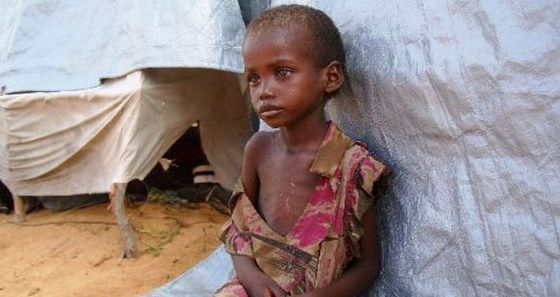




 The emerging picture suggests 36-year-old Kevin William Harpham is a “lone wolf’’ with a military ordnance background and apparently increasingly extreme radical-right views that may have prompted the attempt to carry out a mass murder on the late civil rights leader’s birthday. He is also a man who has joined a neo-Nazi group, apparently posted to racial extremist websites and worried that the 9/11 attacks were actually a government conspiracy.