Category Archives: Analysis

What are Moqtada al-Sadr’s ambitions in Iraq?

After thousands of protesters, most of whom are loyal to Shia cleric Moqtada al-Sadr, once again stormed the Green Zone in Baghdad, Michael Weiss reports: Thirteen years of lawlessness, sectarian bloodletting and terrorism following a deeply unpopular military occupation have conspired with successive waves of Iraqi leaders who are increasingly seen as little more than factotums of interfering outside powers, namely the United States or Iran. U.S. policy has been single-mindedly wedded to backing individual actors, be it al-Abadi or the man he replaced, Nouri al-Maliki. The second, who was greeted at the White House by President Obama as a partner in making Iraq “sovereign, secure, and self-reliant,” governed with authoritarian excess, manipulated an election in 2010, and then proceeded to alienate Sunnis by means of legal persecution on trumped-up “terrorism” charges or acts of state violence. The first, while a seeming improvement on his predecessor, is simply too weak and ineffectual to deliver on his promised reforms. That al-Abadi’s office has now been raided twice by an angry mob has underscored that stark reality more persuasively than any State Department talking point.

But is al-Sadr looking to make Iraq great again, or is he just a cynical machiavellian looking to exploit failed statehood for his own outsize political ambitions? “I don’t think he gives a damn about reforms,” a U.S. military official told The Daily Beast. “Sadrists are as corrupt as hell, too. The popular anger is for reform across the country and beyond this movement. The Sadrists will follow what Moqtada says. If he says: ‘We need a dictator who’s very corrupt. They will say, ‘Allahu Akhbar, we need a dictator who is corrupt.’”

Khedery, however, welcomes the protests as a natural corrective on top-down political sclerosis. “I’m very pleased by these events because I believe Iraq needs regime change to end the systemic sectarianism and the endemic corruption that’s baked into the DNA of the post-2003 order. Not the foolish, ill-informed, hubristic foreign-backed regime change of 2003, but regime change from within, which will, one way or another, install leaders of the country that represent the Iraqi people. If they fail in meeting expectations, they’ll likely face the same untimely demise as their predecessors. Revolution is a time-honored tradition in Baghdad.” Most of today’s Iraqi elites, Khedery added, lack the qualifications to “run anything much bigger than a household.” They’re also inveterate crooks presiding over a national economy that can no longer compensate for runaway graft with unusually high global oil prices.

In this context, al-Sadr has positioned himself as one of the few true Iraqi nationalists with enough authentic grassroots support to take on a Western superpower and an interfering regional theocracy. [Continue reading…]


Facebooktwittermail

The real source of terror in Bangladesh

William B. Milam writes: On Friday, a doctor in western Bangladesh was hacked to death. Last weekend, it was a Buddhist monk, in southeastern Bangladesh. The week before, it was a Sufi Muslim leader, up north. Less than two weeks earlier, it was an L.G.B.T. activist. Just days before that, an English professor.

Some of these attacks have not yet been claimed, but they follow a gruesome pattern: There have been at least 25 violent, sometimes public, killings of religious minorities, secularists and free-speech advocates in Bangladesh since February 2015. A dozen more people have been assaulted in similar ways and survived.

Of these attacks, more than 20 have been claimed by the Islamic State, about half a dozen by Al Qaeda in the Indian Subcontinent and one each by the indigenous Bangladeshi extremist groups Jamaat-ul-Mujahideen Bangladesh and Ansar al-Islam.

The surge is worrying Western governments, which fear that local Islamist terrorists may now be competing for the attention of international jihadist networks or cooperating with them. Several Western countries have responded with antiterrorism measures: Japan is providing aviation security; the United States has called for strengthening cooperation with the Bangladeshi authorities to counter terrorism and violent extremism.

This is a predictable reaction, but it is misguided, and dangerous, because it proceeds from the wrong diagnosis.

The recent string of vicious killings in Bangladesh is less a terrorism issue than a governance issue: It is the ruling Awami League’s onslaught against its political opponents, which began in earnest after the last election in January 2014, that has unleashed extremists in Bangladesh. [Continue reading…]

Facebooktwittermail

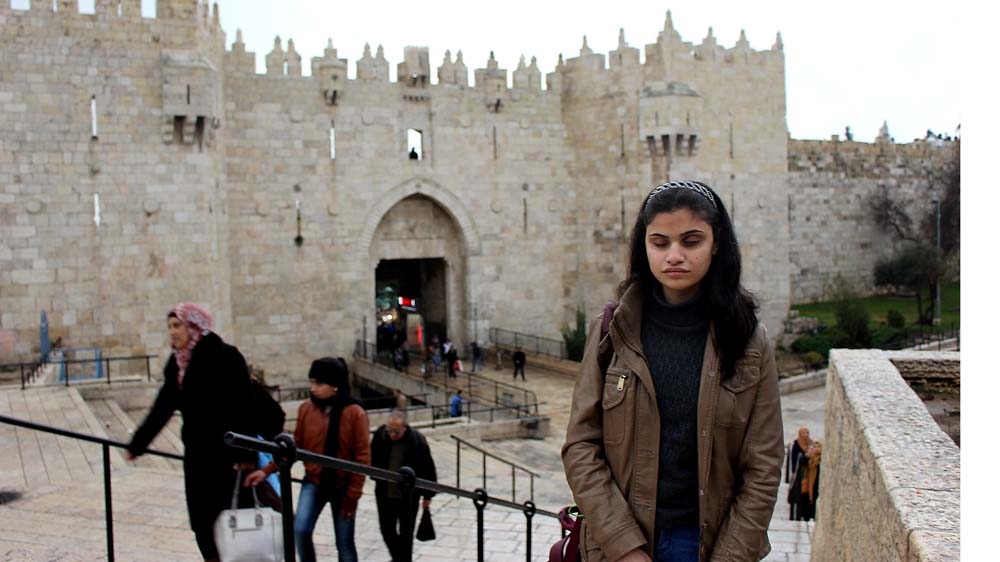
How the Syrian Revolution transformed this Palestinian activist

Budour Hassan is a law school graduate and freelance writer based in Jerusalem who contributes to Al Jazeera, Electronic Intifada, Middle East Eye, and elesewhere. She writes:

The world revolves around Palestine, or so I thought until 2011.

The Palestinian cause, I argued, was the litmus test for anyone’s commitment to freedom and justice. Palestine was the one and only compass that must guide any Arab revolution. Whether a regime is good or bad should be judged, first and foremost, based on its stance from the Palestinian cause. Every event should somehow be viewed through a Palestinian lens. The Arab people have failed us, and we inspired the entire world with our resistance.

Yes, I called myself internationalist. I claimed to stand for universal and humanist ideals. I blathered on and on about breaking borders and waging a socialist revolution.

But then came Syria, and my hypocrisy and the fragility of those ideals became exposed.

When I first heard the Syrian people in Daraa demand a regime reform on 18 March 2011, all I could think about, subconsciously, was: “If the Egyptian scenario happens in Syria, it would be a disaster for Palestine.”

I did not think about those who were killed by the regime on that day. I did not think of those arrested or tortured.

I did not think about the inevitable crackdown by the regime.

I did not greet the incredibly courageous protests in Daraa with the same elation and zeal I felt during the Tunisian, Egyptian, Bahraini, Yemeni, and Libyan uprisings.

All I could muster was a sigh of suspicion and fear.

“Assad is a tyrant and his regime is rotten,” I thought to myself, “but the subsequent results of its fall might be catastrophic for Palestine and the resistance.” That sacred axis of resistance meant to me back then much more than the Syrian lives being cut short by its defenders.

I was one of those whose hearts would pound when Hassan Nasrallah appeared on TV. I bookmarked loads of YouTube videos of his speeches and teared up while listening to songs glorifying the resistance and its victories.

And while I supported the demands of the Syrian protesters in principle, I did so with reluctance and it was a conditional support. It was not even solidarity because it was so selfish and always centered around Palestine.

I retweeted a blog post by an Egyptian activist calling on Syrians to carry Palestinian flags, in order to “debunk” regime propaganda. The Syrian people took to the streets defending the same universal ideals that I claimed to stand for, yet I was incapable of viewing their struggle outside my narrow Palestinian prism. I claimed to be internationalist while prioritizing Palestinian concerns over Syrian victims. I shamelessly took part in the Suffering Olympics and was annoyed that Syrian pain occupied more newspaper pages than Palestinian pain. I was too gullible to notice that the ordeals of both Syrians and Palestinians are just footnotes and that the breaking news would become too routine, too dull and unworthy of consumption in the space of few months.

I claimed to reject all forms of oppression while simultaneously waiting for the head of a sectarian militia to say something about Syria and to talk passionately about Palestine.

The Syrian revolution put me on trial for betraying my principles. But instead of condemning me, it taught me the lesson of my life: it was a lesson given with grace and dignity.

It was delivered with love, by the women and men dancing and singing in the streets, challenging the iron fist with creativity, refusing to give up while being chased by security forces, turning funeral processions into exuberant marches for freedom, rethinking ways to subvert regime censorship; introducing mass politics amidst unspeakable terror; and chanting for unity despite sectarian incitement; and chanting the name of Palestine in numerous protests and carrying the Palestinian flag without needing a superstar Egyptian blogger to ask them to do so.

It was a gradual learning process in which I had to grapple with my own prejudices of how a revolution should “look like,” and how we should react to a movement against a purportedly pro-Palestinian regime. I desperately tried to overlook the ugly face beneath the mask of resistance worn by Hezbollah, but the revolution tore that mask apart. And that was not the only mask torn apart, many more followed. And now the real faces of self-styled freedom fighters and salon leftists were exposed; the long-crushed Syrian voices emerged. [Continue reading…]

Facebooktwittermail

The Arab revolution of 2011 is being destroyed by a counter-revolution led by dictators and jihadists

The Irish Times reports: In late 1400 and early 1401, the Mongol conqueror Tamerlane left “pyramids of skulls, like those constructed by Islamic State today” across Syria, recalls the French Middle East expert Jean-Pierre Filiu.

Tamerlane had already destroyed Aleppo. The great Arab historian and statesman Ibn Khaldun talked to him for 35 days, in the hope of saving Damascus. “The whole time, Tamerlane knows he’s going to massacre everyone in the city,” Filiu continues. “He uses the negotiation to divide and rule, to massacre more people, faster.”

Filiu wants Staffan de Mistura, the UN special envoy for Syria, to read Ibn Khaldun, for it’s impossible not to see a parallel with the behaviour of the Syrian dictator Bashar al-Assad.

Filiu is an Arabist, historian and former diplomat who served as an adviser to a French prime minister, defence minister and interior minister. His “added value”, he says, is history. He will address members of the Institute of International and European Affairs in Dublin on The Jihadi Challenge to Europe next Monday, May 23rd, and debate The Spectre of Global Jihad with the author Shiraz Maher that evening at the International Literature Festival Dublin.

In his most recent book, From Deep State to Islamic State; The Arab Counter-Revolution and Its Jihadi Legacy, (published by Hurst in London) Filiu concludes that the Arab revolution of 2011 – a term he prefers to “Arab spring” – is being destroyed by a counter-revolution led by the remnants of dictatorships in collusion with jihadists.

Over the past century, Filiu writes, the Arabs’ right to self-determination was “denied by colonial intervention, ‘hi- jacked’ at independence by military regimes, trampled on by the double standards of the war for Kuwait and the ‘global war on terror,’ and perverted in the UN, where peoples are represented by the regimes who oppress them”.

No other people have faced “so many obstacles, enemies and horrors in the quest for basic rights”, Filiu says. [Continue reading…]

In January, Filiu spoke about the price being paid because of President Obama’s failure to uphold ethical principles.

Facebooktwittermail

Clinton vs Sanders: Peace is still possible

John Cassidy writes: In many hard-fought political races, there comes a time when tempers fray and emotion takes over. Right now, the Democratic Presidential primary appears to have reached such a point, with people on both sides going at each other with gusto, and some of the media getting swept up, too.

The front page of Thursday’s Times featured this headline: “Sanders Willing to Harm Hillary in Home Stretch.” Did Sanders really say that? No, he didn’t. The only quote in the Times story from anyone in the Sanders campaign came from his senior adviser, Tad Devine, who said that he didn’t think his boss’s criticisms of Clinton on the stump would hurt her in a general-election campaign against Donald Trump. The senator’s team, Devine said, was “not thinking about” the possibility that they might prevent Clinton from becoming the first woman to be elected President. Then came a long statement by Devine to the Times:

The only thing that matters is what happens between now and June 14th … We have to put the blinders on and focus on the best case to make in the upcoming states. If we do that, we can be in a strong position to make the best closing argument before the convention. If not, everyone will know in mid-June, and we’ll have to take a hard look at the way things stand.

One way to interpret this story comes from the headline, which implies that Sanders is callously ignoring the danger that he will damage Clinton’s chances in the fall and hand the Oval Office keys to Trump. Paul Krugman tweeted a photo showing a Web version of the headline, “Sanders Willing to Harm Clinton in Homestretch.” To that, he added, “Of course he is. Fwiw, I don’t think Sanders has gone off the rails; I think this is who he always was.” Linking to the Times story on her Facebook feed, the writer and editor Anna Holmes wrote, “Seriously. Fuck this guy.”

Another possible interpretation is that the headline was inflammatory, and the story contained little that was new. After all, Sanders has been saying for weeks that he intends to campaign aggressively until the end of the primaries, in mid-June, and that he is hoping to defeat Clinton in California, on June 7th. To this end, he has continued to depict his opponent as the candidate of élites and big money, as he has been doing for many months.

Devine’s focus on the here and now was what you would expect from a campaign operative. If you read his statement carefully, it actually contradicts the notion that Sanders’s campaign is conducting a battle to the death, oblivious to the implications for the general election. [Continue reading…]

Facebooktwittermail

Corruption in Iraq: Where did all the money go?

Luay al-Khatteeb writes: Once again, the subject of illicit financial flows from kleptocratic regimes is in the international spotlight, this time in the form of the “Panama Papers.”

What is surprising is the level of shock at something that should have been obvious. For a long time, many financial institutions turned a blind eye to nefarious PEPs (politically exposed persons) and not just in Switzerland, as we see now with big names such as HSBC, once again deflecting allegations.

The industrialized world can’t afford any more surprises like this, otherwise aid and loans will continue to enter weak states, only to be rapidly snuck out.

Encouragingly, there are signs that governments and regulators are being energized by the Panama Papers. The U.S. Treasury will soon announce a requirement that banks disclose the owners of shell companies, and in the UK regulators set a deadline for banks to disclose details of clients’ relations with Mossack Fonseca, the company at the centre of the current storm.

Iraq, with lamentably high corruption, can be a litmus test for revived effort. Iraq also desperately needs to recover stolen assets, because it is running out of money for both fighting ISIS and rebuilding Iraq, in order to prevent ISIS 2.0.

Luckily, the United States is leading the way with the formation of the Kleptocracy Asset Recovery Initiative (KARI), but far more global coordination is needed. In Iraq, financial assistance should be put into ministries to train people in spotting and preventing corruption.

There are certainly good young people who want change in the Iraqi government, the challenge is creating a culture where they can speak out. That will take a renewed and internationally coordinated capacity building effort. As an example, the Higher Council of Education Development, an Iraqi organization that has sent four thousand students overseas to help ministerial capacity, had a budget of just over $100 million last year. The international community must urgently help Iraq to resource such work, because so far war expenditures dwarf other efforts. [Continue reading…]

Facebooktwittermail

U.S. warns ISIS capital: Get out now

The Daily Beast reports: The American military is warning residents of ISIS’s Syrian capital to leave the city—suggesting that an offensive on Raqqa was imminent, two Pentagon officials told the Daily Beast.

In the past day, residents of Raqqa have posted photos of the warnings on Twitter, saying they were airdropped on leaflets by the U.S.-led coalition. The defense officials were the first to confirm that the coalition had indeed issued the warnings.

“The time….has arrived. It’s time to leave Raqqa,” one of the ominous leaflets read. Images portray residents fleeing the black and white world of ISIS for the color of freedom, urging citizens to flee toward colors.


There is just one problem: There is no imminent ground or air attack, at least by the U.S.-led coalition. Rather the coalition appears to be the midst of a psychological offensive.

“It’s part of our mess-with-them campaign,” a Pentagon official explained to The Daily Beast.

The leaflets come amid what appears to be something of a panic within ISIS about how long it can maintain its grip on Raqqa. In recent weeks, there were reports that ISIS had declared a state of emergency in Raqqa. And earlier this week, the terror group’s leadership reportedly would not let fighters leave for holiday as ISIS dug trenches around Raqqa, moved headquarters underground, and put coverings over homes in an effort to deflect drone attacks. [Continue reading…]

Facebooktwittermail

Greece: Refugee ‘hotspots’ unsafe, unsanitary

Human Rights Watch: Police are failing to protect people during frequent incidents of violence in closed centers on the Greek islands known as “hotspots,” Human Rights Watch said today. The centers were established for the reception, identification, and processing of asylum seekers and migrants. None of the three centers Human Rights Watch visited on Samos, Lesbos, and Chios in mid-May 2016, separate single women from unrelated adult men, and all three are unsanitary and severely overcrowded.

“In Europe’s version of refugee camps, women and children who fled war face daily violence and live in fear,” said Bill Frelick, refugee rights director at Human Rights Watch. “Lack of police protection, overcrowding, and unsanitary conditions create an atmosphere of chaos and insecurity in Greece’s razor wire-fenced island camps.”

On visits from May 9 to May 15, Human Rights Watch found all three facilities to be severely overcrowded, with significant shortages of basic shelter and filthy, unhygienic conditions. Long lines for poor quality food, mismanagement, and lack of information contribute to the chaotic and volatile atmosphere in the three hotspots, Human Rights Watch said. [Continue reading…]

Facebooktwittermail

Lieberman’s appointment as defense minister makes Israel’s government ‘the most right-wing ever’

John Lloyd writes: Israel is about to have “its most right-wing government, ever.”

Avigdor Lieberman, head of the far-right party Yisrael Beitenu (Israel is Our Home) has accepted Benjamin Netanyahu’s offer of the defense ministry. The Israeli prime minister’s offer returns to the cabinet a man who is a past foreign minister and whose vision for the future strains the right-wing limits of Israel’s wildly divided political spectrum.

Israeli politicians are mostly horrified by the appointment. Benny Begin, son of former Prime Minister Menachem Begin and a longstanding member of Netanyahu’s own Likud Party, said that Netanyahu had acted irresponsibly and “dangerously.” Isaac Herzog, leader of the Zionist Union (a joint party composed of Herzog’s Labor Party and former Foreign Minister Tzipi Livni’s Hatnuah) and who had actively sought his own place in the cabinet, said the policies now pursued would “verge on insanity.”[Continue reading…]

The Washington Post reports: In a press conference Friday, [Moshe] Yaalon [who resigned as defense minister today], a fellow member of Netanyahu’s Likud party, warned that Israel was drifting dangerously toward extremism.

“I fought with all my might against manifestations of extremism, violence and racism in Israeli society, which are threatening its sturdiness and trickling into the armed forces, hurting it already,” he said.

Yaalon appeared to be referring to widespread support by Israeli leaders for a combat medic who shot to death a wounded Palestinian attacker as he lay on a street in Hebron in the occupied West Bank.

Thousands of Israelis rallied in Tel Aviv and proclaimed the soldier a hero. Israeli human rights activists called it a cold-blooded execution. The killing was captured on video. [Continue reading…]

Reuters reports: A former chief of Israel’s armed forces, Yaalon had shored up relations with the Pentagon that provided a counter-weight to Netanyahu’s policy feuds with U.S. President Barack Obama over peace talks with the Palestinians and Iran’s nuclear program.

By contrast, Lieberman – whose appointment has not yet been confirmed – is inexperienced militarily and famed for his past hawkish talk against Palestinians, Israel’s Arab minority and Egypt – an important regional security partner for Israel.

An Egyptian official told Reuters on Thursday that Cairo was “shocked” at the prospect of Lieberman as Israeli defense minister.

Washington struck a more optimistic note on Friday. While praising Yaalon, U.S. State Department spokesman John Kirby said Washington looked forward to working with his successor.

“Our bonds of friendship are unbreakable and our commitment to the security of Israel remains absolute,” he added. [Continue reading…]

Facebooktwittermail

Humans damaging the environment faster than it can recover, UN finds

The Guardian reports: Degradation of the world’s natural resources by humans is rapidly outpacing the planet’s ability to absorb the damage, meaning the rate of deterioration is increasing globally, the most comprehensive environmental study ever undertaken by the UN has found.

The study, which involved 1,203 scientists, hundreds of scientific institutions and more than 160 governments brought together by the UN Environment Programme (UNEP), concludes that without radical action the level of prosperity that millions of people in the developed world count on will be impossible to maintain or extend to poorer countries.

Water scarcity is the scourge of some of the poorest regions on Earth, the study found, leaving developing countries increasingly unable to feed themselves, and causing hardship for millions of people. There appears little prospect of this dire situation being remedied, according to the UN, without radical action being taken. [Continue reading…]

Facebooktwittermail

Chinese officials ‘create 488 million bogus social media posts a year’

The Guardian reports: The Chinese government is fabricating almost 490m social media posts a year in order to distract the public from criticising or questioning its rule, according to a study.

China’s “Fifty Cent Party” – a legion of freelance online trolls so-named because they are believed to be paid 50 cents a post – has long been blamed for flooding the Chinese internet with pro-regime messages designed to defend and promote the ruling Communist party.

However, the study by Harvard University researchers (pdf) claims many of those comments are not posted by ordinary citizens, as previously thought, but by civil servants who double as online stooges.

An analysis of nearly 43,800 posts found that 99.3% were the work of government employees working for more than 200 agencies, including tax and social security and human resources bureaux. [Continue reading…]

Facebooktwittermail

The range of the mind’s eye is restricted by the skill of the hand

structure12

Jonathan Waldman writes: Sometime in 1882, a skinny, dark-haired, 11-year-old boy named Harry Brearley entered a steelworks for the first time. A shy kid — he was scared of the dark, and a picky eater — he was also curious, and the industrial revolution in Sheffield, England, offered much in the way of amusements. He enjoyed wandering around town — he later called himself a Sheffield Street Arab — watching road builders, bricklayers, painters, coal deliverers, butchers, and grinders. He was drawn especially to workshops; if he couldn’t see in a shop window, he would knock on the door and offer to run an errand for the privilege of watching whatever work was going on inside. Factories were even more appealing, and he had learned to gain access by delivering, or pretending to deliver, lunch or dinner to an employee. Once inside, he must have reveled, for not until the day’s end did he emerge, all grimy and gray but for his blue eyes. Inside the steelworks, the action compelled him so much that he spent hours sitting inconspicuously on great piles of coal, breathing through his mouth, watching brawny men shoveling fuel into furnaces, hammering white-hot ingots of iron.

There was one operation in particular that young Harry liked: a toughness test performed by the blacksmith. After melting and pouring a molten mixture from a crucible, the blacksmith would cast a bar or two of that alloy, and after it cooled, he would cut notches in the ends of those bars. Then he’d put the bars in a vise, and hammer away at them.

The effort required to break the metal bars, as interpreted through the blacksmith’s muscles, could vary by an order of magnitude, but the result of the test was expressed qualitatively. The metal was pronounced on the spot either rotten or darned good stuff. The latter was simply called D.G.S. The aim of the men at that steelworks, and every other, was to produce D.G.S., and Harry took that to heart.

In this way, young Harry became familiar with steelmaking long before he formally taught himself as much as there was to know about the practice. It was the beginning of a life devoted to steel, without the distractions of hobbies, vacations, or church. It was the origin of a career in which Brearley wrote eight books on metals, five of which contain the word steel in the title; in which he could argue about steelmaking — but not politics — all night; and in which the love and devotion he bestowed upon inanimate metals exceeded that which he bestowed upon his parents or wife or son. Steel was Harry’s true love. It would lead, eventually, to the discovery of stainless steel.

Harry Brearley was born on Feb. 18, 1871, and grew up poor, in a small, cramped house on Marcus Street, in Ramsden’s Yard, on a hill in Sheffield. The city was the world capital of steelmaking; by 1850 Sheffield steelmakers produced half of all the steel in Europe, and 90 percent of the steel in England. By 1860, no fewer than 178 edge tool and saw makers were registered in Sheffield. In the first half of the 19th century, as Sheffield rose to prominence, the population of the city grew fivefold, and its filth grew proportionally. A saying at the time, that “where there’s muck there’s money,” legitimized the grime, reek, and dust of industrial Sheffield, but Harry recognized later that it was a misfortune to be from there, for nobody had much ambition. [Continue reading…]

Facebooktwittermail

Austria’s election is a warning to the West

Sylvie Kauffmann writes: On Monday, the Western world may well wake up to the news that, for the first time since the defeat of Nazism, a European country has democratically elected a far-right head of state. Norbert Hofer, of the Austrian Freedom Party, claimed 35 percent of the vote in the first round of the presidential election on April 24. Now he is heading into the second round on Sunday with the two mainstream parties having been eliminated from the runoff and the Social Democratic chancellor, Werner Faymann, having resigned.

One month later, Europeans may wake up to the news that British voters have decided, in their June 23 referendum, that their country should become the first member state to leave the European Union. Many observers fear that would be fatal to the European project itself.

And on April 24, 2017, exactly a year after Mr. Hofer’s first-round victory, the French may well wake up to the news that Marine Le Pen, leader of the far-right National Front, has come out on top in the first round of France’s presidential election. That is what polls say we could expect if the election were held today.

In the meantime, it is not impossible that Donald J. Trump, however low his odds seem now, will have moved into the White House.

These are not Orwellian scenarios. Signs of defiance toward the old democratic order are so numerous that the news of Mr. Hofer’s first-round victory hardly reached the front pages of European newspapers. Remember when the election of President Kurt Waldheim in the 1980s, or the antics by the Freedom Party leader Jörg Haider in the 1990s were considered deeply disturbing? That was last century. Today, Austria’s weird politics are no longer isolated. They are part of a solid trend across Europe.

And not just Europe. The trend reaches across the Atlantic, too, with Trumpism threatening to split or take over the Republican Party. [Continue reading…]

Facebooktwittermail

Chinese, Germans and Britons most welcoming to refugees, says report

The Guardian reports: The people of China, Germany and the UK are the most welcoming to refugees in the world, according to an Amnesty International survey on attitudes towards those fleeing war and persecution.

In a global survey of 27,000 people across 27 countries, nearly 70% said their governments should being doing more to help refugees, while 80% said they would accept refugees living in their country, city, or neighbourhood.

One in 10 would welcome a refugee to live in their own home, with the figure rising to 46% in China and 29% in the UK.

China and the UK were first and third respectively on Amnesty’s Refugees Welcome Index, with Germany in second place. [Continue reading…]

Facebooktwittermail

What’s left of the Syrian Arab Army? Not much

Tom Cooper writes: The general impression is that the Syrian Arab Army remains the largest military force involved in the Syrian Civil War, and that  —  together with the so-called National Defense Forces — — it remains the dominant military service under the control of government of Pres. Bashar Al Assad.

Media that are at least sympathetic to the Al-Assad regime remain insistent in presenting the image of the “SAA fighting on all front lines”  — only sometimes supported by the NDF and, less often, by “allies.”

The devil is in the details, as some say. Indeed, a closer examination of facts on the ground reveals an entirely different picture. The SAA and NDF are nearly extinct.

Because of draft-avoidance and defections — — and because Al Assad’s regime was skeptical of the loyalty of the majority of its military units  —  the SAA never managed to fully mobilize.

Not one of around 20 divisions it used to have has ever managed to deploy more than one-third of its nominal strength on the battlefield. The resulting 20 brigade-size task forces  — each between 2,000- and 4,000-strong  —  were then further hit by several waves of mass defections, but also extensive losses caused by the incompetence of their commanders.

Unsurprisingly, the regime was already critically short of troops by summer of 2012, when advisers from the Qods Force of Iran’s Islamic Revolutionary Guards Corps concluded that units organized along religious and political lines had proven more effective in combat than the rest of the Syrian military had.

Thus the regime’s creation, in cooperation with Iran, of the National Defense Forces. Officially, the NDF is a pro-government militia acting as a part-time volunteer reserve component of the military. Envisioned by its Iranian creators as an equivalent to the IRGC’s Basiji Corps, the NDF became an instrument of formalizing the status of hundreds of “popular committees” created by the Syrian Ba’ath Party in the 1980s.

According to Iranian claims, the NDF’s stand-up resulted in the addition of a 100,000-strong auxiliary to Syria’s force-structure. Moreover, the NDF functioned as a catalyst for the reorganization of the entire Syrian military into a hodgepodge of sectarian militias. [Continue reading…]

Facebooktwittermail

Most mass shooters aren’t mentally ill. So why push better treatment as the answer?

The Washington Post reports: When it comes to mass shootings, President Obama and House Speaker Paul D. Ryan are in rare accord on a leading culprit.

Both point fingers at mental illness. And in poll after poll, most Americans agree.

But criminologists and forensic psychiatrists say there is a critical flaw in that view: It doesn’t reflect reality.

While acknowledging that some of the country’s worst mass shooters were psychotic — the Colorado theater gunman, James Holmes, with his orange-dyed hair; the Virginia Tech shooter, Seung Hui Cho, whom a judge ordered to get treatment — experts say the vast majority of such killers did not have any classic form of serious mental illness, such as schizophrenia or psychosis.

Instead, they were more often ruthless sociopaths whose ­behavior, while unfathomable, can’t typically be treated as mental illness.

The oversimplification, experts say, is perpetuated by the gun industry and a society that assumes that the mentally ill are the only ones capable of deadly rampages. Now, with the White House and Congress prioritizing an overhaul of the ­mental-health system to try to curtail mass shootings and gun violence, critics say the country is chasing an expensive and potentially counterproductive cure on the basis of the wrong diagnosis.

“It would be ridiculous to hope that doing something about the mental-health system will stop these mass murders,” said Michael Stone, a forensic psychiatrist at the Columbia College of Physicians and Surgeons and author of “The Anatomy of Evil,” which examines the personalities of brutal killers. “It’s really folly.” [Continue reading…]

Facebooktwittermail

How PTSD became a problem far beyond the battlefield

Sebastian Junger writes: The first time I experienced what I now understand to be post-traumatic stress disorder, I was in a subway station in New York City, where I live. It was almost a year before the attacks of 9/11, and I’d just come back from two months in Afghanistan with Ahmad Shah Massoud, the leader of the Northern Alliance. I was on assignment to write a profile of Massoud, who fought a desperate resistance against the Taliban until they assassinated him two days before 9/11. At one point during my trip we were on a frontline position that his forces had just taken over from the Taliban, and the inevitable counterattack started with an hour-long rocket barrage. All we could do was curl up in the trenches and hope. I felt deranged for days afterward, as if I’d lived through the end of the world.

By the time I got home, though, I wasn’t thinking about that or any of the other horrific things we’d seen; I mentally buried all of it until one day, a few months later, when I went into the subway at rush hour to catch the C train downtown. Suddenly I found myself backed up against a metal support column, absolutely convinced I was going to die. There were too many people on the platform, the trains were coming into the station too fast, the lights were too bright, the world was too loud. I couldn’t quite explain what was wrong, but I was far more scared than I’d ever been in Afghanistan.

I stood there with my back to the column until I couldn’t take it anymore, and then I sprinted for the exit and walked home. I had no idea that what I’d just experienced had anything to do with combat; I just thought I was going crazy. For the next several months I kept having panic attacks whenever I was in a small place with too many people—airplanes, ski gondolas, crowded bars. Gradually the incidents stopped, and I didn’t think about them again until I found myself talking to a woman at a picnic who worked as a psychotherapist. She asked whether I’d been affected by my war experiences, and I said no, I didn’t think so. But for some reason I described my puzzling panic attack in the subway. “That’s called post-traumatic stress disorder,” she said. “You’ll be hearing a lot more about that in the next few years.” [Continue reading…]

Facebooktwittermail

The ex-anarchist construction worker who became a world-renowned scientist

lichen7

Daniel Gumbiner writes: “See these lichens here? I don’t know how you see them but, to me, I see them as a surrealist.”

I am sitting in the UC Riverside herbarium, speaking to Kerry Knudsen, Southern California’s only professional lichenologist. We are looking at his collection of lichens, which consists of over 16,000 individual specimens, all of them neatly organized in large green file cabinets. Knudsen has published over 200 peer-reviewed scientific papers on lichens, and discovered more than 60 species that are new to science. It is an extraordinary output, for any scientist, but Knudsen has achieved it in only fifteen years. Science is his second career. For more than two decades he worked in construction. Before that, he was a teenage runaway living in an anarchist commune in Chicago.

“He’s amazing,” said Shirley Tucker, a retired professor of botany at LSU. “He came out of nowhere and became an expert in the most difficult genera.”

A lichen is a fungus in a symbiotic relationship with an algae or a cyanobacteria. The fungus essentially farms the algae or cyanobacteria, who are able to harvest energy from the sun through photosynthesis. In return, the fungus provides the algae or cyanobacteria with protection, but the relationship is a little one-sided.

“The algae is trapped,” Knudsen explained. “It has a lot of tubes going into it. It’s controlled by chemical signals … The first time I saw it under the microscope, I wanted to join the Algae Liberation Front. I mean, it looked bad.”

Scientists believe that lichen evolved over 500 million years ago, about the same time as fish. Although lichen make up 8 percent of the world’s biomass, they are rarely considered by the amateur naturalist, and therefore have very few common names. [Continue reading…]

Facebooktwittermail