Category Archives: Analysis

How LSD helped us probe what the ‘sense of self’ looks like in the brain

By Nicolas Crossley, King’s College London and Ed Bullmore, University of Cambridge

Every single person is different. We all have different backgrounds, views, values and interests. And yet there is one universal feeling that we all experience at every single moment. Call it an “ego”, a “self” or just an “I” – it’s the idea that our thoughts and feelings are our own, and no one else has access to them in the same way. This may sound a bit like post-war French existentialism or psycho-analysis, but it’s actually a topic that’s being increasingly addressed by neuroscientists.

We were part of a team interested in finding out how this sense of self is expressed in the brain – and what happens when it dissolves. To do that, we used brain imaging and the psychedelic drug LSD.

Our sense of self is something so natural that we are not always fully aware of it. In fact, it is when it is disturbed that it becomes the most noticeable. This could be due to mental illnesses such as psychosis, when people might experience the delusional belief that their thoughts are no longer private, but can be accessed and even modified by other people. Or it could be due to the influence of psychedelic drugs such as LSD, when the user can feel that their ego is “dissolving” and they are becoming at one with the world. From a scientific point of view, these experiences of “ego death” or ego dissolution are also opportunities to search for this sense of self in the brain.

Our study, led by Enzo Tagliazucchi and published in Current Biology, set out to probe what is happening in the brain when our sense of self becomes altered by psychedelic drugs (link to Enzo’s paper). We studied 15 healthy volunteers before and after taking LSD, which altered their normal feelings of their selves and their relationship with the environment. These subjects were scanned while intoxicated and while receiving placebo using functional MRI, a technique which allows us to study the brain’s activity by measuring changes in blood flow. By contrasting the activity of the brain when receiving a placebo with its activity after taking LSD, we could start exploring the brain mechanisms involved in the normal experience of the self.


Continue reading

Facebooktwittermail

Why luck matters more than you might think

pattern3

Robert H Frank writes: I’m a lucky man. Perhaps the most extreme example of my considerable good fortune occurred one chilly Ithaca morning in November 2007, while I was playing tennis with my longtime friend and collaborator, the Cornell psychologist Tom Gilovich. He later told me that early in the second set, I complained of feeling nauseated. The next thing he knew, I was lying motionless on the court.

He yelled for someone to call 911, and then started pounding on my chest—something he’d seen many times in movies but had never been trained to do. He got a cough out of me, but seconds later I was again motionless with no pulse. Very shortly, an ambulance showed up.

Ithaca’s ambulances are dispatched from the other side of town, more than five miles away. How did this one arrive so quickly? By happenstance, just before I collapsed, ambulances had been dispatched to two separate auto accidents close to the tennis center. Since one of them involved no serious injuries, an ambulance was able to peel off and travel just a few hundred yards to me. EMTs put electric paddles on my chest and rushed me to our local hospital. There, I was loaded onto a helicopter and flown to a larger hospital in Pennsylvania, where I was placed on ice overnight.

Doctors later told me that I’d suffered an episode of sudden cardiac arrest. Almost 90 percent of people who experience such episodes don’t survive, and the few who do are typically left with significant impairments. And for three days after the event, my family tells me, I spoke gibberish. But on day four, I was discharged from the hospital with a clear head. Two weeks later, I was playing tennis with Tom again.

If that ambulance hadn’t happened to have been nearby, I would be dead.

Not all random events lead to favorable outcomes, of course. Mike Edwards is no longer alive because chance frowned on him. Edwards, formerly a cellist in the British pop band the Electric Light Orchestra, was driving on a rural road in England in 2010 when a 1,300-pound bale of hay rolled down a steep hillside and landed on his van, crushing him. By all accounts, he was a decent, peaceful man. That a bale of hay snuffed out his life was bad luck, pure and simple.

Most people will concede that I’m fortunate to have survived and that Edwards was unfortunate to have perished. But in other arenas, randomness can play out in subtler ways, causing us to resist explanations that involve luck. In particular, many of us seem uncomfortable with the possibility that personal success might depend to any significant extent on chance. As E. B. White once wrote, “Luck is not something you can mention in the presence of self-made men.” [Continue reading…]

Facebooktwittermail

The brutality of ISIS has many precedents

John Gray writes: The rise of ISIS is intensely unsettling to the liberal West, and not just because of the capacity the jihadist group has demonstrated to launch a mass-casualty terrorist attack in a major European city. The group’s advance confounds the predominant Western view of the world. For the current generation of liberal thinkers, modern history is a story of the march of civilization. There have been moments of regression, some of them atrocious, but these are only relapses into the barbarism of the past, interrupting a course of development that is essentially benign. For anyone who thinks in this way, ISIS can only be a mysterious and disastrous anomaly.

For those baffled by ISIS, however, it cannot be only ISIS that is mysterious. So too must be much of modern history. ISIS has brought with it many atrocious assaults on civilized values: the sexual enslavement of women and children; the murder of gay men; the targeted killing of writers, cartoonists, and Jews; indiscriminate slaughter at a rock concert; and what amounted to the attempted genocide of the Yezidi. All of these acts of barbarism have modern precedents, many of them in the past century. The use of sexual violence as a military strategy featured in ethnic cleansing in Bosnia in the 1990s; during Bangladesh’s war of independence in 1971; in Nepal, Colombia, Sudan, the Democratic Republic of Congo, and many other conflict zones. The destruction of buildings and artworks, which ISIS has perpetrated at the ancient site of Palmyra among other places, has several twentieth-century precedents. Vladimir Lenin’s Bolsheviks razed churches and synagogues in Russia. Mao Zedong demolished large parts of China’s architectural inheritance and most of Tibet’s, while the Pol Pot regime wrecked pagodas and temples and aimed to destroy the country’s cities. In these secular acts of iconoclasm, the goal was to abolish the past and create a new society from “year zero” — an idea that goes back to “year one” of the calendar introduced in France in 1793 to signal the new era inaugurated by the French Revolution. Systematically destroying not only pre-Islamic relics but also long-established Islamic sites, the aim of ISIS is not essentially different. [Continue reading…]

Facebooktwittermail

Report: ‘Iraq may soon reach a point beyond repair’

Al Jazeera reports: Without a coherent strategy to address the urgent needs of displaced Iraqis, the opportunity to rebuild parts of the country liberated from ISIL may be lost, a new report has warned.

The report from the Minority Rights Group International and the Ceasefire Centre for Civilian Rights, released on Wednesday, highlights the dire situation facing millions of Iraqis amid the country’s ongoing war against the Islamic State of Iraq and the Levant (ISIL, also known as ISIS) group.

“In the context of limited governance and continued insecurity, the opportunity afforded by the retaking of territory from ISIS is being lost,” the report states. “If communities are unable to co-exist, Iraq may soon reach a point beyond repair.” [Continue reading…]

Facebooktwittermail

‘Grand Theft Auto’ robs players of compassion

Tom Jacobs writes: The link between violent video games and aggressive behavior is old, if still troubling, news. But violence is not the only problematic aspect of these enormously popular entertainments: Many are also blatantly, unapologetically sexist.

Take the best-selling Grand Theft Auto series. In London’s Daily Telegraph, a reviewer called the fifth installment “relentlessly misanthropic,” adding that “the game often coerced me into actions that degraded women.”

Well, it turns out that sort of “fun” has real-life consequences. In a newly published study, a research team from Italy and the United States reports playing such games reduces some players’ compassion for women who have been victims of violence. [Continue reading…]

Facebooktwittermail

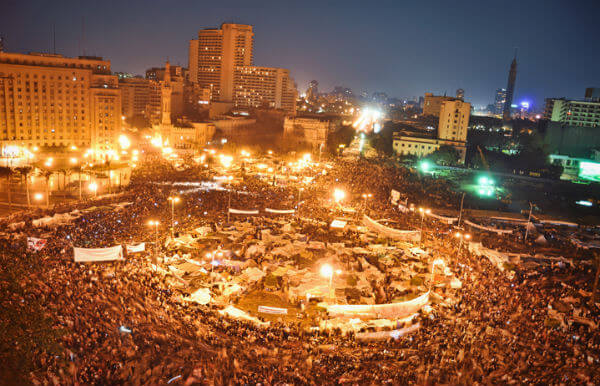
Most young Arabs reject ISIS and think ‘caliphate’ will fail, poll finds

Tahrir_Square

The Guardian reports: The vast majority of young Arabs are increasingly rejecting Islamic State and believe the extremist group will fail to establish a caliphate, a poll has found.

Only 13% of Arab youths said they could imagine themselves supporting Isis even if it did not use much violence, down from 19% last year, while 50% saw it as the biggest problem facing the Middle East, up from 37% last year, according to the 2016 Arab Youth Survey.

However, concern is mounting across the region as a chronic lack of jobs and opportunities were cited as the principal factor feeding terrorist recruitment. In eight of the 16 countries surveyed, employment problems were a bigger pull factor for Isis than extreme religious views.

The eighth annual survey provides a snapshot of the aspirations of 200 million people. It found that five years after the start of the Arab spring, most youngsters prioritise stability over democracy. Optimism that the region would be better off in the wake of the 2011 uprisings has been steadily declining.

In 2016, only 36% of young people said they felt the Arab world was in better shape following the upheaval, down from 72% in 2012. The majority (53%) agreed that maintaining stability was more important than promoting democracy (28%). In 2011, 92% of Arab youth said “living in a democracy” was their most cherished wish. [Continue reading…]

Facebooktwittermail

Muslims used to love living in Tennessee — now it’s a nightmare

BuzzFeed reports: The fire department called before dawn. Daoud Abudiab and his 13-year-old daughter were already awake, so they got in the car quickly. From about a mile away, Abudiab saw a plume of black smoke rising above the low skyline and started getting nervous. He thought back to the arguments over whether to mark the Islamic Center of Columbia, Tennessee, the only mosque in the hundred-mile stretch between Nashville and Huntsville, with a large sign or a small, unassuming one. They had opted for a large one.

Abudiab and his daughter could feel the heat of the fire when they stood at the yellow police tape. A black swastika was spray-painted on the mosque’s facade. Flames pushed out from the burst windows and up through the collapsed roof. Abudiab’s wife arrived with the rest of the kids, followed by other congregants and their families.

Abudiab looked at the women and all he saw was headscarves. “Go home,” he pleaded. “Don’t go out. Don’t go to Walmart. Don’t go anywhere.”

The ringleader of the band of white supremacists who burned down the mosque with Molotov cocktails justified the act by saying, “What goes on in that building is illegal according to the Bible.” This was February 2008. The theory of Barack Obama’s crypto-Islamism was faint chatter on the fringes. But in the years after Obama’s election, Tennessee became a key battleground in a national anti-Muslim movement whose influence has culminated, for now, in the presidential campaigns of Republican frontrunners Donald Trump and Ted Cruz, both of whom are being advised by people whose views on Islam were once considered too extreme for mainstream politics. [Continue reading…]

Facebooktwittermail

Syria peace talks — democracy left out in the cold

Saleh M. Mohamed writes: This week, United Nations talks meant to chart a path toward a peaceful, democratic future for Syria are set to resume in Geneva. But, in an absurd twist, the legitimate representatives of a large, democratically governed area in the country will not be invited to attend.

This area is called Rojava, in the northern part of Syria, and despite its frequent description as “Kurdish,” it is governed inclusively by Kurds, Arabs, and the area’s other ethnic groups. Furthermore, its self-defense forces are part of the Syrian Democratic Forces backed by the United States that have advanced toward Raqqa, the center of the Islamic State’s power in Syria.

Both in strategic and moral terms, Rojava’s existence is a rare bright spot in this conflict. So the exclusion of its representatives from the U.N. process is not only unfair, but makes no sense if the aim of the talks is to establish a viable path to democracy in Syria.

The primary reason for this injustice is that Turkey opposes Rojava’s military force, the People’s Protection Units, or Y.P.G., claiming it is one and the same with the P.K.K., a Kurdish group with a long history of armed conflict with the Turkish government.

This is not true. Both groups are Kurdish, but the Syrian Kurds, with their Arab allies and international support, are locked in a difficult, but thus far successful, battle against the Islamic State. The Y.P.G.’s fight is about Syria, not Turkey. Its role is to defend the institutions of self-government in Northern Syria (the party of which I am co-president, the Democratic Union Party, is part of this political coalition, along with other parties and civil society organizations).

It’s a fair question to ask what kind of democracy this is. Its central philosophy is that people should govern themselves from the bottom up, and so as much decision making as possible is left to local assemblies. These assemblies, furthermore, are designed to ensure a voice for non-Kurdish minorities and for women. This is real and genuinely inclusive democracy, and it deserves to be supported, not ignored. [Continue reading…]

Facebooktwittermail

As ISIS is pushed back in Iraq, worries about what’s next

Reuters reports: As U.S.-led offensives drive back Islamic State in Iraq, concern is growing among U.S. and U.N. officials that efforts to stabilize liberated areas are lagging, creating conditions that could help the militants endure as an underground network.

One major worry: not enough money is being committed to rebuild the devastated provincial capital of Ramadi and other towns, let alone Islamic State-held Mosul, the ultimate target in Iraq of the U.S.-led campaign.

Lise Grande, the No. 2 U.N. official in Iraq, told Reuters that the United Nations is urgently seeking $400 million from Washington and its allies for a new fund to bolster reconstruction in cities like Ramadi, which suffered vast damage when U.S.-backed Iraqi forces recaptured it in December.

“We worry that if we don’t move in this direction, and move quickly, the progress being made against ISIL may be undermined or lost,” Grande said, using an acronym for Islamic State.

Adding to the difficulty of stabilizing freed areas are Iraq’s unrelenting political infighting, corruption, a growing fiscal crisis and the Shiite Muslim-led government’s fitful efforts to reconcile with aggrieved minority Sunnis, the bedrock of Islamic State support. [Continue reading…]

Facebooktwittermail

How the expanding U.S. role in Iraq is kept quiet by pretending it’s not expanding

The New York Times reports: There are roughly 5,000 American service members in Iraq according to current Pentagon estimates, but the number often varies, sometimes daily, by hundreds. That number is higher than the cap the White House set last year, which limited the number of troops to be deployed to Iraq to 3,870. But under policies created by the military after the attacks of Sept. 11, 2001, service members who are planning to spend less than four months in a war zone are not counted.

Sergeant Cardin [who was killed on March 19] and the Marines [with him at Fire Base Bell, south of Mosul] were scheduled to be deployed in Iraq temporarily, so they did not count against the cap.

At the height of the war in 2007, the United States had roughly 165,000 troops deployed in 500 bases and outposts across Iraq. Mr. Obama, who ran for president in 2008 vowing to end the United States’ involvement, fulfilled his pledge when he pulled all American troops out of the country in 2011. But as the Islamic State has strengthened its hold in the region in the past two years, Mr. Obama has sent thousands of American service members back in. [Continue reading…]

Facebooktwittermail

Two ways the war in Yemen is turning into a disaster for the U.S.

Ishaan Tharoor writes: Two significant reports last week illustrated the awkward role of the United States in the ongoing conflict in Yemen, which has claimed thousands of lives, seen the virtual collapse of the fragile Yemeni state, and sparked a grim humanitarian crisis in what was already the Middle East’s most impoverished nation.

An investigation by Human Rights Watch published on Wednesday alleged that at least two deadly airstrikes by the Saudi-led coalition last month used munitions supplied by the United States. The attack, which hit a town in northwestern Yemen, killed at least 97 civilians, including 25 children.

Last month also marked the anniversary of Saudi Arabia’s entrance into the civil war on its southern border — an intervention that has seen Riyadh and its allies get bogged down in a difficult battle with the country’s Houthi rebels, who still control the capital Sanaa and much of northern Yemen.

Separately, a Reuters special report raised the possibility that al-Qaeda in the Arabian Peninsula, the terror group’s influential Yemeni wing — long the target of U.S. counterterror operations — has gained ground in the shadow of the Saudi-led war, exploiting Yemen’s security vacuum to consolidate its position in a string of coastal cities while building up an impressive treasury of plundered wealth. [Continue reading…]

Facebooktwittermail

One woman helped the mastermind of the Paris attacks. The other turned him in

The Washington Post reports: All of Europe was looking for Abdelhamid Abaaoud, the planner of the Paris attacks, when two women approached his roadside hiding place, guided by the voice of someone secretly watching from a distance and giving directions by phone.

“Go forward. Walk. Stop,” the voice said. “He can see you. He’s coming.”

It was 9:30 p.m., two days after the bombings and shootings in November that left 130 people dead. France had closed its borders and launched a massive manhunt. But Abaaoud emerged from behind a bush and strolled toward the women as if there were nothing unusual about this rendezvous.

One of the women, Abaaoud’s cousin, jumped into his arms, saying, “Hamid, you’re alive!”

But her companion, who had come without knowing who they were to meet, felt a shudder of recognition. “I’d seen him on TV,” she later told police, referring to videos from Syria that showed Abaaoud dragging dead bodies behind a truck.

The meeting, which was described by the woman in an interview and confirmed in French investigative files obtained by The Washington Post, set in motion a three-day sequence that culminated in a raid on an apartment in Saint-Denis, north of Paris. Abaaoud, 28, was killed in that operation by authorities who subsequently learned that he was plotting additional attacks.

His plans were derailed largely because of his decision to involve two women whose impulses when faced with the choice of trying to help him or stop him were immediately at odds.

His cousin, a troubled 26-year-old woman named Hasna Aitboulahcen, helped Abaaoud elude authorities for days and died with him in the Saint-Denis apartment, where one of the cornered militants detonated a suicide bomb.

The other woman, who had served as a surrogate mother to Aitboulahcen for several years, secretly called and met with police, providing information that probably helped authorities stave off another wave of attacks.

The relationship between the two women in many ways reflects broader tensions in Muslim communities across Europe over interpretations of their religion, degrees of loyalty to their countries and the insidious appeal of the Islamic State.

In a Nov. 18 news conference, François Molins, the Paris prosecutor, said that a key witness helped identify Abaaoud on French territory and that investigators “were led to this apartment” by that crucial source. French police declined to elaborate or comment further on the case.

But until now, the public has been unaware that the critical tip in the hunt for Abaaoud came from a Muslim — one of millions who now face a backlash in Europe fueled by anger over the attacks in Paris and Brussels, as well as fear and resentment of a rising tide of refugees.

“It’s important the world knows that I am Muslim myself,” the woman said, citing that as a reason for being willing to speak to The Post. “It’s important to me that people know what Abaaoud and the others did is not what Islam is teaching.” [Continue reading…]

Facebooktwittermail

Russia’s best hope of survival is to ensure the EU collapses first

shadow6

Eerik-Niiles Kross writes: In modern 21st-century warfare, non-military approaches — propaganda, and economic, cultural and humanitarian sabotage — will play a greater role than purely military methods, Russian Armed Forces chief Valery Gerasimov argued, a year before the Russian occupation of Crimea.

“In a couple of months, even days, a well-functioning state can be turned into a theater of fierce armed conflict, can be made a victim of invasion from outside, or can drown in a net of chaos, humanitarian disaster and civil war,” he wrote.

The purpose of war today is not the physical destruction of the enemy, but the internal eroding of our readiness, will, and values.

Through the lens of Russia’s aggression in Crimea, the invasion of eastern Ukraine, the destabilization of Moldova, the escalating war in Syria and the refugee crisis, Gerasimov’s doctrine shows Russian activities over the past two years — both overt and covert, across the Middle East and Europe — to be part of a single, unified war against the (partially imagined) “hegemony of the West.”

Gerasimov’s doctrine draws on “reflexive control theory” — a favorite among Soviet military theorists — and asserts that control can be established through reflexive, unconscious responses from a target group. This group is systematically supplied with (dis)information designed to provoke reactions that are predictable and, to Russia, politically and strategically desirable. [Continue reading…]

Facebooktwittermail

The Assad files

assad-2

Ben Taub reports: The investigator in Syria had made the drive perhaps a hundred times, always in the same battered truck, never with any cargo. It was forty miles to the border, through eleven rebel checkpoints, where the soldiers had come to think of him as a local, a lawyer whose wartime misfortunes included a commute on their section of the road. Sometimes he brought them snacks or water, and he made sure to thank them for protecting civilians like himself. Now, on a summer afternoon, he loaded the truck with more than a hundred thousand captured Syrian government documents, which had been buried in pits and hidden in caves and abandoned homes.

He set out at sunset. To the fighters manning the checkpoints, it was as if he were invisible. Three reconnaissance vehicles had driven ahead, and one confirmed by radio what the investigator hoped to hear: no new checkpoints. Typically, the border was sealed, but soldiers from the neighboring country waved him through. He drove until he reached a Western embassy, where he dropped off the cargo for secure transfer to Chris Engels, an American lawyer. Engels expected the papers to include evidence linking high-level Syrian officials to mass atrocities. After a decade spent training international criminal-justice practitioners in the Balkans, Afghanistan, and Cambodia, Engels now leads the regime-crimes unit of the Commission for International Justice and Accountability, an independent investigative body founded in 2012, in response to the Syrian war.

In the past four years, people working for the organization have smuggled more than six hundred thousand government documents out of Syria, many of them from top-secret intelligence facilities. The documents are brought to the group’s headquarters, in a nondescript office building in Western Europe, sometimes under diplomatic cover. There, each page is scanned, assigned a bar code and a number, and stored underground. A dehumidifier hums inside the evidence room; just outside, a small box dispenses rat poison.

Upstairs, in a room secured by a metal door, detailed maps of Syrian villages cover the walls, and the roles of various suspects in the Syrian government are listed on a whiteboard. Witness statements and translated documents fill dozens of binders, which are locked in a fireproof safe at night. Engels, who is forty-one, bald and athletic, with a precise, discreet manner, oversees the operation; analysts and translators report directly to him.

The commission’s work recently culminated in a four-hundred-page legal brief that links the systematic torture and murder of tens of thousands of Syrians to a written policy approved by President Bashar al-Assad, coördinated among his security-intelligence agencies, and implemented by regime operatives, who reported the successes of their campaign to their superiors in Damascus. The brief narrates daily events in Syria through the eyes of Assad and his associates and their victims, and offers a record of state-sponsored torture that is almost unimaginable in its scope and its cruelty. Such acts had been reported by survivors in Syria before, but they had never been traced back to signed orders. [Continue reading…]

Facebooktwittermail

Barack Obama: Israel’s most loyal protector

Lara Friedman writes: With the Obama administration in its final year, several officials have said that the president has grown so frustrated with trying to revive Middle East peace talks that he may lay down his own outline for an Israeli-Palestinian two-state peace agreement, in the form of a resolution in the United Nations Security Council.

If that happens, count on two reactions: Israel’s prime minister, Benjamin Netanyahu, will oppose it, and a chorus of American politicians and commentators will suggest that it would be unprecedented — even unthinkable — for an American president to support a Security Council resolution that Israel opposed, rather than veto it.

Last spring, when similar reports circulated, Senator John McCain of Arizona said that such an action would “contradict American policy for the last at least 10 presidents of the United States.” The Republican chairman and ranking Democrat of the House Foreign Affairs Committee joined in a letter protesting that “for decades the U.S. has used its U.N. Security Council veto to protect Israel from undue pressure at the world body.” A bipartisan group of senators agreed, seeking assurances that the policy would not change.

Remarkably, the assumption beneath those protests — that President Obama would be committing an unprecedented betrayal of the American-Israeli relationship if he did not block every Security Council resolution that challenged the actions or positions of Israel’s government — has gone unchallenged.

Yet it flies in the face of truth. Over seven years, Mr. Obama has not permitted passage of any Security Council resolution specifically critical of Israel. But a careful examination of the record shows that, since 1967, every other American president allowed, or even had America vote for, Security Council resolutions taking Israel to task for actions and policies toward the Palestinians and other Arab neighbors. [Continue reading…]

Facebooktwittermail

An ISIS sanctuary right in the middle of Europe

Der Spiegel reports: Almost nothing remains of Ibro. There is just a single childhood photo remaining, an image of a flaxen-haired five-year-old that Ibro’s father scanned so he could always carry it with him on his mobile phone. But no recent pictures are available. Before Ibro left Bosnia to join Islamic State (IS) in 2014, he tore up all the images of himself he could find. His interpretation of Sharia included the belief that images of people were haram — forbidden.

Ibro’s father Sefik, a 58-year-old casual laborer, regularly visits friends to recharge his phone. Sefik lives in a hovel he built himself on the edge of the village of Donja Slapnica. His home has a wood stove and an outhouse but no electricity. When it gets cold, he wears his jacket and a stocking cap indoors.
The emotions Sefik has been carrying around with him since the day when Ibro disappeared are not immediately apparent from the outside. “When you’re dead, I won’t pray for you because you are an infidel.” That’s the last thing that Sefik, a slender man with a moustache, heard from Ibro. From his own son.

Ibro Cufurovic, born in 1995, is one of 200 to 300 Islamist radicals who have left Bosnia-Herzegovina to join IS or al-Qaida in Syria or Iraq. Two of the most wanted terrorists in the world are among them: Bajro Ikanovic, for many years the commander of the largest IS training camp in northern Syria; and Nusret Imamovic, a leading member of the Nusra Front in Syria, a group tied to al-Qaida. Bosnia, says the American Balkan expert and former NSA employee John Schindler, “is considered something of a ‘safehouse’ for radicals,” and now harbors a stable terrorist infrastructure. It is one that is not strictly hierarchical and is thus considered “off-message” within IS, but it nonetheless represents an existential threat to the fragmented republic.

According to findings by the Bosnian Ministry of Security, not only were munitions from Bosnia used in the January 2015 attack on the satirical magazine Charlie Hebdo, but some of the weapons used in the November 13 Islamic State attack on Paris were also from former Yugoslav production.

It increasingly looks as though a new sanctuary for IS fighters, planners and recruiters has been established right in the middle of Europe. In some remote villages, the black flag of IS is flown and, as a share of the population, more fighters from Bosnia-Herzegovina have joined IS than from any other country in Europe, except for Belgium. Around 30 Bosnians have lost their lives in the Middle Eastern battlefields, with some 50 having returned home. [Continue reading…]

Facebooktwittermail

A Brussels mentor who taught ‘gangster Islam’ to the young and angry

The New York Times reports: He lived under the rafters in a small attic apartment in the Brussels district of Molenbeek, and became known to some followers as the Santa Claus of jihad. He had the bushy beard and potbelly, and generously offered money and advice to young Muslims eager to fight in Syria and Somalia, or to wreak havoc in Europe.

When the Belgian police seized the computer of the man, Khalid Zerkani, in 2014, they found a trove of extremist literature, including tracts titled “Thirty-Eight Ways to Participate in Jihad” and “Sixteen Indispensable Objects to Own Before Going to Syria.” In July, Belgian judges sentenced him to 12 years in prison for participating in the activities of a terrorist organization, and declared him the “archetype of a seditious mentor” who spread “extremist ideas among naïve, fragile and agitated youth.”

But only in the months since then has the full scale of Mr. Zerkani’s diligent work on the streets of Molenbeek and beyond become clear, as the network he helped nurture has emerged as a central element in attacks in both Paris and Brussels — as well as one in France that the authorities said last month they had foiled.

“Mr. Zerkani has perverted an entire generation of youngsters, particularly in the Molenbeek neighborhood,” the Belgian federal prosecutor, Bernard Michel, said in February. [Continue reading…]

Facebooktwittermail