Category Archives: Analysis

It’s amazing what America could do with the money the rich hide overseas

Max Ehrenfreund writes: The documents known as the “Panama Papers” have created a global scandal around the ways the world’s rich conceal their wealth from the authorities. The prime minister of Iceland offered his resignation after the papers reportedly revealed that he and his wife had a fortune on paper hidden away in the British Virgin Islands. British Prime Minister David Cameron is taking criticism as well, and he acknowledged that he profited from a secret family trust.

The Washington Post has not reviewed the Panama Papers or verified their authenticity, but what seems certain is that wealthy people all over the world — and in the United States — pay much less in taxes by moving their income and assets to foreign countries.

In the United States, the Treasury would collect about $124 billion a year in additional taxes — $36 billion from individual taxpayers and $88 billion from multinational corporations — if it weren’t for such schemes, according to estimates by Gabriel Zucman, an economist at the University of California at Berkeley.

That’s a lot of money — and we’re all paying for it, Zucman said.

When the wealthy pay less in taxes, the rest of the population bears the burden. Either the government spends less money, providing fewer public services, or ordinary citizens pay more to make up the cost. [Continue reading…]

Facebooktwittermail

What the Panama Papers don’t reveal may be more important than what they do

Uri Friedman writes: I did nothing wrong. That’s the gist of how many individuals connected with the “Panama Papers” — the millions of leaked documents exposing how a Panamanian law firm, Mossack Fonseca, helped the rich and powerful park their wealth in tax havens and offshore bank accounts or shell companies — are responding to the revelations this week. And in many cases, they may be telling the truth. As The New York Times points out, “Holding money in an offshore company is generally not illegal, although such financial arrangements can be used in illegal ways — for example, to facilitate tax evasion or money laundering.”

Wear a ski mask around town on a warm day, perhaps for a perfectly good reason (you’re a celebrity trying to avoid paparazzi, you ran out of sunscreen), and you’ll probably invite suspicion. Because it looks like you might rob a bank.

The release of the Panama Papers is a bit like the end of The Truman Show, the 1998 film about a man, Truman Burbank, who gradually realizes he’s spent 30 years on the set of a reality TV show in which he’s the star. In the last scene, Truman is sailing a boat when its bow pierces the artificial sky — hinting at a world beyond the show’s set. The leaks, from just one law firm in one country, have similarly pierced the screen that normally conceals a vast network of financial secrecy. But on the other side, there’s a much bigger world that, for most people, remains unexplored.

And this elite world has an impact on the world your Average Truman inhabits. [Continue reading…]

Facebooktwittermail

How Joseph McCarthy henchman Roy Cohn became Donald Trump’s mentor

Michael Kruse writes: The reporter from the Washington Post didn’t ask Donald Trump about nuclear weapons, but he wanted to talk about them anyway. “Some people have an ability to negotiate,” Trump said, of facing the Soviet Union. “You either have it or you don’t.”

He wasn’t daunted by the complexity of the topic: “It would take an hour and a half to learn everything there is to learn about missiles,” he said.

It was the fall of 1984, Trump Tower was new, and this was unusual territory for the 38-year-old real estate developer. He was three years away from his first semi-serious dalliance with presidential politics, more than 30 years before the beginning of his current campaign—but he had gotten the idea to bring this up, he said, from his attorney, his good friend and his closest adviser, Roy Cohn.

That Roy Cohn.

Roy Cohn, the lurking legal hit man for red-baiting Sen. Joe McCarthy, whose reign of televised intimidation in the 1950s has become synonymous with demagoguery, fear-mongering and character assassination. In the formative years of Donald Trump’s career, when he went from a rich kid working for his real estate-developing father to a top-line dealmaker in his own right, Cohn was one of the most powerful influences and helpful contacts in Trump’s life. [Continue reading…]

Facebooktwittermail

Mossack Fonseca: Inside the firm that helps the super-rich hide their money

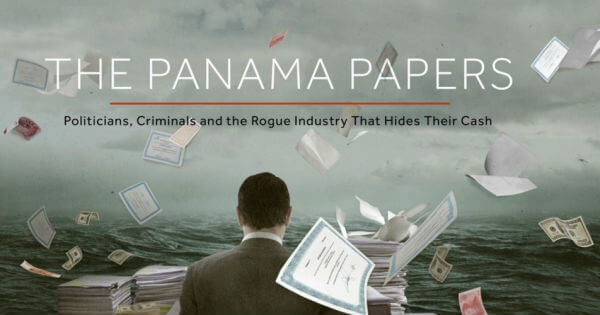
panama-papers

The Guardian reports: In June 2013, two Swiss lawyers held a private telephone chat. They were annoyed. In London, David Cameron had just given a speech. The prime minister had promised to sweep away decades of offshore “tax secrecy” by introducing a central register. Anybody who owned an offshore company would have to declare it to the authorities.

The G8 summit, to be hosted by Cameron on the shores of Lough Erne, in Northern Ireland, was looming. Top of the agenda: how to stop aggressive tax avoidance.

For much of the 20th century hiding your money was simple. You got a lawyer, filled in a form and set up a Swiss bank account or offshore “shell company”.

Nobody asked questions. For a couple of thousand dollars a year, it was possible to hide away profits where governments could never find them.

But in the UK crown dependencies and overseas territories where financial services were the main source of jobs and income times were changing. In tropical tax havens such as the British Virgin Islands a chill wind – or at least the threat of one – was blowing.

One of the Swiss lawyers was Sandro Hangartner, the Zurich boss of the Panamanian law firm Mossack Fonseca.

The other man, his disgruntled caller, was Sascha Züger. Züger’s company looked after the assets of some very wealthy South Americans.

In an email to his head office in Panama, Hangartner wrote: “Sascha is not very pleased about the development in BVI [British Virgin Islands].”

He was now looking for “alternatives”, Hangartner added – in other words other secret jurisdictions where a client might park their money.

For the network of international lawyers and accountants who serviced the offshore industry, these were troubled times.

Cameron’s speech was merely the latest piece of unwelcome attention. Since 2008, and the global financial crisis, cash-strapped exchequers had been trying to get their hands on billions in potential tax revenue hidden offshore.

How serious these attempts were was a matter for debate.

What wasn’t in doubt were the vast sums involved. According to the US economist Gabriel Zucman, 8% of the world’s wealth – a vast $7.6tn (£5.3tn) – was stashed in tax havens.

Zucman estimates the loss in global tax revenues at $200bn per year. That includes $35bn in the US and $78bn in Europe.

Previous attempts to bring about transparency had flopped. But now the world’s leading economies – the G20, G8 and Organisation for Economic Cooperation and Development – were apparently pursuing the theme with zeal.

If Cameron got his way, British overseas territories such as the BVI and Gibraltar would soon have to draw up a register of beneficial owners – the real owners of a company, even though their name may not appear on the shareholder register. The crown dependencies Jersey, Guernsey and the Isle of Man would fall into line, too. [Continue reading…]

Facebooktwittermail

David Cameron’s trust problem

Therese Raphael writes: U.K. Prime Minister David Cameron didn’t lie. He’s not accused of being a tax cheat. Unlike his Icelandic counterpart, he didn’t have financial holdings that presented an obvious conflict of interest. Even so, he’s in trouble.

Cameron is under attack for revelations that he benefited, albeit legally, from shares in a fund his stock-broker father had set up in Panama. Cameron is unlikely to lose his job, as Iceland’s Sigmundur David Gunnlaugsson did, but his reputation is taking a hammering. That’s no small problem so soon before a critical vote on European Union membership, in which he is asking Britons to trust his judgement and vote to remain inside the bloc.

The ferocity of this reaction may look odd from outside the U.K. Over in Russia, reports that some $2 billion have been stashed in offshore accounts and shell companies by a group of President Vladimir Putin’s closest friends have received a dismissive collective shrug. Russians expect their leaders to enrich themselves. In Britain, the news that a privileged prime minister made 19,000 pounds ($27,000) with all taxes paid has sparked paroxysms of outrage. [Continue reading…]

Facebooktwittermail

The covert roots of the Panama Papers

Steven Cohen writes: It should come as no surprise that the CIA’s finances are a secret. One of the rare glimpses into the agency’s funding came when Edward Snowden leaked a copy of the intelligence “black budget” to The Washington Post in 2013. But if history is any indication, the CIA may well have resources that don’t appear on any congressional document, highly classified or otherwise. Covert operations, by their very nature, often require access to off-the-books funding. The CIA’s first operation was paid for with funds seized from the Nazis, and in the years since, the agency has been notoriously creative about how it obtains its money.

Adnan Khashoggi would know. A “principal foreign agent” of the United States, as one Senate report referred to him, the billionaire playboy made a fortune (more than $100 million between 1970 and 1975 alone) from commissions negotiating arms deals with his native Saudi Arabia. He used these windfalls, in turn, to cultivate political clout—including, allegedly, with President Richard Nixon. In the aftermath of Watergate, when Congress began reining in the CIA, Khashoggi helped establish the supranational intelligence partnership known as the Safari Club. Soon after, he aided the CIA in circumventing another congressional impediment. With money borrowed from the Saudi and U.S. intelligence-linked Bank of Credit and Commerce International, he financed the illegal arms sales that set off the Iran-Contra scandal.

One way Khashoggi structured his shadowy holdings during his heyday was through the specialized services of Mossack Fonseca, the law firm that is in the news for having helped global luminaries like Vladimir Putin hide their money. Thanks to a recent report from the International Consortium of Investigative Journalists, we now know Khashoggi to be among a number of former spies and CIA associates implicated by the 2.6 terabytes of offshore financial documents provided to the German newspaper Süddeutsche Zeitung last summer.

That his name should appear in an international dark money scandal suggests something about the nature of tax havens that much of the media’s coverage has thus far avoided grappling with. The Panama Papers have largely been presented as an unprecedented insight into how global elites hide their fortunes from tax collectors and other regulators. But they also underscore how tax havens are used by covert agencies and other shadowy players to launder dirty money, a practice that has a long history in which Panama, in particular, has played a notable part. [Continue reading…]

Facebooktwittermail

How global tax evasion keeps poor countries poor

Max Bearak writes: Releases of secret documents, like the whopping 11.5 million Panama Papers, are designed to result in a cascade of scandals. Since Sunday’s revelations, Iceland’s prime minister has stepped down, and Britain’s prime minister, David Cameron, admitted on Thursday that he had profited from his father’s offshore account. Leaders in Russia, China and other parts of the world have come forward to either claim the leak is a conspiracy, censor online speculation, or simply deny any illicit dealings or tax impropriety.

As journalists take a fine comb through the 2.6 terabytes of data obtained from the servers of Mossack Fonseca, the world’s fourth biggest “offshore law” firm, they are sure to uncover more and more of the web of dealings that tie politicians, businesspeople, celebrities and their kin to that tax haven and others.

But what’s so scandalous about the Panama Papers isn’t just that there’s a nexus of rich people, some elected, who make profits by evading taxes. It’s that so much of the money moved through tax havens would otherwise be taxed by some of the world’s poorest, most revenue-hungry governments.

That tax evasion disproportionately affects the poor shouldn’t come as a surprise, and it certainly isn’t a secret. Angel Gurría, the secretary general of the Organization for Economic Cooperation and Development, or OECD, an economic organization consisting of the world’s richest nations, once estimated that developing countries lose three times as much to tax evasion as they receive in foreign aid. The Tax Justice Network, pointing out that data on tax evasion is murky at best, says the real figure may be closer to 10 times. [Continue reading…]

Facebooktwittermail

The Panama Papers prove it: America can afford a universal basic income

Colin Holtz writes: We should all be able to agree: no one should be poor in a nation as wealthy as the US. Yet nearly 15% of Americans live below the poverty line. Perhaps one of the best solutions is also one of the oldest and simplest ideas: everyone should be guaranteed a small income, free from conditions.

Called a universal basic income by supporters, the idea has has attracted support throughout American history, from Thomas Paine to Martin Luther King Jr. But it has also faced unending criticism for one particular reason: the advocates of “austerity” say we simply can’t afford it – or any other dramatic spending on social security.

That argument dissolved this week with the release of the Panama Papers, which reveal the elaborate methods used by the wealthy to avoid paying back the societies that helped them to gain their wealth in the first place.

Roads and transportation infrastructure. Educated workforces. Courts and legal systems. Innovations sparked by government funding, such as the internet. No one – no matter how smart or hard working – joins the American or global elite without making use of these shared resources.

But while working and middle-class families pay their taxes or face consequences, the Panama Papers remind us that the worst of the 1% have, for years, essentially been stealing access to Americans’ common birthright, and to the benefits of our shared endeavors. [Continue reading…]

Facebooktwittermail

Why U.S. domestic violence is akin to honor crimes

shadow16

Jessica Winegar writes: The dramatic finale of the FX series “The People vs. O.J. Simpson: American Crime Story” aired this week after topping television ratings for over a month. The Oscar-winning documentary about an honor killing, “A Girl in the River: The Price of Forgiveness,” recently aired on HBO to critical acclaim.

One was set in Brentwood, a suburb of Los Angeles. The other was set in Punjab, Pakistan. One is called a domestic violence homicide. The other is called an honor crime.

A round-up of statistics from the Violence Policy Center, Bureau of Justice Statistics, National Institute of Justice and the Center for American Progress found that more than 18,000 U.S. women were killed in this country by intimate partners between 2003 and 2014. In the U.S., more than 22 percent of women will experience an extreme act of violence at the hands of an intimate partner in her lifetime, according to the Atlanta-based Centers for Disease Control and Prevention.

Why do we not call these acts of violence in this country honor crimes?

Human Rights Watch defines honor crimes as “acts of violence, usually murder, committed by male family members against female family members who are perceived to have brought dishonor upon the family” and defines those family members as “husband, father, son, brother or cousin.” There are 5,000 honor crimes each year in the world, according to the site, mostly in the Middle East and South Asia. In Pakistan alone, there are 1,000 honor killings every year.

But there is a common nefarious defense by perpetrators that links these cases of violence against women in the U.S and those acts called honor crimes in the Middle East and South Asia.

In both arenas, the woman who transgresses the boundaries of what men will accept has to be punished. And the men doing the punishing are from her domestic world.

In both domestic violence and honor crimes, male relatives and/or intimate partners rape, beat, psychologically abuse and kill. [Continue reading…]

Facebooktwittermail

Big oil spent $115m ‘obstructing’ climate laws in 2015, NGO says

Climate Change News reports: Giants of the oil and gas industry spent millions of dollars last year to manipulate lawmakers and public discourse on climate change, an NGO claimed on Thursday.

Exxon, Shell and three trade associations spent US$114 million, according to data compiled by London-based non-profit organisation Influence Map.

Lobby group the American Petroleum Institute spent the most at $65 million, followed by Exxon Mobil on $27m and Shell on $22m last year.

Two smaller trade groups, the Western States Petroleum Association (WSPA) and the Australian Petroleum Production and Exploration Association totalled about $9m. [Continue reading…]

Facebooktwittermail

In Belgium, racism and discrimination is a larger problem than radicalization

The New York Times reports: Yves Goldstein makes no excuses for Belgium’s failure to find Salah Abdeslam and the other Islamic State recruits who attacked Paris and then bombed Brussels Airport and a subway station.

The problem is not Islam, he insists, but the negligence of government officials like himself in allowing self-contained ethnic ghettos to grow unchallenged, breeding anger, crime and radicalism among youth — a soup of grievances that suits Islamist recruiters.

“Our cities are facing a huge problem, maybe the largest since World War II,” Mr. Goldstein said. “How is it that people who were born here in Brussels, in Paris, can call heroes the people who commit violence and terror? That is the real question we’re facing.”

Friends who teach the equivalent of high school seniors in the predominantly Muslim districts of Molenbeek and Schaerbeek told him that “90 percent of their students, 17, 18 years old, called them heroes,” he said.

Mr. Goldstein, 38, grew up in Schaerbeek, the child of Jewish refugees from Nazism. Now a councilman from Schaerbeek, he is also chief of staff for the minister-president of the Brussels Capital Region. [Continue reading…]

The New York Times reports: To feel apart, even isolated, is not uncommon for a Muslim from Schaerbeek, the third-poorest commune in Belgium and one with a long history of racism.

More than Molenbeek, where many of the Paris and Brussels attackers lived, Schaerbeek is a mixed community with a sizable number of native Caucasian Belgians as well as Muslims from Turkey and Morocco.

Yet despite its heterogeneity, the groups still live in somewhat segregated communities.

Mustapha Chairi, a Schaerbeek native and now the head of the Collective Against Islamophobia in Belgium, remembers how when he was a boy, the mayor, Roger Nols, made no bones about his loathing for immigrants from North Africa.

In at least one election year, 1986, he donned ethnic Moroccan clothes, mounted a camel and rode to the central square to declare, “In 20 years all of Schaerbeek will look like this unless you vote for me,” Mr. Chairi recalled.

He stayed in office for 19 years. [Continue reading…]

Facebooktwittermail

Russian gunships replace jets in Syria

Al Jazeera reports: Russian President Vladimir Putin surprised the world by abruptly declaring on March 15 that Russia was withdrawing its forces from Syria in the wake of a partial ceasefire deal between regime forces and certain moderate opposition groups.

For the next few days the global media was treated to impressive footage of Su-25 attack jets, Su-24 bombers and powerful Su-34 fighter bombers steaming out of their Syrian base of operations at Latakia and returning to Russia to a rapturous reception from families of the crews and the public.

Lumbering Antonov transport aircraft flew repeated sorties back and forth between Russia and Latakia at the same time, extracting material and personnel associated with the fighter bomber squadrons.

However, as has become abundantly clear, far from being a true withdrawal or drawdown, more equipment and personnel were brought back to Syria from Russia on the return leg of these transport flights than were taken out.

What has changed is the force mix and capabilities Russia is now deploying to support President Bashar al-Assad’s war effort. The combat-proven Mi-35 Hind helicopter gunship detachment has seen its numbers increased, while the more modern Mi-28 Havoc and state-of-the-art Ka-52 Alligator have joined the fight for the first time. [Continue reading…]

Facebooktwittermail

A new all-out Nagorno-Karabakh conflict is the stuff of nightmares

Thomas de Waal writes: For almost three decades, the most dangerous unresolved conflict in wider Europe has lain in the mountains of the South Caucasus, in a small territory known as Nagorno-Karabakh. In the late 1980s, the region confounded the last Soviet leader, Mikhail S. Gorbachev. In the early 1990s, the conflict there created more than a million refugees and killed around 20,000 people. In 1994, after Armenia defeated Azerbaijan in a fight over the territory, the two countries signed a truce — but no peace agreement.

Nagorno-Karabakh erupted again last weekend. It seems one of the players — most likely Azerbaijan — decided to change the facts on the ground. Dozens of soldiers from both sides were killed before a cease-fire was proclaimed on Tuesday. It could fall apart at any moment. The situation is volatile, and there is a danger that the conflict could escalate further unless the international community stops it.

A new all-out Nagorno-Karabakh conflict is the stuff of nightmares. Given the sophisticated weaponry both sides now possess, tens of thousands of young men would most likely lose their lives. Russia and Turkey, already at loggerheads and with military obligations to Armenia and Azerbaijan, respectively, could be sucked into a proxy war. Fighting in the area would also destabilize Georgia, Iran and the Russian North Caucasus. Oil and gas pipeline routes from the Caspian Sea could be threatened, too. [Continue reading…]

Facebooktwittermail

How Cervantes and Shakespeare wrote the modern literary rule book

destruction2

Salman Rushdie writes: As we honour the four hundredth anniversaries of the deaths of William Shakespeare and Miguel de Cervantes Saavedra, it may be worth noting that while it’s generally accepted that the two giants died on the same date, 23 April 1616, it actually wasn’t the same day. By 1616 Spain had moved on to using the Gregorian calendar, while England still used the Julian, and was 11 days behind. (England clung to the old ­Julian dating system until 1752, and when the change finally came, there were riots and, it’s said, mobs in the streets shouting, “Give us back our 11 days!”) Both the coincidence of the dates and the difference in the calendars would, one suspects, have delighted the playful, erudite sensibilities of the two fathers of modern literature.

We don’t know if they were aware of each other, but they had a good deal in common, beginning right there in the “don’t know” zone, because they are both men of mystery; there are missing years in the record and, even more tellingly, missing documents. Neither man left behind much personal material. Very little to nothing in the way of letters, work diaries, abandoned drafts; just the colossal, completed oeuvres. “The rest is silence.” Consequently, both men have been prey to the kind of idiot theories that seek to dispute their authorship.

A cursory internet search “reveals”, for example, that not only did Francis Bacon write Shakespeare’s works, he wrote Don Quixote as well. (My favourite crazy Shakespeare theory is that his plays were not written by him but by someone else of the same name.) And of course Cervantes faced a challenge to his authorship in his own lifetime, when a certain pseudonymous Alonso Fernández de Avellaneda, whose identity is also uncertain, published his fake sequel to Don Quixote and goaded Cervantes into writing the real Book II, whose characters are aware of the plagiarist Avellaneda and hold him in much contempt. [Continue reading…]

Facebooktwittermail

The super rich live in a parallel world; here’s how we bring them back to reality

Suzanne McGee writes: “Only the little people pay taxes,” Leona Helmsley, New York’s “Queen of mean” once famously opined. The statement, delivered in court by one of her “little people” helped send the late billionaire real estate mogul to jail for 19 months for failing to pay her dues.

It’s hard not to think of the late Leona amid the revelations still pouring out from the Panama Papers. The massive treasure trove of 11.5m documents from the Panamanian law firm of Mossack Fonseca leaked to the media has disclosed a staggering amount of detail about how the rich and powerful have used shell companies to hide their wealth from the taxman and others around the world.

Done right – the way that the lawyers at Mossack Fonseca promised their super-wealthy clients they would be done – shell companies are almost untraceable. And that enabled those clients to use them to stash money made from illegal weapons, human trafficking or drugs, or shelter cash from the tax man or other kinds of regulatory scrutiny.

It’s just another way that the rich can take advantage of breaks that would elude us even if we wanted them. Sure, you or I could set up a shell company of sorts, by establishing a limited liability company. But our names, and our social security numbers, are attached to it. And it’s domiciled here in the US. While there are ways to use US shell companies fraudulently, most of us would have a hard time doing it without paying big bucks for the assistance of high-priced attorneys. [Continue reading…]

Facebooktwittermail

David Cameron left dangerously exposed by Panama Papers fallout

The Guardian reports: David Cameron was left dangerously exposed on Tuesday after repeatedly failing to provide a clear and full account about links to an offshore fund set up by his late father, as the storm over the Panama Papers gathered strength in both the UK and elsewhere around the world.

The prime minister and his office have now offered three partial answers about the fund set up by his father Ian, which avoided ever paying tax in Britain. The key unanswered question is whether the prime minister’s family stands to gain in the future from his father’s company, Blairmore, an investment fund run from the Bahamas.

After Downing Street said on Monday that the fund was a “private matter”, a journalist asked Cameron about it during a visit to Birmingham on Tuesday.

Cameron replied: “I own no shares, no offshore trusts, no offshore funds, nothing like that. And, so that, I think, is a very clear description.”

He dodged the key part of the question about whether he or his family stood to benefit. [Continue reading…]

The Guardian reports: David Cameron intervened personally to prevent offshore trusts from being dragged into an EU-wide crackdown on tax avoidance, it has emerged.

In a 2013 letter to the then president of the European council, Herman Van Rompuy, the prime minister said that trusts should not automatically be subject to the same transparency requirements as companies.

The EU planned to shine a light on the dealings of offshore bodies by publishing a central register of their ultimate owners but, in a letter unearthed by the Financial Times that remains publicly available on the government’s website, Cameron said: “It is clearly important we recognise the important differences between companies and trusts … This means that the solution for addressing the potential misuse of companies – such as central public registries – may well not be appropriate generally.” [Continue reading…]

Facebooktwittermail

Panama Papers reveal London as center of ‘spider’s web’

AFP reports: As-well as shining a spotlight on the secret financial arrangements of the rich and powerful, the so-called Panama Papers have laid bare London’s role as a vital organ of the world’s tax-haven network.

The files leaked from Panama law firm Mossack Fonseca exposed Britain’s link to thousands of firms based in tax havens and how secret money is invested in British assets, particularly London property.

Critics accuse British authorities of turning a blind eye to the inflow of suspect money and of being too close to the financial sector to clamp down on the use of its overseas territories as havens, with the British Virgin Islands alone hosting 110,000 of the Mossack Fonseca’s clients.

“London is the epicentre of so much of the sleaze that happens in the world,” Nicholas Shaxson, author of the book “Treasure Islands”, which examines the role of offshore banks and tax havens, told AFP.

The political analyst said that Britain itself was relatively transparent and clean, but that companies used the country’s territories abroad — relics of the days of empire — to “farm out the seedier stuff”, often under the guise of shell companies with anonymous owners.

“Tax evasion and stuff like that will be done in the external parts of the network. Usually there will be links to the City of London, UK law firms, UK accountancy firms and to UK banks,” he said, calling London the centre of a “spider’s web”. [Continue reading…]

Facebooktwittermail

Panama Papers tie more of China’s elite to secret accounts

The New York Times reports: At least three of the seven people on the Chinese Communist Party’s most powerful committee, including President Xi Jinping, have relatives who have controlled secretive offshore companies, the organization that has publicized a trove of leaked documents about hidden wealth reported on Wednesday.

The disclosures by the organization, the International Consortium of Investigative Journalists, risked new embarrassment for the Chinese authorities, already unnerved and infuriated by the organization’s leaks of the documents, known as the Panama Papers.

Chinese government censors have moved aggressively since the first release of leaked documents on Sunday to purge any media’s mention of them in China, going so far as to block Internet searches and online discussions that involve the words “Panama Papers.” [Continue reading…]

Facebooktwittermail