Category Archives: Analysis

Is it possible to get 15% of your calories from sugar and still be healthy?

By Claire Marriott, University of Brighton

It would be fair to say that most of us lead a life far removed from our hunter-gatherer days. Consequently, studies into remote tribes, and the effect of their diet and foraging behaviour, have been used to try to understand the effect of our modern lifestyle on conditions such as obesity and type 2 diabetes.

Members of the Hadza, a hunter-gatherer community from Tanzania, obtain 15% of their calories from honey. They have a relatively long life expectancy and little to no incidence of metabolic disease.

Research suggests that people in the UK consume an almost equivalent amount of sugar (guidelines recommend no more than 5%) yet there is an obesity epidemic, with a comparable increase in the number of people developing type 2 diabetes. So, are the guidelines wrong? Or are we simply consuming the wrong kind of sugar? If we replaced all table sugar with honey would we see a dramatic decrease in the number of people who develop type 2 diabetes?

Perhaps predictably, it’s not that simple. A hunter-gatherer tribe will spend a large proportion of their time, well, hunting and gathering – a less common urban activity these days. A diet containing such high levels of honey is going to have a very different effect on a population with higher physical activity. We would definitely need to move a lot more to earn that 15%. Although obesity is an incredibly complex condition (as the graphic below shows), the benefits of exercise on physical (and mental) well-being can’t be argued.


Continue reading

Facebooktwittermail

Why Trump’s endorsements should scare your pants off

Matt Taibbi writes: Earlier this week, an African-American protester was sucker-punched by a 78-year-old man in a cowboy hat at a Trump rally in North Carolina. The video went viral, and reporters later tracked down John McGraw, the red-faced Trumpthusiast who’d thrown the punch. McGraw explained why he’d belted Rakeem Jones:

“Number one, we don’t know if he’s ISIS,” McGraw said.

One has to commend the Inside Edition reporter doing the interview for not bursting out laughing, or dropping to the ground in shock, at this moment. McGraw went on:

“The next time we see him, we might have to kill him,” he said. “We don’t know who he is. He might be with a terrorist organization.”

That same night, Trump told Anderson Cooper he wasn’t backing down from his plan to bar all Muslims from entering the country. “I think Islam hates us,” he said, adding, “It’s very hard to separate because you don’t know who is who. We have to be very vigilant.”

These episodes are like a child’s game of “telephone,” only played with bone-ignorant adults. The game starts when Trump personifies “Islam” under one label, apparently not realizing that this represents an awesomely diverse collection of people who collectively represent about a quarter of the world’s population. [Continue reading…]

Facebooktwittermail

The Bernie Sanders voters who would vote for Trump over Clinton

The Guardian reports: n this most bizarre of presidential election cycles, every day seems to bring another jaw-dropping development. Donald Trump on the size of his genitals, Ben Carson and the Egyptian pyramids, Bernie Sanders’ socialist revolution, Hillary Clinton and the cloth she used to wipe her private email server clean.

But it’s not just the candidates who have raised eyebrows in 2016.

The latest startling phenomenon is the voter who is feeling the Bern, but also has eyes for the Donald.

This week the Guardian sought out Sanders fans who are contemplating switching their allegiance to Trump if Hillary Clinton secures the Democratic nomination.

Almost 700 people replied to the call-out, and some 500 of them said they were thinking the unthinkable: a Sanders-Trump switch.

They explained their unconventional position by expressing a variety of passionately held views on their shared commitment for protecting workers and against new wars, on their zeal for an alternative to the establishment, and on their desire to support anyone but Hillary Clinton.

As one respondent, a 34-year-old male IT technician, put it: “Bernie and Trump agree a lot on healthcare, Iraq war, campaign finance and trade. I really want to move on to something new, new ideas from outside the box. Maybe Donald Trump can provide that.”

The Guardian call-out was not a poll, but controlled surveys by polling companies have identified this small but not insignificant slice of the Sanders crowd who would consider backing Trump.

In an NBC News/Wall Street Journal survey conducted by Hart Research Associates this month, 7% of Sanders voters said they could see themselves supporting Trump. Some 66% said the same for Clinton. [Continue reading…]

Facebooktwittermail

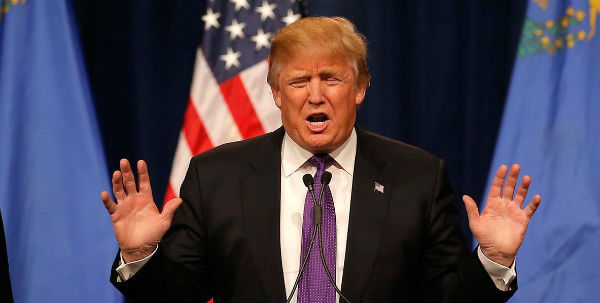
To many in the Middle East, Trump looks like their own rulers: heavy-handed, vain, and rich

trump

Joyce Karam writes: When Donald Trump announced his candidacy on June 16, 2015, my editors at the London-based pan-Arab newspaper Al-Hayat, like most Americans, shrugged it off. “This is not serious; send something very small to page eight,” I was told.

Nine months later, Trump’s rise is the story in the Middle East when it comes to the American presidential race. My work as a journalist for Al-Hayat sends me traveling frequently in the region, and when people hear I cover US politics, their first instinct has often been to ask me about Donald Trump: “Is Trump for real?” “Why is he winning?” “Is he going to be president?” and “What will happen to us if he does?”

As Trump attracts more support in America, he gets more attention in the Middle East. And there are a few reactions to Trump that I hear over and over. Almost all are negative, some are as much about the US as they are about Trump himself, and all are a revealing look at how the Middle East perceives and thinks about American politics.

Some see in Trump a reflection of their own political figures, from dictators to buffoonish and controversial entertainers. Some take him more seriously and see him, should he become president, as a nightmare for the Middle East. [Continue reading…]

Facebooktwittermail

Sarah Palin knows more than Trump

James Fallows quotes a reader of his “who for professional reasons has carefully studied a very large number of [Donald Trump’s] “newsmaker” interviews in recent years”: I have now been through dozens of interviews with Trump with a variety of interviewers, and I have never once—not once—heard him discuss anything, any subject of any kind, with any evidence of knowledge, never mind thought. None. Zero. He’s like a skipping stone over a pond. He doesn’t even come close to the level of dilettante.

You’d think at some point, something, anything would have engaged his interest enough to read up on it and think about it, but as far as I can tell, nothing has. Much more so even than George W., he appears to lack anything resembling intellectual curiosity. Maybe he’s faking it, but while understanding can sometimes be faked, you can’t fake ignorance convincingly. [Continue reading…]

Facebooktwittermail

Germany’s Trump-like problem: Right-wing, anti-foreigner movement poised for big election win

The Los Angeles Times reports: A populist far-right German party that has fiercely attacked the government for letting in more than a million refugees in the last year is expected to be the big winner in three important state elections Sunday that will serve as a referendum on Chancellor Angela Merkel’s controversial open-door policies.

The party has aimed its appeal to German voters with a shrill anti-foreigner bent that has some similarities to Donald Trump’s bid to win the Republican nomination for U.S. president.

The Alternative for Germany party, or AfD, has campaigned hard against refugees streaming into the country, mostly from Syria and Iraq, and it has surged in public opinion polls from about 3% last summer to as high as 20% ahead of elections in three of Germany’s 16 states. That is far above the 4.7% the AfD won in the 2013 federal election just half a year after it was formed mainly to oppose Europe’s single currency, the euro, and the expensive European Union financial bailouts to Greece. [Continue reading…]

Facebooktwittermail

Obama’s disastrous handling of the Syrian conflict

Hisham Melhem writes: For more than three decades, I have tried to interpret America to the Arabs and to explain the Arabs to Americans. I have never seen such disillusionment with an American president and his policies expressed by people in the region, ordinary citizens as well as public figures. In private, I have heard Arab officials express critical views of Obama and his style of leadership bordering on utter contempt; some Israeli officials did that publicly. For his Arab allies, Obama was too deferential to Iran and too quick to dump President Hosni Mubarak of Egypt — views also held by Israeli officials. Arabs feel Obama also mishandled Syria, a view strongly held also by Turkey. It is rarely the case for an American president to find that his relationships with Arabs, Israelis, and Turks are simultaneously troubled and in some cases very bitter.

Nor is Obama popular with the region’s ordinary citizens. A Pew Research Center poll in June 2015 shows that Obama’s image in the Middle East is mostly negative, with more than eight in ten Palestinians and Jordanians saying that they have no confidence in Obama to do the right thing in world affairs. In Lebanon 64 percent have no confidence in Obama’s leadership, with only 50 percent of Israelis saying they have confidence in the American president. In Turkey Obama’s fortune is better, but not by much where 46 percent of Turks have a negative assessment of his leadership. There is much anecdotal evidence showing that Arab youth in general have soured on Obama, accusing him of reneging on his early pledges to oppose Arab despotism and to stand by those who sought peaceful change in Egypt and Bahrain, and of abandoning Libya after the fall of the Gadhafi regime. However, what angers many Arabs is Obama’s disastrous handling of the Syrian conflict; they blame his indecisiveness on challenging the Bashar Al-Assad regime’s predations, and halfhearted measures toward helping the Syrian opposition, for the worst human tragedy in the twenty-first century. [Continue reading…]

Facebooktwittermail

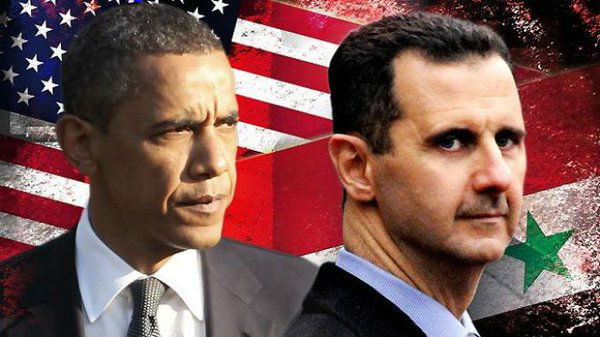
How Iraq warped Obama’s worldview

obama-assad

Shadi Hamid writes: On October 2, 2002, Barack Obama gave a speech opposing war in Iraq—perhaps, in retrospect, the most important speech he ever gave. He was right, of course, and the foreign-policy establishment was largely wrong. The problem is that politicians who were right about Iraq tend to overestimate what that says about their foreign-policy judgment. For Obama, the effects of being right are magnified. He became president, in part, because of Iraq and the considerable damage the conflict had done to the country. Obama offered the promise of a decisive correction and, for true believers, a kind of spiritual atonement.

It is unclear what being right on Iraq would mean for your likelihood of being right on Syria, since the contexts in question are, in a way, opposites: Civil war in Iraq began after the United States intervened. Civil war in Syria happened in the absence of intervention. History will have to judge, but it may actually be the case that being right on Iraq made you more likely to be wrong about subsequent interventions. The tragedy of Iraq, if you weren’t careful, was likely to distort your perception of everything that followed, for wholly understandable reasons.

Iraq’s dark shadow seems to be everywhere in Jeffrey Goldberg’s fascinating yet unsettling exchanges with Obama. “Multilateralism regulates hubris,” Obama says. And he is right: It does. What is left unsaid is why, exactly, regulating hubris should, seven years after the conclusion of the Bush era, remain a primary preoccupation. It is hard to imagine any world leader citing the hubris of overextension as the problem that the United States, today, must take extra care to correct for or guard against. Obama has already corrected for it, many times over. [Continue reading…]

Facebooktwittermail

How Obama has increased the risk of nuclear war

In January, the New York Times reported: As North Korea dug tunnels at its nuclear test site last fall, watched by American spy satellites, the Obama administration was preparing a test of its own in the Nevada desert.

A fighter jet took off with a mock version of the nation’s first precision-guided atom bomb. Adapted from an older weapon, it was designed with problems like North Korea in mind: Its computer brain and four maneuverable fins let it zero in on deeply buried targets like testing tunnels and weapon sites. And its yield, the bomb’s explosive force, can be dialed up or down depending on the target, to minimize collateral damage.

In short, while the North Koreans have been thinking big — claiming to have built a hydrogen bomb, a boast that experts dismiss as wildly exaggerated — the Energy Department and the Pentagon have been readying a line of weapons that head in the opposite direction.

The build-it-smaller approach has set off a philosophical clash among those in Washington who think about the unthinkable.

Mr. Obama has long advocated a “nuclear-free world.” His lieutenants argue that modernizing existing weapons can produce a smaller and more reliable arsenal while making their use less likely because of the threat they can pose. The changes, they say, are improvements rather than wholesale redesigns, fulfilling the president’s pledge to make no new nuclear arms.

But critics, including a number of former Obama administration officials, look at the same set of facts and see a very different future. The explosive innards of the revitalized weapons may not be entirely new, they argue, but the smaller yields and better targeting can make the arms more tempting to use — even to use first, rather than in retaliation. [Continue reading…]

Facebooktwittermail

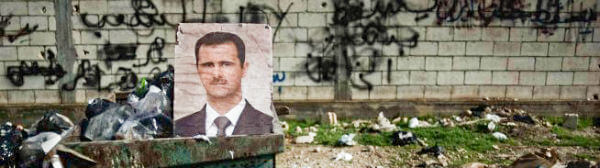
Syrians return to the streets against Assad

assad-dumped

An editorial for The Guardian says: Syrians have used the truce as an opportunity not just to relish a moment of relative calm, with fewer bombs and rockets falling on cities, but to make clear that the demands they formulated in 2011 for political change at the top have not gone away. This serves as a reminder of what the Syrian crisis was all about to start with: a popular revolt against a dictator, against a family clan that has been in power for decades, and against a security apparatus whose central tenet has been to spread terror. After five years of a civil war which has caused an estimated 300,000 to 470,000 deaths and uprooted over half of the population, the very gesture of coming out on the streets with persistent political claims stands out as an admirable act of resilience. The message coming from these protesters, under skies that could yet prove to be only briefly clear of bomber planes, is one which should guide diplomacy. No sustainable peace agreement can afford to ignore the mood on the streets.

The Syrian uprising started five years ago almost to the day, on 18 March 2011, at a time when the Arab spring seemed to hold so much promise. Peaceful protests in Tunisia and Cairo’s Tahrir Square served as powerful inspiration. But as the Syrian protests grew, the regime started firing live ammunition at crowds, and arresting and torturing protesters, sometimes just teenagers. It is the scale of the repression that led anti-Assad groups to take up arms – initially to protect demonstrators. What started as a movement of democratic aspirations morphed into a relentless conflict, with foreign powers weighing in.

Syrians have endured a state policy of mass murder on a scale that arguably has no precedent in recent times: Scud missiles, barrel bombs, chemical weapons, torture chambers, starvation, sieges. After the seizure of parts of the country by a complex web of Islamist groups, the west is focusing narrowly on Islamic State, and Russia has been substantially freed to dictate its terms for a truce.

But nothing has diminished the hunger, inside Syria and among its refugee diaspora, for an end to autocracy. The bravery of protesters must be acknowledged. And their message heard. [Continue reading…]

Facebooktwittermail

What it feels like to be an octopus

Regan Penaluna writes: In a recent Sunday, at my local Italian market, I considered the octopus. To eat the tentacle would be, in a way, like eating a brain — the eight arms of an octopus contain two-thirds of its half billion neurons. Delicious for some, yes — but for others, a jumping off point for the philosophical question of other minds.

“I do think it feels like something to be an octopus,” says Peter Godfrey-Smith, a professor of philosophy at CUNY Graduate Center, who has spent almost a decade considering the idea. Stories of octopuses’ remarkable ability to solve puzzles, open bottles, and interact with aquarium caretakers, suggest an affinity between their intelligence and our own. He wonders: What, if anything, is going on in its head — or as may be the case, its arms? The rest of its neurons are contained in lobes wrapping around its esophagus and sitting behind its eyes. This alien-like physiology is the result of almost 600 million years of evolution that separate us.

Since a 2008 dive off the coast of Sydney, Australia, where Godfrey-Smith encountered curious, 3-foot long cuttlefish, he’s been fascinated by the minds of cephalopods, which have the largest nervous systems of all the invertebrates. He’s teamed up with scientists to uncover their secret lives and behaviors, publishing in scientific journals and also a blog, where you can follow his adventures with posts that blend “natural history and philosophy.” He has a book coming out at the end of the year called Other Minds, which digs into how the octopus helps us understand the evolution of subjective experience. “I think cephalopods have a special kind of otherness, because they are organized so differently from us and diverged evolutionarily from our line so long ago,” he says. “If they do have minds, theirs are the most other minds of all.” [Continue reading…]

Facebooktwittermail

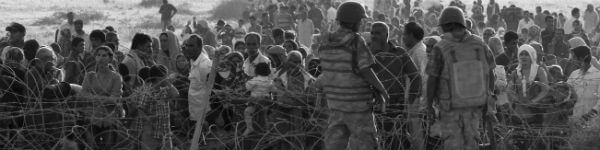
No way out: How Syrians are struggling to find an exit

refugee5

Eleonora Vio reports: Over the last five years, close to 4.8 million Syrians have fled the conflict in their country by crossing into Jordan, Lebanon and Turkey. But as the war drags on, neighbours are sealing their borders. Forced from their homes by airstrikes and fighting on multiple fronts, the vast majority of Syrian asylum seekers now have no legal escape route.

Earlier this week, EU leaders reached a hard-won deal with Turkey aimed at ending a migration crisis that has been building since last year, and that in recent weeks has seen tens of thousands of migrants and refugees stranded in Greece. But the agreement turns a blind eye to the fact that even larger numbers of asylum seekers are stranded back in Syria, unable to reach safety.

Syrians hoping to apply for asylum in Europe first have to physically get there. EU member states closed their embassies in Syria at the start of the conflict, and even embassies and consulates in neighbouring countries have been reluctant to process visa and asylum applications.

When Syria’s war erupted in March 2011, it was initially relatively easy for most refugees to leave the country. Those without the means to fly poured out in waves of tens of thousands across land borders into Jordan, Lebanon, and Turkey. But one by one, these exits have been restricted or closed off entirely. [Continue reading…]

Facebooktwittermail

Iran’s need for national reconciliation

Akbar Ganji writes: Hassan Rouhani was elected Iran’s president in June 2013 based on his promise of reaching a nuclear agreement and improving the relations with the West. He delivered on his promise, and in the process a close working relationship developed between Iranian Foreign Minister Mohammad Javad Zarif and Secretary of State John Kerry. The two diplomats have been discussing various issues, including the cease-fire in Syria. On March 6, President Rouhani said, “We can authorize our negotiation team to discuss other issues [with the West] in the world [that are of mutual interest]. We are sure that we will reach agreement similar to the nuclear negotiations.”

The Iranian people support these efforts and wish for improved relations with the United States. Under the leadership of former presidents Mohammad Khatami and Akbar Hashemi Rafsanjani, as well as Rouhani, Iran’s reformists and moderates want to pursue such goals. Leaders of the Green Movement who are under house arrest, namely former Prime Minister Mir Hossein Mousavi, his wife Zahra Rahnavard and former parliament speaker Mehdi Karroubi also support the policy of détente with the West.

Since the nuclear agreement between Iran and the P5+1 was signed in July 2015, the main problem in Iran has been national reconciliation. In other words, just as Iran and the P5+1 resolved their long-held and difficult differences diplomatically, Iranians from all walks of life also want to resolve the issues that are dividing their nation. Iranians call the nuclear agreement Barjam, the Farsi acronym for Joint Comprehensive Plan of Action. The reformists and moderates are now talking about the second Barjam, or Barjam 2, which they hope will lead to the release of all political prisoners, an end to the house arrest of the Green Movement’s leaders, freedom for political parties, independence for the universities and colleges and the resolution of other important issues.

These were also Rouhani’s promises during his campaign for the presidency, which have been opposed by Supreme Leader Ayatollah Ali Khamenei, who favors controlling cultural affairs as well as the universities. [Continue reading…]

Facebooktwittermail

As hard times hit, Egyptians at last find fault with Sisi

Reuters reports: “Your exellency: you are not working,” television presenter Azza al-Henawy said, looking into the camera but addressing the Egyptian president. “Not one single issue has been solved since you took over.”

After years of hearing little but enthusiastic applause for Abdel Fattah al-Sisi and vilification of his enemies, the tens of millions of Egyptians who watch the country’s pugnacious talk shows are suddenly being presented with the president’s faults.

The former military chief who overthrew the Muslim Brotherhood to take power in 2013 is facing the first sustained public criticism of his rule.

State television, known for being fiercely loyal, launched an internal investigation on Wednesday into Henawy for her remarks. But her comments were hardly isolated.

After years of publicly lionizing Sisi as the savior of the nation, many of the country’s most influential figures have emerged to blame the president for an economy in crisis, an Islamist insurgency raging in the Sinai peninsula and the brutality of an unreformed police force. [Continue reading…]

Facebooktwittermail

Carbon dioxide levels ‘exploded’ last year to reach record highs not seen since end of Ice Age, scientists warn

The Independent reports: Levels of carbon dioxide in the atmosphere “exploded” last year to reach a new record high not seen for thousands of years, scientists have announced.

The last time there was such a sustained increase in carbon dioxide concentrations was at the end of the last Ice Age, between 17,000 and 11,000 years ago. But the current increase is now about 200 times faster than then, they said.

A combination of man-made emissions of carbon dioxide and the effects of the El Nino phenomenon in the Pacific Ocean have both contributed to the rapid rise at a time when the world is trying to curb emissions of the greenhouse gas, the researchers said.

Instruments monitoring CO2 levels at the Mauna Loa Observatory in Hawaii recorded a jump of 3.05 parts per million (ppm) during 2015, which is the largest year-on-year increase in 56 years of research at the site, according to the US National Oceanic and Atmospheric Administration (NOAA). [Continue reading…]

Facebooktwittermail

It took a freedom of information lawsuit to uncover how the Obama administration killed FOIA reform

Jason Leopold reports: The Obama administration has long called itself the most transparent administration in history. But newly released Department of Justice (DOJ) documents show that the White House has actually worked aggressively behind the scenes to scuttle congressional reforms designed to give the public better access to information possessed by the federal government.

The documents were obtained by the Freedom of the Press Foundation, a nonprofit organization that supports journalism in the public interest, which in turn shared them exclusively with VICE News. They were obtained using the Freedom of Information Act (FOIA) — the same law Congress was attempting to reform. The group sued the DOJ last December after its FOIA requests went unanswered for more than a year.

The documents confirm longstanding suspicions about the administration’s meddling, and lay bare for the first time how it worked to undermine FOIA reform bills that received overwhelming bipartisan support and were unanimously passed by both the House and Senate in 2014 — yet were never put up for a final vote. [Continue reading…]

Facebooktwittermail

Blunt force: Key facts about the mysterious death of ex-Putin adviser Mikhail Lesin

RFE/RL reports: On November 3, 2015, hundreds of guests gathered at the swanky Ritz-Carlton hotel in the U.S. capital for a dinner honoring Russian billionaire and philanthropist Pyotr Aven and Susan Lehrman, a Washington socialite, investor, and patron of the arts.

On the guest list that evening, RFE/RL has confirmed, was Mikhail Lesin, a former Russian press minister, Kremlin adviser, and central player in President Vladimir Putin’s consolidation of state control over the media.

Lesin never showed up. And less than 48 hours later, on November 5, his battered body was discovered in his 9th-floor suite at Washington’s Dupont Circle Hotel.

His death sparked months of fervent speculation about what — or who — might have killed the former Kremlin insider, what he was doing in Washington, and the wall of silence that both city and federal authorities had erected around the matter.

Exactly who invited Lesin to the dinner, organized by the Washington-based Woodrow Wilson Center’s Kennan Institute, could not be immediately established. The research center, which focuses on the study of Russia and the former Soviet Union, said he was slated to sit at the table of one of the event’s sponsors but declined to say which.

Lesin’s empty seat at the dinner is among a scant handful of details about his final days that have emerged in the four months since his death, which has spawned theories that he was killed for spilling Kremlin secrets to the U.S. government — or even that he entered witness protection.

The chief city medical examiner in Washington on March 10 shed new light on the circumstances surrounding Lesin’s death, saying he died of “blunt-force injuries to the head.” [Continue reading…]

The New York Times adds: One law enforcement official said there were no obvious signs of forced entry or foul play in his hotel room. Mr. Lesin did, however, appear disheveled when he returned to the hotel, according to the video surveillance cameras, the official said. [Continue reading…]

Facebooktwittermail

Will Trump’s campaign manager face criminal charges?

David A Graham reports: Since his campaign manager was accused of assaulting a Breitbart reporter, Donald Trump has taken his case to the court of public opinion. Now, Corey Lewandowski, the accused staffer, may have to take his case to criminal court as well. Michelle Fields has filed a police report about the incident in Jupiter, Florida, the town’s police department confirmed in a statement. The news was first reported by the Independent Journal Review.

Fields says she was grabbed and yanked out of Trump’s way Tuesday night as she tried to ask him a question at a post-election press conference. Washington Post reporter Ben Terris witnessed the incident. But the Trump campaign suggested Fields was lying and had fabricated in the incident. The Brietbart reporter, upset by the denials, then tweeted a picture of her bruises.

Trump again escalated his game of brinksmanship Thursday night after the Republican debate. “Perhaps she made the story up. I think that’s what happened,” he said. Lewandowski, meanwhile, tweeted, “You are totally delusional. I never touched you. As a matter of fact, I have never even met you.”

Lewandowski’s alleged rough handling of Fields is one of two disturbing incidents of violence at Trump events in the last week. On Wednesday in Fayetteville, N.C., an attendee sucker-punched a protestor who was being removed by police and later told Inside Edition, “Next time, we might have to kill him.” There was near-violence outside that rally as well, as I reported. [Continue reading…]

Facebooktwittermail