Category Archives: Analysis

Why are we becoming so narcissistic? Here’s the science

By Olivia Remes, University of Cambridge

The subject of narcissism has intrigued people for centuries, but social scientists now claim that it has become a modern “epidemic”. So what is it, what has led to its increase, and is there anything we can do about it?

In the beginning

The term narcissism originated more than 2,000 years ago, when Ovid wrote the legend of Narcissus. He tells the story of a beautiful Greek hunter who, one day, happens to see his reflection in a pool of water and falls in love with it. He becomes obsessed with its beauty, and is unable to leave his reflected image until he dies. After his death, the flower narcissus grew where he lay.

Narcissus: the ego flower.
Shutterstock

The concept of narcissism was popularised by the psychoanalyst Sigmund Freud through his work on the ego and its relationship to the outside world; this work became the starting point for many others developing theories on narcissism.

Continue reading

Facebooktwittermail

The Obama doctrine: The Middle East doesn’t matter but even if it did, there’s nothing the U.S. can do to fix it

Jeffrey Goldberg writes: Inside the West Wing, officials say that Obama, as a president who inherited a financial crisis and two active wars from his predecessor, is keen to leave “a clean barn” to whoever succeeds him. This is why the fight against isis, a group he considers to be a direct, though not existential, threat to the U.S., is his most urgent priority for the remainder of his presidency; killing the so-called caliph of the Islamic State, Abu Bakr al-Baghdadi, is one of the top goals of the American national-security apparatus in Obama’s last year.

Of course, isis was midwifed into existence, in part, by the Assad regime. Yet by Obama’s stringent standards, Assad’s continued rule for the moment still doesn’t rise to the level of direct challenge to America’s national security.

This is what is so controversial about the president’s approach, and what will be controversial for years to come—the standard he has used to define what, exactly, constitutes a direct threat.

Obama has come to a number of dovetailing conclusions about the world, and about America’s role in it. The first is that the Middle East is no longer terribly important to American interests. The second is that even if the Middle East were surpassingly important, there would still be little an American president could do to make it a better place. The third is that the innate American desire to fix the sorts of problems that manifest themselves most drastically in the Middle East inevitably leads to warfare, to the deaths of U.S. soldiers, and to the eventual hemorrhaging of U.S. credibility and power. The fourth is that the world cannot afford to see the diminishment of U.S. power. Just as the leaders of several American allies have found Obama’s leadership inadequate to the tasks before him, he himself has found world leadership wanting: global partners who often lack the vision and the will to spend political capital in pursuit of broad, progressive goals, and adversaries who are not, in his mind, as rational as he is. Obama believes that history has sides, and that America’s adversaries — and some of its putative allies — have situated themselves on the wrong one, a place where tribalism, fundamentalism, sectarianism, and militarism still flourish. What they don’t understand is that history is bending in his direction.

“The central argument is that by keeping America from immersing itself in the crises of the Middle East, the foreign-policy establishment believes that the president is precipitating our decline,” Ben Rhodes told me. “But the president himself takes the opposite view, which is that overextension in the Middle East will ultimately harm our economy, harm our ability to look for other opportunities and to deal with other challenges, and, most important, endanger the lives of American service members for reasons that are not in the direct American national-security interest.”

If you are a supporter of the president, his strategy makes eminent sense: Double down in those parts of the world where success is plausible, and limit America’s exposure to the rest. His critics believe, however, that problems like those presented by the Middle East don’t solve themselves — that, without American intervention, they metastasize.

At the moment, Syria, where history appears to be bending toward greater chaos, poses the most direct challenge to the president’s worldview. [Continue reading…]

Facebooktwittermail

The Syrian revolution is not a holy war

assad-2

Hind Kabawat writes: The church bells in Daraya, a Damascus suburb that has seen some of the worst fighting in the war, no longer ring. To understand the tragic trajectory of Syria today one must look at how this town, doggedly held by rebels for the past four years, a mere half-hour drive to Bashar al-Assad’s palace, has transformed over the years.

Before the uprising, Daraya was a sleepy middle-class suburb for Damascus residents. By 2011, it had become an epicenter of peaceful protests, as thousands marched in the streets calling for Assad to step down from power. As a member of the Syrian Christian community, I was overwhelmed with excitement to join this grassroots people’s movement that called for democracy, freedom and rights for all Syrians, no matter our differences.

Syrians were united then. The church bells rang in Daraya in solidarity with the protesters. From their balconies in the narrow streets, Syrian Christians showered protesters below with rice and flowers. They marched hand in hand.

A holy war, this was not.

By 2012, the Assad regime intensified its armed crackdown against the unarmed protesters in Daraya. A terrible massacre occurred there on Aug. 24, 2012, as Assad’s regime sent troops, secret police, and members of the elite 4th Division to prevent residents from fleeing the city by any means necessary. Families were executed in their homes, whole buildings of women and children were machine-gunned in the streets, and residents were even decapitated — long before the so-called Islamic State even existed.

The state-run media launched an aggressive propaganda campaign claiming Muslims were massacring Christians, aiming to stoke fear of the opposition in the Christian community. As regime soldiers went door to door, searching for people to murder, it was the Christian community of Daraya that opened theirs to protect those fleeing the atrocities. One Catholic church treated the injured and prepared food for them.

Assad attempted to break Daraya with chemical weapons in 2013, launching a horrific sarin gas attack that killed over 1,000 across the Damascus suburbs — many were children still in their pajamas when the nighttime attack happened. Images of asphyxiated children lined up on the ground are etched in our memories of that night. The international community was on the verge of holding Assad accountable for that atrocity, but the Russians intervened at the eleventh hour with a negotiated settlement. Before the ink was dry, Assad instituted a brutal starvation siege upon Daraya and neighboring Moadamiya. [Continue reading…]

Facebooktwittermail

Lost in the world: The young people shunted around a global asylum system

By Elaine Chase, UCL and Nando Sigona, University of Birmingham

Immigration control is a global phenomenon. Young people seeking safety and security are subjected to the vagaries of all kinds of “solutions” at various national borders. Sometimes they are taken in and sometimes they are turned away. Sometimes, as we have found in our research, they are offered help but then deported as soon as they become legal adults. These people end up drifting between states and detained in immigration centres without understanding the system that put them there.

Each year many young people arrive in a Western country as unaccompanied children. They may be granted time-limited leave to remain and spend their teenage years there. Then they are told to leave. This can happen when a young person becomes a legal “adult” (institutionally and politically at the age of 18) and is no longer eligible for the same protections and rights that they enjoyed as children.

Once appeal rights have been exhausted, they can be forcibly returned to their countries of origin. From here, finding life unsustainable and unsafe, many re-migrate. Rejected in one region of the globe, they seek security in another, searching for the ever elusive better life.

Continue reading

Facebooktwittermail

Trump’s is the ugly face of a political insurgency that spans the Atlantic

trump

Philip Stephens writes: The terms of politics in many of the world’s advanced democracies had changed well before [Donald Trump] joined the Republican primary contest. If the party of Lincoln now risks being devoured by its own terrible creation, the European model of consensual centrism has been under threat for some time. Mr Trump’s flair, if you can call it that, has been in riding the wave.

Populists in Europe fume against the same supposed conspiracy of the elites that Mr Trump claims is doing down America’s middle classes. The binding threads of the shared populism are angry nationalism and state intervention. Europeans used to call it national socialism. Mr Trump wants to expel Mexicans and bar Muslims. In France, the National Front’s Marine Le Pen is bidding for the presidency on a platform of Islamophobia and state capitalism. Both are unabashed admirers of Russian president Vladimir Putin.

The other day a proudly neo-Nazi party — complete with sinister black uniforms and lightning flashes — won seats in the Slovakian parliament. In neighbouring Hungary, prime minister Viktor Orban presides over an authoritarian regime that is hostile to Muslims, permissive of anti-Semitism and blames foreign capital for the country’s economic ills. Poland’s politics have swung towards the xenophobic right. Nationalists are on the march in Scandinavia and Italy. And while populists on the far right rail against migrants, their cousins on the extreme left join them in blaming globalisation for economic ills.

Germany, hitherto a linchpin of the continent’s political stability, faces the beginnings of its own insurgency in the rise of the Eurosceptic and anti-migrant Alternative für Deutschland party. In Britain, the movement to take Britain out of the EU has its own populist hue. Mr Trump promises to make America great again by throwing up the barricades. Boris Johnson, the ambitious mayor of London, pledges that Brexit would see Britons “take back control” of the nation’s borders. [Continue reading…]

Facebooktwittermail

Third Republic: Germany enters a dangerous new political era

Dirk Kurbjuweit writes: Seven or eight months ago, Germany was a different country than it is today. There were no controversial political issues demanding immediate action and Chancellor Angela Merkel’s leadership was uncontested. It was quiet and comfortable. But then the refugees began streaming into Europe and the country’s sleepy tranquility came to a sudden end. Since then, disgusting eruptions of xenophobia have come in quick succession, a right-wing populist party is on its way to holding seats in several state parliaments, Merkel has gained approval from the center-left Social Democrats and from the Greens, some conservatives want to throw her out and the state is overwhelmed. Does anyone know what is happening? What is wrong with this country?

For Germany, this is the second democratic republic, if one leaves out East Germany, since it was only a faux democracy. First came the Weimar Republic, from 1918 to 1933, and then, since 1949, the Federal Republic, which simply continued following the momentous events of 1989. But now, it looks as though the refugee crisis has brought a significant rupture. To be sure, the German constitution and the country’s institutions won’t be called into question any time soon. But the conventions governing Germany’s political interactions are changing with incredible speed.

A crisis of representation is necessarily accompanied by jolts to the political party system. Some of those jolts have been a long time in the making, but they are now becoming apparent as the refugee crisis takes hold. It could be that our country is currently experiencing lasting change. The contours of a Third Republic are becoming apparent. [Continue reading…]

Facebooktwittermail

Saudi Arabia back-tracks on Yemen

By Brian Whitaker, March 10, 2016

After waging war in Yemen for almost a year, Saudi Arabia is gradually beginning to realise what many said at the outset: that military victory is impossible.

A few days ago the Saudis took the previously unthinkable step of engaging in direct talks with the Houthis, their principal foe in Yemen. Yesterday, reinforcing this shift, Saudi foreign minister Adel bin Ahmed al-Jubeir spoke of the kingdom’s “commitment to finding a political solution”.

Even so, an end to the conflict is probably still a long way off and the scope of the Saudi-Houthi talks so far seems to be limited to a few specific issues: cross-border conflict, prisoner exchanges and supplies of humanitarian aid to Yemen. 

Continue reading

Facebooktwittermail

The secret of our evolutionary success is faith

pattern8 (1)

Brian Gallagher writes: The staunch atheist and essayist Christopher Hitchens once said that “the most overrated of the virtues is faith.” It’s a reasonable conclusion if you believe, as the astrophysicist Carl Sagan did, that “extraordinary claims require extraordinary evidence.” To believe something without evidence — or have faith — is, in their view, something to avoid (and, when called for, to mock).

Yet it was arguably faith — rather than reason — that had been instrumental to our ancestors’ survival. That’s just one of the many intriguing and paradoxical claims that Joseph Henrich, an evolutionary anthropologist at Harvard University, defends in his new book, The Secret of Our Success: How Culture Is Driving Human Evolution, Domesticating Our Species, and Making Us Smarter. His central thesis, reiterated confidently, is that natural selection — the mechanism of biological evolution — is not the “only process capable of creating complex adaptations.” Cultural evolution, he says, is quite capable of generating “complex adaptive products” essential to our survival, which no one designed or understood “before they emerged.”

Consider, for example, the art of hunting, a complex adaptive product that Henrich unpacks in a section titled “Divination and Game Theory.” To decide where to go looking for caribou, the hunters of the Naskapi tribe, in Labrador, Canada, would not do something most would consider common sense: Go to the spot where you last killed some. That tactic would be ineffective because the caribou know to avoid places where their comrades were last slayed. Of course, the Naskapi don’t realize this; the reason they don’t go to the spot of their last kill is because they rely on the result of a ritual to point the way instead. [Continue reading…]

Facebooktwittermail

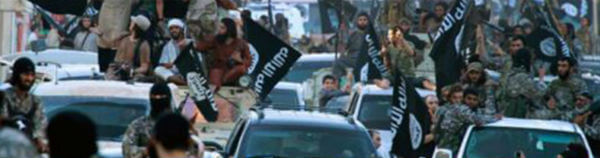
No government is more responsible for ISIS’s growth than Assad’s

Raqqa1

Kyle Orton writes: Last week, a judgment in United States District Court in Washington, D.C., awarded nearly $350 million to the families of two Americans killed in Jordan in 2005 by the predecessor organization to the Islamic State (ISIS). The important point of the case was who the court found liable: the regime of Bashar al-Assad, currently presenting itself to the world as the last line of defense to a terrorist takeover of Syria. This case highlights a neglected history, which began in 2002, where the Assad regime underwrote ISIS and fostered its growth, first to destabilize post-Saddam Iraq and later Lebanon, and since 2011 to discredit and destroy the uprising against Assad in Syria.

The group now known as ISIS was founded in early 2000 with Al-Qaeda seed money at a camp in Taliban-controlled Afghanistan. ISIS’ founder, Abu Musab al-Zarqawi, did not formally swear allegiance to Osama bin Laden until 2004, but the two pooled resources, notably on the Millennium Plot, which was meant to target Zarqawi’s Jordanian homeland and Los Angeles International Airport.

After the U.S. overthrew the Taliban in the wake of 9/11, Bin Laden went to Pakistan and Zarqawi went to Iran. Zarqawi then moved into Iraqi Kurdistan in April 2002, joining Ansar al-Islam, a group he and Al-Qaeda had co-sponsored, which was waging war against the elected Kurdish government that was protected by the Anglo-American no-fly zone. Ansar was penetrated at senior levels by agents of the Saddam Hussein regime, according to Kurdish intelligence, which also caught Saddam providing “logistical support, money, weapons, transportation [and] safe houses” to Ansar. Any enemy of the Kurds was a friend of Saddam’s — even before the reorientation of Saddam’s foreign policy in the mid-1980s toward instrumentalizing Islamist groups for the Baathist government’s own ends (which was later extended to internal policy).

By May 2002, Zarqawi was in Baghdad with a group of more than a dozen Al-Qaeda-affiliated jihadists, including: Zarqawi’s successor, Abu Hamza al-Muhajir, a long-time Qaeda-affiliated Egyptian who was arrested in 2014 while training jihadists in Libya, Thirwat Shehata, and Abu Humam al-Suri, who went on to become the military chief of Jabhat al-Nusra (Al-Qaeda in Syria). Zarqawi, who had “relatively free” movement within Iraq, departed Iraq in the early summer of 2002 to go on a recruitment-drive in the Levant.

First, Zarqawi went to Ain al-Hilweh, a Palestinian camp in southern Lebanon known for its Islamist militancy, and then to Syria. Zarqawi recruited numerous Syrians, notably ISIS’ current spokesman, Taha Falaha, better known as Abu Mohammed al-Adnani. From Syria, Zarqawi organized — with the complicity of Assad — the assassination of a U.S. diplomat, Laurence Foley, in Jordan. More importantly, Zarqawi set up, in collaboration with the Syrian secret police, the networks that would bring the foreign jihadists into Iraq after the fall of Saddam.

During the invasion of Iraq, Mahmoud al-Aghasi (pseudonym: Abu al-Qaqa), a Salafi agitator in Aleppo, had gone door-to-door rounding up young men to go and wage jihad in Iraq, who were then allowed to pass into Iraq unhindered by Syrian border guards. Al-Aghasi was an asset of Assad’s intelligence. Throughout the entire U.S.-led occupation of Iraq, Syria was the main conduit for ISIS’ foreign volunteers who formed the overwhelming majority of the suicide bombers. [Continue reading…]

Facebooktwittermail

Former DIA director, now Trump adviser, sees Muslims as dangerous and Putin as great ally

The Daily Beast reports: As Donald Trump inches closer to the Republican nomination for president, he has faced repeated calls from rival candidates and the press to name the national security and foreign policy experts who advise him and who are helping to shape his views on critical questions that he would confront as commander-in-chief.

Last week, Trump — who has called for banning foreign Muslims from entering the U.S., killing the families of terrorists, and using torture — said in an interview with MSNBC’s Morning Joe that he would identify the members of “the team” he consults “very shortly,” and that, “I don’t think there’s any rush… I just don’t want to do it now.”

But in interviews with current and former U.S. defense and intelligence officials, one name continues to surface as a trusted Trump adviser and go-to man on intelligence and national security: Retired Army Lt. Gen. Michael Flynn, a well-known and outspoken critic of the Obama administration’s campaign against ISIS and its foreign policy.

In Trump, Flynn may have found a kindred spirit—a brash, candid provocateur who seems more interested in upending whole systems than in fine-tuning them. He is also the most prominent name to emerge of those who could help shape the nascent Trump doctrine. And that has made some current and former officials who know Flynn nervous.

They question why the retired general, who has earned criticism for his leadership style but has generally been regarded as a well-intentioned professional, would assist a candidate who has called for military actions that would constitute war crimes.

“I think Flynn and Trump are two peas in a pod,” one former senior U.S. intelligence official who knows Flynn told The Daily Beast. “They have this naive notion that yelling at people will just solve problems.”

Flynn, who was forced out of his post as director of the Defense Intelligence Agency in August 2014 after clashing with other senior officials, has said that “political correctness” has prevented the U.S. from confronting violent extremism, which he sees as a “cancerous idea that exists inside of the Islamic religion.” Flynn has authored a forthcoming book that argues the U.S. government “has concealed the actions of terrorists like [Osama] bin Laden and groups like ISIS, and the role of Iran in the rise of radical Islam…” His co-author, Michael Ledeen, is a neoconservative author and policy analyst who was involved in the Iran-Contra Affair. [Continue reading…]

Facebooktwittermail

Is access to our phones a step toward the police wanting access to our minds?

By Nathan Emmerich, Queen’s University Belfast

We use our smartphones so much these days, it almost feels like they have become extensions of ourselves, boosting our capacity to calculate and remember. What might come of this closer union of human and technological device? If police can serve a warrant to search your phone, and we see these devices as extensions of ourselves, how long until investigators one day serve a warrant to search your mind?

This line of thinking was roused by the FBI’s legal efforts to force Apple to help them access an iPhone that belonged to a suspected terrorist – something Apple says would undermine the security of its products. This is one of several similar cases, and part of a larger effort by the FBI and intelligence agencies, to ensure they can access a variety of now common devices.

Continue reading

Facebooktwittermail

Eating leaves, and other ways besieged Syrians try to survive

The New York Times reports: Medical workers in parts of Syria have been forced to let the wounded bleed to death for lack of bandages, and have opted to use catheter bags meant for urine to administer intravenous fluids to newborns because proper drip bags are gone.

Expectant mothers in areas vulnerable to shelling and bombing give birth by cesarean section rather than risk natural childbirth in an attack. Malnourished children are eating animal feed and leaves, in some cases only miles from warehouses full of food. Families are burning mattress stuffing and plastic scraps for heat.

Those are among some of the details in a Save the Children report issued Tuesday night about the challenges confronting Syrian civilians in 18 areas across the country that the United Nations has defined as besieged, meaning they are surrounded by armed antagonists who have severely restricted aid delivery and freedom of movement.

At least a quarter-million children are among the inhabitants of such areas, which have been effectively turned into “open-air prisons,” the report said. It drew on data from the United Nations and other organizations, as well as Save the Children’s interviews with local aid groups, doctors, teachers and civilians, including 126 mothers, fathers and children who reside in these areas. [Continue reading…]

Facebooktwittermail

Outsourcing a humanitarian crisis to Turkey – is that the European thing to do?

By Marianna Fotaki, University of Warwick

European countries plan to send thousands of refugees back to Turkey in a deal aimed at preventing people from trying to reach the EU by sea.

In what is being described as a “one in, one out” deal, anyone washing up on the shores of Greece will be sent back to Turkey, with one person being transferred from a Turkish refugee camp in their place.

But the deal, which is yet to be finalised, is flawed from the outset. Denying refugees the right to apply for asylum as they reach the EU is against international humanitarian law. And refusing protection to unarmed people fleeing war and persecution by sending them back to Turkey, a country under threat of a civil war, is unconscionable.

European Union leaders must be both desperate and clueless to pursue this. If the goal is to save the European Union from implosion, the question is on what terms will its unity be maintained?

Continue reading

Facebooktwittermail

EU woos Turkey for refugee help, ignoring rights crackdown

The New York Times reports: The contrast was jarring: Just days after the police broke into the offices of an opposition newspaper using tear gas and water cannons, Turkey’s prime minister was greeted in Brussels with offers of billions in aid, visa-free travel for Turks in Europe and renewed prospects for joining the European Union.

The juxtaposition highlighted the conundrum Europe faces as it seeks solutions to its worst refugee crisis since World War II. To win Turkey’s desperately needed assistance in stemming the flow of migrants to the Continent, European officials seem prepared to ignore what critics say is President Recep Tayyip Erdogan’s steady march toward authoritarianism.

It is a moment of European weakness that the Turkish leadership seems keen to capitalize on. As Prime Minister Ahmet Davutoglu arrived in Brussels this week, he upped the ante, asking for more financial aid than was previously negotiated and demanding visa-free travel by June, while offering to take back some migrants who had crossed into Europe. [Continue reading…]

Facebooktwittermail

Truce tests relations between Islamist giants in Syria

Aron Lund writes: The U.S.-Russian brokered truce remains deeply controversial among rebels. Hardline jihadis have condemned the peace process, while more pragmatic Islamists have endorsed it. Now, a jihadi crackdown on demonstrators in rebel-held Idlib is testing the alliance between two of the insurgency’s most powerful factions

For Syria’s rebel movement, relations between its two most powerful Islamist factions is a life or death issue. Two large salafist factions, the Nusra Front and Ahrar al-Sham, dominate the insurgency in the Idlib region, and they play a key part in the Hama and Aleppo governorates as well. While these groups are close allies on the battlefield and have often worked hand in hand politically, there are important distinctions between them. The terrorist-listed Nusra Front is outspokenly salafi-jihadi, many of its leaders are foreigners, and the group has pledged allegiance to the international al-Qaida movement. While equally committed to establishing Syria as a Sunni theocracy, Ahrar al-Sham is an indigenously Syrian group, renounces foreign attacks, and courts international support. It is particularly close to Turkey and Qatar.

The Russian-American agreement brokered on February 22, which led to a partial cessation of hostilities in Syria that began on February 27, has tested their alliance and brought previously latent conflicts of interest to the fore. The Nusra Front is explicitly opposed to the deal, indeed to the political process as a whole, describing it as a ”crusader” scheme to extinguish the Syrian uprising. The group has called for continued attacks on the government of President Bashar al-Assad, although it has in practice exercised restraint since February 27, probably for fear of alienating Syrian civilians or drawing the ire of local allies such as Ahrar al-Sham. Nusra fighters describe this as a waiting game, telling a Reuters correspondent that they are ”convinced that it will not work and it is only a matter of time before it officially ends.” Recently, some reports point to increased Nusra activity south of Aleppo, but it is difficult to know what side actually initiates fighting – the Assad government and its Russian allies have not fully ceased their skirmishing with the rebels either. [Continue reading…]

Facebooktwittermail

An ‘empire of women’ in Lebanon’s Bekaa Valley

Dylan Collins writes: As young Syrian refugee students celebrated International Women’s Day in the Bekaa Valley this week, education advocate Nora Jumblatt highlighted the increasingly important role of women throughout the refugee community. The war in Syria, despite its chaos and sadness, she said, has given rise to a “little miracle”

The war in Syria has brought about an “empire of women” in Lebanon’s Bekaa Valley, said civil society leader and education advocate Nora Jumblatt during a celebration of International Women’s Day.

Hundreds of young Syrian refugee girls participated in the festivities held at the Kayany Foundation’s Malala School in Bar Elias, a town equidistant from Beirut and Damascus that sits along the Syrian-Lebanese border. With the help of international organizations, local universities and volunteers, the foundation is empowering a new generation of Syrian women, equipping them with the tools and knowledge they’ll need to rebuild their country. [Continue reading…]

Facebooktwittermail

Iranian state TV censors speech in which President Rohani hails former President Khatami

RFE/RL reports: Iran’s president has broken a long-standing taboo by publicly defending a reformist predecessor, but his remarks were met with a muted response.

In a speech broadcast live from Mohammad Khatami’s hometown on March 7, President Hassan Rohani hailed the former reformist president as a “dear brother.”

The crowd in the central Iranian city of Yazd cheered wildly at the mention of their native son. But Iran’s state-run IRINN television, well aware of a long-standing media ban against mentioning Khatami’s name, quickly cut the volume. [Continue reading…]

Facebooktwittermail

Most Israeli Jews think they deserve preferential treatment — almost half favor ethnic cleansing

Universally, the targets of discrimination are more conscious of being treated unfairly than are the perpetrators of discrimination. Israel is no exception.

A new Pew Research report includes the following findings:

Roughly one-third of Muslims report having experienced at least one incident of discrimination in the past 12 months

Whereas only 21% of Israeli Jews see “a lot” of discrimination against Muslims, 79% of Israeli Arabs (Muslim and non-Muslim) do.

Vast majority of Arabs see 'a lot' of discrimination against Muslims

Perhaps the reason so few Israeli Jews see discrimination is because so many believe that as Jews, they deserve preferential treatment.

Most Jews say Israel should give preferential treatment to Jews

For half of Israeli Jews, a privileged status is apparently not enough — they would like to see Arab Israelis kicked out.

Majorities of Haredim, Datim agree Arabs should be expelled

Facebooktwittermail