Category Archives: Analysis

‘Unprecedented increase in the number of attacks on healthcare’ in Syria, say aid groups

BuzzFeed reports: Monday marked an “unprecedented” surge in attacks on health facilities in Syria, according to an internal report by affiliates of the World Health Organization that was rushed out to take the toll of the damage.

The report, compiled by the consortium of medical facilities the WHO oversees in the country and provided exclusively to BuzzFeed News, documents a series of what appeared to be targeted bombings of hospitals and other health facilities in Syria. The attacks — which local doctors and international observers alike blamed on Syrian and Russian missiles — killed patients and medical staff at seven different medical sites, the report said, adding that Monday marked “an unprecedented increase in the number of attacks on healthcare in one single day.” [Continue reading…]

Facebooktwittermail

Kurds carve out new reality in northern Syria

The Guardian reports: Amid the chaos in northern Syria in recent months, several themes have emerged.

The first is that Islamic State has been spared from intensified Russian airstrikes and advances by pro-regime forces. The second, and potentially more important development, is that one of the war’s least visible players – the Kurds – have done more than anyone else to carve out a new reality.

As Lebanese Hezbollah, militias from Iraq, and Syrian troops – all led by Iran – have inched their way around the top of Aleppo, the Kurdish YPG, supported by Russian air cover, has been making strident moves towards areas they have avoided throughout the conflict.

Over the weekend, the YPG moved towards two Syrian towns between the Turkish border and the almost besieged Aleppo, after earlier seizing an airbase that had been held by the opposition. Throughout the war, the YPG had been viewed warily by the opposition, and given a wide berth by the regime.

Now, though, its moves have sharply expanded a footprint in the north, alarming rebels who have been distracted by other foes, and Turkey, which had vowed never to let the Kurds dominate its border with Syria.

The Kurds are ascendant, and the Turks are enraged. Ankara sees YPG militants, who are affiliated with the Kurdistan Workers’ party (PKK), as vying to own areas they have never before controlled, to establish a foothold from Irfin in Syria’s north-west to the Iraqi border, a frontier dominated for decades by Arabs.

Helping the YPG do that are the same Russian jets that are steadily destroying Turkish-supported rebel groups, whose three-year push to oust Bashar al-Assad increasingly looks lost. [Continue reading…]

Facebooktwittermail

Iran’s revolutionary grandchildren

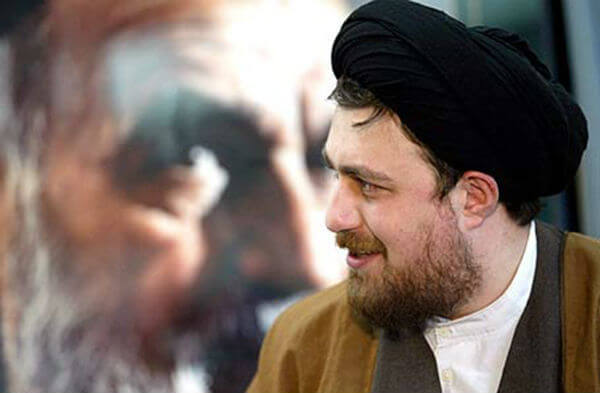
Hassan-Khomeini

Robin Wright writes: When the revolutionary leader Ayatollah Khomeini died abruptly, from heart failure after surgery, in 1989, he left behind fifteen grandchildren. The fate of his heirs reflects the depth of tensions within the Islamic Republic as it marks the thirty-seventh anniversary of the Imam’s triumphant return from exile — and prepares for twin elections, on February 26th. All the Khomeini kids (eight males and seven females) are committed reformers pushing for Iran to open up at home — politically, economically, and socially — now that it has reëngaged with the world. In public letters and interviews, seven have challenged the theocracy’s political rules and rigid social strictures. Since 2004, three have registered to run for office.

Hassan Khomeini is the family standard-bearer. He considered a soccer career before enrolling in a seminary, in the holy city of Qom, in his twenties. Now forty-three, he still plays the odd pickup game and goes to big matches. “I was good in defense, and if I had continued soccer I might have achieved something,” he joked at a meeting with Iran’s top players, in December. He is now more seriously employed as the caretaker of his grandfather’s legacy, at the Institute for the Compilation and Publication of Imam Khomeini’s Works. He is also a published scholar on Islam’s disparate sects. He wears a black turban, signifying that he descended from the Prophet Muhammed. He has all the right connections, too. His Instagram account, which has almost a quarter of a million followers, is loaded with images of him alongside top theocrats and politicians. In December, reformist newspapers ran front-page stories heralding him as Iran’s “Future Leader” and as a “Second Khomeini.” [Continue reading…]

Facebooktwittermail

Why ISIS propaganda works

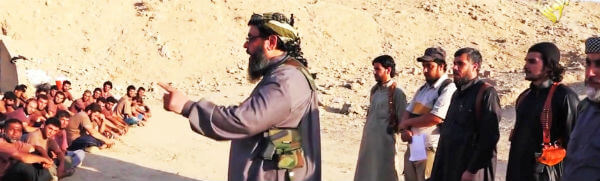
ISIS-instructor

Charlie Winter and Jordan Bach-Lombardo write: As it stands, the international coalition is far from winning the information war against the Islamic State. Its air strikes may be squeezing the group in Iraq and Syria and killing many of its leaders, but that has not halted the self-proclaimed caliphate’s ideological momentum. Indeed, at the end of 2015, it was estimated that the number of foreigners travelling to join militant groups in Iraq and Syria — predominantly the Islamic State — had more than doubled in the course of just 18 months. What’s more, while these figures may be striking, sheer numbers are less important than intent when it comes to the organization’s actual threat to the world. As we have already seen, it takes a very small number of people to unleash great terror, whether in Iraq, Syria, or elsewhere.

Abu Bakr al-Baghdadi’s organization does not enjoy mass appeal, but it is certainly having mass impact. After but 18 months of caliphate-hood, the group’s preeminence is already coming to shape what it is to be a millennial Muslim and inspiring attacks far outside the caliphate. Hence, the strategic communications war—where hearts and minds are won and lost—is just as important in the long-term as any military campaign, if not more so. [Continue reading…]

Facebooktwittermail

Putin’s reward for doing a deal with OPEC overshadowed by risks

Bloomberg reports: Neither a recession nor a collapse in revenue has yet been enough to convince Russian President Vladimir Putin that it’s time to join with OPEC and cut oil output to boost prices. His reasons may be pragmatic rather than political.

Russia’s Energy Minister Alexander Novak and his Saudi Arabian, Venezuelan and Qatari counterparts agreed to freeze output at January levels on Tuesday. The world’s second-largest crude producer faces numerous obstacles to any deal that would actually cut production, even if Putin decides it’s in the national interest. Reducing the flow of crude might damage Russia’s fields and pipelines, require expensive new storage tanks or simply take too long.

In Siberia, Russia’s main oil province, winter temperatures can go below minus 40 degrees Celsius (minus 40 Fahrenheit). That’s a challenge for anyone thinking of turning off the taps.

The oil and gas that flows from wells always contains water, so once pumping stops, pipes may freeze, Mikhail Pshenitsyn, who has worked for more than 10 years in the Russian oil industry, said by e-mail. The problem goes away in summer, but there’s still the risk of a long-term reduction in output because a halted reservoir can become polluted with salts and residues, he said.

Production from a shut-in well might never be restored in full, Maxim Nechaev, director for Russia at consulting firm IHS Inc., said by phone. [Continue reading…]

Facebooktwittermail

How Scalia’s death might help our planet

Eric Holthaus writes: Supreme Court Justice Antonin Scalia’s death at a remote Texas ranch has triggered a political earthquake and instantly changes the outlook for a host of high-profile issues the court is currently considering. But perhaps none of these are as consequential as the fate of the planet itself. As Climate Central’s John Upton wrote, “in dying, Scalia may have done more to support global climate action than most people will do in their lifetimes.”

Scalia’s death comes just days after the Supreme Court issued an unprecedented stay that temporarily blocked the implementation of the Clean Power Plan, Obama’s centerpiece climate legislation. The Clean Power Plan isn’t perfect, but it was on pace to double the already accelerating rate of coal-fired power plant retirements by 2040. Last week’s surprising action by the Supreme Court — dubbed a “nightmare scenario” by the Hill — raised substantial fears among environmentalists that the court’s conservatives might eventually block the Clean Power Plan completely. At the very least, the stay buys some time for Republican hopefuls in this year’s presidential election; if one were to win, he could just cancel the executive order that launched the plan in the first place.

The stay is still in place, but the climate law experts I talked to say Scalia’s death greatly boosts the eventual survival chances of the Clean Power Plan. A 4-4 court would guarantee that the lower court ruling would stand—and the D.C. Circuit Court is expected to approve the plan. [Continue reading…]

Facebooktwittermail

Peter Van Buren: Minimum wage, minimum chance

To say that we live on a 1% planet isn’t just a turn of phrase. In fact, it would undoubtedly be more accurate to speak of a .1% or a .01% planet.  In recent years, wealth and income inequalities have grown in a notorious fashion in the United States — and, as it turns out, globally as well. In January, Oxfam released a report on the widening gap between global wealth and poverty. It found that, between 2010 and today, the wealth of the poorest half of the planet’s population fell by a trillion dollars, a drop of 41%, while that of the richest 62 people (53 men and nine women) increased by half a trillion dollars.  Put another way, those 62 billionaires were wealthier than the bottom 50% of the world’s people, while the richest 1% owned more than the other 99% combined.  The direction in which we’re heading is obvious.  Just consider that, in 2010, it took 388 of the super-rich to equal the holdings of the bottom 50%; now, that number is 326 people smaller.

Keep that trend line in mind as you read about TomDispatch regular Peter Van Buren’s latest adventures in the minimum-wage economy. Back in 2014, he described for this site how, having lost his State Department job for being a whistleblower on the Iraq War, he fell for a time into the low-wage world. As he wrote, “And soon enough, I did indeed find myself working in exactly that economy and, worse yet, trying to live on the money I made. But it wasn’t just the money. There’s this American thing in which jobs define us, and those definitions tell us what our individual futures and the future of our society is likely to be. And believe me, rock bottom is a miserable base for any future.” His experiences in a big-box retail store inspired him to write his novel, Ghosts of Tom Joad: A Story of the #99Percent. As last year ended, he returned to the minimum-wage world, now — thanks in particular to Bernie Sanders — part of the national conversation. And here’s what he found. Tom Engelhardt

Nickel and dimed in 2016
You can’t earn a living on the minimum wage
By Peter Van Buren

When presidential candidate Bernie Sanders talks about income inequality, and when other candidates speak about the minimum wage and food stamps, what are they really talking about?

Whether they know it or not, it’s something like this.

My Working Life Then

A few years ago, I wrote about my experience enmeshed in the minimum-wage economy, chronicling the collapse of good people who could not earn enough money, often working 60-plus hours a week at multiple jobs, to feed their families. I saw that, in this country, people trying to make ends meet in such a fashion still had to resort to food benefit programs and charity. I saw an employee fired for stealing lunches from the break room refrigerator to feed himself. I watched as a co-worker secretly brought her two kids into the store and left them to wander alone for hours because she couldn’t afford childcare. (As it happens, 29% of low-wage employees are single parents.)

At that point, having worked at the State Department for 24 years, I had been booted out for being a whistleblower. I wasn’t sure what would happen to me next and so took a series of minimum wage jobs. Finding myself plunged into the low-wage economy was a sobering, even frightening, experience that made me realize just how ignorant I had been about the lives of the people who rang me up at stores or served me food in restaurants. Though millions of adults work for minimum wage, until I did it myself I knew nothing about what that involved, which meant I knew next to nothing about twenty-first-century America.

Continue reading

Facebooktwittermail

The BuzzFeed business model: data, learning, dollars

Fast Company reports: Across all the platforms where it now publishes content, the company generates 5 billion monthly views—half from video, a business that effectively did not exist two years ago. Traffic to the website has remained steady — 80 million people in the U.S. every month, putting it ahead of The New York Times — even though as much as 75% of BuzzFeed’s content is now published somewhere else.

BuzzFeed has become the envy of the media world for its seemingly magical ability to engineer stories and ads that are shared widely — whether it’s a dress that looks to be either white and gold or blue and black, an investigation into taxpayer-funded “ghost schools” in Afghanistan, or an older cat imparting wisdom to a kitten on behalf of Purina. Rivals in the insular media world carp that BuzzFeed is gaming Facebook’s algorithm, or buying ads to pump up its content, and both are unsustainable; viral smashes like the dress are mere luck; even traditional brands such as The Washington Post can beat BuzzFeed with their own traffic-oriented gambits.

What’s lost here is a true understanding of what Peretti, one of the world’s most astute observers of Internet behavior, has built. The company’s success is rooted in a dynamic, learning-driven culture; BuzzFeed is a continuous feedback loop where all of its articles and videos are the input for its sophisticated data operation, which then informs how BuzzFeed creates and distributes the advertising it produces. In a diagram showing how the system works, Peretti synthesized it down to “data, learning, dollars.” [Continue reading…]

Facebooktwittermail

A mini world war rages in the fields of Aleppo

The Washington Post reports: Across the olive groves and wheat fields of the northern Syrian province of Aleppo, a battle with global dimensions risks erupting into a wider war.

Russian warplanes are bombing from the sky. Iraqi and Lebanese militias aided by Iranian advisers are advancing on the ground. An assortment of Syrian rebels backed by the United States, Turkey, Saudi Arabia and Qatar are fighting to hold them back. Kurdish forces allied both to Washington and Moscow are taking advantage of the chaos to extend Kurdish territories. The Islamic State has snatched a couple of small villages, while all the focus was on the other groups.

Ahead of a supposed pause in the hostilities negotiated by world powers and due to be implemented later in the week, the conflict seems only to be escalating. Turkey joined in over the weekend, firing artillery across its border at Kurdish positions for a second day Sunday and prompting appeals from the Obama administration to both Turks and Kurds to back down.

Syria’s civil war long ago mutated into a proxy conflict, with competing world powers backing the rival Syrian factions almost since the earliest days of the armed rebellion against President Bashar al-Assad.

But perhaps never before have the dangers — or the complications — of what amounts to a mini world war been so apparent as in the battle underway for control of Aleppo. [Continue reading…]

Facebooktwittermail

Russia facilitates ceasefire deals with safe passage for ISIS and Nusra Front fighters

Reuters reports: Pro-government sources say the Russian role has expanded to include facilitating local ceasefires in rebel-held areas around Damascus, with the aim of creating a secure buffer around the capital. Syrian Minister of National Reconciliation Ali Haidar described the process as purely Syrian even if there had at times been Russian help.

“The truth is that since the presence of the Russians on Syrian land, they can play the role of mediator in some areas,” he said at his offices in Damascus. “The Russians make contact (with militants) when they can, of course – in Douma and other areas,” he said, in reference to an area east of Damascus.” Sometimes it is the militants who request mediation by the Russians,” he said. Those wishing to relocate wanted guarantees of safe passage to rebel strongholds, and those wishing to stay wanted to be sure they wouldn’t be killed later on, he said. According to the non-Syrian sources interviewed by Reuters, Russian advisers orchestrated two deals in which hardline Islamist fighters were evacuated from the south toward areas their groups control in the northern and central provinces.

One of the non-Syrian military sources said the Russians worked “in the shadows” to facilitate the ceasefire deals. In some cases the Russians operated as guarantors for the deals.

Dozens of cars left southern towns of Syria in December carrying fighters from Nusra Front with their families to the northern province of Idlib which is under control of an alliance of rebels including Nusra Front. Weeks later a convoy left Hajar al-Aswad and Yarmouk camp areas near Damascus carrying fighters and families from Islamic State to the group’s stronghold of Raqqa.

A second source who was informed of the deals said the fighters were given safe passage. The aim was to empty these areas of hardline Islamists so clearing the way for the government to strike deals with the remaining rebels.

“The Russians want all the battles to be focused in the north, they want the south and Damascus and the coastal line all neutralized. Ultimately they are working toward achieving a wider political solution,” said the source. [Continue reading…]

Facebooktwittermail

Airstrikes hit hospitals in northern Syria; MSF views Russia or Assad’s forces as responsible

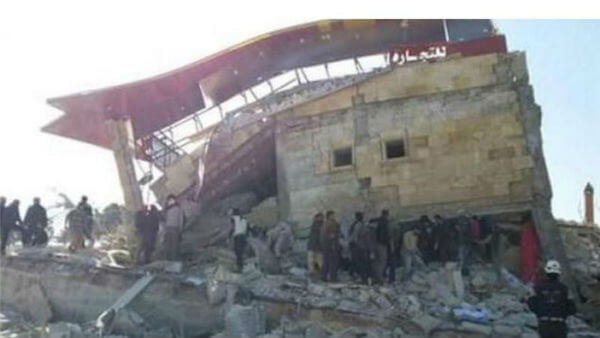
msf-hospital

The Guardian reports: Airstrikes have hit hospitals in two locations in northern Syria – marking the latest in a series of attacks on medical facilities and workers in the five-year civil war.

Médecins Sans Frontières said seven people were killed when a facility it supports in Maaret al-Numan, Idlib province, was hit four times in two separate raids. Mego Terzian, MSF’s France president, told Reuters he thought that either Russia or Syrian government forces were responsible. Both have been engaged in an unrelenting aerial bombardment in Idlib.

The hospital, which has 54 staff and 30 beds, is financed by the medical charity, which also supplies medicine and equipment.

“The destruction of the hospital leaves the local population of about 40,000 people without access to medical services in an active zone of conflict,” said Massimiliano Rebaudengo, MSF’s head of mission in Syria.

In separate incident, Syrian opposition activists said a missile struck a children’s hospital in the rebel-held town of Azaz, near the Turkish border, killing 10 and wounding more than 30. The Turkish prime minister, Ahmet Davutoğlu, said a Russian ballistic missile had hit the town. [Continue reading…]

Reuters adds: Residents in both towns blamed Russian strikes, saying the planes deployed were more numerous and the munitions more powerful than the Syrian military typically used. [Continue reading…]

Facebooktwittermail

Merkel isolated as EU partners slam door on refugees

AFP reports: Abandoned by France, defied by eastern Europe, German Chancellor Angela Merkel cuts a lonely figure in her struggle for EU “solidarity” on the refugee crisis ahead of a Brussels summit.

Merkel is battling for a deal that will see refugees more evenly spread around the European Union after Germany welcomed 1.1 million asylum seekers last year.

But instead, eastern European countries are planning new razor wire fences, and even Paris — traditionally Berlin’s closest EU ally — has shown little enthusiasm for Merkel’s welcome policy.

French Prime Minister Manuel Valls said Saturday that the mood in France was “not favourable” to Merkel’s call for a permanent quota system.

“Europe cannot take in all the migrants from Syria, Iraq or Africa,” Valls told German media. “It has to regain control over its borders, over its migration or asylum policies.”

US Secretary of State John Kerry praised Merkel for showing “great courage in helping so many who need so much” amid “the gravest humanitarian crisis in Europe since World War II”.

But he also told the Munich Security Conference that the mass influx spells a “near existential… threat to the politics and fabric of life in Europe”. [Continue reading…]

Facebooktwittermail

A political movement is rising from the mud in Calais

By Raphael Schlembach, University of Brighton

Since the official refugee reception centre in the French town of Calais closed in 2002, undocumented migrants hoping to cross the Channel to Britain have found shelter in a number of squatted migrant camps, locally known as “the jungles”.

Consisting largely of tents and self-built shacks, the two largest in Calais and Dunkirk now have some 8,000 residents between them. Many are refugees fleeing conflict in Syria, Afghanistan, Iraq and Sudan and surviving in extremely poor living conditions.

For the most part, this is a humanitarian disaster. But the jungles of Northern France are also giving rise to a new political movement, which draws in new supporters every day.

Continue reading

Facebooktwittermail

The pragmatic case for Bernie Sanders

Christopher D Cook writes: As Bernie Sanders defies expectations with a resounding New Hampshire victory and a virtual tie in Iowa, Democratic Party leaders still insist Hillary Clinton is the pragmatic choice to beat Republicans and bring effective leadership and change — if incremental — to Washington. Clinton and her supporters frame the race, and her appeal, as a matter of “ready on day one” leadership and “get things done” practicality. But what does the record show, and what do leadership and pragmatism really mean?

On the pragmatics of electability, nearly every major national poll consistently shows Sanders equaling or bettering Clinton against all Republicans. Polls show Sanders nearly tied with Clinton nationally and rising. On electability, if anything, Sanders has the edge right now. There is nothing empirical to suggest Clinton’s superior electability — quite the contrary given her loss to Barack Obama in 2008 and her flagging campaign this year. While Clinton might gain more moderate Independents (particularly against a polarizing Republican nominee), Sanders can inspire massive Democratic and liberal Independent turnout and likely win over many white working-class swing voters.

Clinton’s most persistent attack—parroted by mainstream media — claims that Sanders’s agenda is perhaps laudable but unrealistic. Moderation is more effective, she claims. However, this is a misreading of American politics and factual comparisons of the candidates’ track records. [Continue reading…]

Facebooktwittermail

For Bernie Sanders, foreign policy is an afterthought

David Ignatius writes: Sanders’s statements on Syria suggest that he would take a position embraced by many self-described realists. His first priority, he has said, would be a “broad coalition, including Russia,” to defeat the Islamic State. “Our second priority must be getting rid of [President Bashar al-Assad], through some political settlement, working with Iran, working with Russia.”

Some critics would argue that it’s immoral to make replacing a leader who used chemical weapons a secondary concern. But Sanders’s defenders could argue that foreign policy is about making clear choices, especially when they aren’t easy.

Foreign policy just hasn’t been on Sanders’s radar: His campaign website lists 22 important issues. “Income and wealth inequality” is at the top, and 19 are about domestic policy. Just three involve foreign concerns, and one of these is climate change, which Sanders has described as the biggest threat to national security.

Unease about Sanders partly reflects the fact that he seems to have no real foreign policy mentors. The Sanders campaign made comical missteps in the past few weeks when it tried to name his key foreign policy advisers. Several of them said they had briefed the candidate just once or twice; one was a full-time White House staffer. [Continue reading…]

In place of foreign policy advisers, Sanders is most likely relying on foreign policy advice: the less said, the better.

Politically, that might be sound advice during an election campaign, but it has a corrosive effect because it does nothing to challenge the affliction that always distorts the way America deals with the world: the prevailing sense that the rest of the world doesn’t matter.

Isolationists can’t effectively tackle global issues — including climate change.

Facebooktwittermail

Donald Trump’s history as a reckless gambler

trump-house

Michael Crowley writes: In January 1992, a Japanese one-time billionaire named Akio Kashiwagi was found dead in his palatial home near Mt. Fuji. The scene was gruesome. The house’s white paper screens were spattered with blood. The 54-year-old had been stabbed as many as 150 times. By some reports the weapon of choice was a samurai-style sword.

The crime was never solved, though it bore the hallmarks of a killing by Japan’s criminal yakuza. Ostensibly a real estate investor, Kashiwagi was a mysterious figure reputed to have underworld connections. He was also one of the world’s top five gamblers, a “whale” in casino parlance, willing to wager $10 million in a single gaming bender.

And that is how he crossed paths with Donald J. Trump, then a budding Atlantic City casino mogul. In 1990 the two men had an epic and remarkably personal showdown in which millions of dollars changed hands in a matter of days, before it all ended in a flurry of recriminations. One of the Japanese mogul’s last statements to the U.S. media, through an aide, involved his plans to burn a copy of Trump’s book, The Art of the Deal.

After his murder, the New York Times reported that he owed at least $9 million to casinos in Atlantic City and Las Vegas. One unnamed casino Atlantic City executive told the paper that Kashiwagi had owed the Trump Plaza Hotel and Casino $4 million.

Trump is obsessed with winning, a topic he usually brings up in the context of his merciless deal-making style. But a crucial question about any would-be president who may be confronted with questions of war and peace is his attitude toward risk. Some presidents — Barack Obama comes to mind — are highly averse to it. Others roll the dice, as George W. Bush did when he invaded Iraq.

The story of Akio Kashiwagi, drawn from Trump’s memoirs and news accounts from the day, offers a revealing window into Trump’s instincts. It shows that Trump isn’t just a one-time casino owner — he’s also a gambler, prone to impulsive, even reckless action. In The Art of the Comeback, published in 1997, Trump explains that until he met Kashiwagi, he saw himself as an investor who dealt only in facts and reason. But his duel with the great whale in action made him realize “that I had become a gambler, something I never thought I was.”

Perhaps just as important, when gambling failed him, Trump didn’t quit: He doubled down. But he did it shrewdly, summoning a RAND Corporation mathematician to devise a plan that would maximize his chance of fleecing his Japanese guest.

And it worked. Kind of. In Trump’s recollection, which he shared for this story, his showdown with Kashiwagi was another one of his many great wins. Just don’t look too hard at the ledger. [Continue reading…]

Facebooktwittermail

How ex-Communists shaped American conservatism

Sam Tanenhaus writes: A paradox of 20th-century American politics is that its most sustained ideological movement, modern conservatism, was the brainchild of ex-Communists who had been disillusioned by the crimes of the Soviet revolution or caught on the wrong side of factional disputes. Estranged and unhappy, they went in search of a new god and helped create it—in the mirror image, it has often seemed, of the one that failed them the first time. Together they were “Stalin’s gift to the American Right,” John Patrick Diggins wrote in Up From Communism (1975), his account of four writers who exiled themselves from the left and then wandered like restless spirits before finding refuge in the pages of William F. Buckley Jr.’s National Review in the 1950s and early 1960s.

In Exit Right: The People Who Left the Left and Reshaped the American Century, Daniel Oppenheimer, a writer and a director of communications at the University of Texas at Austin who was born the year after Diggins’s book came out, reprises and updates the history of political defectors. To Oppenheimer’s credit, his own politics, which seem somewhere on the left, don’t intrude on the absorbing stories he tells. He begins with the ex-Communists Whittaker Chambers and James Burnham, then discusses two renouncers of liberalism, Ronald Reagan and Norman Podhoretz, and closes the circle with two casualties of the ’60s–’70s radical left, David Horowitz and Christopher Hitchens. “The ex-believers—the heretics, the apostates—are the problem children of any politics, in any time,” Oppenheimer writes. But the problem, he suggests, isn’t theirs. It’s ours. So quick to denounce or praise, and to demand to be told which side everyone is on, we forget that politics also offers parables of second thoughts and transformation. Ideological changelings, if we catch them mid-flight, remind us that “belief is complicated, contingent, multi-determined.” They can show us, too, “how hard it is to be a person in the world, period, and how much more confusing that task can become when you take on responsibility for repairing or redeeming it.” [Continue reading…]

Facebooktwittermail

Doing more with less: The economic lesson of Peak Paper

structure2

John Quiggin writes: For most of us, the industrial economy is a thing of the past. In the entire United States, large factories employ fewer than 2 million people. Even adding China to the picture does not change things much. And yet the conceptual categories of the 20th century still dominate our thinking. We remain fixated on the industrial model of economic growth, where ‘growth’ means ‘more of everything’, and we can express our rate of development in a single number. This model leads naturally to the conclusion that economic expansion must eventually run up against constraints on the availability of natural resources, such as trees to make paper.

And yet in 2013, despite positive growth overall, the world reached ‘Peak Paper’: global paper production and consumption reached its maximum, flattened out, and is now falling. A prediction that was over-hyped in the 20th century and then derided in the early 2000s – namely, the Paperless Office – is finally being realised. Growth continues, but paper is in retreat. Why did this seem so unlikely only a decade ago?

The problem is a standard assumption of macroeconomics – namely, that all sectors of the economy expand at a roughly equal rate. If this ‘fixed proportions’ assumption does not hold, the theory used to construct GDP numbers ceases to work, and the concept of a ‘rate of growth’ is no longer meaningful. Until the end of the 20th century, these assumptions did in fact work reasonably well for paper, books and newspapers. The volume of information increased somewhat more rapidly than the economy as a whole, but not so rapidly as to undermine the notion of an overall rate of economic growth. The volume of printed matter grew steadily, to around a million new books every year, and the demand for paper for printing grew in line with demand for books. [Continue reading…]

Facebooktwittermail