Category Archives: Analysis

Meet the world’s most notorious taxonomist

lichen2

Susie Neilson writes: In 2005, the taxonomist Quentin Wheeler named a trio of newly discovered slime-mold beetles after George W. Bush, Donald Rumsfeld, and Dick Cheney. He believed the names could increase public interest in the discovery and classification of new species, and help combat the quickening pace of extinction. (Species go extinct three times faster than we can name them.)

He knew he was onto something when, having received a call from the White House, it was Bush on the other end, thanking him for the honor. Wheeler, now the president of SUNY’s College of Environmental Science and Forestry, began attributing all sorts of provocative names to his bugs, including Darth Vader, Stephen Colbert, Roy and Barbara Orbison, Pocahontas, Hernan Cortez, and the Aztecs — he has even named 6 species after himself. Youcan call his strategy “shameless self-promotion” — Wheeler already has.

Nautilus spoke with Wheeler about his work.

What’s exciting about taxonomy?

It is the one field with the audacity to create a living inventory of every living thing on the entire planet and reconstruct the history of the diversity of life. Who else would tackle 12 million species in 3.8 billion years on the entire surface of the planet? If that isn’t real science, I don’t know what is. It infuriates me that taxonomy is marginalized as a bookkeeping activity, when in fact it has the most audacious research agenda of any biological science. [Continue reading…]

Facebooktwittermail

The Syrian government, with Russia’s help, is driving its own people into exile

refugees4

Roy Gutman reports:  The airstrikes began just after midnight one week ago, as four or more warplanes criss-crossed the skies and unleashed missiles into the small town just northwest of Aleppo. The targets were private residences and apartments on the outskirts of Haritan, and then the town center.

The windows in Salah Hawa’s four-room house had already been shattered by an airstrike nearby last month. The latest blasts blew out the nylon sheets used to cover the gaps.

After two days and nights of attacks — possibly 300 missiles or more — Hawa, a 40-year-old English teacher, and his wife and four children, aged 5 to 16, fled to the nearby countryside in a neighbor’s pickup truck.

During one airstrike, his wife, Hasna, 39, lay down, and for an hour, “she couldn’t stand up out of fear,” Hawa recounted in a Skype conversation from northern Syria. “My children clung to me, crying, and said we are going to die.”

Hawa’s family, multiplied by 10,000, are the face of the latest mass displacement in Syria. They are now living in a village about 30 miles to the west, in Idlib province in a house shared with four other families. Tens of thousands of others displaced by the fighting headed to the closed border with Turkey, where accommodation was even more scarce.

It is the latest evidence of a dramatic shift in the war that began with the Russia air intervention last September 30. Russia claims to be bombing only “terrorists” and has told the Obama administration it is committed to a political settlement. But the real aim of the latest onslaught — which forced the United Nations to suspend peace talks before they even began — could be a lot more menacing.

The airstrikes cleared the way for Lebanon’s Hezbollah militia, Iraqi militias, and Afghan Hazara forces, which are officered by Iran’s Revolutionary Guard Corps and Syrian security forces, to make critical advances on the ground. Now Syrian President Bashar al-Assad is poised to surround Aleppo and besiege some 250,000 civilians living in the rebel-defended eastern sector.

If the military advances continue, Assad soon will also be able to block all military and humanitarian aid now flowing across the border from Turkey. But Assad is also in a position to drive millions of Syrians out of their country into Turkey, which will be hard pressed to stop them from continuing on to Europe. Mass displacement increasingly appears to be the aim of the military operation, and not just a side effect, humanitarian aid officials say.

“The Syrian government is driving its people into exile and the Russians are playing a major part, forcing civilians to Turkey which, caught between this violent exodus and pressure from Europe, risks being destabilized,” said Rae McGrath, head of the Mercy Corps program in Turkey and north Syria. “How can we talk about protecting civilians in the midst of this cynical disregard for the most basic humanitarian principles?” [Continue reading…]

Zachary Laub spoke to Noah Bonsey, senior Syria analyst for the International Crisis Group:
Do these sieges reflect the strategy of the Assad regime?

The regime’s military strategy, supported and increasingly embraced by its backers, is based heavily on collective punishment, [which is] especially important given the regime’s manpower disadvantage. This is one of the reasons we see such heavy use of bombing that is not indiscriminate so much as it is discriminately targeting civilian areas and civilian infrastructure. This is also why we see the siege tactics, which in some cases bring rebel[-held] areas to the point of starvation.

As civilians leave areas, regime advances can become easier. These tactics are also applied as a means of raising the price of resistance to the communities as a whole, so that communities pressure the fighters in their area to accept what the regime offers as cease-fire terms, but also, effectively, to surrender.

The Feb. 11 meeting of the International Syria Support Group [ISSG] came as fledgling peace talks in Vienna appeared to be at an impasse. Where do these efforts on a political transition stand?

The political process is based on the premise of U.S.-Russian sponsorship in which the U.S. is the point man rallying the opposition and its backers to a serious negotiating process, and Russia is to do that for the regime side. The reason this current round of the political process is surrounded by such skepticism is that while the U.S. appears enthusiastic—almost desperate—to get some sort of political process moving, Russia appears far less interested in making the process viable at this stage. Russia’s decision to escalate dramatically its aerial attacks on Aleppo—areas with heavy civilian populations—the very day the opposition delegation arrived in Geneva for talks was the latest in a series of indications that Russia is happy to see this political process stall or, potentially, even derail. [Continue reading…]

Facebooktwittermail

The Syria ‘ceasefire’ deal is no such thing — it’s cover for the U.S. and Russia

By Scott Lucas, University of Birmingham

Headlines have been declaring a ceasefire in Syria’s conflict. Announced by US secretary of state John Kerry and Russian foreign minister Sergei Lavrov late on February 11, it was greeted as a ray of hope in the floundering efforts to end this seemingly intractable conflict.

What it isn’t, is a ceasefire. The International Syria Support Group (ISSG) – a coalition of 17 nations, among them Russia and the US, the Arab League, the European Union, and the UN – has not in fact used that term, preferring a “cessation of hostilities”. And it isn’t even that: it’s a proposal for a cessation of hostilities, one that will supposedly start soon, but only after a working group has met with representatives of countries supporting the Assad regime and those backing Syria’s opposition.

Nor is it a viable proposal. Instead, it’s best seen as political cover. It covers Kerry, in his remarkably zealous quest to secure the start of a resolution by the end of March, and Russia, in its mission to prop up the Assad regime by bombing the rebels and civilian areas in concert with both Lebanon’s Hezbollah and Iran.

Continue reading

Facebooktwittermail

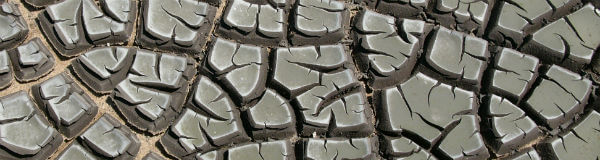
Over half the world’s population suffers from ‘severe’ water scarcity, scientists say

shadow16

The Washington Post reports: Alarming new research has found that 4 billion people around the globe — including close to 2 billion in India and China — live in conditions of extreme water scarcity at least one month during the year. Half a billion, meanwhile, experience it throughout the entire year.

The new study, by Mesfin Mekonnen and Arjen Hoekstra of the University of Twente in the Netherlands, uses a high resolution global model to examine the availability of “blue water” — both surface and underground freshwater — in comparison with the demand for it from agriculture, industry and human household needs. The model — which zoomed in on areas as small as 60 kilometers by 60 kilometers in size at the equator — also took into account climatic factors, ecological ones (how much water is needed to sustain a river ecosystem or lake) and other causes of depletion such simple evaporation.

“We find that 4 billion people live in areas that experience severe water scarcity at least part of the year, which is more than previously thought, based on those earlier studies done on an annual basis,” says Hoekstra, who published the work in Science Advances Friday. “You have to look really month by month, in order to get the scarcity.” [Continue reading…]

Facebooktwittermail

As Europe faces worst crises since World War II, few expect help from Washington

Josh Rogin writes: Europe is facing a convergence of the worst crises since World War II, and the overwhelming consensus among officials and experts here is that the U.S. no longer has the will or the ability to play an influential role in solving them.

At the Munich Security Conference, the prime topics are the refugee crisis, the Syrian conflict, Russian aggression and the potential dissolution of the European Union’s very structure. Top European leaders repeatedly lamented that 2015 saw all of Europe’s problems deepen, and unanimously predicted that in 2016 they would get even worse.

“The question of war and peace has returned to the continent,” German Foreign Minister Frank-Walter Steinmeier told the audience, indirectly referring to Russian military interventions. “We had thought that peace had returned to Europe for good.”

What was missing from the conference speeches and even the many private discussions in the hallways, compared to previous years, was the discussion of what Europe wanted or even expected the U.S. to do. [Continue reading…]

Facebooktwittermail

Russia warns of new Cold War as east Ukraine violence surges and the U.S. is outmaneuvered in Syria

The Washington Post reports: Violence in eastern Ukraine is intensifying and Russian-backed rebels have moved heavy weaponry back to the front line, international monitors warned Saturday, as Moscow responded by accusing the West of dragging the world back 50 years.

Russian Prime Minister Dmitry Medvedev described East-West relations as having “fallen into a new Cold War” and said NATO was “hostile and closed” toward Russia, in the latest sign that peace efforts have made scant progress almost two years since Moscow annexed Crimea.

“I sometimes wonder — are we in 2016 or 1962?” Medvedev asked in a speech to the Munich Security Conference on Saturday.

Western governments say they have satellite images, video and other evidence to show that Russia is providing weapons to the Ukrainian rebels and that Moscow has troops engaged in the conflict. Russia denies such accusations. [Continue reading…]

The Observer reports: Moscow is back as a big player in the Middle East, while Washington looks humbled, a shadow of the great power that once dominated events in the region. The cold war is back, as the Russian prime minister, Dmitry Medvedev, said on Saturday – and for now Russia seems to be in the ascendancy.

Critics warned from the day the ceasefire was announced that Moscow had outmaneuvered Washington and was simply using the negotiations and the deal to consolidate gains, a tactic honed by Russian forces in Ukraine.

The US may have lost more than political capital. The ceasefire risks costing them the trust of the few moderate opposition groups left on the ground, who feel abandoned by a country that promised support.

“The people that the Americans had been trying to sponsor are now targets of an enemy that bombs without mercy or discretion, and the Americans don’t have a problem with that?” said one Free Syrian Army member in Aleppo, who declined to be named. “They never deserved our trust.”

Russia, by contrast, has doubled down on Assad. Around the time Lavrov was handing down his grim prognosis for the ceasefire, a missile cruiser left the naval base in Sevastopol in Crimea. It was heading towards the Mediterranean to join the Russian fleet there, a public shoring up of an already strong military presence. Refugees who had recently fled Isis rule said that the failure to challenge Assad and Russia could even put the west’s main goal in Syria – the routing of Isis – at risk. If other opposition groups are driven out, it will shore up the claim of Isis to be champions of the country’s Sunnis. “You will not find anyone in this camp, especially those who have arrived this month, who supports Isis,” said the man, who gave his name only as Jameel. “But most of them accept that at least they tried to protect us, Syrian Sunnis, who the world has abandoned. It is very dangerous to let them fill this role. And I think the world is blind to the immorality of it.” [Continue reading…]

Facebooktwittermail

The staggering price of Syria’s reconstruction

Homs

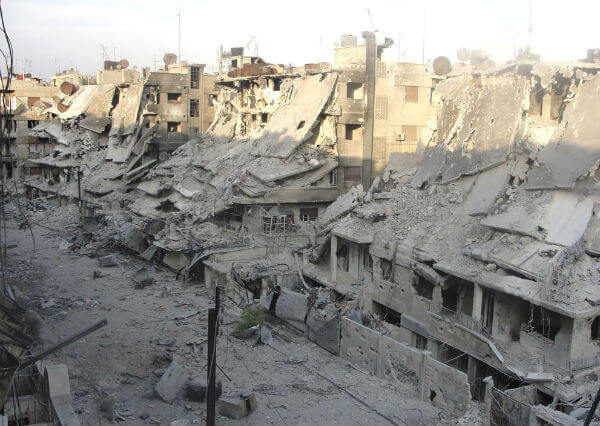
Perry Cammack writes: The cataclysmic destruction of Syria challenges human comprehension. The old city of Aleppo, which like Damascus claims to be the oldest settlement on the planet, has been reduced to rubble. Homs was once the country’s third most populous city, but has mostly been depopulated.

With the international Syria peace process teetering on the edge of collapse, a political solution seems distant. But every war must end. The rebirth of Dresden, Berlin, and Stalingrad (later renamed Volgograd) after the unthinkable destruction of World War II is a testament to human resiliency and a symbol of what may eventually be possible in Syria. Regardless of whether Syria can be stitched together as a unitary state or is instead permanently partitioned, rebuilding its infrastructure to even modest pre-war levels will require a generational effort.

Some planning for this future has been done. The most ambitious effort is the “National Agenda for the Future of Syria,” a conceptual platform for reconstruction run out of the U.N. Economic and Social Commission for Western Asia (ESCWA) in Beirut. But such efforts will need profound outside support, especially during the most fragile post-conflict stabilization phase, to ensure that robust mechanisms are in place to allow funds to begin flowing quickly and transparently. Unfortunately, to this point, the reconstruction of Syria has not received sufficient attention, either in Washington or in capitals elsewhere. [Continue reading…]

Facebooktwittermail

Russia’s scorched earth policy in Syria

Lara Nelson writes: “It’s like Stalingrad. They raze entire areas. Then they send in the militias,” Yamen Ahmad, an FSA commander in Latakia, described. He was in Selma, Latakia province, leading his brigade when the regime took back the area from the opposition in January. “There is no way to resist this scorched earth policy the Russians are deploying with their strikes across Syria.”

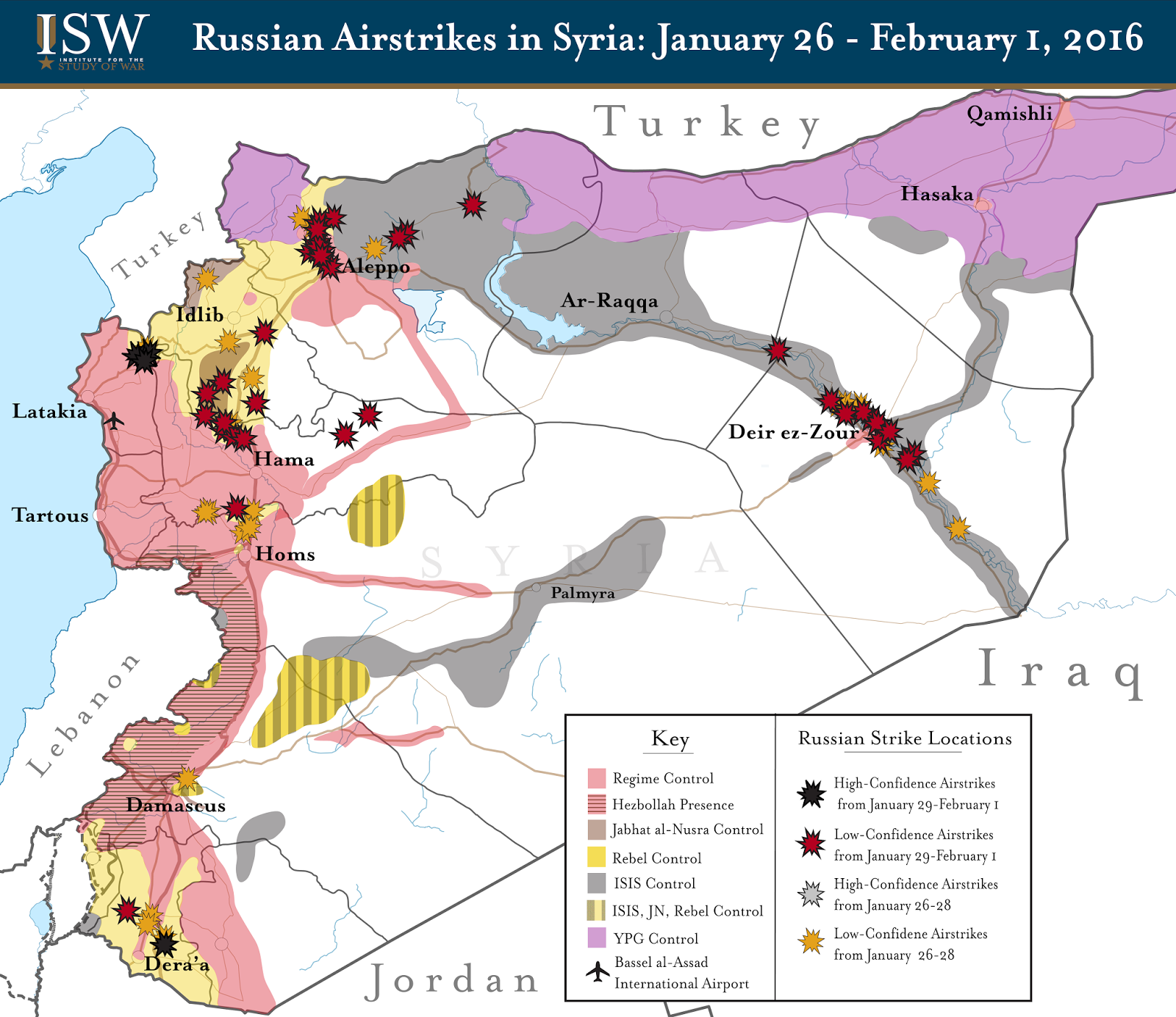
Since Russia began its strikes in Syria on 30 September, the regime has been able to make some gains across the country. Despite declaring that their military goal was strictly to target ISIS in Syria, studies have clearly documented their strikes have the main purpose of supporting the Assad regime’s military operations on the ground against moderate opposition forces, and have done little to seriously combat ISIS.

“Russia is simply acting as the regime’s air force against our moderate forces now,” said spokesman for the FSA’s Southern Front and defected officer Major Issam Al Reis. In Aleppo, the frontline between the regime and ISIS is a de facto safe zone, while they both focus their weaponry on opposition forces. As one media activist on the ground observed in the recent battle for Aleppo: “During the north Aleppo offensive, not a single Russian bomb hit ISIS – not a single ISIS attack hit Assad’s front.” [Continue reading…]

Facebooktwittermail

ISIS has been thwarted militarily. But now it could seize chance to advance

Hassan Hassan writes: In January 2014 newly organised rebel factions in northern Syria declared war on Islamic State (Isis), and this culminated in the expulsion of the group from all of the city of Idlib and most of Aleppo. Rebel forces in Raqqa, Deir ez-Zor and Hasaka similarly rose up to root out the increasingly overbearing foreign organisation.

The anti-Isis offensive reportedly cost the rebels about 7,000 fighters. The group’s presence in Syria was seriously threatened, receding to Raqqa and pockets in Aleppo, Deir ez-Zor and Hasaka, until the summer of that year, when Isis swiftly took over Deir ez-Zor and consolidated its presence in eastern Aleppo, southern Hasaka and Raqqa. It was helped by momentum and the advanced weapons it seized after it took over Mosul in mid-June and the Iraqi army there collapsed.

But the advancing hordes of Isis still failed to reclaim control in Idlib or the rest of Aleppo. That remains true today. Local rebel factions have resisted the group’s incessant attempts to return. The rebels’ resilience in those areas is remarkable, especially considering Isis’s control of al-Bab and Manbij west of Aleppo, two significant strongholds for, respectively, Isis’s economic activities and its manpower.

But what Isis failed to achieve with advanced weapons and momentum could be achieved with the changing military landscape in Aleppo and northern Syria at large. [Continue reading…]

Facebooktwittermail

Sunni resentment dims prospect of reunifying Iraq after ISIS

The New York Times reports: When Iraqi ground forces and American aircraft began assaulting the city of Ramadi more than a month ago, Ghusoon Muhammed and her family fled to the government’s front line, as did many other Sunni Arab families who had been trapped for months. Soldiers sent her and the children one way, and her husband another, to be interrogated in a detention facility.

She has not seen him or heard from him since. She and her children, who will most likely not be able to go home to Ramadi for months given the destruction, have been left to wait in a ramshackle tent camp here in Anbar Province. She is desperate, and adamant: “The innocent people in jail need to be released!” she said.

Standing nearby on Sunday was another woman, Karima Nouri. Her son, an auto mechanic, was also taken away by the authorities, and she has had no word about him for weeks. Ms. Nouri said the government considered civilians who remained in Ramadi to be sympathizers of the Islamic State. “But we had no ability to leave,” she said. “We are very poor.”

The retaking of Ramadi, the provincial capital, has been held out as a vital victory by Iraqi officials and their American allies, and one of the most crucial first steps in the government’s reclaiming of Anbar Province and other Sunni Arab places.

But even as military goals are being met, Sunni families like those of Ms. Muhammed and Ms. Nouri are still voicing their fear and resentment of the Shiite-dominated government in Baghdad, highlighting that the broader goal of political reconciliation is not yet being served. Their grievances today echo those that initially allowed the Islamic State, also known as ISIS or ISIL, to prosper two years ago as it began seizing territory from the Iraqi government. [Continue reading…]

Reuters reports: Powerful Iraqi Shi’ite Muslim cleric Moqtada al-Sadr said on Saturday the country needed a technocratic government, threatening to quit politics if Prime Minister Haider al-Abadi failed to carry out promised reforms.

The remarks by Sadr, whose Al-Ahrar bloc holds 34 seats in parliament and three cabinet posts, were the first high-level reaction to the premier’s call for politically appointed ministers to be replaced with technocrats.

Struggling to show results from reforms he announced six months ago, Abadi said this week he wanted to make the replacements in a cabinet reshuffle, a shake-up that would alter the delicate balance of government in place since the U.S.-led invasion in 2003.

Abadi provided few details of the planned reshuffle but he is expected to move forward with changes this week after returning to Iraq from a European trip.

Sadr called for “forming a technocrat government away from partisanship that should include all.” [Continue reading…]

Facebooktwittermail

The future of Aleppo will show whether Syria can rise from the ashes

Anshel Pfeffer reports: The forces besieging Aleppo will not try to capture it. Tens of thousands of fighters who have hardened by over four years of fighting for their homes are determined to defend their city and now every corner and rooftop of its ancient alleyways. Even a large and advanced army would emerge from such an urban warfare operation with hundreds, perhaps thousands of casualties. The ill-trained Shi’ite militias who have no experience of such warfare and are unacquainted with the city have little chance.

Abu Firas, a former Syrian army colonel and today a commander in the Shami Front, the largest rebel group fighting in Aleppo, says, “we haven’t seen on the battlefield recently any Syrian soldiers fighting for the regime. All the banners and the bodies of fighters we killed are of foreigners from Lebanon, Iraq, Afghanistan and Pakistan. We have no problem fighting them off, our men are well-trained after all these years of fighting. But they have the Russian airstrikes which make all the difference.”

Even if the forces fighting for President Bashar Assad’s regime cut off the last road leading to Aleppo, and close the last remaining kilometers in the ring of siege, the regime does not have sufficient forces to keep the pressure up for long. The rebels will succeed in breaking a way out and bringing in supplies. The local civil organizations have accumulated enough food for around a quarter of million civilians still in the city, which will last months and are meanwhile practicing growing vegetables on rooftops and digging supply tunnels. Instead of the fuel that cannot reach the city to powers it generators, they are working on alternative energy sources from waste.

Other large civilian areas in Syria, such as the rebel-held East Goutah suburb of Damascus, have withheld siege for years now. Aleppo will not fall. It will be bombarded and exhausted and as long as fighters are willing to remain, it won’t be occupied. But life there will become hell. An even worse hell than that which has existed in Syria for the last five years. And for how long can a nation live in hell?

That is, if there is still a Syrian nation.

In opposition circles, there is talk in recent months that the Assad regime has given up on recapturing most of the Syria’s territory and is now focusing on establishing “Suria al-mufida” – useful Syria. They’ve given up long ago on eastern Syria which is occupied by ISIS. The Kurdish enclaves in the north and the Druze area in the south will be allowed to remain autonomous without regime interference (no-one of course is talking any more of regaining the Golan from Israel). The regime is aiming at capturing and “cleansing” the Damascus and Aleppo districts and deepening its control of Latakia on the Mediterranean coast. That is enough to keep the Assad family regime, as a Russian client-state and an Iranian dependancy.

The regime’s main obstacle to achieving that goal is the rebel groups still controlling large areas of “Useful Syria” which continue to demand either democracy or the rule of Islam. The solution to this is carnage, exile and complete submission.

Last week, the international community’s diplomatic attempts at imposing a political solution totally failed, when the talks on Syria’s future ended in Geneva before they began. The official reason was the refusal of the opposition’s representatives to enter negotiations while Russian planes were bombing their homes back in Aleppo. Even if a ceasefire is announced at some stage, what is doubtful right now while the Russians believe they have the advantage, a “political solution” will be far from enough for a country that has lost a third of its population.

Syria has almost ceased to exist. There are enclaves and fiefdoms and an organized crime family which continues to safeguard its interests in Damascus and on the coast and a government in exile in Turkey and millions of refugees. The resilience of the people of Aleppo in face of the siege will be an indication of whether Syria can rise from the ashes. [Continue reading…]

Facebooktwittermail

Death toll from war in Syria now 470,000, group finds

The New York Times reports: As waves of heavy Russian airstrikes edged closer to the Turkish border on Thursday, a Syrian research group issued a report saying the impact of five years of war in Syria has been even more devastating than already thought.

The report from the Syrian Center for Policy Research said that at least 470,000 Syrians had died as a result of the war, almost twice the 250,000 counted a year and a half ago by the United Nations until it stopped counting because of a lack of confidence in the data.

Life expectancy has dropped 14 years, to 56 from 70, since the war began, with an even deeper plunge for Syrian men, says the report, which the group compiled from its longtime base in the capital, Damascus. It put the war’s economic cost at $255 billion, essentially wiping out the nation’s wealth.

The report stood out because it shows a state in collapse in many ways even though it comes from an organization that was, until recently, based in Damascus, the seat of a government that seeks to control tightly how it is portrayed. The report was released on a day that world leaders were scheduled to meet in Munich, even though hopes that Russia and the United States could agree on a cease-fire were sinking. [Continue reading…]

Facebooktwittermail

Aiding disaster: How the United Nations’ OCHA helped Assad and hurt Syrians in need

Annie Sparrow writes: Syria, the world’s largest humanitarian crisis, is also the most expensive. OCHA, shorthand for the Office for the Coordination of Humanitarian Affairs, is the UN agency tasked with managing such crises, along with determining the global humanitarian budget, more than $20 billion in 2016, and allocating funds received from donor governments. OCHA’s forecast for 2016 is $3.2 billion for Syria alone, where it estimates that 13.5 million people are in need of humanitarian aid. Another $4.8 billion is solicited for the regional cost of putting up some four million refugees in Jordan, Lebanon, and Turkey.

Yet five years into the Syrian crisis, long-festering concerns over OCHA’s lack of neutrality are growing. Characteristic of many agencies of the United Nations, OCHA places a premium on maintaining good relations with the Syrian government, a position fueled by its desire to stay in Damascus. With no end to the conflict in sight, though, it is worth asking whether OCHA’s bottom line is harming the agency’s efforts to alleviate the catastrophic consequences of Damascus’ anti-civilian strategy. Indeed, the 2016 UN plan for Syria provides a real-time illustration of what happens when a UN agency loses sight of humanitarian principles and prioritizes relations with a government intent on violating them.

The UN plan must be understood in the context of Syria’s incredibly complicated humanitarian situation. The most recent estimates place 800,000 civilians under siege, denied access to safe water, food, health care, fuel, and warmth. Of these, more than 600,000 civilians are besieged by the government. An additional 200,000 civilians are held by the self-proclaimed Islamic State (also known as ISIS) in the city of Deir ez-Zor. OCHA relies on permission from the government to gain access to these people, but the government rarely grants it. Madaya, for example, is less than an hour’s drive from Damascus, yet between July 1, 2015, and January 12, 2016, OCHA could arrange only a single convoy, which contained expired food aid. The last convoy to Duma, where 175,000 civilians have been under siege since November 2012, was on July 2, 2015. Duma is barely ten miles from the Four Seasons in Damascus, where Yacoub El Hillo, OCHA’s resident/humanitarian coordinator, is based. [Continue reading…]

Facebooktwittermail

Inside the Syrian provincial capital where 200,000 face starvation

The Daily Beast reports: Deir Ezzor, a once relatively prosperous city of more than 300,000 people, is modern-day Syria in a microcosm. When anti-government protests broke out in 2011, the government sent in tanks. When rebels occupied the city, the ideals of those who protested state repression were betrayed by the arbitrary arrests and Islamist repression of al-Qaeda’s Syrian affiliate, Jabhat al-Nusra. Now, half the city is occupied by the Islamic State, which for more than a year has been besieging and starving the other half controlled by the Syrian government led by Bashar al-Assad — with the complicity, current and former residents say, of the government itself.

What’s left today of government-controlled Deir Ezzor is a poor and tired population. Some of those people are stubborn, or proud: having survived nearly five years of a war that has killed more than 250,000 of their fellow Syrians, they refuse to abandon their homes. Most, however — the vast majority — are there not because they choose to be, but because they have no choice. Many are refugees from other areas of Deir Ezzor province or from the city’s other half, taken over by the Islamic State in July 2014, on the other side of the Euphrates River. [Continue reading…]

Facebooktwittermail

Putin is a bigger threat to Europe’s existence than ISIS

George Soros writes: Putin is a gifted tactician, but not a strategic thinker. There is no reason to believe he intervened in Syria in order to aggravate the European refugee crisis. Indeed, his intervention was a strategic blunder because it embroiled him in a conflict with Turkey’s president, Recep Tayyip Erdoğan, which has hurt the interests of both.

But once Putin saw the opportunity to hasten the EU’s disintegration, he seized it. He has obfuscated his actions by talking of cooperating against a common enemy, Isis. He has followed a similar approach in Ukraine, signing the Minsk agreement but failing to carry out its provisions.

It is hard to understand why US and EU leaders take Putin at his word rather than judging him by his behaviour. The only explanation I can find is that democratic politicians seek to reassure their publics by painting a more favourable picture than reality justifies. The fact is that Putin’s Russia and the EU are engaged in a race against time: the question is which one will collapse first.

The Putin regime faces bankruptcy in 2017, when a large part of its foreign debt matures, and political turmoil may erupt sooner than that. The president’s popularity, which remains high, rests on a social compact requiring the government to deliver financial stability and a slowly but steadily rising standard of living. Western sanctions, coupled with the sharp decline in the price of oil, will force the regime to fail on both counts. [Continue reading…]

Facebooktwittermail

As species migrate to escape climate change, plants get left behind

mt-tam

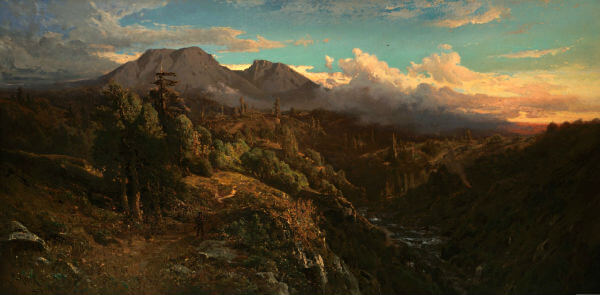
Climate Central reports: Willis Linn Jepson encountered a squat shrub while he was collecting botanical specimens on California’s Mount Tamalpais in the fall of 1936. He trimmed off a few branches and jotted down the location along the ridge trail where the manzanita grew, 2,255 feet above sea level.

The desiccated specimen is now part of an herbarium here that’s named for the famed botanist. It was among hundreds of thousands of specimens of thousands of different species that were used recently to track the movement of plant species up the state’s many hills.

The results of the analysis warn that native plants are struggling to keep up with changes around them as pollution from fuel burning and deforestation continues to warm the planet. Earlier research into the movement of Californian animals shows they’re shifting more quickly than the native plants.

“The big takeaway is that species are on the move, and they’re moving at different rates,” said Jon Christensen, a scientist and historian at the University of California, Los Angeles. “Which raises the concern that the ecosystems of California could be unraveling.” [Continue reading…]

Facebooktwittermail